Closing Stock Market SummaryThe S&P 500 rose 1.4% on Monday, setting intraday and closing record highs in a steady advance. The Nasdaq Composite (+1.4%) kept pace, followed by the Dow Jones Industrial Average (+1.0%) and Russell 2000 (+0.9%) with solid gains.
The market didn't seem drawn to any specific piece of news, nor was there any economic data to influence investing decisions. Instead, the market appeared to benefit from a continued willingness among investors to buy equities when momentum remained in their favor, particularly at a seasonally-favorable time of the year.
All 11 S&P 500 sectors closed higher, led by the information technology (+2.2%), energy (+2.2%), and real estate (+2.0%) sectors with gains of at least 2.0%. The utilities sector underperformed on a relative basis with a 0.5% gain.
Retail investors might have had a greater role today based on the light trading volume at the NYSE and the huge gains in market favorites like Apple (AAPL 180.33, +4.05, +2.3%), Microsoft (MSFT 342.45, +7.76, +2.3%), Meta Platforms (FB 346.18, +10.94, +3.3%), Tesla (TSLA 1093.94, +26.94, +2.5%), and NVIDIA (NVDA 309.45, +13.05, +4.4%).
The mega-cap growth stocks did the heavy lifting while small-caps and micro-caps went along for the ride, as did value stocks. The Russell 1000 Growth Index rose 1.5%, versus a 1.1% gain in the Russell 1000 Value Index.
Looking at industry news, travel stocks struggled amid reports highlighting the disruptions that flights and cruises have faced because of Omicron-related issues. Retail stocks benefited from Mastercard SpendingPulse data indicating that retail sales grew 8.5% year-over-year this holiday season (Nov. 1-Dec. 24).
U.S. Treasuries settled mixed with a trace of curve-flattening activity. The 2-yr yield increased one basis point to 0.70% while the 10-yr yield decreased one basis point to 1.48%. The U.S. Dollar Index increased 0.1% to 96.08. WTI crude futures rose 2.3%, or $1.71, to $75.56/bbl.
Investors did not receive any economic data on Monday. Looking ahead, the FHFA Housing Price Index for October and the S&P Case-Shiller Home Price Index for October will be released on Tuesday.
- S&P 500 +27.6% YTD
- Nasdaq Composite +23.1% YTD
- Dow Jones Industrial Average +18.6% YTD
- Russell 2000 +14.5% YTD
Harvey Nichols Sees Sales Dip, Losses Widen in Year Marred by Closures
Group turnover fell by 45 percent to 121.3 million pounds due to a series of COVID-19-related lockdown measures.
LONDON — Sales dipped and losses widened at Harvey Nichols in fiscal 2021, but the company said it is well financed and ready to expand.
The group, which operates eight department stores in the U.K. and Ireland; six international units, and the OXO Tower restaurant in London, said Monday that in the year ended March 27, 2021, losses after taxes widened to 38.6 million pounds from 15.5 million pounds in the previous year.
For earnings before interest, taxes, depreciation and amortization, the group registered a loss of 28.1 million pounds, compared with a loss of 1.1 million pounds a year earlier.
The larger loss reflected ongoing lockdowns, a “sharp” reduction in tourist arrivals, and store closures that lasted nearly eight out of the 12 months in the reporting period, according to the accounts filed this week at Companies House, the official register of U.K. businesses.
Group turnover fell to 121.3 million pounds in fiscal 2021, compared with 222.1 million pounds in the previous period.
The group noted it has a “supportive owner” in the Hong Kong-based businessman Dickson Poon, and is well funded after having secured 66 million pounds in the year. It received 26 million pounds from its owner; 35 million pounds from a new five-year term loan secured in June 2021, and has a 5 million pound overdraft facility, which Harvey Nichols said is not currently being used.
Manju Malhotra, chief executive officer of Harvey Nichols, said that like most retailers, the group was significantly impacted by lockdowns and a sharp reduction in tourist arrivals due to travel restrictions. She added while online performance remained strong, it was not sufficient to offset the impact of the closure of physical stores and the reduced footfall in city centers.
“During these unprecedented times, we have not stood still and focused on managing costs and cash flow during store closures and investing in our IT systems and website to drive our online channel. We have broadened our category appeal and continued to look at creative ways to maintain the excellent service our customers expect,” she said.
Malhotra noted that there remains a “high degree” of uncertainty around how the pandemic will play out, “but during the period we have continued to implement exciting new initiatives across the business to drive loyalty and excellent customer shopping experience. While market conditions remain extremely challenging, we believe we have the right strategy in place to achieve our ambition of delivering sustainable profitable growth over the long term.”
The company said that since the fiscal 2022 year began, it has continued to invest in the website and IT systems and a new customer rewards program, which it plans to launch at the end of January 2022, offering customers “curated benefits” and cash back. The program is meant to align with the launch of a transactional app in the new year.
The company said it has fortified its relationships with Farfetch and Ocado in the wake of online demand during the pandemic and has “elevated” its personal shopping offer, including the launch of an at-home wardrobe refresh service.
From a sustainability standpoint, the retailer has been working with The Restory, a specialist repair service for luxury products, and Kids O’Clock, which resells children’s pre-loved clothes. The store also welcomed Cocoon to its London store offering a luxury bag subscription service.
Harvey Nichols has expanded into children’s clothes, which it said was the fastest-growing area of the industry. The department, both in-store and online, features brands including Givenchy, Balmain and Chloé.
Climate change poses challenge to UK’s ageing railways
Victorian legacy of network means remedial work is needed to counter extreme weather
In the seaside town of Dawlish in south-west England, engineers are working night and day to protect its 175-year-old railway from the modern day threat of climate change.
The waves of the English Channel crash straight into the sea wall of the line built by Isambard Kingdom Brunel, one of the leading civil engineers of the Victorian era, making this stretch of track particularly vulnerable. In 2014, part of the railway, which connects London to Penzance in Cornwall, was washed away by a heavy storm.
Seven years on, teams of structural engineers are back, waiting on the tides, as they replace the crumbling infrastructure. The new wall, made of eight-metre tall concrete slabs, is designed to protect Dawlish station and the track for the next 100 years.
The new coastal defences, built to withstand a one-metre rise in sea levels, are a stark illustration of how large parts of the UK’s railway network, which were first built in the 19th century by Victorian entrepreneurs, are under growing threat from climate change.
Britain was a pioneer of the railways, which played a key part in the industrial revolution. But age is now the enemy of the network. Trains still take the routes laid out from the 1830s onwards in contrast to continental Europe, where many of the railways were rebuilt after the second world war.
The legacy is a network that was not designed to handle rapid shifts in weather patterns. In particular, 19th century planners tried to buy as little land as possible to save money when they built the tracks, which meant narrow cuttings with steep sides that are now susceptible to flooding.
The cost of weather-related delays on the UK railways has risen steadily over the past decade, from £45m in 2009-10 to around £100m in 2019-20, according to Network Rail, the state-owned infrastructure operator.
Extreme weather can damage the tracks, the many ageing bridges and tunnels and the network of tens of thousands of cuttings and embankments.
“The pattern is of individual events just getting more frequent and more intensive,” said Martin Frobisher, Network Rail’s safety and engineering director. “We break weather records every year . . . and each of those extremes of weather has an impact on the railway.”
Yet Network Rail faces plenty of uncertainty about future state funding: ministers have pushed through spending cuts that affected some upgrades and proposed new rail links, especially in northern England.
Tony Travers, a transport expert at the London School of Economics, warned that to prepare the network for climate change would “cost a substantial amount of money,” adding: “It is not at all clear that is available.”
Under its existing five-year funding settlement that runs until 2024, Network Rail plans to spend £500m on mitigating extreme weather events. Frobisher said it planned to allocate more cash to maintaining earthworks and drainage over the following five years.
It is financially incentivised to tackle climate change as it has to compensate train operators for weather disruption. When the line at Dawlish was badly damaged in 2014, Network Rail paid out up to £16m in compensation.
Rail executives have warned the problems facing the network will only get worse in the coming decades as severe weather events become more common.
Network Rail concluded that the “impact of extreme weather and climate change [was] accelerating faster than its planning assumptions,” according to a 2018 report by the National Audit Office, the government spending watchdog.
“This is a risk for the rail industry going forward, it is a risk the industry is aware of, and when you know about it you can start doing things about it,” said Malcolm Brown, chief executive of Angel Trains, the rolling stock leasing company, and chair of the cross-industry lobby group Sustainable Rail Executive.
Network Rail has turned to new technology to monitor tracks and other infrastructure, using drones and artificial intelligence to sift through mountains of data collected by cameras mounted on trains. It is also working with the Met Office on trying to better predict which sections of track could be at risk during storms.
“We see a shift from traditional maintenance to predictive maintenance programmes that rely more on digital technologies,” said Nicola Sandri, global transport infrastructure leader at McKinsey.
Rail safety experts have warned that the UK is not immune to the catastrophic floods in Germany and Belgium last summer, which killed nearly 200 people and caused an estimated €1.3bn in damage to the railways. The floods damaged 180 level crossings, more than 50 bridges and over 1,000 signal and electrical masts.
Three people were killed after a train derailed in north-east Scotland in August 2020 following heavy rain, the UK’s first fatal rail crash in more than a decade.
Although the industry is still waiting for the full findings on the crash from accident investigators, a climate change report by the Rail Safety and Standards Board said it seemed “clear that the changing climate and the occurrence of extreme weather [was] a key root cause.”
Newer projects are designed with resilience built in. Engineers on HS2, the new high-speed railway being built between London, Birmingham and ultimately Manchester, are incorporating what are dubbed sustainable drainage systems using landscaping techniques along the tracks. These are meant to ensure services can run even during a one-in-1,000 year flood event.
But the age of most of Britain’s rail network makes the cost of weatherproofing all the track prohibitive and will mean some difficult decisions would be needed, according to George Davies, director of sustainable development at the RSSB. Ultimately, the safest option would be to cancel services during extreme weather events, he added.
“I don’t believe it is viable and it is almost certainly unaffordable to design our railway to be 100 per cent climate resilient, so there is going to be a trade-off needed,” said Davies. “I am not sure yet the industry has a particularly good idea of what might be acceptable.”
Boris Johnson decides against extra Covid curbs for England before New Year
UK prime minister opts against restrictions like those in devolved administrations despite continuing rise in cases
Boris Johnson has held off on imposing new restrictions in England before New Year’s Eve despite the continuing rise in the number of coronavirus cases over Christmas weekend.
The UK prime minister decided not to act after a briefing on the latest infection data from England’s chief medical officer, Professor Chris Whitty, and the government’s chief scientific adviser, Sir Patrick Vallance.
A pause in collection of the information from around the UK over the holiday weekend meant the government published incomplete data on Monday for the three days for England only. But combined with initial data from Scotland, they suggested new infections levels on Christmas Day were close to the record of 122,186 infections UK-wide reported on Friday.
In England alone 113,628 new infections were confirmed on Christmas Day, with a further 103,558 on December 26 and 98,515 in the latest 24-hour period. In Scotland, provisional figures for the three days were 8,252, 11,030 and 10,562, respectively.
Confirming the prime minister’s decision, Sajid Javid, health secretary, urged people in England to “remain cautious” in the run-up to New Year, to celebrate outside where possible and to take lateral flow tests before visiting family and friends.
“Of course we look at the data on a daily basis — that hasn’t changed over the Christmas period — but there will be no further measures before the new year,” Javid said.
“Celebrate outside if you can, have some ventilation indoors if you can, please remain cautious. And when we get into the new year, of course, we will see then whether we do need to take any further measures — but nothing more until then at least.” Javid said 90 per cent of all cases reported were now the new Omicron variant.
The move by Johnson to hold off on tightening restrictions puts England at odds with the rest of the UK, whose devolved administrations imposed tougher social distancing rules on Sunday to curb the spread of the Omicron variant.
In Scotland, three households can socialise, with one-metre social distancing recommended in venues such as bars, restaurants, and gyms. In Wales and Northern Ireland, a maximum of six people can meet in pubs, bars and restaurants, while nightclubs have been closed. Northern Ireland has also recommended socialising should be limited to three households.
Any move by the prime minister to impose further restriction in England is likely to provoke a political backlash from ministers and MPs in Johnson’s party who are sceptical of further measures.
Johnson has promised to recall parliament before acting and was already cutting it tight to do so ahead of New Year’s Eve, given the two public holidays in England on Monday and Tuesday. A recall of MPs requires 48 hours’ notice.
Problems arose on Monday when people in England were unable to book PCR tests for several hours. The UK Health Security Agency said the issue was “temporary” and service had been resumed on Monday afternoon.
China increases scrutiny of companies seeking overseas listings
New requirement closes loophole for tech groups to raise capital abroad without regulatory approval
China said domestic firms must gain approval before they can list overseas if they operate in areas deemed off-limits to foreign investors, closing a loophole for the country’s tech groups to raise capital in the US without going through regulatory scrutiny at home.
The National Development and Reform Commission, the state’s economic planning agency, said on Monday that local businesses in sectors with restrictions on foreign investment must now obtain clearance from “relevant” government departments before proceeding with overseas initial public offerings.
The regulator also said that foreign investors would face a 30 per cent cap on their holdings of such Chinese companies when listing, and they would also be banned from operating and managing them.
“The days of freewheeling overseas listings are gone,” said Li Chengdong, founder of Dolphin, a Beijing-based consultancy, who said “a nod from the Chinese government will be crucial for local firms to sell shares abroad”.
The NDRC said Chinese companies in the affected sectors could still raise capital from abroad and that the new rule “has created policy space for [these firms] to list overseas”.
Foreign investors are restricted from investing in certain sectors in China, such as internet companies, but have long used complicated legal structures called variable interest entities (VIEs) to bypass such constraints and raise capital from abroad.
The policy move comes during a tumultuous time for many Chinese start-ups and follows an announcement from the country’s leading ride hailing app Didi Chuxing earlier this month that it would delist from the New York Stock Exchange, having previously gone ahead with its US IPO in June despite Beijing’s opposition over data security concerns.
That saga led not only to an abrupt end of a boom in Chinese tech groups listing in the US but also cast a shadow over the future of companies structured as VIEs.
Investors and analysts said the new policy had eased concerns that VIEs could be banned, preserving a critical source of financing for China’s tech start-ups.
Li said the policy underscored efforts by Beijing to attract foreign capital while keeping a stronger grip on sectors deemed to be of strategic importance.
“The authority is keen to prevent the Didi incident from happening again, but it wants to provide a lifeline for dollar-denominated investment funds which count on New York listings to exit, as they are a crucial financier of China’s homegrown innovation.”
Some were cautious about what the overhaul would mean in practice. One Beijing-based private equity fund partner said he welcomed the new rule as it had made things “clearer” but added that it was less certain how the IPOs of companies initially denied permission to list would proceed.
“There is a lack of transparency on what the review standards will be,” they said. “That worries us most.”
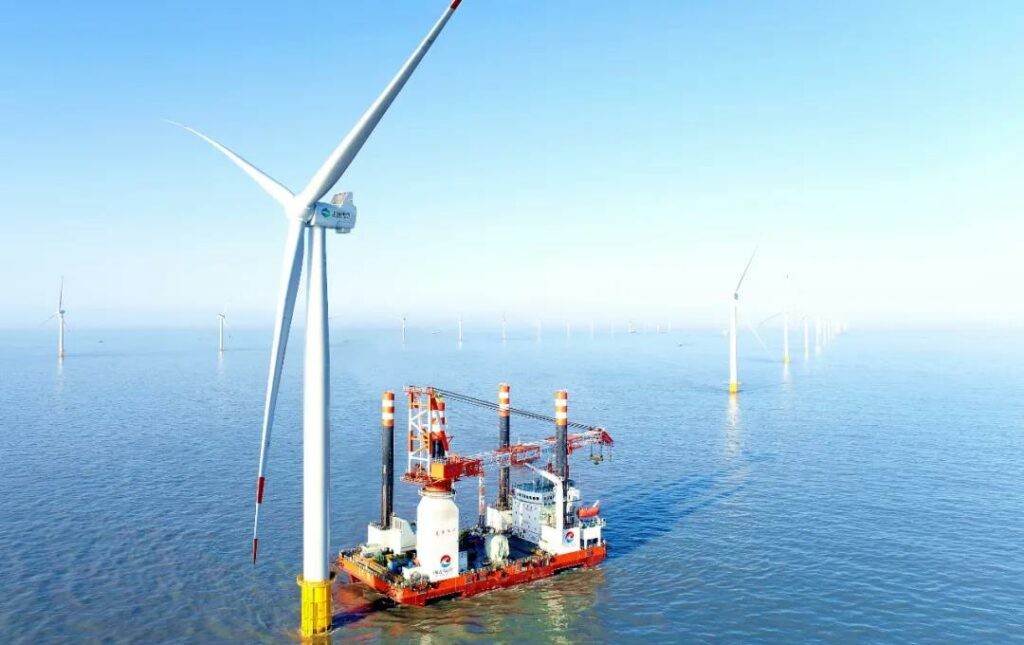
China’s largest offshore wind farm was connected to the grid at full capacity on Saturday, December 25. It transmitted power through undersea cables.
The 802 megawatt (MW) Jiangsu Qidong offshore wind farm is off the eastern province of Jiangsu. The wind farm consists of three projects – H1, H2, and H3 – and each has an offshore booster station.
It covers an area of 44.2 square miles (114.5 square kilometers) and consists of 134 wind turbines. Interestingly, it consists of a mixturehodgepodge of turbines, including seven models from four Chinese manufacturers.
UnderstandSolar is a free service that links you to top-rated solar installers in your region for personalized solar estimates. Tesla now offers price matching, so it’s important to shop for the best quotes. Click here to learn more and get your quotes. — *ad.
Jiangsu Qidong’s first wind turbine was installed in February of this year, and the last one was installed in early December. The $2.26 billion offshore wind farm was developed and is owned by Jiangsu Huawei Wind Power and Qidong Hua Er Rui Wind Power Technology.
Jiangsu Qidong will supply around 2.2 billion kilowatts per hour of electricity to the grid annually, which is capable of powering around 900,000 households.
As Electrek reported on December 7, China currently has a total of between 10 and 12 gigawatts (GW) of offshore wind capacity.
China is expected to install 1,200 GW of total wind and solar capacity by 2026, according to a new report released this week from the International Energy Agency (IEA). That’s four years earlier than the country’s current target of 2030.According to the IEA, this is the result of “the availability of long-term contracts, improved grid integration, and the cost competitiveness of onshore wind and solar PV compared with coal generation in many provinces.”
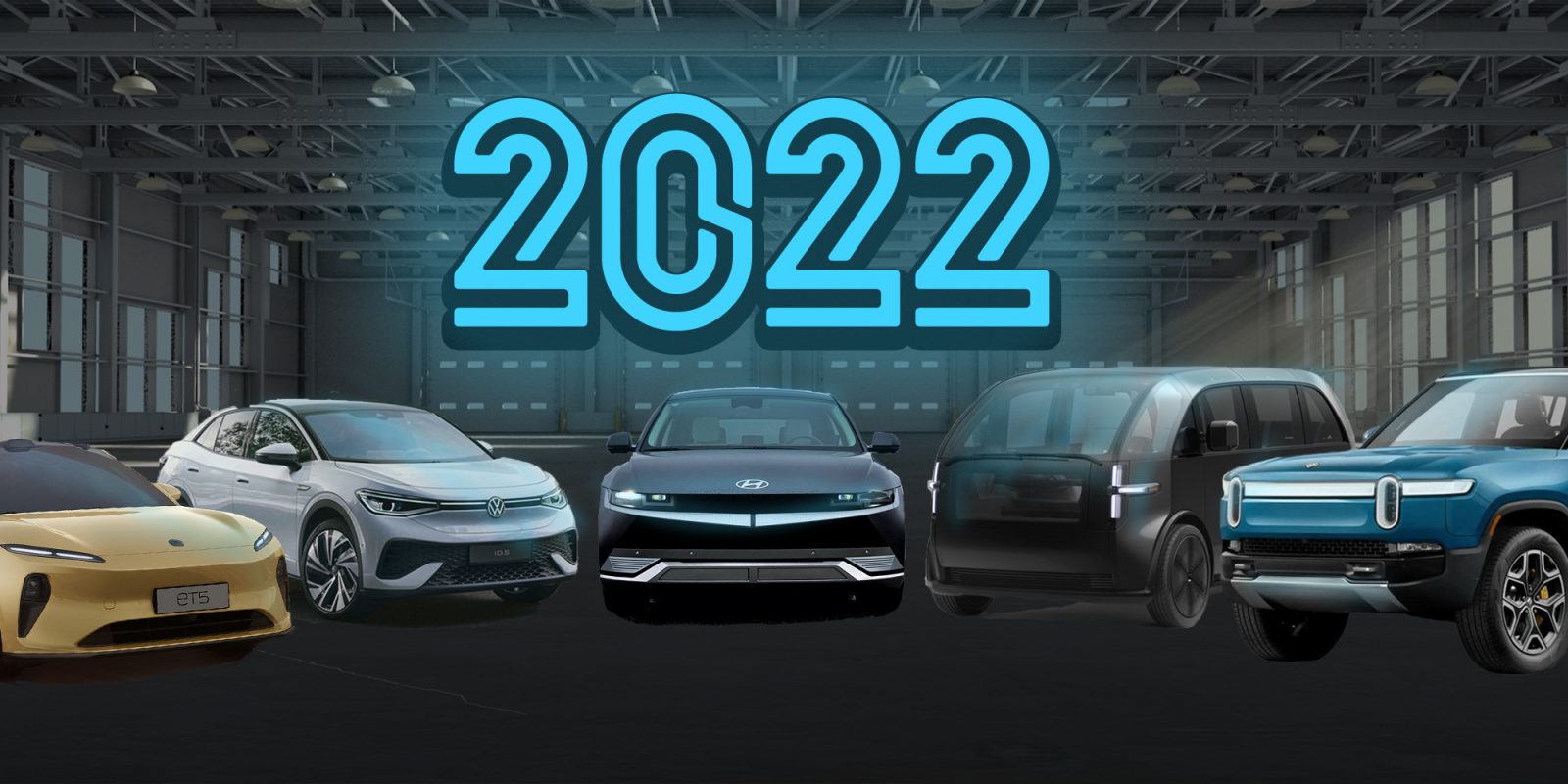
Here we sit on the precipice of 2022, which is hopefully a shiny new start and not “2020 II.” One of the more optimistic outlooks we can share in the new year is the prospect of further EV adoption, led by an absolute slew of new EV models from all of the major names in vehicles. Below are some of the most anticipated electric vehicles scheduled to arrive in 2022, along with a little blurb about each so you can start planning which ones you want to test drive first.
Table of contents
-
Electric Vehicles expected to arrive in 2022
- BMW iX xDrive50
- Cadillac Lyriq
- Canoo Lifestyle Vehicle
- Fisker Ocean
- Ford F-150 Lightning
- Genesis GV60
- GMC Hummer EV Pickup (EV³ˣ)
- Hyundai IONIQ5
- Kia EV6
- Lucid Air Pure
- Lotus “Type 132” SUV
- Mazda MX-30
- Mercedes-Benz EQE
- NIO ET5
- Nissan Ariya
- Polestar 3
- Rivian R1S
- Subaru Solterra
- Tesla Cybertruck
- Toyota bZ4X
- Volkswagen ID.5 and ID.Buzz
- XPeng G9
Electric Vehicles expected to arrive in 2022
In compiling this list, we admittedly had to take a step back for a second and admire how large it truly is and how impactful so many of these electric vehicles could be to consumers in 2022.
Some may be starting to trickle out to customers now as we slam the book shut on 2021, but overall, these are 2022/2023 models that (should) be available to consumers in the next twelve months.
They are sorted alphabetically by automaker to simplify things. Plus, we’re not here to play favorites, we’re here to get you hyped for all the EV options that will soon be available to you.
BMW iX xDrive50
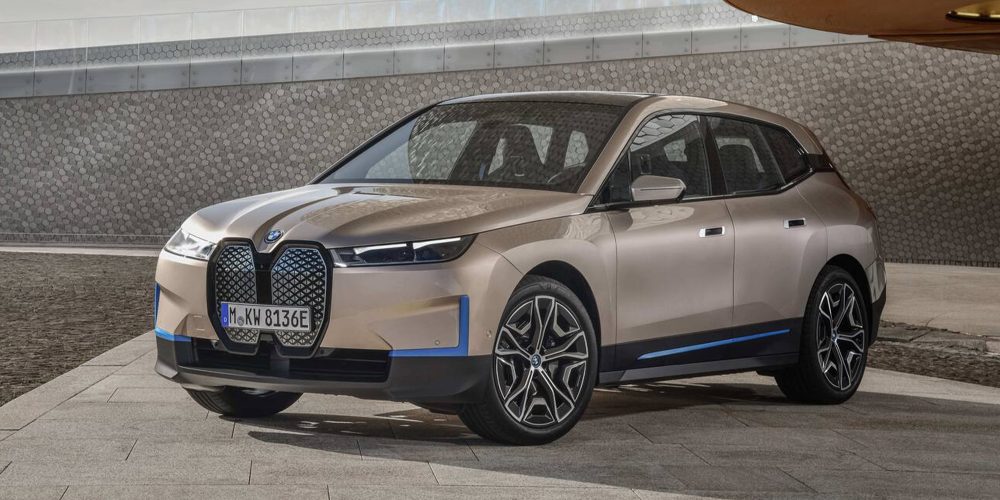
Kicking things off is BMW and its upcoming iX electric “sports activity vehicle.” Originally introduced as a concept EV called the iNext that would compete with the Tesla Model 3, consumers were excited to see an electrified 3 series expected to hit the market priced around $40,000.
Unfortunately for those drivers, the iNext evolved into the luxury crossover iX we see today, which will arrive at a starting MSRP of $82,300 without any taxes or destination fees. Still, the iX promises dual-motor AWD delivering 516 HP, 0-60 mph in 4.4 seconds, and 300 miles of range. It can also recoup up to 90 miles of range in just ten minutes of DC fast charging.
The BMW iX xDrive50 is expected to arrive in Europe shortly, followed by the US in March of 2022.

Cadillac Lyriq
The Cadillac Lyriq will be the first electric vehicle to debut for the marque and will sit upon GM’s BEV3 platform – part of its parent company’s decried strategy to release 20 new EVs by 2023.
Since making its official debut in August of 2020, we have learned (and covered) much about the Lyriq, including its three-foot display, Heads Up AR Display, and infotainment system aimed to compete with Tesla’s UX.
Following a production unveiling this past August, we learned the Cadillac Lyriq will also start just below $60k at $58,795. As a result, the Lyriq sold out in just 19 minutes. As we anticipate deliveries in 2022, Cadillac has recently shared footage of its latest prototype before entering full-fledged production.
Initial deliveries of the Lyriq in the US are expected to begin in March of 2022.
Canoo Lifestyle Vehicle
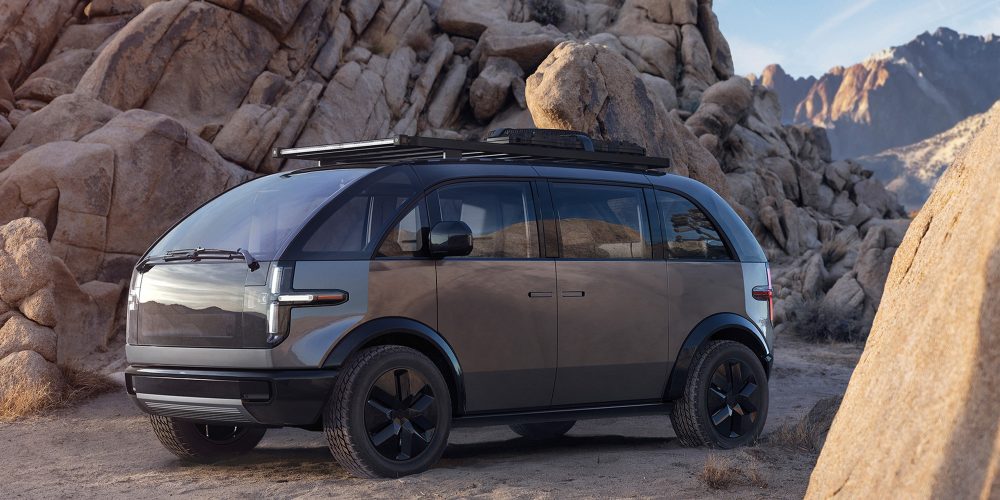
Canoo may not be a household name compared to some of the other automakers on this list, but it could be someday given its proprietary technology and unique designs. With multiple electric vehicles already unveiled and planned through 2023, Canoo’s Lifestyle Vehicle will be the first to arrive for the company.
This makes sense given the Lifestyle Vehicle was the first EV the company unveiled, all the way back to its startup days as EVelozcity. Canoo describes its Lifestyle Vehicle as “a loft on wheels,” and for good reason. The interior features 188 cubic feet of volume and seating for two to seven, surrounded by panoramic glass and a street view front window for the driver.
Starting at an MSRP of $34,750 before taxes or fees, the Lifestyle Vehicle will come available in four different packages to suit a multitude of needs, from the Delivery trim, to the loaded Adventure version. All promise at least 250 miles of range and are available for pre-order with a $100 deposit.
The Lifestyle Vehicle is expected to launch in late 2022.
The SolarSky Roof
Fisker Ocean
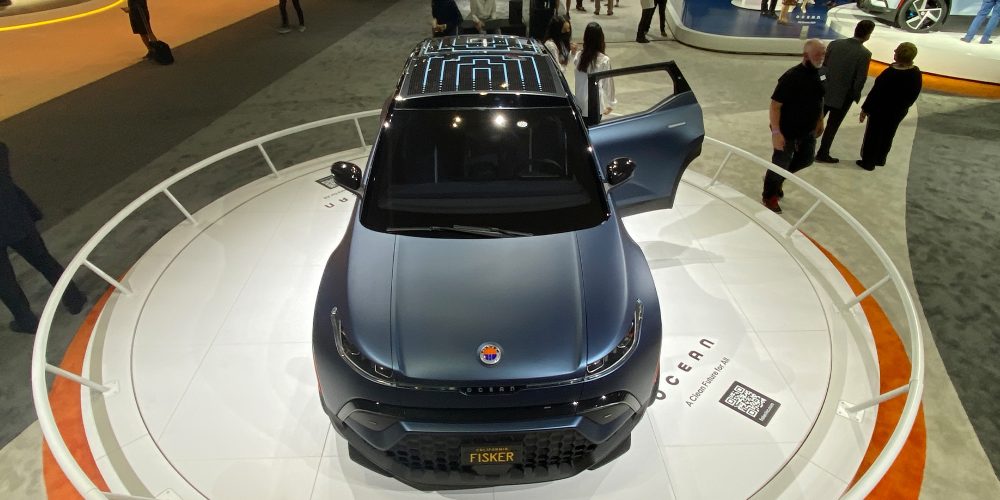
Henrik Fisker’s second iteration of an EV company donning his name seems to have gotten it right this time around with its flagship Ocean SUV. The first iteration of the Ocean was announced in 2019, amongst a bunch of other concepts Fisker was considering.
The Ocean really started to become a reality last October, when Fisker announced a deal with manufacturing juggernaut Magna International to produce the EV. Following its debut at the 2021 LA Auto Show, we were able to see the Ocean close up and learn about its three pricing tiers and unique technologies, such as a solar roof on the Ocean Extreme trim.
The FWD, 250-mile range Ocean Sport starts at just $37,499 before taxes or fees. Given the current federal tax credit in the US, those who qualify for the full amount could get an Ocean for under $30k, a huge selling point for consumers. With Magna’s help, the Ocean electric vehicles are slated to arrive in November of 2022.
Ford F-150 Lightning
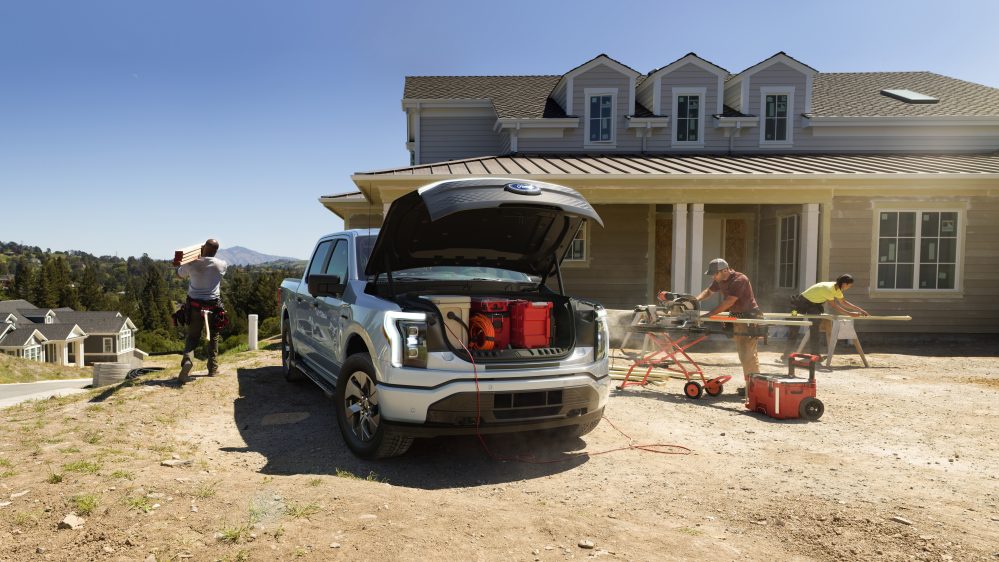
The Ford F-150 Lightning has the makings to be the most popular electric vehicle in 2022… and 2023, and so on. If sales of the electrified version are anything like the gasoline F-Series (best selling pickup in the US for 44 years), Ford will need to work to keep up with demand for the Lightning.
Especially since the Lightning has already garnered over 200,000 reservations, none of which include commercial customers (although it has created a separate business to support that segment too). Given Ford’s shared plans for Lightning production, it is already sold out into 2024. Ford seems to know it has a winner on its hands with the Lightning given its 230 mile standard range, home charging, and the ability to charge other EVs at Level 2 speeds.
It has already multiplied its Lightning production to meet demand, and the EV isn’t even out yet. The commercial model of the 2022 Lightning starts at an MSRP of $39,974 before any taxes or fees and goes up from there with features like the 300-mile extended battery.
According to Ford, its sales books open in January of 2022, followed by Lightning production and deliveries beginning in the spring.
Genesis GV60
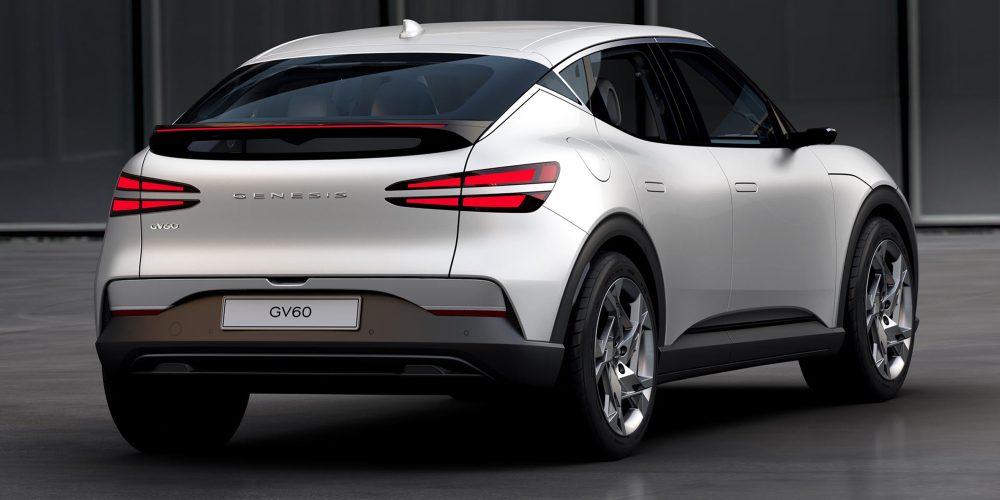
Genesis is another automotive brand that has vowed to go all-electric, ending all new ICE models by 2025. To help kick off its new electric vehicle transition in 2022 is the GV60, Genesis’ first dedicated EV model, which will sit on Hyundai Motor Group’s E-GMP platform.
This crossover utility vehicle (CUV) will feature the luxury interior Genesis is know for, complete with a unique crystal sphere center control. The GV60 will come available in three powertrains, single motor 2WD, Standard AWD, and Performance AWD complete with a “boost mode,” which immediately increases the performance of the GV60’s maximum output to make driving more dynamic.
EPA ranges are not yet available on the GV60, but estimated ranges start at 280 miles followed by 249 and 229 miles for the AWD trims – all from a 77.4 kWh battery pack. We do know that the GV60 will come equipped with battery conditioning, a multi-input charging system, Vehicle-to-Load (V2L), and plug-and-charge payment technology.
Pricing for the GV60 has not yet been released by Genesis, but the company has stated the electric vehicle is scheduled to arrive in spring of 2022.
The upcoming Hummer EV Pickup / Source: GMC
GMC Hummer EV Pickup (EV³ˣ)
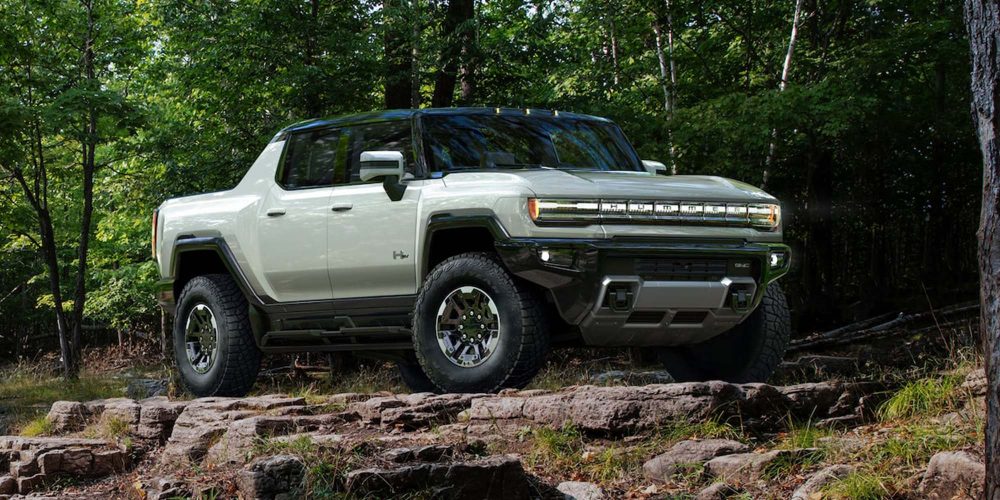
As previously mentioned, GM has some catching up to do in electric vehicle deliveries in 2022, but a huge spark for one of the world’s largest automakers will be an electrified version of its line of colossal gas guzzlers – the Hummer.
In 2020, the public was able to get eyes on a new Hummer EV and what it will offer, including an SUV and pickup version. GM originally admitted it did not have a working prototype when it first unveiled the truck. However, last December it released some impressive footage of a working Hummer EV to the masses.
While the most affordable version of the new Hummer is not slated to roll out until 2024, customers can expect more expensive and decked-out versions in 2022 and 2023. While we are calling this a 2022 EV, GM’s Edition 1 Hummer electric, costing over $110k, recently began rolling out to first customers. Those versions sold out in ten minutes last year, though.
The specs are impressive so far, including features like crab walking. However, these Hummers vary so much across various trims (and multiple years), it’s easier to get the full breakdown directly from GMC.
Expect to see the Hummer EV³ˣ Pickup in the Fall of 2022, starting at an MSRP of $99,995.
Hyundai IONIQ5
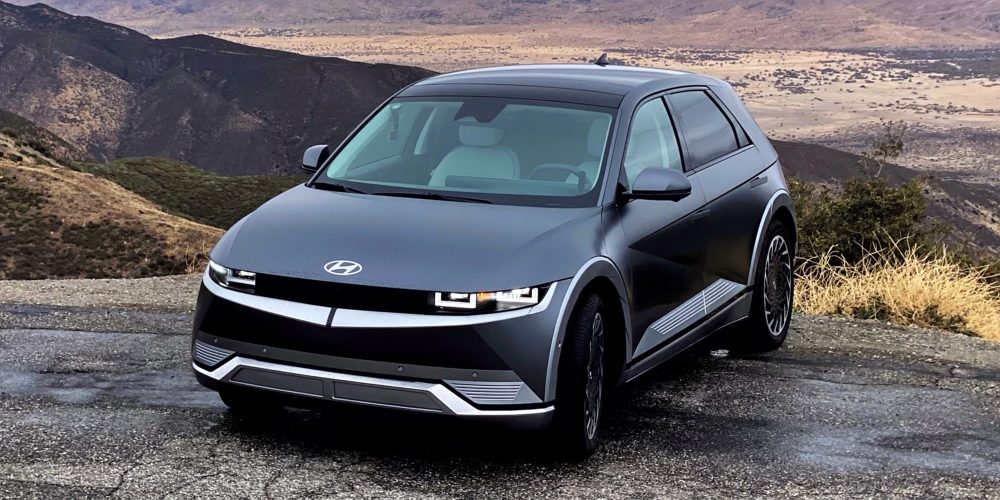
The IONIQ5 is the first EV from Hyundai under its new all-electric IONIQ sub-brand, and the first to debut on the Group’s new E-GMP Platform. Electrek has had a couple of chances to experience this new CUV close-up, and it’s one we’re definitely excited about.
Part of the appeal of the IONIQ5 is its wide body and long wheelbase, making for one of the largest interior volumes in its class, besting the Mach-E and VW ID.4.
It’s also full of cool technology such as an AR Heads Up Display, advanced ADAS, and V2L capabilities – meaning it can power your devices while camping or tailgating, or even charge other EVs. Not to mention some of the fastest charge speeds in the game right now.
What might be the largest selling point for this electric crossover vehicle in 2022 however, could be its pricing. Hyundai shared surprisingly affordable MSRPs of the IONIQ5 starting with a surprise Standard Range RWD version for under $40,000, up to the AWD Limited Trim with HUD for just under $55k.
The IONIQ5 has been on sale in Europe for a good chunk of 2021, but is just starting to roll out in North America for 2022. Check out Electrek‘s first drive to see more of the available features.
Kia EV6
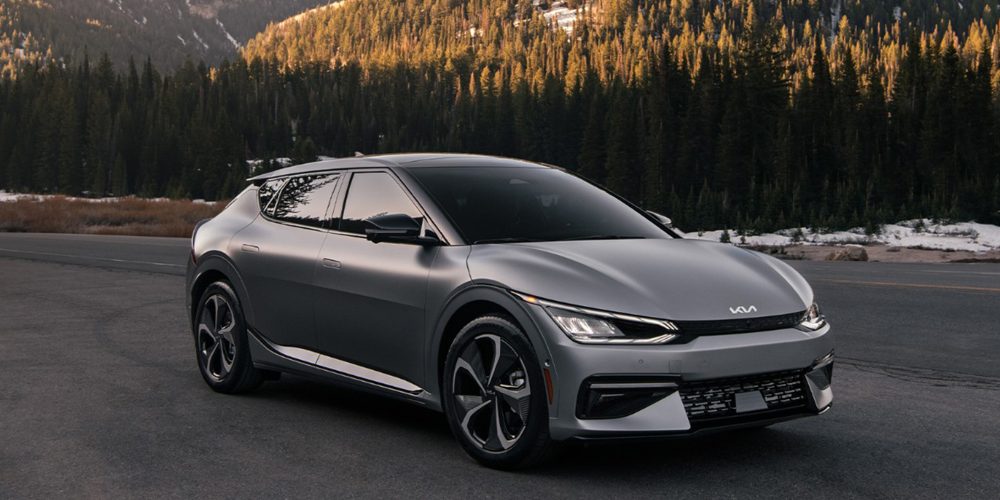
Joining the IONIQ5 in 2022 will be its Hyundai Group sibling, the Kia EV6. This electric vehicle will be the third to arrive in 2022 on the E-GMP platform and represents the start of Kia’s shift toward an all-electric lineup.
Much like its Hyundai counterpart, the Kia EV6 has gotten some rave reviews and an early demand out of the gate. Kia recently shared that this electric vehicle will arrive in 2022 with up to 310 miles of range. In fact, due to its exterior form, each trim of the EV6 bests the IONIQ5 in EPA range… but at a cost.
Right now, we don’t want to speculate about price, since we have not gotten official word from Kia yet, but it seems like the EV6 is expected to start at an MSRP of $45,000 and go up from there, although one particular Kia dealership is reporting much higher prices.
Regardless of where those official prices actually land, all trims of the EV6 are expected to go on sale in the US in early 2022.
Lucid Air Pure
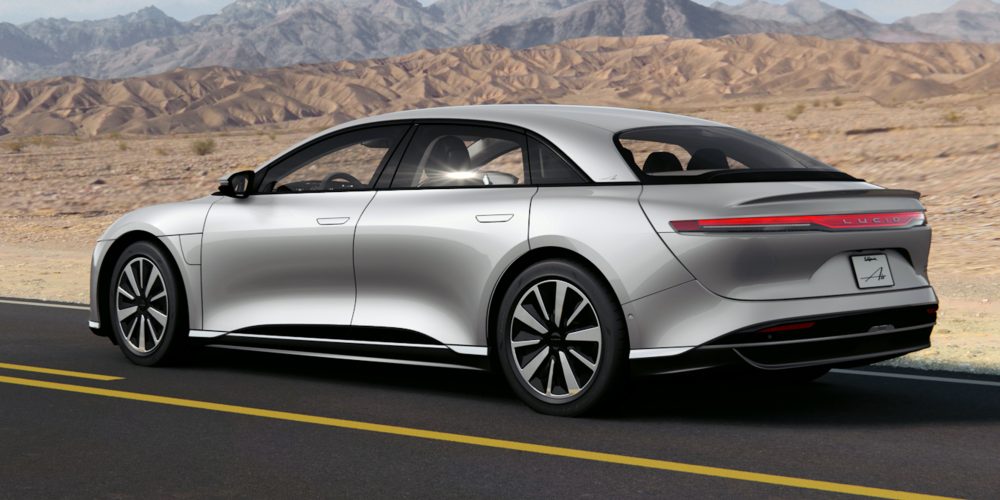
Truthfully, there are three separate trims of Lucid Motors’ flagship Air sedan slated to arrive in 2022, but we feel the Pure version could be the one to truly boost the luxury EV automaker’s sales numbers.
The top-tier Dream Edition trim of the Air began rolling off assembly lines at Lucid’s AMP-1 facility this past October, and deliveries of the 520 planned vehicles have been underway since. While this $169k marvel kicked off Lucid’s long-anticipated entry into the market, it will be the more affordable trims that follow that can help make it the name to beat in luxury EV sedans.
While consumers should see Grand Touring and Touring trims arrive in 2022, it’s the $77,400 Pure that we’re most excited about. Sure it’s still an expensive EV, but it’s about $90k less than the current Airs on the road. Future Pure drivers can expect 406 miles of estimated range and 480 HP, although it does not include Lucid’s panoramic roof.
The Lucid Air Pure is expect to arrive sometime in 2022.
Lotus “Type 132” SUV
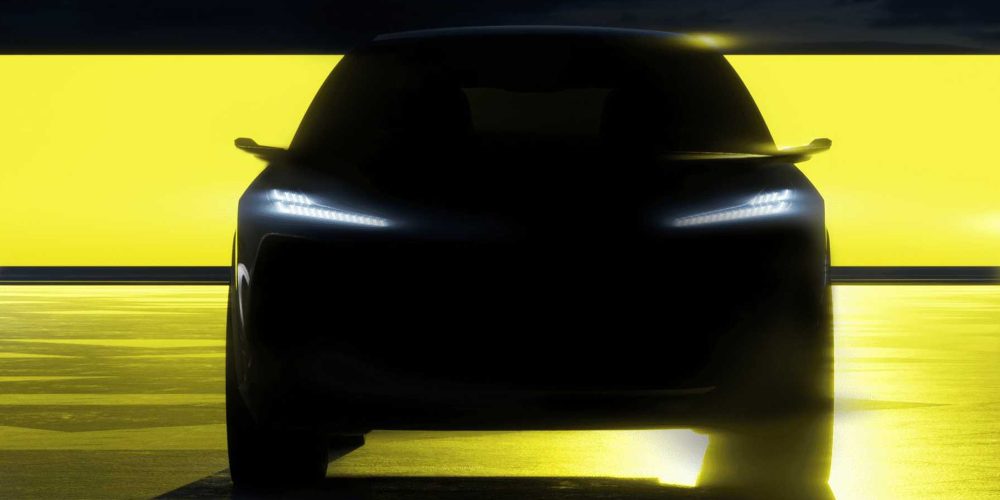
Lotus’ upcoming electric vehicle and first-ever SUV is by far the most cryptic vehicle on this list, particularly because we don’t even know its official name yet. Codename “Type 132” has been teased by Lotus through a series of short videos, sharing only glimpses of the SUV at a time.
It was originally announced in a group of four upcoming EVs from Lotus as it looks to go all-electric in 2022. There is certainly a lot more that we don’t know, but here’s what we have gathered thus far. The Type 132 will be a BEV SUV on Lotus’ new lightweight chassis and will feature LIDAR technology and active front grille shutters. Its interior will also be completely unique to previous Lotus vehicles.
Lotus claims the Type 132 SUV will accelerate 0-60 mph in about three seconds and will use the most “advanced 800-volt high-speed EV charging system.” Lastly, the Type 132 will feature battery packs between 92 kWh-120 kWh and can charge to 80% charge in around 20 minutes on an 800V charger.
Type 132 is expected to arrive in Spring of 2022.
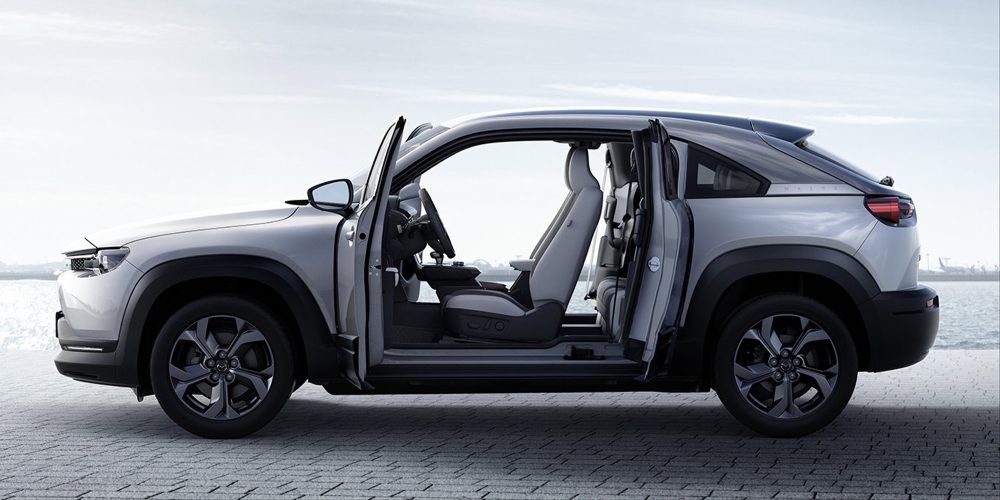
Mazda MX-30
As you may have noticed by now, this list contains a lot of first-ever EVs from automakers, a big reason why 2022 could very well be the year of the electric vehicle. This trend continues with Japanese automaker Mazda, whose upcoming MX-30 will arrive at a very enticing price, but with some concessions.
When the MX-30 was announced this past April, we learned that it starts at a very reasonable MSRP of $33,470 for the base model and only goes as high as $36,480 for the “Premium Plus” package. Factor in potential federal, state, and local incentives, and drivers might see that price down into the mid-20s.
Unfortunately, that cost still won’t justify the MX-30’s anemic range for some consumers, as its 35.5 kWh battery pack only delivers 100 miles of range. Still, the MX-30 is an anticipated electric vehicle in 2022 because those drivers privy to their daily range needs and tax incentive qualifications could be able to drive off in an adequate vehicle at a significantly lower cost than many of its competitors.
Plus, it’s nice to see a Japanese company delivering electric vehicles. The MX-30 is available now.
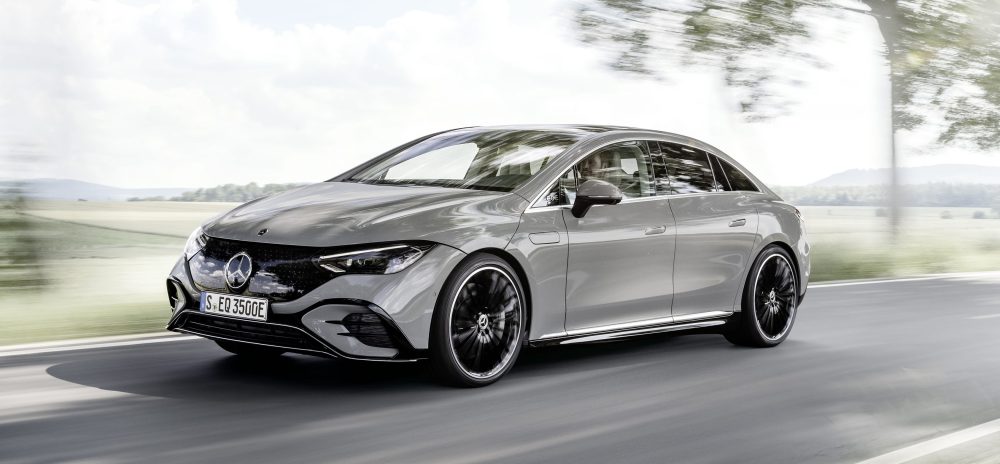
Mercedes-Benz EQE
Mercedes-Benz has already begun bringing EV offerings to its fleet with its new EQ line of vehicles, starting with the luxurious EQS. In the US in 2022, the EQS will be joined by an EQB SUV and the EQE, a smaller electrified version of the former.
This mid-sized sedan will arrive with a 90 kWh battery offering 410 miles (660 km) of range and 292 HP from a single motor RWD. Inside the EV, the EQE closely resembles the EQS with its MBUX Hyperscreen and massive touch display.
Pricing is not yet available on the EQE, but Mercedes-Benz has shared that it will arrive in 2022.
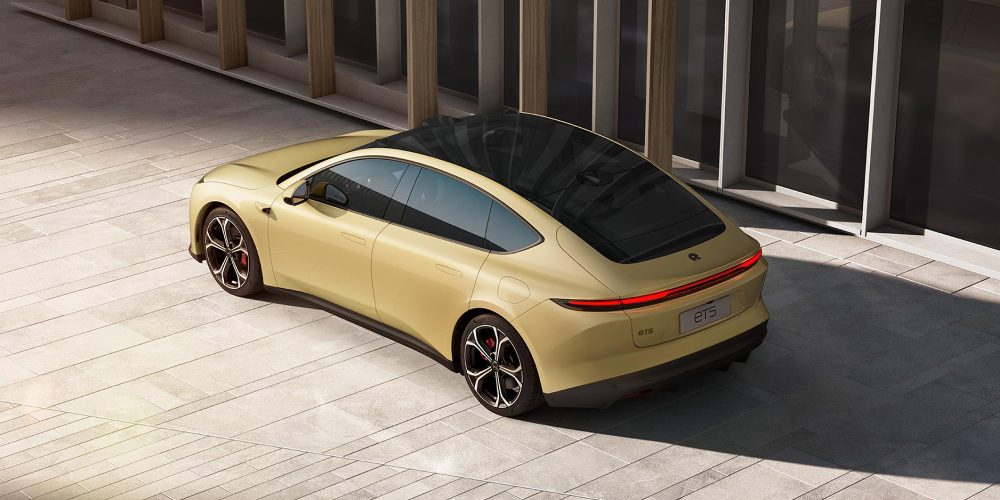
NIO ET5
The ET5 from NIO is the freshest announced EV on our list, and one of the few that is not planned to enter the US market. It was unveiled in the end of December during its maker’s annual NIO Day event in China.
In 2022, this electric vehicle will join the previously announced ET7 as a second sedan offering from NIO. Tesla in China has a serious competitor on its hand in the ET5, as NIO promises 1,000 km (~621 mi) of (CLTC) range.
Other features include LiDAR technology to support NIO Autonomous Driving (NAD), NIO Aquila Super Sensing, and NIO Adam Super Computing, allowing the new EV to gradually achieve safe autonomous driving in scenarios such as highways, urban areas, parking, and battery swaps.
The ET5 is priced at RMB 328,000 ($51,450) before Chinese subsidies, and RMB 258,000 ($40,468) with BaaS (Battery-as-a-Service). Deliveries are expected to begin in China in September 2022.
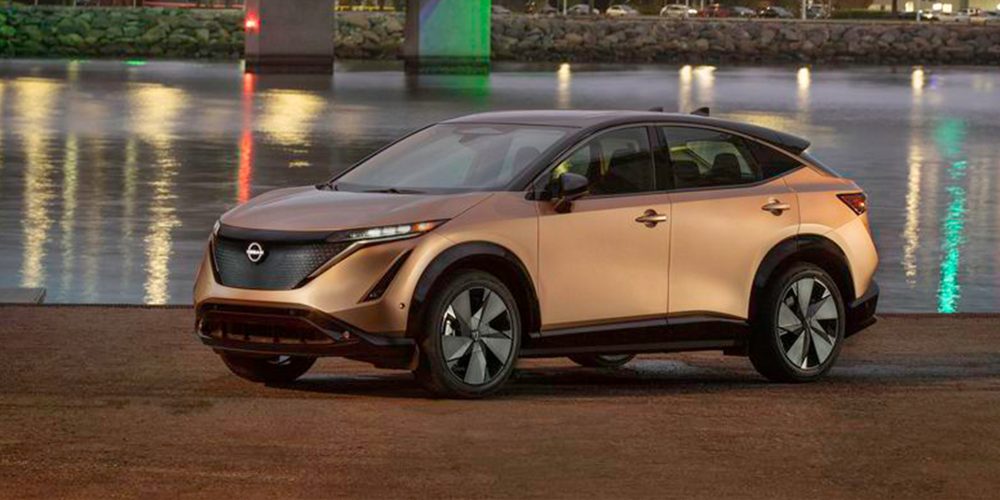
Nissan Ariya
Nissan was an early celebrity in EV production with its long running LEAF, although it hasn’t done much innovating since then. It was however, one of the global automakers to join the UN-backed “Race to Zero” campaign which aims to be 100% electric by “the early 2030s.” That journey begins with the Ariya crossover.
Initially unveiled in the summer of 2020, Nissan has shared the progress of its first electric SUV through prototype testing. This past fall, the Ariya officially launched in the US, opening reservations at a starting MSRP of $46,000 before taxes and other fees.
It will come in four trim variations, each with an 87 kWh battery, three of which are FWD. The estimated ranges vary for 265-300 miles. To incentivize consumers to place a reservation, Nissan is offering the first 10,000 orders made before January 31, 2022, a free two-year EVgo membership as well as $500 in charging credits upon purchase.
US deliveries of the Ariya are expected to begin in fall 2022.
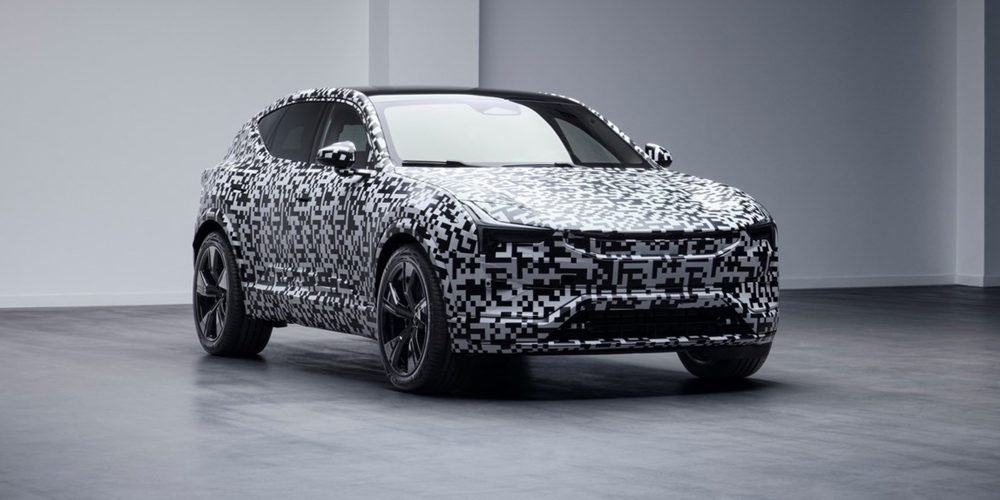
First glimpse of the upcoming Polestar 3 SUV / Source: Polestar
Polestar 3
While the ET5 was one of the newest EVs to debut on the list, the Polestar 3 remains one of the most mysterious. As you can see from the photo above, the only image released by the Volvo Group subsidiary is still donning camo.
This past summer, Polestar revealed it was working on its third EV, an SUV that would be built and sold specifically for the US market (we love our SUVs, right?) We know the Polestar 3 will debut on a new generation of EV architecture designed from the floor up by Volvo Cars Group and will be built around aerodynamic electric performance.
Furthermore, consumers can also expect high-end, safety-focused autonomous driving features on their Polestar 3. We recently caught our first glimpse of the Polestar 3 during the automaker’s reveal of its Polestar 5 sports coupe, formerly known as the Precept concept.
Unfortunately, no other specs have been shared at this time but will be revealed at a later date. The Polestar 3 is expected to enter production sometime in 2022.

Rivian R1S
The Rivian R1S is the SUV version of its flagship R1T, the first all-electric pickup to reach the market. It features many of the same unique features that made the R1T Electrek‘s vehicle of the year but with more interior volume.
The initial Launch Editions of the R1S recently began delivering at the end of December, but two lower-cost trims of the SUV are on the docket for 2022. That includes both the Adventure and Explore packages, each offering an EPA estimated 316 miles of range – not bad for an EV of that size and volume.
Delivery times will vary depending on the trim and add-ons you choose on the R1S but expect to see many more on roads and trails in 2022.
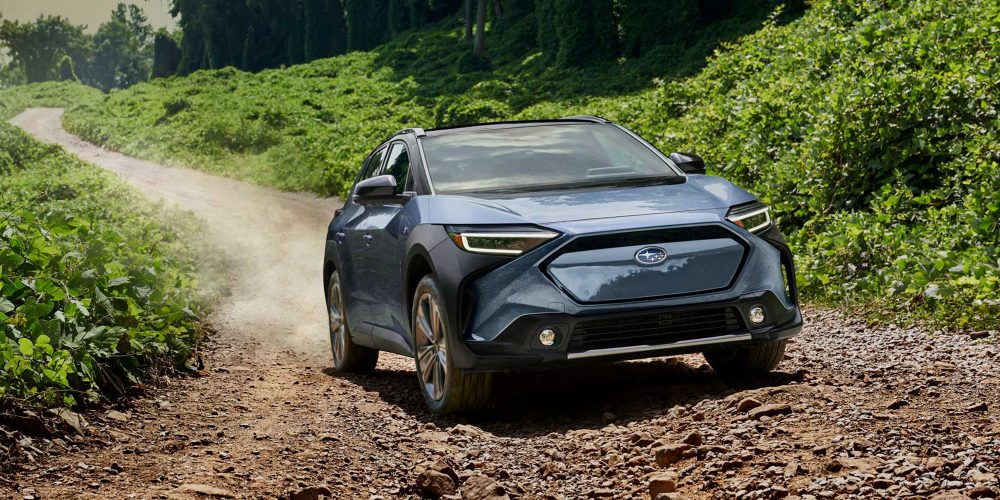
Subaru Solterra
Sticking with the trend of outdoors-focused auto brands, Subaru is another to join the electric vehicle market in 2022 with its upcoming Solterra SUV. Subaru has been teasing the public with its first EV since last May, offering glimpses and tidbits throughout 2021.
However, it wasn’t until this past November when we truly learned all the specs the Solterra will arrive with, including its 250-mile range. That’s based on its 71.4 kWh battery, which Subaru claims can deliver 285 miles (460 km) based on Japan’s WLTC standard. That should translate to roughly 250 miles of range based on the EPA standard.
Although pricing has yet to be released, the Solterra is expected to begin exploring nature in mid-2022.
Tesla Cybertruck
If you’re reading here on Electrek, we’d surmise you’ve heard of Tesla’s upcoming Cybertruck… especially since it was on a number of our lists last year as a potential 2021 model. After much speculation that led to an overall assumption, Tesla confirmed the Cybertruck had officially been delayed to 2022.
Since that point, Tesla and CEO Elon Musk have been much more open about the electric trucks’ progress, as it inevitably reaches production for the $80 billion+ in preorders already in place.
Alas! New prototypes have emerged complete with four motors, four-wheel steering, and “crab mode.” Sound familiar? Tell me Tesla isn’t watching its competitors closely to stay ahead.
While the American automaker has since removed all specs and pricing from its Cybertruck configurator, we know production is scheduled to begin in late 2022… for now.
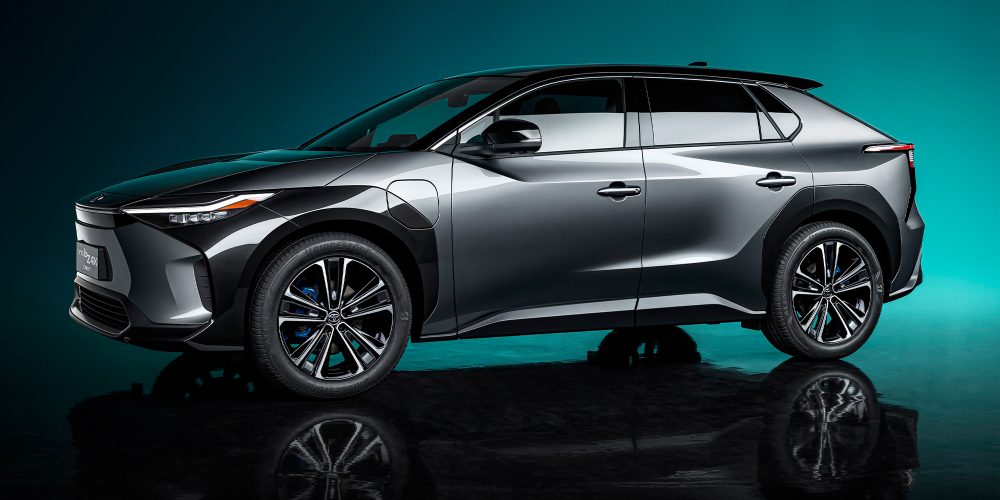
Toyota bZ4X
Up until this point, Toyota has been one of the few global automakers dragging its heels on EV production. In fact, there is well-documented evidence of its efforts to impede EV adoption in favor of hybrid and hydrogen fuel cell vehicles.
Nevertheless, Toyota seems to have had its head pulled out of the sand by the global market, and it has committed to some electric vehicles in 2022. One of which is its bZ4X electric SUV, part of the company’s new “beyond zero” lineup of vehicles.
The bZ4X will arrive in the US next year with an estimated 250-mile range on its FWD version. The range on the AWD trim remains TBD, although its previously revealed cruising range per charge (WLTC) is 460 km (286 miles). Expect the EPA range to be quite a bit lower.
US pricing hasn’t been released yet, but the electric SUV is expected to arrive in the US in mid-2022.
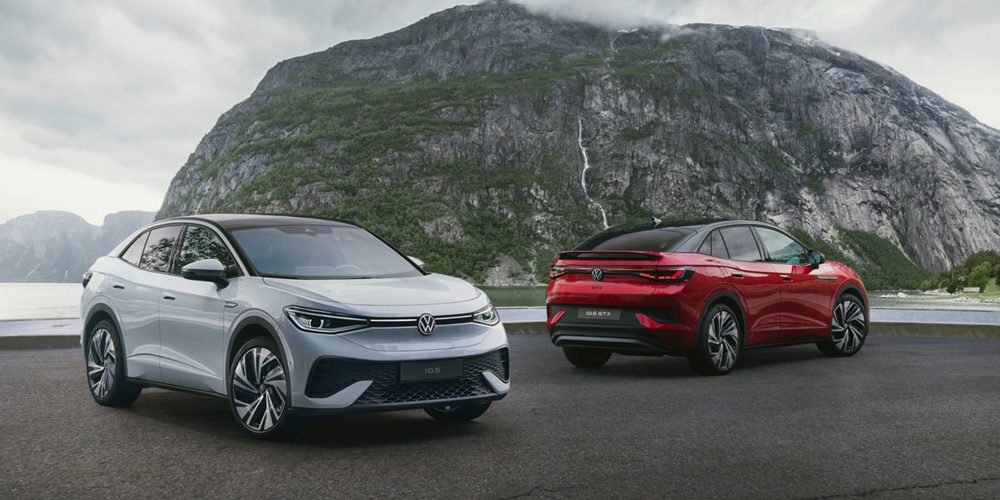
The Volkswagen ID.5 and ID.5 GTX / Source: Volkswagen Group
Volkswagen ID.5
The ID.5 is the latest offering from The Volkswagen Group and its ID family of all-electric vehicles. The German automaker has already seen huge success with its ID.3 and ID.4 EVs around the globe and looks to accelerate its electrification strategy across all of its brands.
We covered the teasing of a “near-production” version of its ID.5 GTX this past summer, before the IAA Auto Show in Munich. However, Volkswagen shared more details of the ID.5 and ID.5 GTX this past November, including single RWD and dual motor AWD versions on the automaker’s proprietary MEB platform.
Volkswagen has yet to confirm the exact range or price on any versions of the ID.5, but it should arrive in the UK and EU following pricing news and start sales in early 2022.
Even better, VW hs teased that its ID.Buzz electric Mini Bus would be making an appearance by the end of 2022
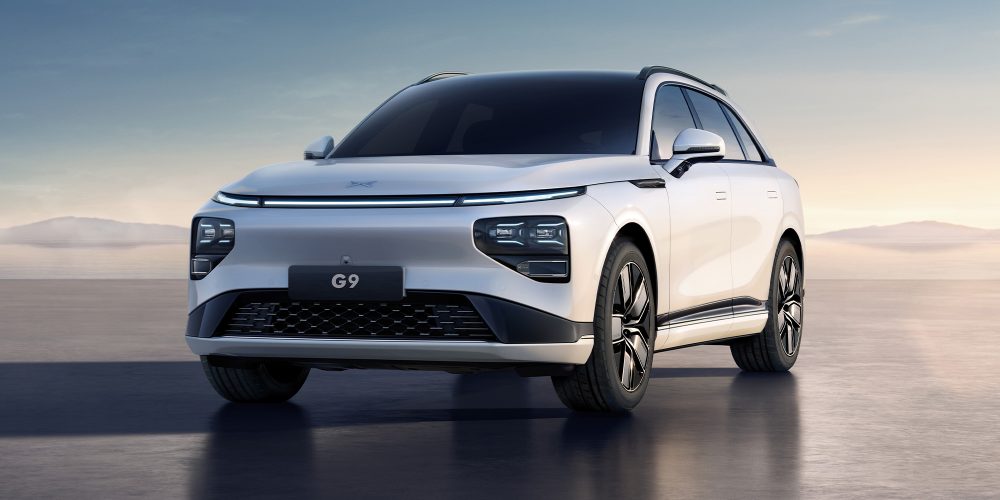
Source: XPeng Motors
XPeng G9
XPeng joins NIO and Volkswagen on our list of non-US offerings with its newly announced G9 SUV. The G9 is XPeng Motors’ fourth EV offering and was unveiled at the Guangzhou International Automobile Exhibition in China this past November.
The new SUV will sit upon XPeng’s new X-EEA 3.0 architecture, a proprietary EV platform that integrates hardware, software, and communications together. The G9 will also be able to receive firmware-over-the-air (FOTA) updates in as quickly as 30 minutes.
The new XPeng model will use the new-generation XPower 3.0 powertrain system with China’s first 800V mass-production SiC platform. As a result, XPeng claims its G9 SUV will be able to charge up to 200 km (124 mi) of range in five minutes, with a maximum energy efficiency of over 95%.
XPeng is aiming to start G9 production in China in Q3 of 2022.
Gapping downSelect Travel related names showing early weakness:
- CCL -2.3%, RCL -2.1%, NCLH -1.7%, UAL -1.6%, AAL -1.6%, LUV -1.6%, SAVE -1.6%, JETS -1.6%, DAL -1.3%, JBLU -1.2%
Other news:
- NVAX -1.8% (expands manufacturing agreement with SK bioscience)
- VXX -1% (volatility weak in early trade)
- FSR -0.7% (files for $2 bln mixed securities shelf offering)
Analyst comments:
- INNV -3% (downgraded to Equal Weight from Overweight at Barclays)
