FT : Hedge funds ride wave in volatile year for shipping costs

Hedge funds ride wave in volatile year for shipping costs
Niche market provides outsized returns for funds hunting big price moves

A small group of hedge funds is enjoying some of the best trades in years thanks to huge volatility in shipping charter rates, fuelled most recently by the collision of the Omicron coronavirus variant with the reawakening global economy.

Dry bulk shipping rates have surged to their highest levels since the 2008 financial crisis this year while container rates have also shot up, buoyed by a recovery in global demand and congestion at ports. For consumers, that is feeding through to higher inflation. But for some specialist hedge fund traders, it is offering just the sort of big price moves they love.

Demetris Polemis, principal at Guernsey-based hedge fund Paralos Asset Management, said price rises and volatility in dry bulk rates this year have “led to some of the best trading opportunities we have seen since we started Paralos in 2011”. The fund, which manages about $450m in assets and which trades futures on the indices that make up the Baltic Dry index, has gained 110 per cent this year to the end of November, its best year of returns since launch.

Restrictions due to the emergence of the Omicron variant and high energy and commodity prices “point to a high but volatile market for next year”, he added.

Investment group Pilgrim Global, run by former Fidelity portfolio manager Darren Maupin, is up about 117 per cent this year, according to numbers sent to investors, with roughly three-quarters of gains this year coming from shipping.

Funds that use algorithms to latch on to data patterns are also profiting, including AHL, the computer-driven unit of $139.5bn-in-assets hedge fund firm Man Group. Its Evolution fund, which trades a range of markets, has gained 16.9 per cent this year.

London-based quant group Florin Court Capital is up nearly 30 per cent, helped by positions in tanker contracts. And London-based quant group Aspect Capital plans to start trading Baltic index futures next year.

Hedge funds on average are up 8.7 per cent in the first 11 months of this year, according to HFR.

Shipping has been out of favour with many investors for years, given its low returns and repeated cycles of booms and busts. Even in the hedge fund world, which is more accustomed to trading tricky markets, it is a niche sector, although it has become more popular with some computer-driven funds in recent years as they search for new, untapped markets to bet on.

To get exposure to the sector, some funds trade shipping stocks operating oil tankers or dry bulk carriers. Others bet on moves in futures contracts on the various Baltic Exchange indices or contracts on specific shipping routes, which are still voice brokered. CME recently announced the listing of six container freight futures contracts over different routes, which Florin Court said it plans to trade.

After trading within a range for much of the past decade, container and dry bulk rates have exploded this year, yielding funds their reward. The Baltic Dry index, which measures rates for transporting commodities such as iron ore and coal on various shipping routes, is up 75 per cent this year. It has been pushed higher by strong demand for commodities and delays at ports due to coronavirus such as border restrictions and shortages of crew and pilots to guide ships, as well as the blockage of the Suez Canal in March.

The index had been up by more than 300 per cent in October, before Chinese authorities intervened to push down coal prices and problems escalated at indebted property developer Evergrande. The Freightos Baltic container index, which tracks container shipping rates, is up by about 180 per cent, having suffered less of a drop this autumn. Front-end rates can be very volatile because shipping is akin to a commodity that cannot be stored.

Hedge funds can profit from such volatility. Paralos, for instance, bet this autumn that volatility was priced too cheaply relative to the threat of typhoons in China. It scooped up options on the Capesize index, the index for the largest of the four categories of ships in the Baltic Dry index. Such derivatives soared in price, with some rising more than tenfold, as the storms forced delays at ports.

London-based Svelland Capital, meanwhile, had been expecting higher Chinese oil imports to push oil prices higher this autumn. As well as buying crude, it also bought shipping futures and tanker stocks, before selling out in late October after they moved higher.

And while some managers have given back portions of their gains during the autumn’s fall in prices, others have been able to profit. Norway-based Joakim Hannisdahl, chief executive of Cleaves Asset Management, has gained 34 per cent this year, profiting from a surge in shipping stocks for much of the year before starting to bet on falling prices as rates dropped.

With the rapid rise of Omicron infections leading governments to start imposing social restrictions once more, some fund managers expect some shipping rates to stay elevated in 2022. Looming new regulations to curb carbon emissions in the industry could also force ships to reduce their speed, some traders say, which could reduce capacity and push rates higher.

Renaud Saleur, a former trader at Soros Fund Management who now heads Anaconda Invest, has been increasing positions in operators of crude oil tankers. Despite gains this year, rates in this area of the market are well below their mid-noughties peak, but Saleur expects them to be pushed higher by a declining supply of ships as older boats are scrapped.

Cato Brahde, chief investment officer at Oceanic Investment Management, is positioning for volatility as ships transition to cleaner fuels. This, he believes, could create a “supercycle in shipping and energy investments similar to that experienced with China joining the world economy 20 years ago”.
Business Of Fashion : Chanel Is Aiming for Hermès Status With Handbag Price Hike

Chanel Is Aiming for Hermès Status With Handbag Price Hikes
The luxury fashion brand has raised prices, and set purchasing limits in an effort to become a more exclusive and desirable brand.

Chanel has raised global prices on some of its classic handbags by almost two-thirds since the end of 2019.

A spokeswoman said the hikes are in response to unspecified exchange-rate fluctuations, changes in production costs and to ensure its handbags cost roughly the same around the world. But luxury-sector executives and analysts say the magnitude of the increases signals an aggressive corporate strategy: asserting control over one of the brand’s most popular products while taking aim at higher-end rivals.

Since November 2019, the price of Chanel’s small classic flap bag in the US has gone up by 60 percent to $8,200, according to data compiled by Jefferies Group analyst Kathryn Parker. The large version of the handbag known as the 2.55 now costs $9,500 in the US following Chanel’s latest price hike, the brand’s fourth in two years. It cost $7,400 in June, according to Parker.

Charles Gorra, chief executive officer of Rebag, which sells pre-owned luxury purses, says the push could be aimed at making Chanel’s products more exclusive, to gain ground on the most iconic handbags of all: the Birkin and Kelly bags by rival luxury house Hermès.

A medium-sized Chanel flag bag in France now costs €7,800 ($8,800), €100 less than a Birkin 30 in Togo calfskin by Hermès.

Chanel is striving “to be part of the Hermès world and less of the Vuitton and Gucci world,” Gorra said. “They are trying to go upscale.”

Ubiquity Versus Exclusivity

In addition to making its products more expensive, Chanel is cracking down on the number of handbags customers can purchase at one time, though the limits don’t appear to be consistent.

In Paris, a Chanel sales assistant told a Bloomberg News reporter that a customer is only allowed to buy one bag at a time, and must wait two months before buying another one, which can’t have the same features. In New York, there were monthly limits on the purchases of certain classic styles, while reporters in Hong Kong and Shanghai were told there were no restrictions.

Chanel could be hoping that this scarcity will make it “an even more desirable brand,” said Ines Ennaji, a business development manager at Paris-based Luxurynsight, which provides industry data. “By increasing desirability, they’ll have a reason to justify their price increases.”

Chanel’s purchasing limits and price increases are “like telling consumers, if you can purchase a handbag, you belong to the club,” Gachoucha Kretz, associate marketing professor at business school HEC Paris, said. “Its iconic bags are best sellers.”

But there are initial signs that Chanel’s changes are irking some shoppers, while enticing others to buy now to avoid future hikes.

“I have become rather discontented with the brand,” said Ingrid Chua, a Vogue Hong Kong contributor whose Bag Hag Instagram account has almost 60,000 followers. She said the leather on Chanel’s bags has a more plastic feel in recent years because of a heavier coating intended to protect against dirt and scratches.

The price hikes make Carol Gong, who frequently buys luxury products in Hong Kong, less likely to buy Chanel. “If I can get one, I’d rather buy a Lindy bag from Hermès, which is offered at a similar price,” she said.

Erwan Rambourg, HSBC’s global head of consumer and retail research, thinks Chanel’s price increases are about branding rather than competition.

“It’s in reference to what they believe is their brand equity — and also how nervous they are about this ubiquity,” Rambourg said. He added that the company doesn’t “want everyone to carry the same handbag, because that devalues the handbag itself.”

Yet there are cautionary tales from the high-end sector about the impact of successive price increases, Rambourg notes. Several years ago, IWC Schaffhausen, which is owned by Swiss luxury conglomerate Cie. Financiere Richemont SA, significantly boosted the cost of its watches. Consumers pulled back, forcing IWC to cut prices and launch a more accessible steel version of one of its watches, he said.

Missing Out

Across the fashion world, Chanel is one of the few digital holdouts, with a long-standing policy against selling any handbags or clothes online, though it does sell cosmetics and sunglasses on its website.

When online demand for luxury handbags surged during the pandemic, Chanel missed out on the robust revenue growth that buoyed peers such as Hermès and LVMH’s fashion and leather-goods unit, which includes Louis Vuitton and Dior.

The privately held Chanel, controlled by the billionaire Wertheimer brothers, reported an 18 percent decline in revenue and a 41 percent slump in operating profit in 2020, compared with a 6 percent revenue drop and 15 percent operating profit decline for Hermès. Earlier this month, Chanel appointed Leena Nair, a Unilever Plc executive, as chief executive officer starting in January.

Parker, the Jefferies analyst, said that Chanel is trying to find ways to compensate for that revenue drop. “Part of where they could close the gap to other brands that had e-commerce is on pricing.”

Secondary Market

One consequence of Chanel’s price increases has been to boost the cost of its handbags on the secondary market, said Seth Weisser, chief executive of New York-based luxury reseller What Goes Around Comes Around. Chanel has sued the company for false advertising and trademark infringement, allegations the resale platform denies. Chanel declined to comment on the lawsuit.

Weisser said he’s able to sell Chanel bags that are ten years old or older for more than their original price, in part because many of the styles are discontinued. “Not all Chanel bags are created equal,” he said. Demand depends on the colour, model and size. Of the purses that Chanel has made within the past several years, about half of them sell below the primary-market price, Weisser said.

By contrast, resellers can count on Hermès’s most-sought after bags to consistently sell for more than their original price. A rare Birkin sold for €112,000 ($126,550) on resale platform Vestiaire Collective last month; its retail price was €18,500. The most expensive Chanel bags have sold for as much as €30,000, a spokesman for the platform said.

The most expensive bag ever auctioned was a crocodile Kelly bag from Hermès that Christie’s sold last month for 4 million Hong Kong dollars ($512,880). The most expensive Chanel bag at the same auction sold for 125,000 Hong Kong dollars.

“Chanel is probably keen to bring the 2.55 and Timeless models on a par with the Birkin and the Kelly of Hermès,” said Bertrand Peyrat, chief supply officer at Vestiaire Collective, referring to the flap bag. “But the secondary market evaluation for Chanel is not there yet.”

WWD : PETA Asks Lululemon About Slaughterhouse Practices

PETA Asks Lululemon About Slaughterhouse Practices
The animal rights group claims birds are tortured to make some Lululemon goose down jackets.

Lululemon Athletica is in the hot seat.

Animal rights activist group PETA — which owns shares of Lululemon — submitted a shareholder resolution request Wednesday to the athletic apparel and accessories retailer’s board, asking Lululemon to reveal information regarding how Lululemon sources its goose down, which is used in some Lululemon jackets.

PETA said shareholders have a right to know if Lululemon’s practices are “incompatible” with its animal welfare policy, and if so, how the company plans to reduce its impact on the animals.

“Lululemon is selling jackets filled with the feathers of birds who are violently killed, betraying the yoga principle of ahimsa, or nonviolence, that it splashes on its shopping bags,” Tracy Reiman, PETA’s executive vice president, said in a statement. “PETA’s resolution would prove to Lululemon that it’s misleading its customers about the suffering and deaths of animals in its supply chain.”

A spokesperson for Lululemon confirmed that the company received PETA’s shareholder proposal, asking the retailer to list down as an item in its proxy statement, as well as Lululemon’s 2022 annual meeting.

Lululemon did not say whether it would include down in the proxy statement or on the agenda of its 2022 annual meeting, but did say through the spokesperson that “we are committed to upholding strong animal welfare practices by working with our vendors to have visibility into down sources and can confirm 100 percent of our down products are certified RDS, a standard that is considered industry best practice.”

The retailer added on its website that “we require that animals in our supply chain are treated humanely and with respect. We don’t use down that comes from birds that have been live plucked or force fed. We work to ensure the traceability of our entire supply chain by following an industry best practice called the Responsible Down Standard. The goal of the RDS is to protect and improve the welfare of the ducks and geese that provide down and feathers. Following the RDS ensures that our down comes from geese that have been treated humanely.”

In Lululemon’s 2020 Impact Agenda, which outlined the retailer’s multiyear social and environmental efforts, the company went one step further, saying that, “a full 100 percent of our animal-derived materials will be traceable or certified in line with our Animal-Derived Materials Policy by 2025. Since 2016, 100 percent of our down has been fully traceable and certified to meet the Responsible Down Standard. We are working toward responsibly sourced wool that is traceable and preferably certified by a third party, such as the Responsible Wool Standard. We’ll continue to increase visibility and transparency for the rest of our supply chain.”

PETA shot back, claiming that “all birds used for down end up at slaughterhouses, where they are typically hung upside down, they’re electroshocked, their throats are slit and their bodies are dumped into scalding water for de-feathering.

“More and more consumers are prioritizing corporate transparency and cruelty-free fashion,” PETA said in its resolution. “Lululemon’s consumer base expects our company to uphold values, such as mindfulness and honesty touted on its website. Consequently, our shareholders deserve full disclosure on the slaughter methods used to obtain down in order to assess whether or not these methods align with our company’s humane claims and values.”

Lululemon uses goose down as insulation in some of its outerwear pieces, a partnership with down supplier Downlite, because it has a “higher warmth-to-weight ratio than other materials used for insulation,” according to Lululemon’s website. “This means more warmth with less bulk, making it an excellent high-performance material for layering and sweaty pursuits.”

Downlite also partners with Ralph Lauren, Patagonia, Canada Goose, Vuori, Banana Republic and The North Face, among others, according to the company’s website.

WWD : Selfridges Sold to Thailand’s Central Group and Austria’s Signa

Selfridges Sold to Thailand’s Central Group and Austria’s Signa
The transaction will see Selfridges Group become part of the combined Central and Signa portfolio of luxury department stores.

LONDON – Thailand’s Central Group has teamed with Signa in Austria to buy Selfridges Group under a 50/50 partnership.

The terms were not disclosed, but sources said that the deal values the department store group at around 4 billion pounds, in line with the reported price tag.

The deal includes the Selfridges Group’s portfolio, which comprises 18 department stores, including Selfridges in London, Manchester and Birmingham, England; de Bijenkorf in the Netherlands; Brown Thomas and Arnotts in Ireland. and their associated e-commerce platforms and the properties in London, Manchester and five locations in Ireland.

The transaction will see Selfridges Group become part of the combined Central and Signa portfolio of luxury department stores, which includes Rinascente in Italy, Illum in Denmark, Globus in Switzerland, and The KaDeWe Group, which operates in Germany and Austria, by 2024.

The annual turnover for the combined department stores portfolio was 5 billion euros in 2019, and is projected to grow to more than 7 billion euros by 2024.

Central and Signa will operate all the stores in Selfridges Group. They will continue to be run by the existing leadership teams, as well as their e-commerce platforms and operating companies.

The Canadian business, Holt Renfrew, will remain with the Weston family.

Tos Chirathivat, executive chairman and chief executive officer of Central Group, said: “Central and Signa will focus on delivering exceptional and inclusive store and digital experiences for both local residents and overseas visitors alike to ensure we can give all the stores in Selfridges Group a bright future for the next 100 years.”

Dieter Berninghaus, chairman of the executive board of Signa, said the new owners would continue to prioritize sustainability at Selfridges.

“Together we will work with the world’s leading architects to sensitively reimagine the stores in each location, transforming these iconic destinations into sustainable, energy-efficient, modern spaces, whilst staying true to their architectural and cultural heritage. We plan to fulfill the vision of the late Galen Weston to deliver his master plan, and create a high-quality experience retailing environment for our customers and brand partners.”

Alannah Weston, chairman of Selfridges Group, said: “The acquisition of Selfridges Group by Central and Signa is testament to the successful realization of my father’s vision for an iconic group of beautiful, truly experiential, department stores. Creative thinking has been at the heart of everything we did together for nearly 20 years, and sustainability is deeply embedded in the business. I am proud to pass the baton to the new owners who are family businesses that take a long-term view. I know they will fully embrace that vision and continue to empower our incredible team to take the group from strength to strength.”

Anne Pitcher, global managing director of Selfridges Group, said: “We are joining an impressive group of leading luxury department stores across Europe, presenting a fantastic opportunity for the business and reinforcing our leading status and position in global retail.”

Central Group and Signa had been tipped as the frontrunners in the British press, and have teamed before on big retail deals before, notably buying the Swiss department store chain Globus, and KaDeWe in Berlin.

Central is controlled by the Chirathivat family, and operates retail businesses in Thailand and Vietnam, as well as in Europe.

In the past, the company has made no secret of its intentions to expand through acquisitions in Europe and Asia, and said it has little interest in the U.S. market.

“It’s a very big market, very advanced. It’s very sophisticated, whereas in Europe, we feel that we can buy these stores and improve them,” said Chirathivat in an interview with WWD in 2017.

Signa Group is an international investment and industrial holding company that’s active in the real estate, retail and media business sectors. It was founded in 1999, and describes itself as one of Europe’s most important real estate investors.

Its holdings range from the Hotel Bauer Palazzo in Venice to KaDeWe; the German retail chain Galeria Karstadt Kaufhof; Eataly, and the Chrysler Building in New York. It also owns Signa Sports United, which operates around 80 web shops for sports fans in 17 countries.

Signa said it will continue to supplement its real estate investments with acquisitions and new projects in top locations “with significant value creation potential.”

The pre-Christmas deal marks a homecoming for Vittorio Radice, a non-executive board member of Central Group and vice-chairman of Rinascente.

Radice turned Selfridges, which was founded in 1908 by the American Harry Gordon Selfridge, from a sleepy department store into a retail sensation. He served as managing director of Selfridges between 1996 and 2003, and picked up early on the experiential trend, opening up the store’s ground-floor space, and giving it the feel of an open-air marketplace, and creating themed store takeovers.

After a stint at Marks & Spencer’s home division, Radice joined Rinascente as CEO in 2005, with a mandate to revitalize the Italian department store.

It is understood that he was instrumental in putting this latest deal together.

The deal also marks the first time that Selfridges will not have owners with strong ties to the U.K. Harry Gordon Selfridge was American, but spent most of his career in England. Galen Weston was born in Buckinghamshire, England, and his wife Hilary is originally from Dublin. Galen Weston and his family lived between Canada, the U.S. and London, and Alannah Weston remains based in London with her family.

The Weston family is a regular fixture on The Sunday Times of London Rich List. In 2021, they saw their wealth rise by 470 million pounds to 11 billion pounds, making them the 10th richest family in the U.K., according to an annual ranking. They were the only retail family to land in the top 10 in 2021.

Selfridges began exploring a sale earlier this year following the death of Galen Weston at age 80 after a long illness. It was working with Credit Suisse on finding a buyer for its U.K., Irish and Dutch businesses.

Galen Weston, who purchased Selfridges in 2003, lived and breathed retail, and it was clear his heirs did not have the appetite to carry on managing Selfridges, or the other stores in the group.

During his long career, the late Weston sat at the helm of food, retail, and real estate companies in North America, the U.K., and Europe.

He assembled Selfridges Group. His other businesses included Loblaw and Choice Properties in Canada.

Weston retired as chairman of George Weston Ltd. in 2016 to continue his philanthropic work through the Weston Family Foundation in Canada and the Selfridges Group Foundation in the U.K.

He stepped down as chairman of Selfridges Group two years ago, making way for his daughter Alannah.

On Weston’s watch Selfridges opened a $64 million store in Birmingham that spanned 270,000 square feet. It was designed by Future Systems, the architecture firm famous for its dreamy, whimsical designs. The store looks like a spaceship from the outside.

Weston was singular in his vision for Selfridges: Shortly after acquiring the store he put the stops on further expansion plans in smaller English cities such as Bristol, Leeds, and Newcastle. Instead, he redirected the money to Selfridges’ existing units in London, Birmingham, and Manchester, with the core strategy of making every Selfridges “an innovative, dramatic place to shop.”

In London, he went about refurbishing the Oxford Street flagship’s food hall, created a travel department, and boosted investment in the homeware department.

In addition, Weston did not see Selfridges as competing with U.K.-based retailers, such as Harrods and Harvey Nichols — his vision was always broader than that.

“Our main competition isn’t the other department stores. It’s cinemas, restaurants, and any place where customers will go to spend their leisure time,” said a Selfridges spokeswoman in 2003.

At the time of her father’s death, Alannah Weston said the luxury retail industry “has lost a great visionary. His energy electrified those of us who were lucky enough to work alongside him to reimagine what customer experience could be. He had real integrity, tremendous curiosity and a huge sense of fun. His positive outlook, faith in great people and excitement about the future will always be part of Selfridges Group and who we are.”

The Weston family poured millions into refurbishing the store over the years, including a major overhaul of the ground floor accessories space at the Oxford Street flagship.

In 2018 Selfridges in London became home to the largest luxury accessories hall in the world, a 60,000-square-foot expanse of large and small leather goods, gifts, jewelry, and eyewear. It was the fruit of a 300 million pound, multi-year project.

The new accessories hall, on the eastern end of the store, makes up one-third of Selfridges’ ground floor and one-tenth of the 600,000-square-foot Oxford Street flagship.

The new space features floor-to-ceiling windows and is also home to The Corner Shop, which hosts a series of innovative concepts and brands.

“The boundaries are blurring between the street, the windows and the retail space,” said Sebastian Manes, Selfridges’ buying and merchandising director, in 2018. “We’ve never had windows like this before, and it’s so much brighter. You can see the sky — and you can walk in the windows.”

Manes said Selfridges’ ambitions are big for the hall: “We didn’t want a corporate approach with just one shop after another. We wanted a revolution. It was about how we get people to shop in a different way.”

It has also embraced sustainability with its Project Earth strategy, a vision to “reinvent retail and change the way we shop and how we do business by 2025.” The strategy, according to Selfridges, is built on three themes – transitioning to more sustainable materials, exploring new business models, and challenging mindsets.

Selfridges has said that by 2025 the group will ensure that all of its “environmentally impactful materials” come from certifiable sustainable sources.

The group has been powered by 100 percent green energy since the end of 2020, while the company has committed to a net-zero carbon footprint by 2050 in line with the Paris Agreement. It will also reduce greenhouse gas emissions 64 percent by 2030.

Pitcher told WWD in December 2020 that Project Earth is meant “to change the way we shop,” and to help customers consume as responsibly as possible by 2025. To wit, Selfridges customers can now rent designer outfits, buy vintage designer clothing from Oxfam, re-fill beauty products to save on plastics, and have their accessories mended with the Selfridges “repair” concierge.

“In the future, retailers can be anything — they can be houses of content and experience. They can be places to educate visitors, places that blend the physical and digital. If we can listen and act on what we hear, we can be a vital part of customers’ lives. The best shops are not just shops, they are social spaces that are an essential part of the communities they inhabit,” Pitcher said.

(ZH) The Crypto Trading Cycle: Asian Weak Hands Selling To US Whales

The Crypto Trading Cycle: Asian Weak Hands Selling To US Whales

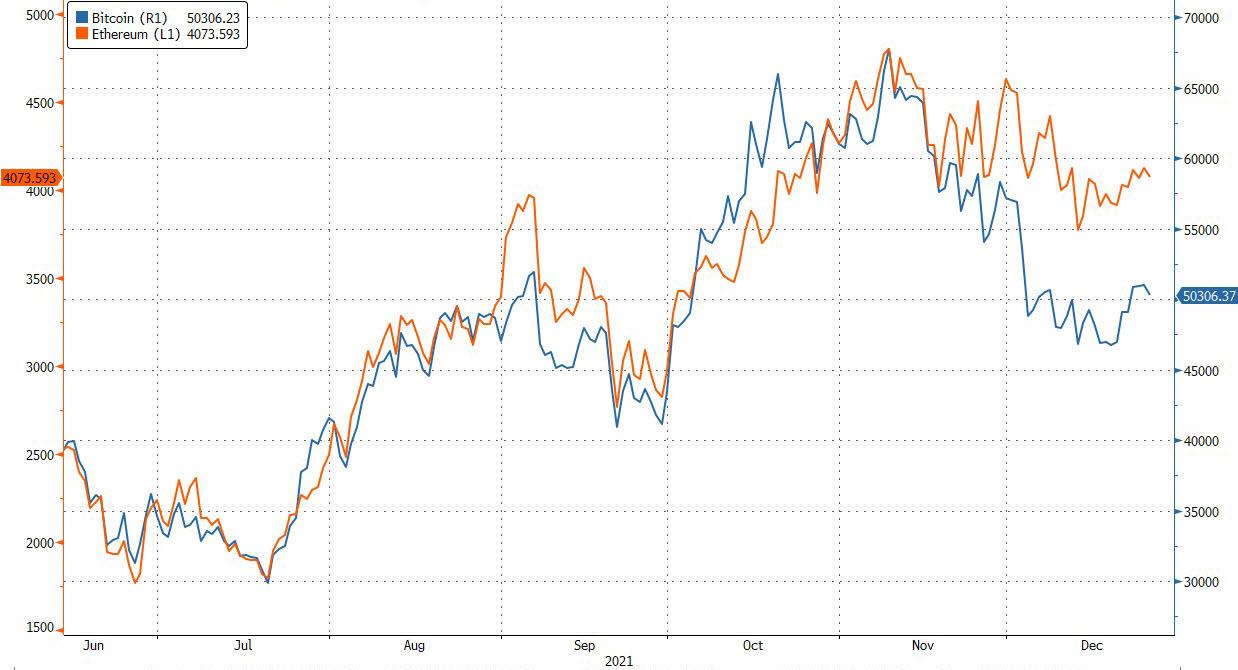
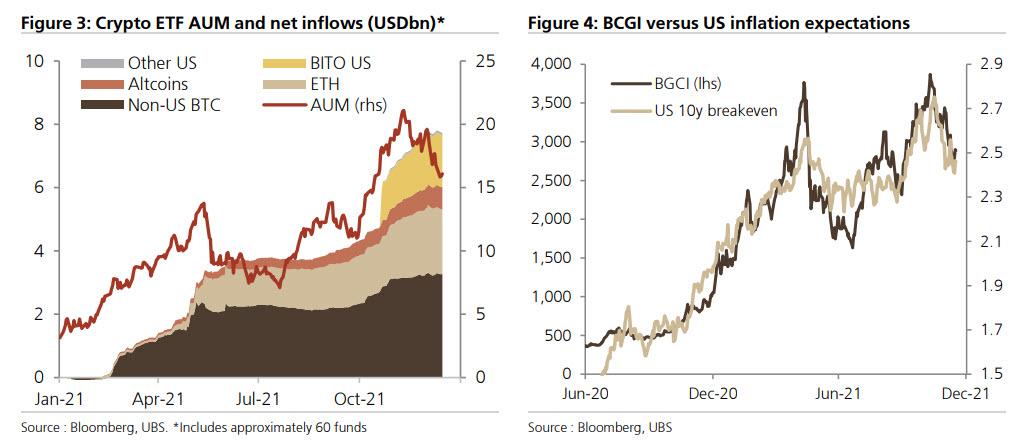
It has been a rather testing time for the latest and newest cohort of crypto owners (especially those expecting quick and easy gains), because aside for major breakout at the start of the year, and a second one in the middle of 2021, bitcoin is where it was in February and ether, is at levels first hit in May. In its latest Crypto Compass note, UBS writes that extending weakness in major coin prices can be blamed on many things including Fed chair Powell's latest hawkish pivot and options market fragilities.
But the single best and most reliable relationship remains with inflation expectations, which in US 10y break-even terms has fallen back to late-September levels of just over 2.4% (Figure 4).
This is roughly one standard deviation above its post-2000 average of 2.0%, so mildly elevated but by no means as alarming as end-October when they were approaching 2.8%. That would have constituted a 20+-year breakout.
And while over the longer-term cryptos are clearly an inflation hedge - and with China about to push their credit impulse into overdrive (we will discuss this shortly), we expect much more inflation in the coming months - a different pattern emerges in the daily trading cycle.
As UBS notes, in the past month hourly price action has been characterized by lurches lower at times of relatively thin liquidity through APAC trading hours, almost as if some Asian central bank (coughpbocough) is doing everything it can to crash and discredit cryptos during times of lease resistance, but the dip gets immediately bought by crypto-native whales in North America.
And while so far the whales have been clearly correct to bid every dip, UBS points out that insofar as such appetite rests on the logic of cornering supply ahead of TradFi market entry now that 90% of all bitcoins there will ever be have been mined, the Swiss bank cautions that whale dip-buying may be vulnerable to timing inconsistencies which could be set back further by regulatory rulings in 2022. On the other hand, should the US regulatory regime seek to take the opposite track of the scroched earth crackdown approach used by China, we may see a prompt doubling in price, especially since many have pointed out that bitcoin is now late for its traditional havening surge...
... while ETH's eventual transition to ethereum 2.0 will catalyze dramatic inflows into the web3-backing token.

WSJ : The Metaverse Is Already Here

The Metaverse Is Already Here
Mark Zuckerberg’s new platform builds on the success of popular videogames.

Are you ready to live in a 3D-navigable, socially connected, conscience-curving, carefree virtual world? Facebook’s pursuit of this metaverse dream as its next platform is bold, though it may be like swapping out a car’s engine while it’s going 100 mph—hard to do without crashing. Look at Apple as it transitioned from computers to iPods and iPhones. Facebook even changed its name to Meta. “The dream was to feel present with the people we care about,” CEO Mark Zuckerberg explained. He also promised “immersive all-day experiences.” Facebook may need a new platform anyway if the Biden administration dismantles its current one in the name of antitrust.

This has been tried before. A virtual space called “Second Life” launched in 2003. You could buy digital property and clothes with real money and hang out with other blocky avatars. It was early days. Naysayers in Silicon Valley liked to say that “Second Life” was for those who didn’t have a first one.

The metaverse marks another interface transition. Green and amber text monitors gave way to Apple’s and Windows’ graphical user interface, making computers much easier to use. Then slow modems connected us to the internet and we used the barren search-page interfaces of Yahoo and Google. Eventually graphics and photos sneaked in, especially as blogs and social networks boomed, and smartphones with cameras turned many into photo bugs. Then video was added, peaking this year with TikTok and multi-tile Zoom calls. Each interface iteration means humans spend less time navigating the computer and more time harnessing its power.

Think of the metaverse as another change of perspective. Videogames have 3D worlds already, a big jump from 2D Tetris. Epic Games, maker of “Fortnite,” has more than 350 million registered users. Roblox, for younger gamers, has more than 160 million active users. There are thousands of 3D games on smartphones. An estimated 2.5 billion people play videogames daily, a $150 billion market. My guess is this is where Facebook will go shopping—after it begs for permission from the Federal Trade Commission.

No one reads a videogame instruction manual; players learn by doing. Entire generations have learned how to interact with computers by playing videogames, even if they were mostly killing one another virtually.

Facebook paid $3 billion for virtual-reality headset maker Oculus in 2014 and likely has poured in billions more. Facebook is pushing virtual-reality social platform Horizon Worlds, on which people can meet and interact and perhaps do commerce eventually. Fitness and education are huge potential metaverse markets.

I’ve played around with virtual-reality prototypes since dreadlocked technologist Jaron Lanier pioneered them in the late 1980s. I bought a developer kit for the original Oculus Rift in 2012 and Google Glass in 2013. In 2019 I tried Magic Leap’s artificial-reality glasses, which beam photons directly onto your retina to display 3D objects in the real world—truly amazing but limited and cumbersome. Now I own a $299 Oculus Quest 2, which looks like a pair of opaque ski goggles. It is spectacular. I’ve boxed virtually and explored the International Space Station and Antarctica. In real life I can ride any roller coaster, but I began to feel nauseated after using the Oculus for an hour. Staring at screens an inch from your eyeballs takes some getting used to. And be careful—a guy I know ended up in the hospital after falling over his living-room furniture.

It is early innings, but never underestimate how quickly technology advances once there is a big market that lowers costs. How will it all be paid for? “Ads . . . will probably be a meaningful part of the metaverse, too,” Mr. Zuckerberg noted.

Many real-world problems will sneak into this new world. An early tester of Facebook’s Horizon Worlds posted a few weeks ago that her avatar was groped by another avatar. I had to think for a while about whether that was even possible. I’m against all sexual harassment, and this shows the metaverse has a lot of rules and boundaries to work through.

Eventually, will we see virtual artwork and nonfungible tokens hanging on infinitely expandable walls? Virtual fitness fanatics? Real-estate developers buying up virtual worlds? Self-replicating virtual cyborg Terminators? Maybe, but I guarantee that the metaverse, like all new technology, will be far different from whatever we can dream up today. But definitely keep one of those airline barf bags around.

FT : T Rowe Price chief warns of ‘free-form risk-taking’ in buoyant markets

T Rowe Price chief warns of ‘free-form risk-taking’ in buoyant markets
Bill Stromberg, head of $1.6tn fund group, sees increased speculation as stocks hit new records

The outgoing head of one of the largest active US fund managers warned that investors should “step away from risk” to avoid being burnt in an increasingly speculative market.

Investors should not be overexposed to what has worked in the past year, or even three years, said Bill Stromberg, the chief executive of T Rowe Price, who will retire at the end of this year. “Even if they are a year too early. Because when the market unwinds, it will be areas of risk that unwind the most.”

Markets have been strong in 2021, recovering quickly from the shock of the pandemic as influxes of government stimulus, loose monetary policy and strong consumer demand drive stock indices to all time highs. Investors have taken on more risk.

“Over last two years there has been a way above-average amount of speculation,” Stromberg cautioned in an interview with the Financial Times. “We’ve been in a cycle where there has been very free-form risk-taking.”

Widely tracked indices are being propped up by a small handful of extremely large, overvalued companies, Stromberg said, while much of the rest of the market is “picked over”.

This concentration means active management is more valuable, Stromberg said. “It is time to be managing away from the most speculative investments — things that have very high valuations without revenues to support it.”

“Investors should remain disciplined,” he said. “I can’t tell you when that period of speculation will end, but it won’t be sustained.”

Investors need to seek out active managers who “are willing to step away from risk” to avoid being scalded, he said.

Actively managed fund houses such as T Rowe have been buffeted over the past 10 years as a bull market and low-cost index-following products made it easy for retail investors to outperform active managers for a fraction of the cost.

Fewer than half of all active funds outperformed passive indexed-based funds such as the S&P 500 stock index for the year to June 2021, according to data from Morningstar Direct. Over the long term the record is more patchy, with fewer than 20 per cent of all active funds surviving, though the survivors outperformed on average over a 10-year period.

T Rowe has managed to survive in the changed landscape. The firm made its name picking Silicon Valley stocks such as Twitter and Uber before their initial public offerings, along with newer consumer brands such as spectacles supplier Warby Parker.

T Rowe’s own share price has climbed more than 150 per cent over five years, while its assets under management have roughly doubled since 2016. The fund company has outperformed the S&P 500 but underperformed the Nasdaq Composite over the same period, which is up about 200 per cent.

Stromberg has been with T Rowe for 34 years and served five years as chief executive. The fund company manages $1.6tn.

The value of active management, Stromberg said, “boils down to who can deliver and beat passive over the long term. We’re one of half a dozen scaled firms that have done that well over time.”

Stromberg also led the company through its first major acquisition by purchasing Oak Hill Advisors for $4.2bn, an alternative investment manager with distressed, special situations, structured credit, and real asset strategies, among others. The deal will diversify T Rowe’s revenue stream.

As the sector becomes more consolidated and competitive, large firms turning to acquisition for growth is a theme that will continue, Stromberg said. “I can’t see a reason why that trend would change.”

Stromberg will be succeeded at T Rowe by Rob Sharps, a 24-year veteran of the firm, currently serving as chief investment officer.

FT : Pharmacy of the world: China’s quest to be the No 1 drugmaker

Pharmacy of the world: China’s quest to be the No 1 drugmaker
How policy, people and cash are driving growth — and sparking a backlash


In China, start-up companies in the field of drug discovery are emerging one after another, dovetailing with a push by the administration of President Xi Jinping to advance China’s pharmaceutical industry.

Now a country long known for producing generics and active pharmaceutical ingredients — the raw materials for precursors — has also begun to discover new drugs.

In particular, it has seen strong growth in biological pharmaceuticals, or biologics, which are considered more difficult to produce than ordinary drugs.

China’s pharmaceutical market is already the second biggest in the world, after the US, thanks in large part to domestic demand from hospitals. Now Beijing wants to take the final step and surpass the US.

However, its methods have prompted significant criticism, from questions over quality to suspicions of intellectual property theft.

In part one of this series, Nikkei Asia explored how China became the top global supplier of Covid-19 vaccines. This second part looks at how the jab gambit is part of a broader effort to dominate the international drug market. Explore the full story here.

(ZH) A Colossal Theft In Pain Sight

A Colossal Theft In Pain Sight

Submitted by Larry McDonald, author of The Bear Traps Report

What have we done with the $11 Trillion?
We have clients in 23 different countries, but most reside within the continental United States – in recent weeks, we keep hearing countless stories of self-proclaimed 24-hour turnaround testing centers to do a PCR test, then taking more than 80 hours to get the results back. Friends in New Jersey tell us not one pharmacy or walk-in clinic in a 100-mile radius has appointments available in the next week. Home testing has improved but for those traveling overseas – it is a PCR test that is needed.
The question that haunts us now is that, almost two years into this crisis and an $11 Trillion U.S. Fiscal and Monetary spending deluge, we still don’t have an adequate testing infrastructure? It blows us away – we are still dealing with endless waiting lines, no availability of testing appointments, shortages of at-home tests and overwhelmed testing labs scrambling to process vials. Where did all that money go?
State and Federal Debts Add Up
In the US, the corona crisis started on January 29, 2020, when the White House initiated its coronavirus task force. Since then, the US has gone from crisis to crisis and the media and our politicians have been obsessed with this epidemic and its consequences ever since. Amidst all the turmoil, the US government has left no stone unturned to throw money at this disaster. The Fed kicked off in early March by lowering interest rates to zero and shortly after began rolled out an alphabet soup of emergency programs. From buying high yield debt to bankrolling bailout checks (PPP loans), nothing was left on the table for our adroit stewards at the Fed. The byzantine maze of fiscal stimuli has left everyone confused. Nevertheless, the total amount of support the Fed has pumped into the economy is best measured by the expansion of its balance sheet. When the Fed finishes its asset tapering program in March of 2022, its balance sheet will have expanded by $5 Trillion. In less than two years the Fed deployed more money than during, and in the 10 years after, the great financial crisis ($3.5TR). This monetary support alone is also more than that of the entire GDP of Japan, the third-largest economy in the world.
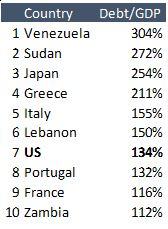
Not to be outdone, the Federal government opened the floodgates by quickly passing spending bill after spending bill. After less than two years, the total amount of fiscal stimulus, as measured by the fiscal deficit spending, has reached a mind-blowing $6 Trillion. U.S. Federal debt has reached $29 Trillion and $32 Trillion if you add State and Local debt. At this point, US debt is a whopping 134% of GDP, giving the U.S. the dubious honor of being among top ten most indebted countries worldwide. This is a spot the erstwhile creditor to the world shares with the likes of Italy and Venezuela.
Where did all the money go?
And what did we, the American people, get for this colossal $11 Trillion in a monetary and fiscal deluge? As we find ourselves in the midst of yet another massive outbreak is case count, this seems like a valid question. You would think that the priority for these funds is to bolster essential healthcare needs to address this medical crisis. But even now, the US is still woefully ill-equipped with testing capabilities, almost two years into this crisis. Our friends in Europe tell us testing is quickly done there. They live in urban areas such as Paris where testing is still readily available. France is also in the midst of another outbreak but seems to have no problem providing its citizens with ample testing facilities.
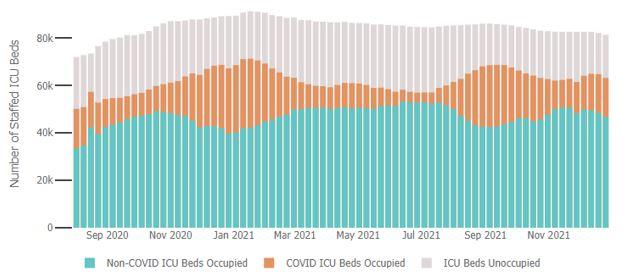
In hospitals, there has apparently been no improvement in available capacity in the critical ICUs, judged by the Johns Hopkins weekly hospitalization trends.
Hospitalizations
Incredulously, ICU beds-in-use compared to overall availability is almost higher now than it was a year ago.
So Where did the Money Go?
According to the Congressional Research Service, $25 Billion was appropriated for “selected domestic COVID-19 vaccine-related activities”. That sounds like a lot, but it’s a mere 0.5% of the federal emergency spending in the last two years. It turns out that the department of health and human services wasn’t even the biggest recipient of all the emergency spending. It was fourth on the list, which was topped by the Treasury Department, the small business administration, and the department of labor. Other major recipients were the department of education and the agriculture department. Why farmers needed a $160 Billion windfall during the pandemic is incomprehensible, especially since most crop commodities have been at record highs for a year now.
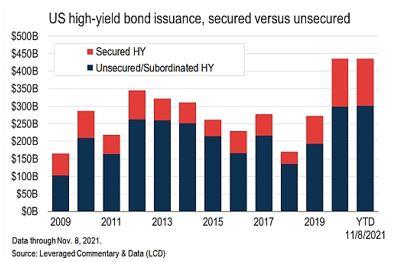
Reasonable people can agree that small businesses needed support during this crisis, especially during the lockdown. But the Fed’s Term Asset-Backed security Loan Facility (TALF), Primary and Secondary Market Corporate Credit Facilities ((P/S) MCCF), and Municipal Liquidity Facility (MLF) had absolutely nothing to do with small business assistance. These programs, together with the $5 Trillion purchases of Treasuries and agency debt, helped to foster an explosion in debt issuance by big business. Fueling stock buybacksInvestment-grade debt issued in this year and last year was a total of $3.1 Trillion, almost half the size of the total IG market. High yield issuance was even more baffling, setting issuance records two years in a row amidst a debilitating epidemic.
Junk Bond Bonanza Fueling Stock Buybacks
The effect of all this government largesse has had a profound impact on the stock market. The total market value of all stocks has risen from $34 Trillion to $53 Trillion; a whopping $19 Trillion (50%) increase from pre-pandemic levels. The IPO market has been red hot this year, with 1000 deals for the first time in history. Rock bottom interest rates and epic multiple expansion have driven investors into IPOs, as they clamor for excess returns in the most unsavory deals. U.S. junk bonds, we see new supply to plunge as much as 30% in 2022 as refinancings, the driver for almost 60% of issuance this year, will shrink because companies already capitalized on low yields and lengthened maturities. Likewise, a Fed in a hiking cycle should tighten financial conditions – shrink issuance.
Buybacks Driving S&P and Nasdaq Higher – On Leverage
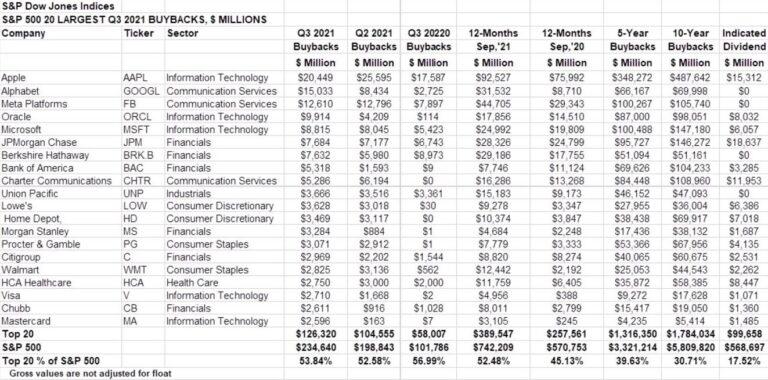
Congress wants to tax stock buybacks – the implications are sky-high as a colossal equity market bid comes from Fed-induced corporate bond sales- See above with @SamRo – he notes just 20 companies are responsible for half the stock buybacks – this is one enormous – central bank fueled – leveraged Ponzi is driving stock indexes (S&P 500 and Nasdaq) higher. Of course in Q1 – Q2 2020 when stocks were on sale – few companies were buying back stock. Per Fitch – U.S. dollar-denominated, investment-grade (IG), corporate bond volume, excluding financial institutions, supranationals, sovereigns, and agencies, tallied $705 billion through Dec. 16, 2021. We saw the second-highest issuance through the first 10 months of the year and are up 27% and 13%, from 2018’s and 2019’s respective levels. Volume is down 36% versus the record 2020 amount; though that gap could shrink by year’s end as the final two months of 2020’s issuance was well below 2021’s monthly average. The volume disparity between 2020 and 2021 relates to deal size. Last year, there were double the number of transactions done for $4 billion or more compared with this year (60 in 2020 versus 29 in 2021). Both years featured at least two $20 billion issuances, with AT&T Inc. and The Boeing Company driving 2020 while Verizon Communications Inc. and AT&T led 2021.
Several prominent companies tapped the IG market in 2021, including Verizon, AT&T, Amazon.com Inc., Oracle Corp., Comcast Corp. and Apple Inc. These six issuers comprised 21% of the year’s total volume, with all completing bond transactions of $15 billion or more. In fact, the 10 largest issuers make up 29% of 2021’s volume, highlighting the market’s concentration.
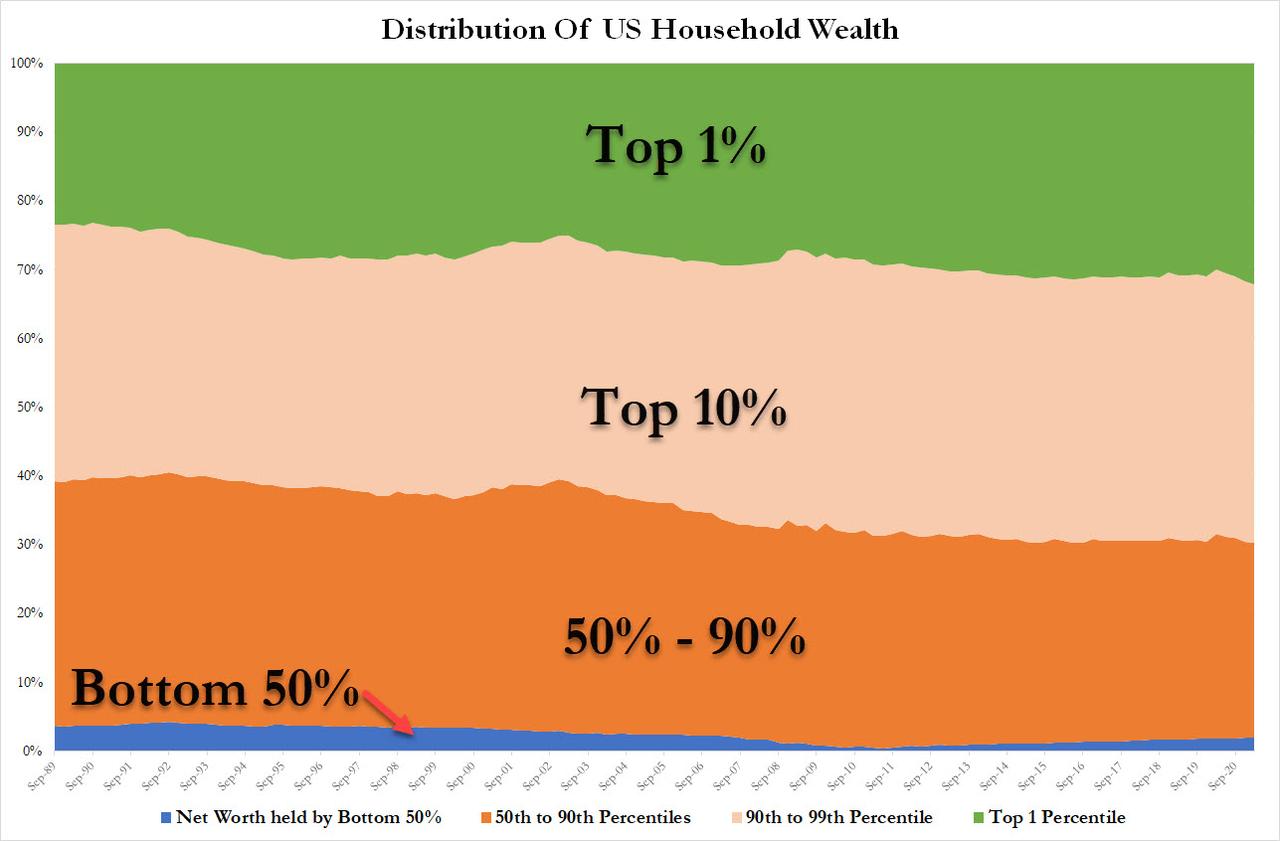
The problem is – central banks are fueling unsustainable inequality.
Share of Total Net Worth held by the Top 1%
  • 2021: 32.5%
  • 2010s: 31.2%
  • 2000s: 27.2%
  • 1990s: 26.7%
  • 1980s: 23.2%
*Since 2003, the Bottom 50% total net worth held has plunged from 39% to 30%. Federal Reserve data. For 20 years 1990-2010, the top 1% net worth held was range-bound 26-27% – since central bank aggression in balance sheet expansion in 2009, inequality has exploded higher.
The Great Heist at the Taxpayers Expense
This is all great if you own stocks, or when you are a Fortune 500 company issuing debt to repurchase your own stock, but neither the deluge in debt nor the record number of buybacks (at a run-rate of $1 Trillion this year) have done anything to bolster our country’s medical care or Americans’ health. More troubling even is reports showing outright theft of funds earmarked for pandemic emergency spending. The Wall Street Journal quoted the U.S. Secret Service who said that “some $100 billion has potentially been stolen from Covid-19 relief programs designed to help individuals and businesses harmed by the pandemic.” The main culprits are worldwide organized crime networks, who defrauded primarily the pandemic unemployment insurance program. On top of that, as much as 15% of the PPP loans ($76 billion out of $800 billion total) may have been fraudulent, according to the New York Times.
The Middle Class is in Pain
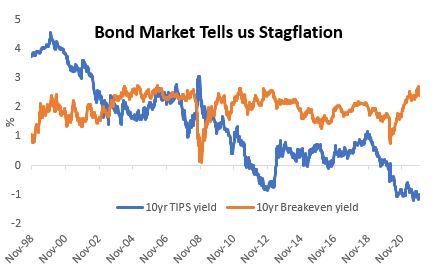
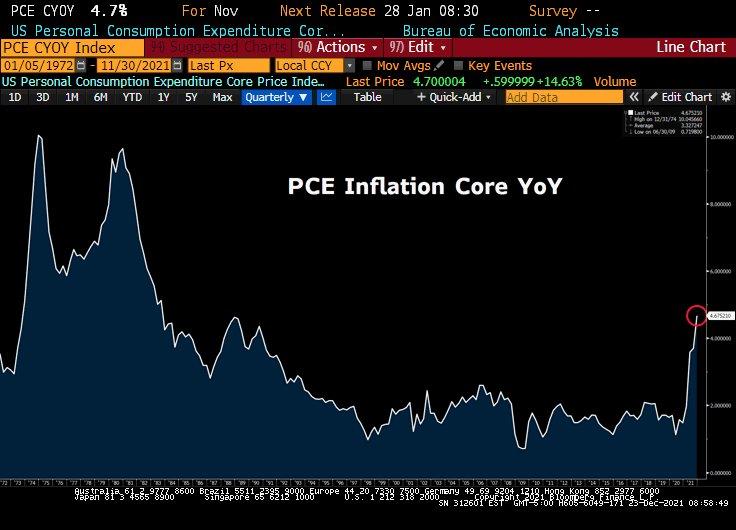
After $11 Trillion of emergency spending and support, the US healthcare system is just as inadequate as it was before the crisis, violent crime is rampant, drug overdoses have never been higher and the economy is showing signs of stagflation, as illustrated by the record spread between Treasury breakevens and TIPS yields¹. What these bond market metrics suggest is that the potential growth rate of the US economy has structurally declined since the pandemic (it already declined a lot since the “great financial crisis”) and that any growth future growth is coming from price increases. The bond market is telling us – all future GDP growth is coming from price increases, but there is little real growth in the economy, that is why TIPS yields are -1%.
Consumers in Pain
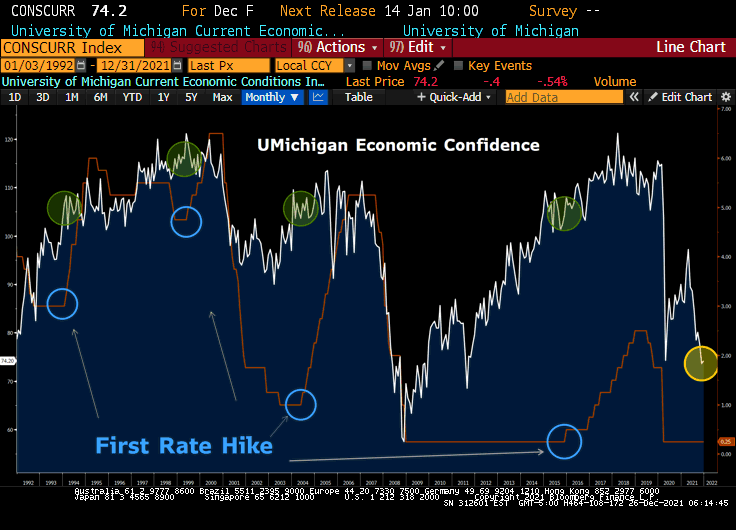
Since August – we have had THREE sub-80 readings from the University of Michigan Consumer Economic Confidence Data. Looking back over the last 30 years – it is HIGHLY unusual for the Fed to hike rates with consumers in this kind of pain. Inflation´s taxing powers over the consumer have already hiked rates 100bps for the Fed in our view – colossal demand destruction has taken place. These stagflationary conditions erode people’s real disposable income, making them worse off. Ultimately, most of the $11 Trillion ended up benefiting the top wealthiest Americans, by inflating the prices of assets such as bonds and stocks and lowering interest rates for borrowers with the highest credit rating. For the average citizen, this has been a very raw deal.
Loud Covid Narrative Hides Inconvenient Truths
We must look at the big picture. The number one killer of Americans aged 18 to 45 is now fentanyl overdoses, with nearly 79,000 victims in the age range dying to them between 2020 and 2021.
Inflation is a Regressive Tax on the Middle Class
TIPS: Treasury Inflation-Protected Securities: The principal of a TIPS increases with inflation and decreases with deflation, as measured by the Consumer Price Index. When a TIPS matures, you are paid the adjusted principal or original principal, whichever is greater. Breakeven yield is calculated by deducting TIPS yields from real yields. Breakeven rates derive the rate of inflation priced in by the bond market for applicable maturity (such as 10-year breakevens express the implied rate of inflation in the next 10 years).
Trillions of Fiscal and Monetary Support
What is so painful is that not only is there no discernable improvement in the healthcare infrastructure to deal with the corona crisis, but other facets of America’s healthcare are now even worse off. The CDC reported this week that fentanyl is now the leading cause of death among teenagers. These drugs have killed more people between the ages of 18 to 45 than corona, car accidents, and suicides. Data from Families Against Fentanyl suggests that now one person dies from an overdose every 8.5 minutes. The pandemic has pushed drug abuse into overdrive as “the stress of the pandemic has led more people to use these types of drugs, according to experts.” The Census Bureau this week reported that America’s population grew at the lowest rate in history. In the year that ended July 1, the U.S. recorded only 148,000 more births than deaths, with the balance coming from net immigration.
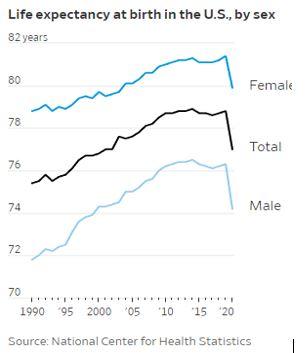
America’s life expectancy last year declined by an unprecedented 1.8 years to 77 years. Besides corona, increases in mortality from drug overdoses, heart disease, homicide and diabetes also decreased life expectancy. Violent crime especially has seen a dramatic increase in the last two years. CDC’s National Center for Health Statistics reported that homicide rates rose 30% between 2019 and 2020 and they continue to go up this year. At least 12 major U.S. cities have broken annual homicide records in 2021 — and there’s still three weeks to go in the year.
US Annual Population Growth
  • 2021: 0.1%
  • 2011: 0.8%
  • 2001: 1.0%
  • 1991: 1.2%
America is dying – and it’s NOT just a Covid narrative. From 1999–2019, nearly 500,000 people died from an overdose involving any opioid, including prescription and illicit opioids -CDC data.

>>> Weekend Papers Summary

Weekend Papers Summary


NEW YORK TIMES
-Thousands more flights around the globe were canceled on Sunday as Omicron sickened airline crews.
-Why the police believe they’re not to blame for deaths in custody. The NY Times examines “the self-reinforcing ecosystem of paid experts who advise and train officers, then absolve those accused of killings.”
-Desmond Tutu, whose Voice Helped slay Apartheid, has died at 90. The archbishop, a powerful force for nonviolence in South Africa’s anti-apartheid movement, was awarded the Nobel Peace Prize in 1984.
-‘Magic’ Weight-Loss Pills and Covid Cures: Dr. Oz is a candidate in Pennsylvania’s Republican primary for Senate, has a long history of dispensing dubious medical advice on his daytime show and on Fox News.
-Eastern European nations have drawn a lesson from America’s wars of the last decades: Insurgency works. Ukraine’s training of volunteers has become a factor in the standoff with Russia.
-Many Afghans who evacuated to the Netherlands have been living in tents for months as Europe is wrangling with a heated debate about immigration.
-As the national birthrate declines, a lower cost of living, less-crowded schools and cheaper taxes have drawn newcomers and fueled a baby boom in Texas.
-Astronomers were jubilant as the spacecraft made it off the launchpad following decades of delays and cost overruns with its precious payload: the James Webb Telescope. The Webb is set to offer a new keyhole into the earliest moments of our universe.

THE FINANCIAL TIMES
-Germany’s premium car manufacturers enjoyed record high prices for their luxury models in 2021 as a shortage of semiconductors restricted the supply of vehicles to major markets just as consumer demand was soaring.
-President Joe Biden’s chief medical adviser, Anthony Fauci, warned on Sunday that the number of Americans infected with Covid-19 was likely to “go much higher” before easing off in the new year.
-Global supply chain problems have thrown up everything from abandoned containers full of rotten red cabbages to beer kegs and dog blankets.
The stranded, unwanted or delayed goods have created a boom in the business of cargo salvage — and a group of companies rarely in the spotlight that keeps world trade ticking over.
-The United Arab Emirates government has told some of its biggest business families that it intends to remove their monopolies on the sale of imported goods as the Gulf state deepens economic reforms in an effort to attract more investment.
-“During the pandemic, Mainz became the world’s pharmacy,” said mayor Michael Ebling, who pledged to use the funds flowing from BioNTech’s pivotal role in fighting coronavirus to clear the city’s debts. Corporation taxes — some of which can be set by local German authorities — will also be cut in a bid to attract more biotechnology businesses.
-The Solomon Islands are just one of the tiny but strategically important nations of the Pacific that are caught up in a growing geopolitical competition over whether to maintain diplomatic ties with Beijing or Taiwan.
-By amassing tens of thousands of troops on the Ukrainian border, the Russian president has forced the White House into what experts in the region believe is a scramble to formulate a policy on the fly.
“This is becoming the worst crisis in Europe since the end of the cold war,” said Andrew Lohsen, a fellow at the Center for Strategic and International Studies think-tank.
-For the foreseeable future, most of the world’s population increase will be in Africa. In 1980, one in 10 of the world’s population was African, writes Edward Paice, author of a new book Youthquake and director of the Africa Research Institute.
-Russian President Vladimir Putin said the US and Russia would meet in January in Geneva for talks over Ukraine, which he said were essential to protect Moscow from what he claimed were existential threats from NATO.
-Amazon has reached an agreement with the National Labor Relations Board that could pave the way for its almost 1m US employees to form a union.
-Credit Suisse has launched legal action against SoftBank in an effort to recoup hundreds of millions of dollars it claims it is owed by the Japanese investor, marking a further deterioration in a relationship that has grown increasingly acrimonious following the collapse of Greensill Capital.

THE NEW YORK POST
-Vice President Kamala Harris appeared to misspeak during an interview aired Sunday when she answered “democracy” when asked what’s the biggest national security challenge facing the US.
-Huma Abedin, the former longtime aide to former Secretary of State Hillary Clinton, said the “final straw” for her came when The Post published a photo on its front page of her husband, disgraced Congressman Anthony Weiner, sexting while lying in bed with their young son.
-Noting the city’s profound housing shortage, the Real Estate Board of New York (REBNY) produced a batch of proposals to facilitate large-scale office-to-residential conversions. But they’d require wholesale zoning changes, state-city cooperation to provide tax subsidies, and cultural changes at city agencies such as the departments of Housing Preservation and Development, Buildings, City Planning and Finance.