>>> What to look at today - 13th of April 2022

Treasuries slipped and Asian stockswere mixed Wednesday as investors calibrated economic risks from elevated inflation. New Zealand implemented its biggest interest-rate hike in 22 years to quell price pressures. Japan shares gained but Hong Kong and China wavered. Signals from futures were muddy: S&P 500 and Nasdaq 100 contracts rose but Europe’s dipped. New Zealand’s dollar was among the best performers in the Group-of-10 currency basketfollowing a half-point rate rise that again highlights the trend of sharp monetary tightening across a range of economies. The U.S. session Tuesday was shaped by inflation data, which came in at 8.5% for the headline number -- the highest in four decades -- but was better-than-expected at the core level, which excludes volatile food and energy prices. Treasuries trimmed an advance that was sparked by the core reading. While the latter prompted traders to pare back expectations on how aggressively the Federal Reserve will raise interest rates, cost pressures remain a big risk. A dollar gauge was steady. In commodities, oil topped $100 a barrel after Russian President Vladimir Putin vowed to continue the war in Ukraine and China partially eased Covid curbs. US After Hours NSTG -30.2% falls on weak guidance; PYPL -1.6% CFO to become Walmart CFO; AFMD +5.3% trades higher

Nikkei +1.94% Hang Seng +0.89% CSI +0.20% Shanghai +0.27% Shenzen -0.29%

Eur$ 1.0835 CNH 6.3753 CNY 6.3658 JPY 125.53 GBP 1.3010 CHF 0.9325 RUB 85.3360 TRY 14.5862 WTI$ 100.37 -0.23% Gold 1969.54 +0.14% BTC 40,032 +1.25% ETH 3047.72 +2%

S&P +0.74% Nasdaq +1.02% EuroStoxx 0.08% FTSE +0.03% Dax -0.21% SMI -0.03%

Macro :
- London’s Singing Rainmaker Robey Has No Plans to Slow Down, Sell
- U.S. Prepares Massive New Surge of Military Aid to Ukraine
- Top Oil Merchant Vitol Will Stop Trading Russian Crude
- *CHINA MARCH TRADE BALANCE $47.38 BLN; EST. $21.70 BLN

Keep an eye on :
- AI FP : Air Liquide Sells Industrial Merchant Business in UAE, Bahrain
- ATL IM : Benettons, Blackstone Bid for Atlantia Said to Exceed EU22/Shr
- BALN SW : Baloise Hit by Cyber Attack, Primarily Affecting Basler
- BPM IM : JPMorgan Has 6.5% Stake in Banco BPM: Consob
- BARN SW : Barry Callebaut First-Half Sales Beat Estimates in Rebound
- RBOS GY : Bosch beats out other bidders to acquire Five.ai: It was a match made in self-driving car heaven: Five was looking for a buyer and Bosch is a big player in the space.
- CSGN SW : Credit Suisse Investors Told Not to Clear Board of Liability
- GSF LN : Gore Street Energy Storage Fund Offering Prices at GBp110/Share
- HOFI SS : Hoist Finance Divests U.K. Credit Management Subsidiary
- IBE SM : Iberdrola Seeks Partners for German Wind Assets: Expansion
- IMPN SW : Implenia’s Arge Gubri JV Gets CHF184M Zurich Tunnel Contract
- TKWY NA : Just Eat France to Cut 269 Permanent Delivery Jobs: Le Figaro
- SDF GY : EU Fertilizers Face Higher Carbon Costs as Prices Surge on War
- MC FP : LVMH Overcomes China Lockdown on Leather, Key Sector Jump: React
- MOWI NO : Mowi Preliminary 1Q Ebit Rises to About EU207M
- OCI LN : Oakley Plans to Sell German Cloud Computing Firm Contabo: Rtrs
- TECN SW : Tecan Group Fails to Get AGM Nod for Renewal Authorized Capital
- TIT IM : Apax, Iliad May Bid for Telecom Italia’s ConsumerCo: Messaggero
- YARA NO : EU Fertilizers Face Higher Carbon Costs as Prices Surge on War
- FHZN SW : Zurich Airport March Passenger Traffic +478.4%

>>> Europe : Brokers Upgrades & Downgrades - 13th of April 2022

>>> Up
* Derwent London Raised to Overweight at JPMorgan; PT 4,200 pence
* Great Portland Raised to Overweight at JPMorgan; PT 900 pence
* ITM Power Raised to Outperform at RBC; PT 500 pence
* Sartorius Raised to Buy at Berenberg; PT 490 euros

>>> Down
* Adecco Cut to Hold at Deutsche Bank; PT 41 Swiss francs
* Adidas Cut to Reduce at Baader Helvea; PT 190 euros
* Alfa Laval Cut to Underperform at Credit Suisse; PT 270 kronor
* Aurubis Cut to Add at Baader Helvea; PT 110 euros
* Credit Agricole Cut to Underweight at Morgan Stanley
* Credit Agricole Cut to Equal-Weight at Barclays; PT 14.10 euros
* Ferguson Cut to Hold at Deutsche Bank; PT 9,960 pence
* FLSmidth Cut to Sell at Handelsbanken
* Hammerson Cut to Underweight at JPMorgan; PT 28.60 pence
* Land Sec. Cut to Neutral at JPMorgan; PT 900 pence
* nCino Rated New Overweight at Morgan Stanley; PT $60
* Polytec Holding Cut to Reduce at Baader Helvea; PT 6.70 euros
* Randstad Cut to Hold at Deutsche Bank; PT 54 euros
* Reynolds Cut to Hold at Stifel; PT $31
* Solaria Energia Cut to Sell at Citi; PT 17.20 euros
* Sparebanken Sor Cut to Sell at Nordea; PT 137 kroner
* WDP Cut to Equal-Weight at Barclays; PT 39 euros

>>> Initiation


>>> Call
* Adidas Cut to Reduce at Baader as Outlook Becomes More ‘Cloudy’
* France/Benelux Banks Face Volatile 1Q, Credit Agricole Cut: MS
* Solaria Energia Cut to Sell as Citi Cites Market Saturation

FT : Shanghai lockdown stokes global supply chains anxiety

Shanghai lockdown stokes global supply chains anxiety
Electronic manufacturers halt production after restrictions extended beyond China’s biggest city

One of the world’s largest electronics manufacturing hubs near Shanghai is grinding to a halt, aggravating China’s economic worries and exacerbating disruption to global supply chains.

Dozens of producers of crucial electronic components on Wednesday halted production at their factories in Kunshan, a city close to Shanghai. Companies and analysts said the shutdown was unavoidable after lockdown rules initially applied only in Shanghai were extended to Kunshan.

“The situation in Kunshan changed overnight. While factories there could previously operate under so-called ‘static management’, they are now switching to a system like in Shanghai, where individual areas are categorised as closed, restricted or protected depending on when they registered infections for the last time,” said Patrick Chen, head of research at CLSA, a brokerage, in Taipei.

The production disruptions have heightened risks for China’s slowing economy. On Monday, Premier Li Keqiang warned for the third time in a week of the dangers that pandemic control measures posed to the economy.

Official data showed new cases reached a record high in Shanghai on Tuesday after falling a day earlier. There were 26,330 positive cases in the city, which is under a vast lockdown in a bid to halt China’s worst outbreak of the virus in two years.

Authorities laid out a blueprint for easing some measures by allowing residential compounds with no cases over the previous fortnight to reopen. But lockdown restrictions remain in place across large portions of China’s largest city, where residents have complained of difficulties in ordering food online. The US state department this week ordered non-essential consular staff to leave Shanghai.

The lockdown has also affected trucking companies, sparking warnings of a deeper impact on global trade. Shanghai port, however, has remained operational through a so-called closed-loop system, where workers remain on site.

Economists at Nomura estimated that 45 cities and 373mn people in China were under full or partial lockdown, compared with 23 cities and 193mn people a week ago.

In a sign of growing pressures on trade, imports into China fell in dollar terms in March on a year-on-year basis for the first time since August 2020. Exports rose 15 per cent.

Production delays in the electronics industry make it just the latest sector to be hit by the restrictions. Electric carmaker Nio said over the weekend that suppliers in Shanghai and elsewhere had halted production and that it would suspend deliveries.

On Wednesday, more than 30 Taiwanese electronics manufacturers announced closures of factories close to Shanghai.

WUS, a leading printed circuit maker, said two of its Kunshan-based subsidiaries had suspended production. LCD backlight manufacturer Coretronic announced a week-long production stop at its Kunshan plant, while Wise Pioneer, a supplier of machinery for making electronics products such as flat screens and lenses, said it was extending a production halt for another week.

Contract electronics manufacturer Pegatron, which assembles some iPhone models for Apple, suspended production at two plants in Shanghai and Kunshan on Tuesday.

Analysts said the stoppages risked worsening component shortages.

“Even if some companies are allowed to continue production, their utilisation rates have fallen to between 40 and 60 per cent. Raw materials can’t be moved in and finished products can’t be moved out,” Chen said.

Analysts expected supplies of printed circuit boards, a component used in almost every electronics gadget, as well as of casings for smartphones and laptops, would be affected most by the factory shutdowns.

The impact on Apple was expected to be limited because demand for the iPhone models Pegatron assembles, the 13 mini and the SE3, have been sluggish and production for the iPhone 14 was only set to rise late in the third quarter.

WSJ : Merger Insurance Getting Cheaper Amid Cooling Deals Market, Experts Say

Merger Insurance Getting Cheaper Amid Cooling Deals Market, Experts Say
Record acquisition activity seen at the end of 2021 has given way to deal flow more in keeping with recent years

The market for mergers-and-acquisitions insurance, which overheated during a busy acquisition season at the end of last year, has started to cool down, deals experts said.

Companies seeking insurance help to guard against the risks inherent in deal making can expect lower prices and more insurance company staff capacity to handle their requests, Jodi Rosensaft, a managing director in the transactional risk practice at professional services firm Marsh LLC, said Tuesday.

“We’re not seeing that type of pressure, both on pricing and availability, that we were,” Ms. Rosensaft said, speaking on a panel at the RIMS Riskworld conference in San Francisco, a gathering of risk managers and insurance industry professionals.

Deal activity in 2021 hit record levels for a variety of reasons, including low interest rates and growth in private-equity fundraising. Total global M&A activity in 2021 jumped 64% from the previous year to around $5.9 trillion, according to data provider Refinitiv.

The surge exhausted insurance industry capacity to fund all the deal-related policies companies sought and, in some cases, overworked staff were unable to field all the demand, Ms. Rosensaft said.

That frenzy has slowed, she said.

Last year “was just such an aberration in M&A deal flow in every sector, in every deal category and every size of transaction,” Ms. Rosensaft said. “There was a lot of pressure that was just making getting the deals done more difficult across the board. We’ve returned to regular levels.”

Anna Geml, a deals lawyer at law firm Kirkland & Ellis LLP, said that companies are now able to find more insurance that fits their needs.

“Coverage parameters are much more in line with what we saw in early 2021,” Ms. Geml said. “Carriers are willing to work with us—we have time to come up with creative solutions versus trying to handle 15 deals in one day.”

Insurers also are expressing more interest in taking on deals outside the middle-market sweet spot that had defined so-called representations and warranties insurance, showing a willingness to cover both smaller deals and the large deals they typically shied away from, Ms. Rosensaft said.

With a somewhat more relaxed pace of acquisitions, insurers are also more comfortable with backing deals in industries such as financial services and healthcare, which typically pose more risk, she said.

“We’ve been able to slow down and really look at everything,” Ms. Rosensaft said.

(ZH) With Lithium Prices Up Ninefold, Report Underscores US Dependence On Foreig

With Lithium Prices Up Ninefold, Report Underscores US Dependence On Foreign Minerals

A recent white paper has laid out some of the challenges in supplying minerals for any energy transition from fossil fuels, offering a timely warning for policymakers as the increased demand for electric vehicles (EVs) drives up the costs of materials used in such products.
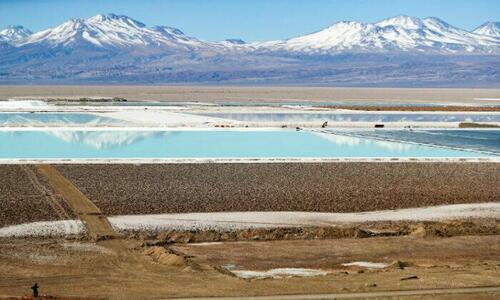
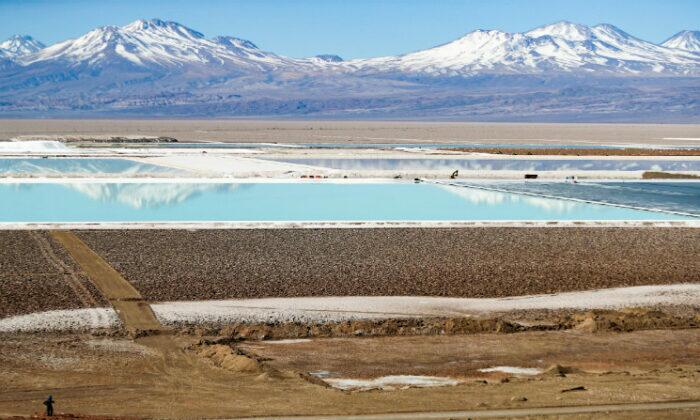
Brine pools from a lithium mine, that belongs to U.S.-based Albemarle Corp, is seen on the Atacama salt flat in the Atacama desert, Chile, on Aug. 16, 2018. (Ivan Alvarado/Reuters)
Notably, the benchmark prices of lithium, lithium carbonate, and lithium hydroxide have rapidly increased in recent months, as detailed at Benchmark Minerals.
Hovering at just $115.80 per ton in September 2020, the benchmark price of lithium has surged to $1045.90 a ton in March 2022. That’s more than a ninefold increase.
Zach Schumacher, a North American metals price expert with Argus Media, told The Epoch Times that the costs of EVs will likely increase as a result. The estimated average transaction price for a new electric vehicle was $56,437 in November 2021, according to Kelley Blue Book.
The prices of other key minerals—including the rare-earth metal neodymium that goes into wind turbines—have also trended sharply upward in recent months and years.
Lithium is not the only raw material directly correlated to the EV market witnessing higher costs, so parsing out precisely how much of the increased costs for vehicles in the coming months originates from lithium alone could prove fairly difficult. Nickel, stainless steel, semiconductor and labor costs are among other costs that have all also risen compared to levels from recent years,” said Schumacher, who added that the prices of consumer electronics could also rise.
Increasingly, scholars are questioning the mineral requirements that would be needed to reach either 100 [percent] renewable or clean energy targets,” states the March report, which was authored by Phil Rossetti and George David Banks for the Citizens for Responsible Energy Solutions (CRES) Forum.
The document notes that EVs are six times as mineral intensive as vehicles that use conventional internal combustion engines, citing a report from the International Energy Agency (IEA).
Renewable energy sources are also more mineral intensive than their hydrocarbon-based alternatives. Wind turbines, for example, need roughly nine times as many minerals as natural gas plants, according to the IEA report.
China is the dominant supplier for multiple critical minerals and is likely to remain so. In the case of minerals it does not supply—such as cobalt—China has near-monopolistic control of refining capacity through its state-owned enterprises,” the CRES Forum’s analysis states.
“Policymakers should also understand the energy security implications of policies that lean heavily on mineral-intensive products for abating greenhouse gas emissions, as scarcity of materials could raise prices as well as create dependency on foreign suppliers that could have an interest in manipulating the market.”
In addition to creating national security risks, the current situation also makes the United States culpable in using forced, or otherwise ethically questionable, labor.
One crucial solar panel input, polysilicon, is largely produced in China’s Xinjiang region, likely through the slave labor of the region’s Uyghur ethnic minority.
Likewise, much of the cobalt in lithium-ion batteries is obtained through child labor from the Democratic Republic of the Congo (DRC).
The CRES Forum report argues that the National Environmental Policy Act (NEPA) impedes domestic mining of minerals for renewable energy, even more than it impedes hydrocarbon production.
“Forty-two percent of DOE NEPA environmental assessments and environmental impact statements [are] for clean energy, transmission, or conservation efforts compared with 15 percent for fossil fuel,” it states, referencing an R Street analysis from one of the report’s co-authors, Phillip Rossetti.
A major proposed project along these lines, the Thacker Pass Lithium Mine in Humboldt County, Nevada, received its Record of Decision under NEPA in January 2021. Nevada’s Division of Environmental Protection issued mining, water, and air permits to it earlier this year.
Yet, the mine has continued to generate controversy, with Shoshone Paiute Gary McKinney writing in the Reno Gazette Journal that “our ancestors’ burial site is no place for a mine.”
The Canadian developer of Thacker Pass, Lithium Americas, has made major deals with the Chinese firm Ganfeng Lithium, including through joint ownership of the Cauchari-Olaroz brine lithium carbonate project in Argentina.
Lithium Americas’ website indicates that Ganfeng owns 46.7 percent of the project while Lithium Americas owns 44.8 percent. The remaining 8.5 percent is owned by Argentina’s state-run Jujuy Energía y Minería Sociedad del Estado (JEMSE).
Even if new domestic mines such as Thacker Pass go online, CRES Forum’s meta-analysis of three studies on the energy transition suggests that demand could outpace proven reserves of multiple key minerals, including cobalt, lithium, nickel, chromium, and zinc.
“In short, the potential mining requirements for a complete clean energy transition with existing technology is so large that it is not clear if it is economically viable to extract enough minerals to meet the needs modeled in those studies,” the report states.
In February, President Joe Biden drew attention to a range of new investments aimed at reducing the United States’ reliance on China for lithium, rare earths, cobalt, and other critical minerals.
This includes $35 million from the Department of Defense for a heavy rare earth element separation facility operated by MP Materials, owner of the country’s only rare-earth mine in Mountain Pass, California.
MP Materials is partly owned by a Chinese firm, Shenghe Resources.
“As proposed by Chinese government, and characteristic in Chinese rare earth industry, Shenghe Resources designed its equity structure on mixed ownership,” the website for the firm states, indicating that the company is partly owned by the state.
The Epoch Times has reached out to Shenghe Resources for comment.
Reuters reported in late March that Sen. Lisa Murkowski (R-Alaska) has described herself as “worried” about the Chinese stake in MP Materials.
The investments announced in February also include a $140 million Department of Energy (DoE) project to obtain critical minerals from mine waste, coal ash, and similar resources.
The CRES Forum report suggests that the challenges it describes could be mitigated by technological breakthroughs, including better approaches to carbon capture and the development of low-carbon fuels for conventional, non-electric vehicles.
It also urges the United States to sanction companies or countries that use unethical labor, arguing that such moves must be made quickly, before the country is too reliant on such minerals.
“As a major consuming market, the United States is best positioned to effect change by refusing market access to unethical suppliers,” it states.

Business of Fashion : A New Era of Fashion-Carmaker Collaborations

A New Era of Fashion-Carmaker Collaborations
From Rimowa’s new tie-up with Porsche to Mercedes teaming up with Palace, a new wave of fashion-carmaker partnerships is targeting a younger generation of aspirational consumers.
Mercedes is a frequent fashion collaborator and has recently partnered with Off White, Palace and Heron Preston. (Mercedes-Benz)

KEY INSIGHTS
  • Rimowa and Porsche unveiled their latest collaboration on a new suitcase last week.
  • Tie-ups between fashion and carmakers are nothing new. For brands, teaming up with the likes of Porsche and Ferrari means access to these companies’ affluent customers.
  • Deals today are far more elaborate than just a licensing deal and a logo swap.

On Friday, Porsche held an exclusive party on a West Hollywood rooftop to celebrate the launch of not a new car, but a suitcase.
The €2,250 ($2,453) case was designed in partnership with German premium luggage brand Rimowa — featuring the company’s signature grooved aluminium design — to pay homage to the storied Porsche 911 sports car, multiple of which filled the venue Friday night, exhibiting the luggage inside their trunks. Attracting a young crowd, the launch also featured five spy thriller-style short films screened at the party that highlighted the collaborative efforts of the two brands.
The Porsche-Rimowa suitcase joins a long list of recent streetwear-influenced collaborations between carmakers and fashion labels, including a new Maybach car designed by the late Virgil Abloh unveiled last week, a Maserati clothing range created with Japanese designer Hiroshi Fujiwara, and a partnership between skateboarding label Palace and Mercedes-AMG. The latter tie-up includes a full clothing range and four special edition cars. Mercedes, an increasingly frequent fashion collaborator, also partnered with streetwear labels Heron Preston and Off-White last year.
The motorsports industry as a whole is looking to align itself with fashion. Racing competition Formula 1 has used streetwear collaborations with brands like Bape to shake off the sport’s stuffy and elitist reputation, marketing itself to a young and fashion-savvy Gen-Z audience.

By teaming up, fashion groups and carmakers not only reach new, affluent consumers but also place novel product categories in front of their most avid fans. It’s not just about selling more cars or creating a new revenue stream. Fashion companies benefit from the association of prestige automakers. Similar to how skateboarding and hip-hop have influenced the menswear market, the culture around performance cars is also creating aspirational markers in fashion.
All the while, companies like Maybach-owner Mercedes-Benz and Jaguar covet visibility among young, stylish consumers who may not ever purchase a $200,000 vehicle but might one day purchase a car branded hoodie if the brand has successfully been marketed as cool.
Similarly, The new Porsche-Rimowa suitcase will reach younger customers who may not own a Porsche, said Deniz Keskin, the company’s head of brand management and partnerships, “but it gives them a chance to enter the brand’s world.”
A More Refined Approach
Tie-ups between carmakers and fashion brands are nothing new. British menswear label Hackett has worked with Aston Martin for almost 20 years. The relationship began when Aston Martin requested to have their Formula 1 drivers’ clothing sponsored by the brand, but it has evolved into a more collaborative partnership in recent years. Today, the companies’ respective design teams work side-by-side on Hackett’s Aston Martin-branded polos and puffer vests, according to Mark Blenkinsop, chief marketing officer of AWWG, Hackett’s parent company.
Porsche and Rimowa previously collaborated in 2013.(Rimowa)
This deeper level of collaboration is indicative of a wider trend, where licensing deals and logo swaps aren’t enough to pique the interest — and wallets — of consumers. Today, the working relationship between auto companies and fashion brands is far more elaborate, highlighting an alignment between their respective products and target audiences. Rimowa and Porsche hone in on their mutual status as German premium design brands, while Maserati’s collaboration with Zegna in 2020 was rooted in their “mutual passion for ‘Made in Italy,’” the brands said at the time.
Nowadays, such collaborations are reaching more discerning consumers, according to Walter D’Aprile, founder of Nss Factory, a Milan-based creative agency. For instance, Gucci’s 2011 collaboration with Fiat simply featured its classic green and red stripes on a special edition Fiat 500 car — a tie-up that wouldn’t fly today, D’Aprile said.
We only collaborate where there is a genuine story to tell or an experience we can create that makes sense for us.
Today, a collaboration requires creating a narrative that explains why it makes sense in the first place. The Palace-Mercedes collaboration was popular with consumers because the colourful, stylish workwear and matching one-of-a-kind art cars designed for the launch reflected Palace’s reputation for daring collaborations that take fashion into new arenas across sport and lifestyle.

“We refuse a lot of brand collabs related to cars,” said Arthur Kar, owner of the L’Art De L’Automobile luxury car dealership that works at the growing intersection of fashion and high-end automobiles and has collaborated with the likes of Porsche and Dover Street Market.
“It’s not because we don’t respect the brands approaching us,” Kar said. “But we only collaborate where there is a genuine story to tell or an experience we can create that makes sense for us.”
Formula 1′s Fashion Icons
Following the footsteps of the NBA and the Premier League, racing competition Formula 1 is becoming a fashion marketing arena in its own right as some of its athletes have become style icons, including Lewis Hamilton and Guanyu Zhou, the first Chinese driver to race in the competition.
Zhou is often pictured pre-race in full Prada looks and is an ambassador for luxury watchmaker Hublot, while Hamilton arrives wearing eye-catching looks from Bottega Veneta, Jacquemus and Ahluwalia, sharing content with his 27.5 million Instagram followers. For brands, each race day creates valuable product placement opportunities. The sport’s rising popularity among young people in North America has led to partnerships like the Tommy Hilfiger-Lewis Hamilton fashion line, which launched in 2018.

Ferrari, which runs its own Formula 1 team, debuted at Milan Fashion Week in February, presenting its second ready-to-wear collection as part of its efforts in building a fully-fledged fashion line.
The pieces, including a $1,750 recycled nylon jacket in its trademark red and black and a $2,000 leather backpack, incorporate modified fabrics used in Ferrari cars and reference the uniforms of racing drivers and crew members. But they’re not expected to be a significant revenue driver for the company. Instead, the fashion line will help elevate Ferrari’s other licensed products like wallets and gloves.
“Fashion is a great way to reach a bigger audience and make the brand relevant to people’s lifestyle,” Ferrari’s chief brand diversification officer told BoF in June.

Business Of Fashion : LVMH Expects China to Bounce Back Quickly From Covid-19 Lo

LVMH Expects China to Bounce Back Quickly From Covid-19 Lockdowns
Fashion sales grew by 30 percent in the first quarter, despite a rocky start in the Chinese market, the world’s largest luxury group said.

Louis Vuitton and Christian Dior-owner LVMH’s fashion sales accelerated in the first quarter, even as geopolitical and public health crises threatened to dampen consumer demand.

Sales in the key fashion and leather goods unit rose 30 percent, LVMH said, compared to 28 percent growth in the previous quarter. Analysts had expected 20 percent growth.

Overall, sales at the company rose by 23 percent to €18 billion ($19.51 billion) as divisions including cosmetics and selective retailing (which includes DFS and Sephora) also reported double-digit growth. Those categories had previously bounced back more slowly from the pandemic.

The news comes as LVMH runs into a tough basis of comparison — fashion sales had already jumped 52 percent in the prior year’s quarter — and as various crises cloud the outlook for consumer businesses.

The return of coronavirus lockdowns in China has dented sales in that key market, while Russia’s invasion of Ukraine prompted sweeping sanctions against the country in addition to shaking confidence in markets globally.

Ahead of the report, the price of shares in LVMH had fallen 14 percent year-to-date compared with an average drop of 7 percent for the Stoxx 600 Index of Europe’s biggest companies.

In China, where major population centres including Shanghai have gone into strict lockdown to limit the spread of coronavirus, LVMH said business had deteriorated in the second half of March and remained depressed. Still, the group said it was optimistic that sales could quickly rebound.

“We’ve seen [in previous lockdowns] once this is over demand comes back to stores as prior to lockdowns. There’s no reason this shouldn’t be the case this time,” chief financial officer Jean-Jacques Guiony said. “We are reasonably hopeful that this should be a moment in the history of luxury in China and not more than that.”

Sales in the US, where consumer demand for top-end items has surged since the pandemic, and Europe, where local customers have become more relevant and tourism is beginning to bounce back, helped drive growth.

One analyst asked whether Louis Vuitton would continue to pull out of its department store concessions as it opened more free-standing stores as a result of the continued lift.

“The number of [Louis Vuitton] stores in US department stores has been reduced in last 10 years, but not in a dramatic way,” Guiony countered, pointing out that in some cases the brand had opened flagships while remaining in department stores as well. “In some areas, it makes sense to have both. It’s purely a function of the traffic and where the traffic goes. If it is department stores that’s fine, if not, we go elsewhere,” he said.

Business Of Fashion : Can Gucci Westman Build the Next Great Luxury Beauty Brand

Can Gucci Westman Build the Next Great Luxury Beauty Brand?
The makeup artist’s four-year-old brand, Westman Atelier, is finding an audience alongside much larger competitors in the high-end colour space by appealing to a customer willing to invest in pricier cosmetics.
Westman Atelier products. (Westman Atelier)


When Gucci Westman launched her makeup line, Westman Atelier, in 2018, the conventional wisdom for new brands was that they needed to grow, grow, grow. Anastasia Beverly Hills, Huda Beauty, Morphe and other upstarts used influencer partnerships and frequent product drops to stay out in front of each new trend. They were quickly rewarded with stratospheric sales and hefty private equity investments and came to embody the “Instagram makeup” look that dominated the end of the last decade.
Westman Atelier’s rise has been more of a slow burn. The brand, created by the makeup artist and her husband, Rag & Bone co-founder David Neville, launched with six products, mostly focused on complexion, Westman’s speciality as a makeup artist. The range has expanded to 12 products today, plus brushes, but still doesn’t include a traditional lipstick or an eyeshadow palette, two products that have been significant revenue drivers for countless makeup lines. Instead, Vital Skin, a stick foundation with skin care ingredients that retails for $68, emerged as an early hero product, and bestsellers include blush and highlighter sticks.
The brand hasn’t hit the same heights as its rivals as a result. Westman Atelier is on track to hit $60 to $70 million in sales in 2022, compared with hundreds of millions of dollars annually for the brands started by fellow makeup artists Huda Kattan and Charlotte Tilbury. But that’s changing fast: Westman’s line entered Sephora last year, where sales are “wildly exceeding expectations,” according to Alison Hahn, senior vice president of makeup and fragrance at the retailer. The brand recently doubled its space at Bergdorf Goodman and later this month will open a custom counter at Selfridges in London.
Westman Atelier’s recent success comes as people emerge from the pandemic willing to spend more on makeup. Prestige makeup sales in the US are up 20 percent this year compared to 2021, according to The NPD Group. And while demand for neon eyeshadow or liquid matte lipstick with matching liner comes and goes, the sort of elevated basics Westman sells are a constant in makeup routines.

“Consumers [are] indulging and ‘premium-ising,’” said Larissa Jensen, vice president and industry analyst at The NPD Group.
Westman’s deliberate approach to her brand, from product development to package design, has helped establish her as an authority in those core categories (she is also a well-known name in the beauty world, including previous roles as artistic director at Lancôme and Revlon, and an A-list clientele Gwyneth Paltrow to Jennifer Aniston). Westman Atelier sticks and compacts are mostly matte pastel pink and black or gold, with magnetic caps and mixed metal accents.
Rendering of Westman Atelier's custom counter at Selfridges.(Westman Atelier)
Products are sturdy with scrupulous details; they’re almost too heavy and too nice to throw in your purse. They’re fit to be displayed alongside Hermés Beauty’s colour-blocked tubes of lipstick that debuted in September 2020. Westman Atelier is priced just as luxuriously: a lip colour compact costs $85 and a cream highlighter $75.
Product Comes First
Westman Atelier has also only raised $15 million to date from Prelude Growth Partners, which has led all financing rounds since 2018, Imaginary Ventures and Andrew Rosen, who sits on the brand’s board. The brand employs about 60 people, including an in-house chemist, and opened its own lab in New Jersey last summer.
Westman has never relied on influencer partnerships (the brand doesn’t pay content creators but gifts new releases) or product collaborations. Nor does she follow a launch calendar; her products come out when they’re ready.
“On the one hand, it’s not a drop-heavy business, it’s not a newness, newness, newness business,” said Nick Brown, co-founder and partner of Imaginary Ventures. ”But on the other hand, they do launch new palettes, new products — and when they do, the customer goes crazy.”
Westman held up the release of a new pressed setting powder for a year because she was unable to source an ingredient (it now comes out in May). A second foundation will finally come out in later summer, which Westman and Neville say is the brand’s biggest launch to date.

“It’s lighter than the stick,” she explained. “It’s easy-going, like if you just want your skin to look like you just had a quick facial.”
Like Vital Skin, the new liquid formula is “super active [ingredient] heavy,” according to Westman.
Westman Atelier’s minimalist approach to its products hasn’t always served it well. After its launch, about 18 months after Fenty Beauty made 40 shades of foundation the new benchmark, the brand was criticised for offering only 11 shades. Since then, the line has nearly doubled its shade range (and will hopefully expand it further).
Retail Strategy
A small retail presence prior to 2021 — the brand was carried at places like Credo Beauty, Violet Grey and Barneys New York, until it closed — benefited the brand during the pandemic. Consumers were hesitant to shop for beauty at speciality retailers, which comprise the majority of sales for many beauty brands, while many stopped wearing makeup altogether.
“It was an incubation period where we were fortunate to really buck the colour makeup trends,” Neville said.
Even the brand’s Sephora launch was conservative, with products listed on the retailer’s website and available in 38 locations. A wider rollout is planned for 2023.
Westman Atelier’s prices are higher. Vital Skin, for example, costs 40 to 70 percent more than Nars’ $40 to $49 foundations and stores have to make space for the brand’s entire range.

A “trio of pillars” differentiates Westman Atelier from other makeup labels in the store. “One is luxury, one is artistry and one is clean,” said Sephora’s Hahn. “When we looked at our portfolio at the time, there was not one brand that had that trio.”
The brand’s Sephora sales in 2021 were more than double initial projections, according to Neville. “We did what they [Sephora] projected us to do the full year in the first four months,” he said.
Sephora adopted a similar strategy with Pat McGrath Labs, another premium makeup artist-founded label that initially launched in just 29 stores in 2017 (166 today). Bolder products that focus on eye and lip differ from Westman’s minimalist aesthetic and complexion-driven range, but both lines have that luxury positioning in-store. McGrath’s pigmented eye shadow palettes cost $125 each.
“Sephora had such a focus on this ‘cool, hip’ colour stuff that there was an opening for this new, prestige brand that was offering just really effective basics,” said Michelle Kluz, a partner at Kearney, a global consultancy.
Luxury basics, of course.

WWD : LVMH Q1 Revenues Jump Despite War in Ukraine, China Lockdowns

LVMH Q1 Revenues Jump Despite War in Ukraine, China Lockdowns
The world's biggest luxury group logged double-digit growth in the U.S. and Europe, fending off concerns about the outlook for growth and inflation.

PARIS — It seems no amount of bad news can dampen the momentum at LVMH Moët Hennessy Louis Vuitton.

The luxury conglomerate, which owns 75 brands including Louis Vuitton, Dior, Tiffany & Co. and Sephora, said revenues soared 29 percent in the first quarter, as the U.S. and Europe logged double-digit growth, fending off concerns that the war in Ukraine will weigh on growth and fuel inflation.

Meanwhile, sales in Asia continued to increase despite the impact of a tightening of health restrictions, including a drastic lockdown in Shanghai, that has forced the group to close between 15 percent and 25 percent of its stores in Mainland China since March 15, according to chief financial officer Jean-Jacques Guiony.

Total revenues in the three months to March 31 totaled 18 billion euros, exceeding a FactSet consensus estimate of 17.03 billion euros. That represented a rise of 23 percent year-over-year on a like-for-like basis, indicating a slight slowdown from the fourth quarter of 2021, when organic revenues increased 27 percent.

“In the current geopolitical context and in light of the ongoing impact of the pandemic, LVMH remains both vigilant and confident at the beginning of this year,” the group said in a statement.

The key fashion and leather goods division posted organic sales growth of 30 percent during the period, also beating analysts’ median forecast. The rise was fueled by Vuitton and Dior, its two star brands, as well as “very strong” growth at Celine and a “solid” increase at Fendi.

“We have a very, very good momentum in demand all over the world, sometimes coupled with relatively easy bases of comparison, as is the case in Europe, and that makes for good figures,” Guiony told WWD.

Sales in the U.S. were up 26 percent in the quarter, reflecting the continued strength of what is now the group’s largest market. Europe grew by 45 percent and Japan by 30 percent, reflecting robust activity, but also a weak comparison base in the first quarter of 2021, when many stores were closed due to the coronavirus pandemic.

Revenues in Asia rose by just 8 percent, compared with an 86 percent jump in the same period last year, as store closures in China outweighed the positive performance of other countries like Singapore and South Korea. But Guiony was confident that the key Chinese luxury market would rapidly bounce back, as it has in the past.

“The Chinese authorities have demonstrated an ability to take very energetic and broad-reaching measures to contain the pandemic in a fairly short period of time, so one could be hopeful that they will do the same again,” he said.

“And the second takeaway from [the] 2020 experience is that although this could have an impact short-term, it has no impact whatsoever on the strength of the demand. And once the whole thing is under control, and is over, we see demand coming back to our stores exactly the same way as it was prior to the lockdowns,” he added.

In a call with analysts after the market close, Guiony offered no insight into how the war in Ukraine was affecting consumer spending, but indicated that tourism flows were improving overall despite the continued absence of Asian travelers.

“The business we do in 2022 with tourists is significantly on the way up compared to 2021, but obviously, only a fraction of what it was in 2019,” he said. “On the one hand, we can be pleased with the level of tourism with Europeans and Americans wherever they go. But on the other hand, we lack entirely any form of Asian tourists, either within Asia or on other continents.”

As a result, some brands that previously relied on tourists for up to 30 percent of their revenues have now seen that contribution reduced to as little as 10 percent, he added.

LVMH said in early March it was “temporarily” closing its stores in Russia “given the current circumstances in the region.” It is believed the conglomerate operates about 120 boutiques in Russia. In parallel, it donated 5 million euros to the International Committee of the Red Cross to help the victims of the conflict in Ukraine.

As part of a range of sanctions against the government of President Vladimir Putin, the U.S. and European Union have banned sales of luxury goods to Russia.

However, the direct impact of the measures is expected to be limited as the importance of Russia and Russian nationals for the luxury goods sector has declined over the years and is now “relatively immaterial,” according to a recent report from Morgan Stanley. The bank estimated that for companies such as LVMH and Kering, Russians account for about 1 percent of worldwide sales.

Potentially more damaging is the impact of the sanctions on the sourcing of raw materials. Russia is the world’s biggest supplier of diamonds, but Guiony minimized the scale of the disruption to LVMH’s jewelry division. “We are currently working on replacing sourcing from Russia, from other locations, and it’s perfectly doable in a reasonably short timeframe,” he said.

Tiffany has already said it was stopping the use of Russian-sourced diamonds in its jewelry.

Amid news that U.S. annual inflation hit a four-decade high of 8.5 percent in March, analysts questioned Guiony about LVMH’s pricing policy. The executive told WWD that brands including Vuitton, Dior, Tiffany and Bulgari have introduced increases since the start of the year, by around 4 to 5 percent on average. Earlier this year Dior said it raised prices worldwide by 8 percent on Jan. 18.

“Inflation is a problem for companies when they’re not able to pass on the rise in production costs in their retail prices but for us, that’s not so much the case. We have significant pricing power,” he said.

Guiony added that LVMH was ramping up production to keep pace with demand, including the recent opening of two Louis Vuitton leather goods workshops in France specializing in exotic skins. “We have a lot of initiatives and we do not intend to be overwhelmed with demand,” he said.

As the world’s largest luxury group, and the first to report quarterly sales, LVMH will set the bar for the rest of the sector. Hermès International is scheduled to publish first-quarter sales on Thursday, with Kering to follow on April 21. Meanwhile, Compagnie Financière Richemont is due to report annual results on May 20.

LVMH reported double-digit organic growth in all divisions except wines and spirits, which saw revenues rise 2 percent in the first quarter, due in part to supply constraints in its cognac division. Sales of watches and jewelry were up 17 percent, fueled by strong performances from Tiffany and Bulgari, while perfumes and cosmetics posted a 19 percent increase.

Though selective retailing recorded a 24 percent rise in like-for-like revenues, helped by a strong rebound in Sephora’s own store network, its travel retail division DFS remained moribund. While first-quarter revenues at Sephora were 10 percent above 2019 levels, DFS was 50 percent below, Guiony told WWD. However, he believes it can rise back from its ashes.

“This is a business that has been heavily restructured and the breakeven point has been lowered tremendously,” he remarked. “We are very close to breakeven and hopefully breaking even this year. But if for some reason the business was to recover either in Macau or in Hong Kong or in both, obviously we would benefit very strongly from that.”

Finally, Guiony broached the subject of the metaverse, suggesting that despite LVMH chairman and chief executive officer Bernard Arnault’s cautious official stance, the luxury conglomerate is actively exploring the possibilities of the digital environment and its adjacent innovations.

“The whole thing is interesting, promising but starting, and I think I would make a fool of myself if I was telling you exactly what we have in mind,” said Guiony.

“The short answer is that we are looking at it very carefully. And we are making sure that we know what’s going on and we can participate, if it makes sense to do so. There are many initiatives that could possibly lead to business developments, and you can rest assured that whatever happens, we’ll be part of it,” he concluded.