FT : BBVA’s Sabadell bid is a test case for European ambition

BBVA’s Sabadell bid is a test case for European ambition
With antitrust concerns assuaged, bank shareholders, not protectionist bureaucrats, should decide takeover battle

At a Barcelona economics conference last month, headlined “Europe: wake-up call?”, Spanish Prime Minister Pedro Sánchez took to the stage and urged the continent to “wake up once and for all . . . take control of its destiny, and move from words to action”.

The EU — galvanised by US President Donald Trump’s aggressive tariff policies — is awash with talk of stimulating economies and boosting competitiveness. In particular, last year’s influential report on European competitiveness by former European Central Bank president Mario Draghi has been seized on by European Commission president Ursula von der Leyen. A commission consultation on merger rules is now under way with a view to encouraging companies to grow through acquisition and better challenge global rivals, particularly from the US.

Both the EU policy push and Sánchez’s pronouncements in Barcelona look like dream news for those pursuing mergers and acquisitions. In particular, it should be a helpful boost for the likes of UniCredit as it pursues acquisitions in Italy and Germany, and BBVA as it goes after domestic Spanish rival Sabadell.

Yet the opposite is true. Despite the fine rhetoric at both an EU and member state level, there has been stiff practical opposition to bank deals (with some small exceptions such as last week’s purchase of Portugal’s Novo Banco by France’s BPCE). Nowhere is that more true than in Spain. Only a few weeks after that Barcelona speech, Sánchez’s government placed another obstacle in the way of the proposed BBVA-Sabadell deal, referring it to a review by cabinet ministers.

Any merger must go through antitrust reviews — which BBVA-Sabadell passed, with remedies — as well as secure EU-level support, which it has. So why has the transaction so inflamed Sánchez and his government?

The original issue was the target’s resistance. Sabadell was not open to an agreed deal and when news of an approach leaked last April and BBVA decided to go hostile, the timing could not have been worse. It came just a few days before regional elections in Catalonia — Sabadell’s heartland. At the same time, mergers can be problematic for Sanchez’s socialist administration, which has made protecting jobs a top priority. Waiting for a more business-friendly government might be in vain: a general election is not due until the summer of 2027.

Tiggerish BBVA chair Carlos Torres used to describe his bid for Sabadell as “unstoppable”. Today that seems like a fanciful view. The process so far has been painful. The bank was particularly cross about what it saw as the politicisation of the antitrust process of Spain’s National Commission for Markets and Competition. BBVA eventually overcame antitrust concerns in April, after pledging remedies including protection for vulnerable customers and the maintenance of lending volumes to small to medium-sized enterprises and branch numbers.

Yet the government then launched an unprecedented public consultation as well as the cabinet review. Alarmed by the level of interference, the European Commission last month warned Spain that it did not have the legal authority to block the takeover.

Everyone knows that if Sánchez digs in his heels, he can kill the deal all the same. Further delaying tactics could trigger EU legal action, but that would be academic: the years it would take to bring infringement proceedings would render any ongoing takeover offer unworkable.

So what is the way forward? The example of another Spanish company may be instructive. The campaign by Telefónica to pursue its own agenda of mergers, in Spain and across Europe, seems to have garnered the support of the Spanish government. The quid pro quo is that newly installed chief Marc Murtra is backing the kind of diversified technology investment that the government has advocated. The snag for Torres? Murtra, a rare Spanish business figure and a friend of Sánchez’s administration, was put in position by the government after it took a 10 per cent stake in the company and forced out his predecessor.

If the wily BBVA boss can find a way to overcome Sánchez’s antipathy with investment pledges or other sweeteners — while avoiding more invasive interference — he might finally be able to put his offer to the shareholders of Sabadell. Torres is probably right that the economic interests of Spain, and Europe more broadly, would be advanced by the deal and the signal it sends. But either way, with antitrust concerns assuaged, it should now be the shareholders and not protectionist bureaucrats who decide.

WSJ : It’s a Scary World, but Investing Abroad Has New Attractions

It’s a Scary World, but Investing Abroad Has New Attractions
The trade-off confronting investors: The U.S.’s biggest stocks are more innovative and profitable but also far more expensive

It’s easy to think of Europe as the investment that time forgot. Even after this year’s strong performance, European investments have lagged far behind the U.S. for the past decade and more.

But it would be wrong to regard Europe as having been a disaster forever: Look backward, and it matched American stock returns for decades before the euro crisis and the rise of Big Tech in the U.S.

Investors might question the current mania for investing outside the U.S., when stocks in the rest of the world gained 14% this year against the U.S.’s 2% (about half of the rest of the world’s gain was due to the plunging greenback—all figures in dollar terms).

And Israel’s strikes on Iran, with the potential economic hit to Europe from higher oil prices and disrupted shipping lanes, highlight the geopolitical risks in investing abroad.

But too many people focus on the dismal returns since 2010, when the Greek crisis began, and forget that once Europe was a viable investment alternative. The scary stat: Since 2010 the S&P 500 is up more than 500%. European stocks are up less than 150%. The reminder: In the previous 15 years, from 1995, the S&P made only 130% while Europe gained 220%.


The important question is what changed in the past decade and a half to make investors believe in U.S. exceptionalism—and might it change back?

The simplest answer is the rise of the so-called Magnificent Seven, part of a dominance of new technology by the U.S. that swept the world. The original seven-largest U.S. stocks—Alphabet, Amazon, Apple, Meta, Microsoft, Nvidia and Tesla (the carmaker has since been overtaken by chip maker Broadcom)—spent heavily on research and development and now dominate several highly profitable emerging industries. That propelled them to end last year collectively worth more than all listed European companies, as measured by LSEG Datastream.

R&D is a strong predictor of future earnings and last year, for the first time, today’s Mag7 companies (including Broadcom, rather than Tesla) spent more on R&D than all European listed companies combined, according to Michel Lerner, head of UBS HOLT research. The result is that U.S. corporate R&D spending soared from 1.3 times as much as in Europe in 2007 to three times as much last year.

“It’s somewhat sobering for Europe, since there is a lot of evidence that R&D spend typically creates barriers to entry that support higher [return on investment] and growth for longer,” he said.

Europe’s failure to keep up with emerging tech shows up in big U.S. companies having far higher profit margins than big European ones. Among smaller companies, though, profit margins are about the same.

Strip out the skew toward the biggest by putting equal weight on each S&P stock—rather than putting more weight on the more valuable, as the basic index does—and U.S. and European returns were roughly the same from the end of 2021 until the November election. It isn’t so much U.S. exceptionalism, as Mag7 exceptionalism.

Yet, the difference isn’t all about Big Tech. Europe’s economy has been sluggish ever since its currency crisis of the early 2010s, while inflexible labor law combined in some cases with political pressure meant companies were slow to cut back on capacity. The result is less intense use of factories and other assets, meaning an even bigger advantage for U.S. return on investment than the gap in margins implies.

These differences were compounded from 2017 onward by a sharp rise in U.S. valuations that wasn’t matched in Europe. Again, this was about the biggest companies; U.S. smaller companies trade at a premium to Europe, but about the same as they always have.

So, back to what’s changed. On R&D the signs are that European governments have realized they have an issue, but have yet to do anything about it. At least they accept they have a problem, however, both with R&D and with the stultifying effects of too much regulation.

On the economy, Europe has decided for the first time since the euro crisis that it needs to let rip with government spending. Germany is leading the way, plowing money into defense and infrastructure, which ought to reflate its economy—and help lift corporate capacity utilization and profits. The European Central Bank has been cutting rates, too, though higher energy costs after Israel’s strike on Iran might give it pause.

“There’s a rotation going on,” says Jim Caron, chief investment officer of the portfolio solutions group at Morgan Stanley Investment Management. “Europe’s got monetary policy stimulus, and it’s got fiscal policy stimulus. It has a currency tailwind.”

The trade-off confronting investors: The U.S.’s biggest stocks are more innovative and profitable but also far more expensive, while Europe’s are much less interesting but are cheap and have stimulus, plus an appeal to investors looking to diversify away from their highly concentrated U.S. holdings.

Europe just has to close the performance gap with the U.S. a little to make it an interesting investment—again.

WSJ : How Stablecoins Can Be Destabilizing

How Stablecoins Can Be Destabilizing
Banks will retain lots of deposits, but they might become bigger and less reliable

Stablecoins’ going mainstream wouldn’t take all of banks’ deposits away. Just some of the better ones.

The Senate looks set to soon pass the so-called Genius Act, which will set guidelines for issuers of stablecoins—digital tokens that are fully backed by fiat currencies such as dollars. One big debate over the wisdom of giving stablecoins a regulatory framework centers around how they would affect the current banking system if they were to hugely expand in size.

Strictly speaking, stablecoins don’t take funds out of the banking system. One way or another, these dollars will usually end up back in banks. What banks wind up with, though, could be something very different: the kinds of big, uninsured deposits that make some people nervous.

When a U.S.-dollar stablecoin is created, the issuer receives U.S. dollars that they put in reserve. Under proposed guidelines of versions of the Genius Act, stablecoin issuers can hold reserves in bank accounts. They can also buy things such as U.S. Treasurys, which moves cash to the accounts of the sellers of those assets. They can even essentially lend cash to banks, as part of so-called repurchase agreement transactions, as money-market funds often do.

“Stablecoins could be thought of as being similar to a digital version of money-market funds,” strategists at JPMorgan Chase JPM -1.23%decrease; red down pointing triangle wrote in a recent note. With those kinds of funds, “bank deposits are not ‘destroyed’ by such a shift, but are simply transferred to other economic agents,” the strategists wrote, noting that such a shift doesn’t reduce the availability of credit.

Still, the ways in which deposits and funding could be transformed would be crucial.

For one, if an individual takes money out of a sub-$250,000 account that is fully covered by government deposit insurance, and moves it to a stablecoin issuer, that money might end up in a much higher-balance account that isn’t fully insured. Those deposits can be costlier for banks and more prone to move quickly.

“Collecting deposits from stablecoin issuers transform[s] retail deposits that can serve as a stable source of funding for banks into volatile deposits that cannot,” according to a recent analysis paper written by researchers at the European Central Bank.

Big uninsured corporate deposits were one concern during the 2023 regional banking crisis. Among Silicon Valley Bank’s depositors at the time was USDC-issuer Circle Internet Group. The company, which went public last week, said in its offering prospectus that in March 2023, it initiated transfers of “more than $3 billion of deposits” from SVB, but that those transfers didn’t settle before regulators took control of SVB. USDC traded below $1 on some exchanges at the time. The dislocation was resolved soon after the government announced that all of SVB’s deposits would be guaranteed, the company said.

Bigger deposits would likely accumulate in the largest banks, which already are required to keep a very large portion of their assets highly liquid, and might face less risk if funds move quickly. Circle said in its prospectus that it has invested in and refined its reserve management structures, including “holding the significant majority” of cash reserves at global systemically important banks. This is a category that includes the likes of Bank of America BAC -1.19%decrease; red down pointing triangle, Citigroup C -2.39%decrease; red down pointing triangle, JPMorgan and Wells Fargo WFC -2.23%decrease; red down pointing triangle.

And that is even before considering that it might be large banks that themselves ultimately issue stablecoins. The Wall Street Journal has previously reported early discussions among big banks about whether to jointly issue a stablecoin themselves.

Rewards paid to holders of stablecoins, and the emerging market for “tokenized” versions of things such as Treasury bills, also raise the likelihood that people will have more options for earning yield. Banks might generally have to raise their deposit rates to compete.

Dealing with all of this is likely to be manageable for the biggest banks. Smaller banks could face a bigger disruption if stablecoins truly catch on for people’s day-to-day cash and savings.

WSJ : FIFA’s $2 Billion Soccer Extravaganza Kicks Off With a Whimper

FIFA’s $2 Billion Soccer Extravaganza Kicks Off With a Whimper
The Club World Cup opened in Florida on Saturday night with a surprisingly packed stadium and with Lionel Messi as its star attraction. The only thing missing was goals.

The idea of inventing a brand new global soccer tournament and putting it in America was always going to be audacious.

But in creating the Club World Cup, FIFA flexed every muscle. It rounded up 32 teams, 12 venues, and over $1 billion in prize money Against all odds, it even managed to draw 61,000 fans to its opening match on Saturday night—an unlikely matchup between a plodding Inter Miami side and the Egyptian club Al Ahly.

The one thing that FIFA couldn’t engineer was goals.

As the tournament kicked off with the first of 63 matches, the grand spectacle conceived by FIFA President Gianni Infantino had to settle for a 0-0 draw. Not even Miami’s Lionel Messi, one of the Club World Cup’s star attractions, could break the tie.

In fact, Messi was lucky not to lose. Though he forced a couple of spectacular saves from the goalkeeper, he was in the rare position of being an underdog. Al Ahly, one of the most decorated clubs in world soccer, had the better chances to win and even had a first half penalty saved.

“I’m disappointed with the result—we could have taken all three points,” Al Ahly forward Wessam Abou Ali said. “We respect Inter Miami and their big-name players, but we could have finished the game in the first half by scoring three or four goals.”

The more significant takeaway from the evening was the surprising show of force from the Al Ahly fans. FIFA had orchestrated things so that Inter Miami could play the opener in its home city in an effort to drive up attendance. But it was the Egyptian fans who took over Hard Rock Stadium, 6,500 miles from the Nile, with red Al Ahly shirts far outnumbering Miami’s pink jerseys.

“It’s like we were playing in Cairo,” Al Ahly manager Jose Riveiro said.

The Egyptians players won’t be the only ones to feel a taste of home away from home during this tournament. While plenty of venues have seen sluggish ticket sales, it’s already clear that a handful of clubs will enjoy robust traveling support.

In Miami, fans of Buenos Aires-based Boca Juniors were ready to flood Hard Rock Stadium for their Monday match against Portugal’s Benfica. And in New York, a merry contingent of Brazilian Palmeiras fans signaled their arrival by pouring into Times Square on Saturday ahead of their opener against Porto. FIFA is hoping for plenty more to make the trip as the tournament progresses. Beyond the U.S., the biggest markets for ticket sales have been Argentina, Brazil, and Mexico, the organization said. But not even FIFA—or perhaps Al Ahly—could have anticipated so many Egyptian supporters suddenly materializing in South Florida.

“To be in the States and have it like you were playing at home,” Riveiro said, “is something that can probably only happen here.”

FT : Keir Starmer to launch child grooming gangs inquiry

Keir Starmer to launch child grooming gangs inquiry
Prime minister backtracks on need to review scale of sexual exploitation after months of pressure

UK Prime Minister Sir Keir Starmer will authorise a full statutory inquiry into the scale and extent of child sexual exploitation, after months of pressure on him to do so.

Starmer on Saturday said he had accepted the need for a national inquiry into grooming gangs on the recommendation of Baroness Louise Casey, whose near 200-page report into the scandal will be published on Monday.

Casey has been carrying out an audit of the scale and nature of gang-based exploitation across the country, the subject of fierce political controversy, after scandals first emerged in the north of England in 2013.

The report is expected to deliver searing criticism of public authorities, which have been accused of failing to act decisively against “grooming gangs” of men of predominantly Pakistani origin over fears of racism.

The Conservatives and Reform UK have demanded a national inquiry for months and Yvette Cooper, home secretary, will be accused by opponents of dragging her feet when she makes a statement to MPs on Monday.

Starmer, speaking en route to a G7 summit in Alberta, Canada, said of Casey’s review: “Her position when she started the audit was that there was not a real need for a national inquiry.

“She has looked at the material and she has come to the view that there should be a national inquiry on the basis of what she has seen.”

The scandals — in which gangs of men groomed and raped girls who were largely white — have already led to several inquiries.

The issue re-emerged earlier this year after billionaire Elon Musk posted on his social media platform X about the issue and called for a national inquiry, a demand that was echoed by the Tories and Reform.

In January, Downing Street said that victims “do not want to see a national inquiry, they want action taken to deliver justice”.

But on Saturday Starmer said: “I have never said we should not look again at any issue. I have wanted to be assured that on the question of any inquiry . . . that’s why I asked Louise Casey, whom I hugely respect, to do an audit.”

The prime minister added that he had read “every word” of Casey’s report and that he was “going to accept her recommendation”.

“That is the right thing to do on the basis of what she has put in her audit,” Starmer said. “I asked her to do that job to double-check on this. She has done that job for me and having read her report — I respect her in any event — I shall now implement her recommendations.”

Starmer said the report would be “statutory under the Inquiries Act” but would take some time to set up “in an orderly way”.

Kemi Badenoch, Conservative party leader, said: “Keir Starmer doesn’t know what he thinks unless an official report has told him so. Just like he dismissed concerns about the winter fuel payment and then had to U-turn, just like he needed the Supreme Court to tell him what a woman is, he had to be led by the nose to make this correct decision here.”

Badenoch said the inquiry should be done “properly and quickly”.

Earlier this year Cooper announced government-backed local inquiries into grooming gangs, offering £5mn in funding for up to five locally led probes into historic cases, including one in Oldham.

They are expected to follow the model of a judge-led inquiry that took place into grooming gangs in Telford.

The Information : Silicon Valley’s Favorite Alternative Energy Drinks

Silicon Valley’s Favorite Alternative Energy Drinks
Cupboards in tech land are increasingly cluttered with brands promising to deliver Red Bull–style jolts through ingredients like ketones, paraxanthine and L-theanine.

The Takeaway
Red Bull? So passé. A shelf full of alternative energy drink brands have become popular that promise healthier ingredients:

In Silicon Valley, cutting back on booze has been in vogue for a while. Now the tech elite is going cold turkey on something else: traditional energy drinks like Red Bull and 5-Hour Energy.

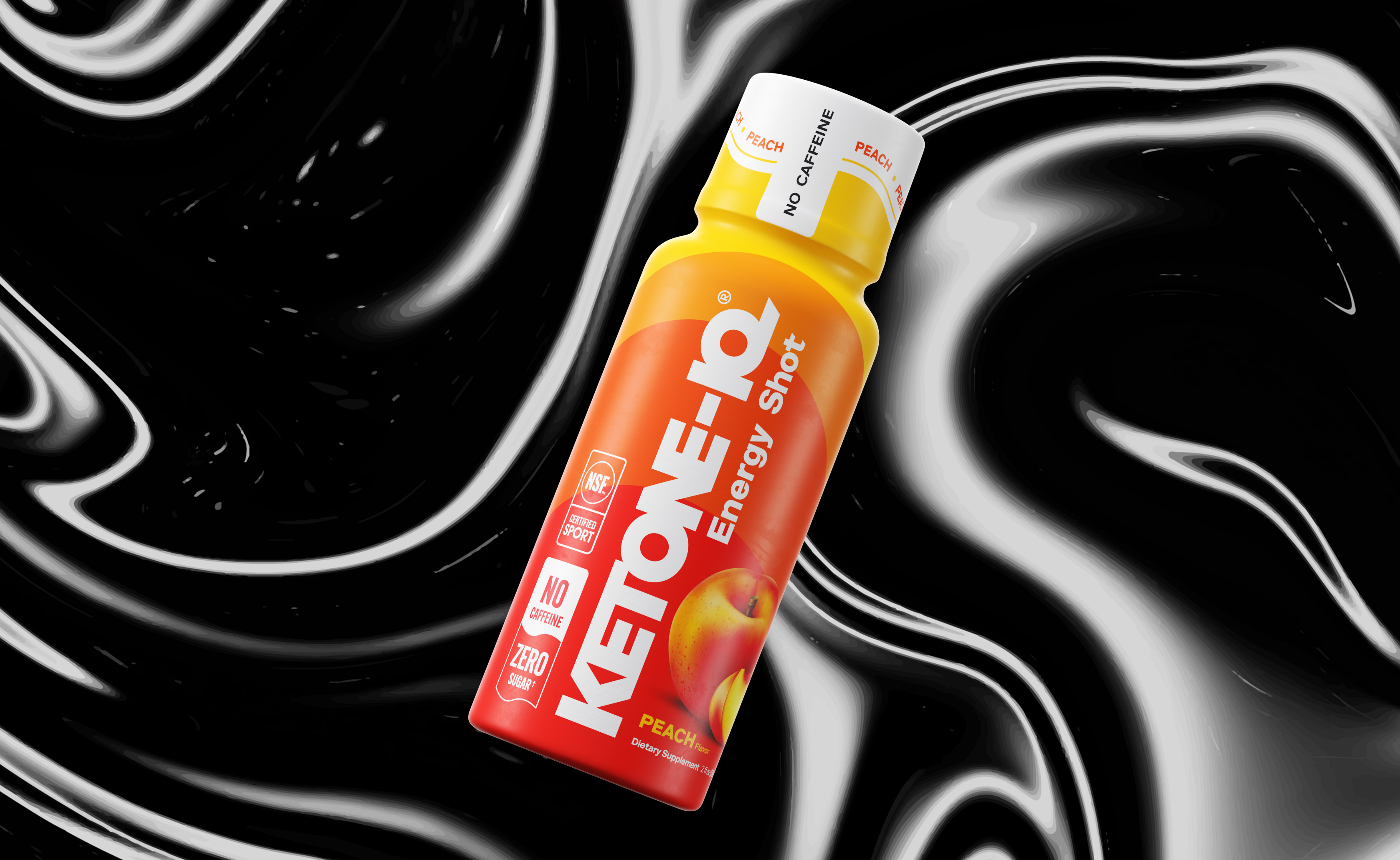
That’s led to a fresh wave of beverage startups selling elixirs that purport to give an animating jolt to the system but with starkly different ingredients than the drinks that have long crowded grocery store coolers. “It’s very clear to me—to a lot of people in the industry—that caffeine plus sucralose in a can is done,” said Michael Brandt, co-founder and CEO of Ketone-IQ, referring to common artificial sweetener. His Ketone-IQ has attracted investors like Andreessen Horowitz and Zynga billionaire Mark Pincus for its ketones-based drink. “The market isn’t asking for more of that.”

If Brandt’s company and the others on our list below can get everyone guzzling their products, they’ll almost certainly line themselves up as attractive acquisitions for bigger drink companies. Those larger rivals have been thirsty lately: Late last year, Keurig Dr Pepper said it would pay $990 million for a majority stake in energy drink and supplement brand Ghost, and in February energy drink maker Celsius bought rival Alani Nu for $1.7 billion.

Brez, a brand of THC-infused drinks, is fast growing and launched two new energy drinks this month. (Yes, it promises the same thing as a Four Loko: an upper and a downer together.) Amplify, a watermelon lime flavor, has 80 milligrams of caffeine, as well as 5 milligrams of THC and 5 milligrams of CBD, while Elevate, a strawberry mango flavor, is THC and CBD free.

Brez and other THC-infused drink brands have grown quickly since the 2018 legalization of hemp, which contains the same active ingredient as cannabis but at a lower dose. Brez, which launched sales in 2023, is profitable, founder Aaron Nosbisch has said, and is aiming to do around $50 million in total sales this year. That growth will in part be powered by more THC-free versions of its drinks like Elevate that can be sold in typical grocery stores—a key battleground for expansion, since the THC drinks have to be sold online or in liquor stores.

($48 for eight cans of THC-infused drinks, $40 for eight cans of THC-free drinks; available at drinkbrez.com, Amazon and Sprouts.)

Ketone-IQ
Ketone-IQ co-founder and CEO Michael Brandt first started thinking about energy in the human body when he picked up marathoning as a hobby while working at Google and YouTube in the early 2010s.

Around the same time, keto diets were catching on. Brandt started wondering if there was a way to isolate the ketones that the body produces when it’s burning fat for energy instead of glucose and quickly consume them as a more efficient alternative to caffeine.

After winning a Defense Department contract to research and develop an energy supplement for U.S. Special Forces in 2019, Brandt’s company used that research to launch its line of drinks, which come in 2-ounce bottles. They were expensive at first, which limited sales to Tour de France cycling teams and other elite athletes. As the technology for manufacturing ketone molecules through fermentation improved, Brandt could price the beverage more affordably.
He thinks the brand’s rise is connected to an overall increase in health and wellness and the proliferation of fitness-tracking gadgets, like Whoop bracelets and Oura rings—the “API-ification of the human body,” as Brandt put it. “It’s the norm in my circle: I think everyone’s kind of nerding out on human performance.” Brandt hopes to expand to selling ketones to other companies. “Ketone is going to be as big as electrolytes or protein,” he said. “It starts being an ingredient that we can supply.”
($120 for 24 bottles; available at ketone.com, Amazon, The Vitamin Shoppe, Sprouts, H-E-B and Wegmans.)

Rarebird Coffee
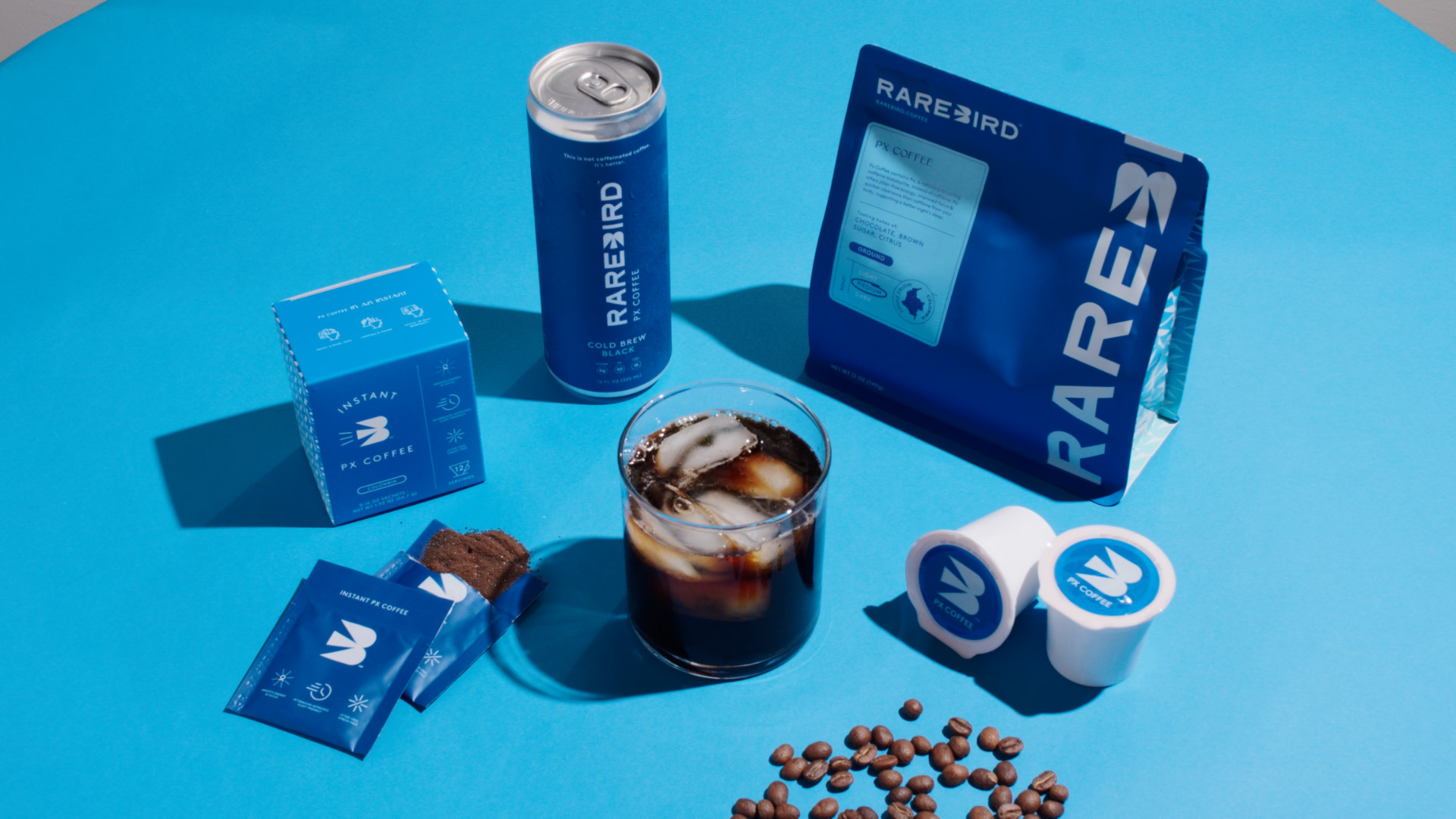
Caption
Rarebird may look like ordinary coffee, but it definitely isn’t. Rather than containing caffeine, it provides paraxanthine, the molecule created by the liver when it metabolizes caffeine. The brand says it has similar effects to caffeine without spiking stress hormones, which can cause anxious and jittery feelings.

Rarebird was founded by Jeffrey Dietrich, who holds a doctorate in bioengineering from the University of California, Berkeley. (Before founding Rarebird, Dietrich co-founded Lygos, a biotech that develops natural alternatives to petroleum-based chemicals like fertilizer additives and cleaning products.) When he initially researched caffeine and possible alternatives, he quickly landed on paraxanthine, or PX for short, as a potential substitute.

“There’s literature going back to the 1950s, ’60s, ’70s, ’80s that really suggested that paraxanthine had qualities that were far superior to caffeine and still gave you the stimulatory alertness that people want,” Dietrich said.

Dietrich says his scientific background has helped the brand combat the “snake oil” sales tactics he thinks pervade many beverage and supplement brands. “What we’ve been really trying to do is approach this from the scientific perspective.”
($40 for 24 coffee pods, $30 for a 12-ounce bag of ground coffee; available at rarebird.coffee and Amazon.)

Clean Simple Eats
Clean Simple Eats was founded by JJ and Erika Peterson, a husband-and-wife duo, in 2015. The company offers a wide range of items—from protein powders to flavored nut butters. But the “clear protein” canned energy drinks and sodas it introduced last year are what’s become a viral hit on TikTok and Instagram lately. The drinks, which come in flavors like Blizzard Berry and Sun-Kissed Peach, pair 20 grams of whey protein with 100 milligrams of caffeine. Clean Simple Eats has capitalized on its online popularity by expanding retail into some Target stores in April. And it’s attracting some competition: Rival startup Don’t Quit will roll out a protein soda in July.
($32 for a variety pack of eight 16-ounce cans; available at cleansimpleeats.com, Amazon, Target and The Vitamin Shoppe.)

Magic Mind
Magic Mind, a line of “mental performance shots,” says its blend of 55 milligrams of caffeine and other ingredients like turmeric and L-theanine helps boost focus and energy. The brain spark for Magic Mind came to founder James Beshara after he sold his payments startup, Tilt, to Airbnb in 2017 and a doctor told him he needed to cut down on caffeine. The physician suggested L-theanine as a way to extend the impact of the limited caffeine he still consumed, and Beshara began researching other supplements and ingredients that could help with energy and focus.

At Airbnb, he developed a reputation as a supplements guru and handed out samples of an early version of Magic Mind around the office that his co-workers knew only as “James’s Magic Potion.” It became so popular at the company that Beshara recruited William Hicks, a former investment banker and early employee at another food startup, Brami, to help run the business, and the pair launched sales in March 2020.

The company’s primary customer base is still Silicon Valley employees and other white-collar workers looking for ways to focus on work without feeling strung out—craving what Hicks calls a “ticket to flow state.” Meanwhile, the company’s caffeine-free gummies are popular with parents and their young kids.

TechCrunch : Google reportedly plans to cut ties with Scale AI

Google reportedly plans to cut ties with Scale AI
Meta’s big investment in Scale AI may be giving some of the startup’s customers pause.

Reuters reports that Google had planned to pay Scale $200 million this year but is now having conversations with its competitors and planning to cut ties with the startup. Microsoft is also reportedly looking to pull back, and OpenAI supposedly made a similar decision months ago, although its CFO said the company will continue working with Scale as one of many vendors.

Scale’s customers include self-driving car companies and the U.S. government, but Reuters says its biggest clients are generative AI companies seeking access to workers with specialized knowledge who can annotate data for training models.

A Scale spokesperson declined to comment on the company’s relationship with Google, but he told TechCrunch that Scale’s business remains strong, and that it will continue to operate as an independent company that safeguards its customers’ data.

Earlier reports suggest that Meta invested $14.3 billion in Scale for a 49% stake in the company, with Scale CEO Alexandr Wang joining Meta to lead the company’s efforts to develop “superintelligence.”

WSJ : How a Once-Resistant Trump Decided to Back Israel’s Attacks on Iran

How a Once-Resistant Trump Decided to Back Israel’s Attacks on Iran
Trump sought to persuade Israel to delay its military operation, but he shifted course after the strikes began

WASHINGTON—The first act of “Les Misérables” had just ended at the Kennedy Center Wednesday night when Sen. Lindsey Graham (R., S.C.) pulled President Trump aside for a quick conversation about Iran.

Graham applauded the Trump administration’s handling of the nuclear issue without people getting killed.

“Yeah, we’re trying,” Trump said about the sputtering negotiations with Tehran. “But sometimes you gotta do what you gotta do,” he said.

Graham took that remark to mean Trump was referring to the possibility of an Israeli strike on its longtime enemy.

The encounter came midway through a week that would see Trump go from trying to head off an Israeli attack to backing its sudden campaign of airstrikes targeting Iran’s nuclear facilities and senior military and civilian leaders, an abrupt shift that underscored the fraying prospects for a deal.

Trump said Friday that he had been aware of Israel’s attack plans and argued that the punishing operation makes a nuclear deal even more likely, though Iran said they were pulling out of a sixth round of talks scheduled for Sunday.

“They should have made a deal and they still can make a deal while they have something left—they still can,” Trump told The Wall Street Journal.

Trump had seemed far less optimistic earlier in the week.

On Sunday, he summoned his national-security team to Camp David and told them during a discussion on the Middle East that he was increasingly pessimistic Tehran would agree to a deal, according to U.S. officials.

Trump and Israeli Prime Minister Benjamin Netanyahu were due to speak the next day, and the president said he would tell the Israeli leader to delay any attacks until special envoy Steve Witkoff’s diplomatic effort had run its course, U.S. officials recounted.

In a letter to Iran’s Supreme Leader Ayatollah Ali Khamenei in March, Trump had set a two-month time limit once talks got under way to reach a deal, a deadline that was due to expire this week. But Khamenei rejected a U.S. proposal to allow Iran to temporarily continue uranium enrichment in the country if it agreed to eventually halt its domestic centrifuge operation.

Always in the background was Netanyahu’s push to launch strikes against Iran’s nuclear sites, a threat that loomed ever larger.

In a call Monday with Netanyahu, Trump said he wanted to see diplomacy with Tehran play out a little longer, according to U.S. officials. But even Trump was losing faith in his strategy.

Netanyahu raised his oft-expressed objection that Iran wouldn’t make the deal Trump wanted and that Israel needed to keep preparing strikes, the officials added.

Trump seemed to internalize the message.

“I’m getting more and more—less confident about it,” he said of the prospects for a nuclear deal with Iran in a New York Post interview published Wednesday. “They seem to be delaying, and I think that is a shame, but I’m less confident now than I would have been a couple of months ago.”

Netanyahu had been seeking to head off a U.S.-led negotiation with Iran over its nuclear program for years, arguing that only the destruction of its vast enrichment centrifuges and other facilities could guarantee Tehran wasn’t secretly developing a bomb.

The Israeli leader rejoiced when Trump in his first term tore up the 2015 nuclear deal brokered by then President Barack Obama, and he recoiled when Trump pushed for a tougher agreement during his second term in office.

U.S. intelligence agencies concluded in January that Israel was considering strikes on Iranian nuclear facilities. The intelligence analysis concluded Israel would push Trump’s new team to back the assault, viewing the incoming president as more likely to join an attack than former President Joe Biden. The Israelis, according to the assessment, believed the window for halting Tehran’s pursuit of a nuclear weapon was closing.

In a sign of mounting concern about an Israeli attack and Iranian response, the State Department on Wednesday ordered the departure of all nonessential personnel from the U.S. Embassy in Baghdad and authorized the departure of nonessential personnel and family members from Bahrain and Kuwait. At the same time, Defense Secretary Pete Hegseth authorized the voluntary departure of military dependents from across the Middle East.

Army Gen. Erik Kurilla, the top U.S. commander in the Middle East, canceled a congressional testimony scheduled for the next day and returned to Central Command’s headquarters in Tampa.

As anxiety grew in the Middle East and Washington, Trump was enjoying the performance of his favorite musical at the Kennedy Center, joined by Graham and other supporters.

When Trump and Netanyahu spoke again on Thursday, the Israeli leader told Trump that it was the last day of his 60-day timeline for Iran to make a deal. Israel could wait no longer, Netanyahu said, according to officials familiar with the call. Israel had to defend itself and enforce the deadline Trump himself had set.

Trump responded that the U.S. wouldn’t stand in the way, according to administration officials, but emphasized that the U.S. military wouldn’t assist with any offensive operations.

At the White House, Trump told reporters he wouldn’t describe an attack as imminent, “but it is something that could very well happen.” While the U.S. and Iran were close to a deal, he claimed, Israeli strikes could “blow it.”

Israel launched its operation as Trump was at a picnic Thursday evening on the White House grounds for members of Congress. He later joined Vice President JD Vance, Secretary of State Marco Rubio, Hegseth, and Gen. Dan Caine, the chairman of the Joint Chiefs, and other senior officials in the Situation Room to monitor events.

Israel had acted unilaterally and the U.S. played no role in the attack, Rubio said in a statement that acknowledged Israel notified Washington before the operation began.

That was the only comment from the U.S. as the attack unfolded. Bombs struck and damaged a key Iranian nuclear facility at Natanz, and senior military leaders including Major Gen. Hossein Salami, commander of Iran’s Islamic Revolutionary Guard Corps, were killed.

In all, Iran claimed that Israel’s first attack killed 78 people and injured around 320 more in multiple waves of Israeli strikes. Netanyahu pledged that the operation would last for as long as necessary.

Trump, who began the week resistant to an assault on Iran, quickly embraced it as a successful campaign that could boost his diplomatic effort.

“Iran must make a deal, before there is nothing left,” he posted on social media Friday, “and save what was once known as the Iranian Empire.”

WSJ : How Elon Musk Is Reinventing Tesla’s Strategy

How Elon Musk Is Reinventing Tesla’s Strategy
CEO’s embrace of AI is a shift from days when company used off-the-shelf technology for electric cars

Elon Musk’s pivot to robots isn’t just shifting Tesla’s TSLA 1.94%increase; green up pointing triangle business model. It is changing its DNA.

The electric-car maker was founded almost 22 years ago on a simple, if not radical, idea: Electric vehicles were possible not with some sort of breakthrough in batteries but rather through integrating proven technologies in a new way.

Today, Tesla is taking an alternate route. It is betting a still-nascent artificial-intelligence technology can remake the company, enabling, perhaps, one million driverless cars by the end of next year.

Musk’s gamble that Tesla can be a robot company rather than one dependent on cars driven by people has helped keep the company’s market value at a level befitting a tech titan rather than an automaker.

After many false peaks, Musk’s deployment of robot cars for the public is supposed to begin this month, possibly on June 22, in Austin, Texas. That said, Musk this past week raised the possibility that this timeline could be further delayed.

Musk has been saying Tesla’s autonomous cars were near for roughly a decade. The delays underscore the challenge of offering such technology safely and efficiently. In that time, Waymo, General Motors GM -1.24%decrease; red down pointing triangle, Zoox and others have demonstrated vehicles on public roadways without drivers behind the wheels.

The genesis of Tesla Motors, as it was originally called, was in the idea of using a common technology, essentially laptop batteries, to power a vehicle. Until that point, the automotive industry had grown frustrated with efforts to develop EVs as engineers looked for the perfect battery—something that could overcome cost and range hurdles that plagued their mostly abandoned efforts.

“As justification for quitting the EV business, the auto makers pointed out that battery technology had stagnated—that the fundamental problems of weight, range, and battery lifespan could not be overcome,” an early business plan for Tesla read in 2004.

The business plan noted that the industry’s favored technology, heavy lead-acid batteries, provided an EV with a range under 100 miles. It also had to be replaced as soon as within 25,000 miles of use. “The auto makers are right: these limitations render even the best performing EV unappealing,” Tesla’s founders concluded.

But lithium-ion batteries held great promise. So, Tesla was created around the idea that the fat-finger-size lithium-ion cells made popular in consumer electronics years earlier could be wired together by the thousands to create a battery pack to power a sports car. “It is not only possible but surprisingly advantageous to use many small commodity Li-ion batteries to power an electric car,” the business plan said. “This is not simple, but the technology has been developed and works exceptionally well.”

It was a pitch that clearly spoke to Musk, who became the company’s biggest initial investor and then chairman.

The real breakthrough for Tesla came when it used a combination of savvy software and mechanical engineering to keep the battery pack from becoming a fire hazard. This gave the startup a huge advantage when traditional car companies eventually realized the potential that lithium-ion cells held.

Later, as CEO, Musk would spend years working first to prove that there was demand for electric cars and then racing to scale production. More recently, he has become narrowly focused on the robotics vision for the business—driverless cars and humanoid robots.

Some might see what Musk is doing today with autonomous vehicles as simply an extension of the original integration play. He is using Tesla’s manufacturing muscles to integrate robot technology into cars.

Yet autonomous-vehicle technology is still in its relatively early days. This time around, Tesla isn’t just pulling off-the-shelf cameras and wiring up them to work. The company has spent years developing its own AI to be the brains of the car.

Tesla fans point to the success of the company’s advanced driver-assistance systems, known as Autopilot and FSD, as proof of how far along Musk’s team is toward fully autonomous vehicles. They conveniently leave out that what Tesla is selling, by the company’s own admission, isn’t, in fact, fully autonomous. The driver remains legally responsible, no matter how much the experience might feel as though the car is driving itself. In other words, FSD is just a glorified cruise control.

What Musk is promising next is something different—a car that is responsible for making the driving decisions. He argues that Tesla has a leg up on rivals given the fleet of vehicles it has sold, providing his team with real-world data to build out his system.

Still, robot cars, even for industry leader Waymo, are something just a step or two beyond an R&D project. GM gave up on its costly robotaxi ambitions. For Waymo-parent Alphabet, the robotaxi service is nowhere near replicating its Google advertising revenue.

With all of its success, Waymo has just over 1,500 vehicles on the road. Or a little more than the number of EV1 electric cars built by GM more than 25 years ago in California.

That failed car experiment by GM helped inspire Tesla’s creation. The EV1, which had an initial range of less than 100 miles, was a great example of an automaker failing to commercialize a vision.

Ahead of the robotaxi deployment, Musk fans have mocked the small number of Waymos compared with Tesla’s vehicle-making capacity.

“These are unmodified Tesla cars coming straight from the factory, meaning that every Tesla coming out of our factories is capable of unsupervised self-driving!” Musk tweeted this past week. He was talking about a video showing a Tesla Model Y driving without anyone in the front seat, presumably part of the company’s testing in Austin.

Despite his bluster, Musk has cautioned that Tesla’s early efforts will look small. Maybe 10 vehicles in the first week before scaling to a thousand in a few months and hundreds of thousands, if not more than one million, by the end of 2026.

“We are being super paranoid about safety,” Musk posted this past week, “so the date could shift.”

After all, what he is promising isn’t easy—even if many believe it will be.