Wired : The 5G Coronavirus Conspiracy Theory Has Taken a Dark Tu

The 5G Coronavirus Conspiracy Theory Has Taken a Dark Turn
Though social networks have pledged to take more concerted action against it, the theory has continued to spread, inspiring a surge of attacks.

MOBILE PHONE MASTS in the UK are still being attacked by arsonists on a daily basis because of a conspiracy theory linking 5G to the spread of coronavirus. New data seen by WIRED UK reveals that dozens of attacks have taken place in the last fortnight, with conspiracy theorists targeting both infrastructure and key workers in the misguided belief that they are somehow spreading coronavirus. In one incident, a broadband engineer was spat at in the face by an enraged member of the public. The engineer is now ill with suspected coronavirus.

Since March 30, there have been 77 arson attacks on mobile phone masts across the UK, with staff working on mobile infrastructure also reporting 180 incidents of abuse. There have been 13 additional incidents of sabotage reported, ranging from failed arson attacks to attempts to damage mobile network infrastructure in other ways. From April 20 through May 5, more than a week after the supposed peak of attacks in early April, there were 16 arson or sabotage attacks on mobile phone masts. When failed or attempted attacks are added to the tally, that number increases to 74.

The figures from the mobile phone sector are mirrored by Openreach, which is responsible for maintaining much of the UK’s broadband infrastructure. The company has recorded 63 incidents of abuse directed towards its staff while out working since April 1, with conspiracy theorists often filming such encounters while shouting and swearing at terrified key workers. Footage of these confrontations is then shared on social media. In the last two weeks of April, Openreach recorded 20 incidents of this nature.

The conspiracy theory linking 5G to coronavirus has spread rapidly through Facebook and YouTube in recent weeks. It was given further prominence when a number of celebrities—including TV star Amanda Holden, Hollywood actor Woody Harrelson, and boxer Amir Khan—shared it on social media. Despite social networks pledging to take more concerted action against it, the conspiracy theory has continued to spread in recent weeks.

The online spread of the conspiracy theory is still having dangerous real-world consequences. Openreach engineers, none of whom are even involved in installing 5G infrastructure, have been exposed to a barrage of abuse. One person threatened to throw a brick at an Openreach engineer’s head, returning several minutes later shouting and wielding a bottle. In another incident, an engineer was told they would be in “f-ucking trouble” if it turned out they were installing 5G, with the abuser then punching their van door and walking off. Elsewhere, a woman shouted that 5G was “more dangerous than Covid-19,” called an Openreach engineer “f-ucking mental” and said she would get her brother and six friends over to “do him in.”

While angry shouting and threats typify many of these incidents, some have resulted in physical acts of violence. Michael, an apprentice network engineer working for Openreach in London, was spat at in the face by an angry member of the public. Michael has since had to self-isolate after becoming ill with suspected coronavirus. He was too unwell to be interviewed for this story. Another Openreach engineer has been stabbed and put in hospital.

Dylan, an engineer working for Openreach in Leicester, who was verbally abused while driving his van, describes the incident as “quite intimidating.” In Dylan’s case, a man got out of his car while at a red light on a dual carriageway and started shouting abuse and banging on his van.

“He put his head against my window, he’s saying, ‘Don't you ignore me, stop trying to cover up what you're doing, 5G is killing us all, you’ve got no morals,’” Dylan says. “You’ve got someone right there and you’re on your own. You wonder if he’s going to smash the window, what’s he going to do if he does get in, is he going to attack me? I seized up and just waited for the light to go green.” While this was happening, another individual remained in the parked car and filmed everything. Dylan says the incident has left him shaken. “When I’m on my own I feel a bit cautious, a bit on edge. And I can't fully focus on the task at hand because I'm always keeping an eye on what’s happening.”

Tiffany, another Openreach engineer, experienced similar intimidation from a member of the public who went on a “power trip,” lecturing her about the apparent dangers of 5G while she was trying to fix broadband infrastructure on a residential street. “He was saying, ‘I’m a reporter, I'm going to be putting this everywhere.’ He was going to put out this thing saying I was spreading coronavirus when I was just doing my job. I felt really vulnerable while it was happening and really intimidated by him. I was shaking all day after.” Tiffany later found the video on Facebook and YouTube, though it has since been removed.

The continued abuse of key workers and attacks on critical infrastructure hint at how widely this conspiracy theory continues to circulate online. In the last seven days alone, more than 54,000 posts referencing 5G and coronavirus have appeared on Facebook, generating over two million interactions. The most popular of these posts, featuring an image of Bill Gates with devil horns, has received more than 4,600 shares, comments and interactions. Two posts protesting the removal of conspiracy theorist David Icke's Facebook page have together generated more than 7,000 shares, comments and other interactions.

The response from social networks has been spasmodic at best. While figures such as Icke have been banned, other Facebook groups with huge followings that peddle similar conspiracy theories are still active. Earlier this week, Twitter introduced a feature that prompts people posting about the conspiracy theory to read fact-checked advice. At the same time, David Icke’s Twitter profile is still active. On YouTube, conspiracy theory videos revealing “the truth” about 5G and coronavirus are still getting tens of thousands of views.

The worry for industry figures is that despite a widespread and concerted effort to debunk the dangerous 5G coronavirus conspiracy theory, it continues to thrive both online and in the real world. “It’s deeply frustrating and saddening that our engineers are facing abuse of this kind,” says Catherine Colloms, managing director of corporate affairs and brand at Openreach. “We’ve seen a worrying surge in incidents where our engineers are being subjected to mindless verbal abuse or intimidation linked to the bogus 5G theory. It really needs to stop.”
(ZH) "Unprecedented Crisis" - Global Luxury Goods Market Collapses, No Recovery

"Unprecedented Crisis" - Global Luxury Goods Market Collapses, No Recovery For Years

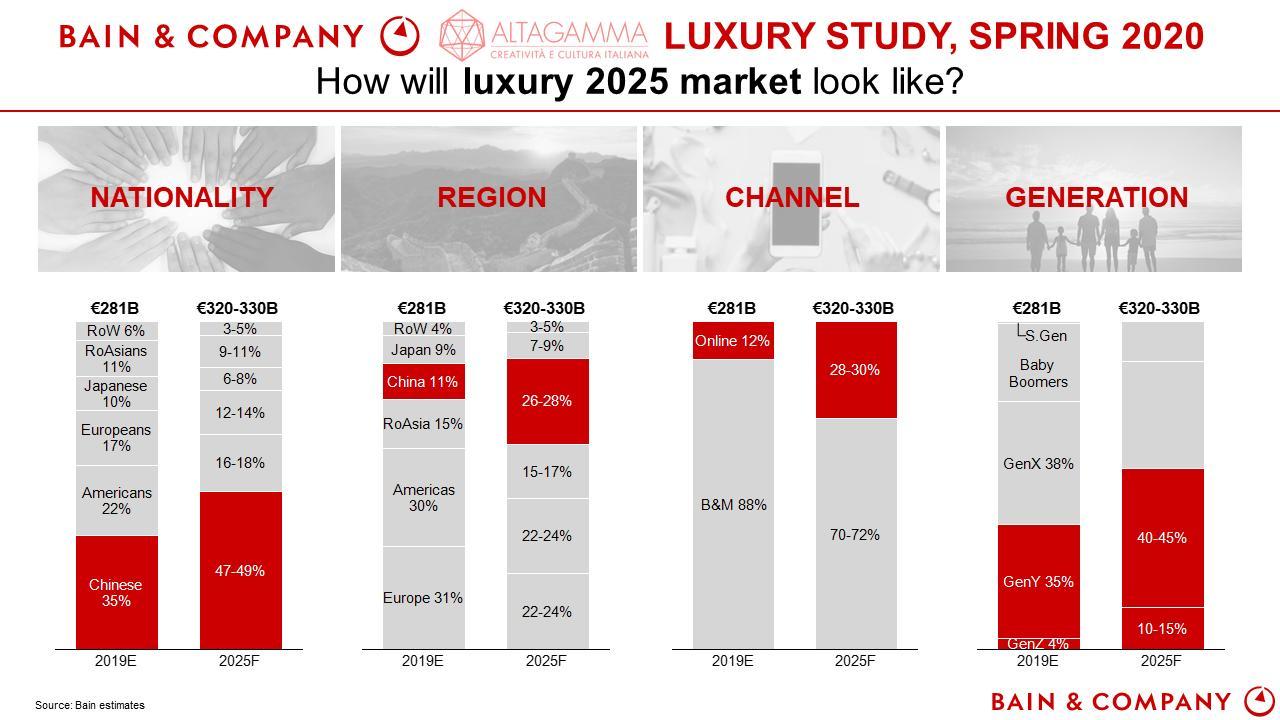
New findings published in "Bain & Company Luxury Study 2020 Spring Update" this week suggest a collapse in the global luxury goods market is underway with no recovery for several years, shredding any hope that a V-shaped recovery will be seen in the back half of 2020.
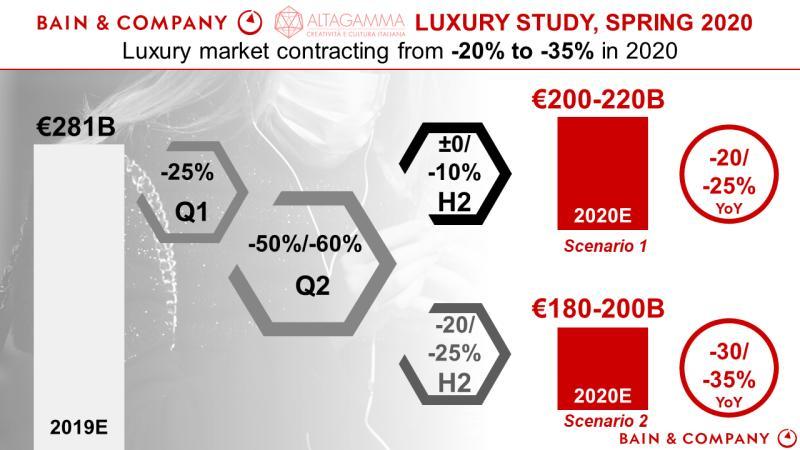
The report says the plunge of travel and tourism in all key markets has triggered "an unprecedented crisis" for companies operating in the luxury goods space. Claudia D'Arpizio, a Bain & Company partner and lead author of the report, said jewelry, watches, cosmetics, clothes, and accessory sales will drop 25% in 1Q20, and continued lockdowns across the world will lead to further declines in 2Q20. Those declines, she noted, could be in excess of 50-60% in the three months ending in June. Her full-year estimate is a contraction between 20-35%.
"There will be a recovery for the luxury market but the industry will be profoundly transformed," she wrote. "The coronavirus crisis will force the industry to think more creatively and innovate even faster to meet a host of new consumer demands and channel constraints."

The report notes a strong start of the year in all key regions (Mainland China, Europe, America) was eventually derailed by virus-related shutdowns of businesses and lockdowns across the world. The collapse of the travel and tourism industry, due to flight restrictions, amplified the chaos currently experienced by industry players.
Though online sales "remained resilient," she said, adding that, traditional brick and mortar stores saw rapid declines in sales in many parts of the world. As economies reopen, luxury goods shops will have social distancing in mind:
"As consumers slowly emerge from lockdowns, the way they see the world will have changed and luxury brands will need to adapt," said Federica Levato, Bain & Company partner and report co-author of the report. "Safety in store will be mandatory, paired with the magic of the luxury experience: creative ways to attract customers to store, or to get the product to the customer, will make the difference."
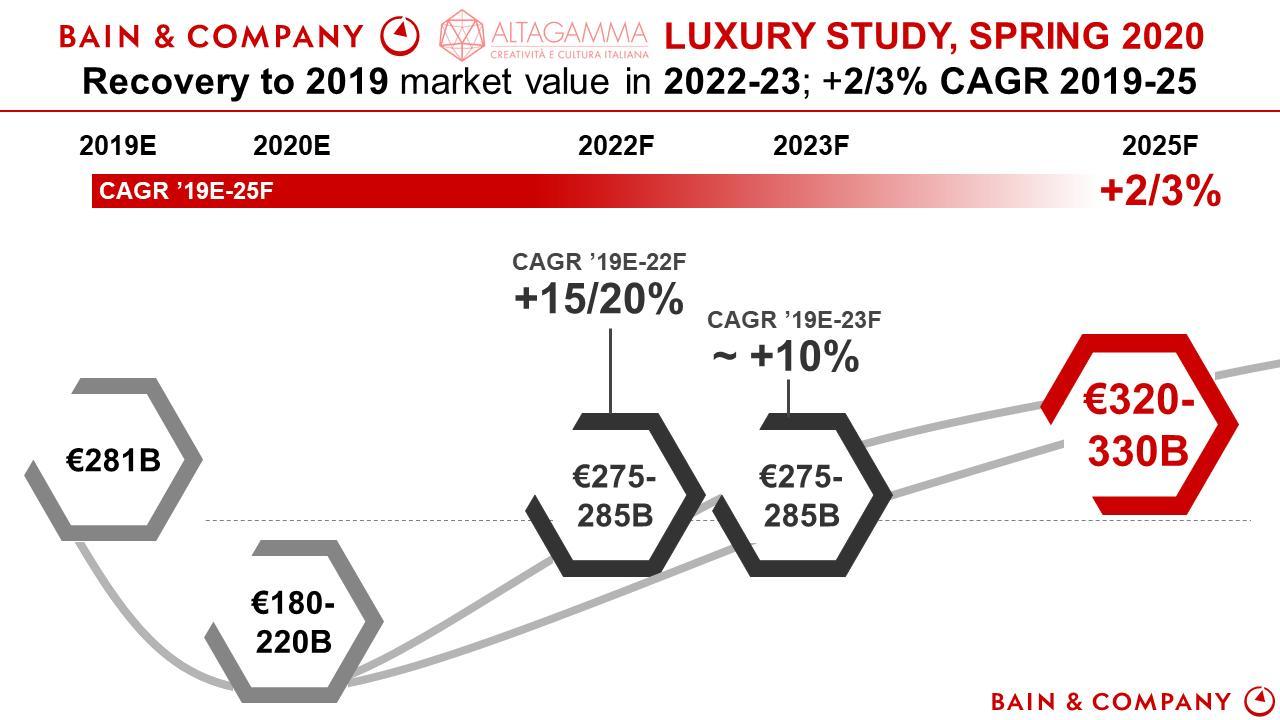
The report anticipates that a recovery in the industry to 2019 levels might not be seen until 2022-2023. The global luxury goods market might return to growth in the years after. What the authors are saying is that there's no V-shaped recovery for luxury goods this year - suggesting consumers will remain pressured by job losses and sagging growth in a post-corona world.
D'Arpizio said the Chinese would account for nearly 50% of all luxury goods purchases by 2025.

It's not just luxury goods that are slumping at the moment. We noted this week that luxury real estate in many regions is experiencing slumping sales and price declines.
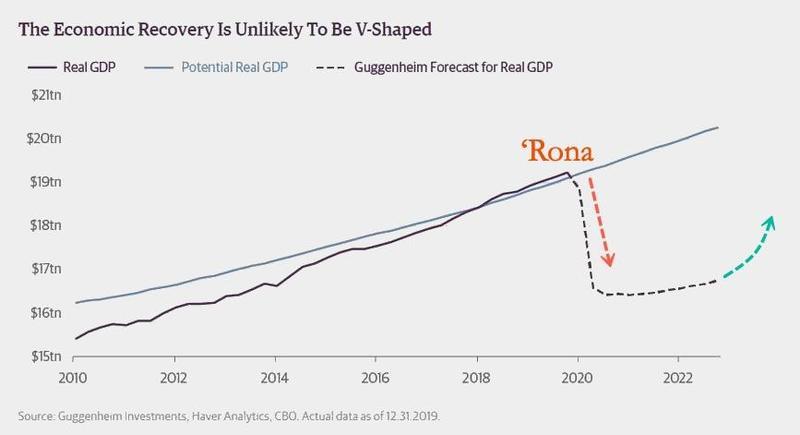
The decline in the luxury goods market suggests to us that Scott Minerd, the CIO of Guggenheim Investments, could be right, there's no V-shaped recovery ahead, and it could take upwards of "four years" for a recovery phase to unfold.
It appears the world could remain in a low-growth, or even negative growth period, through the mid-point of this decade.

WWD : A Look Back at Michael Jordan’s Pivotal Fashion and Beauty Deals

A Look Back at Michael Jordan’s Pivotal Fashion and Beauty Deals
The legendary NBA player is back in the news thanks to the wildly popular ESPN documentary series, “The Last Dance.”

Michael Jordan has long been a legendary figure in the cultural lexicon, but the acclaimed former NBA player is again in the spotlight thanks to his highly successful ESPN documentary series, “The Last Dance.”

Jordan has as much resonance on the basketball court as he does in the fashion industry due to his Jordan brand created with Nike, which has shaped up to be one of the most successful and long-standing relationships between an athlete and a fashion label. When the two teamed in 1984, Nike predicted $3 million in sales of Air Jordan sneakers within four years. Those sales projections were highly modest to say the least when year one sales alone totaled $126 million.

“The Last Dance” has also boosted Jordan sneaker sales in the resale market, with The RealReal seeing a 53 percent week-over-week increase in the shoes’ average selling price and StockX seeing searches increase by 63 percent and orders spike by 90 percent since the series premiered in mid-April.

In addition to his Nike collaboration, Jordan has also worked with apparel brand Hanes for 30 years. The company celebrated the anniversary last year by releasing special trading cards in 800,000 packages of its boxer briefs signed by Jordan himself.

The athlete has also had dealings in the beauty industry. He launched a namesake fragrance line in 1996 with a collection of three scents that generated between $12 million to $15 million in sales by 2004 and was carried in 20 global markets. Jordan also had a mass-market, eponymous grooming line in the early Aughts.

While the documentary focuses on Jordan’s career, many viewers have taken note of the athlete’s Nineties style. Here, WWD looks at some of Jordan’s off-court style moments from his basketball career. Click the above gallery for more.

Barrons : 3 European Stocks and 3 Reasons They Should Survive the Pandemic

3 European Stocks and 3 Reasons They Should Survive the Pandemic

The coronavirus pandemic has separated weak European companies from those able to seize an opportunity to thrive.

“In the current market environment, no conventional valuation model is able to frame stocks accurately. This is about survival,” Pascal Costantini, head of research at ValuAnalysis, wrote in an April report.

The survivors in a range of sectors will be firms with strong balance sheets, the ability to use technology to build scale, and those that benefit from government spending.

“No longer is the pursuit of maximum returns going to drive management and shareholders, but there will be a greater focus on sustainability (both ethically and practically) and risk,” Charles Hall, head of research at broker Peel Hunt, wrote in an April note.

Among the standout sectors are health care and manufacturing.

Abcam (ticker: ABC.UK) based in Cambridge, just outside London, focuses on antibodies—key in the battle against coronavirus. The firm, with a £2.7 billion ($3.34 billion) market valuation, supplies 64% of the world’s life-science community with products such as antibodies, reagents, binders, and assays to help combat the disease.

Abcam employs 1,000 workers and scientists and had a strong position prepandemic. It has net cash of about £80 million and in the past couple of weeks has secured £110 million through an agreed equity sale.

“Abcam’s tools are a key component of biological research,” Hall wrote. “Global R&D will be lifted by the coronavirus pandemic....Abcam is well positioned to capitalize as we return to normal.”

Abcam shares fetch a chunky 47.6 times this year’s expected earnings and is valued at a 40% discount to its peers. Its stock, trading at £12.68 ($15.78), has increased 138% over the past five years and 13.3% this past month. Analysts at Berenberg marked it a Buy with a target price of £14.50.

Swiss-listed Sonova Holdings (SOON.Switzerland), which makes hearing aids and cochlear implants, straddles both the health care and manufacturing sectors.

At 179 Swiss francs ($183), shares have plunged along with its peers. Shares are down 24.8% in the past three months, worse than the market’s 9.1% decline. But unlike retailers with winter fashions still on their shelves, there’s still demand for Sonova’s products.

ValuAnalysis said the stock is oversold and well placed to bounce back. Customers have simply postponed purchases of its products. “None of this missed revenue is actually lost; it is simply deferred,” according to ValuAnalysis.

The stock fetches 26.3 times this year’s expected earnings and is valued at a 20% discount to its peers. Mainfirst Bank analysts have a target price of 250 Swiss francs. for Sonova, which has a market value of CHF 11.5 billion.

When it comes to manufacturing Avon Rubber (AVON.UK) is a niche business that makes breathing equipment for first responders, and personal protective equipment.

The stock, currently priced at £27.50, has had a good run—up 234% over the past five years—and is seen as a defensive play because defense budgets remain insulated during a crisis.

The company is small, with a market value of £820 million, and employs just 822 workers. It fetches 23.8 times this year’s expected earnings—a premium to its peers.

It should see strong growth as first responders and the military replace or upgrade their respiratory protection. “We expect to see an increase in usage of general purpose respiratory protection equipment across a wider customer base from now on,” notes Peel Hunt.

Barrons : Where to Find Value in Real Estate Stocks Now — and What to Avoid

Where to Find Value in Real Estate Stocks Now — and What to Avoid

Many real estate stocks have lost a third of their value as the coronavirus transforms America into a nation of digital hermits. Vacant offices and hollowed-out malls are pressuring tenants’ ability to pay rent. With 33 million Americans recently losing their jobs , owners of apartments, hotels, and other properties are preparing for sharply lower revenue, while scaling back or scuttling plans for development.

Yet the market is looking ahead to better times. Many stocks in the sector—mostly real estate investment trusts, or REITs—have rallied lately, a sign that investors are anticipating a revival as states ease up on stay-at-home orders.

Some REITs, to be sure, are unlikely to make it through the recession. Dividend cuts and suspensions are almost certainly coming. But there will be survivors, including office, retail, and residential property owners . Some stocks now trade at deep discounts to prices before the crisis, though at lower asset values. And a few types of growth REITs are thriving, notably those benefiting from the expanding digital economy.

Optimism for a reopening of the economy has reduced the loss on the S&P 500 real estate sector to 15% this year (including dividends), a big comeback from a 34% loss at its low point on March 23. The sector is trailing the broader market, down 10%, but it has rallied along with other cyclical sectors and those highly sensitive to interest rates. Falling rates have benefited real estate and may ease the strain on balance sheets; REITs rely on debt to finance acquisitions and development, and asset values are based partly on interest expense.

The next year will still be a test of survival, however. Several owners of shopping centers have suspended dividends as rents dried up. Many REITs, including office, retail, and residential, have withdrawn guidance for 2020, citing uncertainty around the coronavirus. Lodging REITs are just trying to keep the lights on, as travel-related revenue sinks. And many health-care REITs are ailing. Without a Covid-19 vaccine or treatment, senior living centers will find it difficult to lure back residents. Skilled nursing facilities—alternatives to hospitals—face patient vacancies and lower growth until surgical procedures get back to normal.

Retail REITs, meanwhile, have seen their troubles amplified by the virus. Online shopping was eroding mall asset values before the crisis, and the trend has accelerated. More than half of mall-based department stores will close by 2021—Neiman Marcus filed for bankruptcy this past week—eliminating anchor tenants and increasing pressure on malls to redevelop, according to Green Street Advisors. Asset values of malls, including privately owned, are down 50% from their peak in 2016, and mall REIT net asset values are down an average 33%. Net operating income will be 20% lower in 2022 than 2019.

“The occupancy declines we’re forecasting will be worse than ever,” says Green Street analyst Vince Tibone. “Covid is going to pull forward several years of retailer fallout. This will be a very tough time for landlords.”

Analysts aren’t just wondering when rents will be paid. They are trying to calculate property values in a society reshaped by the virus.

“Covid is a potentially transformational event for real estate,” says James Sullivan, a REIT analyst with BTIG. The impact will emerge as businesses reopen, but the new normal won’t be known until health fears recede and people regain confidence that they can go out in public.

One unknown is whether a decadeslong trend toward urban living will reverse, making single-family homes in the suburbs more appealing than city apartments. Another mystery is demand for office space: whether employees will continue to work remotely, sit much farther apart when they go back, or even want to share a workspace—the business model of WeWork.

Malls and shopping centers had hoped to reinvent themselves into fitness-and-entertainment centers, adding restaurants, movie theaters, gyms, and videogaming. Those plans may now be scuttled or delayed. And new mall concepts might not be as lucrative if consumers go out less and stay farther apart, reducing sales per square foot and rent. “We expect mall traffic to be down significantly even after malls reopen this year,” Tibone says.

Due to these trends, and concerns about interest rates rising in three to five years, Dan Skelly, head of market research and strategy at Morgan Stanley Wealth Management, recommends an “underweight” exposure to real estate. He adds that the sector is more leveraged and credit-sensitive than other bond proxies like utilities and consumer staples—a drawback in a credit crisis and recession.
Nonetheless, some stocks are worth considering for their growth or value attributes. Indeed, one way to think about real estate now is to divide it broadly between growth REITs with strong underlying secular trends and value REITs that have sold off and would rebound with a recovery.

“The best way to achieve outsize returns is a mixture of value and growth,” Berenberg Capital Markets analyst Nate Crossett says.

Some of the strongest growth trends before the crisis were in data centers , cell towers , and logistics warehouses. All are benefiting from the expanding digital economy, and they’ve been some of the top-performing REITs this year. While they’re richly valued and don’t carry high yields, analysts see them continuing to hold their value and notch gains.

Two data centers to consider are Equinix (ticker: EQIX) and QTS Realty Trust (QTS), Crossett says. Equinix is a “best in class” operator with prime “beachfront property” near major urban centers. QTS Realty has gained significant share in markets where it operates and should benefit from demand by cloud providers that need data-center space in secondary markets like Atlanta and Richmond, Va. Crossett has Buy ratings on both.

Cellular-tower REITs American Tower (AMT) and SBA Communications (SBAC) are gaining from the growth in wireless data and a rollout of next-generation 5G networks. Tenants sign long-term leases with towers, including annual rent increases of 2% to 3%, on average. Incumbents have pricing power because building towers is costly and there are regulatory hurdles. Tower companies are also cramming more tenants, equipment, and upgrades on towers at relatively low expense, driving high returns on invested capital and cash flow.

“We’re bullish on the long-term prospects for tower companies,” says Jeffrey Kolitch, manager of Baron Real Estate fund (BREFX), which owns both REITs. Neither yields much, but the have have been winners, outperforming the market this year.

Logistics warehouse owner Prologis (PLD) says it is getting a lift from the Covid-19 economy. The company said in April that 40% of new leases were related to e-commerce demand, nearly double pre-crisis levels. Businesses are stockpiling goods as a safety precaution, leading to higher global inventory levels and demand for logistics real estate, Prologis said.

Rent collections were down about 1% in April. But new lease signings were recently up 21% year over year, based on square footage. The company expects funds from operations, a REIT measure of net operating cash flow, to rise 10% in 2020, providing ample coverage for its dividend, yielding 2.6%.

Another growth REIT worth considering is Alexandria Real Estate Equities (ARE). The company leases space to life-sciences and biotech tenants and collected 98% of rents due in April. It expects minor impact from rent deferrals and other losses related to the coronavirus.

Government funding for life-sciences and biotech companies may only be accelerating, and leasing trends still look healthy. Analysts expect funds from operations to rise 5% this year, beating most REITs that are seeing a decline. The stock yields 2.7%.

Office REIT Douglas Emmett (DEI) is more of a value play. The shares have lost 35% this year, and the firm collected just 87% of rents due in April. Emmett also withdrew forecasts for the year, saying in a filing that “our tenants are now struggling with the impacts of the pandemic on their business.”

But some analysts view Emmett as one of the stronger office REITs, thanks to its locations and tenant base. The company owns prime office space in Hawaii and Los Angeles, including upscale Brentwood and Westwood. Strict zoning limits new construction, supporting occupancy and rent growth. The question now is whether tenants re-sign leases and pay rent.

Matt Werner, a REIT portfolio manager at Chilton Capital Management, says the shares are undervalued. Emmett has a large, diverse tenant base, and Hollywood doesn’t have other places to go. “The ‘shelter in place’ has shown that content is only getting more essential,” Werner says. Emmett reported 55 cents a share in funds from operations in the first quarter, nearly double its dividend of 28 cents a share. Analysts expect funds from operations to rise 5% this year, supporting the dividend, now yielding 3.9%.

For apartment REITs, the next few months look bleak. Rent-control regulations are gaining traction in California and other areas, and rent protests are being planned in major cities. Steep job losses are likely to sap the demand for rentals. BTIG’s Sullivan estimates that apartment REITs will report a 16.8% drop in existing properties’ net operating income in 2020, compared with 2019 levels. “Will young people still want to live in Manhattan or Boston? We don’t know yet,” he says.

Nonetheless, Sullivan is keeping Buy ratings on two large-cap REITs: AvalonBay Communities (AVB) and Equity Residential (EQR). Avalon is one of the largest urban apartment owners in such markets as Boston, New York, and Los Angeles.

Rents and other revenue in April fell to 96% of the trailing 12-month average. But Avalon is restarting construction on projects that were suspended due to the virus, and it should have financing to finish construction on its $2.3 billion development pipeline, according to Sullivan. The company is developing more suburban properties that could gain value after the crisis winds down.

Equity Residential concentrates on coastal urban markets and is reporting pressure in occupancy, rent collections, and pricing. But leasing activity in April picked up sharply and is now on par with last year, and April rent collection was 97% of March levels.

Equity also has an strong balance sheet, Sullivan says, with over $2.2 billion in liquidity. He expects funds from operations to plunge 20% this year to $2.80 a share, but sees a rebound to $3.05 next year. Equity’s dividend also looks well covered.

Investors who want to take a chance on retail REITs should consider those with a healthy and diverse tenant base. Two that Berenberg’s Crossett likes are Agree Realty (ADC) and Four Corners Property Trust (FCPT). Nearly 60% of Agree’s tenants are investment-grade companies such as Walmart (WMT) and Home Depot (HD), which should have no trouble paying rent. Leases last for another 10 years, on average. Agree has plenty of cash on its balance sheet to make acquisitions, recently raised $180 million in equity, and trades at a steep premium to its net asset value. That may limit gains in the stock but it’s a sign that investors are confident its properties will hold their value. The shares yield 3.7%.

Four Corners is a 2015 spinoff from Darden Restaurants (DRI), which accounts for 71% of its tenant base. Four Corners now has around 700 properties, including Olive Garden and other restaurant brands, and collected 89% of rents due in April, and 83% as of May 5. That isn’t bad, considering the steep decline in dining out, says Crossett.

Investors worry that social distancing will reduce restaurant operating margins and revenue, impacting rent rolls. But Crossett expects Four Corners to cover its dividend, now yielding 5.8%. And he says revenue should rebound as people start going out to eat again.

“It’s not like Olive Garden has to be full. They just have to go back to doing some business,” he says. “Unless you think pasta and breadsticks are going away forever, this is a stock that has been overly punished.”

WSJ : Bank Mergers Will Resume When the Crisis Passes. Here’s a Look at Potentia

Bank Mergers Will Resume When the Crisis Passes. Here’s a Look at Potential Buyers and Sellers.

The U.S. has lost nearly 40% of its banks since the financial crisis, largely due to industry consolidation. Last year saw 263 bank mergers, according to Keefe, Bruyette & Woods, culminating in the $66 billion combination of BB&T and SunTrust Banks at year end into a new entity called Truist Financial (ticker: TFC).

The forces driving mostly smaller banks into the arms of larger ones— chiefly, technology costs and the negative impact of ultralow interest rates on net interest margins—were expected to lead to a fresh round of mergers and acquisitions this year, further shrinking the industry, which counted 4,492 commercial banks at the end of 2019, down from 7,175 at the start of 2008. Then the coronavirus hit, the economy shut down, and deals plummeted across almost all industry sectors. In April, deal volume in the U.S. financial-services sector fell 29% compared with the previous year, according to Goldman Sachs.

Yet, many industry observers see the consolidation trend resuming, and even accelerating, once the nation’s health crisis passes and economic activity begins to normalize. “The pressure driving consolidation is going to be heightened when this crisis is over,” says Tom Michaud, chief executive at Keefe, Bruyette & Woods. “[Deal activity] will be very robust, when it comes back.”

The banks most likely to be snatched up in the industry’s next wave of mergers and acquisitions are those trading at a relative discount to peers on price-to-tangible book value. Buyers also are apt to seek targets with a healthy return on equity and a strong deposit base.

Barron’s screened for these criteria based on guidance from industry analysts, investors, and deal makers, and identified at least six potential targets, including Regions Financial (RF), Synovus Financial SNV), and First Foundation (FFWM), a small Irvine, Calif.-based institution.

As for potential buyers, they typically trade at or above tangible book. They could include large regional banks seeking to boost their geographic footprint, and smaller institutions looking to consolidate locally. A history of acquisitions has also been a good indicator of a bank’s appetite for deal-making.

To be sure, most banks are in a tough spot right now. In the first quarter, before much of the pain of the coronavirus pandemic was even felt, several U.S. banks saw profits drop by double digits, as loan-loss reserves were boosted in anticipation of increased credit problems. Six of the biggest U.S. banks set aside more than $25 billion for bad loans in the period, and Wall Street expects loss provisions to continue to climb in the second and third quarters.

For small banks, the challenges have been even greater. Many have been behind the curve in adopting costly new technologies to keep pace with the growth of online banking, and the need to modernize is only increasing. With many branches now shut temporarily, customers once resistant to online deposits and bill-paying are finding they must adapt.

For these institutions, says Chris Senyek, chief investment strategist at Wolfe Research, “it might be easier to let someone else do the capital investment for them.”

“The pressure driving consolidation is going to be heightened when this crisis is over. ”

— Tom Michaud, Keefe, Bruyette & Woods
Low rates have been a bane for all banks by constraining the interest that they can charge on loans. But they are less of a problem for larger institutions with bigger deposit bases, the industry’s cheapest source of funding. With the economy under duress, rates are likely to remain low for a long time, while loan growth is expected to slow as businesses and households turn cautious about taking on new debt.

“Interest rates near zero put a lot of pressure on bank earnings,” says Michaud. “Banks that don’t have the right complexity, whether in their deposit mix or fee-income mix, are going to find it hard to earn an industry-standard level of profitability. The operating environment, just for core earnings, is going to move toward consolidation.”

That’s not to say that buyers won’t have something to gain. “Acquirers can improve their profitability with more scale and cost savings,” Michaud says. “Then there’s the strategic angle, in which a buyer might identify some really valuable parts of a [target] company.”

An Urge to Merge?
Bank buyouts are likely to resume when the current pandemic passes. Potential sellers typically trade at a discount to peers based on price to tangible book value, while buyers often trade at or above P/TBV, and have a history of doing deals.

Industry watchers see both more mergers among regional banks and more geographic diversification. Regional consolidation allows banks to boost their deposit base quickly with a similarly situated partner, while hopscotching areas allows acquirers to diversify their loan portfolios, potentially limiting their credit losses if a particular regional economy comes under pressure.

Jennifer Demba, a banking analyst at SunTrust Robinson Humphrey, says she wouldn’t be surprised to see further consolidation among regional banks in the southeastern U.S. The area has benefited from an influx of residents drawn by low taxes and better weather, and the trend could accelerate as people seek to flee the crowded Northeast in the wake of Covid-19. Buyers of southeastern banks, such as BancorpSouth Bank (BXS), have been attracted by the healthy deposit bases of these institutions, some of which also boast fee-earning wealth-management businesses.

Then again, some acquirers might cast a wider net. Jon Curran, senior bank analyst and senior investment manager at Aberdeen Standard Investments, says he expects to see “tuck-in” acquisitions around the country that enable larger banks to acquire “cheap and durable” sources of funding. “What could make banks more diversified as we go into the next credit cycle?” he asks. “Good access to deposit funding, because deposit rates are low.”

Regions Financial, Synovus Financial, and Atlantic Capital Bancshares (ACBI) are all based in the Southeast and all trade below tangible book value. Regions, headquartered in Birmingham, Ala., has a return on equity of 8.2%, and Synovus, in Columbus, Ga., has an ROE of 10.2%, according to FactSet data. Regions and Synovus declined to comment.

Atlantic Capital’s ROE, at 2.6%, is the skimpiest among the three, although its Atlanta market could prove especially attractive to a would-be acquirer. Atlantic CEO Doug Williams told Barron’s that M&A isn’t a central part of the bank’s strategy, but that Atlantic is “always willing to review strategic alternatives.”

TCF Financial (TCF), formed last August by the merger of Wayzata, Minn.-based TCF and Detroit’s Chemical Financial, currently trades at tangible book, and has an ROE of 6.4%.

The Detroit-based bank, with $49 billion of assets, is favored by analysts because it has diversified its loan portfolio, moving away from higher-risk loans. TCF could be both a participant in a merger of equals and a potential acquirer. The bank didn’t respond to Barron’s request for comment.

While buyers generally look for undervalued banks with good deposit bases, they are also on the hunt for institutions with diversified revenue sources.

First Foundation meets the mark with $6.5 billion in bank assets and about $4 billion in fee-earning wealth-management assets. Shares trade at book value, and the bank has an ROE of 8.5%. Management didn’t respond to Barron’s request for comment.

Citizens Financial Group (CFG), based in Rhode Island, currently trades below book value, but has a relatively healthy loan book, according to a recent Wedbush analysis. The bank, with a market value of $9 billion could be a target for a much larger bank or for a merger-of-equals transaction. A bank representative declined to comment.

Following the financial crisis of 2008-09, Canadian banks were some of the most acquisitive in the U.S. Bank of Montreal (BMO) bought Marshall & Ilsley in 2010, the same year that Toronto-Dominion Bank (TD) scooped up South Financial Group. TD had a lofty ROE of 14.2% in its fiscal first quarter, ended Jan. 31.

“The Canadian banks are good banks; they are healthy, profitable, and well-capitalized, so they absolutely could be buyers,” Michaud says.

Back in the U.S., Prosperity Bancshares (PB), in Houston, has a track record in M&A. Prosperity is a “proven, disciplined, frequent acquirer,” says Demba, pointing to its purchases of F&M Bancorporation in 2014 and Legacy Texas Financial Group last year. Prosperity shares are down roughly 19% this year, compared with a 37% decline in the KBW Nasdaq Regional Banking index.

BancorpSouth Bank, in Tupelo, Miss., and Independent Bank Group (IBTX), in McKinney, Texas, also have been active buyers. Bank analysts expect both to be on the hunt for new deals, as economic conditions stabilize later this year or next.

WSJ : Carlyle, GIC Back Away from AmEx Global Business Travel Deal

Carlyle, GIC Back Away from AmEx Global Business Travel Deal

Private-equity firm Carlyle Group Inc. CG 2.72% and Singapore sovereign-wealth fund GIC Pte. Ltd. are backing away from a deal to take a 20% stake in American Express Global Business Travel, whose revenue has plummeted as a result of the coronavirus pandemic, according to people familiar with the matter.

The deal, announced in December, values the company at $5 billion including debt. It was scheduled to close Thursday but representatives for Carlyle and GIC informed AmEx Global Business Travel on Wednesday they wouldn’t participate in the closing, the people said.

AmEx Global Business Travel, which is 50%-owned by American Express Co., AXP 3.19% offers airfare and hotel-booking services mostly to large and midsize businesses. In 2014 the credit-card giant sold the other half to a group led by investment firm Certares. Carlyle and GIC, along with a group of others, agreed to purchase a portion of that stake last year.

An entity acting on behalf of the sellers filed a motion this past week in Delaware Chancery Court against Carlyle and GIC, calling for it to compel the duo to proceed with the purchase.

If the deal is scuttled, it would be the latest high-profile transaction to fall apart as a result of the pandemic. On May 4, L Brands Inc. and private-equity firm Sycamore Partners said they were scrapping plans to take Victoria’s Secret private, a decision that came after Sycamore filed a lawsuit to try to cancel the deal.

WSJ : Why Is the Stock Market Rallying When the Economy Is So Bad?

Why Is the Stock Market Rallying When the Economy Is So Bad?
Five reasons the stock market is soaring as the economy is floundering: from buoyant tech stocks to high earnings hopes to fear of missing out


The latest jobs report revealing record U.S. unemployment highlights a growing rift investors are struggling to reconcile: a rallying stock market and stumbling economy.

Gains in U.S. stocks accelerated Friday after April’s nonfarm payrolls report showed unemployment rose to 14.7%, the highest level on record. It was the latest head-scratching development for many market observers, who have been parsing a steady stream of abysmal economic data while watching the U.S. stock market stage a recovery.

In a matter of weeks, a decade of job gains has been erased. Meanwhile, consumer spending has plummeted as businesses have been shut down around the country and manufacturing activity has contracted at the sharpest pace since the last recession.

The disconnect between the economy and stock market grew more stark this week. The technology-heavy Nasdaq Composite Index entered positive territory for the year, erasing much of its losses from the coronavirus-fueled rout. Other major U.S. indexes also notched strong gains for the week. The S&P 500 rose 3.5%, while the Dow Jones Industrial Average advanced 608 points, or 2.6%. The Nasdaq Composite added 6% for the week.

All three indexes have rallied more than 30% from their March 23 lows.

What is driving this gap? One common wager: Current data on the economy is terrible but it is bound to improve.

1. Bets on a “V-Shaped” Recovery

Many analysts are looking past the grim economic data, forecasting a speedy recovery as state economies open back up across the country.

New York, which has been the hardest hit by the pandemic, has begun developing a plan to restart its economy. Other states are farther ahead, with more than 20 allowing some businesses to reopen. Nevada’s Gov. Steve Sisolak said some businesses including dine-in areas of restaurants would be allowed to reopen Saturday with social distancing and occupancy limits. Those moves have encouraged investors that the economy is poised for a rapid rebound by early 2021.

Additionally, the number of new Covid-19 cases has moderated in the U.S. And stocks have surged on any signs of progress toward a potential vaccine.

“People are making the bets….that this is the bottom,” said R.J. Grant, director of equity trading at KBW. Still, he said, “The market is really divorced from economic reality right now.”

Plus, many investors said Friday’s unemployment numbers and other disappointing data came as no surprise after data in recent weeks showed a flood of people applying for unemployment benefits.

Still, analysts are watching for any minute signs that the bottom of the economic downturn is near. Goldman Sachs Group Inc. analysts have been tracking varied measures such as gas demand, Starbucks mobile application downloads and traffic in restaurants as measured on the reservation website OpenTable for signs of a recovery. Gas demand, though it has fallen tremendously, started improving over the past week, while other data tracking flow through workplaces and transit showed small gains as some states have reopened.

“There are some small, early signs that life is resuming some form of normalcy,” the analysts said in a research note Thursday. “We expect these small signs of recovery to continue as the country gradually reopens and consumers resume their daily activities.”


2. Market Leaders Keep Rising

The stock market is increasingly divided between the haves and have-nots, and the recent rally reflects the outperformance of a handful of stocks. Big technology companies, which are heavily weighted in the indexes, have driven much of the rebound, continuing a trend that was prevalent during the nearly 11-year bull market.

“The whole market is not up,” said Giorgio Caputo, a portfolio manager at J O Hambro Capital Management, who said his firm has added to stockholdings in recent months. “It’s the best of times for some firms. It’s the worst of times for other firms.”

Five big tech stocks— Microsoft Corp., Apple Inc., Amazon.com Inc., Alphabet Inc. and Facebook Inc.—together make up about 20% of the S&P 500. Those companies have benefited as Americans around the country have been sheltering from the pandemic at home, spending time on social media and ordering home essentials such as groceries online.

Amazon and Microsoft are leading the way, with gains of 29% and 17%, respectively, this year.

Meanwhile, the entire energy sector constitutes just about 3% of the broad stock-market index. That means the companies that have suffered the most have little sway over the market’s direction. The energy sector is down 35% this year, in conjunction with a plunge in oil prices, making it the worst-performing group in the market.

Another way to gauge the outsize influence of the biggest stocks: The S&P 500 is down 9.3% this year, while a version of the broad stock-market index that gives every company an equal weighting has been battered even more, falling 16.8% this year, FactSet data show.

The growing divergence between the market’s winners and losers reintroduces another risk: A sudden exodus from the tech darlings could easily drag the market lower. Analysts have high expectations for their growth, so any perceived disappointment would heavily weigh on the broader market.

3. Corporate-Earnings Expectations Remain High

Earnings have been abysmal and the coronavirus has already pushed companies from J.Crew Group Inc. to Neiman Marcus Group Inc. and Diamond Offshore Drilling Inc. into bankruptcy. But investors are counting on a quick rebound.

Earnings are expected to register a decline of 14% in the nearly completed first-quarter earnings season, which would mark the biggest decline since 2009, according to FactSet, before falling further later in the year. Analysts are projecting earnings to bottom in the current quarter with a 41% drop—and rise 13% in the first quarter of next year.

“While the earnings outlook will remain challenged at least through [the first half of 2020], investors are increasingly discounting the Covid-19 hit to fundamentals this year and turning their gaze to a 2021 recovery,” JPMorgan Chase & Co. analysts wrote in a note recently. They added that they are bullish on stocks and are forecasting a return to previous highs by the first half of 2021.

4. Old Habits Die Hard

Another fear among some investors is missing out on a quicker-than-expected recovery.

The Federal Reserve’s and U.S. government’s moves to buoy the economy have been wide-ranging and so far have elicited confidence among investors. If the stock-market bulls end up being right about a speedy recovery and the economy stages a strong rebound, that would leave other investors left behind a potential stock rally, missing out on gains.

And as has often been the case in recent years, investors find themselves faced with few attractive alternatives if they opt out of betting on stocks. The problem is so familiar it has its own acronym: TINA, or There Is No Alternative to stocks.

“It creates a two-sided risk to this equation for investors,” said Jim Paulsen, chief investment strategist at the Leuthold Group. “It may be the virus continues to burn hot. There’s also a risk on the other side.”

Treasury yields are hovering near record lows and the corporate-bond market has recovered since the Fed introduced its stimulus plan. That means returns on high-grade corporates remain thin as well. Some investors have even started betting on negative interest rates in the U.S.

“Where are you going to put your money to earn a return?” asked Mr. Grant, of KBW. “People are scratching their heads.”

The yield on the 10-year Treasury note settled at 0.679% Friday, while the S&P 500’s dividend yield is about 2%.

5. The Fed’s Backing

Measures by the Fed and U.S. government have underpinned the recent rally across markets. The Fed made it clear it was willing to step in to buoy the economy. Why bet against the market when the central bank is willing to do that?

“You can’t forget the amount of policy that’s under the stock market,” Mr. Paulsen said.

WSJ : FDA to Grant Emergency-Use Status for First Coronavirus Antigen Test by Qu

FDA to Grant Emergency-Use Status for First Coronavirus Antigen Test by Quidel Corp
Federal officials expected to make announcement later Saturday

WASHINGTON—The Food and Drug Administration has granted emergency-use authorization to Quidel Corp. of San Diego for the first antigen test for the Covid-19 virus, according to the company and government officials.

The FDA is expected to make an announcement later Saturday.

FT : ‘50 cent’ gold fund tops European performance charts

‘50 cent’ gold fund tops European performance charts
Ruffer precious metal and Baillie Gifford tech vehicles shine during market turbulence

A mutual fund investing in gold from London-based asset manager Ruffer has topped the list of the best-performing investment products in Europe this year, benefiting from a rise in the precious metal driven by fears over the coronavirus pandemic. 

The Ruffer Gold fund returned almost 30 per cent in the four months until the end of April, as markets plummeted over fears of the impact of Covid-19.

Ruffer, which gained fame in recent years after being dubbed “50 cent” for purchasing cheap protection against sharp falls in stock prices, declined to comment.

According to data from Morningstar, several other precious metal products from BlackRock, the world’s largest asset manager, also appear in the top performers, as investors turned to the metal that traditionally acts as a haven in times of market stress.

Jason Hollands, managing director for business development at Tilney Investment Management, the UK investment adviser, said that during this crisis, “gold has performed its traditional purpose as the panic asset of choice”.

He added that the precious metal had rallied “hard since late March” when central banks embarked on the biggest expansion of their balance sheets in history.

Mr Hollands said the Ruffer fund invested mainly in gold mining equities, rather than physical bullion. “These effectively magnify movements in gold prices as such businesses have a lot of operational gearing given the costs of extraction,” he added.

Three funds from Baillie Gifford, the Scottish asset manager, have also performed well. Ryan Hughes, head of active portfolios at AJ Bell, the investment platform, said the strong performance of technology has helped drive positive returns for some Baillie Gifford funds.

Several other technology-focused funds also appear on the best-performing list.

“Historically, technology would have been perceived as higher risk and expected to fall faster than the market in a major sell-off, but this crisis has seen how technology has become integral to our everyday lives,” said Mr Hughes.

Managers of the Baillie Gifford American fund, which returned 26.5 per cent this year, said its “positioning towards the new economy, and away from industrial cyclicals, had a positive impact”, highlighting stocks such as Zoom, Netflix, drug company Moderna and Amazon.

In contrast, the worst-performing mutual funds in Europe included products investing in Latin America, such as the one offered by Ninety One, the asset manager formerly part of Investec, and BlackRock.

According to the data, Ninety One’s Investec Latin American Equity fund that was pegged to the US dollar lost 45 per cent this year. The asset manager said the fund, which is sub advised by a Latin American-focused investment company, had “experienced short-term performance challenges in the early part of 2020, driven by the sell-off in Brazil”, but added that performance had picked up in April.

Two funds run by Mark Barnett, the Invesco fund manager and former protégé of Neil Woodford, also rank among the worst-performing equity funds, losing about 30 per cent this year. Income and High Income have been battered as companies slash dividends in response to the pandemic.

Ashmore, the emerging markets specialist, was responsible for the two worst-performing bond funds in Europe. Its Emerging Markets Short Duration fund lost 34 per cent, while its Emerging Markets Total Return fund was down 20 per cent.

The Morningstar data include open-ended funds based in Europe that have at least €1bn in assets under management.