Research Calls
- Upgrades:
- Akamai Tech (AKAM) upgraded to Overweight from Neutral at Piper Sandler; tgt $93
- AstraZeneca (AZN) upgraded to Overweight from Equal-Weight at Morgan Stanley
- Baytex Energy Trust (BTE) upgraded to Outperform from Sector Perform at RBC Capital Mkts
- Federated Hermes (FHI) upgraded to Overweight from Underweight at JP Morgan; tgt raised to $47
- MGIC Investment (MTG) upgraded to Buy from Neutral at Compass Point; tgt $18
- Mohawk (MHK) upgraded to Buy from Hold at Loop Capital; tgt $115
- Murphy Oil (MUR) upgraded to Buy from Hold at Truist; tgt raised to $56
- New York Community (NYCB) upgraded to Buy from Hold at Jefferies; tgt $11
- Radian Group (RDN) upgraded to Buy from Neutral at Compass Point; tgt $29
- Range Resources (RRC) upgraded to Overweight from Equal Weight at Wells Fargo; tgt raised to $31
- Smith & Nephew (SNN) upgraded to Overweight from Equal-Weight at Morgan Stanley
- U.S. Xpress (USX) upgraded to Neutral from Underweight at JP Morgan; tgt $6.15
- Virtu Financial (VIRT) upgraded to Equal-Weight from Underweight at Morgan Stanley; tgt raised to $21
- Welltower (WELL) upgraded to Outperform from In-line at Evercore ISI; tgt $81
- West Pharm (WST) upgraded to Overweight from Equal-Weight at Stephens; tgt raised to $400
- Whirlpool (WHR) upgraded to Buy from Neutral at Goldman; tgt lowered to $160
- WW (WW) upgraded to Buy from Neutral at Goldman; tgt raised to $13
- Zimmer Biomet (ZBH) upgraded to Outperform from In-line at Evercore ISI; tgt raised to $148
- Downgrades:
- Antero Resources (AR) downgraded to Equal Weight from Overweight at Wells Fargo; tgt lowered to $25
- EQT Corp. (EQT) downgraded to Hold from Buy at Truist; tgt lowered to $28
- Leggett & Platt (LEG) downgraded to Neutral from Buy at Goldman; tgt lowered to $34
- Manhattan Assoc (MANH) downgraded to Neutral from Buy at Rosenblatt; tgt $150
- NASDAQ (NDAQ) downgraded to Equal-Weight from Overweight at Morgan Stanley; tgt lowered to $60
- Southwestern Energy (SWN) downgraded to Underweight from Equal Weight at Wells Fargo; tgt lowered to $5
- Others:
- Array Tech (ARRY) initiated with an Outperform at Wolfe Research; tgt $25
- Atlantica Yield (AY) initiated with a Sector Perform at National Bank Financial; tgt $31
- Bumble Inc. (BMBL) initiated with an Outperform at Robert W. Baird; tgt $23
- Chewy (CHWY) initiated with a Mkt Outperform at JMP Securities; tgt $50
- Corcept Therapeutics (CORT) initiated with a Market Perform at SVB Securities; tgt $25
- Corebridge Financial (CRBG) resumed with a Neutral at Citigroup; tgt lowered to $18
- Crescent Capital BDC (CCAP) initiated with an Outperform at Keefe Bruyette; tgt $18
- Eneti (NETI) initiated with a Buy at Pareto; tgt $13
- GoDaddy (GDDY) initiated with an Outperform at Robert W. Baird; tgt $95
- Hims & Hers Health (HIMS) initiated with a Neutral at Robert W. Baird; tgt $10
- Lending Club (LC) initiated with an Overweight at JP Morgan; tgt $11
- atch Group (MTCH) initiated with an Outperform at Robert W. Baird; tgt $50
- Nextracker (NXT) initiated with a Buy at Johnson Rice; tgt $39
- Norfolk Southern (NSC) placed on 30-Day Catalyst Watch; tgt lowered to $226
- Paragon 28 (FNA) initiated with an Overweight at Stephens; tgt $23
- R1 RCM (RCM) initiated with an Outperform at Robert W. Baird; tgt $18
- Roku (ROKU) initiated with a Neutral at Robert W. Baird; tgt $71
- Semtech (SMTC) initiated with an Outperform at Northland Capital; tgt $32
- Shopify (SHOP) initiated with a Hold at Needham
- Spotify (SPOT) initiated with an Outperform at Robert W. Baird; tgt $160
- Squarespace (SQSP) initiated with a Neutral at Robert W. Baird; tgt $34
- Treace Medical Concepts (TMCI) initiated with an Equal-Weight at Stephens; tgt $26
- Upstart (UPST) initiated with an Underweight at JP Morgan; tgt $11
Americans are not rushing to buy EVs
Are EVs about to take off in America?
When it comes to electrification, the gas-guzzling US still lags much of the developed world.
One of the aims of President Joe Biden’s landmark Inflation Reduction Act, with its $369bn worth of cleantech tax breaks and subsidies, was to push American motorists into buying electric vehicles. Tax credits of up to $7,500 included in the legislation are supposed to make EV purchases cheap enough for the mass market.
So is it a game-changer for EV uptake? Not really, according to a climate attitudes survey released today by the University of Chicago’s Energy Policy Institute and the AP-NORC Center for Public Affairs Research.
Even with the IRA subsidies, just two in every 10 Americans are “very likely” to buy an EV as their next car. Among Republicans the number is just one in 10.
The reason? Cost and charger availability.
More than eight in every 10 people surveyed said the price remained a reason not to buy an EV. Almost as many cited worries over the number of charging stations.
On the other side of the equation, saving money on gasoline was the leading reason people said they would consider buying an EV — with three-quarters pointing to this as a motivating factor.
The IRA tax break was a much less significant driver. Six in 10 cited it — with only a third of those saying it would be a “major reason” to buy an EV.
In a nutshell, economics still trumps ideology. For Democrats and Republican alike, cost is the biggest barrier to — and driver of — EV uptake.
The findings come as Washington doubles down on its EV push. The Environmental Protection Agency is set to announce tough new vehicle emissions standards as soon as this week that it hopes will turbocharge the shift away from combustion engines.
But if the Biden administration really wants half of all new car sales to be electric by the time the decade is out, it still needs to be cheaper to go green.
Gapping down
In reaction to earnings/guidance:
- ADTN -15.4% (guidance), TLRY -6.9% (also to acquire HEXO Corp), PBPB -2.4% (guidance)
Other news:
- MRNA -5.4% (Moderna and Merck (MRK) provide cancer vaccine update; also announced clinical and program updates demonstrating expansion and advancement of its mRNA pipeline; co estimates respiratory product sales in 2027 to be in the range of $8 billion to $15 billion)
- KRUS -3.8% (public stock offering)
- NEM -3.3% (to enter into confirmatory due diligence on Newcrest)
- WRN -1.1% (Rio Tinto Canada (RIO) has notified the Company that it will exercise its participation right in full)
- TTWO -1% (to sell $1.0 bln Senior Notes)
Analyst comments:
- SWN -2.3% (downgraded to Underweight from Equal Weight at Wells Fargo
- LEG -1.5% (downgraded to Neutral from Buy at Goldman)
Gapping up
In reaction to earnings/guidance:
- KMX +8.4%, BKD +7.4% (guidance), CGNT +6.5%, PSMT +3.2%
Other news:
- ZFOX +61.2% (partners with Google (GOOG) Cloud to disrupt phishing attacks and malicious URLs)
- RGNX +7.2% (receives FDA Fast Track Designation for RGX-202 a novel gene therapy candidate for the treatment of Duchenne Muscular Dystrophy)
- DHC +5.6% (Diversified Healthcare Trust and Office Properties Income Trust (POI) agree to merge in all-share transaction)
- RIOT +4.4% (responds to NYT article)
- RKLB +2.8% (to launch four TROPICS satellites)
- AMK +1.6% (issues March AMK report)
- BWXT +1.2% (awarded $428 mln contract)
- NGD +0.9% (reports Q1 operational results)
- NFLX +0.8% (working on animated Stranger Things)
Analyst comments:
- AKAM +2.4% (upgraded to Overweight from Neutral at Piper Sandler)
- BTE +2.1% (upgraded to Outperform from Sector Perform at RBC Capital Mkts)
- FHI +2.1% (upgraded to Overweight from Underweight at JP Morgan)
- RRC +1.8% (upgraded to Overweight from Equal Weight at Wells Fargo)
- RDN +1.5% (upgraded to Buy from Neutral at Compass Point)
- MTG +1.3% (upgraded to Buy from Neutral at Compass Point)
- MHK +1.1% (upgraded to Buy from Hold at Loop Capital)
- MUR +1.1% (upgraded to Buy from Hold at Truist)
New Luxury Pole Buys Vionnet
ChimHaeres Investment Holding has ambitions to become a new luxury fashion and lifestyle pole, controlling Borsalino and also acquiring majority stakes in storied car designer Zagato and Swiss hosiery brand Fogal.
MILAN – A new investment vehicle conceived with the goal to create a European luxury pole was revealed on Tuesday – and it is poised to revive the storied Vionnet brand.
Chimera Abu Dhabi and Haeres Capital have signed a joint venture setting up ChimHaeres Investment Holding, which is starting off with a bang. ChimHaeres has not only acquired the entire capital of Vionnet, but also a majority stake in storied car designer Zagato, founded in 1919, and a majority stake in Fogal, the Swiss hosiery brand founded in 1921 by Léon Fogal.
In addition, Haeres is folding into the new vehicle its majority equity stake in storied hat manufacturer Borsalino, established in 1857 in Alessandria, Italy.
ChimHaeres will be led by chief executive officer Philippe Camperio, founder of Haeres Capital.
“ChimHaeres embodies the shared vision of both Chimera and Haeres to build and manage a multi-brands luxury and lifestyle platform,” Camperio said. “The partnership will invest in unique European assets applying a proactive management and ownership approach, through dedicated industry experts, to deliver the long-term strategies of each portfolio company.”
Camperio will be supported by a team of industry veterans, including Antonella di Pietro, Alberto Nathansohn, Giacomo Santucci and Jérôme Macario, as well as a seasoned team of experts in the operations, financial, and legal fields.
The focus of the investments will initially be on Italy, France, Switzerland, and the United Kingdom, mostly high-end and aspirational brands, aiming to accelerate their growth with a focus on international expansion, digital transformation, and sustainability.
“The global luxury market has shown remarkable growth and resilience in recent years despite the pandemic and various macroeconomic and geopolitical challenges,” said Mirian Khalaf, head of Chimera Abu Dhabi. “We are confident that our partnership with Haeres will enable us to capitalize on the attractive long-term fundamentals of the industry and establish ourselves as a leading investor in the European lifestyle space. We look forward to working with Philippe and his team to position appealing ‘legacy’ and ‘next-gen’ brands with favorable growth profiles to serve a younger and increasingly more global audience.”
Giovanni Maria Rossi was named chairman of ChimHaeres, and he asserted that the investment holding is “ideally positioned to become a key player in the luxury industry in Europe.”
The French haute couture label founded in 1912 by Madeleine Vionnet went through some financial setbacks in recent years. In 2018 the brand and its operating company NVO Srl went through a voluntary liquidation.
Goga Ashkenazi, chairwoman and creative director of Vionnet, took control of Vionnet in 2012, when the Kazakhstan entrepreneur acquired the fashion house from co-owners Matteo Marzotto and former Marni chief executive officer Gianni Castiglioni. The duo first invested in Vionnet in 2009 with the intent of giving new life to the French label.
Ashkenazi assumed the role of creative director in fall 2012, following the exit of sisters Barbara and Lucia Croce at the end of August that year, and staged several fashion shows in Milan. Before the Croce sisters, Vionnet was designed by Rodolfo Paglialunga, tapped by Marzotto and Castiglioni.
As reported, the Borsalino Foundation and the City of Alessandria earlier this month opened a new museum, which will value the heritage of the historic hatmaker.
Haeres Capital is a privately-owned company founded in 2011, and has been fully controlling Borsalino since 2018, winning the auction set up by Borsalino’s administrators that year. It has since expanded the brand’s markets and distribution, setting up new collaborations and adding other accessories such as leather goods, ties and scarves. In 2021, it linked with Ami Paris on a co-branded collection and tested a pop-up strategy.
Zagato was founded in Milan in 1919 by Ugo Zagato, whose experience in the aeronautics sector prior to his founding Zagato Atelier contributed to the designs of some of the world’s best Gran Turismo cars due to their sleek and aerodynamic configurations. Zagato has created collectible models for brands such as Alfa Romeo, Aston Martin, Bentley, Ferrari, Lamborghini, Maserati and Porsche.
Volcanic Eruption Covers Russian Towns in Ash, Puts Air Travel on Watch
Ash clouds drifted 300 miles after explosions at the Shiveluch volcano in Russia’s Far East
A strong volcanic eruption in Russia’s Far East covered nearby towns and villages in ash early Tuesday, authorities said, with aviation officials warning of possible impacts for international air travel.
The eruption of the Shiveluch volcano in the northeastern region of the Kamchatka peninsula sent ash billowing more than 26,200 feet into the sky, according to the Kamchatka Volcanic Eruption Response Team. Explosions were continuing, it said.
Ash clouds drifted about 300 miles south and southwest of the volcano, blanketing homes and vehicles in a thick layer of dust. Further explosions of up to 9 miles could occur at any time, the agency said.
“Ongoing activity could affect international and low-flying aircraft,” said the agency, which is responsible for providing information on volcanic activity to international air navigation.
Images on Russian state television showed settlements in Kamchatka completely covered in ash. The Kamchatka branch of Russia’s Ministry of Emergency Situations warned that due to a change in wind direction, volcanic ash could fall on several municipal and urban districts, including the Bystrinsky District administrative and municipal district that covers some 9,000 square miles. Roads across several districts had been closed, the agency said.
Russia’s federal agency for air transportation said the volcanic eruption had been assigned a “red aviation hazard code,” the maximum designation, indicating that an eruption is under way with a significant emission of ash into the atmosphere.
It cautioned flight crews to “take into account the peculiarities of this natural phenomenon when choosing routes for domestic and international flights.”
“For the sake of flight safety, flight crews need to constantly monitor changes in meteorological information,” it said.
European and U.S. airlines aren’t currently permitted to use Russian airspace so are less exposed to the eruption of Shiveluch, a spokeswoman for the European Aviation Safety Agency said.
Volcanic monitoring agencies in Anchorage, Alaska, and Tokyo were tracking the situation as the ash plume moved east.
Avoid Using Free Public Charging Stations for Phones: FBI Warning
The FBI is warning people to not use public phone charging stations as hackers have been taking advantage of the situation to infect connected devices with malware.
“Avoid using free charging stations in airports, hotels or shopping centers,” FBI Denver said in an April 6 Twitter post. “Bad actors have figured out ways to use public USB ports to introduce malware and monitoring software onto devices. Carry your own charger and USB cord and use an electrical outlet instead.”
Malware is software designed to gain unauthorized access to devices such as mobile phones and laptops. Once hackers gain access, they can manipulate the device’s tools and apps for their own personal gain or to disrupt the original user’s life. Criminals can track keystrokes, get a hold of personal information, and commit identity fraud, as well as use financial information to steal funds, among other activities.
When bad actors use dirty USBs at public charging stations to infect devices with malware, it’s known as “juice jacking.” At present, many malls, airports, and public convenience stations have charging stations that are used regularly by commuters. The agency has recommended that consumers carry their own USB cables and charging plugs and use AC electrical outlets.
Juice Jacking
The Federal Communications Commission (FCC) has also alerted consumers to the dangers of public USB charging stations.
Charging devices in public places could have “unfortunate consequences,” the FCC stated in an advisory.
“Cybersecurity experts have warned that criminals can load malware onto public USB charging stations to maliciously access electronic devices while they are being charged. Malware installed through a dirty USB port can lock a device or export personal data and passwords directly to the perpetrator. Criminals can use that information to access online accounts or sell it to other bad actors,” the FCC stated.
“In some cases, criminals have left cables plugged in at the stations. Fraudsters may even give you infected cables as a promotional gift.”
For a majority of devices, including Android and Apple, the power supply and data transfer pass through the same cable. When the mobile device connects to the charging cable, it pairs with the device and establishes a trusted relationship, which applies to data transfer. During the charging process, hackers open a pathway into the device, using the USB connection, which they subsequently exploit.
During peak travel seasons, officials generally issue guidance to avoid using public charging stations. With the proliferation of recent hacking attempts, the advisory has only increased in relevance.
How Hackers Benefit
Many people assume that charging for a few seconds won’t be a cause for concern. However, “crawling programs” can breach devices, search for essential information—such as personal and financial data, credit card information, and bank details—and copy them to the hacker’s system within seconds.
Other types of malicious software can clone the entire device. Cybercriminals use this data or sell it on the dark web for profit. The data can also be used by other bad actors for social engineering campaigns and other purposes.
Hackers can do this all at once or gradually over time. The device’s original user might not even realize that their phone or laptop is infected. After the malware is installed, the hacker can track the GPS, observe financial transactions, gather gallery data such as photos and videos, maintain call logs, and monitor social media interactions.
In short, the hackers will have everything to impersonate the individual.
Once the malware is installed, hackers can control the devices and install ransomware. In this scenario, the user needs to pay money in order to regain access to their device, and hackers can use one device to gain access to other connected devices.
Some of the telltale signs that indicate that a device is infected with malware are if the device consumes more battery life than usual, operates at a slower speed, takes much longer to load, and crashes frequently from abnormal data usage.
Always keep the device updated with the latest software, as operating system providers include the latest patches for any bugs with each update. Use electrical sockets to charge phones, tablets, and laptops; and people who need to use their phones constantly should carry around a suitable portable power bank.
Early premarket gappers
- Gapping up:
- ZFOX +13.9%, DHC +12.9%, BKD +8.7%, SCLX +4.5%, RIOT +4.2%, PSMT +3.9%, NGD +3.6%, RKLB +3%, BWXT +1.2%, SBSW +0.8%, PLTR +0.6%
- Gapping down:
- ADTN -10.9%, TLRY -6.2%, KRUS -5.3%, PBPB -2.4%, PGY -2%, SGML -1.7%, NEM -1.7%, CHEF -0.5%, TTWO -0.5%
Louis Vuitton se prépare en secret à ouvrir un hôtel sur les Champs-Elysées
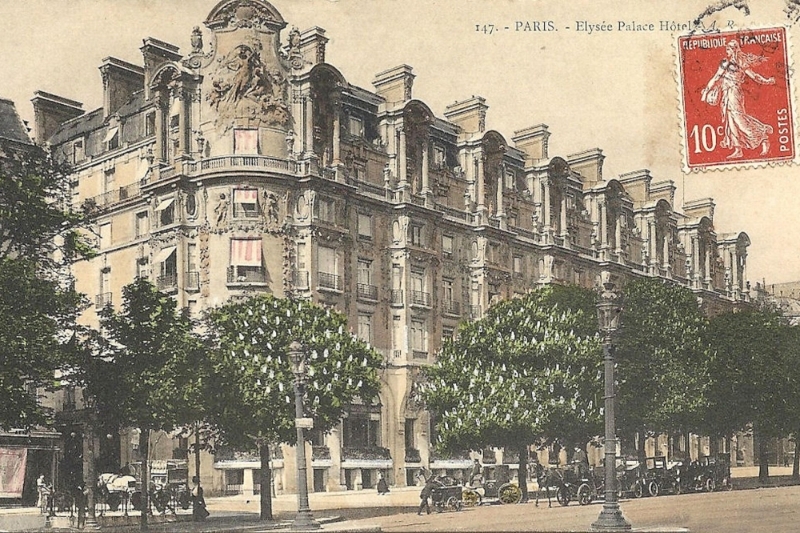
Lors de son dernier tour de Monopoly sur l'avenue des Champs-Elysées, Bernard Arnault avait attribué l'ancien bâtiment de la banque HSBC à Louis Vuitton pour y ouvrir une de ses plus grandes boutiques au monde. La marque au monogramme s'attelle aussi à y installer un hôtel.
Le bâtiment construit en 1898 au 103 de l'avenue des Champs-Elysées, va redevenir un hôtel, siglé Louis Vuitton. Cette carte postale représentant l'Elysée palace hôtel date de 1909. © Historic Images/Alamy banque d'images
Après la joaillerie, les parfums et bientôt les cosmétiques, Louis Vuitton n'en finit plus de se divers
ifier. Comme l'avait raconté La Lettre A, la marque phare du groupe LVMH, qui a réalisé plus de 20 milliards d'euros de chiffre d'affaires en 2022, va ouvrir un nouveau vaisseau amiral au numéro 103 des Champs-Elysées (LLA du 13/02/23). D'après nos informations, l'immense bâtiment de 22 000 m2 abritera également le premier hôtel siglé Louis Vuitton. Le nombre de suites, qui donneront toutes sur l'avenue, n'est pas encore arrêté. Elles seraient moins d'une dizaine.
L'information est restée totalement confidentielle pour le moment. Aucun permis de construire modificatif n'a encore été apposé sur l'immeuble en pierres de taille. Mais le groupe Vinci, chargé des travaux, a été sommé d'en déposer un, qui est sans doute en cours d'instruction. Les équipes du constructeur se sont d'ailleurs fait quelques cheveux blancs depuis un an. Car le PDG de LVMH, Bernard Arnault, balloté entre ses enfants et ses principaux barons, n'a cessé de jouer au Monopoly sur les Champs-Elysées (LLA du 19/04/22).
Vuitton l'a emporté sur Dior
Son secrétaire général, Marc-Antoine Jamet, a décroché le bail du "103" en un tournemain auprès de son propriétaire, l'émir du Qatar, fin 2019. L'immeuble, qui abritait jusqu'ici la banque HSBC, avait initialement été réservé à Dior. Ce qui explique l'immense bâche blanche figurant des vêtements de la marque pour cacher les travaux.
Il a ensuite été envisagé de l'attribuer à Tiffany afin d'en faire l'écho parisien de l'emblème historique du joaillier américain sur la cinquième avenue à New York. Le PDG de la marque, Anthony Ledru, et son directeur marketing et produits, Alexandre Arnault, ont beaucoup poussé en ce sens. Mais fin 2022, coup de théâtre. Bernard Arnault a commencé à dessiner un nouvel organigramme pour son groupe dans lequel Pietro Beccari, PDG de Dior, deviendrait PDG de Louis Vuitton. Nommé en février 2023, ce dernier a réussi l'exploit d'embarquer le 103 Champs-Elysées pour que l'immeuble passe lui aussi de Dior à Vuitton.
Ce baron présent dans le groupe depuis dix-sept ans s'est déjà fait la main avec sa "Suite Dior" à l'étage de l'ovni, mi-boutique mi-musée, rénové l'an dernier au 30 avenue Montaigne. Là, les richissimes clients peuvent séjourner dans un appartement privé avec un chef cuisinier et un personal shopper, et faire leurs achats en privé pendant la nuit. Louis Vuitton s'est aussi essayé à la restauration avec un café éphémère consacré au chocolat dans son magasin amiral japonais du quartier de Ginza à Tokyo.
Le bâtiment revient à sa vocation première
L'ancien PDG de la marque au monogramme, Michael Burke, avait déjà, le 15 novembre, laissé fuiter l'idée d'une diversification vers l'hôtellerie auprès d'un journaliste du Women's Wear Daily. Mais il avait alors indiqué vouloir situer l'établissement dans les locaux du siège de la marque, face au Pont-Neuf. Ce qui était sans doute trop proche du Cheval Blanc collé à La Samaritaine, dont le siège est voisin.
Ce seront donc les Champs-Elysées. L'édifice de style Art nouveau du 103 reviendra ainsi en partie à sa vocation d'origine. Construit en 1898 pour la Compagnie des Wagons-Lits, il a d'abord été un palace. C'est d'ailleurs dans l'une de ses chambres que Mata Hari a été arrêtée en 1917, après une perquisition. Le bâtiment a été transformé en banque en 1919, puis réquisitionné et occupé par la Wehrmacht durant de la Seconde Guerre mondiale. Mais pas sûr que LVMH ne fasse allusion à tous ces événements historiques.
Aucune date n'est encore arrêtée pour l'ouverture au public de cette boutique-hôtel, tant les travaux s'annoncent longs. Ils prévoient notamment la réouverture d'une cour intérieure, l'allongement des vitrines du rez-de-chaussée jusqu'au niveau de la rue et le percement d'entrées latérales en plus de la centrale. En revanche, d'autres maisons hôtelières siglées Louis Vuitton pourraient ouvrir ailleurs dans le monde si les locaux des boutiques s'y prêtent.