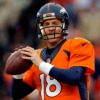
>>> Forbes 2014 : The World's Highest-Paid Athletes

{http://www.forbes.com/athletes/list/#tab:overall}

#1 Floyd Mayweather $105 M $105 M $0 Boxing
#2 Cristiano Ronaldo $80 M $52 M $28 M Soccer
#3 LeBron James $72.3 M $19.3 M $53 M Basketball
#4 Lionel Messi $64.7 M $41.7 M $23 M Soccer
#5 Kobe Bryant $61.5 M $30.5 M $31 M Basketball
#6 Tiger Woods $61.2 M $6.2 M $55 M Golf
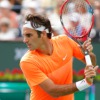
#7 Roger Federer $56.2 M $4.2 M $52 M Tennis
#8 Phil Mickelson $53.2 M $5.2 M $48 M Golf
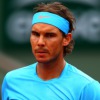
#9 Rafael Nadal $44.5 M $14.5 M $30 M Tennis
#10 Matt Ryan $43.8 M $42 M $1.8 M Football
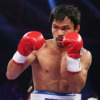
#11 Manny Pacquiao $41.8 M $41 M $0.8 M Boxing
#12 Zlatan Ibrahimovic $40.4 M $36.4 M $4 M Soccer
#13 Derrick Rose $36.6 M $17.6 M $19 M Basketball
#14 Gareth Bale $36.4 M $25.4 M $11 M Soccer
#15 Radamel Falcao $35.4 M $32.4 M $3 M Soccer
#16 Neymar $33.6 M $17.6 M $16 M Soccer
#17 Novak Djokovic $33.1 M $12.1 M $21 M Tennis
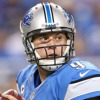
#18 Matthew Stafford $33 M $31.5 M $1.5 M Football
#19 Lewis Hamilton $32 M $29 M $3 M Racing
#20 Kevin Durant $31.9 M $17.9 M $14 M Basketball
#21 Fernando Alonso $31 M $29 M $2 M Racing
#22 Mahendra Singh Dhoni $30 M $4 M $26 M Cricket
#23 Dwyane Wade $29.9 M $18.9 M $11 M Basketball
#24 Carmelo Anthony $29.4 M $21.4 M $8 M Basketball
#25 Wladimir Klitschko $28 M $24 M $4 M Boxing
#26 Peyton Manning $27.1 M $15.1 M $12 M Football
#27 Amar'e Stoudemire $26.7 M $21.7 M $5 M Basketball
#28 Dale Earnhardt, Jr. $25.9 M $14.9 M $11 M Racing
#29 Dwight Howard $25.5 M $20.5 M $5 M Basketball
#30 Cliff Lee $25.3 M $25.1 M $200 K Baseball

FT : Forget iHacks, we’re all exposed online

The hacking of celebrities’ nude photos is a reminder that nothing is private any more

“Life is on the record,” Tony Blair’s press chief used to tell his staff. His point was not that it was no longer possible to talk “on background” or that journalists would not respect a confidence. It was that things get out and that it was safer to assume everything you say could be quoted.
I thought of his comment amid news of the Apple hack that has spewed dozens of highly personal images of celebrities on to the internet. The victims include genuine film stars such as Jennifer Lawrence and Kate Hudson and a number of other women whose celebrity status I guess we’ll just have to take on trust. Those hacked were overwhelmingly women posing nude for pictures presumably taken either by or for their partners.

I write as someone who has never felt the urge to take or circulate nude photographs of myself – a decision that (perhaps worryingly) does not appear to have left a major gap in the life of my partner. Perhaps I should be bothered by this, or perhaps we are products of a different era. Nude photos of a loved one did not begin with the internet. The Polaroid camera built its success on the trend – one model was even known as the Polaroid Swinger and marketed with rather suggestive adverts. The alternative was having photos developed at the local pharmacist, where the leering smile of the shop assistant was enough to dissuade many an amorous couple from posing au naturel.

Today, low-grade Polaroids and those smirking intermediaries are gone. Nude pictures and sex videos are commonplace, maybe even the norm, and so inevitably are leaks, hacks and the particularly nauseating phenomenon known as revenge porn. This last is a singular concern among teenagers. Young girls feel pressured into posing nude for boyfriends, who then in effect blackmail them.
Though the appetite for nude snaps is not only about women, it affects them disproportionately – perhaps because the peeping class is predominantly male.
As far as one can tell there is nothing shameful in the hacked images but that does not reduce the mortification felt by the stars. Nor has it prevented a mean-spirited blame game in which some have castigated the celebrities for being foolish enough to take images they don’t want published. Others, rightly, object to chiding victims of crime. For this is stolen property, just as surely as if they had been burgled. The difference is that this break-in leaves them feeling violated by the entire world. On Monday, terms related to the incident were the most searched for items online in the US. (In the UK it was behind football transfer deadline day – which must say something about British nature.)
However, apportioning blame is to miss a wider point, and one that celebrities are probably better placed to comprehend than most others.
This really is not to criticise the victims. Again, we do not blame burglary victims for keeping jewellery in the house. Yes, they did nothing wrong. Yes, they were victims of crime and, yes, they should not be treated as if they were to blame for the creepy and nasty actions of thieves. But this is another augury of the world into which we are moving.

Increasingly, there is no such thing as “off the record”. The private indiscretions, minor rule-breaking, the personal sphere can all be dragged into the public. CCTV can capture our behaviour outdoors; GPS-enabled phones and travelcards record our every journey. Your computer keystrokes are recorded.
Everyone you know carries a video camera and once something is out there, it is out there. The certainties of “behind closed doors” are dissolving. In some cases this may be a price worth paying to regulate bad behaviour, but a country in which people do not feel an utter dread of breaking any norms is probably a happier one.
The price of nude photos, sex tapes or any behaviour you would rather your boss or your mother did not see is the greater risk that they will. There is nothing wrong with lovers posing nude as long as they weigh up the cost of jealous exes, malicious hackers and a prurient public.
Things are no longer necessarily private because we do them alone or with only one other. Likewise, off-colour texts, misjudged emails and social media posts can leave us as exposed as a film star.
We face a choice of living with the risk or inhibiting legitimate private behaviour. We may relax and take the chance. But everyone needs to know that life today is on the record and we are all naked online.

WSJ : Alibaba IPO Will End Enchantment With Yahoo

Yahoo YHOO +5.61% is on a magic carpet ride. But it is held aloft by the soon-to-be-shifting winds of Alibaba Group Holding.

Yahoo's shares have more than doubled over the past two years, even as its revenue has fallen. Carrying it higher has been its 22.4% stake in Alibaba, which has been one of the few ways for U.S. investors to tap into the excitement over the Chinese e-commerce giant.

That psychology is still at work. Shares of Yahoo rose more than 5% Monday after Alibaba announced an initial price range of $60 to $66 a share late Friday, valuing it at about $162 billion on a fully diluted basis.

But the risk for a tracking stock is that it loses much of its appeal when shares of the desired company become more widely available. Yahoo is expected to sell 140 million shares, or about 27% of its stake, into the planned Sept. 18 initial public offering.

That would net Yahoo about $5.7 billion after taxes at the midpoint of the range. Yahoo has pledged to return half of those proceeds to investors. As a result, its stock price will likely continue to climb on any upward pricing revisions ahead of the IPO.

Yahoo's remaining stake, which it will have to hold for a year following the IPO, will fluctuate with the value of Alibaba's publicly traded stock. Alibaba bulls value it as high as $220 billion. But even if the Chinese company comes out of the gate as strongly as many have anticipated, Alibaba's shares won't be worth as much to investors inside Yahoo than outside of it.

For one, Yahoo could still have to pay significant taxes if it monetizes its stake. Yahoo bulls say the company can come up with a way to avoid those, but it has yet to lay out such a plan. Second, Yahoo management has made no pledges regarding its use of any further Alibaba proceeds, leaving investors open to the risk of a pricey acquisition.

Finally, and perhaps most crucially, investors betting on the performance of a Chinese e-commerce company will now be able to do that directly. Meanwhile, Yahoo's existing businesses continue to struggle.

GSV Capital, a publicly traded closed-end mutual fund that invests in venture-capital-backed private companies, offers one example of what can happen. It owned shares of both Facebook FB +0.82% and Twitter TWTR +2.56% before their respective IPOs, which made it a tracking stock for investors looking to play them. Shares of GSV climbed 58% between June 27, 2011, the day the firm announced its Facebook investment, and May 17, 2012, the day Facebook shares priced. But the shares plummeted 57% over the next six months. Similarly, GSV's shares shot up in the run-up to Twitter's IPO, only to fall 50% in the subsequent month.

Granted, some Yahoo bulls are also betting the company gets acquired after the Alibaba IPO. But it is unclear why SoftBank, 9984.TO +4.47% which already has a 32% stake in Alibaba and is most often discussed as a potential Yahoo buyer, would want to pay a premium to own nearly 50% of a company in which it has no voting power.

For Yahoo investors, Alibaba's IPO should mean a downdraft.

Le Figaro : L'Oréal s'attend à une année difficile


La croissance du marché mondial des cosmétiques sera bien plus faible que prévu en 2014, prévient le PDG
du leader du secteur. Mais la baisse de l'euro devrait doper ses profits.

LE FIGARO. - Le marché des produits de grande consommation semble difficile. Qu'en est-il de celui des
produits cosmétiques ?
Jean-Paul AGON. - 2014 est une année plutôt étrange, avec un marché qui n'évolue pas comme prévu. Bien
que certaines économies soient en train de redémarrer, comme aux États-Unis et au Royaume-Uni, le
marché des cosmétiques en grande distribution y est difficile. En Europe de l'Ouest, il a été négatif en juillet
et août. Il y a certes des raisons climatiques avec un été pourri (les ventes de produits solaires ont été
mauvaises), mais aussi un effet psychologique. Au Royaume-Uni, l'économie repart, mais le marché des
cosmétiques grand public est à 0. Aux États-Unis, il est à peine positif. À l'inverse, les marchés en
parfumeries et en pharmacies sont toujours très bons dans ces pays. Nos divisions luxe et cosmétique active
vont probablement réaliser une de leurs meilleures années.
Et dans les pays émergents ?
Là aussi, c'est assez variable dans le marché grand public. Il reste positif en Amérique du Sud, y compris au
Brésil, qui souffre économiquement, mais où la consommation reste bonne. La croissance est bonne en
Afrique, au Moyen-Orient et en Asie du Sud-Est. En Chine, le marché grand public ralentit. Après des années
de croissance à deux chiffres, il ne progresse plus que de 6 %. C'est un marché très compétitif, qui a changé
en dix ans. À l'époque, il y avait des grandes marques internationales puissantes et des marques locales en
perte de vitesse. Depuis deux ans, on assiste à un renforcement des marques locales. Même si toutes ne
durent pas, c'est une concurrence nouvelle.
Comment expliquez-vous la différence de croissance entre les marchés grand public et le luxe ?
D'une part, dans certains pays, les consommateurs font des arbitrages et privilégient les biens durables
achetés à crédit, comme l'immobilier, l'automobile, le high-tech. D'autre part, les classes moyennes et
moyennes inférieures sont probablement exposées à des difficultés économiques.
En début d'année, vous prévoyiez une croissance du marché de 4 % en 2014. Est-ce toujours le cas ?
Nous prévoyions alors, comme l'an passé, une croissance comprise entre 3,5 % et 4 % : en début d'année,
nous pensions qu'elle serait proche de 4 %, fin juillet, nous la voyions encore proche de 3,5 %. Après l'été,
nous pensons que la croissance sera entre 3 et 3,5 %. Cela dit, le marché ne va pas durablement ralentir. Il y
a parfois des effets conjoncturels qui font que le marché accélère ou ralentit, mais, sur une longue période, la
croissance reste en moyenne à 4 %. En 2015, il reviendra à un meilleur rythme et nos objectifs restent
identiques : nous voulons toujours faire mieux que le marché et faire progresser notre rentabilité. Cette
dernière a d'ailleurs progressé de 0,3 point au premier semestre. Notre enjeu est de pouvoir gagner des parts
de marché.
Page 2 of 2 © 2014 Factiva, Inc. All rights reserved.
Pourtant, au premier semestre, votre croissance (+ 3,8 %) n'était plus supérieure à celle du marché, mais
seulement « en ligne ».
Certaines années, nous faisons beaucoup mieux que le marché, d'autres mieux, d'autres seulement un peu
mieux. En 2014, nous devrions faire un peu mieux que le marché. Nous travaillons à faire une belle année
2015. Les acquisitions bouclées cette année y contribueront : Magic en Chine, NYX aux États-Unis et Niely
au Brésil. Urban Decay (acquis fin 2012) est la marque de luxe avec la plus forte croissance au monde. C'est
un phénomène de société, qui nourrit la croissance de notre division luxe.
Êtes-vous satisfait de la récente baisse de l'euro et des déclarations de Mario Draghi ?
C'est une très très bonne nouvelle. Un euro fort n'est pas une menace vitale pour le groupe, mais un euro à
taux raisonnable est une grande opportunité. Les groupes de la zone euro vivent depuis sept à huit ans dans
une adversité monétaire difficile et luttent à armes inégales avec leurs concurrents. Nous avons été très
désavantagés par un euro surévalué, qui était passé de 0,80 à 1,40 dollar en dix ans. Avec un euro à moins
de 1,30 dollar, le reflux est très net. Certains banquiers estiment que la baisse va durer et même s'amplifier.
Ce serait évidemment une très bonne nouvelle.
Concrètement, quel serait l'impact sur les comptes de L'Oréal, qui produit beaucoup localement ?
La France représente 9 % du chiffre d'affaires du groupe et 25 % de sa production. Une baisse de l'euro
améliore donc les résultats de nos filiales et permet d'augmenter les royalties reçues en France sur nos
marques. Enfin, un euro plus faible contribue à ce que la consolidation des résultats de nos filiales entraîne
plus de résultat opérationnel du groupe. La perspective d'une baisse de l'euro nous est donc extrêmement
favorable. Par ailleurs, l'apport de L'Oréal à la balance du commerce extérieur de la France est important,
près de 2 milliards d'euros.
Craignez-vous que la situation en Russie perturbe les performances des marques françaises ?
Le marché des cosmétiques reste solide pour l'instant. Nous avons fait le choix de produire localement à
Kalouga une partie de nos gammes grand public. C'est une façon de nous prémunir des aléas.


Après avoir résisté au premier semestre, distributeurs et
industriels des produits de grande consommation attendaient l'été avec anxiété, tant les marchés sont
instables partout dans le monde. En révélant au Figaro un net ralentissement du marché des cosmétiques,
Jean-Paul Agon, le PDG de L'Oréal, donne raison aux pessimistes. Rien de dramatique certes pour le géant
des cosmétiques, qui s'attend à faire mieux que le marché en 2014 et prévoit un rebond en 2015. Mais
« l'année plutôt étrange » vécue par L'Oréal prouve que même les meilleurs de la classe souffrent.
Dans ces conditions, 2014 pourrait être encore plus difficile en terme de croissance du chiffre d'affaires pour
de nombreux acteurs de la grande consommation. Dans ce contexte, une perspective réjouit toutefois
grandement le PDG de L'Oréal : la baisse de l'euro amorcée ces dernières semaines, qui pourrait bien
changer les règles du jeu face à ses rivaux anglo-saxons.


>>> What to look at today - 09/09/2014

US Market Closed Mixed with blue chip lower & small & tech Higher, weakness in crude pushed energy sector lower, consumer discretionary sector (-0.5%) weighed amid weakness in the shares of Ford (F 16.80, -0.34) and General Motors(GM 33.24, -1.04) after Morgan Stanley downgraded the U.S. auto sector.technology sector (+0.2%) outperformed throughout the session, which underpinned the Nasdaq. Top-weighted components like Google (GOOGL 601.63, +3.85), Microsoft (MSFT 46.47, +0.56), and Intel (INTC 35.33, +0.33) posted gains between 0.6% and 1.2%, while the top index member by weight—Apple (AAPL 98.35, -0.62)—lost 0.6%, volume wers till light at 590mil shares, VIX @ 12.66 +4.71%...San Francisco Fed report noted "evidence based on surveys, market expectations, and model estimates show that the public seems to expect a more accommodative policy than Federal Open Market Committee participants."...The Nikkei OP in Asia helped by the slide in the Yen, Fin Min Aso downplayed the biggest contraction in Q2 GDP in 5 years, stating there is no change in view that economy recovering moderately following GDP data and adding there is no plan to compile additional budget to support economy this autumn. Japan cabinet economic adviser Itoh recommended a fiscal stimulus but did not see the need for the BOJ to expand its quantitative easing program.Nikkei +0.38% Hang Seng -0.20% Shanghai +0.07%

Eur$ 1.2882 S&P -0.15% EuroStoxx -0.40% FTSE -0.21% Dax -0.24% FTSE -0.24% SMI -0.15%

Macro
- Nowotny Says ECB Interest Rates Have Reached Their Lower Bound
- EU Delays Russia Sanctions for `Few Days' Pending Developments


Keep an eye on :
- ABBN VX : ABB to Buy Back Up to $4b of Shares, Seeks to Raise Operational EPS 10%-15% CAGR Over 2015-2020 (+2.8% pre-mkt)
- A2A IM : Italy’s A2A May Weigh Merger Options, Chairman Valotti Says
- EN FP : Bouygues Wins Hong Kong Contract for About EU490M
- ENX FP : Euronext Plans to Move From French HQ, Les Echos Reports
- EOAN GY : Eon Italia has seven bidders admitted to data room
- GAM SM : Gamesa to Issue Up to 25.4M Shares With Accelerated Bookbuild
- GSP FP : Rallye To file a tender offer for Groupe GO Sport’s shares @ 9.10 (closed @ 4,25)
- ISS DC : ISS A/S Investors Selling 12.4% in Accelerated Bookbuild
- JIMMYCHOO IPO : JAB’s Jimmy Choo Said Near IPO to Value Shoemaker at $1b
- OR FP : L’Oreal CEO Agon Sees Lower Than Expected Market Growth: Figaro
- OR FP : CEO lowers forecast for the cosmetics market (to +3-3.5% from +3.5-4.0%); expecting better growth patterns for 2015 - cosmetics was negative in July/August
- SAN FP : Sanofi Says FDA Approves Use of Menactra Vaccine Booster
- TEC FP : Technip Gets BP Trinidad and Tobago Contract Worth EU250m-EU500m
- 02D GY : Telefonica Deutschland to Issue 1.1b New Shrs in Rights Issue, 3,24/share
- TEL NO : Telenor to Boost Asia Mobile Internet Users to 45m by Year End
- TIT IM : America Movil in Talks With Oi for Joint Bid for Tim Brasil
- VOW3 GY : VW to Postpone Decision on Building New Factory in Thailand: FAZ

>>> Brokers Upgrades & Dowgrades - 09/09/2014

>>> Up
*ARCELORMITTAL RAISED TO OUTPERFORM VS NEUTRAL: CREDIT SUISSE
*BANKINTER RAISED TO BUY VS NEUTRAL AT GOLDMAN
*BREWIN DOLPHIN RAISED TO BUY VS HOLD AT NUMIS
*DNO ASA RAISED TO OVERWEIGHT VS EQUALWEIGHT AT MORGAN STANLEY
*FAROE PETROLEUM RAISED TO EQUALWEIGHT AT MORGAN STANLEY
*KLOECKNER RAISED TO BUY FROM HOLD AT BANKHAUS LAMPE
*LUNDIN PETROLEUM RAISED TO OVERWEIGHT AT MORGAN STANLEY
*MORRISON RAISED TO BUY VS NEUTRAL AT CITI
*OPAP RAISED TO NEUTRAL VS SELL AT CITI
*PERNOD RICARD RAISED TO OUTPERFORM AT BERNSTEIN

>>> Down
*BANK OF IRELAND CUT TO NEUTRAL VS BUY AT UBS
*DET NORSKE OLJESELSKAP CUT TO UNDERWEIGHT AT MORGAN STANLEY
*ELECTROLUX CUT TO NEUTRAL VS BUY AT UBS
*MUNICH RE CUT TO UNDERPERFORM VS NEUTRAL AT CREDIT SUISSE
*SALAMANDER ENERGY CUT FROM OVERWEIGHT AT MORGAN STANLEY
*SNAM CUT TO SELL VS NEUTRAL AT GOLDMAN
*SWISS RE CUT TO UNDERPERFORM VS NEUTRAL AT CREDIT SUISSE

>>> PT Changes


>>> Initiations
*KPN REINSTATED NEUTRAL AT GOLDMAN, PT EU3
*TELEFONICA DEUTSCHLAND REINSTATED BUY AT GOLDMAN, PT EU7.5

>>> Call
>> stock
*ELECTROLUX REMOVED FROM UBS EUROPEAN KEY CALL LIST
*IAG ADDED TO MOST PREFERRED EUROPEAN TRANSPORT SHRS AT UBS
*LUFTHANSA ADDED TO LEAST PREFERRED EUROPEAN AIRLINES AT UBS

>>> Rallye To file a tender offer for Groupe GO Sport’s shares (ticker GSP.FR)

Rallye To file a tender offer for Groupe GO Sport’s shares (ticker GSP.FR)
Rallye (Paris:RAL) informed Groupe GO Sport of its intention to soon file a project of simplified tender offer for Groupe GO Sports shares at a price of €9.10 per share, followed, provided that the conditions are met, by a squeeze-out. This price will be subject to review by the independent expert appointed by Groupe GO Sport and the French Financial Markets Authority (AMF).

The Board of Directors of Groupe GO Sport, who met today for this purpose, unanimously decided to appoint, in accordance with articles 261-1 I 1and II of the general regulations of the French Financial Markets Authority, Farthouat Finance, represented by Marie-Ange Farthouat, as the independent expert responsible for preparing a report on the simplified tender offers financial conditions and, if appropriate, on the squeeze-out.

The Board of Directors of Groupe GO Sport will issue a reasoned opinion about the terms and conditions of the project of simplified tender offer, once the Board has reviewed the independent experts report and the relating documentation.

>>> Asian Update

Asian Market Update: Australia NAB confidence retreats; USD rally gathers steam

***Economic Data*** - (AU) AUSTRALIA AUG NAB BUSINESS CONFIDENCE: 8 (first decline in 5 months) V 10 PRIOR; NAB BUSINESS CONDITIONS: 4 V 8 PRIOR - (AU) AUSTRALIA JUL HOME LOANS M/M: 0.3% (5-month high) V 1.0%E; INVESTMENT LENDING: 6.8% V 0.1% PRIOR; OWNER-OCCUPIED LOAN VALUE: 0.0% V 1.7% PRIOR - (AU) Australia ANZ Roy Morgan Weekly W/W: 113.3 v 112.6 prior - (NZ) NEW ZEALAND AUG TOTAL CARD SPENDING M/M: +0.3% V -0.2% PRIOR; RETAIL CARD SPENDING M/M: 0.5% V 0.6%E - (NZ) NEW ZEALAND AUG ANZ TRUCKOMETER HEAVY M/M: -1.2% V +2.5% PRIOR - (JP) JAPAN JUL TERTIARY INDUSTRY INDEX M/M: 0.0% V 0.2%E - (JP) JAPAN AUG MONEY STOCK M2 Y/Y: 3.0% (matches 18-month low) V 2.9%E; M3 Y/Y: 2.4% V 2.4%E - (UK) UK AUG BRC SALES LFL Y/Y: 1.3% (1st rise in 3 months, 4-month high) V 0.3%E

***Index Snapshot (as of 03:30 GMT)*** - Nikkei225 +0.3%, S&P/ASX +0.2%, Kospi -0.3%, Shanghai Composite flat, Hang Seng closed, Sept S&P500 -0.1% at 1,999

***Commodities/Fixed Income/Currencies*** - Dec gold +0.2% at $1,256, Oct crude oil +0.4% at $93.04/brl, Dec copper -0.8% at $3.16/lb - JGB: (JP) Japan MoF sells ¥642B in 1.7% (1.7% prior) 30-yr notes; Avg yield: 1.679% v 1.676% prior; Bid to cover: 3.57x v 4.06x prior - (AU) Australia MoF (AOFM) sells A$200M in indexed 2022 Bonds; Avg yield: 1.0099%; Bid-to-cover: 4.36x - (CN) PBoC to drain CNY15B in 14-day repos (13th consecutive drain) - USD/CNY: (CN) PBoC sets yuan mid point at 6.1520 (strongest Yuan setting since Aug 11th, biggest raise in Yuan fixing since 2010) v 6.1707 prior setting

***Market Focal Points/Key Themes*** - Nikkei225 is outperforming among the regional bourses, once again bolstered by the slide in the Yen from the greenback tailwind. Just before the close of the US markets, San Francisco Fed report noted "evidence based on surveys, market expectations, and model estimates show that the public seems to expect a more accommodative policy than Federal Open Market Committee participants." The yield on the US 10-year is up another 2bps during the Asian session, testing 2.50%. USD/JPY hit fresh 6-year highs of 106.30, EUR/USD at 14-month lows below 1.2870, and NZD/USD is at 7-month lows around 0.8250. GBP/USD is down about 40pips at 1.6070 - the lowest level since Nov 2013 - with another UK press survey showing a statistical dead heat in the Scotland quest for independence.

- Among the most notable economic datapoints, Australia NAB business confidence slowed for the first time in 5 months while home loans growth missed consensus estimates despite hitting 5-month highs. NAB said business conditions "business conditions are still well up on 2013, but are significantly lower than the pre-global financial crisis years", adding "employment index was unchanged at low levels, conforming with expectations of a relatively jobless recovery." Note that Australia's monthly employment data will be released this coming Thursday.

- Out of Japan, Fin Min Aso downplayed the biggest contraction in Q2 GDP in 5 years, stating there is no change in view that economy recovering moderately following GDP data and adding there is no plan to compile additional budget to support economy this autumn. Japan cabinet economic adviser Itoh recommended a fiscal stimulus but did not see the need for the BOJ to expand its quantitative easing program. Econ Min Amari attributed some of the recent softness in consumer spending to one-off factors such as bad weather in summer, forecasting recovery in employment and renewed growth in corporate capex. BOJ early Aug meeting minutes saw only a few members point to downward pressure on long-term rates as a function of intensifying QE. Policy board members agreed economy is continuing to recover moderately, and the recent weakness in exports is due to cyclical factors.

***Equities*** US markets: - BNNY: General Mills To Acquire Annie's at $46/shr or $820M; +37.6% afterhours - IPAS: Initiates process to explore strategic alternatives; +36.8% afterhours - TPLM: Reports Q2 $0.20 v $0.14e, R$142M v $118Me; +4.3% afterhours - CASY: Reports Q1 $1.34 v $1.23e, R$2.29B v $2.29Be; +3.6% afterhours - HD: Confirmed payment data systems breached; no evidence of compromised PIN numbers - financial press; -0.6% afterhours - PBY: Reports Q2 $0.00 (incl items) v $0.16e, R$526M v $530Me; -8.3% afterhours - FCEL: Reports Q3 -$0.03 v -$0.03e, R$43.2M v $53.1Me (2 ests); -9.4% afterhours - GFIG: BGC Partners said to make unsolicited $675M all-cash offer for GFI Group - financial press

Notable movers by sector: - Consumer Discretionary: Shimamura 8227.JP +1.2% (press speculation on H1 results); Chongqing Changan Automobile 000625.CN +2.2% (Aug sales results) - Consumer staples: Zhejiang Beingmate 002570.CN +10.0% (resumes trading; Fonterra offers to acquire Beingmate) - Materials: Kobe Steel 5406.JP +2.3% (analyst actions); Regis Resources RRL.AU +9.2% (mineral resource update); Western Desert Resources WDR.AU -3.3% (iron ore price update) - Industrials: Kawasaki Kisen Kaisha 9107.JP +1.2% (forecast to receive more orders); Nippon Yusen 9101.JP +1.0% (cost reduction plan) - Technology: Brambles BXB.AU -0.5% (to acquire Ferguson Group); Eternal Asia Supply Chain Management 002183.CN +6.0% (Alibaba starts IPO roadshow, company has close relationship with Alibaba in logistics) - Healthcare: Sosei Group Corp 4565.JP -10.2% (results for Ultibro, Seebri; update with Pfizer) - Utilities: Mitsubishi Electric 6503.JP +1.6% (update operating targets for FY14/15; Order from Qatar)

WSJ : Martoma Sentenced to Nine Years in Prison

Martoma Sentenced to Nine Years in Prison

Former SAC Capital Hedge-Fund Manager Also Ordered to Forfeit $9.38 Million


Mathew Martoma, center, and his wife arrive at federal court for a sentencing hearing in New York on Monday. Photo: Bloomberg
By CHRISTOPHER M. MATTHEWS
A federal judge sentenced Mathew Martoma to nine years in prison Monday, handing the former SAC Capital Advisors LP portfolio manager a stiff prison term in line with climbing punishments for insider trading.
The sentence gives the government another big win in its multiyear investigation into SAC and its billionaire founder, Steven A. Cohen.
Mr. Martoma, 40 years old, was convicted of taking part in what prosecutors say was one of the largest insider-trading schemes ever—illegal trades on two pharmaceutical companies that helped SAC and its traders book profits and avoid losses worth a total of $275 million.
Under federal guidelines, the profit or loss caused by a fraud plays a prominent role in sentencing recommendations. Because of the size of the scheme, Mr. Martoma faced as many as 20 years in prison under recommendations from the Manhattan federal court's probation office. Prosecutors argued that Mr. Martoma deserved a sentence of more than eight years in prison.
U.S. District Judge Paul Gardephe, who handed down the sentence after considering various factors, also ordered Mr. Martoma to forfeit $9.38 million.
Mr. Martoma is the eighth SAC employee convicted of insider trading. Most have pleaded guilty.
SAC itself pleaded guilty in November to criminal insider-trading charges and agreed to pay about $1.2 billion in new penalties. As part of the settlement, the firm said it would stop managing outside money. SAC has since changed its name to Point72 Asset Management.

>>> US Close Dow-0,15% S&P-0,31% Nasdaq +0,20% Russel +0,19%

Closing Market Summary: Stocks Begin Week on Cautious Note

The stock market started the first full week of September on a cautious note. The S&P 500 lost 0.3%, but the relative strength of small cap stocks helped the Russell 2000 (+0.2%) and Nasdaq Composite (+0.2%) finish ahead of the benchmark index.

Equity indices struggled from the get-go with the overall risk sentiment dampened by continued dollar strength that sent the US Dollar Index (+0.54, 84.28) near its best level of the year. The greenback surged on the back of yen weakness following a downward revision to Japan's Q2 GDP (to -7.1% from -6.8%), while also drawing strength from weakness in the British pound. The pound fell to 1.6110 from 1.6330 against the greenback after a weekend YouGov poll revealed majority support for Scottish independence with the referendum coming up on September 18.

Conversely, the dollar strength weighed on commodities with gold futures falling 0.9% to $1255.80/ozt. Similarly, crude oil also retreated, testing its 2014 low, before narrowing its loss to 0.7% by the pit close. The energy component settled at $92.64/bbl, but continued its rebound in electronic trading.

The early weakness in crude contributed to a defensive start for the energy sector (-1.6%), which ended near its worst level of the session. Dow components Chevron (CVX 126.21, -1.19) and ExxonMobil (XOM 97.77, -1.49) posted respective losses of 0.9% and 1.5% as the stronger dollar and cheaper oil weighed on earnings prospects of the two multinational giants.

Energy notwithstanding, other sectors ended much closer to their flat lines. The consumer discretionary sector (-0.5%) weighed amid weakness in the shares of Ford (F 16.80, -0.34) and General Motors (GM 33.24, -1.04) after Morgan Stanley downgraded the U.S. auto sector.

Elsewhere, the consumer staples sector (-0.6%) was pressured by Campbell Soup (CPB 43.39, -1.15), which fell 2.6% in reaction to an in-line report and disappointing guidance. Manufacturers of cosmetics also lagged after the CEO of L'Oreal (LRLCY 32.60, -0.73) made cautious comments about the industry. Peers Avon Products (AVP 13.66, -0.18) and Estee Lauder (EL 75.59, -1.19) lost 1.3% and 1.6%, respectively.

On the upside, the technology sector (+0.2%) outperformed throughout the session, which underpinned the Nasdaq. Top-weighted components like Google (GOOGL 601.63, +3.85), Microsoft (MSFT 46.47, +0.56), and Intel (INTC 35.33, +0.33) posted gains between 0.6% and 1.2%, while the top index member by weight—Apple (AAPL 98.35, -0.62)—lost 0.6%.

High-beta Nasdaq components also provided a measure of support with the PHLX Semiconductor Index adding 0.2% and the iShares Nasdaq Biotechnology ETF (IBB 273.06, +2.46) climbing 0.9%. Meanwhile, the broader health care sector (+0.1%) ended just above its flat line.

Treasuries rallied overnight, but spend the day in a steady retreat. The 10-yr note shed four ticks to boost its yield to 2.47%.

Participation remained light with fewer than 590 million shares changing hands at the NYSE floor.

Economic data was limited to the Consumer Credit report for July, which pointed to a $26.00 billion increase from an upwardly revised $18.80 billion (from $17.30 billion) in June, while the Briefing.com consensus expected an increase of $17.40 billion.

Tomorrow's data will be limited to the Job Openings and Labor Turnover Survey, which will be released at 10:00 ET.
  • Nasdaq Composite +10.0% YTD 
  • S&P 500 +8.3% YTD 
  • Dow Jones Industrial Average +3.2% YTD 
  • Russell 2000 +0.7% YTD