Closing Market Summary: Dow, S&P 500, and Nasdaq Settle at Fresh RecordsThe stock market finished the abbreviated pre-holiday session on a firmly higher note. A daylong upward drift helped the Dow (+0.7%), S&P 500 (+0.8%), and Nasdaq (+0.8%) settle at fresh record highs.
Today's session was not particularly active, but a heavy batch of mostly disappointing economic data provided fuel for a rally based on the assumption that a weakening economic picture will prompt the Federal Reserve to cut the fed funds rate. While the market has been emboldened by that view, it should be noted that historically speaking, the first rate cut has not been a positive event for equities going forward. On a side note, President Trump nominated Christopher Waller and Judy Shelton the Federal Reserve's Board of Governors. Mr. Waller previously served as the Executive Vice President of the Federal Reserve Bank of St. Louis while Ms. Shelton is one of the president's economic advisors.
All eleven sectors ended Wednesday in the green, but like yesterday, the advance was paced by countercyclical groups. Real estate (+1.5%), consumer staples (+1.4%), and utilities (+0.8%) jumped out to an early lead, maintaining their position until the close. Gains in these rate-sensitive sectors were supported by continued strength in Treasuries of longer tenors. The bond market will remain open until 14:00 ET, but the 10-yr yield (-2 bps to 1.95%) and the 30-yr yield (-4 bps to 2.47%) are almost certain to finish the day at fresh lows for the year.
High-beta groups had a mixed showing today. The Dow Jones Transportation Average climbed 1.0% with airlines pacing the advance after yesterday's guidance boost at Delta Air Lines (DAL 59.15, +0.61, +1.0%). United Airlines (UAL 90.67, +1.80, +2.0%) was the group's top performer.
Chipmakers underperformed once again. The PHLX Semiconductor Index lost 0.4%, trimming this week's gain to 0.8%. Broadcom (AVGO 284.89, -10.44, -3.5%) was the weakest performer, falling 3.5% after Bloomberg reported that the company is in advanced talks to acquire Symantec (SYMC 25.10, +3.00, +13.6%). The broader technology sector (+0.7%) settled just behind the broader market.
In other M&A news, Sprint (S 6.98, +0.10, +1.5%) rallied amid reports that the company's merger with T-Mobile (TMUS 75.82, +0.34, +0.5%) is likely to be approved by the Department of Justice.
Shares of Tesla (TSLA 234.90, +10.35, +4.6%) settled higher after the company reported a larger than expected number of total deliveries in Q2.
Participants received a full slate of economic data today:
- The ISM Non-Manufacturing Index dropped to 55.1% in June (consensus 55.8%) from 56.9% in May. The dividing line between expansion and contraction is 50.0%.
- The key takeaway from the report is that it points to a slowdown in growth in the non-manufacturing sector, which accounts for the vast majority of U.S. economic activity. The June reading marks the lowest level for the index since July 2017.
- Factory orders declined 0.7% in May (consensus -0.5%) after declining a downwardly revised 1.2% (from -0.8%) in April. This is the third decline in factory orders over the past four months.
- The key takeaway from the report is that orders for nondefense capital goods orders, excluding aircraft -- a proxy for business spending -- increased 0.5% versus a 0.4% increase seen in the advance durable goods orders report.
- The U.S. trade deficit widened to $55.5 billion in May (consensus -$54.4B) from a downwardly revised $51.2 billion (from -$50.8 billion) in April. Exports were $4.2 billion more than April exports while imports were $8.5 billion more than April imports.
- The key takeaway from the report is that the average real trade deficit in the second quarter is 2.3% greater than the first quarter average, which is a negative for the Q2 GDP growth outlook.
- Initial claims for the week ending June 29 decreased by 8,000 to 221,000 ( consensus 222,000). Continuing claims for the week ending June 22 also decreased by 8,000 to 1.686 million.
- The key takeaway from the report is that initial claims continue to run at relatively low levels, which suggests employers remain reluctant to reduce the size of their workforce.
Bond and equity markets will be closed for Independence Day tomorrow. On Friday, June Nonfarm Payrolls (consensus 160,000; prior 75,000), Nonfarm Private Payrolls consensus 147,000; prior 90,000), Average Hourly Earnings (consensus 0.3%; prior 0.2%), Unemployment Rate (Briefing.com consensus 3.6%; prior 3.6%), and Average Workweek ( consensus 34.4; prior 34.4) will be reported at 8:30 ET
- Nasdaq Composite +23.1% YTD
- S&P 500 +19.5% YTD
- Russell 2000 +16.6% YTD
- Dow Jones Industrial Average +15.6% YTD

Brevan Howard set for big gain as bond rally bet pays off
Jersey hedge fund on course for best half-year returns since financial crisis
Hedge fund Brevan Howard is on track for its best half-year performance since the aftermath of the credit crisis, thanks to bets on plunging US bond yields over the past two months.
Jersey-headquartered Brevan, run by secretive billionaire Alan Howard, saw its main fund gain 9.5 per cent this year to June 21, according to people who have seen the numbers. That includes a rise of more than 4 per cent last month. It means the fund is on course for its best half-year returns since the first half of 2009, and would just pip the profits it achieved during the European debt crisis in the second half of 2011.
Also profiting from falling bond yields is New York-based Caxton Associates. Its main fund is up about 10 per cent this year, according to a person who has seen the numbers.
The increases have largely been driven by the funds’ bets on lower bond yields. The US 10-year Treasury yield has tumbled from 2.69 per cent at the start of the year to less than 2 per cent this week, with much of the dip coming in the past two months. Yields fall as prices rise.
“It’s been the big trade,” said one macro hedge fund manager. “It’s [a trade driven by] the move by the ECB and Fed to indicate easing” of monetary policy.
Brevan’s results mark a remarkable turnround for the firm. A record of making money every calendar year, including gains of more than 20 per cent in both 2007 and 2008 during the financial crisis, helped it grow to more than $40bn as one of the world’s biggest and most influential hedge funds.
But three calendar years of losses between 2014 and 2017 has seen assets tumble as clients have lost patience and pulled out their cash. That has reduced the firm’s assets to $6.8bn.
However, Brevan surprised many in the industry last year with a rise of 12 per cent in its main fund and big increases in a separate portfolio run by Mr Howard, thanks in part to him correctly betting that Italian bond yields would rise amid concerns about the country’s debt pile and its spending policies last spring.
A number of macro funds have been betting on falling bond yields this year. After starting on a gradual downward path earlier in the year, the trade kicked into gear over the past two months when bond yields dipped in response to more dovish comments from the Federal Reserve.
Competition authority launches digital advertising probe
Regulator investigating use of data and market power held by online platforms
The UK’s competition watchdog has launched its sweeping probe into online advertising and unveiled an investigation into the potential harm to customers from the power of social media platforms and technology companies.
The Competition and Markets Authority said it was investigating the way in which online platforms harvest customers’ data and “whether consumers are able and willing to control how data about them is used”. It also said it was looking into whether competition in the advertising market was being “distorted” by the market power held by online platforms.
The competition authority’s well-flagged Digital Market strategy is aimed at moving UK competition policy into line with the rapidly changing, and increasingly powerful, technology sector.
In February CMA chair Lord Tyrie demanded new powers for the competition body and said “new and rapidly emerging forms of consumer detriment” were stemming from the digital economy.
The CMA said on Wednesday it had been hard for consumers and public authorities to “keep up” with the “speed of change and the vast reach of major players” in the digital market.
It will now investigate the extent to which fake news and online harm are at work in the digital economy and look at whether the might of companies like Google and Facebook is resulting in a lack of competition among digital advertisers.
The CMA has been increasingly targeting harm to consumers through technology. It recently investigated online hotel booking sites and cracked down on the way social media “influencers” endorse products on social media and the role of the platforms they use.
The watchdog is seeking comments by July 30 including from interested parties such as online platforms, advertisers, publishers, intermediaries within ad tech companies, and will publish a final report next year.
Delta Air Lines leading airlines higher after raising second quarter guidance
- DAL +2.04% UAL +0.90% ALK +0.75% HA +0.76% LUV +0.91% SAVE +0.74% AAL +0.73%
- Airlines JETS +0.9% vs. Transports IYT +0.1%
Early premarket gappersGapping up:
- OMN +50%, SYMC +19.2%, TSLA +7.5%, BTX +6.9%, AU +3.2%, SALT +3%, GOLD +1.8%, GDX +1.5%, GFI +1.5%, BIDU +1.4%, LOGI +1.3%, GSK +1.1%, ABUS +0.9%, GLD +0.8%, BHP +0.7%, BBL +0.6%
Gapping down:
- USNA -17.4%, AVGO -4.1%, NUS -2%, FLDM -1.5%, MGTX -0.9%

Gapping down
In reaction to disappointing earnings/guidance:
- USNA -17.4% (issues downside Q2 guidance and cuts FY19 outlook), ISCA -2.2%
M&A news:
- AVGO -4.2% (Broadcom (AVGO) in advanced discussions to acquire SYMC, according to Bloomberg)
Other news:
- CGC -6.7% (Co-CEO Bruce Linton to step down)
- NUS -2.3% (following USNA guidance)
- FLDM -1.5% (10% owner Levin Easterly Partners sold 187K shares worth ~$2.3 mln)
- MGTX -0.9% (files for 5,797,102 ordinary share offering by selling shareholders)
Analyst comments:
- N/A.
Gapping up
In reaction to strong earnings/guidance:
- TSLA +7.7% (reports record Q2 deliveries, above estimates; orders exceeded deliveries), JEF +2.7%
M&A news:
- OMN +54.5% (to be acquired by Synthomer plc for $10.15/share in cash)
- SYMC +17.4% (Broadcom (AVGO) in advanced discussions to acquire SYMC, according to Bloomberg) .
Select metals/mining stocks trading higher:
- AU +2.3%, GFI +1.7%, GOLD +1.5%, GDX +0.6%, GLD +0.5%, BHP +0.5%
Other news:
- LCI +3.7% (FDA denies Citizen Petition submitted by Genus Lifesciences requesting that the agency refuse to accept any submissions related to Lannett's 505(b)(2) New Drug Application (NDA) for Cocaine Hydrochloride Topical Solution, 4% and 10%)
- SALT +3% (President buys 125K of co's common stock; note: yesterday, shares of SALT rose over 10% on no news)
- CTST +2.4% (provides update on outdoor cultivation and first shipment to Australia)
- LOGI +1.3% (elected Wendy Becker as Logitech's new chairperson and proposes dividend increase)
- GSK +1.2% (GlaxoSmithKline/Pfizer (PFE): ViiV Healthcare EU granted Marketing Authorisation for Dovato (dolutegravir/lamivudine) for the treatment of HIV-1 infection in adults and adolescents above 12 years of age)
- BIDU +1% (will provide updates to its businesses at the AI Developer Conference today - will include that June average DAUs of Baidu App reached 188 million)
- ABUS +0.9% (Arbutus Biopharma sells part of its royalty interest on future global net sales of ONPATTRO, an RNA interference (RNAi) therapeutic currently being sold by Alnylam Pharma (ALNY), to OMERS, the defined benefit pension plan for municipal employees in Ontario, Canada)
Analyst comments:
- GOL +0.7% (upgraded to Buy from Neutral at Goldman)
China Is Forcing Tourists to Install Text-Stealing Malware at its Border - http://bit.ly/2JjvQ7E

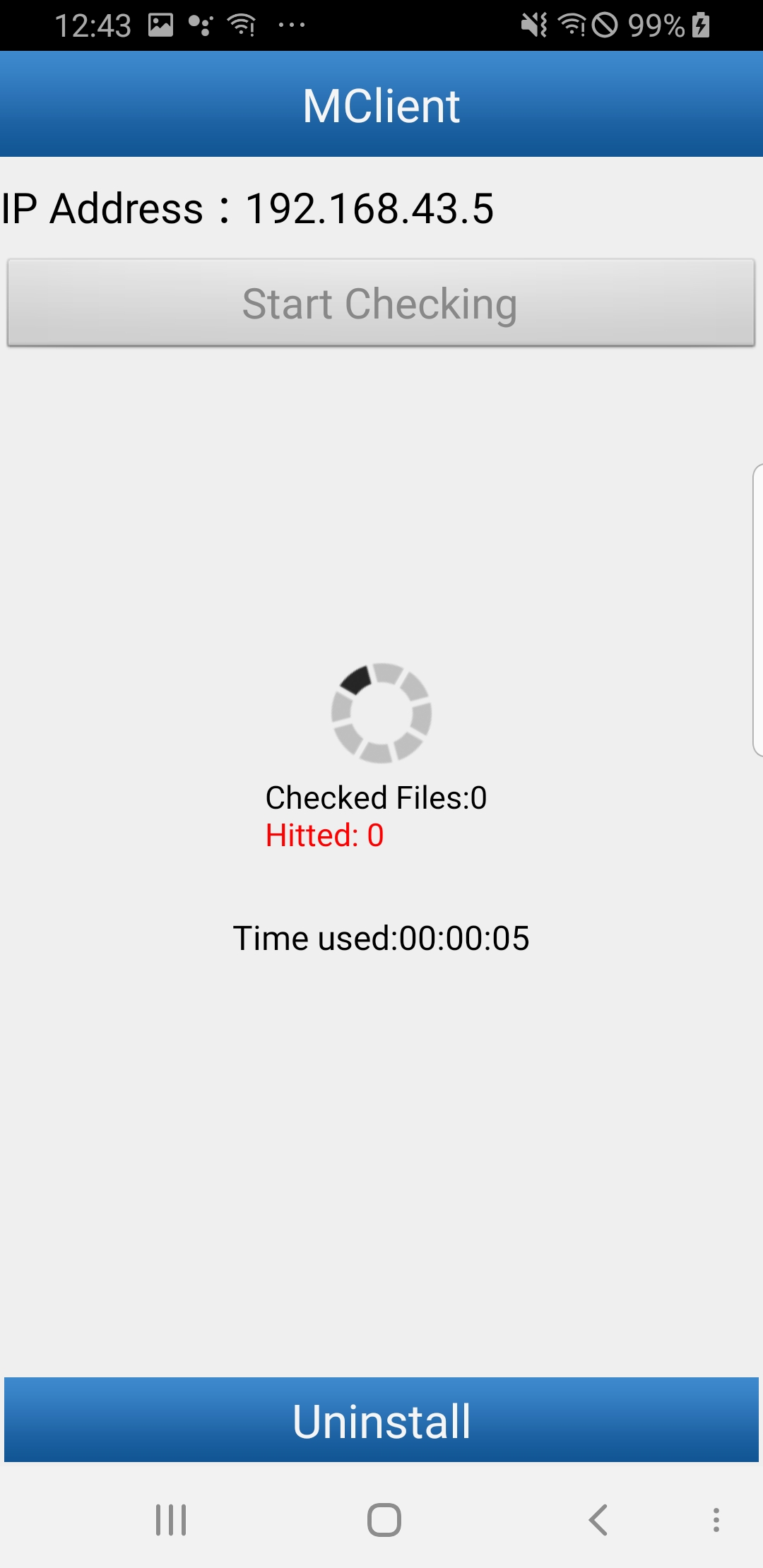
The malware downloads a tourist’s text messages, calendar entries, and phone logs, as well as scans the device for over 70,000 different files.
Foreigners crossing certain Chinese borders into the Xinjiang region, where authorities are conducting a massive campaign of surveillance and oppression against the local Muslim population, are being forced to install a piece of malware on their phones that gives all of their text messages as well as other pieces of data to the authorities, a collaboration by Motherboard, Süddeutsche Zeitung, the Guardian, the New York Times, and the German public broadcaster NDR has found.
The Android malware, which is installed by a border guard when they physically seize the phone, also scans the tourist or traveller's device for a specific set of files, according to multiple expert analyses of the software. The files authorities are looking for include Islamic extremist content, but also innocuous Islamic material, academic books on Islam by leading researchers, and even music from a Japanese metal band.
In no way is the downloading of tourists’ text messages and other mobile phone data comparable to the treatment of the Uighur population in Xinjiang, who live under the constant gaze of facial recognition systems, CCTV, and physical searches. Last week, VICE News published an undercover documentary detailing some of the human rights abuses and surveillance against the Uighur population. But the malware news shows that the Chinese government’s aggressive style of policing and surveillance in the Xinjiang region has extended to foreigners, too.
"[This app] provides yet another source of evidence showing how pervasive mass surveillance is being carried out in Xinjiang. We already know that Xinjiang residents—particularly Turkic Muslims—are subjected to round-the-clock and multidimensional surveillance in the region," Maya Wang, China senior researcher at Human Rights Watch, said. "What you’ve found goes beyond that: it suggests that even foreigners are subjected to such mass, and unlawful surveillance."
One tourist who crossed the border and had the malware installed on their device provided a copy to Süddeutsche Zeitung and Motherboard. A member of the reporting team from Süddeutsche Zeitung then also crossed the border and had the same malware installed on their own phone.
Motherboard has uploaded a copy of the Android app to our GitHub account. You can download the Android file here.
At the border crossing from Kyrgyzstan into China, surrounded by desolate, mountainous peaks, border authorities take travelers' phones to be searched and install the malware, called BXAQ or Fengcai. Those crossing the border entered a clean, sterile environment to be searched, and in all, the process of getting through several stages of scrutiny and security takes around half a day, one of the travelers said.
Together with the Guardian and the New York Times, the reporting team commissioned several technical analyses of the app. Penetration testing firm Cure53 on behalf of the Open Technology Fund, researchers at Citizen Lab from the University of Toronto, and researchers from the Ruhr University Bochum as well as the Guardian itself all provided insights about BXAQ. The app's code also includes names such as "CellHunter" and "MobileHunter."
Once installed on an Android phone, by "side-loading" its installation and requesting certain permissions rather than downloading it from the Google Play Store, BXAQ collects all of the phone's calendar entries, phone contacts, call logs, and text messages and uploads them to a server, according to expert analysis. The malware also scans the phone to see which apps are installed, and extracts the subject’s usernames for some installed apps.
Do you know any other cases of government malware? We'd love to hear from you. Using a non-work phone or computer, you can contact Joseph Cox securely on Signal on +44 20 8133 5190, Wickr on josephcox, OTR chat on jfcox@jabber.ccc.de, or email joseph.cox@vice.com.
The app does not try to hide itself. Instead, it displays an icon on the device's app select screen, suggesting that it is designed to be removed from the phone after use by the authorities.
"This is yet another example of why the surveillance regime in Xinjiang is one of the most unlawful, pervasive, and draconian in the world," Edin Omanovic, state surveillance programme lead at Privacy International said.
"Modern extraction systems take advantage of this to build a detailed but flawed picture into people’s lives. Modern apps, platforms, and devices generate huge amounts of data which people likely aren’t even aware of or believe they’ve deleted, but which can still be found on the device. This is highly alarming in a country where downloading the wrong app or news article could land you in a detention camp," he added.
A screenshot of the app on the Android home screen.
The Süddeutsche Zeitung reporter said they saw machines that appeared to be for searching iPhones at the border.
Patrick Poon, China researcher at Amnesty International, said "it's pretty alarming to see how even foreigners and tourists would be subject to this kind of surveillance."
Included in the app's code are hashes for over 73,000 different files the malware scans for. Ordinarily, it is difficult to determine what specific files these hashes relate to, but the reporting team and researchers managed to uncover the inputs of around 1,300 of them. This was done by searching for connected files on the file search engine Virus Total. Citizen Lab identified the hashes in the VirusTotal database, and researchers from the Bochum team later downloaded some of the files from VirusTotal. The reporting team also found other copies online, and verified what sort of material the app was scanning for.
Many of the files that are scanned for contain clearly extremist content, such as the so-called Islamic State's publication Rumiyah. But the app also scans for parts of the Quran, PDFs related to the Dalai Lama, and a music file from Japanese metal band Unholy Grave (the band has a song called "Taiwan: Another China.")
A screenshot of the app scanning for files.
"The Chinese government, both in law and practice, often conflates peaceful religious activities with terrorism. Chinese law defines terrorism and extremism in a very broad and vague manner. For example, terrorism charges can stem from mere possession of 'items that advocate terrorism,' even though there is no clear definition of what these materials may be," Wang from Human Rights Watch said.
One of the scanned files is The Syrian Jihad, a book written by Charles Lister, a leading terrorism scholar and senior fellow and director of the Countering Terrorism and Extremism program at the Middle East Institute.
"This is news to me!" Lister wrote in an email. "I’ve never had any criticism for the book—in fact, in all honesty, the opposite."
"Instead, I suspect China’s authorities would find anything with the word 'jihad' in the title to be potentially suspicious," he added. "The book covers, albeit minimally, the role of the Turkistan Islamic Party in Syria, which may also be a point of sensitivity for Beijing. I’ve met with and engaged with Chinese officials to brief them on these issues, so I’m not aware of any problem Beijing would have with me."
"This is yet another example of why the surveillance regime in Xinjiang is one of the most unlawful, pervasive, and draconian in the world."
Motherboard previously covered JingWang, a piece of malware installed on devices in the Xinjiang region of China. Authorities typically installed JingWang on phones belonging to the Muslim Uighur population, and the app also scanned a phone for a similar particular set of files. According to expert analysis, the list of hunted files in BXAQ overlaps somewhat, but not entirely, with those that JingWang searches for, but BXAQ goes further.
Chinese authorities did not respond to a request for comment. Neither did Ninjing FiberHome StarrySky Communication Development Company Ltd, the partly state-owned company that developed the app.
"There is an increasing trend around the world to treat borders as law-free zones where authorities have the right to carry out whatever outrageous form of surveillance they want," Omanovic said. "But they’re not: the whole point of basic rights is that you’re entitled to them wherever you are. Western liberal democracies intent on implementing increasingly similar surveillance regimes at the border should look to what China is doing here and consider if this is really the model of security they want to be pursuing."