>>> What to look at today - 19th of October 2020

Asian stocks rose with U.S. futures Monday amid optimism about some progress on stimulus talks in Washington. Treasuries retreated.
S&P 500 Index futures gained after the gauge closed higher for a third week on Friday. Stocks climbed across Asia with those in Japan outperforming. Speaker of the House Nancy Pelosi set a Tuesday deadline for more progress with the White House after lengthy discussions at the weekend with Treasury Secretary Steven Mnuchin. Treasury yields ticked higher. The pound edged up after a report officials were prepared to water down controversial Brexit legislation in a move that could revive failing talks with the European Union.
Elsewhere, oil fluctuated ahead of an OPEC + meeting. The New Zealand dollar rose after Jacinda Ardern’s emphatic election victory. The yuan pared gains and stocks slipped after Chinese GDP data missed expectations, though the move was muted as retail sales and industrial production beat.

Nikkei +1.18% Hang Seng +0.81% CSI -0.15% Shanghai -0.23% Shenzen -0.12%

Eur$ 1.1718 CNH 6.6957 CNY 6.7013 JPY 105.44 GBP 1.2927 CHF 0.9158 RUB 77.9715 WTI$ 40.78 -0.44%

S&P +0.60% Nasdaq +0.70% EuroStoxx +0.34% FTSE -0.14% Dax +0.26% SMI

Macro :
- Speculators Reverse Big Nasdaq Short in Futures Buying Frenzy
- U.K. Could Rewrite Lawbreaking Brexit Bill as Part of EU Deal
- U.K. Rating Cut by Moody’s on Weaker Growth, Fiscal Strength
- Citadel Securities Sues SEC, Escalating Fight Over IEX’s D-Limit
- Toshiba Targets $3B Quantum Cryptography Rev. by 2030: Reuters
- OMERS Targets Buying More Real Estate in London: Financial Times
- A Quant Fund’s Take on Currency Hedging in a Volatile Year

Keep an eye on :
- ATUS US : Altice Boosts Offer to Buy Cogeco in Revised $8.4 Billion Deal
- ATUS US : Gestion Audem Rejects Second Bid for Cogeco From Altice
- ATL IM : Atlantia Sells Telepass Stake to Partners Group for $1.2 Billion
- AZA SS : Avanza Third Quarter Operating Income Beats Estimates
- BARC LN : Barclays’ Staley Said to Have Board Support to Stay: Telegraph
- BOO LN : PwC Resigns as Boohoo Auditor on Reputation Concerns, FT Says
- DAI GY : Daimler Mobility Seeks to Buy Star Rent A Car Korea: Herald
- BN FP : Danone Restores 2020 Guidance; Reorganizes Structure
- BN FP : Danone to Sell Assets, Shake Up Management to Revive Business
- BN FP : Danone: 2020 pressreleases PR Q3 2020
- DHER GY : Amrest Sells 7.5% Stake in Glovo to Delivery Hero for EU76.15m
- ENEL IM : Enel May Approve Sale of Open Fiber Stake by Year-End, Sole Says
- ENGI FP : Engie Has ‘Easy Wins’ Ahead, MS Confident About Transformation
- EUCAR FP : Europcar to Publish 3Q Results on Oct. 26
- ERF FP : Eurofins Gets U.S. Emergency Approval for At-Home Covid Test
- FB US : Ireland Probes Instagram for Child Data Exposure: Telegraph
- FLYB LN : Hedge Fund in Talks to Reacquire Some Flybe Assets, Sky Reports
- GET FP : Getlink Withdraws Profit Forecast Due to Second Covid-19 Wave
- GFS LN : U.K.’s G4S Continues to Reject GardaWorld Terms for Takeover
- GKTX FP : Genkyotex Granted FDA Orphan Drug Status for Setanaxib
- HUM SS : Humana Shares Worth Buying on Long-Term Growth Prospects: DI
- INTRUM SS : Intrum Prelim Third Quarter Adjusted Ebit Beats Estimates
- BAER SW : Julius Baer Assets Under Management CHF413 Bln
- KORI FP : Korian Third Quarter Organic Revenue +1%
- LAT FP : Latécoère Announces New Loan Agreements and Short-Term Negotiable Securities Program
- NEL NO : Nel: Everfuel Contemplates Placement, Listing on Merkur Market
- PHIA NA : Philips Case Against Unlicensed Electronics to Be Probed
- PHIA NA : *PHILIPS SEES 2021 LOW DIGIT COMPARABLE SALES GROWTH
- PRS SM : *Sanoma acquires Santillana Spain, a leading Spanish provider of K-12 learning materials
- RNO FP : Renault Aims to Turn $80,000 Sports-Car Line Into a Mini Ferrari
- ROG SW : Genentech Gets Full FDA Approval for Venclexta Combo
- RR/ LN : Rolls-Royce Staff at Barnoldswick Plant Authorize Strike
- SZG GY : Salzgitter Names Vattenfall’s Groebler CEO Effective 2021
- TEL NO : Telenor’s Grameenphone 3Q Ebitda Before Other Items NOK2.43b
- TKA GY : German Economy Minister Against Nationalization of Thyssenkrupp
- 8TRA GY : Traton Agrees to Buy Rest of Navistar for $44.50 Per Share
- UBSG SW : Option Traders Expect Greater Earnings-Day Volatility for UBS
FT : Alibaba buys control of Chinese grocery chain Sun Art for $3.6bn

Alibaba buys control of Chinese grocery chain Sun Art for $3.6bn
Group buys stake from France’s Auchan to help offset subdued growth in core ecommerce business

Alibaba is spending $3.6bn to buy a controlling stake in one of China’s top supermarket operators as it doubles down on grocery delivery, a key growth engine for the ecommerce group during the pandemic.

The investment in Sun Art Retail Group will raise Alibaba’s 36.2 per cent stake to 72 per cent. Alibaba also will make a general cash offer of as much as HK$17bn ($2.2bn) to the grocery chain’s other shareholders.

Shares in Hong Kong-listed Sun Art surged as much as 30 per cent on Monday while Alibaba’s Hong Kong stock was up 1 per cent in midday trading.

Alibaba is purchasing the shares from France’s Auchan Retail International.

Sun Art is a leading operator of hypermarkets in China, with 481 stores across the country. The two companies have already partnered on grocery delivery, with Alibaba’s blue-clad couriers ferrying everything from toilet paper to frozen dumplings from Sun Art’s outlets to shoppers in as little as one hour.

Sun Art’s substantial bricks and mortar footprint has made the company a key partner for Taoxianda, Alibaba’s fledgling grocery delivery platform.

Last year, Sun Art was the first traditional grocer in China to make its online delivery business profitable, according to Bernstein Research. This year the pandemic has bolstered results, with its net profit rising 15.4 per cent in the first half of the year from the same period in 2019.

Grocery and fresh produce delivery has become a key revenue driver for China’s ecommerce giants including Meituan, Pinduoduo and JD.com as shoppers avoid physical stores due to the coronavirus outbreak. Dozens of start-ups have also piled into the segment.

Daniel Zhang, Alibaba chief executive, said that as the Covid-19 pandemic accelerates the “digitalisation of consumer lifestyles”, the Sun Art deal would enable Alibaba to provide consumers a fully integrated experience.

The ecommerce company has been building out its own line of delivery-optimised supermarkets known as Freshippo, which pairs physical outlets with an app. The increased stake in Sun Art will more than double Alibaba’s grocery store footprint.

“Alibaba’s core ecommerce business is under pressure; its profit hasn’t grown much this year, [and] this will help,” said Li Chengdong of ecommerce think-tank Haitun.

In the second quarter of this year, sales for Alibaba’s business line that includes Tmall Supermarket and Freshippo grew 80 per cent year on year, contributing 20 per cent of the group’s total revenue and helping offset subdued growth in its core ecommerce business.

Once the deal closes, Alibaba will consolidate Sun Art’s financials into its own.

FT : Beijing gives green light for Hong Kong leg of Ant’s $30bn IPO

Beijing gives green light for Hong Kong leg of Ant’s $30bn IPO
Approval clears one of last hurdles ahead of Chinese payments group’s market debut

Ant Group has received approval from Chinese regulators to list its shares in Hong Kong, said three people with direct knowledge of the matter, clearing one of the last hurdles to the group’s $30bn initial public offering.

The Chinese payments group controlled by billionaire Jack Ma is planning a dual listing in Shanghai and Hong Kong, in what could be the world’s biggest IPO.

The three people said Ant had been given clearance by the China Securities Regulatory Commission on Monday to proceed with the Hong Kong leg of the IPO. However, the company still needs approval from the Hong Kong stock exchange’s listing committee. Two of those people said the committee could hear Ant’s application later on Monday or on Tuesday.

The CSRC and Ant did not immediately respond to requests for comment on the status of the Chinese company’s IPO. Hong Kong Exchanges and Clearing, the city’s bourse operator, declined to comment.

Shares in Ant, which some analysts have valued at as much as $318bn, could price ahead of the US presidential election on November 3, according to one of the people.

Bankers working with the company are eager for the IPO to not clash with the vote, which they view as a potential source of market uncertainty. “During the election you have a lot of volatility,” one banker said.

The Shanghai Stock Exchange approved the listing of Ant shares on its technology-focused Star market last month.

The size of the Chinese group’s IPO is expected to exceed that of Saudi Aramco’s in 2019, which raised more than $25bn.

Investors have been eager to secure shares in Ant, which has 711m monthly users, rapidly growing profits and funnelled about one-tenth of all credit to Chinese consumers in the past year — more than any bank.

The approval from Chinese regulators could help reassure some concerns after Ant faced scrutiny over its decision to offer retail traders access to its share sale through an exclusive arrangement on its Alipay mobile payments app.

In addition to the normal retail tranche set to be offered to investors in Shanghai as part of the IPO, Ant allowed five domestic fund managers to buy up shares that they then offered to retail traders as “strategic allocation funds”. Alipay promoted the funds heavily ahead of China’s recent national holiday.

Reuters reported last week that regulators in China had delayed the approval of the listing in Hong Kong while they scrutinised Alipay’s arrangement with the funds.

FT : Cogeco owner rebuffs $8.4bn bid from Altice USA

Cogeco owner rebuffs $8.4bn bid from Altice USA
US cable operator had hoped to expand to take on rivals Comcast, Charter and Verizon

The family that controls Canadian telecoms company Cogeco on Sunday night rebuffed a sweetened $8.4bn (C$11.1bn) hostile bid from Patrick Drahi’s US cable operation Altice USA.

Louis Audet, the executive chairman of Cogeco, said that his family was not interested in selling its shares.

“Members of the Audet family unanimously reject this further proposal,” Mr Audet said. “Since this is apparently not registering with Rogers and Altice, we repeat today that this is not a negotiating strategy, but a definitive refusal.”

Gestion Audem, the Audet family company that holds 69 per cent of the voting rights of Cogeco, had rejected a $7.8bn bid last month from Mr Drahi’s Altice USA and Canadian telecoms group Rogers Communications.

Mr Drahi is attempting to combine Cogeco’s US subsidiary Atlantic Broadband with Altice USA to give it greater heft as it competes with rivals including Comcast, Charter and Verizon.

Atlantic is among the largest US cable and broadband providers and counts 450,000 residential and business customers across 11 states on the east coast.

Rogers Communications has proposed buying Cogeco’s Canadian assets for $4.55bn. Rogers is among the largest holders of subordinate shares of Cogeco and its subsidiary Cogeco Communications, which both trade publicly in Toronto.

The Audet family would receive $682m for their multiple classes of shares in the company if they accept the bid, according to Altice USA. The US cable company had offered to pay C$123 to subordinate voting shareholders in Cogeco Inc and C$150 to subordinate shareholders of Cogeco Communications.

Dexter Goei, chief executive of Altice USA, said the revised offer had followed discussions with Cogeco shareholders.

“We encourage the Cogeco boards to act in the best interest of all shareholders and stakeholders as they thoughtfully consider this offer, and we respectfully request that the boards engage with us to discuss our proposal,” he added.

Altice said that it would rescind the takeover offer if it could not “see a clear path forward” to a deal by November 18. It added that it hoped to complete the takeover within nine months of signing an acquisition agreement.

A spokesperson for Cogeco directed media requests to the statement from Gestion Audem and declined to comment further.

Shares of Cogeco Inc rallied as much as 34 per cent in the days after Altice first unveiled its bid for the company in early September. The advance has been mostly erased since the offer was rejected.

“The stewardship the Audet family has provided to the corporations over the last 63 years has allowed the corporations to grow and prosper,” Mr Audet added.

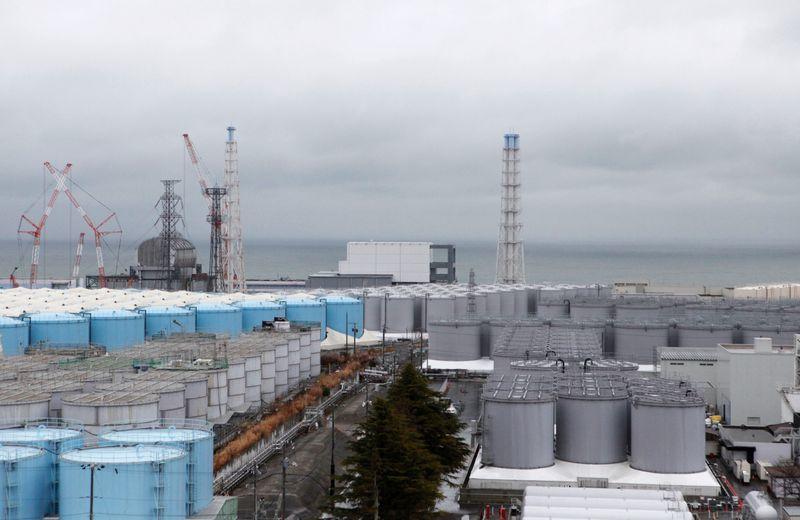
(ZH) Fukushima To Dump 1 Million Tons Of Radioactive Water Into Pacific

Fukushima To Dump 1 Million Tons Of Radioactive Water Into Pacific

Tokyo Electric Power's Fukushima Daiichi Nuclear Power Station is expected to release more than one million tonnes of treated radioactive water from the destroyed nuclear power plant into the ocean after the 2021 Tokyo Olympic Games, according to the Asian Nikkei Review.
More than one thousand storage tanks at the Fukushima Daiichi site are lining the property and store upwards of 1.23 million tonnes of treated radioactive water. In recent years, we've pointed out (see: here & here) how storage tank capacity has been running out and battles fume over the prospects of releasing the tainted water.
The water in question has had radioactive isotopes removed through a complex filtration process - except for tritium. Even with existing technology, tritium cannot be removed. In large quantities, the tritium-mixed water could pose severe risks for wildlife and humans. The expected release would occur after 2022.

The decision to end several years of debate over releasing the tritium-mixed water appears to be coming to an end. But, in 2019, South Korea raised concerns to the International Atomic Energy Agency about the planned release.
Earlier this year, a Japanese government panel contemplated multiple release strategies: the first was to dump the tritium-mixed water into the ocean; the second was to allow the water to evaporate. The decision appears to be a controlled release into the Pacific Ocean.
Chief Cabinet Secretary Katsunobu Kato said Friday, without commenting directly on Fukushima's planned release of treated radioactive water, that:
"We can't postpone a decision on the plan to deal with the... processed water, to prevent delays in the decommission work of the Fukushima Daiichi nuclear power plant," Kato said.
Environmental activists have not been thrilled with the upcoming release. Fisherman, farmers, and ordinary citizens have voiced concerns that releasing the tainted water could trigger an "environmental shock" and damage the surrounding ecosystem.
Nikkei notes, upon release, the tritium-mixed water would be "diluted up to about 600 times by uncontaminated water. The released water would then be well within international standards."

Fukushima's increasing nuclear waste dilemma was seen in 2014, when Tokyo Electric Power dumped hundreds of tonnes of radioactive water stored at the nuclear facility directly into the Pacific.
Fukushima's nuclear waste dilemma is an eye-opener for nuclear energy being touted as a "promising form of energy production for a decarbonizing global economy," noted Oilprice.com.
Readers may recall that Bill Gates' nuclear power energy venture has proposed constructing miniature nuclear power stations across major metro areas to develop carbon-free electricity.

WWD ; Diptyque Unveils Two New York Ateliers

Diptyque Unveils Two New York Ateliers
The two stores in SoHo and Williamsburg cater to both preexisting and emerging markets for the brand.

Fragrance and body-care brand Diptyque will be opening a few more brick-and-mortar storefronts than it closed in March.

The personal and home fragrance brand, which has 22 stores in the U.S., will be opening two new storefronts in New York starting this Saturday, in both Williamsburg and SoHo. The stores, dubbed “Ateliers,” are decorated in the style of Diptyque workshops. The Prince Street location in SoHo will also feature a mural by artist C. Finley.

“We believe that with the pandemic, there is this importance of the neighborhoods and building the community of customers,” said Julien Gommichon, president of the Americas for Diptyque. “We’ve been looking for a location in Williamsburg for a long time, it’s a very important market for us. We had a small, high-performing store on Mott Street we were looking to expand, too.”

Brick-and-mortar is an important channel for the brand, which started almost 60 years ago with a store on Boulevard Saint-Germain in Paris. “Our story started with a store; It’s always the principle that each store feels connected to the community. It’s not just to showcase, but we try to immerse our clients in the Diptyque universe of arts and culture,” Gommichon said. “When you celebrate the art of living through the senses, the notion of customers’ in-store connection is also a connection with the brand.”

The expansion comes right ahead of the holidays, a traditionally important season for the fragrance category, which has faced steep declines following the coronavirus pandemic. “It has been a difficult year of course, but we have very strong activity online. Now all our stores are back and open. We are looking forward to a very important period for us,” Gommichon said.

That being said, the safety of both employees and clientele is the brand’s top priority, according to Gommichon. He underscored the brand’s digital efforts, which will include scheduling virtual consultations, scheduling shopping appointments at the ateliers and keeping the stores at reduced capacities. The brand will also be testing store employees daily, he said.

Although the pandemic caused Diptyque to initially close all of its brick-and-mortar stores, Gommichon said, it also provided unprecedented opportunities for commercial real estate. “We’ve been looking, and with the pandemic, some opportunities came and we were able to find great locations in the summer,” he said.

The expansion will allow the stores to stock more collections beyond just body care, personal and home fragrance; its decoration collection will be available at the SoHo storefront. Historically, personal fragrance has made up half of Diptyque’s global sales, as reported by WWD. Earlier this year, WWD reported that the brand saw “massive spikes” in sales of its hero scents for home.

Gommichon said the personal fragrance category of the business is playing catchup, but nevertheless gaining momentum. “We’ve seen a roll back to personal fragrance. People are starting to walk or bike to the office, we’ve seen a demand for personal fragrances for the past few months,” he said.

WSJ : American Equity Chooses Brookfield Deal Over Takeover Offer

American Equity Chooses Brookfield Deal Over Takeover Offer
Small Iowa insurer rejects $3 billion takeover bid by Athene, MassMutual

American Equity Investment Life Holding Co. AEL 0.34% on Sunday rejected a takeover offer and instead said it reached a partnership with Brookfield Asset Management Inc. BAM -0.06%

Brookfield will reinsure up to $10 billion of American Equity’s fixed index annuity liabilities and make a 19.9% equity investment at $37 a share. Shares of American Equity closed Friday at $32.30.

The decision comes less than three weeks after The Wall Street Journal reported that a pair of insurance companies—Massachusetts Mutual Life Insurance Co. and the publicly traded Athene Holding Ltd. ATH -1.20% —had made a bid for the firm, a bet that the small Iowa insurer’s retirement-income products will remain popular with conservative savers.

MassMutual and Athene’s cash offer for American Equity had been for $36 a share. At that price, the bid would amount to a value of more than $3 billion.

Representatives for MassMutual and Athene couldn’t immediately be reached for comment.

As part of the agreement disclosed by American Equity on Sunday, Brookfield will also receive one seat on American Equity’s board.

American Equity said it had been in discussions with Brookfield since March as part of the firm’s current strategic plans. Among a set of factors behind the decision, the company said the deal will give American Equity access to Brookfield’s higher-returning alternative asset strategies, which are particularly important given the low interest-rate environment.

“By partnering with a world-class asset management and investment firm like Brookfield, we are accelerating the implementation of our strategy to be the leading, customer-focused annuity provider with best-in-class capabilities across the entire insurance value chain, from distribution to asset management,” said American Equity President and Chief Executive Anant Bhalla.

Also Sunday, American Equity said its board had authorized a repurchase program of up to $500 million in shares of common stock to be funded with the proceeds of the Brookfield investment and cash on hand. The repurchase is expected to offset dilution from the issuance of stock to Brookfield, according to American Equity.

“This transaction represents a meaningful investment for us in the attractive U.S. insurance market, and we believe our alternative asset strategies can deliver long-term value to the company,” said Sachin Shah, Brookfield’s chief investment officer.

WSJ : Pressure on New York City Commercial Real Estate Worries Investors

Pressure on New York City Commercial Real Estate Worries Investors
Collapsing loan prices in Manhattan developments could be a sign of trouble ahead for commercial mortgage-backed securities

Signs of pressure on New York City’s commercial properties are fueling investor bets that trouble in the nation’s largest real-estate market could spread pain nationwide.

Although stock markets are near records, assets whose fortunes are more directly tied to New York’s status as a heart of tourism and culture are showing acute sensitivity to the pandemic’s disruptions. Prices for debt backed by hotels and shops have fallen, new loans have slowed and lenders are more cautious, leaving bankers and the real-estate industry bracing for a hard hit.

Investors watch New York closely because Wall Street slices such loans up, packages them together into bonds and sells them to pension funds and asset managers world-wide. Collapsing prices for loans backed by top-tier properties in the Big Apple, which many consider a bellwether for urban markets nationwide, signals there may be more trouble ahead for the more than half-trillion-dollar market for so-called commercial mortgage-backed securities.

New York’s size and the diversity of its businesses tend to highlight market trends, and the coronavirus pandemic dealt the city a severe and relatively early blow. The shutdown for months emptied offices and restaurants, closing theaters and shops that attract visitors from around the world. Now investors are tracking its reopening closely, attempting to gauge what businesses rebound and how quickly.

Nationwide, signs of stress are mounting. Prices on lower-rated commercial mortgage bonds nationwide have fallen in recent weeks. The extra yield, or spread, investors demand to hold an index of double-B- rated CMBS bonds over 10-year U.S. Treasurys climbed to nearly 20 percentage points as of Thursday, according to data firm Trepp, to their widest levels since the financial crisis. Some bonds have fallen to anywhere from 70 cents to 50 cents on the dollar depending on the industry and credit rating, bankers said.

The pandemic has emptied commercial real estate across the country as Americans stay home, shop online and avoid offices. Many hotels and retail stores have seen a significant drop-off in occupancy, hitting revenue and property values. Appraisals this year on more than 100 struggling buildings with commercial mortgage debt showed property values fell 27% on average, according to a Wells Fargo report.

The uncertainty around how a recovery will play out, especially in big cities, has led some investors to bet on further declines.

“Distress in financial markets was all about residential mortgage-backed securities in 2008 and energy in 2015,” said Daniel McNamara, a principal at MP Securitized Credit Partners who is betting prices for some CMBS indexes will fall. “In 2021 it will be all about commercial real estate and the securities linked to it.”

Other investors are expecting a more scattershot blow. In one sign of their preferences, a subsidiary of Brookfield Asset Management in September successfully placed a $1.8 billion loan tied to One Manhattan West into commercial mortgage-backed securities. Completed in 2019, the midtown skyscraper is more than 90% leased out with big-name tenants that include consulting firm Accenture PLC and the National Hockey League.

In New York, commercial real estate has seemed like a sure bet during a multidecade run-up in real-estate prices and development boom that sprouted towers across the five boroughs. Now, hotels, restaurants and shops that rely on travelers are acutely suffering. Some retail buildings are showing property-value declines. The Royalton hotel in Midtown Manhattan, a property at one point “so exclusive that people couldn’t go there,” sold for $41 million last month to MCR Investors, a 25% discount from what the previous owners paid in 2017.

The Meatpacking District’s luxurious Standard Hotel, home to the Boom Boom Room and star-studded parties for more than a decade, is more than three months behind on a $45 million outstanding loan and has entered into negotiations with creditors, according to Trepp.

Some investors are stepping back from funding projects in New York City. Commercial-loan volume is down more than 50% this year as of early October, according to Trepp. The big projects that defined the city’s skyline have also slowed. No loans larger than $50 million from the five boroughs have been bundled into commercial mortgage securities in 2020, though there has been a handful of large single-asset, single-borrower deals.

“Underwriting for New York properties is really speculative right now,” said Jodi Schwimmer, a partner at law firm Reed Smith. She expects lenders to stay away from New York City projects until prices and property values settle.

Commercial mortgage bonds first took a hit in March and April, when storefronts, restaurants and offices closed across the country. The lowest-rate commercial mortgage loans, known as single-B securities, lost around half their value and have yet to fully recover.

Yet some worry that doesn’t fully reflect the damage wrought by pandemic shutdowns and long-term shifts taking place as Americans work from home and consume more online. Analysts and investors say commercial mortgage bonds will take longer to rebound than other types of debt because of their complex assembly of loans from a variety of businesses.

More than $3 billion worth of loans backing commercial property in the five boroughs are delinquent, according to Trepp, and loans in creditor negotiations total an additional $4 billion.

Few think the market is about to collapse entirely. Many said that while New York has further challenges—including swelling deficits and potentially lower tax revenues—the city rebounded after the 9/11 terrorist attacks and the 2008-09 financial crisis.

Still, the slow recovery has made some investors hesitant to hold bonds from riskier borrowers, leaving them seeking out properties owned by well-capitalized borrowers or by buildings occupied with tenants expected to keep paying their rent.

That leaves investors picking and choosing among assets tied to commercial real estate. In 2008, hedge funds profited on collapsing property values by shorting swaths of the real-estate market. But many say the opportunities now require a far more discerning approach. Some are parsing through specific deals to suss out vulnerable properties such as hotels or scoop up bright spots such as data centers, high-profile buildings such as One Manhattan West or warehouses.

“Any property that looks destabilized needs to lease up,” said Matt Salem, head of real estate credit at KKR. “That doesn’t mean we’re redlining parts of New York City, but we need to make sure there’s durable cash flow for the near future.”

FT : Stock exchanges prepare to activate their Brexit contingency plans

Stock exchanges prepare to activate their Brexit contingency plans
Investors fear a split in share trading activity from January

London’s biggest share trading venues are preparing to switch on their Brexit contingency plans, reflecting fears in the City that the UK’s departure from EU frameworks will trigger a radical reshuffle of where investors can buy and sell European stocks.

The London Stock Exchange Group said last week that it planned to open the Amsterdam base of its Turquoise platform at the end of November, as a place to trade EU shares. On November 11, rival Aquis Exchange will add stocks to its French platform that were previously available only in London.

Before proceeding, they and their investment banks and high-frequency trading customers are hoping London and Brussels will come to an accord allowing Europe’s cross-border share trading market to remain intact beyond January. But to prevent a split, the EU needs to recognise the UK and its exchanges as operating under “equivalent” rules. With fewer than 90 days to go, optimism is running out.

“There will be no equivalence. People are living in a pipe dream if they think it’s going to happen,” said Alasdair Haynes, chief executive of Aquis Exchange, which has 5 per cent of the European market. “People are getting prepared to move business over.”

London is the biggest share trading centre in Europe, handling as much as 30 per cent of the €40bn daily market but, without equivalence, some of that trading will move to cities such as Amsterdam and Paris because EU-based institutions will be barred from trading in London.

The biggest US and European investment banks are still lobbying policymakers to avert a rupture.

“We would prefer to have access to a global capital market,” said Edward Monrad, head of European cash market structure at Optiver, an Amsterdam-based market maker. “To some extent, people have a back-up but if you’re going to have a split, it will split liquidity and be bad for investors.”

The issue is snagged on a part of EU markets rules known as the “share trading obligation”, a law that determines which venues investors can use to trade liquid stocks.

The rules will be duplicated in the UK, which has pledged to implement all EU financial markets standards. Many UK and EU-listed shares will be traded in both jurisdictions, potentially creating two shallower markets.

Anish Puaar, a market structure analyst at Rosenblatt Securities in London, said the lack of clarity on the UK’s position made it difficult to prepare. “There is a fear that the decision will be driven by political considerations rather than what’s good for the market.”

For many, it is a change made reluctantly. “Having to move liquidity in this way is not an outcome we had hoped for, given it adds complexity to the market,” said David Howson, president of CBOE Europe, one of London’s biggest exchanges.

The group opened its alternative EU venue last year, although take-up has been low because traders use the bigger market in London.

CBOE already faces growing competition from exchanges, private marketplaces run by high-frequency traders and banks, and expanding rivals such as Aquis. CBOE’s market share fell 4.4 percentage points to 16.8 per cent in the first six months of the year, compared with the same period a year ago.

“We also need to be mindful Brexit doesn’t result in trading reverting back to national exchanges and undo all of the good work we’ve done to bring competition to [the] European equities market over the past decade,” said Mr Howson.

Executives and analysts point to Switzerland, a non-EU country, which had “equivalent” status for stock exchanges revoked by Brussels last year as an example of how the process can become politicised. The EU could stick to the legal default — no equivalence on share trading — even if London and Brussels agree deals on trade and other aspects of their future relationship.

“The EU sees this as a once in a lifetime opportunity to take business off the UK and, if they play their cards right, they will,” said Mr Haynes.

That would leave Esma, the EU markets regulator, and the Financial Conduct Authority, its UK counterpart, to finesse their rules to offset the worst of the split.

Steven Maijoor, chair of Esma, said last week he expected the agency to issue a clarification over where EU shares can be traded “shortly.” The FCA declined to comment on when it might provide clarification.

For some, uncertainty over equivalence also reflected a more profound philosophical difference between the UK and EU over how to run equity markets.

Brussels has sought to clamp down on share trading on private marketplaces such as so-called dark pools and other systems operated by banks and high-frequency traders.

The UK, by contrast, has often indicated it is more liberal about off-exchange trading, but had to abide by EU rules, noted Nick Bayley, managing director at consultancy Duff & Phelps, and a former FCA official.

He said regulators would probably work together to avoid the worst, in the short-term. “People are tired of regulatory change” after the 2018 Mifid II markets rules, Mr Bayley added. “Nobody wants to be sitting in a bank running two regimes for the same thing.”