9to5 : iPhone 12 vs. iPhone 12 Pro: Which should you buy?


On the surface, the iPhone 12 and iPhone 12 Pro are very similar phones. They both feature 6.1-inch OLED displays with flat-edge designs and Apple’s A14 Bionic processor inside, but look a little closer, and there are several notable differences worth exploring. Read on as we walk through the details of the iPhone 12 vs. iPhone 12 Pro.

In this comparison, we focus specifically on the 6.1-inch iPhone 12 and the 6.1-inch iPhone 12 Pro. While the iPhone 12 mini and iPhone 12 are largely the same phones, there are some key differences in terms of display size and resolution. The iPhone 12 Pro and iPhone 12 Pro Max also share many of the same features, but there are notable differences in display size and camera technology.
We’ll have more iPhone 12 lineup comparisons over the coming days. For now, let’s get started with the iPhone 12 vs. iPhone 12 Pro.
iPhone 12 vs. iPhone 12 Pro: Display
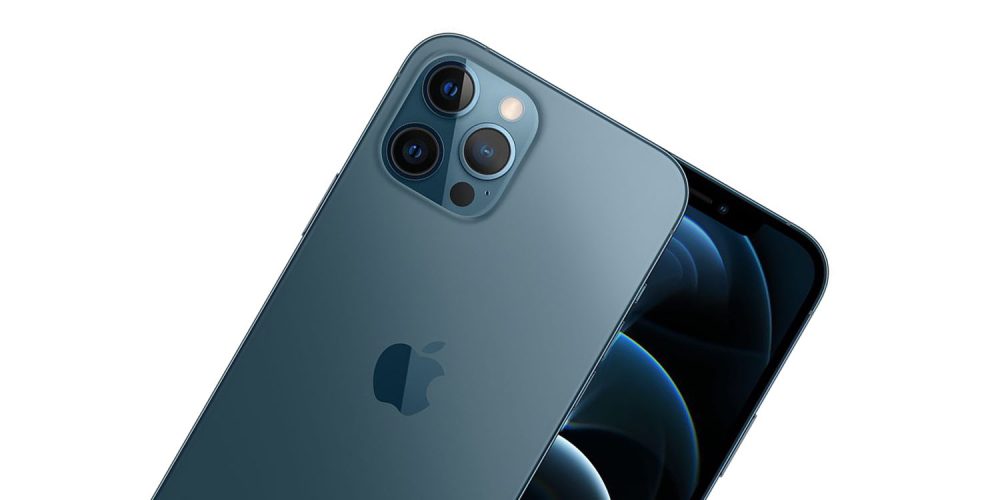
The display technology between the iPhone 12 and the iPhone 12 Pro is nearly the same. Both devices feature a 6.1-inch Super Retina XDR display using OLED technology with a resolution of 2532 x 1170 pixels at 460 pixels per inch.
The one difference is that the iPhone 12 Pro display features a higher “typical” brightness than the iPhone 12 at 800 nits versus 625. The actual max brightness of the displays is the same, however, at 1200 nits, thanks to universal support for HDR.
The iPhone 12 and iPhone 12 Pro displays are both protected by Ceramic Shield technology, which Apple says offers 4x better drop performance than previews iPhones.
Other display features on the iPhone 12 and iPhone 12 Pro include:
  • 2,000,000:1 contrast ratio
  • True Tone display
  • Wide color display (P3)
  • Haptic Touch
Design
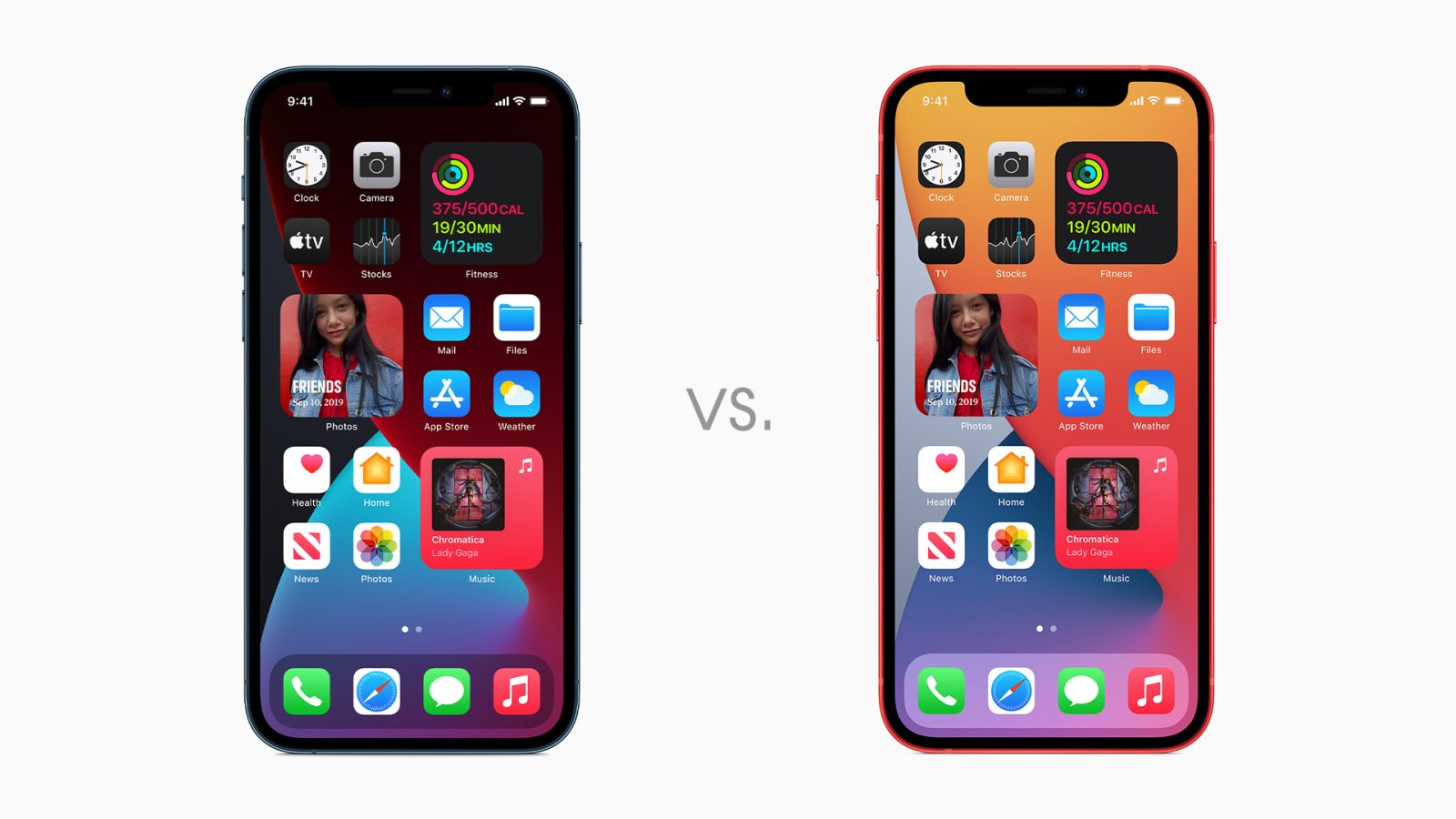
The iPhone 12 and iPhone 12 Pro are very similar in terms of design as well, with both featuring flat edges similar to the iPad Pro as well as the iPhone 4/iPhone 5 days. Both devices also feature edge-to-edge displays with identically sized notch cutouts on the front to house the Face ID sensors.
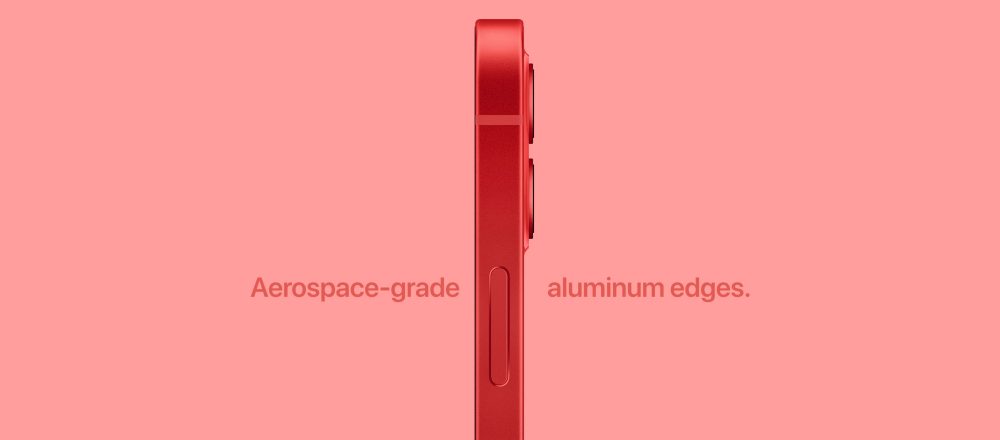
The key difference in design is that the iPhone 12 is made out of what Apple calls “aerospace-grade aluminum” while the iPhone 12 Pro is made from “surgical-grade stainless steel.” This means that the iPhone 12 has a brushed aluminum finish, while the iPhone 12 Pro features a shiny stainless finish.
The difference in materials between the iPhone 12 and the iPhone 12 Pro also has implications on the weight of the phones. The iPhone 12 weighs in at 5.78 ounces, while the iPhone 12 Pro weighs in at 6.66 ounces.
Other dimensions of the phones are the same:
  • Height: 5.78 inches
  • Width: 2.82 inches
  • Depth: 0.29 inches
Both the iPhone 12 and the iPhone 12 Pro are rated for IP68 splash, water, and dust resistance. Under this rating, the iPhone 12 and iPhone 12 Pro can withstand submersion at a maximum depth of 6 meters for up to 30 minutes.
Performance and battery life
Another area where the iPhone 12 and the iPhone 12 Pro are nearly identical is in regards to processor performance. Both devices feature Apple’s latest A14 Bionic process, which Apple touts is “the fastest chip in a smartphone.” The A14 Bionic features two high-performance cores and four efficiency cores.
Both the iPhone 12 and the iPhone 12 Pro also feature the latest Neural Engine for improved machine learning features and capabilities. Apple says the new 16-core Neural Engine offers an 80% increase in performance compared to the prior generation.
The iPhone 12 Pro features 6GB of RAM, while the iPhone 12 features 4GB. The additional RAM in the iPhone 12 Pro lends itself to a handful of additional camera features, which we’ll touch on in a bit. The RAM difference is unlikely to have a major effect on performance outside of the camera features, though.
Finally, Apple says that the iPhone 12 and iPhone 12 Pro feature the same battery life:
  • Video playback: Up to 17 hours
  • Video playback (streamed): Up to 11 hours
  • Audio playback: Up to 65 hours
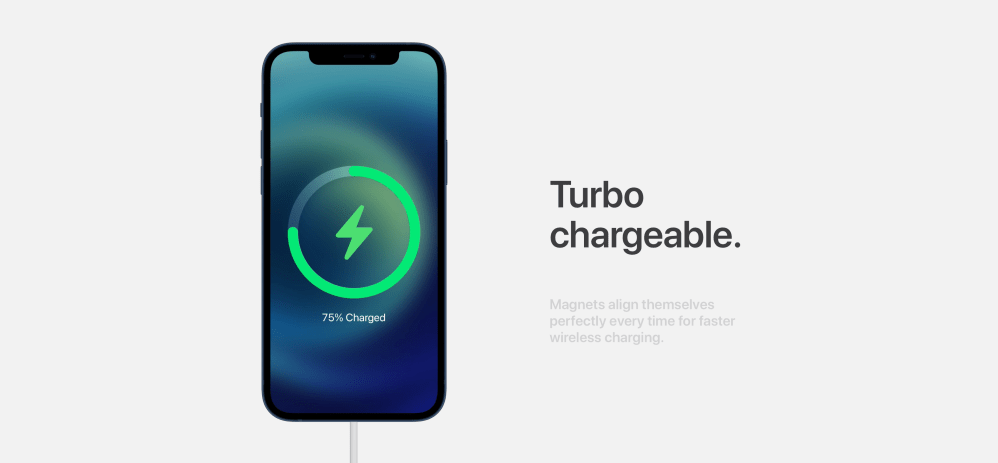
Both devices also support fast-charging for getting an up to 50% charge in 30 minutes with a 20W power adapter. There’s also support for 7.5W Qi wireless charging and 15W wireless charging when using a MagSafe wireless charger.
Connectivity
The iPhone 12 lineup is the first iPhone lineup to include5G connectivity, and that extends to the iPhone 12 as well as the iPhone 12 Pro. This means that regardless of which iPhone model you buy, you’ll get the fastest version of 5G available in your area.
In the United States, the iPhone 12 and the iPhone 12 Pro both support sub-6GHz 5G as well as mmWave 5G. Internationally, however, iPhone 12 5G support is limited to sub-6GHz connectivity.
Best iPhone 12 cases:
Camera
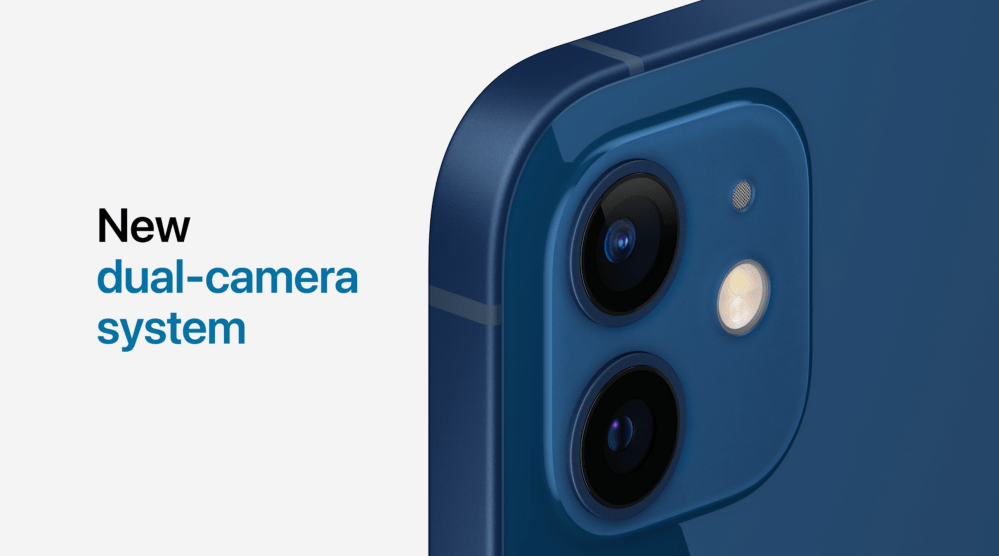
Where the iPhone 12 and iPhone 12 Pro really start to differ, however, is in terms of camera technology.
The iPhone 12 features a dual-camera system with a 12MP ultra wide lens and a 12MP wide lens. You also get software features such as Night mode and Deep Fusion processing alongside optical image stabilization and more.
Here are the iPhone 12 camera features:
  • Dual 12MP camera system: Ultra Wide and Wide cameras
  • Ultra Wide: ƒ/2.4 aperture and 120° field of view
  • Wide: ƒ/1.6 aperture
  • 2x optical zoom out
  • Digital zoom up to 5x
  • Portrait mode with advanced bokeh and Depth Control
  • Portrait Lighting with six effects (Natural, Studio, Contour, Stage, Stage Mono, High‑Key Mono)
  • Optical image stabilization (Wide)
  • Five‑element lens (Ultra Wide); seven‑element lens (Wide)
  • Brighter True Tone flash with Slow Sync
  • Panorama (up to 63MP)
  • Sapphire crystal lens cover
  • 100% Focus Pixels (Wide)
  • Night mode (Ultra Wide, Wide)
  • Deep Fusion (Ultra Wide, Wide)
  • Smart HDR 3 with Scene Detection
  • Wide color capture for photos and Live Photos
  • Lens correction (Ultra Wide)
  • Advanced red‑eye correction
  • Auto image stabilization
  • Burst mode
  • Photo geotagging
  • Image formats captured: HEIF and JPEG
On the other hand, the iPhone 12 Pro features a triple-camera setup consisting of ultra, wide, and telephoto lenses. You also get support for Night mode when using portrait mode, which is made possible by the all-new LiDAR Scanner, exclusive to the iPhone 12 Pro.
Another one of the key differences is that the iPhone 12 Pro features support for Apple’s new ProRAW photo format, which will give iPhone photographers more control over their images and new tools for post-processing.
Here are the iPhone 12 Pro camera features:
  • Pro 12MP camera system: Ultra Wide, Wide, and Telephoto cameras
  • Ultra Wide: ƒ/2.4 aperture and 120° field of view
  • Wide: ƒ/1.6 aperture
  • Telephoto: ƒ/2.0 aperture
  • 2x optical zoom in, 2x optical zoom out; 4x optical zoom range
  • Digital zoom up to 10x
  • Night mode portraits enabled by LiDAR Scanner
  • Portrait mode with advanced bokeh and Depth Control
  • Portrait Lighting with six effects (Natural, Studio, Contour, Stage, Stage Mono, High‑Key Mono)
  • Dual optical image stabilization (Wide and Telephoto)
  • Five-element lens (Ultra Wide); six‑element lens (Telephoto); seven-element lens (Wide)
  • Brighter True Tone flash with Slow Sync
  • Panorama (up to 63MP)
  • Sapphire crystal lens cover
  • 100% Focus Pixels (Wide)
  • Night mode (Ultra Wide, Wide)
  • Deep Fusion (Ultra Wide, Wide, Telephoto)
  • Smart HDR 3 with Scene Detection
  • Apple ProRAW
  • Wide color capture for photos and Live Photos
  • Lens correction (Ultra Wide)
  • Advanced red-eye correction
  • Photo geotagging
  • Auto image stabilization
  • Burst mode
  • Image formats captured: HEIF and JPEG
The iPhone 12 and iPhone 12 Pro feature the same video recording capabilities, except that the iPhone 12 Pro can record Dolby Vision HDR at up to 60 fps, while the iPhone 12 Dolby Vision support is limited to 30 fps. The iPhone 12 Pro also has a higher digital zoom during recording at 6x versus 3x and 2x optical zoom in support.
Colors, storage, and pricing
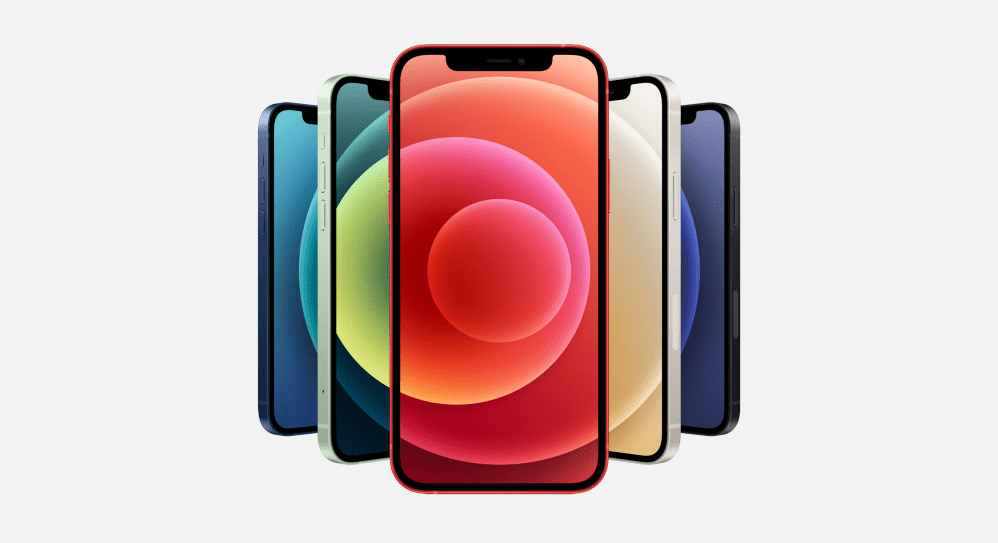
The iPhone 12 is available in five different colors: black, white, Product(RED), green, and blue. The iPhone 12 Pro is available in four different colors: pacific blue, gold, graphite, and silver.
In terms of pricing, the iPhone 12 starts at $829 (or $799 for Verizon and AT&T shoppers) for 64GB of storage. You can can upgrade to the 128GB configuration for $879 ($849 for AT&T and Verizon), or to the 256GB continuation for $979 ($949 for AT&T/Verizon).
On the other hand, the iPhone 12 Pro retails for $999 for 128GB of storage, $1099 for 256GB of storage, and $1199 for 512GB of storage.
Included
Citing environmental concerns, Apple is no longer including headphones or a charging brick in the iPhone 12 box this year. Here are some accessories you might consider picking up to help fill that gap.
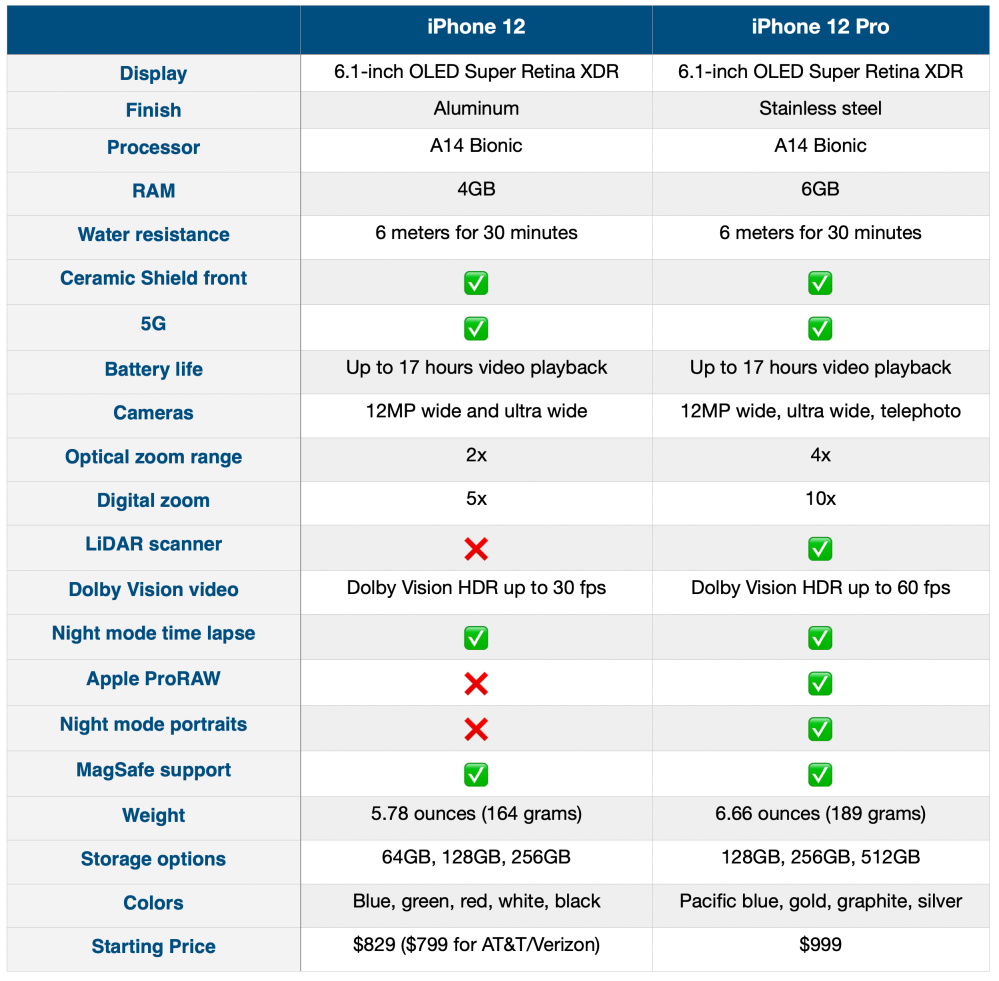
iPhone 12 vs. iPhone 12 Pro features
Wrap up: iPhone 12 vs. iPhone 12 Pro
As you can see throughout this comparison, the primary differentiating factors between the iPhone 12 and the iPhone 12 Pro are camera features. The iPhone 12 Pro offers a range of different camera capabilities that aren’t supported on the iPhone 12.
When you zoom out and look at non-camera features, the iPhone 12 and iPhone 12 Pro are harder to distinguish from each other. They both feature 6.1-inch OLED displays, 5G connectivity, Apple’s fastest A14 Bionic processor, and similar designs.
For many, if not most, people, the iPhone 12 is more than enough smartphone. It can handle everyday tasks with ease, and the camera will take stunning images even without all of the bells and whistles of the Pro.
What do you think of the iPhone 12 vs. iPhone 12 Pro? Does Apple do enough to justify the $200 premium for the iPhone 12 Pro? Let us know your thoughts down in the comments!

>>> US Close Dow -0.07% S&P -0.15% Nasdaq -0.47% Russell +1.06%

Closing Stock Market Summary

The S&P 500 battled back from an early 1.4% decline on Thursday to close lower by just 0.2%. Value-oriented stocks led the rebound effort at the expense of their growth-oriented peers, evident by the 1.1% gain in the Russell 2000 and 0.5% decline in the Nasdaq Composite. 

The Dow Jones Industrial Average declined 0.1%, while one of its lowest-priced components in Walgreens Boots Alliance (WBA 37.64, +1.73, +4.8%) rose 5% following its earnings report. 

The early weakness was attributed to ostensible growth concerns caused by renewed lockdowns in Europe amid rising cases of coronavirus and by a 53,000 increase in weekly jobless claims to 898,000 (Briefing.com consensus 830,000). In addition, disappointing revenue guidance from Fastly (FLSY 89.70, -33.48, -27.2%) did take some steam out of many growth-oriented stocks. 

Investors, however, steadily bought the dip throughout the day that lifted every sector off its low and notably pushed the S&P 500 energy (+1.2%), financials (+0.8%), real estate (+0.5%), and industrials (+0.4%) sectors into positive territory. Note, these sectors are among five S&P 500 sectors still down for the year.

The information technology (-0.4%), communication services (-0.7%), and health care (-0.7%) sectors were among the day's laggards.

Earnings-driven gains in Morgan Stanley (MS 51.33, +0.68, +1.3%) and Charles Schwab (SCHW 39.03, +1.91, +5.2%) provided the lift for the financials sector, which had struggled this week amid lackluster/disappointing reactions to previous earnings reports. United Airlines (UAL 34.25, -1.36, -3.8%) reported worse-than-expected results, which kept the airline stocks grounded today. 

U.S. Treasuries finished near their flat lines after starting the session with modest gains. The 2-yr yield was unchanged at 0.13%, and the 10-yr yield increased one basis point to 0.73%. The U.S. Dollar Index advanced 0.5% to 93.83 amid relative weakness in the British pound. WTI crude futures declined 0.2%, or $0.06, to $40.96/bbl.

Reviewing Thursday's economic data:

  • Initial claims for the week ending October 10 increased by 53,000 to 898,000 ( consensus 830,000). Continuing claims for the week ending October 3 declined by 1.165 million to 10.018 million.
    • The key takeaway from the report is that the exceedingly high level of initial claims will contribute to the view that the recovery in the labor market is slowing and speaks to the need for more stimulus to keep it from getting worse.
  • The Philadelphia Fed Index climbed to 32.3 in October (consensus 16.0) from 15.0 in September.
  • The Empire State Manufacturing Survey for October decreased to 10.5 ( consensus 14.0) following the prior month's reading of 17.0.
  • Import prices increased 0.3% in September; and prices excluding oil increased 0.6%. Export prices increased 0.6% in September; and prices excluding agriculture increased 0.3%.

Looking ahead to Friday, investors will receive Retail Sales for September, Industrial Production and Capacity Utilization for September, the preliminary University of Michigan Index of Consumer Sentiment for October, Business Inventories for August, and Net Long-term TIC Flows for August. 

  • Nasdaq Composite +30.6% YTD
  • S&P 500 +7.8% YTD
  • Dow Jones Industrial Average -0.2% YTD
  • Russell 2000 -1.8% YTD

WSJ : Louis Vuitton, Dior Cushioned LVMH Sales in Luxury Slump

Louis Vuitton, Dior Cushioned LVMH Sales in Luxury Slump
Sharp drop in air travel, dearth of celebrations exacted a toll on several luxury sectors

LVMH Moët Hennessy Louis Vuitton SE said strong growth at its biggest fashion brands buoyed revenue in the third quarter, partly offsetting steep declines in other segments of the conglomerate’s luxury empire that have been slammed by the coronavirus pandemic.

Revenue at the French conglomerate’s fashion and leather-goods division, which includes Louis Vuitton and Dior, rose 12% compared with a year ago. Sales of Hennessy cognac held steady, driven by strong consumption in the U.S.

But LVMH’s other business fared badly, pulling down overall revenue 7% to €11.96 billion, equivalent to $13.99 billion. A dearth of festive occasions hurt the conglomerate’s champagne business, which includes Dom Pérignon and Moët & Chandon. A sharp drop in air travel slammed DFS, LVMH’s travel retail division.

And revenue at its watch and jewelry brands such as Bulgari and Tag Heuer was down 14%, hit by the absence of tourist shoppers from Asia. That division is under scrutiny in the legal battle that LVMH is waging with Tiffany & Co. over its soured deal to buy the U.S. jeweler. LVMH in court filings has argued that the pandemic has been particularly harmful for Tiffany, causing a material adverse change in the business that would allow the French conglomerate to back out of the merger agreement.

Tiffany, in an unexpected announcement Thursday before LVMH’s results, gave an upbeat report on its recent performance. The company said its revenue fell slightly in August and September compared with a year ago, and operating earnings rose 25%. Tiffany’s disclosure was meant to refute LVMH’s argument that the pandemic has fundamentally damaged Tiffany’s business, a person close to Tiffany said. The jeweler’s sales drop was in the low single digits by percentage points, the person said, suggesting that Tiffany has performed better than LVMH’s comparable business division.

“We are very pleased with the way the business has rebounded following the first quarter and continues to rebound in the third quarter, especially in Mainland China, and to recover in the United States,” Tiffany Chief Executive Alessandro Bogliolo said.

LVMH’s results highlight the challenge facing luxury brands at a time when international, long-haul travel has plummeted. The industry relies heavily on spending by shoppers on trips abroad, particularly Chinese consumers who spend heavily on trips to luxury shopping destinations such as Paris, London and New York. Without them, brands are looking to encourage customers to spend where they live and cultivate new clientele, particularly in the West.

Jean Jacques Guiony, LVMH’s chief financial officer, said the conglomerate’s watch and jewelry brands suffered from Chinese and other Asian travelers being stuck at home, where they are less likely to splurge than when on trips abroad. Those brands aren’t as strong among Western clients as LVMH’s big fashion brands, Mr. Guiony said.

“We lost a big chunk of the touristic business,” he said. “We didn’t have the boost of the local client bases, which are less well-developed than they are at Louis Vuitton and Dior.”

Bulgari has been so successful in Asia, the Middle East and Russia that the brand has focused less on cultivating clients in Western Europe, Mr. Guiony said. “It’s clear the current situation means we need to do that as well,” he said.

LVMH and Tiffany have sued each other in Delaware Chancery Court, after LVMH said last month that it was pulling out of the $16 billion deal, the largest takeover ever in the luxury industry. In court filings, LVMH has been withering about the state of Tiffany, calling it “a mismanaged business that over the first half of 2020 hemorrhaged cash for the first time in a quarter century, with no end to its problems in sight.”

Yet on Thursday, Mr. Guiony struck a different tone when asked what LVMH would do if it were forced by the court to buy Tiffany. Tiffany has asked the Delaware court to require LVMH to complete the deal, or award Tiffany damages.

“We still believe that Tiffany is a great brand,” he said.

FT : Remdesivir has little effect on Covid-19 mortality, WHO study says

Remdesivir has little effect on Covid-19 mortality, WHO study says
Results of highly anticipated Solidarity trial strike a blow to hopes for coronavirus treatments

The Covid-19 treatment remdesivir has no substantial effect on a patient’s chances of survival, a clinical trial by the World Health Organization has found, delivering a significant blow to hopes of identifying existing medicines to treat the disease.

Results from the WHO’s highly anticipated Solidarity trial, which studied the effects of remdesivir and three other potential drug regimens in 11,266 hospitalised patients, found that none of the treatments “substantially affected mortality” or reduced the need to ventilate patients, according to a copy of the study seen by the Financial Times.

“These remdesivir, hydroxychloroquine, lopinavir and interferon regimens appeared to have little effect on in-hospital mortality,” the study found.

The results of the WHO trial also showed that the drugs had little effect on how long patients stayed in hospital. However, WHO researchers said the study was primarily designed to assess impact on in-hospital mortality. The study has not yet been peer-reviewed.

Remdesivir was one of a series of drugs used to treat US President Donald Trump after he tested positive for Covid-19. It was developed by US drugmaker Gilead Sciences, initially as a potential medicine to treat Ebola.

Remdesivir received partial approval for use in the US and EU after a trial by the US National Institutes of Health in April showed that it cut the time to recover from Covid-19 from 15 days to 11. In July Gilead released further data suggesting the treatment may reduce the likelihood of death, but that finding had not been confirmed in a randomised controlled trial — the gold standard for drug approval.

“We are aware that initial data from the World Health Organization’s (WHO) SOLIDARITY Trial has been made public prior to publication in a peer-reviewed journal,” Gilead said in response to a request for comment. “The emerging data appear inconsistent with more robust evidence from multiple randomized, controlled studies validating the clinical benefit of [remdesivir]."

The WHO declined to comment, saying the results of the study were not yet public.

The WHO’s findings mean that the only drug proven to increase Covid-19 survival rates is dexamethasone, a cheap steroid that can be taken orally and is widely available around the world. The WHO has recommended the use of steroids for patients with severe cases of Covid-19.

The Solidarity trial is one of the biggest ongoing studies of Covid-19 treatments. Drugs can be added or removed from the trial at any time. The results for the four drugs in the study seen by the FT cover the period from March to the beginning of October.

The remdesivir arm of the trial involved 2,750 patients. Participants received remdesivir for 10 days, with 200mg delivered on the first day and 100mg for the subsequent days.

Andrew Hill, a senior visiting research fellow at the University of Liverpool’s department of pharmacology, said a trial as large as Solidarity “would be expected to show a survival benefit [for the drug, if one existed].”

Earlier this month, the EU signed an agreement with Gilead to supply up to 500,000 treatment courses of the drug for European countries — including the UK — with an option to increase orders further.

Gilead has priced remdesivir at $2,340 per five-day course. Some public health experts have said the cost is too high for a drug that has not been proven to reduce the likelihood of death.

Final analysis of the US NIH study of 1,062 patients, released last week in The New England Journal of Medicine, showed a decrease in hospital stays of about five days, from 15 to 10, but no significant mortality benefit for remdesivir.

Reuters : Don't delay EU recovery package, German minister urges

Don't delay EU recovery package, German minister urges

BERLIN (Reuters) - Europe badly needs the 750 billion euro recovery package leaders agreed in July to help members worst affected by the coronavirus pandemic, German Foreign Minister Heiko Maas said, urging member states to compromise in order not to delay its adoption.

Countries like the Netherlands, and many European Parliament members, insist the package include conditions that would deny support to countries that violate EU rules on law and corruption standards. Hungary and Poland, often accused of violating those standards, have threatened to veto any such conditions.

“We need this package to support the economic recovery in Europe as a whole, but especially in those countries hard hit by the pandemic, to help these states come out of the crisis,” Maas told reporters at a meeting with his Polish counterpart.

“I can only call on all sides, the European Parliament too, to face this challenge and judge realistically the situation we are in economically and socially,” he added.

WSJ : What Is QAnon? What We Know About the Conspiracy Theory

What Is QAnon? What We Know About the Conspiracy Theory
A right-wing group that believes President Trump is under assault by Satan worshipers has made its way from social media into U.S. politics

The conspiracy-theory group known as QAnon has grown in popularity in recent months. It has spread from fringe message boards to mainstream platforms and has increasingly become a political issue. Here is what we know about QAnon, the conspiracy theory behind it and how it started.

What is QAnon?
QAnon is a far right-wing, loosely organized network and community of believers who embrace a range of unsubstantiated beliefs. These views center around the idea that a cabal of Satan-worshipping pedophiles—mainly consisting of what they see as elitist Democrats, politicians, journalists, entertainment moguls and other institutional figures—have long controlled much of the so-called “deep state” government, which they say seeks to undermine President Trump, mostly with aid of media and entertainment outlets.

What is the QAnon conspiracy theory?
QAnon conspiracy theory alleges that there is a battle between good and evil in which the Republican Mr. Trump is allied with the former. QAnon followers are awaiting two major events: the Storm and the Great Awakening. The Storm is the mass arrest of people in high-power positions who will face a long-awaited reckoning. The Great Awakening involves a single event in which everyone will attain the epiphany that QAnon theory was accurate the whole time. This realization will allow society to enter an age of utopia.

Who is “Q”?
Followers believe that “Q” is a high-ranking government insider, presumably with a military or intelligence background, committed to exposing the hidden truth of what they see as an international bureaucracy scheming against Mr. Trump and his supporters. Some followers believe that “Q” often sends coded signals about his or her existence, using the number 17—the letter Q’s placement in the alphabet. Online posts surrounding QAnon conspiracy theories have often described “Q” as a patriot or saint.

Where and how did QAnon start?
In October 2017, messages on the anonymous online messaging board 4chan attributed to “Q Clearance Patriot” were posted and signed by a user identified as “Q,” referencing the Energy Department’s highest level of security clearance for nuclear weapons, or “Q clearance.” These cryptic messages would later be referred to as “Q drops” or “breadcrumbs,” purportedly clandestine code that often made their way into pro-Trump slogans and messages and were repeated by followers.
The previous year, a man armed with an assault-style rifle fired one or more shots inside Comet Ping Pong, a Washington, D.C., pizza restaurant, and was later arrested. Before the shooting, Trump supporters and white supremacists on social media spread a false conspiracy theory asserting that Hillary Clinton and her former campaign chairman, John Podesta, ran a child sex ring in the basement of a pizzeria. (Comet Ping Pong had no basement.) The shooting has since been considered a precursor to QAnon.

How popular is QAnon?
A new analysis finds that groups perpetuating QAnon conspiracy theory have increased in popularity on Facebook and Instagram since the start of the coronavirus pandemic as more people have spent more time at home and in front of screens. One Facebook group known as “QAnon News & Updates-Intel drops, breadcrumbs, & the war against the Cabal” increased its membership by more than 10 times from Jan. 1 to Aug. 1 of this year.

What are Facebook, YouTube and Twitter doing to address QAnon?
Facebook said in early October that it would remove more groups and pages devoted to QAnon, stepping up its crackdown on the fast-growing conspiracy-theory movement.
The move builds on the social-media company’s efforts announced in August to remove QAnon pages and groups that included discussions of potential violence. The company will now ban any pages or groups dedicated to QAnon across Facebook, as well as Instagram accounts focused on QAnon content. The new policy doesn’t ban individuals from posting about the movement.
Facebook also said it expects renewed attempts to evade detection and that it could update its content policies as needed.
In mid-October, YouTube took action against QAnon, banning videos that call for violence. YouTube—a unit of Google—said in a blog post that it would immediately “prohibit content that targets an individual or group with conspiracy theories that have been used to justify real-world violence.” The development puts Google and parent Alphabet Inc. further into an area the conglomerate has sought to avoid: the outright removal of content.
Twitter has said it would increase enforcement against QAnon conspiracy followers. According to Twitter, the social-media platform has banned more than 7,000 QAnon-related accounts, hoping to limit the reach and distribution of up to 150,000 accounts world-wide. Additionally, the platform will no longer highlight QAnon-related posts in searches or recommendations.

Is QAnon dangerous?
A memo the Federal Bureau of Investigation released in May identified QAnon as a potential domestic terrorism threat, citing at least two incidents connecting QAnon with the planning and execution of violent acts.

FT : LVMH offers glimmers of hope to luxury sector

LVMH offers glimmers of hope to luxury sector
Growth at Louis Vuitton and Dior help offset steep declines elsewhere in group

France’s LVMH returned its biggest business to double-digit sales growth in the third quarter, as strong demand for Louis Vuitton and Dior helped offset steep declines elsewhere caused by the coronavirus pandemic.

The world’s biggest luxury goods maker delivered 12 per cent comparable revenue growth at its fashion and leather goods unit to reach €5.9bn, far better than the 1 per cent decline expected by analysts.

But weakness in sales of duty-free retail, cosmetics, and watches and jewellery still meant on a comparable basis the group’s overall revenue contracted by 7 per cent in the third quarter to €11.96bn. Analysts had predicted a 10 per cent decline.

The luxury goods sector is grappling with its worst downturn in decades as the pandemic prompts wealthy consumers to delay purchases and hampers usually free-spending Chinese tourists from travelling to Europe. Analysts have predicted that sales will fall by as much as 30 per cent this year and take up to three years to recover. 

For LVMH and its competitors Kering and Richemont, the coronavirus has also strained supply chains, forced them to experiment more with online sales and cast doubt on the usefulness of the rituals of doing dozens of fashion shows a year. 

Nevertheless, valuations for the luxury sector have remained surprisingly resilient. It currently trades at a 96 per cent premium to MSCI Europe Index, according to UBS, compared to a usual 48 per cent long-term average. 

LVMH, which is embroiled in a legal dispute over its planned acquisition of US jeweller Tiffany, has managed to withstand the pandemic better than some of its smaller rivals. Its shares are down 3 per cent this year, compared to a 5 per cent drop for Kering and 20 per cent fall for Richemont.

Controlled by billionaire Bernard Arnault, the group said there had been a “considerable improvement” in the third quarter, but cautioned that continued uncertainty over Covid-19 meant it would remain vigilant on cost-cutting and investments. 

“The encouraging signs of recovery observed in June for several of the group’s activities were confirmed in the third quarter in all regions, notably in the United States, and in Asia, which once again grew over the period,” it said in a statement. 

In the first nine months, LVMH’s revenue declined by 21 per cent on a comparable basis to €30.3bn. 

LVMH’s planned acquisition of Tiffany hit the rocks last month after the French group said it could no longer complete the deal, citing among other things the jeweller’s “dismal” performance and mismanagement during the pandemic.

The two companies are suing each other in Delaware court as Tiffany fights to force LVMH to honour the deal. A trial is scheduled to start on January 5.

NY Post : Peloton recalls pedals on 27,000 bikes due to injuries

Peloton recalls pedals on 27,000 bikes due to injuries

Peloton is spinning out of control.

The fitness brand announced that 27,000 pedals on their bikes are being recalled due to a defect that causes them to break off at the axle, which reportedly leads to injury for users, according to a blog post on their website.

The recall applies to their clip-in bike pedals, model PR70P, particularly on bikes manufactured between July 2013 and May 2016.

The company received 120 reports of broken pedals and 16 injury claims from customers, “such as stitches to the lower leg,” Business Insider reported.

“There is no greater priority than the safety and well-being of Peloton members,” company spokeswoman Amelise Lane told the site. Lane advised customers to stop using the faulty part immediately.

Their announcement comes amid a surge in interest for the stationary bikes, which go for at least $1,890 and require a $39-per-month subscription to access live spin classes that stream onto the cycle’s built-in monitor.

With many gyms across the country currently closed or offering only limited service, the pandemic has prompted big sales for at-home fitness products. Peloton now boasts 3.1 million subscribers total, after a 113% spike in new customers over last year.

Nevertheless, the boom has also resulted in backorders for replacement parts, including their pedals, for which some customers have already been waiting months.