FT : Boris Johnson to announce tougher coronavirus restrictions

Boris Johnson to announce tougher coronavirus restrictions
Ministers meet to discuss new measures in England after original strategy fails to slow second wave

Boris Johnson will announce tougher Covid-19 restrictions in England in an admission that the government’s current approach is failing to stem an alarming second wave of the pandemic.

Mr Johnson decided to rip up his previous strategy after a new document published on Friday showed the number of coronavirus infections and hospital admissions had surpassed government scientific advisers’ worst-case scenario.

The prime minister is expected to announce on Saturday either a national lockdown in England or the addition of a tougher “tier 4” to the existing system of regional tiers.

Ministers are set to discuss the proposals at a Cabinet meeting scheduled for 1:30pm on Saturday with an announcement expected at 4pm.

Number 10 had discussed announcing the lockdown on Friday but decided to hold back for fear of causing alarm, according to government figures. 

In a document dated October 14, a scientific advisory group to the government said the number of daily deaths from coronavirus was now in line with the “reasonable worst-case” scenario.

A senior government official confirmed on Friday that the current trajectory of the virus was exceeding scientific advisers’ bleakest projections, and that any circuit-breaker lockdown would have to last longer than two weeks to have a “reasonable effect”.

Mr Johnson’s apparent shift from his current regional system of “tiers” occurred after he held crisis talks with chancellor Rishi Sunak, health secretary Matt Hancock and Cabinet Office minister Michael Gove to discuss the new data.

The prime minister is now expected to announce new measures which could amount to a national shutdown, according to briefings to The Times and the Daily Mail newspapers. Under one scenario that could mean all but essential shops, schools, universities and factories closing.

Although one Whitehall figure told the Financial Times that no final decision had yet been made, the discussions about an all-England lockdown constitute a remarkable U-turn for the government.

When Keir Starmer, the Labour leader, called for a “circuit breaker” lockdown two weeks ago the idea was roundly rejected by Mr Johnson. He has instead sought to avoid what he calls the “misery” of nationwide restrictions.

But lockdowns imposed in France and Germany this week have added to the pressure on Number 10 to take more urgent action.

Early on Friday Dominic Raab, the foreign secretary, insisted that the government was committed to its current system of localised restrictions — even though he conceded the government could not rule out tougher measures.

One option on the table is to introduce a new, tougher “tier 4” which would still allow flexibility in different areas — unlike a total national lockdown.

The October 14 document by the government’s Scientific Pandemic Influenza Group on Modelling (Spi-M) said its work suggested between 43,000 and 74,000 new infections were occurring each day in England.


It added that “the number of infections and hospital admissions are breaching those in the reasonable worst-case planning scenario”.

A separate document agreed by the government’s Scientific Advisory Group for Emergencies (Sage) dated July 30 — and obtained by the Spectator magazine — modelled a worst-case scenario for deaths in the UK of less than 100 a day throughout October.

But the document said this scenario could involve 85,000 deaths between July and the spring of next year, with a peak of 800 a day in March.

The UK on Friday reported 274 deaths from Covid-19 in the latest 24-hour period and 24,405 people testing positive.

The senior government official said that, with cases as high as they were currently, test and trace systems would not be enough to reduce the rate of viral transmission.

He added it was clear that the toughest restrictions in England known as tier 3 measures were not going far enough to keep the R number — the average number of people each infected individual passes the virus on to — below 1.

Minutes of an October 8 meeting of Sage and released on Friday said: “If there are no decisive interventions, continued growth [in hospital admissions] would have the potential to overwhelm the NHS, including the continued delivery of non-Covid treatments.”

According to data from the Office for National Statistics published on Friday, 568,100 people in England had coronavirus in the week to October 23, equating to 1 in 100. This was up from 1 in 130 in the previous week.

The government office for science estimated the R number in the UK was between 1.1 and 1.3, compared to 1.2 and 1.4 last week.

Jonathan Ashworth, Labour’s health spokesman, said: “It’s urgent Boris Johnson outlines the action he will now take to bring the virus under control and deliver on his promise to get the R below 1 quickly.”

According to government and London city hall figures, the capital was already on track to move into tier 3 restrictions within a fortnight — with the likely closure of pubs and bars — unless a rise in infections slows.

(ZH) A New World Monetary Order Is Coming

A New World Monetary Order Is Coming

The global coronavirus pandemic has accelerated several troubling trends already in force. Among them are exponential debt growth, rising dependency on government, and scaled-up central bank interventions into markets and the economy.

Central bankers now appear poised to embark on their biggest power play ever.

Federal Reserve Chairman Jerome Powell, in coordination with the European Central Bank and International Monetary Fund (IMF), is preparing to roll out central bank digital currencies.

The globalist IMF recently called for a new “Bretton Woods Moment” to address the loss of trillions of dollars in global economic output due to the coronavirus.

In the aftermath of World War II, the original Bretton Woods agreement established a world monetary order with the U.S. dollar as the reserve currency.

Importantly, the dollar was to be pegged to the price of gold. Foreign governments and central banks could also redeem their dollar reserves in gold, and they started doing so in earnest in the 1960s and early 1970s.

In 1971, President Richard Nixon closed the gold window, effectively ushering in a new world monetary order based solely on the full faith and credit of the United States. An inflation crisis followed a few years later.

In response, the Federal Reserve took the painful step of jacking up interest rates to defend its wilting Federal Reserve Note and tame rising prices.

Fast forward to 2020, and the Fed has assumed for itself novel policy mandates that are a precursor to a new monetary system.

But the monetary masters aren’t contemplating a return to sound money. Rather, they’re planning for even more debt, more inflation, and picking of winners and losers in the economy.

The Fed has unceremoniously thrown its statutory dual mandate of full employment and stable prices out the window. It now gives itself an unlimited mandate to inject stimulus and bailout cash wherever it sees fit (including, recently, “junk” bond exchange-traded funds).

Instead of pursuing stable prices, the Fed is now explicitly embarking on an inflation-raising campaign with the goal of generating annual price level increases above 2% for an undefined period.

The next frontier of the Fed’s unlimited mandate could be “FedCoin” – a central bank digital currency.

Earlier this month Chairman Powell participated in an IMF panel on international payments and digital currencies. He touted electronic payments systems and raised the possibility of integrating them into a central bank digital currency regime.

Powell has so far declined to outright endorse a move toward a fully cashless system which countries including China and Sweden are spearheading. But he is on board with the larger globalist agenda of expanding the role of monetary policy in shaping economic and social outcomes.

IMF Managing Director Kristalina Georgieva sees expanded monetary tools being aimed at every issue under the sun: “We will have a chance to address some persistent problems – low productivity, slow growth, high inequalities, a looming climate crisis… We can do better than build back the pre-pandemic world – we can build forward to a world that is more resilient, sustainable, and inclusive.”

The IMF is being pressured by debt campaigners to sell some of its gold reserves to cover payments owed by some of the world’s poorest countries. The IMF would issue pseudo-currency units known as Special Drawing Rights (SDRs) to cancel the debts of poor countries.

In a world where central bank balance sheets have grown by more than $7 trillion, it’s not surprising that everyone wants a piece of the pie and that many now view gold as dispensable.

Is gold merely a barbarous relic in this brave new digital world? If it were, then it would have collapsed in price this year, amid all the new central bank rollouts, instead of surging to an all-time high.

Precious metals may be the ultimate hedge against the new world monetary order.

In the event that the U.S. central bank launches a digital dollar and assigns every American a virtual wallet, there would be no escaping adverse monetary policy decrees except by exiting fiat currencies entirely.

NEVER MISS THE NEWS THAT MATTERS MOST
ZEROHEDGE DIRECTLY TO YOUR INBOX

Receive a daily recap featuring a curated list of must-read stories.

Your email...
Under a central bank digital currency, authorities could impose negative interest rates on all holdings of currency units. They could do so without needing to get anyone to buy negative-yielding bonds or deposit money into negative-yielding bank accounts.

Under a central bank digital currency, direct credits and debits could replace stimulus checks and taxes. It would be the vehicle through which modern monetary theory could be fully implemented – with the central bank becoming tax collector and funder of all government operations.

If depreciating the value of the currency through the inflation tax wasn’t enough, the Fed could also stick dollar-holders with a direct tax in the form of negative interest rates. Once paper notes are phased out, holding cash itself would no longer be a way for individuals to escape negative rates.

The only escape hatches would be volatile alternative digital currencies (such as Bitcoin) or hard money (gold and silver).

Under a monetary order where electronic digits representing currency can be created out of thin air in unlimited quantities, the best hedge is the opposite – tangible, scarce, untraceable wealth held off the financial grid.

WSJ : In Luxury Market, Being Amazon Is Still a Burden

In Luxury Market, Being Amazon Is Still a Burden
E-commerce giant’s new Luxury Stores launched with Oscar de la Renta, but few big fashion houses have so far followed suit

Oscar de la Renta took the plunge. The fashion house this fall began selling a $2,000 black lace cocktail dress in an unlikely place: Amazon. AMZN -5.45% com Inc. Few others have followed.

Amazon is off to a slow start in its latest effort to woo luxury goods onto its platform. Since creating a special section on its mobile app to house high-end fashions in September, the e-commerce giant has amassed just a handful of big brands.

It isn’t the first time Amazon has tried to add designer wares to its sprawling and fast-growing marketplace. Luxury brands such as Louis Vuitton and Gucci have steered clear of Amazon in the past for insufficiently policing unauthorized sellers and counterfeit goods, or for not giving brands more control over what is sold and at what price.

Amazon’s newest offering, called Luxury Stores, addresses some of those concerns. It is an invitation-only service for select members of Amazon Prime, which has 150 million global subscribers. The designers get to pick which products to sell and can control the pricing. There are no product reviews or links to third-party sellers. Items are displayed with 360-degree views and motion graphics.

Both customers and partners have responded positively to Luxury Stores, an Amazon spokeswoman said, adding that brands have started to replenish inventory and expand selection. Other fashion houses have contacted the company to express interest since Luxury Stores launched, she said, but declined to name them.

One fashion house still not satisfied was LVMH Moët Hennessy Louis Vuitton SE, the French luxury conglomerate also behind Dior, Bulgari and Givenchy. The company rejected Amazon’s proposal to join Luxury Stores, according to an LVMH executive, because it has its own e-commerce operations and doesn’t want its brands to be associated with Amazon.

Big luxury brands are moving to take back control of their e-commerce business, cutting back the inventory retailed by third-party sellers such as Mr. Porter, Farfetch or department-store websites rather than their own e-commerce platforms.

Oscar de la Renta sold fragrances on Amazon before Luxury Stores launched. Online wholesale and direct-to-consumer sales account for about 5% of the business, said Chief Executive Alex Bolen, making it reliant on luxury department stores like Neiman Marcus and boutiques that were temporarily closed by the coronavirus pandemic.

Oscar de la Renta’s sales fell 85% in the second quarter, Mr. Bolen said. The family-owned company tapped the Paycheck Protection Program, a federal rescue initiative designed to assist small employers, in April for a loan worth $2 million to $5 million to save 42 jobs, federal records show.

Opening up a shop on Luxury Stores is a way to increase digital sales and introduce the brand to more customers, Mr. Bolen said. “The ability to discover the Oscar de la Renta brand is one of the most important things about our partnership with Amazon,” he said.

Although it dominates the U.S. e-commerce market, Amazon has had a mixed record with fashion and apparel brands. It sells Kate Spade handbags and Levi’s jeans, but a roughly two-year partnership with Nike Inc. unraveled in late 2019. The sportswear maker was disappointed Amazon didn’t eliminate counterfeits and give the brand more control over listings, The Wall Street Journal reported.

Amazon says it cracks down on counterfeits, has used its technology to block 2.5 million suspect accounts and has stopped more than 6 billion suspected bad listings before they appeared on its platform.

The initial slate of brands in Luxury Stores is small and the service can be accessed only through the main Amazon app, which is a disadvantage, said KeyBanc Capital Markets analyst Ed Yruma. “You don’t want to be next to a bunch of brands that aren’t relevant,” Mr. Yruma said. “The point of luxury isn’t to just drive maximum traffic, it’s how do you drive the best quality traffic.”

In addition to Oscar de la Renta, the new Luxury Stores features $1,500 handbags from Joseph Altuzarra, Roland Mouret ready-to-wear dresses and La Perla lingerie. On Oct. 15, it added Clé de Peau Beauté, a skin-care brand owned by Shiseido Co. , followed by Prada SpA’s footwear brand Car Shoe on Oct. 22.

“The time is right” to join Luxury Stores as Amazon becomes “the next frontier for the future of luxury fashion online,” Roland Mouret said in a statement. The British brand also said Luxury Stores gives it an opportunity to reach new customers in the U.S.

Before the pandemic, the online luxury market was growing as more people shifted their spending. And while many fashion houses were slow to embrace e-commerce, they haven’t ignored it.

Brands such as Prada and Gucci sell to online shoppers through luxury marketplaces run by Farfetch Ltd. and Yoox Net-a-Porter SpA, which collect commissions on transactions. Many designers are also available on the Luxury Pavilion section of Chinese e-commerce giant Alibaba Group Holding Ltd. ’s Tmall website.

José Neves, CEO of Farfetch, says most fashion brands already sell online through U.S. retailers such as Neiman Marcus and Nordstrom. “They really don’t need, and are actually trying to avoid, extra exposure,” he said.

The Amazon spokeswoman said Luxury Stores gives consumers more choice and brands a new way to connect with them. “It’s very much a test-and-learn relationship with Amazon,” said Mr. Bolen, the Oscar de la Renta chief, noting that it has been available for just a month.

WSJ : A $433 Billion Wall Street Giant Has a Reputation Problem. It’s Josh Harri

A $433 Billion Wall Street Giant Has a Reputation Problem. It’s Josh Harris’s Job to Fix It.
Apollo Global Management is known for its cutthroat culture and sharp-elbowed approach to deal making. A co-founder is trying to change that just as Apollo is thrust into an unwelcome spotlight.

Josh Harris, the co-founder of Apollo Global Management Inc., APO -2.64% obsessively weighs the risks and implications of decisions he makes: whom to hire for a role at the private-equity giant, whether to move forward with an investment or which trades to make to fill out the roster of the Philadelphia 76ers, the NBA team he co-owns. Former employees describe him as a micromanager who is known to call people numerous times in a day to discuss a small investment and spend an entire meeting rehashing unresolved questions from his previous one. Even Mr. Harris’s friends joke about sometimes getting multiple calls from him in a single day to discuss the same matter.

This approach has helped to make Apollo an investing giant with $433 billion in assets, second only in the private-equity world to Blackstone BX -1.12% Group Inc. In 2017, it raised a record-setting $24.7 billion buyout fund that has only been surpassed by a Blackstone vehicle. Its $300 billion credit business has nearly tripled over the past five years.

Now, Mr. Harris, a 55-year-old billionaire, faces a new challenge: Trying to revamp the firm’s cutthroat culture and rough-edged image, which has long been seen as synonymous with the men who founded it 30 years ago. He is trying to modernize its corporate structure, creating a broader shared power arrangement that could one day form the basis of a succession plan. And he’s trying to move past the firm’s reputation for using sharp elbows to pursue profits at all costs.

Recently, the task of scrubbing up Apollo’s image has been made more difficult as its co-founder and most recognizable personality, Chief Executive Leon Black, has found himself under scrutiny for his relationship with late financier Jeffrey Epstein, who was indicted last year on federal sex-trafficking charges involving underage girls and later took his life in a Manhattan jail.

A group of Apollo’s independent board members hired law firm Dechert LLP to conduct a review of the business connections between Mr. Black and Mr. Epstein. And in a conference call Thursday Mr. Black offered his most detailed public account yet of his ties to Mr. Epstein to whom he has said he paid millions of dollars annually to provide estate planning, tax and professional services to his family partnership and other family entities from 2012 to 2017.

“Any suggestion of blackmail, or any other connection to Epstein’s reprehensible conduct, is categorically untrue,” said Mr. Black, who hasn’t been accused of any inappropriate conduct. On that same call Mr. Harris called the independent review “an important step.”

Another obstacle that could get in the way of a corporate revamp at Apollo: Mr. Harris himself. Even those who say he has made progress on a revamp of the firm’s culture acknowledge his personality is perhaps most reflected in Apollo’s public image—aggressive, intense and fiercely competitive.

For years he has overseen every detail of the New York firm’s day-to-day operations—a task that didn’t interest either Mr. Black or Marc Rowan, Apollo’s third co-founder. Mr. Black is the architect of the firm’s investment style and big-picture visionary while Mr. Rowan has been its creative genius, conceiving and executing the highly successful strategy of acquiring and building insurance companies and then managing their assets.

Three years ago, as part of an effort to craft more of a typical corporate hierarchy, Apollo named James Zelter and Scott Kleinman—at the urging of Mr. Harris—to the newly created roles of co-presidents. However, it has been a challenge for Mr. Harris to learn how to let them do their jobs without intervening, people close to Apollo say.

Some of those people remain unconvinced of Mr. Harris’s ability and willingness to take steps required to modernize the firm. He regularly dominated investment committee meetings, hammering young analysts about their financial models, former employees say. Not replying right away to a Saturday morning email from Mr. Harris would yield a response 10 minutes later of “?”. And he frustrated people with his iterative decision-making process, sometimes taking a year to decide not to do something.

Mr. Harris, whose net worth has been pegged at nearly $5 billion by Forbes, stands out as a workaholic in an industry filled with them. Over the years, he has regularly been the first one in the office and the last to leave and has been tasked with leading most of the firm’s quarterly conference calls, tending to relationships with important investors and hiring and reviewing the leaders of its key businesses.

“Some people play golf. Some people play tennis. I work,” Mr. Harris said in a rare interview in September—itself a sign of his effort to project a new image. Even his hobbies—attending games of the teams he owns and training for marathons—aren’t what everyone would call relaxing. In addition to the Sixers, Mr. Harris is co-owner of the NHL’s New Jersey Devils and the English Premier League’s Crystal Palace—roles that forced him to embrace the importance of a positive public-facing image.

“Josh likes to win,” says Bippy Siegal, CEO of private-equity firm Raycliff Capital, who has been friends with Mr. Harris for 23 years and says he talks with him about 15 times a week. While taking a bike ride on Block Island, R.I., during a vacation with their families over the summer, Mr. Siegal says Mr. Harris tried to race ahead of him. “We’re riding crappy, beat-up, bikes. I said: ‘Do you have to take it to the next level?’”

Mr. Harris has found greater personal and spiritual contentment in recent years, his friends say, even meeting with a rabbi, Yitzchok Itkin, who has consulted with other Wall Street heavyweights. He enjoys spending time with his five children and has been devoting more time to his philanthropic efforts with his wife of 25 years, Marjorie, a former Citigroup Inc. banker.

Mr. Harris grew up in Chevy Chase, Md., the son of an orthodontist. He was competitive in sports and became hooked on wrestling at a young age. In high school he worked hard on that and academics, eventually landing a spot at the University of Pennsylvania’s Wharton School.

After graduating in 1986, he joined the mergers-and-acquisitions department of investment bank Drexel Burnham Lambert Inc., where Messrs. Black and Rowan were already working. Under the influence of Michael Milken, the bank had pioneered the use of junk bonds to finance acquisitions, paving the way for the explosion of the buyout business.

Mr. Harris left Drexel after two years to attend Harvard Business School, where he was a Baker Scholar, a distinction awarded to the top 5% of each graduating class.

By the time Mr. Harris graduated in 1990, the U.S. was in a recession and Drexel—brought down by Mr. Milken’s securities-fraud conviction and turmoil in the junk-bond market—had filed for bankruptcy.

He got a job at Blackstone. He had been there for two months when he got a call from Mr. Rowan asking him to join the fledgling Apollo. The 25-year-old had already used his signing bonus to pay down his student loans and was afraid Blackstone would make him pay it back.

“My greatest trepidation was going into Steve’s office and letting him know,” Mr. Harris said of Blackstone boss Stephen Schwarzman. The Blackstone chief said he could keep the money. “He was incredibly gracious.”

At Apollo, Mr. Harris became one of the firm’s top deal makers. His crowning achievement was a restructuring of Dutch chemical company LyondellBasell Industries NV, which went public in October 2010. Apollo reaped $10 billion in profits on a $2 billion investment—one of the most profitable private-equity deals of all time.

Apollo’s co-founders tried a decade ago to set up a broader management structure at their firm, but that attempt was ultimately unsuccessful. They hired Marc Spilker, a former Goldman Sachs Group Inc. executive and college classmate of Mr. Harris, as president. None of the co-founders—including Mr. Harris, who was knee-deep in deal making—was particularly interested in building a public image, accounting, hiring, investor relations, fundraising or communications.

Mr. Spilker’s power was limited, and it became clear the three founders weren’t ready to cede decision-making to him, people familiar with the matter say. He left the firm at the end of 2014, and it then fell to Mr. Harris to take over.

There are no signs Mr. Harris, at 55, is going anywhere soon. But his latest effort to set the firm up for a future beyond the founders has picked up steam lately. In 2019, he named Chief Financial Officer Martin Kelly and longtime partner Anthony Civale to the roles of co-chief operating officers and promoted two younger partners to co-head private equity. Mr. Harris brought in a former BlackRock Inc. executive to oversee human resources and talent recruitment, replacing a longtime insider, and hired Apollo’s first dedicated head of communications.

He admits Apollo has been slow to evolve, but says the firm is now 70% millennial or Gen-Z—generations that care about working at socially responsible companies. He argues that Apollo’s reputation for looking to make a quick buck on unloved assets is no longer accurate. A decade-plus of low interest rates has meant most of its business is dedicated to generating yield for institutions like insurance companies, he says. Apollo set a goal last November of reaching $600 billion in assets under management in five years.

True to its roots, Apollo has poured tens of billions of dollars into beaten-down areas such as the airline, aerospace and aircraft industries since the coronavirus pandemic began. But in keeping with Mr. Harris’s new reputational focus, he is quick to assert that the firm first ensured the health and safety of its employees and provided over $50 million in donations together with its portfolio companies to purchase technology for children and support health care workers. It employs more than 1,500 in 15 offices around the world.

Mr. Harris credits buying sports teams with throwing him “into the deep end of the pool” as a public-facing leader. Owning a team in the NBA—which stood out for its swift public response to the pandemic and to Black Lives Matter movement—made a mark on him.

“If you think about a sports team, you’re a steward for a city,” he said. “Social media and communications are very important. That’s really helped with Apollo in terms of communicating culture, values and what we stand for.”
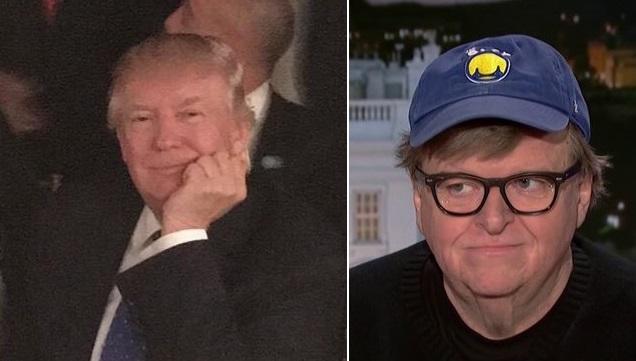
(ZH) Michael Moore: "Don't Believe These Polls"

Michael Moore: "Don't Believe These Polls"

Filmmaker and political pundit Michael Moore - who correctly called Trump's win in 2016 (and accidentally made a bitchin' Trump ad) - is warning Democrats not to believe polls suggesting Biden has a giant lead. In fact, it may be within the margin of error.
"I need to remind people that the poll back in July said at that point that Biden was ahead in Michigan by 16 points. Trump has cut that in half. Trump has tightened virtually every one of these swing states..." Moore told The Hill - noting what we've been highlighting for months - namely that many Trump supporters are unwilling to tell pollsters their true political affiliation.
"Don't believe these polls, first of all. And second of all, the Trump vote has always been under-counted," said Moore. "Pollsters, when they actually call a real Trump voter, the Trump voter is very suspicious of the deep-state calling them and asking them who they're voting for...

...It is not an accurate count. I think the safe thing to do... whatever they're saying the Biden lead is, cut it in half - and now you're within the 4-point margin of error. That's how close this is."
Moore also noted that Trump has been strategically campaigning in 2016 Hillary territory in Michigan: "10 days ago when Trump had the big rally in Muskegon, Michigan - Muskegon County, over on the west side of the state on Lake Michigan - only two counties voted for Hillary on the west side of Michigan in 2016," said Moore. "Muskegon County was one of them. Trump chose not to go to a Trump county, because he won the state, he went to a Hillary county and had thousands of people there."
Moore's concerns aren't unfounded. As The Hill notes, while most pollsters show Biden with a 'sturdy and stable lead' over Trump, 'a handful of contrarian pollsters believe Trump’s support is underrepresented and that election analysts could be headed for another embarrassing miss on Election Day."
The Trafalgar Group, which was the only nonpartisan outlet in 2016 to find Trump leading in Michigan and Pennsylvania on Election Day, shows Trump with small leads in both states, which would be keys to another Trump win in the Electoral College. Nearly every other pollster shows Biden with a comfortable lead.
Trafalgar’s Robert Cahaly says there is a hidden Trump vote that is not being accounted for in polls that show Biden on a glide path to the White House. -The Hill

"There are more [shy Trump voters] than last time and it’s not even a contest," said Trafalgar's Cahaly, who says it's "quite possible" that the polling industry is headed for a catastrophic miss in 2020.
Trafalgar is joined by a handful of other contrarian pollsters, such as Jim Lee of Susquehanna Polling and Research - which finds Trump and Biden tied in Wisconsin (the only other poll not showing Biden in the lead in the Badger State). In Florida, Susquehanna shows Trump leading Biden by four points.
"There are a lot of voters out there that don't want to admit they are voting for a guy that has been called a racist. That submerged Trump factor is very real," said Lee. "We have been able to capture it and I’m really disappointed others have not."

FT : Regeneron halts trial of antibody treatment in seriously ill Covid patients

Regeneron halts trial of antibody treatment in seriously ill Covid patients
Drug hailed as coronavirus ‘cure’ by Donald Trump will still be studied in mild-to-moderate cases

Regeneron has stopped enrolling seriously ill Covid-19 patients in a clinical trial of the antibody treatment that US President Donald Trump has hailed as a “cure” for the disease.

Shares in Regeneron fell as much as 3 per cent after an independent data monitoring committee warned that the risks might outweigh the benefits for hospitalised patients on high levels of oxygen. 

The move comes after Eli Lilly, which is also developing a Covid-19 antibody treatment, stopped its trial in hospitalised patients earlier this week, when it found this group was unlikely to benefit.

Both companies have submitted applications for an emergency use authorisation to the US Food and Drug Administration for treating patients with mild-to-moderate Covid-19 — a category that included Mr Trump, who fell ill earlier this month.

Dan Lucey, an infectious disease specialist at Georgetown University, said the regulator should convene a committee of external advisers before issuing an emergency use authorisation, which has never been granted for a monoclonal antibody.

“The FDA needs to carefully examine the evidence on safety — and whether the treatments actually work — to avoid the appearance of replicating mistakes it made issuing emergency use authorisations for hydroxychloroquine and convalescent plasma” to treat Covid-19, he said. 

The Regeneron trial will continue in outpatients and in hospitalised patients on low or no oxygen, suggesting any safety concerns are limited to the sickest participants. But as the drug is given by a drip, it may be harder to distribute to less sick patients who are not in hospital.

Eric Topol, director of the Scripps Research Translational Institute, said it made sense biologically that the treatment worked to attack the virus earlier on, but did not treat the body’s own potentially overactive immune response to the disease. 

“There is a tiny window and it’s the earlier the better,” he said, adding any safety problems in more seriously ill patients did not raise concerns about patients with mild-to-moderate Covid-19.

The trial of the Eli Lilly antibody in hospitalised patients was originally paused because of a potential safety concern in early October. But when the company announced on Monday it was abandoning that arm of the trial, it said differences in safety between groups were not significant. 

The US government has already signed contracts for supplies of both treatments, which boost the body’s immune system with artificially created antibodies. Regeneron has a $450m deal to manufacture and supply its antibody cocktail, while Eli Lilly announced earlier this week an initial agreement for $375m. 

Mr Trump took Regeneron’s treatment when he was suffering from the disease. In a video in early October, he praised the drug, saying it made him feel good immediately and suggested it was about to be approved. Leonard Schleifer, Regeneron’s chief executive, has occasionally played golf with the president.

Antibody treatments could become an important tool for physicians. Despite investment in drug trials, there are still few options for treating Covid-19, and there are concerns about how well Gilead’s remdesivir, the only antiviral that has been approved by the US regulator, works.

Geoffrey Porges, an analyst at SVB Leerink, said he was “very confident” that antibody treatments would receive emergency approval. He said it could still have a market of about 40 to 50 per cent of hospitalised patients.

Regeneron stock fell 2.6 per cent to $541.31 in Friday midday trading in New York, while Eli Lilly was down 1 .6 per cent to $130.44.

>>> US Close Dow -0.59% S&P -1.21% Nasdaq -2.45% Russell -1.48%

Closing Stock Market Summary

The S&P 500 fell as much as 2.3% on Friday amid weakness in the mega-cap stocks, but a strong finish in the value stocks reduced that decline to 1.2% by the close. The tech-sensitive Nasdaq Composite dropped 2.5%, while the more value-oriented Dow Jones Industrial Average (-0.6%) and Russell 2000 (-1.5%) faired better. 

Briefly, Apple (AAPL 108.86, -6.46, -5.6%), Amazon (AMZN 3036.15, -174.86, -5.5%), and Facebook (FB 263.11, -17.72, -6.3%) declined at least 5.5% in sell-the-news reactions to their better-than-expected earnings reports. Alphabet (GOOG 1621.01, +53.77, +3.4%) was a notable exception to the negative reaction trend.  

The consumer discretionary (-3.0%) and information technology (-2.4%) sectors were consistent laggards all day, largely due to the losses in Apple and Amazon. Notably, the financials (+0.3%) and energy (+0.2%) sectors eked out gains as investors bought the dip into the close. 

For what it's worth, the S&P 500 closed above its September closing low (3236.92) after briefly dipping below it. 

Dow components Honeywell (HON 164.95, +0.35, +0.2%) and Chevron (CVX 69.50, +0.70, +1.0%) also closed slightly higher after beating EPS estimates. Twitter (TWTR 41.36, -11.08, -21.1%) had disappointing earnings reaction like the mega-caps, but its 21% decline was more severe. 

In other negative-sounding developments, the U.S. set another record in daily coronavirus cases on Thursday with more than 90,000 new cases, and San Francisco paused some of its reopening efforts due to the alarming resurgence of the coronavirus. While disappointing, the news wasn't necessarily surprising given similar trends earlier this week. 

Separately, the Fed announced it lowered the minimum loan size for three Main Street facilities to $100,000 from $250,000 to incentive lending activity.

U.S. Treasuries started the session on a higher note amid the weakness in equities, but eventually succumbed to selling pressure that pushed longer-dated yields higher. The 2-yr yield was flat at 0.15%, and the 10-yr yield increased three basis points to 0.87%. The U.S. Dollar Index increased 0.1% to 94.05. WTI crude futures declined 1.2%, or $0.43, to $35.70/bbl.

Reviewing Friday's economic data:

  • Personal income increased 0.9% m/m in September (consensus +0.3%) and personal spending rose 1.4% (consensus 1.0%). The PCE Price Index increased 0.2% m/m, as did the core PCE Price Index, which excludes food and energy, leaving them up 1.4% yr/yr and 1.5% yr/yr, respectively.
    • The personal income and spending data were good, yet they were imputed in yesterday's Q3 GDP report, so there was less of a surprise pop from the favorable headlines; moreover, we're only a few days away from the start of November, so a report for September isn't altering the anxious mindset for a forward-looking market thinking about the election and the alarming rise in daily coronavirus case counts.
  • The final October reading for the University of Michigan's Index of Consumer Sentiment checked in at 81.8 (consensus 81.2), up from the preliminary reading of 81.2 and the final September reading of 80.4.
    • The key takeaway from the report is that changes in expectations seem to be oriented around election expectations. To that end, the Expectations Index rose by 50% among Democrats compared to three months ago and only 7% among Republicans. The ultimate outcome of the election, it was noted, can accelerate or narrow these partisan shifts.
  • The Q3 Employment Cost Index increased 0.5% (consensus 0.7%), seasonally adjusted, for the three-month period ending in September 2020 after increasing 0.5% for the three-month period ending June 2020. Wages and salaries, which account for about 70% of compensation costs, rose 0.4%, while benefit costs, which make up the remainder of compensation costs, increased 0.6%.
    • The key takeaway from the report is that compensation costs for civilian workers, private industry workers, and state and local government workers all moderated from the same period a year ago.
  • The Chicago PMI decreased to 61.1% in October ( consensus 59.0%) from 62.4% in September.

Looking ahead, investors will receive the ISM Manufacturing Index for October, Construction Spending for September, and auto and truck sales for October on Monday. 

  • Nasdaq Composite +21.6% YTD
  • S&P 500 +1.2% YTD
  • Dow Jones Industrial Average -7.1% YTD
  • Russell 2000 -7.8% YTD