BArrons : Dropbox Stock Is Surging, and Director Bob Mylod Bought Shares

Dropbox Stock Is Surging, and Director Bob Mylod Bought Shares

Dropbox stock has been on a tear, and director Bob Mylod bought a large amount of shares of the data-storage company.

Dropbox stock surged 26.1% in 2020, trouncing the 16.3% rise in the S&P 500 index. So far this year, shares are up 21%, while the index is up 4.2%. Dropbox has done well as the coronavirus pandemic keeps office workers at home, even if it hasn’t zoomed quite as much as Zoom Video Communications (ZM) stock.

Mylod paid $2.5 million on March 10 for 100,000 shares, an average price of $24.59 each. He made the purchases through a limited liability company that he controls. According to a form Mylod filed with the Securities and Exchange Commission, his LLC now owns 222,698 Dropbox shares, and he owns another 78,908 shares in a personal account.

Dropbox didn’t make Mylod available for comment on his recent stock purchase. Mylod, a former chief financial officer of Priceline, joined Dropbox’s board in 2014, about four years before the company’s initial public offering.

Dropbox stock slid in January after the company said it was cutting 11% of the workforce, and that Chief Operating Officer Olivia Nottebohm was stepping down after only one year on the job. At the time, Canaccord analyst David Hynes Jr. wrote that Dropbox was “a good business and an undervalued stock,” which he rated at Buy. Earlier this month, Hynes noted that Dropbox’s $165 million deal to buy DocSend, which allows users to share documents, is a “logical tuck-in.”

Inside Scoop is a regular Barron’s feature covering stock transactions by corporate executives and board members—so-called insiders—as well as large shareholders, politicians, and other prominent figures. Due to their insider status, these investors are required to disclose stock trades with the Securities and Exchange Commission or other regulatory groups.

(ZH) BofA: The Uber-Dovish Fed Backfired And Vigilantes Are Now Bullying Powell

BofA: The Uber-Dovish Fed Backfired And Vigilantes Are Now Bullying Powell Into YCC - Three Ways To Trade This

Anyone expecting a major bank to discuss a deflationary scenario will have to wait for at least a year; they certainly won't get it here.
In his latest Flow Show report, BofA CIO Michael Hartnett first looks at the biggest driver behind the ongoing reflationary wave, and writes that globally delivered covid vaccines (400 million) are already far outpacing covid cases (122 million)...
... which is why clients are even talking about a vaccine "glut" by the autumn offsetting the spring shortage in Europe and Emerging Markets, and the resulting disorderly bond yield rise is negative for Q2 economic growth.
Then there is the elephant in the room: the unprecedented fiscal excess unleashed by most DM countries and the US in particular. Having earlier touched on the Fed's "Catch 21", namely the soaring US budget & current account deficits, which will surpass $4TN in ’21, and $2TN in ’22 (with forecasts excluding a potential $1.5-2tn in additional infrastructure spend)...
... Hartnett notes that issuance YTD is Treasuries $861bn, IG/HY bonds $514bn, stocks $178bn (incl SPACs), all on pace for record highs, so bond & equity supply is annualizing a record $7.6TN. Also note that US Treasury issuance ($4.45tn) this year will easily exceed the GDP of Germany, so it's "little wonder 30-year UST off to 2nd worst start in past 100 years."
The combination of the "end of covid" as noted in the latest BofA Fund Manager Survey, now that runaway inflation and taper tantrums are both bigger risks than the vaccine rollout...
... with the relentless flood of fiscal stimulus leads Hartnett to make the stunning conclusion that "we are in midst of strongest macro data of our lives" as the boom phase currently is set to dominate the upcoming bust for a long time:
Philly Fed survey manufacturing highest since Mar’73; Philly & NY price surveys show inflation pressures early March; US small businesses reporting ‘jobs hard to fill’ highest in 50 years; US house prices +19%, China exports up +60% Y/Y; Baltic shipping rates +95% YTD;
And yet despite this record economic overheating, one where inflation is already out of control as supply chains are broken and shortages of most goods are prevalent...
... the Fed is convinced that this inferno of soaring prices will be transitory, and has remained uber-dovish, promising on Wednesday not to hike rates though 2023. However, according to Hartnett, this "uber-dovish Fed posture has backfired", with the bond vigilantes "moving quickly to bully US central bank into Yield Curve Control" which the BofA CIO says is likely once the yield on the 5Y surpasses 1¼%.
Meanwhile EM’s are already tightening to curb runaway inflation (Brazil & Turkey just hiked this week) resulting in 8 global rate hikes YTD (vs 5 cuts); And not just EMs - Norway was the 1st DM central bank to signal hike, and no matter how deep in the sand the Fed, ECB and BOE stick their heads, global financial conditions are starting to tighten - just look at spreads, vol and so on...
Which brings us to three views from Hartnett: a short-term, a medium-term and a longer term:
1) Short-term:Cyclicals have soared in anticipation of boom & “Goldilocks” plays e.g. tech, credit & EM on back foot; immediate risk is disorderly yield jump hurts cyclicals. Indeed, the oil price plunge may have been the first sign of potential regime shift to higher yields - lower growth. Here Hartnett says to watch HYG <$84...
... BKX <115, SOX <2800, and notes that the basket of rate sensitive assets (LQD, HYG, EEM, IAI, KRE, VBK, XHB, SOXX ) has started to roll. BofA's advice: utilities & staples are good defensive hedges.
2. Medium-term: Ominously, the BofA CIO predicts low/volatile asset returns in ’21 driven by 3P’s of peak Positioning, Profits, Policy in H1, and 3R’s of rising Rates, Regulation, Redistribution in H2. His advice how to trade the medium-term: own volatility.
3. Longer-term: 2020 marked the secular low point for inflation and interest rates; 40-year bull market in bonds is officially over...
... with the following long-term asset allocation implications: bullish real assets, commodities, volatility, small cap, value & EAFE/EM stocks, bearish bonds, US dollar, large cap growth.
To Hartnett's reco we would just throw in bitcoin. Why? Because in the "longer-term" central banks will launch digital currencies to reflate at any cost even if it means the loss of the reserve currency to terminally debase fiat, and force billions into the parallel monetary system that is crypto. Incidentally, it was Hartnett who earlier today explained why bitcoin is 2021's safe haven (read "The Fed's "Catch 21": BofA Explains Why Bitcoin Is 2021's Safe Haven"). And yes, those who were long bitcoin heading into this year. are blowing out all other asset classes as Hartnett himself shows with his latest "Scores of the Doors: bitcoin 99.9%, oil 23.3%, global stocks 4.0%, US$ 2.1%, cash 0.0%, HY bonds -0.2%, IG bonds -4.8%, government bonds -5.2%, gold -8.9% YTD."

(ZH) Syrian Oil Minister Reveals US Has 'Pirated' $92 Billion In Crude

Syrian Oil Minister Reveals US Has 'Pirated' $92 Billion In Crude

The Syrian Minister of Oil and Mineral Resources, Bassam Tohme, said on Thursday, that the total losses in the direct and indirect oil sector in Syria have exceeded $92 billion (USD).
The Syrian minister said in statements to the state-owned Al-Ikhbariya TV channel (and subsequently translated in Iranian state media), that the areas under the control of the US and their allied forces contain more than 90% of the oil reserves of Syria.
He stated that "the Americans and their followers act as pirates in targeting the Syrian oil wealth and the ships of supplies to it."
Tohme said that the US was deliberately preventing the Syrian government from benefitting from the oil reserves inside the country.
The oil minister added that the Syrian waters are "qualified in terms of oil reserves, but what distinguishes exploration contracts is that they are expensive and are long term," pointing out that "there is a promising oil future in those waters, and the matter needs calm and stable logistical conditions."
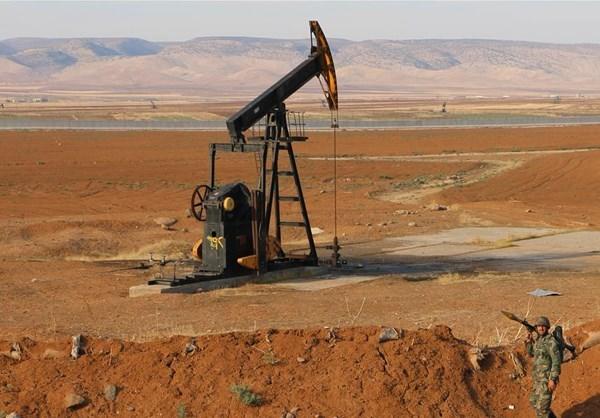
The US military and their allies from the Syrian Democratic Forces (SDF) currently control the Al-Umar Oil Fields, the largest oil fields in Syria, which they captured from the Islamic State (ISIS/ISIL/IS/Daesh) during the eastern Euphrates campaign.
Making matters worse, Syria is currently witnessing a gas crisis, following a new spike in prices for Octane 90 and Octane 95.

WSJ : China Buys More Iranian and Venezuelan Oil, in a Test for Biden

China Buys More Iranian and Venezuelan Oil, in a Test for Biden
Increased sales and higher prices are helping Tehran and Caracas resist U.S. pressure

China has sharply increased its imports of oil from Iran and Venezuela in a challenge to two Biden administration foreign-policy priorities, according to U.S. officials, undermining key diplomatic leverage Washington needs to restart long-stalled negotiations.

China is expected to import 918,000 barrels a day from Iran in March, which would be the highest volume since a full U.S. oil embargo was imposed against Tehran two years ago, according to commodities-data company Kpler.

That trend is confirmed by other shipping trackers, some of which see those sales at 1 million barrels a day.

“If it sells 1 million barrels a day at current prices, Iran has no incentive to negotiate,” said Sara Vakhshouri, president of Washington-based SVB Energy International and an expert on Iran’s oil industry.

President Biden’s administration has sought to engage with Iran to return to a 2015 nuclear deal that was exited by his predecessor, former President Donald Trump. But Tehran has rebuffed overtures so far.

China’s oil purchases from Venezuela, where the U.S. has been trying to use sanctions to pressure the Maduro regime into holding credible democratic elections, also are growing, according to London financial data provider Refinitiv.

Rising oil shipments to China, Iranian and Venezuelan officials said, followed Mr. Biden’s offer of relief to Iran in return for the country’s compliance with an international nuclear agreement and to Venezuela if it organized free elections. Mr. Trump pursued a policy of escalating sanctions pressure against both countries.

China is also increasingly flouting international sanctions on North Korea and is no longer trying to hide some of its smuggling activity as it seeks to help Pyongyang, U.S. officials said recently.

Combined with rising oil prices, the developments have diminished pressure for Tehran and Caracas to negotiate with Washington, these people said.

“The informal Chinese purchases have reduced the need to negotiate on oil sanctions” for Tehran, one Iran-focused U.S. official said.

A State Department spokeswoman dismissed the idea that the Biden administration would ease sanctions without action by Tehran to comply with the nuclear deal, known as the Joint Comprehensive Plan of Action, or JCPOA.

“We are ready to reengage in meaningful diplomacy to achieve a mutual return to compliance with JCPOA commitments, which would of course include lifting sanctions on Iranian oil exports,” she said. “But our current Iran-related sanctions remain in effect unless and until they are lifted as part of a diplomatic process, and we will of course address any effort at sanctions evasion.”

Since November, Iranian oil traders say they have been approached for new sales by Asian buyers seeking to take advantage of discounted prices because purchasers feel sanctions pressure will ease under the Biden administration.

Iranian officials and traders have become increasingly adept at evading sanctions, carrying out covert transfers in the Persian Gulf and in South Asia to conceal the origin of their cargo and finding new ways to get paid by using nonbanking platforms such as cryptocurrencies.

On Monday, Iranian First Vice President Eshaq Jahangiri said Iran’s oil exports had increased in recent months, though he didn’t give any details.

“There were certain problems with money transfers. So we had to come up with certain plans, methods for bringing in the oil export revenues, and we recently had a breakthrough,” Mr. Jahangiri was quoted as saying by state-run news agency IRNA.

Kpler analyst Homayoun Falakshahi said ship tracking showed the fastest-growing buyer was state-run China Petroleum & Chemical Corp. , or Sinopec, the country’s largest refiner. After cutting staffing and spending in the past two years, Sinopec is posting new job offers online and talking with the government on doubling its production in the country, according to former Iranian oil officials and an adviser to the company.

Officials from Sinopec and the Chinese embassy in Washington didn’t return requests for comment. Chinese officials have long criticized U.S. policy in Iran and Venezuela, as well as its financial diplomacy, as unilateral and coercive.

Washington still hopes to entice the Islamic Republic with the more substantial relief that would come with the release of billions of dollars in frozen oil money and a return to official crude sales. In exchange, the U.S. wants Iran to comply with the nuclear deal despite repeated breaches and wants to tighten controls on Tehran’s ballistic program and other efforts that weren’t covered under the original nuclear agreement.

Meanwhile, Iran has helped Venezuela by supplying petroleum products, selling diesel and other critical energy needs in exchange for Venezuelan oil and gold. That oil is then sold off in global markets, yielding revenue for Iran and reinforcing Mr. Maduro politically.

For the U.S.-China relationship, already strained by a range of security and economic disputes, Beijing’s crude trade with two of Washington’s top foes adds another major irritant.

“This is a complex relationship and maybe the most consequential relationship for both of our countries, and it has adversarial aspects, it has competitive aspects, and it has cooperative aspects,” Secretary of State Antony Blinken said earlier this week.

U.S. officials have reminded China that firms helping import oil from Iran risk sanctions and say Beijing could face punishment over its Venezuelan trade. The State Department declined to comment on its communications with China.

“The Maduro regime has adapted to oil sanctions, finding a way around them to deliver oil to China and Russia, and Iran has been helping them,” one senior administration official said. “So we’re going to use our sanction tools to make sure that we’re eliminating those options” for the Maduro government, the official said.

Others, however, say the administration will also be careful to balance such policies with American economic interests. “In some cases, we have not sanctioned [China] because of the impact on our economy. If we hit hard, they could retaliate,” said another U.S. official.

Biden administration officials are meeting Chinese counterparts for the first time this week in Alaska.

WSJ : Passover and the Power of Jewish Continuity

Passover and the Power of Jewish Continuity
Telling the story of the Exodus from Egypt allows Jews to share a spiritual experience across time and space

After hundreds of years of slavery, it is the Israelites’ final night in Egypt. They are ready to escape to freedom. Their leader, Moses, imparts a final piece of guidance, one that is also to serve as a lasting edict: He instructs them to tell their children about this Exodus from Egypt. But there are many different ways to tell a story, let alone one as rich, complex and dynamic as the Exodus. Moses didn’t offer precise instructions. So thousands of years ago, Jews created a book known as the Haggadah, which means “telling.”

The Haggadah serves as the script for the Passover Seder, the ritual meal that Jews around the world will celebrate on the night of March 27. As much as any other book, it has been responsible for assuring the continuity of Judaism. The Haggadah does this “horizontally,” by creating an experience that every Jew in the world shares at the same time, as well as “vertically” through history. If a 3rd-century Yemenite or an 18th-century Russian were to walk into a Seder in Miami or Tel Aviv today, they would know exactly what was going on and be able to participate.

If the Haggadah were just a holiday manual or a dinner program, it would have disappeared a long time ago. Instead, it offers a condensed compilation of centuries of wisdom—the Greatest Hits of Jewish Thought. It is one of the greatest guides ever written for living a meaningful, fulfilling and happy life.

Near the beginning of the Seder, for instance, the Haggadah declares: “All who are hungry, let them come and eat; all who are needy, let them come and celebrate Passover.” But why would we issue an invitation when the event has begun and everyone is seated?

The answer is that the invitation is addressed to those already present to bring a certain part of themselves. The Hebrew word for “face” is a plural, suggesting that each of us has many faces, many selves. The self being invited to the Seder isn’t the confident one, which even occasionally feels invulnerable. Rather, it is the self who, as Deuteronomy says, “does not live by bread alone” but needs to alleviate its spiritual and ethical hunger.

Because most Jews attend a Seder every year, it offers an occasion to contemplate our younger selves. We realize how different we are now from who we were in the past and acknowledge that our future self will say the same about our current self. We can create that future self with the guidance of the Haggadah.

One of the mechanisms for doing so is the most familiar food of the holiday—the matzah. When a significant amount of salt is added to yeast, the yeast doesn’t rise, and the result is the flat, crackerlike bread known as matzah. On the night before Passover, Jews purge their homes of bread and introduce the matzah in its place. It is an opportunity to ask: What in my life do I want to discard? What do I want to preserve, and what do I want to last forever—even after I am gone?

Thoughts about preservation and permanence naturally lead to the subject of education. One of the best teaching tools in the Haggadah is the Four Questions, which point out some of the differences between an ordinary meal and the Seder: for example, “On all other nights we eat any vegetables. Why on this night do we eat only bitter herbs?” The Four Questions are traditionally recited by a child and are intended to arouse the curiosity of children. Yet no child has ever leapt from their chair, exclaiming, “Wow! I can’t believe we are eating bitter herbs tonight! Tell me more about the Exodus!” No, because generic instruction does not inspire. As King Solomon advised, each child must be educated “according to his way.”

The Four Questions are in fact meant to invite children to ask more questions of their own. The 13th-century rabbi Zedekiah ben Abraham noted that the Seder plate should contain “toasted grains, types of sweets and fruits to entice the children and drive away their sleepiness so that they will see the change and ask questions.” In my own home, we throw marshmallows to children who ask good questions. Does a child like baseball? Put a pack of trading cards under their plate. Is a child mischievous? Whoopee cushions are kosher for Passover!

Before long, the Seder arrives at the ten plagues, which God used to punish Pharaoh for continuing to enslave the Israelites. The book of Exodus says that the first two plagues, blood and frogs, were “everywhere in Egypt.” But rather than attempt to get rid of the plagues, Pharaoh’s magicians exacerbated them by creating more blood and frogs. Why? Because Jew-haters are often willing to accept increased suffering if it means inflicting greater pain upon Jews. This explains why Hitler used his dwindling military resources in late 1944 to round up and kill the Jews of Hungary.

The Haggadah has enabled the Jews to tell the story of the Exodus to their children for more than 100 generations because it isn’t simply meant to be read. Rather, the Haggadah involves a combination of activities: listening, speaking, being heard and responding anew. It is truly a conversation, in which the participants converse with those at the same table, those at Seders all over the world and those who sat at Seders in the distant past.

It is counterintuitive that a conversation should guarantee continuity. After all, participants in a conversation can’t know where it will end up, let alone how it will change them. Yet it is the unpredictable vehicle of a conversation that has enabled the endurance of the Passover celebration. This is another vital lesson from Passover: The secret to stability is structured dynamism. No wonder Jews celebrate Passover, the Festival of Freedom, at an event called the Seder, which means “order.” That miraculous balance, curated by the Haggadah, has kept the Jewish people on the same page generation after generation.

—This essay is adapted from Mr. Gerson’s new book “The Telling: How Judaism’s Essential Book Reveals the Meaning of Life,” published this month by St. Martin’s Press.

Barrons : The Sun Is Shining on Convertible Bonds, Built for Good or Bad Weather

The Sun Is Shining on Convertible Bonds, Built for Good or Bad Weather

The convertible bond market always seems to have the adjective “quirky” attached to it, but last year a better word would have been “soaring.” The SPDR Bloomberg Barclays Convertible Securities exchange-traded fund was up 53%, on the back of gains in the stocks of issuers such as Tesla, the biggest player in the market.

And there’s no one better to opine on the outlook for these bond/equity hybrids than John Calamos, the 80-year-old founder of $35 billion Calamos Investments, whose flagship Calamos Convertible fund (ticker: CICVX) is up 87% over the past 12 months.

Convertibles are corporate bonds that pay interest and can be redeemed for cash or exchanged for a specific number of shares. They typically offer lower yields than straight bonds; many new issues have yielded zero recently. But, if their issuer’s stock goes up, holders can reap hefty returns by converting the bonds into shares. At the same time, convertibles provide some downside protection because prices of bonds generally don’t fall as much as those of stocks when a company loses favor with investors.

The first convertibles were issued by U.S. railroads in the 19th century. In 2020, the convertibles market globally totaled $509 billion, just a fraction of the market for plain corporates. Calamos, a Vietnam veteran and the son of a grocer, founded his firm in the mid-1970s, a period of stagflation during which converts did extremely well. He chatted with us recently about convertibles’ performance last year and their current outlook. An edited version of the conversation follows.

Barron’s: Last year was particularly strong for convertibles. Why?

John Calamos: We had good issuance. Having downside protection, even though you may not know [that a downturn] is coming, is our philosophy. Obviously, when the pandemic hit, the market sank, but convertibles went down only half as much as the market. Then they came back strong, and we ended up outperforming the market for the year. We use convertibles in many different strategies: our market-neutral fund, our convertible fund, our closed-end funds; it’s a solution for investors. We’re providing equity returns with less risk and good income. We’re seeing good inflows.

Tesla [TSLA] is the biggest issuer. Will it issue more? And why are so many start-ups using convertibles?

We saw a lot of new issues in 2020. The convertible market really expanded in this period. Tesla raised $10 billion in equity in the second half of 2020, so I doubt it will issue more.

The benefit for the issuers, negotiated at the time of issuance, is they’re selling equity at higher prices [than they’d get for shares], and the coupon, the interest rate, is lower [than it would be on a regular bond]. There’s another benefit, too. If the stock price goes up, investors simply convert the bonds to equity. Some of the premiums in the market lately have been 40% to the spot stock price. It’s partly a function of credit spreads and how volatile a company’s stock is. Prior to the past year or two, it was unusual to see new issue premiums meaningfully north of 40%. We’ve seen some 50% or higher.

How is issuance looking now?

Last year was a big year: $159 billion globally, the biggest year since 2007. We could see issuance somewhere between $90 billion—which we had a couple of years ago—and $150 billion. So far this year, we’ve seen $40 billion globally. It’s a little early to start talking about annualizing it.

We expect good issuance again for the rest of March and further in the year. With the pandemic behind us, a lot of the cyclical companies will want to raise capital to get going again. Last year, the cruise lines, airlines, and travel companies all issued converts. We also had growth companies in technology and other sectors issuing converts. We’re already seeing those come to market. Some are new, and some are refinancing converts that are running off. These deals come together quickly. They get announced in the morning and priced in the afternoon. So we don’t get the transparency of who might be coming down the road.

The chatter is that there are still a lot of issuers looking hard at the market. Ford Motor [F] just announced a $2 billion convertible issue. Tesla’s last deal was a couple of years ago, and because its credit at that time was a little controversial, it didn’t get as much premium. But Airbnb [ABNB] and Spotify Technology [SPOT] have seen pretty attractive terms for the issuer, and not bad for the buyer.

What’s the outlook?

The big debate is: Is inflation coming back? Are interest rates going up? There’s a risk of inflation. Monetary supply has been expanding. We’re seeing commodity prices go up here. I don’t have a [specific forecast], but the Federal Reserve would like to see about 2%. It’s something to be concerned about. We’re also concerned about fiscal policies that might put us in stagflation. We’re in the camp that says when interest rates may be going up, we should be invested in equities. The pandemic is, hopefully, going away, so we’re going to see more growth globally. We think there’s opportunity globally and in emerging markets.

The underlying philosophy I’ve had for nearly 50 years is about trying to manage risk without market timing. I got into convertibles early in the ’70s; markets were strong, and then corrected, and people bailed out and went into the bond market. Then, interest rates went up, so they lost money there [because bond prices fall when rates go up]. Then, inflation took off. We had stagflation. Bonds did poorly. The stock market went up and down for about 10 years. But convertibles did very, very well during that period.

Are you seeing interest from the Robinhood crowd?

No. We disincentivize day trading. This is for long-term investors and not day traders. Converts are a hard market to do-it-yourself. It’s an over-the-counter market between the big banks, and it’s very hard for retail investors to get involved on a security-by-security basis. And that’s where mutual funds like ours really can help them.

What converts do you like now?

We like the Microchip Technology [MCHP] 0.125% issue due Nov. 15, 2024. Microchip is a leading semiconductor company well positioned to benefit from the secular growth of semiconductor content in a broad product set across the auto, industrial, and consumer end markets. There is also a strong cyclical tailwind to their business right now, as the economic cycle accelerates. These factors should help the stock outperform, and the convertible stands to benefit from that upside.

We also like the Royal Caribbean Group [RCL] 4.25% issue due June 15, 2023. Royal is a leading cruise operator and was hit very hard by Covid-19-related travel restrictions. However, they’ve managed well through the downturn by raising liquidity and reducing their cost structure. The convertible is positioned well to participate on the upside, but also has a high coupon and is shorter dated, which can help cushion the downside.

What else do you like?

RingCentral [RNG], due March 2025. Ring is a leading provider of cloud-based communication solutions that enable people to work from anywhere. The secular shift to remote working has accelerated their business and will provide durable growth. The convertible offers a good combination of upside participation while still maintaining protection to help dampen any downside volatility in a high-growth sector.

You’ve been in this business for 50 years. Why convertibles?

I started in the business in 1970, and set up the firm in 1977. We started the first open-end convertible bond fund in 1985. I’d studied the markets growing up, written about them in school. How do you manage risk if markets are volatile, and different government policies impact the markets? That was really my main driver. And then the options market opened in 1973. They’re really a way to manage risk.

As we’ve grown through the years, we’re always looking for solutions to help clients do well. We’ve grown the firm into different areas. We have a global convertible fund. We have alternatives, like a long/short fund. We have a hedged equity-income fund. We have a market-neutral fund. Some people consider convertibles an alternative: We have a lot of assets that are considered alternative mutual funds.

All of our alternative strategies have actually performed well. They are about adjusting for the environment we find ourselves in. We talk about how they fit into asset allocation. Market-neutral is a good alternative to fixed income.

You’re 80 years old. What’s your involvement in the firm you founded?

I sit on our investment committees, and in recent years we’ve really built up the teams. I have the experience of going through many market cycles. I went through the 1970s and the ’87 crash and through ’90, for example. It does seem sometimes that things don’t change very much. Having that experience is helpful, and it really emphasizes our philosophy of how important it is to manage risk because of who-knows-what. It’s so hard to be certain about the future here.

Our president is almost your age.

I don’t think, frankly, there’s an age issue. It’s all about what policy we’ll have going forward. How will the Biden administration’s policies impact the financial markets, which are really the pulse of what’s going on in the world? I’m hoping the administration doesn’t do things that would be harmful to the private sector. The private sector, not the government, is about the growth of the economy. I’m looking very carefully.

What’s in your personal portfolio?

I have each of our funds in an asset allocation. And a little private equity here and there, but nothing significant.

Thanks, John.

Barrons : How to Play the New Space Race

How to Play the New Space Race

Like many kids, Luca Rossettini wanted to go to space.

His wasn’t a typical childhood dream—one that fades away with age. Today, Rossettini, who was born in Vicenza, Italy, is an aerospace engineer with a doctorate in advanced space propulsion and a master’s in strategic leadership toward sustainability. He also served in Italy’s Folgore, an army paratrooper brigade.

It’s an impressive résumé, but it wasn’t quite good enough to get him into space. After reaching the final selection stage for European astronauts—something that happens about once a decade and whittles 10,000 applicants down to four—Rossettini, then in his early 30s, fell just short. Disappointed, he did what anyone would do after getting so close. “I decided to build my own spaceship and go to space on my own,” he says.

Rossettini founded satellite company D-Orbit in 2011.

Rossettini is just one of many entrepreneurs now looking skyward for the next business opportunity. When Barron’s put space on the cover in 2017, there were few ways of playing the coming wave of space businesses. Richard Branson’s Virgin Galactic Holdings (ticker: SPCE) was more than two years from going public via a special-purpose acquisition company, or SPAC—still the vehicle of choice for many soon-to-be-public space companies; Viasat (VSAT) was one of the few public satellite-communication companies; and the best recommendations we could offer were defense company Lockheed Martin (LMT) and aerospace giant Boeing (BA).

A combination of falling costs and rising investor appetite changed all that. While space tourism gets the attention, investors can pick from satellite makers, launch-services providers, even space-logistics companies—all generating actual revenue from new businesses.

The market capitalization of pure-play space companies now totals roughly $25 billion, up from essentially nothing a few years ago. That figure doesn’t include SpaceX, the giant founded by Tesla (TSLA) CEO Elon Musk, which remains privately held and was recently valued at $74 billion, or Blue Origin, the passion project of Amazon.com (AMZN) founder Jeff Bezos. If the biggest challenge four years ago was finding enough companies to invest in, today it’s figuring out which new start-ups—many in the process of going public by merging with SPACs—have the staying power to reward investors. While some look enticing, the legacy players, particularly Lockheed Martin, might still be the best way to capture the upside in space, while limiting the downside.

It was tough to imagine such a space revival a decade ago. The heyday of the space race in the ’60s and ’70s was over, the Space Shuttle was being decommissioned, and the only people interested in launching anything were governments. The number of orbital launches in the U.S. fell from about 40 a year in the late 1990s to fewer than 20. Business got so bad that Lockheed Martin and Boeing combined their launch-service operations to form United Launch Alliance, or ULA. Each still owns 50% of ULA.

New Addition
Then Musk came onto the scene. In 2014, he told Congress that SpaceX could provide the same services as ULA for about a quarter of the cost. At another hearing a year later, SpaceX President Gwynne Shotwell was asked how the company could afford to offer launches below the multimillion price tag then being offered by ULA: “It is hard for me to say,” she replied. “I don’t know how to build a $400 million rocket.”

Time has proved SpaceX correct. Costs are down a lot and keep falling. SpaceX now has a web application where potential customers can input a weight and get an estimate for how much it will cost to send it to low Earth orbit. SpaceX charges as little as $1 million for hitching a ride on a Falcon 9 rocket, while ULA launch costs have dropped too, although the company is tight-lipped about how much. New companies have emerged with hopes of taking on SpaceX, including soon-to-be publicly traded Rocket Lab USA and Astra, which will offer smaller, low-cost rockets that can be launched at a fraction of what even SpaceX offers.


Such low costs have made all kinds of businesses possible that would have been unimaginable a decade ago, from space-based internet service to continuous Earth monitoring and imaging. The end result will be more space launches. U.S.-based launches topped 40 in 2020 and are expected to grow again in 2021 and for years into the future. “One thousand satellites were launched in 2020,” says Mikhail Kokorich, founder of space logistics firm Momentus. “That’s going to 10,000 by 2030.”

And failure is no longer catastrophic, as every video of a SpaceX rocket exploding on a landing pad demonstrates. Satellites are cheaper and more capable. Satellite-services company Spire Global has built a “constellation” of tiny satellites that it calls Lemurs, short for Low Earth Multi-Use Receivers, which are about the size of those small primates. Spire runs a constellation of over 100 satellites, which collect five terabytes of data daily and beam them down to the company’s 70 ground antennas in 16 countries. The company processes and analyzes the data—which cover every spot on Earth 10 times a day and can be used to track ships, planes, or weather—then sells access to customers on a subscription basis.

Similarly, BlackSky Holdings says it can generate imagery for a tenth of the cost of a traditional Earth-imaging satellite, while AST & Science will use satellites the way cellphone companies use towers to deliver phone service around the world.

It’s the stuff of science fiction. Space, however, remains a niche business, though analysts have started to take a crack at sizing up the potential opportunity. Launch services could hit $10 billion in annual sales by 2040, says Morgan Stanley analyst Adam Jonas, while he sees Earth observation growing to $25 billion a year from $3 billion in 2021.

What’s more, space-based high-speed internet access, the kind SpaceX is targeting, should grow from about $10 billion to more than $90 billion. Satellite manufacturing will remain about a $20 billion to $30 billion business a year, although the number and diversity of satellites made for that amount of money will rise, which could hike risks for companies like Maxar Technologies (MAXR) and Iridium Communications (IRDM).

The big opportunity, however, could be in businesses that can exploit the new space model. Rossettini’s D-Orbit will ferry satellites to different locations and clean up space junk. That’s one example of a second-order impact. Eventually, satellite-services companies might be doing in-space repair and refurbishment. All told, those services could be worth $400 billion, more than four times that of building satellites and launching rockets.

“Space touches virtually every industry in a significant way,” Jonas writes. “It is hard to find an industry that will not ultimately be altered or even completely disrupted by the development of the space economy.”


New opportunities look big, but remain a way off, and investors might have too many options now—or not the right ones. Demand has to be high enough to justify capital going into stocks, as Teal Group aerospace consultant Richard Aboulafia says, while costs have to be low enough to disrupt terrestrial-based players. “You can build it, but the economics can be God-awful,” he says.

Lockheed Martin might be the safest way to play space. It owns 50% of ULA, which has more than 130 successful missions under its belt. The company recently agreed to purchase rocket-parts maker Aerojet Rocketdyne Holdings (AJRD) for about $4.4 billion. Lockheed can make satellites, too, and is an investor in Rocket Lab. It may be one of the largest, most complete space franchises.

Investors might think of Lockheed as “old space,” with only the government as a customer. But the convergence of government and commercial is happening, meaning that Lockheed will have the same opportunities as some of the hottest start-ups.

That doesn’t mean the stock will trade like a space stock. “The Aerojet deal was nice,” says Dan Morgan, portfolio manager at Synovus. “But Lockheed is still a defense franchise.”

Defense stocks haven’t gotten much love of late. Investors have been nervous about budget deficits and Democratic control of the executive and legislative branches, which could mean less military spending. Lockheed shares have dropped about 9% over the past six months, even as the S&P 500 has gained 18%.

That fear may be overstated. “Since World War II, there has been no relationship between military spending and [budgetary] economics,” Aboulafia tells Barron’s. “Defense is driven by threat and politics, that’s all.”

Morgan owns shares. He believes he’s buying a great business at a low price. Lockheed shares trade for just 13.6 times estimated 2021 earnings of $26.34 a share, a big discount to the market’s 22.6 times multiple. If the stock can trade at a price/earnings ratio of 20, roughly in line with its recent discount to the S&P 500 valuation multiple, shares would fetch about $500, up more than 40% from recent levels. Lockheed has an attractive dividend yield, too, at about 3%. “I’m getting paid to wait,” adds Morgan. He’s expecting good things.

Some of those good things could be space-related. Lockheed’s valuation multiple might expand as space opportunities grow, or the company could separate some of its space assets into a new entity. And even if Lockheed does nothing, investors get the most significant maker of combat aircraft on Earth.

Investing in these space start-ups almost resembles a lottery. Some of these will make it big; others will fade. Even the founders seem to know that reality. “That’s the big question,” says Payam Banazadeh, CEO of privately held Capella Space, whose satellites provide 3-D images of Earth day or night, regardless of cloud cover. “Some of the companies will get to sustainability, no problem, and then you’re going to have a lot of the companies that will not.”

Complicating matters is that many are still going public, all via SPACs, and many lack sales. All have big plans. None is cheap.

Spire Global
Spire, the satellite company, initially focused on weather and atmospheric monitoring. Spire says it generated about $30 million in sales in 2020 and projects that sales will grow to $900 million by 2025. By then, Spire expects about $350 million in free cash flow. The company, which plans to go public by merging with NavSight Holdings (NSH), is valued at $1.7 billion, based on 164 million shares after its merger closes, or about 1.8 times projected 2025 sales.

BlackSky Holdings
BlackSky, also a satellite company focusing on Earth imaging, is valued at $1.6 billion, and is merging with Osprey Technology Acquisition (SFTW). It has $20 million in 2020 sales and trades at 2.8 times projected 2025 sales.

AST & Science
AST is merging with New Providence Acquisition (NPA) in a deal that values it at $2.2 billion. AST projects sales of $2.6 billion in 2025 by becoming part of the telecom infrastructure used to provide mobile data. AST trades for less than one time projected 2025 sales.

Astra
Astra, a new launch-services provider, has no sales. It has had some successful launches, but its goals are aggressive: sales of $1.5 billion by 2025, by launching close to a rocket a day. The company is valued at $3.3 billion, based on the 261 million shares outstanding after it completes its merger with Holicity (HOL), and trades at 2.2 times projected 2025 sales.

Momentus
Momentus, which calls itself a deep-space logistics company, projects sales of $2 billion by 2025 through a mix of transportation, launch, and refurbishment services. The company, which is merging with Stable Road Acquisition (SRAC), is valued at about $2 billion, and trades at one time projected 2025 sales.

Rocket Lab USA
Of all these start-ups, we prefer Rocket Lab, which has the most conservative projections and, with $35 million in 2020 sales, the most revenue. Rocket Lab provides launch services and makes its own satellites, giving it multiple ways to win. “When you look at all the satellites launched over the next decade or so, there’s a real need for a…constellation building machine,” says CEO Peter Beck.

Satellite-related sales are projected to be about $350 million by 2025, with launch revenue of $400 million. That’s more than tenfold growth compared with 2020 launch sales, but would amount to only 5% of projected dollars spent on launch services. Its current valuation of $5.5 billion, based on its merger with Vector Acquisition (VACQ), is a fraction of the $74 billion that SpaceX, its larger rival, is worth. It’s not cheap, but its business breadth and successes make the path to viability far more clear.

Perhaps it isn’t as clear as a starry sky, but in this new space race, it’s enough.

Barrons : FanDuel Could Go Public. Investors May Want to Keep Betting on Flutter

FanDuel Could Go Public. Investors May Want to Keep Betting on Flutter’s Stock.

Online betting group Flutter Entertainment has had a good run despite disruption to sporting events brought about by the pandemic.

The owner of FanDuel fantasy sports and online betting company, has seen its shares rise 91% to £158.15 ($220.95) over the past year as soccer and racing continued, but without physical audiences in some markets.

The London- and Dublin-listed stock (ticker: FLTR.Ireland) has underperformed rivals William Hill (WMH.UK), up 115%, and Entain (ENT.UK), up 108%. But the world’s biggest online betting group revealed new growth prospects earlier this month. It also said on March 15 that it’s considering an initial public offering of U.S.-based FanDuel, which could mean Flutter’s shares have further to go, though the company said no decision has been made.

Flutter has invested heavily in the U.S. after sports betting became legal in some states following a Supreme Court ruling in May 2018. Last year, Flutter increased its ownership of FanDuel to 95%, and it has doubled its estimate for the size of the U.S. market to more than $20 billion by 2025.

James Wheatcroft, an analyst at Jefferies, has a price target of 187 pounds sterling but he estimates shares could reach £212 because a Fan Duel IPO “would be a major catalyst for Flutter’s share price.”

Christine Zhou, an analyst at RBC Capital Markets, wrote in a March note: “It has commanded a pole position in the U.S. from the word go, and we believe will command 25% market share by 2025—the highest amongst peers.”

The Dublin-based business employs 9,153 and has a market value of £26.2 billion. It fetches a high multiple of 44.8 times this year’s expected earnings and is valued at a 20% premium to its peers.

Flutter posted a pre-tax profit of £1 million for the year ended Dec. 31, down from £135.7 million in 2019, after making a series of investments including FanDuel. Annual revenues more than doubled to £4.4 billion in what Chief Executive Officer Peter Jackson described as a transformational year.

“Having successfully navigated the challenges presented by the Covid-19 pandemic, Flutter is delivering strongly, benefiting from our increased scale and geographical and product diversification,” he tells Barron’s.

The business, which renamed itself Flutter in 2019, was formed by the merger of bookie Paddy Power and Betfair in 2016, both an amalgamation of different betting brands. The oldest, Timeform, a data and content provider, dates back to 1948.

The U.S. “represents an incredible opportunity,” Jackson says. Flutter is the leading operator in its market—“bigger than both the second and third players combined in terms of revenue,” he says. Flutter has successfully expanded its customer base, allowing the company to post more than $1.1 billion in gross gaming revenue in the past year, he says.

The number of U.S. states preparing to legalize sports betting is rising rapidly. Flutter expects online sports betting to be available to 65% of the U.S. adult population by 2025, up from 50% now. And it isn’t just the potential market size that should excite investors, but also Flutter’s recent performance in this market.

The £170 million Ebitda loss, due to heavy investment in customer acquisition in the U.S., masks strong performance in New Jersey, Pennsylvania, West Virginia, and Indiana. Revenue generated from customers acquired there in 2018 and 2019 contributed £70 million in 2020, minus sales and marketing costs.

“The opportunity in the U.S. creates material value in the longer term, in our view,” Jefferies’ Wheatcroft wrote.

FT : Iceland volcano erupts near Reykjavik

Iceland volcano erupts near Reykjavik
After weeks of tremors lava flows redden sky above capital and threaten international airport

A volcano in southwestern Iceland on the Reykjanes peninsula erupted on Friday night, following thousands of smaller tremors in the area in recent weeks, the country's meteorological office said.

The peninsula, located south-west of the capital Reykjavik, is a seismic hotspot, recording at least 40,000 earthquakes in recent weeks.

“Volcanic eruption has begun in Fagradalsfjall,” the Icelandic Meteorological Office said in a tweet, referring to a mountain located about 30 kilometres south-west of the capital on the way to the island’s main airport.

Pictures on local media websites showed a night sky glowing bright red.

“I can see the glowing red sky from my window,” said Rannveig Gudmundsdottir, a resident in the town of Grindavik, only 8km from the eruption. “Everyone here is getting into their cars to drive up there,” she said.

A helicopter with scientific personnel had been scrambled to assess the extent of the eruption, the office said.

Reykjavik’s international Keflavik airport was not closed following the eruption, but each airline had to decide for themselves if they want to fly or not, the IMO said.

The country had only the day before opened its borders to vaccinated foreigners, a move that had made the north Atlantic island one of the first nations in the world to reopen to tourists after the latest coronavirus curbs.

The eruption posed no immediate danger to people in Grindavik or to critical infrastructure, the IMO said.

“I think we couldn't hope for anything better than that,” said its volcanic hazards co-ordinator Sara Barsotti.

Unlike the eruption in 2010 of the Eyjafjallajökull volcano, which halted approximately 900,000 flights and forced hundreds of Icelanders from their homes, this eruption is not expected to spew much ash or smoke into the atmosphere, the IMO said.

FT : Airlines struggle to take off in face of $300bn debt headwinds

Airlines struggle to take off in face of $300bn debt headwinds
Recovery may take years as industry grapples with rescue finance and state loan bills

The world’s largest airlines have built up a mountain of more than $300bn in net debt, a sign the pandemic will hamper recovery for years as carriers face paying back huge bills from rescue financing and state support.

With hopes of a limited restart to travel in the summer, attention is turning to how quickly airlines can heal their balance sheets after the biggest crisis in aviation history.

“Liquidity is and has been of great importance to always make sure we have enough cash to manage the situation,” easyJet chief executive Johan Lundgren told the Financial Times.

But there is now a big price to pay after shareholders, debt markets and state support schemes provided essential liquidity to help the industry survive a collapse in passenger numbers and avoid widespread corporate failures.

Although companies are sitting on cash and short-term investments of $140bn, up from $90bn at the start of the year, their net debt has also risen by $60bn over the same time to $320bn, according to FT analysis using FactSet data of the balance sheets of the 50 biggest airlines.

The four big US carriers — United Airlines, American Airlines, Delta Air Lines and Southwest Airlines — have led the way in raising money, bolstered by more than $60bn of government aid.


In Europe, flag carriers Air France-KLM and Lufthansa have been shored up by billions of euros in state support, while British Airways owner IAG tapped shareholders for €2.75bn, received a £2bn state-backed loan from the UK and raised €1.2bn in a bond issue this week.

Airlines came into the crisis in broadly better shape than before the financial crash in 2008, allowing them to raise billions quickly, according to Jonathan Root, a senior vice-president at rating agency Moody’s.

“Credit markets were there for the companies from day one,” he said. “If this was 2008, we would be having a different discussion today.”

Airlines raised $42.6bn in the debt markets in 2020, the most on record, according to data provider Dealogic.

This month American Airlines launched an industry-record $10bn debt deal that underscored how low-interest rates have spurred investors to hunt for yield even in industries that have been badly hit by the crisis.

“We have been surprised, and I think the industry has been surprised, how well supported a lot of the companies have been,” said Rachel Gerrish, a director at S&P Global Ratings.

However, the support will be needed for longer than many in the industry had hoped as the outlook for air travel is uncertain this year despite the successful vaccination campaigns in many key markets.


The International Air Transport Association has said carriers could burn through $95bn of cash in 2021 and warned its forecast that the industry could turn cash positive by year-end may prove too optimistic.

“Cash is essential today and the industry is going to need more cash as we go through this year to survive. But . . . a lot of that will probably come in the form of more debt,” said Iata chief economist Brian Pearce.

Once passengers are finally able to return to the skies, companies can start trying to improve their balance sheets. “The ability to repay debt has always been a focus,” easyJet’s Lundgren said.

He said a recent £1.4bn UK government-backed loan was particularly useful as it allowed the airline to pay back some short term loans and improve its debt maturity profile.

“Any debt we take on we want to repay, we want to get back into the position we were in before going into this,” he added.

The next year is also expected to single out the strongest carriers, such as Michael O’Leary’s Ryanair, that have relatively low costs and flexibility to respond to the flying recovery, while rivals are weighed down by the debt struggle.

Daniel Roeska, an aviation analyst at Bernstein, said airlines with the highest debt will have to reduce their balance sheet “scars” before they become attractive again for investors.


O’Leary offered a cruder analysis, calling some European airlines “state-aid junkies”. His airline has opened court proceedings to challenge European government bailouts.

In the US, however, high debt loads may not be such a problem as the big groups are among the most profitable.

Moody’s Root said if a vaccine can be widely distributed this year, then US airlines will be able to repay “a large portion of the debt that’s been incurred”.

The weakest groups, and those without the luxury of significant government support, face a bleaker future. Norwegian, long one of Europe’s most vulnerable airlines because of its high debt, filed for bankruptcy on November 18.

But regardless of strategy or balance sheets, “there is not going to be a lot of free cash flow available for investments in fleet or the product”, Iata’s Pearce said, as airlines are still exposed to factors beyond their control.

Etihad’s chief executive Tony Douglas told the FT he was planning for a recovery in the second half of the year as vaccines are rolled out, but added “almost every time we revisit what’s going on, it changes”.