FT : China suffers relapse to era of poor air quality

China suffers relapse to era of poor air quality
Dust particles interact with rising fossil fuel emissions to create extreme pollution episodes


When Xi Jinping gathered top Communist party officials in Beijing earlier this month to warn that peaking carbon dioxide emissions by 2030 would be a “great examination” for the leadership, the Chinese president’s message was punctuated by an orange cloud that darkened the city’s skies.

China’s worst dust storm in a decade led to record readings of harmful fine particulate matter at the city’s air quality monitoring stations. In Mongolia, the storm left six people dead and dozens missing.

The dust storm also underscored warnings from environmentalists that global improvements to air quality from coronavirus-induced lockdowns may prove to be a fleeting respite from worsening greenhouse gas emissions if major economies fail to prioritise sustainability in stimulus packages.

Extreme weather events played an outsized role in global air pollution last year, even as lockdowns meant that concentrations of PM2.5, the microscopic particulate matter that worsens respiratory diseases, fell in 65 per cent of cities monitored by IQAir, a Swiss air pollution tracking company.


Record wildfires in the US, Australia, Siberia, and South America caused some of the only worsening air quality to be recorded globally by IQAir in São Paulo, Los Angeles and Melbourne.

The same trend was apparent in China, where desert oasis cities such as Hotan and Kashgar in the northwestern Tarim Basin suffered the worst air quality as dust interacted with rising fossil fuel emissions to create extreme pollution episodes.


In recent decades, seasonal storms that sweep dirt down from the Gobi desert to Beijing have become less frequent, in part because of a vast government campaign to plant a “green Great Wall” of trees across northern China.

But the geography of the Mongolian plateau makes the region especially vulnerable to the effects of climate change. Temperatures in Mongolia rose by 2.24 degrees from 1940 to 2015 — triple the global average. 

Du Shiwei, a researcher at the state-run Chinese Academy of Social Sciences, told state broadcaster CCTV this week that “Mongolia will have the earliest ecological reaction to extreme weather” because of its high altitude and sparse vegetation.

Avoiding the worst effects of climate change in Mongolia will in large part be determined by decisions in China, the world’s largest emitter.

Despite Xi’s pledge last year to reach net-zero carbon emissions by 2060, China’s five-year economic blueprint released this month disappointed those who had hoped for strict curbs on polluting coal power plants.

Even before the dust storm, Beijing was mired in a relapse of poor air quality at levels similar to 2016, caused by soaring production of steel, cement and aluminium.
>>> US Close Dow -0.71% S&P -0.06% Nasdaq +0.76% Russell +0.08%

Closing Stock Market Summary

The S&P 500 decreased 0.1% on Friday, as the broad market struggled to gain traction after the benchmark index briefly slipped below the 3900 level in early action. The Nasdaq Composite (+0.8%) and Russell 2000 (+0.9%) reclaimed early losses and closed higher after underperforming yesterday, while the Dow Jones Industrial Average (-0.7%) underperformed in the red.  

Like the major indices, sector performances were mixed: six S&P 500 sectors closed lower, while five closed higher. The communication services (+0.8%) and consumer discretionary (+0.8%) sectors finished as leaders amid some mega-cap support; conversely, the financials (-1.2%), real estate (-1.3%), industrials (-0.7%), and materials (-0.5%) sectors lagged. 

Note, there was some weakness into the close, which coincided with a surge in trading volume related to quadruple witching-options expiration activity. 

The financials sector underperformed after the Fed announced prior to the open that it will let the temporary Supplementary Leverage Ratio ("SLR") exemption expire on March 31. Since May 15, 2020, banks were permitted to exclude Treasuries in the calculation of their SLR.

The thinking was that banks might have to raise more capital if they don't offload more of their Treasury holdings and/or reduce buybacks. The news contributed to a profit-taking mindset, even as Treasury yields moved off lows following the announcement. 

The 10-yr yield was trading at 1.68% pre-announcement, then rose to 1.74% before settling unchanged at 1.73%. The 2-yr yield decreased one basis point to 0.16%. The U.S. Dollar Index increased 0.1% to 91.96. WTI crude futures ($61.45/bbl, +1.45, +2.4%) rebounded 2%, trimming its weekly decline to 6%. 

Facebook (FB 290.11, +11.49, +4.1%) was a key mover today with a 4% gain. The stock might have benefited from optimistic comments from CEO Mark Zuckerberg that Apple's (AAPL 119.99, -0.54, -0.5%) privacy rule changes could help Facebook. Separately, shares of FedEx (FDX 279.58, +16.07, +6.1%) rose 6% following its better-than-expected earnings report.  

Visa (V 206.90, -13.76, -6.2%) and Nike (NKE 137.49, -5.68, -4.0%) were individual laggards that weighed on the Dow. Visa fell 6% after The Wall Street Journal reported the company is being investigated by the Department of Justice over its debit-card practices. Nike fell 4% after missing revenue estimates due to shipping disruptions.

Investors did not receive any economic data of note on Friday. Looking ahead, Existing Home Sales for February will be released on Monday. 

  • Russell 2000 +15.8% YTD
  • Dow Jones Industrial Average +6.6% YTD
  • S&P 500 +4.2% YTD
  • Nasdaq Composite +2.5% YTD

>>> US Gapping down

Gapping down
In reaction to earnings/guidance
:

  • HIMS -7.9%, TWI -2.9%, NKE -2.7%

Other news:

  • IDRA -63.1% (announces results from ILLUMINATE-301 trial; primary endpoint of ORR was not met)
  • SKLZ -7.2% (prices offering of 32 mln shares of common stock at $24.00 per share)
  • ROAD -6% (prices secondary offering by selling shareholders of 2 mln shares of common stock at $31.25 per share)
  • MAX -4.1% (prices secondary offering by selling shareholders of 7 mln shares of common stock at $46.00 per share)
  • ARRY -3.7% (prices offering of 31,054,971 shares of common stock at $28.00 per share)
  • CB -3% (Hartford Financial: Chubb (CB) confirms preliminary proposal for The Hartford (HIG))
  • TXRH -2.3% (announces passing of founder/CEO)
  • EXR -2.2% (prices offering of 1.6 mln shares of common stock for gross proceeds of $207.7 mln)
  • SLDB -2% (prices offering of 21,739,131 shares of its common stock at $5.75 per share)
  • VTVT -1.4% (initiates study exploring the effects of TTP399 on ketone body formation; also files for $250 mln stock offering)
  • NBEV -1.3% (stock offering)

Analyst comments:

  • KMB -1.3% (downgraded to Underweight from Neutral at JP Morgan)
  • BX -0.9% (downgraded to Perform from Outperform at Oppenheimer)

>>> US Gapping up


Gapping up
In reaction to earnings/guidance
:

  • MP +8.2%, ALTG +5.5%, FDX +4.7%, OLLI +4.7%, LAZR +2.4%, JOBS +1.6%, ERJ +1.5%, LX +1%

Other news:

  • KNSA +7.7% (announces FDA approval of ARCALYST for recurrent pericarditis)
  • TNXP +7.3% (announced that the U.S. Patent and Trademark Office issued U.S. Patent No. 10,946,027 to the Company on March 16, 2021)
  • TRIL +5.1% (files mixed securities shelf offering)
  • GPMT +4.9% (increases dividend)
  • SRPT +4.2% (shares new results from ongoing study of SRP-9003)
  • NCTY +4.2% (The9 Ltd's NBTC signed Bitcoin mining machine purchase agreement with Bitmain Technologies)
  • AA +2.8% (announces new agreements with multiple power generators in Australia)
  • WPRT +2.7% (announces co-investment agreement with Tier 1 injector manufacturing partner to expand China production footprint)
  • LLNW +2.7% (announces actions to improve growth and profitability; announces workforce reduction)
  • TGNA +2.5% (Standard General issues letter to the TEGNA board)
  • ACM +2.2% (awarded U.S. Air Force infrastructure and facilities contract under $2 bln program)
  • INCY +2.1% (announces results from Phase 3 DEVENT trial; study did not meet its primary endpoint)
  • MED +1.8% (increases dividend)
  • FOXA +1.4% (announces a new and expanded media rights agreement with the NFL)

Analyst comments:

  • ENPH +3.9% (upgraded to Positive from Neutral at Susquehanna)
  • F +3% (upgraded to Overweight from Equal Weight at Barclays)
  • NAVI +2% (upgraded to Buy from Hold at Jefferies)
  • EVOP +1.4% (upgraded to Buy from Neutral at Compass Point)
  • KDP +1.3% (upgraded to Overweight from Neutral at JP Morgan)
  • NGG +1% (upgraded to Buy from Hold at HSBC Securities)

>>> Early premarket gappers

Early premarket gappers

  • Gapping up:
    • KNSA +6.8%, NCTY +6.6%, MED +6.1%, TRIL +5.5%, ALTG +5.5%, LLNW +5.4%, SRPT +5.3%, GPMT +4.9%, MP +4.6%, LAZR +3.8%, FDX +3.5%, COWN +3.2%, AA +2.6%, TGNA +2.5%, LX +2.4%, OLLI +2.3%, FOXA +1.6%, INCY +1.1%, WPRT +1%, TSLA +0.8%, EGY +0.8%, AMZN +0.7%, INTC +0.7%
  • Gapping down:
    • IDRA -57%, SKLZ -6.9%, VTVT -6%, ROAD -4.8%, UK -3.4%, TWI -2.9%, ARRY -2.8%, NKE -2.6%, STEP -2.5%, EXR -2%, TXRH -1.5%, HIG -1.2%, SLDB -1.2%, WIMI -0.7%, NBEV -0.7%, CYCN -0.7%, VIAC -0.6%, BALY -0.6%

(Apple Insider) Apple's AR headset to feature eye tracking and possible iris rec

Apple's AR headset to feature eye tracking and possible iris recognition tech, Kuo says
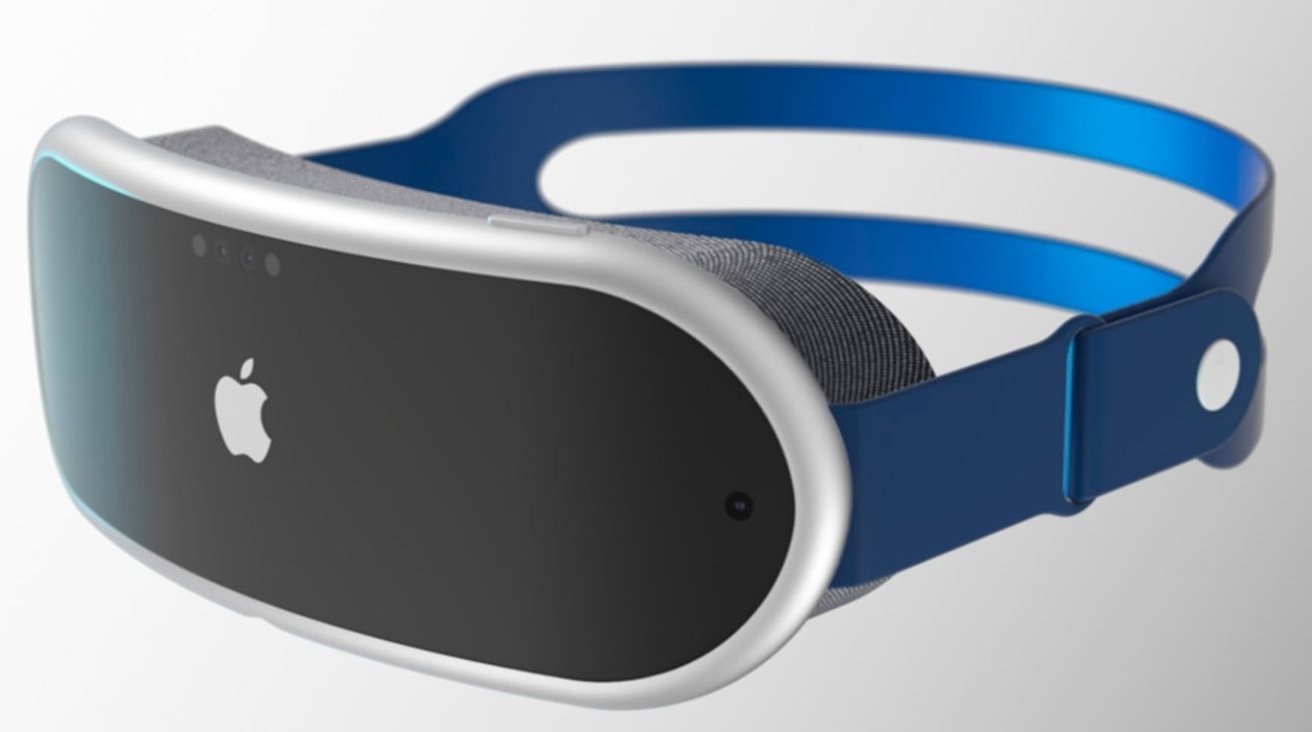
Apple's widely rumored augmented reality headset is expected to sport eye tracking hardware as a means of user input, potentially eschewing the need for handheld controllers, according to analyst Ming-Chi Kuo.

Kuo in a note to investors on Friday said the headset will use a specialized transmitter and receiver to detect eye movements, blinks and related physical information. The analyst believes eye tracking will soon be the most important human-machine interface technology for AR and VR wearables.
"Currently, users primarily operate the HMD (most of which are VR devices) using handheld controllers," Kuo writes. "The biggest challenge with this type of operation is that it does not provide a smooth user experience. We believe that if the HMD uses an eye-tracking system, there will be several advantages."
Apple's system will theoretically be able to use collected eye movement data to determine user interactions with a simulated AR environment. For example, images and onscreen content can be made to move in sync with a user's eyes as they scan a displayed external environment.
Eye tracking also serves as an intuitive mode of UI operation, as users can activate menus by blinking repeatedly or access information about a tangible object by staring at it for an extended period of time.
Further, foveated rendering technology can optimize viewing areas by monitoring the position of a user's eye. This would allow the system to reduce screen resolution in areas that are not in immediate focus, thereby easing processing requirements.
According to Kuo, the transmitter is a complex module that emits several wavelengths of invisible light. This light reflects off a user's eyeball and is detected by an accompanying receiver module. Eye movement is subsequently determined based on changes in the light's properties.
Watch the Latest from AppleInsider TV
Finally, Kuo says Apple might incorporate some form of iris recognition for biometric identification. The function could be used for user authentication and seamless Apple Pay transactions.
"We are still unsure if the Apple HMD can support iris recognition, but the hardware specifications suggest that the HMD's eye-tracking system can support this function," he writes.
Kuo's analysis of eye tracking technology reads like a summary of recent Apple patents filed over the past couple years. The tech giant has applied for, and has been granted, a number of patents related to eye tracking, gaze tracking and related technologies.
Last September, for example, a patent grant detailed a system by which an AR headset tracks eye movement via reflected light, while another explains the use of gaze tracking to assist in the display of mixed reality environments. Other IP filed over the years covers predictive foveated displays, dynamically altering image resolutions, selectively rendering content based on gaze, attention awareness and more.
Just today, Apple filed a clutch of patent applications for head mounted device technology, one of which covers an efficient method of eye tracking using low resolution images.
Kuo previously predicted Apple's first AR/MR headset to ship in 2022 for an estimated $1,000. That device is anticipated to be followed by "Apple Glass" in 2025 and, potentially, contact lenses after 2030.