FT : Carbon counter: bitcoin is the ultimate hot investment

Carbon counter: bitcoin is the ultimate hot investment
Cryptocurrency’s high energy consumption will continue to provide fuel for detractors

Tesla’s claim to be working towards a zero emissions future took a knock this year when the electric car company opted to invest $1.5bn in bitcoin. Bitcoin miners devour energy. Private investors in the cryptocurrency are financing climate change just as they might by purchasing shares in oil majors.

Environmental costs rise in lockstep with bitcoin prices, which have nearly doubled since the start of the year. The higher the price, the more demand for mining to release new coins into circulation. The more coins are mined, the more complex the proof-of-work algorithm required to add blocks to the bitcoin blockchain. This, in turn, requires more processing power.

Almost 19m bitcoins of a possible 21m have been mined so far. Normal computers are no longer able to do the job. Miners often opt to move close to places with cheap electricity. In China, home of more mining than any other country, this can mean coal-heavy regions.


This explains why carbon calculations have jumped in recent years. As of late 2018, researchers Christian Stoll, Lena Klaassen and Ulrich Gallersdörfer estimated the annual electricity consumption of bitcoin at 45.8 terawatt-hours (TWh). They put the resulting annual carbon emissions at up to 22.9 metric tonnes of carbon dioxide equivalent (MTCO2e). Crypto analytics site Digiconomist has used their energy consumption calculations to update figures. It estimates that bitcoin now consumes 111.67TWh of electricity each year and creates 53.32 MTCO2e — the same output as the whole of Singapore.

It makes sense to view bitcoin as a collective and interdependent effort. Each investor is therefore responsible for a carbon output proportionate to their outlay. An investor who buys $10,000 worth, for example, could consider themselves liable for the same percentage of bitcoin’s annual carbon emissions — equivalent to 505kg of CO2 a year. In the UK, this is equivalent to 10 per cent of the average person’s yearly CO2 emissions.

Creators of ethereum have promised to make mining less environmentally unfriendly by changing the way transactions are logged. Crypto fans, including Twitter founder Jack Dorsey, claim bitcoin’s popularity will spur electricity providers to offer cleaner alternatives. The energy mix is already changing — albeit slowly. For now, bitcoin’s high energy consumption, like its wild price swings, will continue to provide fuel for detractors.
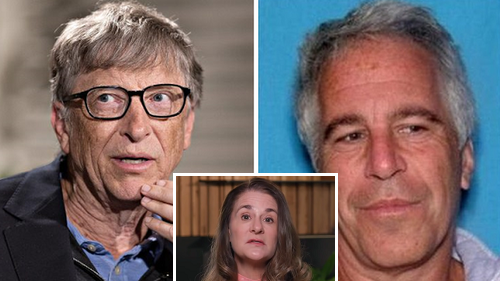
(zh) 'Furious' Melinda Gates Warned Bill Over Jeffrey Epstein Escapades: Report

'Furious' Melinda Gates Warned Bill Over Jeffrey Epstein Escapades: Report

Melinda Gates, whose 'people' are undoubtedly trying to distance her from Bill's controversies, was reportedly 'furious' after the couple had an uncomfortable 2013 meeting with Jeffrey Epstein - who by then was a convicted pedophile.
People 'familiar with the matter' tell the Daily Beast, the previously unreported meeting was held at Epstein's Upper East Side mansion in September, 2013, the same day the couple was awarded the Lasker-Bloomberg Public Service award at the Pierre Hotel, where they were photographed with then-Mayor Mike Bloomberg.
According to said 'people', the 2013 meeting would "prove a turning point for the Gates' relationship with Epstein,' with Melinda telling friends after the encounter how uncomfortable she was to be hanging around the wealthy sex offender.
According to the New York Times, Gates and Epstein met at least six times, including visits to Epstein's New York mansion on 'multiple occasions,' staying at least once into the night.
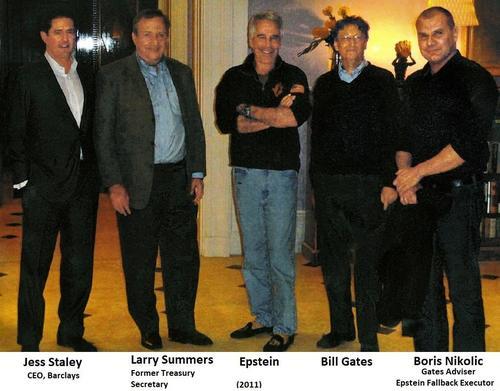
So - the Gates' had no problem traveling across the country to meet with the convicted pedophile - who named Gates adviser Boris Nikolic as a fallback executor in a will Epstein amended just days before his August 2019 death in a Manhattan jail cell.
Now, eight years later, Melinda apparently had a problem with it.
Gates thought Epstein's lifestyle was "kind of intriguing"
In a 2011 email to colleagues, Gates wrote: "His lifestyle is very different and kind of intriguing although it would not work for me."
A spokeswoman or Gates, Bridgitt Arnold, said he "was referring only to the unique décor of the Epstein residence — and Epstein’s habit of spontaneously bringing acquaintances in to meet Mr. Gates," adding "It was in no way meant to convey a sense of interest or approval." Perhaps Gates was taken aback by Epstein's "main hallway that was covered with rows of artificial eyeballs from England that had been made for wounded soldiers" (via the Daily Mail).
Also contradicting Gates' distancing are flight records, which reveal that "Gates flew with Epstein from Teterboro Airport in New Jersey to Palm Beach on March 1, 2013," on Epstein's private jet - "one of the few flights that year where pilot Larry Viskoski recorded the name of a passenger,"According to the Daily Mail.
Gates hilariously claimed that he wasn't aware it was Epstein's plane!
In March 2013, Mr. Gates flew on Mr. Epstein’s Gulfstream plane from Teterboro Airport in New Jersey to Palm Beach, Fla., according to a flight manifest. Ms. Arnold said Mr. Gates — who has his own $40 million jet — hadn’t been aware it was Mr. Epstein’s plane. -New York Times
Meanwhile, employees of the Gates foundation also visited Epstein's mansion on multiple occasions, while Epstein also "spoke with the Bill and Melinda Gates Foundation and JPMorgan Chase about a proposed multibillion-dollar charitable fund — an arrangement that had the potential to generate enormous fees for Mr. Epstein," according to the Times.
In late 2011, at Mr. Gates’s instruction, the foundation sent a team to Mr. Epstein’s townhouse to have a preliminary talk about philanthropic fund-raising, according to three people who were there. Mr. Epstein told his guests that if they searched his name on the internet they might conclude he was a bad person but that what he had done — soliciting prostitution from an underage girl — was no worse than “stealing a bagel,” two of the people said.
How Gates and Epstein met, according to the New York Times;
Two members of Mr. Gates’s inner circle — Boris Nikolic and Melanie Walker — were close to Mr. Epstein and at times functioned as intermediaries between the two men.
Ms. Walker met Mr. Epstein in 1992, six months after graduating from the University of Texas. Mr. Epstein, who was an adviser to Mr. Wexner, the owner of Victoria’s Secret, told Ms. Walker that he could land her an audition for a modeling job there, according to Ms. Walker. She later moved to New York and stayed in a Manhattan apartment building that Mr. Epstein owned. After she graduated from medical school, she said, Mr. Epstein hired her as a science adviser in 1998.
Ms. Walker later met Steven Sinofsky, a senior executive at Microsoft who became president of its Windows division, and moved to Seattle to be with him. In 2006, she joined the Gates Foundation with the title of senior program officer.
At the foundation, Ms. Walker met and befriended Mr. Nikolic, a native of what is now Croatia and a former fellow at Harvard Medical School who was the foundation’s science adviser. Mr. Nikolic and Mr. Gates frequently traveled and socialized together.
Ms. Walker, who had remained in close touch with Mr. Epstein, introduced him to Mr. Nikolic, and the men became friendly.
Mr. Epstein and Mr. Gates first met face to face on the evening of Jan. 31, 2011, at Mr. Epstein’s townhouse on the Upper East Side. They were joined by Dr. Eva Andersson-Dubin, a former Miss Sweden whom Mr. Epstein had once dated, and her 15-year-old daughter. (Dr. Andersson-Dubin’s husband, the hedge fund billionaire Glenn Dubin, was a friend and business associate of Mr. Epstein’s. The Dubins declined to comment.)
The gathering started at 8 and lasted several hours, according to Ms. Arnold, Mr. Gates’s spokeswoman. Mr. Epstein subsequently boasted about the meeting in emails to friends and associates. “Bill’s great,” he wrote in one, reviewed by The Times.
"I didn’t go to New Mexico or Florida or Palm Beach or any of that," claims Gates. "There were people around him who were saying, hey, if you want to raise money for global health and get more philanthropy, he knows a lot of rich people."
And it looks like Gates was one of Epstein's "rich people." According to the report, Gates donated $2 million to MIT's Media Lab, which university officials described as having been "directed" by Epstein.
According to Arnold, Gates' spokeswoman, "Over time, Gates and his team realized Epstein’s capabilities and ideas were not legitimate and all contact with Epstein was discontinued."
Perhaps 'Gates and his team' should have steered clear of the known pedophile in the first place?

Barrons : Tesla Stock Needs a Catalyst. Here Are Some Contenders.

Tesla Stock Needs a Catalyst. Here Are Some Contenders.

Sell in May and go away usually refers to the entire stock market. Right now it also applies to Tesla’s stock.

Tesla bulls might not like to hear it. But the stock looks stuck, and the next big catalyst to drive shares higher isn’t on the horizon. At $672.37, shares are down about 5% year to date and 21% over the past three months, lagging far behind the S&P 500 and Dow Jones Industrial Average. That isn’t great. Still, Tesla shares (ticker: TSLA) are up about 310% over the past 12 months.

After an epic rise, the stock has stalled. That is just what Tesla stock tends to do—rocket higher after major milestones, then do nothing for a while.

Tesla’s market capitalization bobbed between $2 billion and $3 billion for years after the company’s 2010 initial public offering. Then the Model S came out, showing that Tesla could deliver the luxury all-electric sedan people wanted. The stock’s market cap jumped to $20 billion in 2013.

A similar jump happened around the time the Model 3 came out in 2017, and again in 2019, when Tesla showed it could be profitable. The stock raced from about $50 to $900 over the following 16 months, bringing its market cap to $837 billion at its peak.

Investors are looking for the next catalyst. Bulls hope for more U.S. EV purchase incentives. Tesla’s driver-assistance feature—called Autopilot—could also be cleared in the Texas crash that generated bad PR recently. Those will help balance out recent concerns over emission credits, which Tesla earns for producing more than its fair share of zero-emission vehicles, after Stellantis (STLA) announced it would purchase fewer of them from Tesla.

Stellantis spent roughly $350 million on Tesla credits in 2020, a sizable chunk of Tesla’s $1.6 billion in credit sales that year.

“This is clearly a headwind,” says Wedbush analyst Dan Ives, though he doesn’t see a material impact for Tesla. “They lose some sources but gain others as more [auto makers] have to comply with regulations.”

True catalysts look further out in the distance. Tesla’s new German plant could be one. It represents capacity growth and improved vehicle quality because of new manufacturing processes and more-advanced batteries. Yet the facility isn’t due to come online until the beginning of 2022.

“They need something, and it’s the German plant,” Navellier & Associates Chief Investment Officer Louis Navellier tells Barron’s. “We anticipate the quality of the German Model 3 and Y will be really good.”

The biggest catalyst would be full self-driving cars. Tesla is working hard on its autonomous-driving technology, though CEO Elon Musk calls it the hardest challenge it has tackled to date. Progress is being made, but big revelations are likely to come at the end of 2021 at the earliest.

The catalyst deficit is also showing up in company fundamentals. Analysts had been raising their earnings forecasts for Tesla, but now they have slowed, according to Brian Rauscher, head of global portfolio strategy at Fundstrat. Between July and January, 2021 earnings estimates went from roughly $2.50 a share to about $4.10. Since then, they have barely budged. It’s a sign the current good news is reflected in the stock.

As spring turns to summer, take some time for a road trip. Reflect on the future of the auto industry at the beach. Just don’t expect a breakout for Tesla stock. That will have to wait until later.

Barrons : M&A Is Surging Because the Urge to Merge Can’t Be Denied

M&A Is Surging Because the Urge to Merge Can’t Be Denied

Mergers and acquisitions are roaring back in 2021, and that bodes well for activity going into next year, too.

With the flood of mergers and acquisitions this year, you could be forgiven for not recalling how deal making largely ground to a halt at this time last year—as did much of the economy. Even previously announced deals came under pressure, as buyers feared making acquisitions just as uncertainties were spiking. How could buyers extract synergies in the face of shuttered businesses or locked-down customers?

Now that there’s a more-than-viable path forward, M&A is picking up due to a backlog of activity as well as new opportunities that emerged during the pandemic
M&T Bank Plans to Buy People’s United. Here’s What Wall Street Is Saying.
The pandemic has increased the rationale for regional tie-ups as banks look to boost their scale and digital offerings amid low interest rates that will squeeze potential profits.
Continue reading. Data from Goldman Sachs Group (ticker: GS) show that April’s announced-deal volumes increased to $506 billion—more than fourfold year over year. True, that eye-popping number is coming off of a startlingly low base, but the recent momentum of new deals is expected to carry into May 2022, Goldman says.

The bank projects a 12% year-over-year increase in deals over the next 12 months because CEO confidence remains above prepandemic levels, and interest rates remain low. More than half of those deals will be in the U.S.

While nearly all sectors saw deal volumes at least double, the urge to merge has been highest in telecommunications, healthcare, and energy—with deal levels increasing as much as fivefold. Mergers have also been rising in financial services, which you can bank on continuing.

Barrons : Auto Trader’s Growth Is Accelerating Online. That Will Drive the Stock

Auto Trader’s Growth Is Accelerating Online. That Will Drive the Stock Up.

Online car marketplace Auto Trader Group, which started as a print magazine, has found important avenues of growth that have been overlooked by investors.

Auto Trader (ticker: AUTO.UK) has added services that include helping customers get financing, and it’s considering lucrative transportation services that move vehicles around the country from seller to buyer.

Auto Trader is the market leader for selling and buying new and used cars in the U.K., with about 475,000 listings and partnerships with more than 13,300 retailers, according to the company. It has averaged more than 57.3 million monthly visits across all of its platforms, including mobile, desktop and the app. It’s unrelated to Autotrader, a similar U.S. company.

Dealerships pay to advertise vehicles, and individual buyers and sellers also pay a fee unless the transaction is under 1,000 British pounds ($1,387). Auto Trader derives additional income by charging companies to sell insurance and automotive parts. The Manchester, England-based company is also using data in an impressive way, which means the stock should be seen as a technology play, rather than as a media stock. Auto Trader collects data from online visitors that it then uses to match sellers and buyers for both new and used cars.

The shares have fallen 3.33%, to £5.70 ($7.91), over the past three months because consumers stayed home during pandemic lockdowns, depressing sales.

Auto Trader stock could now be a good buy. Alastair Reid, an analyst at Investec who has a £6.75 price target on it, wrote in a client note that the company “has been investing in transforming its business model toward becoming a technology provider to the industry for some time, and returns on this investment are now starting to come through.”

Reid wrote that the shift, which could transform how the industry operates, isn’t reflected in the stock’s valuation. The firm has a £5.4 billion market value and fetches a multiple of 25.2 times this year’s expected earnings. Auto Trader is valued in line with its peers.

The company posted a pretax profit of £251.5 million for the year ended March 31, 2020, up slightly from £242.2 million the prior year. Annual revenue was £368.9 million. Earnings for 2021 are due to be reported next month.

Chief Executive Officer Nathan Coe said in a statement to Barron’s that car purchases have accelerated, driven in part by high savings levels and low interest rates. “It is clear that more of the car buying process will be completed online before visiting the retailer from this point forward,” he added. “As the largest marketplace in the U.K. by some margin, and having supported customers throughout the pandemic, we are perfectly placed to enable the buying and selling of cars online, which has been our focus throughout the pandemic and remains our key strategic priority moving forward.”

In 1977, entrepreneur John Madejski launched a regional classified-ad magazine called Thames Valley Trader. In 1996, the Auto Trader website was created—two years before Google was conceived. Thames Valley Trader’s final print edition was published in 2013.

Growth will come from the Auto Trader’s additional services, including a program that allows consumers to trade in their used car for a guaranteed price, with the value deducted from the price of the vehicle they’re purchasing.

“Auto Trader is in the process of building all of the individual pieces that will fit into a larger offering, enabling consumers to trade cars fully online, from the initial search through to remote delivery,” Harry Read, an analyst at broker Liberum, wrote in a note.

>>> US Close Dow +0.66% S&P +0.74% Nasdaq +0.88% Russell +1.35%

Closing Stock Market Summary

The S&P 500 (+0.7%) and Dow Jones Industrial Average (+0.7%) set intraday and closing record highs on Friday, as investors found reasons to look past the huge payrolls miss in the April employment report. The Nasdaq Composite (+0.9%) and Russell 2000 (+1.4%) outperformed. 

Nonfarm payrolls increased by just 266,000 in April, which was well below the Briefing.com consensus of 1,000,000 and the downward revision for March. In addition, the unemployment rate was 6.1% (consensus 5.8%), versus 6.0% in March, and average hourly earnings increased 0.7% (consensus -0.1%). 

After an initial shock, market participants interpreted the report to suggest at least two things: 1) the Fed will feel assured that it's still not time to start talking about tapering asset purchases, and 2) it was a temporary blip in the economic recovery as the extended unemployment benefits may have provided a disincentive for people to return to work. 

Another narrative put forth by the Biden administration and some Democratic lawmakers was that the report painted the case for passing the proposed government spending plans. The reaction in the market made it clear that both growth and value investors had an interpretation they liked. 

Every sector in the S&P 500 closed higher, paced by the energy (+1.9%), real estate (+1.2%), industrials (+1.1%), materials (+0.9%), and information technology (+0.8%) sectors. The consumer staples sector (+0.01%) underperformed and closed a hair above its flat line. 

Besides the leadership from the cyclical stocks, growth concerns were dismissed by higher copper prices ($4.75/lb, +0.14, +3.2%) and a turnaround in the 10-yr yield, which went from 1.48% in the wake of the employment report to 1.58%, or two basis points above Thursday's settlement.

Growth-stock investors may have also used the headline jobs miss as a better reason (compared to yesterday's Merkel vaccine news) to buy the dip in the information technology sector and other beaten-down spaces. The ARK Innovation ETF (ARK 109.72, +1.38, +1.3%) increased 1.3% but ended the week down 9%. 

The 2-yr yield decreased one basis point to 0.14%. The U.S. Dollar Index decreased 0.8% to 90.22. WTI crude futures increased 0.4%, or $0.25, to $64.94/bbl.

Reviewing Friday's economic data:

  • The April employment report was surprisingly weak, with just 266,000 jobs added to nonfarm payrolls (consensus 1,000,000) and downward revisions to March. April unemployment rate was 6.1% (consensus 5.8%), versus 6.0% in March. April average hourly earnings increased 0.7% (Bconsensus -0.1%) versus a 0.1% decrease in March.
    • The key takeaway from the report is that net job gains were negative, excluding the leisure and hospitality industry, which added 331,000 jobs. It is a stunning slowdown from March and has ignited the argument that extended unemployment benefits have created a disincentive to look for work. In turn, it has also ignited the idea that the market has gotten ahead of itself with its recovery/reopening enthusiasm.
  • Consumer credit increased by $25.8 bln in March after increasing a downwardly revised $26.2 bln (from $27.6 bln) in February.
    • The key takeaway from the report is that it was the second straight month that the expansion in consumer credit exceeded $25 billion, underscoring the improved lending demand in a recovering economy.
  • Wholesale inventories increased 1.3% m/m in March (consensus 1.4%) following an upwardly revised 1.0% increase (from +0.6%) in February.

Investors will not receive any notable economic data on Monday.

  • Russell 2000 +15.0% YTD
  • Dow Jones Industrial Average +13.6% YTD
  • S&P 500 +12.7% YTD
  • Nasdaq Composite +6.7% YTD

FT : Electric truckmaker Nikola receives new SEC subpoena

Electric truckmaker Nikola receives new SEC subpoena
US regulator is examining start-up’s plans to raise new capital from investors

Nikola, the electric vehicle start-up, has attracted new scrutiny from the Securities and Exchange Commission, which has subpoenaed the company for information relating to its plans to raise more capital from investors.

Nikola also restated its 2020 earnings after the US securities regulator changed accounting rules for companies that go public using special purpose acquisition companies, or Spacs.

The SEC issued the subpoena on March 24 in relation to Nikola’s “projected 2021 cash flow and anticipated use of funds from 2021 capital raises”, according to an SEC regulatory filing.

Nikola, whose disclosures to investors have been under investigation by the SEC and the US Department of Justice since the publication of fraud allegations in a short seller’s report last autumn, said in March that it planned to sell up to $100m in stock to investors in 2021. The fundraising was aimed at ensuring it had adequate capital for the next 12 to 18 months, it said.

Nikola shares surged after it went public last year via a merger with a Spac, amid excitement over its plans to build an electric truck. Its shares are down 80 per cent from their peak, however, and the company has admitted that nine statements that founder Trevor Milton made about Nikola’s progress and technical prowess were wholly or partly inaccurate. Milton left the company in September.

The company spent $14.5m in the first quarter on legal expenses.

Nikola said it had restated its earnings to comply with new guidance issued by the SEC last month, which said that Spacs had incorrectly accounted for warrants as equity when they should be considered liabilities. Warrants, which are given to early investors for free as a sweetener, act as options that can be used to buy more shares at a set price in the future.

The change added $7.3m in long-term liabilities and a $13.4m non-cash gain, said chief financial officer Kim Brady. It did not affect operating expenses or cash flows.

Nikola shares were up nearly 10 per cent on Friday as the company beat Wall Street expectations for the first quarter with an adjusted earnings per share loss of 14 cents, compared to a projected 26 cent loss.

Chris McNally, analyst at Evercore ISI, said the results were “encouraging” although set against “relatively low expectations”.

The SEC has heightened its scrutiny of Spacs since they boomed in popularity last year, focusing in particular on optimistic revenue projections that are used to attract large institutional investors and retail buyers.

In a statement last month, the acting director of the SEC’s division of corporation finance, John Coates, suggested companies listing through Spacs could be held liable for forward-looking statements. Using a Spac to go public rather than a traditional initial public offering “gives no one a free pass for material misstatements or omissions”, he said.

FT : Hedge fund executive sentenced to 6 months in jail for bankruptcy fraud

Hedge fund executive sentenced to 6 months in jail for bankruptcy fraud
Marble Ridge founder Dan Kamensky had pleaded guilty to misconduct during bankruptcy of Neiman Marcus

A prominent US hedge fund manager has been sentenced by a New York federal judge to six months imprisonment for his misconduct during the 2020 bankruptcy of luxury retailer Neiman Marcus.

Dan Kamensky, the founder of Marble Ridge Capital, pleaded guilty in February to a single count of bankruptcy fraud related to his efforts to improperly secure a portion of $172m that had been allocated to Neiman’s unsecured creditors.

Kamensky appeared at a socially distanced court hearing on Friday for his sentencing wearing a dark suit, accompanied by his lawyer Joon Kim and a small group of supporters including his wife and in-laws.

Kamensky’s pre-dawn arrest at his suburban New York home by the Federal Bureau of Investigation in September sent shockwaves through the distressed debt and corporate law communities. New York prosecutors had originally charged Kamensky with four counts including fraud, extortion and obstruction of justice.

The Georgetown-educated former corporate lawyer, a Neiman bondholder, had led a long-shot yet ultimately successful effort to get Neiman’s private equity owners to settle claims that they had improperly transferred a valuable asset, online retailer MyTheresa, out of creditors’ reach in 2019 before Neiman filed for bankruptcy.

In July, Neiman’s private equity owners, Ares Management and the Canadian Pension Plan Investment Board, agreed to grant preferred shares in MyTheresa to settle claims that the transfer had been fraudulent. 

Kamensky, who co-chaired an official committee of creditors, offered to buy some of those illiquid shares for 20 cents on the dollar from fellow claimants who wanted immediate cash.

He has admitted that he became enraged when investment bank Jefferies tried to buy those claims at a higher price, explaining that he had spearheaded the fight against the private equity firms over several years.

“Nothing can change what happened that day or excuse the things I said,” Kamensky told Judge Denise Cote on Friday. “I made grave and terrible mistakes.”

A subsequent investigation by the US trustee’s office, an affiliate of the justice department, revealed that Kamensky told Jefferies to stay away, sending a Bloomberg chat message to the firm’s banker saying “DO NOT BID” and later threatening to stop doing business with the bank.

In a later conversation recorded by a Jefferies executive, Kamensky appeared to realise he may have breached his fiduciary duties to fellow creditors, and pleaded with the banker to avoid implicating him: “I’m asking you not to put me in jail.”

“He tried to rewrite history,” Cote said on Friday. “He tried to get another person to lie for him. He tried to obstruct justice.”

Confronted with the evidence of his pressure campaign, Kamensky quickly admitted his wrongdoing. He eventually shut down Marble Ridge and reached a settlement in bankruptcy court separate from the criminal charges.

Kamensky’s lawyers had argued that he should be spared prison, writing in court filings that his misdeeds “happened almost instantaneously and did not involve any premeditation or planning”, and that he had “reacted in moments of intense stress and pressure in a way that he should not have”. 

He said he believed that unsecured creditors were ultimately unharmed when Jefferies eventually bid for the MyTheresa securities. Kamensky submitted more than 100 letters of support from family, friends and business associates, and said his health would be endangered by a Covid outbreak in prison.

In recent months he has been lecturing at law and business schools about the ethical lessons from his ordeal in the Neiman case.

Federal prosecutors had argued that sentencing guidelines called for a 12-18 month prison term. They wrote that “a custodial sentence in this case will send the message to those who participate in the bankruptcy process that they must play by the rules and ensure the fairness of the proceedings for all stakeholders”.

But Cote ruled that a shorter prison term was sufficient, imposing a six month prison term follows by six months home detention and a fine of $50,000.

The US trustee added in a separate filing that “[t]he harm that resulted from Kamensky’s abuse of the bankruptcy system cannot be overstated”.