>>> What to look at today - 31st of August 2021

Asian stocks were mixed Tuesday as weaker economic activity in China and the latest escalation in Beijing’s crackdown on private industries overshadowed another record close on Wall Street.
Equities slipped in China, where data signaled that an outbreak of the delta virus variant led to a service-sector contraction for the first time since February last year. Hong Kong slid as Beijing’s stepped-up curbs on video-gaming firms weighed on Chinese technology stocks.
U.S. futures edged up after the S&P 500 hit its 12th all-time high in August and the Nasdaq 100 rose. Treasuries held gains made following Federal Reserve Chair Jerome Powell’s measured comments about a possible reduction in stimulus and any future interest-rate hikes. The dollar dipped.
Oil declined, with traders assessing the prospect of additional OPEC+ production. Aluminum and nickel advanced as Goldman Sachs Group Inc. raise target prices. In cryptocurrencies, Bitcoin fell to about $47,000. 
US After Hours ZM -11.7% falls on earnings/guidance; APPS jumps +10.3% as it will join S&P MidCap 400; AZRE +7.1%, SMRT +4.3% higher on earnings

Nikkei +1.05% Hang Seng -0.80% CSI -0.81% Shanghai -0.32% Shenzen -1.02%

Eur$ 1.1822 CNH 6.4643 CNY 6.4670 JPY 109.84 GBP 1.3789 CHF 0.9151 RUB 73.3715 TRY 8.3673 WTI$ 69.11 -0.14% Gold 1,816.45 +0.35% BTC 47,200 -1445 ETH 3,240 -99

S&P +0.30% Nasdaq +0.38% EuroStoxx +0.21% FTSE +0.29% Dax +0.18% SMI +0.23%

Macro :
- France to Provision EU5b for Covid Tests, Shots in 2022: Echos

Keep an eye on :
- ACKB BB : Ackermans 1H Net Income EU165.7M Vs. EU56.3M Y/y
- ADJ GY : Adler Group Boosts FY Net Rental Income Forecast
- AF FP :
- AMBU DC : Ambu CEO Buys DKK26 Million in Shares; Good Signal, Nordnet Says
- AAPL US : Apple Acquires Classical Music Streaming Service Primephonic
- BAS GY : BASF Assesses Operations After Idling 3 Sites Ahead of Ida
- BORR NO : Borr Drilling 2Q Adjusted Ebitda $3.7M
- CFEB BB : CFE 1H EPS EU1.68 Vs. EU0.33 Y/y
- EL FP : EssilorLuxottica to Buy Back Up to 2m Shares Through Oct. 29
- FTK GY : FlatexDEGIRO 1H Ebitda EU53.2M Vs. EU42.7M Y/y
- GALP PL : Galp Says Interim Dividend Will Be Payable From Sept. 16
- ICP LN : ICG Plans Sale of Spanish Plywood Maker Garnica, Expansion Says
- IIA AV : Immofinanz Swings to 1H Net Profit, Eyes EU1b Expansion Path
- KAHOT NO : Kahoot to Complete Clever Transaction in Beginning of Sept.
- LOOMIS SS : Loomis to Appeal Court Decision on Competition Law Infringements
- LUN DC : Lundbeck Chairman Says Drug Pipeline Needs to Be Bigger: Borsen
- NAS NO : Norwegian Air 2Q Ebit Loss NOK766m
- ORPHA DC : Orphazyme 1H Loss Widens; Still Sees 4Q Opinion on Arimoclomol
- PMAG AV : Pierer Mobility 1H Revenue EU1.08B Vs. EU600M Y/y
- POLY LN : Polymetal warns chip shortage set to hit mining sector
- QFUEL NO : Quantafuel Confirms Skive Plant Timeline, Sees Capex NOK610m
- STB NO : Storebrand Buys Danish Real Estate Manager Capital Investment
- SPAC GY : Boxine Plans to Go Public in Merger With 468 SPAC I Confirmed
- STR AV : Strabag 1H21 Output Volume Rises 3% to EU6.9b
- TXGN SW : TX Group, Ringier, Others Set up JV With Aim of Going Public
- UBI FP : China Gaming Crackdown a ‘Non-Event’ for Most U.S. Publishers
- VIFN SW : Vifor Pharma’s Ferinject Gets New ESC Recommendations
- ZWIPE NO : Zwipe Offering of 4m Shares to Erik Selin Prices at NOK26.1/Shr

WSJ : How Could Burning Man Get Weirder? When It’s in Your Living Room.

How Could Burning Man Get Weirder? When It’s in Your Living Room.
The annual desert ritual goes virtual. Participants wear headsets, create avatars and mingle at home

Nate Morris has traveled halfway around the world three times to dance with strangers and DJ a party from a bus decorated like a giant sheep at the annual Burning Man event. This year he’s trying to replicate the same experience on a virtual reality headset in his apartment in Sydney, Australia.
Virtual man
“I just walked up to talk to people and stumbled across a place you can paint!,” the 30-year-old disc jockey said after arriving at the “Virtual Burn,” which began Sunday.
Organizers of Burning Man, now in its 35th year, have called off the physical event in the Nevada desert due to Covid concerns. In its place, they have created Virtual Burn Week, which ends next Tuesday.
Instead of camping in the desert, participants use virtual reality headsets and computer screens to replicate the real event in as much detail as possible—even the hourslong traffic jams.
Last week, cyber RVs began lining up at the gate to virtual Black Rock City. In normal times, a community of camps, pop-up bars and fanciful art displays rise out of the alkali dust for one week every August on a pancake-flat playa surrounded by jagged mountains 100 miles northeast of Reno.
The Virtual Burn can’t replicate everything about the traditional Burning Man, such as hugs and drinks that flow freely on the desert. The digital world’s designers have also taken advantage of the possibilities of virtual reality to create experiences that in the past may have only been possible with the aid of hallucinogens.
Helios Art Project inside this year’s virtual Burning Man.
PHOTO: BRCVR
“Do you see this port-a-potty in front of us?,” Andrew Barrett, a creator of some of the virtual worlds, asked during a tour of virtual Burning last week as a large blue image of the receptacle came into view. “If you look up, there are all these Porta Potties with art inside.”
Andrew Barrett at home in San Francisco, test driving this year's virtual Burning Man.
PHOTO: JIM CARLTON/THE WALL STREET JOURNAL
Organizers say the purpose of Burning Man is to build a city out of thin air where participants live in a utopian society that follows principles of “decommodification,” or avoiding all money transactions, and “radical inclusion.” Art and music are featured draws; so are nudity and sex. The event has ballooned to tens of thousands of people. Each year, the organizers pick an art theme; this year’s: “The Great Unknown.”
There are new rules of etiquette. “Though there is no official Orgy Dome, responsible community members can create adult-only events,” reads a notice on the website of BRCvr, an online community which helped build many of the virtual worlds.

Virtual burners create an avatar that can walk, fly and even teleport via a headset and controllers—although not always successfully. “You’re sort of falling a little to the right,” Mr. Barrett warned a visitor whose flying avatar with a ball cap approached a digital art piece a bit off kilter.
The first virtual burn, in 2020, was pulled together in a month and experienced some technical glitches. Some people couldn’t figure out how to enter its multiple digital worlds.
“We’ve improved on the technology because we’ve had a year and a half,” said Colette Crespin, director of Virtual Experiences for Burning Man Project, a nonprofit which organizes the event.
The climax of the event, as at the real one, is the torching of a giant wooden effigy—the burning man. This year it will take place on Sept. 4, both digitally and in real life at an undisclosed location from which it will be live streamed.
The Man, 2021
PHOTO: BRCVR
A scene from virtual Burning Man
PHOTO: BRCVR
Daisy Shaw, a horse trainer from Manchester, England, stayed up all night last year to watch the burn on a VR headset and plans to do the same thing again this year, while her fedora-wearing avatar stands on the digital playa.
“You really do feel a sense of presence,” the 57 year-old said. “I once kind of bumped the chair in my room, and I turned to the person next to me in VR and said ‘Excuse me’.”
Daisy Shaw’s virtual Burning Man avatar.
PHOTO: DAISY SHAW
At her home in Indianapolis, Sara Pugh donned her VR headset Sunday just as she did a year ago. She said she loved going to the real burns in 2018 and 2019, but finds this one just as stimulating. One of her favorite attractions: the virtual dance parties. “If I am standing in my living room with a box on my face and making weird body movements, I know I look ridiculous,” said Ms. Pugh, a 42-year-old nonprofit manager whose avatar wears a cowboy hat.
Her husband, Josh Cook, has peeked at her screen to try to understand the appeal. “I see her friends in California and around the world come up and approach her, these cartoonish characters with no legs, arms hanging loose, and hear human voices coming out of these characters’ mouths,” he said.

The first virtual burn drew an estimated half million attendees—more than five times the 80,000 who went there physically in 2019—and just as many are expected this year, organizers say. Unlike the real burn, which costs about $500 per person, this one is free with a requested donation.
Still, some die-hard burners insist on a real-life experience.
Larry DeVincenzi and Laurel DeVincenzi. Mr DeVincenzi wanted a real-life Burning Man experience.
PHOTO: LARRY DEVINCENZI
Several thousand have descended on the playa this year, as they did last, to hold an unauthorized burn. “Those (virtual) people have their conclaves and groups, and that’s cool,” said Larry DeVincenzi, a bar owner in Reno who has decamped to the playa 100 miles away. “But it’s not the same thing. Here, I can go up to a bar and get a free shot.”
Mr. Morris, meanwhile, is feeling some pressure because he volunteered to organize hours of programming by a group of Aussie DJs this weekend. He barely had time to master his VR headset which had just arrived. “There’s a little bit of nervousness,” said Mr. Morris, who joined the first day of the burn in two dimensions using his laptop.
He and thousands of others encountered an hourslong delay getting in Sunday, after the organizers programmed a rainstorm to replicate one a few years ago that left the playa a mess.
Mr. Barrett said virtual burners weren’t told beforehand, so they could “hang around and rely on each other to figure it out. Radical self-reliance.”
Avatars at virtual Burning Man.
PHOTO: DAISY SHAW

WSJ : EU’s New Travel Recommendation for Americans: What You Need to Know

EU’s New Travel Recommendation for Americans: What You Need to Know
Some U.S. travelers with plans to visit Europe this fall might have to reconsider or reschedule their plans after latest guidance

The European Union’s new recommendation to halt nonessential travel from the U.S. due to the rise of Covid-19 cases stateside could create fresh virus-related travel uncertainty.

Monday’s announcement suggested that vaccinated travelers will still be permitted into EU member countries, though it is up to each nation to set their own restrictions. Stavros Lambrinidis, the EU’s ambassador to the U.S., said on Twitter that the recommendation means only essential travelers and vaccinated people from the U.S. would be allowed into the bloc.

The EU travel list is reviewed every two weeks and isn’t binding for member states, though it has generally set the pattern for who can visit the 27-country bloc. The EU had previously decided in June to add the U.S. to its “safe list.”

The European recommendation could thwart some Americans’ fall and winter trip plans, adding more challenges to an already complex year for international travel—one marked by passport delays, changing vaccination and testing requirements and myriad rules for booking at various destinations.

Is the EU open to U.S. citizens?
Citing the spread of Covid-19 cases stateside, EU countries voted to remove the U.S. from a “safe list” of countries for nonessential travel, meaning vacations and recreational trips. The EU reviews its travel list every two weeks. Pressure to remove the U.S. from the travel list has also risen because Washington has maintained a ban on Europeans’ nonessential travel to the U.S.

Under EU rules, the bloc is supposed to consider removing from the safe list any country with more than 75 new Covid-19 cases per 100,000 inhabitants in the previous 14 days. The authority can take other factors into account when making its decision, including whether the third country has opened up to EU citizens.

The U.S. infection rate rose above 75 per 100,000 earlier in the summer, but EU member states agreed not to respond immediately.

Member states have become frustrated in recent weeks over the U.S.’s refusal to drop restrictions on EU travelers. Earlier this month, European Commission President Ursula von der Leyen warned that the EU wouldn’t allow the lack of reciprocity to “drag on for weeks.”

Does this mean I can’t travel to Europe?
For now, travel is proceeding as normal. It isn’t yet clear which, if any, European countries would follow the recommendation. Each of the EU’s 27 member countries can decide whether they will close to nonessential U.S. travelers.

They may also choose to put restrictions only on unvaccinated travelers. When announcing the change, the EU said the decision doesn’t take away “the possibility for member states to lift the temporary restriction on nonessential travel…for fully vaccinated travelers.”

Will my airline refund my flight if I can’t travel?
Many carriers have eliminated change fees on domestic and international flights. As of Monday afternoon, airlines said they would continue to monitor the situation but provided few specifics.

“We continue to evaluate our travel waivers and policies based on market conditions and current travel restrictions that are in place,” said Andrea Koos, a spokeswoman for American Airlines.

United Airlines also said it would keep customers informed of any changes to their travel plans. “We’ll continue to monitor how member states respond to this new guidance,” said spokeswoman Nicole Carriere.

Delta Air Lines said customers can use an interactive map on its website to review changing requirements. Morgan Durrant, a spokesman for the airline, also noted that if a flight is canceled for any reason—whether domestic or international—customers are entitled to a refund.

Will my travel insurance cover my trip if the country I’m visiting isn’t open to visitors?
Most standard trip-cancellation policies won’t cover this type of situation, says Stan Sandberg, co-founder of TravelInsurance.com, a policy-comparison site. “The border shutdown is one of the big holes still in the coverage terms of most standard travel-insurance policies,” he says.

Mr. Sandberg said that, in the beginning of the pandemic, some travelers were able to receive refunds from airlines and hotels when borders closed. “Of course, that still is dependent on the travel supplier, the hotel or the airline, and what their policies are,” he says.

Travelers who have “cancel for any reason” coverage will find themselves in a better position to get money back. This coverage is often sold as a supplemental policy and will allow you to receive reimbursement for your prepaid and nonrefundable trip costs. It can cost up to about 60% of your base insurance plan and will typically reimburse about 75% of your trip cost.

“So you’re not going to get 100% back,” Mr. Sandberg says. “That ‘cancel for any reason’ feature does give you the best protection against a border closing or government shutdown.”

What else should I keep in mind?
U.S. travelers have faced many complications traveling abroad this summer. The time frame to receive a passport is far longer than it was pre-pandemic, with standard passport applications taking up to 18 weeks and expedited applications taking up to 12 weeks.

Additionally, many attractions across the EU, including museums, are requiring reservations this year to head off large gatherings.

Jenna Cannon, 33 years old, and her husband, are set to leave for their honeymoon in Greece on Friday. Should new rules interfere, it would be the fourth time they have had to cancel honeymoon plans since marrying in 2019.

Both Ms. Cannon and her husband, who live in the Baltimore area, are fully vaccinated and had planned to wear masks, eat outside and social distance from others on the trip. If they aren’t able to go, they say they will plan another trip in the U.S., potentially out West, though Ms. Cannon says they don’t have a solid plan B in mind yet.

“If we are legally allowed to go, we will go,” she says. As of Monday afternoon, the couple said they hadn’t heard from their airline about any changes or restrictions.

FT : China limits children to 3 hours of online gaming a week

China limits children to 3 hours of online gaming a week
Minors only allowed to play on Fridays, Saturdays and Sundays under latest rules to hit tech groups

Chinese children will only be allowed to play video games for one hour on Fridays, Saturdays and Sundays in new curbs set to hit gaming providers such as NetEase and Tencent.

The latest rules published in Chinese state media on Monday come amid a wide regulatory shake up of the country’s technology industry that has wiped tens of billions off the market value of its biggest players.

Under the regulations, online gaming companies can only allow children to play between 8pm and 9pm on Fridays, Saturdays, Sundays and holidays. Gaming companies are required to enforce the rule by using real name registration systems and login requirements.

Chinese state media said the move was to protect the mental and physical health of minors, defined as under-18s, and to prevent overindulgence in online gaming.

Shares in leading Chinese game producers fell in Hong Kong on Tuesday, with Tencent and NetEase dropping 3.5 and 3.7 per cent, respectively.

Daniel Ahmad, a gaming analyst at Niko Partners, said it was an “extremely restrictive policy”.

“There are around 110m minors in China that play video games today,” Ahmad said. “According to Tencent, players under 16 account for approximately 2.6 per cent of its total player spend, which shows the overall impact won’t be too significant, but it’s still a notable chunk.”

In the second quarter of this year, Tencent’s mobile gaming revenue rose 12 per cent to Rmb43bn ($6.6bn). Its overall revenue for the quarter was Rmb138bn.

Martin Lau, Tencent’s president, has warned of an increasingly tough regulatory environment. He said the company was “very focused” on reducing the amount of time and money children put into gaming. “It’s a complicated issue requiring consensus of the regulator as well as the industry . . . It also requires a system to police it but from the practicality perspective, it’s actually do-able,” he said.

Tencent has previously curbed the duration that minors are allowed to spend gaming on its flagship title Honor of Kings each day from 1.5 hours to one hour normally and from three hours to two hours on holidays. They said the rule would then roll out to the rest of its games line-up. Companies are also looking to deploy facial-recognition technology to stop young people avoiding regulations.

The move came after a Chinese state media group briefly labelled gaming as “spiritual opium” before withdrawing the comments. The article also complained of widespread internet addiction among China’s youth.

FT : Polymetal warns chip shortage set to hit mining sector

Polymetal warns chip shortage set to hit mining sector
Russian gold miner expects problem afflicting car industry to hit makers of mining vehicles and machinery

The chip shortage squeezing global carmakers is set to spread to the natural resources sector, the chief executive of Russian gold miner Polymetal has warned, adding to inflationary pressures already afflicting the industry.

Vitaly Nesis said supply-chain problems facing the likes of Toyota would soon hit makers of mining vehicles and machinery.

“Toyota is not special, the chip shortage is very real,” he told the Financial Times. “I’m worried . . . I think this is a major risk.”

The comments come as the global mining industry grapples with higher costs for raw materials such as diesel and steel, as well as wage inflation. Fellow Russian miner Polyus recently said it expected its costs to increase in the second half of the year due to “ongoing inflationary pressures”.

Polymetal, a member of the UK’s benchmark FTSE 100 index, said last week its capital spending would rise a further 25 per cent this year, partly to pre-order mining equipment such as trucks, loaders and drill rigs.

There was already a “palpable sense of threat” among suppliers of mining vehicles, Nesis said.

“Seeing the global wave of deficits we took the steps to kind of pre-empt the likely issues with the shortage of mining equipment,” he said. “We are scared of what’s going on . . . If the shit hits the fan it will be really painful.”

Polymetal said it now expected to spend $675m to $725m this year. The company is already battling higher costs for construction and labour, as well as for materials such as cement and plastics.

The group has had to fly workers from St Petersburg to its mines in the far east of Russia because of border restrictions that prevented people arriving from Central Asia, Nesis said.

Price increases had already become apparent in the market for control instruments such as sensors used in processing plants, Nesis added, with Polymetal already having to offer a “significant premium” to secure them.

The chief executive told analysts recently that he did not expect “any relief” from inflationary pressures in the near future.

Shares in Polymetal fell about 3 per cent last week to trade at 1,488p.

>>> US Close Dow -0.16% S&P +0.43% Nasdaq +0.90% Russell -0.49%

Closing Stock Market Summary

The S&P 500 (+0.4%) and Nasdaq Composite (+0.9%) set intraday and closing record highs on Monday, as money continued to flow into the large growth stocks. The Dow Jones Industrial Average (-0.2%) and Russell 2000 (-0.5%), however, closed lower amid relative weakness in the value stocks. 

Apple (AAPL 153.12, +4.52, +3.0%), Microsoft (MSFT 303.59, +3.87, +1.3%), Amazon.com (AMZN 3421.57, +71.94, +2.2%), Alphabet (GOOG 2909.39, +18.38, +0.6%), and Facebook (FB 380.66, +8.03, +2.2%) -- which account for approximately 22.5% of the S&P 500's market capitalization -- had a large say in today's action. AAPL stood out with a 3% gain. 

The S&P 500 information technology (+1.1%), consumer discretionary (+0.9%), and communication services (+0.7%) sectors, which are home to these widely-owned names, were among the best-performing sectors today.

The defensive-oriented real estate (+1.2%) and health care (+0.6%) sectors also outperformed, while the cyclical financials (-1.5%), energy (-1.2%), materials (-0.2%), and industrials (-0.2%) sectors closed lower. The financials and energy sectors declined more than 1.0%. 

This mega-cap leadership, and the underperformance of the cyclical stocks, was attributed to lingering growth concerns stemming from the Delta variant, Hurricane Ida, and the fate of the infrastructure package. There were some positive-sounding news involving the growth stocks, though.

For instance, the International Data Corporation (IDC) published a report that global smartphone shipments are expected to grow 7.4% yr/yr in 2021 to 1.37 billion units, thanks to a strong recovery in emerging markets. Amazon and Affirm (AFRM 99.59, +31.69, +46.7%) partnered to bring AFRM's buy-now, pay-later service to Amazon's customers. 

Shares of Affirm soared 46% on the news, but it was outdone by a 64% gain in Globalstar (GSAT 2.35, +0.92, +64.3%) following an unconfirmed report that Apple will use LEO satellite communications for its next iPhone. 

PayPal (PYPL 288.47, +10.14, +3.6%), meanwhile, rose 3.6% after CNBC reported that the company is exploring a stock-trading platform for its U.S. customers. Shares of Robinhood Markets (HOOD 43.64, -3.23, -6.9%) dropped 7% and extended intraday losses after SEC Chairman Gensler told Barron's that banning payment for order flow is "on the table."  

Elsewhere, the Treasury market was another signpost for growth concerns, as the 10-yr yield declined three basis points to 1.29%. The 2-yr yield decreased two basis points to 0.20%. The U.S. Dollar Index was little changed at 92.69. 

WTI crude futures rose 0.6%, or $0.44, to $69.21/bbl /bbl ahead of an OPEC+ meeting on Wednesday. Investors weighed the temporary shutdown of oil refineries in the Gulf Coast with a report from Reuters relaying a comment from Kuwait's oil minister that the OPEC+ oil production agreement could be reconsidered.

Monday's economic data was limited to Pending Home Sales, which unexpectedly decreased 1.8% m/m in July (consensus +0.5%) following a downwardly revised 2.0% decline (from -1.9%) in June.

Looking ahead, investors will receive the Conference Board's Consumer Confidence Index for August, the Chicago PMI for August, the FHFA Housing Price Index for June, and the S&P Case-Shiller Home Price Index for June on Tuesday. 

  • S&P 500 +20.6% YTD
  • Nasdaq Composite +18.5% YTD
  • Dow Jones Industrial Average +15.7% YTD
  • Russell 2000 +14.7% YTD

>>> US After Hours Summary: ZM -11.7% falls on earnings/guidance; APPS jumps +10

After Hours Summary: ZM -11.7% falls on earnings/guidance; APPS jumps +10.3% as it will join S&P MidCap 400; AZRE +7.1%, SMRT +4.3% higher on earnings

After Hours Gainers:

Companies trading higher in after hours in reaction to earnings/guidance: AZRE +7.1%, SMRT +4.3%, NDSN +1.8%

Companies trading higher in after hours in reaction to news: APPS +10.3% (to join S&P MidCap 400), LGND +5.2% (will move from S&P MidCap 400 to S&P SmallCap 600; also Ligand partner receives approval for zimberelimab in China), THS +5.2% (will move from S&P MidCap 400 to S&P SmallCap 600), PFGC +5% (to join S&P MidCap 400), GLPG +4.8% (CEO to retire), OPK +0.9% (completes enrollment in its Phase 2 trial with RAYALDEE), NVAX +0.5% (issues statement on CDC guidance update for COVID-19 clinical trial participants), IMMR +0.5% (names new CEO), AGL +0.2% (files for $100 mln common stock offering by selling shareholders)

After Hours Losers:

Companies trading lower in after hours in reaction to earnings/guidance: ZM -11.7%, STNE -3.3%

Companies trading lower in after hours in reaction to news: BBBY -0.6% (Chief Brand Officer of Decorist steps down), PAR -0.5% (stock offering)

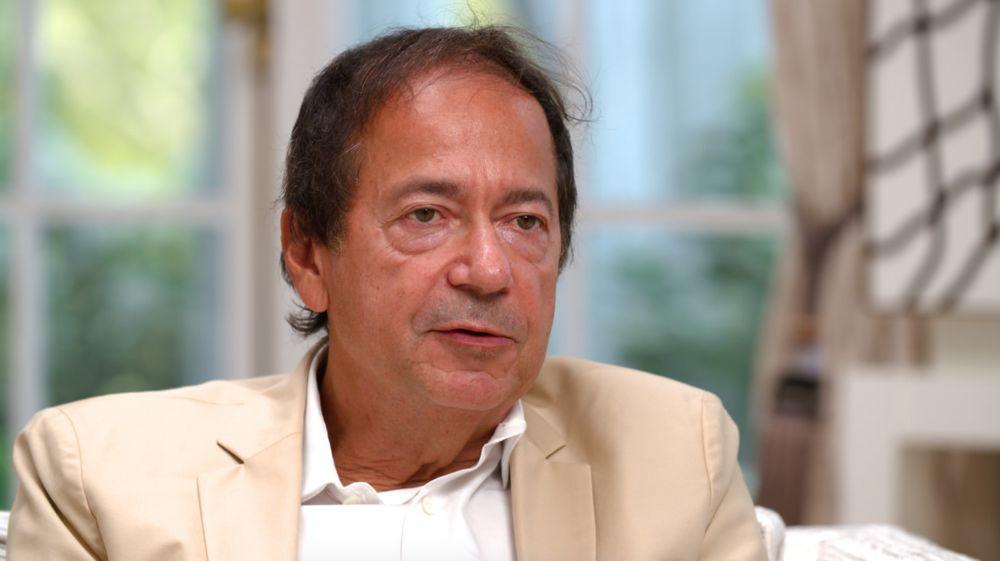
(ZH) 'Parabolic Gold' - John Paulson Warns "Inflation Well Above Expectations Is

'Parabolic Gold' - John Paulson Warns "Inflation Well Above Expectations Is On Its Way"

John Paulson infamously made his bones betting again the US housing market over a decade ago, when everyone else was waving it in with both hands and feet.
Since then, according to his recent interview with Bloomberg's David Rubinstein, the billionaire has returned all outside capital:
"...now I don’t have to write investor reports or travel to meet with investors or worry about balancing funds or other people’s tax issues and things like that. So that’s allowed me just to concentrate on investing, which I like doing."
But although his track record has been mixed since the 'big short', and he has not found the next "big trade", Paulson is again seeing the warning signs of excess speculation, warning about SPACs and seeing the most mispriced assets in credit once again.
They look for get-rich-quick schemes and they buy based on stories. And then they chase investments that are going up, and ultimately those investments deflate. And then they lose money.
During the early 2010s, Paulson became better known as a gold bug, and remains convinced of its potential:
Yeah, we do. We believe that gold does very well in times of inflation. The last time gold went parabolic was in the 1970s, when we had two years of double-digit inflation.
The reason why gold goes parabolic is that basically there’s a very limited amount of investable gold. It’s on the order of several trillion dollars, while the total amount of financial assets is closer to $200 trillion. So as inflation picks up, people try and get out of fixed income. They try and get out of cash. And the logical place to go is gold. But because the amount of money trying to move out of cash and fixed income dwarfs the amount of investable gold, the supply and demand imbalance causes gold to rise.
So you’re a big believer in gold as a good investment now?
Yes. We thought in 2009 with the Fed doing quantitative easing, which is essentially printing money, it would lead to inflation. But what happened was while the Fed printed money, at the same time they raised the capital and reserve requirements in banks.
So the money sort of recycled. The Fed bought Treasuries, created money, which wound up in the banks and then was redeposited at the Fed. And the money never really entered the money supply. So it wasn’t inflationary. However, this time it has entered the money supply. The money supply was up about 25% last year and the best indicator of inflation is money supply. So I think we have inflation coming well in excess of what the current expectations are.


But, Paulson is not a fan of cryptos...
No, I’m not. And I would say that cryptocurrencies are a bubble. I would describe them as a limited supply of nothing. So to the extent there’s more demand than the limited supply, the price would go up. But to the extent the demand falls, then the price would go down. There’s no intrinsic value to any of the cryptocurrencies except that there’s a limited amount.
Cryptocurrencies, regardless of where they’re trading today, will eventually prove to be worthless. Once the exuberance wears off, or liquidity dries up, they will go to zero. I wouldn’t recommend anyone invest in cryptocurrencies.
But won't short it...
The reason we shorted subprime in size was because it was asymmetrical — shorting a bond at par that has a limited duration that trades at a 1% spread of Treasuries. So you can’t lose more than the spread in the duration. In crypto, there’s unlimited downside. So even though I could be right over the long term, in the short term, I’d be wiped out. In the case of Bitcoin, it went from $5,000 to $45,000. It’s just too volatile to short.


Paulson's best advice right now, simple, and too boring for many... pay your house off! "So I think the single best investment for anyone with that type of money would be to buy their own house or apartment."