After Hours Summary: AFRM +27.9% jumps on earnings and AMZN expansion; OPEN +18.4%, ROOT +13.7%, ZIP +12.7%, SOFI +11.7% higher on earnings; BYND -18.9%, SDGR -14%, BMBL -8.6%, BRKS -4.4%, DIS -4.2% lower on earningsAfter Hours Gainers:
Companies trading higher in after hours in reaction to earnings/guidance: FOSL +38.3%, AFRM +27.9% (also expands relationship with AMZN to all eligible US purchases; also AFRM to be embedded as payment option in Amazon Pay's digital wallet), OPEN +18.4%, MQ +14.3%, ROOT +13.7%, ZIP +12.7%, SOFI +11.7%, BZH +8.1%, DUOL +8.1%, PAYO +7.9%, BROS +6.4%, INDI +6.4%, HIMS +5.6% (also unveils mobile platform for subscription members), HNST +5.6%, RSI +5.6%, APP +5%, TASK +4.8%, DOMA +4.1%, ULCC +2.8%, WKME +2.2% (also expands partnership with SAP and announces strategic alliance with Deloitte), RELY +2.1%, ATO +1% (also increases dividend), SPTN +0.8%, MSP +0.3%
Companies trading higher in after hours in reaction to news: RIDE +13.5% (RIDE and Hon Hai Tech sign asset purchase agreement regarding RIDE's facility in Lordstown, OH), KRMD +12.4% (announces 510k clearance for KORU Medical FreedomEdge infusion pump), SGHT +8.7% (FDA grants an Investigational Device Exemption to conduct a clinical study of OMNI device), PTRA +6.4% (to supply battery technology for up to 10,000 Lightning eMotors (ZEV) vehicles), AEVA +4.6% (Plus selects Aeva 4D LiDAR for volume production of autonomous trucks), INSP +3.9% (provides update on 2022 reimbursement levels), HFC +2.7% (names new COO), DASH +0.6% (DoorDash and Payfare launch instant pay access for delivery drivers), MKTW +0.3% (authorizes $35 mln share repurchase program), RLI +0.1% (names new CEO and COO; also declares special dividend of $2.00/sh)
After Hours Losers:
Companies trading lower in after hours in reaction to earnings/guidance: BYND -18.9%, SDGR -14%, CRCT -12.6%, LZ -12.2%, BLND -10.7%, FIGS -10.1%, BMBL -8.6%, OWLT -8.4%, GDRX -8%, MAX -6.1%, HLTH -5.6%, BRKS -4.4%, DIS -4.2%, RRGB -4%, FICO -3%, VLTA -3%, COMP -2.9%, ENS -2.5% (also announces planned CFO retirement; establishes new $100 mln stock repurchase auth), AMWL -1.7%, WISH -1.6% (also CEO to step down), ESMT -1%, ME -0.7%, BLU -0.4%, NUVB -0.2%, SWI -0.1%
Companies trading lower in after hours in reaction to news: DDD -5.5% (convertible notes offering), HAIN -4.3% (stock offering), BIP -3.5% (stock offering), OBSV -2.9% (stock offering), ABUS -2.6% (announces new data on AB-729), AMC -2.3% (CEO discloses sale of 625K shares), WE -1.5% (stock offering), LDOS -1.1% (awarded three-year contract to support UK MOD PICASSO program), U -0.3% (files mixed securities shelf offering), COO -0.2% (to acquire Generate Life Sciences for $1.6 bln), JNJ -0.1% (enters into agreement with US Govt and GAVI to enable humanitarian access to vaccine)
Elon Musk Sells Around $5 Billion in Tesla Stock
Three-days of share disposals come as the billionaire chief executive exercises a large number of stock options
Elon Musk sold about $5 billion in Tesla Inc. shares this week as he exercised stock options that he received as part of his compensation package, according to regulatory filings made public late Wednesday.
The Tesla chief executive first exercised just over 2 million stock options Monday that were valued at roughly $2.5 billion at the day’s close, paying around $13.4 million in exercise costs.
He sold many of those shares the same day to cover tax withholding obligations, according to the filings.
After selling less than 1% of his holdings Monday, he sold about 2% over the subsequent two days, the regulatory notices show. He sold around 4.5 million shares in total over the three days, shrinking the size of his stockholdings in Tesla even after exercising the options.
Mr. Musk, the world’s richest person, over the weekend polled people on Twitter about whether he should sell 10% of his stockholdings in Tesla and said he would abide by their vote. Around 58% of respondents supported a sale.
Monday’s option exercise and sales were made under a preset trading plan Mr. Musk established on Sept. 14, according to regulatory filings, almost two months before he raised the idea of a sale on Twitter. Such trading arrangements, dubbed 10b5-1 plans, are designed to enable company insiders to sell based on a set schedule, price triggers or other factors without running afoul of insider trading rules.
The filings that disclosed the subsequent sales on Tuesday and Wednesday don’t include the same footnotes about preset trading plans and tax withholding obligations.
Mr. Musk signaled at a September conference that he expected to exercise options in the fourth quarter, a move that would trigger what he called a huge tax liability.
He reported selling more than 900,000 shares at prices ranging from $1,135 to about $1,196 on Monday, near record highs for Tesla’s stock, whose value had increased by more than 70% this year through Friday. The difference between the value when he exercised the options and the exercise price of $6.24 will be taxable income to Mr. Musk and likely a tax deduction for the company. The lower the share price goes, if he continues to exercise options, the smaller his tax bill will be.
He would also owe taxes after selling any shares that he obtains through exercising options, based on any gain realized after exercising them. Those gains are taxed as capital gains, though any quick sales would be taxed at ordinary income-tax rates because they were held for one year or less.
He also may owe significant capital-gains taxes on the shares he sold Tuesday and Wednesday at prices between $1,000 and around $1,173. It couldn’t immediately be determined what the cost basis is for those shares.
The top federal tax rate on long-term capital gains is 23.8%, though Congress is considering a surtax that would raise that to 31.8% starting in 2022, giving Mr. Musk and others an incentive to sell before any such change takes effect. That same 8% tax would also apply to his exercise of options, giving him a reason to do that now.
Mr. Musk has long been reluctant to sell Tesla shares, though he has done so to pay taxes.
Tesla shares fell sharply in the wake of Mr. Musk’s Saturday poll, declining about 5% to $1,162.94 at Monday’s close and almost 12% on Tuesday. The stock rallied 4.3% on Wednesday, closing at $1,067.95. Shares were up more than 2% in aftermarket trading following the share-sale disclosure.
Thanks to the decline in Tesla’s share price Monday, the CEO’s tax bill is likely to be lower than it would have been if he had exercised his options before the poll. For example, exercising at Friday’s closing price would have yielded taxable income about 5% higher.
On Saturday, Mr. Musk framed the idea of a share sale in terms of a continuing debate about how some of America’s wealthiest individuals should be taxed. That prompted Senate Finance Committee Chairman Ron Wyden to say, “Whether or not the world’s wealthiest man pays any taxes at all shouldn’t depend on the results of a Twitter poll.” The Democrat from Oregon has voiced support for a tax on billionaires that would apply to their unrealized capital gains.
The Tesla chief executive, who is compensated in stock awards and doesn’t accept a cash salary from the electric-vehicle maker, faces an August deadline to convert tens of millions of stock options into shares or let them expire worthless.
Mr. Musk isn’t alone in realizing some financial gains, as Tesla’s stock is near record highs. Other directors, including Kimbal Musk and board chair Robyn Denholm, have unloaded more than $600 million worth of shares this year through Friday, according to data compiled by research firm Equilar Inc. Those values don’t reflect any possible cost of exercising options. Kimbal Musk sold more than $100 million worth of shares on Friday, at prices above $1,200 a share, the data show.
Closing Stock Market SummaryThe S&P 500 fell 0.8% on Wednesday, as the market cooled off amid hot CPI data for October and a corresponding pop in Treasury yields. The Nasdaq Composite (-1.7%) and Russell 2000 (-1.6%) declined more than 1.5%, while the Dow Jones Industrial Average fell 0.7%.
The information technology (-1.7%), communication services (-1.3%), and energy (-3.0%) sectors were the weakest sectors in the S&P 500 with losses between 1-3%. The defensive-oriented utilities (+0.7%), health care (+0.3%), and consumer staples (+0.3%) sectors were the only sectors that closed higher.
Specifying the data, the Consumer Price Index report showed total CPI was up 0.9% m/m (Briefing.com consensus +0.6%) and up 6.2% yr/yr -- the largest 12-month increase since November 1990. Core CPI, which excludes food and energy, rose 0.6% m/m (Briefing.com consensus +0.4%) and was up 4.6% yr/yr.
The Treasury market, which was already sniffing a hot report in the wake of hot inflation data out of China and Germany, weakened further intraday on the prospect for the Fed to aggressively tighten policy next year. According to the CME Fed Watch Tool, the probability for a rate hike in June 2022 increased to 67.9%, versus 50.9% yesterday.
What's more, the $25 bln 30-yr bond auction saw weak demand in the afternoon, further contributing to the selling in Treasuries. The 2-yr yield settled higher by ten basis points to 0.50%, and the 10-yr yield settled higher by 13 points to 1.56%. WTI crude futures fell 3.5%, or $2.93, to $81.23/bbl amid bearish inventory data.
Note, the 10-yr yield remained below recent highs, so it was the speedy move that curtailed risk appetite, particularly for the growth stocks and other high-beta names. The Vanguard Mega Cap Growth ETF (MGK 254.95, -3.61) fell 1.4%, and the ARK Innovation ETF (ARKK 116.64, -3.93) fell 3.3%.
Elsewhere, the excess speculation emanating from the huge Rivian (RIVN 100.73, +22.73, +29.1%) IPO served as another excuse for investors to take profits, or at the very least step away from the market. RIVN closed below its opening price of $106.75 but still finished 29% above its IPO price.
Coinbase Global (COIN 328.60, -28.79, -8.1%) was a high-profile laggard, additionally pressured by disappointing earnings news and a fade in cryptocurrencies. DoorDash (DASH 214.24, +22.23, +11.6%) bucked the growth-stock trend with a nice gain following its earnings report.
Reviewing Wednesday's economic data:
- Total CPI jumped 0.9% month-over-month in October (consensus +0.6%) and was up 6.2% year-over-year. That was the largest 12-month increase since November 1990. Core CPI, which excludes food and energy, rose 0.6% month-over-month (consensus +0.4%) and was up 4.6% year-over-year, which the BLS said was the largest 12-month increase since August 1991.
- The key takeaway from the report -- aside from the roughly 30-year highs in total CPI and core CPI -- is the acknowledgment that most component indexes increased over the month, which reflects a broadening of the inflation pressures.
- Total jobless claims for the week ending November 6 decreased by 4,000 to 267,000 (consensus 265,000), which is the lowest since March 14, 2020. Continuing claims for the week ending October 30 increased by 59,000 to 2.160 million.
- The key takeaway from this report is the ongoing improvement in initial claims, which matches the corporate narrative that it has been difficult to find workers in a strong demand environment.
- The Treasury Budget saw a $165.1 bln deficit in October, versus a $284.1 bln deficit in the same period a year ago. The budget data is not seasonally adjusted, so the October deficit cannot be compared to the September deficit of $61.6 bln.
- October, which marks the start of the new fiscal year for the government, marked the 25th consecutive month that the Treasury has seen a budget deficit. The budget deficit over the last 12 months is $2.65 trln versus a deficit of $2.77 bln in September.
- Wholesale inventories increased 1.4% m/m in September (consensus 1.1%) following a 1.2% increase in the prior week.
- Weekly crude oil inventories increased by 1.00 mln barrels after increasing by 3.29 mln barrels during the previous week.
- The weekly MBA Mortgage Applications Index rose 5.5% following a 3.3% decline in the prior week.
There is no economic data scheduled for Thursday. As a reminder, the Treasury market will be closed tomorrow for Veterans Day.
- S&P 500 +23.7% YTD
- Nasdaq Composite +21.2% YTD
- Russell 2000 +21.0% YTD
- Dow Jones Industrial Average +17.9% YTD
Vatican Loses $135M In Shady London Property Deal Amid Allegations Of Massive Fraud
Even God's top authority on Earth has trouble with the simplest investing precept: buy low and sell high.
After a scandal that has dragged on for more than a year and led to the firing of one of the Holy See's most senior officials over a handful of shady London property deals that were bleeding millions in losses, the Vatican has finally decided to rip the bandaid off and sell a luxury office building in London's Knightsbridge neighborhood for a loss of £100MM ($135MM).
Per the FT, the Vatican is in the final stages of selling 60 Sloane Ave., a large building in the Knightsbridge district of London, for about £200MM ($271MM) to private equity group Bain Capital. Bain Capital and Savills, which is managing the sale, both declined to comment. Senior Holy See officials - including Cardinal Giovanni Angelo Becciu, the second-in-command of the Vatican's powerful Secretariat of State - invested a total of €350MM ($405MM) of money donated to the Catholic Church for charitable purposes in London properties including the Sloane Ave. building between 2014 and 2018.
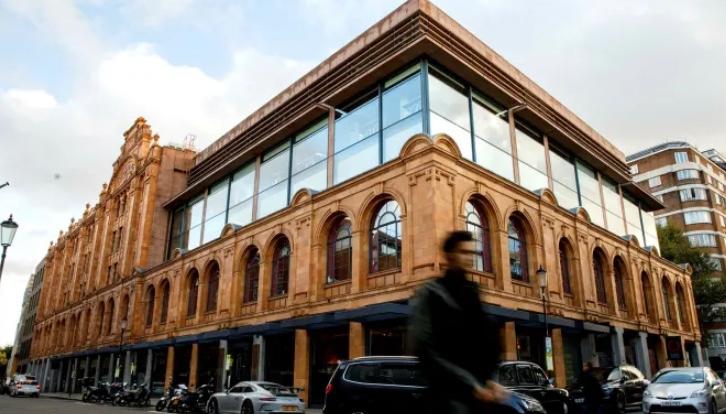
Vatican investigators say the money was taken from Peter’s Pence, an annual donation given by Catholics around the world which, according to the Vatican, is intended "for the many different needs of the universal church and for the relief of those most in need."
At one point, the Vatican had a plan to convert the London building into luxury flats. Instead, the building has ended up at the heart of a scandal that has forced the Vatican to overhaul completely the way it manages its finances.
Late last year, Pope Francis stripped the Vatican's powerful central administration office of an investment portfolio worth hundreds of millions of euros comprising donations from the world's 1.2 billion Catholics.
Several property agents who spoke to the FT expressed surprise at the losses generated by the deal.
"I couldn’t quite understand how they [the Vatican] had lost money on it," said one agent with decades of experience in the London office market.
Whatever transpired during the deal, it appears to have reached "the Godfather III" levels of shadiness as Vatican prosecutors have charged a former Italian banker with crimes including embezzlement and fraud. The Vatican's prosecutors recently paused charges against the banker and a small group of alleged co-conspirators including a cardinal. The prosecution is now in a state of legal limbo.
Vatican prosecutors earlier this year charged Raffaele Mincione, a former Italian banker, with various crimes including fraud and embezzlement.Mincione’s companies acquired the London building in 2012 for £129m. Two years later a unit of the Vatican managing charitable donations bought a stake in the property via an investment fund founded by Mincione at a far higher valuation. The Vatican acquired the rest of the building in 2018.Vatican prosecutors say Mincione’s companies made a large profit from investing in the Knightsbridge building.He has denied any wrongdoing, saying that the increase in the property’s value was justified by audited and independent third-party consultants. He has also said the Vatican was always advised by its own investment banks.Vatican criminal proceedings against Mincione and others, including a cardinal, were paused last month and charges against the accused lifted after the Vatican judge requested that the prosecutors provide additional evidence to the defence lawyers.Lawyers acting for Mincione have said the lifting of the charges means the case against him in the Vatican court is legally and, in effect, "null".
Mincione, the banker, has seen nearly €50MM of his assets frozen in Switzerland at the Vatican's request. Meanwhile, Mincione's lawyers are trying to press a parallel case in the English High Court to try and un-freeze the assets. He claims Vatican officials are responsible for the loss, while prosecutors claim the loss was a result of a complicated fraud.
Whatever actually happened, one thing is clear: More than $100MM intended to go to the Catholic Church's various ministries and missions has instead been siphoned off by greedy bankers and officials.
And it looks like a handful of private equity firms will ultimately benefit. Not exactly a good look for Pope Francis.
Hershey Plans to Spend $1.2 Billion in Deals for Pretzel Producers
Following up on purchases of SkinnyPop and Pirate’s Booty, the company seeks to expand in snack products and manufacturing facilities
Candy maker Hershey Co. HSY 0.82% wants to be a pretzel powerhouse.
Hershey struck deals to buy Dot’s Homestyle Pretzels and Pretzels Inc., which handles some manufacturing for Dot’s, in two acquisitions totaling $1.2 billion, Hershey said.
The pretzel acquisitions, expected to be announced Wednesday, aim to expand Hershey’s growing lineup of salty snacks, which includes SkinnyPop popcorn and Pirate’s Booty cheese puffs. The deals will provide Hershey seven plants for baking or seasoning the products, the company said.
Companies across the U.S. economy are working to exert greater control over their operations as the Covid-19 pandemic and other disruptions snarl supply chains. Food companies have said challenges involving labor, ingredients and transportation are limiting their abilities to meet consumer demand for such products as kids’ meals.
“Working in the global supply chain right now is incredibly difficult,” said Hershey Chief Executive Michele Buck. “The ability to have a facility in house just reduces one level of that complexity.”
North Dakota-based Dot’s Pretzels, which is privately owned, is the fastest-growing U.S. pretzel brand among brands with more than $10 million in annual U.S. retail sales, according to Hershey. The company said Dot’s represented 55% of growth in the pretzel category over the past year.
Acquiring Pretzels Inc., which is owned by an affiliate of the private-investment firm Peak Rock Capital, will give Hershey pretzel expertise and manufacturing operations to support growth in the $2 billion category, Hershey said. The facilities could also help Hershey expand production of some of its existing pretzel-related products, such as chocolate-covered pretzels, the company said.
Ms. Buck said the pretzel deals are the next step in Hershey’s vision to become a snacking behemoth. The Hershey, Pa.-based company has been working in recent years to diversify its business beyond candy and chocolate as consumers lean toward healthier snacks. Ms. Buck said consumers view pretzels as a “highly permissible” snack like popcorn, one that they feel better about eating.
The maker of Hershey’s Kisses and Reese’s Peanut Butter Cups bought the SkinnyPop popcorn owner, Amplify Snack Brands Inc., in 2018 in a $1.6 billion deal. Hershey also acquired Pirate’s Booty cheese puffs that year.
Previously Hershey bought Krave jerky and expanded its reach in the snack aisle with new products such as Reese’s pretzel-nut-and-chocolate snack mixes.
Through the pretzel deals, Hershey plans to acquire Pretzels Inc.’s three manufacturing locations in Indiana and Kansas as well as four pretzel-seasoning facilities from Dot’s. Pretzels Inc. is a co-manufacturer for Dot’s and other customers, Hershey said.
The deals will be financed with cash on hand and short-term borrowings, Hershey said. They are subject to regulatory approval and are expected to close by the end of this year.
Growth in Hershey’s snacks business helped boost Hershey’s sales in the latest quarter, though capacity constraints and supply-chain disruptions reduced inventory levels for grocers and distributors, the company said.
Even as the pandemic wanes, Ms. Buck said demand for Hershey’s products remains elevated as consumers hold on to at-home eating traditions such as cookouts or movies.
In the U.S., however, capacity constraints, labor shortages and supply-chain disruptions hampered Hershey’s ability to step up production in response to increasing demand for its products, Hershey said in October.
In response, the company said it has accelerated hiring and increased its workforce, in addition to cutting back on marketing spending to reduce pressure on constrained brands. Hershey said it is also boosting production capacity, particularly for Reese’s.