After Hours Summary: PUBM +22.8%, RNG +22.4%, DASH +18.9%, SAIL +10.8%, DNUT +6.7% higher on earnings; POSH -26.1%, PRPL -25.3%, UPST -18.5%, COIN -12.8% lower on earnings; DASH also to acquire WoltAfter Hours Gainers:
Companies trading higher in after hours in reaction to earnings/guidance: PUBM +22.8%, RNG +22.4% (also strategic partnership with Mitel; also CFO stepping down), PAR +22.2%, DASH +18.9% (also to acquire Wolt in an all-stock deal valued at € 7.0 bln), AVID +17.4%, FLYW +12.7%, NARI +11.8%, SGFY +11.4%, STEM +11%, SAIL +10.8%, SEMR +8%, NVEE +7.5%, VCYT +7%, DNUT +6.7%, JXN +6.2% (also commences dividend; authorizes $300 mln share repurchase program), ZETA +6.2%, AKA +5.7%, VZIO +5.6%, G +5.4%, GOCO +5.1%, TWOU +4.7%, FGEN +4.3%, RPAY +3.9%, MNKD +3.8%, WES +3.7%, CNR +3.1% (also to acquire Union Corrugating Co), FLGT +2.8%, TBLA +2.7%, SCSC +2.5%, JAZZ +2.3%, CCXI +2.1%, ARLO +2%, ELY +2%, LU +1.4%, INO +1.3%, VET +1.3%, PAAS +0.7%, PAY +0.6%, LAW +0.3%, OLO +0.2%, WYNN +0.2% (also CEO to step down)
Companies trading higher in after hours in reaction to news: DNAY +7.2% (to acquire Eton Bioscience for $13 mln in cash), PRU +0.9% (announces $1.5 bln share repurchase plan), KVSA +0.1% (private placement related to business combination with Valo Health expands), ZYME +0.1% (interim CMO to become permanent CMO)
After Hours Losers:
Companies trading lower in after hours in reaction to earnings/guidance: POSH -26.1%, PRPL -25.3%, ASLE -20.1%, UPST -18.5%, DOCS -15.7%, DMTK -13.8%, COIN -12.8%, SHLS -12.4%, SKIN -9.3% (also CEO to step down), LPRO -8.6%, FUBO -8.5% (also to acquire Molotov SAS for $190 mln in cash and equity), DV -8.1% (also to acquire OpenSlate), U -7.9% (also to acquire Weta Digital's tools, pipeline, technology, and engineering talent), NUVA -7.5% (also increases share repurchase program), GLBE -6.3%, TOST -6.2%, PYCR -6.1%, AMPL -5.7% (also announces new product integration and partnership with SNOW), ABCL -5.7%, TMDX -5.1%, ONTF -4.6%, EPAY -2.8%, PLUG -2.8% (also to acquire Frames Group), TWNK -2.7%, ACB -2.7%, ASH -1.6%, AGTI -1.4%, NIO -1.2%, SGMS -1%, VRM -1%, ALC -1%, MSGS -0.9%, AMK -0.1%, CTOS -0.1%
Companies trading lower in after hours in reaction to news: DAKT -9.3% (to be removed from S&P SmallCap 600), KRP -4.8% (stock offering; also to acquire mineral and royal interests from undisclosed seller for $57 mln), ADV -3.2% (announces $100 mln share repurchase plan), MRTX -2.9% (announces $500 mln stock offering), FHN -2.1% (names new CFO), BBLN -1.1% (stock offering), UGRO -0.8% (selected by Urban Health Farms as partner to construct indoor vertical farms throughout Europe), ZNGA -0.8% (stock offering), HOOK -0.4% (announces it is advancing HB-201 to Phase 2), IVZ -0.3% (reports Oct AUM), AB -0.3% (reports Oct AUM), SWX -0.1% (Carl Icahn writes letter to SWX shareholders)
Fashion School IMM, Zepeto Create $50K Metaverse Fashion Scholarship
The bid to cultivate fashion talent for the metaverse is on.

Istituto Marangoni Miami and Zepeto partner on a new fashion scholarship for the metaverse.
It’s only been a couple of weeks since tech mogul Mark Zuckerberg took the wraps off of Meta, née Facebook, and there’s already a fashion scholarship geared for the metaverse: on Tuesday, fashion school Istituto Marangoni Miami, or IMM, announced a partnership with 3D social media company Zepeto to propel students into the virtual fashion terrain with a $50,000 scholarship program.
Predictably, the project won’t funnel fashion into Zuckerberg’s platform, but rather Zepeto’s own.
The South Korea-based app is no Meta, but with serious chops as a developer of 3D avatars and the growing popularity of its virtual world — which bustles with 200 million global users — it aims to be a metaverse contender. The company’s tech offers a lightweight way to transform users into the 3D avatars that people use to interact in its virtualized environment. Zepeto’s metaverse has already attracted the likes of high-profile fashion brands, including Ralph Lauren, Gucci and Dior.
Likewise, fashion students at IMM and others selected by the scholarship program will be able to promote their own metaverse collection in Zepeto, with training and mentorship provided to help them prepare.
“Through this partnership with Zepeto, we are teaching our students the importance of engaging with the next generation of consumers through the virtual world,” said Hakan Baykam, Istituto Marangoni Miami’s president and chief executive officer.
But the CEO suggested that the benefit goes beyond just getting acquainted with buzzworthy new platforms. There’s also a practical aspect to the collaboration and program: “While Zepeto offers a new design platform for our students to unlock their creativity and imagination, it’s also an incredibly powerful tool to measure the success of a collection before sourcing, manufacturing and beyond,” Baykam added.
Ten recipients will receive scholarships, which will amount to $50,000. Five will come from IMM’s existing student body, while the rest will be selected from the public.
“Our partnership with Istituto Marangoni Miami will be one of our first collaborations with the academic world,” said Rudy Lee, Zepeto’s chief strategy officer, “and we’re very excited to invite future fashion designers into the metaverse.”
Major Parts of Digital Studio Behind ‘Lord of the Rings’ Films to Be Bought by Unity Software for Over $1.6 Billion
Videogame company discloses Weta Digital deal, lifts its full-year sales outlook after quarterly results
Videogame company Unity Software Inc. U 5.23% agreed to pay $1.63 billion for major parts of the visual-effects studio co-founded by director Peter Jackson that helped create such blockbusters as the “Lord of the Rings” movie trilogy and “Game of Thrones” television series.
The award-winning studio, Weta Digital, developed and owns visual-effects tools that can create high-quality realistic-looking characters and objects. In addition to “Lord of the Rings” and “Game of Thrones,” it also helped make effects for movies such as “Avatar” and “Avengers: Endgame.”
Unity said the acquisition will add several tools to its collection and help the company create new ones aimed at building out the metaverse, a loosely defined term that describes online worlds where users can hang out and interact with others as digital avatars.
The deal is Unity’s largest acquisition and comes after a string of deals to expand its digital tools.
When the opportunity to buy parts of Weta arose, it was too tantalizing to pass up, Unity Chief Executive John Riccitiello said.
“When I was a kid, I wanted to be able to do what Peter Jackson does,” he said in an interview.
Unity is acquiring the Weta Digital brand, some tools, and taking on some of its engineers. The team that creates visual effects for movies and TV shows is being broken off into a stand alone company called Weta FX.
Unity offers software tools that game makers use to make their games more lifelike. Quarterly sales for the company have been growing strongly as demand for mobile gaming and virtual-reality content increases and the company expands into nongaming industries.
The company announced the acquisition in conjunction with third-quarter results. The company posted $286.3 million in revenue, its 12th consecutive quarter of 30% or greater growth. It also lifted full-year sales guidance to almost $1.1 billion.
Weta Digital brings new tools that Unity can offer its customers, including Lumberjack, which allows users to digitally grow realistic looking trees and other plants and Barbershop, which can be used to draft real-looking mustaches on characters.
Mr. Jackson said selling to Unity would make the tools to create digital characters accessible to a wider group of originators. Interest in such tools is on the rise as tech giants target business in the metaverse.
Graphics-chip company Nvidia Corp. NVDA -0.48% on Tuesday introduced new tools, including one to help create interactive avatars. There are potentially billions of dollars to be made from the metaverse.
Industry analysts say videogames will be the path to the virtual world, and several big tech companies have recently acquired videogame studios.
Mr. Riccitiello said many of the early designs going into the metaverse now were built using the company’s tools. Buying parts of Weta should add to that, he said.
“What we want to try to do is have your average 14-year-old to be able to do what Peter did in creating Gollum and putting that character in the metaverse,” he said in reference to one of the main characters in the “Lord of the Rings” series.
Elon Musk’s Possible Tesla Share Sale Comes as Tax Bill Looms
Expiring stock options mean the car maker’s chief executive likely faces a large IRS bill regardless of a proposed billionaires tax
Elon Musk’s pledge to sell 10% of his Tesla Inc. TSLA -11.99% stock highlights the complex financial web the world’s richest man has spun around his personal fortune.
Selling a stake valued at roughly $17 billion could provide Mr. Musk, who has at times said he was cash-poor, with a sizable liquidity infusion. It could also go a long way toward helping the billionaire pay a bill likely coming due from the Internal Revenue Service. Completing these moves before year-end would come with the benefit of helping Mr. Musk avoid a possible tax increase next year.
Mr. Musk is worth roughly $300 billion on paper, according to the Bloomberg Billionaires Index, with the majority of that wealth tied up in Tesla and his rocket company, Space Exploration Technologies Corp. The Tesla chief executive, who is compensated in stock awards and doesn’t accept a cash salary from the electric-vehicle maker, faces an August deadline to convert roughly 22.9 million vested stock options into shares or let them expire worthless, according to a regulatory filing.
He would need about $143 million to exercise those options, and could owe more than $9 billion in federal income and Medicare taxes upon exercising them. Under California law, Mr. Musk also likely would face a sizable state tax burden because exercised options are treated as compensation partly earned in the state while he lived there.
That California tax likely would be due even though Mr. Musk said in late 2020 that he had moved to Texas, which doesn’t impose individual income or capital-gains taxes. He subsequently said Tesla was moving its headquarters to Austin, Texas, from Silicon Valley.
Mr. Musk didn’t respond to requests for comment about the details of his tax planning or when he plans to make good on his pledge to sell. Tesla didn’t respond to requests for comment.
The CEO, who travels frequently between California, Texas and elsewhere on a private jet, has at times made a show of some of his financial choices. Last year, he put several mansions he owned up for sale. “I am selling almost all physical possessions,” he tweeted at the time. “Will own no house.”
He has long borrowed to support his lifestyle, like many other wealthy individuals. More than half of Mr. Musk’s Tesla stock—or roughly 88 million shares, valued at more than $90 billion at recent prices—is pledged as collateral to secure personal debt, an August regulatory filing shows.
Several years ago, Mr. Musk’s younger brother, Kimbal Musk, leaned on him for a loan.
“You do know that I don’t actually have cash, right?” Mr. Musk told his brother, court records show. “I have to borrow.”
Over the weekend, Mr. Musk took to Twitter to ask users there whether he should sell 10% of his Tesla stock. He framed the question in terms of a continuing debate about how some of America’s wealthiest individuals should be taxed.
“Much is made lately of unrealized gains being a means of tax avoidance, so I propose selling 10% of my Tesla stock,” he said as he launched the poll Saturday. Roughly 58% of respondents supported a sale, and Mr. Musk has said he would abide by the result.
Tesla shares are down roughly 16% this week after retreating 12% to $1,023.50 on Tuesday. Through Friday, the stock had risen more than 70% in 2021, thanks in large part to a sharp increase in recent weeks that has cemented Mr. Musk’s place ahead of Amazon.com Inc. AMZN 2.50% founder Jeff Bezos at the top of the wealth rankings.
The tax hit that Mr. Musk faces likely would have come regardless of the political debate unfolding in Washington. Mr. Musk himself signaled at a September conference that he expected to exercise options in the fourth quarter, triggering what he called a huge tax liability.
He could seek to satisfy at least part of his commitment to sell Tesla stock—and pay any tax bills associated with exercising his options—by selling some of the roughly 170 million shares he already owns, which are valued around $174 billion.
But selling those older shares could come with a second significant tax cost, because he would owe tax on the difference between his relatively low purchase price and the current value.
He could, instead, pay the taxes by selling some of the shares he would obtain by exercising already vested options. His cost would be the value when he obtains them. The potential capital gains are likely to be much smaller if he sells them quickly before the price changes much.
No matter which route he takes, he might want to move quickly. The current top tax rate on long-term capital gains is 23.8%, but Congress is poised to vote in the next few weeks on adding an 8% surtax on income above $25 million, starting in January. The potential for a surtax gives Mr. Musk and others who are considering whether to exercise options or sell appreciated assets an incentive to do so now. The tax difference between triggering roughly $23 billion of compensation this year as opposed to next year could be nearly $2 billion.
“There’s certainly good reason…to accelerate income,” said New York-based tax consultant Robert Willens. “Someone of that wealth is going to face higher tax rates almost certainly next year.”
Mr. Musk has long been reluctant to sell Tesla shares, though he has done so to pay taxes.
Selling stock could weaken Mr. Musk’s control over Tesla. Companies such as Facebook parent Meta Platforms Inc. and Google parent Alphabet Inc. GOOG -0.07% have multiple classes of shares, giving founders supervoting power over common shareholders. Tesla lacks such a structure.
A 10% stake sale would still leave Mr. Musk as Tesla’s largest shareholder. He currently holds roughly 17% of Tesla stock, according to FactSet. U.S. financial company Vanguard Group, the No. 2 investor, holds less than 6% of Tesla’s stock, according to FactSet.
Billionaires have come under fire recently for paying relatively little tax, in part by relying on debt, rather than income, to cover living expenses.
Under current law, people who hold appreciated assets until death don’t have to pay capital-gains taxes on that increase in value. They might owe estate taxes, but their heirs have to pay capital-gains taxes only when they sell and only on gains since the prior owner’s death.
Mr. Musk previously criticized a proposed tax on billionaires that would have effectively prevented some wealthy Americans from being able to defer capital-gains taxes indefinitely.
The plan, which has since been dropped, would have applied to about 700 Americans and would have annually taxed unrealized gains on publicly traded assets.
Mr. Musk isn’t alone in looking to realize some financial gains as Tesla’s stock is near record highs. Other directors including Kimbal Musk and board chair Robyn Denholm have unloaded more than $600 million worth of shares year-to-date, according to data compiled by research firm Equilar Inc. Those values don’t reflect any possible cost of exercising options. Kimbal Musk sold more than $100 million worth of shares on Friday, at prices above $1,200 a share, the data show. He didn’t respond to a request for comment about the trades.
Gett Nears $1.1 Billion SPAC Merger to Go Public
Company joins with ride-hailing operators to organize transportation options into one platform for corporate customers
Gett is nearing a merger with a special-purpose acquisition company that would take the corporate-transportation platform public with a roughly $1.1 billion valuation, according to people familiar with the matter.
Started more than a decade ago as a ride-hailing competitor to Uber Technologies Inc. and Lyft Inc., Gett now focuses on streamlining a company’s ride-hailing, taxi and limousine booking options around the world into one platform. It says doing so saves customers time and money. Gett now joins with companies such as Lyft and Indian ride-hailing operator Ola to offer many different services.
London-based Gett is close to a deal with Rosecliff Acquisition Corp. I, RCLF 0.10% a SPAC backed by the investment firm Rosecliff Venture Management LLC, the people said.
Gett is marketing itself as a practical solution for global companies to transport workers rapidly, particularly with many still working from home at least part-time during the coronavirus pandemic, the people said. The company now works with roughly a quarter of Fortune 500 companies, including Apple Inc. and Coca-Cola Co. , they said.
The merger would mark a new step in Gett’s attempt to refocus its operations after closing its New York ride-sharing business Juno in 2019. Several years earlier, Gett Chief Executive Dave Waiser said it would eventually offer services such as on-demand manicures, housecleaning and pizza delivery.
At one point in 2019, the company was valued at about $1.5 billion and had raised several hundred million dollars in funding, including a roughly $300 million investment from auto maker Volkswagen AG .
Gett still operates ride-hailing services in markets such as Israel and London, but roughly 40% of its trips for corporate clients now come from third parties, the people said.
The SPAC deal would add to a string of blank-check mergers tied to the future of transportation. Southeast Asian ride-hailing and app operator Grab Holdings Inc. announced a roughly $40 billion megadeal in March, while Dubai-based Swvl Inc. said this summer it was valued at about $1.5 billion in its SPAC combination. Many other startups tied to electric vehicles, batteries, self-driving cars and flying taxis have also undertaken SPAC mergers in recent years.
Such deals are popular alternatives to traditional initial public offerings, in part because they allow early-stage companies to make business projections that aren’t allowed in IPOs. Startups can often also raise large sums of cash in SPAC deals.
As part of the combination with the Rosecliff SPAC, Gett is expected to raise a roughly $30 million private investment in public equity, or PIPE, the people said. PIPE investors are expected to include the SPAC creators and existing Gett investors, they said. The Rosecliff SPAC has about $250 million on hand, though that total could shrink if investors withdraw money before the deal closes.
A SPAC is a shell company that raises money and lists on a stock exchange with the intent of merging with a private company such as Gett to take it public. After it announces a deal, the startup releases detailed financial information and regulators then review the merger. Once it closes, the private company replaces the SPAC in the stock market.
Rosecliff Venture Management has invested in several other startups through its various funds, including sneaker company Allbirds Inc., mattress seller Casper Sleep Inc. and private-jet charter firm Wheels Up Experience Inc., which went public through a SPAC deal.
GE to end run as best-known US conglomerate
General Electric to break up into three companies, Global holdings of Chinese stocks and bonds soar, Facebook whistleblower stresses need to control online harm
General Electric plans to break into three separate companies, effectively ending its status as America’s best-known industrial conglomerate after years of trying to respond to flaws in its model exposed by the financial crisis.
The split into three public companies focused on healthcare, energy and aviation marks the final step in the undoing of the sprawling group created by Jack Welch at the end of the last century.
It is also the boldest move yet by chief executive Larry Culp in his years-long effort to streamline the diversified company, which has faced growing investor pressure over its underperformance.
Shares in GE jumped more than 10 per cent in pre-market trading as investors welcomed the move, which will make it easier for them to decide which of the businesses they want to back.
GE Healthcare will be spun off in 2023, with GE retaining a 19.9 per cent stake in the unit. GE Renewable Energy, GE Power and GE Digital will be combined into one energy-focused company that will be spun off in 2024. Once these transactions are completed, the original GE will focus on aviation.
Michael Burry Claims Musk Selling Tesla Shares To Cover Personal Debts

Famous short seller Michael Burry of The Big Short game briefly emerged from a his latest self-imposed twitter exile to offer his thoughts on why Elon Musk might now all of a sudden be in the mood to start selling stock. Shortly thereafter, on Tuesday, Tesla shares plunged 10% in just minutes, leading many to speculate as to whether or not Elon Musk had started selling his personal stock.
Burry jabbed at Musk this week, suggesting that the Tesla CEO may need to sell his shares because he had 88 million of them pledged as loan collateral.
"Regarding what @elonmusk NEEDS to sell because of the proposed unrealized gains tax, or to #solveworldhunger, or ... well, there is the matter of the tax-free cash he took out in the form of personal loans backed by 88.3 million of his shares at June 30th," Burry wrote in a now deleted Tweet that was captured by the Business Insider tabloid.
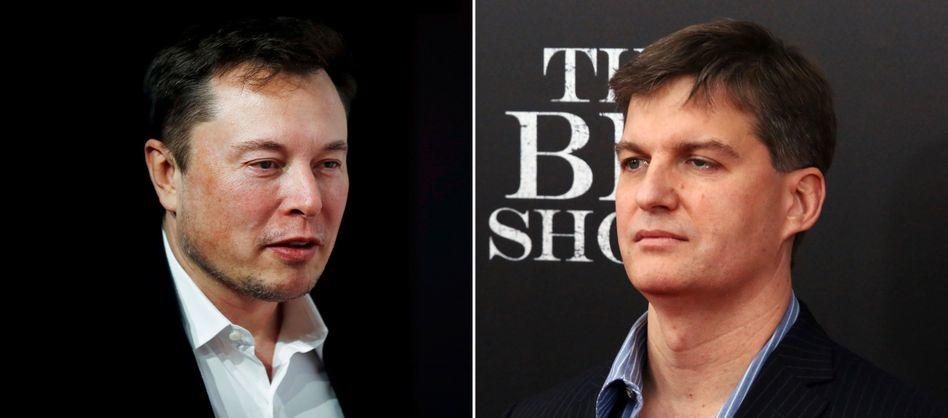
Burry also suggested that Musk's narratives about "solving world hunger" or "unrealized tax gains" are diversions from the real reason the Tesla CEO is selling stock. Instead, the iconic investor insinuated that Musk needs to service the loans he took out against his shares.
Musk had 41% of his shares pledged as collateral as of December 2020 and 48% as of June 2020, Insider reported.
As he usually does, Burry also drew comparisons between today's market and the Dutch Tulip bubble. He has made his Twitter header a Brueghel painting called "Satire of the Tulip Mania," which shows tulip "investors" as monkeys, speculating, taking on debt, and fighting - all over the "mania" in tulips that took place.
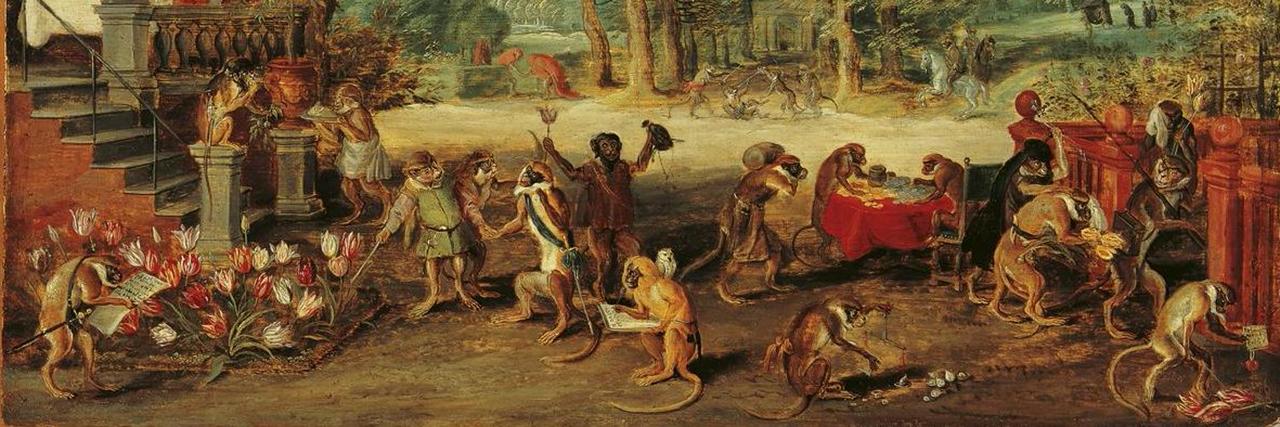
Burry has been vocal about warning about our current stock market bubble.
"People say I didn't warn last time. I did, but no one listened. So I warn this time. And still, no one listens. But I will have proof I warned," he Tweeted about markets about a year ago.
He also commented on Tesla golden child Cathie Wood, earlier in the year, Tweeting: "It is too early, she is too hot, and, today, short sellers are timid, but Wall Street will be ruthless in the end."
Burry, recall, revealed a huge Tesla short earlier in 2021 but as of one month ago he was no longer betting against Tesla and said that his position was just a trade.
Burry has also been vocal warning against a bitcoin bubble. Of course, if he was also short the crypto space in addition to TSLA, his losses in 2021 could be Jess Livermore-sized....
Hedge fund Millennium returns billions to clients in shift to long-term assets
One of the industry’s best-performing firms is seeking to lock in investors’ money for longer
Millennium Management, one of the world’s biggest hedge funds, is returning about $15bn to investors while also raising billions of dollars in a private equity-style format as it tries to build a longer-term, more stable asset base.
The New York-based firm, which manages more than $57bn in assets and is headed by billionaire Israel Englander, has been looking to shift the balance of where investors’ money is held in moves that could give it roughly $40bn of longer-term assets.
As part of the plan, the firm is returning money from a shorter-term share class that lets clients exit in full in a year, said a person familiar with its plans. However, it will give them the option of investing instead in a longer-term share class that would take them five years to exit in full.
In addition, Millennium is also raising money that will be pledged to the firm and which it can call up within three years, in a structure similar to that used by the private equity industry. Once called up, that money, which is expected to be roughly $10bn, will move into the firm’s long-term share class.
The plans were confirmed by people familiar with the matter. Millennium declined to comment.
A constant danger for hedge funds is the ability of investors to redeem their money. While often requiring notice periods, with windows sometimes opening only monthly or quarterly, this can nevertheless mean that a fund with poor short-term performance can quickly lose assets.
Such an asset base can also make it difficult for funds to take longer-term positions or bets on less-liquid assets. A longer-term asset base is also seen as an important selling point when trying to attract the most talented traders.
During the global financial crisis investors pulled about half of Millennium’s assets, even though the firm suffered only a small loss in 2008.
However, investor demand to get into Millennium, which has one of the industry’s top track records, has allowed it to rejig its capital base in a way that few other firms are able. Other than 2008, the fund has not suffered a negative year since 1990 and last year it made 25.6 per cent, according to investor documentation seen by the Financial Times.
Along with previous money raised in a longer-term format, and roughly $8bn that Englander and other Millennium partners and employees have invested, about three-quarters of its assets would be longer-term capital once investors’ pledged capital is called up. The move was first reported by Bloomberg.
So-called multi-strategy funds, which employs tens or even hundreds of small teams of traders in a range of assets, have been among the big winners during the coronavirus pandemic. This year Millennium is up about 10.9 per cent, said a person familiar with the matter.
VW plans new plant to rival Tesla’s German gigafactory
Carmaker aims to produce futuristic model at new site to catch Musk in electric vehicle race
Volkswagen plans to build a new factory near its German headquarters, the company revealed on Tuesday, in order to produce a futuristic electric model designed to catch-up with Tesla.
The second Wolfsburg plant would be devoted to manufacturing VW’s Trinity, a concept car the group hopes to bring to market from 2026.
It would aim to match the efficiency of Tesla’s factory near Berlin in being able to produce a vehicle in 10 hours, VW said.
The announcement comes as the company’s leadership is locked in a bitter dispute with its powerful works council, which represents the vast majority of the carmaker’s 290,000 employees in the country and in effect holds the majority vote on its supervisory board.
Two weeks ago, the council accused chief executive Herbert Diess of “behaviour that is unprecedented in the history of the group” after he privately suggested that VW had 30,000 excess staff in Germany in the run-up to the group’s annual investment strategy announcement.
Daniela Cavallo, the chief of the works council, also attacked Diess’ constant comparisons of VW to Tesla, and pledged to protect every single job at Wolfsburg — Europe’s largest car factory, which employs 60,000.
Diess had pointed out that it takes three times as long for VW to produce its flagship ID.3 and ID.4 electric models in Germany as it takes Elon Musk’s company to produce its Model Y midsize sport utility vehicle.
VW indicated that it would be cheaper to construct a new factory than retrofit the existing site to produce electric vehicles economically. It did not provide details of how much the plant would cost to build or run.
The new factory, which was endorsed by the works council, would produce 250,000 cars a year, in addition to about 500,000 already manufactured at the existing site in Wolfsburg. Musk expects Tesla’s German factory to produce 500,000 vehicles a year, once it is running at full capacity.
VW’s Trinity model will be fully autonomous, so-called Level 4 self-driving capability, although a human would have to remain up to taking control of the vehicle if required.
Workers’ representatives are still hoping that one of VW’s current electric line-up will also be built at the existing Wolfsburg facility.
“We are in talks with the works council on this,” said Ralf Brandstätter, chief executive of the VW brand, “but the economic conditions have to be created.”
VW’s supervisory board still has to approve the plan. An announcement is expected in December.
DoorDash buys Finnish delivery app Wolt in €7bn all-stock deal
US delivery company has been eager to expand into highly competitive European market
Please use the sharing tools found via the share button at the top or side of articles. Copying articles to share with others is a breach of FT.com T&Cs and Copyright Policy. Email licensing@ft.com to buy additional rights. Subscribers may share up to 10 or 20 articles per month using the gift article service. More information can be found at https://www.ft.com/tour.
Delivery app DoorDash has reached a deal to acquire Finnish delivery operator Wolt in an all-stock deal worth €7bn.
Helsinki-based Wolt, which has more than 4,000 employees, operates in 23 European markets, including Germany, where DoorDash has been eager to gain a foothold in the highly competitive market for food and grocery delivery.
The app has more than 2.5m active users, according to an investor presentation published on Tuesday. It said Wolt’s gross order volume — the total value of all transactions — was more than $2.5bn, on an annualised basis.
Miki Kuusi, Wolt’s founder and chief executive, will run DoorDash International, a new division for its operations outside the US. He will report to Tony Xu, DoorDash chief executive, according to a release announcing the deal.
Other “key executives” would also be joining DoorDash, the company said. The deal is expected to close in the first half of 2022, subject to regulatory approval.
Wolt, founded in 2014, had raised more than $800m as a private company, including a $530m round of financing in January led by Iconiq Capital.
The company’s revenues tripled to $345m last year and it recorded a net loss of $45m, it said at the time of the financing.
Last year Wolt was second among the fastest growing companies in Europe in a tally published by the Financial Times.
Xu said in a statement: “By joining forces, we believe we will accelerate our product development, bring greater focus to each of our markets, and improve the value we provide to consumers, merchants, as well as Dashers and couriers around the world.”
News of the acquisition came as DoorDash reported third-quarter earnings.
It beat analysts' expectations on revenue, gross order volume and adjusted earnings before interest, taxes, depreciation and amortisation, but slumped to a $101m net loss — more than double its loss compared with the same period last year. The company said it was down to costs of last year’s initial public offering, and stock-based remuneration.
It forecast order volumes to remain constant for the remainder of the year, and said adjusted ebitda could fall anywhere between $0 and $100m. Like other gig economy companies, DoorDash faces challenges in attracting workers.
The company said it had 3m “dashers”, or couriers, on its platform in this year’s second quarter, but did not give a number for the third quarter.