World's Most Bearish Hedge Fund Shuts Down: Here Is Russell Clark's Farewell Letter
It was about four or five years ago that we dubbed Russell Clark (formerly of Horseman Global and more recently of Russell Clark Investment Management) the world's most bearish hedge fund, and for a good reason: roughly a decade ago, Clark decided to take his fund net short - an unheard of event in an industry where despite the name, the average net exposure is well north of 100% - and while his market bias ebbed and flowed, it remained short for much of the past ten years.

What is more remarkable is that despite his extremely bearish positioning, Clark managed to eek out consistent monthly gains and with the exception of 2016 he was profitable virtually every year in the past decade... and then 2019 happened and things started falling apart when his hedge fund lost a staggering 35%. He never really recovered.
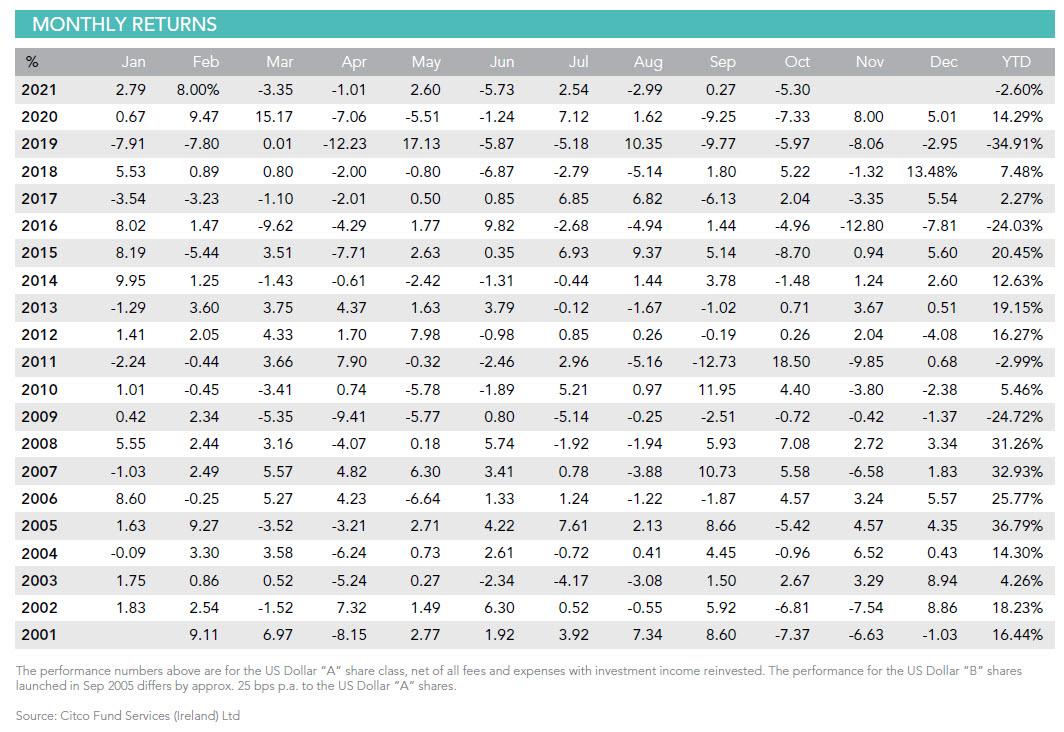
This was the beginning of the end for Clark - sensing what was coming, two years ago we wrote that the "World's Most Bearish Hedge Fund" Loses 75% Of Its Assets After Worst Year On Record." Back then we wrote the following:
Every trader has heard the age-old saying "don't fight the Fed". Everyone, perhaps with one exception: Horseman Global's CIO, and recently owner, Russell Clark, who has been upping his bearish bets in the face of a relentless liquidity onslaught by the Fed, ECB and PBOC, which now also includes the Fed's "NOT QE." In fact, in his ambition to on up the central banks, Clark may have overdone it, because according to his latest investor letter, the fund's equity net short position is now the highest it has been in history, at a whopping -110.87%, offset by a 60.59% net long in bonds.Alas, while we admire Clark's courage, we have less empathy for the fund's performance, which has seen better days, and after slumping 6% in October, and losing money on 4 of the past 5 months, is now on pace for its worst year on record, down 27.05% YTD, surpassing the -24.72% return posted in 2009, and reversing all the goodwill the fund created with its 7.5% return last year when most of its peers lost money alongside the S&P500.In light of the above, we have been fascinated how long Horseman can remain solvent as the Fed remains irrationally bullish and liquid, and unfortunately for Clark - who recently put his personal money where his mouth is and bought a controlling interest in Horseman where he was the main portfolio manager for years - the answer appears to be "not much longer" - as the fund reports, as of October 31, the AUM for the Horseman Global Fund was down to just $150 million...
Two years later, despite the crash in early 2020 which helped boost the fund's fortune for a few months, the slow and steady death by a thousand redemption letters continued, and this morning our prediction has finally come true: the man who for the past decade valiantly fought the Fed, and all other central banks, has finally thrown in the towel.
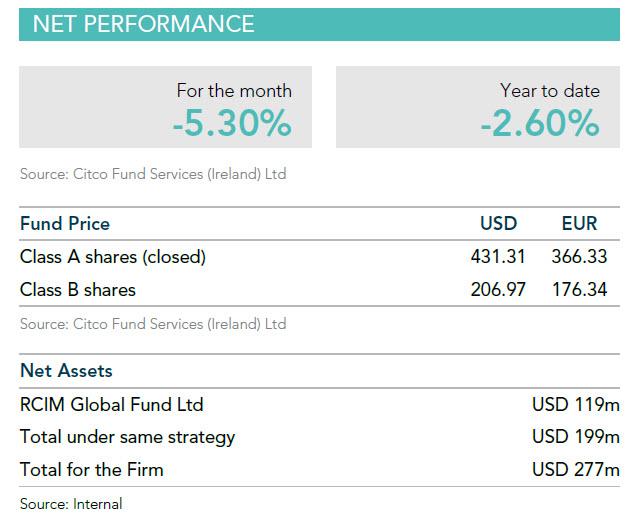
And with capital in his core RCIM Global Fund dropping to just $119 million from as much as $1.7 billion in 2015, Clark writes in what is his last letter to investors that "after a couple of years of turbulent markets and the increasing influence of politics rather than economics on the markets, I have come to the decision that the best way forward is for the Fund Directors to wind up the fund and return capital."
The fund shuts down after dropping 5.3% for the month of October and down 2.6% in 2021.
While Clark touches on various things in his last letter, what is most notable is the justification for his shutdown. To regular readers of Zero Hedge, nothing he says will be a surprise: the Fed has taken over the "market" which has now become a political tool to shape and mold public opinion, while the core role of markets - discounting the future and price discovery - no longer exists, to wit:
This is why I am returning capital. Markets have now become a political choice. US markets are essentially a bet on the Fed unable to raise rates, and congress unable to regulate big tech or raise corporate tax rates. Commodity markets have now become a bet on Chinese policy objectives, and currencies have become a bet on what Chinese policy objectives are too.Give me an economic problem, then I can properly gauge risk. Give me a Chinese political problem – I am taking a guess as much as the next person. Did I think Alibaba was going to fall 50% this year? No, not until the Chinese government told me to think that way. Is Alibaba a good short now? I have no idea, and like everyone else will have to wait to see what the Chinese government says.So, I think it time to step back, have a think about where we are going, and then come back when I can see an opportunity for my skill set. Perhaps that’s never, but I doubt it. The only constant in life is change.
As always, we admire Clark's honesty and courage to say it how it is, even if it means we may not hear from him ever again.
Meanwhile, in a fitting epitaph for his fund, Bloomberg writes that "the closure marks an end to yet another bearish hedge fund manager’s fund as stocks continue to march ahead. Clark, who uses macro economic analysis to bet on stocks, is among a series of long-short equity hedge fund managers who have fallen way behind surging markets and have suffered investors exodus."
The end of Clark’s fund is a contrasting echo to how his investing career began more than two decades ago. As a graduate trainee at UBS Group AG in Sydney, he followed friends getting rich by day-trading tech stocks in 2000 and spent his first few paychecks on five dot-com shares. Four crashed to zero, and the fifth lost half its value as the tech bubble burst.This time, a short wager on tech stocks was his latest contrarian bet. Clark told clients earlier this year that he was betting against technology shares as regulators from the U.S. to China crack down on the industry. Tech stocks as measured by NASDAQ Composite Index have been on a tear ever since.Clark had been net short equities for the vast majority of the last nine years. He has faced a difficult period of performance and capital raising, and his firm -- previously named Horseman Capital Management -- shuttered two funds.Born and raised in Canberra, Australia, Clark bought the controlling interest in Horseman in 2019. He had joined Horseman in 2006 and started running the firm’s flagship fund in 2010 when John Horseman, a highly successful global stock fund manager in the 1990s, retired.Clark, who runs his investment firm from his office inside a small house in a quiet mews near Buckingham Palace Gardens in London, had said in 2019 that he was convinced that a stock market crash was near. Or, he told Bloomberg in rare public remarks, “this could be my farewell interview.”
Ironically, he was right: the March 2020 crash - the biggest market crisis since the Great Depression - indeed happened just a few months later but in turn it produced the biggest and most coordinated market bailout by central banks and "helicopter money" in history. And that, for the world's most bearish hedge fund, was the final straw.
Clark's final message to investors is below:
The fund lost 5.30% this month, mainly from the short book.After a couple of years of turbulent markets and the increasing influence of politics rather than economics on the markets, I have come to the decision that the best way forward is for the Fund Directors to wind up the fund and return capital.The success I enjoyed from 2011 through to beginning of 2016 largely stemmed from asking the question that no one seemed to ask – why does the Yen and Japanese Government Bonds rally whenever there is a crisis? The obvious answer was capital flows from Japan would create a bull market in the area they flowed to, and then when the Japanese pulled capital back, it would create a bear market, often with significant currency volatility. Armed with that observation, and combined with analysis of the commodity markets, we build a portfolio that was largely short emerging market and long bonds.Since 2016, using the same analysis as above, Japanese capital flows have almost exclusively been to the US, and are an order of magnitude larger than anything seen before. And yet, US equities still power ahead, Yen remains weak, and currency volatility has been consigned to the history books. Of course, I asked myself why this is. Why did a model that worked so well, for the best part of 25 years, stop working?The obvious answer is that central banks led Quantitative Easing (QE). But that answer alone seems insufficient to me. Japan has had low interest rates for years and was still racked by bouts of extreme equity and currency volatility. The other problem with that answer is that the big inflation spike seen this year should then lead to greater volatility in equities, especially as central banks dial back QE programs.The answer for me comes from China. China wants a strong currency, and to keep consumption strong. It seems to me that the Chinese government uses it extraordinary control of the economy to control activity and the currency through the commodity markets. To elaborate, I expected China to post a weak trade surplus in October, and for currency devaluation fears to spike (particularly after the recent Evergrande selloff). Chinese trade surplus was actually very strong. And it was strong because Chinese imports of oil and iron ore were down significantly. Chinese steel production was down a stunning 20% year on year, a number you would typically only see in a bad recession.China has effectively taken control of key commodities, and now adjusts volumes to suit its own needs. Taking all this volatility through physical markets, has essentially collapsed financial market volatility, and also led to commodity currencies being significantly weaker than commodity prices – which has been a problem for me this year.Now I understand this, non-obvious trades at the beginning of the year such as long oil, short iron ore now seem obvious. The surprising weakness of gold and other precious metals can make sense in this analysis. It also explains why the extraordinary fiscal and monetary policies of the US have not been met with greater commodity or bond turbulence. It is very hard for me to get bearish US treasuries when I see Chinese steel production down 20% year on year.The big question then is whether this Chinese policy of absorbing financial risk in the physical economy sustainable? History suggests not, as most countries prefer to devalue than slow economic growth. However, I can see reasons why China may continue with this policy. The most powerful is that with US policymakers seemingly unable to raise interest rates, or balance budgets there is a gap in the market for a credible currency. Is China making a play for reserve currency status?And this is why I am returning capital. Markets have now become a political choice. US markets are essentially a bet on the Fed unable to raise rates, and congress unable to regulate big tech or raise corporate tax rates. Commodity markets have now become a bet on Chinese policy objectives, and currencies have become a bet on what Chinese policy objectives are too.Give me an economic problem, then I can properly gauge risk. Give me a Chinese political problem – I am taking a guess as much as the next person. Did I think Alibaba was going to fall 50% this year? No, not until the Chinese government told me to think that way. Is Alibaba a good short now? I have no idea, and like everyone else will have to wait to see what the Chinese government says.So, I think it time to step back, have a think about where we are going, and then come back when I can see an opportunity for my skill set. Perhaps that’s never, but I doubt it. The only constant in life is change. This will be my final newsletter and it just leaves me to thank you for your support and wish you all the success in the future. From a personal perspective I plan to keep producing research, so keep an eye out for my future notes. Russell.
Binance Became the Biggest Cryptocurrency Exchange Without Licenses or Headquarters. That’s Coming to an End.
Countries have warned people about the trading platform’s lack of authority to perform services. ‘We need to be regulated,’ the CEO says.
The world’s fastest-growing major financial exchange has no head office or formal address, lacks licenses in countries where it operates and has a chief executive who until recently wouldn’t answer questions about his location.
Started just four years ago, Binance is the exchange giant that towers over the digital currency world, a crypto equivalent of the London, New York and Hong Kong stock exchanges combined. After a burst of growth, Binance processes more trades for cryptocurrencies such as bitcoin and ether each day, $76 billion worth, than its four largest competitors put together, according to data provider CryptoCompare.
The years of largely unfettered, unregulated growth for Binance in particular and the crypto industry broadly, however, are coming to an end.
Financial regulators increasingly worry that digital assets, until recently dismissed by some as a fad, have grown so quickly they now are systemically important. In an October speech, Bank of England official Jon Cunliffe brought up the 2008 subprime-mortgage-fueled crisis and said of crypto, “When something in the financial system is growing very fast, and growing in largely unregulated space, financial stability authorities have to sit up and take notice.”
Binance is drawing the most regulatory attention. Authorities in a dozen countries have cautioned users in recent months the exchange is unregistered or not authorized to provide various services.
The Securities and Exchange Commission is looking into how Binance conducts business in the U.S., where it has many state licenses, according to former executives. The SEC has asked for a list of information from Binance’s U.S. affiliate, including how it relates to the global organization, according to one of the executives. Meanwhile, the Department of Justice is examining whether Binance has abetted money laundering, one former executive said. Bloomberg News previously reported the DOJ investigation.
The SEC and the DOJ declined to comment.
The American market presents a major test for the crypto exchange, which has indicated it hopes to take its U.S. arm public in a few years. A former financial regulator hired to build out Binance’s American business, called Binance.US, resigned in August just three months into the job.
Some former executives said they were concerned that control of the U.S. exchange’s data sat with coders in China, where the company was founded. They said this created the potential for a TikTok-like problem, referring to efforts by the Trump administration to ban the social media platform over concerns its customer data was potentially accessible by the Chinese government, which TikTok denied.
Binance’s founder and chief executive, Changpeng Zhao, said in an interview that the exchange needs to fall into line with regulators. That includes getting proper licenses, he said.
“We run a very legit business,” he said, which has grown quickly because users trust it. But “if you look at cryptocurrency adoption world-wide today, it’s probably less than 2%” of the population, Mr. Zhao said. “In order to attract those 98% of people, we need to be regulated.”
Mr. Zhao said Binance is in the process of setting up local offices and a headquarters, steps that he previously dismissed as obsolete but that regulators want. He wouldn’t say where. In August, Binance said on its website that it had made user identity checks mandatory to prevent use of the exchange for illicit money flows.
Representatives of Binance and Binance.US, which the companies say are separate entities, declined to comment on the SEC and DOJ probes. “We take a collaborative approach in working with regulators around the world and take our compliance obligations seriously,” said a Binance spokeswoman, Jessica Jung. She said that “as Binance developed, crypto trading and regulation developed and vice versa.”

A spokesman for Binance. US, Matthew Miller, said, “We have robust protections to ensure that data can be accessed only for appropriate customer fulfillment, performance improvement or regulatory-requirement purposes.” He said all U.S. customer data is stored on servers in the U.S.
Binance’s lack of a fixed location has puzzled regulators because they don’t know who would be responsible for overseeing it. Parent company Binance Holdings Ltd. is incorporated in the Cayman Islands. According to the Cayman Islands financial regulator, Binance isn’t registered or licensed to operate a cryptocurrency exchange from the country. And Binance doesn’t operate an exchange from there, said spokeswoman Ms. Jung.
Until September, however, Binance’s website in Australia said that Binance Holdings was the entity providing cryptocurrency exchange services for Australian users. Ms. Jung called that “simply a clerical error.”
Binance has 3,000 employees spread throughout the globe, Mr. Zhao said. Based on its trading volume and the transaction fees it charges, company insiders think that if Binance were public, it could be worth up to $300 billion, according to former executives.
That would make Mr. Zhao very rich. He said he is the largest shareholder of Binance.
A rock star in the crypto world, he has 3.9 million followers on Twitter, where he is known simply by his initials, CZ. The company’s security staff in the past told him and other executives to decline to answer questions about their locations, according to the Binance spokeswoman, Ms. Jung.
She said Mr. Zhao has been transparent about his location recently, spending the past two years under the pandemic in Singapore. According to an acquaintance, he rides to meetings on an electric scooter.
Mr. Zhao, 44, was born in China and moved to Canada with his parents when he was 12, he said. After studying computer science, he worked in Tokyo and New York at financial firms, including Bloomberg LP, where he developed software for futures trading.
He first heard about bitcoin at a poker game in Shanghai in 2013, he said. Digital coins, minted by computer programs, had been around for a few years. They lacked the imprimatur of government-issued currencies but drew fans among the computer-savvy, including those disenchanted with the financial system after the 2008 crisis.
Trading them was difficult. There were few platforms, and prices were notoriously volatile. Hacks against exchanges such as Mt. Gox undermined confidence.
Mr. Zhao was captivated by the idea of a decentralized currency that could be used anywhere without banks or bureaucracy. “We can use that technology to increase the freedom of money for people all around the world,” he said in the interview.
He sold his Shanghai apartment—for bitcoin—and worked for several crypto startups. With a group of other programmers, he launched Binance in 2017.
It initially concentrated on trading bitcoin and the myriad offshoots but didn’t allow users to exchange digital coins for mainstream currencies. When it started, it needed no bank account and no headquarters, Mr. Zhao said.
Binance added nine languages to its website, to stand out against competitors using only English. It developed a platform that several traders said is easy to use.
Binance raised $15 million in a July 2017 initial offering of its own digital coin, called BNB. Other investors were mostly individuals based in China, said a 2017 prospectus laying out its business.
Users popped up from all over, including countries with less-developed financial systems such as South Africa, Russia and India. Binance became the largest crypto exchange within six months, and just as quickly ran into problems with authorities. Two months after it began operations out of Shanghai in summer 2017, the Chinese government issued a ban on crypto exchanges, fearing they would be used to illegally spirit money out of the country.
A Binance team of more than 30 packed and moved to Japan, Mr. Zhao said at a virtual tech conference. In 2018, Japan’s financial regulator warned the company against conducting trades for residents without having a license to do so.
After that, Binance stopped disclosing a specific location. Mr. Zhao said staff are scattered around the world and work from home.
“Binance seems to be everywhere and still nowhere,” said Aija Lejniece, a Paris-based attorney representing a group of traders who are trying to recover money they said they lost when Binance’s trading website froze for more than an hour in May. Binance declined to comment but has said previously that it took immediate steps to engage with users affected by the outage and offered compensation for “those who experienced actual trading losses.”
As aficionados developed new digital coins, Binance had more trading offerings than many other exchanges. They included fan tokens for European soccer clubs as well as dogecoin, a spoof currency that took off with investors early this year.

Unlike stock exchanges, which have to get regulatory approval in each jurisdiction, Binance spread through a single trading platform, Binance.com, that claimed a home base in no country. In 2019, a year after Japan’s regulator issued a warning to Binance, the platform still had user traffic from Japan, according to data compiled by research firm The Block. Binance’s spokeswoman, Ms. Jung, declined to comment.
Binance began offering derivative products linked to crypto coins. With a deposit of just 80 cents, a customer could trade the equivalent of $100 of bitcoin or another digital currency. Binance has since curtailed those offerings.
In 2019, Binance began allowing customers to trade cryptocurrencies for traditional money such as dollars, linking the exchange to the banking system.
Binance paid influencers with YouTube channels to make videos showing people how to get started, former managers say. An outreach team also contracted with day traders in markets in the Middle East and Africa who ran small groups on Facebook and other social networks.
Internally, the firm pitted teams against each other, letting the best strategy for growth win. “We encourage internal competition,” Mr. Zhao said.
Binance.com grew popular in the U.S. as well, but maintaining its dominance there has proved trickier. The SEC published a document in April 2019 outlining tests to determine which digital assets might be considered securities subject to its regulation. Mr. Zhao directed U.S. users to Binance. US, which offered trading in a smaller number of cryptocurrencies and no derivatives.
In late 2020, the SEC asked Binance. US for detailed information on its business, including who is in control of users’ digital wallets, where cryptocurrencies are stored, and details of Binance. US’s agreements with Binance Holdings, according to a former executive.
Binance. US in May 2021 hired as its chief executive Brian Brooks , who had served as acting head of the Office of the Comptroller of the Currency in the Trump administration and had been an executive at trading rival Coinbase Global Inc.
Mr. Brooks set out to raise funding from U.S. investors. That would bring independent members to the board and dilute Mr. Zhao’s ownership. Mr. Zhao owns the majority of Binance. US, according to former executives.
Mr. Brooks also wanted software that was run out of China to be controlled on U.S. soil, they said. The month before he started, Binance. US employees had to ask Shanghai staffers to fix software issues affecting some U.S. accounts, according to electronic messages viewed by the Journal. As recently as this summer, according to former executives, Shanghai-based developers maintained the software code supporting U.S. users’ digital wallets and worked on the engine that coordinates trades.
In early August, as Mr. Brooks was about to close a $150 million fundraising with 12 U.S.-based investors, he and Mr. Zhao clashed over the selection of the new board members, according to people familiar with the situation.
Some of the people said Mr. Brooks thought the lead investor would get an automatic seat, and the board would select an independent director, but Mr. Zhao wanted the power to sign off on the appointments. Mr. Zhao also balked at moving management of the code from Shanghai, according to people familiar with his position.
Mr. Brooks resigned on Aug. 6. Several staffers from the legal and compliance teams have since left, according to people familiar with the departures.
SHARE YOUR THOUGHTS
Should cryptocurrency exchanges get more regulation? Join the conversation below.
Binance’s spokeswoman said that no Binance technology or data sits in China. The spokesman for Binance. US, Mr. Miller, said: “All U.S. customer personally identifiable information is stored on the Amazon Web Services platform based out of Richmond, Virginia.”
Mr. Miller added that “it is Binance. US executives who control the direction of the company, its assets, and the supervision of customer accounts and data.” He said Binance. US has employees around the world.
Binance. US is raising additional funding and plans to appoint two new investor board members, who will provide additional oversight as it moves toward a U.S. initial public offering, the spokesman said. Mr. Zhao said he wants the IPO to happen by 2024.
Despite Binance’s regulatory troubles, it continues to balloon. In September, spot trading at Binance.com rose 10% from the month prior, according to CryptoCompare, giving it the largest monthly spot trading volume for the 15th consecutive month.
Mr. Zhao said he is aiming for a more moderate pace of growth. “We want the other exchanges to be a little bit bigger so that we can split the load among the users,” he said.
Sotheby’s to Allow Live Bidding in Ether
Auctioneer Oliver Barker will be fielding real-time bids for Banksy’s Trolley Hunters and Love Is In The Air.
Sotheby’s, the 277-year-old British auction house, will allow live bidding in ether cryptocurrency in an upcoming virtual exhibition on Nov, 18 to be held at its “headquarters” in Decentraland.
- Sotheby’s auctioneer Oliver Barker will be fielding real-time bids from its New York saleroom for Banksy’s Trolley Hunters and Love Is In The Air (2006).
- Sotheby’s has been accepting cryptocurrency as a form of payment for physical art work for a while and sold a separate painting by Banksy offered in May 2021.
- Art fans interested in the auction can tune in from anywhere around the world and follow the live-streamed broadcast by following Sotheby’s social media channels.
- Back in April, Sotheby’s held its first sale of non-fungible tokens (NFTs) by pseudonymous artist Pak. The sale fetched $16.8 million over a three-day drop.
- In October, Sotheby’s launched a new platform called “Sotheby’s Metaverse” that allows visitors to view digital artworks available at auction, as well as learn about the collectors and artists behind NFTs.
Gapping down
In reaction to earnings/guidance:
- BYND -19.3%, BHG -17.8%, CRCT -17%, SDGR -15.9%, PSFE -15.1%, BLND -11.3%, BMBL -9.7%, LZ -9.6%, DCBO -7.1%, FIGS -6.4%, DIS -5.4%, BRKS -4.4%, RRGB -4%, GDRX -3.5%, VLTA -3.2%, YETI -3.1%, ENS -2.5% (also announces planned CFO retirement; establishes new $100 mln stock repurchase auth), ESMT -2.5%, FICO -2%, STNG -1.9%, BLU -1.8%, HLTH -1.1%, WKME -1.1% (also expands partnership with SAP and announces strategic alliance with Deloitte), CCMP -1.1%, WISH -0.8% (also CEO to step down)
Other news:
- HAIN -4.9% (stock offering)
- BIP -3.7% (stock offering)
- DDD -3.6% (convertible notes offering)
- MKTW -3.6% (authorizes $35 mln share repurchase program)
- FA -2.7% (prices secondary offering of 15 mln shares of common stock at $20.00 per share) COO -2.1% (to acquire Generate Life Sciences for $1.6 bln)
- APR -1.6% (prices secondary offering of 4.5 mln shares of common stock by a selling stockholder affiliated with Blackstone (BX) at $31.50 per share)
- LDOS -1.1% (awarded three-year contract to support UK MOD PICASSO program)
- AMC -0.9% (CEO discloses sale of 625K shares) .
Analyst comments:
- PRIM -3.9% (downgraded to Sell from Neutral at Goldman)
- ALLT -1.6% (downgraded to Neutral from Buy at BofA Securities)
- IPGP -1.1% (downgraded to Mkt Perform from Outperform at Bernstein)
Gapping up
In reaction to earnings/guidance:
- FOSL +35%, AFRM +25.6% (also expands relationship with AMZN to all eligible US purchases; also AFRM to be embedded as payment option in Amazon Pay's digital wallet), OPEN +18%, SOFI +13.7%, DUOL +13.5%, ROOT +12.2%, MQ +11.9%, ZIP +11.2%, PAYO +10.8%, DIBS +9.1%, DGII +8.7%, HNST +8.4%, WB +8%, BROS +7.2%, NICE +7.2%, BZH +7%, HIMS +6% (also unveils mobile platform for subscription members), SBH +5.8%, MT +5.7%, APP +5.5%, TPR +5.2%, INDI +5%, MSP +4.8%, KGC +3.6% (also announces the results of a pre-feasibility study for its Udinsk project), TASK +3.2%, OWLT +3%, WIX +2.9%, RELY +2.5%, RSI +1.8%, BAM +1.8%, NUVB +1.5%, ULCC +1.4%, DOMA +1.2%, MRVI +1.1%, ATO +1% (also increases dividend), SPTN +0.8%
Other news:
- CGEN +18.8% (Bristol Myers Squibb (BMY) completed its $20 million investment in Compugen in consideration for the issuance of 2,332,815 shares of Compugen purchased at $8.57333/share, representing a 33% premium over the closing price on November 9, 2021)
- RIDE +12.4% (RIDE and Hon Hai Tech sign asset purchase agreement regarding RIDE's facility in Lordstown, OH)
- KRMD +12.1% (announces 510k clearance for KORU Medical FreedomEdge infusion pump)
- SGHT +10.2% (FDA grants an Investigational Device Exemption to conduct a clinical study of OMNI device)
- PTRA +7% (to supply battery technology for up to 10,000 Lightning eMotors (ZEV) vehicles)
- GFI +6.3% (reports Q3 production results; reaffirms FY21 guidance)
- PHX +4.4% (acquires 827 net royalty acres in Haynesville for $5.2 mln in cash and stock)
- INSP +4% (provides update on 2022 reimbursement levels)
- FARM +3.9% (files for $175 mln mixed securities shelf offering)
- HFC +2.7% (names new COO)
- TSLA +2.5% (Musk filed Form-4 insider sales)
- AEM +2.3% (Kirkland Lake Gold reports favourable recommendation from ISS for Merger of Equals with Agnico Eagle Mines Limited (AEM))
- KNBE +1.8% (prices offering of 8 mln shares of common stock by certain selling stockholders at $25.75 per share)
- U +1.5% (files mixed securities shelf offering)
- KL +1.2% (Kirkland Lake Gold reports favourable recommendation from ISS for Merger of Equals with Agnico Eagle Mines Limited (AEM))
- KEYS +1% (KEYS and LMT announce 5G collaboration)
Analyst comments:
- ADMA +10.7% (upgraded to Strong Buy from Outperform at Raymond James)
- GHLD +7.1% (upgraded to Overweight from Neutral at JP Morgan)
- XMTR +5.7% (upgraded to Outperform from Sector Perform at RBC Capital Mkts)
- KOS +4.1% (upgraded to Overweight from Equal Weight at Barclays)
- GPRO +3.4% (upgraded to Equal-Weight from Underweight at Morgan Stanley)
Early premarket gappers
- Gapping up:
- FOSL +32.6%, AFRM +27.7%, OPEN +17.2%, MQ +16.6%, SOFI +15.5%, ZIP +13.8%, DUOL +12%, RIDE +11.7%, ROOT +10.3%, SGHT +10.2%, BZH +9.4%, HNST +8.9%, DGII +8.7%, HIMS +8.5%, DIBS +8.4%, KRMD +8.2%, ME +7.6%, BROS +7.5%, GFI +7.3%, WB +7.3%, PTRA +6.8%, PAYO +6.8%, WIX +5.9%, NICE +5.7%, APP +5%, MSP +4.8%, MT +4.6%, PHX +4.4%, INSP +4%, FARM +3.9%, AEM +3.7%, DOMA +3.2%, KGC +3.1%, OWLT +2.8%, HFC +2.7%, TSLA +2.5%, RELY +2.2%, WE +2.1%, ABUS +2%, RSI +1.8%, KL +1.6%, INDI +1.6%, NUVB +1.5%, U +1.4%, ULCC +1.4%, KEYS +1%, ATO +1%, TRMR +1%
- Gapping down:
- BYND -19.9%, CRCT -17.9%, SDGR -16.9%, LZ -11.7%, BLND -9.4%, FIGS -8.4%, ALPN -7.8%, BMBL -7.2%, DIS -4.9%, GDRX -4.7%, BRKS -4.4%, COO -4.2%, RRGB -4%, VLTA -3.7%, MKTW -3.6%, HAIN -3.5%, FICO -3%, DDD -2.6%, ENS -2.5%, ESMT -2.5%, WISH -2.4%, YETI -2.1%, HLTH -2%, BLU -1.8%, APR -1.7%, LDOS -1.1%, MRTX -1.1%, WKME -1.1%


>>> Up
* Asos Raised to Buy at Peel Hunt; PT 5,000 pence (+)
* Bouvet Raised to Buy at Kepler Cheuvreux; PT 90 kroner
* Capital & Counties Raised to Neutral at JPMorgan; PT 180 pence
* Dechra Pharma Raised to Buy at Stifel; PT 5,300 pence (+)
* Emmi Raised to Buy at Stifel; PT 1,120 Swiss francs
* Essity Raised to Buy at Handelsbanken; PT 340 kronor
* Fresenius Medical Raised to Hold at Jefferies; PT 56 euros
* Fresenius Medical ADRs Raised to Hold at Jefferies; PT $32.40
* Fresenius SE ADRs Raised to Hold at Jefferies; PT $11.30
* Fresenius SE Raised to Hold at Jefferies; PT 40 euros
* ICA Gruppen Raised to Equal-Weight at Barclays; PT 534 kronor
* Klepierre Raised to Neutral at JPMorgan; PT 20 euros
* Lloyds Raised to Outperform at KBW; PT 58 pence
* NatWest Raised to Market Perform at KBW; PT 215 pence
* PSI Raised to Hold at GSC Research; PT 45.50 euros
* Shaftesbury Raised to Neutral at JPMorgan; PT 630 pence
* Valneva ADRs PT Raised to $64 from $51 at Guggenheim
* Virgin Money UK Raised to Market Perform at KBW; PT 200 pence
>>> Down
* Aker BP Cut to Sell at SpareBank; PT 315 kroner
* Beyond Meat Cut to Market Perform at Bernstein; PT $100
* Cairn Energy Cut to Hold at Peel Hunt; PT 180 pence
* Calliditas Therapeutics Cut to Hold at SEB Equities
* Commerzbank Upgraded at Morgan Stanley on Stronger Outlook
* GN Store Nord Cut to Equal-Weight at Morgan Stanley
* HSBC Cut to Underperform at KBW; PT 400 pence
* Lundin Energy Cut to Reduce at HSBC; PT 310 kronor
* Mowi Cut to Hold at Nordea (+)
* Paragon Cut to Market Perform at KBW; PT 575 pence
* Wacker Neuson Cut to Hold at Jefferies; PT 31 euros
>>> Initiation
* Atalaya Mining Rated New Buy at Berenberg; PT 490 pence
* Electrocomponents Reinstated Hold at Stifel; PT 1,200 pence (+)
* Elopak Rated New Neutral at Exane; PT 28 kroner
* Hutchmed China ADRs Rated New Outperform at Credit Suisse
* Medmix Rated New Outperform at Credit Suisse; PT 50 Swiss francs (+)
* Premier Miton Group PLC Rated New Buy at Panmure Gordon (+)
>>> Call
* Auto Trader’s Guidance Points to Consensus Upgrades: Jefferies (+)
* Aviva Trading Broadly Encouraging, Path to Returns Clearer: Citi (+)
* Burberry Shares May be Under Pressure on Like-for-Like Miss: MS (+)
* Goldman Sees European Equity Bull Market Continuing Into 2022 (+)
* Engie’s Guidance Points to 20% Earnings Upgrades: Morgan Stanley
* Fresenius Medical Risks Understood, Upgrade to Hold: Jefferies
* GN Store’s Limited Visibility Sees Downgrade at Morgan Stanley
* JPMorgan Turning Less Cautious on European Retail Landlords
* Merck KGaA’s 3Q Strong, Without Surprises: Morgan Stanley (+)
* RWE’s Positive Earnings Show Upside Risk to Consensus: Jefferies
* Siemens’s FY ‘Encouraging,’ Dividend Among Key Positives: Citi (+)
* Taylor Wimpey Update ‘Reassuring,’ On Track for Targets: Citi (+)