(ZH) ConocoPhillips Sells Excess Bakken Gas To Bitcoin Miner

ConocoPhillips Sells Excess Bakken Gas To Bitcoin Miner

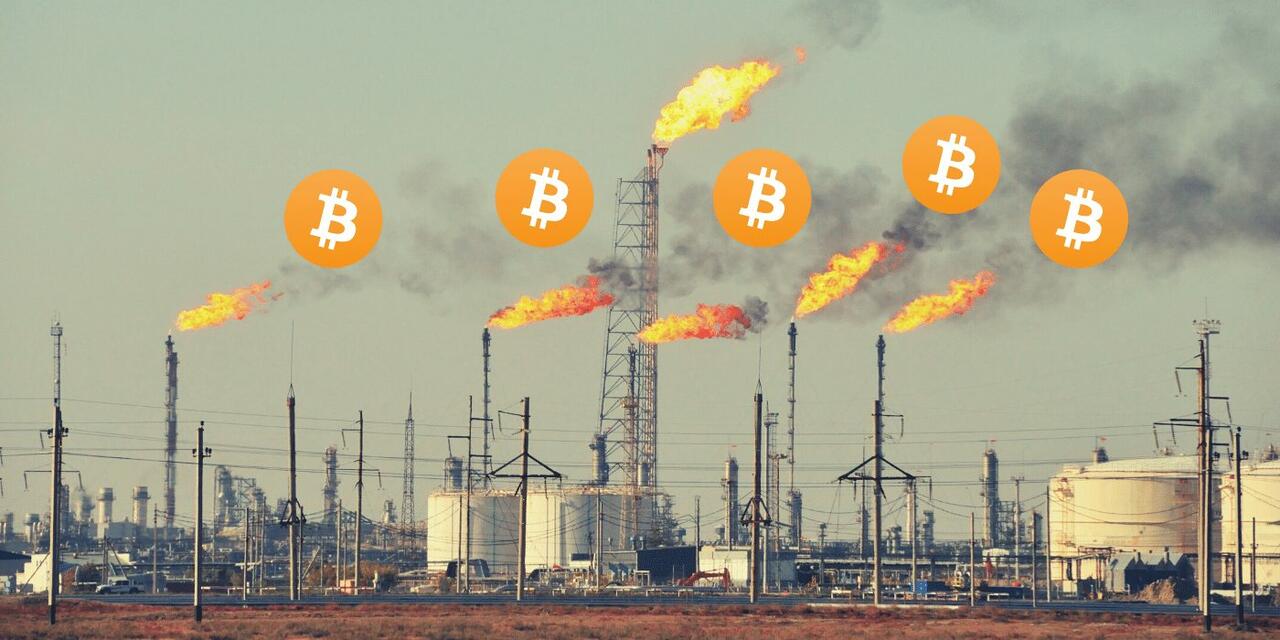
ConocoPhillips is selling natural gas that would have been otherwise flared to a third-party Bitcoin miner in the Bakken in North Dakota, the U.S. oil and gas producer said this week.
ConocoPhillips has one pilot project in Bitcoin mining currently in operation in the Bakken, the second-largest major shale play after the Permian, a ConocoPhillips representative said in a statement to CNBC.
“ConocoPhillips has one bitcoin pilot project currently operating in the Bakken, where gas that would otherwise have been flared is routed to a bitcoin processor owned and managed by a third party,” a spokesperson for ConocoPhillips told CoinDesk in an emailed statement.
Selling excess natural gas from production in the Bakken fits the company’s pledge to end routine flaring by 2030.
ConocoPhillips has endorsed the World Bank Zero Routine Flaring by 2030 initiative and set a target to reduce methane emissions intensity in 2020. The oil and gas company set an ambition to reduce operational greenhouse gas (GHG) emissions to net-zero by 2050. ConocoPhillips has a target to get to zero routine flaring by 2030, with an ambition to get there by 2025.
Flaring emissions make up only 8 percent of ConocoPhillips’s total greenhouse gas emissions, yet the target “will drive continued near-term focus on routine flaring reductions across our assets,” it says.
By selling the extra gas to a third-party Bitcoin miner, ConocoPhillips also gets paid for the gas it would have otherwise just wasted and flared.
Cryptocurrency mining is an energy-intensive endeavor, and recently, some U.S. Democratic lawmakers sent letters to six major cryptocurrency mining companies, asking them to detail their high energy usage, the possible impact on the environment, and the role in driving up power bills for U.S. consumers.
Riot Blockchain, Marathon Digital Holdings, Stronghold Digital Mining, Bitdeer, Bitfury Group, and Bit Digital were sent letters by the lawmakers, who were concerned about “their extraordinarily high energy usage,” Senator Elizabeth Warren said last month

FT : Germany fears Russian gas retaliation if war breaks out

Germany fears Russian gas retaliation if war breaks out
Finance minister highlights need to diversify energy supplies and stick to EU’s fiscal rules

Germany fears Russia could retaliate against western sanctions in the event of war with Ukraine by cutting off gas supplies, its finance minister has said, a move that could cripple Europe’s largest economy.

Christian Lindner told the Financial Times that Russia had always been a reliable supplier of natural gas to Germany, even at the height of the cold war. But that could change if Russia invaded Ukraine and the west punished Moscow with a swingeing sanctions package.

“If you look at the cold war, whatever happened between Nato and the Warsaw Pact, there was never a situation where political tensions harmed co-operation in the energy sector,” Lindner said. “Things might be different now.”

The US said this week that Russia could be poised to invade Ukraine within several days, after massing an estimated 150,000 troops on the Ukrainian border.

The west has warned Russian president Vladimir Putin of grave economic consequences if he attacks his western neighbour. Germany has made clear these would include a halt to the Nord Stream 2 pipeline bringing Russian gas directly to Europe under the Baltic Sea.

Some fear the Kremlin could respond to sanctions by reducing or even stopping gas flows to Europe, which relies on Russia for 40 per cent of its gas. Lindner’s remarks suggest such a scenario is being taken seriously in Berlin.


Christian Lindner says Germany has made contingency plans to source alternative supplies of gas if Russia turns off the tap © Wolfgang Kumm/dpa
The growing tensions over Ukraine have coincided with a surge in European gas prices, amid lower-than-expected deliveries from Russia and rising demand from economies emerging from the Covid-19 pandemic.

Some experts believe Russia held back supplies to the spot market and deliberately depleted its gas storage facilities in Europe ahead of winter demand, driving stockpiles to their lowest seasonal level in more than a decade.

“Gazprom, a Russian state-owned company, is deliberately trying to store and deliver as little as possible,” Ursula von der Leyen, European Commission president, told the Munich Security Conference on Saturday. “While prices and demand are skyrocketing, this is very strange behaviour for a company.”

Such developments have persuaded many in Berlin that Russia is prepared to use its energy exports to exert pressure on the west, regardless of the damage that might do to its reputation as a reliable supplier.

The EU has said it would be able to cope with a partial cut-off of gas and has spoken with the US, Qatar, Egypt, Azerbaijan and other countries about increasing deliveries of liquefied natural gas (LNG), either through additional shipments or contract swaps.

Lindner insisted Germany had made adequate contingency plans to source alternative supplies of gas should Russia turn off the tap. But he added that the current crisis underscored the need for Germany to diversify its energy imports, in particular by procuring more LNG.

“I’m very much in favour of Germany building LNG terminals, and have been for years,” he told the FT. “If we get LNG terminals built then that would be a positive outcome of this situation.”

FDP leader supports return to normalised monetary policy
In the interview, Lindner — leader of the liberal Free Democratic party, which is traditionally hawkish on public spending — also intervened in the debate about the future of the EU’s fiscal rules, known as the Stability and Growth Pact (SGP). The rules, which cap budget deficits at 3 per cent of gross domestic product and try to limit public debt to 60 per cent of GDP, have been shelved since the start of the pandemic but will come back into force from 2023.

The European Commission is working on proposals for reforming the SGP and some EU countries, particularly in the south, would like to see investments in green and digital projects “carved out” of deficit calculations — an approach described as the “golden rule”.

Lindner rejected that. “I don’t support the idea of a golden rule,” he said. “Everyone would end up having their own definition for investment.”

“For the financial markets, debt is debt,” he continued. “It doesn’t matter if it’s debt in the pension system or debt for public sector investment.” The priority for the eurozone was, he said, “to have a clear path to lower debt levels”.

Recommended
The Big Read
Germany’s Russia problem: Ukraine crisis tests new government

Lindner’s conservative fiscal views have had a marked impact on the policies adopted by the three-party coalition government, which brings together his FDP with the Greens and Social Democrats. Under FDP pressure, the government has eschewed tax rises and pledged to stick to the debt brake, Germany’s constitutional curb on new borrowing, which was suspended during the pandemic but is due to come back into force in 2023.

Lindner was critical of the European Central Bank’s ultra-loose monetary policy, saying there was a risk of “fiscal dominance” — a situation where government debt has risen so high that a central bank may be reluctant to raise interest rates to tackle high inflation. It was a danger highlighted by Jens Weidmann last month as he bowed out as president of Germany’s Bundesbank, and has also been raised by his successor Joachim Nagel.

“With the ECB’s policies and bond purchase programmes and very low interest rates, there is the danger of fiscal dominance,” said Lindner. “That’s why we are in favour of returning to crystal-clear fiscal rules, both in Germany and the eurozone.”

Lindner said he could “understand” why the ECB had decided to gradually reduce its asset purchases if inflation remained high, noting that some eurozone central bankers, such as Nagel and Klaas Knot of the Netherlands, were talking about the need to raise interest rates. “I would certainly support a return to normalised monetary policy,” he added.

TechCrunch : Meta axes a head of global community development after he appears o

Meta axes a head of global community development after he appears on video in underage sex sting

Meta, the parent company of Facebook, has confirmed to TechCrunch that Jeren A. Miles, who had been a manager of global community development, is no longer employed by the company after a video went viral on YouTube, which was then reposted on Reddit and other sites, featuring him in a sting operation conducted by amateurs with the intent of catching paedophiles.

The two-hour video, posted by an amateur group called PCI Predator Catchers Indianapolis on its YouTube page, does not depict Miles caught in any sex act, nor admitting to any specific sex act, nor admitting to intending to carry out any sex act. And it is not clear what the legal ramifications of this will be, if any.

But it does feature two people questioning Miles, who in the course of the interrogation admits to having graphic and inappropriate communications with a 13-year-old boy. It’s a damning enough exchange that Miles has subsequently deleted his social profiles on sites like Facebook and Twitter, and — whether he was fired or resigned voluntarily — Miles has left his role at Facebook over the matter.

”The seriousness of these allegations cannot be overstated. The individual is no longer employed with the company. We are actively investigating this situation and cannot provide further comment at this time,” said a statement from a Meta spokesperson provided to us by Drew Pusateri. I’ll point out that Pusateri also tried to talk me out of the newsworthiness of this story over the phone before sending over the statement, noting that other outlets were not covering it (thanks for the advice).

Meta feels like it’s been hit by wave upon wave of controversy for years, ranging from stories related to data protection and privacy, troubled product executions and falling engagement numbers. Even underage sex scandals are not new news at this point.

You could argue that this is all part and parcel of being as big and exposed as Meta is — billions of people around the globe are habitual users of its portfolio of products, which include Facebook, Instagram, Messenger, WhatsApp, Workplace and Oculus — although none of it adds up to anything good.

Coincidentally, the company has been trying to refresh its PR offense, starting with naming former U.K. politician Nick Clegg as their president of global affairs. They will have their work cut out for them.

WSJ : FDA Eyes Second Covid-19 Booster Shot

FDA Eyes Second Covid-19 Booster Shot
Agency has begun reviewing data that could lead to clearing a second booster dose of the Pfizer, Moderna vaccines in the fall

U.S. health regulators are looking at potentially authorizing a fourth dose of a Covid-19 vaccine in the fall, according to people familiar with the matter.

The planning is still in early stages, and authorization would depend on ongoing studies establishing that a fourth dose would shore up people’s molecular defenses that waned after their first booster and reduce their risk of symptomatic and severe disease, the people said.

The Food and Drug Administration, however, has begun reviewing data so it can make a decision, the people said.

The thinking among regulators is that the agency would look at authorizing a second booster dose of the messenger RNA vaccines from Pfizer Inc. and partner BioNTech SE and from Moderna Inc., one of the people said.

Among the issues that need to be resolved, the person said, are whether the second booster should be authorized for all adults or particular age groups, and whether it should target the Omicron variant or be formulated differently. Whether the fourth booster could ultimately be the start of an annual Covid-19 vaccination is also under consideration.

No decision is final, and it could be necessary to make booster shots available earlier if a dangerous, elusive variant appears, the person said.

Offering a second booster dose, one of the people said, may make sense in the fall because many people get their annual flu shots then and so might be more receptive to getting vaccinations.

Potential obstacles to the effort are that many people are fatigued with vaccinations after getting initial doses and that others are hesitant to get the shots. About 65% of the U.S. population is fully vaccinated, according to the Centers for Disease Control and Prevention. meaning they have gotten two doses of the vaccine from either Moderna or Pfizer/BioNTech, or one dose of Johnson & Johnson’s shot. About 43% of fully vaccinated people have gotten a booster shot.

Yet a higher percentage of older people and others at higher risk of infection have gotten boosted, and many of them could be eager to get a fourth dose.

After research found that Covid-19 vaccines’ protection sags over time, health authorities began urging people to get a first extra dose. Studies have shown the booster can strengthen immune defenses that have weakened months after initial vaccination.

The Pfizer-BioNTech and Moderna vaccines are two doses, taken a few weeks apart. The CDC recommends third doses of the Pfizer-BioNTech and Moderna at least five months after the second dose.

Researchers have been debating whether a fourth dose is needed, especially to fight highly transmissible variants such as Omicron or new ones that emerge.

Some research suggests that protection from mRNA vaccines after a third dose remains strong overall, but risk of hospitalization increases further out from the dose. In the month after the Omicron variant became dominant in the U.S. around Dec. 20, protection against hospitalization fell from 91% within two months of receiving a third shot to 78% after four months, according to a recent study from the CDC.

In January, Israel’s health ministry published an initial study saying a fourth shot provided threefold protection against serious illness and twofold protection against infection compared with people who were four months after their third shot. Other Israeli researchers who did a separate study cast doubt on whether a fourth shot added effective protection against Omicron.

The Israeli government has cleared use of four doses in certain groups of people, including those who are at least 60 years old, the immunocompromised and healthcare workers.

A fourth booster shot of either the Pfizer or Moderna vaccine could start an annual booster shot campaign, one of the people familiar with the FDA’s planning said.

Some drugmakers already have been expecting booster shots could become a yearly effort. Pfizer CEO Albert Bourla said in a recent interview that the goal shouldn’t be to simply give everyone another dose every few months, although some high-risk people like the immunocompromised or the elderly may need shots every six months.

He said the expectation has been, and remains, that most people, after receiving a three-dose primary series, would need annual shots. Yet Omicron may change thinking, he said, because it is the first variant in which “you see for the first time a significant evasion of protection.”

Pfizer is testing an Omicron-targeting vaccine. An additional dose of such a shot may generate enough protection so that most of the population only needs annual Covid-19 inoculations, Dr. Bourla said.

Among the various parts of Pfizer’s study of the Omicron-targeting vaccine that began last month is one in which people will receive fourth doses of either the current shot or the Omicron one.

Moderna in January started testing an Omicron-specific booster shot in a clinical trial that includes people who have previously received three doses of the original vaccine.

The Information : Why Disney+, Paramount+ and Legacy Media Streamers Can’t Escap

Why Disney+, Paramount+ and Legacy Media Streamers Can’t Escape the Past


Cultural criticism is not investment advice. But investors with emerging concerns about the future of streaming business models will find their echo in a criticism of streaming services’ vast content libraries from journalist and author Chuck Klosterman.

Klosterman gave a must-listen interview to the “Longform” podcast on his recently released book, “The Nineties,” in which he mused on “the slow cancellation of the future.” Movies in the 1980s looked dramatically different from movies in the 1960s, he claimed, whereas movies today are all but indistinguishable from movies in the aughts. The same goes for music.

“Maybe there’s nothing inherently bad about it,” Klosterman said. But the consequence is that “because we have such immediate access to the entire history of all art, all political thought, all literature, all of that, it’s very difficult to come up with something that is sort of a move beyond what is already there.”

And the culprit? “It’s got to be the internet. That’s the only explanation.” Culture has become “a very shallow ocean,” vast but eminently searchable. While the internet originally “seemed like the ultimate accelerant of culture,” when it became ubiquitous, “it made it so difficult to get beyond the present moment in a creative way,” he said.

What Is ‘the Slow Cancellation of the Future’ in Streaming?

Klosterman is implying that streaming services—both audio and video—are ultimately more valuable to subscribers for consuming “retro” content than for accessing present-day content. This was briefly on display in the Paramount Global (née ViacomCBS) investor day presentation on Tuesday, as Ben Bowman of The Streamable noticed: “Company leaders didn’t draw special attention to one slide in their presentation—their list of most-consumed titles by hours viewed. The image briefly appeared behind Chief Programming Officer of Streaming, Tanya Giles. The list of the 10 most-watched programs on Paramount+ is notable because of the sheer age of the programs. Only two of the 10 debuted within the last decade (‘PAW Patrol’ and ‘Star Trek: Discovery’). Other shows like ‘Survivor,’ ‘NCIS,’ ‘Big Brother’ and ‘SpongeBob SquarePants’ have been on the air for 20 years.”

Through Klosterman’s lens, more spending (Paramount is aiming for $6 billion in 2024, up from $2.2 billion in 2021) won’t lead to more hits because that new content will always be competing with the past.

The same was evident for Disney: According to Nielsen, in 2021, older releases such as “Frozen” (2013), “Frozen II” (2019) and “Moana” (2016) all performed better with U.S. streaming audiences than 2021 releases “Shang-Chi and the Legend of the Ten Rings,” “Black Widow,” “Luca,” “Raya and The Last Dragon” or “Jungle Cruise.” In other words, Disney spent more than $25 billion in 2021 on new titles to compete with—and lose to—its own library.

Something similar happened on Netflix: After actor Charlie Cox appeared in 2021’s hit “Spider-Man: No Way Home” as protagonist Matt Murdock from Netflix’s “Daredevil,” the show—which had its premiere in 2015 and hasn’t posted a new season in more than three years—spiked to the top of Netflix’s Top 10 and trending charts, as well as to No. 8 on Nielsen’s weekly U.S. originals streaming chart for the period of Dec. 20 to 26. Disney apparently took notice, because last week it announced that all of Netflix’s co-produced Marvel shows—including “Daredevil,” “Jessica Jones,” “Luke Cage,” “The Punisher,” “Iron Fist” and “The Defenders,” which teamed up characters from all of the above—will move exclusively to Disney platforms after March 1.

Is Klosterman Right?

If we assume that Top 10 charts are reliable indicators in an otherwise opaque streaming marketplace, then “a very shallow ocean” seems like an apt description of what’s going on here.

That said, all of those old movies and series could also be evidence that Klosterman is wrong. “The Defenders” productions weren’t feasible in 2005 because Marvel hadn’t yet proven the demand for its long tail of intellectual property. Nor was “Moana”: Distribution models had to change (that is, Netflix had yet to solve for streaming), and culture had to evolve to a place where a movie about Pacific Islanders could (rightly) be considered to have mass-market appeal. Plus, in 2005, “Moana” writer Lin-Manuel Miranda was still working on his Broadway debut, “In the Heights.” That a movie version of “In the Heights” was then released on HBO Max in 2021, however, counts in favor of Klosterman’s thesis.

Above all, it’s the timing of his critique that is worth considering. Investors have been asking legacy media companies to spend more to compete with Netflix on streaming. So far, those legacy media companies have done so—and have been rewarded with punishing declines in stock price over the past six months:

  • Paramount Global: -23%
  • Disney: -12%
  • AT&T/WarnerMedia: -16%
  • AMC Networks: -23%
  • Lionsgate/Starz: -22% over the past month alone

The problem is, after the “pull-forward impact” of the pandemic, investors have realized that the unit economics of increased content spending on streaming are unappealing. Disney announced 12 million new Disney+ subscribers in its Q1 2022 earnings, but the majority of those came from Disney+ Hotstar subscribers in India, Indonesia, Malaysia and Thailand paying $1 per month. Paramount Global announced a path to 100 million subscribers by 2025, but one that requires $1 billion each year in operating income losses through 2024 and declining average revenue per user—a problem Disney also faces.

Is Content Still King?

It all points to two looming questions: What value will shareholders get from increased content spending? And, more important, what value will consumers get from increased content spending?

The problem lies in the general market reliance on the Sumner Redstone adage, “Content is king.” That was true when the wholesale model reigned, and Viacom and CBS needed to figure out which content to produce to pump into the pipes of cable distributors and movie theaters. If the content attracted valuable demographics at scale, everyone won because the economics were great.

But Netflix has solved for the retail model: that is, how to distribute the right content to the right audiences at scale across multiple platforms. In marketing terms, Netflix’s solution is “ubiquitous access,” the ability to make newly produced content available to its subscribers on a one-click basis both on platform and off platform, online and offline. The Netflix homepage can market content at no additional cost to 220 million subscribers, plus whoever else may be using their accounts.

Netflix has also figured out how to cost-effectively market content digitally, seeing a year-over-year decrease in marketing spend in 2020. In other words, both Netflix’s content distribution and content marketing models are fundamentally different from those of any other legacy media-streaming platform. Even Netflix fumbles, though: Its stock tumbled nearly 50% after its Q4 2021 earnings reported a miss on subscriber targets. Notably, it also reported a 14% year-over-year increase in marketing expenses, mostly driven by higher advertising costs.

This brings us back to Klosterman’s point. It may be that retail-first Netflix has figured out something wholesale-first legacy media companies are still trying to solve: that the purpose of spending on new content is to feed the distribution and marketing engine. And if the distribution and marketing engine isn’t strong enough, the present ends up losing to the past.

FT : Novavax bets fears over mRNA technology will give its Covid jab an edge

Novavax bets fears over mRNA technology will give its Covid jab an edge
US biotech says its shot could alleviate vaccine hesitancy and calls on government to promote it

Novavax said its protein-based Covid-19 vaccine will be a strong competitor to the BioNTech/Pfizer and Moderna jabs despite its late arrival because of public concerns over the safety of its rivals’ messenger RNA technology.

But the US biotech, which began shipping its vaccine to Europe and Asia in January following months of long delays because of regulatory challenges, has called on Washington to do more to promote its vaccine, which has still not been authorised by US regulators.

“I would love to hear more public support from the US government and I don’t know whether they’ve been too involved in some of the other vaccines or they’ve been too busy,” said Stan Erck, chief executive of Novavax, adding US authorisation for its jab could happen “within weeks”.

The World Health Organization, the UK, EU and Australia are among almost a dozen countries and organisations to approve Novavax’s two-dose vaccine, which is the first product launched by the company in its 34-year history. Novavax plans to ship 2bn doses in 2022, which analysts’ forecast could generate $5bn in revenues — a transformational event for a biotech that has been a perennial loss maker.

But the company has struggled to provide data to US regulators that demonstrate it can manufacture jabs in a consistent manner. This has caused delays to the roll out of its two-dose vaccine, which clinical trials show has 90 per cent efficacy against symptomatic Covid-19. It followed the award of US government contracts worth $1.8bn to Novavax to develop its vaccine and supply 100m doses.

Erck told the Financial Times these problems had been resolved and Novavax would soon begin shipping doses to the US from its manufacturing partner, the Serum Institute of India. He said there is still plenty of demand for the company’s jab in high-income countries even though vaccination rates are high, citing contracts for 69m doses agreed with the EU in December.

“This puts a big stamp of approval on our vaccine in high-income countries,” Erck said, adding the company is in talks with US authorities about how many doses it would deliver and when.

Novavax said its jab could help tackle vaccine hesitancy in developed nations because it is made using a traditional vaccine production method rather than mRNA technology, a new platform that has become a target for misinformation by antivax campaigners. The company has also suggested its protein-based technology could provide more durable protection against Covid without a risk of myocarditis — a rate heart condition that has been linked to mRNA jabs.

Greg Glenn, Novavax’s president of R&D, said the mRNA vaccines have some “safety” and issues in terms of adverse side effects, which would make Novavax a particularly attractive option when Covid-19 becomes endemic.

“Myocarditis. I mean it really happens,” he told the FT.

“The assessment has been made today that the risk and the outcome of that, which is you know not infrequent, is balanced with the risk of getting Covid . . . But the presentation is pretty bad. People who have myocarditis- they have severe chest pain, it’s difficult for the family and 96 per cent get hospitalised.”

However, Novavax has not done a head-to-head study pitting its jab against either the BioNTech/Pfizer or Moderna vaccines to provide accurate data comparing safety and adverse reactions.

David Dowdy, an epidemiologist at Johns Hopkins School of Medicine, said the number one message is that existing data showed that all of the widely used vaccines are exceptionally safe.

“With products that are this safe, it’s more important to get people vaccinated than to haggle over small differences in safety,” he said.

Dowdy said the Novavax vaccine could be a game-changer in some lower-income nations as it does not need very cold storage — a factor that has hampered distribution of mRNA vaccines in Africa.

Novavax said it intends to win a race with its mRNA competitors to gain approval for a combined flu and Covid-19 shot, with a target date of 2024, and deliver on a pipeline of other respiratory drugs.

Business Of Fashion : When It Comes to Luxury Price Hikes, the Party May Soon Be

When It Comes to Luxury Price Hikes, the Party May Soon Be Over
For years, luxury brands have been raising their prices, simply because they could. But as raw materials get more expensive, and real inflation continues to rise, sophisticated shoppers may begin to look elsewhere.

It’s no longer shocking when a global luxury brand raises prices on its most coveted bags, shoes and dresses, as Louis Vuitton did earlier this week. For years, luxury brands have been upping the numbers at a steady clip, even as more-affordable clothes and accessories have gotten cheaper.

Often, these increases are attributed to higher materials costs or clogged supply chains that can’t keep up with soaring demand. That’s not entirely spin. Labels such as Gucci, Louis Vuitton and others have bought up alligator farms and opened sprawling workshops in recent years to ensure they can create enough shoes and bags and shoes to satisfy customer demand.

But another reason a Chanel 2.55 bag costs nearly double what it did five years ago is that a healthy share of the brand’s customers are willing to pay those higher prices without blinking an eye. A soaring stock market, spiking real estate prices and new middle and upper-class consumers in developing countries created seemingly endless demand. The industry’s biggest brands have taken full advantage.

There are a growing number of signs the party could soon be over, however, even as record sales and profits give luxury brands the confidence to step up the pace of price hikes.

In China, economic growth has slowed, and a troubled property market — plus last year’s crackdown on conspicuous consumption — has worried luxury brands, if not meaningfully dented sales. The S&P 500 index is down about 7 percent this year, and tech stocks that fuelled much of the gains of the last decade hit especially hard. The crypto market, which has created a new pool of luxury super-consumers, is going through one of its period busts.

But the real immediate threat is inflation. What started as a seemingly temporary, pandemic-induced spike in the cost of manufacturing and shipping goods threatens to turn into something more lasting. In the US, overall prices rose 7.5 percent in 2021, the most in 40 years. Consumer prices rose 5.5 percent in the UK, a nearly 30-year high. The US Federal Reserve plans to raise interest rates to contain rising prices, but that will cause economic pain too.

Where Chanel was an outlier with its regular price increases before, it’s now common to see consumer brands from Crocs to Nestle pass along escalating costs to consumers.

A luxury executive might brush this off — if their customers didn’t care about rising prices in 2021 or 2019, why should they now? This would be a mistake.

As we reach the end of the pandemic, consumers will once again spend a larger portion of their discretionary income on experiences, especially travel and restaurants. They’ll also feel the impact of inflation on everything, not just fashion.

In other words, consumers’ radar is up in a way it wasn’t before. The pool of shoppers willing to spend more and more to get their hands on a Louis Vuitton Neverfull bag will get smaller.

What’s more, there’s a movement among a certain set of consumers — in the US and Europe especially, but also China — to reject the highly commoditised, easy-to-access look of masstige luxury.

At some point, the market will simply no longer be able to absorb further price increases. The brands that benefit from the shift in behaviour will offer products that consumers deem of high value for the prices they pay. Hermès is one such label that exemplifies this concept, and may escape lasting damage should there be a backlash to sky-high prices. But those that rely on trend-driven items to drive growth will feel the squeeze.

WSJ : NFTs, Cryptocurrencies and Web3 Are Multilevel Marketing Schemes for a New

NFTs, Cryptocurrencies and Web3 Are Multilevel Marketing Schemes for a New Generation
Trendy digital assets are ridiculously easy to create. That’s a problem.

In a recent ad for cryptocurrency exchange FTX, Tom Brady asks seemingly everyone in his contact list, “You in?” As in, are you going to join him in buying some crypto, and not, presumably, in being a football star married to a supermodel. The pitch is straightforward celebrity-endorsement fare, designed to capitalize on the FOMO that is the standard psychological tactic of those who are already invested in cryptocurrencies and related technologies, and who would like the rest of us to come aboard. Mr. Brady has an equity stake in FTX.

A “You in?”-style pitch is also typical of successful multilevel marketing companies. Both make a virtue of the fact that our getting “in” will obviously enrich those urging us to do so, by driving up the value of their own holdings or network. And then, hey, the same could be true for us!

It’s a siren song as old as the promise of attaining financial freedom by selling herbal supplements, cosmetics or leggings from the comfort of your home, enhanced and refined by the ways in which modern communications systems can rapidly elevate ideas and movements from the fringe to the center of national and global conversation.

But how does owning or trading crypto, which is after all just data—infinitely reproducible, supposedly nearly free thanks to the internet—make one rich? Or for that matter, owning or trading other digital assets like NFTs (or “nonfungible tokens”) that have become all the rage among celebrity art collectors? The straightforward premise: By using the blockchain—a type of public database that anyone can access and everyone can (supposedly) trust—it is possible to create a chunk of data, known as a token, that is unique in the world, and cannot be reproduced. In other words, it is possible to make a digital object, be it a piece of art or a crypto coin, scarce.

There’s a paradox at the root of the growing crypto ecosystem—a disconnect between the technology and the economics. While individual digital assets—bitcoins, pictures of “bored apes,” giant JPEGs of everything the artist Beeple has ever produced—can be unique, the underlying nature of the internet means that there is, in aggregate, a potentially infinite supply of cryptocurrency, NFTs and all the other exchangeable tokens that make up “crypto” and the broader vision for a decentralized internet known as “Web3.”

Basic economics suggests an unhappy outcome: When the demand for something is limited—there are only so many people on earth, and only so much traditional money to be converted into tokens and cryptocurrencies—and the supply is infinite, the average price of that asset is going to zero.

It should be said up front that this does not imply that everything currently being stuffed onto a blockchain—which, judging from my inbox, is a Borgesian Library of Babel of every possible thing imaginable—will ultimately be worthless. Like every other means of exchange and storage of value since cowrie shells and Mesopotamian shekels, even pictures of “bored apes” of debatable artistic merit have value because enough people say they do.

The key to understanding the long-term trend in the value of supposedly scarce digital assets is understanding how the latest generation of them differs from previous ones. In what might be called “first generation” blockchain-based technologies, like bitcoin, there are only so many “coins,” and creating the ones that do exist is difficult and expensive. But second-generation technologies are rapidly diversifying into a dizzying array of potential applications, from “smart contracts” that trace the provenance of luxury goods to new competitors for Facebook. And to do all this, these technologies are predicated on the idea that the only limit to what can be done with them is the human imagination.

The barriers to creating new blockchain-based things are low, and—thanks to intense interest and massive investment—dropping all the time. My colleague Joanna Stern demonstrated this when she put a piece of her son’s art on the blockchain—and thereby technically “minted an NFT.”

The upshot is that nearly anyone can create an NFT, from real artists to scam artists. (OpenSea, the leader in this space by volume, recently said that many of the NFTs minted on its platform are plagiarized, fake or spam.) And while creating your own cryptocurrency can be challenging, creating a new “token” on an existing blockchain, which for many applications is nearly the same thing, isn’t much harder than creating an NFT.

Indeed, if one were to distill the entire promise of Web3 to a single sentence, it would be this: By virtue of the ease of creating new tokens and building new businesses around them, Web3 has the potential to securitize any iota of data or code we ever produce. Another way to put that: Web3 represents a way to financialize every possible human interaction.

“Web3 is such a hyper-capitalistic way of trying to reframe the web,” says Catherine Flick, a senior researcher in technology ethics who teaches computing and social responsibility at Britain’s De Montfort University. This view of human relations and the possibility of profiting from them taps into many Americans’ feelings of economic insecurity, and is not unlike direct-marketing schemes, only this one is aimed more at disenfranchised young men, she adds.

Matt Galligan, co-founder of XMTP Labs, a company working on a system of communication for blockchain users, says that, while extracting money from everything anyone ever does might sound dystopian, it is similar to the business models of Facebook, Google and their competitors. The difference, he adds, is that those companies, among the highest-valued on earth, get to keep all the money that results.

The ease of creating new crypto-whatsits is one reason so many new NFTs, tokens, and businesses claiming to be based on crypto, or the blockchain, or some word salad of related terms, are born daily. The gold-rush mentality of many of those with the loudest voices and biggest reach in the crypto community also helps. But this mania for being early to business models that by their nature reward those who are first, also contributes to their high rate of failure.

Recent research has found that most NFTs don’t sell. A hardly-comprehensive list of dead and abandoned tokens created for crypto projects includes nearly 2,400 entries. For every new cryptocurrency that retains any value, there are many that become worthless. One recent example: the “Let’s Go Brandon” coin, which briefly saw a flare of interest from detractors of President Biden, then had its sponsorship of a Nascar vehicle blocked, and has since crashed in value.

Risky behavior and new frauds have become commonplace, including a tactic called “rug pulls.” In one version, developers, often concealed behind pseudonymous online identities, offer a new token or currency, then take all the money or crypto people traded in for it, and walk away. The head of the U.S. Securities and Exchange Commission has said crypto on the whole is a “Wild West” in need of stronger regulation.

Tushar Jain, managing partner at Austin-based crypto investment firm Multicoin Capital, believes that the crypto industry needs more clarity from regulators, to help everyone identify bad actors. He says current regulations are too vague, and that so far the SEC has focused on going after companies it says are violating them, rather than making it clear how not to run afoul of regulations.

Not everyone who uses crypto and tokens as part of their business is concerned about whether they are tradable financial assets, and whether regulators would or should be interested in them. That’s because crypto tokens can be used as all sorts of things that aren’t securities, from membership in a club to tracking the whereabouts of a shipping container. Indeed, some of the blockchain-based businesses that seem most plausible as candidates to survive in the long run don’t treat the tokens they use as securities at all.

Friends With Benefits, a group of about 3,500 artists, coders and other creative types, $FWB, as a means of selling and recording memberships in the group. People who hold five FWB tokens can access events affiliated with the group in a given city, and if a person holds 75 tokens, they can access all events anywhere in the world, as well as a FWB chat service hosted on Discord. Recent events have included musical performances in Miami and Paris, featuring well-known acts such as Azealia Banks, Erykah Badu and Pussy Riot.

“Our mission is to show that crypto isn’t scary, crypto isn’t a boys’ club or anything else—it is just another tool for culture,” says Raihan Anwar, a co-founder of FWB who lives in Los Angeles.

XMTP Labs, the company co-founded by Mr. Galligan, which has received investment from venture-capital firms including Andreessen Horowitz, will issue its own token. XMTP and its investors will own a minority of the tokens issued. This is a common business model for Web3 companies, many of which aim to profit through the issuing and appreciation of their tokens, rather than conventional sales or subscriptions denominated in fusty old things like the U.S. dollar.

That said, Mr. Galligan’s business model isn’t built on capitalizing on any increase in the value of the tokens his company issues. “We don’t think the only way to make money on this is ‘Token Go Up,’ ” he says, referring to a meme common in Web3 circles, which alludes to the idea that people can get rich by issuing a token and watching its value skyrocket if they convince enough people to buy into their vision.

Because the goal of XMTP is the creation of a new, open standard for communications—like email, only modernized—Mr. Galligan thinks his company could make money by consulting for companies that want to use the protocol.

Dr. Flick isn’t convinced that even the most benevolent of efforts to create distributed organizations or Web3 startups can ever get around the inequalities inherent in blockchains. Blockchain-based organizations inevitably have a pyramid-shaped economic structure, in which those who jump in early earn disproportionate rewards through the appreciation in value of their tokens, she argues. Those who come along later are likely to profit little, or lose money, by joining.

For these reasons, it is possible that even if Web3 and cryptocurrencies in the long run result in a handful of valuable companies, individual small-time investors will, as is so often the case, not be the ones who profit from their rise.

“I could totally be wrong about all of this,” says Mr. Galligan, who has built and sold a number of tech startups before. “But if it succeeds, because I was early, should one not be rewarded for that risk?”
FT : Alpine resorts freeze out British ski instructors after Brexit

Alpine resorts freeze out British ski instructors after Brexit
UK nationals struggle to gain work permits for winter hotspots in France and Italy

Thousands of UK tourists hitting the Alpine slopes during their half-term break this week will have found something missing: there are far fewer British ski and snowboard instructors available this year.

Instructors from Britain are finding it much harder to work in the Alps since Brexit because mutual recognition of their professional qualifications was left out of the trade agreement between Britain and Brussels that was signed at the end of 2020.

This has created serious obstacles for Britons wanting to work as instructors in ski resorts in Italy, France, Austria and even Switzerland, since they reopened to foreign tourists this winter following two years of disruption due to the pandemic.

Andy McIntosh is snowsports training manager at Interski, a tour operator with almost 40 years’ experience in the Aosta Valley, north-west Italy. His work permit application was recently turned down by Italian authorities.

“My job requires me to be in the UK for seven months and in Italy for five months, where I deliver instructor training,” he said. “I am now in a position where I can’t work in Italy; this is very frustrating and also very sad for me personally, and for the wider profession.”

While Interski recently booked its first British school ski trip since March 2020, McIntosh said the disruption of Brexit meant most client lessons were booked with Italian schools, rather than its own British instructors, despite many outfits being short of capacity.

“We were the largest British ski school in the Alps, employing up to 400 British ski instructors a season and covering 1,200 instructor teaching weeks,” said McIntosh, who has taught skiing in France and Italy for 17 years and holds the highest UK instructing licence available, the BASI level four diploma. 

“We have lots of clients and lots of British ski instructors who want to work but, because of Brexit, it is now impossible to employ the British instructors that our clients would like,” he added. “The current situation does not benefit anyone.”

Tom Cloke, interim chief executive of the British Association of Snowsport Instructors (BASI), said that as the UK was outside the EU, local employers were required to deal with added bureaucracy in order to hire British citizens.

The disruption of Brexit had set UK winter sports back by several decades, he added. The country’s performance at the Winter Olympics in Beijing has been criticised by the sports community for being its worst in decades.

Robert Greatbach worked as a British ski instructor in Italy before the pandemic, but his dream of working in the popular French ski resort of Tignes was dashed this year after his application for a work permit was turned down. 

“I always wanted to work in Tignes,” he said. “After leaving the EU, my British qualification is not recognised in France. The procedure for getting it recognised still will not be formalised until the summer.”

Instead, Greatbach managed to fulfil the preconditions to work in a Swiss ski school, which allows him to spend 90 days a year working in Zermatt, near the Italian border. 


Learning to snowboard at the Alpine resort of Mayrhofen, Austria © TNT Magazine/Alamy
He qualified to work in Zermatt under an agreement signed between Britain and Switzerland on the eve of Brexit in late 2020 to preserve access of UK services providers to the Swiss market.

“I’m lucky to be able to work in Switzerland . . . because I’m self-employed,” he said. “I have many friends and colleagues who cannot take advantage of that because they do not qualify for certain parts of the legislation.”

Despite not being in the EU, Switzerland allocates work permits more readily to EU citizens and British nationals now find themselves among other nationalities competing for jobs there. 

Ben Woodhead, a trainee ski instructor at the French resort of Méribel, has seen first hand how Brexit has made it harder to get British qualifications recognised.

“You basically just can’t rock up and get work like you could before, or move between countries,” said Woodhead. “Everything needs to be applied for and approved before the season begins.”

Woodhead aims to gain France’s top-level Eurotest qualification, but he said the authorities were discussing allowing their off-piste test to be taken only in French, which would make it harder for UK citizens who do not speak the language fluently.

“Ultimately it’s also just going to stop most British people being able to train as instructors in the first place.”

Even if British citizens had EU residency, it allowed them to work in only one country, said Cloke, which can be restrictive in resorts that cross national borders because they cannot “follow the snow and adapt to weather conditions for their clients, from valley to valley”.