The U.S. oil industry is gushing, with record production expected in 2023 as companies try to cash in on high prices
Domestic production will rise to 12.6 million barrels daily in 2023, or 600,000 more barrels than in 2022, the U.S. Energy Information Administration (EIA) forecast this week. That would surpass the previous record production of 12.2 million barrels in 2019.
The increase in 2023 shows a recovery in oil pumping from the massive decline early on during the COVID-19 pandemic, when oil prices dropped below $19. Crude oil is currently at around $91 a barrel.
The EIA attributed much of the expected gains to new wells in the Permian Basin, in West Texas and Southeast New Mexico. The agency said that there were about 220 oil rigs added in the lower 48 states, and 114 of those were in the Permian region.
The EIA expects that Permian Basin will produce 5.3 million barrels daily in 2022, increasing to 5.7 million barrels the next year.
For a detailed look at rising oil production in the Permian Basin, read Fortune’s 2018 feature story about the Texas oil boom. It covers how companies like Exxon Mobile and Occidental Petroleum have high hopes for the region, which they compare to “Saudi Arabia’s Ghawar field, widely regarded as the mother of all giant petroleum troves—what the industry calls ‘elephants.’”
The Fed Doesn’t Have a Playbook to Tame Inflation While Avoiding a Recession
How An NFT Pivot Turned A Tiny Mobile Game Company Into Multibillion-Dollar Powerhouse
Yat Siu is exhausted. The 49-year-old Austrian-born, Hong Kong-based exec isn’t sleeping more than a few hours a night these days but can’t stop himself from jumping into high gear when asked about his blockchain gaming business, Animoca Brands. Sporting a hooded black jacket and half-rimmed glasses, he wildly gesticulates as he expounds on the glorious destiny he sees for gaming decentralization and digital property rights.
“Maybe we can even reshape how people think about classic forms of capitalism,” he says.
Already this future—ruled by non-fungible tokens (NFTs) and blockchain technology—has been Siu’s salvation. Just over four years ago, Animoca Brands was struggling. Revenues at the tiny mobile game business—which he had cofounded with David Kim, a former Softbank partner and ex-CEO of early internet success Mail.com, in January 2014—had fallen 25% to $5.2 million, and its market capitalization (improbably Animoca Brands was public, trading on the Australian Stock Exchange) was less than $6 million.
Then, in 2017, Siu stumbled across CryptoKitties, an early blockchain-based marketplace where users bought, sold and collected virtual pets. He caught the bug and invested in its Vancouver-based parent, Dapper Labs (then called Axiom Zen), a company now worth $7.6 billion. It was the first of what would grow into more than 150 NFT-related investments. Animoca Brands now has stakes in most of the world’s largest and most successful NFT businesses, including OpenSea (the largest NFT marketplace with estimated 2021 revenues of $375 million); Dapper Labs, which created the NBA’s Top Shot platform (nearly $1 billion worth of basketball “moments” sold since November 2020); and Sky Mavis, maker of Axie Infinity, last year’s blockbuster NFT game (valued at an estimated $3 billion).
“The only place we’re not in is probably Antarctica,” Siu says with a laugh.
In mid-January, Animoca Brands raised nearly $360 million at a valuation of $5.4 billion, more than doubling its previous mark of $2.2 billion from October. Forbes estimates that Siu has a 10% stake worth nearly $500 million. Investors included Liberty City Ventures, Soros Fund Management and Winklevoss Capital. (Animoca Brands is reportedly in talks with global investment firm KKR to add around $140 million to the January round.) Since its dark days in 2017, the company has grown from 57 employees to more than 600. In the first nine months of 2021, Animoca Brands generated $670 million in revenues, with about $530 million coming from gains on digital assets and investments. Its coin reserves were valued at nearly $16 billion at the end of November.
Overall, the global market for NFTs swelled to $25 billion last year, from $100 million in 2020. A fifth of that comes from video games, according to NFT tracker DappRadar. Much of the action has occurred in places like the Philippines, where low-income players have embraced a “play-to-earn” model that can net them a steady income of a few dollars a day. Western gamers have been less eager to embrace the trend. Blockchain gaming is either the future of the $200 billion video game industry—or another bubble waiting to burst. Given the range of Animoca’s holdings, lots of smart money is looking to the success—or failure—of Siu’s outfit as a litmus test for the viability of blockchain gaming.
“There’s very few times that you can feel like you can help shape an industry,” Siu says. “That’s very different from seeing a rising tide and an opportunity to participate. But here, you could help shape it in the manner that, at least we think, could be a net positive for everyone.”
The concepts behind blockchain gaming have been around for some time now, dating back to the thriving economies of online multiplayer games of the early 2000s, especially World of Warcraft, and later the proto-metaverse project Second Life, which had its own digital currency (the Linden Dollar) and was home to the first virtual real estate boom (and later bust) in 2006. Blockchain gaming is a massive bet on the idea of “true digital ownership” where players can buy and sell items (think unique clothing or superpowered swords) within a game and also where those assets have an existence (on the blockchain) independent of that game. How that plays out practically in an industry where competing game developers can’t even agree on the most basic standards (there is disagreement on which direction should be considered “up”) is anyone’s guess, but one NFT-gaming application has already caught on: play-to-earn.
Consider The Sandbox, a mobile game that Animoca Brands acquired in 2018 and transformed into a blockchain product. A player can purchase a virtual piece of land for about $4,000; fill it with custom buildings, objects or characters; and flip it for a higher price, just by putting the time in. Animoca Brands pockets a fee every time they’re traded. The Sandbox also has its own in game-currency, called SAND, that corresponds to real-world value—its market cap is currently $4.5 billion, according to CoinMarketCap.com. Animoca Brands doesn’t collect royalties on the token but has accumulated a reserve that shows up on its balance sheet.
“Nobody’s thinking about, in a game design, how much can we give back to the players?” Siu says. “It’s really been always about the business.”
Siu’s passion for technology burned from an early age. Growing up in Vienna in the 1980s, he felt like an outsider because of his Chinese heritage. He found refuge in computers, and the burgeoning internet, to escape his loneliness.
He taught himself to code on an early Texas Instruments computer—a “glorified calculator,” as he says—and later progressed to an Atari ST. Using its MIDI port to connect to a keyboard, the teenaged Siu started publishing music composition software online. Unaware of his age, Atari reached out to him to discuss a job, only to be dumbfounded when he arrived at the company’s Austrian outpost. Still, they liked his online postings enough to hire him as a consultant.
After dropping out of college, and bouncing around through a handful of entrepreneurial ventures, Siu founded Hong Kong-based email company Outblaze in 1998. It was his first big score. In 2009, he sold the company’s cloud division to IBM for a sum in the hundreds of millions. Siu used most of his multimillion-dollar payday to help recapitalize the company during the ensuing economic downturn.
Inspiration for what to do next came in the unlikeliest of places. Sick of carrying around a stack of Baby Einstein flash cards to quiz his first child, Siu asked his team at Outblaze to develop a mobile app version. It was downloaded around 20 million times, leading him to create Animoca, an Outblaze subsidiary, to develop games in 2011. Renamed Animoca Brands, it was listed on the Australian Stock Exchange in 2015.
It was hardly smooth sailing. In 2012, Apple, one of Animoca’s biggest distribution platforms, abruptly removed all of Animoca’s games from the App Store. No explanation was given. Siu suspects his strategy of launching a new game every week was deemed “spamming” by Apple. He shifted the company to producing kids’ games that licensed popular brands like Thomas and Friends, landing back on the App Store in 2013 until Apple de-emphasized the category, dealing a crushing blow. (Apple did not reply to a request for comment.) By 2017, Animoca Brands was a failing business.
Then a cofounder of a gaming startup Siu had funded told him about their new NFT project: CryptoKitties. The virtual felines were an instant success, becoming so popular that a month after their launch, in December 2017, they nearly crashed the Ethereum blockchain. Months later, the crypto market itself tanked, leading to 2018’s “Crypto Winter,” which left Bitcoin and Ether trading at momentary lows of $3,200 and $87, respectively.
Siu held strong. That year he congregated with what he called “250 die-hard believers, all just really willing to drink our own Kool-Aid” at a NFT conference in Hong Kong. He used the forum to forge relationships with companies that would turn to be some of his biggest wins: OpenSea, The Sandbox and Decentraland, a virtual-real-estate play with districts modeled after places like Las Vegas.
Embracing crypto put Siu in the crosshairs of the ASX, which was taking a cautious approach to digital assets. The exchange gave him a stark choice: Give up crypto, or get out. “It was scary,” Siu says. “If you’re delisted, no stock exchange was willing to look at you.” Animoca Brands was delisted in March 2020. (Technically, the company remains “public, but unlisted,” which means it operates like a private company with around 2,500 shareholders.)
Promising as the technology may be, the world still hasn’t figured out how to regulate cryptocurrency and NFTs. The controversial “play-to-earn” model and use of in-game currencies stoke fears of gambling, market manipulation and exploitation of workers in the less-developed world, who often rent NFTs from players in more developed countries in return for a share of their earnings. Some Axie Infinity players, mostly based in the Philippines, play the digital monster game as their primary source of income.
Last year, the U.S. Congress introduced 35 bills on crypto and blockchain policy. Only one passed, although in Australia the ASX announced plans to allow cryptocurrency exchanges and ETFs to trade on the exchange. Jack Dorsey’s Block (formerly Square) listed there in January. “It’s too big to ignore,” says former ASX regulator Greg Medcraft.
Not everyone shares Siu’s enthusiasm. Samson Mow, the chief technologist at Blockstream, which builds products to store and transfer Bitcoin, says the economics of an “Open Metaverse,” or an interchangeable collection of virtual worlds, works against game companies. “If Call of Duty sold you some weapons, Ubisoft doesn’t want you bringing them into Rainbow Six because that eats away at their item sales,” Mow says. “I just can’t see it happening to the way people are prophesying it will, like [the novel] Ready Player One, where you just move seamlessly.” Mow adds that blockchain technology is far from being truly decentralized; for instance, Ethereum, the network powering nearly all NFT games, relies heavily on Amazon Web Services.
And much of it can seem faddish. Axie Infinity’s primary token, AXS, has lost nearly 60% of its value in the last three months, according to CoinMarketCap.com. Electronic Art’s CEO Andrew Wilson, who previously expressed interest in entering the NFT space, walked back his comments on a recent earnings call. Valve, the company that owns popular game platform Steam, banned blockchain games and NFTs in October. Microsoft Gaming CEO Phil Spencer has said NFT gaming “feels more exploitive than about entertainment.”
If the world’s major gaming companies are hesitant, Siu is not. He’s quick to brag about Phantom Galaxies, an upcoming PC and Mac game from Animoca Brands that he says will rival the quality of Triple-A games on consoles like PlayStation 5 and Xbox Series X. Except for a small misfire from Ubisoft, no major publisher has ventured in blockchain gaming yet. But the audacity of the gamble speaks volumes.
“I think Triple-A has arrived and it’s just going get better from here,” Siu says. “It’s going to happen in a big way.”
Weekend Papers Summary
NEW YORK TIMES
-Russian-backed separatists in eastern Ukraine began evacuating people, fueling concern that Moscow was setting up a pretext to justify an invasion.
-World leaders pressed to avert a war, as President Vladimir Putin presided over a test of Russia’s nuclear readiness. Follow updates on the crisis.
-If he invades, President Vladimir Putin is inviting a new global struggle with the West. But building tension could have negative consequences for Russia.
-President Volodymyr Zelensky of Ukraine made an emotional appeal to the West to implement sanctions against Russia immediately, and called for his country to be included in deals made about it.
-US States are lifting mask mandates, and demand is bouncing back quickly after Omicron. Supply constraints are proving harder to escape.
-Using machine learning, separate teams of computer scientists identified the same two men as likely authors of messages that fueled the viral QAnon movement.
-The operation appeared to be a final salvo in the government’s effort to break up weekslong protests that have roiled Canada’s capital.
-False claims that former President Trump can be reinstalled in the White House are picking up steam — and spiraling further from reality as they go.
-The Fight Over Abortion Rights Has Changed the Politics of South Texas
In the Laredo region, long a Democratic stronghold, the issue appears to be driving the decision for many voters, the majority of whom are Catholic.
-Drought and a decade of war have brought failing crops and poverty to a region once known as Syria’s breadbasket. Even the bread has changed.
-Barry McCarthy replaced Peloton’s founder as chief executive this month. In an interview with DealBook, Mr. McCarthy discussed what he plans to do differently.
-Spiraling inflation and high electricity bills have prompted a full-blown political crisis for President Recep Tayyip Erdogan of Turkey.
THE FINANCIAL TIMES
-Speaking at the Munich Security Conference, US vice-president Kamala Harris said Moscow was creating false pretexts for an attack while amassing troops and firepower in plain sight.
“We are seeing Russia spreading disinformation, lies and propaganda,” Harris told the annual get-together of politicians, diplomats and military officials, calling it “the playbook of Russian aggression”.
-As warnings flooded in that Russia was set to launch a full-blown military assault on Ukraine, Orest Putsentela wondered whether he too should pack his bags — despite living more than 700km from the Russian border.
-China will deliver 25 J-10C fighter jets to Pakistan within weeks as part of a deal that will bolster Islamabad’s military capabilities against mutual rival India. Beijing’s first export of the advanced jets marks a big step-up in its decades-old arms relationship with Islamabad and entails providing its ally with some of the latest equipment that China’s own armed forces are using. China will also broaden its support to Pakistan’s navy.
-Gold has made a positive start to the year, outperforming bonds and equities as skittish investors scour the market for safe places to park cash.
The metal has climbed more than 5% this month and broken above $1,900 a troy ounce on Friday before easing back to $1,888.
-Jean-Luc Brunel, the former French model agency boss and associate of the late sex offender and “financier” Jeffrey Epstein, has been found dead in his cell in the Paris prison of La Santé.
-Two top Federal Reserve officials said the US central bank should launch a steady string of interest rate increases beginning in March, in a bid to damp demand and bring down inflation.
Lael Brainard, a Fed governor who has been nominated to serve as its vice-chair, said on Friday that it would be appropriate for the central bank to “initiate a series of rate increases” beginning at its meeting next month. Financial markets were “clearly aligned” with that move, she added.
-The EU is taking China to the World Trade Organization for alleged patent infringements that are costing companies billions of euros, as part of what officials in Brussels claim is a “power grab” by Beijing to set smartphone technology licensing rates.
-Novavax said its protein-based Covid-19 vaccine will be a strong competitor to the BioNTech/Pfizer and Moderna jabs despite its late arrival because of public concerns over the safety of its rivals’ messenger RNA technology.
-Investors are pulling back from European corporate debt as central banks prepare to curtail the stimulus that has offered unprecedented support to borrowers in a taste of the more challenging environment ahead.
-Italy will spend €8bn to shield consumers, industry and local authorities from rising energy prices and support the auto industry, as spiraling electricity and gas bills threaten to undermine pandemic recovery. Mario Draghi, prime minister, also warned that any international sanctions targeting Russia’s energy industry — in response to aggression against Ukraine — would hit Italy particularly hard.
-In a sea of red so far this year, the London stock market is comfortably the best-performing in Europe, streets ahead of the US, and it is trouncing most of Asia too. But, this may reflect “everything that is wrong with the UK stock market.”
THE NEW YORK POST
-The family of Ghislaine Maxwell say they fear for her safety after model agent Jean-Luc Brunel was found hanged in his Paris prison cell on Saturday. Maxwell, who was convicted last year of sex trafficking, allegedly introduced Brunel to billionaire pedophile Jeffrey Epstein, who was found hanging in his Manhattan lockup in August 2019. “It’s really shocking,” Ian Maxwell, one of Ghislaine’s siblings, told The Post. “Another death by hanging in a high-security prison. My reaction is one of total shock and bewilderment.”
-The Kremlin said Russia successfully test-launched hypersonic and cruise missiles — including nuclear submarines and Tu-95 bombers — at sea and land-based targets during the exercises earlier Saturday. Russian President Vladimir Putin watched video of the drills taking place in real-time with the president of neighboring Belarus, Alexander Lukashenko, from what the Kremlin described as a “situation center.”
-Grocery shopping has commanded a large share of Americans’ disposable income over the last year — and relief may be hard to come by in the months ahead as businesses raise prices even higher. US households were spending more than 12% of their disposable income on food purchases as of the end of 2021, according to data from the Bureau of Economic Analysis. That’s up from 10.8% at the end of 2020 — and it marked the highest share of food spending in more than two decades.
SALES COMMENTARY ONLY (NOT A PRODUCT OF RESEARCH)
Firefighting Boats Head to Burning Ship Carrying Volkswagen, Porsche and Bentley Cars
First boats set to reach Felicity Ace transport ship on Sunday
BERLIN—Firefighting tug boats were headed on Saturday toward the Felicity Ace, a 60-ton ship ablaze in the Atlantic Ocean that is carrying thousands of Porsche, Bentley and Volkswagen vehicles to U.S. dealers.
The shipping company and the car makers said it was still too early to determine what caused the ship to catch fire on Wednesday.
“It will be months before we have completed an investigation and know what happened,” said a spokesman for MOL Ship Management (Singapore) Pte. Ltd., which owns the company operating the Felicity Ace.
The fire is the latest supply-chain setback for the auto industry, which for much of the pandemic has struggled to meet increased consumer demand amid continued shortages of semiconductors and other parts. All the car brands on the ship are made by Volkswagen AG VOW -3.12% .
Spokesmen for Porsche AG and Volkswagen declined to comment on whether electric vehicles were on board the ship. Lithium-ion batteries used in electric cars are flammable and have combusted in rare circumstances.
Credit Suisse Ignored Cocaine-Linked Murder While Helping Bulgarian Wrestler Launder Money
Earlier this month, we reported on the latest major drug-smuggling scandal to involve a global megabank: Credit Suisse was facing a criminal trial in Switzerland over its role in servicing one of its clients, a Bulgarian wrestling star and alleged cocaine trafficker. The bank even overlooked allegations of a drug-linked murder and some other unsavory allegations, during the course of doing business with the client nearly two decades ago.
One CS private banking banker has also been accused of aiding the wrestler in hiding illicit money at the bank:
A 500-page indictment details how a convicted drug trafficker and Bulgarian wrestler Evelin Banev, along with several associates, placed "suitcases full of cash" in safe-deposit boxes at the bank. It also described how the unnamed CS banker - who is also facing criminal charges - helped to conceal the illicit origins of the money with seemingly legitimate transactions.
Now, the world is hearing more salacious details from the case, which has captivated some readers of the financial press after a handful of colorful articles (including ours) about Banev.
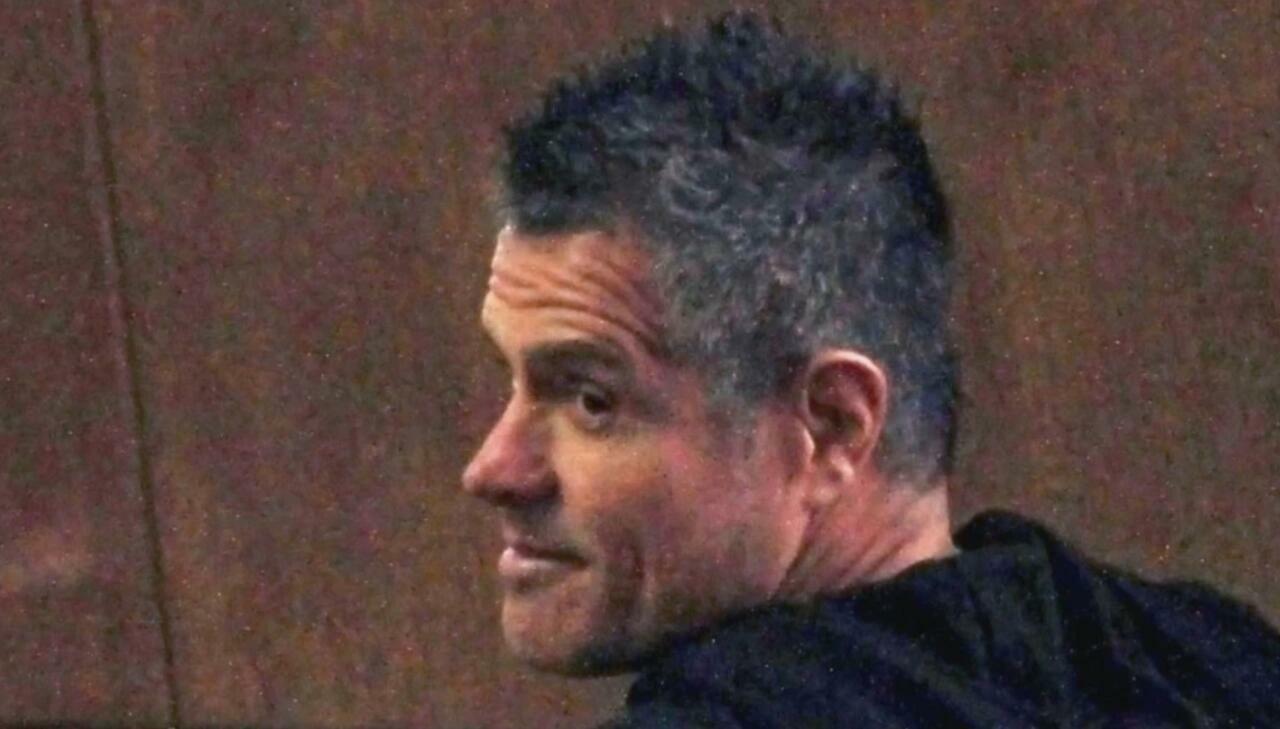

Evelin Banev
Speaking in court this week, Banev told Swiss prosecutors that top executives at the Zurich-based banking giant were aware of his activity, but decided to keep it hush-hush and continue serving Banev as a client (keep in mind, the illegal activity from this investigation took place between 2004 and 2008, well before the 1MDB scandal).
The trial began last week and is expected to conclude some time in early March. Banev is reportedly connected to the Bulgarian "gang" due to his status as a "mule", carrying money across international borders. At one point, Banev in an email played down the killing of one of his associates reportedly due to drug-trafficking activity.
The case hinges on illegal relations established between Switzerland’s second-largest bank and former Bulgarian wrestler Evelin Banev and multiple associates, two of whom are also charged in the case. The Bulgarian cocaine trafficking gang allegedly employed Banev, who is accused of hauling millions in currency by car to Switzerland. The events reportedly unfolded between 2004 and 2008.In an email from June 2005 read out in court last week, the banker played down press reports linking the murder of one of Banev’s associates a month earlier with drug trafficking."After the homicide we have decided to continue the business relationships,"the banker wrote in the email. "The said (short and imprecise) article linking the murder to Spanish cocaine… has not been confirmed."
After being found guilty of money laundering in Italy and Bulgaria a few years ago, Banev was detained in Ukraine back in September. His attorney in Sofia (Bulgaria's capital city) denied that his client had been involved in money laundering tied to drug trafficking. Meanwhile, a CS banker has also been implicated in the criminal activity.
Last week, Banev’s attorney said in Sofia that his client denied any involvement in laundering money from drug trafficking through Credit Suisse. Meanwhile, the former wrestler was convicted of drug trafficking in Italy in 2017 and money laundering in Bulgaria in 2018. Banev was detained in September in Ukraine after Bulgaria and Romania sought his arrest.The banker accused of helping conceal the criminal origins of the money, totaling more than 146 million Swiss francs in transactions, appeared in Federal Criminal Court in Bellinzona with her managers, who gave evidence. The banker’s identity cannot be reported under Swiss privacy rules.
Credit Suisse disputes the notion that the money was illegal in origin. The bank also claimed that Banev and his circle operated legitimate businesses in construction, leasing, and hotels.
Ukraine Defense Chief Says "Low Probability" Of Major Conflict With Russia, Contradicting Biden
Ukraine Defense Minister Oleksii Reznikov told parliament on Friday that there is a low probability of any major escalation with Russia. He added that Ukraine intelligence sees every move made in the area.
Tensions at the Russia-Ukraine border have been ongoing, with several Western nations repeatedly predicting a huge war. Ukraine has chided those nations for causing a panic.
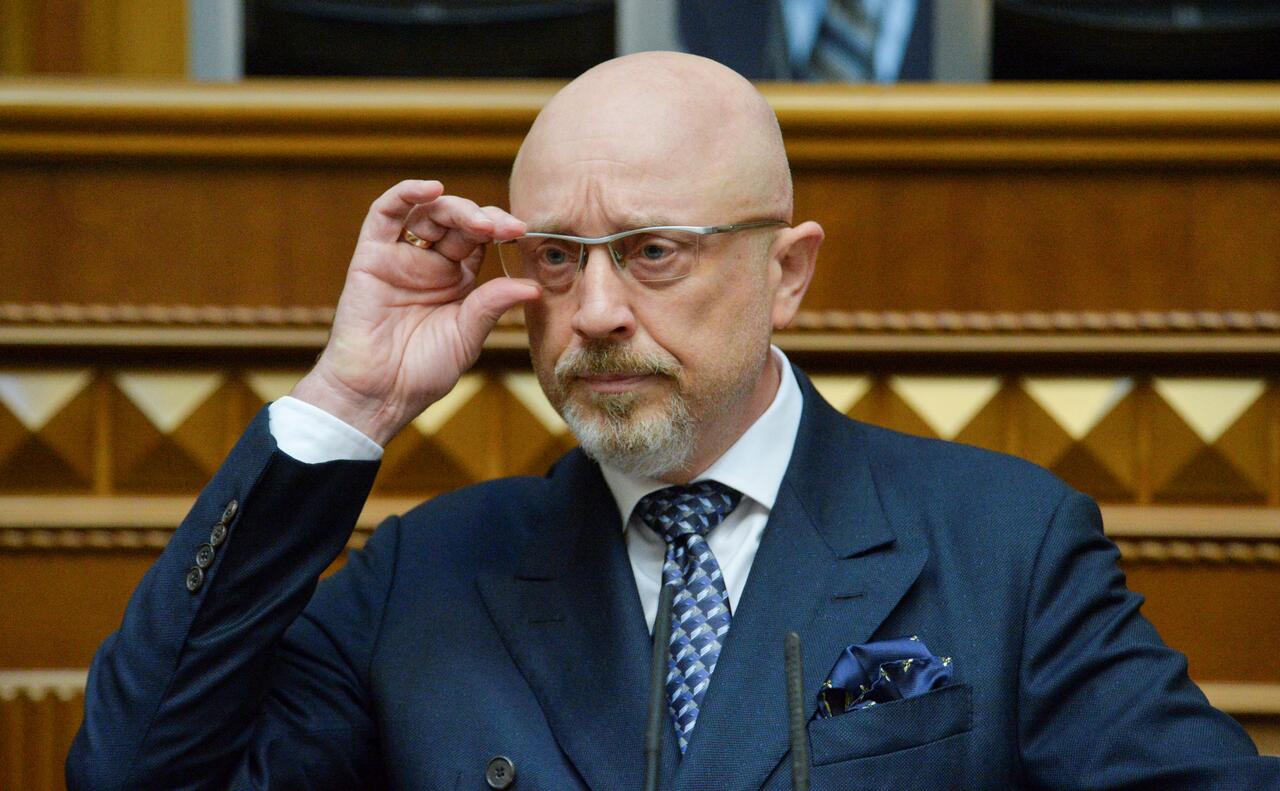

Def. Miniter Oleksii Reznikov, via Reuters
"Our intelligence sees every move that could pose a potential threat to Ukraine. We estimate the probability of a large-scale escalation as low," Reznikov said.
The timing of the statement is interesting given that just the day prior, President Joe Biden stuck by the White House assessment that an invasion is imminent.
"We have reason to believe they are engaged in a false flag operation to have an excuse to go in," Biden told reporters at the White House on Thursday. "Every indication we have is they're prepared to go into Ukraine and attack Ukraine."
The fact that Ukraine's defense chief, who is certainly closer to the situation than anyone at the White House, directly contradicted Biden's words is no minor thing.
Predictions of such a conflict go back years, and while previous Ukraine officials had similar pessimism about it, more recently officials see a lot more chance for diplomacy.
Meanwhile, US officials have continued seeking to convince and warn Kiev that a 'Russian invasion' is imminent...
President Biden again predicted a Russian invasion Friday, noting a Russian offer to talk later this month and suggesting there’d be no point if invasion happens first. Ukraine’s own assessment is clearly far afield of America’s.
ConocoPhillips Sells Excess Bakken Gas To Bitcoin Miner
ConocoPhillips is selling natural gas that would have been otherwise flared to a third-party Bitcoin miner in the Bakken in North Dakota, the U.S. oil and gas producer said this week.
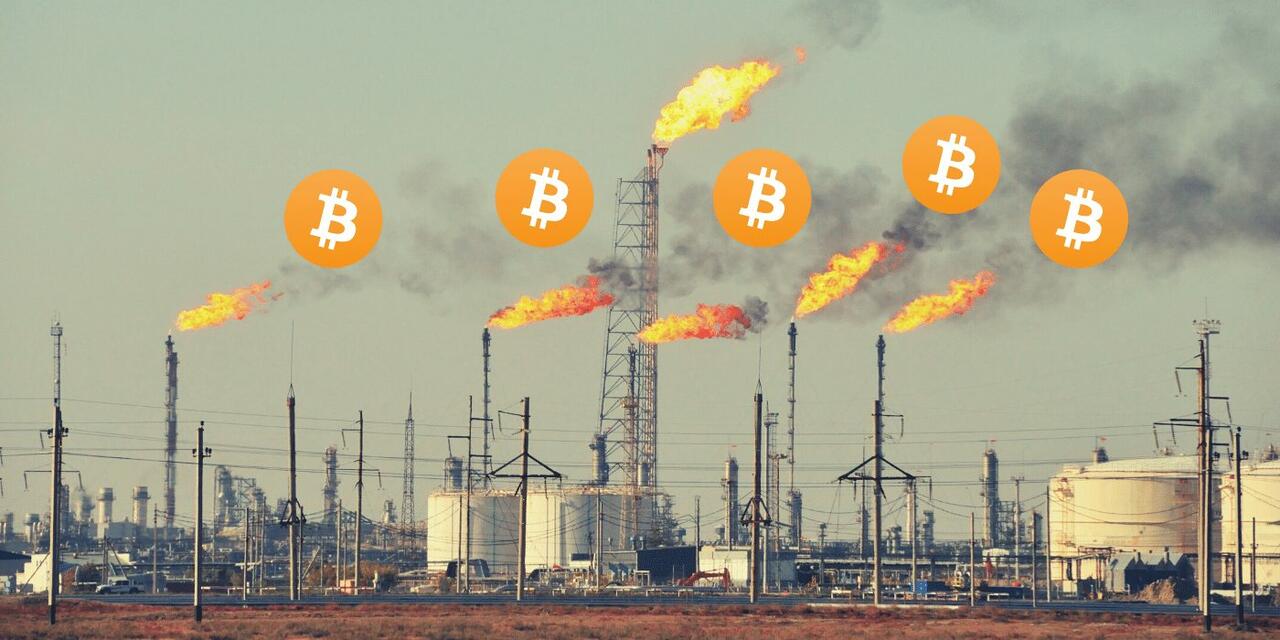
ConocoPhillips has one pilot project in Bitcoin mining currently in operation in the Bakken, the second-largest major shale play after the Permian, a ConocoPhillips representative said in a statement to CNBC.
“ConocoPhillips has one bitcoin pilot project currently operating in the Bakken, where gas that would otherwise have been flared is routed to a bitcoin processor owned and managed by a third party,” a spokesperson for ConocoPhillips told CoinDesk in an emailed statement.
Selling excess natural gas from production in the Bakken fits the company’s pledge to end routine flaring by 2030.

ConocoPhillips has endorsed the World Bank Zero Routine Flaring by 2030 initiative and set a target to reduce methane emissions intensity in 2020. The oil and gas company set an ambition to reduce operational greenhouse gas (GHG) emissions to net-zero by 2050. ConocoPhillips has a target to get to zero routine flaring by 2030, with an ambition to get there by 2025.
Flaring emissions make up only 8 percent of ConocoPhillips’s total greenhouse gas emissions, yet the target “will drive continued near-term focus on routine flaring reductions across our assets,” it says.

By selling the extra gas to a third-party Bitcoin miner, ConocoPhillips also gets paid for the gas it would have otherwise just wasted and flared.
Cryptocurrency mining is an energy-intensive endeavor, and recently, some U.S. Democratic lawmakers sent letters to six major cryptocurrency mining companies, asking them to detail their high energy usage, the possible impact on the environment, and the role in driving up power bills for U.S. consumers.
Riot Blockchain, Marathon Digital Holdings, Stronghold Digital Mining, Bitdeer, Bitfury Group, and Bit Digital were sent letters by the lawmakers, who were concerned about “their extraordinarily high energy usage,” Senator Elizabeth Warren said last month