Austria Suspends Europe’s First Universal Covid-19 Vaccine Mandate
Government says the Omicron variant, milder and more resistant to vaccines, makes the mandate disproportionate
The first country in Europe to adopt a universal Covid-19 vaccination mandate is backtracking, saying it will now suspend the measure based on findings showing that vaccines don’t protect well against infections by the Omicron variant.
Austria enacted the mandate last year but it has proven legally complex to design and officials fear it would face court challenges after coming into force later this month.
The mandate was set to impose hefty and regular fines on people who refused to take the vaccine, with police checking for vaccination certificates and authorities accessing medical records to identify the unvaccinated.
The decision shows the difficulties in enforcing such mandates—which have faced political and legal pushback from critics, including parts of the medical community—given vaccines’ limited success at preventing infections by the dominant Omicron variants. Although studies show they are very effective at preventing hospitalizations and death.
Neighboring Germany also announced a general vaccination mandate last year. It has yet to be adopted by parliament and is unlikely to be implemented soon.
The mandate is now no longer proportionate as a tool to curb the pandemic, Austria’s minister for the constitution Karoline Edtstadler said Wednesday.
“We must be as flexible and as adaptable as the virus is,” Ms. Edtstadler said.
The situation will be revisited in three months, she said. Should a new variant appear that would be more susceptible to the existing vaccines, the mandate could be reimposed, a spokesman for the Austrian government said.
An expert body that advises the government warned in a recent report that a new coronavirus wave could emerge in the fall.
The country of nine million continues to have relatively high infection rates. The seven-day rolling average is now 3,480 cases per million inhabitants, according to figures by Our World In Data, a project based at Oxford University. This is significantly higher than neighboring countries such as Germany, France and Italy.
Coronavirus-related hospitalizations in Austria have been rising slightly from 229 per million inhabitants on Feb. 7 to 293 on March 7, according to the project. In France and Italy, the hospitalization rate has been dropping: on March 7 it was 329 and 159 per million respectively.
Nonetheless, the country has in recent days lifted most of its pandemic restrictions as the majority of Omicron infections appear to be mild. Around 74% of Austrians have been vaccinated, meaning that there are less than one million people who would be affected by the vaccine mandate.
Germany's Economic And Environment Ministries Advise Against Extending Nuclear Plants To Combat Energy Fears
The flip flopping in Germany over nuclear power continues, with Germany’s economy and environment ministries now reverting back to their old tune of advising against extending the life of three existing nuclear power plants in the country.
The ministries had "examined if and how extending the life of the power plants in question would contribute to easing Germany’s reliance on Russian energy imports following Russia’s invasion of Ukraine," Bloomberg wrote in a Tuesday morning wrap-up.
After considering whether or not the steps would ease supply bottlenecks for the coming winter and next "several years", they concluded that it would only have a "very limited" impact in remediating the country's need for power.
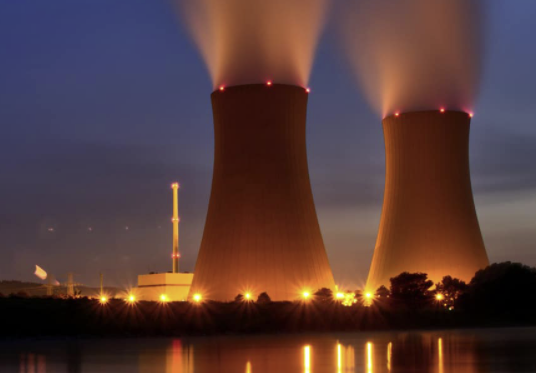
This remediation would come at a "very high economic cost", the ministries found. It could also "carry constitutional and security risks," the report says. Instead, Germany is going to implement a plan of "placing energy procurement on 'more robust pillars' to reduce dependence on Russia and advance the expansion of renewables," Bloomberg wrote.
It was reported earlier in the month that the country was potentially considering extending the life-span of its remaining nuclear plants as a way to help secure the country's energy supply, given the ongoing geopolitical crisis in Ukraine.
"The harsh realities of war have led the proverbial energy horse to water in terms of what the most practical solution is to maintain energy in Germany. Now, the country needs to also understand that this isn’t just a temporary solution to their energy problem. Instead, nuclear represents the keys to its long-term energy independence if it wants it," one Zero Hedge contributor wrote days ago.
We'll wait for Germany to come back around.
Let's check in when crude hits $150...and then again at $200...
English water companies face probe over sewage treatment
Regulator Ofwat warns of enforcement action after identifying ‘shortcomings’ in most of the regional monopolies
Five of the largest water companies in England face further investigation after the regulator raised “serious concerns” over their sewage treatment.
All 11 water companies in England and Wales submitted reports in December to Ofwat, the industry regulator, on their waste water operations.
Anglian Water, Northumbrian Water, Thames Water, Wessex Water and Yorkshire Water — which together cover around half of England and Wales or 32.7mn customers — now face further “enforcement action”, Ofwat announced on Wednesday.
It added that five of the other regional water monopolies were still being looked into and could face further investigation. Fines can be up to 10 per cent of annual turnover for civil cases, or unlimited in criminal proceedings.
David Black, Ofwat interim chief executive, said: “We have identified shortcomings in most water and wastewater companies and are continuing to investigate. But we have already seen enough in five companies to cause serious concern and warrant us taking further action.”
Water companies have since 2009 been responsible for reporting their own sewage outflows. However, several of the companies had told Ofwat that they “had difficulty in stating whether a wastewater treatment works was operating in line with required standards” as they did not have monitors in place.
Water companies also said they did not have “sufficient physical capacity” to meet the levels of treatment set out in environmental permits or had “maintenance issues”, which meant the works were handling lower quantities than intended. The “incorrect set up” of site controls or data monitors at treatment works were also factors, as were errors by operational staff, the water companies said.
The investigation, launched by Ofwat in November last year, was sparked by citizen scientists including Windrush Against Sewage Pollution, which analysed river water quality and outflows from sewage treatment works.
Just 16 per cent of coastal waters and rivers meet the minimum good ecological status, according to the latest data from the Environment Agency, the environmental regulator.
England is one of the only places in the world to have fully privatised its water and sewage network, with three listed regional water monopolies and the rest owned by a clutch of private equity, sovereign wealth and infrastructure funds
Investment in the sewage and waste water network has fallen by almost a fifth in the past 30 years, from £2.9bn a year in the 1990s to £2.4bn now, according to research by the Financial Times.
Over the same time the companies, which were privatised with no debt, have borrowed £53bn, the equivalent of about £2,000 per household, much of which has been used to help pay £72bn in dividends.
Two recent court cases against Thames and Southern revealed that water companies deliberately breached legal limits at some sewage plants over several years in order to save money.
Southern received a £90mn fine last year for dumping billions of litres of illegal spills into rivers and seas between 2010 and 2015 in a case described as “shocking and wholesale disregard for the environment” and for “human health”.
Ofwat said on Wednesday that it was monitoring Southern’s compliance package. The Environment Agency is investigating its performance since 2015.
Hafren Dyfrdwy — which covers north-east and mid Wales, was the only water company that did not report any treatment works that potentially did not meet the required rules.
Emma Clancy, chief executive of the Consumer Council for Water, said: “A legacy of this investigation has to be far greater transparency and higher standards of environmental performance from sewerage companies, which need to rebuild trust with their communities.”
One water company executive accused Ofwat of “regulation by press release” but added that “they would still have to take it seriously”.
Water UK, which represents the industry, said: “Water companies have been investing heavily to modernise the monitoring of sewage treatment works, and are increasingly using better modelling and artificial intelligence techniques to quickly find and fix any problems. Companies will continue to work closely with regulators to assess and address any issues that arise.”
H2O defends big Russian rouble bet as it expects short war
Asset manager seeks to reassure investors that Russian currency will rebound
H2O Asset Management has defended an outsized bet on the Russian rouble that has left its investors with substantial losses, telling them it does not expect Vladimir Putin’s invasion of Ukraine to develop into a lengthy conflict.
The wager on the rouble marks out H2O, a former star of the European asset management industry that has lurched from crisis to crisis in recent years, from many investors who have cut their exposure to Russia since Putin sent troops into Ukraine two weeks ago.
Its flagship Multibonds is now down 40 per cent from the middle of February, having lost 9.5 per cent in a single day on Monday, as the rouble continued to slide against the dollar.
ln a video address to investors on Tuesday, H2O’s chief investment officer Vincent Chailley said that the firm had no plans to exit its bet because it expects the currency to rebound, according to people who watched the film.
Chailley said that H2O’s “central scenario” is a “negotiation [between Russia and Ukraine] that will start in the coming weeks”. “Putin knows and said very consistently what he wants to achieve,” he added, before explaining that H2O would adjust the portfolio if there was a further “escalation” in the conflict.
H2O confirmed Chailley’s remarks but declined to comment further.
Multibonds had exposure to the Russian rouble through derivatives that were equivalent to over 48 per cent of its €1.9bn in assets on January 31, just weeks before Russian tanks crossed the border into Ukraine.
The group’s determination to stick with its rouble bet comes as Russia’s invasion entered a 14th day, marked by bombardment of Ukrainian cities. Bill Burns, the CIA director, told Congress on Tuesday that Putin would probably “double down” on his push into Ukraine.
In a letter to investors last week, H2O said that while it had reduced its exposure to Russian debt, it was maintaining its rouble position, as the currency market will “carry on operating” and selling it would be a “gift” to buyers including “the Russian government”.
H2O posted an amended version of the letter to its website on Monday, tweaking the language to remove the word “gift” from the explanation of why it was not planning to dump its foreign exchange bet.
H2O’s chief executive Bruno Crastes has previously expressed disdain for the regulatory limits placed on fund managers, once telling a crowd of fellow investment professionals that their industry had become “corrupted by all this regulation and all this risk management”.
“There is a very simple rule in investment: if you are not able to get poor, you will never get richer,” he said at an awards ceremony in 2018. “When you don’t want to lose, you will never make money.”
Recommended
News in-depthH2O Asset Management
Bruno Crastes: ‘French Soros’ fights for H2O’s future
Despite suffering massive outflows in the wake of repeated scandals, H2O still managed close to €14bn of investors’ money at the end of January.
While its funds are open to retail investors, it is known for taking leveraged bets on currency and bond markets more typically associated with hedge funds. The gross value of Multibonds’ foreign exchange positions exceeded 550 per cent of its assets at the end of January.
The scale of the losses on its Russia bet are now beginning to approach those H2O experienced as the Covid crisis shook the global economy in March 2020. The Multibonds fund lost more than half of its value that month, leading H2O to explain to its investors that “no model could forecast and manage such repetitive shocks”.
Multiple financial regulators have launched investigations into H2O, after the Financial Times revealed that its funds held more than €1bn of bonds linked to controversial financier Lars Windhorst.
Investors in several H2O funds have had a large chunk of their money frozen for the past 18 months, after France’s financial regulator raised concerns about the firm’s hard-to-sell Windhorst-linked investments. The flamboyant German entrepreneur is still yet to fully repay H2O and the company recently wrote down the value of investors’ trapped bonds substantially.
Gapping up
In reaction to earnings/guidance:
- BMBL +21.1%, OTLY +13.6%, FIGS +12.5%, MDB +12.2%, EXPR +10.7%, ZIM +8.1%, THO +6.6%, DV +5%, AGTI +5%, RKLY +5%, ABM +4.4%, CIVI +3.5%, DSEY +3.2%, ASX +2.1%, GWRE +0.7%, CASY +0.7%, KFY +0.6%
Other news:
- XPO +12.4% (announced plans to create two standalone businesses through spin-off transaction)
- EXAI +10.5% (announced abstracts accepted for presentation at AACR Annual Meeting)
- NRXP +6.5% (CEO retires; appoints Robert Besthof as interim CEO)
- TDW +3.9% (acquires Swire Pacific Offshore; also reported earnings)
- F +3.2% (adds new charging hardware to its one-stop shop of commercial vehicles software services and financing)
- SNCR +2.8% (agreed to divest Digital Experience Platform and Activation Solutions)
- BA +2.4% (receives new order for additional 777 freighters from DHL Express)
- RKLB +2.4% (begins qualification of next-generation solar cell technology)
- BKD +2.3% (Reports February 2022 Occupancy)
- NY +1.7% (reports Efanesoctocog alfa met primary and key secondary endpoints)
- PYPL +1.6% (disclosed suspension of services in Russia)
- QSR +1.5% (Tims China announces additional financing and investor-friendly changes to merger agreement)
Analyst comments:
- ERIC +6.7% (upgraded to Neutral from Sell at UBS)
- MTCH +4.3% (upgraded to Outperform from Market Perform at BMO Capital Market)
- OLPX +3.8% (upgraded to Overweight from Equal Weight at Barclays)
- DLTR +2.9% (upgraded to Buy from Hold at Loop Capital)
- EMR +2.6% (upgraded to Outperform from Perform at Oppenheimer)
- JBHT +2.1% (upgraded to Buy from Neutral at Goldman)
- NFLX +2% (upgraded to Neutral from Underperform at Wedbush)
- ADP +1.8% (upgraded to Neutral from Underperform at BofA Securities)
- PPL +1.5% (upgraded to Outperform from Peer Perform at Wolfe Research)
- PAYX +1.1% (upgraded to Neutral from Underperform at BofA Securities)

Gapping down
In reaction to earnings/guidance:
- CRCT -31.9%, YEXT -30.9%, SFIX -25.5%, WTI -2.7%, PLCE -1.7%
Other news:
- KNTK -11.1% (prices upsized underwritten secondary offering of 3,478,261 shares of its Class A common stock by Apache (APA) Midstream at a price of $58.00 per share)
- OSCR -6.1% (disclosed departure of COO & EVP of Platform)
- GCI -2% (issues statement in response to Wall Street Journal Story regarding advertising data)
Analyst comments:
- DXC -1.8% (downgraded to Underperform from Buy at BofA Securities)
- ES -0.6% (downgraded to Peer Perform from Outperform at Wolfe Research)

Biden to Order Study of Cryptocurrency Risk, Creation of U.S. Digital Currency
Federal agencies to explore financial and environmental concerns and inform regulatory action
WASHINGTON—President Biden will sign an executive order on Wednesday instructing agencies across the federal government to study the possible risks presented by the explosion in popularity of cryptocurrencies and consider the creation of a U.S. digital currency.
The executive order will urge federal regulators to review the risks a roughly $1.75 trillion crypto market presents to consumers, investors and the broader economy. Federal agencies will have several months to prepare a report with their findings, which will then inform any new regulatory actions the White House takes, a senior administration official said.
About 16% of adult Americans, or roughly 40 million people, have invested in, traded or used cryptocurrencies, according to a White House fact sheet. That growing prevalence of digital assets, which include volatile cryptocurrencies like bitcoin and so-called stablecoins pegged to assets like the U.S. dollar, has pushed the Biden administration to centralize its work on the topic. White House officials have been working with the crypto industry and experts for several months to prepare the executive order.
“This is not a niche issue anymore, and it’s profoundly important that we have the right tools to mitigate the risks to consumers and to investors and frankly to the entire financial system,” a senior administration official said.
Under the executive order, the Biden administration will scrutinize how cryptocurrencies may undercut U.S. sanctions and efforts to fight money-laundering, a senior administration official said. Those concerns have been heightened as the U.S. has leveled sanctions on Russia in response to its invasion of Ukraine. The administration will also study the impact that energy-intensive crypto mining has on the climate.
The Biden administration will also formally consider the creation of a possible U.S. digital currency, a cryptocurrency backed by the Federal Reserve, according to a White House fact sheet. The Federal Reserve is already evaluating the possibility of a digital currency, which some other countries, including China, have already adopted. A person familiar with the matter said the executive order will ask the Justice Department to study whether Congress would need to authorize the creation of a digital currency.
While in many ways a broad, initial review, the White House executive order opens the door to more substantial federal regulation in a sector that agencies have previously largely sidestepped or addressed piecemeal.