FT : Energy prices: volatility of German power smacks of market dislocation

Energy prices: volatility of German power smacks of market dislocation
Germany may be exacerbating the crisis it seeks to quell

What is wrong with the European energy market? The simple reply is that Russia is using it for political blackmail. But everyone has known this for months. It does not satisfactorily explain why a key German energy future, the “front year” power baseload contract for 2023, rose last Friday. It leapt 25 per cent to close at almost €1, 000 per megawatt hour.

Volatility in this and other contracts is rattling energy suppliers and purchasers. The price movements feed into steep inflation forecasts for next year, worsening western Europe’s apocalyptic mood.

The European Energy Exchange was alarmed enough to call an extraordinary meeting of its member council this week. This rejected a halt to trading, while calling for EU states to bolster the strained finances of energy buyers. That stress was reflected in a plea from German utility Uniper for another €4bn bailout to keep the lights on.

Wild volatility is sometimes a characteristic of a malfunctioning market. That was the diagnosis when nickel surged in London earlier this year. That did not reflect fundamentals but one big, overextended short seller.


Liquidity, or the lack of it, is playing a part in recent energy price swings, which predate Russia’s full-scale invasion of Ukraine. Prices rose in August 2021, triggering bankruptcies at UK energy suppliers.

Other participants have quit European energy markets, deterred by volatility and soaring collateral requirements. Traded power volumes are down 40 per cent in Europe in the first six months, says broker Marex.

Disruptions at French nuclear and hydro generators are adding to the pressure that shortages of Russian gas are putting on energy markets. Enough substitute gas has been found in the short term. In that respect, energy markets cannot be described as broken.

They may be badly skewed, though. One theory blames Germany’s “whatever it takes” philosophy of support for power companies in their rush to secure winter supplies. That encourages sellers to sit on their hands, waiting to see how high prices can spiral. Germany may thus be exacerbating the crisis it seeks to quell.

(ZH) Pentagon Stockpiles "Uncomfortably Low" Amid Ukraine Transfers, Officials A

Pentagon Stockpiles "Uncomfortably Low" Amid Ukraine Transfers, Officials Admit

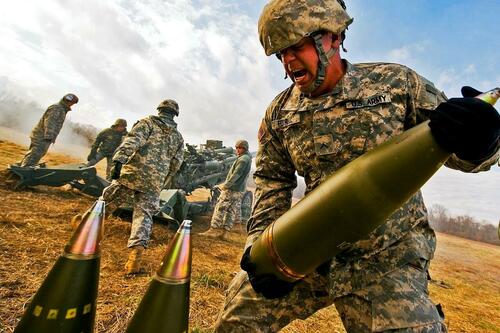
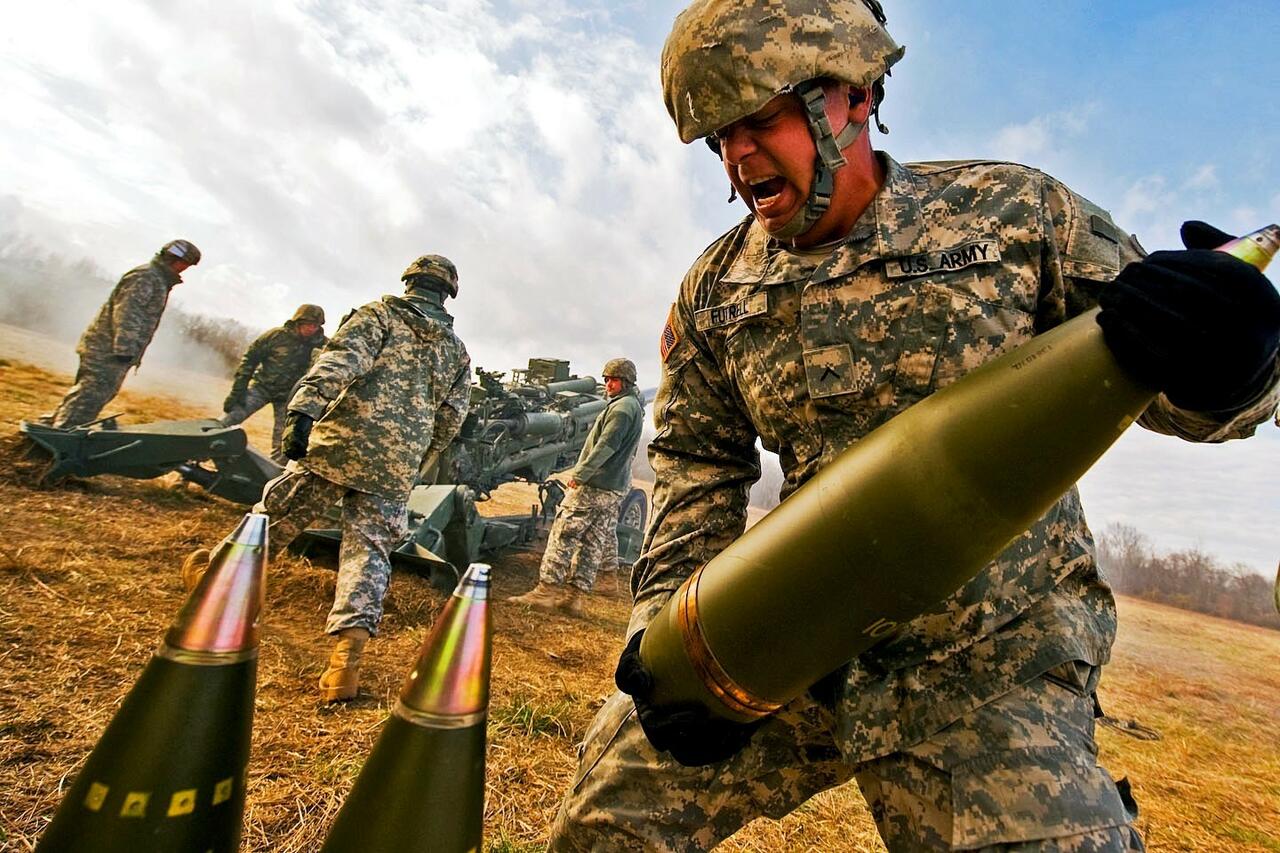
"It is not at the level we would like to go into combat," a US defense official told The Wall Street Journal of the Pentagon's fast depleting stockpiles due to unprecedented defense aid to Ukraine, and stressed in particular that artillery ammunition is now "uncomfortably low".
What's more is that the shortfall will likely last into the future, given the norm is for new purchases and then manufacturers supplying the weapons to take a process of years.
"The U.S. has during the past six months supplied Ukraine with 16 U.S. rocket launchers, known as Himars, thousands of guns, drones, missiles and other equipment. Much of that, including ammunition, has come directly from U.S. inventory, depleting stockpiles intended for unexpected threats, defense officials say," the report spells out.
Image: US Army
In total so far, the US has pledged to send about $13 billion in arms to Ukraine after only six months of conflict. Given the alarm over Washington's own dwindling stockpiles, the DoD is now opting to send 105mm rounds to Ukraine instead of the 155mm guided 'smart' artillery shells.
In early July, a senior US defense official told reporters in a briefing that the Ukrainian army was at that point firing about 3,000 155mm shells per day:
The revelation came amid questioning on the latest tranche of weapons and ammunition being sent to Ukraine, including, for the first time 1,000 guided 155mm 'smart' shells.
The official said despite the high usage rate, Ukrainian forces still have "substantial stores" of 155mm rounds and are far from running out with more rounds on the way. The U.S. and NATO allies have donated hundreds of thousands of 155mm rounds to Ukraine.
But already at this point it seems the Pentagon is becoming increasingly uncomfortable with the rate of these 'donations'.
The Wall Street Journal report indicated further that the US Army has requested of Congress another $500 million per year to enhance its own ammo factories. It remains that the biggest winner in all of this is the big defense contractors and manufacturers.
Meanwhile, other NATO allies are facing this same problem and worry, especially 'neutral' Germany which has dramatically shifted its historic stance on not sending weapons into foreign conflict zones. A number of German politicians have warned that Berlin should not be sharing weapons from its own arsenal, given that "Unfortunately, the situation here is such that we have an absolute deficit in our own stocks," according to the recent words of Foreign Minister Annalena Baerbock.
Speaking to German media agency ZDF, she said: "However, Germany must also think in the medium term. Due to the German arms problem, the armaments industry had to dedicatedly produce material for the Ukraine."

>> US Gapping down

Gapping down
In reaction to earnings/guidance
:

  • CONN -5.7%, PLAB -1.4%

Other news:

  • SGMO -3.8% (Updated Preliminary Phase 1/2 Data in Fabry Disease Clinical Study Showing Continued Tolerability and Sustained Elevated a-gal A Enzyme Activity in Five Longest Treated Patients)
  • AX -2% (files to delay 10-K due to required testing and validation of Axos Advisor Services activity having taken longer than anticipated)
  • LCID -1.4% (files for $8 bln mixed securities shelf offering; also stock offering related to warrants)

Analyst comments:

  • MOLN -5.8% (downgraded to Sector Perform from Outperform at RBC Capital Mkts)
  • GCO -0.7% (downgraded to Neutral from Buy at Seaport Research Partners)

WWD : Will the Hottest Ticket at September Fashion Weeks Be an NFT?

Will the Hottest Ticket at September Fashion Weeks Be an NFT?
Prada and Jason Wu are among the brands pairing tokens with tickets as brands strategize for the future.

Prada, Jason Wu and Gucci too. Major luxury brands are offering up special access to fashion shows and events to holders of their NFTs — a practice called “token-gating” — that could change the front row and serve as a new velvet rope.

“More and more, token-gated experiences are going to become the thing for 2023,” said Arianee chief executive officer Pierre-Nicolas Hurstel.

For the last several seasons, Arianee has handled the NFTs for Paris Fashion Week, tying them to official accreditations.

Prada and Jason Wu have already added September fashion week tickets to their tokens; Gucci held a private cocktail in New York last June for the holders of their SuperGucci and Gucci Grail NFTs.

Arianee has previously worked with IWC watches and YSL, and is currently working with several other brands on creating specialized experiences that will take place during the upcoming fashion weeks in September or January.

Brands are looking at what they can do during PFW using the official NFTs. “That’s going to open an amazing range of possibilities, and then it creates a foundation, an asset, for the brand to build experiences,” Hurstel said.

As PFW attendees build up their wallets from season to season, and all the years of check-ins that come with it, brands can choose communities of people and give them access to token-gated experiences — aka “parties” in common parlance. Brands can also see the social graph of who has attended past events, and guests have proof they were there.

The data can help brands grow their NFT programs quickly as they figure out how to bridge the gap between the internet and IRL. Plus, pairing an NFT to an event is a way to “cut through the noise” when it feels like a new collection or collaboration is announced every day, Hurstel said.

“Brands need to navigate the journey between the current market hype, the actual utility and the purpose and integrity of the NFT. Because jpegs of images on the internet are one thing, but if it leads to a physical item, that’s where there’s an opportunity,” said Sean Pattwell, chief executive officer of CW8 Communications, which advises luxury brads on NFT and Web3 strategy. Coveted items are one value-add, and coveted invites are another.

“If you have an NFT and it gives you some level of access to experiences and a community, that’s pretty amazing,” Pattwell said.

Traditionally the fashion industry has been exclusive, with shows only open to insiders, though a massive shift in the guest list has already taken place. Hurstel said the brands he works with have noted that shows used to be 10 percent consumer driven, and now they’re 80 percent consumer driven as the number of industry buyers has dropped. They’ve been replaced by influencers and celebs livestreaming, and runways are purpose-built for Instagram.

NFT access is the likely next step in that evolution.

“This kind of unlocking experiences is what’s really exciting. It’s a way to create something meaningful for your key consumers and actually build relationships with new audiences,” Pattwell said. “A lot of people who are in the crypto world, they’re a new network and they have new resources, and want to be able to spend them. Being able to learn about the fashion industry, whether that’s attending a party or going to a fashion show or even being invited to a digital experience — that’s really cool and innovative and completely different.”

Brands will focus on building community and value for the users who buy in.

“There’s going to be a race among different brands to articulate what their community is, what their community stands for and what the purpose and intention of it is. You’re gonna see it in the next couple of months, more and more brands coming out, explaining what are the benefits of holding one of their NFTs.”

Token-gating might be the new normal — at least until NFTs become widely adopted and have their own value as collectibles, Hurstel said. “This is a great way to give value, and you have to compensate the fact that you can’t have the maximum amount of value from an NFT today because the infrastructure and the use agent is not completely built and distributed. So you have to compensate by giving perks.”

Hurstel predicts that will change as quickly as the market has been moving, from cumbersome crypto wallets to something accessible for an average shopper. “What’s going to change tremendously in the next 24 months is the level of the user interface for anyone to be able to own an NFT,” he said.

While this summer has been the “crypto winter” of price drops, disappearing value and well-publicized wallet thefts, luxury brands are still betting on the future.

“Fashion brands are not looking at this from the crypto price speculation, they’re purely looking at this as a new way to engage with new audiences and what type of community they want to build,” Pattwell said. “You can focus on the NFT, but it isn’t actually about the NFT, it’s about the community and the community is where everything happens.”

“If you don’t nurture and build a digital community and continue to communicate with them, bring them things they’re interested in, they’re going to lose interest and abandon ship,” he added. “So it’s really important for any brand to think about the sustainability of it. It can’t be a one and done.”
>>> US Gapping up

Gapping up
In reaction to earnings/guidance
:

  • GAMB +5.5%, BIDU +3.6%, BBY +2.4%, HEI +1.4%, BIG +0.6%

Other news:

  • FREY +11.4% (announces the execution of 38 GWh Li-Ion Battery binding cell sales agreement; enters into module & pack JV for energy storage solutions with Nidec)
  • AVID +9.6% (to join S&P SmallCap 600)
  • RVLP +2.3% (Revision Skincare announces strategic partnership with RVLP)
  • NMMC +2% (terminates previously announced merger with Corcentric)
  • DOLE +2% (Jan Barta disclosed 5.2% active stake last night)
  • FSLR +1.8% (to invest up to $1.2 bln scaling production of American-made responsible solar by 4.4 GW)
  • IGT +1.4% (IGT and DDI settle lawsuit)
  • HAE +1.3% (announces deal with Epic to offer its SafeTrace Tx blood bank info to Epic's network of hospitals)
  • WNC +1% (adds two new dealers)
  • SNY +1% (receives FDA priority review for efanesoctocog alfa)

Analyst comments:

  • AOUT +5.5% (upgraded to Buy from Neutral at B. Riley Securities)
  • GPS +3% (upgraded to Equal Weight from Underweight at Barclays)
  • PDD +3% (upgraded to Buy from Hold at HSBC Securities)
  • MMYT +2.5% (upgraded to Buy from Neutral at BofA Securities)
  • SEE +1.3% (upgraded to Neutral from Underweight at JP Morgan)