FT : Google invests $300mn in artificial intelligence start-up Anthropic

Google invests $300mn in artificial intelligence start-up Anthropic
Cash-for-computing deal shows how large tech groups are investing in companies at the vanguard of generative AI

Google has invested about $300mn in artificial intelligence start-up Anthropic, making it the latest tech giant to throw its money and computing power behind a new generation of companies trying to claim a place in the booming field of “generative AI”.

The terms of the deal, through which Google will take a stake of around 10 per cent, requires Anthropic to use the money to buy computing resources from the search company’s cloud computing division, according to three people familiar with the arrangement.

Google’s move highlights the influence that a small number of Big Tech companies have assumed over other companies working on AI, which need access to cloud computing platforms to handle the giant AI models developed by groups such as Anthropic.

The search company’s investment also echoes the $1bn cash-for-computing investment that Microsoft made in OpenAI three years ago.

The Microsoft deal set OpenAI on a path to building a series of breakthrough AI systems, culminating in the launch late last year of ChatGPT, a chatbot that can converse with users through text. The software giant followed up last month with what it described as a second, “multiyear, multibillion-dollar” investment in the company.

Both OpenAI and Anthropic are seeking to make developments in generative AI, sophisticated computer programs that can write scripts and create art in seconds.

While Microsoft has sought to integrate OpenAI’s technology into many of its own services, Google’s relationship with Anthropic is limited to acting as the company’s tech supplier in what has become an AI arm’s race, according to people familiar with the arrangement.

Anthropic was formed in 2021 when a group of researchers led by Dario Amodei left OpenAI after a disagreement over the company’s direction. They were concerned that Microsoft’s first investment in OpenAI would set it on a more commercial path and detract from its original focus on the safety of advanced AI.

Anthropic has developed an intelligent chatbot called Claude, rivalling OpenAI’s ChatGPT, though it has not yet been released publicly.

The start-up had already raised more than $700mn before Google’s investment, which was made in late 2022 but has not previously been reported. The company’s biggest investor is Alameda Research, the crypto hedge fund of FTX founder Sam Bankman-Fried, which put in $500mn before filing for bankruptcy last year. FTX’s bankruptcy estate has flagged Anthropic as an asset that may help creditors with recoveries.

Google’s investment was made by its cloud division, run by former Oracle executive Thomas Kurian. Bringing Anthropic’s data-intensive computing work to Google’s data centres is part of an effort to catch up with the lead Microsoft has taken in the fast-growing AI market thanks to its work with OpenAI. Google’s cloud division is also working with other start-ups such as Cohere and C3 to try to secure a bigger foothold in AI.

Google and Anthropic declined to comment on the investment, or on what say, if any, the tech giant would have over the start-up’s business.

According to a filing in Delaware, where Anthropic is incorporated, it has two classes of stock, one of which carries 10 times the voting rights of the other. Dual-class stock arrangements such as this are often used by founders of tech companies to make sure they stay in control and can dilute the influence of outside investors.

9to5 : Another unopened OG iPhone is going up for auction; here’s how much it’s


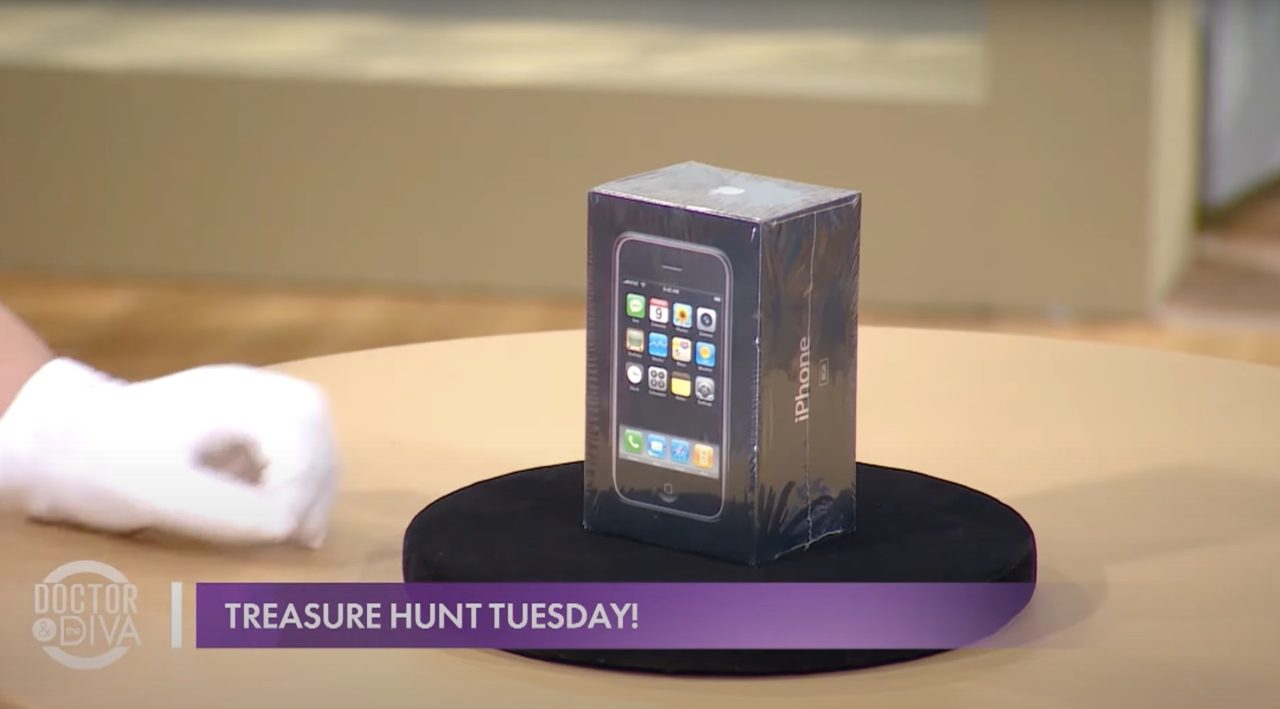
An unopened original iPhone is hitting the auction block today, and it could fetch quite a bit more than what it cost in 2007. Karen Green told Insider that she was gifted the iPhone in 2007 but never opened it and was prompted to put it up for auction following a similar sale back in October.

In October, a sealed original iPhone sold for a record-setting price of $39,340, a major increase compared to the $599 list price of the device. The auction house where Green has listed her original iPhone predicts that this one could go for “at least $50,000.”
In an interview with Insider, Green explained that she was gifted this iPhone in 2007, but she was a Verizon customer, and the original iPhone could only be used with AT&T. Instead of selling it at the time, Green kept it in its sealed box and put it on a self, “wrapped in a pair of felt pajamas for extra storage.”
She’s now selling the iPhone to help fund her new tattoo studio business:
“If I could hold off on the phone for like another 10 years, I probably would,” she says. “The only reason why I am selling that phone is because I need to support this business.”
If you’d like to get in on the action, you can bid via the LCG Auctions website. The starting bid is $2,500, but it’s estimated to end up selling for at least $50,000. The auction runs through February 19.
At this point, we have no idea how many first-generation iPhones are still out in the wild, sealed in their original packaging. We’re guessing it’s a small number, given the ever-increasing prices of sales on eBay and through auction houses.

WSJ : FTC Prepares Possible Antitrust Suit Against Amazon

FTC Prepares Possible Antitrust Suit Against Amazon
Federal Trade Commission considers challenge to array of practices by Amazon, a target of criticism from Chair Lina Khan

The Federal Trade Commission is preparing a potential antitrust lawsuit against Amazon. AMZN -5.27% com Inc. that in the coming months could challenge an array of the tech giant’s business practices as anticompetitive, according to people familiar with the matter.

The timing of any case remains in flux, some of the people said. The commission also could opt not to proceed, and doesn’t always bring cases even when it is making preparations to do so.

Amazon officials haven’t had individual late-stage meetings with each of the FTC commissioners to make their arguments against a legal challenge, those people said.

The commission in recent years has been examining Amazon practices including whether it favors its own products over competitors’ on its platforms and how it treats outside sellers on Amazon.com, according to some of the people familiar with the matter. The FTC also has been scrutinizing the company’s Amazon Prime subscription service’s bundling practices, some of the people said. Exactly which aspects of the business the FTC would target in a potential Amazon lawsuit couldn’t be learned.

Amazon and the FTC declined to comment. The company has said repeatedly that it competes fairly and that its services benefit both customers and sellers on its platform.

If the commission does sue, it would mark a signature moment in the tenure of FTC Chair Lina Khan, who built her career in part by arguing in a widely read academic paper that Amazon had amassed too much market power and that antitrust law had failed to restrain it.

An FTC case also would be an escalation of efforts by U.S. antitrust enforcers to rein in the nation’s largest technology companies. The commission sued Facebook in 2020, accusing it of buying and freezing out small startups to choke competition. The case remains pending. The Justice Department, which shares antitrust authority, has filed two broad antitrust lawsuits against Alphabet Inc.’s Google, including one last month that targets the company’s ad-tech business.

Facebook-parent Meta Platforms Inc. has rejected the FTC’s assertions and said its acquisitions have been good for competition and good for those who use its products. Google said the Justice Department’s arguments are flawed and that the advertising technology sector is highly competitive.

The FTC began investigating Amazon during the tenure of Republican Chairman Joseph Simons, who ran the agency while Donald Trump was president. In 2019, Mr. Simons and his counterparts at the Justice Department brokered a jurisdictional agreement for federal antitrust investigations of big technology companies. The Justice Department took the reins on Google and Apple Inc. while the FTC took Amazon and Facebook.

Shortly after Ms. Khan was confirmed as FTC chair in 2021, Amazon filed a petition with the commission that argued she should be recused in investigations of the company, in light of her extensive past criticisms of Amazon. The commission hasn’t publicly responded to that petition, though it has rejected similar recusal arguments made by Facebook. A federal judge also ruled against Facebook on the recusal issue.

Amazon, Apple, Google and Meta were the focus of a 16-month congressional antitrust investigation into the competitive behaviors of the tech giants that concluded with a 449-page report in 2020. The House Antitrust Subcommittee’s report, which Ms. Khan worked on as a counsel to the panel, determined that Amazon had “monopoly power” over sellers on its site, bullied retail partners and improperly used seller data to compete with rivals.

In a blog post the day of the congressional report, Amazon warned against “ill-conceived ideas” about regulation that threatened to force changes to its platform that it said would hurt both consumers and small sellers. “All large organizations attract the attention of regulators, and we welcome that scrutiny,” it said. “But large companies are not dominant by definition, and the presumption that success can only be the result of anti-competitive behavior is simply wrong.”

The Wall Street Journal in a 2020 article detailed how employees in Amazon’s private brands business have used data about independent sellers on the company’s platform to develop competing products, a practice at odds with the company’s stated policies. The Journal also reported about Amazon’s tactic of leveraging dominance in one business to compel partners to accept terms from another, which rivals said go beyond typical product bundling and tough negotiating in part because the company threatens punitive action on vital services it offers, such as its retail platform.

Amazon at the time said that it prohibited employees from using nonpublic, seller-specific data to determine which products it launched, and that negotiating across its business units was normal practice in business.

The FTC also has been investigating non-antitrust issues related to Amazon, including whether the company might have used misleading practices to sign up subscribers to its Amazon Prime program, and whether it impedes the ability of consumers to cancel their subscriptions.

In August, Amazon complained about the FTC’s probe and accused the FTC of making excessive and unreasonable demands on founder Jeff Bezos and company executives. It asked the FTC to quash civil subpoenas issued to Mr. Bezos and Chief Executive Andy Jassy. The FTC largely rejected the request.

In December, Amazon agreed to settle two European Union antitrust cases related to allegations about its treatment of third-party sellers on its platform.

Amazon, which didn’t pay a fine as part of the settlement, committed to give third-party sellers in the European Union that use Amazon an equal shot at being selected as the default option for the buttons in Amazon’s so-called Buy Box and to qualify for its Prime shipping program. The company also as part of the settlement agreed to abstain from using nonpublic data about sellers on its marketplace to compete against them in the European Union.

Amazon said at the time that it disagreed with several of the EU’s allegations, but engaged in a settlement to preserve its ability to serve customers and businesses in Europe.

FT : Ford to return to Formula 1 with Red Bull deal after two-decade absence

Ford to return to Formula 1 with Red Bull deal after two-decade absence
US carmaker will use top-flight racing to grow awareness and develop electric technology

Ford is returning to Formula 1 after a two-decade absence in an effort to drive demand for its electric vehicles, just as the sport starts to shift from the traditional engines for which it is renowned.

The US carmaker has joined forces with Red Bull to return to the sport in 2026, when new rules requiring the use of sustainable fuels come into force.

As it invests $50bn into its electric vehicles business, Ford is betting that its return to F1 will allow it to showcase its technology while increasing awareness of its cars. Red Bull Ford Powertrains will provide engines to both of Red Bull’s F1 teams, which include the reigning world champions and Scuderia AlphaTauri.

Ford’s decision comes as F1, which is owned by US billionaire John Malone’s Liberty Media, has in recent years expanded the number of races in the US. The sport has also been boosted by the success of Formula 1: Drive to Survive, a Netflix series tracking the drama of a F1 season.

Liberty Media has sought to redraw the economics of the sport to entice manufacturers and investors. A spending cap for teams has been imposed and technical changes made to cars that are designed to make races more competitive.

Ford quit F1 in 2004 after several decades during which it racked up 10 constructors’ championships and 13 drivers’ championships before it left the sport. It remains the third most successful engine manufacturer in F1 history. 

“Ford is a global brand with an incredible heritage in racing and the automotive world and they see the huge value that our platform provides with over half a billion fans around the world,” said Stefano Domenicali, chief executive of Formula 1.

Bill Ford, the carmaker’s chair, said: “This is the start of a thrilling new chapter in Ford’s motorsports story that began when my great-grandfather won a race that helped launch our company.”

The company is expected to set out further details of its F1 plans later on Friday. 

The growing interest among carmakers shows how the sport’s expansion into the US and the Middle East is starting to pay off. Volkswagen and General Motors have both also explored a return to the sport.

VW’s Audi brand has acquired a minority stake in Sauber Group, which already owns an F1 racing team. The upcoming engine changes in 2026 have attracted Porsche, which is championing zero-carbon liquid fuels as a way of continuing to sell engine-based cars. 

However, Porsche abandoned talks last year to partner with world champions Red Bull after failing to agree terms.

Ford’s announcement comes a day after the group’s latest results showed it slumped to a $2bn loss last year, as a writedown on its stake in electric vehicle group Rivian, the continued chip shortage and the shutting of its self-driving car business took their toll.

Jim Farley, Ford chief executive, said on Thursday that he was “frustrated” with the company’s progress, adding that strong sales of some models had masked wider “dysfunctionality” within the business.

FT : Kering creates in-house beauty unit in effort to widen customer base

Kering creates in-house beauty unit in effort to widen customer base
Division will develop cosmetics and perfumes for various brands owned by the French luxury group

French luxury group Kering has announced it will create an in-house beauty division to develop cosmetics and perfumes for its fashion brands including Bottega Veneta and Alexander McQueen.

The new division will be “strategically important” as part of the group’s efforts to build “a new area of expertise”, said group managing director Jean-François Palus.

However it will not be able to develop product lines for Gucci, Kering’s crown jewel brand, or Yves Saint Laurent, the French fashion house, because Coty has the beauty licence for Gucci until at least 2028, while YSL cosmetic products are produced by L’Oréal.

Rafaella Cornaggia has joined from US-based cosmetics brand Estée Lauder to lead the new division at Kering. She previously worked at L’Oréal and Chanel.

It will focus on developing products for Kering brands including Bottega Veneta, Balenciaga, Alexander McQueen, Pomellato and Qeelin.

Thomas Chauvet, analyst at Citigroup, said that it made “perfect sense to internalise the beauty business, as [Kering] has done in eyewear in the last seven years”.

He added that the group wanted to take back beauty licences, the bulk of which were with Coty. “The most attractive [licence] to internalise is Gucci,” he added. Citi estimates the Gucci licence is currently worth about $500mn a year in sales for Coty.

Beauty is big business internationally, and can help luxury brands widen their customer appeal with products that are cheaper than clothes, shoes and bags. LVMH generated €7.7bn in revenues from cosmetics and perfume last year, from a total of €79.2bn.

Kering had a beauty business until the mid-2000s under its YSL Beauté brand, but it remained small and was sold to L’Oréal for €1.15bn in 2008.

Kering is one of the world’s biggest luxury groups worth €73.3bn, but it is dwarfed by LVMH, which is valued at €408bn.

Kering, which is controlled by the billionaire Pinault family, has increased revenues more slowly than its rivals and is heavily dependent on Gucci, which brings in more than half of annual revenues and three-quarters of operating profits.

Last week, Kering named Italian designer Sabato de Sarno as Gucci’s new creative director.

FT : Adani/TotalEnergies: French company’s due diligence was inadequate

Adani/TotalEnergies: French company’s due diligence was inadequate
Adani’s star shows every sign of burning out

Until this year Indian billionaire Gautam Adani had star quality, and with it a gravitational pull. That force attracted a top corporate investor TotalEnergies into the Adani orbit. It has invested $3.1bn in various Adani Group companies since 2018, including into the listed Adani Total Gas and Adani Green Energy. Both shares have halved in value since the publication of a critical report on the Adani Group by short seller Hindenburg Research last week.

This is embarrassing for TotalEnergies. Concerns about Adani had surfaced in August, yet the French company only commented on Friday. Claims that its exposure only represents about 2 per cent of capital employed should not diminish shareholder concerns.

These investments, public and private, focused on helping India reduce its carbon footprint. Coal supplies 44 per cent of the country’s energy consumption, according to the International Energy Agency.

TotalEnergies bought over 37 per cent of the locally listed Adani Total Gas in October 2019 to sell LNG into India. Despite this month’s fall, its share price remains well above TotalEnergies’ likely entry price. Also, Adani Total Gas appears to have minimal leverage with net debt of worth $100mn, about the same as its trailing ebitda.

However, the French energy group could have a problem with Adani Green Energy. The former acquired a 19.75 per cent interest in this company, one of India’s largest renewable power producers, in January 2021. Then that was worth about $4bn. As of Friday that was worth 11 per cent less.

Adani cannot afford to lose TotalEnergies’ support. Though profitable, Adani Green Energy is highly leveraged at 14 times its historical ebitda with rapidly rising capital spending. Moody’s noted in August that a key credit risk factor for Adani Green Energy, given its debts, was any reduction in the shareholding by TotalEnergies.

Adani’s star shows every sign of burning out. TotalEnergies must not only consider marking down its exposure to the Adani Group, but should also rethink its India energy strategy.

Business O Fashion : Sephora Responds to Claim Its Clean Beauty Programme Is Any

Sephora Responds to Claim Its Clean Beauty Programme Is Anything But
The LVMH-owned beauty retailer asked a federal judge to dismiss a lawsuit alleging its “Clean at Sephora” designation is false advertising.

On Thursday, Sephora filed a motion to dismiss a lawsuit brought by a customer who alleges the retailer’s “Clean at Sephora” label is a form of false advertising. In a November filing, Lindsey Finster claims that the designation led her to believe some products’ ingredients “were not synthetic nor connected to causing physical harm and irritation.”

“Sephora prominently explains, in plain terms, exactly what it means by the phrase … ‘Clean at Sephora’ along with a clarifying definition that describes the kinds of ingredients that are excluded,” the company said in its filing Thursday.

The “Clean At Sephora” programme launched in 2018, as a growing number of beauty brands marketed their products as “free from” an ever-expanding list of chemicals and additives. With minimal federal regulation of cosmetics, “clean” beauty designations became the de-facto alternative for brands and retailers in the last decade. Retailers like Ulta Beauty and Target came up with their own definitions, and brands use labels like Sephora’s in marketing.

Some of these ingredients are banned in Europe but not in the US, or have research supporting claims they can irritate the skin or trigger allergies, while evidence for other entries on brands’ “free from” lists is patchy. Detractors of “clean” beauty have called attention to the unclear meaning of the word and what ingredients are and aren’t on brands’ and retailers’ lists.

Since 2018, Sephora has made yearly updates to its programme. Currently, 138 brands participate in “Clean At Sephora.” From the start, Sephora defined its “Clean” seal as referring to products that are “formulated without parabens, sulfates SLS and SLES, phthalates, mineral oils, formaldehyde, and more.” The motion to dismiss noted that if consumers want to learn more about the “Clean at Sephora” programme, they can consult individual product labels and the retailer’s full definition on its website.

In its filing, Sephora said the plaintiff was “twisting purposes to mean something other than what they say or are said to mean” and that Finster “implausibly claims to think or how she personally may use the word…in a way wholly different from how Sephora clearly states it is using it.”

Finster is represented by Spencer Sheehan, who in recent years has gained attention in the media and in legal circles for filing hundreds of class-action lawsuits against food and consumer goods companies, often alleging false advertising over discrepancies between what’s on the label and what’s in the product. In 2021, NPR said Sheehan had “almost single-handedly caused a historic spike in the number of class action lawsuits against food and beverage companies.”

Now it seems he’s turned his attention to beauty.

“These questions are not as ambiguous as the defendant’s attorneys are saying,” said Sheehan of Sephora’s motion to dismiss. “We disagree with the arguments made by the defendant and will be offering our arguments why we believe those representations are misleading.”

Business Of Fashion : The Pandemic Sweatpants Brand That Kept on Growing

The Pandemic Sweatpants Brand That Kept on Growing
Aviator Nation’s pricey sweatpants and cashmeres had a cult following before they were swept up in the “dopamine dressing” phenomenon. Now, founder Paige Mycoskie – still the brand’s only shareholder – is ready to see just how big her vision for California surfer cool can get.
Aviator Nation's chill, California surfer-inspired branding made it a "dopamine dressing" favourite during the pandemic. (Aviator Nation)


Dr. Courtney Campbell, a veterinarian who serves as an onscreen pet expert for Good Morning America, was strolling down Santa Barbara’s bustling State Street Promenade when he noticed many pedestrians wearing the same sweatshirt — deliberately faded, with five rainbow stripes and a gold-tone zipper. As an East Coast native easing into California style, Campbell was intrigued.
“Everyone wearing them looked so relaxed and polished — like they sold their tech company and became a surfer,” he said with a laugh. “Some had beautiful French bulldogs. I was like, ‘That breed is so trendy right now. Those hoodies must be, too.’”
Dr. Campbell had entered the land of Aviator Nation, a haze of sea foam and vibes where cotton is pummeled to optimum softness, and smiley faces and hand-stitched rainbows confirm the luxury of belonging. Created in 2006 by a Texas-born reality television veteran named Paige Mycoskie, the brand is anchored in the famously chill surf scene of Venice Beach, California, though today it blares its motto (“Live. Love. Fly.”) at its boutiques in enclaves from Malibu to Aspen, and at Nordstrom, Bloomingdale’s and other retailers from coast to coast. It’s a world with steep cover charges for entry: Aviator Nation’s signature sweats cost about $180; the brand also makes tees, swimsuits, outerwear, and cashmere, with most priced between $150 and $500.
Though it’s been a sleeper hit with wealthy Malibu kids for years, the brand truly skyrocketed in 2020 when stay-at-home shoppers suddenly needed couch clothes that also looked cute on Instagram. After posting $27 million in sales for 2019, Aviator Nation nearly tripled that figure to $70 million in sales in 2020.

Plenty of other brands followed a similar trajectory selling comfortable clothing at premium prices early in the pandemic. But unlike the now-defunct Entireworld or countless cooling athleisure brands, Aviator Nation just keeps getting bigger. Sales hit $110 million in 2021; last year, they rose to $130 million. Mycoski told BoF she’s expecting between $150 million and $200 million in revenue in 2023.
The brand is also profitable, and has been since its second year. Mycoskie, who remains Aviator Nation’s sole shareholder, credits her brand’s success to its origins outside the fashion system: Though the company now has 582 employees, it started as a one-woman show in Mycoskie’s garage.
“My overhead was very low in the early years and I was always sure not to spend more than I was bringing in,” Mycoskie said. (She has never taken outside investment; she considers Nov. 29, 2019 Aviator Nation’s first day of “true profitability” because “that’s the day I paid off all my debts and credit lines.”)
Still, hundreds — if not thousands — of other brands sell expensive sweats and cashmere. Why has Aviator Nation succeeded where so many others proved to be a pandemic flash in the pan?
“I think their secret sauce is really how they’ve harnessed the magic of a certain type of California star power,” said Bonnie Morrison, a strategic marketing and communications advisor who served as Coach’s vice president of public relations for five years. “To me, it harkens back to Jennifer Aniston’s maharishi pants and white tank top in the 90s. In Hollywood, dressing down became a kind of flex … You would be so famous you didn’t have to conform to any dress code … you don’t need to wear the trend because you, as a star, are the trend.”
How Aviator Nation Got Its Wings
In 2002, Mycoskie competed on The Amazing Race with her brother, Blake Mycoskie (they placed third; he went on to found Toms Shoes). The experience was formative.
“It made me so tough,” she said. “They gave us a teeny budget. We were trying to survive off very little food, sleeping on the street, or once in the jungle in Brazil … I realized I could get through anything, and that’s helped me every single day of running Aviator Nation. Business is hard and scary. But not terrified-in-the-jungle scary.”
Paige Mycoskie founded Aviator Nation in 2006. (Courtesy)
Mycoskie moved to Los Angeles, where she worked for a time helping the CBS casting department select contestants on Survivor. Her career in fashion began when she needed a hoodie.

It was 2006, the height of The O.C. ‘s sun-streaked emo reign, and Mycoskie stitched rainbow stripes onto her sweats, then dyed and distressed them in her kitchen sink. As she ran errands in her adopted hometown of Venice Beach, Mycoskie — sporty, blonde, and radiant — was the perfect ambassador for her accidental brand. People asked, “Where’d you get that outfit?” enough times to imply she could be onto something.
“Growing up, I was obsessed with 70s skater style,” she said. “I loved flared jeans and checkerboard Vans. I thrifted them in Texas … My grandmother taught me to sew as a kid, but I didn’t as an adult until I wanted a 70s sweatshirt and couldn’t find one.”
After inventing a name — “Aviator Nation” after Top Gun’s fighter pilot style — Mycoskie rented a Venice street fair booth for $500. She made $8,000 by lunch. Small orders from trend launchpads Fred Segal and Planet Blue followed and Mycoskie opened an online store, shipping clothes from her garage. Each piece came with a note still printed inside her hoodies today:
“This garment is rad. I know because I made it... There is one problem I must warn you about: People will come out of nowhere and want to know who you are. I suggest not wearing it in a crowded place unless you have a couple bodyguards; then it’s probably ok, and if you’re already famous and wearing this garment, you will more likely become super famous.”
In recent years, Jared Leto, Kate Hudson, Ben Affleck and Selena Gomez have worn Aviator Nation, along with thousands of ordinary customers who aspire to dress like them.
That dynamic plays out on the brand’s Instagram, an endless parade of models on seaside walks and coffee runs. The scenes are copied in real life (and then, like a fashion funhouse mirror, reposted on Instagram) by micro-influencers like Trista Giuntoli, who includes affiliate links to buy the same Aviator Nation merchandise worn by her family in various posts.
“I bought one sweatshirt, then never stopped,” said the Washington native, whose family wore Aviator Nation in their Christmas photo. (She purchased the items herself.) “I loved that they were made in the US and truly cared about how the product was produced.”
Dopamine Dressing
Aviator Nation went from a cult label to a household name in 2020, when “dopamine dressing” became a major market driver, bringing candy-colored hues and soft, oversized shapes to stressed millennials suddenly working from the couch.

Among the victors were Justin Bieber’s smiley-face streetwear for Drew House, Selkie’s Candyland dresses, and Rachel Comey’s swirly knits for Target. Aviator Nation’s cozy fabrics and surf graphics fit right in. After investing profits back into the company for more than a decade, in 2021, Mycoskie took her first-ever dividend, for $47.5 million.
Aviator Nation's sales more than doubled in 2020, and have since nearly doubled again. (Nick Onken/Nick Onken)
Previously, Mycoskie had taken a slow-and-steady approach, with small production runs and a gradual expansion of its store network (the brand has 16 retail locations, from second-home havens like Marin County and Aspen to emerging tech and cultural hubs such as Austin; each is designed, and even painted, by Mycoskie herself).
She could also look to her brother to see how the alternate path can play out. Mycoskie admits she’s competitive with her brother in career matters, “though I think we’ve done our own thing right from the beginning,” she said. Tom’s was almost an immediate phenomenon. In 2010, Blake Mycoskie sold a 50 percent stake in his company to Bain Capital, taking a reported $300 million to step back from a brand, which some analysts believe grew too fast. The brand was acquired by its creditors in 2019.
“People said I should design for another label instead,” she said of her early days in fashion. “Then when we got bigger, they said I should license out [our] name… manufacture overseas instead of in LA … Where would we be if I took that advice?”
The Flip Side of Inclusion
Morrison says what makes Aviator Nation stand out in such a crowded leisurewear marketplace is combining that star power with the 70s surfer vibes that Mycoskie once hunted for in thrift stores, before even visiting California.
“The Malibu angle and Venice Beach angle is very cool, because it grounds the identity of the brand in something real,” she said. “Hippie surf California was a time that actually happened. Venice Beach and the Malibu shore are places that actually exist.”
That out-of-time vibe has been challenged over the years, especially in the wake of the protests against racial injustice in the wake of George Floyd’s murder in 2020. Brands and their founders faced considerable pressure to express solidarity with the Black Lives Matter movement and engage more meaningfully in social justice work.
In June 2020, Mycoskie posted an image of two hands—one with darker skin, one lighter—and the caption UNITE: Black Lives Matter to Instagram and Facebook. That same month, she appeared in a Los Angeles Times story as an “LGBTQ mover and shaker” telling the newspaper, “It’s time to be out, loud and proud of who you are, regardless of your skin color.”
Beyond these hints at solidarity with progressive causes, Mycoskie declines to endorse or denounce any political affiliation, sticking mainly to broader messaging around female empowerment, or collaborating on merchandise for the Global Citizens Festival, a celebrity concert series that raises money to fight extreme poverty, distribute anti-malaria drugs and other broadly popular causes.
“Everyone has a right to their voice,” she said. “I don’t want to shut anyone out. I want them to come together.”
Aviator Nation hasn’t been able to stay entirely above the fray. The brand has been called out on social media for marketing imagery that overwhelmingly features thin, blonde models. And in February of 2022, the company faced further scrutiny over its incorporation – its critics say appropriation – of Indigenous motifs on moccasins and tees, including a branded tipi.
“We love and respect the Native American culture,” Mycoskie told Forbes in a statement. “I have many friends and employees who are descendants of the Native American culture, and my goal will always be to not only respect these other cultures but celebrate them.”
The motifs are no longer used in any Aviator Nation merchandise or promotions.
Mycoskie’s unwillingness to wade into the discourse doesn’t appear to have affected sales. If anything, Aviator Nation’s constant serenity in the face of the country’s bitter division is part of the brand’s appeal, softening its fans’ anxieties like a Pacific wave that smooths down a sharp rock.
Or, its critics might say, the brand is catering to Americans — particularly affluent ones — who seek a permission slip to opt out of reckoning with the full weight of America’s history of racism and inequality. If one of the most successful women in American business can zap away identity politics with a beautiful beam of California sunshine, some take that as a sign they can do the same.
We’re all rad here, after all, and it only costs a premium hoodie to belong.
Expanding the Universe
Like young adult dystopian novels and online role playing games, fashion brands need “world building” — a universe of their very own creation — to succeed. Last year, Mycoskie expanded into lifestyle spaces, creating Aviator Nation Dreamland, a concert venue, bar, and café in the storied Malibu Inn. There’s also Aviator Nation RIDE, a fitness studio in Santa Monica for cycling and yoga.
Aviator Nation has opened 17 stores, with more on the way. (Courtesy)
By the end of 2023, Aviator Nation expects to open stores in Nashville and New York, along with the potential for two others, and is mulling expansion into sneakers, home goods, and pet accessories. (Mycoskie recently adopted a puppy named Jagger as the newest member of the Aviator Nation team.)
Mycoskie is also considering a return to her TV roots – reluctantly of course.
“We get approached a lot to do a reality show,” she said. “I’ve always said no. I do not want to be a TV star but I do want our story out there, so we’re filming almost everything we do now, just in case. I really want to show the little girls out there how to lead a business. So we’ll see.”
>>> ADIDAS' NEW SPORTSWEAR LABEL IS JENNA ORTEGA-APPROVED


ADIDAS SPORTSWEAR
Ever wondered what a mash-up of adidas Performance and adidas Originals would look like? Me neither. But I like the sound of it. And, as it happens, the German brand has launched adidas Sportswear, a label targeting the Gen Z consumer by mixing its Performance and Originals verticals. What a coincidence!

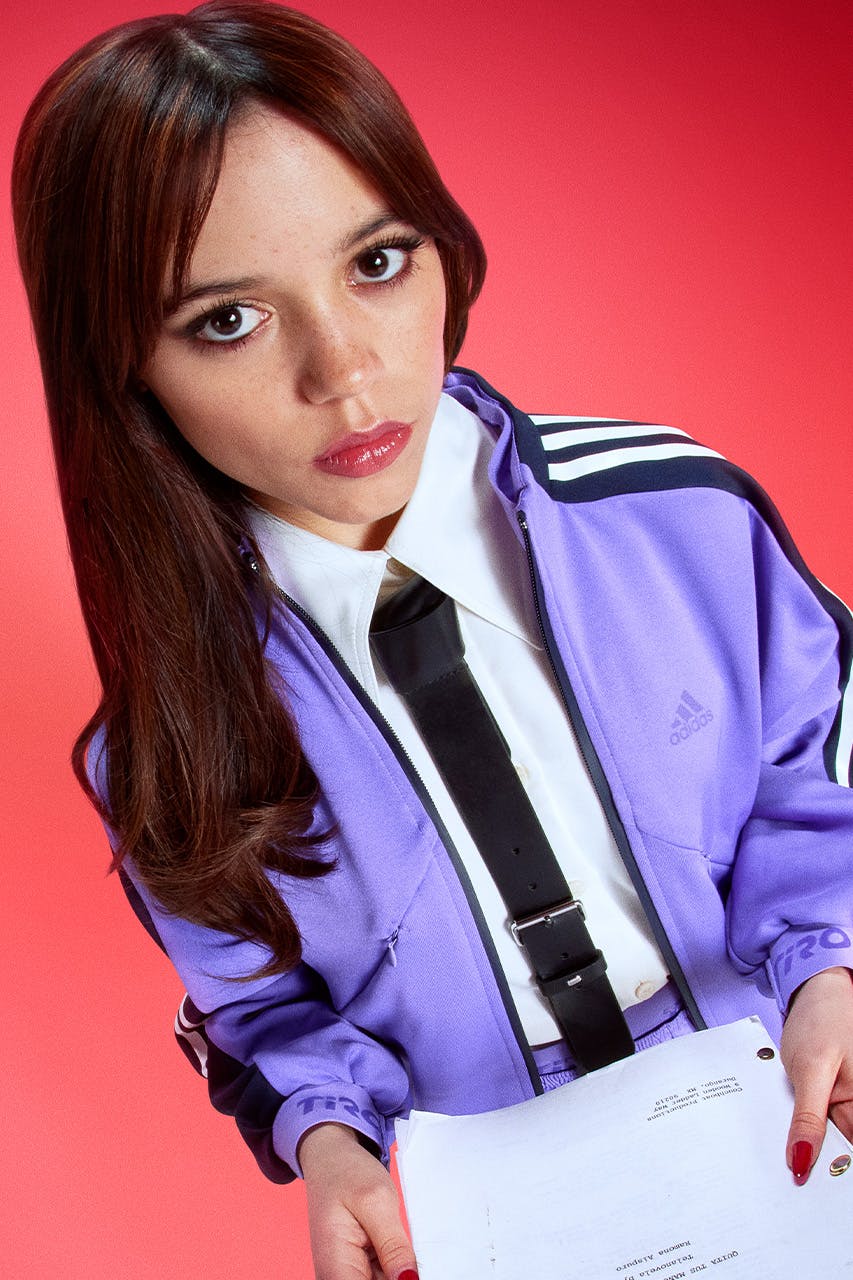
adidas Sportswear is officially the brand’s first sub-label launch in over 50 years and is said to be inspired and built for “the next generation of cultural trailblazers,” one of which is Highsnobiety FRONTPAGE cover star Jenna Ortega.


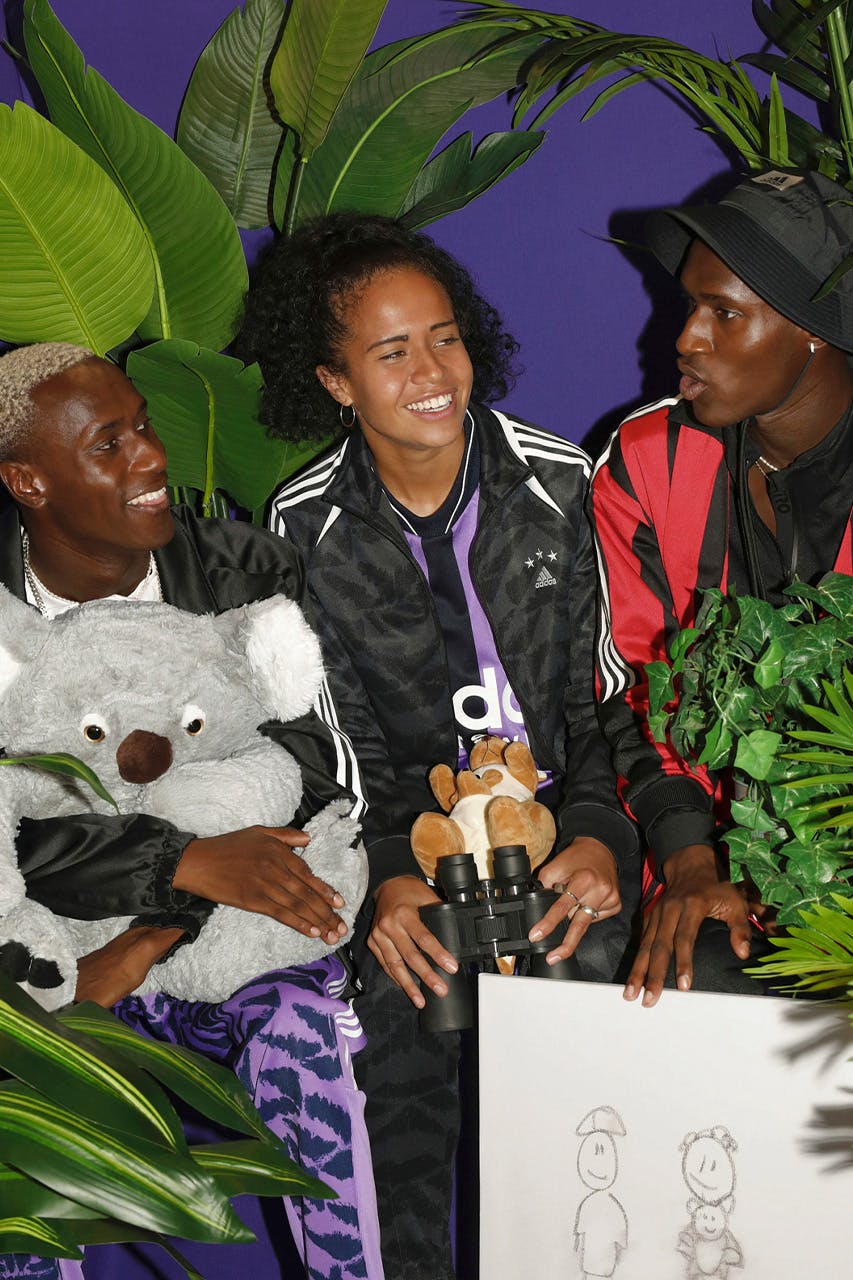
The star of the Netflix series Wednesday is joined by fellow trailblazers Australian footballer Mary Fowler and South Korean footballer Heung-min Son, who too fronted HIGHSNOBIETY’s online series.
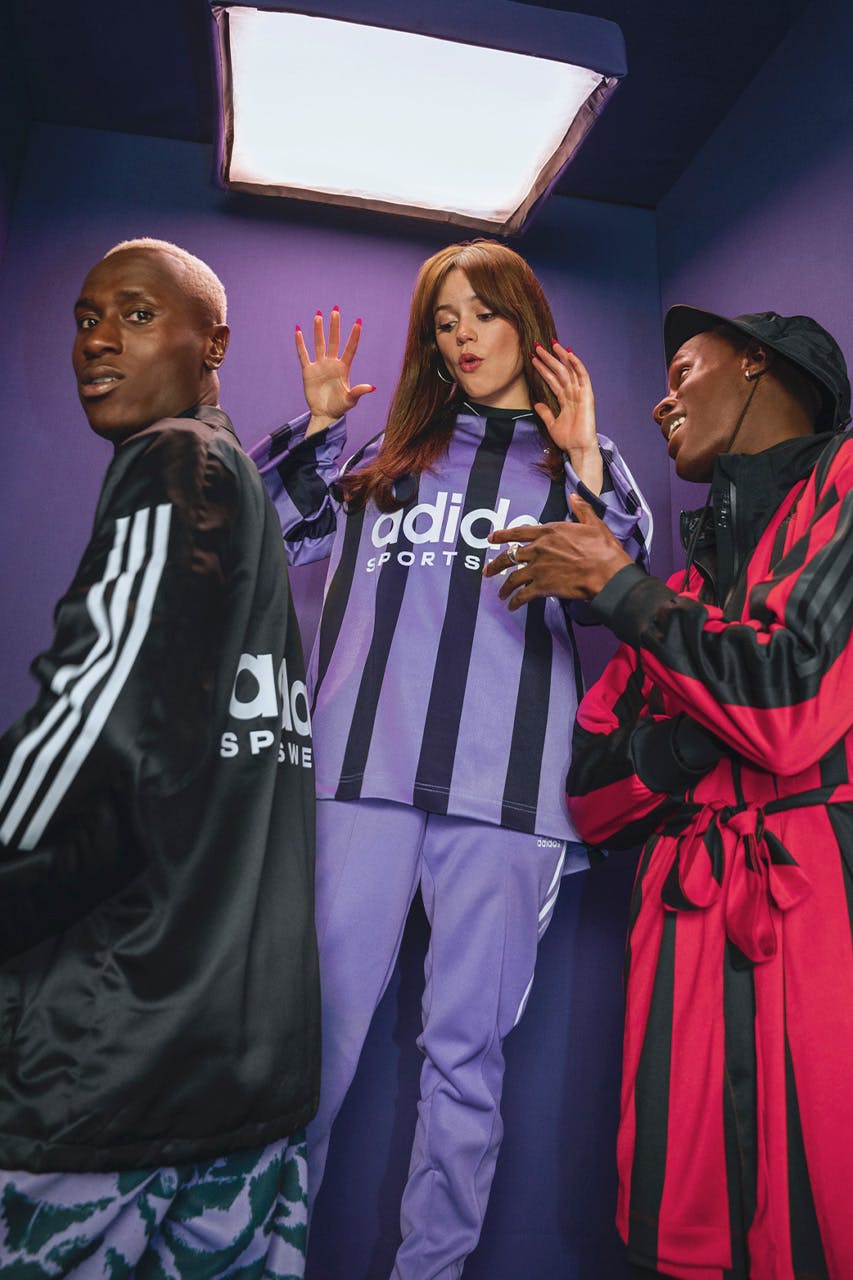
The collection itself fuses the brand’s latest performance technology with the effortless style, comfort, and versatility of its Originals range, with the AVRYN and Tiro Suit taking center stage.
The collection also features a silk-like striped Express Dress, a relaxed-fit Express Jersey, and a sport style Coach Jacket, all of which is available online now.
Its debut SS23 collection showcases simple block color designs and stripped back details, resulting in an adidas capsule as forward-thinking as it is nostalgia-provoking. In short: it bangs.