>>> Up
* Alfa Laval PT Raised to 410 kronor from 360 kronor at Citi
* Alligator Bioscience Raised to Buy at Kempen & Co (+)
* Alphabet PT Raised to $135 from $125 at Morgan Stanley (+)
* Atrium Ljungberg Raised to Hold at Handelsbanken
* B&M European Raised to Buy at Deutsche Bank; PT 580 pence
* Cargotec Raised to Hold at Handelsbanken
* Cargotec Raised to Accumulate at Inderes; PT 50 euros
* Inditex Raised to Hold at Deutsche Bank; PT 27 euros
* Kingspan Raised to Overweight at Barclays; PT 76 euros
* Lundin Mining Raised to Overweight at Morgan Stanley; PT C$12.80
* MaaT Pharma Raised to Buy at KBC Securities; PT 13 euros (+)
* Marks & Spencer Raised to Buy at Deutsche Bank; PT 210 pence
* Pets at Home Cut to Hold at Deutsche Bank; PT 355 pence
* Publicis Raised to Overweight at Barclays; PT 85 euros
* Rockwool Raised to Overweight at Barclays; PT 2,600 kroner
* Rockwool Raised to Overweight at Barclays; PT 2,600 kroner
* Standard Chartered Raised to Buy at Investec; PT 740 pence (+)
* Telenor Raised to Buy at Handelsbanken
* Vastned Raised to Neutral at Oddo BHF; PT 22 euros
* Wereldhave Raised to Outperform at Oddo BHF; PT 17 euros
* Wickes Cut to Hold at Deutsche Bank; PT 160 pence
>>> Down
>>> Down
* Alfa Laval Cut to Hold at DNB Markets; PT 370 kronor
* Asos Cut to Hold at Deutsche Bank; PT 950 pence
* Atlantic Sapphire ASA Cut to Sell at SpareBank; PT 7 kroner
* Atlantic Sapphire ASA Cut to Sell at SpareBank; PT 7 kroner
* Bakkavor Cut to Reduce at HSBC; PT 100 pence
* Boeing Cut to Sector Perform at RBC; PT $225
* Cognizant Cut to Neutral at Baird; PT $68
* Direct Line Cut to Underweight at Barclays; PT 173 pence
* Electrolux Cut to Hold at SEB Equities; PT 145 kronor (+)
* Friedrich Vorwerk Group Cut to Hold at Berenberg
* Friedrich Vorwerk Group Cut to Hold at Berenberg
* Hapag-Lloyd Cut to Sell at Stifel; PT 175 euros
* Hilton Grand Vacations Cut to Hold at Jefferies; PT $52
* IWG Cut to Equal-Weight at Barclays; PT 170 pence
* Kesko Cut to Reduce at Inderes; PT 21.50 euros
* KGHM Cut to Underweight at Morgan Stanley; PT 120 zloty
* Kinnevik Cut to Sell at Nordea; PT 144 kronor (+)
* Kingfisher Cut to Hold at Deutsche Bank; PT 260 pence
* Kuehne + Nagel Cut to Hold at Stifel; PT 238 Swiss francs
* Logista Cut to Neutral at Alantra Equities; PT 26.90 euros (+)
* Mercialys Cut to Neutral at Oddo BHF (+)
* Meta Platforms Cut to Reduce at HSBC; PT $110
* Provident Cut to Hold at Peel Hunt; PT 293 pence
* SRV Group Cut to Reduce at Inderes; PT 4.40 euros
* Telia Cut to Underperform at Bernstein; PT 22 kronor (+)
* Travel + Leisure Co Cut to Hold at Jefferies; PT $49
* VGP Cut to Underperform at Oddo BHF; PT 74 euros
>>> Initiation
>>> Initiation
* Tonies Reinstated Buy at Hauck & Aufhaeuser; PT 8 euros (+)
>>> Call
>>> Call
* Bystronic Sales Beat Though Orders Continue to Slide, ZKB Says (+)
* Europe Tire Companies Attractive, Pirelli Raised: Morgan Stanley
* Friedrich Vorwerk Cut at Berenberg on Project Cost Uncertainties
* Lundin Mining Raised, KGHM Cut as MS Reviews Copper Equities (+)
* SSAB Downgraded at MS With Risk-Reward Balanced After Re-Rating
* SSAB Downgraded at MS With Risk-Reward Balanced After Re-Rating
Cartier Unveils ‘Cleanest So Far’ Jewelry Plant in Turin
Twice as big as original extension plans, the 113,100-square-foot site is fully powered by solar panels and a hydroelectric plant, and is set to double the jeweler's Italian production capacity.
TURIN, Italy — Cartier is doubling down on its production capacity — and social responsibility commitments — with its latest jewelry plant in Turin’s Regio Parco.
With a surface of 113,100 square feet, the new site started operating in January after a two-year renovation and currently houses 360 employees out of the 450 it could accommodate.
Though it is new to Cartier, this isn’t a freshly constructed premise: it was built in the ’70s to house an industrial boiler-making plant.
When the jeweler’s previous rented premises in the Italian city reached its limits, “the question was either to construct from scratch in a green field or use existing buildings,” said chief executive officer Cyrille Vigneron, noting the availability of “an interesting network of buildings” in Turin due to its long industrial history.
Tiffany and Nike Collaboration: An Exclusive First Look at the Sneakers and Accessories
Among them was a striking building in the city’s peripheral Regio Parco district, of the right size but also boasting “a very beautiful architecture and lots of natural light coming in” that was fit for rehabilitation.
“We thought it was nicer to take that premise, to buy the land and the existing building and to make something new within it [as] we wanted to make the site the most sustainable and environmentally friendly,” continued the executive.
Vigneron did not disclose the investment in the plant but said that it had been “substantial” to match an increased output, in light of the very robust COVID-19 rebound experienced in 2021 and 2022. Initial plans had been doubled in size and capacity as “volumes of what [Cartier] has been doing have been really substantially bigger.”
Despite this, the Turin project “was basically on budget,” despite the inflation in construction costs due to the compounded effect of pandemic-driven shortages, further heightened by Russia’s attack on Ukraine.
The executive also revealed that construction began in January on a new production site in Valenza, Italy, which will be ready in the first quarter of 2024. It will be just shy of 55,000 square feet, for up to 180 employees, up from around 40 in the existing one in Valenza.
Cartier has been directly manufacturing in Italy since 2013, when it purchased one of its partners, which itself had absorbed Turin-based jewelry atelier Marchisio, open since 1860.
Overall, these new facilities will amount to “twice the volumes that were produced in 2017 and 2018, a substantial growth,” he added, putting the share of the Turin plant at 80 percent and Valenza’s contribution amounting to the remaining 20 percent of its in-house production.
“We initially wanted to give ourselves [the space] for our ambition to grow jewelry in Italy,” said industrial director Karim Drici, noting that the company would also continue to work with a network of partners in all its production areas in Italy, France and Switzerland. Cartier currently counts nine manufacturing sites, including Turin, Valenza, its Paris high jewelry ateliers, as well as its Swiss watchmaking plants in La-Chaux-de-Fond and a historical 40-year-old facility in Fribourg.
Three times larger than its Turin predecessor, the Regio Parco site was overhauled with the latest technologies and sustainable materials but also following green energy concepts, with the aim of achieving the LEED Platinum certification, the highest achievable level.
Not only does it boast some 41,000 square feet of solar panels on the roof, expected to provide 20 percent of the site’s electrical needs, but there is also a hydroelectric power station an hour’s drive away in the Italian alpine town of Melazzo, in which Cartier has been investing in for the past two years.
It produces 3.5 gigawatts of electricity a year, more than the energy needed to power the Turin and upcoming Valenza plants. Not only will it make Cartier “a contributor to clean energy in the area,” but this production will pay for the upkeep of the power station and associated distribution costs, explained Drici.
Integrated into the network mid-2022, it had already started producing electricity by the time the new plant started operating this year.
Air and water used in the plant will also have been treated to ensure “absolutely no pollution on this side,” according to Vigneron. Adding other employee-facing energy-saving initiatives like electric bicycles and a fleet of electric vehicles for local transport could amount to “the cleanest [production site] we have done so far,” he added.
The Turin plant has started producing iconic designs and fine jewelry pieces, such as the Ecrou, Juste Un Clou, Clash de Cartier and the newly launched Grain de Café, which takes its cues from a 1950s design and made its debut in five markets.
Its production floor, totaling 60,000 square feet, is organized for “legibility and agility” by activity, with the possibility of rapid reconfiguration of equipment and teams to meet evolving needs, such as increased demand on a particular product, Drici explained.
Moving to Regio Parco has allowed Cartier to properly install its product development activities, quality testing and prototyping, he continued, saying it shortened the time-to-market by increasing production efficiency, while pushing higher its quality standards.
Traditional jewelry know-how, including lost wax casting, polishing and gem-setting, will be complemented by the latest technologies, including computer-assisted design, 3D printing used for prototyping as well as casting, high-speed machining and robotized stress testing of plastic deformation.
“Performance is not a dirty word,” said Drici, noting that the project had been approached with the idea of an environment built with performance and efficiency in mind but also to be “beautiful, comfortable and kind” to those working there.
Cartier’s commitments to its ecosystem therefore encompassed its workforce, ranging from management of light and sound to ensure comfortable working conditions to perks that range from gym and wellness activities to eating seasonal produce grown in the plant’s vegetable garden.
While Cartier’s internal production capacity will increase, its verticalization ratio and distribution between in-house specialties and external operations will remain on par with current levels, with partners expected to grow at pace, according to Drici, who gave the example of technological evolutions “shared as early as possible” with partners to ensure easy adoption in a method he dubbed “open innovation.”
Vigneron said the company didn’t have specific plans to acquire its partners, prioritizing the parallel development of their capacities.
The jeweler’s manufacturing ecosystem is “not just an internal [one] that calls on suppliers” but “strong, historic” and “borderless” relationships, added Arnaud Carrez, the jeweler’s senior vice president and chief marketing officer, demurring to provide figures or order of magnitude for these partners.
Within weeks, the Regio Parco site will also be home to the Officina dei Talenti, Cartier’s in-house training school that offers full-time teaching with qualified experts and on-site workshop apprenticeships for up to six months.
This educational program, which currently produces two classes of up to 35 jewelers a year, will be open to new learners as well as re-skilling candidates. Regio Parco includes 40 workbenches for the school.
“Cartier is a house connected with the real world,” said Carrez, calling this educational arm the jeweler’s “role and commitment as an employer brand to contribute to the attractivity of these professions.”
These trainings are inscribed in the Piedmont region’s “Mani Intelligenti” program and Italy’s Federorafi academic programs, with further partnerships with Turin and Milan’s Politechnico schools for engineering and sustainability.
In time, the need was to train hundreds of jewelry specialists, not just for Cartier but also to ensure the continued excellence of European craftsmanship, said the CEO. He deemed this, along with sustainable supply chains and common practices such as those under the Watch & Jewelry Initiative 2030, a “common need” that made Cartier and other major players “more partners than competitors.”
“Overall, the more we have a know-how that grows at level, the more we develop a European know-how which makes luxury stronger. It’s a virtuous circle,” said Vigneron. “When everyone invests in the same direction, it’s beneficial to all.”
Mason Rothschild Wraps Up Testimony at Hermès Trademark Infringement Trial
The case’s ruling, which is not expected until early next week, could be influential in how intellectual property infringement and First Amendment apply to the digital world.

A look at the rare Hermès Himalayan Birkin bag.
Mason Rothschild wrapped up his testimony Thursday at the trademark infringement trial that was brought forward by Hermès and is being held in the Southern District of New York.
The California-based artist has been accused of trademark infringement, dilution and cybersquatting. Rothschild introduced 100 “MetaBirkin” NFTs, two-dimensional images of faux-fur covered handbags that were inspired by the luxury house’s prized Birkin.
Hermès’ executives and its legal team have alleged Rothschild confused consumers and diluted the brand, as well as affected their own already-in-the-works plans for NFTs and the metaverse. Rothschild, whose given name is Sonny Estival, has said the project stemmed from the fur-free initiative that was becoming popular in the fashion industry in late 2021 and his interest in trying to duplicate the illusion of value for the digital handbags that Birkins have in real life. He and his team have argued repeatedly that his artistic expression is protected by the First Amendment and the two-dimensional blockchain-hosted images cannot be used as handbags in the metaverse.
The initial asking price in Ethereum for the 100 NFTs was valued around $450, and some later were resold for tens of thousands.
The case’s ruling, which is not expected until early next week, could be influential in how intellectual property infringement and First Amendment apply to the digital world.
During the cross-examination and recross that followed, both sides debated Rothschild’s recognition for making the MetaBirkins, the involvement of developer Mark Design in creating them, using social media influencers to pump up the value of the Birkin-inspired NFTs, implications of ties to Hermès in text messages and the peak interest in the MetaBirkin community on Discord.
Drawing from thousands of texts that are part of the evidence in the case, one exchange where Rothschild was asked, “Is it official Hermès,” Rothschild responded, “pushing for it,” led to much discussion. The artist told the courtroom that “pushing for it” meant that he would try. Clement Kwan, who was then president of Yoox, had told Rothschild that he knew someone in the Hermès New York press team that he would try to put him in touch with.
One of the other livelier exchanges occurred when Rothschild was being cross-examined by Oren Warshavsky of BakerHostetler about his response to a Tweet suggesting he team up with People for the Ethical Treatment of Animals. Rothschild had indicated how that could lead to “blowback at T27,” (the Los Angeles art, fashion and event space that he co-owns with his fiancé Ericka del Rosario). Explaining that text Thursday, he said it was “just because PETA could be very aggressive.”
Warshavsky asked, “Could it also be because Terminal 27 sells calfskin products?”
“We sell leather products,” Rothschild said. Asked if calfskin and lambskin products are sold there, he said, “There could be.”
Later, while being questioned by his own lawyer about a message inquiring about “any good animal welfare groups,” Rothschild stated how he donated “a little less than $5,000” to the Best Friends Animal Society, (after receiving the cease-and-desist letter from Hermès.)
Ambre-Elise Binoche, social media and web listening director at Hermès International, also testified Thursday about the company’s social media strategy. She also touched upon how Hermès approaches social media (somewhat selectively compared to many major designer brands.) On average, Hermès posts on Instagram once a day, three times a week on LinkedIn and “less frequently” on its other social media channels. Binoche said she also works with the house’s creative team and art buying department to develop content. The latter is in charge of finding talent — artists, photographers, filmmakers, musicians and digital artists to create 3D animated NFTs among other things. “It’s important to collaborate with them,” Binoche said, adding that some partners are invited to create something with Hermès products.
In addition to showing a 3D post that was created by the artist Lucas Zannotto for Hermès, she also spoke of working with the interdisciplinary artist Neïl Beloufa. The latter, whose portfolio includes NFTs, had been invited and attended the annal Innovation Day in November 2021. The event is an internal one to inform employees of new technologies. At that time, Beloufa “was there to talk about his work in NFTs. His idea was to create a physical experience where someone takes a seat, uses a screen to talk to an animated horse and can turn that into a NFT,” Binoche said.
The trial is scheduled to resume Friday with Judge Jed Rakoff presiding.
Takashi Murakami’s Latest Hublot Watch Can Only Be Bought by NFT Collectors


To buy this Classic Fusion Takashi Murakami Black Ceramic Rainbow watch, buyers need to collect all 12 NFTs in the collection by April 2024.
and topaz.
CATCH ‘EM ALL: Buy a watch, get a matching NFT? That’s so 2022.
For the fourth collaboration, watchmaker Hublot and artist Takashi Murakami have flipped the tables around, with the Classic Fusion Takashi Murakami Black Ceramic Rainbow unveiled on Thursday at New York’s Glass House.
Nodding to the previously released Classic Fusion Takashi Murakami All Black and Sapphire Rainbow watches, this new iteration is a 45mm version with a black ceramic case. Murakami’s smiling flower takes pride of place, with 12 petals that spin with every movement of the wrist and decked in a rainbow gradient of rubies, sapphires, amethysts, tsavorite and topaz.
But customers can’t just whip out a credit card or cryptowallet to get this watch and its NFT counterpart.
First, people will have to collect the 12 NFTs that come attached to each of the 12 Classic Fusion watches featuring a single petal of the artist’s famous flower and launching in April.
And shoppers can only get one of those if they already own one of the 324 NFTs released after the 2022 edition of the Watches & Wonders fair — only to owners of the Murakami-designed watches released in 2021.
Hublot chief executive officer Ricardo Guadalupe stated that this new chapter in their partnership was an occasion “to construct a history that interlinks all the works [Hublot has] released with Takashi [Murakami], both digital pieces and the watches themselves,” in a statement announcing the 13-strong watch collaboration.
Ricardo Guadalupe and Takashi Murakami
The 12 NFTs to be collected to access the 13th watch.
“There are people who start to get really activated when you push the button of [collection], especially in Asia — we love to collect a lot of small things,” Murakami said through a translator ahead of the launch, likening this launch to movies made with movie fans top of mind.
He attributed the success of his ongoing collaboration with Hublot to an ability to “think about this type of entertainment that is linked to collecting and collectability” that has both propelled his 30-year personal career but also the conversations with the brand.
“In that sense, we’ve been working together well in terms of providing something that would powerfully stimulate [this kind of] motivation for people to collect. And I wanted to create something like a potent drug for someone to really want to collect,” he continued.
The number of watches was determined by the 12 petals of Murakami’s smiling flower, a design he had originally sketched freehand. Each of the 12 watches will represent one of the petals.
“It just happened to have that many petals and came to resemble family crests that are often seen in Japanese traditional households,” explained Murakami. He’d come to love flowers so much that he “still wants to open a flower shop sometimes” after teaching in art-centric prep schools where they are a recurrent subject.
For the Japanese artist, this fourth chapter delves further into a goal of “adopting new forms of artistic expression,” built into his collaboration with the watchmaker from the get-go.
NFTs felt like a necessary evolution of his artistic practice, brought on by the “huge shift” ushered in by cryptocurrencies and blockchain, which he described as new worlds emerging now with their “own economic rights and roles” where “you can exchange information and materials freely.”
“To be in touch with those worlds’ audience and the new value system is important for my creative process and creative act. If I just eliminated those new things and kept emitting my creativity or information with the existing world that I’m used to, I will just get bored,” he added.
For would-be owners of any of the 12 new watches and corresponding exclusive NFTs, there’s no time for boredom: they have until early April to get on the OpenSea digital collectibles marketplace and acquire one of the NFTs attached to the Classic Fusion Takashi Murakami All Black and Sapphire Rainbow watches.
These NFTs are priced at 1.69 Ethereum (equivalent to $2,817) and 3.199 Ethereum (or around $5,333) on the marketplace.
After that, only the person who will have assembled the full set of 12 NFTs by April 2024 will be able to purchase the Classic Fusion Takashi Murakami Black Ceramic Rainbow. Should no one assemble the full NFT set by the deadline, it will be auctioned by Hublot to raise funds for charity.
Heart of Darktrace
A journey into activist short selling, analysts’ long shots, big data, and small worlds
Darktrace specialises in responding to constantly evolving external threats by identifying common patterns. The company also makes cybersecurity software.
This week, the external threat came from New York-based Quintessential Capital Management, whose name is added to a long list of hedge funds and activist short sellers that have challenged Darktrace’s accounting practices. As the FT reported on Wednesday:
Quintessential’s allegations include: Darktrace appears to have simulated or anticipated sales to “phantom” customers through a “network of willing resellers”; that it seems to have incorrectly booked sales of hardware as software; and may have misrepresented the nature of its revenue.
Poppy Gustafsson, Darktrace chief executive, described Quintessential’s allegations as “unfounded inferences”. “I stand by my team and the business I represent,” she said in a statement on Wednesday, arguing the company has robust accounting and auditing practices.
Investors appear uncertain:
As usual, Darktrace’s defence rests largely on an argument that any weaknesses were addressed ahead of its flotation in September 2021. The Mike Lynch-backed company never goes as far as to apologise for its past life, choosing instead to talk of legacy issues born of corporate immaturity. Short sellers who see in each weakness an echo of Autonomy, Darktrace’s not-quite-parent company, are rarely appeased.
Most of Quintessential’s report is about revenue recognition. In response, Darktrace said it reviewed reseller controls during the IPO process and found a small number of contracts that did not come up to scratch, so they were excluded from the float.
Nearly all issues flagged are suggested to predate the 2020 appointment of CFO Cathy Graham, who was hired to bring “public market discipline” to the group. The allegations of incorrect booking of hardware sales, another Autonomy echo, are linked back to whether revenue should be recognised upfront or amortised over the kit’s useful life. Darktrace’s response points to its adoption of IFRS contracting accounting standards, again shortly before flotation.
Sellside analysts choose not to dwell on the past. “We believe that the group now has rigorous controls over revenue generated through partners,” says Numis, deeming Quintessential’s report “a swing and a miss”:
Our assessment is that QCM has likely identified an area of historic pre-IPO controls weakness in relation to Darktrace’s partner channel in some countries. However, this looks to be a weakness with limited scope, and which the group had addressed in 2020/21, before the IPO. We believe that the group now has rigorous controls over revenue generated through partners.
The remaining “new” issues raised by QCM . . . we think present no genuine concerns. We think that Darktrace’s financial statements are robust.
We expect QCM and others to continue to push a bear case, and many non-holders have pre-conceived ideas that these views play to. However, on this occasion we think that QCM has not meaningfully added to the debate.
Numis repeated its “buy” advice on the stock. Of the 11 brokers that have published on Darktrace this year, nine retain buy ratings and only one, Stifel, has downgraded.
Among the most bullish is Jefferies, whose price target of 425p is approximately double the current share price. Jefferies is Darktrace’s joint house broker, alongside Berenberg.
It told clients:
We have seen our fair share of debates in the sector, including names such as AIT, iSOFT, and Wirecard. While circumstances always vary, one consistent theme tends to be a mismatch between profits and cash flow. With that in mind, we think it is worth dwelling on the track record at Darktrace. Notably, cumulative cash flow (operating cash flow after capex and leases) from 2018-2022 of $58mn far outstrips the cumulative -$31mn of reported adj EBIT
Jefferies led Darktrace’s IPO, with Berenberg a global co-ordinator. Berenberg’s equity syndicate desk also handles much of the business for Darktrace early investors, including three secondary placings last year that raised a total of £585mn.
Another overlap is that Laura Janssens, Berenberg’s head of European equities since July 2020 and its former head of European research, is married to Darktrace head of investor relations Luk Janssens. Berenberg’s research on Darktrace has never noted the relationship.
Asked to comment, Berenberg said: “Our research department has systems and controls in place to manage and, where necessary, disclose any relevant conflicts of interest.” Laura Janssens added by email that she was “surprised and disappointed by the obvious inference of your questions”.
Berenberg’s research on Darktrace exceeds even Jefferies for bullishness, with analyst Benjamin May’s current share price target of 600p the second-highest in the City. He has maintained buy advice on the stock since starting coverage in June 2021 (except when restricted) and according to Bloomberg data has reiterated the call more than 30 times, most recently in a note published on Wednesday.
“Fundamentally, we believe that many of the [Quintessential] report’s conclusions are based on issues that have been taken out of context and are at minimum hard to validate,” Berenberg told clients.
Growing pains at Darktrace were first revealed in its 2019 results, released a year before the IPO, when it changed its reporting currency and adopted IFRS standards. Sales growth was cut from 38 per cent in 2018 and 23 per cent in 2019 to just 12 per cent and 9 per cent, respectively.
Spending on R&D was also revised lower, while employee headcount moved from research to sales. The changes were highlighted by November 2021 report from research house Shadowfall, which has disclosed a short position in the stock:
These and similar discrepancies might be excused as start-up hype. Another example is on page 72 of the flotation prospectus, where a corporate funding history chart shows values were substantially below the amounts announced by Darktrace at the time. Series A is worth $10mn in the prospectus versus $18mn in the press release; Series C raised $34mn, not the $64mn reported; Series D is $50mn rather than the approximately $75mn that was announced; etc.
Darktrace said the mismatch was because the press releases rolled together the value each funding round’s of primary and secondary offerings, whereas the prospectus gave only the primary value.
Markedly more serious are the allegations of so-called channel stuffing — where resellers are compelled to buy product before they agree to an onward sale. Examples of potential channel stuffing in Quintessential’s report are “at best suspicious, and at worst fraudulent,” say Stifel analysts.
Berenberg argues otherwise. All examples appear to be linked to one individual who no longer works at Darktrace, it says, and “even if true we suspect they are immaterial to revenues”:
In short, we doubt this is a systemic issue across all of Darktrace’s operations. If it were, we suspect the report would have tried to present similar examples in Darktrace’s core markets (eg the UK, North America). After speaking with some of the UK’s largest listed VARs [value-added resellers] in recent days, some of whom are large partners of Darktrace, we came away encouraged by their comments that Darktrace’s contracts have top-tier governance in place. In short, they have not experienced any form of “channel stuffing”. We therefore suspect that any instances of this practice, if it has occurred in a few markets, are isolated and not widespread. We also believe that all allegations precede the company’s current CFO, whom we believe is highly prudent on these matters.
Quintessential’s report tackles the post-IPO period in part by drawing attention to non-current deferred revenues, which in this context means services paid for more than 12 months in advance. The ratio fell from around 33 per cent of sales in 2018 to just 9 per cent in 2022.
Might the trend be an indication that revenue has been inflated with unearned sales? Probably not, Berenberg says. Non-current deferred revenue has been shrinking because in recent years prepay “has become increasingly unusual” across the software industry, it told clients. And though Darktrace might have pushed for prepayments to generate positive cash flow when privately owned, such actions “would be unnecessary, given the company’s very significant cash balance and strong cash flow profile now.”
As part of its response, Darktrace on Wednesday launched a buyback of up to 35mn shares with a value of approximately £75mn, or about 5 per cent of its existing share capital. At the same time it announced a buyback for its employee benefit trust of to 10mn shares, at a net cost of £25mn, to cover future options.
Just 2.5mn Darktrace shares change hands through the London Stock Exchange on the average day, so the buybacks should help soak up most of the selling pressure. The combined amount exceeds total volume of Darktrace on the London Stock Exchange so far this week, which was around four times higher than average in the wake of the Quintessential report.
But absent a new defence strategy, will the company find any lasting relief? Not according to the Stifel analysts, who say “quirkiness” will keep making Darktrace “an easy target for shorts”:
“[W]e believe the company has failed since its IPO to alleviate concerns emanating from the market. While we believed time and strong operational results would help heal the company’s wounds, we are now of the view that the company, its Board and its management need to take more proactive and tangible measures. Among others, these could potentially include: 1) replacing part of the management and middle-management teams, 2) electing more independent Board members, 3) electing a new Chairman of the Board (current Chairman Gordon Hurst, while independent, is also Chairman of the Board of another company backed by Mike Lynch’s VC fund), 4) implementing an auditor rotation, and 5) launching a forensic audit run by another audit firm. Until material measures are taken, we believe more unpredictable hits are likely to affect the company’s share price in the future.
Norway Finds Rare Earth Metals That Could Make Europe Less Dependent On China
Norwegian scientists have made a discovery of rare earth metals in the country’s northern region. The findings have the potential to transform the country’s economy and secure its place as a major player in the global market for high-tech and green technology. Furthermore, the findings could make Europe less dependent on China for the critical metals.
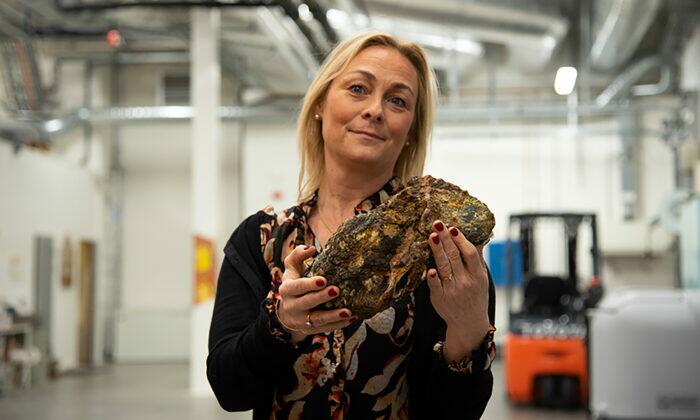
Today, China is believed to account for more than 80 percent of many metals that are needed for green energy solutions, such as rare earth metals used in electric cars and wind turbines.

Karl Kristensen, a consultant for Bergfald Environmental Consultants, says that the green shift in economics will only multiply the world’s dependence on these materials. He warned that China has almost complete control of the market for rare earth metals in his lecture on the topic during the KÅKÅnomics economics festival in Stavanger, Norway, in October 2022.
The discovery in Norway was made during a routine survey of the region and was confirmed through extensive drilling and analysis.
The deposits are believed to be among the largest of their kind in the world, and the potential for further discoveries in the area is significant.
The Norwegian Petroleum Directorate (NPD) was responsible for conducting the research that led to the find. “The NPD has built up expertise over many years, in part through a number of expeditions. We’ve mapped relevant areas, collected data, and taken large volumes of mineral samples,” said Kjersti Dahle, director, technology, analysis and coexistence at the NPD.
NPD’s research shows that there is a large area of the Norwegian continental shelf with significant mineral resources, particularly in the deep sea, where several of these minerals are concentrated. The Norwegian government and NPD are now working together to create the necessary framework for a sustainable and responsible exploration and utilization of these minerals. The focus is on ensuring the protection of the marine environment, preserving the diversity of marine life, and mitigating the impact of the mineral exploration and extraction activities.
The discovery of these minerals on the Norwegian continental shelf is seen as a major step forward in the country’s efforts to reduce its dependency on mineral imports and to become a leading player in the production of sustainable technologies. The NPD’s report will now be used as a basis for further research and exploration activities in the coming years.
“Of the metals found on the seabed in the study area, magnesium, niobium, cobalt, and rare earth minerals are found on the European Commission’s list of critical minerals,” the NPD said in its statement on the research.
Rare Earth Metal Supply Chain in the West
The Norwegian find is a result of the West rebuilding its supply chain for rare earth minerals. It follows an announcement from LKAB, a Swedish mining company, earlier in January 2023. LKAB announced the discovery of Europe’s largest deposit of rare earth oxides in the country’s far north. The discovery was described as positive for not only the company, the region, and Sweden, but also for Europe and the climate.
To reduce dependence on China, Western countries are investing in exploration, mining, and processing of these minerals. The United States, for example, is funding projects to extract rare earths from coal and phosphates and is also working on recycling technology to reduce the need for new minerals. Europe is making efforts to secure its own supply of rare earths and is funding research into new technology to extract and process these minerals. The rebuilding of the rare earths supply chain is a step in reducing dependence on China and ensuring a sustainable future for technology and green energy solutions.
- Reckitt (3RB TH) +2.1%
- BP (BPE5 TH) +1.7%
- Rio Tinto (RIO1 TH) +1.7%
- OMV (OMV TH) +0.9%
- Admiral (FLN TH) +0.9%
- Shell (R6C0 TH) +0.8%
- NatWest (RYSD TH) +0.8%
- Tomra (TMRA TH) +0.7%
- EssilorLuxottica (ESL TH) +0.6%
- Deutsche Bank (DBK TH) +0.5%
- Encavis (ECV TH) -1.8%
- AMS-Osram (DQW1 TH) -1.9%
- Watch European Chip Stocks After Apple’s Revenue Missed Estimate
- Vestas (VWSB TH) -2.1%
- Adyen (1N8 TH) -2.1%
- Watch European Chip Stocks After Apple’s Revenue Missed Estimate
- ASML (ASME TH) -2.2%
- ASMI (AVS TH) -2.2%
- H&M (HMSB TH) -2.2%
- Ubisoft (UEN TH) -2.2%
- ‘Assassin’s Creed’ Creators Cling to Family Control at Ubisoft
- Zalando (ZAL TH) -2.4%
- Apple, Alphabet and Amazon Hurt as Economic Slump Curbs Demand
- Renault (RNL TH) -3.3%
- Watch European Auto Stocks as Ford 4Q Profit Misses Estimates
DAX:
- Deutsche Bank (DBK TH) +0.7%
- ECB Plan for Next Big Hike Makes Lagarde the Last Hawk Standing
- VW (VOW3 TH) -0.9%
- Watch European Auto Stocks as Ford 4Q Profit Misses Estimates
- Infineon (IFX TH) -1%
- Watch European Chip Stocks After Apple’s Revenue Missed Estimate
- Porsche AG (P911 TH) -1%
- Watch European Auto Stocks as Ford 4Q Profit Misses Estimates
- Siemens Healthineers (SHL TH) -1.2%
- Zalando (ZAL TH) -1.8%
- Apple, Alphabet and Amazon Hurt as Economic Slump Curbs Demand
MDAX:
- Commerzbank (CBK TH) +0.6%
- Aixtron (AIXA TH) +0.6%
- Puma (PUM TH) +0.5%
- Telefonica Deutschland (O2D TH) +0.4%
- Siltronic (WAF TH) -0.8%
- Lufthansa (LHA TH) -0.8%
- Delivery Hero (DHER TH) -1.4%
- Encavis (ECV TH) -1.4%
- HelloFresh (HFG TH) -1.5%
- Apple, Alphabet and Amazon Hurt as Economic Slump Curbs Demand
SDAX:
- SGL (SGL TH) +2.9%
- Dermapharm (DMP TH) +1.2%
- Hensoldt (HAG TH) +1.1%
- Deutsche PBB (PBB TH) +1%
- PNE AG (PNE3 TH) +0.9%
- ADVA Optical (ADV TH) -0.7%
- Grenke (GLJ TH) -0.8%
- Ceconomy (CEC TH) -1.1%
- SFC Energy (F3C TH) -1.3%
- Schaeffler (SHA TH) -1.3%
Ryan Cohen Takes Stake in Nordstrom
Activist investor plans to urge retailer to refresh its board and replace former Bed Bath & Beyond boss as a director
Activist investor Ryan Cohen is amassing a sizable stake in Nordstrom Inc. JWN 5.86% and intends to urge the upscale department-store chain to make changes to its board following a steep share-price decline, according to people familiar with the matter.
Mr. Cohen, known for helping ignite big rallies in so-called meme stocks including GameStop Corp. GME 3.99% , is one of the top-five nonfamily shareholders of Nordstrom, the people said.
Mr. Cohen, who built his fortune on online pet retailer Chewy Inc., CHWY 5.06% hopes to engage with Nordstrom’s management about a targeted board refresh that he believes can support cost-cutting efforts as sales decline, the people said. He has expressed admiration for Nordstrom’s attention to customer service, they added.
His goal is to replace at least one director, with a particular focus on former Bed Bath & Beyond Inc. BBBY 18.09% Chief Executive Mark Tritton, who chairs the compensation committee and whom Mr. Cohen views as conflicted and unqualified, the people said.
Before his roles at Bed Bath & Beyond and as chief merchandising officer at Target Corp. , Mr. Tritton worked for Nordstrom from 2009 to 2016. Mr. Cohen believes it is inappropriate for Mr. Tritton to be deciding compensation for Nordstrom family members who are executives at the company, given that he used to work around them, the people said. Mr. Tritton has served as a director at Nordstrom since April 2020.
“While Mr. Cohen hasn’t sought any discussions with us in several years, we are open to hearing his views, as we do with all Nordstrom shareholders,” a Nordstrom spokeswoman said in a statement. “We will continue to take actions that we believe are in the best interests of the company and our shareholders.”
Mr. Cohen once had a big stake in Bed Bath & Beyond and pushed for changes during Mr. Tritton’s tenure at the home-goods retailer, which may soon file for bankruptcy. Mr. Cohen criticized the company at the time for not aligning leadership compensation with performance.
Mr. Tritton was ousted as Bed Bath & Beyond CEO in June as sales started to drop after a temporary surge in demand for cleaning products and home items lifted the business earlier in the pandemic.
Mr. Cohen cashed out of his position in Bed Bath & Beyond in August, before the shares plummeted, netting a profit of about $60 million, based on an analysis of regulatory filings.
Mr. Cohen has recruited a pair of director candidates, who have held senior-executive roles at major retail and e-commerce companies, that he could potentially nominate to Nordstrom’s board, the people said. His goal is to strike a deal with the company through private negotiations, they said. Nordstrom’s window for director nominations ahead of its annual meeting opened on Jan. 18 and closes Feb. 17, according to proxy materials.
As of March 11, 2022, members of the Nordstrom family together beneficially owned roughly 30% of the company’s common stock, according to an annual filing—which means that effecting change would be difficult without their support. Erik Nordstrom serves as the company’s chief executive and his brother Peter is president and chief brand officer. Both men are also directors.
Mr. Cohen previously traveled to Seattle, where the company is based, to meet with members of the family and learn more about the business, the people said.
Nordstrom, like other department-store chains and specialty-apparel retailers, has been walloped by supply-chain challenges that persisted for much of the Covid-19 pandemic. It has also had to manage changing consumer preferences. Its shares, after briefly surging earlier in the pandemic, resumed a multiyear slide and currently change hands for about $21 apiece, down from a 2015 high of more than $80. Nordstrom’s market value has shrunk to about $3.4 billion.
Nordstrom in January reported declining holiday sales as shoppers kept a tighter grip on their wallets. Sales during the nine weeks that ended Dec. 31 declined 3.5% from a year earlier, leading the company to say its full-year forecast would be on the low end of a previous range.
Like many retailers, Nordstrom has also been grappling lately with bloated inventory levels as supply and demand fluctuates, prompting the company to take a more aggressive approach to discounting in the final weeks of 2022. Nordstrom has said it anticipates year-end inventory levels to be down by a double-digit percentage compared with last year and roughly on par with 2019 levels.
The company is set to report its fiscal fourth-quarter and full-year results on March 2, according to its website.
In early January, Nordstrom appointed Atticus Tysen, chief information security and fraud prevention officer for Intuit Inc., to its board, which now numbers 10 directors.
Nordstrom Chief Merchandising Officer Teri Bariquit announced her retirement in January, after Chief Financial Officer Anne Bramman stepped down from her role in December.
Nordstrom last year adopted a so-called poison pill to prevent outsiders from boosting their stake in the business, after a Mexican company acquired a 9.9% stake.
The Nordstrom family offered to take the company private in 2017 for about $50 a share but abandoned the transaction after it had difficulty securing financing.
There has been a surge in shareholder activism lately, as the investors find opportunities in beaten-down shares of companies with cost structures seen as bloated and other challenges.