WSJ : U.S. Investigating Intelligence Leak About Israel’s Plans for Attacking Ir

U.S. Investigating Intelligence Leak About Israel’s Plans for Attacking Iran
Two highly classified reports about Israel’s preparations for striking Iran were posted online by a pro-Iran site

WASHINGTON—The U.S. is investigating the leak of top-secret American documents that show Israel military preparations for an expected strike on Iran, U.S. officials said Sunday.

The two leaked reports were prepared last week by the National Geospatial-Intelligence Agency, which analyzes imagery gathered by American reconnaissance satellites and other intelligence.

Neither document indicates Israel’s potential targets, and one cautioned that the agency’s analysts “cannot definitely predict the scale and scope of a strike on Iran.”

The reports describe the types of aircraft and munitions the Israeli military is expected to use in an attack, which the documents say could come without additional warning.

Adding to U.S. concerns, the classified assessments were disseminated by a pro-Iran site, Middle East Spectator, which says it received them from an anonymous source.

Among the concerns for U.S. investigators is “the potential for further leaks of highly classified documents,” said Jamil Jaffer, a former senior official in the Justice Department’s national security division.

The National Security Council referred questions to the Office of the Director of National Intelligence, which declined to comment. House Speaker Mike Johnson said in an interview with CNN that he has been informed that a U.S. government investigation is under way.

The leak comes as Israeli officials say they are planning a retaliatory attack on Iran and the Biden administration is renewing its push to bring an end to the fighting in Gaza.

Israeli Prime Minister Benjamin Netanyahu’s office didn’t respond to a request for comment on whether the disclosures might affect Israel’s plans for its strike, which is intended as a response to an Iranian attack against Israel earlier this month with about 120 ballistic missiles.

The U.S. has urged Israel to avoid targeting Iran’s oil and nuclear infrastructure and has moved to buttress Israel’s defense by sending its ally an advanced antimissile system.

The leak raised concerns among some Israeli officials about the U.S. ability to protect closely held information that affects its ally.

The documents began circulating online last week after Middle East Spectator posted them within a Telegram channel and on X. It described them as a disclosure about the steps “the Zionist regime” is taking to prepare for an attack on Iran.

Middle East Spectator describes itself as an “open-source news aggregator” that is staffed by independent journalists. A number of Middle East officials and experts say that it is known for promoting pro-Iranian information.

Several former U.S. intelligence officials said the documents bore hallmarks of authentic classified files, including their verbiage and formatting. But some said they might have been edited or pasted together from different pages.

The Israeli Air Force preparations for a strike on Iran involved air-launched ballistic missiles and covert drones, which are use to carry out surveillance over Iran and throughout the region, according to one of the documents. The Israeli military, one noted, sought to conceal some of this activity by placing screens over shelters for F-15 aircraft, among other steps.

The Israelis conducted a large-scale air exercise on Oct. 15, which one of the documents said was likely intended to practice midair refueling and search and rescue, in the event pilots are shot down. Other steps taken by Israel include dispersing naval vessels and some of its military aircraft.

Middle East Spectator said it first became aware of the files when they were shared in a Telegram channel with 7,000 members, where it believes the source was likely a participant. It added: “We have no connection to the original source, which we assume to be a whistleblower within the U.S. Department of Defense.”

In a statement late Saturday evening on X, Middle East Spectator said it was “not aware of any additional leaked classified U.S. documents.”

Miss Tweed : Jacquemus hires Rothschild & Co to find a minority investor

Jacquemus hires Rothschild & Co to find a minority investor

Jacquemus has retained Rothschild & Co to help it find a minority investor willing to finance its ambitious store opening plans and expensive celebrity-peppered shows and events, several senior industry sources with first-hand knowledge of the matter said.

Until last year, Jacquemus was regarded as one of France’s most prominent success stories. It’s been hit by the luxury spending downturn, particularly online, where it makes a significant proportion of its sales. Turnover this year is expected to be down 15-20 percent, industry insiders say.

On Friday, the brand opened its first flagship outside Paris, in New York’s Soho right opposite Chanel. On social media, it posted videos of crowds applauding founder and designer Simon Porte Jacquemus, who simply goes by “Simon,” cutting the ribbon with big scissors. It showed people queuing from around the block to get into the new boutique. It also shared videos and photos of people eating oversized pizza, carrying a giant bagel or coffee cup or miniature cardboard Empire State Building.

Next month, Jacquemus is due to open a boutique on London’s chic Bond Street right opposite Gucci. And in February, it’s aiming to open a store in Los Angeles. These projects represent significant investments.

The drop in revenue has put pressure on available cash, industry sources say. In the past few weeks, the fashion rumor mill had it that Simon was being considered for the vacant seat of creative director at Chanel – one of the most coveted jobs in the industry. But several industry sources believe that Simon himself may have triggered the rumor to look more desirable for potential investors. His style does not really fit with Chanel’s image and heritage, experts say.

Jacquemus, which was feted last year as a fashion “unicorn” when the business was valued at €1 billion, has seen its profitability decline due to the drop in online sales on its own website and on the sites of struggling retailers such as YNAP, Farfetch, MatchesFashion and Canada’s Ssense. Last year, the brand said it made nearly 50 percent of its turnover online. Jacquemus’ turnover was reported to have reached a peak of €280 million in 2023.

In the past few years, industry insiders have said they thought LVMH was interested in investing in Jacquemus. However, the French group may not be willing to buy a minority stake, only a controlling stake, and it would want a deal whereby the designer agrees to work as well for one of its brands. Gucci owner Kering may also express interest, as well as some private equity firms.

GOVERNANCE
Jacquemus may be an attractive brand, but it has serious corporate governance issues. The company lost its CEO in December and never replaced him. The CEO now is Simon, who is a talented designer and social media genius but not a businessman.

Jacquemus has grown very fast and has not had time to adapt its corporate structure to its size, sources close to the brand say. The brand now employs around 300 people, more than twice as many as it did three years ago. Revenue rose from around €20 million seven years ago to €50 million in 2019 and reached more than €200 million in 2022. At its show in June 2023 at the Grand Canal of the Château de Versailles, Bastien Daguzan, who was then CEO, told Miss Tweed that the brand was aiming for sales of €500 million by 2025.

Daguzan, who became CEO in 2022 after working for the brand for many years, left abruptly at the end of last year. On Dec. 6, two weeks before his exit, he had been elevated to the position of chairman in addition to his CEO role, and said his promotion reflected the trust he had built with Simon. Few people in the industry understood that move.

Quickly, the two men fell out over who was running the company and Daguzan was asked to leave.

Daguzan had tried to install operational processes and put in place an executive committee to clarify the corporate structure and lines of command. The company this week declined to give details on its organizational structure – which cannot be a good sign. If there was one, surely it would make no secret of it.

Daguzan had also tried to get more experienced managers to run the company to replace a tight-knit team of Simon’s close friends who have been with him from the start but lack professional managerial experience. Daguzan’s attempts to introduce professional managers created tension, even animosity, with the core group surrounding Simon.

Last year, Daguzan hired Vittoria Pietropoli from LVMH’s Loro Piana to become Jacquemus’ new brand and communications director. Previously, Pietropoli had worked for Moncler and the PR firm Karla Otto. Her nomination was part of Daguzan’s efforts to strengthen leadership and reduce the brand’s reliance on consultants and service providers. To this day, Jacquemus still uses a lot of external service providers in many areas, from shows and events to product prototyping. Industry sources say the brand remains relatively disorganized internally.

Last month, Daguzan took the executive reins of the Los Angeles brand Fear of God.

Daguzan’s sudden departure raised questions about the future of Jacquemus. The relationship between the creative and the executive sides is fundamental to success. It can make or break a fashion brand. From the outside, Daguzan and Simon Jacquemus appeared to be very complementary.

Daguzan knew how to organize a business and handle creatives. Simon captures the desires of a young generation and knows how to speak to his audience while being extremely creative and positive in his messages at all times. He has a knack for public relations and his voice comes across as authentic. He has put his personal life on show via social media, which makes him appear accessible. The brand constantly posts videos and photos on Instagram and Facebook, and this creates engagement.

Handbags are what drive Jacquemus’s sales and margins. One of Jacquemus’s bestsellers is the trapezoid-shaped Chiquito bag, which starts at €550 for the smallest version – big enough for an iPhone and a lipstick – and can fetch up to €920 in larger versions.

This status symbol handbag has been positioned at a relatively accessible price range compared to the thousands of euros fashionistas have to dish out for a small Gucci, Saint Laurent or a Chanel handbag. Some consumers on social media have criticized the bags as being expensive for what they offer in terms of size and functionality. For example, they complained that the Chiquito did not sit well on the shoulder and kept turning on itself upside down, as its handles were too heavy relative to the body of the bag.

Jacquemus’s biggest markets are France, the United States and the United Kingdom. Rothschild and Jacquemus declined to comment for this report.

TechCrunch : Investments in generative AI startups topped $3.9B in Q3 2024

Investments in generative AI startups topped $3.9B in Q3 2024

Not everyone is convinced of generative AI’s return on investment. But many investors are, judging by the latest figures from funding tracker PitchBook.

In Q3 2024, VCs invested $3.9 billion in generative AI startups across 206 deals, per PitchBook. (That’s not counting OpenAI‘s $6.6 billion round.) And $2.9 billion of that funding went to U.S.-based companies across 127 deals.

Some of the biggest winners in Q3 were coding assistant Magic ($320 million in August), enterprise search provider Glean ($260 million in September), and business analytics firm Hebbia ($130 million in July). China’s Moonshot AI raised $300 million in August, and Sakana AI, a Japanese startup focused on scientific discovery, closed a $214 million tranche last month.

Generative AI, a broad cross-section of technologies that includes text and image generators, coding assistants, cybersecurity automation tools, and more, has its detractors. Experts question the tech’s reliability, and — in the case of generative AI models trained on copyrighted data without permission — its legality.

But VCs are effectively placing bets that generative AI will gain a foothold in large and profitable industries and that its long-tail growth won’t be impacted by the challenges it faces today.

Perhaps they’re right. A Forrester report predicts 60% of generative AI skeptics will embrace the tech — knowingly or not — for tasks from summarization to creative problem solving. That’s quite a bit rosier than Gartner’s prediction earlier in the year that 30% of generative AI projects will be abandoned after proof-of-concept by 2026.

“Large customers are rolling out production systems that take advantage of startup tooling and open source models,” Brendan Burke, senior analyst of emerging tech at PitchBook, told TechCrunch in an interview. “The latest wave of models shows that new generations of models are possible and may excel in scientific fields, data retrieval, and code execution.”

One formidable hurdle to widespread generative AI adoption is the technology’s massive computational requirements. Bain analysts project in a recent study that generative AI will drive companies to build gigawatt-scale data centers — data centers that consume 5 to 20 times the amount of power the average data center consumes today — stressing an already-strained labor and electricity supply chain.

Already, generative AI-driven demand for data center power is prolonging the life of coal-fired plants. Morgan Stanley estimates that, if this trend holds, global greenhouse emissions between now and 2030 could be three times higher versus if generative AI hadn’t been developed.

Several of the world’s largest data center operators, including Microsoft, Amazon, Google, and Oracle, have announced investments in nuclear to offset their increasing nonrenewable energy draws. (In September, Microsoft said that it would tap power from the infamous Three Mile Island nuclear plant.) But it could take years before those investments bear fruit.

Investments in generative AI startups show no sign of decelerating — negative externalities be damned. ElevenLabs, the viral voice cloning tool, is reportedly seeking to raise funds at a $3 billion valuation, while Black Forest Labs, the company behind X’s notorious image generator, is said to be in talks for a $100 million funding round.

Challenges : Conseil en propriété intellectuelle : Ipsilon, la PME qui protège l

Conseil en propriété intellectuelle : Ipsilon, la PME qui protège les innovations

Nos plus belles PME 2024. Le cabinet de conseil, qui se développe à coups d’acquisitions, se déploie dans la valorisation des actifs immatériels. Pour devenir un leader européen.


Des tee-shirts en textile technique, des skis, un injecteur de moteur automobile… Le bureau de Stéphane Palix, à Lyon, ressemble à une caverne d’Ali Baba. Le travail de cet ingénieur-conseil en propriété industrielle, diplômé de CentraleSupélec : repérer les innovations pour les protéger – y compris lorsque ces inventions ont échappé à leurs propres concepteurs. « L’ingénieur français est assez modeste par tradition, pointe celui qui vient de rejoindre, en juillet dernier, Ipsilon, après que celui-ci a racheté le cabinet Laurent & Charras. Il pense, par exemple, que maîtriser davantage l’épaisseur d’un tee-shirt n’est qu’une amélioration basique, constate-t-il. Alors que c’est là le fruit de temps, d’investissement, qui mérite, à ce titre, d’être protégé. »

Présent depuis un quart de siècle dans le conseil en propriété intellectuelle, sur les brevets mais aussi sur les dépôts de marques, Ipsilon est donc promis à une belle croissance. « Il y a beaucoup à faire pour installer cette culture de la protection des innovations et des identités des entreprises, en particulier dans les PME et les sociétés de taille intermédiaire », confirme Louis Huetz, l’associé sur Paris du fonds néerlandais Waterland, qui détient une participation minoritaire dans Ipsilon depuis juillet 2022. Ce cabinet basé à Bourg-la-Reine (Hauts-de-Seine), qui compte 250 salariés, y compris des avocats pour les contentieux, a dégagé l’an dernier 75 millions d’euros de chiffre d’affaires. Avec des clients aussi différents que Sanofi et NRJ Group, ST Dupont et Manitou.

Un « secteur prometteur »
Et ce n’est pas fini. « Nous devrions atteindre 200 millions d’euros d’ici trois ou quatre ans », estime Louis Huetz. Grâce à des acquisitions, dans la continuité de celles déjà réalisées, comme celle de Nony, spécialiste des sciences de la vie. A l’étranger, la société s’est déjà développée aux Etats-Unis depuis près de dix ans et en Allemagne depuis 2019. Mais la progression viendra aussi de l’élargissement de la palette d’activités. Depuis juillet, Ipsilon structure ainsi une prestation de valorisation de ces actifs immatériels que sont les brevets et les marques – des données précieuses pour ajuster les transactions de fusions et d’acquisitions d’entreprises.

« Notre objectif est d’offrir à terme un guichet unique pour l’exploitation de la propriété intellectuelle et de devenir leader européen dans ce domaine », pose Valérie Feray, présidente et cofondatrice de la société. C’est bien le volontarisme de cette ingénieure de CentraleSupélec qui a suscité tout l’intérêt de Waterland. Le fonds néerlandais permet aujourd’hui à Ipsilon de déployer sa stratégie de développement.


« Nous souhaitions investir dans ce secteur prometteur, mais nombre de sociétés vénérables manquaient de dynamisme, relate Louis Huetz. Valérie nous a convaincus par son énergie et ses vraies qualités d’entrepreneure, qu’elle insuffle à Ipsilon. » De quoi bousculer cet univers très masculin et où ne manquent pas les Géo Trouvetou un brin inattentifs à la gestion de leurs inventions.

Challenges : « J’appelle à la démission de Thierry Marx » : le ton monte entre S

« J’appelle à la démission de Thierry Marx » : le ton monte entre Stéphane Manigold et le président de l’Umih

Lidl, Intermarché, Picard, Skello… Les nombreux contrats publicitaires de Thierry Marx, président de l’Umih, ne passent pas auprès de Stéphane Manigold qui en appelle à sa démission. De son côté, le chef très médiatique a bien l’intention de défendre sa réputation.


Thierry Marx, 65 ans, chef cuisinier et président de l’Umih, le principal syndicat des professionnels de la restauration et de l’hôtellerie, n’a pas réussi à puiser dans ses grandes ressources de sagesse zen la patience nécessaire pour rester indifférent aux attaques de son adhérent le plus remuant, Stéphane Manigold. A 44 ans, ce dernier est le propriétaire du groupe de restauration Eclore (huit restaurants gastronomiques et 6 étoiles Michelin) et le président de la branche restauration de l’Umih pour la région Paris-Ile-de-France.

Depuis le début du mandat de Marx à la tête du syndicat professionnel, en octobre 2022, Manigold joue la mouche du coche en citant les très nombreux contrats publicitaires de ce chef médiatique : les distributeurs Lidl, Intermarché, Picard ou encore l’outil de gestion des ressources humai­nes Skello, parmi les plus récents. Le 3 octobre, il a lâché à l’antenne de BFMTV : « L’Umih touche plus de 400 000 euros de la part de Up, Sodexo, Edenred et Bimpli. Est-ce que ces opérateurs s’achètent une tranquillité ? Se pose la question supplémentaire des conflits d’intérêts dans les syndicats. Thierry Marx, je l’apprécie, il fait de beaux discours dans les médias. Mais je rappelle que Sodexo est l’un de ses employeurs. »

« Qu’il aille se consacrer à ses contrats publicitaires »
Selon Manigold, le chef serait bien mal placé pour défendre les intérêts des 35 000 restaurateurs français contre les sociétés émettrices de titres-restaurants qui leur infligent des frais trop élevés. Ces opérateurs veulent que les tickets soient durablement utilisables comme moyen de paiement dans la grande distribution alors qu’ils ont été conçus pour payer exclusivement des repas au restaurant.

En face, Marx, ceinture noire de judo (3e dan), peine à cacher son agacement. Il se défend : « Stéphane Manigold est un ancien candidat malheureux à la présidence de l’Umih en 2022, lorsque j’ai été élu avec plus de 70 % des voix. Il a tenu récemment des propos diffamatoires sur un plateau de télévision à l’encontre de notre organisation. Les adhérents m’ont demandé de l’assigner en justice afin qu’il apporte les preuves de ses affirmations ou bien qu’il soit condamné. » Le chef et propriétaire du restaurant parisien Onor (une étoile Michelin) précise qu’à titre personnel, cette querelle l’indiffère, mais qu’il s’agit bien de défendre la réputation de son organisation. Le médiatique avocat Richard Malka représente à la fois Marx et l’Umih.

Le patron d’Eclore riposte : « J’appelle à la démission de Thierry Marx et je précise que je ne suis pas candidat à sa succession. Qu’il aille se consacrer à ses contrats publicitaires à temps complet. Une telle avidité au moment où 20 restaurants disparaissent chaque jour en France, c’est indécent, d’autant qu’il n’a rien à dire visiblement sur les graves problèmes qui touchent notre métier, comme la flambée des coûts de l’énergie. Il préfère créer une commission sur le changement de logo de l’Umih ! »

Le dossier urgent des titres-restaurants
En coulisses, Stéphane Manigold a lui aussi le soutien de plusieurs adhérents. Ces derniers reconnaissent que le dirigeant d’Eclore est sans doute animé par la passion des médias et la recherche du buzz, mais estiment qu’il soulève des questions légitimes. A l’inverse, ils voient en Thierry Marx un boulimique qui multiplie les contrats, quitte à avoir parfois du mal à les honorer. Selon eux, le président de l’Umih devrait s’obliger à une plus grande neutralité depuis qu’il représente la profession.

Pour sa part, le chef Marx assure qu’il n’a pas chômé depuis son élection. « J’ai trouvé deux dossiers urgents sur mon bureau en arrivant à l’Umih : la mise en place d’une mutuelle et les titres-restaurants. Or la mutuelle a été créée, elle s’appelle UmiVitalité et couvrira les salariés des entreprises qui voudront bien adhérer. Quant aux titres-restaurants, le dossier a été ralenti par le calendrier politique et nous attendons incessamment la décision du gouvernement, en espérant qu’il ne va pas reconduire leur utilisation en grande distribution », souligne celui qui publie en novembre son dixième livre : Deuils, des chemins pour la vie (éd. Le Cherche midi).

TechCrunch :Former OpenAI CTO Mira Murati is reportedly fundraising for a new AI

Former OpenAI CTO Mira Murati is reportedly fundraising for a new AI startup
Mira Murati, the OpenAI CTO who announced her departure last month, is raising VC funding for a new AI startup, according to Reuters.

This startup will reportedly focus on building AI products based on proprietary models and could raise more than $100 million in this round.

When she left, Murati wrote on X that OpenAI had “fundamentally changed how AI systems learn and reason through complex problems” in its recent releases. She said, “I’m stepping away because I want to create the time and space to do my own exploration,” but didn’t offer details about her plans.

Before joining OpenAI as VP of applied AI and partnerships in 2018, Murati worked at Tesla and Leap Motion. She was promoted to CTO in 2022 — and was even named interim CEO during co-founder and CEO Sam Altman’s brief ouster.

Murati is among several OpenAI executives to leave recently; OpenAI’s chief research officer and research VP announced their departures hours after she did. A week later, OpenAI said it had raised $6.6 billion in the largest VC round of all time.

TechCrunch : 23andMe faces an uncertain future — so does your genetic data

23andMe faces an uncertain future — so does your genetic data

DNA and genetic testing firm 23andMe is in turmoil following a data breach last year and its ongoing financial decline. The once-pioneering giant now faces an uncertain future amid efforts to take the company private, intensifying concerns about what might happen to the genetic data of 23andMe’s some 15 million customers.

Best known for its saliva-based test kits that offer a glimpse into a person’s genetic ancestry, 23andMe has seen its value plummet more than 99% from its $6 billion peak since going public in early 2021 after failing to turn a profit.

That lack of profit was attributed to waning consumer interest in 23andMe’s use-once test kits and lackluster growth of its subscription services. The company was also floored by a huge months-long data breach that saw hackers steal the ancestry data of almost 7 million users throughout 2023. The company agreed in September to pay $30 million to settle a lawsuit related to the breach.

Less than a week later, 23andMe founder and CEO Anne Wojcicki said she was “considering third-party takeover proposals” for the company. Wojcicki quickly walked back the statement, instead saying she planned to take the company private. But the damage was done, and all of the company’s independent board members resigned with immediate effect.

Where does that leave millions of people’s genetic data?

23andMe bound largely by its own rules
As evidenced by last year’s data breach, which saw hackers steal information such as users’ genetic predisposition and ancestry reports, 23andMe collects a ton of information on its users.

If you’re one of the many millions that have shipped your saliva to 23andMe to learn about your ancestry, you may have assumed that this data will remain private under law, such as the Health Insurance Portability and Accountability Act. HIPAA, as it’s known, sets the standards for protecting sensitive health information from being disclosed without a person’s knowledge or consent.

However, 23andMe is not a company covered under HIPAA. As such, 23andMe is largely bound only by its own privacy policies, which it can change at any time.

Andy Kill, a spokesperson for 23andMe, told TechCrunch that the company believes this is a “more appropriate and transparent model for the data we handle, rather than the HIPAA model employed by the traditional healthcare industry.”

A lack of federal regulation and a cluttered mess of state privacy laws ultimately means that if 23andMe faces a sale, the data of millions of Americans is also on the table. The company’s privacy policy says that its customers’ personal information “may be accessed, sold or transferred” as part of a bankruptcy, merger, acquisition, reorganization, or sale.

The fact that customer data is a saleable asset has also been made clear by Wojcicki, who reportedly told investors that 23andMe will no longer pursue its cost-intensive drug development programs and will instead focus on marketing its vast database of customer data to pharmaceutical companies and researchers.

23andMe maintains that its data privacy policies would not change in the event of a sale. These policies state that the company will never share users’ information with insurance companies, or with law enforcement without a warrant. The latter have increasingly turned to third-party DNA companies for genetic information, but 23andMe has so far resisted all U.S. law enforcement requests for such data, according to its long-running transparency report.

Potential buyers of 23andMe may have entirely different ideas about how to use the company’s potentially valuable trove of DNA data. Privacy advocates at the digital rights group Electronic Frontier Foundation have already urged 23andMe to resist a sale to any company with ties to law enforcement, warning that customers’ genetics data could be used by police to indiscriminately search for evidence of crimes.

“Our own commitment to apply the terms of our privacy policy to the personal information of our customers in the event of a sale or transfer is clear: the 23andMe Terms of Service and Privacy Statement would remain in place unless and until customers are presented with, and agree to, new terms and statements — and only after receiving appropriate notice of any new terms, under applicable data protection laws,” Kill told TechCrunch.

Proactively deleting your account
While 23andMe appears to be resisting a sale to a third-party company for now, Wojcicki’s recanted comments have already sounded alarm bells among privacy advocates, who are urging 23andMe customers to take action now to protect their data from being sold by requesting that 23andMe deletes their data.

Meredith Whittaker, the president of end-to-end encrypted messaging app Signal, said in a post on X: “It’s not just you. If anyone in your family gave their DNA to [23andMe], for all of your sakes, close your/their account now.”

Eva Galperin, the director of cybersecurity at the EFF, also warned users to take action. “If you have a 23andMe account, today is a good day to login and request the deletion of your data,” said Galperin in a post on X.

Requesting the deletion of your data on 23andMe is relatively easy.

Log in to your 23andMe account and navigate to Settings > Account Information > Delete Your Account. 23andMe will prompt you to confirm your decision, warning that deleting your account is permanent and irreversible.

There is an important caveat. As noted in 23andMe’s privacy policy, account deletion is “subject to retention requirements and certain exceptions,” which means the company may hold on to some of your data for an unspecified amount of time.

For example, 23andMe will retain your genetic information, date of birth, and gender “as required for compliance” and will retain limited data related to your deletion request, “including but not limited to, your email address, account deletion request identifier, communications related to inquiries or complaints and legal agreements.”

Similarly, if you’ve already agreed to 23andMe sharing your data for research purposes, you can reverse that consent, but there’s no way for you to delete that information. Kill tells TechCrunch that around 80% of 23andMe customers — roughly 12 million people — consent to participate in its research program.

FT : UK government to launch HS2 review as costs spiral

UK government to launch HS2 review as costs spiral
Transport secretary Louise Haigh says delivery of rail link project has been ‘dire’

Louise Haigh, the UK transport secretary, has admitted that the cost of building the High Speed 2 rail line is still spiralling as she announced plans to get the project back under control through a new independent review. 

The headline price tag for creating the new rail line from London to Birmingham keeps on rising despite the scope of the controversial project having been cut in half last year to try to keep a lid on costs. Rishi Sunak, the former Tory prime minister, axed its entire northern stretch from Birmingham to Manchester. 

“It has long been clear that the costs of HS2 have been allowed to spiral out of control, but since becoming transport secretary I have seen up close the scale of failure in project delivery and it is dire,” Haigh said. “I have announced urgent measures to get a grip on HS2’s costs and ensure taxpayers’ money is put to good use.”

While the Department for Transport has estimated the remaining project cost at £45bn to £54bn in 2019 prices, the HS2 management has suggested a higher figure of £49bn to £57bn. 

In January Sir Jon Thompson, chair of HS2, told MPs that accounting for inflation would push that figure up by another £10bn to £67bn. 

Mark Wild, the incoming chief executive of the project — who was previously head of the Elizabeth Line — is expected to come up with an even higher estimate when he does a stocktake of the project. The number is expected to rise again as a result of inflation, previous alterations to the scheme and delays to parts of the project. 

Haigh confirmed she had asked James Stewart, an infrastructure industry veteran, to chair a new Major Transport Projects Governance and Assurance Review. Stewart is former chair of global infrastructure at advisory firm KPMG.

The review — which the Financial Times revealed last month — will investigate the oversight of major transport schemes including HS2. Its focus will be on “the effectiveness of forecasting and reporting of cost, schedule and benefits, as well as actions to deliver cost efficiencies,” the government said on Sunday. 

The review will lead to greater ministerial control of HS2. “The government is reinstating ministerial oversight of the project to ensure great accountability,” the transport department said.

At first, that will involve more regular meetings between ministers and the HS2 management. But in the long term the Stewart review will look at whether the DfT’s “sponsorship and oversight model” needs a wider overhaul to improve delivery. 

Haigh said: “It’s high time we make sure lessons are learnt and the mistakes of HS2 are never repeated again.”

HS2 is not expected to start running trains between Birmingham and Old Oak Common, a station in west London, until between 2029 and 2033, much later than originally planned.  

Haigh is expected to confirm this month that the service will continue for another 4.5 miles to Euston in north London. LBC, a radio station, reported last week that the government wanted to revive the northern leg of HS2 at least from Birmingham to Crewe. 

However, government figures said they had more limited plans to carry out an initial feasibility study into a new line in the region, which would not be high-speed. 

“The government has been clear it is not resurrecting phase 2 of HS2,” the DFT said on Sunday. “The government recognises concerns about connectivity between Birmingham and Manchester but its primary focus now is the safe delivery of HS2 between Birmingham and London at the lowest reasonable cost.”

Miss Tweed : Dior takes risks by venturing too far into sports

Dior takes risks by venturing too far into sports
By Fabio Becheri
18 October 2024
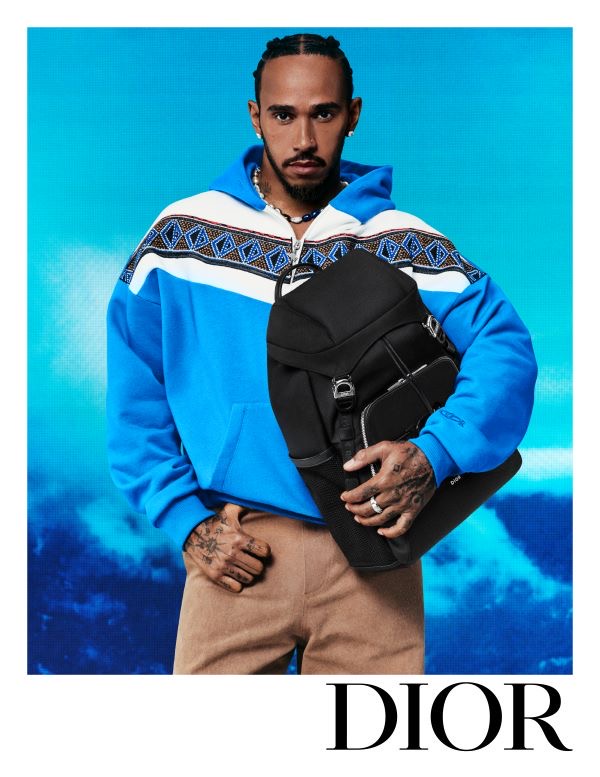
Dior’s love affair with sports keeps getting stronger. You wonder why. After a coldly received athleisure collection presented during Paris Fashion Week, the French brand on Oct. 14 unveiled a capsule collection designed by Kim Jones in collaboration with Lewis Hamilton, the seven-time world Formula 1 champion. It was inspired by one of Hamilton's favorite pastimes: winter sports.

At first glance, the collection has potential and some items could become popular collectibles. You have a Dior 8 Backpack with a flap and Messenger Rider 2.0 in ultra-resistant materials. Footwear includes futuristic B44 sneakers that sell for €1,200, with some in limited editions. Organic or recycled textiles were used for many items and the technical clothing was produced by Japanese ski apparel maker Descente, which collaborated with Dior when it launched its ski capsule collection in 2020.

“Virtuosity, functionality, luxury” were some of the key words used to describe the new collection. You would expect the campaign to communicate these messages clearly. Think again.

The concept of the campaign revolved around snowboarding, one of Hamilton’s high-octane passions. It should have been a great opportunity to create a highly engaging narrative and story. However, judging by the images that have been released, the campaign feels flat and unimaginative. Hamilton is shot against a seemingly fake backdrop of a blue mountain range wearing a multitude of the collection’s pieces. The pictures look like pages of a commercial catalog and lack the energy you would expect from such a collection.

Louis Vuitton’s ad campaign, featuring tennis superstars Roger Federer and Rafael Nadal and shot in the Dolomites by Annie Leibovitz, was much more consistent with the brand’s story and conveyed its values far more clearly.

The fashion industry could benefit from expertise from sportswear specialists, but fashion creative talents tend to be self-centered, arrogant, haughty and omniscient when it comes to creating content. Without expertise in the field, the risk is to fall flat like the Hamilton x Dior campaign images. The collection also features a new dynamic logo – the word Dior is written in the same way as the Captcha letters you need to click to confirm you are a human on computers. However, it has not been used on communication tools such as ads posted on social media. Such lack of consistency dilutes the message.

To be fair, the way celebrities are used in campaigns by the fashion industry feels quite basic and unimaginative. Many think that a celebrity wearing a brand’s products and associated with a logo is enough to create desire. It’s rare to find campaigns with celebrities that are really integrated into the brand’s narrative and engage the consumer.

What’s surprising with this Dior campaign is that it was produced by a stellar cast. Rafael Pavarotti, a photographer celebrated by the young creative generation, shot the campaign. The art director was Ronnie Cooke Newhouse, wife of Conde Nast’s mogul Jonathan Newhouse and a long-time collaborator of Kim Jones. It also had input from Melanie Ward, the legendary style maker who has worked with many talents and shaped the iconic image of Helmut Lang in its heyday.

On paper, they form a dream team. The reality is that they are all specialized in fashion and have little experience with the dynamics of movement and energy that sports and athleisure photography should express.

As a matter of fact, the Hamilton campaign is complemented by a set of totally different images, focused exclusively on the shoes, shot by French experimental photographer Gabriel Boyer. While the mood of this additional content feels somewhat disconnected from the main campaign, the outcome is far more dynamic and better suited to communicate the energy that the collection wishes to convey.

Previously, Hamilton worked extensively with Tommy Hilfiger, arguably becoming synonymous with the all-American affordable luxury retailer. Hamilton is evidently trying to elevate his personal image. Next year, the Formula 1 racer will move from Mercedes to Ferrari.

His decision to collaborate with Dior seems a natural evolution. An in-store event with Hamilton and Jones was held at the London Dior store on October 10 to launch the collection.

LVMH AND SPORTS
Dior’s venture into sportswear has been irregular for some time. The French brand dressed Celine Dion and Lady Gaga for the Olympics opening ceremony in Paris. These were powerful moments and in line with the brand’s DNA. However, Maria Grazia Chiuri's inclusion of athleisure in her latest fashion show contributed to dampening her entire seasonal collection and generated a downpour of negative comments in social media.

In 2021, Dior signed a multiannual sponsorship with the Paris Saint-Germain football team to dress the team. From a product standpoint, the most successful sports collaboration was the Nike Jordan 1 x Dior limited 2019 edition sneaker. It was followed last year by the Nike Low Barons x Dior sneaker.

During the presentation of Chiuri’s 2022 cruise collection in Athens, the brand also introduced a separate “Dior Vibe” capsule collection of sporty bags and sneakers, as well as branded sports equipment in collaboration with the specialist Technogym. In 2023, Kim Jones created a limited collection for the Gran Turismo World Series Finals race that did not go on sale and was only distributed to attendees. Such capsule sports collections seem extremely short termed.

Dior’s parent LVMH has been investing vast sums in the sports universe recently. It was omnipresent during the Olympics, on which it spent €150 million. This month it announced an unprecedented 10-year global partnership with Formula 1 valued at a staggering $1 billion.

“The people, the quest for excellence and the passion for innovation are at the heart of the activity of our maisons and Formula 1,” LVMH CEO Bernard Arnault said in a statement about the deal. “Both in our workshops and on circuits around the world, it is this incessant search to break boundaries that inspires our vision, and this is the meaning that we want to bring to this great and unique partnership between Formula 1 and our group.”

On Thursday, Agache, the Arnault family investment company, said it was in exclusive talks to acquire a controlling stake in the Paris FC football club. “Our family has always been close to the world of sport, to sportsmen and women, and to the young women and men who seek to surpass even themselves,” Antoine Arnault, who is to sit on the Board of Directors of Paris FC, said in a statement released by LVMH.

Overall, Dior’s attempts to expand into sportswear and athleisure do not seem to follow a coherent brand extension plan. The result is a series of marketing initiatives that appear poorly coordinated and without a common objective. Obviously, the separation between Dior Homme by Kim Jones and Dior Femme by Maria Grazia Chiuri does not help.

Dior’s venture into sports and new product categories risks confusing consumers and damaging brand equity. Sport is not part of Dior’s heritage. The brand needs to find a more balanced and long-term approach on how to make these collections fit seamlessly with its story and rich heritage.

WSJ : Boeing’s CEO Is Shrinking the Jet Maker to Stop Its Crisis From Spiraling

Boeing’s CEO Is Shrinking the Jet Maker to Stop Its Crisis From Spiraling
A strike could end soon, but the company remains in a perilous financial position

The airline industry’s biggest names donned gowns and tuxedos and filed into a Manhattan ballroom Friday for a night of cocktails and fretting about the future of Boeing BA -0.20%decrease; red down pointing triangle.

One group was conspicuously absent.

After sponsoring six tables, Boeing scrapped plans to send its usual contingent to the annual Wings Club fundraising gala. The company gave away most of its gala tickets to customers.

The chief executives of Lufthansa and United Airlines were there. So was the chief executive of GE Aerospace, one of the world’s largest makers of commercial jet engines.

Boeing’s new CEO, Kelly Ortberg, wasn’t there. He was hammering out a labor deal to end a damaging strike. The tentative agreement reached Saturday between Boeing and leaders of its largest union would give machinists a 35% raise over four years.

Even if the deal is ratified on Wednesday and union members go back to work, the company remains in a perilous financial position. Industry insiders and analysts have begun to ponder something previously unthinkable: whether a breakup or bankruptcy is in Boeing’s future if it remains on its current trajectory.

Boeing is exploring asset sales that could bring in much-needed cash while shedding noncore or underperforming units, according to people familiar with the discussions. Days before the gala, the company’s board met at Boeing’s Arlington, Va., headquarters, where directors quizzed division heads and combed through reports on the state of each unit, mulling next steps for the beleaguered plane maker.

Boeing has spread itself too thin and must shrink, Ortberg wrote in a note to employees earlier this month. “We need to be clear-eyed about the work we face,” he wrote. “We also need to focus our resources on performing and innovating in the areas that are core to who we are.”

Ortberg has moved to raise at least $10 billion in cash and slash thousands of jobs to stem losses that have exacerbated Boeing’s manufacturing woes and damaged a complex supply chain.

Boeing has tried unsuccessfully to sell a rocket joint-venture it shares with Lockheed Martin, and remains saddled with U.S. government programs like a troubled military refueling tanker and Air Force One replacement jets. Last week, the company reached a deal to offload a small defense subsidiary that makes surveillance equipment for the U.S. military, people familiar with the deal said.

Ortberg took the helm of the company in August. He will make his first public comments as CEO on Wednesday, when the union is set to vote on the new contract and Boeing will detail its financial results for the period ended Sept. 30. The company has warned that it will book billions of dollars in charges and report a $6 billion quarterly loss.

Faulty planes, broken trust
Ortberg is tasked with revamping a manufacturing goliath that has shaken the public’s trust.

In January, a door plug blew out on an Alaska Airlines flight after workers at Boeing’s factory failed to replace critical bolts. In July, Boeing agreed to plead guilty to a criminal charge that it misled air-safety regulators before two deadly 737 MAX crashes in 2018 and 2019. And Boeing’s Starliner spacecraft now faces an uncertain future after technical issues left two astronauts stuck on the International Space Station.

Scott Kirby, CEO of United Airlines, said he was pleased Ortberg aimed to raise equity to stabilize Boeing’s finances, a move which Kirby said was a change from past leaders who employed buybacks and other mechanisms to boost the stock price. “The old Boeing would never have done that,” Kirby said Friday night on the sidelines of the Wings Club gala.

The machinists strike, which began on Sept. 13, has halted production of most of Boeing’s airplanes. Credit-rating firms have warned that the company needs to preserve cash and could be downgraded to junk levels. Boeing was burning through cash before the union walkout. Analysts estimate the strike is costing the jet maker at least $1 billion a month.

Ortberg has spent recent weeks traversing the country, meeting with airlines, suppliers, federal regulators and his own lieutenants.

“I’m confident he’s on top of things,” said John Plueger, president of airplane lessor Air Lease Corp., who has spoken with Ortberg. “He has been listening globally to feedback good and bad” from customers, Plueger said.

In recent financial-performance meetings, Boeing’s CEO has asked heads of the company’s units to lay out the value of those units to the company, according to people familiar with the discussions.

Ortberg, who moved to Seattle from Florida when he took over, is also pressing the company’s famously far-flung executives to follow suit and move closer to the units they run. Former CEO Dave Calhoun took heat for running Boeing largely from his homes in New Hampshire and South Carolina. Finance Chief Brian West lives in Connecticut.

“Restoring our company requires tough decisions, and we will have to make structural changes to ensure we can stay competitive and deliver for our customers over the long term,” Ortberg said in his note to employees.

Suppliers shrink, airlines wait
The trouble at Boeing is reverberating throughout the industry.

Legions of parts makers are saddled with idled workers and excess inventory. Boeing last month said it would cut back orders from suppliers for its 737, 767 and 777 jets. Fuselage maker Spirit AeroSystems on Friday said it would furlough 700 workers. A U.K.-based part maker, Senior, announced job cuts earlier this month, citing production problems at Boeing and its European rival, Airbus.

Other big suppliers are trying to avoid layoffs as long as possible because it could take a year to rehire and train new workers. This presents a risk for Boeing, which will need parts when its striking machinists go back to work and it restarts production.

Airlines, already short on planes they need to meet travel demand, face longer delays both on existing models and new models they have been counting on. Boeing said last week it would further delay the launch of the 777X, already years behind schedule.

Lufthansa CEO Carsten Spohr, a three-decade industry veteran, expressed dismay at Boeing’s latest deferral of the plane, which the jet maker initially promised to deliver in 2021 and has now pushed back to 2026.

“And we need it,” Spohr said Wednesday at a press briefing in Brussels. “I’ve never seen anything like it in our industry.”

In a speech at the Wings Club gala Friday night, Spohr told the audience that Boeing’s survival was vital for the entire industry.

The crowd broke into loud applause.