Business of Fashion : Athletics Body to Tighten Rules After Nike's Vaporfly Help

Athletics Body to Tighten Rules After Nike's Vaporfly Helps Break Records
The reported change in regulations comes after the Vaporfly brand sparked debate about 'technological doping.'

LONDON, United Kingdom — Athletics' ruling body will tighten regulations governing shoe technology, two sources familiar with the matter said, after Nike's popular Vaporfly brand helped re-write running records and sparked debate about whether it was "technological doping."

World Athletics expects to announce the findings of a review into technology used in road and track shoes by the end of January.

Recreational runners' use of the flourescent footwear will be unaffected, World Athletics said. Vaporfly combines carbon plate and ultra-springy compressed foam and is now a familiar sight at starting lines across the world.

"World Athletics definitely agrees that there needs to be greater clarity on what is permissible in elite sport and in our competitions," it said in a statement to Reuters, adding that any change would need to be ratified by its council.

"It is not our job to determine the shoe running market for everybody. If people want to run a marathon in Vaporflys or any other shoe, it's not our job to stop them. But if you want a ratified record, then you are classified as elite and have to abide by the rules."

When asked about the review and a possible change of rules, Nike said: "We respect the IAAF (now World Athletics) and the spirit of their rules, and we do not create any running shoes that return more energy than the runner expends."

Regulations state that any shoe "must be reasonably available to all in the spirit of the universality of athletics and must not be constructed so as to give athletes any unfair assistance or advantage."

The governing body, which has longstanding restrictions on midsole thickness for high jump and long jump shoes but has given free rein to running shoes, says more research is needed to determine exactly what benefits are provided by the Vaporfly.

The sources did not specify what changes World Athletics is planning. Industry experts have suggested the organization might impose limits on the depth of foam, for example, or the amount of carbon used in elite competition.

Times Coming Down

Nike, the world's largest athletics clothing company, says Vaporfly shoes, which cost around $250 and have a lifespan of only around 200 miles, have "a built-in secret weapon that provides a propulsive sensation."

Other manufacturers have also released, or are developing, their own carbon-insoled shoes, but they are playing catch-up.

Some athletes, including Eliud Kipchoge, the Kenyan who wore the Alphafly version of the shoes when he became the first man to run a sub-two hour marathon in Vienna last year, celebrate the leap in efficiency the shoes provide, and say they are fair.

Others would welcome rule changes that aim to put the brakes on the arms race for feet.

Yannis Pitsiladis, a professor of sport and exercise science at Britain's Brighton University, described the advanced footwear as "technological doping."

He said if World Athletics did nothing to halt such advances, "the consequence is going to be a race between the manufacturers rather than a race between the athletes."

The day after Kipchoge's unofficial sub-two hour run, 25-year-old compatriot Brigid Kosgei ran 2:14.04 in Chicago, taking an astonishing 81 seconds off Briton Paula Radcliffe's 16-year-old women's marathon world record.

Kosgei was wearing a modified version of the Vaporfly shoe, featuring three carbon plates, and Vaporflys have featured in several other records in the last three years.

The distinctive pink and green footwear is now widespread at every major race, recreational and professional.

Strava, the global social network for athletes, said in its 2019 review that the median marathon finish time for runners in the Vaporfly model Next% was 8.7% faster than runners wearing the next fastest shoe, the Adidas Boston.

Efficiency or Enhancement?

Sports scientists writing in the British Medical Journal said the Vaporfly deviates from conventional running shoes in three ways: it has embedded carbon-fiber plates, its midsole is made of super-condensed foam and its midsole is particularly thick.

"Each of these components has design features that reduce energy loss in isolation and, perhaps more so, in combination," they said.

Kerry McCarthy, editor of Runner's World UK magazine, said the sensation was "almost like a mini pogo stick. The carbon fibre plates effectively push against the ground and help to push your foot off the floor quicker."

Amateur runner Holly Grundon, who switched to the Vaporfly to target a new personal best for a half-marathon, describes them as "a bit like running with marshmallows under your feet."

According to Bryce Dyer, a sports technologist and specialist in product design at Britain's Bournemouth University, benefits like this are "the equivalent of bringing a gun to a knife fight."

But he rejects the suggestion that it is unfair.

"If they produced more than 100% energy return, then I'd agree they are enhancing. But from the studies we've seen, these shoes don't appear to be doing that, so I'd say it's purely a question of efficiency," he told Reuters.

In 2008, Speedo delivered its LZR speed suit which helped swimmers claim a host of world records before it was banned.

Other technological leaps, such as skinsuits in skiing, hinged blades in speed skating and aero bars and disc wheels in cycling, survived to become standard equipment.

(ZH) Scientists In Britain May Have Just "Accidentally" Found A Cure For Cancer

Scientists In Britain May Have Just "Accidentally" Found A Cure For Cancer

Every once in a while, medical researchers simply have a stroke of good luck. In this case, that "stroke of good luck" could have a profound effect on the medial community.
Researchers at Cardiff University that were in the midst of analyzing blood from a bank accidentally stumbled into an "entirely new type of T-cell", according to The Daily Wire. The new cell carries a "never before seen" type of receptor that acts like a grappling hook, latching on to most human cancers.
Prior therapies, called CAR-T and TCR-T, which use immune cells to attach to HLA molecules on cancer cells' surface, are incapable of fighting solid tumors, the article notes. HLA molecules vary in people, but the new therapy instead attaches to a molecule called MR1, which does not vary in humans. This gives the therapy a chance of fighting most cancers.
It also means people could share the treatment, which could allow banks of cells to be stored and offered quickly, as needed.


The treatment has already worked on lung, skin, blood, colon, breast, bone, prostate, ovarian, kidney and cervical cancer cells. The study stated:
Human leukocyte antigen (HLA)-independent, T cell-mediated targeting of cancer cells would allow immune destruction of malignancies in all individuals. Here, we use genome-wide CRISPR-Cas9 screening to establish that a T cell receptor recognized and killed most human cancer types via the monomorphic MHC class-I related protein, MR1, while remaining inert to noncancerous cells … These finding offer opportunities for HLA-independent, pan-cancer, pan-population immunotherapies.

It concluded: “In summary, we describe a TCR that exhibits pan-cancer recognition via the variant MR1 molecule, and, by equipping patients with melanoma T cells that lacked detectable cancer reactivity with the MC.7 G5 TCR, we rendered the T-cells capable of killing autologous melanoma.”
What does that mean? It means "it works". Additionally, T-Cells of skin cancer patients altered by the treatment were capable of killing the patient's cancer cells and other patients' cancer cells as well.
The lead author on the study, Andrew Sewell, said: “This was a serendipitous finding, nobody knew this cell existed. Our finding raises the prospect of a ‘one-size-fits-all’ cancer treatment, a single type of T-cell that could be capable of destroying many different types of cancers across the population. Previously nobody believed this could be possible.”
“This new type of T-cell therapy has enormous potential to overcome current limitations of CAR-T, which has been struggling to identify suitable and safe targets for more than a few cancer types,” said Professor Oliver Ottmann, Cardiff University’s Head of Haematology.

(ZH) UK Researcher Predicts Over 250,000 Chinese Will Have Coronavirus In Ten Da

UK Researcher Predicts Over 250,000 Chinese Will Have Coronavirus In Ten Days

When it comes to estimating the human capital and potential fallout from a highly contagious epidemic, arguably the most important variable is the R0 ("R-naught") value of the disease, which represents the average number of secondary cases arising from an average primary case in a entirely susceptible population. That's the technical definition, a simpler one is that the R0, or basic reproductive number, of a contagious disease is the number of cases that a case of the disease generates over the course of its infectious period in a susceptible population. The higher this number, the more dangerous the disease, the more lethal the outcome.
Some indicative R0s are 0.9 – 2.1 for the common flu while the 1918-1919 pandemic-causing Spanish flu was estimated to have ranged from 1.4 – 2.8, with a mean of 2. Some other notable R0s are shown below, and note that SARS was between 2 and 5:
So what about the R0 of 2019-nCoV, also known as the coronavirus that has claimed over three dozen lives in China and infected (at least) 1,000 people? Naturally, since the disease is most active in China which is notoriously opaque especially when it comes to matters that can cause a mass panic, the best one can do is guess, and that's what the World Health Organization did yesterday when it issued a statement on the coronavirus epidemic with the following projection:


Human-to-human transmission is occurring and a preliminary R0 estimate of 1.4-2.5 was presented. Amplification has occurred in one health care facility. Of confirmed cases, 25% are reported to be severe. The source is still unknown (most likely an animal reservoir) and the extent of human-to-human transmission is still not clear.
Needless to say, while 2.5 is quite high, and in line with that of the Spanish flu epidemic which infected about half a billion people back in 1918, killing as many as 100 million before it eventually fizzled out, the real coronavirus R0 number may end up being far higher. That is the working hypothesis of Jonathan Read, a UK expert on the transmission and evolutionary dynamics of infectious diseases, who has published a paper with four colleagues that estimates transmission parameters for the Wuhan coronavirus, calculates that the R0 of 2019-nCoV to be between 3.6-4.0 or roughly the same as SARS, and reaches a conclusion about spread of the coronavirus epidemic that is frankly terrifying.
In "Novel coronavirus 2019-nCoV: early estimation of epidemiological parameters and epidemic predictions", Read et al, write that with an R0 of between 3.6 and 4.0, roughly 72-75% of transmissions "must be prevented by control measures for infections to stop increasing."
This is a major problem because Read estimates that only 5.1% of infections in Wuhan are identified (as of Jan 24), "indicating a large number of infections in the community, and also reflecting the difficulty in detecting cases of this new disease." Furthermore, since all of this is happening in China which is not known for making the most socially-beneficial decisions under pressure, there is an ominous possibility that Read is actually overly optimistic.
Ezra Cheung

✔@ezracheungtoto

Huge public hygiene crisis seems to have erupted in #Wuhan. This video clip was once posted on Weibo but now deleted. The lady in the clip says dead bodies were left at hospital aisles untreated whereas doctors are taking care of other patients alongside them. #WuhanPneumonia


3,355 people are talking about this


Read wastes no time to get to his terrifying conclusion which is that if no change in control or transmission happens, then further outbreaks will occur in other Chinese cities, "and that infections will continue to be exported to international destinations at an increasing rate."
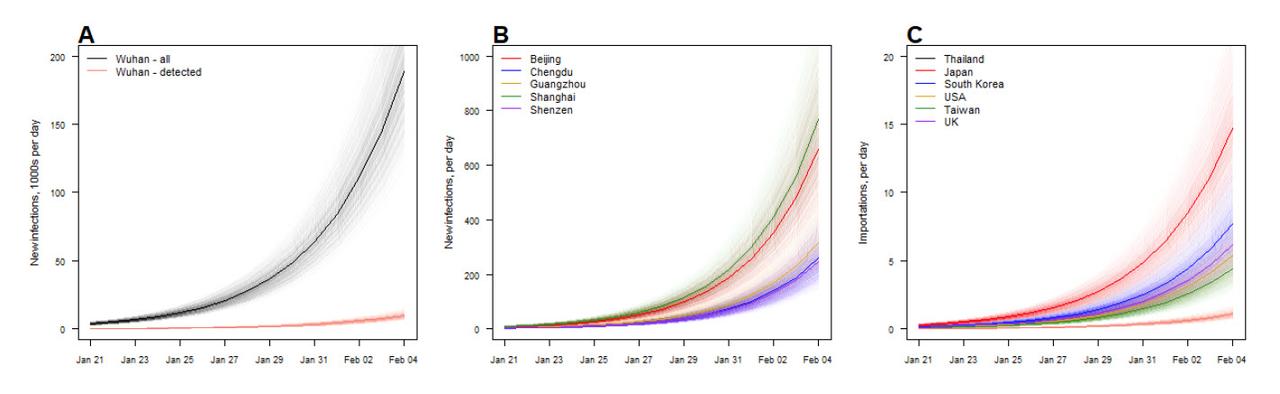
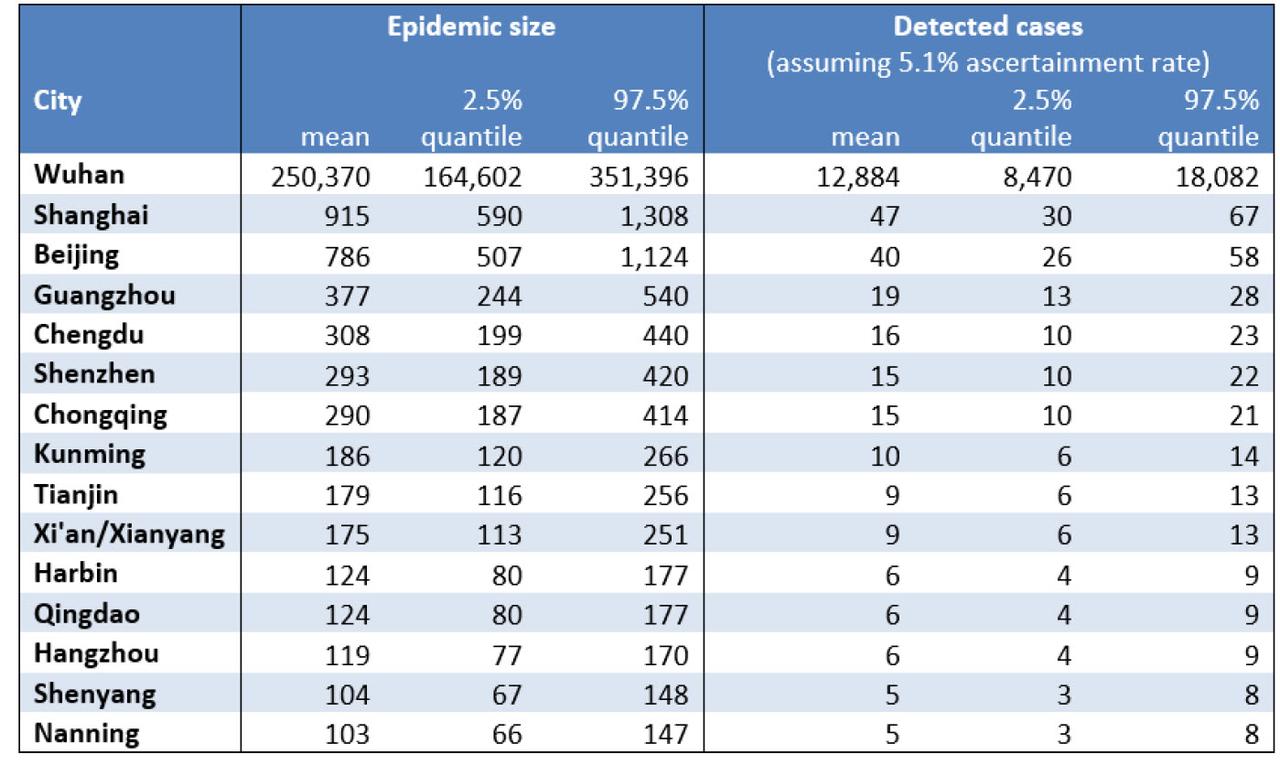
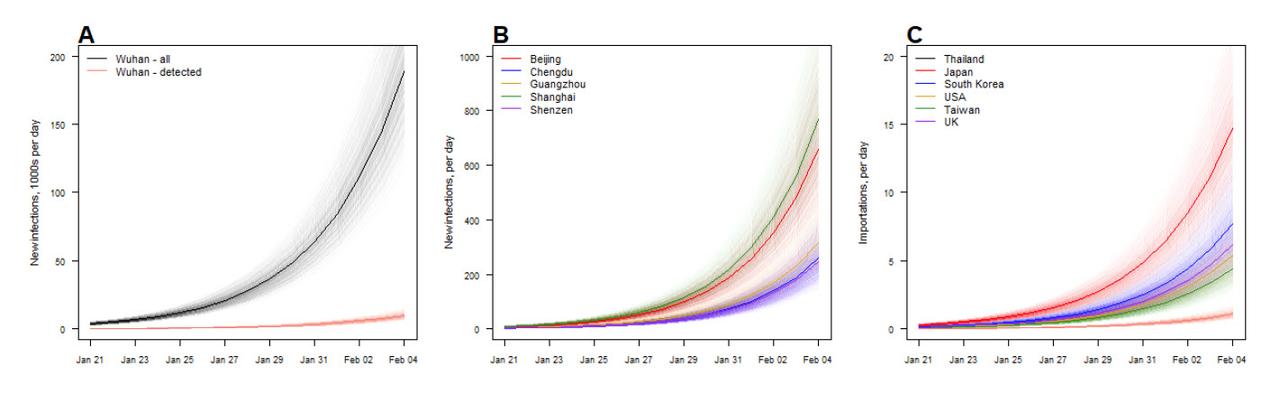
As a result, in 10 days time, or by February 4, 2020, Read's model predicts the number of infected people in Wuhan to be greater than 250 thousand (with an prediction interval, 164,602 to 351,396);
Epidemic predictions for (A) Wuhan, (B) selected Chinese cities and (C) selected countries. Estimated detected cases are also plotted for Wuhan.
After Wuhan, the cities with the largest outbreaks elsewhere in China are expected to be Shanghai, Beijing, Guangzhou, Chongqing and Chengdu.
Predicted epidemic sizes (number of currently infected individuals) in selected cities on 4 February 2020 assuming no change in transmissibility from current time to 4 February.
Read also predicts that by 4 Feb 2020, the countries at greatest risk of importing infections through air travel are Thailand, Japan, Taiwan, Hong Kong, South Korea, USA, Malaysia, Singapore, Australia and Vietnam. In short: much of Asia will infected, and from there, the rest of the world awaits.
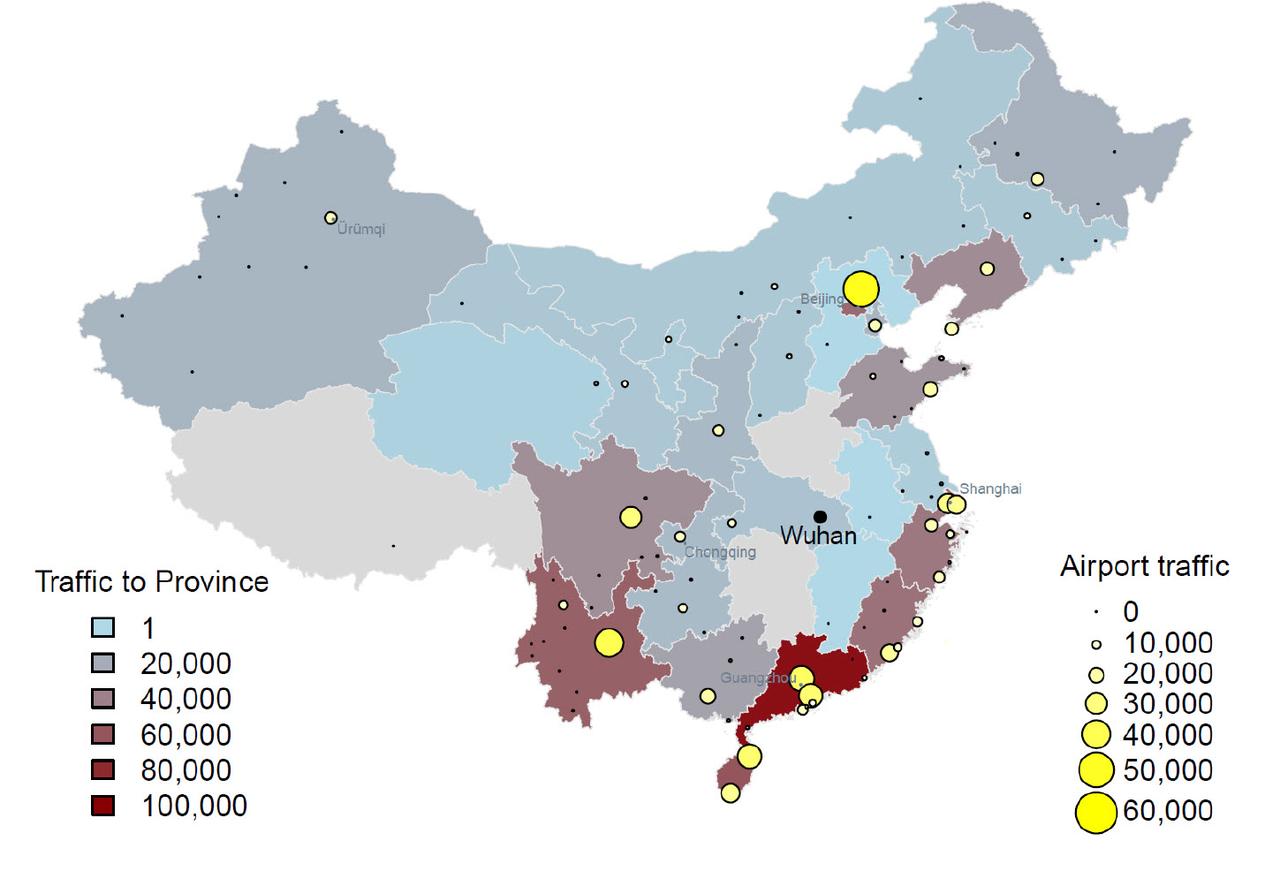
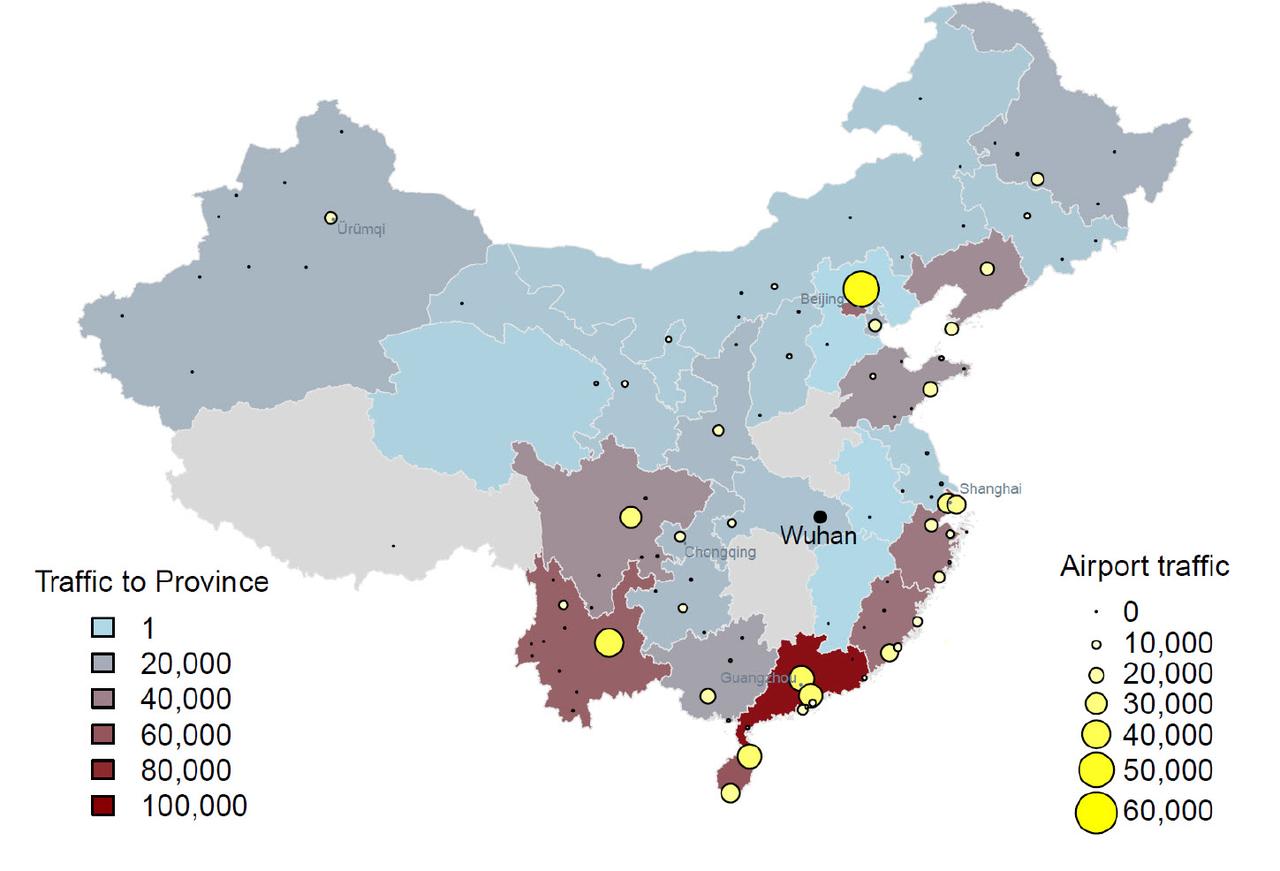
Connectivity of Wuhan to other cities and provinces in mainland China, based on total commercial airline traffic from Wuhan in January 2017.
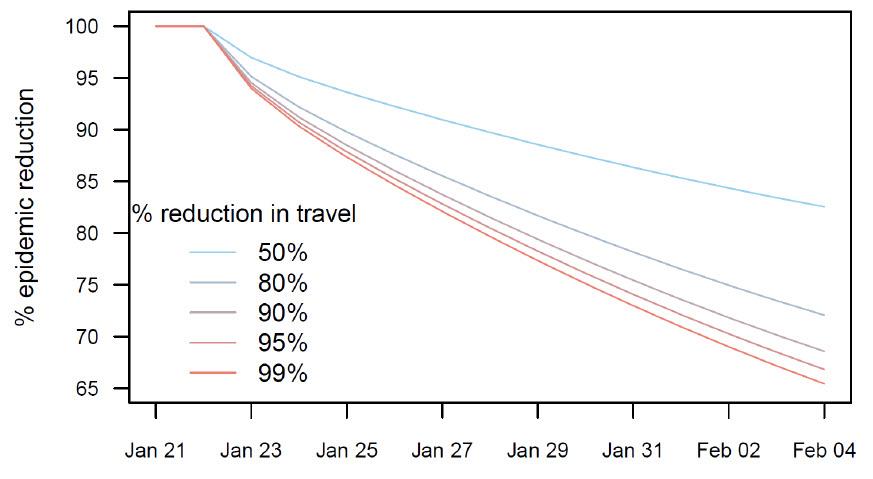
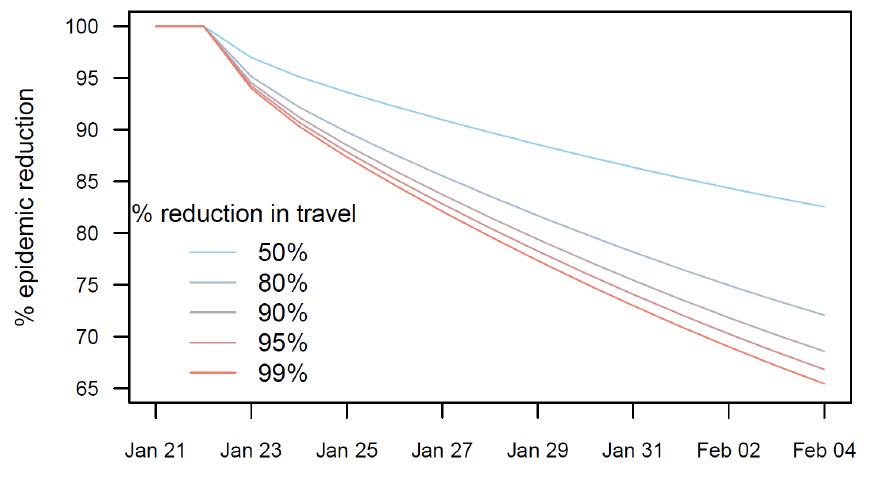
Critically, Read's model alleges that Beijing was woefully late in its response and that recently imposed "travel restrictions from and to Wuhan city are unlikely to be effective in halting transmission across China; with a 99% effective reduction in travel, the size of the epidemic outside of Wuhan may only be reduced by 24.9% on 4 February."
Effect of imposing travel restrictions from/to Wuhan on 23 Jan 2020 onwards on the number of infections in other Chinese cities
Read's prediction is in line with other modeling studies of travel restrictions, which find that reducing travel only serves to delay the epidemic reaching other locations, rather than suppressing the spread entirely. Still, it is important to note that his model only considered air travel, and did not consider the potential impact of travel restrictions relating to land transportation.
That said, Read admits there is a chance that he is wrong, largely due to using flawed assumptions:
Our findings are critically dependent on the assumptions underpinning our model, and the timing and reporting of confirmed cases, and there is considerable uncertainty associated with the outbreak at this early stage.
Yet even with these caveats in mind, Read's work suggests that a basic reproductive number for this 2019-nCoV outbreak is materially, perhaps catastrophically higher compared to other emergent coronaviruses, "suggesting that containment or control of this pathogen may be substantially more difficult."
Even assuming that most of Read's assumptions are overly harsh and pessimistic, his summary leaves little hope that the Coronavirus epidemic will be contained any time soon:
"We are still in the early days of this outbreak and there is much uncertainty in both the scale of the outbreak, as well as key epidemiological information regarding transmission. However, the rapidity of the growth of cases since the recognition of the outbreak is much greater than that observed in outbreaks of either SARS or MERS-CoV. This is consistent with our higher estimates of the reproductive number for this outbreak compared to these other emergent coronaviruses, suggesting that containment or control of this pathogen may be substantially more difficult."
Finally, while Read makes no observations on the potential mortality associated with nCoV, one can make a broad observation: late on Friday, China's Hubei province reported 15 additional coronavirus deaths, which added to the previously reported 26 casualties, bringing the total to 41. And with roughly 1,100 confirmed cases, this means that the mortality rate of the diseases has just jumped from roughly 2.5% to 4%. Which means that if Read is correct, and if 250,000 people in Hubei alone will be infected by February 4, no less than 10,000 Chinese people will be dead in the next 2-3 weeks.
What happens after that - with China effectively paralyzed by fear and the economy grinding to a halt as nobody leave their home - is anyone's guess.

Barrons : The Super Bowl Is the Biggest Moment for Ad Agencies. Investors Should

The Super Bowl Is the Biggest Moment for Ad Agencies. Investors Should Still Run Away From Their Stocks.

Super Bowl commercials this year will feature a healthy mix of regulars, like Bud Light; brands returning from long breaks, like Cheetos; and first-timers, like Facebook. President Donald Trump and challenger Michael Bloomberg are in for a minute each. Prices, up to $5.6 million for 30 seconds, are a smidgen higher than last year, and double what they were a dozen years ago.

Sorry, dawdlers. Before Thanksgiving, the sports division of Fox (ticker: FOXA) said it had sold out of slots. That’s the first time in a half-decade that a Super Bowl broadcaster hasn’t taken until crunchtime to move inventory. Last year, CBS, now ViacomCBS (VIAC), didn’t say it was out of spots until Feb. 1. Kickoff was Feb. 3.

Does this mean boom times are back on Madison Avenue? Not quite. And shares of big, pure-play advertising agencies—like Omnicom Group (OMC) and Interpublic Group (IPG) in the U.S., Publicis Groupe (PUB.France) in Paris, and WPP (WPP.UK) in London—may hold less appeal than modest valuations advertise.

As sometimes happens when comparing football stats, this year’s brisk commercial sellout needs an asterisk. The National Football League and Fox agreed to prune one commercial break from each game quarter, leaving four per quarter. Variety magazine points out that the reduction will be offset by longer commercial breaks, but that the first and last spots of each break are the most coveted, and there will be fewer of these—one possible reason that big spenders hurried.

There are genuinely good signs for the advertising trade. The NFL’s television ratings are rebounding for a second consecutive year, and many consumers feel flush after a decade of economic expansion, with the stock market hitting new highs. This year brings the Summer Olympics and a U.S. presidential election, making now as good as conditions get.

So why are the agencies slumping? Shares of the aforementioned four have lagged behind the S&P 500 index over the past year, as well as the past three. Collectively, they are expected to report revenues in 2020 that are 1% lower than the last time the planets aligned for ad spending, in 2016. Another asterisk: The estimates are pulled higher by Publicis last year making its biggest buyout ever, of Epsilon, a data-driven marketer, for $4.4 billion.

There are a cluster of concerns. The long shift of advertising dollars from traditional venues to platforms such as Facebook (FB) and Google, owned by Alphabet (GOOGL), has prompted technology companies to get in on the marketing game. Today, agencies competing with one another for new accounts might also find themselves defending against Accenture (ACN), IBM (IBM), Salesforce.com (CRM), and Oracle (ORCL).

Brands are bootstrapping, too. A 2018 study by consultant Forrester found that 64% of companies had in-house ad agencies, up from 42% a decade before. More than half had 50-plus ad workers, and had recently been hiring. They were mostly focused on creative work, not data analytics. Still, a company that can handle its own art may be tempted to team up with Silicon Valley, rather than Madison Avenue, to distribute and track it.

That isn’t as disastrous as it sounds for the agencies. An overwhelming majority of companies with in-house ad operations outsource work. Part of the agencies’ pitch is that they are stacked with top creative talent. The scale of their spending has long allowed them to negotiate plum rates on commercial spots. They are independent of the online advertising venues, and thus, able to divvy up business among them without conflicts of interest. And they have boned up on Big Data, mostly through acquisitions.

“Secular change is impacting ad agencies, but it’s not ringing a death knell,” says Evercore ISI analyst David Joyce. “They’re adapting.” Joyce rates the U.S. pair, Interpublic and Omnicom, at the equivalent of Neutral, and says they have been gaining market share. He doesn’t cover the overseas pair, but says they have been losing share.

WPP was rattled by the sudden resignation of its CEO in 2018 amid allegations of misuse of company funds—which he denied. Publicis is digesting its deal, while struggling to find organic growth. Its shares have plunged on the days following three out of the company’s past four quarterly reports, by more than 14% after two of them.

Both Interpublic and Omnicom go for 12 times this year’s projected earnings, respectively, and are seen growing earnings at mid-single digit percentages, although forecasts have been gently falling. For the other two, the prices are lower and the prospects are worse. Any of them could be takeover candidates, and the most likely buyers, says Joyce, are tech companies seeking a quick creative infusion, but that isn’t part of his base outlook for the shares.

One more worry: Television viewers have been moving to streaming platforms, including paid, commercial-free ones, and soon these could be negotiating for sports rights of their own. NBC recently said that its Peacock platform will show commercials, but only for five minutes an hour—more shrinkage.

That leaves investors to wonder: If ad agencies aren’t flourishing now, when will they?

Go ahead and enjoy those Super Bowl commercials. But until the agencies behind them show better results, stock buyers should pass—or run.

BArrons : Melrose Industries Stock Has the Touch of a Turnaround Specialist

Melrose Industries Stock Has the Touch of a Turnaround Specialist

Melrose Industries has been buying and improving underperforming companies for years. The stock price of the British turnaround specialist also has rallied at an impressive pace.

Melrose (MRO:UK) was the FTSE 100 index’s second-best performer in the past decade, according to data provider Refinitiv, delivering a total shareholder return of 1,261%. Yet it looks like there’s still room for the stock to run.

Shares soared a total of 65.7% since hitting lows in December 2018. In March 2018, the company acquired United Kingdom engineer firm GKN for 8.1 billion pounds sterling ($10.6 billion) in a hostile takeover. Melrose could continue to gain from GKN as it integrates the aerospace and automotive supplier.

Melrose also is likely to benefit from its 2016 acquisition of California-based Nortek, which provides cooling technology. Nortek has grown its operating profit under Melrose by about 40% and has delivered modest sales growth. Analysts at Citigroup believe that the business could be ripe for a sale later this year and fetch as much as $3.3 billion. Bloomberg News, citing unidentified people with knowledge of the matter, reported on Jan. 21 that Melrose is preparing to sell Nortek’s air businesses, which sell products including ventilation and cooling systems, and is seeking to raise more than $3 billion from the sale. Melrose declined to comment.

Melrose posted £128 million in losses in the first six months of 2019, down from £372 million in losses in the same period in 2018. It also more than doubled revenue to £5.7 billion, up from £2.8 billion, in the first half of 2018.

Investec thinks that revenues could reach £12.43 billion by 2021. Melrose trades at 13.5 times projected earnings over the next 12 months, according to data from FactSet.

Melrose was founded in 2003 by David Roper and Jock Miller, who met in Switzerland in the 1970s while working as chartered accountants. They bought Wassall, a small shoe retailer in 1988, and used it as an acquisition vehicle, eventually transforming it into an engineering conglomerate selling a range of products from luggage to copper wiring. The business was sold to a U.S. private equity firm in 2000 for £672 million. Roper and Miller joined forces with Simon Peckham, the former corporate development director at Wassall, in 2003 to launch Melrose. The company is now valued at £11.4 billion and employs more than 60,000 people worldwide.

The company acquires an ailing business and boosts profits by refocusing strategy and investing in research and development, while closing unprofitable business lines or operations before cashing in with a sale.

With GKN, fatter margins in the giant aerospace division account for a third of total group profits, and Melrose is looking to unlock another £400 million of cash, the bulk of which will come from inventory management. “We believe there is significant upside to the performance at the GKN assets post-acquisition,” wrote Andrew Wilson, an analyst at J.P. Morgan, in a recent note.

Simon Peckham, chief executive of Melrose, said the firm is investing heavily for growth and has announced a partnership with Delta Electronics of Taiwan as it looks to build a 15% share in the $12 billion market for electric driveline systems, which transmit power that turn the wheels.

Melrose needs more time to turn around GKN and show that the fight was worth it. Given the rewards that the company has meted out so far, patient investors might want to restructure their portfolios to include Melrose shares.

Barrons : Sports Gambling Will Be a Huge Opportunity. Bet on These Stocks.

Sports Gambling Will Be a Huge Opportunity. Bet on These Stocks.

The Super Bowl is the premier event in U.S. sports. It’s also the biggest day of the year for sports gambling. What’s different this year is that an increasing share of the wagering on the Feb. 2 game between the San Francisco 49ers and the Kansas City Chiefs will be done legally.

Sports betting—and, in particular, online sports wagering from mobile phones—has quickly become the hottest trend in the U.S. gambling industry. The business has mushroomed since the Supreme Court in May 2018 struck down federal legislation that had banned sports wagering in all but a handful of states including Nevada.

Since then, there has been a rush to legalize sports wagering, with betting now allowed—but not necessarily live yet—in 20 states, including New Jersey, Pennsylvania, Illinois, and Michigan. Analysts think that another dozen or more states could approve sports betting in the coming years.

The market is potentially enormous: An estimated $150 billion is bet on sports illegally each year, according to the American Gaming Association. States, meanwhile, are eager for the tax revenues from legal wagering.

He projects that sports betting revenue will rise to about $7 billion in 2025 from less than $1 billion in 2019, with about 80% of the 2025 total online. This compares with current annual U.S. casino revenue of $75 billion. The total size of the sports betting market—assuming broad legalization at the state level—is estimated at $15 billion.

These revenue projections greatly understate the amount of potential betting because revenue is the amount of money won by the gambling companies. The profit margin, or “hold,” on sports betting is about 7%, meaning that $7 billion of revenues would stem from $100 billion of bets.

The industry is focusing its expansion on mobile sports gambling, rather than the sports books patterned on those at Las Vegas casinos. Most bettors—millennials, in particular—prefer to wager on their phones.

“Online is the future,” says Jason Ader, the co-founder of SpringOwl Asset Management, which invests in the industry. “Millennials go to Las Vegas for the nightclubs, restaurants, and entertainment. They’re not the same casino gamblers as their parents. Millennials are more comfortable doing their gaming on mobile phones. This is the biggest challenge for the industry. It needs to figure out this demographic or miss out.”

“This is the biggest growth opportunity for the U.S. gambling industry in the past 10 years. ”

—Thomas Allen, Morgan Stanley analyst
Gambling companies have flocked to New Jersey, where 85% of the wagering last year was done online. With 15 operators, the state is now the epicenter of U.S. online sports wagering. Aggressive marketing includes free initial bets and partial matching of first deposits. Last year, there was $4.5 billion in sports betting in the state, generating $300 million of industry revenues.

It’s estimated that as much as 25% of New Jersey’s business comes from New Yorkers who are crossing the Hudson River by train or car to gamble. (New Jersey requires online bettors to be physically present in the state.) The leakage of bettors to New Jersey is putting pressure on New York to legalize online sports wagering. The state permits it only at four upstate casinos.

The industry’s prospects hinge on whether the four most populous states—California, Florida, Texas, and New York—with a combined one-third of the U.S. population, legalize online sports gambling. There is no legal sports wagering now in California, Texas, and Florida.

Wall Street is excited about the outlook for sports gambling despite uncertainty about the pace of legalization and the ultimate profitability. Allen doesn’t see the industry moving into the black until 2022, with ultimate profit margins of about 25% of revenues. There is a risk of a backlash if sports gambling becomes seen as a corrupting influence on sports and a contributor to the problem of gambling addiction.

The Street’s enthusiasm is most evident in the surging stock price of Diamond Eagle Acquisition (ticker: DEAC), a special purpose acquisition company, or SPAC, that reached a deal in late December to buy DraftKings, an early leader in online sports betting. Investors have gravitated toward Diamond Eagle, which will be renamed DraftKings when the deal closes in a few months.

The other chief play on U.S. sports gambling is Flutter Entertainment (FLTR.UK), the top United Kingdom betting company that controls FanDuel, the main online U.S. sports wagering rival for DraftKings.

Flutter, which also has U.S.-listed shares traded under the ticker PDYPY, is a more diluted play. It is diversified globally and plans to merge with the Stars Group (TSG), the owner of PokerStars and the leader in online poker globally, to form a $16 billion market value company.

Two other U.K. sports wagering companies, William Hill (WMH.UK) and GVC Holdings (GVC.UK), have staked out claims in the U.S., which is seen by the industry as one of the largest global opportunities. Other diluted plays include regional U.S. casino operators Boyd Gaming (BYD) and Penn National Gaming (PENN), which have partnerships with online sports betting companies and stand to benefit from increased traffic at their casinos from sports wagering.

Diamond Eagle shares have rallied to $14 from $11 when the deal was announced last month, valuing the company at $4.8 billion, based on the projected postdeal shares outstanding. SPACs are blind pools that raise money from investors and then look for a business opportunity, as Barron’sdetailed last week.

The Diamond Eagle deal offered DraftKings an alternative to an initial public offering as a way to go public. The transaction got the endorsement of big institutional investors such as Capital Group and Wellington Management, which invested a total of $304 million in the deal at $10 a share.

“The opportunity is tremendously large,” says Jason Robins, the DraftKings CEO. “People love sports in the U.S. and love to bet on them.” He notes that sports betting is already well established in the U.K. and Australia.

There is no analyst coverage now of Diamond Eagle, but Jefferies U.K. analyst Becky Lane, who covers Flutter, wrote last month that the DraftKings listing “will drive increased investor interest in a fast-growing sector.”

In a presentation that accompanied its deal with Diamond Eagle, DraftKings outlined a path to $1 billion in annual earnings before interest, taxes, depreciation, and amortization, or Ebitda. The $1 billion of profits assumes $3.7 billion in annual revenue, up from an estimated $415 million in 2019, and is probably at least five years away. This scenario assumes that sports gambling is legalized in states with 65% of the U.S. population—up from about 35% now—and that DraftKings gets a 25% market share. More immediately, it sees $700 million of 2021 revenue.

DraftKings is also banking on legalization of internet gambling, or casino games like blackjack and roulette, in states with 30% of the population. The combined company lost $117 million in the first nine months of 2019. DraftKings argues that it can ultimately generate 38% margins in sports betting as the market grows, and it can leverage its marketing spending in more states. In New Jersey, its most important market, DraftKings sees a profit of $49 million in 2021, compared with an estimated loss of $11 million in 2019.

One of the surprises of sports betting in New Jersey is that DraftKings and FanDuel dominate the online business with an estimated combined 75% share, rather than any of the established land-based companies.

One reason for their success is an ability to leverage their dominant position in fantasy sports. Participants in fantasy football, the best-known fantasy sport, put money into weekly pools during the pro football season run by DraftKings and FanDuel.

They draft “teams” from players throughout the National Football League and compete to win cash based on how their players perform versus others in the pool each week. The two operators take a roughly 10% cut of the amount bet. DraftKings and FanDuel both have converted many fantasy players to sports betting customers.

“The online companies have a significant competitive advantage,” says Ader of SpringOwl Asset Management. ‘They’re built more like technology companies and are better at the two key aspects of the business: customer acquisition and retention.”

FanDuel and DraftKings, though, have had to partner with land-based casinos in New Jersey. DraftKings has teamed up with Resorts Casino, while FanDuel operates a sports book at the Meadowlands racetrack that is the largest in the world. Its handle, or total bets, last year was about $400 million.

Ader is partial to Flutter, which will emerge as the No. 1 global sports betting company following its coming merger with the Stars Group. “Flutter will be a powerhouse,” he says. “It will own some of the leading brands in the world.”
Flutter was formed from the merger of Irish and British betting companies Paddy Power and Betfair. Flutter bought a 61% interest in FanDuel in 2018 and has an option to increase its stake to 80% in 2021, and 100% in 2023, by buying out stakes held by a group of investors including KKR (KKR) and CapitalG, formerly Google Capital, an investment arm of Alphabet (GOOGL).

Jefferies’ Lane wrote last month that Flutter should benefit from greater attention on the U.S. sports betting market. FanDuel has a leading position in the states it has entered, but still appears to be unprofitable. Flutter has projected a loss in 2019 of about $60 million for its U.S. operations.

Lane has a price target of 9,500 pence on the U.K. shares, up 7% from the recent 8,900 pence, with potential upside to more than 11,000 pence. Flutter is valued at about 13 times 2020 projected Ebitda when reflecting the Stars Group merger, a premium to peers William Hill and GVC.

Second to the Super Bowl in sports wagering is probably the NCAA Men’s Basketball tournament, especially the first Thursday of March Madness, when first-round games are played. Other popular contests are the college football championship game, the baseball World Series, and the National Basketball Association finals.

Technology promises to transform sports betting by allowing more in-game wagers. Reflecting this, the Diamond Eagle/DraftKings deal also includes the purchase of SBTech, a privately held company that uses historical data and algorithms to calculate game odds for sports betting companies and manage risk. Sports betting companies, for instance, want odds set to avoid lopsided wagering on popular teams like the New England Patriots.

“We talk about infinite betting,” says FanDuel CEO Matt King. “If somebody wants to make a bet, we want to offer it. For an average NFL game, the typical Las Vegas sports book offers 50 different bets. We offer 250.”

These include fantasy-style bets on how many yards will be tallied by individual running backs, receivers, and quarterbacks. FanDuel also specializes in parlay bets based on several events occurring in the same game or multiple events. Such a bet might involve New England quarterback Tom Brady passing for 300 yards in a game and throwing for three or more touchdowns and the Patriots winning by more than 15 points.

In the U.K., where sports fans are crazy about soccer in general and the English Premier League, in particular, more than half of all betting occurs during games.

FanDuel is focused on in-game betting and gets 40% to 50% of its wagers during games. Bettors, for example, could have taken advantage of this during the recent football playoff game between the San Francisco 49ers and Green Bay Packers. After the 49ers went up by 27 points at halftime, bettors who wanted to take the Packers to win were offered odds of roughly 30 to one.

In professional baseball, bettors can wager on the number of runs in each inning of a game, with the odds determined largely by the batting order and pitchers.

Morgan Stanley’s Allen expects FanDuel and DraftKings to maintain leading market shares as more states roll out online sports wagering, but below their current positions in New Jersey. He sees FanDuel at 20%; DraftKings at 15%; William Hill, FOX Bet, and Bet365 at 10% each; and others making up the rest.

Part of William Hill’s U.S. strategy has been to convert the customers at its sports books—it is the leader in Nevada—into those online.

In New Jersey, William Hill has built what is probably the most attractive sports book in Atlantic City at the Ocean Resort, an independent hotel and casino formerly known as Revel. The William Hill sports book features three sky boxes that can be rented for the day. The cost: a minimum of $1,000 in food and beverage purchases. The boxes were filled for a recent Saturday night fight involving Ultimate Fighting Championship star Conor McGregor.

The major U.S. land-based casinos should benefit from sports gambling, Morgan Stanley’s Allen estimates. He favors Penn National because it should get the most bang relative to its size, thanks to sports gambling as well as added business at its casino table games and from food and beverage sales. Allen says the regional gaming companies, which trade cheaply relative to the industry giants, don’t reflect much benefit from sports gambling.

Fox (FOXA), which airs NFL games and is taking on ESPN in sports programming, has gone all-in on sports betting through a 50/50 U.S. partnership with the Stars Group called FOX Bet. With the Flutter/Stars Group merger, Fox will get the right to buy 18.5% of FanDuel. CBS, which shares Sunday afternoon pro football rights with Fox and has rights to the NCAA men’s basketball championships, hasn’t yet outlined a sports betting strategy. (Fox has common ownership with Barron’s parent company, News Corp. )

For football broadcasters like CBS and Fox, the growth in sports gambling could boost the audience for games, keep viewers more engaged, and bolster advertising revenue. CBS is already seeing higher sports gambling ad revenue in markets surrounding New Jersey during NFL broadcasts.

Walt Disney’s (DIS) ESPN unit is walking a fine line. Reflecting viewer interest, it has expanded its betting-related programming, including a show called the Daily Wager that airs on ESPN2, but the family-focused company has stopped short of gambling ventures.

“I don’t see the Walt Disney Com pany, certainly in the near term, getting involved in the business of gambling, in effect, by facilitating gambling in any way,” Disney CEO Bob Iger said last February.

DraftKings’ Robins says that discussions with investors used to focus on whether his company could compete with land-based casinos. “Now that they’ve seen we can compete, we hear, ‘How big will this market be, and how many states will legalize?’ ’’

The online companies see the opportunity to take share from illegal betting, which, contrary to the popular image, often involves overseas sports books rather than bookies. While online companies don’t provide credit the way bookies do, they offer the security that bookies and offshore sports books don’t.

There is still a stigma attached to sports betting and online gambling, however. For one thing, it isn’t easy to fund online sports gambling accounts. Customers often need to rely on cumbersome bank wire transfers, since JPMorgan Chase, Bank of America, and other credit-card companies block transactions to online gambling sites. FanDuel and others are trying to simplify the process.

The state legalization outlook is tough to predict. Morgan Stanley’s Allen sees sports gambling legalization, including online wagering, by 2022 in Florida and New York, with wagering at physical sites only in California in the coming years and nowhere in Texas.

The political calculus is complex in each state. Native American tribes who operate land-based casinos have a powerful role in California and Florida and are wary about anything new that could divert business from them. Texas is one of the most gambling-unfriendly states in the country and is among the few that don’t permit fantasy football pools.

In New York, sports gambling has yet to gain the support of Gov. Andrew Cuomo, who has suggested that an amendment to the state constitution may be needed.

It is also tough to estimate the future profitability of sports gambling because of the uncertainty about the number of states that will legalize it, as well as state taxes and marketing expenses. State taxes have generally been set at about 15%, but Pennsylvania went to 34%, and that hasn’t deterred online operators from setting up shop in the state.

Despite these issues, sports gambling probably will become more pervasive in coming years. Investors can get exposure through Diamond Eagle, Flutter, William Hill, or Penn Gaming.

This is one trend investors probably shouldn’t bet against.

WSJ : Prosecutors Have Evidence Bezos’ Girlfriend Gave Texts to Brother Who Leak

Prosecutors Have Evidence Bezos’ Girlfriend Gave Texts to Brother Who Leaked to National Enquirer
Text messages are among materials under review in probe examining whether publisher tried to extort Amazon chief

Federal prosecutors in Manhattan have evidence indicating Jeff Bezos ’ girlfriend provided text messages to her brother that he then sold to the National Enquirer for its article about the Amazon.com Inc. founder’s affair, according to people familiar with the matter.

The text messages, which were reviewed by The Wall Street Journal, were among the materials turned over to federal prosecutors as part of their investigation into whether American Media Inc., publisher of the National Enquirer, attempted to extort Mr. Bezos, the people said. The U.S. attorney’s office has also been investigating whether Mr. Bezos’ phone was hacked, according to the people.

The evidence gathered by federal prosecutors includes a May 10, 2018, text message sent from the phone of Lauren Sanchez, Mr. Bezos’ girlfriend, to her brother Michael Sanchez containing a flirtatious message from the Amazon chief, the people said.

The Enquirer quoted the text in its January 2019 article about Mr. Bezos’ extramarital affair with Ms. Sanchez. A July 3, 2018, text message sent from Ms. Sanchez’s phone to her brother’s includes a photo of a shirtless Mr. Bezos.

Mr. Bezos’ security consultant, Gavin de Becker, suggested in an opinion article last year for the Daily Beast that Saudi Arabia might have had a hand in the Enquirer’s reporting on Mr. Bezos. The claim resurfaced this week after a forensic audit commissioned by Mr. Bezos alleged that his phone was hacked using a WhatsApp account associated with Saudi Crown Prince Mohammed bin Salman.

The text messages reviewed by the Journal, as well as a $200,000 payment Mr. Sanchez received from the Enquirer under an October 2018 contract the Journal also reviewed, supports American Media’s earlier statements that he was the source for the National Enquirer’s article.

The Saudi government said the allegation that the crown prince hacked Mr. Bezos’ phone was absurd and called for an investigation.

“In September of 2018, Michael Sanchez began providing all materials and information to our reporters,” a spokesman for American Media said Friday. He added that any suggestion that a third party, such as Saudi Arabia, “was involved in or in any way influenced our reporting is false.”

Mr. Sanchez declined to comment on the texts or his contract with American Media. “With spoon-fed lies and half-truths, Wall Street Journal keeps getting it wrong,” Mr. Sanchez said in an emailed statement.

Ms. Sanchez didn’t respond to requests for comment. An attorney for Mr. Bezos declined to comment.

Federal prosecutors haven’t charged Michael Sanchez, Lauren Sanchez or anyone else with a crime in the probe.

Mr. Bezos’ affair with Ms. Sanchez, a former television reporter who started an aerial film-production company, was publicized the same month he and his now ex-wife, MacKenzie Bezos, said their 25-year marriage was ending. They agreed to a divorce settlement in April.

Mr. Bezos, the richest man in the world, made a public appearance with Ms. Sanchez at an event in Mumbai on Jan. 16.

The Amazon chief is the owner of the Washington Post, where the late columnist Jamal Khashoggi wrote critically of the kingdom’s leadership before he was slain last October by a Saudi security team. The CIA, in a secret assessment reviewed by the Journal, said that Prince Mohammed likely ordered Mr. Khashoggi’s death, although it acknowledged it didn’t have direct evidence of a kill order by the Saudi crown prince.

On Wednesday, United Nations officials probing Mr. Khashoggi’s death called on U.S. authorities to investigate the findings of the audit commissioned by Mr. Bezos.

The October 2018 contract between Mr. Sanchez and American Media gave the company exclusive rights to “certain information, photographs, and text messages documenting an affair between Jeff Bezos and Lauren Sanchez.”

Mr. Sanchez, a talent agent who has managed television pundits and reality-show judges, declared in his contract with American Media that he acquired the texts and photographs lawfully, according to the agreement.

The New York Times earlier reported that American Media provided evidence to federal prosecutors that Ms. Sanchez sent texts to her brother involving Mr. Bezos.

FT : The next bust may not come soon, but it will hurt

The next bust may not come soon, but it will hurt
Era of central bank intervention has not ended the credit cycle

The rally across financial markets reflects a tailwind from central banks and evidence of a rebound in global economic activity. The important question now is whether bullish equity and credit market expectations have outrun economic reality.

Investors have time on their side, but the absence of a bounceback in growth strong enough to lift corporate earnings threatens to undermine asset price performance over the course of this year.

For some analysts, the path of global monetary policy remains the biggest driver of investment performance. Concerns about lofty valuations, pressure on corporate margins, political shocks and other sector-specific challenges all ultimately give way to a popular market refrain of “not fighting central banks”.

Bob Prince, the co-chief investment officer at Bridgewater Associates, attracted attention at the World Economic Forum in Davos this week when he told Bloomberg News that the era of economic boom and bust, as we know it, has ended. In Mr Prince’s view, rate-setters at the US Federal Reserve are stuck in a box where they cannot move either to tighten or ease policy.

Some quickly noted that a certain UK chancellor issued such a call just before the global financial crisis erupted. Back then, many investors were lured by what was dubbed the “great moderation”: a period that reflected low economic and financial market volatility. The Fed had aggressively lowered rates after the internet bubble popped, creating a period of calm.

The boom-and-bust cycle that transpired for much of the post-second world war period has certainly become less pronounced thanks to the risk-management policies of central banks. The past few decades have also seen a relentless decline in government bond yields and inflation, against the backdrop of dramatic technological and demographic change in the developed world, which is now registering in some emerging economies.

Since the 1987 stock market crash, which prompted the Fed and other central banks into firefighting action, asset prices including housing have greatly benefited from central banks responding quickly to counteract any bout of financial market turmoil that threatens the broader economy. This approach has only intensified over the past decade with central banks buying and holding vast amounts of bonds and other assets in an effort to push inflation and growth higher. The US economy has not endured a recession since the 2008 financial crisis, but growth has been modest.

While equity and credit markets have generated substantial gains since the crisis, many people in the wider economy have not benefited, as illustrated by a rising tide of populism. Judging by current flows into equities and credit, investors appear resigned to more of the same, although ever more expensive financial assets are certainly vulnerable to a macro shock that not even central banks can limit. Many investors, including Mr Prince, have faith that they will feel the tremors before the next major earthquake and have time to avoid the worst of the sell-off.

As central banks target asset prices, concerns are mounting about the longer-term consequences of a financial system built on negative and low interest rates, and one spurring a rush for risky assets. Fred Cleary at Pegasus Capital said that central bankers avoided a more painful economic bust following the financial crash through their extraordinary monetary policies. But “prolonged zero-interest rate policy creates zombified companies and defers the day of reckoning”, he added.

Central banks are expected to maintain their current accommodative stance for some time. Thomas Costerg at Pictet Wealth Management believes the US central bank “will remain hypersensitive to financial markets”, adding: “It is in perpetual accommodation mode and to some degree it’s trapped by the level of private debt in the system.”

Indeed, in the current environment of narrow corporate credit risk premiums, the Institute of International Finance estimates $19tn of debt securities are due for refinancing this year across the US, UK, eurozone, Japan and key emerging markets.

How does this usually end? Credit stress and a rising level of corporate defaults spark a recession and a severe sell-off in equities, as seen in the early 2000s and during the financial crisis.

That was the point rammed home this week by another Davos delegate. Scott Minerd, global chief investment officer at Guggenheim, warned that while central banks may have delayed the next recession until 2021 or 2022, “ultimately we will reach a tipping point when investors will awaken to the rising tide of defaults and downgrades”.

Investors could be in for more pain this time round. Thanks to central bank policies, government bonds provide little protection against either a more inflationary future or a major shock that triggers a sharp decline in the value of risk assets.

FT : UK active fund managers suffer bloodbath in 2019

UK active fund managers suffer bloodbath in 2019
Heavy redemptions from London’s best-known active managers follow demise of Neil Woodford and industry scandals

Invesco, Standard Life Aberdeen, M&G and Schroders have topped a ranking of the worst-selling fund houses in Europe in 2019 as high-profile scandals in the sector intensified investor aversion to traditional stockpickers.

Active fund managers with large British arms dominated the list, taking up nine of the top 10 spots, according to figures from Morningstar, the data provider.

The active investment industry, where fund managers select stocks rather than track an index, has been under severe pressure because of disappointing performance, high fees and the rising popularity of passive funds.

The heavy redemptions from many of London’s best-known active managers follows the collapse of Neil Woodford’s investment business, the levying of large fines by the financial regulator and the suspension of a popular property fund. 

“Negative publicity, such as that generated by the Woodford affair, has hit the active industry at a very bad time, and further discouraged buyers,” said Edward Glyn from Calastone, the fund transaction network.

“It has been a terrible year for active managers,” said Morningstar’s Ali Masarwah.

Investors pulled €15.8bn from Standard Life Aberdeen, the UK’s largest-fund house measured by assets, while Schroders, the country’s largest by market value, bled €6.3bn, its worst outflows from its Europe-based mutual funds in more than a decade. 

Other groups hit by fleeing investors included Invesco, whose Henley-based operations propelled Mr Woodford to fame, M&G, which recently listed on the London Stock Exchange, BNY Mellon and Franklin Templeton, US managers with significant operations in London.

Boutique houses did not escape the pain, with Merian, the £22bn manager co-founded by City veteran Richard Buxton, and £28bn house Artemis hit by large redemptions.

The exodus from active is a further burden for British fund managers, which are already grappling with lower profit margins and relentless pressure on fees while preparing for the UK’s exit from the EU.

Mr Masarwah said that the situation for active managers across the UK and Europe would have been much worse had it not been for last year’s stock market rally, which helped drive up performance across their funds. 

“They were saved by the markets,” he said. “It is rather ugly for active managers.”

According to Morningstar, index trackers based in the UK attracted £19bn in net inflows last year, while active funds had outflows of £32bn, their highest level on record.

At the end of 2019, passive funds made up eight out of the 10 largest funds in the UK, compared to just three a year earlier. Funds run by BlackRock and Vanguard tracking the FTSE UK All Share displaced former blockbuster active funds such as SLA’s Gars, M&G Optimal Income, BNY Mellon Real Return and Invesco High Income, which is run by beleaguered manager Mark Barnett.

SLA said active managers had been hit by the rise of passive, but added: “With markets likely to become more volatile over the next few years there is the opportunity for active managers to prove their worth.”

Schroders, M&G and Janus Henderson declined to comment. Invesco said that during the third quarter, clients had reacted to market news, such as the protracted negotiations over Brexit and the US-China trade war, leading to outflows in its UK retail business. 

Artemis said the outflows were linked to weaker performance across a number of its funds and because of concerns about Brexit. Merian and BNY Mellon attributed their redemptions to the challenging conditions for absolute return funds in 2019.

Franklin Templeton, which has suffered years of investor redemptions, said its sales numbers were improving for several areas globally. 

The best-selling list in Europe was dominated by large US players. BlackRock topped the ranking, taking in €64bn, followed by Pimco (€44.5bn) and Vanguard (€22.5bn). The figures include open-ended funds and exchange traded funds domiciled in Europe. 

>>> Barron’s Weekend Summary

Barron’s Weekend Summary: Cover story says online sports betting has become the hottest trend in the US gaming industry; Tech Trader says a change in how NFLX measures viewership could be a red flag
- Cover story: Sports betting—especially online sports wagering from mobile phones—has quickly become the hottest trend in the US gambling industry, and the market is potentially enormous: People illegally bet an estimated $150B on sports each year, and states are eager to get their hands on it through tax revenues on legal wagering; DraftKings will emerge as the only pure play in online US sports gambling and a potential takeover candidate for industry leaders MGM, ERI, CZR, WYNN, or LVS; Other options include Flutter Entertainment—which plans to merge with TSG—William Hill, GVC Holdings, BYD, and PENN.
- Tech Trader: Positive on NFLX: The first season of The Witcher proved to be a massive hit for the streaming giant, which is taking so many chances on new shows that it’s almost certain to find a few big hits every year and maintain its momentum—though a big change in how it measures viewership, while it will boost metrics, could be a red flag about future trends.
- Trader: The coronavirus outbreak in China is unlikely to tip the US into recession—market internals are still strong, with the advance/decline line (a cumulative measure of the number of stocks rising versus those falling) still making new highs, and the recent drop is likely not the big one, though it may feel that way; China is the world’s biggest market for electric cars, and with growth expected to continue, there are more ways than just TSLA to play it—investors frustrated about missing out on Telsa’s epic run may want to consider Chinese rival BYD.
- Profile: Rajiv Jain of GQG Partners works with at 12-person investment team that includes former journalists, long/short managers, and credit analysts who work from a shortlist of a few hundred global names (top 10 holdings: BABA, HDB, Air Liquide, SAP, AZN, Cellnex Telecom, Deutsche Boerse, Nestlé, MA, NVS).
- Features : 1) Abby Joseph Cohen of Barron’s Roundtable talks about her picks (BMRN, LHX, PG, CVX, TEX) and says that growth is still important—though she is looking for growth that comes from innovation rather than through financial engineering; 2) Stories feature picks from the remaining Roundtable members: Todd Ahlsten of Parnassus Investments (VZ, CMCSA, CME, DE, FDX); Mario Gabelli of Gamco Investors (BATRA, MSG, AJRD, FOX, VIACA, AGSR, NEP, David Campari-Milano, Swedish Match); Sonal Desai of Franklin Templeton Fixed Income (long Japanese yen vs. US dollar, EWU, PYEWX, FTFQX, FKIQX, CQQQ); Scott Black of Delphi Management (SAIC, RCL, ENS, MHO, HTGC); 3) Cautious on Liberty Braves Group, MANU: Investors can buy shares in the Atlanta Braves or Manchester United—and will be able to do the same with New York’s Knicks and Rangers when MSG splits its entertainment and sports operations—but the shares are driven more by private transaction valuations than by fundamentals; 4) Positive on AMZN, GOOGL, MSFT: A vast number of eyeballs around the world—mostly teens and young adults—are fixed on the incredibly popular world of e-sports, or competitive videogaming, which presents an opportunity for investors as big tech companies move more into live streaming the matches; 5) Cautious on FOXA, OMC, IPG, Publicis, WPP: Fox sold out of Super Bowl ad slows much earlier than it had in previous years, but that doesn’t mean boom times are back on Madison Avenue—the NFL and Fox agreed to cut one commercial break from each game quarter, leaving fewer spots available for marketers; 6) Sustainability was ostensibly the key topic at the World Economic Forum, but the overriding theme turned out to be the need for more conversation, collaboration, and long-term planning among companies and nations.
- European Trader: Positive on Melrose: The firm that buys and improves underperforming companies was the FTSE 100 index’s second-best performer during the past decade, according to Refinitiv, but it looks like there’s still more upside in the stock.
- Emerging Markets: Vietnam has escaped both the growth slowdown and the political upheaval that have bedeviled many other emerging markets, and GDP expansion has held steady, driven by internal and external dynamics—but 45 years of Communist control have left a maze of investment barriers and restrictions.
- Commodities: The phase-one trade deal between the US and China the countries announced in mid-January should create frequent opportunities for soybean traders to make money, but it won’t create a bull market for the grain.
- Streetwise: Positive on NFLX: The company has more than five subscribers outside the U.S. for every three inside, a metric its rivals might not match for many years.