(ZH) Did China Steal Coronavirus From Canada And Weaponize It

Did China Steal Coronavirus From Canada And Weaponize It

Submitted by Great Game India
Last year a mysterious shipment was caught smuggling Coronavirus from Canada. It was traced to Chinese agents working at a Canadian lab. Subsequent investigation by GreatGameIndia linked the agents to Chinese Biological Warfare Program from where the virus is suspected to have leaked causing the Wuhan Coronavirus outbreak.

Coronavirus Bioweapon – How Chinese agents stole Coronavirus from Canada and weaponized it into a Bioweapon
The Saudi SARS Sample


On June 13, 2012 a 60-year-old Saudi man was admitted to a private hospital in Jeddah, Saudi Arabia, with a 7-day history of fever, cough, expectoration, and shortness of breath. He had no history of cardiopulmonary or renal disease, was receiving no long-term medications, and did not smoke.
Egyptian virologist Dr. Ali Mohamed Zaki isolated and identified a previously unknown coronavirus from his lungs. After routine diagnostics failed to identify the causative agent, Zaki contacted Ron Fouchier, a leading virologist at the Erasmus Medical Center (EMC) in Rotterdam, the Netherlands, for advice.
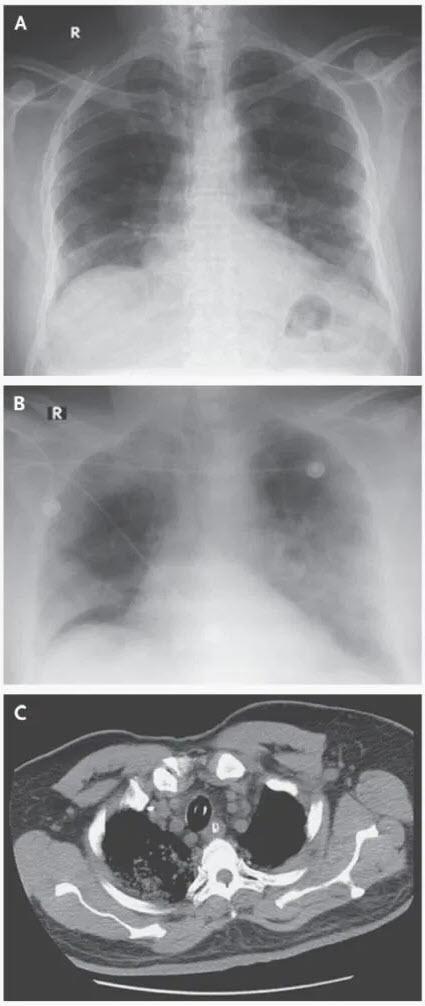
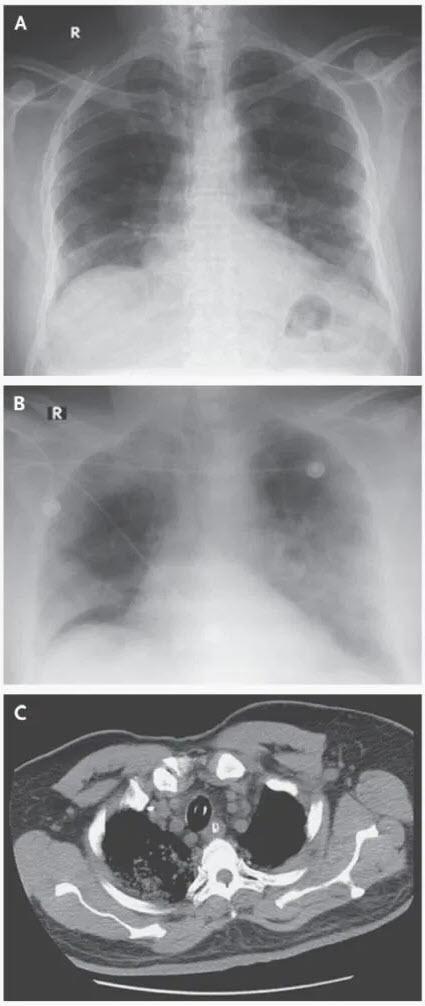
Abnormalities on Chest Imaging of the Saudi patient infected with Coronavirus. Shown are chest radiographs of the patient on the day of admission (Panel A) and 2 days later (Panel B) and computed tomography (CT) 4 days after admission (Panel C).
Fouchier sequenced the virus from a sample sent by Zaki. Fouchier used a broad-spectrum “pan-coronavirus” real-time polymerase chain reaction (RT-PCR) method to test for distinguishing features of a number of known coronaviruses known to infect humans.
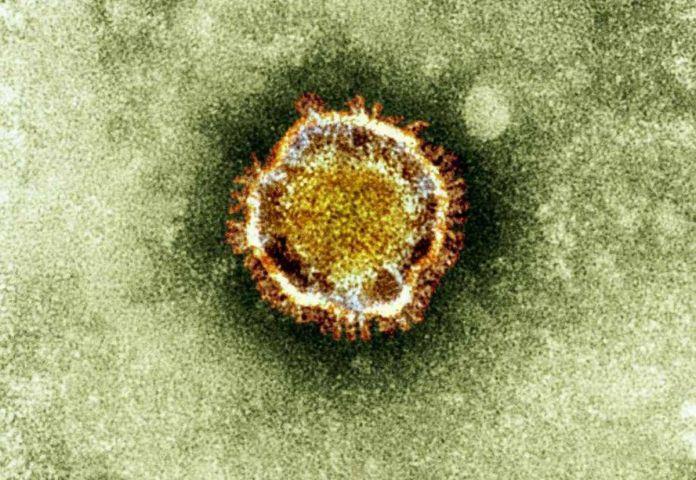
This undated file image released by the British Health Protection Agency shows an electron microscope image of a coronavirus, part of a family of viruses that cause ailments including the common cold and SARS, which was first identified in the Middle East. HANDOUT/THE ASSOCIATED PRESS
This Coronavirus sample was acquired by Scientific Director Dr. Frank Plummer of Canada’s National Microbiology Laboratory (NML) in Winnipeg directly from Fouchier, who received it from Zaki. This virus was reportedly stolen from the Canadian lab by Chinese agents.
The Canadian Lab
Coronavirus arrived at Canada’s NML Winnipeg facility on May 4, 2013 from the Dutch lab. The Canadian lab grew up stocks of the virus and used it to assess diagnostic tests being used in Canada. Winnipeg scientists worked to see which animal species can be infected with the new virus.
Research was done in conjunction with the Canadian Food Inspection Agency’s national lab, the National Centre for Foreign Animal Diseases which is housed in the same complex as the National Microbiology Laboratory.
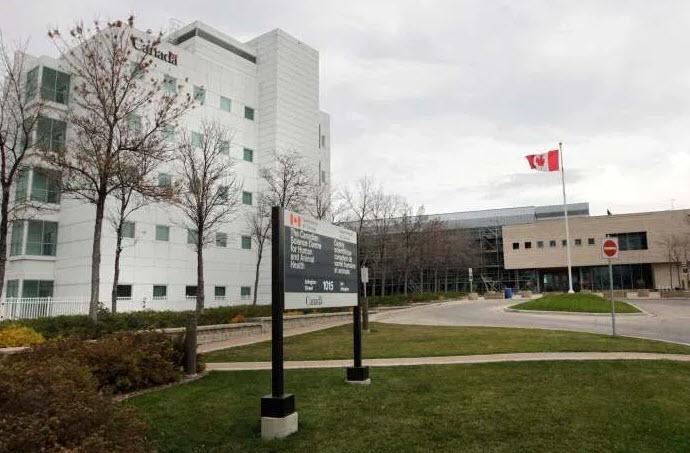
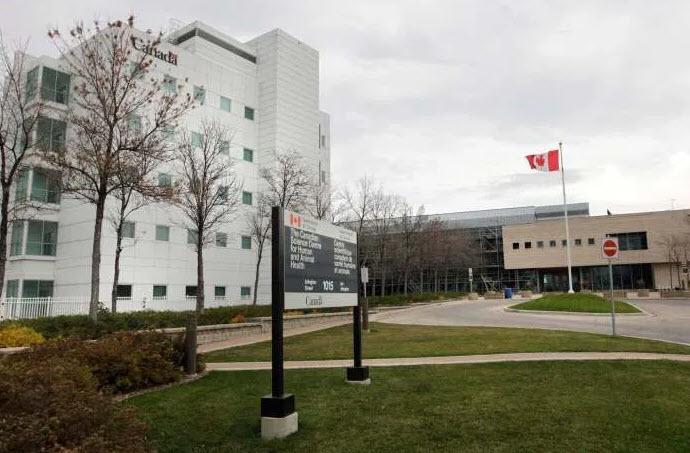
The National Microbiology Lab (The Canadian Science Centre for Human and Animal Health) on Arlington St. in Winnipeg. Wayne Glowacki/Winnipeg Free Press Oct.22 2014
NML has a long history of offering comprehensive testing services for coronaviruses. It isolated and provided the first genome sequence of the SARS coronavirus and identified another coronavirus NL63 in 2004.
This Winnipeg based Canadian lab was targeted by Chinese agents in what could be termed as Biological Espionage.
Chinese Biological Espionage
In March 2019, in mysterious event a shipment of exceptionally virulent viruses from Canada’s NML ended up in China. The event caused a major scandal with Bio-warfare experts questioning why Canada was sending lethal viruses to China. Scientists from NML said the highly lethal viruses were a potential bio-weapon.
Following investigation, the incident was traced to Chinese agents working at NML. Four months later in July 2019, a group of Chinese virologists were forcibly dispatched from the Canadian National Microbiology Laboratory (NML). The NML is Canada’s only level-4 facility and one of only a few in North America equipped to handle the world’s deadliest diseases, including Ebola, SARS, Coronavirus, etc.


Xiangguo Qiu – The Chinese Bio-Warfare Agent
The NML scientist who was escorted out of the Canadian lab along with her husband, another biologist, and members of her research team is believed to be a Chinese Bio-Warfare agent Xiangguo Qiu. Qiu was the head of the Vaccine Development and Antiviral Therapies Section in the Special Pathogens Program at Canada’s NML.
Xiangguo Qiu is an outstanding Chinese scientist born in Tianjin. She primarily received her medical doctor degree from Hebei Medical University in China in 1985 and came to Canada for graduate studies in 1996. Later on, she was affiliated with the Institute of Cell Biology and the Department of Pediatrics and Child Health of the University of Manitoba, Winnipeg, not engaged with studying pathogens.
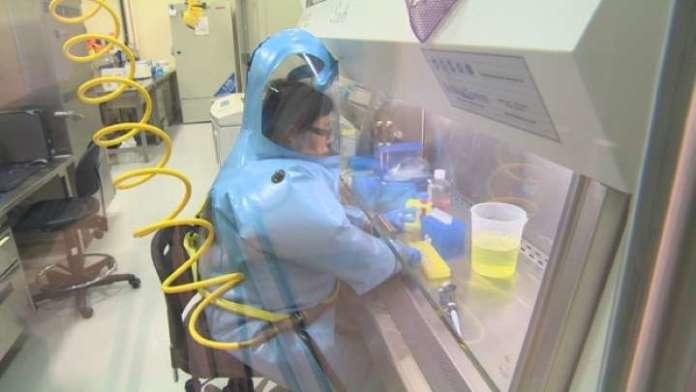
Dr. Xiangguo Qiu, the Chinese Biological Warfare Agent working at the National Microbiology Laboratory, Canada
But a shift took place, somehow. Since 2006, she has been studying powerful viruses in Canada’s NML. The viruses shipped from the NML to China were studied by her in 2014, for instance (together with the viruses Machupo, Junin, Rift Valley Fever, Crimean-Congo Hemorrhagic Fever and Hendra).
Infiltrating the Canadian Lab
Dr. Xiangguo Qiu is married to another Chinese scientist – Dr. Keding Cheng, also affiliated with the NML, specifically the “Science and Technology Core”. Dr. Cheng is primarily a bacteriologist who shifted to virology. The couple is responsible for infiltrating Canada’s NML with many Chinese agents as students from a range of Chinese scientific facilities directly tied to China’s Biological Warfare Program, namely:
  1. Institute of Military Veterinary, Academy of Military Medical Sciences, Changchun
  2. Center for Disease Control and Prevention, Chengdu Military Region
  3. Wuhan Institute of Virology, Chinese Academy of Sciences, Hubei
  4. Institute of Microbiology, Chinese Academy of Sciences, Beijing
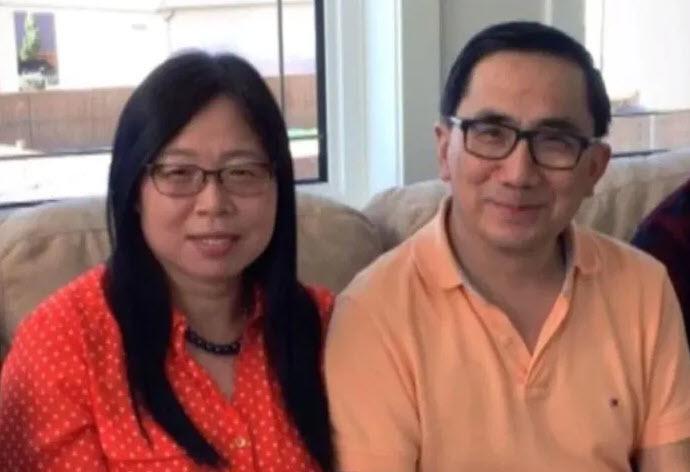
Sources say Xiangguo Qiu and her husband Keding Cheng were escorted from the National Microbiology Lab in Winnipeg on July 5, 2019. Since then, the University of Manitoba has ended their appointments, reassigned her graduate students, and cautioned staff, students and faculty about traveling to China. (Governor General’s Innovation Awards)
All of the above four mentioned Chinese Biological Warfare facilities collaborated with Dr. Xiangguo Qiu within the context of Ebola virus, the Institute of Military Veterinary joined a study on the Rift Valley fever virus too, while the Institute of Microbiology joined a study on Marburg virus. Noticeably, the drug used in the latter study – Favipiravir – has been earlier tested successfully by the Chinese Academy of Military Medical Sciences, with the designation JK-05 (originally a Japanese patent registered in China already in 2006), against Ebola and additional viruses.
However, the studies by Dr. Qiu are considerably more advanced and apparently vital for the Chinese biological weapons development in case Coronavirus, Ebola, Nipah, Marburg or Rift Valley fever viruses are included therein.
The Canadian investigation is ongoing and questions remain whether previous shipments to China of other viruses or other essential preparations, took place from 2006 to 2018, one way or another.
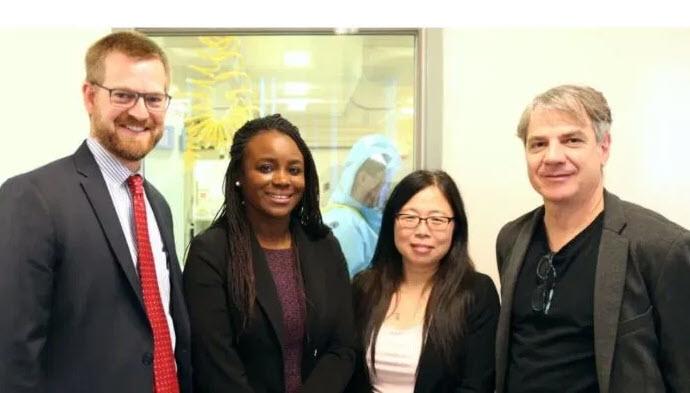
Dr. Gary Kobinger, former chief of special pathogens (right), and Dr. Xiangguo Qiu, research scientist (second from right) met with Dr. Kent Brantly and Dr. Linda Mobula, assistant professor at Johns Hopkins School of Medicine and the physician who administered ZMapp to Brantly in Liberia when he was infected with Ebola during the 2014-16 outbreak. (Submitted by Health Canada)
Dr. Xiangguo Qiu also collaborated in 2018 with three scientists from the US Army Medical Research Institute of Infectious Diseases, Maryland, studying post-exposure immunotherapy for two Ebola viruses and Marburg virus in monkeys; a study supported by the US Defense Threat Reduction Agency.
The Wuhan Coronavirus
Dr. Xiangguo Qiu made at least five trips over the school year 2017-18 to the above mentioned Wuhan National Biosafety Laboratory of the Chinese Academy of Sciences, which was certified for BSL4 in January 2017. Moreover, in August 2017, the National Health Commission of China approved research activities involving Ebola, Nipah, and Crimean-Congo hemorrhagic fever viruses at the Wuhan facility.
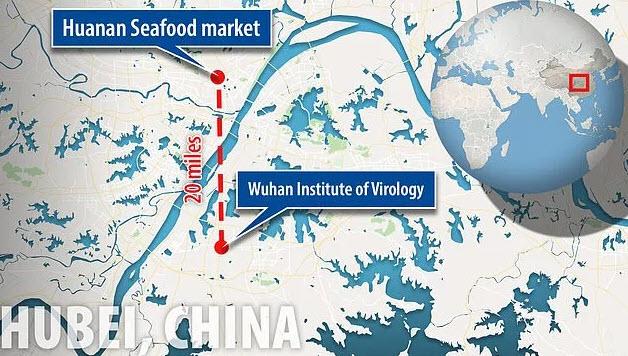
Coincidentally, the Wuhan National Biosafety Laboratory is located only 20 miles away from the Huanan Seafood Market which is the epicenter of the Coronavirus outbreak dubbed the Wuhan Coronavirus.
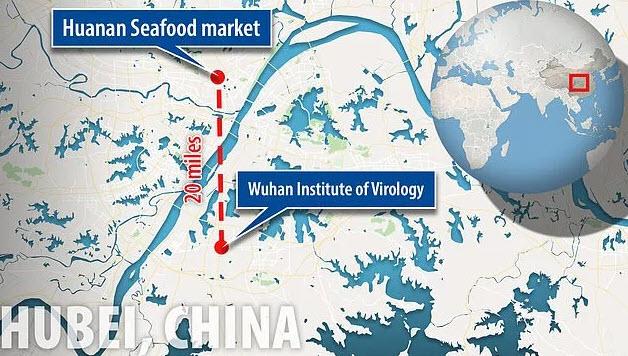
The Wuhan National Biosafety Laboratory is located just about 20 miles away from the Huanan Seafood Market, the epicenter of Coronavirus outbreak
The Wuhan National Biosafety Laboratory is housed at the Chinese military facility Wuhan Institute of Virology linked to China’s Biological Warfare Program. It was the first ever lab in the country designed to meet biosafety-level-4 (BSL-4) standards – the highest biohazard level, meaning that it would be qualified to handle the most dangerous pathogens.
In January 2018, the lab was operational ‘for global experiments on BSL-4 pathogens,’ wrote Guizhen Wu in the journal Biosafety and Health. ‘After a laboratory leak incident of SARS in 2004, the former Ministry of Health of China initiated the construction of preservation laboratories for high-level pathogens such as SARS, coronavirus, and pandemic influenza virus,’ wrote Guizhen Wu.
Coronavirus Bioweapon
The Wuhan institute has studied coronaviruses in the past, including the strain that causes Severe Acute Respiratory Syndrome, or SARS, H5N1 influenza virus, Japanese encephalitis, and dengue. Researchers at the institute also studied the germ that causes anthrax – a biological agent once developed in Russia.
“Coronaviruses (particularly SARS) have been studied in the institute and are probably held therein,” said Dany Shoham, a former Israeli military intelligence officer who has studied Chinese biowarfare. He said. “SARS is included within the Chinese BW program, at large, and is dealt with in several pertinent facilities.”
James Giordano, a neurology professor at Georgetown University and senior fellow in Biowarfare at the U.S. Special Operations Command, said China’s growing investment in bio-science, looser ethics around gene-editing and other cutting-edge technology and integration between government and academia raise the spectre of such pathogens being weaponized.
That could mean an offensive agent, or a modified germ let loose by proxies, for which only China has the treatment or vaccine. “This is not warfare, per se,” he said. “But what it’s doing is leveraging the capability to act as global saviour, which then creates various levels of macro and micro economic and bio-power dependencies.”
China’s Biological Warfare Program
In a 2015 academic paper, Shoham – of Bar-Ilan’s Begin-Sadat Center for Strategic Studies – asserts that more than 40 Chinese facilities are involved in bio-weapon production.
GreatGameIndia@GreatGameIndia

China's Biological Warfare Program is believed to include full range of traditional chemical & biological agents with a wide variety of delivery systems including artillery rockets, aerial bombs, sprayers, and short-range ballistic missiles. #coronarovirus http://greatgameindia.com/chinas-biological-warfare-program/ …
China's Biological Warfare Program | GreatGameIndia
China's Biological Warfare Program is believed to be in an advanced stage that includes research and development, production and weaponization capabilities.
greatgameindia.com

20 people are talking about this


China’s Academy of Military Medical Sciences actually developed an Ebola drug – called JK-05 — but little has been divulged about it or the defence facility’s possession of the virus, prompting speculation its Ebola cells are part of China’s bio-warfare arsenal, Shoham told the National Post.
Ebola is classified as a “category A” bioterrorism agent by the U.S. Centers for Disease Control and Prevention, meaning it could be easily transmitted from person to person, would result in high death rates and “might cause panic.” The CDC lists Nipah as a category C substance, a deadly emerging pathogen that could be engineered for mass dissemination.
China’s Biological Warfare Program is believed to be in an advanced stage that includes research and development, production and weaponization capabilities. Its current inventory is believed to include the full range of traditional chemical and biological agents with a wide variety of delivery systems including artillery rockets, aerial bombs, sprayers, and short-range ballistic missiles.
Weaponizing Biotech
China’s national strategy of military-civil fusion has highlighted biology as a priority, and the People’s Liberation Army could be at the forefront of expanding and exploiting this knowledge.
GreatGameIndia@GreatGameIndia

Weaponizing Biotech - China's War for Biological Dominance | GreatGameIndia
China is sponsoring research on weaponizing Biotech in preparation for a New Domain of Warfare - a part of China's War for Biological Dominance
greatgameindia.com

See GreatGameIndia's other Tweets


The PLA is pursuing military applications for biology and looking into promising intersections with other disciplines, including brain science, supercomputing, and artificial intelligence. Since 2016, the Central Military Commission has funded projects on military brain science, advanced biomimetic systems, biological and biomimetic materials, human performance enhancement, and “new concept” biotechnology.
In 2016, an AMMS doctoral researcher published a dissertation, “Research on the Evaluation of Human Performance Enhancement Technology,” which characterized CRISPR-Cas as one of three primary technologies that might boost troops’ combat effectiveness. The supporting research looked at the effectiveness of the drug Modafinil, which has applications in cognitive enhancement; and at transcranial magnetic stimulation, a type of brain stimulation, while also contending that the “great potential” of CRISPR-Cas as a “military deterrence technology in which China should “grasp the initiative” in development.
In 2016, the potential strategic value of genetic information led the Chinese government to launch the National Genebank, which intends to become the world’s largest repository of such data. It aims to “develop and utilize China’s valuable genetic resources, safeguard national security in bioinformatics, and enhance China’s capability to seize the strategic commanding heights” in the domain of Biotechnology Warfare.
Chinese military’s interest in biology as an emerging domain of warfare is guided by strategists who talk about potential “genetic weapons” and the possibility of a “bloodless victory.”

FT : Why luxury brands want to sell you a home

Why luxury brands want to sell you a home
Wealthy people are being targeted with homes by Porsche, Armani and Bulgari — but are they buying?

A 25-metre swimming pool stretches out before us, its immaculate tiles glinting in the soft, artificial light. Empty loungers with untouched, crisply folded towels are dotted around and the air is freshly scented, like an expensive beach club. But this is no beach: we are five floors beneath the rainy grey streets of London’s Knightsbridge. A few minutes earlier, a scarlet Rolls-Royce Phantom glided past the entrance.

The 2,000 sq m spa of the Bulgari Hotel and Residences London is an underground paradise — not only for guests on weekend jaunts to the UK capital, but also for the longer-term enjoyment of a very select few.

Simon Nixon, founder of MoneySuperMarket.com, is one. The comparison-site billionaire bought a Bulgari Residence attached to the hotel seven years ago for £39m, according to The Times (a figure his spokesperson does not dispute). Access to the spa — which includes a “vitality pool entirely covered by gold-leaf tiles” — is among the many benefits.

It is a different world entirely from that of the cash-conscious consumers whose appetite for cheap deals helped Nixon build his fortune. In buying his Bulgari Residence, he joined a growing band of ultra-wealthy homeowners. “Branded residences” — most of them linked to luxury hotels and serviced by them — now account for 65,000 homes around the world, according to the estate agents Savills.

They range from the discreet — a grand but quiet block under construction in Mayfair will be serviced by the Dorchester hotel — to the flashy. A Porsche-branded tower in Miami includes a patented “Dezervator” elevator to bring you and your car all the way up to your apartment, where you can gaze at it through a glass wall between your garage and living room.

Armani-branded residences in Dubai’s Burj Khalifa, the world’s tallest building, can be bought on the second-hand market for as little as £460,000. One vendor boasts in his online listing of his property that it “showcase[s] Armani’s understated, luxurious style. No Versace bling-bling nonsense here.”

Branded homes are springing up wherever rich people live: in the Swiss Alps, the resorts of Bali, the beaches of Barbados and the Cotswolds. Bulgari, the jeweller, has built apartments at almost all its global hotel locations. According to Savills, branded residences fetch a 35 per cent premium over similar, unbranded luxury homes globally.

In emerging markets, that figure can reach 70 per cent — despite the fact that service charges are high and some hotel services command an additional fee. “Upscale” branded developments — a step down from “ultra luxury” — are also on the rise, according to Savills.

“Buyers are getting more demanding, the world is getting smaller, and expectations of service levels are getting increasingly globalised,” says Fred Scarlett, sales and marketing director at Clivedale, a developer that builds homes with hotel brands. He adds that branded residences have been subject to both “consumer pull and market push”: “Everyone is trying to do something different from everyone else.”


Janis Joplin to Margaret Thatcher
Living in hotels has a long history, from Leonard Cohen and Janis Joplin in New York’s Chelsea Hotel in the 1960s and 1970s to Margaret Thatcher, who lived out her last days in a suite in London’s five-star Ritz hotel in the early 2010s.

But today’s branded residences are different: a slick, corporate offering designed to reassure wandering and would-be billionaires that their pad in Kuala Lumpur is as convenient and secure as the one in Paris. It is a trend that reflects the internationalisation of the high-end property market, and the apartments are the ultimate in brand homogeneity.

Roarie Scarisbrick, buying agent at Property Vision, says: “When London became really international in the early 2000s, people would come — whether from Russia, India, the Middle East, the Far East — and they wanted to live in London with nice, comfortable apartments with air conditioning and security and parking. And we could not give it to them.

“We could offer them tall, thin houses with 100 stairs from top to bottom, or we could offer them a dusty old mansion block with a drunk porter in the daytime sitting at the door. Developers cottoned on . . . The most extreme landmark case was One Hyde Park. Everyone was sceptical about it at the time, but the values have gone up.”

The Candy brothers’ One Hyde Park in Knightsbridge, serviced by the adjacent Mandarin Oriental hotel and completed in 2009, broke house-price records and made headlines with its shameless opulence. Now a fresh crop of branded homes is entering the London market.

The company behind Hong Kong’s Peninsula hotel is building at least 26 apartments along with a new hotel at Hyde Park Corner, to open next year. Ken Griffin, the US hedge-fund billionaire, has already agreed to buy one for about £100m.

Four Seasons opened a development on Grosvenor Square in 2019. Clivedale is currently building two separate sets of branded residences: 24 homes serviced by the Dorchester hotel on the site of the old Playboy Club next to Hyde Park, and another 80 on Hanover Square with Mandarin Oriental, where prices range from about £2m for a studio apartment to about £25m for a penthouse.

These developments will open their doors to a sluggish market. Many were conceived at the height of the property boom, but for the past four years London’s high-end market has declined; property prices in other major cities, such as New York, are also falling. The enthusiasm for luxury developments has left the prime end oversupplied, even as global cities struggle with shortages of affordable housing.

By the third quarter of 2019, more than 3,100 newly built homes had been completed but not sold in the UK capital, according to the data firm Molior London. This surfeit of choice will test branded developments’ appeal. “Some will sell off-plan, but it will take the experience of walking in there, seeing all the staff bowing and scurrying and smelling the million bloody scented candles [to sell the rest],” says Scarisbrick.

Some developers have quietly changed tack. Reignwood, another developer, had planned to sell 41 residences with prices starting at £5m in the restored Beaux Arts-era building that formerly housed the Port of London Authority close to the Tower of London, and which are serviced by the Four Seasons Hotel in the same building.

But the apartments at 10 Trinity Square have now become part of the hotel’s rental stock, available for short periods or for as long as a year.

Estate agents have suggested the building’s location in the east of the city, away from the glitzier west, was a problem. Four Seasons says: “We recognised a need in the market to serve a different type of hotel guest, those seeking a longer-term stay that would help them feel like a local, but with both the comforts of home and Four Seasons amenities and services.”

Residents can access the hotel’s lavish, wood-panelled, 16-room members’ club, complete with Château Latour Discovery Room and cigar lounge.

Agents had originally publicised six residences for sale at Bulgari’s Knightsbridge location, but just two were constructed, of which only one — Nixon’s home — has an owner listed with the Land Registry. Bulgari declined to comment on the change of plans or ownership. Others are selling well despite the turbulent market: Clivedale says its Dorchester and Mandarin Oriental developments are each two-thirds sold.

Even buying agents, whose trade involves arguing down prime prices on behalf of wealthy clients, say these homes fetch high prices. “[Branded residences] go hand in hand with new-build, which even if it is not branded, fetches a premium anyway. It’s a premium on top of a premium,” says Camilla Dell, founder of the buying agency Black Brick.

Scarisbrick says: “These developments are not showing any signs of this 20 to 25 per cent [prime price] correction that we’ve all been talking about.”

Owners are paying in part for convenience. Spa and gym access are standard, along with hotel security and maintenance, maids, room service and concierge services such as flight booking. Rather than go to the bother of hiring household staff, residents can use those of the hotel, while leaving their possessions in their own home.

Some also offer the option of letting your home through the hotel when you are not using it. Buyers “want something absurdly convenient and comfortable”, says Scarisbrick.

Technology has made parts of this offering less unusual, however, even as the latest crop of branded residences were being built. Room service in the small hours was once a rare perk; now, notes the Mayfair estate agent Charles McDowell, apps such as Deliveroo and Just Eat have made it a service available to everyone. “The delivery thing has slightly had the wind taken out of its sails,” he says.

But branded residences also sell something less quantifiable. Purchasers of a Four Seasons, Marriott or Mandarin Oriental home are buying into the brand itself: both its nebulous essence and the specific value of a global company with a reputation to uphold. Hence the entry into the market of non-hotel brands, such as luxury goods and automotive marques.

Among the next raft of brands planning to enter the market is Condé Nast, owner of Vogue, GQ, The New Yorker and Vanity Fair, which already runs the GQ Bar in Berlin, the Tatler Club in Moscow and Vogue cafés in four major cities.

The company would not talk to the FT about its specific plans for its residences, but says: “We now view this evolving and expanding branded residential marketplace as a natural next step for our global lifestyle media brands.”

There is also a question of longevity. Brands may hold power now, but the decline of Cadillac, for example, shows the vulnerability even of a marque that once dominated the US luxury car market. Property buyers must be confident that the brand they are buying into has staying power.

Scarlett, of Clivedale, says the developer’s contracts with hotels last for between 30 and 50 years and it works hard to learn the “corporate dialect” of each one. But Paul Tostevin, director of world research at Savills, says he has seen housing developments “change flags” when brands fade.

At the Bulgari Hotel and Residences in Knightsbridge, a huge portrait of Monica Vitti, the Italian actress, hangs on the wall, while a specially made film is screened in the private cinema with clips from movies from La Dolce Vita to Mission: Impossible II that feature Bulgari gems.

The company says the building is intended to evoke the “fun and the colour” of the jewellery brand, along with the “Italian love of life”. For all that, there is a lot of polished mahogany and black leather.

The Bulgari building at least has a distinctive style. Others blend into one: greyish-beige furniture, gold accessories, a lot of leather and marble, inset flatscreens (the Candys’ bid for uniqueness was a golf simulator).

This is perhaps part of the point, as the travelling wealthy seek a sense of safety, an atmosphere they can rely on. But within this growing niche of the housing sector there is intense competition.

“I don’t know how intricate they can make their marble finishing and how deep they can make their silky shag pile carpets. Every development has a slightly longer pool than the last one, everyone has to outdo the last one,” says Scarisbrick. “I simply don’t know where it all ends.”

FT : Taiwan bars travel from China as coronavirus spreads

Taiwan bars travel from China as coronavirus spreads
More mainland Chinese cities restrict movement as outbreak threatens economy

Taiwan on Sunday said it was barring almost all visitors from China in a bid to stop the coronavirus from taking hold on the island as governments around the world step up efforts to halt the spread of the Sars-like disease.

The move came as China said on Sunday 56 people had died from the disease, up from 42 a day earlier, while 1975 people were infected, including three in Taiwan.

Underlining international concern over the outbreak, the US State Department said on Sunday it was evacuating staff from its consulate in Wuhan, the central Chinese city at the epicentre of the disease. The virus has now also been detected in the US, France, Canada, Australia, Singapore, Malaysia, Thailand, Vietnam, Japan, South Korea and Nepal.

In China, the national travel agency suspended Chinese tour groups travelling overseas and domestically over the lunar new year holiday that started this weekend while the city of Beijing has suspended all buses into and out of the capital from Sunday.

The travel restrictions in Beijing and other smaller cities come on top of a lockdown of more than 40m people living in Wuhan and surrounding areas.

The growing number of measures to deal with the outbreak, which also include closures of entertainment and tourist venues, are expected to deal a heavy blow to the world’s second-biggest economy. China’s gross domestic product grew at its slowest pace in 29 years last year.

China’s president Xi Jinping said late on Saturday the country was facing a “grave situation” at a meeting of the Communist party’s top leadership, the politburo standing committee, state television reported.

The escalating public health emergency comes as China celebrates the lunar new year, the most important holiday of the year in which hundreds of millions of people make billions of trips to celebrate with family and friends.

Taiwan’s Central Epidemic Command Centre said on Sunday that due to the continuous increase in infections, all travellers from the Chinese province of Hubei, of which Wuhan is the capital, including those studying in Taiwan, would be barred with immediate effect.

Taipei said it would also suspend applications from Chinese citizens for travel permits except for special cases.

Those Chinese citizens who already had a permit to travel to Taiwan would have their entry dates pushed back, and Chinese students studying in Taiwan who had gone home for the Lunar New Year break would have their return dates postponed by two weeks.

Business travellers from China as well as Chinese spouses of Taiwanese citizens were still allowed to enter Taiwan but would be required to go into a self-regulated quarantine for two weeks.

Taiwan has 3 confirmed cases and has another 156 undergoing quarantine and testing.

In Hong Kong, authorities on Sunday declared the city’s highest level of emergency in response to the coronavirus outbreak and said all schools would remain closed for a further two weeks beyond the lunar new year holiday.

Hong Kong’s popular amusement parks Disneyland and Ocean Park were both closed from Sunday to help prevent the spread of the virus, Chinese state television reported, while Shanghai Disneyland has been closed since Saturday.

McDonald’s said it had closed its restaurants in five Chinese cities while the country’s leading cinema chains temporarily shut thousands of movie theatres across the country. China’s leading film studios cancelled their plans to release the biggest movie blockbusters of the year at the start of the Lunar New Year holiday, traditionally the commercial high point in the world for the cinema industry.

The coronavirus outbreak could hit China’s quarterly GDP growth, according to Barclays, taking into account the potential shocks to transportation, restaurants and hotels.

India said it had urged its citizens to avoid all non-essential travel to China.

While no cases have yet been confirmed in India, authorities have placed 11 people under observation, of whom four had tested negative for the virus.

FT : Investors pull $43bn from hedge funds in 2019

Investors pull $43bn from hedge funds in 2019
Sector’s best annual performance in a decade fails to stop high redemptions

Hedge funds suffered more than $40bn of investor withdrawals last year even though the industry delivered its best annual performance for a decade.

Hedge funds returned 10.4 per cent, net of fees, in 2019, according to the data provider HFR, well below the 31.5 per cent return posted by the S&P 500, the main US equity benchmark.

Hedge fund managers frequently complain that the S&P 500 is an inappropriate performance yardstick given the variety of their strategies that invest across a wide range of asset classes globally.

But the industry also failed to match the 16.6 per cent return delivered by a 50/50 global equity bond index. 

Years of underperformance by hedge funds since the 2007/08 financial crisis have prompted institutional investors to reduce their exposures to the products. 

Investors withdrew $43bn from hedge funds last year, up from $38.3bn in 2018 and taking net withdrawals over the past four years close to $142bn, according to HFR. 

Peter Laurelli, global head of research at eVestment, another data provider, said that poor performance in 2018 had significantly influenced allocation decisions in 2019. 

Prominent managers that suffered heavy losses included $800m Horseman Capital, run by Russell Clark, a media-shy Australian. The Horseman Global fund was down 32 per cent by December 4, according to a report by HSBC. 

New York-based RG Niederhoffer Capital Management, one of the world’s oldest computer-driven hedge funds that is led by the opera aficionado Roy Niederhoffer, suffered a 30.3 per cent loss in its flagship Diversified fund by December 11.

The $2bn Quantedge Capital global fund was among 2019’s top performers with net returns of 63.6 per cent by the start of December. The high risk fund lost 29.2 per cent in 2018 and was the worst performer that year in the sample of more than 400 funds tracked by HSBC. 

Crispin Odey’s European fund finished the year down about 10 per cent, marking a partial recovery after losses in September when bets on sterling and oil prices soured.

Odey’s European fund delivered a 53 per cent return in 2018 and was the best performer for that year in HSBC’s sample. These violent reversals emphasise the volatility of hedge fund performance that many investors find unpalatable. 

Don Steinbrugge, founder and chief executive at Agecroft Partners, a Virginia-based consultancy, said any new inflows would continue to concentrate into a small group of managers in 2020, leading to further fund closures. 

“I expect 5 per cent of [existing hedge] funds to attract 80 to 90 per cent of the net new assets,” said Mr Steinbrugge.

FT : Couple plead guilty to swindling Berkshire Hathaway

Couple plead guilty to swindling Berkshire Hathaway
Victims of $1bn Ponzi scheme included veteran investor Warren Buffett’s company

A California couple pleaded guilty on Friday in connection with a Ponzi scheme that swindled almost $1bn from American blue-chip companies including Warren Buffett’s Berkshire Hathaway and the insurance provider Progressive.

Jeff Carpoff pleaded guilty to conspiracy to commit wire fraud and money laundering in a California federal court, while his wife Paulette admitted to charges of money laundering and conspiracy to commit an offence against the US.

The couple owned DC Solar, a California-based manufacturer of mobile solar power generators that were used at outdoor concerts, sporting events and on construction sites. DC Solar sold those generators in packages to investment funds, which passed lucrative alternative energy tax credits on to outside investors including Berkshire, Progressive and the independent bank East West Bancorp.

The investors collectively paid more than $912m to the funds and DC Solar for a stake in the generators.

But the authorities allege that DC Solar only constructed a portion of the 17,000 generators — worth a purported $2.5bn — it claimed to have manufactured. DC Solar instead used the capital it raised to pay off earlier investors, US attorney McGregor Scott charged. The company filed for bankruptcy protection last year.

“This billion-dollar Ponzi scheme hurt investors and took money from the United States Treasury,” Mr Scott said on Friday. “Today’s guilty pleas send a strong message that fraudsters will get caught and will pay for their crimes. You can run, but you cannot hide.”

Berkshire disclosed last year that it had invested $340m in the vehicles, known as tax equity investment funds. Progressive last year wrote down its investment and increased its income tax provisions to reverse the tax credits it had previously claimed.

Mr and Mrs Carpoff siphoned off at least $140m to purchase almost 150 luxury and sports cars, real estate in Lake Tahoe and Las Vegas, a Nascar race sponsorship and for a performance by the musician Pitbull at a DC Solar holiday party, according to court filings and US securities regulators.

“Jeff Carpoff pled guilty today in an early attempt to resolve the case as expeditiously as possible and to continue his efforts to make amends by making restitution to the investors,” Malcolm Segal, an attorney for Mr Carpoff, told the Financial Times. “He is terribly sorry for what he did and hopes this is the beginning of a new start.”

Mr Segal said that the couple had so far forfeited more than $100m and was working with the government to recover additional assets for the defrauded investors. An auction of the Carpoffs’ vehicles, which included a 1978 Pontiac Trans Am once owned by Burt Reynolds, raised more than $8m.

Bill Portanova, an attorney for Mrs Carpoff, said: “Paulette Carpoff has undergone tremendous changes these last few years. The business that they thought was going to be good for everyone morphed into something that everyone knew was wrong and now she is dealing with the consequences.”

Four other people have been charged and pleaded guilty for their roles in connection to the Ponzi scheme. Mr and Mrs Carpoff will be sentenced in May and face maximum prison terms of 30 and 15 years, respectively.

Berkshire Hathaway, East West Bancorp and Progressive did not respond to requests for comment.