WSJ : Apple Was Headed for a Slump. Then It Had One of the Biggest Rallies Ever.

Apple Was Headed for a Slump. Then It Had One of the Biggest Rallies Ever.
Shares of the iPhone maker have more than doubled over the past year, and investors are divided on whether they can keep climbing

A year ago, Apple AAPL -0.29% Inc. looked to be headed for a prolonged slump. Chief Executive Tim Cook slashed guidance because of sluggish iPhone sales and analysts fretted over slowing demand in China.

But instead of a slump, investors got one of the biggest one-year stock rallies in history. The tech giant’s share price has more than doubled, adding over $725 billion to its value, more than JPMorgan Chase & Co. and Exxon Mobil Corp. XOM -0.67% combined—and well above the total value of Facebook Inc. FB -0.83%

The surge is driven partly by renewed iPhone anticipation, and investors are eager for more even as some are aware of the cyclical nature of the company’s past rallies. Apple’s stock closed Friday at $318.31, and the company now has a market value of nearly $1.4 trillion.

Apple, which reports earnings Tuesday afternoon, is expected to release its first handsets with 5G wireless technology this fall. Its potential for faster connection speeds has led analysts to predict iPhone shipments will see growth for the first time since fiscal 2018.

Exuberance about the iPhone business has been amplified by rising sales from smartwatches, AirPods wireless earbuds and services such as streaming-music subscriptions and mobile payments. Growth in those businesses helped Apple last year offset the 14% decline in its iPhone business, which accounts for the majority of sales, and the downturn in China, its second-most important market.

The strength of Apple’s non-iPhone business has provided a jolt to Apple’s price-to-earnings ratio, lifting it to its highest level since 2010. It is currently trading at about 27 times its earnings per share in its last fiscal year, according to FactSet, well above its five-year average of 16 times earnings.

“This is almost a violent rerating,” said Mike Bailey, research director at FBB Capital Partners, which counts Apple among the holdings in its $1.3 billion under management. He compared it to how Microsoft Corp. ’s valuation leapt about five years ago as investors began valuing it as a cloud company rather than a mature software company.

Apple’s skyrocketing valuation has divided investors. Some shareholders have sold off stakes, believing the iPhone company is riding a wave of enthusiasm that could crash after the release of its next handset. Others have added to their position, arguing Apple’s growing services business means growth will come from a business with higher margins than its hardware products.

The company’s stock will experience volatility in the months ahead as investors wrestle with the question of whether Apple is a services company or a hardware company, which is valued lower. “Right now, the company is priced like many things in the market—to perfection,” said Greg Hersch of New York City-based Florence Capital Advisors, an investment firm with $200 million under management that has reduced its Apple holdings.

Apple’s growth last year helped drive U.S. stocks to their best annual performance in six years. The S&P 500 surged 29%, while the tech-heavy Nasdaq rose 35% behind an improved economic outlook, interest-rate cuts by the Federal Reserve and the U.S.-China trade deal, which was signed this month.

The confusion over Apple’s identity reflects its transition from a company that emphasized shipping more iPhones into one touting sales of services and accessories. Apple last year deepened its portfolio of products for the 900 million iPhone owners world-wide, adding TV- and videogame-subscription services, higher-priced AirPods and a credit card.

The rise in Apple’s share price accelerated after the company reported its fiscal-year results in October. Though it didn’t disclose subscribers for new services, it reported services sales jumped 17% to $46.29 billion for the year ended in September. In 2017, Mr. Cook set a goal to double services revenue to $50 billion by 2020.

AirPods helped juice sales of the company’s other growing business, wearables, which includes smartwatches, iPods and accessories. Revenue from those products rose 41% to $24.48 billion for the fiscal year, with AirPods accounting for a quarter of the total, according to Bernstein Research, which estimates sales of the wireless earbuds nearly doubled last year to $6 billion.

Jeremy Bryan, portfolio manager at Gradient Investments, LLC, said those growing businesses have given investors confidence that Apple can navigate future slowdowns in iPhone sales.

“A lot of the knock on Apple is that they haven’t been very innovative, but they changed the game more than anyone else with things like AirPods and ancillary things,” said Mr. Bryan, whose firm in Arden Hills, Minn., has $2.6 billion under management and owns 41,000 shares of Apple.

Apple’s share price has continued to rise since last fall as sell-side analysts touted the potential of the company’s forthcoming 5G iPhone. In December, Piper Jaffray reported that a quarter of U.S. iPhone owners planned to buy a $1,200 5G model, according to a survey of about 1,000 people.

The surge in Apple’s valuation is reminiscent of the gains it had in 2017 ahead of the release of its 10th anniversary iPhone. In the course of a year, Apple’s share price increased 70%, adding about $300 billion in market capitalization. It largely added to those gains after the device’s release before shares tumbled in the fall of 2018 amid concern about weak iPhone sales. The slowdown followed the release of the iPhone XS and XR models, which weren’t as popular as preceding models, especially in China, where an economic downturn blunted interest.

A similar correction immediately after the release of Apple’s 5G iPhone is unlikely because adoption of 5G technology isn’t expected to truly take off until 2021, analysts said.

The strength of those iPhone sales will influence how investors continue to see Apple, FBB Capital’s Mr. Bailey said. While the company is showing it can deliver sales growth from more than smartphones, he said investors know Apple needs its iPhone business to remain strong to maintain a user base to sell AirPods and services.

“It’s a blend,” he said. “Most investors have figured out they have this services business that is growing nicely and a big part of the story, but iPhones need to execute.”
FT : Deutsche Bank payments to Saudi royal adviser probed

Deutsche Bank payments to Saudi royal adviser probed
German prosecutors investigate two former employees for suspected bribery

Deutsche Bank paid $1.1m to secure the wealth management business of a senior Saudi royal, according to an internal probe that led to two former staff being reported to criminal prosecutors.

The scandal in the wealth management division, which involved payments to the wife of the royal’s financial adviser, highlights the legal and reputational risks to a unit that is central to the German bank’s turnround hopes.

The money transfers were arranged in 2011 and 2012 alongside other perks for the adviser’s family, including an internship and a seminar at a Swiss ski resort, according to the results of the probe, seen by the Financial Times.

The internal investigation between 2014 and 2016, codenamed Project Dastan, found the Deutsche employees involved were trying to retain the wealthy client and win additional business.

Some of the pay and perks violated Deutsche’s policies on anti-corruption and gifts and entertainment, the probe found.

Six employees left after the investigation; some of them have since taken senior roles at Barclays, UniCredit and Union Bancaire Privée. Twelve staff had their bonuses suspended.

Deutsche reported two former Germany-based employees to criminal prosecutors in Frankfurt for suspected bribery and embezzlement. Prosecutors told the FT that their investigation was ongoing.

However, both employees challenged their dismissals in court. One won and Deutsche settled the other case. 

Adviser’s daughter invited to ski resort seminar
The internal review found that between December 2011 and December 2012, the lender transferred $1.1m in four tranches to an offshore company based in the British Virgin Islands that was owned by the adviser’s wife and set up by Deutsche’s subsidiary in Mauritius. One of the transfers was called an “exceptional retrocession payment”, while another was labelled a “goodwill payment”. 

Deutsche’s inquiry found that the lender had not been required to pay any “retrocession” fees, a controversial yet common practice in wealth management involving commission payments to a person who finds and introduces a new rich client. 

Seeking internal approval to pay such a finder’s fee, Swiss-based Deutsche employees incorrectly described the woman as a key intermediary who introduced the client to the bank, the probe found.

In one internal email, a Deutsche employee argued that the money may help to “persuade the client to upsell / invest existing large cash balances”. 

Deutsche also gave an internship in its London legal department to a niece of the royal’s financial adviser. The bank found it had paid for her travel and accommodation, in violation of its policies.

The bank made the internship offer after the Saudi adviser warned not doing so would “jeopardise the whole client relationship” and implied the client’s cash might be moved elsewhere.

Deutsche also invited the adviser’s daughter to a “Next Generation Seminar” for children of the super-rich held in the luxury Swiss ski resort of St Moritz. The daughter did not meet the age requirements of the meeting, the probe found, and Deutsche — again contrary to its own guidelines — funded her travel.

“This was an action by a small number of individuals who acted in breach of the bank’s policies,” Deutsche told the Financial Times. “We caught it, reported it ourselves to regulators and the affected clients, dealt appropriately with the individuals, and made improvements to avoid something similar happening again.”

The House of Saud, which counts around 2,000 members in its inner circle, is one of the richest global families. The unnamed royal was a Deutsche wealth management client from 2010 to 2016, bringing up to €500m in assets.

Trouble in a ‘beautiful’ business
Today, Deutsche’s wealth management unit is one of the core pillars of its attempted overhaul, which aims to refocus the lender on such relatively stable areas. Claudio de Sanctis, who has been running the unit since late last year, has described it as a “beautiful business”.

However, wealth management has been dogged by repeated compliance foul-ups. Last year it agreed to pay €15m to German law-enforcement authorities for “shortcomings in its control environment”, which the bank said had already been addressed. 

Senior Deutsche executives stress that since 2015 the unit has pulled out of about 60 high-risk countries, cut ties with more than 4,000 questionable clients and sold operations based in offshore tax havens.

The contentious payments to the Saudi financial adviser’s wife predate such changes and were discovered during the Project Dastan probe, which initially focused on so-called “relationship hires” — the controversial practice of hiring friends and relatives of wealthy clients, which had come under scrutiny from global regulators.

Last August, Deutsche agreed to pay $16.2m to settle civil allegations that for years it hired relatives of Chinese and Russian government officials in return for business. Hiring people connected to the Saudi royal family was not mentioned in the US Securities and Exchange Commission’s “cease and desist” order.

JPMorgan in 2016 settled a US probe into similar practices for $264m. Two years later, Credit Suisse paid $77m to settle two US investigations. 

Five employees suspended
Five senior Deutsche Bank employees were suspended over their different levels of involvement in the Saudi matter and left the company. The bank cancelled their outstanding deferred bonuses. 

Switzerland-based Serene El Masri, the then-head of wealth management for the Middle East and Africa, and another wealth manager resigned a few days after their suspension.

Danny Bower, head of business strategy and development at Deutsche Bank Suisse, also left the bank.

The bank sacked two unnamed senior executives in Germany and reported them to Frankfurt prosecutors for suspected bribery and embezzlement, although they successfully challenged their dismissal in civil cases.

Ms El Masri, now the head of the Monaco branch of Swiss private bank Union Bancaire Privée, confirmed that she resigned from her role at Deutsche almost four years ago. Her lawyer said that “it has been confirmed that she did not commit any fraud. No legal action has been filed against her,” adding that no regulator had opened an investigation or issued a sanction against her. 

Mr Bower now works as chief risk officer at Barclays Private Bank in Switzerland. Barclays declined to comment on his behalf. The British bank was aware of the controversy at Deutsche and made the appropriate disclosures to the Swiss regulator when it hired Mr Bower, according to a person briefed on the matter.

Deutsche also significantly cut the 2015 bonus of Marco Bizzozero, then head of wealth management for Europe, the Middle East and Africa, arguing he should have been more critical of certain information presented to him by colleagues. However, the bank decided not to undertake any disciplinary process against him.

Mr Bizzozero, who left a few months after the probe, is now chief executive of group wealth management at UniCredit. He declined to comment, citing confidentiality agreements.

Another former employee involved said that the wife of the adviser was a proper client “finder” and a legitimate payments contract had been approved by more senior executives at the bank.

German regulator BaFin and Swiss regulator Finma declined to comment. The Saudi government media office did not respond to a request for comment.

FT : Saudi Arabia takes £350m shot at Newcastle United

Saudi Arabia takes £350m shot at Newcastle United
Fans cheer prospect of Ashley exit but obstacles remain to getting deal across line

As Newcastle United were held to a goalless home draw on Saturday in an FA Cup match against third-tier side Oxford United, there was a strangely celebratory mood among the English Premier League club’s fans.

Earlier that day it emerged that Saudi Arabia’s sovereign wealth fund was the leading backer of a move to acquire the team from UK retail tycoon Mike Ashley for slightly less than £350m.

The Public Investment Fund, controlled by Crown Prince Mohammed bin Salman, was brought to the table by Amanda Staveley, a well-connected British financier. Over the past six months, talks between the PIF, Ms Staveley and Mr Ashley have intensified, according to people familiar with the discussions.

The optimism in the stands at the club’s home stadium of St James’s Park is at the prospect of Mr Ashley’s departure. The founder of the Sports Direct retail chain is reviled by fans because of a perceived lack of investment in players that has led to mediocre performances on the pitch.

Ms Staveley’s PCP private equity firm would put in 20 per cent of the consideration for the club, according to the people with knowledge of the talks, with 10 per cent of the funds coming from her directly. The majority of funding would come from PIF. The prospective buyers have also earmarked a further £200m for new investment in the club.

Talks are at a delicate juncture. While one person said a deal could be completed as early as Tuesday, others warned that discussions may yet drag on for weeks or collapse altogether, particularly given the involvement of mercurial figures such as Mr Ashley, Ms Staveley and Prince Mohammed.

Two years ago talks between Mr Ashley and Ms Staveley collapsed in acrimony over leaks to the media after a cash offer of £250m was rejected. In the past year Sheikh Khaled bin Zayed Al Nahyan, a member of the United Arab Emirates’ ruling family, and an investment group led by former Chelsea and Manchester United chief executive Peter Kenyon have also made unsuccessful approaches over an acquisition.

“I’m just very cautious,” said one person with knowledge of the talks, adding that Mr Ashley “can change his mind on a sixpence”.

Newcastle, PCP and the Premier League declined to comment. PIF and Mr Ashley did not respond to requests for comment.

The involvement of PIF, which has more than $300bn in assets under management and has made high-profile foreign investments including the acquisition of stakes in Tesla and Uber, means the discussions are being taken seriously.

Accountants involved in auditing Mr Ashley’s retail businesses were told in recent weeks that Newcastle was “disappearing from the book”, according to a person with knowledge of the matter, in another sign that the British billionaire is finally moving to offload it.

Saudi Arabia is looking to follow a playbook adopted by neighbouring Gulf states that have already gained entry into the world’s most popular sport. A person with knowledge of Saudi plans said the acquisition had already been “blessed” by the state, with plans to introduce “KSA-type branding” on Newcastle’s black and white striped shirt.

Ms Staveley, known for her Rolodex of Gulf royals, rose to prominence by brokering the 2008 sale of Manchester City to Sheikh Mansour bin Zayed Al Nahyan, the billionaire businessman and member of the Abu Dhabi royal family.

In 2011 state-backed Qatar Sports Investments acquired France’s Paris Saint-Germain. This year Prince Abdullah Bin Mosaad Bin Abdulaziz al-Saud, a Saudi prince and grandson of the late King Abdulaziz, secured full control of Premier League side Sheffield United.

The business justification for these deals is that the valuations of leading football clubs continue to rise, in part thanks to multibillion-pound media rights contracts across Europe. But critics argue these sports investments are really designed to project soft power and distract attention from negative coverage of Middle Eastern states.

In preparation for an expected backlash about misgivings over an acquisition by the kingdom’s regime, following the international outcry after the killing in Istanbul of dissident journalist Jamal Khashoggi by Saudi agents, officials have begun drafting a letter to fans in an early bid to get supporters on side.

Another concern is whether Saudi backing could fall foul of the Premier League’s ownership rules, which were tightened in 2017 and can bar potential owners if they have committed an act in a foreign jurisdiction that would be considered a criminal offence in the UK, even if it was not considered illegal in their home territory.

Such considerations are sure to complicate any transaction.

“Football deals should be straightforward,” said one person with knowledge of the talks. “But they aren’t.”

(ZH) 5 Million Potential Carriers Have Left Wuhan As Coronavirus Appears To Muta

5 Million Potential Carriers Have Left Wuhan As Coronavirus Appears To Mutate Into "More Transmissable" Form

Over the weekend, there were numerous media reports published in hopes of easing fears that the coronavirus spread was uncontained, and informing the general public just how seriously China takes its quarantine of no less than 17 cities and roughly 60 million people. Take this report from AFP, according to which Police at a roadblock on the outskirts of Wuhan turned away cars trying to leave the virus-stricken epicenter on Saturday, as other anxious residents trapped inside spent the Lunar New Year stocking up on masks and medical supplies.
"Authorities have prevented anyone from leaving Wuhan, the city of 11 million people at the heart of the viral outbreak which has so far infected nearly 1,300 people and killed 41 others" AFP writes adding that its reporters saw "a steady trickle of cars approaching the roadblocks around 20 kilometres (12 miles) east of the city centre on Saturday morning, only for police in fluorescent jackets wearing masks to tell them to turn around."
The barricade, at one of the tolls for highways exiting the city, was blocked with red and yellow plastic barriers and cones.
"Nobody can leave," a policeman told AFP.


Yet, but... there is just one problem: the much needed quarantine and lockdown were far too late, because as Wuhan's mayor Zhou Xianwang revealed on Sunday during a press conference, about 5 million residents had already left Wuhan before the lockdown because of the deadly coronavirus epidemic and the Spring Festival holiday. As the SCMP reports, many of Wuhan's residents had already left the city for the holiday, while others rushed out after the lockdown was announced on Wednesday night.
As a result, only 9 million people were remaining in the city after the lockdown, with roughly a third of it, including countless cases of coronavirus, having already spread across China.
Meanwhile, in Chinese health officials ­warned the virus’ ­ability to spread was ­getting ­stronger, and in the worst possible news for China, Ma Xiaowei, the minister in charge of China’s National Health Commission (NHC), told a press conference that battling the outbreak had become especially complicated, after it was discovered that the new virus could be transmitted even during incubation period, which did not happen with Sars (severe acute respiratory syndrome).
In other words, as many as tens if not hundreds of thousands of Coronavirus carriers quietly fled, and may have infected as many as 3-4 other people each, depending on the R0 of the virus.
“From observations, the virus is capable of transmission even during incubation period,” Ma said, adding that the incubation period lasted from one to 14 days. “Some patients have normal temperatures and there are many milder cases. There are hidden carriers,” he said.
As for the piece de resistance, Ma said also that the virus had adapted to humans and appeared to have become more transmissible: "There are signs showing the virus is becoming more transmissible. These walking ‘contagious agents’ [hidden carriers] make controlling the outbreak a lot more difficult."
Even China's authorities sounds like they are giving up: Li Bin, deputy minister of the NHC said the authorities that the severe measures they had taken to control the spread of the virus – such as issuing travel bans and locking down cities – would at least delay the peak and “buy time to combat the next stage of the outbreak”, according to SCMP.
Yes, China is already bracing for "the next stage of the outbreak."
To help tackle the epidemic, which has closed off 17 cities, Ma said that 2,360 military and civilian doctors and nurses had been sent to Wuhan, the city in which the outbreak was first detected at the end of last month. As the pressure has mounted on the city’s hospitals, the medical system has moved ever closer to collapse.
Many people who developed feverish symptoms were turned away by hospitals earlier in the week because there were not enough beds, local residents said earlier. Medical practitioners are also running seriously short of protective kits and are being forced to recycle goggles and masks. Ma said 2,400 hospital beds had been added in Wuhan, and the government was planning to add 5,000 more over the next three days.
Wang Jiangping, China’s vice-minister of industry and information technology, said China had the capacity to produce a maximum of 30,000 protective outfits per day, but that was less than a third of what was needed in Hubei.
Meanwhile, the hunt for the real source of the pandemic continues. China imposed a nationwide ban on wildlife trade on Sunday, as the outbreak was originally suspecteded to have originated at a seafood market in Wuhan, which also sold wild animals. However, a research paper published by medical journal The Lancet on Saturday said the first confirmed case of the viral infection was a person who had not been to that market.

REuters : Rolexes and cars; Lebanese spend big to prise savings from the bank

Rolexes and cars; Lebanese spend big to prise savings from the bank

BEIRUT (Reuters) - When she heard Lebanese banks would limit cash withdrawals, Rita, a doctor, rushed out to buy a $10,000 Rolex watch on her credit card, anxious to protect some of her savings. “It’s better than keeping my money in the bank,” she said.

Every week, account holders line up for their quota of cash - for some less than $200 - from their banks, which have also blocked foreign money transfers as Lebanon sinks deep into economic crisis.

Dollar shortages have pushed up prices, the Lebanese pound has slumped on the parallel market and confidence in the banking system has collapsed.

People with savings in the bank are scrambling to get the money out, buying jewelry, cars and land with credit cards or cashier’s checks.

Several people told Reuters they feared even tighter controls, a haircut on their deposits, bank failure or a devaluation of the Lebanese pound, which has been pegged to the U.S. dollar for 22 years.

They asked not to be fully identified due to safety concerns.

The central bank says deposits are safe and pledges to maintain the dollar peg, while the head of the country’s banking association said the limits on withdrawals and other measures aimed “to keep the wealth of Lebanon” in the country.

STASHING CASH AT HOME
Many ordinary Lebanese had already started stashing cash at home months before protests erupted in October against the ruling elite that plunged Lebanon into its worst crisis in decades.

In the capital, Beirut, staff at several jewelry stores said customers had poured in recently looking to buy gold and diamonds, sometimes to sell them abroad, though most jewelers are now only accepting cash.

At a Rolex store in the city, sales will only be made if half the payment is in cash in U.S. dollars, an employee said.

When the crisis first began to bite, Lucy, a housewife in her 60s, worried about the money her late husband had left her. She and her daughters pooled all the cash they could get and bought $50,000 worth of gold, hiding it at home.

“It’s my father’s life savings. I don’t want to keep a single penny in the bank,” one of the daughters said.

An advisor at a Beirut auction house, who asked to remain anonymous, said she was fielding daily calls from people who want to “put their money into paintings instead of in the bank.”

“For the first time, I’m getting calls from people who don’t know anything about art,” she said.

Abdallah, a doctor in his 50s, bought three cars worth more than $80,000 with a cashier’s check.

His bank only allows him to withdraw $100 a week and he fears the controls could be further tightened. “I have no trust in the bank,” he said.

>>> China National Health Commissioner Ma says appears that the coronavirus' abi

China National Health Commissioner Ma says appears that the coronavirus' ability to spread is getting stronger; total confirmed cases of infection in China is over 2,000 as of Sunday afternoon
- China National Health Commissioner Ma: incubation period for the virus may be 1 to 14 days; not clear about the risk of the virus mutating into a more deadly form as it transmits from human to human; the new coronavirus is also infectious during the incubation period, which is different from SARS
- China National Health Commission Vice Minister Li says the knowledge we have of the coronavirus is still quite limited
- China may extend the Lunar New Year holiday due to coronavirus outbreak, including delaying reopening dates for schools
- China Industry Ministry: seeking more overseas purchases of protective suits to meet domestic demand
- Mayor of Wuhan China says they expect about 1,000 more cases of coronavirus infection
- (JP) Japan confirmed a 4th case of coronavirus infection
- Japan says it will evacuate any Japanese in Wuhan China who wish to return to Japan

FT : China warns that spread of deadly virus will accelerate

China warns that spread of deadly virus will accelerate
More Chinese cities restrict movements as scientists point to difficulty of containing infection

Beijing has warned that the spread of the deadly coronavirus is expected to accelerate, heightening concerns about an outbreak that has killed more than 50 people in China and reached a dozen other countries.

Ma Xiaowei, China’s health commission minister, revealed on Sunday that the virus was infectious during its incubation period of between one and 14 days even though people may show no symptoms.

This makes the latest outbreak different from Sars, another strain of the coronavirus which originated in China and killed almost 800 people in 2002-03, which was not contagious in its incubation period.

The comments came as the death toll continued to rise. China confirmed that 56 people had died from the respiratory disease, up from 42 a day earlier, while 2,033 people were infected, including three in Taiwan.

Zhou Xianwang, Wuhan’s mayor, said on Sunday that the number of coronavirus cases in the city could rise by another 1,000, according to state media. He added that more than 5m people had already left the city, with 9m people remaining.

Underlining international concerns over the outbreak, the US state department said on Sunday that it was evacuating staff from its Wuhan consulate. Also on Sunday a third coronavirus case was confirmed in the US.

The virus has also been detected in the US, France, Canada, Australia, Singapore, Malaysia, Thailand, Japan, Vietnam, South Korea and Nepal.

The escalating public health emergency comes as China celebrates the lunar new year, the most important holiday of the year in which hundreds of millions of people make trips to celebrate with family and friends.

China will lengthen the lunar new year holiday period and delay the reopening of schools as authorities try to stem the spread of the deadly coronavirus, state media reported on Sunday. Li Keqiang, Chinese premier, and other top officials in a new working group decided the country would extend the holiday period “appropriately” to “reduce people’s movement”.

The eastern city of Suzhou was among the first to announce such a move as it called on businesses to stop their employees from resuming work before February 8.

China’s national travel agency suspended tour groups travelling overseas and domestically over the new year holiday, while Beijing has suspended buses into and out of the capital from Sunday.

The travel restrictions in Beijing and other smaller cities come on top of a lockdown of more than 40m people living in Wuhan and the surrounding areas.

The growing number of measures to deal with the outbreak, which also include closures of entertainment and tourist venues, are expected to deal a heavy blow to the world’s second-biggest economy. China’s gross domestic product grew at its slowest pace in 29 years last year.

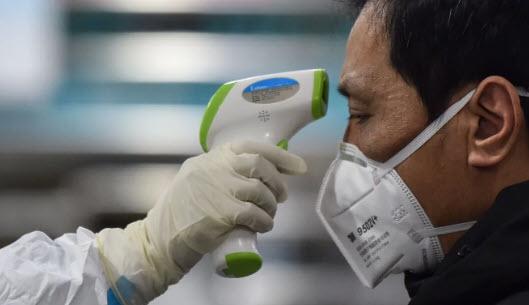
At one Wuhan hospital on Sunday, several dozen mostly elderly people waited to be seen as medical staff walked around in protective suits. A sign outside the department warned that due to the large number of patients, they would face a wait of up to three hours to see a doctor.

“I came here because I have a high temperature. I have been waiting for two hours,” said one middle-aged man wearing a face mask.

Despite a ban on private vehicles, cars and taxis were still visible on the city’s roads, while some people moved around on bicycle. A Wuhan government official told the Financial Times that they advised foreign citizens in the city to contact their countries’ embassies for assistance with leaving Wuhan.

On Saturday Xi Jinping, China’s president, told a meeting of the Communist party’s top leadership, the politburo standing committee, that the country was facing a “grave situation” over the virus, state television reported.

In Hong Kong, authorities on Sunday declared the city’s highest level of emergency in response to the coronavirus outbreak and said all schools would remain closed for a further two weeks beyond the lunar new year holiday.

Hong Kong’s popular amusement parks Disneyland and Ocean Park were both closed from Sunday to help prevent the spread of the virus, Chinese state television reported, while Shanghai Disneyland has been closed since Saturday. Hong Kong also banned Hubei residents and people who have visited the province in the past 14 days from entering the city.

Taipei said it was barring almost all visitors from China in an effort to stop the virus from taking hold, as governments around the world stepped up efforts to halt the spread of the Sars-like disease.

India also said it had urged its citizens to avoid all non-essential travel to China. No cases have yet been confirmed in India but authorities have placed 11 people under observation, of whom four had tested negative for the virus.

The UK’s Foreign and Commonwealth Office issued new guidance advising against all travel to Hubei province and calling on anyone already in the area to leave.

Businesses in China have also been affected. The country’s leading cinema company said it had temporarily shut thousands of movie theatres across the country. China’s leading film studios also cancelled plans to release the biggest blockbusters of the year for the new year holiday, traditionally the commercial peak for the industry.

FT : Volvo warns of crunched car line-up if UK splits from EU rules

Volvo warns of crunched car line-up if UK splits from EU rules
Carmaker says certifying some cars for UK market would not be worth cost

Volvo will be forced to scale back its UK model line-up if Britain significantly diverges from EU rules after Brexit, the carmaker’s chief executive has warned.

Hakan Samuelsson said certifying some cars for the British market would not be worth the cost if rules differed dramatically from the EU’s. The comments mark the first time the head of a big carmaker has warned of reduced consumer choice if Britain presses ahead with plans to carve out its own standards.

“If that happened it would be very negative, the number of cars for UK consumers would be much smaller than today,” he said, adding that it would be “very, very costly” to make cars compliant with a new set of rules.

Last weekend Sajid Javid, UK chancellor of the exchequer, told the Financial Times Britain intended to split from EU regulations, becoming a “rulemaker” and forcing companies to “adapt” to a new environment.

The comments sparked alarm in some parts of business community and he was forced to clarify on Thursday that the UK only wanted the freedom to set its own rules, and was not deliberately seeking to ditch Brussels guidelines.


Hakan Samuelsson said he was 'disappointed' the UK did not vote to remain in the EU and that the bloc was weaker without Britain © Bloomberg
Steve Barclay, Brexit secretary, told the BBC’s Andrew Marr programme on Sunday that Britain was particularly interested in setting its own rules in areas of new technology “where we want to move quickly” but played down the idea that the UK would diverge greatly on existing rules. “We’re not going to diverge just for the sake of it,” he said.

More than 2m cars are imported into the UK a year, with two-thirds coming from Europe.

British cars have the same standards as EU vehicles but if UK rules change significantly after Brexit, carmakers will be forced to pay for additional crash tests and customised emissions systems to make them compliant, something that would potentially cost each company millions and make them question the viability of servicing the UK market.

Mr Samuelsson said a system in which Britain accepted EU rules as well as its own would allow carmakers to continue selling vehicles into the market without extra costs.

He said he was “disappointed” the UK did not vote to remain in the EU and that the bloc was weaker without Britain, adding that his native Sweden and the UK had often voted along the same lines on key topics.

Volvo, which is owned by China’s Geely, last year sold a record 700,000 vehicles worldwide, including 56,000 in the UK, the best year for the Swedish brand since 1990.

In an interview that also covered electric vehicles and the carmaker’s ambitions for a quarter of its cars to be hybrid this year, Mr Samuelsson said the global trade war had reached a “ceasefire” but not yet reached a “peace treaty”.

Volvo has plants in Europe, China and the US, and was forced to reallocate some of its production in response to the trade war between the US and China.

He stressed that countries or trading blocs that impose tariffs on imported vehicles to protect their own industries were “not very smart”, singling out China and Europe for imposing levies on foreign-built vehicles.

While the EU charges 10 per cent on cars coming in and China’s tariffs are 25 per cent, the US levies are much smaller at 2.5 per cent.

“The US is a more open market,” he added. “We should not go in the direction of 25 per cent but in the direction of 2.5 per cent or, even better, zero.”