(ZeroHedge) April Will Be The Worst Month On Record For Auto Sales

April Will Be The Worst Month On Record For Auto Sales

In a world breaking economic records left and right, we can add one more: April is set to be the worst month ever for auto sales.
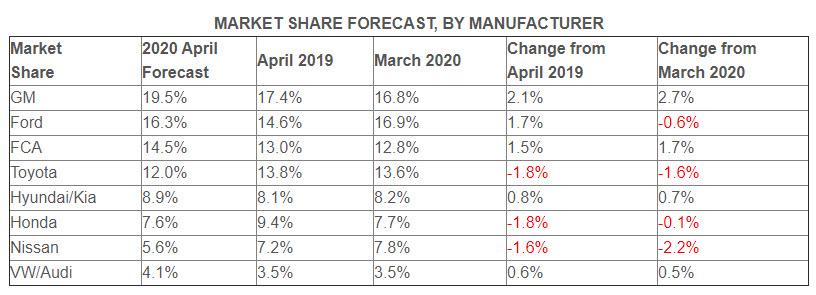
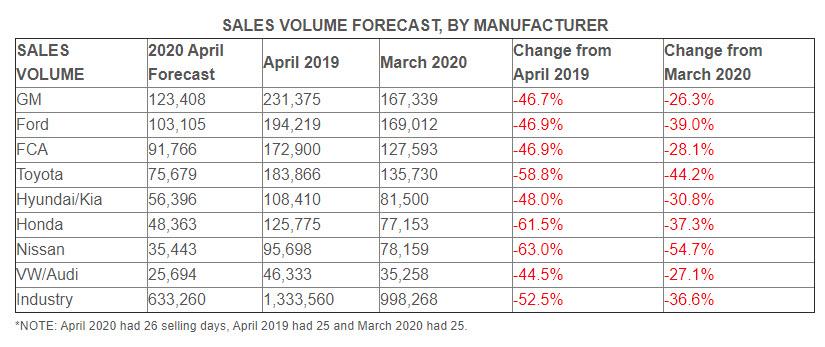
According to the car shopping experts at Edmunds, April will be a record down month for the auto industry - for obvious reasons - forecasting that just 633,260 new cars and trucks will be sold in the U.S. for an estimated seasonally adjusted annual rate (SAAR) of 7.7 million. This reflects a 52.5% decrease in sales from April 2019, and a 36.6% decrease from March 2020.
Edmunds analysts note that this would be the lowest-volume sales month on record; the second worst month for sales in the past 30 years was January of 2009, when 655,000 vehicles were sold.

"April auto sales took the biggest hit we've seen in decades," said Jessica Caldwell, Edmunds' executive director of insights. "These bleak figures aren't just because consumers are holding back on their purchases — fleet sales are seeing an even more dramatic drop as daily rental business has dried up. Like many other industries, the entire automotive sector is struggling as the coronavirus crisis continues to cripple the economy."
Edmunds experts note that plans for easing shelter-in-place orders across the country in May could open up opportunities for automakers and dealers to capture some deferred demand, but there is still economic uncertainty ahead.
"April is likely the bottom for auto sales, so hopefully there's only room for improvement from here," said Caldwell. "But with employment and consumer confidence at new lows, the question remains: Will people be in the position to purchase new cars? Although automakers are doing their part by offering landmark incentives, those might not be enough if consumers cannot recover financially from this crisis."
Edmunds estimates that retail SAAR will come in at 6.7 million vehicles in April 2020, with fleet transactions accounting for 13.0% of total sales.

(ZeroHedge) Silver Hasn't Been This Cheap In 5,000 Years Of Human History

Silver Hasn't Been This Cheap In 5,000 Years Of Human History

More than 4,000 years ago, the city of Kanesh was quickly becoming an important commercial trading hub within the ancient Assyrian Empire.
Kanesh was located in the dead center of modern day Turkey, so it was perfectly situated on the route between the Mediterranean and the Black Sea, and between Europe and Asia Minor.
As a result, Kanesh became a popular trading post. And merchants, scribes, and moneylenders from all over the Assyrian Empire traveled there to profit from the boom in copper, tin, and textiles.

What’s extraordinary about this period of history is how many records remain from those day-to-day transactions.
The Assyrians borrowed the writing system from ancient Mesopotamia and routinely chiseled their commercial trades on clay ‘cuneiform’ tablets.
Tens of thousands of these tablets have been discovered by modern archaeologists, so we have an incredible amount of detail about ancient financial transactions.
For example, one tablet on display at the Met in New York City documents the terms of a loan that originated in Kanesh some time in the 19th century BC.
According to the table, an Assyrian merchant named Ashur-idi loaned 3kg of silver to two traders, with 1/3 of the amount to be repaid in one year’s time.

This was fairly common back then: gold and silver were both used as a medium of exchange in ancient times. But this was before coins existed, so transactions would be settled based on weight.
In ancient Babylonia, for instance (which rose to power after the Assyrian Empire faded), the cuneiform tablets from that era tell us that the price of barley averaged about 17 grams of silver per 100 quarts.
And merchants would use elaborate scales to weigh gold and silver when exchanging their goods.
Gold and silver were also exchangeable for each other. Another tablet from ancient Babylonia during the time of Nebuchadnezzer states that 5 shekels of silver were worth ½ shekel of gold.
(A shekel in ancient times was a unit of weight, equivalent to about 8.33 grams.)
This implies a 10:1 ratio between silver and gold.
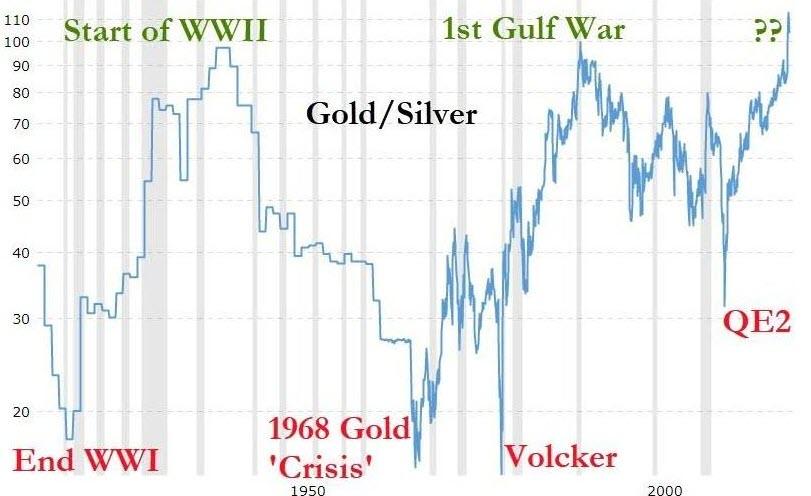
We’ve discussed this ratio several times; the gold/silver ratio has existed for thousands of years, and up until the 20th century, it remained within that ancient range of between 10 to 20 units of silver per unit of gold.
In modern times, gold and silver are no longer used as a medium of exchange. But there’s still been a long-standing ratio that has persisted for decades.
One ounce of gold has typically been valued at 50 to 80 ounces of silver. Rarely does the ratio go higher (or lower). And when it has, prices have always corrected.
As of this morning the ratio is 112, meaning it now takes 112 ounces of silver to buy one ounce of gold; and today’s level is spitting distance from the ratio’s all-time high of 120, which it reached last month.
And when I say “all-time high,” I mean it. Ancient cuneiform tablets prove that silver has never been so cheap relative to gold in literally thousands of years of human history.
If history is any guide, this means that the ratio should eventually narrow, i.e. the price of silver should rise and/or the price of gold should fall, bringing the ratio back to its more normal range.
And there are plenty of ways to potentially make money from this.
The Chicago Mercantile Exchange, for example, offers a financially-settled futures contract for traders to speculate on the Gold/Silver ratio.
But the CME’s gold/silver ratio contract is very thinly traded and difficult to purchase, so it might not be the best approach.
In theory, one way to speculate that the gold/silver ratio will return to historic norms would be to ‘short’ gold contracts and go ‘long’ silver contracts, i.e. speculate that the price of gold will fall while the price of silver will rise.
But, personally, there’s no chance I would bet against gold right now.
I’ve written for the past several weeks that I approach this entire pandemic from a position of ignorance and uncertainty.
EVERY possible scenario is on the table, and no one can say for sure what’s going to happen next.
There are very few things that are clear. But in my view, one thing that has become clear is that western governments will print as much money as it takes to bail everyone out.
According to the Congressional Budget Office, the US federal government will post a $3.6 TRILLION deficit this Fiscal Year due to all the bailouts. Plus the Federal Reserve has already printed $2 trillion.
Frankly I think they’re just getting started.
With this incomprehensible tsunami of government debt and paper money flooding the system, real assets are a historically great bet.
We’ve talked about this before: real assets are things that cannot be engineered by politicians and central banks– assets like productive land, well-managed businesses, and yes, precious metals.
And they all tend to do very well when central banks print tons of money.
Farmland, for example, was one of the best performing assets during the stagflation of the 1970s.
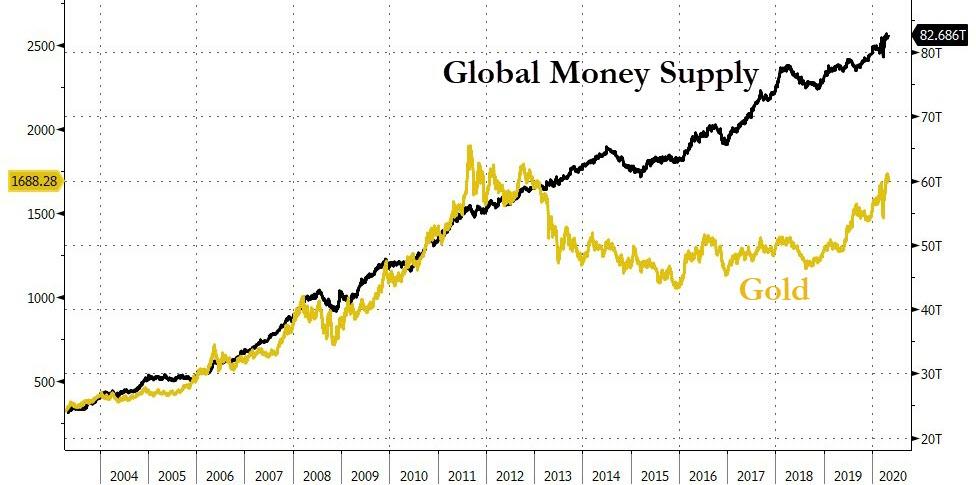
And financial data over the past several decades shows that whenever they print lots of money, the price of gold tends to increase.
Right now, in fact, the price of gold is relatively cheap compared to the current money supply.
And the price of silver is ridiculously cheap compared to gold. Again, silver has never been cheaper in 5,000 years.
This is why I’d rather just own physical silver. I’m not interested in betting against gold because I expect they’ll continue to print money. In fact I’m happy to buy more gold.
And while we cannot be certain about anything, there’s a strong case to be made that the price of silver could soar.
And to continue learning how to ensure you thrive no matter what happens next in the world, I encourage you to download our free Perfect Plan B Guide.

(Bus. Of Fashion) Where Should Fashion Brands Manufacture Now?

Where Should Fashion Brands Manufacture Now?
As the global economy faces a pandemic that respects no borders, smart fashion businesses are re-examining China’s place in their supply chain. Six sourcing experts weigh in on the debate.

SHANGHAI, China — In many ways, the rise of modern China has been an allegory of globalisation. Today, as countries turn inward to battle the coronavirus pandemic, the idea of a complex supply chain or even one that relies on a single market far from home is seen by many as an untenable risk.

The global fashion industry actually spent much of the past decade trying to break up with Chinese manufacturing in order to escape this dangerously co-dependent relationship. It has made some progress, but China remains an enticing powerhouse with manufacturing infrastructure and attractive supply chain assets that have proven difficult to divorce from.

Although garment manufacturing, especially cut and sew, has largely decamped to cheaper markets around the world, fashion hasn’t been able to kick the habit of sourcing raw materials, trims, zippers and more from China, even as labour prices in the country continue to climb and tariffs introduced as part of US President Donald Trump’s trade war continue to bite.

According to several experts from China’s fashion manufacturing, sourcing and supply chain management spheres who were interviewed by BoF, approximately 60 percent of the world’s fashion is still produced in China, if you take into consideration raw materials, fibres, textiles, trims, and accessories, such as elastic, zippers and hang tags.

“Most [other] countries’ garment industries aren’t fully self-sufficient; they rely on getting components from China,” explained Melanie DiSalvo, founder of Virtue + Vice, a consultancy set up to help boutique fashion brands clean up their supply chain.

Her work is concentrated in India and China, but she says people might be surprised to learn how much of the material being put together in Indian factories is actually sourced from China.

“There is a huge trade going on where denim is coming from China,” she added. “India is getting all its silk from China, too. I think people don't realise, all the trims and elastics are impossible to find in India; it all comes from China.”

This continued dependence on China came to a head in the early months of this year, when the country became the first to experience a widespread outbreak of the coronavirus, causing its factories to close and crucial cogs in the fashion supply chain to grind to a halt. Brands that had largely offshored their supply chain out of China initially felt vindicated, having saved themselves from the supply side disruption of what was then mistakenly considered to be just a local epidemic.

"I would say relative to a lot of the industry, we are hedged in China more than a lot of our peers," Levi’s Chief Executive Chip Bergh told supply chain managers at the Retail Industry Leaders Association conference at the end of February. The company reduced its manufacturing in China from 16 percent in 2017 to between 1 percent and 2 percent in 2019, largely to escape trade war-induced tariffs. Bergh added that the move had shielded the company from that initial coronavirus hit, even as stores in China remained shut.

Today, we know that no-one and nowhere is shielded from the coronavirus pandemic. Fashion brands that had moved more of their supply chain out of China, to markets such as Bangladesh and Vietnam, found supply was disrupted there in turn.

Though in many cases, that supply-side disruption mattered less than the demand disruption caused by retail closures around the globe, leading many major fashion brands to cancel orders amounting to around $6 billion in Bangladesh alone, according to the Bangladesh Garment Manufacturers and Exporters Association (BGMEA) and its knitwear counterpart association the BKMEA. Meanwhile, current season inventory sits idle in stores, warehouses and distribution centres.

But now, even as production is halted in most places around the world, China is open for business and producing the orders that have not been cancelled. Manufacturers here face an uncertain future as business from overseas becomes scarcer, mitigated only somewhat by demand from growing domestic fashion brands looking to move their way up the value chain.

While the move of production out of China has largely been about rising costs and the razor thin margins of mass garment production making it an unsustainable choice, the trend has also been an exercise in diversification to mitigate future risks.

The coronavirus pandemic has highlighted how reliant the world is on China for vital supply chain links, especially for medicines and personal protective equipment, as dozens of countries concurrently grapple for both. As a result, there is growing pressure for the pharmaceutical industry in Europe and North America to be repatriated.

Similarly, fashion companies, especially American ones, are likely to feel the pressure to “decouple” from China in an election year which promises to be heavy on anti-China rhetoric.

With so much in flux in the midst of the ongoing pandemic, it is too early to know exactly how fashion’s post-coronavirus supply chain will change, in terms of its reliance on China or many other factors currently collectively weighing on the industry. Nevertheless, fashion brands need to start planning for the post-pandemic phase of business now.

In this uncertain time, BoF turned to experts in Chinese manufacturing, sourcing and supply chain management for advice about what brands should consider before making any big decisions.

Gerhard Flatz, managing director of KTC Limited, a high-end performance wear specialist based in Guangdong Province, manufacturing for niche European brands and Chinese designer Yang Li.

“It doesn’t matter if its in China, Cambodia, Bangladesh, Myanmar, America, or God knows where; we have to leave this macro environment and create a micro environment. I envisioned this is 2008 when I took over the company. We increased our cash reserves and upgraded our product offering. We saw even back then that China would become too expensive, brands would shift their sourcing focus to Southeast Asia and what is left in China is the premium piece of the cake. A diversified supply chain means a lot of manpower and a lot of uncertainty, so we have to come back from this extended workbench concept.”

Yossi Nasser, chief executive of leading intimates manufacturing supplier, Gelmart International

“Having the supply chain flexibility to reshore to China now, while Bangladesh and India are experiencing lockdowns is key. In the near term, there is going to be this element of reshoring [to China], but [brands] don’t want to be caught out in the situation many companies have just faced [as part of the US-China trade war] where a tariff can [be] put on your product with [only] 30 days notice. If [brands] strategically put some of the supply chain back to China [now then don’t] make it a ditch to ditch, aggressive move. Maybe centralise [most operations there] and then use diversified sources [for] sewing and cutting, so if there is a supply chain disruption, you are able to flexibly and quickly scale up one production source and de-emphasise another.”

Melanie DiSalvo, founder of Virtue + Vice, sustainable supply chain consultancy, previously product developer for companies including Walmart, Target, Ralph Lauren, and Levi's.

“China was set up to make things. The infrastructure is there and everything just works. If I was a struggling brand, I would want to be in a country like that, where things are set up to move and you are going to have the least amount of issues along the way. You need to be focusing your money and staff and attention on rebuilding your business. Supply chain diversification is a long-term goal but I don’t recommend the brands I work with jump right into that because everyone else is closed and China is still going. That’s the reason some of my brands are surviving right now. That’s not something to walk away from.”

John Evan, managing director of Tractus Asia, a strategy and operations management consulting firm.

“You are going to continue to see a decoupling, politically, it’s clear that [the US and China] would each like to have less reliance on the other. I think you will continue to see companies looking at [manufacturing in] China for China, then nearshoring or reshoring back to their own countries, especially for fashion and apparel. The other thing that has been highlighted by Covid-19 is [the trouble with having] too many eggs in one basket. All of a sudden, risk mitigation has gone from people thinking it’s kind of important, to the US-China trade war when people realised it was really important, to now when it has become the number one concern.”

Hilmond Hui, vice president of Bombyx, a specialist sustainable manufacturer that provides silk fabrics to big name eco-brands including Everlane, J Crew and Madewell.

“On-shoring for the US and European brands will likely take a back seat, especially in our industry, due to priorities lying in restarting retail and the economy. In my own opinion, off-shoring from China fractures the supply chain to a point where it can create a lot of logistic and information stress and inefficiency. Consolidating supply chains can be done by partnering with vertical operations across different materials or product categories. By doing this, the suppliers have the opportunity to be more flexible in their own set up because they control more of their supply chain, and have more room to spread out their production and finances.”

Anson Zhou, spent more than a decade as a senior merchandising manager at industry giant Li & Fung before becoming a freelance consultant in sourcing and supply chain management for clients including Macy’s, JC Penney and Tommy Hilfiger.

“Most retailers and brands are unsure about the market situation [but] obviously, the order size is going to be much lower compared to last year. [The best strategy is] to try some small orders and put the products on the market and see the reaction and make a quick decision on a re-order. That means they need quicker speed in their supply chain management. Southeast Asia, Bangladesh or Myanmar are focused on huge quantities and long delivery times. If we focus on quick delivery in 45 days, even 25 days, that makes China the big player, [so] international brands will have to look to China because they lead the way in that.”

(ZH) Yuan Crashes After Trump Weighs Blocking Retirement Fund Access To Chinese

Yuan Crashes After Trump Weighs Blocking Retirement Fund Access To Chinese Stocks As War Of Words Escalates

Having tumbled yesterday on the first set of headlines reporting on the Trump administration's plans to seek 'COVID reparations' amid accusations of Chinese 'meddling' in the US election (obviously not in favor of Trump), the Chinese yuan legged dramatically lower in this evening's illiquid session which sees most of Asia closed for May Day, after Bloomberg reports that Trump is exploring blocking a government retirement fund from investing in Chinese equities considered a national security risk.
Trump made his initial threats from the Rose Garden at the White House Monday after he was pressed by a reporter over a German newspaper report suggesting that China should be issued a $160 billion invoice for the impact on Europe's economy.
The president responded he had a "much easier" idea:

"We have ways of doing things a lot easier than that," Trump told the coronavirus press briefing. "Germany’s looking at things, and we’re looking at things, and we’re talking about a lot more money than Germany’s talking about."
"We haven’t determined the final amount yet. It’s very substantial," Trump added, suggesting it would be significantly more than the $160 billion floated in German media.
Asked whether he was considering the use of tariffs or even a debt write-offs for China (something which Larry Kudlow vehemently rejected earlier on Thursday), Trump would not offer specifics.
“There are many things I can do,” he said. “We’re looking for what happened.”
Since then various plans have been proposed, but Trump escalated the war of words further, during an Oval Office interview with Reuters published Wednesday night, saying that he thinks that China is determined to see him lose the November election based on Beijing’s response to the coronavirus, and that he is considering various ways to punish the Chinese government which he he again blamed for allowing the virus to spread across the world.
"China will do anything they can to have me lose this race," Trump said in the interview and said he was looking at different options in terms of consequences for Beijing over the virus. “I can do a lot,” he said.
Which was quickly followed by denials from Chinese Foreign Ministry spokesman Geng Shuang, saying that China has no interest in interfering in internal U.S. affairs (unless of course that 'affair' involves investigating the origin of COVID-19). China hopes some people in U.S. won’t drag country into its internal processes, Geng said.

And tonight, Bloomberg reports that, after months of pressure from concerned lawmakers, according to a person familiar with the internal deliberations, the Trump admin is planning an executive order to block a 2017 decision that The Thrift Savings Plan, the federal government’s retirement savings fund, would transfer a massive $50 billion to an international fund which would mirror the MSCI All-Country World Index.
The issue being China's addition to the index, and thus the fund being forced to allocate significant capital to the Chinese stock markets, at a time when the gloves between the two nations are clearly off.
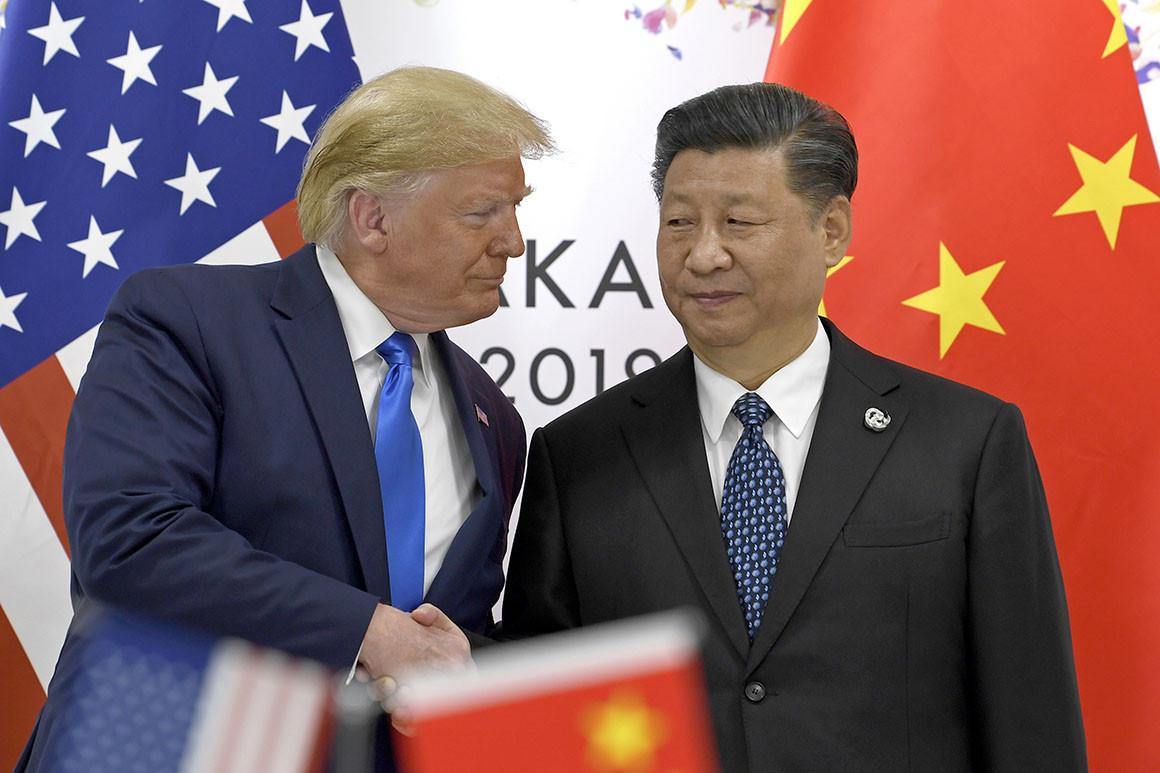
Needless to say, the optics of the US halting capital from entering China would be staggering and could result in a reversion of China-bound capital flows across all Western countries until the current war of words between Trump and Xi rages. The only problem is that, as we noted yesterday, this particular war of words could last a long time, since there is no longer any impetus to kiss and make up, and if anything, Trump will only escalate the anti-China sentiment into the election (and after), to keep pounding that the collapse resulting from the coronavirus pandemic is not his fault, but rather's Beijing, even as China pursues a mirror image approach, blaming the US for launching the pandemic.
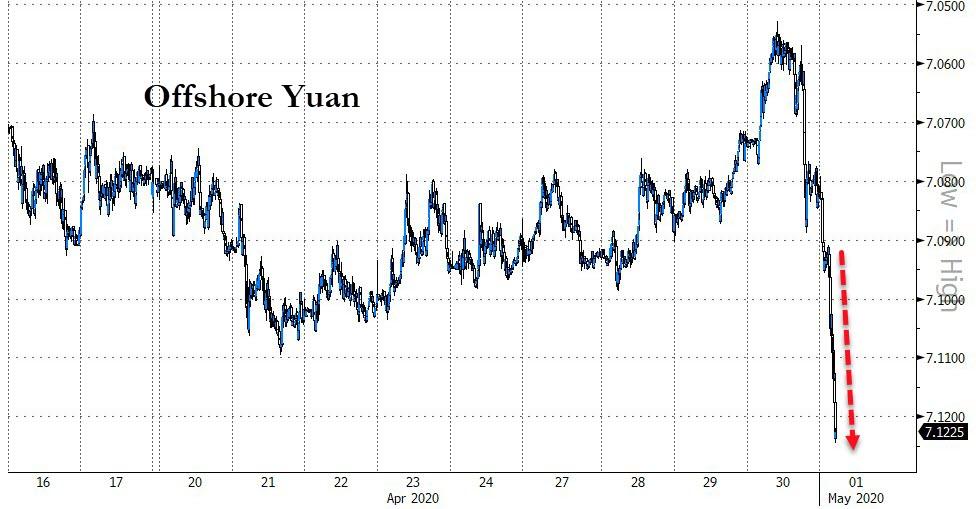
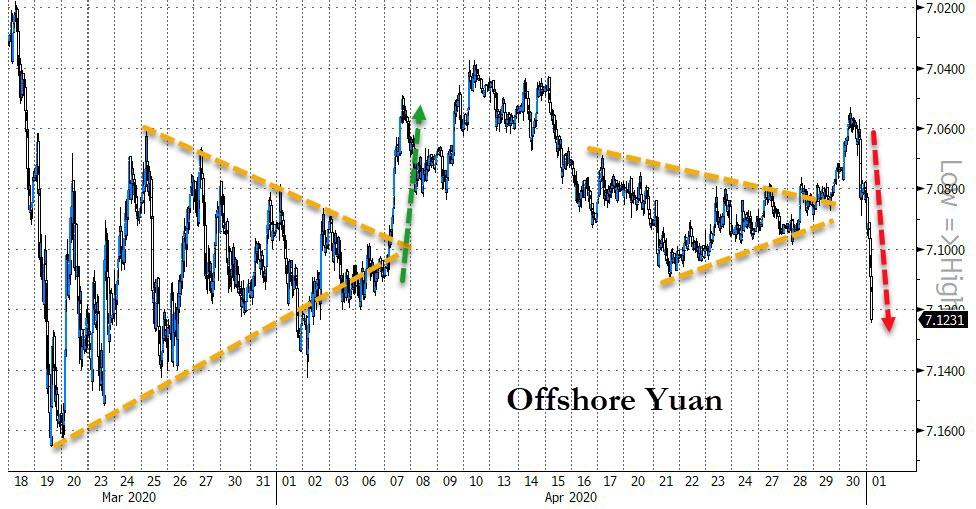
The most obvious market reaction for now is in Offshore Yuan which has collapsed in the last two days, extending losses tonight...
Source: Bloomberg
Of course, much of Asia is on May-Day holiday so liquidity is low, but Yuan's move is significant nevertheless...
Source: Bloomberg
Bloomberg reports that Senator Marco Rubio, a Florida Republican, applauded reports of the move in a statement Thursday.
“It’s outrageous that five unelected bureaucrats appointed by the previous administration have ignored bipartisan calls from Congress to reverse this short-sighted decision, and I applaud President Trump for directing his administration to take swift action preventing this from going forward,” he said.
We would expect China to be furious at this discussion and wonder what they will do to stall this move - one suggestion, given the weakness in US equity futures overnight, is to push volatility back into US markets - to shake the faith in the dramatic market rebound (that The Fed enabled).

WWD : Rebuilding the Fashion Industry: Sustainable Apparel Coalition, Boston Con

Rebuilding the Fashion Industry: Sustainable Apparel Coalition, Boston Consulting Group Issue New Report
Sustainable Apparel Coalition and Boston Consulting Group issued a report on how to rebuild the fashion industry after the coronavirus.

A sustainability report released Thursday from the Sustainable Apparel Coalition and Boston Consulting Group reaffirms the deepening bifurcation in industrywide sustainability progress.

The SAC is a group of more than 250 members including brands such as H&M, C&A and Patagonia, among others, with combined member annual revenue exceeding $500 billion. Its data has informed reports such as the recurring Pulse of the Fashion Industry.

According to the International Monetary Fund, 2020 is likely to be the worst year for the global economy since the Great Depression, expected to wipe out more than 30 percent of the fashion industry’s business, and with that sustainability goals will crumble.

“Sustainability has to be survival as well,” said Jason Kibbey, chief executive officer of Higg Co., the technology arm of the SAC, to WWD regarding the tone of the report aptly titled “Rebuilding a More Sustainable Fashion Industry After COVID-19.”

And for survival, it becomes a matter of resources.

According to the SAC’s membership survey, 30 percent of fashion brands, retailers and manufacturers cited feeling “extremely unprepared for the COVID-19 crisis.” Members cited “financial support to prevent or alleviate layoffs,” “economic stimulus from our country’s government” and “support in reopening our facilities” as key concerns in rebuilding.

Prior to the pandemic, Higg Index data revealed average scores from participating facilities demonstrated a year-over-year increase of 15 to 19 percent, regarding the value of their environmental, social and corporate governance efforts.

But the coronavirus reality is especially bleak if burdens are passed on upstream. Of the more than 500 facilities SAC surveyed across all main production regions, the majority, or 86 percent, were impacted by canceled or suspended orders. As a result, now 40 percent of those facilities struggle with paying employees, prompting layoffs and factory closures and retaliatory public campaigns from advocacy groups.

“Many of these decisions that have been made in the last few weeks are going to be held under a microscope in the coming months and years,” said Kibbey. “The customer will be seeking brands that they trust,” he reiterated.

According to Kibbey, the post-pandemic landscape is summarized as so: multicategory retailers — “the Amazons and the Targets of the world” — get bigger in clothing categories, while well-capitalized brands with many financial backers or that are family-held are “going to do OK.”

And as for the rest, “scale will be a determining factor,” but there is some hope.

“Companies with a forward-looking mind-set will still maintain key social and environmental programs, even while defending business and protecting core assets during this downturn,” as stated in the report.

Consumers are taking note of such optimism. In an April analysis by BCG across 6,000 consumers in the U.S., U.K., Germany, Italy and China, the approval nod went to brands that paid their furloughed employees, repurposed facilities to produce PPE or donated to their communities.

As the report urged, the priorities of fashion companies are to: “anchor trust into the brand and practices,” “invest in new business models and innovation,” “build advantage through technology, data and digitization,” and “rebuild sustainability programs for impact and resilience.”

Many in the industry agree the post-pandemic apparel industry will not look the same, marking the “move from an emphasis on lowest-cost to a focus on quality and agility.”

WWD asked how SAC views growth for its members, namely, can production continue as before?

Regarding high-volume production, Kibbey said: “Can a trade association or a government somehow change the consumer preferences? There’s going to be some subset of the market that is going to demand that no matter what. But maybe some of those demands are changing,” he reiterated.

Interestingly, the report does not evaluate resale and rental businesses like The RealReal or Rent the Runway, as Kibbey said the focus was on retailers adding their operations are “unique” and relevant to adopt.

How is the SAC faring through the crisis?

“Our primary goal is to serve our members during this difficult time by providing resources to support their teams and leveraging insights and best practices from across the membership and the industry to help them make better decisions,” said Amina Razvi, ceo of the SAC.

Razvi expects membership numbers to reflect the retail landscape as it changes in the months ahead. As she shared, the companies with sustainability embedded holistically throughout their operations are already faring better than those that siloed sustainable efforts or never started on the journey.

Ultimate transparency has long been the aim for the SAC, but not yet fully realized.

“Both SAC and Higg Co. are continuing to move ahead with transparency tests with a number of larger retailers. The challenge always is you only get one chance to get it right,” reiterated Kibbey.

WWD : Fashion Sales in Italy Down 24.9% in First Quarter

Fashion Sales in Italy Down 24.9% in First Quarter
According to a Confimprese study commissioned to Ernst & Young, sales of fashion goods dropped 82.3 percent in March.

MILAN — The coronavirus emergency that caused the closure of commercial activities, travel limitations and a significant change in consumers’ lifestyle has struck a blow to the Italian economy.

According to a study conducted by consulting firm Ernst & Young for Confimprese — the national association of retailers — local consumption decreased 26 percent in the first quarter of the year. In particular, the research offers analysis and statistics on the performance of retailers operating in the fashion and clothing industry, food and beverage category and in the nonfood sector, including cosmetics and furniture.

“Even though we kicked off well in January, with sales up 1.3 percent, starting from February we registered a slowdown given the uncertainty and the evolution of the epidemic,” said Mario Maiocchi, managing director of Confimprese. Overall sales decreased 2.9 percent in February, dropped 40 percent at the beginning of March and 79 percent in the second part of the month.

The fashion and clothing sector was hit the hardest, as sales in March were down 82.3 percent compared to the same period last year, causing a decrease of 24.9 percent in the first three months of 2020 compared to the first quarter last year.

“The March collapse was different among the sectors,” said Ernst & Young’s business consulting leader Paolo Lobetti Bodoni, mentioning that sales of food and beverage operators were down 78 percent, while the ones of the “nonfood” category decreased 74 percent last month. “These trends are partly due to the fact that some operators could ensure a bit of continuity to their activities during the lockdown and that consumers pivoted toward purchasing goods that were immediately more necessary.”

In terms of distribution, the lockdown and consequent travel ban caused overall sales to drop 86 percent in airports and train stations in March, decreasing 30 percent in the first quarter of the year. Sales in malls and outlets also decreased 82 and 83 percent, respectively, in March, while independent retailers located in smaller towns or in the suburbs showed slightly more resilience.

Geographically, the Lombardy region — the most affected by the virus spread — registered the worst performance, as overall consumption dropped 83 percent in March, followed by a similar trend in Tuscany.

“To get ready for the ‘phase two’ becomes key. To drive sales it will be necessary to think of new ways to interact with the consumer in the physical retail and online channel, including the configuration of the stores, e-commerce and food delivery. The digital channel is confirmed to be an essential element to continue to sustain the business and the customer relationship,” said Lobetti Bodoni.

“We will have to deal with a different market and only the operators who will be able to intercept these changes rapidly and leverage them will come out of the crisis unscathed, if not even strengthened. But investments will be necessary in order to seize these opportunities and we hope to count on the support of the government on this,” concluded Maiocchi.