>>> Europe : Brokers Upgrades & Downgrades - 29th of April 2020 V2(+)

>>> Up
* ABB Raised to Hold at LBBW; PT 18.50 Swiss francs
* Deutsche Telekom Raised to Equal-Weight at Barclays
* Kion Raised to Buy at Bankhaus Metzler; PT 53 euros (+)
* Leonardo Raised to Buy at Fidentiis Equities (+)
* Ocean Yield Raised to Buy at DNB Markets; PT 38 kroner
* ProSieben Raised to Outperform at Exane; PT 12 euros
* Ratos Raised to Hold at ABG; PT 22 kronor
* Stadler Rail Raised to Buy at Citi; PT 50 Swiss francs
* Teleperformance Raised to Buy at SocGen; PT 220 euros (+)
* TietoEVRY Raised to Buy at SEB Equities; PT 26 euros

>>> Down
* Centamin Cut to Add at Peel Hunt; PT 170 pence
* Dassault Systemes Cut to Reduce at Baader Helvea; PT 146 euros
* Eramet Cut to Add at AlphaValue
* HELMA Eigenheimbau Cut to Sell at Bankhaus Metzler; PT 29 euros (+)
* Liberbank Cut to Neutral at JB Capital Markets
* Morgan Sindall Cut to Add at Peel Hunt; PT 1,500 pence
* Norma Cut to Reduce at HSBC; PT 18 euros
* Oerlikon Cut to Reduce at Baader Helvea; PT 7 Swiss francs
* SEB Cut to Hold at SocGen; PT 122 euros (+)
* Skanska Cut to Sell at SEB Equities; PT 165 kronor

>>> Initiation
* Cairn Energy Assumed Hold at Berenberg; PT 130 pence
* Deutsche Telekom Reinstated Buy at Goldman; PT 16 euros (+)
* Energean Oil & Gas Rated New Buy at Berenberg; PT 910 pence
* Gulf Keystone Petroleum Rated New Buy at Berenberg
* Premier Oil Assumed Hold at Berenberg; PT 30 pence
* Union Jack Oil Rated New Buy at Arden Partners; PT 0.55 pence (+)

>>> Call
* Barclays Update May Spur <10% EPS Downgrades for 2021: Citi (+)
* Berenberg Starts Coverage of Energean, Gulf Keystone as Buy
* Carrefour Sales Strong But No Drop Through to Profit: Bernstein
* Dassault Systemes Earnings Resilient, But Upside Limited: Baader
* GN Store Meets Expectations, But 2Q Will Be Tough: Bernstein
* IAG 1Q Missed Consensus But Liquidity Reassures: Bernstein
* Next’s Revised Stress Tests Suggest Bleak Profit Outlook: MS (+)
* Remy Cointreau FY ‘Fine’ But 1H Destocking Is a Risk: Jefferies (+)
* SEB Share Price Reaction Seen Muted After Earnings: Goldman (+)
* Stadler Rail Raised at Citi on Berlin Metro Contract, Valuation (+)
* Stockpiling of Astra’s Key Products Drives Results, Goldman Says (+)
* U.K. Construction Set For Recovery, But Be Selective: Peel Hunt
* WPP 1Q Revenue Better Than Expected, U.S. Numbers Solid: Goldman (+)

FT : Airbus chief says aerospace in ‘gravest crisis’ industry has known

Airbus chief says aerospace in ‘gravest crisis’ industry has known
French plane manufacturer swings to quarterly loss as coronavirus takes toll on sector

Airbus’s chief executive said the coronavirus pandemic had led to the “gravest crisis” the industry has known as the aircraft manufacturer reported a net loss in the first quarter.

Airbus reported a consolidated net loss of €481m, against a €40m profit for the same period a year earlier, and adjusted earnings before interest and taxes fell 49 per cent to €281m. Consolidated revenues slipped 15 per cent year on year to €10.6bn, reflecting 40 fewer aircraft delivered in the first quarter, the plane maker said.

“We saw a solid start to the year both commercially and industrially but we are quickly seeing the impact of the Covid-19 pandemic coming through in the numbers,” said chief executive Guillaume Faury. “We are now in the midst of the gravest crisis the aerospace industry has ever known.”

The manufacturer did not give new guidance because of what it described as “limited visibility”.

The global aviation industry has been particularly badly hit by the Covid-19 pandemic as travellers stay home and countries introduced strict entry restrictions, forcing airlines to ground fleets and delay or cancel orders of new aircraft.

The group reported negative cash flow of €8.03bn, which included a €3.6bn fine paid to regulators in France, the UK and the US over a bribery scheme.

This month Mr Faury told the workforce of 133,000 that the company was “bleeding cash”, which threatened the existence of the company.

Airbus also said this month that it would cut aircraft production by a third, slashing production of the A320 single-aisle jet from 60 to 40 a month, reducing the output of A350s to six a month from 10 previously and produce just two A330 jets a month from expectations of 40 a year.

WSJ : Should You Wear a Mask When Exercising Outdoors?

Should You Wear a Mask When Exercising Outdoors?
As many exercisers experiment with different types of masks and fabrics to protect themselves and others, we asked the experts to weigh in

Tara Dunn, a cyclist and corporate lawyer in Denver says the coronavirus pandemic has turned her into a connoisseur of neck gaiters. The bandanna-like tubes of fabric that some outdoor enthusiasts wear against extreme sun or cold have become her mask of choice for workouts. “I’ve been testing out the different fabrics,” Ms. Dunn says. “Some are Lycra-esque, others are made from a heavier thermal material. None are easy to breathe in.” She wears the gaiter around her neck and pulls it above her mouth and nose when she sees people as far as 12 feet away.

Kinnier Lastimosa, a claims examiner in Chicago and his wife, Jennifer Cheng, who works as a project manager in the corporate real estate department of a major U.S. airline, are both marathoners and have felt social pressure to wear masks when they go outdoors to run. The couple tried wearing medical masks but they were tough to breathe in and fogged up their sunglasses. Over the years, they have collected dozens of gaiters from races and have found folding them in thirds creates a barrier that feels safe but breathable. In addition to their homespun masks, they have been vigilant about social distancing on city streets, keeping up to 15 feet from others and detouring from routes that look crowded. Many exercisers are experimenting with different types of masks and fabrics and are taking extra precautions to protect themselves and others when they head outdoors. We asked experts to weigh in on best practices.

Should I wear a mask during outdoor exercise?

The Centers for Disease Control and Prevention recommends that everyone now wear a mask of some kind when they leave home, and some cities and towns require a facial covering if you are outside. However, there is no compelling medical reason for people who are exercising outside and maintaining social distancing to wear a mask, says Henry Chambers, a professor in the Division of Infectious Diseases at the University of California, San Francisco.

You’re wearing a mask to protect others so that if you are infected and discharging a virus through your mouth and nose—which is believed to be the most common mode of transmission—then the mask serves as a barrier between others and the infected droplets, he says. If you didn’t have the mask on, and are breathing really hard, could someone else breathe in those droplets? “That’s where the distancing comes in,” Dr. Chambers says.

Paul Auerbach, an emergency medicine doctor at Stanford University School of Medicine, suggests having a mask hang around your neck while walking, running or cycling so that you can pull it over your mouth and nose when you see other people. “It’s an act of solidarity and courtesy, letting everyone know you are trying to be respectful, smart and safe,” he says. If you are in the water surfing, kayaking or paddling, he says you probably don’t need a mask, because it will most likely get wet and be difficult to use.

How likely are you to transmit or be infected by the virus outdoors?

“There is a lot of air space and air flow outside,” Dr. Chambers says. “Data suggests that people who are infectious and generating infectious droplets are of greatest contagion within 6 feet of you.” If you are outdoors and closely packed together at the start of a foot race, for example, there is a risk, he says. “If you are outdoors and appropriately distanced from other people, then it is highly unlikely you will be exposed,” he says. Research simulating the aerodynamics of contagious droplets that walkers and runners leave in their slipstream has been criticized for not taking into account how air can dilute the droplets, he says. Whether running or walking, you are breathing in a large volume of air that is distributed over a broad area. Every breath is over 10 feet of air space. “It’s highly unlikely you’ll come in contact with someone’s airflow unless you’re directly behind them,” he says.

What kind of face covering is best for outdoor exercise?

Surgical or medical-grade masks, such as the N95 device, prevent more of a barrier to the outflow or influx of germs compared with DIY versions.

“Attempting to run in an N95 mask would feel like you’re running at 10,000 feet of elevation,” says Dr. Chambers, who emphasizes that these masks are needed by health-care workers, not exercisers.

Dr. Auerbach recently attempted to run 5 miles in 81-degree weather while wearing a surgical mask. He pulled it over his mouth and nose when people were approaching and at a distance of about 20 yards and pulled it down when they were out of sight. “I didn’t feel constricted and never felt like I wasn’t getting enough air,” he says, noting he was going at a slow pace. “If I exhaled forcefully, air leaked out the sides.” He also notes the mask got wet from his sweat and exhalations and this made it susceptible to tearing.

The CDC has officially recommended that cloth face coverings be worn in public places. Richard Martinello, associate professor of infectious disease at Yale School of Medicine in New Haven, Ct., says studies done on the effectiveness of nonmedical masks have generally failed to show much benefit. If you are going to wear a homemade mask, Dr. Auerbach suggests using a 100% cotton T-shirt or pillowcase or a bandanna or gaiter. The key, he says, is making sure it fits snugly and covers both your nose and mouth. And, he adds, be sure to clean your mask after using it.

Are there any health risks to wearing a mask while exercising?

Experts warn that poorly fitted masks could impede the hearing or vision of walkers, runners and cyclists on the road. Dr. Auerbach says any type of mask will hinder breathing somewhat. He suggests testing out your mask close to home and advises stopping exercising if you feel dizzy or lightheaded. If you have previous respiratory issues, he says you might want to consider working out indoors.

How will wearing a mask affect my performance?

Dr. Stuart Weiss, medical director of the New York Road Runners, wrote in a post to members that “running with a face covering will change the dynamics of breathing, depending on the material the face covering is made of. It will be harder to breathe in, and that may affect performance.” He cautioned that a mask may result in increased nasal mucus production, as well as create a pool of sweat around the mouth, which could lead to discomfort.

Michael Joyner, an exercise researcher at the Mayo Clinic in Rochester, Minn., who has been wearing a cloth bandanna during his bike rides, says now is not the time to be attempting to set personal bests. “If you’re an elite athlete and really need to train hard, find a remote area outdoors and train without a mask,” Dr. Joyner says. “But for the rest of us, we need to follow the rules, use common sense and tone things back or we’re going to lose our outdoor privileges.”

Bottom Line: If exercising outdoors, social distancing is likely the best method to stay healthy, though one may also need to wear a mask to keep from running afoul of the law, Dr. Martinello says.

FT : EU eyes ways to attach green strings to airline bailouts

EU eyes ways to attach green strings to airline bailouts
Calls for an EU-wide kerosene tax grow as airlines receive state rescues

Europe’s governments are throwing billions of euros at their devastated airlines: Air France-KLM will get at least €9bn in taxpayer money from the French and Dutch governments; Lufthansa is currently embroiled in talks with Germany about how much control it should cede to Berlin in return for an aid package.

So as governments move to prop up grounded carriers, thoughts have turned to what taxpayers should demand in return.

With the political wind shifting on climate change, officials in Brussels are hoping the crisis is a way to finally get polluting airlines to get serious about the green transition. “For years the airline industry was supreme and resisted calls to reduce emissions. Now they are coming cap in hand to ask for help and we can’t waste this chance,” said a senior EU official.


Early on in the pandemic, the commission relaxed its state aid rules to allow governments to pump cash into flailing businesses. But Brussels is now under pressure to approve cash injections only if companies can prove their business models are compliant with global climate goals like the Paris Agreement.

Pascal Canfin, a French MEP and head of the European Parliament’s environment committee, wants Brussels to draw up “green transition pacts” for airlines receiving public money. If they fail to make commitments within six months — like investing in low polluting fuels or replacing polluting short-haul flights — the cash should be paid back and the companies sanctioned, said Mr Canfin.

“Just as companies who benefit from state aid and exceptional tax relief and who are found to have paid dividends to shareholders are forced to repay the money and get a penalty, the same could apply to companies who get state aid, but in the six months following this, have not signed a green transition pact,” he said.

For all the pressure, holding airlines’ feet to the fire is easier said than done. EU transport commissioner Adina Valean told MEPs on Tuesday that although green targets were well and good after the crisis, the point of the emergency state aid was to ensure that “companies can survive”.

Unlike other industries such as cars — where Brussels has wielded its regulatory clout with tough emissions targets — the EU has limited tools to get aviation to bow to green targets. At most, airlines are subject to the EU’s emissions trading scheme, which sets a market price on carbon for polluters.

With governments now forking out billions in bailouts, political pressure for a kerosene tax is also growing. Before the crisis hit, the likes of Frans Timmermans, commissioner in charge of the green deal, came out in favour of a kerosene tax that would specifically target airline emissions. Brussels is planning a review of its sensitive energy taxation directive next year in the hope that it could pave the way for an EU-wide airline levy.

“There is a certain paradox in the fact that big airline companies profit from a tax exemption and yet will receive a large sum of public money to help them in times of crisis,” said Mr Canfin. “The subject of the kerosene tax will surely come back on the table.”

>>> Stoxx 600 Pre-Market Indications

  • AMS (DQW1 TH) +6.5%
    • AMS Shrugs Off Weak Economy Due to Demand for New Phones
  • Carnival Plc (POH1 TH) +4.8%
  • Wirecard (WDI TH) +3.8%
    • Activist Hohn Calls on Wirecard to Remove CEO Markus Braun
  • HelloFresh (HFG TH) +2.9%
    • HelloFresh Non-Deal Roadshow Scheduled By Berenberg for May 6
  • Glaxo (GS7 TH) +2.5%
    • German Drugmaker Stada Seals Deal to Sell Cough Syrup in China
  • Hochtief (HOT TH) +1.7%
  • TUI (TUI1 TH) +1.5%
  • AB InBev (1NBA TH) +1.4%
  • Glencore (8GC TH) +1.1%
  • Equinor (DNQ TH) +1%
  • Dialog Semi (DLG TH) -0.3%
  • Unilever (UNI2 TH) -0.3%
  • Puma (PUM TH) -0.4%
  • LVMH (MOH TH) -0.6%
  • ThyssenKrupp (TKA TH) -0.6%
  • ING (INN1 TH) -0.6%
  • Alstria Office (AOX TH) -0.7%
  • Fuchs Petrolub (FPE3 TH) -1.3%
  • OMV (OMV TH) -3.6%
    • OMV First Quarter Clean CCS Operating Result EU699 Mln
  • IAG (INR TH) -4.2%
    • IAG 1Q Missed Consensus But Liquidity Reassures: Bernstein

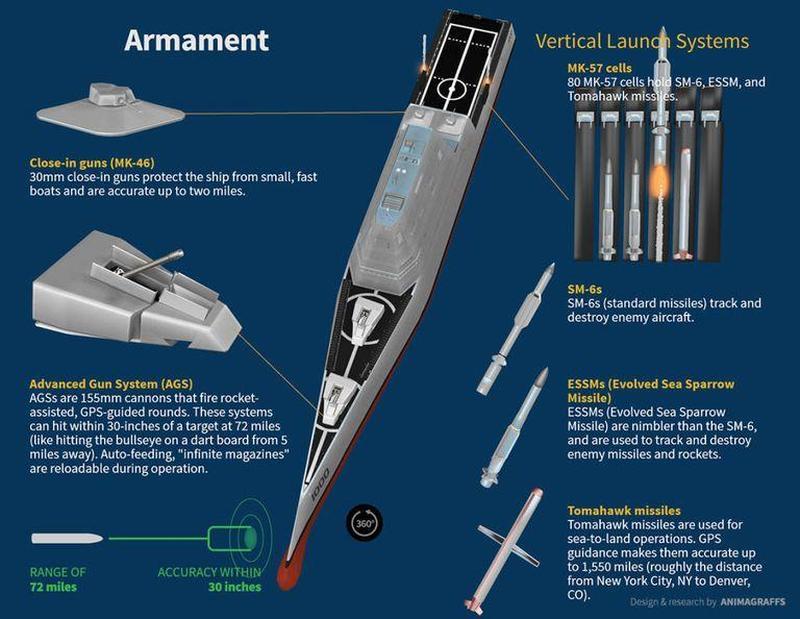
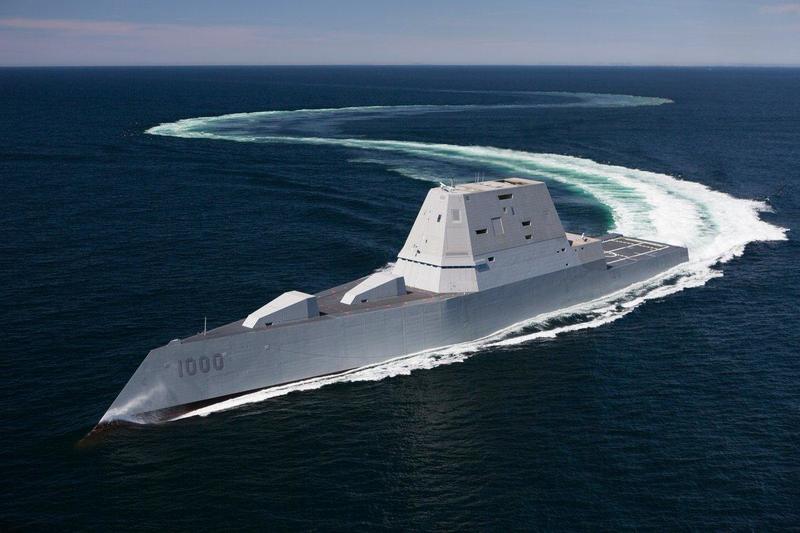
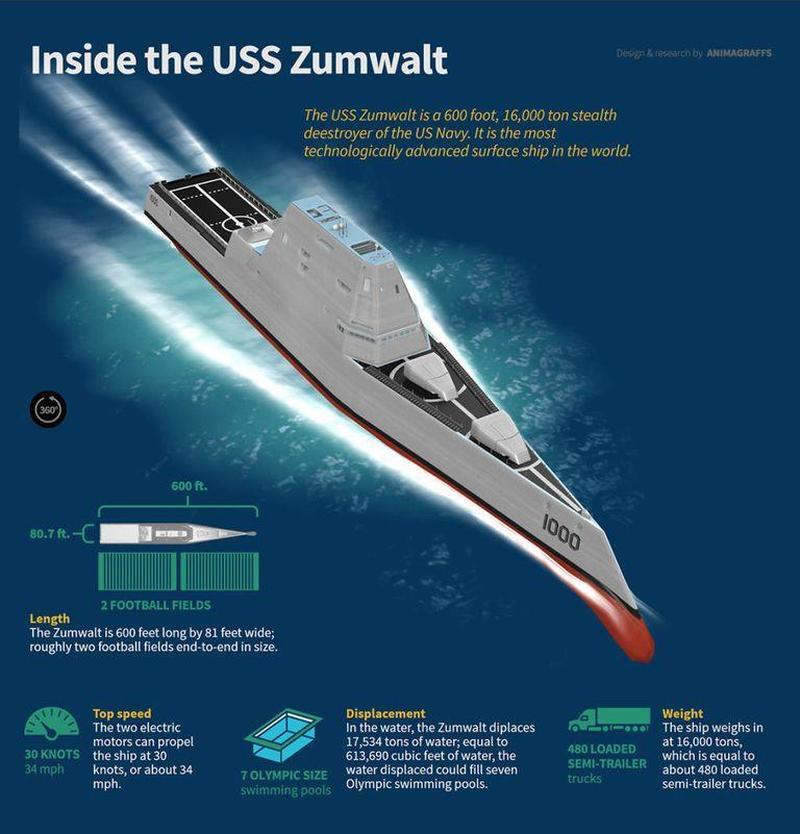
(ZH) US Navy Takes Delivery Of Futuristic Stealth Destroyer

US Navy Takes Delivery Of Futuristic Stealth Destroyer (7 Years Late)

After years of delays, the US Navy has finally taken delivery of its next-generation guided-missile stealth destroyer on Friday (April 24) for the next phase of developmental and integrated at-sea testing, reports Naval Today.
For the USS Zumwalt (DDG-1000), a 16,000-ton stealth destroyer, the construction timetable in July 2008 was:
  • October 2008: DDG-1000 starts construction at Bath Iron Works
  • September 2009: DDG-1001 starts construction at Bath Iron Works.
  • April 2012: DDG-1002 starts construction at Bath Iron Works
  • April 2013: DDG-1000 initial delivery
And so, just seven years later... here it is...

The stealth destroyer has operational combat systems and will conduct sea trials, according to a statement from Naval Sea Systems Command. The ship was built at Bath Iron Works in Maine and commissioned in 2016. It transited through the Panama Canal shortly after, on its way to San Diego, when it experienced propulsion issues, had to be towed back to port.
To bring the vessel back to combat-ready, the Navy has had to pour an additional $4 billion into upgrades. We noted in March 2019, DDG 1000 departed San Diego on the first operational cruise.
"Delivery is an important milestone for the Navy, as DDG 1000 continues more advanced at-sea testing of the Zumwalt combat system," said Capt. Kevin Smith, DDG 1000 program manager, Program Executive Office, Ships.
"The combat test team, consisting of the DDG 1000 sailors, Raytheon engineers, and Navy field activity teams, have worked diligently to get USS Zumwalt ready for more complex, multi-mission at-sea testing. I am excited to begin demonstrating the performance of this incredible ship."

By late 2019, there was talk within the ranks of the Navy that DDG 1000 could be fitted with hypersonic missiles.
DDG 1000 is the first of the Zumwalt-class destroyers. The USS Michael Monsoor (DDG 1001) is currently being outfitted with combat systems. The SS Lyndon B. Johnson (DDG 1002) is under construction at Bath Iron Works.
DDG 1000 is expected to join the US Pacific fleet, where it could be soon sent to the South China Sea in a show of force against the Chinese.

WWD : Global Sporting Goods Industry Left Reeling in the Pandemic

Global Sporting Goods Industry Left Reeling in the Pandemic
The global sporting goods business is a $400 billion entity.

The sporting goods industry — like every other sector — is trying to carve a new path due to the impact of the coronavirus.

To try to get a better handle on the numerous challenges businesses are facing during the COVID-19 shutdown and to help them navigate those obstacles, the World Federation of the Sporting Goods Industry is conducting a monthly pulse survey to assess the global impact. More than 300 companies — including brands like Nike, Adidas, Puma, New Balance, Asics and Under Armour — as well as manufacturers and retailers like Intersport, Sport 2000 and others are members of the Switzerland-based group. Through various federations, the WFSGI reaches an additional 45,000 companies, including local ones.

Athletic companies have been scrambling in the wake of the coronavirus shutdown with many, like Under Armour, Columbia Sportswear and Dick’s Sporting Goods, furloughing thousands of their workers. Earlier this week Adidas warned that its second-quarter revenues could drop up to 40 percent, with up to 70 percent of its store fleet closed. Compounding the situation is the fact that many athletic and active people are confined to their homes, due to self isolation edicts.

Major and minor league sports have been suspended, as have collegiate ones and other broadcast-worthy competitions. Tuesday brought word from Tokyo 2020 Olympic president Yoshiro Mori that the Summer Games, which have been postponed until 2021, would not be rescheduled a second time should that be needed. Sporting goods companies are not only dealing with the postponement of the Olympics, but also this year’s UEFA European Football Championship, a big moneymaker for Nike, Adidas and Puma.

In an interview Tuesday, WFSGI president and chief executive officer Robbert de Kock noted how the pandemic is unlike the 2008 financial crisis, when stores remained open, travel was unrestricted and companies could continue to sell their goods. While the current health problem of the coronavirus caused governments to shut down nonessential businesses, companies’ fixed costs continue to run. He said, “Let’s be very honest, a Nike on fixed costs for salaries and etc. will be close to $2 billion. If not over $2 billion. So your cash is going out like hell and nothing is coming in.”

The WFSGI leader estimated that if the $400 billion industry could finish with a 15 percent-to-20 percent decline, that would be “a pretty good job,” given the current challenges. Apparel accounts for about 39 percent of that figure. “That’s definitely not what we were hoping for. But seeing everything that is going on now, that’s not too bad,” he said.

The April survey indicated that manufacturers are planning for a 50 percent drop in business in the next month. Europe appears to be the most affected region, with 95 percent of respondents seeing a fall-off, followed by North America, with a 77 percent decline. Companies in Asia and Latin America were planning for smaller declines — 30 percent and 18 percent, respectively.

Needless to say, they are being hit throughout the supply chain. Manufacturers also are dealing with slashed orders, driven by customers in Europe and North America. More than 86 percent of the respondents have low cash flow, due to such factors as extended payment terms and order cancellations. Interestingly, while half the companies indicated they will hold off on investments, 40 percent said they will invest in software and people, and nearly 30 percent will invest in infrastructure.

De Kock raised some concern about the health of people in the U.S. as companies start to reopen, due partially to the rate of obesity. Hopeful signs of the economy coming back can be found in China, where Chinese consumers are buying again and nearly 90 percent are up-and-running, he said. In Germany, sporting goods stores that are under about 8,000 square feet are allowed to reopen, de Kock said. (However, media reports indicated that the reopening of businesses has increased the infection rate in Germany.) E-commerce sales in China and in Europe are bright spots, de Kock said.

But sporting goods manufacturers face many challenges. “What would you buy? Every sports facility is closed. The only thing I can do is walking, jogging and biking. No swimming pool is opened. If you live next to a lake, maybe you can swim in it. But the lakes are very cold so I would not advise that,” he said. “Even the playgrounds for children are closed.”

Shortages in materials and labor are also complicating the supply chain situation, according to the survey. Seventy percent of the respondents have material shortages due to the closure of their suppliers and 60 percent, due to forced company closure. Consolidating and expediting production, worker retrenchment and automation were some of the ways that manufacturers are responding to the pandemic.

In an effort to bring the industry together, the WFSGI has opened the survey to all companies, not just its members. All results will remain anonymous and none of the companies will have their data shared. Having reeled in 350 respondents for the April survey, the organization aims to reach more with its May one.

Sporting goods retailers and brands are also trying to adjust to the changing tides. As expected, nearly 80 percent want to increase online sales. Nearly 47 percent will reduce their demand by shifting orders. About 40 percent will clean out all inventories to maintain their cash position and exploit market opportunities in the recovering Asian markets, according to the survey.

Inevitably in any financial crisis, there are companies that won’t survive, but in other financial crises other companies would step in to offer them support, de Kock noted. “The problem right now is that everybody is in a financial challenge. Even the Nikes and the Adidas-es of the world need extra support to be able to run their businesses. At this time, it’s hard to defend that you are going to buy a few competitors or other companies.”

Mergers and acquisitions may be a possibility in 2021, when business slowly comes back to normal. “At the moment, most companies are not spending money, hiring freezes, etc.” de Kock said.

Despite the grim outlook, there were signs of post-pandemic opportunities. With most gyms, health clubs and boutique fitness clubs closed around the globe, running has gained popularity while many self-isolate. Seventy percent of the April survey respondents expect running, as well as outdoor activities, to be the most appealing sports after the pandemic.

Less than half of the April survey respondents predicted walking to be a fitness trend after the pandemic, and to a lesser degree basketball and soccer. Cycling is also expected to see an uptick among participants — perhaps driven by commuters in search of non-public transportation.
FT : Chris Hohn calls on Wirecard to fire CEO Markus Braun

Chris Hohn calls on Wirecard to fire CEO Markus Braun
Pressure from activist on chairman Eichelmann after KPMG says it is unable to verify profits

Chris Hohn, manager of the $24bn Children’s investment fund, has called on Wirecard’s supervisory board to fire chief executive Markus Braun after KPMG said it was unable to verify whether large portions of the fintech’s profits were real. 

The call by the activist short seller, one of Europe’s best known and most successful investors, adds to the pressure on Thomas Eichelmann, Wirecard chairman, after auditors at KPMG said they faced delays and obstacles while conducting the six-month probe. 

Shares in the payment specialist, a member of Germany’s Dax 30 index, plunged 26 per cent on Tuesday when it published the results of the audit commissioned after the Financial Times reported whistleblower allegations of accounting fraud centred on the group’s relationship with third parties. 

In its report on the audit published on Tuesday, KPMG said it had “informed the Supervisory Board in a letter about a considerable delay in Wirecard AG’s submission of the documents requested by us”. It added that the company had “repeatedly postponed individual agreed interview appointments with key Wirecard internal contacts”. 

Mr Hohn warned that the supervisory board “has wide-ranging legal obligations” to oversee the management board, and “is legally obliged to intervene. In our opinion, the necessary intervention is now to remove the CEO from all management duties,” he said, in a letter posted on the TCI website late on Tuesday.

Wirecard faced repeated questions from analysts on Tuesday about the company’s co-operation with KPMG. Mr Braun said the audit was independent, had found no evidence of balance-sheet misrepresentation and took time because of the complexity of the data involved.

The call for action from TCI, which has sold short 1 per cent of Wirecard’s stock, came as other investors expressed dissatisfaction with the results of the special audit. Ingo Speich, head of sustainability and corporate governance at Deka Investment, which holds a 1.3 per cent stake in Wirecard, called for a further investigation into Wirecard’s third-party acquiring on Thursday. “Wirecard needs to act as soon as possible and finally create transparency to avert further damage,” he said.

Wirecard has said part of KPMG’s work, the examination of data for the month of December 2019, will continue. Mr Hohn said that if the supervisory board were not to remove Mr Braun then, at the very least, it should “remove Wirecard’s management from all involvement in this audit until all of the allegations have been fully resolved”.

The investor also raised concerns about Wirecard’s compliance with the anti-money laundering regulations, following KPMG’s inability to identify some Wirecard customers at the heart of whistleblower allegations of fraud. “How is it possible to comply with these regulations if Wirecard either does not know or will not disclose who its customers are?” Mr Hohn asked. 

Wirecard has always said it complies with all applicable rules and regulations.

The investor has fought previous activist battles in Germany, including a fight over executive compensation at Volkswagen in 2016 and an earlier campaign to oust the chief executive of Deutsche Börse when the investor was described as a hedge fund “locust”. 

Wirecard has sued the FT for misuse of trade secrets in Munich relating to stories published in January and February 2019. The FT stands by its reporting and is defending the lawsuit.

FT : The hedge fund class of 2020 is more resilient than in 2008

The hedge fund class of 2020 is more resilient than in 2008
Broader institutional ownership means investors are less likely to bolt

Hedge funds have lost more in the coronavirus sell-off than during the nadir of the 2008 financial crisis. But the near-$3tn industry is unlikely to suffer as many blow-ups this time around.

Hedge funds were down more than 7 per cent on average in March’s market turmoil, according to data group HFR. That was their second-biggest monthly fall on record, beating anything suffered in 2008 or in the eurozone debt crisis a few years later.

Nervy investors pulled $33bn from hedge funds in the first quarter of 2020, or about 1 per cent of total capital, in the biggest quarterly outflow since 2009. But after weeks of rumours of fund collapses, the damage so far has been relatively mild.

“When there are 8,000 funds there will always be a blow-up or two,” said one large asset manager who invests in a range of hedge funds. “But there have been no surprises [in hedge funds], whereas in every other asset class you’ve had surprises.”

One reason: some of the biggest funds have made small losses or even made money. Israel Englander’s Millennium Management, a multi-strategy firm known for a tough approach in cutting dud positions, recovered from small losses in March to finish the first quarter in positive territory.

Paul Singer’s Elliott Management is up around 2 per cent, according to an investor letter, making it one of its best quarters of performance in recent years. The activist investor has been helped by hedges in areas such as stocks and bonds, some of which it sold at a profit.

And macro funds such as Brevan Howard and Caxton Associates have made double-digit gains, helped by the rally in government bonds as investors fled to havens.

There have been some losers. Michael Hintze, founder of CQS, wrote at the turn of the year that he was “cautiously optimistic” and that global growth looked “intact”. That bullishness cost him as his Directional Opportunities fund lost nearly 35 per cent in the first quarter.

Singapore-based Quantedge, one of the world’s top-performing hedge funds last year, fell 29 per cent last month, losing money on its equity, commodity and currency bets. However, clients have been investing a net $10m-$25m per month in the computer-powered fund in recent months, according to its chairman.

And Bruno Crastes’s H2O was hit by wrong-way bets on US Treasuries and Italian bonds, losing more than 50 per cent so far this year in a fund called Allegro and more than 70 per cent in one called Vivace.

But, while it is still early days, the casualty list is far smaller than in 2008 — when nearly 1,500 funds folded, including big names such as Peloton Partners and Highland Capital’s Crusader fund.

Much of this is because a different type of client now invests in hedge funds. In the last financial crisis, many hedge funds were forced sellers of assets because the rich individuals and funds of funds that owned them rushed for the exits — in many cases precipitating the funds’ collapse. Now the dominant investors are institutions, which tend to take much longer to move. Pension funds, endowments, sovereign wealth funds and foundations account for nearly 70 per cent of the investor base, according to the Alternative Investment Management Association.

That stickiness may be showing up in redemptions. March’s $33bn outflow was large, but much less than the $150bn or so yanked in the fourth quarter of 2008.

“It’s a different world [now],” said Cedric Vuignier, head of alternative investments at SYZ Asset Management. “Hedge funds are going to pass through this environment very well.”

One of the things that inflicted most damage on the hedge fund industry last time around, the revelation of Bernard Madoff’s huge fraud in December 2008, has served to protect it this time.

The industry changed almost overnight after funds of hedge funds and private banks, which were supposed to scrutinise managers they invested with, were found to have poured a lot of money into Madoff’s funds. After the Ponzi scheme became clear, investors began doing lengthy due diligence, checking everything from how funds manage risk to where assets are held. Major frauds are now harder to carry out.

And, as HFR’s Ken Heinz points out, three out of the four main hedge fund strategies actually did better in March this year than in October 2008. Only event-driven funds, which bet on mergers and restructurings and which were hurt by fears deals would not close, suffered more.

Moreover, one of the biggest draws for hedge funds is likely to be the lack of attractive opportunities elsewhere. Ten-year bond yields are wafer thin or negative; equities look risky, given the threat to corporate earnings; and with oil turning negative, sending shockwaves through markets, passive funds seem less enticing.

Yes, the industry’s returns in aggregate have been poor in the bull market of the past few years. But now hedge fund managers can claim they look less bad than the other options out there.