FT : Jaguar Land Rover vows to keep UK plants open under electric strategy

Jaguar Land Rover vows to keep UK plants open under electric strategy
Carmaker had been expected to close a site in long-awaited overhaul

Jaguar Land Rover will overhaul its brands and focus on electric vehicles but has pledged to keep its three UK car plants open under a strategy overhaul spearheaded by chief executive Thierry Bolloré.

The group will spend £2.5bn a year developing electric and connectivity technology for cars, with every model in its line-up offering a battery version by the end of the decade, it said on Monday.

JLR has been slow to roll out electric and hybrid vehicles, and last year paid a £35m fine after missing EU emissions targets.

The luxury carmaker will also share more technology with its parent company, Tata Motors, in an effort to cut development costs.

Under the strategy, the Jaguar brand will go all-electric by 2025 and move further upmarket in an attempt to revive the fortunes of the nameplate.

However, the company axed earlier plans for a battery version of its flagship XJ saloon car, which was to be built at its Castle Bromwich site.

The move, which will make its Solihull plant the centre of its electric vehicle efforts, raises questions about the future of the Bromwich site. The plant only makes the little-selling Jaguar saloon cars and analysts had expected it to close without the new model. 

JLR’s British plants made 243,000 cars last year across the three sites, fewer than Nissan produced from its single Sunderland facility.

The company on Monday pledged to “retain its plant and assembly facilities in the home UK market and around the world” but said it would “repurpose and reorganise” its existing sites.

FT : Vivendi to spin out Universal Music Group

Vivendi to spin out Universal Music Group
French media conglomerate will own only 20 per cent of its biggest business after the operation

Vivendi plans to spin out Universal Music Group, its biggest business, and distribute 60 per cent of the group’s share capital to its investors by the end of the year as it moves to capitalise on the rising value of music assets.

The move sent Vivendi shares up as much as 20 per cent on Monday to €31.50, their highest level since 2007.

If approved by shareholders at a vote in late March, the divestment will lead to the world’s biggest music company, which is home to pop stars including Lady Gaga and Kanye West, to be an independent company in which Vivendi would only own a 20 per cent stake.

It would also give the French media group controlled by billionaire Vincent Bolloré more firepower to make acquisitions in other areas such as publishing, television and communications.

Once Vivendi spins out UMG, its remaining businesses will be much smaller and largely focused on France with pay-TV operator Canal Plus, communication agency Havas, mobile games publisher Gameloft and book publisher Editis. In 2019, UMG accounted for 45 per cent of Vivendi’s €15.9bn in sales and 73 per cent of its operating profit of €1.5bn.

JP Morgan analysts welcomed the announcement as “shareholder friendly” since it answered the key question over how Vivendi would use the proceeds from the long-mooted listing of UMG. “It means that there is no uncertainty over the use of the cash and whether it be used for buy backs, dividends or acquisitions,” they wrote in a note.

Vivendi laid out the plan in a statement on Saturday, and said the board had set a “minimum target of €30bn” of valuation for UMG. A consortium led by Chinese group Tencent had in late January exercised its option to buy a further 10 per cent of UMG at that valuation, taking its total stake to 20 per cent.

“The transaction completed in recent days on that basis . . . as well as interests expressed by other investors at potentially higher prices, have now enabled the management board to consider a distribution of 60 per cent of UMG’s share capital to Vivendi shareholders,” said Vivendi.

Vivendi shareholders would get an “exceptional distribution” in the form of the new UMG shares, which would then be listed in Amsterdam where the company would be incorporated.

The announcement looks likely to end years of speculation over what Bolloré would do with Universal. The billionaire rebuffed an offer from SoftBank for UMG worth €6.5bn back in 2013. After having considered listing UMG on public markets in 2017, Vivendi ruled it out in 2018 and said it would look to sell up to half the company, paving the way for the Tencent deal. 

When smaller rival Warner Music went public last June at an almost $16bn valuation, it showed that public market investors had appetite for music labels. Since then, Warner’s market capitalisation has risen to $19.2bn.

The value of music companies has soared in recent years as streaming services like Spotify revived the industry, reaping billions in royalty payments to music labels. The industry’s “big three” labels — market leader Universal, Sony Music and Warner Music — control nearly 80 per cent of the market, which is forecast to more than double by 2030 to reach $45bn, according to Goldman Sachs. 

In a message to employees, board chairman Yannick Bolloré and Vivendi chief executive Arnaud de Puyfontaine, said the plan would “mark a new phase” for both Vivendi and UMG.

“UMG would be in a position to take advantage of greatly increased financial flexibility to pursue its dynamic growth and its pioneering role in the music and entertainment industry, to the benefit of artists and fans everywhere,” they wrote.

(ZH) New Ebola Deaths In West Africa Declared "Epidemic Situation"

New Ebola Deaths In West Africa Declared "Epidemic Situation"

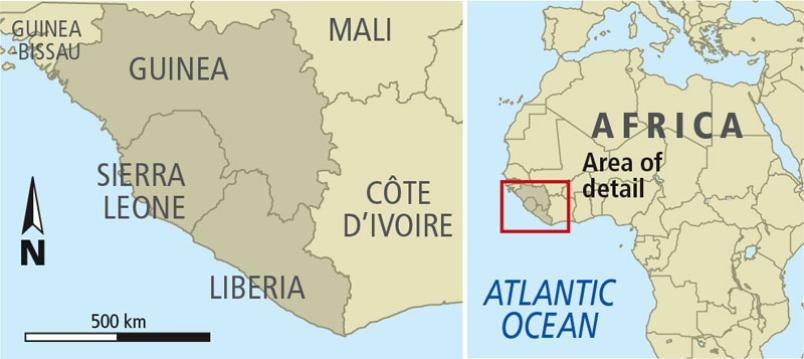
The West African country of Guinea has confirmed its first Ebola deaths since 2016 as the World Health Organization (WHO) is ramping up to combat the new declared outbreak there.
At least three people have died from the deadly disease with another half-dozen people testing positive. On Sunday Guinea's National Health Security Agency called the new outbreak an "epidemic situation".
Health officials are now scrambling to trace the new outbreak's origins, while isolating individuals that had contact with the infected. So far they've narrowed a possible outbreak center to a funeral that was attended by many.
As Reuters describes, "The seven patients fell ill with diarrhea, vomiting and bleeding after attending a burial in Goueke sub-prefecture. Those still alive have been isolated in treatment centers, the health ministry said."
Ebola can kill rapidly and painfully, and is believed spread through bodily fluids. There's growing alarm and panic given the last outbreak in West Africa was so deadly:
The 2013-2016 outbreak of Ebola in West Africa started in Nzerekore, whose proximity to busy borders hampered efforts to contain the virus. It went on to kill at least 11,300 people with the vast majority of cases in Guinea, Liberia and Sierra Leone.
Sporadic cases have appeared in central Africa in recent years, but currently the health systems of Guinea and other regional countries is already under severe strain given the coronavirus pandemic. Guinea has nearly 15,000 COVID-19 cases out of a country of about 12 million, including 84 deaths.
The WHO issued a weekend statement saying it was "ramping up readiness & response efforts to this potential resurgence" of the virus in the West African coastal region, also with Director-General Tedros Adhanom Ghebreyesus announcing Saturday it is now conducting "confirmatory testing" in the region.

(ZH) Exposing The Robinhood Scam: Here's How Much Citadel Paid To Robinhood To B

Exposing The Robinhood Scam: Here's How Much Citadel Paid To Robinhood To Buy Your Orders

Frankly, we've had it with the constant stream of lies from Robinhood and neverending bullshit from the company's CEO, Vlad Tenev.
With Tenev scheduled to testify on Thursday, alongside the CEOs of Citadel, Melvin Capital and Reddit, the apriori mea culpas have started to emerge - if a little too late - the former HFT trader spoke late on Friday on the All-In Podcast hosted by Chamath Palihapitiya, who had strongly criticized Robinhood over the trading restrictions, and Jason Calacanis, a Robinhood investor, and said that “no doubt we could have communicated this a little bit better to customers."
What he is referring to, of course, is Robinhood's outrageous decision to restrict the buying of 13 heavily shorted stocks on Jan 28 that had been driven to record highs, including GameStop, whose shares had surged more than 1,600%.
Tenev said the restrictions were necessary due to a large increase in collateral/deposit requirements by the DTCC, but that was not spelled out in automated emails sent to Robinhood customers early on Jan. 28.
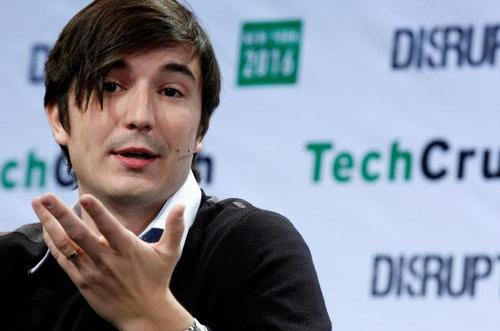
Robinhood CEO Vlad Tenev
And then he decided to pull the oldest trick and deflect attention from his own mistakes by blaming "conspiracy theories."
"As soon as those emails went out, the conspiracy theories started coming, so my phone was blowing up with, ‘how could you do this, how could you be on the side of the hedge funds,’" he said.
What Tenev did not say, or explain, is why his company - which is merely a client-facing front of Citadel, which buys the bulk of Robinhood's orderflow to use it perfectly legally in any way it sees fit - was so massively undercapitalized that the DTCC required several billion more in collateral to protect Robinhood's own investors against the company's predatory ways of seeking to capitalize on the gamification of investing making it nothing more (or less) than a trivial pursuit to millions of GenZ and millennial investors, a point which Michael Burry made so vividly.
Incidentally we know why Tenev did not mention it: it's because Robinhood's back office is a shambles of a shoestring operation, one which never anticipated either such a surge in trading not a multi-billion collateral requirement; had Robinhood been a true brokerage instead of pretending to be one, and run merely to open as many retail accounts as it could in the shortest amount of time, thus generating the most profit in the quickest amount of time to allow its sponsors a quick and profitable exit, it would actually have been on top of this.
It's also why Tenev's ridiculous pleas for immediate settlement instead of the usual T+2 arrangement, which has not been an issue for any other brokers, is nothing but a strawman argument which he hopes to present in Congress.
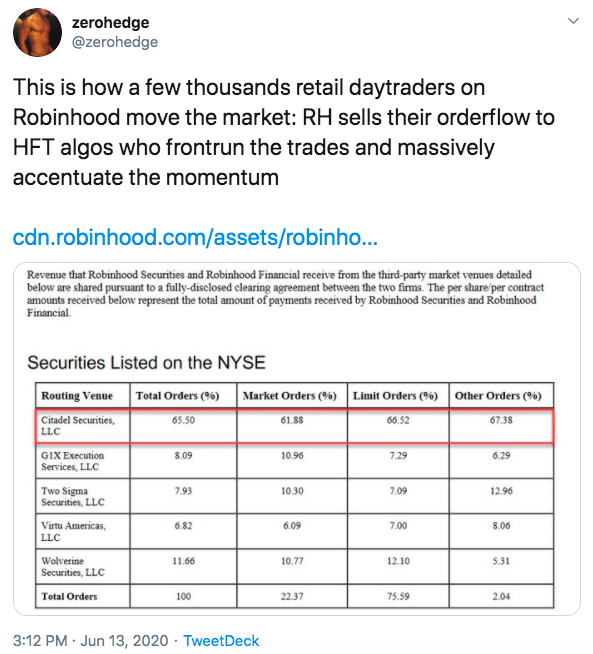
Which brings us to a totally separate topic, and one which Teven will one way or another have to address: the fact that Robinhood is a de facto subsidiary of Robinhood, whose entire business model is to sell retail orders to a handful of HFT market makers first and foremost... Citadel. In doing so the only ones who benefited from the surge in retail trading are Robinhood itself, by pocketing millions more from selling orderflow to Citadel, Virtu, Two Sigma, Wolverine and other HFT frontrunning "market-making" venues, as well as Citadel which made billions by having an advance look at the biggest surge in retail stock and option orders flow in history, and being able to trade ahead of and around it.
And no, it's not a conspiracy theory Vladimir - it is the stone cold truth, as Jeffrey Gundlach suggested last week when he said "Robin Hood (sic) should be forced to change its name to Hood Robbin’. I grow so weary of lies through nomenclature, which are ubiquitous these days" adding "To be clear, the name change would reflect Robinhood robbing the little guy, nothing else."
As an aside, how dare we allege that Citadel was buying orderflow to frontrun it? After all, that very allegation...
... coupled with the reminder that Robinhood engages exclusively in a practice called payment-for-orderflow (or PFOF)...
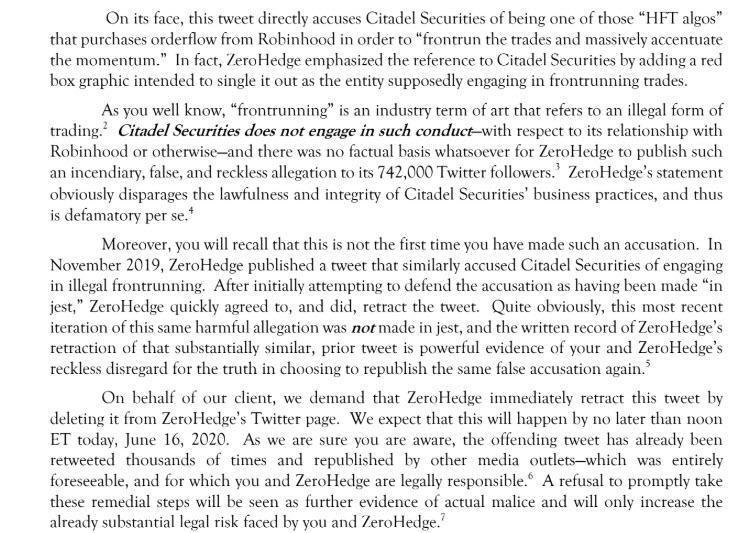
... which is what allowed Robinhood to provide "free" trading in the first place, that nearly destroyed us when last June Citadel's lawyer army threatened to sue us into the ground for suggesting precisely that?
Some key phrases of note from the above text:
  • "'Frontrunning' is an industry term of art that refers to an illegal form of trading."
  • "Citadel Securites does not engage in such conduct [i.e., frontrunning] and there was no factual basis whatsoever for ZeroHedge to publish such an incendiary, false, and reckless allegation to its 742,000 Twitter followers" [it's 771,000 now].
  • "ZeroHedge's statement obviously disparages the lawfulness and integrity of Citadel Securities' business pratices."
  • "Quite obviously, this most recent iteration of this same harmful allegation was not made in jest."
  • "We demand that ZeroHedge immediately retract this tweet by deleting it from ZeroHedge's Twitter page... A refusal to promptly take down these remedial steps will be seen as further evidence of actual malice and will only increase the already substantial legal risk faced by you and ZeroHedge."
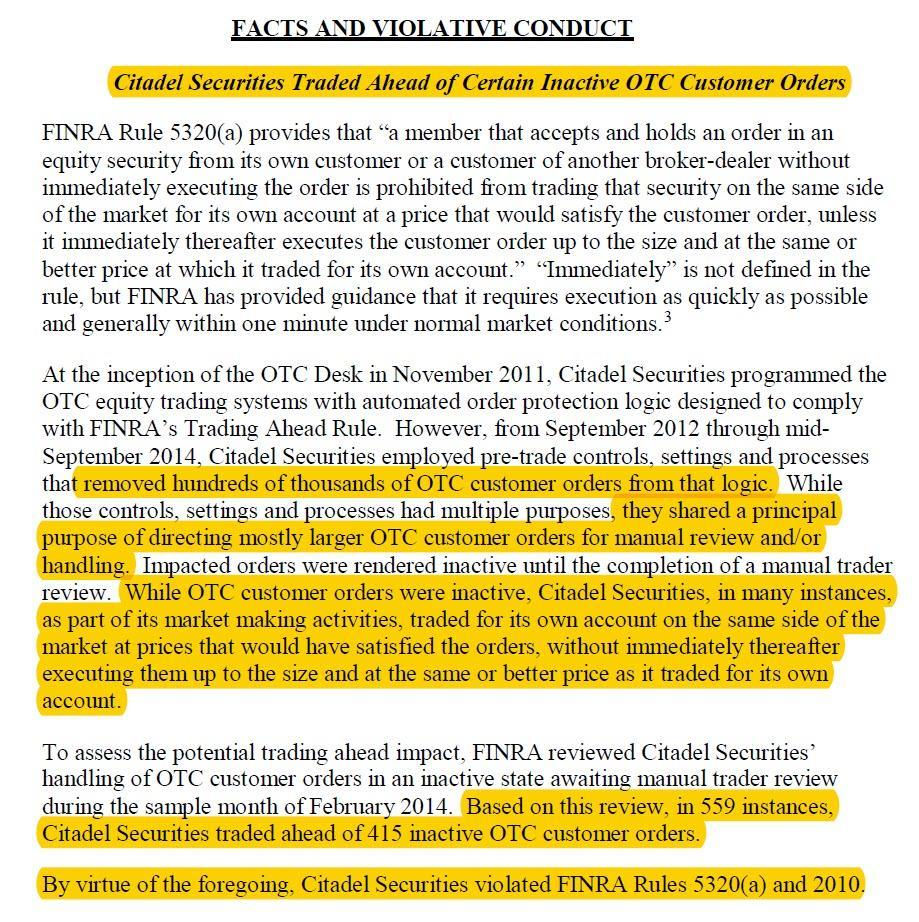
Well, we now officially know all about Citadel's modus operandi because just a few days after we received that letter, none other than financial regulator FINRA, revealed that Citadel Securities was censured and fined for engaging in - drumroll - "trading ahead of customer orders" as Letter of Acceptance No. 2014041859401 revealed:
Now we admit that our financial jargon is a bit rusty these days, but "trading ahead of customer orders" sounds awfully similar to another far more popular "term of art", one which we know very well: frontrunning!
Jargon aside, some of the other highlighted words we are very familiar with, such as "hundreds of thousands"... and "559 instances" in which Citadel traded ahead of customer orders.
And while we may be getting a little ahead of ourselves here, it was Citadel's own lawyers that informed us on more than one occasion that:
"frontrunning" is an unethical and illegal trading practice."
So, what are we to make of this? Could it be that Citadel was engaging in at least 559 instance of what its lawyer called "unethical and illegal trading practice." Surely not: after all the lawyers would surely know very well how ridiculous and laughable their letter and threats would look if it ever emerged that Citadel was indeed frontrunning its customers.
But wait, it gets even funnier.
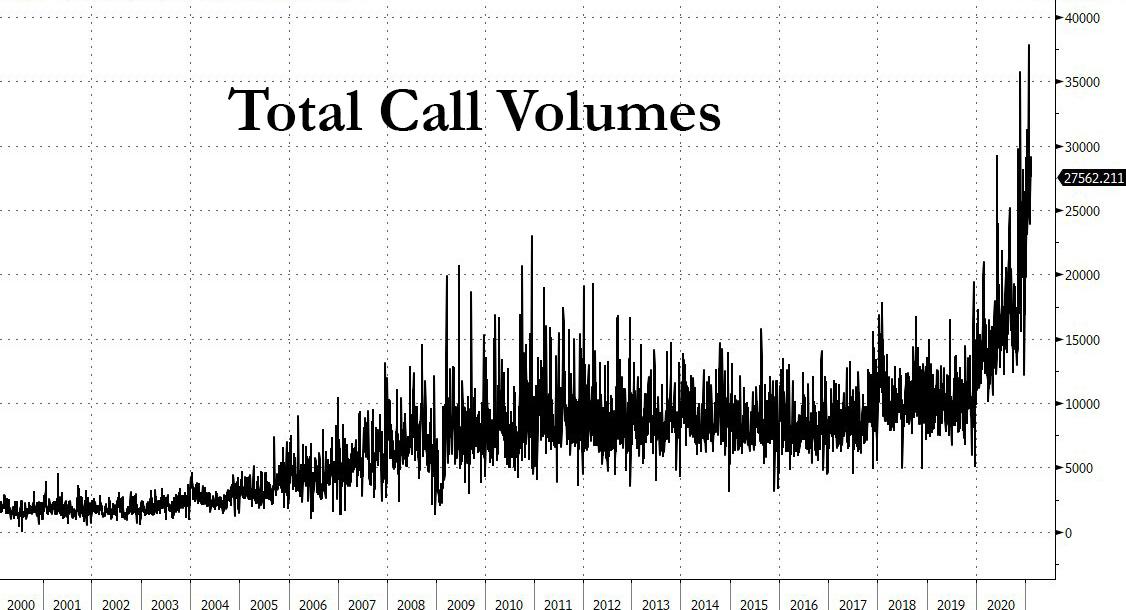
Back in April 2004, long before Citadel became the dominant market maker - and buyer - of retail orderflow controlling a whopping 27% of total US equity volume market share in 2020 according to Bloomberg and a staggering 46% of retail orderflow, it was Citadel's own General Counsel, Adam Cooper, who urged the SEC to ban payment for orderflow because it "distorts order routing decisions, is anti-competitive, and creates an obvious and substantial conflict of interest between broker-dealers and their customers."
As Cooper also revealed...
"broker-dealers accepting payment for order flow have a strong incentive to route orders based on the amount of order flow payments, which benefit these broker-dealers, rather than on the basis of execution quality, which benefits their customers. Furthermore, the parties making such payments (either voluntarily or through an exchange-mandated program) are forced to find other ways to recoup the amounts of such payments, whether through wider spreads or a reduction in other benefits that otherwise could, and should, be provided to customers."
And the punchline:
Payment for order flow is a practice that on its face is at odds with a broker-dealer’s obligations to its customers. A broker-dealer has a fiduciary obligation to obtain the best execution reasonably available for its customers’ orders under prevailing market conditions. We do not believe that a broker-dealer that accepts payment for order flow and does not pass such payments on to its customers (either directly or through reduced execution fees or commissions) can consistently fulfill its best execution obligations.
Which leads us to the one time Citadel was actually telling the truth:
Because payment for order flow creates fundamental conflicts of interest that cannot be cured by disclosure, the Commission should ban payment for order flow altogether. It is crucial that this ban include not only exchange-sponsored programs, but also payment for order flow arrangements entered into privately between order flow providers and market centers.
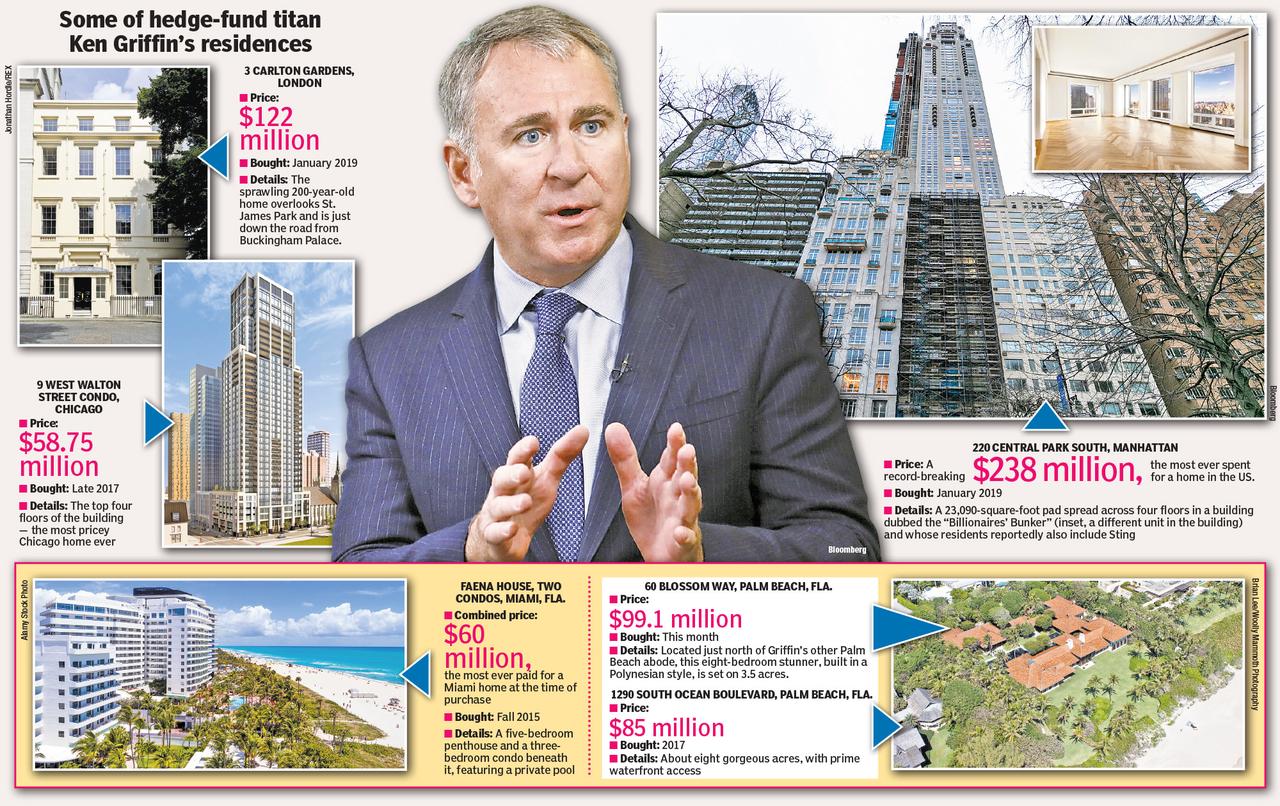
Little did Citadel know that just 15 years later it would be the single biggest beneficiary of paying for orderflow, a practice which has allowed Citadel founder to amass a trophy collection of some of the most expensive real estate in the world.
We also know all this is true because we were also among the first to expose Robinhood as a client-facing front for Citadel back in 2018, when we wrote "Robinhood Is Said To Get 40% Revenue From HFT Firms Like Citadel" in which we said that...
"Stealing from millennials to give to the rich. Robinhood app sells user customer data to make a quick buck from the high-frequency trading (HFT) firms on Wall Street," that is what we wrote last month, in one of the first articles that expressed concern over the popular Robinhood investing app for millennials, which has shady ties to HFT firms and undermines its image of an anti-Wall Street ethos.
The conclusion was a searing prediction of what would happen a little over two years later:
A few anonymous venture capitalists told Bloomberg that Robinhood has already begun to see the consequences of their cozy relationship with Wall Street firms, which has degraded the company's image.
With six million clients, most of whom are millennials -- seeking an anti-Wall Street investing culture, could soon find out, that, they too, have been conned by Robinhood founders into thinking the app offers free investing. The lesson at play: nothing in life is free, even if it is from Silicon Valley.
That said, we were not the first to expose Robinhood's ways. That honor falls to our friend Joe Saluzzi and Sal Arnuk, who for over a decade have led the crusade against high frequency trading, and who in November 2014 wrote "Beware of Those Offering Free Retail Trades."
We are always suspicious when somebody offers us something for free. Usually, the one offering the free service has other ways of making money. For example, Google offers lots of free services like Gmail, Google Maps or Youtube. While the services are free, Google is still making money by targeting ads and selling data. The latest free thing which is creating quite a buzz (the hot term for this is “disrupting”) is free retail trading by a company called Robinhood.
What is Robinhood? According to an article in the Irish Times yesterday:
“Founded by Stanford mathematics graduate Vlad Tenev and Baiju Bhatt last year, Robinhood is a stock brokerage that charges no commission.”
Robinhood is offering free stock trades and no-cost real time market data. How do they do it? According to the company:
– They don’t have brick and mortar companies and don’t spend millions on Superbowl ads.
– Technology has allowed them to eliminate much of the human intervention and paper confirms.
And how do they make money? According to their website:
“Robinhood has two key revenue streams; charging interest for margin trading, and collecting interest on cash balances.”
Call us crazy but relying on generating revenue from margin interest and collecting interest on cash balances (where the account minimum is $0) sounds a bit risky and overly ambitious in a market which has been saddled with zero percent interest rates for the past 5 years. That’s why we think Robinhood must have another way of making money. Could it be that the founders, Vlad and Baiju, are planning on taking advantage of the rebates and payment for order flow that are embedded in the equity market? But how could two guys who graduated from Stanford in 2008 know that much about the market structure of the US equity market? From their website:
After graduating from Stanford, roommates Vladimir Tenev and Baiju Bhatt moved to New York, where they built high-frequency trading platforms for some of the largest financial institutions in the world. They began to realize that electronic trading firms pay effectively nothing to place trades in the market yet charge investors up to $10 for each trade — and thus the idea for Robinhood was born. They soon ventured back to California to begin solving the problem of democratizing access to the markets.”
Seems like Vlad and Baiju know a lot more about US equity trading than we thought. Heck, they may even know that when a retail limit order is sent to the DirectEdge stock exchange, that order could qualify for a special rebate if it is attributed and displayed as a retail order. Here is how DirectEdge describe their retail attribution program​ :
“With this improvement, Members sending Retail Orders may elect to display those orders on the EdgeBook Attributed data feed with the generic retail identifier “RTAL” rather than their Market Participant ID (MPID). Including a standard retail identifier gives retail brokers greater flexibility and choice to participate in the attribution program that has helped improve execution rates for retail orders.”
Talk about leading the lambs to the slaughter. Retail orders that are being attributed are basically flashing bright lights telling the world that they are retail.
We’re not sure if Robinhood is planning on selling their order flow but it is certainly something that their customers should be asking them once they do start trading. While their website does not say anything about payment for order flow, in a CNBC interview from earlier this year, Vlad Tenev did say the company would be accepting payment for order flow:
“So, Robinhood has many revenue streams on Day One. Those include margin lending, payment for order flow, interest on cash balances. We’ll have those on Day One,” Tenev said on CNBC’s “Halftime Report”.
Right now, Robinhood is still busy attracting some high profile investors which include Snoop Dog, actor Jared Leto, the venture capital fund Andreessen Horowitz and Google Ventures (Robinhood raised $13 million in their latest financing round).
Two points here: Vlad Tenev's entire background is HFT - he knew from day one that he could create a "free brokerage" if only he were to quietly sell all the orderflow to a generous sponsor, say Citadel. It's also why we find laughable his recent tweet asking, obviously rhetorically, "What exactly is high-frequency trading? And is it evil?"
Tenev then went on into a rambling, nonsensical defense of HFT and why it is not evil, concluding that "high-frequency trading is just what you get when you apply technology to trading and getting data moving faster between trading centers will enhance trading for us all"...
... what he did not say is that HFT is just a perfectly legal and widely accepted way of frontrunning retail orderflow (usually by the order of a few milliseconds, explaining the presence of lasers at the New York Stock Exchange in Mahwah), and then selling it to the highest bidder, something he knew almost a decade ago when he launched Robinhood. We almost wonder if he did so in some low-lit Chicago backroom while sitting across from Citadel's Ken Griffin (this would be the other Citadel, not the one from 2004 which found payment for orderflow loathsome and deserving to be banned, but a Citadel which now considered PFOF a source of almost unprecedented riches and profit).
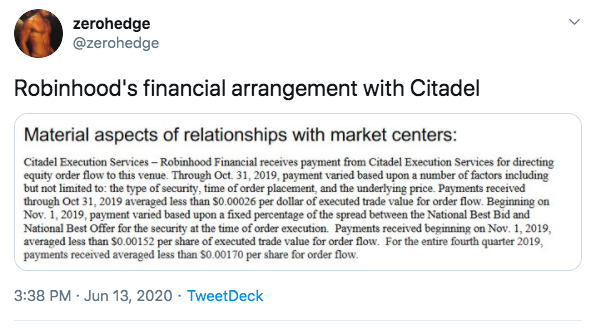
The second point we would like to address from the Themis Trading 2014 post is that while back then it was unclear if RH sold their orderflow, we now know that not only is Robinhood selling your orders to other internalizers, but that sale represents the biggest source of RH revenue by orders of magnitude. And thanks to the company's just filed latest Disclosure Form 606 we know just how much Robinhood made from selling your orderflow to Ken Griffin.
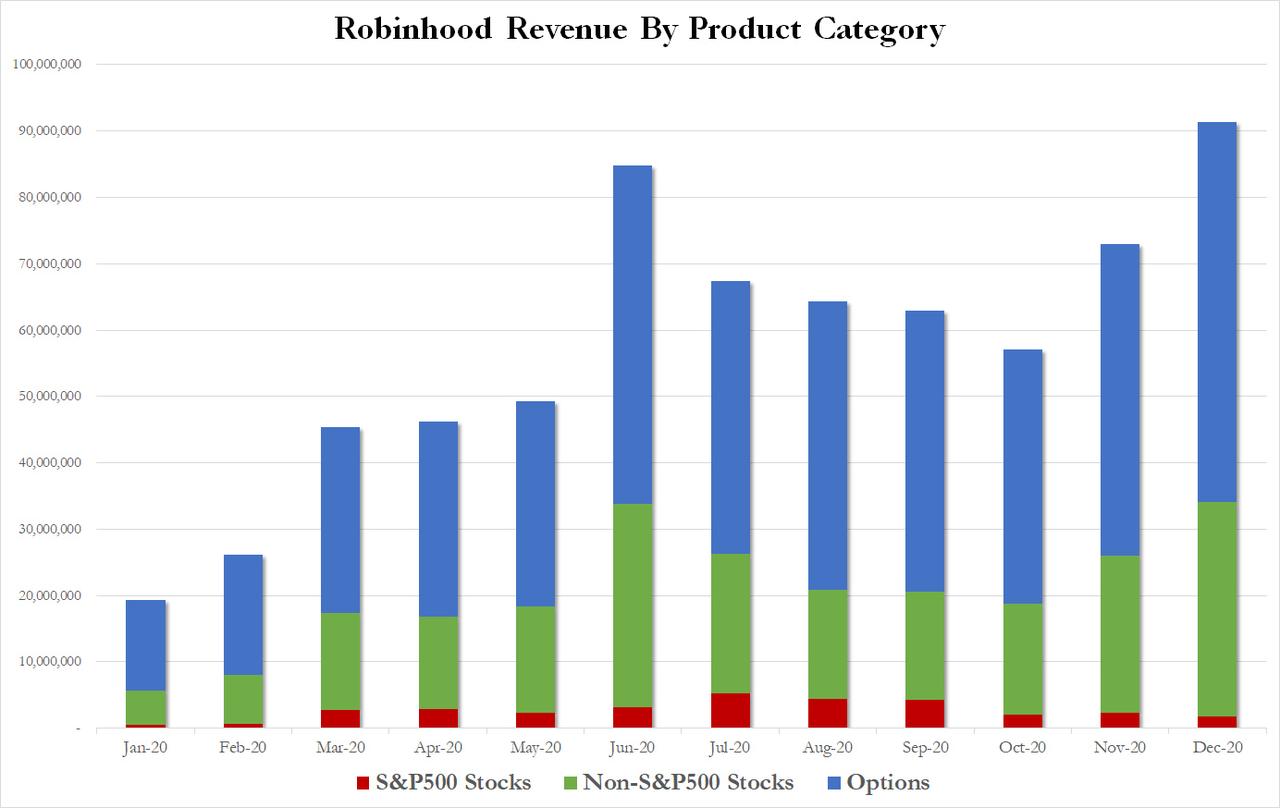
The chart below shows Robinhood's monthly revenues for the full year 2020, broken down in the three key categories: i) S&P500 stocks, ii) Non-S&P500 stocks and iii) Options. And while Robinhood made a not-too-shabby $247 million in 2020 from just selling access to your retail stock orders to such non-directed orderflow venue as Citadel, Vitru, Wolverine, Two Sigma, G1X, Morgan Stanley and others, it is the sale of option orderflow that has emerged as Robinhood's golden goose, having generated an impressive $440 million in revenue in 2020.
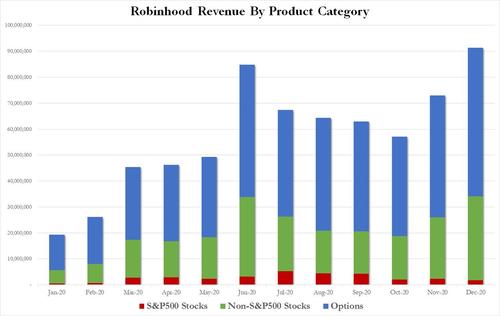
Which then brings us to the punchline: Robinhood is kind enough to break down not only revenue by product (going down to such granular detail as market orders and limit orders), starting several years ago the company also started disclosing who its biggest clients were. And here it will come as no surprise that in 2020, Citadel accounted for more than half of all Citadel revenues, or $362.5 million, exactly 53% of the company's total revenues of $687.1 million.
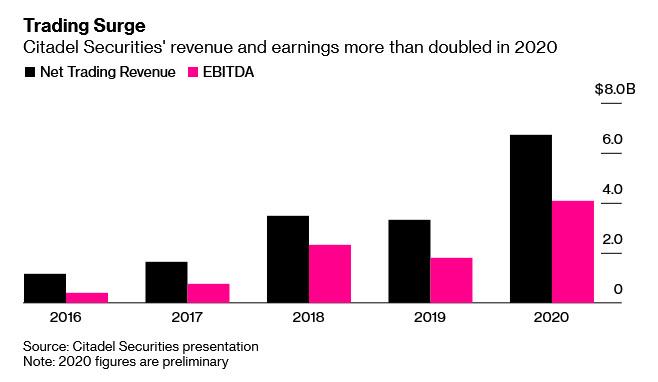
Would it therefore be farfetched to say that Robinhood is nothing more than a client-facing subsidiary of Citadel, one which pretends to offer free trades to tens of millions of young, naive traders, but in reality merely allows Citadel Securities to trade ahead and/or against this orderflow for which it paid over $300 million... and to generate record revenues of $6.7 billion!
Probably not, but we won't have a definitive answer until we find out just how much profit Citadel made from buying all this critical data, which gives it an early glimpse into not only each discrete individual trade but also a sense of which way the retail horde is moving, critical and extremely valuable data which until last August was public and available to all (with a slight delay) courtesy of Robintrack, and which last August was inexplicably halted.
We are confident that this week's Congressional hearings will quickly get to the bottom of this critical question of just how profitable this orderflow - which it paid Robinhood $362 million to procure - is for Citadel, because anything less will confirm that this latest hearing is nothing but a kangaroo court meant to appease retail investors that someone in Washington is doing something... when in reality everyone knows that what Citadel wants, Citadel gets and there is no sign that Citadel will ever tire of making billions out of the same orderflow for which it paid subpennies on the dollar to Robinhood.
As for Robinhood's trite virtue signaling of taking from the rich and giving to the poor, all it took was 30 billion subpenny rebates from Citadel for the firm to remember who really calls the shots.

>>> Europe : Brokers Upgrades & Downgrades - 15th of February 2021 V2(+)

>>> Up
* Adevinta Raised to Neutral at SpareBank; PT 140 kroner
* Aperam Raised to Buy at AlphaValue
* Auto Trader Raised to Buy at Peel Hunt
* BE Semiconductor Raised to Buy at Kempen & Co; PT 70 euros
* Bravida Raised to Buy at Handelsbanken; PT 125 kronor
* Bravida Raised to Buy at Nordea (+)
* Clariant Raised to Reduce at AlphaValue
* DSV Panalpina Raised to Buy at Handelsbanken; PT 1,300 kroner
* E.On Raised to Buy at Berenberg; PT 10.50 euros
* ING Raised to Overweight at Morgan Stanley; PT 10.50 euros
* Maersk Drilling Raised to Buy at Fearnley; PT 250 kroner
* Reckitt Raised to Market Perform at Bernstein; PT 6,800 pence
* Schibsted Raised to Buy at SpareBank; PT 420 kroner
* SSE Raised to Buy at SocGen; PT 1,650 pence (+)
* Tokmanni Raised to Buy at Handelsbanken; PT 21 euros
* Veidekke Raised to Buy at SEB Equities; PT 130 kroner (+)
* Verkkokauppa.com Raised to Hold at Nordea (+)

>>> Down
* ALK-Abello Cut to Hold at SEB Equities; PT 2,900 kroner
* Ashmore Cut to Sell at Shore Capital (+)
* Bertrandt Cut to Hold at M.M. Warburg; PT 53 euros (+)
* Bloomsbury Publishing Cut to Hold at Peel Hunt
* CVS Group Cut to Hold at Jefferies; PT 1,770 pence
* Fraport Cut to Hold at Stifel; PT 45 euros (+)
* KBC Group Cut to Equal-Weight at Morgan Stanley; PT 67 euros
* Micro Focus Cut to Sell at Investec; PT 300 pence (+)
* Molecular Partners Cut to Sector Perform at RBC
* Moneysupermarket Cut to Hold at Liberum; PT 290 pence
* OHB SE Cut to Hold at HSBC; PT 43 euros
* Prosegur Cash Cut to Neutral at Mirabaud Securities (+)
* Team17 Cut to Hold at Peel Hunt; PT 859 pence
* Trainline Cut to Hold at Peel Hunt; PT 461 pence
* Unibail Cut to Reduce at HSBC; PT 40 euros

>>> Initiation
* Aker Horizons Rated New Buy at Pareto Securities; PT 60 kroner (+)
* Aker Horizons Rated New Buy at SEB Equities; PT 52 kroner (+)
* Pebble Group Rated New Add at Peel Hunt; PT 135 pence

>>> Call
* Bravida 4Q Earnings Strong, Upgraded at Handelsbanken (+)
* CVS Group Cut to Hold With Shares ‘Priced to Execute’: Jefferies
* DSV’s Appetite for More M&A ‘Unbroken,’ Bernstein Says (+)
* EON Shares More Than Reflect Risks, Buy on Weakness: Berenberg
* Heineken Upside May Take Longer But Citi Still Confident
* ING Has Most Upside in Benelux, KBC Downgraded: Morgan Stanley
* Lanxess’ Emerald Deal ‘Looks Reasonable’ on Synergies: Baader
* Moneysupermarket Cut on FCA Change, Switching Headwinds: Liberum
* Ocado PT Upped 55% at Morgan Stanley on Online Grocery Advantage (+)
* Pirelli PT Raised, FY21 Margin Recovery ‘Underappreciated:’ Citi (+)
* Trainline Cut to Hold, Estimates Slashed on Lockdowns: Peel Hunt

FT : EU faces brutal choices over coronavirus corporate rescue money

EU faces brutal choices over coronavirus corporate rescue money
Member states will need to decide which companies to support and which to allow to fail

Early in the coronavirus crisis, it became abundantly clear that EU member states were going to have to pump vast sums of money into keeping their corporate sectors afloat as the pandemic forced economies into deep freeze.

That life support cannot be kept in place indefinitely. And deciding how and when to pare it back could prove to be a lot more complicated — and politically explosive — than implementing it in the first place.

With the European Commission predicting “light at the end of the tunnel” for the EU economy, finance ministers are preparing to open a debate on how this process should be handled. The topic is set to feature when the eurogroup meets on Monday.

No one is talking about yanking corporate support measures soon. Europe is still under lockdowns and cross-border movement is severely restricted. 

As a commission note to be discussed at the eurogroup put it, an “abrupt and uncoordinated withdrawal” of support measures could trigger a wave of bankruptcies and cause lasting economic and social damage. Instead, as broad corporate support measures expire, “there will gradually be a need to replace them with more targeted schemes”.

But economic activity is forecast to return to pre-crisis levels midway through next year. Governments will need to start preparing for some difficult choices when it comes to state support programmes. 

They do not want to let sound businesses go under. But as one EU official said, “companies that are fundamentally unviable should be allowed to fail at some point”.

This will involve difficult judgments as to how Covid-19 has changed the structure of EU industries, determining which sectors have a bright outlook and which will never be the same again. The story will vary sharply from country to country, once again highlighting the risks created by divergent economic fortunes within the member states of the euro currency area. 

The Darwinian task of figuring out which companies will be viable in the long term may involve governments bringing in private sector specialists to sift through the numbers, something some capitals have already started to consider.

It will also have implications for the banking sector, which has thus far been spared a surge in non-performing loans by massive public support schemes. 

The share of corporate NPLs in the euro area stood at 5.23 per cent of total loans in the second quarter of last year, marginally lower than the previous quarter, according to the commission note. Bankruptcy numbers have remained contained.

But “once the unprecedented public support measures expire, a number of businesses are likely to default on their debt obligations, leading to higher NPLs and insolvencies”, the note warns.

The commission will play a critical role in all this. Brussels has waved through more than €3tn of exceptional state aid measures during the crisis, according to commission data. Germany, Italy, France and Spain accounted for the biggest shares. 

But at some point, Brussels will need to start tightening up as part of a transition back to more normal regulatory conditions.

Officials note the state aid regime was relaxed in the battle against Covid-19, serving as a “bridge” to help companies survive — not prop them up indefinitely. So far, the commission has shown flexibility, adjusting the rules five times, with an extension pushed through last month. “We don't have a crystal ball, and we keep monitoring the situation,” said one official.

But the current regime of massive corporate support from the taxpayer cannot last for ever. “This is going to be a difficult judgment,” said another official. “I don’t think anyone sees the current corporate support measures as a desirable long-term element of the European Union.”


Bitcoin is bidding to go mainstream after direct and implicit endorsements from pedigreed financial institutions and companies. The FT looked at the next chapter in the volatile cryptocurrency’s short but dramatic life story. (chart via FT)

>>> Stoxx 600 Pre-Market Indications

  • Vivendi SE (VVU TH) +5.4%
    • Vivendi Mulls Spinning Off Money Maker UMG by End of Year (1)
  • Corbion (CSUA TH) +3.3%
  • Lanxess (LXS TH) +2.8%
    • Lanxess‘ Emerald Deal ‘Looks Reasonable’ on Synergies: Baader
    • Lanxess to Buy Emerald Kalama, Lifting Presence in North America
  • Nibe (NJBC TH) +2.5%
  • Johnson Matthey (JMT2 TH) +2.4%
  • Imperial Brands (ITB TH) +2.4%
  • ArcelorMittal (ARRD TH) +2.3%
    • ArcelorMittal Says $650m Share Buyback Program to Start Today
  • AMS (DQW1 TH) +2.3%
  • Qiagen (QIA TH) +2%
  • LVMH (MOH TH) +1.6%
  • EssilorLuxottica (ESL TH) -1%
  • Bakkafrost (6BF TH) -1.1%
  • Ericsson (ERCB TH) -1.1%
  • Telefonica (TNE5 TH) -1.1%
  • AstraZeneca (ZEG TH) -1.1%
    • S. Korea to Start Vaccinating Those Under 65 With AstraZeneca
  • Mowi (PND TH) -1.6%
  • IAG (INR TH) -2%
  • Carnival Plc (POH1 TH) -2.5%
  • HSBC (HBC1 TH) -2.6%
  • NEL (D7G TH) -3.4%

FT : Arnault and Mustier join the $100bn Spac boom

Arnault and Mustier join the $100bn Spac boom
LVMH founder and ex-UniCredit CEO launch vehicle to invest in European financial companies

LVMH founder Bernard Arnault and former UniCredit chief Jean Pierre Mustier are creating a special purpose acquisition vehicle to invest in European financial companies, joining the $100bn Spac boom.

Tikehau Capital and Financière Agache, a holding company controlled by Groupe Arnault, will sponsor Pegasus Europe, which will be co-run by former Bank of America dealmaker Diego De Giorgi, Mustier said in an interview.

Pegasus will be listed in Amsterdam, which is emerging as the European capital for the blank-cheque companies after becoming the main beneficiary of the shift of euro-denominated equity trading away from London since Brexit.

The Spac will look to raise in the low hundreds of millions of euros and JPMorgan is said to be advising, according to a person familiar with the matter. Pegasus declined to comment on the size, citing pre-listing rules.

Spacs raise money by listing on a stock exchange and then use the proceeds to take promising private businesses public through reverse mergers. Shareholders do not know in advance which businesses Spacs will target, so commit based on the records of those running and sponsoring them.

Arnault is one of the world’s richest men. He has a fortune of $114bn that he built up over four decades of dealmaking that created the world’s largest luxury group, including the Louis Vuitton, Dior, Givenchy, Veuve Clicquot and Dom Pérignon brands.

Pegasus is among the first of an expected wave of European Spacs, which until now have been a largely US phenomenon. Telecoms billionaire Xavier Niel, has launched two, one focusing on TV production and the other specialising in organic food.

Mustier, De Giorgi, Tikehau and Financière Agache will buy at least 10 per cent of the Pegasus IPO and “enter into a substantial forward purchase agreement”, according to a statement.

“Europe needs more growth capital to support companies and the Spac can be the missing instrument between a traditional IPO and private equity financing,” Mustier told the Financial Times.

The rationale behind Pegasus is that European financial services — particularly asset management, insurance and fintech — are ripe for consolidation because ultra-low interest rates, new regulations and technological advances have disrupted their business models.

“This is not just about a quick deal. We can offer long-term investment and partnership with our expertise,” Mustier said. The reputation of the four sponsors “reassures companies that we have a long-term outlook and deep understanding of the financial sector,” said Tikehau co-founder Antoine Flamarion.

Last week, Mustier stepped down from UniCredit after four years in charge, following a dispute over strategy.

A number of European bank CEOs are in the process of launching Spacs, including Mustier’s friend and former Credit Suisse chief executive, Tidjane Thiam, who is listing a $250m financials-focused vehicle in New York. Former UBS CEO Sergio Ermotti, ex-Commerzbank boss Martin Blessing and Barclays investment banker Makram Azar are among others.

Spac founders are attracted by the potential for large rewards from a successful acquisition target. Spac founders often receive 20 per cent of its shares for a nominal fee.

>>> TradeGate Pre-Market Indications

DAX:
  • RWE (RWE TH) +1.5%
  • Linde (LIN TH) +1.1%
  • Bayer (BAYN TH) +1%
  • Fresenius Medical (FME TH) +1%
  • E.On (EOAN TH) +1%
    • E.On Raised to Buy at Berenberg; PT 10.50 euros
MDAX:
  • Lanxess (LXS TH) +3.3%
    • Lanxess to Buy Emerald Kalama, Lifting Presence in North America
    • Lanxess’ Emerald Deal ‘Looks Reasonable’ on Synergies: Baader
  • Qiagen (QIA TH) +2.2%
  • Commerzbank (CBK TH) +1.6%
  • Hannover Re (HNR1 TH) +1.6%
  • CTS Eventim (EVD TH) +1.6%
SDAX:
  • Kloeckner (KCO TH) +4%
  • DIC Asset (DIC TH) +2.9%
  • Dermapharm (DMP TH) +2.5%
  • Encavis (CAP TH) +2.4%
  • Schaeffler (SHA TH) +2%
  • Borussia Dortmund (BVB TH) -1.2%
  • SNP Schneider-Neureither (SHF TH) -3%