FT : Nest seeks lower PE fees in return for regular capital allocations

Nest seeks lower PE fees in return for regular capital allocations
UK’s largest workplace pension scheme refuses to pay the ‘two and 20’ model charged by buyout groups

Nest is searching for private equity managers that are prepared to cut fees in return for a regular capital stream from the UK’s largest workplace pension scheme.

Nest, which manages more than £16bn of retirement savings, is expanding its portfolio of illiquid investments, including green energy infrastructure and commercial property, but it has yet to make a commitment to private equity due to concerns about high fees.

“We won’t pay two and 20,” said Mark Fawcett, chief investment officer at Nest, referring to private equity’s usual two per cent management fee and 20 per cent performance fee.

Nest is gathering about £5bn a year in contributions from its 10m members and it is expected to have around £100bn in assets under management by 2039 as more younger workers are auto-enrolled into its pension savings scheme.

It intends to allocate 5 per cent of its assets to private equity, which would provide a stable capital stream for any private equity group that meets its criteria. It wants to establish open-ended evergreen funds with private equity groups that will acquire growth companies.

“We think this is a new bargain that can deliver better results for both pension savers and private equity managers,” said Fawcett.

The UK government wants to encourage defined contribution pension schemes to increase allocations to private equity and venture capital investments as part of prime minister Boris Johnson’s plans to “build back better” after the coronavirus pandemic.

The Department for Work and Pensions is consulting on whether to relax the 0.75 per cent annual charge cap that applies to DC pension schemes to enable them to pay performance fees for illiquid investments.

Averaging performance fees over a rolling five year period would allow such schemes to exceed the annual 0.75 per cent charge cap in some years without being penalised. But this might not solve the issue of performance fees for private equity, which tend to be lumpy and concentrated in the years when portfolio company investments are harvested.

Most DC schemes will find private market strategies to be too expensive even if performance fees were smoothed over a number of years, according to Nest.

“The total level of fees levied by most private market funds will remain too high for many DC pension schemes to access,” said Fawcett.

Due to strong investor demand, private equity managers have proved almost immune to the downward pressure on fees that is affecting most of the investment industry.

Private equity managers raised $989bn in new capital last year, down from 2019’s record $1.09tn, according to Bain, the consultancy. 

Growing numbers of large institutional investors have increased their use of co-investments alongside private equity managers. This can reduce fees but it alters the risks faced by the investor.

Nest will assess co-investments at a later stage and could eventually build an in-house private equity team, the model championed by some of the largest Canadian pension plans.

Nest will also insist that high environmental, social and governance standards are integrated into its private equity strategies. “We won’t compromise on ESG. This is an area where private equity needs to raise its game,” said Fawcett.

FT : Liverpool FC owner FSG seeks new teams and possible listing

Liverpool FC owner FSG seeks new teams and possible listing
Group says it will use investment from LeBron James and RedBird to teams in other leagues

Fenway Sports Group, the owner of Liverpool football club and baseball’s Boston Red Sox, will seek to acquire more professional sports teams and potentially a future stock market listing after securing new investment that values the US group at $7.35bn.

Earlier this week, private investment group RedBird Capital and basketball star LeBron James acquired minority stakes in FSG, in a transaction that confirms its position as one of the most valuable ownership groups in global sport.

Speaking to the Financial Times, FSG chairman Tom Werner and RedBird founder Gerry Cardinale committed to using the new capital to buy teams in other leagues, such as North America’s National Basketball Association and National Hockey League, as well as elsewhere in European football.

“Fenway Sports Group was started two decades ago and I think we have a lot of knowledge and experience in creating and launching new businesses and in sports and entertainment and media,” said Werner. “We look at Gerry as being a critical partner in our interest in identifying and acquiring more assets.” 

The push for growth comes, however, after earlier talks with RedBird and its special purchase acquisition company, RedBall, about a potential reverse-merger fell apart. 

That would have listed FSG publicly and given the group's owners, led by billionaire John W. Henry, a faster and potentially greater near-term financial reward following years of careful stewardship of the Red Sox and Liverpool, both of which have achieved great on-field success in recent years.

Asked if FSG could yet sell either club and seek a swifter payday, Werner said: “If someone comes into your house and offers you an insane price, you examine it. But our interest certainly is to retain and grow the properties that we have. I think that we see a lot of upside, not just in a financial sense. We have a commitment to our supporters.”

Werner’s answer underscores a broader problem for FSG, and indeed majority owners of other blue-chip sports franchises: the ability to find buyers flush enough to write a multi-billion-dollar cheque. 

In the US, top sports franchises regularly exchange hands for billions of dollars, such as baseball's New York Mets, bought in October by hedge fund titan Steve Cohen for $2.4bn. 

But such purchase prices have yet to be achieved in European football. Roman Abramovich, the Russian-Israeli billionaire who owns Chelsea, last year demanded a price in excess of £2bn from those seeking to acquire his Premier League club. 

“How do you get to a £2bn plus valuation for [a club in] a league with total revenue of £5bn and total net operating profit before tax of £500m,” said Bob Ratcliffe, an executive at Ineos, the UK chemicals group that had examined purchasing Chelsea as part of a wider sports portfolio. “How does that ever reconcile itself?”

That problem is one that faces FSG with Liverpool, one of England’s most successful clubs, which it acquired for £300m in 2010. Since then, the team has won the Champions League, Europe’s top club competition, and last season won the Premier League, securing its first English league title in 30 years. FSG’s valuation suggests the football club alone is worth billions of dollars. 

“The business of sports is something that has not kept pace, in my view, with team valuations”, said Cardinale, a former Goldman Sachs executive who helped launch the regional sports network for baseball's New York Yankees, before founding RedBird, a sport-focused private investment group. 

“These sports assets and leagues, they are mini businesses in today's world, the way technology has transformed the way people want to receive and do receive content, and particularly live programming”, he added.

A banker advising buyers of sports assets said there are a number of factors leading investors to own multiple teams in different sports, including diversification and scale. 

“Owning multiple sports franchises within the same market gives the team owner more leverage over media partners when negotiating new media rights contracts,” said the banker, who asked not to be named as they were not authorised to speak to the press. “If it’s a team that plays during the summer and a team that plays during the winter, then you also have year-round content, which is valuable if you have your own network.” 

“If the two teams share the same arena, then there can certainly be benefits from an operational perspective of selling tickets and suites across both teams. Finally, owning multiple franchises will give the company much greater scale and can mitigate swings from season to season, which can matter more for smaller market teams given the lower revenue base,” they added. 

In the meantime, private capital has been pursuing minority positions in big leagues and teams, including Italy's Serie A and the NBA's San Antonio Spurs. Both Major League Baseball and the NBA have recently expanded bylaws to allow such institutional investment.

As a result, and with the pandemic continuing, Cardinale said a private investment in FSG made the most sense until markets “normalised”. “Down the road, we might think at that point we can be a leader in sports and introduce the public construct and the kind of capital that comes with that”, he said.

Werner said that ultimately FSG will adhere to the same principles that have guided their stewardship of the Red Sox and Liverpool thus far.

“The reason we’ve grown is that we focused on building a winning team on and off, whether you call it ‘the diamond’ or ‘the pitch’”, he said. “The most important thing for us is to try to be best in class.”

Business Of Fashion : Browns Debuts New Brook Street Store, Powered by Farfetch

Browns Debuts New Brook Street Store, Powered by Farfetch

The new location zeroes in on personalising the customer experience with the support of Farfetch technology. The four-floor Mayfair space, which will open to the public on April 12, houses a restaurant, Native At Browns, with outdoor dining in a private courtyard, dedicated womenswear and menswear floors, a sneaker room and a fine jewellery and watches department. Customers can also access concierge services, book into one of the private shopping suites or access a rotating roster of grooming services at ‘The Parlour.’

The Farfetch tech is intended to better connect the Browns shoppers’ online and offline experience. For example, sales associates can access individual customer wish lists, past purchases and browsing history through an app to help tailor in-person customer service, while shoppers can use their own app to book appointments or pay for purchases. “[It’s] really bringing that customer experience piece to the forefront,” said Browns chair and former CEO Holli Rogers. “The human interaction part of that’s always been really fundamental to everything we do.”

Browns opened in 1970 on South Molton Street, just around the corner from the retailer’s new location. However, the old Georgian townhouses of the original flagship were ill-equipped to keep up with retail innovations or support the Farfetch tech. The new store at 39 Brook Street is also better placed to benefit from high-spending footfall. It’s closer to upmarket Bond Street, located a few doors up from Claridges Hotel and a stone’s throw away from new luxury developments the Rosewood Hotel on Grosvenor Square and The Residences, apartments on Hanover Square managed by the Mandarin Oriental Hotel Group.

Barrons : Asia Is Going Big on Hydrogen Power. What That Means for Electric Vehi

Asia Is Going Big on Hydrogen Power. What That Means for Electric Vehicles.

Hydrogen power could be huge, eventually. If solar and wind are the energy of tomorrow, hydrogen is a candidate for the day after, explains Jonathan Waghorn, portfolio manager of SmartETFs Sustainable Energy II exchange-traded fund (ticker: SULR). If and when renewable sources start producing excess megawatts, hydrogen comes into play as a storage mechanism, or to convert that power into fuel cells for vehicles.

That could take too long for even long-term investors, Waghorn thinks. “I still remain to be convinced that the economics of hydrogen can work,” he says.

But Asia may be changing the game. South Korean conglomerates Hyundai Motor (005380. Korea) and SK Holding (034730.Korea) recently announced multibillion-dollar investments that may start bridging the gap between hydrogen dreams and reality. China raised hydrogen’s profile in its latest five-year plan, and shows signs of picking national champions like Beijing Sinohytec (688339.China).

“China controls the value chain for electric vehicles and renewables,” says Mubashira Bukhari Khwaja, an investment director at Aberdeen Standard Investments. “Now they have a political need for hydrogen to work.”

Korea’s need, with no fossil-fuel resources and a poor geography for solar or wind power, may be greater still, says James Lim, Korea analyst at Dalton investments. SK plans to pour $16 billion into hydrogen, with enthusiastic government support.

The chaebol’s strategy is far from the greenie fantasy of a family car that emits harmless water. It’s aiming, for a start anyway, to extract hydrogen from existing streams of petrochemicals and liquefied natural gas.

This is the so-called brown hydrogen that environmentalists feel queasy about. (The dream is “green hydrogen” generated from other renewable sources.) But it could cut SK’s carbon footprint, and looks achievable this decade, Waghorn says.

“Most gas boilers could consume up to 10% hydrogen without having to change equipment,” he says.

Hyundai’s hydrogen plans are closer to the popular image. The auto maker unveiled its hydrogen-powered Nexo SUV in 2018. This year it’s agreed to build a fuel cell factory in China and promised hydrogen-powered ships.

That target reflects a growing consensus that hydrogen’s relative advantage to electric batteries is in bigger vehicles that need recharging less often. China has taken this cue, focusing on putting 1,000 hydrogen-powered buses on the streets of Beijing for next year’s Winter Olympics.

SK and Hyundai, with their diverse and modestly valued legacy businesses, offer a chance to nibble at hydrogen exposure without biting on volatile U.S.-listed pure plays like Plug Power (PLUG) or Nikola (NKLA), Lim says. (SK actually invested $1.6 billion in a strategic partnership with Plug Power in February.) “With SK valued at one times book, the hydrogen is basically an option play,” he says. “You’re getting it for free.”

The bet in China is on the government’s ability to follow through on long-term development goals, Aberdeen’s Khwaja says. Its track record is pretty good. Aside from Sinohytec, she is keen on Weichai Power (2338. Hong Kong), a state-owned diesel engine builder that opened the world’s biggest hydrogen fuel cell plant last year, and Re-Fire, a fuel cell pure play edging toward an initial public offering. Canada-based Ballard Power Systems (BLDP) is a key supplier to Weichai, and should ride the China hydrogen wave, she says.

Asia may not catch the U.S. napping on hydrogen, as it did on solar and EVs. But it’s not asleep either.

Barrons : German Wind and Solar Giant RWE Rides the Renewable Wave

German Wind and Solar Giant RWE Rides the Renewable Wave

German’s largest power producer, RWE, could see faster growth as the world increasingly turns to renewable energy sources.

That growth, in turn, could jolt a stock that has risen 185% over the past five years, but is down about 6% to around 34 euros ($40.03) in 2021, versus a German market up 10%. RWE (ticker: RWE.Germany) fetches a multiple of 19.4 times this year’s expected earnings and is valued at a 20% premium to its peers.

For all that, some analysts believe that the market may be underestimating the profit potential of RWE’s growing renewables business, particularly wind.

The $26 billion market-cap company’s wind and solar farms today generate some 9.2 gigawatts, enough to power more than three million homes. Renewables, which include wind, solar, hydro, and biomass, now contribute around 20% of RWE’s annual power output.

But wind and solar deliver around 50%, or €1.5 billion, of RWE’s core adjusted earnings before interest, taxes, depreciation, and amortization, or Ebitda, of €3.2 billion for 2020. The company has the world’s second-largest wind operation, with 27 offshore wind farms and more than 100 onshore wind farms in the U.S., Europe, and Japan.

With ambitious plans to expand in offshore wind, RWE has been competing for key seabed auctions. At least in the U.S., opportunities for wind might be growing, with President Joe Biden opening up areas along the East Coast to wind farms. Deutsche analyst Olly Jeffery predicts RWE may be able to build 1.5 gigawatts a year of offshore wind farms between 2027 and 2050, with a return on investment 33% greater than the market has built into the share price.

“Offshore wind is a huge growth opportunity,” he wrote in a recent note. “RWE has a strong incumbent position and development pipeline, so it is well set to play a significant role.”

Analysts at German private bank Metzler forecast that shares could rise 38% to €47. Commerzbank predicts a 19% increase to €40 and Société Générale an 18% pop to €39.10.

Chief Executive Rolf Martin Schmitz said in a statement that there are plans to invest €5 billion in renewables and storage facilities between 2020 and 2022, which should expand capacity to more than 13 gigawatts. “RWE is growing—while maintaining its consistency and value,” he said.

The firm traces its history to the founding of the Rheinisch-Westfälisches Elektrizitätswerk, or RWE, in 1898, which went on to supply Essen, a city in the industrial Ruhr region of Germany, with electricity. It first floated shares on the German stock market in 1922.

In 2018, RWE announced a complicated asset swap which enabled it to take a 16.7% stake in rival E.ON (EOAN.Germany)—since reduced to 15%—and to purchase its renewables business.

That move helped diversify RWE from its reliance on carbon fuels. In February, it sought to bolster its green credentials by competing in the fourth round of offshore bid tenders in the United Kingdom conducted by The Crown Estate. It won two sites able to generate three gigawatts of power, while paying the lowest price for the highest capacity.

Louis Boujard, an analyst at broker Oddo BHF, wrote in a February note that the auction was encouraging since it lends credibility to the company’s competitiveness, “establishes RWE as a key offshore player in Europe,” and was “a great catch, well executed.”

Offshore wind capacity could hit around 1.4 terawatts by 2050—a terawatt is 1,000 gigawatts—up from 29.1 gigawatts in 2019, and RWE is well positioned to play a major role.

Barrons : You May Not Like Facebook, but Its Stock Deserves Better—at Least 20%

You May Not Like Facebook, but Its Stock Deserves Better—at Least 20% Better

Facebook’s population is closing in on three billion people. Along the way, the company has been forced to act more like a country than a tech giant. Facebook has developed its own version of a supreme court; it operates a satellite, and it has employed former U.S. Secret Service agents to protect top executives.

On the Nasdaq market, however, Facebook (ticker: FB) is just an ordinary citizen. The stock trails Silicon Valley rivals, and it trades essentially in line with the broad market. It won’t remain this cheap for long, especially with investors rotating out of expensive tech stocks with questionable business models. For all of its baggage, Mark Zuckerberg’s Facebook remains a resilient growth machine.

Through scandals, regulatory pressure, and activist campaigns for change, the company’s revenue and earnings have accelerated at impressive rates. Ultimately, Facebook’s two most important constituents—consumers and advertisers—just can’t quit the social network.


Illustration by Javier Jaen
Revenue was up 21% in 2020 to $86 billion, despite pandemic-related issues, including a slowdown in travel advertising. Wall Street expects overall revenue to jump 25% this year to $107.8 billion. Earnings growth could slow slightly this year, rising 12%, to $32.6 billion, or $11.31 a share, before returning to 20% growth in the coming years.

For all of this, Facebook, at a recent $299, fetches just 26 times earnings estimates for the next 12 months, well below its historical average of 32. Its multiple is roughly in line with the S&P 500 index’s. In other words, it’s just another average stock.


With Facebook, “I’m getting five times the growth at a below-market multiple,” says Dan Niles, founder and portfolio manager of the tech-focused Satori hedge fund. “In addition, one of the big markets that should improve this next year is advertising,” he says. “Advertising is related to GDP, and we’re probably going to have the fastest GDP growth since 1984.”

Facebook’s ad prices have already rebounded 40% from a year ago, according to data from Deutsche Bank. Facebook stock has nonetheless spent the past six months underperforming: Shares are up 12% for that period, versus a 20% gain for the S&P 500.

There are plenty of reasons to dislike Facebook. It’s facing antitrust lawsuits; it has been blamed for spreading hate speech, and it has confronted repeated criticism of its privacy practices. There was the #deletefacebook movement in 2018 and the “Stop Hate for Profit” ad boycott in 2020. Both got a lot of attention; neither had any impact on Facebook’s bottom line.

There could be more controversy and pain on the horizon, but investors know those risks. What they seem to have forgotten is the innovation and other assets hidden within the social-networking giant, including Instagram, e-commerce, messaging, and virtual and augmented reality. Those opportunities could get more attention in the year to come, sending shares significantly higher. Over the past five years, Facebook has traded at about a 40% premium to the S&P 500, based on earnings estimates for the next 12 months. At that multiple, shares would be $350, nearly 20% above their recent close. That price could be conservative.

Michael Cuggino, portfolio manager of the Permanent Portfolio Family of Funds, has long seen the power of the business model. He bought Facebook shares roughly six months after the company went public in 2012. That was around the time Barron’s argued that Facebook shares were worth $15, questioning the company’s ability to transition to mobile ads. Transition it most certainly did, and the lucrative opportunities that still lie ahead is why Cuggino’s fund continues to own shares.

“You could talk numbers and quant stats all day long, but the business case to own this stock is the enormity of the intangible asset of data and information that they were aggregating from people,” Cuggino says. “It is that intangible asset, coupled with the growth of social media, and multiple avenues of ultimate monetization. That’s why we own it.”

Facebook executives have multiple ways to get the stock moving again. Here are the levers at their disposal:

Paying Dividends
It starts with the balance sheet. At year end, the company had no debt and $62 billion worth of cash on its balance sheet. All of that cash should be put to better use, especially since the company has cooled on big deals amid the regulatory pressures facing tech companies.

“Overall, for all the big tech companies, certainly larger acquisitions are going to be much more challenging,” David Wehner, the company’s chief financial officer, tells Barron’s. “I think that’s true for Facebook.”

That frees up the cash for buybacks—and even a potential dividend. In 2020, Facebook bought back $6.3 billion in stock, but those repurchases only offset the stock that the company issued to employees as part of their compensation. Its outstanding share base stayed about flat over the past five years. Apple (AAPL) and Google-parent Alphabet (GOOGL), by comparison, have reduced their share counts by about 20% and 2%, respectively, thanks to aggressive buybacks.

“They should be buying back more stock now, given the cash,” says Joe Fath, portfolio manager of the T. Rowe Price Growth Stock fund (RPGEX), of Facebook. “They don’t have the cash flow others do, but there is a cash hoard that they have generated.”

It’s not just buybacks. A dividend could be a boon to Facebook stock, as well. Tech companies long ago dispelled the idea that dividends applied only to slow-growing, mature companies. Apple stock has returned nearly 600% since it began paying a dividend in 2012.


Facebook could easily pay a yield of 1%. That would come to about $8 billion annually. Even a token dividend payment would open up the stock to a swath of institutional investors that previously couldn’t touch it. Plus, it would signal to Wall Street that Facebook was managing its cash in a more investor-friendly manner.

“We certainly look at all the different capital-return options, including a dividend, but at this time, our focus is on increasing our share-repurchase program, rather than a dividend,” CFO Wehner says.

Facebook’s board recently approved an additional $25 billion for stock buybacks. But there was no time frame on the repurchases; the company is expected to generate $26 billion in free cash flow this year alone.

Telling the Instagram Story
When Facebook bought Instagram in 2012, it seemed like an extravagance, another example of a young company defying financial realities. Facebook was paying nearly $1 billion for an upstart photo-sharing site with no revenue. The Instagram deal, however, has been the most telling indicator that Facebook founder and CEO Zuckerberg knows more than the rest of us.

No one can doubt that Instagram’s impact on society has been immense. It has hacked the dominance of visual culture, and combined it with the power of a billions-strong network. The app has prompted social change—both positive and negative—and influenced construction, film, and visual art. It is an important part of at least a billion lives.

For investors, it may be the most important component of Facebook. The company doesn’t break out Instagram’s financials. Instead, it discloses difficult-to-compare data points and flashy product launches. It doesn’t tell investors how quickly Instagram’s user base is growing, a data point that Facebook itself used to convince investors of its worth when it was going public.

“We really run Facebook and Instagram as one integrated business, in the sense that when advertisers come to us, they’re for the most part advertising across both platforms,” Wehner says. “It’s effectively different channels of one operation.”

Yet a meaningful disclosure about Instagram could be a significant catalyst for Facebook stock. For one, the platform hasn’t been caught up in the debate over disinformation on Facebook. Its growth would surely get a higher multiple than the core Facebook platform business.

Baird analyst Colin Sebastian pegs Instagram’s sales at roughly 30% of Facebook’s total, which would amount to roughly $25 billion last year. The site had sales of $4.1 billion in 2017, according to research firm eMarketer, implying that Instagram’s revenue has been growing at an 80% annual clip.

That growth beats that of Snap (SNAP), the parent of Snapchat and Instagram’s closest rival. Snap trades at roughly 30 times last year’s sales. Using Sebastian’s Instagram ad revenue estimate and Snap’s multiple, Instagram is worth about $750 billion—about 90% of Facebook’s current market value.

Put another way, investors are assigning just $100 billion of value to the core Facebook platform and other businesses, including WhatsApp, Oculus (virtual reality), and Messenger. What’s arguably the most valuable property on the internet, Facebook.com, is being given less value than IBM (IBM).

While tech companies aren’t known for their financial transparency, new disclosures have become big moments for their stocks. After years of keeping investors in the dark about its cloud segment, Amazon.com (AMZN) finally broke out results for its Amazon Web Services unit in 2015.

That information changed how investors viewed the barely profitable Amazon. Over the next 12 months, shares jumped 59%, while the S&P 500 was down 1%. Over the next three years, the stock rallied almost 300%. Amazon was worth $175 billion before the AWS disclosure; today it’s valued at $1.59 trillion.

When Alphabet broke out its YouTube revenue for the first time last year, investors finally got to see how powerful the video platform had become. Even amid the pandemic, YouTube ad sales jumped 31% in 2020, easily outpacing the 6% growth from Google Search ads. Alphabet’s stock has returned 40% since the first YouTube disclosure, versus 24% for the S&P 500.

Wehner says that Facebook may provide more details about Instagram in the future. “Periodically we’ve given some indications, we’ve given some stats, and there’s certainly the potential to do that in the future.”

Building Social Commerce
During the pandemic, people have flocked to online shopping, not a traditional area of strength for Facebook. But that is changing.

As Facebook users come across new products and brands, either through ads or friends, Facebook has created tools that allow the millions of small businesses on its platform to easily sell their wares. One of the main offerings, called Facebook Shops, began in 2020. Facebook has more than a million active shops, and more than 250 million people interact with them every month, Zuckerberg said in March. The big bet is on the future, though—so much so that Zuckerberg himself is personally involved in the effort.

Deutsche Bank estimates that Facebook’s Shops e-commerce business, including Instagram, could add up to $12 billion of sales by 2023.

Commerce could also be useful for Facebook as it deals with advertising challenges, particularly a new effort by Apple to limit ad tracking on iPhone users. The change has spooked Facebook investors.


Wehner has warned in investor conference calls that it could hurt revenue this year, since the change will make it harder for Facebook to target its ads, potentially reducing their value.

Facebook Shops could be a better way to collect information about users, while providing them an important service.

Here, too, a comparable valuation is telling. Shopify (SHOP), which has a thriving software platform for creating e-commerce sites, is valued at $143 billion. The stock has soared 200% in the past 12 months as Covid-19 pushed merchants to open e-commerce shops. Shopify sales were up 86%, to $2.93 billion, last year. The company has been helped in part by teaming up with Facebook on its new Shops effort, but there is probably plenty of upside for Facebook, too.

“When you look at what’s happening with so much commerce moving from offline to online, I think there’s just going to be more digital commerce,” says CFO Wehner. “And we’ve seen that with the pandemic.”

WhatsApp’s Worth
WhatsApp, another past Facebook acquisition, still confounds investors. Facebook paid $19.7 billion for the company in 2014. In the U.S., WhatsApp plays second-fiddle to Apple’s iMessage, which is installed by default on iPhones. That has become one of several points of contention between the two companies.

But WhatsApp is hugely popular outside the U.S., where there is a thriving market for chat apps. WeChat, owned by Chinese tech giant Tencent Holdings (TCEHY), is the best example. The segment including WeChat just reported fourth-quarter sales that equaled $4.3 billion.

WeChat is lucrative because Tencent has figured out several ways to add money-making features on top of its messaging and communication functions, making it a central hub for people’s lives. While chat apps don’t typically take that approach in the U.S., Facebook could probably cash in abroad, where most of its users live.

“That’s the holy grail,” says Fath, the T. Rowe Price portfolio manager. “It’s the best comparison I would make, and probably where they want to take it, and hope it would go.”

Facebook’s strategy has long been to grow an enormous user base while developing the product. Once Facebook is happy with both, it then turns to advertising, just as it did with Facebook.com back in 2007. For now, WhatsApp is an option on the future and not a near-term source of profit.

“It’s just a matter of time,” Baird’s Sebastian says. “They don’t really need WhatsApp now. It’s not as if Facebook is struggling to generate revenue and profits. They’re still a very fast-growing, highly profitable company.”

Flipping the ad switch, whenever it happens, could take investors by surprise and generate another large stream of revenue for Facebook.

A New Reality
Virtual and augmented reality remains one of Facebook’s boldest bets, one that has long been more promise than reality. Facebook entered the market through another acquisition, buying Oculus VR for $2.2 billion in 2014. It’s now part of Facebook’s Reality Labs unit headed by Andrew Bosworth, a longtime Facebook executive who created the site’s News Feed feature.

For now, VR and AR is grouped in Facebook’s “other” revenue segment, so it is difficult to track the success. On its last quarterly conference call, however, Zuckerberg said the Quest 2, Facebook’s latest VR product, was on its way to becoming the first mainstream VR headset. The segment is expected to generate more than $2 billion in sales this year.

“We’re currently in the ‘growing of capacity’ phase,” Bosworth wrote in an email to Barron’s. “We’re not really focused on a revenue model.”

“It’s about our mission to connect people....We’ve got to build it before I can think too much about that. And I’m confident if we do, there’ll be lots of opportunities.”

The $299 Quest 2 headset is a break from a history of bulky VR units. The new device is cordless and doesn’t require a powerful PC or lots of separate sensors.

Zuckerberg has said that virtual and augmented reality is the next generational leap in computing, likening it to the change from PCs to smartphones. It would transform Facebook from a software business into something quite different, making hardware products that power apps. It could be one of the lessons that executives have learned from their battles with Apple.

This year, Facebook is also planning to launch its first augmented-reality product, a pair of smart glasses designed in partnership with Luxottica, the Italian maker of Oakley and Ray-Ban eyewear. Facebook began testing a prototype last year, under the code name Project Aria.

Facebook has probably learned from others in the AR space. Alphabet’s Google Glass, which had a camera and an integrated display, was an embarrassing failure for the company. Facebook’s first product won’t include a display, instead using sensors and embedded chips to encrypt and store information on separate servers.

“The goal of Project Aria is learning in a safe and secure environment,” Facebook says on its website.

Wehner notes: “We’ve got a much more long-term road map in augmented reality, which we think has the promise of being the next important platform, and an area we’re investing against heavily.”

For now, augmented reality gives Facebook investors one more option on an unpredictable future.

The biggest wild card may be if the Federal Trade Commission and state attorneys general are successful in persuading the courts to force Facebook to divest WhatsApp and Instagram. That would be a big distraction for executives, but it could actually be a lucrative event for shareholders, given the value currently hidden inside those assets. Amid the political pressure, Facebook has stepped up efforts to police and adjudicate content if it is harmful or misleading.

While the future may always be uncertain, there is nothing unpredictable about Facebook’s core business. The company is expected to generate $35 billion in free cash flow next year, up 30% from this year’s forecast. The stock price should follow.
(ZH) "Find Of The Century" - Rare 1955 Porsche 550 Spyder Found In Shipping Con

"Find Of The Century" - Rare 1955 Porsche 550 Spyder Found In Shipping Container

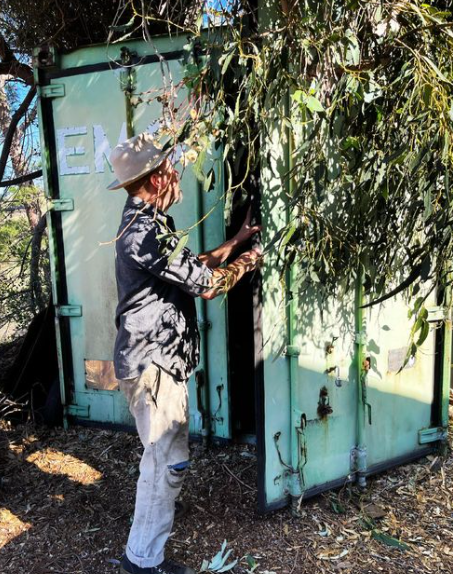
Bobby Green of Old Crow Speed Shop uncovered a rare 1955 Porsche 550 Spyder in an old shipping container in a remote area of Orange County, California. The Old Crow Speed Shop owner describes the rare Porsche as the "find of the century."
On Mar. 26, Old Crow Speed Shop's Facebook page posted a picture of a weathered green shipping container. The post read:
"You won't believe what @large_hands_grant and I found in this shipping container! Stay tuned, I will reveal it later today. Anyone care to take a guess?
About two hours later, on that Friday, Old Crow Speed Shop revealed they found what appears to be a pristine 1955 Porsche 550 Spyder. Baby boomers may remember the sportscar is the same one that American actor James Dean died in. Only 90 of the 1200-pound aluminum-bodied cars were ever built, making it an extremely rare car. About three years ago, only of these cars sold for $4.5 million at Pebble Beach.
In what usually turns out to be a barn find, Old Crow Speed Shop posted a lengthy Facebook post on uncovering the rare Porsche from a shipping container:
The find of the century!.... At least for me anyway. And to think it all started by chasing old motorcycles.
A fellow named Les Gunnerson passed away and left a large British motorcycle collection at the top of a remote hill in Orange California which @large_hands_grant and @mikedavis70 got wind of and thankfully called me to come take a look. As it turns out, Les was big into Porsche's back in the 60's/70's and acquired a 550 Spyder in '63 from Loretta Turnbull who raced it in Hawaii for a mere 2k. Les restored the 550 in the early 80's but soon got into motorcycles and just put the Porsche in a shipping container where it's lived for 35 years. .......Until now.
To say the 550's are rare and valuable is an understatement, and to find one that's been lost to time in a container, ... Well, that's like finding a unicorn with bigfoot riding it... it just doesn't happen! Or does it?
It's been a surreal experience indeed! I'm not only honored to say I was part of the discovery, but equally so that I could help find a new home for such a priceless vehicle. I immediately called my friend and filmmaker Blue Nelson because I knew he grew up with these cars in the family and knew the top Porsche collectors in the world. Porsche 550 Spyder serial #0069 with its original 4 cam motor #0075 is off to a very good home where it will be preserved and enjoyed by many.
Here are pictures of the iconic car:
Car enthusiasts on Facebook responded to the find by saying, "Keeping Automotive History Alive!."
Another person said, "So nuts! Awesome awesome awesome. I'm pretty sure This just landed you a visit from Jerry Seinfeld, the Porsche nut."
Old Crow Speed Shop also posted a video on the find. Watch here:

FT : ‘They can do what they want’: Archegos and the $6tn world of the family off

‘They can do what they want’: Archegos and the $6tn world of the family office
The implosion of Bill Hwang’s investment firm has focused attention on a pool of capital almost twice the size of hedge funds

The super-rich face challenges that the rest of us do not have to consider: yacht maintenance, selecting the right fleet of private jets, finding boarding schools for their offspring. Thanks to their roughly $6tn in combined family wealth, they now have to worry about Bill Hwang too.

Hwang has shot from relative obscurity to become the key figure in global markets over the past two weeks, as the implosion of his Archegos investment house has hammered a handful of stocks and punched multibillion-dollar holes out of Credit Suisse and Nomura.

The incident exposes poor risk management among a clutch of supposedly canny investment banks, charmed into providing lavish leverage for supercharging speculative bets by the protégé of Tiger Management — one of most respected hedge funds of all time.

But Hwang did not inflict this damage through a hedge fund of his own. Instead, it stems from his so-called family office — a vast pool of personal wealth. Regulators are already bristling; on Thursday, Dan Berkovitz at the US Commodity Futures Trading Commission said oversight of family offices “must be strengthened”, noting that they “can wreak havoc on our financial markets”.

In an era when wealth is becoming ever more concentrated, family offices are where these spectacular private fortunes are often managed. But people inside this rarefied, secretive world know that Hwang’s fall from grace means the boom times of light oversight are behind them.

“It’s going to get tighter for everyone now,” says a former family office executive, who did not wish to be named. “There is going to be greater scrutiny of margin lending, prime services, whether markets are orderly and other things we probably haven’t even thought of yet. I wouldn’t characterise the last few years as easy, but it has been a kind of golden age for family offices and we may be watching the end of that, or at least, a lot less freedom in how we approach the market.”

That golden age has brought a proliferation. In a report issued a year ago, business school Insead noted that the number of single family offices had grown by 38 per cent between 2017 and 2019, to reach more than 7,000. Assets under management stood at some $5.9tn in 2019, the report estimated. That compares with $3.6tn in the global hedge fund industry, according to HFR. Family offices are “growing faster than global wealth, and are increasingly common in all areas”, Insead added. Rich families are also placing a growing share of their wealth in these types of structures, it noted.

This is no small-time cottage industry. On average, they control assets worth $1.6bn apiece, according to another 2020 study by UBS, and a handful can stretch into hundreds of billions of dollars. Typically, each family office has two or three offices, often in hubs like Singapore, Luxembourg and London. Chief executives are paid something in the order of $335,000 a year, according to the Insead report.

But despite the size of these investment houses, family offices tend to operate below the regulatory radar. Unlike mainstream pension funds and investment managers catering to the masses, or more highbrow hedge funds, they do not manage external money. This means that they often answer to no one but the family — apart from standard anti-money laundering rules and sanctions compliance.


Unless they cross thresholds demanding transparency on the size of their stakes in public companies, or they choose to disclose investments, perhaps because of their philanthropic tinge, they do not reveal their bets. They rarely speak to the press and they do not provide updates on performance or holdings.

“If it’s their money, they can do what they want,” says Angelo Robles, founder and chief executive of the Family Office Association. “Just like the average person, why should they be disclosing things? But if they have ever taken any outside capital, they need to follow certain standards.”

Precisely how tight those standards are depends on each family office’s strategy. Even then, definitions become fuzzy.

“The big problem is, what is a family office?” says Bart Deconinck, founder of Zedra, which provides services to family offices. “It could be an entrepreneur selling a business who asks his bankers to invest the money, a multifamily office where families organise their affairs together, or a third party firm that manages the assets of family offices. Because there’s a lack of a decent definition there is no regulatory grip over it.”

In the US, the post-crisis Dodd-Frank Act dramatically tightened regulations for the financial industry. But the Securities and Exchange Commission in practice exempted family offices from its tougher rulebook on registration and disclosure — leaving it up to their own discretion.

Tyler Gellasch, a former SEC official and executive director of Healthy Markets, a financial reform group, argues this was a mistake, even though family offices might not have outside investors to harm. “Family offices can still do bad things . . . They can still hurt the overall market. ” he says. “We now have a clear example of someone exploiting the family office exemption and creating systemic risk.”

In his statement on Thursday, CFTC commissioner Berkovitz said other exemptions have opened the door to “convicted felons, market manipulators, and other financial market miscreants” to operate freely under family offices. “The information required would fit on a Post-it note, and the CFTC estimated the annual cost of the filing to be merely $28.50. In my view, there is no reasonable justification for such a policy,” he said.

Archegos may prove to be an isolated blow-up that does not create a wider ripple through the financial system. So far, the losses have not kicked off a destabilising domino effect of damage across banks and other investors. But they could have done, points out Mark Sobel, US chair of the think-tank OMFIF and a four-decade senior US Treasury official. He played an instrumental role in the global post-2008 regulatory overhaul, and feels this is an area that was left out at the time.

“Archegos raises fundamental questions about the adequacy of bank risk management and regulatory oversight of the interactions between banks and non-banks,” he argues. “Prime brokers as a whole — even if not individually per se — were obviously providing large-scale lending to Archegos and leverage got out of hand. Did banks or regulators appreciate and know this?”

Riskier than hedge funds


The knotty issue facing the broader financial system, as Archegos illustrates, is that family offices are not created equal.

Many are cautious, seeking only to preserve the wealth they have amassed. Some, however, demonstrate all the speculative aggression typically associated with the most cut-throat hedge fund. Hwang’s Archegos falls into that camp. The banks involved are now investigating whether Hwang misled them, concealing positions held with other banks to rack up vast amounts of leverage in concentrated bets that unravelled alarmingly fast.

“This is not a family office. Most of them are very risk-averse. But it’s also not a hedge fund either,” says Patrick Ghali, a hedge fund and family office consultant at Sussex Partners. “Even hedge funds don’t leverage themselves to this degree. If a hedge fund ran this kind of risk it would not be able to raise capital.”

For some, the freedom to place bets too spicy for clients to tolerate is the allure of the family office.

Risk-taking is a key reason that billionaire Michael Platt decided in 2015 to convert his hedge fund BlueCrest into a family office, claiming that demands by institutional investors for lower-risk products had constrained his bets. The firm has since then chalked up several years of gains of 50 per cent or more.

Louis Bacon’s Moore Capital, which cited a “challenging business model” in late 2019 when it told investors it was closing its flagship hedge fund to external money, made one of the biggest profits of his career last year, helped by a newfound ability to take more risk. Both Moore and BlueCrest still file plenty of regulatory disclosures, however, unlike Archegos.


In the case of Hwang, speculative fervour mixed with high leverage and poor risk management formed a uniquely combustible combination. By using the specialist services of investment banks’ prime brokerage divisions — typically service providers for hedge funds — it was able to place vast bets on stock prices on margin.

It is not uncommon for family offices to have prime brokers; some have several. However some bankers in this area are puzzled over why Archegos was allowed in to the club, especially with its backing from Hwang, who admitted securities fraud while at Tiger Asia less than a decade ago.

Tightening up
One such banker pointed to a long-running legal tussle between Deutsche Bank and Sebastian Holdings, an investment fund run by billionaire financier Alexander Vik. SHI sued the bank for $8bn in 2008 over issues relating to margin calls stemming from trades with its prime brokerage division. The judge ended up ruling in favour of the bank in 2013, and some proceedings are still under way. The episode served to remind banks that clients, even those from cuddly-sounding family offices, often have sharp elbows.

“After that, most banks decided that a family office could not be considered an institutional player,” the former banker says. “We had to treat them like private clients.” That meant higher trading costs, more controls and less leverage.

But the Archegos drama suggests that banks, hungry for lucrative clients, have allowed that restriction to slip for many family offices.

Banks are likely to tighten up the leverage they offer to family offices and other speculative accounts after this embarrassing slip-up, either independently or under orders from regulators.

“There is never just one cockroach,” warns Andrea Cicione, head of strategy at research house TS Lombard. “If all this sounds familiar, it is because of the similarities with the beginning of the global financial crisis, when two hedge funds . . . had to be bailed out by their sponsor, Bear Stearns, following margin calls they could not meet.”

He adds: “To be absolutely clear, we are not calling [another financial crisis] here — there simply is not enough evidence to conclude that Archegos is anything more than an isolated case.” Nonetheless, he says, the case for greater transparency or tighter capital requirements for banks offering this kind of leverage warrants close attention.

For Deconinck at Zedra, the family offices most likely to disrupt markets are those in the mould of Archegos. “The dangerous guys are the ex-hedge fund guys and a certain type of investment banker,” he says. “People who come out of this industry have always made money this way.”