(ZH) "Huge Breach" - Personal Data Of 533 Million Facebook Users Leaked Online

"Huge Breach" - Personal Data Of 533 Million Facebook Users Leaked Online

Personal information of over 533 million Facebook users was leaked on a low-level hacking forum, according to Business Insider. Facebook users from 106 countries, including more than 32 million users in the US, 11 million in the UK, and 6 million in India, had their Facebook IDs, full names, phone numbers, locations, birthdates, bios, and in some cases, email addresses, leaked online.
Insider journalists examined the leaked data and confirmed several Facebook users' data matched up with the leaked data on the list.
Insider reviewed a sample of the leaked data and verified several records by matching known Facebook users' phone numbers with the IDs listed in the data set. We also verified records by testing email addresses from the data set in Facebook's password reset feature, which can be used to partially reveal a user's phone number. -Insider
Alon Gal, CTO of cybercrime intelligence firm Hudson Rock, has been one of the first to post about the leak. He tweeted Saturday morning:
All 533,000,000 Facebook records were just leaked for free. This means that if you have a Facebook account, it is extremely likely the phone number used for the account was leaked. I have yet to see Facebook acknowledging this absolute negligence of your data.
He said the hack included:
Phone number, Facebook ID, Full name, Location, Past Location, Birthdate, (Sometimes) Email Address, Account Creation Date, Relationship Status, Bio. Bad actors will certainly use the information for social engineering, scamming, hacking and marketing.
Gal posted a partial list of the number of users affected by the hack by country:
"A database of that size containing the private information such as phone numbers of a lot of Facebook's users would certainly lead to bad actors taking advantage of the data to perform social engineering attacks [or] hacking attempts," Gal told Insider, adding that he first discovered the leak in January on a low-level hacking forum.
This isn't the first time Facebook has dealt with hackers exposing the personal information of users. Over the years millions of people's personal information have been scrapped from Facebook's servers.
Gal warned that there's not much Facebook can do at this point because their credentials are already online.
"Individuals signing up to a reputable company like Facebook are trusting them with their data and Facebook [is] supposed to treat the data with utmost respect," Gal said. "Users having their personal information leaked is a huge breach of trust and should be handled accordingly."
Another monumental failure by Facebook would suggest a future congressional hearing would be held.

>>> Pixium Visip (ALPIX FP) Announces Second Sight Medical terminated merger agr

Announces Second Sight Medical terminated merger agreement; Pixium sought renegotiation after Second Sight's prohibited private placement

Considering the private placement recently announced and closed by Second SightMedical Products, Inc. (“Second Sight”) was not only explicitly prohibited under the terms of the memorandum of understanding (“MOU”) entered into by the companies on January 5, 20211 but also detrimental to Pixium Vision’s interests, the company has offered Second Sight to renegotiate the MOU in order to allow the pursuit of the business combination while preserving the contractual balance and the interests of Pixium Vision and its shareholders. Pixium Vision regrets that Second Sight never responded to the proposals it made in good faith nor demonstrated any willingness to reach such agreement.

Following this delaying attitude and refusal to enter into discussions, Second Sight notified Pixium Vision on Friday its decision to unilaterally terminate the MOU, notwithstanding that the MOU does not provide Second Sight with this right.

Pixium Vision acknowledges the unilateral and wrongful termination by Second Sight of the MOU and the contemplated business combination.
Consequently, Pixium Vision will consider all measures available (including any legal proceedings, in particular with the relevant stock exchange authorities) to preserve its rights and obtain compensation for its entire damages.
Such termination does not compromise the company’s objectives in the context of the new compelling results with Prima System announced by Pixium Vision on March 30, 20212, an important step forward validating the Prima System as a treatment for dry age-related macular degeneration.

Lloyd Diamond, CEO of Pixium Vision commented: “While we are naturally disappointed in the position being taken by Second Sight and that this business combination has not proceeded, Pixium Vision is in a strong position both financially and clinically, with a world-class Research & Development team and core expertise in vision neuromodulation and a solid patent portfolio. We are continuing our transition from a research organization to a commercially oriented company with the recent initiation of our PRIMAvera pivotal trial of the Prima System. Our ambition is to be the first company in the world to bring a retinal implant solution to the millions of people worldwide suffering with Dry-AMD and expand this to other retinal diseases. This is supported by the newly reported data showing patients could simultaneously use prosthetic central vision generated with the Prima System and their remaining peripheral vision. We are well positioned to continue the development of this exciting bionic vision system and bring it to market to improve patients’ quality of life”.

Pixium Vision is confident in its ability to present to its shareholders, at the annual general meeting, alternative financing solutions in order to enable the company to pursue the development of its activity. The company will study in the meantime any opportunity to access the US markets, one of the primary objectives pursued by Pixium Vision under the business combination with Second Sight, which is in the best interest of patients and its shareholders.

>>> Barron’s Weekend Summary

Barron’s Weekend Summary: FB remains a growth machine, and shares won’t remain as cheap as they are for long; The tech sector stands to benefit from the Biden infrastructure proposal

* Cover Story: Positive on FB: Though the company’s stock trails those of other Silicon Valley tech giants, and the company faces a number of challenges, including antitrust lawsuits and ongoing criticism of its privacy practices, the shares “won’t remain this cheap for long, especially with investors rotating out of expensive tech stocks with questionable business models. For all of its baggage, Mark Zuckerberg’s Facebook remains a resilient growth machine.”

* Tech Trader: The technology sector is set to play a key role in the Biden administration’s $2.3T infrastructure plan, and a range of stocks are set to benefit: CHPT, BLNK, APH, TEL, ST (investments in electric vehicle charging stations); CSCO, CIEN, AAPL, ERIC, NOK, QCOM, SWKS, QRVO (expanded broadband); ADSK, BSY, PTC, ANSS (big spending on construction); Positive on WDC: The company was set to benefit from an IPO at Kioxia, with whom it jointly operates chip factories, but though the offering was pulled, Western Digital’s shares still rose, and a potential joint bid with MU for Kioxia could send shares even higher.

* Trader: For investors wondering where to put their money now, there’s little harm in sticking with what’s been working—the sectors that fared well last quarter on hopes of an economic recovery—and there even appears to be a decent foundation for growth.

* Profile: Dave King of Columbia Threadneedle is wary of bonds and sees better opportunities in certain stocks, and says the current environment is “noticeably harder than average on the income investor”; His “absolute favorite” income play remains the Dogs of the Dow, as they are known—the 10 highest yielding stocks in the Dow Jones Industrial Average.

* Interview: Chris Davis of Davis Advisors says the pandemic has only amplified his penchant for the financial-services sector, and talks about why this conviction regarding high-quality financials is the highest it has ever been, even with the growth of fintechs, blockchain, and other disruptive forces.

* Features: 1) Though massive infrastructure plans such as the one President Biden is proposing take years to show results and face hurdles from a patchwork of federal and state rules, economists view the proposal as a long-term winner, addressing years of underinvestment in the country’s foundations; Stocks that could benefit include MTZ, ACM, J, PWR, VMC, ASTE, ROAD, AQUA, GLDD, TPIC, RUN, SEDG, NEE, AY, and CWEN; 2) Positive on GOLD: The precious metal has declined by nine percent to $1,726 a troy ounce in 2021, leaving it 16 percent below its record high of $2,063, reached last August—and with the selloff, it now looks attractive, as does Barrick Gold, whose shares are trading cheaply despite management improvements; 3) Liquid alternatives—mutual and exchange-traded funds that mimic the investment strategies of hedge funds—have long been a solution in search of a problem, but as investors try to predict the outcome of the current health and economic crisis, liquid alts seem to be increasingly attractive, and their returns have begun to show signs of life; 4) Cautious on BNTX: The company expects revenue of more than $11B from the 1.4 billion Covid-19 vaccine doses that it and PFE are contracted to deliver this year, and BioNTech says the companies could make another 1.1B doses in 2021—but though it is working on a long list of cancer and infectious-disease programs, all are years away from a marketable product, which could pose problems for the stock; 5) Positive on WW: The company stands to benefit from the pandemic recovery as Americans who gained weight after a year of restricted movements, interrupted routines, and stress eating look for ways to shed pounds—its live workshop business should bounce back from a slump during the crisis, while digital-only subscriptions, which have higher margins, will continue to grow.

* Mutual Funds Quarterly: 1) Story on how to choose an ETF notes that “As some corners of the value rally are starting to slow down, or even retreat from their highs, three areas seem best positioned to harvest the next leg of gains—quality, momentum, and international small-cap value ETFs”; 2) Unconstrained bond funds emerged in the wake of the financial crisis as fund managers anticipated a recovery would cause the Fed to raise interest rates, driving up Treasury yields and pushing down prices of long-term bonds—and if there were ever a time for their managers to prove their worth, this is the year; 3) Positive on Causeway International Value, Dodge & Cox International Stock, Neuberger Berman Large Cap Value, Oakmark International, Parnassus Endeavor, T. Rowe Price Value: With value stocks coming back and set to thrive—over the past couple of months, the Russell 1000 Value has outperformed the Russell 1000 Growth by the biggest margin in about two decades—these six funds offer investors a way to play the trend.

* European Trader: Positive on RWE: German’s largest power producer could see faster growth as the world increasingly turns to renewable energy sources, giving the stock a boost—and some analysts believe the market may be underestimating the profit potential of RWE’s growing renewables business, particularly wind.

* Emerging Markets: Hydrogen power could be huge eventually—if and when renewable sources start producing excess megawatts, hydrogen comes into play as a storage mechanism, or to convert that power into fuel cells for vehicles, a trend South Korean conglomerates Hyundai and SK Holding, which have launched multi-billion-dollar investments in hydrogen, hope to leverage.

* Commodities: Rhodium has seen a phenomenal gain in prices this year that some investors may have missed: its value has climbed by more than 50 percent, extending a rally that saw prices for the metal nearly triple in 2020.

* Streetwise: Conditions are ideal for a pickup in capex even before factoring in a White House push to spend mightily on infrastructure and green technology—the average age of private nonresidential fixed assets is the highest in 55 years, and factory utilization is reaching levels that have coincided with past capex sprees.

(ZH) USAF Prepares For Imminent Hypersonic Missile Test

USAF Prepares For Imminent Hypersonic Missile Test

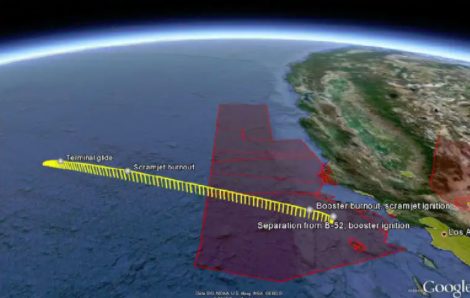
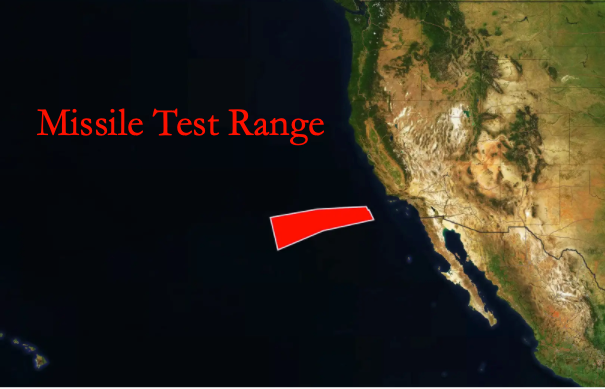
The Federal Aviation Administration (FAA) issued a Notice to Airmen (NOTAM) regarding airspace restrictions in the Pacific Ocean near the Point Mugu Sea Test Range, which will be closed through April 1.
"The block of restricted airspace described in the NOTAMs is what one would expect to see during a missile test," said The Drive.
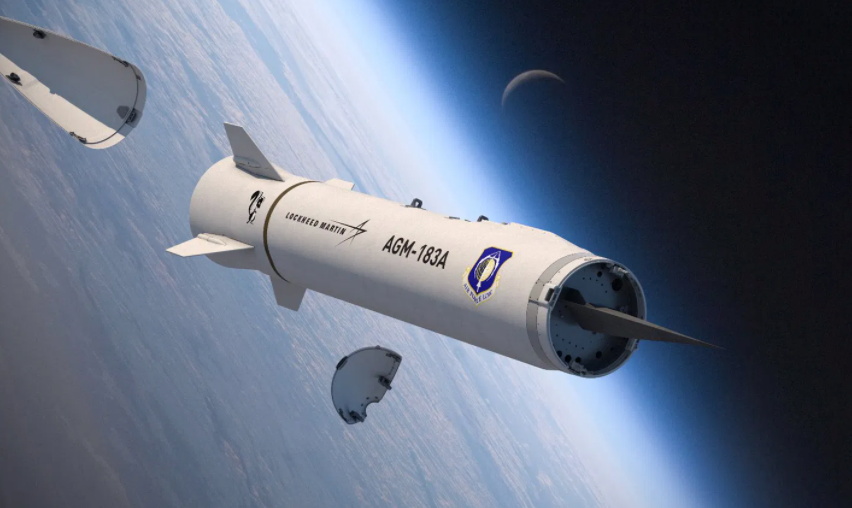
The NOTAM comes as the first flight of the U.S. Air Force's AGM-183A Air-launched Rapid Response Weapon, or ARRW, could be imminent.
On March 5, the service announced the first ARRW test would take place "in the next 30 days" over the Point Mugu range.
The hypersonic test missile was delivered to Edwards Air Force Base in California on March 1. The ARRW will be air-launched from the wing of a Boeing B-52 Stratofortress.
The U.S. military frequently tests weapons off the coast of southern California. But to issue a NOTAM suggests a more extended range test, covering multiple areas where other stages of the missiles, or other debris, could plunge back to Earth. Once the rocket is air-launched from the bomber, the ARRW glider will fly at hypersonic speed, above Mach 5, or about 6,174 mph.
The Air Force provided a complete description of ARRW's planned test earlier this month:
The ARRW BTF-1 will demonstrate the booster's ability to reach operational speeds and collect other important data. In addition to booster performance, the test vehicle will also validate safe separation and controllability of the missile away from the carrier B-52H, through ignition and boost phase, all the way up to separation of a simulated glide vehicle. The simulated glider will not sustain flight, and will safely disintegrate soon after separation. The 412th Test Wing will conduct the ARRW BTF series over the Point Mugu Sea Range in California.
The service provided no information if the unpowered hypersonic boost-glide warhead will strike a mock target.
As it now stands, the first ARRW flight test may have already taken place or will take place by Thursday. More information about the test is likely to come in the near-term.
Our recent coverage on ARRW's progression from development to testing suggests it could soon become the US' first operational hypersonic weapon:

FT : Supper shrugs off Deliveroo slump with funding round

Supper shrugs off Deliveroo slump with funding round
Group plans to expand beyond London as pandemic spurs demand for fine dining at home

Supper, the high-end food delivery business, is seeking to raise £5m in a private equity-backed funding round, just days after delivery app Deliveroo lost billions in market value within minutes of listing in London.

London-based Supper, which delivers food for restaurants including Nobu and Hakkasan, said that it had already raised £1.5m from private investor platform Growthdeck and had venture capital funds lined up to take part in the round.

Peter Georgiou, the company’s founder and chief executive, a former bond trader, said that having been lossmaking until the start of the pandemic, Supper expected to make a “slight profit” on revenues of around £11m in the year to the end of April. It intends to use the funding to expand in London as well as launch internationally in cities such as New York and Dubai.

The company counts Chelsea Football Club and several FTSE 100 chief executives among its 80,000 customers and said it aimed to increase the number of restaurants on its platform from 130 to 300 by the end of 2021. Launched in 2015, it offers food from 15 Michelin-starred chefs and also delivers meal orders from Harrods and Fortnum & Mason.

Demand for takeaway services has spiked during lockdowns as customers turn to delivery apps to order food while restaurants have been closed. But the reliance of restaurants on delivery companies has also put the working practices of these businesses into the spotlight.

Several large fund managers said they planned to shun Deliveroo’s initial public offering after concerns were raised about its treatment of workers. Restaurants have also complained that the three dominant delivery companies — Deliveroo, Just Eat and UberEats — charge punishingly high fees of up to 35 per cent.

Georgiou said that unlike the larger players, Supper treated all of its drivers as salaried employees, paying them an hourly rate of £9 as well as pension and holiday pay.

“We try to run the business as ethically and socially minded as possible,” he said, although he noted that they had to charge restaurants commission of around 22 to 25 per cent per order to fund the payroll.

Georgiou added that since a report revealed last week that Deliveroo riders could earn as little as £2 an hour, “the phones had lit up” with restaurants wanting to join Supper.

Gary Robins, head of business development at Growthdeck, said that Supper, whose bikes can store food at different temperatures and feature gyroscopic technology to prevent the Michelin-starred dishes being bumped around by potholes, had “completely different” metrics to other delivery businesses. A typical Supper order is more than £100 compared with about £16 on other apps, he said.

One Mayfair-based hedge fund manager has racked up a £36,000-plus bill on more than 380 orders during the pandemic.

Through Growthdeck, Nick Basing, who stepped down as chair of the tenpin bowling company Ten Entertainment last week, will join the Supper board.

FT : Jordan arrests officials as part of ‘security’ investigations

Jordan arrests officials as part of ‘security’ investigations
Former crown prince Hamzah bin Hussein says he is under house arrest

Jordanian security forces have warned King Abdullah’s half-brother to stop “activities” used to target the nation’s security and stability as divisions within the western ally’s royal family were dramatically thrust into the open. 

Major Gen Yousef Huneiti, Jordan’s army chief, said the warning to Prince Hamzah bin Hussein, who was crown prince before being dismissed in 2004, was “part of joint comprehensive investigations undertaken by security agencies,” according to Petra, the state news agency. 

He denied a report that the former crown prince had been detained. But Prince Hamzah released a video, seen by the FT, in which he claimed he was under house arrest, while also launching a stinging attack against the ruling system, accusing it of corruption, nepotism and misrule. 

Prince Hamzah said the result of the government’s failings were the “loss of hope that is apparent in pretty much every Jordanian; the loss of hope in our future, the loss of dignity and a life under constant threat”.

An unknown number of other people were arrested as part of the security forces investigation, including Bassem Awadallah, a former finance minister and chief of staff to King Abdullah, and Sharif Hassan bin Zaid, a distant member of the royal family, Petra said.

Awadallah has in recent years been an adviser to Saudi Crown Prince Mohammed bin Salman.

Prince Hamzah said he was visited by the army chief and told he was not allowed to leave his house or communicate with people because there had been criticism of the government or King Abdullah at meetings at which Prince Hamzah had been present, or on social media relating to visits he had made.

He said he was not accused of making the criticisms, but added that a number of people he knew, including friends, had been arrested. He said his internet and phone lines had been cut. 

Prince Hamzah said he made the recording to make it clear that he was not part of any “conspiracy or nefarious organisation or foreign backed group”. 

“What you see and hear in terms of the official line is not a reflection of the realities on the ground,” he said. “I’m not the person responsible for the breakdown in governance, for the corruption and for the incompetence that has been prevalent in our governing structure for the last 15 to 20 years, and has been getting worse by the year.”

The extraordinary events will raise concerns about the stability of Jordan, long regarded as an important western partner bordering Israel, Iraq and Syria. King Abdullah, who is feted in Washington and London, is also seen as an important voice of moderation in the Middle East. 

But the crisis in the ruling family has erupted as Jordan faces increasing economic and social pressures, which have been exacerbated by the coronavirus pandemic. 

Gen Huneiti said “no one is above the law and that Jordan’s security and stability take precedence over any consideration.” He said the investigations were continuing. 

Shortly after the arrests were announced, the Saudi royal court released a statement saying it affirmed its full support to the “decisions” and “measures” taken by King Abdullah to “maintain security and stability”.

Other governments in the region issued similar statements backing the Jordanian monarch.

A spokesman for the US department of state said the US was closely following the reports and in touch with Jordanian officials.

“King Abdullah is a key partner of the United States, and he has our full support,” the spokesman said.

Jordan has long depended on financial support from western and Gulf states and it is grappling with declining revenues and debts that have soared to about 100 per cent of gross domestic project. 

Unemployment soared above 20 per cent last year as tourism, a key source of foreign currency earnings and jobs, and remittances were battered by the coronavirus outbreak. 

Last month, there were reports that a number of patients died after a state hospital ran out of oxygen, causing the Jordanian health minister to resign. 

In his video, Prince Hamzah said the country had been “stymied in corruption, in nepotism and in misrule”.

WSJ : Airlines Want Vaccine Passports but Don’t Want to Pay for Them

Airlines Want Vaccine Passports but Don’t Want to Pay for Them
As Europe plans document to store Covid-19 data, industry raises concerns about potential costs

LONDON—Airlines are resisting early European Union plans that could push some of the costs and responsibility for implementing vaccination passports onto the industry.

The EU is moving ahead with plans to roll out a “Digital Green Certificate”—a document to store Covid-19 information such as vaccination records and test results. Governments, airports and airlines hope that will spur travel across the bloc by making it easier to check if passengers have been inoculated.

“Vaccines are what is going to ultimately allow us to start recovering as an industry,” said Olivier Jankovec, director general of Airports Council International Europe, a trade body of airports. “It’s what is going to allow Europeans to be mobile again.”

On Friday, the U.S. Centers for Disease Control and Prevention said people who are fully vaccinated against the new coronavirus can travel without serious risk, easing its blanket advice against travel.

The EU plan is still in flux, but governments are fast-tracking the project for a mid-June rollout. The basic concept: Europeans who are vaccinated will be issued a certificate, either paper or electronic, with a bar code that can be scanned at airports to verify vaccination.

While airlines back the effort, they are lobbying against initial proposals that could hand them the responsibility for making the system work. They also are resisting the idea of bar-code scanning at airports, saying that could increase wait times at check-in. Many airports already are straining with long lines, under the weight of new health checks required of fliers during the pandemic.

The EU is setting up the system similarly to how it polices travel visas for citizens outside the bloc’s normally visa-free zone. While visa inspection is officially done by border guards, airlines have long been assigned the job of checking whether passengers have the right visas before they board. Airlines are subject to fines of up to 10,000 euros, equivalent to $11,700, in some European jurisdictions, if they let a traveler land in a country without the proper visa.

Airlines say they can’t afford the risk of more such fines or the extra costs of policing vaccine and Covid-19 documentation. Carriers burned through $140 billion in cash between March and December last year, according to estimates by the International Air Transport Association, and are forecast to lose as much as $95 billion in 2021.

“Airlines cannot afford to bear the costs for these improvements,” said Thomas Reynaert, managing director for Airlines for Europe, which represents airlines including British Airways, a unit of International Consolidated Airlines Group SA, ICAGY 5.95% Deutsche Lufthansa AG DLAKY -1.20% and Air France-KLM Group. AFLYY 1.25% Any new costs will be borne by all airlines that operate from European airports, not just European carriers, under the proposal.

It isn’t yet clear how much the system could cost. Airlines are concerned they will be expected to bear the costs of additional staff and equipment to operate the system, as well as integrating it into existing airline infrastructure, in addition to shouldering potential fines.

The EU’s proposal provides $49 million to develop a central gateway for governments to connect to, with each separately determining how best to implement it on a national level, including how verification checks will be handled on the ground, said Johannes Bahrke, a spokesman for the European Commission.

In some member states, governments may decide to use government officials to check the vaccine passport, but in others the responsibility could fall on the airlines, Mr. Bahrke said.

Mr. Bahrke said it is up to individual states to decide on any fines. Some governments already are fining airlines for not properly checking that passengers have the right health documents now required in many countries.

The proposal still requires formal ratification from the European Parliament. Aiming for the June rollout, the commission and member states have started work on the system’s development, including signing contracts in late March to get technical work under way, the spokesman said.

Countries including China, Japan, Denmark and Israel have said they are working on independent vaccine-passport systems. The World Health Organization is working with the United Nations’ International Civil Aviation Organization to develop a global structure to support vaccine certificates.

For Europe, the introduction of vaccine passports is seen as vital to reinstating freedom of movement across the bloc—one of the founding tenets of the EU. A system that can verify a passenger’s vaccination status also frees travelers from the expense of private Covid-19 tests that are required for entry into many countries. Those tests can cost up to $200, and often two are required.

“It changes the economics of travel,” said Virginia Messina, senior vice president at the London-based World Travel and Tourism Council.

The industry and the European Commission are trying to establish the wider framework for the system in time for summer. The first step is standardizing vaccine cards that are given to people after they have been vaccinated. In Europe, those cards vary widely, with different languages and variations on the personal details included. In the U.S., there isn’t a central database for immunizations or a standard proof of Covid-19 vaccinations like the yellow-fever cards that are required for travel to many countries.

Once the system has been rolled out successfully within Europe, the commission plans to extend it to incoming non-EU citizens. Depending on bilateral agreements, an arriving passenger—for example, from the U.S.—could receive a certificate and bar code on arrival into the bloc, which can then be used to travel between European countries.

The industry, concerned about physical checks creating long lines at airports, is pushing for an online system that could avoid the issue if borders reopen by the summer. Airlines including British Airways are running trials that allow passengers, when checking in online, to upload vaccination and test records to their travel apps alongside data that are already kept there, such as passport numbers and visa information.

WSJ : Greensill and Gupta’s Intertwined Empires Had for Years Raised Concerns In

Greensill and Gupta’s Intertwined Empires Had for Years Raised Concerns Internally
The financier and the metals magnate had been urged to decouple their businesses by executives, advisers

The business empires of metals magnate Sanjeev Gupta and financier Lex Greensill leaned on each other to fuel their growth. But for years executives and advisers close to both entrepreneurs urged the two men to decouple their businesses, according to people familiar with the matter.

They failed to do so. Now Mr. Greensill’s firm, Greensill Capital, is insolvent, and Mr. Gupta’s conglomerate, GFG Alliance, is scrambling to survive.

Greensill’s implosion has ensnared a raft of financial firms including Credit Suisse Group AG, which froze $10 billion of funds it manages with the firm. Regulators have taken over supervision of Greensill’s German bank after they said a special audit found suspicious accounting related to Mr. Gupta. The move came despite a last-ditch attempt by SoftBank Group Corp. 9984 4.22% , Greensill’s largest external investor, to intervene directly with the regulator.

For GFG Alliance, which houses the Gupta family’s steel, aluminum and energy businesses and generates annual revenue of $20 billion, its main source of funding suddenly dried up.

Mr. Greensill set up Greensill Capital in 2011 to provide clients with supply-chain finance—a form of short-term lending to help companies pay their suppliers on time.

Mr. Gupta—formerly in commodities trading—entered the steel business in 2013 hoping to revive unloved industrial assets. He found an industry in constant need of working capital, where suppliers and customers often pay late and traditional lenders steer clear.

“When I started my journey back in 2013, there was [sic] few options available in terms of traditional finance…Greensill came as a breath of fresh air,” Mr. Gupta said in a podcast aimed at GFG staff that was published publicly last Saturday. GFG says it is seeking alternative sources of funding and that its companies are performing well amid strong markets for steel and other products.

Messrs. Greensill and Gupta, the latter through GFG, declined to comment for this article.

Mr. Gupta, the son of an Indian industrialist with ambitions to make steel in a more environmentally friendly way, is charismatic, charming and would sometimes invite his staff to family dinners, people who know him said. Mr. Greensill, who grew up on a farm in rural Australia, is a more staid figure but also an ambitious, aggressive risk taker, people who have worked with him said.

People familiar with the pair’s relationship said Mr. Greensill often visited Mr. Gupta to talk business at his large glass-walled office overlooking Sydney Harbour, while the banker invited the industrialist to his family farm, where they would discuss deals on a hill overlooking the estate.

Greensill executives attended big parties Mr. Gupta threw at his rented mansion in an expensive part of Sydney, some of the people said.

In August 2016, Mr. Gupta bought a stake in Greensill, before selling it back later that year.

That year, Mr. Gupta also embarked on his most ambitious deal yet, buying an aluminum smelter and its hydroelectric power supplier in Scotland.

The £330 million deal, equivalent to $454.8 million, was one of several major GFG transactions funded by loans from Greensill. By 2017, GFG accounted for 69% of the lender’s revenue, according to an internal memo from SoftBank’s Vision Fund, reviewed by the Journal.

In a phone call with SoftBank, Mr. Gupta explained that while traditional lenders were cheaper, Greensill was much faster and more flexible, according to a summary of that conversation contained in the memo.

Increasingly, GFG executives and advisers were concerned about the reliance on Greensill. By 2018 they persuaded Mr. Gupta to consolidate his holdings into one group, release a single set of financials, bring in long-term debt from banks and eventually go public, according to people familiar with the matter.

But the following year GFG made its biggest acquisition yet, paying 740 million euros, equivalent to $868.1 million, for seven European assets from steel giant ArcelorMittal PLC.

GFG held talks with U.S. investment bank Jefferies over a potential bond sale to help fund the deal but dropped the idea when Mr. Gupta balked at some of the terms, the people said.

In general, he didn’t like covenants, which often come with loans and bonds and impose conditions on a borrower. In particular, Mr. Gupta railed against conditions that prevented him from moving money around his empire, one of the people said.

GFG moved tens of millions of dollars, for instance, from its profitable Australian businesses to less lucrative British ones and to help fund the 2017 takeover of a steel mill in South Carolina, people familiar with the matter said.

In the end, the acquisition of ArcelorMittal’s assets was mainly financed by Greensill, the people added.

Jefferies declined to comment.

A spokesman for GFG said it has over time used a range of financing tools, including bonds, bank loans and asset-based financing.

Mr. Gupta has previously said he wanted to list his Australian and U.S. assets. However, bankers at JPMorgan Chase & Co., who were set to help list the Australian assets, told Mr. Gupta he first needed to reduce his reliance on short-term finance, according to a person familiar with the matter.

JPMorgan declined to comment.

GFG hasn’t listed any business.

As of September 2019, Greensill was lending around $7.4 billion to Mr. Gupta’s companies, a Greensill document reviewed by the Journal shows. That month, Mr. Greensill told the Journal in an interview that he was a “big fan” of Mr. Gupta and his attempts to revive industry in the West.

At the same time Greensill’s senior management were receiving regular updates on the firm’s GFG exposure and Mr. Greensill was telling executives that he hoped to “outgrow” GFG, according to people familiar with the matter.

But GFG remained crucially important to Greensill, typically generating about a third of its total revenue, according to internal Greensill documents reviewed by the Journal.

Greensill was also coming under pressure from German bank regulator BaFin to reduce exposure to GFG at Greensill Bank, according to a statement, reviewed by the Journal, that Mr. Greensill made as part of the company’s insolvency process. A September 2019 internal Greensill document reviewed by the Journal shows that 85% of the bank’s assets were linked to GFG.

Last fall, Greensill hired banks to help it raise up to $1 billion in fresh equity. But in December, a private-equity firm that had been expected to invest pulled out in part because of BaFin’s concerns over exposure to GFG, according to the statement from Mr. Greensill in relation to the insolvency filing.

Mr. Greensill’s statement describes a Catch-22.

His firm’s large exposure to GFG was risking the future of the whole business, but shrinking that exposure quickly could undermine Mr. Gupta’s company and hurt Greensill too.

“I understand from GFG’s CEO, Mr. Sanjeev Gupta, that GFG would almost certainly become insolvent if (Greensill) did not continue to provide financing,” Mr. Greensill said in his statement.

Earlier this year, Mr. Gupta, Mr. Greensill and Rajeev Misra, the head of the SoftBank Vision Fund, planned to fly to Frankfurt in a last-ditch effort to assuage BaFin’s concerns, according to people familiar with the matter.

Because of travel restrictions related to Covid-19, the meeting was held online on Feb. 1.

It didn’t go well. BaFin stuck to its insistence that Greensill cut back on the loans to Mr. Gupta’s businesses, the people said.

In March, Credit Suisse froze the investment funds that had fueled Greensill’s loans, saying it was unsure of the accurate valuation of some of the assets within them. Greensill filed for insolvency within days.

This year, GFG had planned to diversify its borrowing beyond Greensill, Mr. Gupta said in his podcast. “That was a work in progress,” he said. “But unfortunately Greensill collapsed.”