>>> Europe : Brokers Upgrades & Downgrades - 12th of July 2021 V2(+)

>>> Up
* Acerinox Raised to Hold at Mirabaud Securities; PT 10.39 euros (+)
* AO World Raised to Buy at Jefferies; PT 400 pence
* Hays Raised to Outperform at RBC; PT 195 pence
* JCDecaux Raised to Overweight at JPMorgan; PT 29 euros (+)
* Pagegroup Raised to Outperform at RBC; PT 700 pence

>> Down
* Randstad Cut to Sector Perform at RBC; PT 68 euros
* Sicit Group Cut to Reduce at Equita; PT 16.80 euros

>>> Initiation
* GlobalData Rated New Hold at Peel Hunt; PT 1,400 pence
* Medigene Rated New Buy at Berenberg; PT 8 euros
* Realstone Rated New Market Perform at ZKB (+)

>> Call
* Asos’s JV With Nordstrom a ‘Very Sensible’ Move, Jefferies Says (+)
* Atos’s Warning on 2021 Targets Is ‘Significant,’ Oddo Says (+)
* Galp’s 2Q Trading Update Shows ‘Slow Progress’: RBC Capital (+)
* RBC Says Turning More Positive on Permanent Staffing Stocks

WWD : Italy’s Luxury Resort Retail Business Is in Full Bloom

Italy’s Luxury Resort Retail Business Is in Full Bloom
From Capri to Forte dei Marmi, the luxury resort retail business is flourishing in the most prestigious Italian holiday destinations.

MILAN — Meet them at the beach. That might be the mantra that luxury and fashion brands are repeating this summer.
Surely, the resort retail business is having a golden moment in Italy, one of the most attractive countries for international tourists, especially during the summer.
Luxury hotel chains are boosting their business in Italy, including travel group Belmond, which is controlled by French conglomerate LVMH Moët Hennessy Louis Vuitton and which in May, following a full renovation, reopened the famed Splendido Mare overlooking Portofino’s picturesque harbor. At the same time, fashion brands are fighting to secure the best retail locations in the peninsula’s most appealing holiday destinations.

This year, in fact, thanks to the acceleration of the vaccination campaign globally, international tourists are returning to Italy. This is an encouraging sign for the country where before the pandemic, according to a research conducted by Bain & Co., 60 percent of the luxury purchases in the country were made by overseas tourists. In particular, as the research highlighted, before the 2020 COVID-19 crisis, the wealthiest segment of international visitors vacationing in Italy used to spend around 15 billion euros annually on tours, experiences and shopping.

“After the lockdowns, people are in the mood for traveling, doing shopping and having fun,” enthusiastically said Giancarlo Sandretto, chief executive officer of Sant’Andrea srl, a company that acquires luxury retail locations in key cities and resorts across Italy and Europe and rents them to fashion and lifestyle brands.
Sant’Andrea srl has 10 retail spaces in Forte dei Marmi and three locations in Capri, among others. “Last summer, there were four closed stores on Capri’s Via Camerelle, which is something that has never happened before on the island. However, this summer the situation is the opposite and there is a waiting list of brands that are keen to rent a space on the island,” Sandretto said.
Palazzo Avino’s The Pink Closet. Courtesy of Palazzo Avino
As of today, the occupancy rate of hotels, bed and breakfasts and guest houses is above 90 percent for the month of July, with room rates for a one-night stay exceeding 1,000 euros.
“American tourists are finally back in Capri,” said Sandretto, highlighting how the Mediterranean island is among the favorite holiday destinations for international visitors. As per the aforementioned research conducted by Bain, the Amalfi Coast and Capri are the world’s fourth most preferred places for vacations for high-spending, non-European tourists.
In Capri, already home to boutiques of leading luxury brands, a string of additions are populating the island’s shopping streets: Milan-based Luisa Beccaria secured a location on the iconic Piazzetta, while Genny and Golden Goose opted for the prestigious Via Camerelle. The luxury sneaker and streetwear brand, which last year was acquired by private equity firm Permira for 1.3 billion euros, has inaugurated a boutique that pays tribute to the tradition of the location with its Pompeian red walls. The store — which houses an artisan who provides customization services to personalize sneakers and bags with a range of embellishments spanning from Swarovski crystals to handwritten tags — also carries the brand’s first resort capsule collection. This is also on sale in other seven Golden Goose stores in the world, including Puerto Banús on the Costa del Sol, Cannes, Saint-Tropez, Hawaii, the Hamptons and Miami. Designed to offer a cool summer wardrobe, the capsule consists of men’s and women’s beachwear styles, linen dresses, shirts and pants, as well as accessories, spanning from canvas totes to straw hats.


Despite the proliferation of established brands’ stores, Capri preserves a local authenticity with a range of artisanal boutiques selling the island’s iconic sandals, made famous worldwide by style queens such as Jackie Kennedy Onassis and Marella Agnelli, and sartorial garments. For example, Blanche Capri Couture opened a boutique on central Via Fuorlovado offering dresses and separates that are created on the island using fabrics customers can choose.
Exclusivity and uniqueness are the main values at the core of The Pink Closet, the boutique opened in Ravello by Mariella Avino, owner and managing director of the luxury resort Palazzo Avino in Ravello, one of the gems of the Amalfi Coast.
Rather than offering products by established luxury brands, Avino is filling her pink wunderkammer, located across the street from the hotel’s main entrance and occupying a scenic space that previously housed an art gallery, with an array of garments and accessories from international niche brands. For this summer, Avino also launched Creative Lab, a program focused on the development of special capsules and dedicated products created by emerging brands such as Giannico, Caterina Gatta, Vernisse, Leontine Vintage, Gala Rotelli, Bluetiful and House of Mua Mua, among others.
“People shopping on vacation don’t look for ordinary things. They want something special, unique, that can bring them immediate joy and happiness, but also that once home reminds them of their holidays and experiences abroad,” said Avino, who at the end of June launched the digital extension of The Pink Closet. “Through the e-commerce, our loyal guests, but also new ones, can enjoy a piece of the Palazzo Avino experience at home.”
Ermenegildo Zegna store in Forte dei Marmi Courtesy of Ermenegildo Zegna
While Russian tourists still have to make a real comeback due to the travel restrictions imposed by their own country, Tuscan luxury seaside resort Forte dei Marmi is in full bloom. “Retail real estate prices are increasing and the demand of locations is higher than ever,” said Sandretto.
The popular beach destination this season is welcoming many high-spending tourists from Northern Europe, but also a lot of wealthy Italian families who are still worried about taking international trips, said Sandretto. Among the luxury brands that have invested in Forte dei Marmi are Louis Vuitton; Salvatore Ferragamo; Zimmermann; Forte Forte; Manebì, which also opened boutiques in Italian resort destinations Pietrasanta and Alassio, and Ermenegildo Zegna. To celebrate the opening of the boutique, the men’s wear powerhouse created a capsule of swimming shorts and beach towels decorated with prints inspired by Forte dei Marmi’s famed beach cabanas.

According to Sandretto, among the Italian resort destinations that will benefit from the arrival of mega yachts cruising the Mediterranean Sea this summer is Porto Cervo, the luxury village on Sardinia’s northeastern coastline.
“The traditional itinerary of billionaires’ mega yachts goes from Puerto Banús to Ibiza and then touches Porto Cervo to end in Mykonos,” said Sandretto.
In Porto Cervo, at the Promenade du Port retail development, luxury multibrand retailer Modes has opened its largest shop in Italy, a 3,391-square-foot, three-story space designed by Berlin-based architecture studio Gonzalez Hasse AAS, which will also be in charge of the design of Modes’ flagship inaugurating in Paris in September.
“Our DNA is deeply rooted in the resort retail business,” said Aldo Carpinteri, founder and chief executive officer of Modes, which operates multibrand stores and concessions in some of the most prestigious holiday destinations, including St. Moritz, Forte dei Marmi, Portofino and Sardinia’s luxury resort Forte Village. “I think that the multibrand concept perfectly meets the needs of those doing shopping on vacation, since it can offer them special, exclusive things, more flamboyant and extravagant than the assortment that you can propose for the city life.”

WWD : Phoebe Philo Is Launching Her Own Fashion House

Phoebe Philo Is Launching Her Own Fashion House
LVMH has taken a minority stake in the new venture.

Phoebe Philo is returning to fashion with an independent, namesake house — and with LVMH Moët Hennessy Louis Vuitton as a minority investor.

The acclaimed British designer told WWD she would create clothing and accessories “rooted in exceptional quality and design,” and would divulge more details about her new brand in January 2022.

WWD broke the news in February 2020 that Philo had started planning a new collection and interviewing designers. According to market sources, she has had a small team working in London since late last year.

One of the most revered — and bankable — designers of her generation, Philo most recently engineered a spectacular brand rejuvenation during a 10-year tenure at Celine, one of about 75 brands controlled by LVMH. Season after season, she minted womanly, modernist clothing and distinctive handbags, accruing an intensely loyal fan base.

“Being in my studio and making once again has been both exciting and incredibly fulfilling,” Philo said in a brief statement. “I am very much looking forward to being back in touch with my audience and people everywhere. To be independent, to govern and experiment on my own terms is hugely significant to me.”

However, she has brought on a powerful silent partner in LVMH. The size of the French group’s minority stake could not immediately be learned, and financial terms were not disclosed.

It is understood Philo is the only other shareholder in the venture.

“I have had a very constructive and creative working relationship with LVMH for many years. So it is a natural progression for us to reconnect on this new project. I have greatly appreciated discussing new ideas with Bernard Arnault and Delphine Arnault and I am delighted to be embarking on this adventure with their support,” she added.

Bernard Arnault, chairman and chief executive officer of LVMH, called Philo “one of the most talented designers of our time.”

“We have known her and appreciated her for a long time. Phoebe contributed to the success of the group through her magnificent creations over several years,” he said. “With this in mind, I am very happy to partner with Phoebe on her entrepreneurial adventure and wish her great success.”

Given Philo’s cult-like following, her return to designing collections and launching a new brand is bound to have specialty retailers salivating — and some designers fretting. Many brands big and small have tried to seize her crown, and recruit her devotees, with varying degrees of success.

The designer has been keeping a low profile since exiting Celine at the end of 2017. In one of her first public projects, she signed on to be a juror for the 2021 ANDAM awards, which were presented in Paris earlier this month. (Philo did her duties via video conferencing from London due to ongoing travel restrictions related to the pandemic.)

It is unusual, though not unprecedented, for LVMH to back a new brand. Its core expertise lies in animating heritage brands like Louis Vuitton, Dior and Fendi with buzzy designers, celebrity ambassadors, retail razzmatazz and spectacular press and client events.

In 2019, it launched a fashion brand for Rihanna, following the blockbuster success of Fenty by Rihanna beauty products. The start-up came up against the coronavirus crisis and LVMH and the pop star paused the luxury maison last February, while roaring ahead with Savage x Fenty lingerie. Prior to that, LVMH famously set up a couture house for Christian Lacroix in 1987, and sold it to Falic Group in 2005.

Minority stakes are not usually the norm either for the French luxury giant, though that’s the case with Jonathan Anderson’s London-based fashion house JW Anderson, for example. LVMH took a 46 percent stake in 2013 in tandem with hiring the designer as creative director of Spanish leather goods house Loewe.

It is understood Philo has kept in close contact with the Arnault family, particularly Delphine, and will continue to have access to the group’s brain trust and real-estate muscle as she develops her indie venture.

The distribution plan and other details could not immediately be learned, though Philo had long shunned online commerce, preferring boutiques filled with marble plinths and large plants when she was at Celine. She also worked with prestigious specialty retailers, including Le Bon Marché, Selfridges and Dover Street Market

A graduate of London’s Central Saint Martins fashion school, Philo was classmates with Stella McCartney and worked with her when McCartney launched her own collection after graduation. Philo followed McCartney to Chloé in 1997 and took the top job in 2001 when McCartney left to set up her own fashion house in a joint venture with Gucci Group.

With her striking personal style, Philo succeeded in accelerating Chloé’s rejuvenation and catapulting it into the high-margin leather goods business. She became known for fashions that deftly blended masculine elements like trousers and such feminine fare as frilly blouses. During her tenure, Chloé’s look was widely emulated by fast-fashion chains and she created hit handbags like the Paddington and Silverado.

She resigned from Chloé in 2006 for personal reasons, citing a wish to spend more time with her young children.

Three years later, after lengthy discussions with LVMH about launching a namesake brand, Philo wound up at the helm of Céline, which offered an immediate platform for her designs, since the brand had boutiques in top locations around the world and factories for leather goods.

Philo debuted a more fashion-forward, minimalist aesthetic at Céline, tinged with artsy touches, and her collections exceeded all revenue expectations and won wide acclaim, despite her reticence about e-commerce and an arms-length policy with the press.

She was succeeded at Celine by Hedi Slimane, who dropped the accent in the label’s name and reoriented the brand toward retro-tinged, bourgeois French chic.

>>> Stoxx 600 Pre-Market Indications

  • CD Projekt (7CD TH) +1.6%
  • Nel (D7G TH) +1.3%
  • Rio Tinto (RIO1 TH) +1.2%
  • Zalando (ZAL TH) +1%
  • Alstom (AOMD TH) +1%
  • Enel (ENL TH) +1%
  • ProSieben (PSM TH) -1%
  • Just Eat Takeaway (T5W TH) -1%
  • Prosus (1TY TH) -1.1%
  • Eurofins Scientific (ESF0 TH) -1.1%
  • Umicore (NVJP TH) -1.2%
  • Siemens Healthineers (SHL TH) -1.3%
  • Amplifon (AXNA TH) -1.5%
    • Amplifon Agrees to Acquire Australia’s Bay Audio
  • BT (BTQ TH) -1.6%
  • Atos (AXI TH) -6%
    • Atos Lowers 2021 Rev. Growth, Operating Margin Targets

>>> TradeGate Pre-Market Indications

DAX:
  • Bayer (BAYN TH) +1%
    • False Advertising Claims Against Bayer Over Xarelto Dismissed
  • SAP (SAP TH) -0.6%
MDAX:
  • Hochtief (HOT TH) +1.3%
  • Zalando (ZAL TH) +1%
    • Kinnevik 2Q Net Asset Value Per Share SEK274 Vs. SEK323 Y/y
  • Siemens Healthineers (SHL TH) -1%
  • ProSieben (PSM TH) -1.3%
SDAX:
  • LPKF (LPK TH) +1.9%
  • Suess MicroTec (SMHN TH) +1.9%
  • SAF-Holland SE (SFQ TH) +1.6%
  • DWS (DWS TH) +1.4%
  • Bilfinger (GBF TH) +1.2%
  • Salzgitter (SZG TH) -1%
  • Deutz (DEZ TH) -1.5%
  • ElringKlinger (ZIL2 TH) -1.6%

FT : EU’s green policy bonanza marks start of painful negotiations

EU’s green policy bonanza marks start of painful negotiations
‘Fit for 55’ package will face resistance from industries and governments

Fit for 55
The EU’s ambition to become the world’s first and fastest mover on the road to net-zero carbon emissions will be revealed this week, writes Mehreen Khan in Brussels. 

The European Commission will on Wednesday unveil its long anticipated Fit for 55 package of more than a dozen policies to decarbonise swaths of the European economy and reduce average greenhouse gas emissions at least 55 per cent over the next decade. 

The package will touch on renewable energy targets, a revamping of the bloc’s emissions trading scheme, a foreign levy on polluting imports and measures to finally end the age of the internal combustion engine. 

The EU’s philosophical approach to ending its economic reliance on greenhouse gases involves mixing regulation with carbon taxes. The FT has details of plans to raise energy taxes and introduce an EU-wide levy on kerosene for the first time.

This week’s package will start the firing gun on years of complex negotiations over regulations and directives that will touch on all parts of economic life. The laws will need to be agreed and adopted by EU governments and the European parliament. 

Legislators will also face feverish private sector lobbying on a scale that is likely to dwarf recent landmark EU legislation such as the GDPR or copyright rules. 

New research from InfluenceMap shows how the public, climate-friendly aims of many companies do not always match their private lobbying interests. One of the biggest divides is between the relatively high levels of industry support for the net-zero target of 2050 and for the accelerated ambition of 2030 (chart below): 


The discrepancy can be explained by the fact that, as with politicians, companies operate on short- to medium-term investment cycles, where nearer targets are the ones that will bite their business model and profitability. 

Having analysed public feedback to the European Commission from industry groups, InfluenceMap found “near-unanimous support for the commission’s net-zero target is accompanied by heavy push back against the commission’s detailed proposals to accelerate greenhouse gas emissions reductions prior to 2030 under the Fit for 55 Package”. 

But the picture across industry is mixed. The energy and power sector have led the charge for more ambitious targets, according to the research. On the other hand, sectors such as aviation and shipping have voiced their concerns about being subject to the emissions trading scheme and new carbon taxes on fuels.

Of all the measures, the plan to revamp the ETS is gearing up to be the most contested by European industry. Businesses covered by the tool are fighting to keep hold of their free carbon credits for as long as possible — with some pushing to maintain free allowances once the carbon border adjustment mechanism to protect them from foreign rivals is up and running. 

It is a fight that will run for months and even years to come.

>>> What to look at today - 12th of July 2021

Asian stocks started the week higher after their U.S. peers chalked fresh records and China’s central bank moved to boost liquidity. Treasury yields stabilized after jumping Friday.
Shares in Japan outperformed and Hong Kong also rose. Australia advanced despite a prolonged lockdown in the largest city, Sydney, as virus cases continue to rise. U.S. futures fluctuated. The S&P 500 finished last week at all-time highs as investors continued to bet that global growth remains on track despite new Covid-19 variants.
Chinese assets found support after the central bank cut the amount of cash most banks must hold in reserve to buttress economic growth. Stocks gained, with the liquidity-sensitive ChiNext increasing as much as 4.3% to the highest since June 2015. Chinese dollar bondsclimbed as investment-grade spreads tightened. The offshore yuan edged higher.
Treasuries snapped an eight-session rally Friday that saw 10-year yields tumble as low as 1.25% in a volatile week. They will remain in focus amid new supply coming to the market this week, as well as key U.S. inflation data and Federal Reserve Chair Jerome Powell’s semi-annual appearance before Congress. The dollar inched up against major peers, while the Australian dollar underperformed amid Sydney’s curbs.

Nikkei +2.21% Hang Seng +0.59% CSI +1.35% Shanghai +0.78% Shenzen +2.01%

Eur$ 1.1865 CNH 6.4775 CNY 6.4741 JPY 110.17 GBP 1.3885 CHF 0.9146 RUB 74.4915 TRY 8.6620 WTI$ 74.37 -0.25% Gold 1,801.40 -0.38% BTC 34,250 +250 ETH 2,145 -3.5

S&P -0.17% Nasdaq -0.05% EuroStoxx -0.02% FTSE -0.24% Dax -0.08% SMI

Macro :
- FT : Lower bond yields are no longer good news for stocks - M. El-Erian (pdf attached)
- G-20 to Warn of Virus Risks Amid ‘Great Divergences’ in Recovery
- Banking Merger Frenzy May Meet an Early End After Biden Order
- Brussels targets aviation fuel tax in drive to reduce carbon emissions - FT (pdf attached)
- Bond Bulls Should Be Cheering the PBOC’s RRR Cut: China Today

Spacs :
- SPAC Bosses Turn to Clubby Deals to Seal IPOs in Chilly Market
- Former BP CEO Plans to List Energy Transition SPAC, Sky Reports

Keep an eye on :
- ADS GY : Authentic Brands Group Drops Out of Reebok Auction: NY Post (pdf attached)
- ACH NO : Aker Clean Hydrogen Says Shell Joins Aukra Hydrogen Hub Project
- AMP IM : Amplifon Agrees to Acquire Australia’s Bay Audio
- AMZN US : Reportedly FTC has opened a probe of the MGM Studios acquisition - TheInformation.com
- ATO FP : Atos Lowers 2021 Rev. Growth, Operating Margin Targets
- BAS GY : BASF Boosts Forecast Amid Tight Global Chemicals Market
- BAY GY : Bayer’s Kerendia Gets FDA OK for Kidney Disease From Diabetes
- BNTX US : BioNTech Could Develop New Covid Vaccine in 100 Days: Les Echos
- EVD GY : CTS Eventim Receives EU102m Corona Subsidies From Germany
- DMGT LN : Rothermeres Mull Offer to Take Daily Mail Private, Sky Says (1)
- DECB BB : Deceuninck Prel. 1H Rev. EU404m Vs. EU289m Y/Y
- DBAN GY : Deutsche Beteiligungs Sees EU26m Gain From Sale of Blikk Holding
- MF FP : Eurazeo Signs Agreement With Montagu to Sell Stake in Intech
- EUCAR FP : Head of auto hire group says there are not enough vehicles to meet demand from holidaymakers - FT (pdf)
- FLTR LN : Flutter to wait until 2022 to list FanDuel stake: Telegraph
- GALP PL : Galp 2Q Average Working Interest Production 128.4 Kboepd
- G IM : Blackstone Completes Sale of London Office Sale to Generali: FT
- PRX NA : Prosus Investor Unease Fails to Sway Vote on Share Swap
- RUI FP : Rubis to Buy Back Up to 1.5m Shares for Maximum Amount of EU60m
- S30 FP : France’s AMF: Analyst Intimidation by Companies Unacceptable
- SAN FP : Sanofi Says MenQuadfi Shows ‘Superior’ Response to Serogroup C
- TCM LN : Telit Communications Founder Opposes DBAY Deal: Mail (July 10)
- VOLVB SS : UAW Says Vote Scheduled on Volvo Offer, Strike Ongoing
- VOW NO : Vow Green Metals’ First Trading Day Will Be on or about July 12
- VOW3 GY : VW Extends CEO’s Contract Until 2025, Backing Aggressive EV Push
- VOW3 GY : Volkswagen 1H Operating-Profit Beat Sets Tone for Peers
- WIHL SS : Wihlborgs 1H Net Income SEK1.01B Vs. SEK708M Y/y
- XIOR BB : Xior Seeks Controlling Stake in SPS of Spain for About EU58.5m

>>> Europe : Brokers Upgrades & Downgrades - 12th of July 2021

>>> Up
* AO World Raised to Buy at Jefferies; PT 400 pence
* Hays Raised to Outperform at RBC; PT 195 pence
* Pagegroup Raised to Outperform at RBC; PT 700 pence

>> Down
* Randstad Cut to Sector Perform at RBC; PT 68 euros
* Sicit Group Cut to Reduce at Equita; PT 16.80 euros

>>> Initiation
* GlobalData Rated New Hold at Peel Hunt; PT 1,400 pence
* Medigene Rated New Buy at Berenberg; PT 8 euros

>> Call
* RBC Says Turning More Positive on Permanent Staffing Stocks

(ZH) New York Hydro Power Plant Mines Bitcoin Because More Profitable Than Selli

New York Hydro Power Plant Mines Bitcoin Because More Profitable Than Selling Electricity To Grid

This year, some of the hottest trends in the crypto industry have been bitcoin adoption and environmental, social, and governance factors into crypto mining.
Tesla CEO Elon Musk pushed bitcoin's environmental concerns into the forefront, calling for "renewable energy" to be used for mining instead of fossil fuels. It's no secret that bitcoin mining takes a massive amount of electricity. It's estimated that energy consumption exceeds the power consumption of countries like the Netherlands and the UAE.
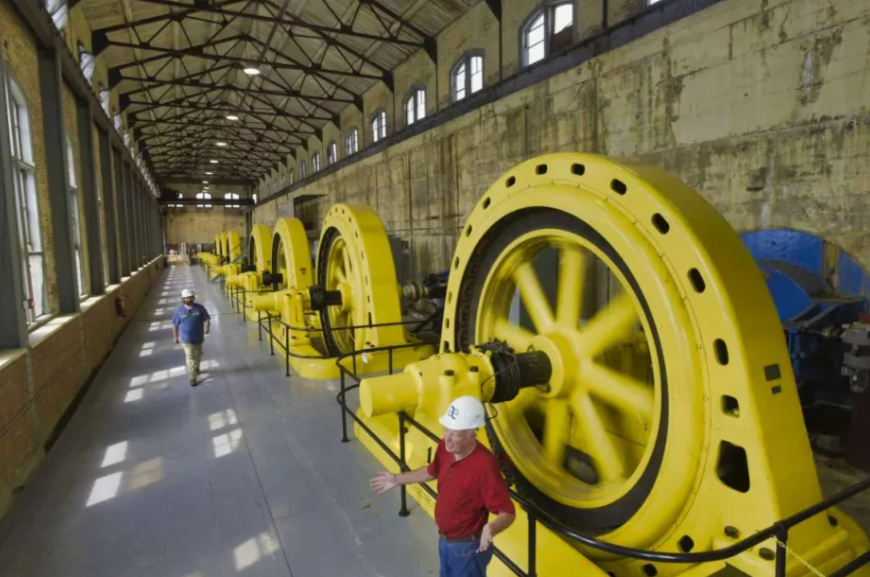
With the push towards ESG-Friendly bitcoin mining operations, there's one historic hydroelectric plant near Albany, New York, using power generated from its massive water turbines to mine crypto.
"We think this is the oldest renewable energy facility in the world that's still running," Albany Engineering Corp. CEO Jim Besha told the Times Union.
He said the plant "could actually make more money with bitcoin than selling the electricity to National Grid.
Albany Engineering Corp. receives around 3 cents per kilowatt-hour when it sells energy to National Grid. Mining bitcoin makes about three times the amount of money, Besha said.
"It's the best (type of bitcoin mining) because we're using renewable energy," Besha said. "We're just doing it on the side, experimenting with it. We're buying used servers."
Each week Besha converts thousandths of a bitcoin into fiat rather than 'HODL' because he's worried about crypto volatility.
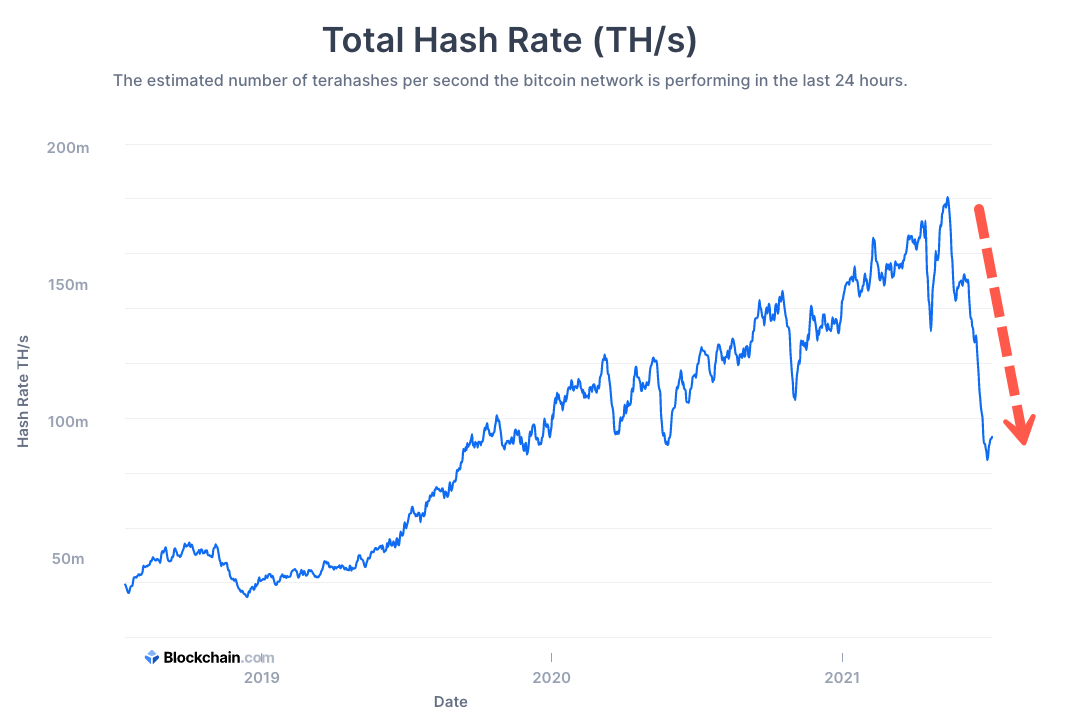
The hydroplant was constructed in 1897 and is getting new life amid China's crackdown on miners, resulting in the hash rate —the computational power available to mine the cryptocurrency, reflecting the efficiency of the bitcoin blockchain network, plunging since mid-May.
The only issue Besha has to worry about is a bill that would ban cryptocurrency mining in New York.

FT : Musk has ‘mesmerised’ UK over electric power, says JCB chair

Musk has ‘mesmerised’ UK over electric power, says JCB chair
Lord Anthony Bamford says Tesla founder has blinded government officials to potential of hydrogen

Tesla founder Elon Musk has “mesmerised” UK government officials over electric power, blinding them to the potential of hydrogen as a way to cut carbon emissions, JCB chair Lord Anthony Bamford has warned.

The British industrialist said his company, known for its yellow diggers, had made a “major breakthrough” in designing combustion engines powered by hydrogen, which would be cheaper than batteries or fuel cells.

“We’ve achieved something that has not been done properly before by any other company. That is, to successfully make a hydrogen engine work to the extent it’s in a machine and done many hundreds of hours,” he told the Financial Times at the group’s engine innovation centre near Derby.

The company, which began producing diesel engines in 2004 in response to tightening emissions legislation for the fuel, is on track to make more than 100,000 of these engines this year, the second most in the industry after Caterpillar of the US.

The group, which is no stranger to innovation after developing the engine that broke the diesel powered land speed record at more than 350 miles an hour, has made big advances on its hydrogen technology, while also developing diggers with batteries and fuel cells.

But Bamford, a Tory donor and Brexit supporter, said policymakers had written off cheaper and simpler ways to slash greenhouse gas emissions, such as hydrogen, because they are fixated on electrification.

He said electric power was a poor fit for construction machines and trucks.

“It’s not thought through by lots of people. We feel people, particularly a lot of officials, are mesmerised by Musk and ashamed of Volkswagen,” he said.

Electric vehicles running on battery power would need to be recharged regularly, unlike hydrogen powered combustion engines. This could pose a problem for electric diggers, which often operate in remote locations.

The batteries also become prohibitively expensive and heavy as the machines get bigger.

Tim Burnhope, chief innovation and growth officer at JCB, said batteries do not work well for heavy machinery because their energy demand is completely different to cars.

“Most cars take you to work and take you back. We do the opposite . . . we work all day.” he said.

Fuel cells, which convert hydrogen into electricity, are equally problematic in JCB’s view. Bamford said its fuel cell prototype costs £100,000, about 10 times more than diesel engines, even before counting expensive extras such as coolant pumps.

The development of hydrogen combustion engines has been problematic because burning the gas at high temperatures produces harmful nitrogen oxide emissions and its inefficiency means large volumes of the fuel must be stored on board.

But JCB’s engineers have managed to find a way to burn a small amount of hydrogen at about 1 part per 100 parts of air to avoid it getting too hot.

It hopes to produce the engines for customers to test by the end of next year and believes the technology could be used in trucks, vans, trains, buses and even ships.

A bigger problem for hydrogen as an alternative to diesel may be producing the fuel.

Bamford could turn to his son, Jo, for help in this area as he owns Ryze, a hydrogen fuelling company, although it remains difficult and expensive to produce clean hydrogen at scale using either renewables or natural gas combined with carbon capture.

“Our Achilles heel is where does the fuel come from,” said Bamford.

However, he wants a debate on how to meet emission targets to avoid overreliance on battery power, citing the warning by Stellantis chief executive Carlos Tavares in May that rising costs of cars because of electrification could price the middle class out of ownership.

Tavares also said the car industry would not necessarily have chosen electrification as its decarbonising solution.

The JCB chair believes keeping existing car production lines, which could use hydrogen, means the fuel would be more affordable and retain expertise related to combustion engines.

“A hydrogen engine will not be inflationary. It won’t be more expensive than an existing diesel engine. That’s our current thinking,” he said.

A government spokesperson said “we fully recognise the revolutionary potential of hydrogen”. Boris Johnson’s government is planning to deliver 5 gigawatts of low carbon hydrogen production capacity by 2030.