FT : Israel’s worrying fourth wave

Israel’s worrying fourth wave
Signs immunity is waning from early vaccinations have led to a booster programme

Since late last year, Israel has been a laboratory for the world. After winning early access to BioNTech/Pfizer jab supplies in exchange for sharing data on its effects, Israel was the first country to celebrate fully reopening its entire economy after double-jabbing 70 per cent of its population by early April. Now, one of the world’s most-vaccinated nations is among the first to experience an alarming fourth wave of infections — and hospitalisations — and is rushing to give booster shots. The rest of the world should take notice.

New infections in Israel have surged to the highest in six months, with signs that protection against severe disease has fallen significantly for elderly people vaccinated early this year. The data has caveats, but the trend is clear: six to eight months after second jabs, immunity starts to wane. Most recently, the health ministry found that for over-65s who received a second shot in January, protection against severe illness from the now-dominant Delta variant had fallen as low as 55 per cent, though some analysts question this figure.

The government also estimated recently that the vaccine’s effectiveness in stopping new infections among everyone who received second jabs in January had dropped sharply. It remained 82 per cent effective, however, in preventing severe illness, and 86 per cent effective in stopping hospitalisations.

While the unjabbed remain five to six times as likely to end up seriously ill, 90 per cent of Israel’s new infections are among relatively highly-vaccinated over-50s. Health officials have warned that, at current rates, at least 5,000 people would need hospital beds by early September, half with severe medical needs — twice as many as Israel is equipped to handle. Israel has started offering over-60s, and soon over-50s, a third shot. If this proves ineffective, the government has warned that a new lockdown may be unavoidable.

Israel’s case may reflect a particular combination of factors, and may not be exactly replicated elsewhere. It used almost exclusively Pfizer’s mRNA vaccine, with three-week intervals between jabs. Immunity from the Oxford/AstraZeneca or Moderna jabs may prove longer-lasting. Several countries, like the UK, extended the gap between doses to 12 weeks — so second jabs were received later. Not all followed a strict policy of inoculating the eldest first.

But Israel’s experience still has implications. Until more is known about the durability of protection from different jabs, it suggests even highly-vaccinated countries should retain some preventive measures, such as mask-wearing in public places.

It also signals booster programmes, though long expected, may need to be relatively frequent and large-scale, unless the virus burns itself out. In the US, where the Delta variant has also surged in the past month, the Biden administration has decided to recommend booster shots eight months after a second shot — in part after looking at the Israeli data. It is preparing to offer them from next month.

This raises difficult questions about whether scarce vaccines should be used to extend immunity for rich populations, rather than directed to developing countries which remain largely unprotected. Yet it would be wrong to undermine all the costly progress made in the developed world, requiring new lockdowns and endangering the global economic recovery — which would have harmful knock-on effects for lower-income countries in other ways.

All this does add yet more urgency, however, to the need to step up production — including within the developing world. The biggest lesson of the vaccine rollout in Israel and elsewhere is that the world simply cannot have enough.
FT : BlackRock calls for investors to lift allocations to China’s markets

BlackRock calls for investors to lift allocations to China’s markets
Asset manager’s research division says second-largest market is no longer an emerging nation

BlackRock’s research unit has said China should no longer be considered an emerging market and recommended investors boost their exposure to the country by as much as three times.

The New York-based investment house’s internal think-tank suggested the higher allocations to Chinese stocks and debt as the country’s capital markets have boomed in size and sophistication.

“China is under-represented in global investors’ portfolios but also, in our view, in global benchmarks,” Wei Li, chief investment strategist at the BlackRock Investment Institute (BII), said in an interview. “It has the second-largest equity market, the second-largest bond market. It should be represented more in portfolios.”

The bullish call comes during a tumultuous period for Chinese markets. The country’s CSI 300 equity barometer is down 4 per cent this year in US dollar terms, severely trailing the broad MSCI All-World index’s gains of 14 per cent. Regulatory crackdowns have prompted even sharper falls for Chinese companies listed in Hong Kong and other international markets.

The BII’s recommended allocation to Chinese assets is now “two to three times” that of diversified global portfolios, such as the MSCI All-World index, in which China is currently the third-largest constituent, with a weighting of 4.2 per cent. Prior to a mid-year review in July, the suggested allocation was in-line with major indices. The BII’s recommendation suggests it should be closer to 10 per cent, ahead of Japan but still well below the US.

For Chinese bonds, Li said benchmark weightings should be ratcheted up “a bit more” than the two to three times multiple for equities, “in certain investor cases”.

“The starting point is so low. The direction of travel for China to be represented in global benchmarks is clear,” Li added.

The recommendations by the world’s largest asset manager, which has $9tn of assets under management, comes at a time of heightened tensions between the US and China. Politicians in both Washington and Beijing have raised objections to Chinese companies listing in New York, exemplifying a growing financial divide.

“The spheres of influence between the two superpowers are moving apart. In the near term that can lead to market volatility. In the longer term, if you want to get China you have to go to China,” Li said.

The BII said in its mid-year outlook published in July that it was “time to treat [China] as an investment destination separate from emerging and developed markets. China’s economy has come through the Covid-19 shock stronger than global peers, just as it did after the global financial crisis.”

Its recommendations come as BlackRock and other big asset managers are seeking to build businesses in the sprawling country. BlackRock earlier this year received the first approval for a foreign asset manager to launch a wholly owned mutual fund business in China.

Investors in Chinese assets have had a bumpy year, with a government clampdown on parts of the private sector causing bouts of tumult.

Companies in the $100bn tutoring industry have been barred from making profits, accepting foreign investment and listing on foreign stock exchanges, slashing the market capitalisation of the three largest US-listed companies by 90 per cent.

This followed a block on the proposed flotation of financial technology platform Ant Group and an investigation into ride-hailing app Didi Chuxing, which caused it to be pulled from domestic app stores just days after it became the largest US listing by a Chinese company since Alibaba in 2014.

“Think of this journey as one step forward, half a step back,” said Li, who argued that Chinese assets would deliver “greater long-term returns” and diversification benefits, even if they came with “greater uncertainty”.

“It’s not about eliminating the risks, it’s about are you being rewarded for the risks? We believe we are being compensated.”

NY Post : Russia says Afghan president fled with 4 cars, chopper full of money

Russia says Afghan president fled with 4 cars, chopper full of money

Afghan President Ashraf Ghani fled the country with four vehicles and a helicopter full of cash, the Russian embassy in Kabul said Monday.

The embattled leader left the presidential palace in Kabul on Sunday to the insurgent Taliban fighters who had toppled his government.

“To avoid bloodshed, I thought it would be better to leave,” Ghani, 72, said on Facebook in his first comments after his departure.

The former World Bank academic — who holds a doctorate from New York City’s Columbia University — didn’t say where he was going, but Al Jazeera reported later that he had flown to Uzbekistan.

“As for the collapse of the (outgoing) regime, it is most eloquently characterized by the way Ghani fled Afghanistan,” Nikita Ishchenko, a Russian embassy spokesman in Kabul, was quoted as saying by Russian state-owned news outlet RIA, Reuters reported.

“Four cars were full of money, they tried to stuff another part of the money into a helicopter, but not all of it fit. And some of the money was left lying on the tarmac,” Ishchenko was quoted as saying.

The spokesman confirmed his comments to Reuters, citing “witnesses” as the source of his information. Reuters said it could not independently confirm the accuracy of his account immediately.

Zamir Kabulov, Russian President Vladimir Putin’s special representative on Afghanistan, said earlier it was unclear how much money the fleeing government would leave behind.

“I hope the government that has fled did not take all the money from the state budget. It will be the bedrock of the budget if something is left,” Kabulov told Moscow’s Ekho Moskvy radio station, according to Reuters.

On Monday, Russia said its ambassador to Afghanistan will meet with the Taliban on Tuesday and that Moscow will decide whether to recognize the new government based on its conduct.

“Our ambassador is in contact with the Taliban leadership, tomorrow he will meet with the Taliban security coordinator,” Foreign Ministry official Zamir Kabulov told Ekho Moskvy radio station on Monday, according to AFP.

He said the talks between Ambassador Dmitry Zhirnov and the Taliban would center on how the group plans to provide security for the Russian embassy in Kabul.

>>> US Gapping down

Gapping down
In reaction to earnings/guidance
:

  • SMFR -20.4%, FUV -13.3%, MVST -13%, ZEV -11.9%, RBLX -6.6%, BHP -5.5%, GAN -4.4%, HUYA -4.2%, SAVE -4.1% (guides Q3 revs below consensus, cites significant irregular operations), TME -3.3%, HD -3.1%, NRXP -1.8%, GDS -1.6%, WMT -1%

Other news:

  • HPK -8.5% (stock offering)
  • UPST -4.9% (convertible notes offering)
  • OPEN -4.3% (convertible notes offering)
  • CLVS -1.9% (renews $125 mln "at-the-market" equity offering program)
  • FL -1.4% (raises quarterly dividend by 50% to $0.30 per share)
  • BGNE -0.9% (BeiGene and EUSA Pharma announce that the China National Medical Products Administration has granted QARZIBA conditional approval for the treatment of high-risk neuroblastoma)
  • NPTN -0.5% (files for $150 mln mixed securities shelf offering)

Analyst comments:

  • DXC -2.4% (downgraded to Underweight from Neutral at JP Morgan)
  • COUP -1.6% (downgraded to Sector Perform from Outperform at RBC Capital Mkts)
  • ALL -1.4% (downgraded to In-line from Outperform at Evercore ISI)
  • ASAN -1% (downgraded to Sector Perform from Outperform at RBC Capital Mkts)
  • ADP -0.8% (downgraded to Underweight from Neutral at JP Morgan)

>>> US Gapping up

Gapping up
In reaction to earnings/guidance
:

  • DNMR +11.8%, TLS +5.9%, HIPO +5.6%, SE +4.4%, FN +2.9%, PINC +2.5%, POWW +2.1%, AIT +1.9%, GOEV +1.2%, AG +1%

Other news:

  • FBRX +15% (to announce top-line data from Phase 2 trial of FB-401 on Sept 7)
  • HSDT +11.4% (announces FDA breakthrough device designation for the treatment of dynamic gait and balance deficits following a stroke)
  • TLSA +4.2% (announces publication of a peer reviewed article on data from the clinical trial with intranasally administered Foralumab)
  • ANDE +3.5% (sells railcar leasing business for $550 mln)
  • GPK +2.2% (UK CMA is investigating the anticipated acquisition by Graphic Packaging Holding Company of AR Packaging Group AB)
  • GMED +1.8% (receives FDA 510(k) clearance for Excelsius 3D)
  • USDP +1.6% (expands downstream connectivity at Stroud terminal)

Analyst comments:

  • APP +2.2% (upgraded to Equal-Weight from Underweight at Morgan Stanley)
  • BKR +0.6% (upgraded to Conviction Buy from Buy at Goldman)

>>> US Early premarket gappers

Early premarket gappers

  • Gapping up:
    • FBRX +14.1%, DNMR +11.2%, TLSA +7.1%, ANDE +5.6%, HIPO +5.6%, POWW +5.3%, FN +5%, AIT +5%, NRXP +4.6%, SE +3.8%, GOEV +2.7%, PINC +2.5%, GPK +2.2%, GMED +1.8%, TLS +1.8%, USDP +1.6%, SMG +1.1%, AG +1%
  • Gapping down:
    • SMFR -13.9%, ZEV -13.8%, FUV -13.6%, HPK -12.6%, MVST -7.9%, GAN -7.6%, RBLX -6.7%, BHP -5.7%, HD -4.4%, UPST -3.9%, OPEN -3.8%, HUYA -3.7%, SLDB -3.6%, TME -3.3%, CLVS -2.8%, SAVE -2.6%

FT : Just Eat Takeaway rejects calls for merger

Just Eat Takeaway rejects calls for merger
Food delivery group’s chief admits ‘quite a lot of work to do on communication’ with investors

Just Eat Takeaway.com’s chief executive Jitse Groen admitted that the food delivery group has “quite a lot of work to do on communication”, after facing criticism from one of its largest investors.

But Groen rejected Cat Rock Capital’s suggestion that the company should divest assets or explore a merger with a larger rival.

“That is a solution that we don’t agree with,” he told reporters on Tuesday, noting that the food delivery company’s divisions in Canada, Australia and Latin America were “very profitable”.

“We don’t think it makes sense for a leading food delivery business to sell leading businesses.”

Groen added: “We wouldn’t get into a conversation with a company that is very lossmaking, that we don’t really understand how that company is ever going to be profitable — that’s not a good partner for us.”

Cat Rock, which owns about 5 per cent of Just Eat Takeaway, last month launched an attack on the company’s “broken communication” with investors and urged Groen to explore a merger with “other global players” such as DoorDash, Delivery Hero or Amazon in order to avoid a potential hostile takeover.

Other shareholders have echoed Cat Rock’s concerns. Boston-based hedge fund Baupost Group took a 3.5 per cent stake in Just Eat Takeaway this month.

Groen said criticism of the company’s communications around its plans to invest in logistics and groceries, as well as its explanations to the market of “what company we have become” after Takeaway.com’s mergers with Just Eat and Grubhub, were “fair comment”.

But he said that combining with a heavily lossmaking rival would not make sense. “We have always been open to consolidation with companies that are similar,” Groen said of potential takeover offers. “If it’s good for the business, we’ll look at it. If it’s bad for the business, we won’t.”

Shares in Just Eat Takeaway were broadly flat on Tuesday morning, trading at £61.24 in London. Its rival Deliveroo, which closed at its 390p initial public offering price on Monday for the first time since the March listing, fell 1 per cent to 385p.

Groen’s comments came as Europe’s largest food delivery group, which acquired US-based Grubhub in June, reported like-for-like revenue growth for the combined entity of 52 per cent to €2.6bn in the first six months of the year.

The company’s pre-tax loss jumped from €26m in the first half of 2020 to €395m in the same period this year, after it invested heavily in its own fleet of delivery couriers and expansion into groceries.

Active consumers increased 21 per cent to 98m, while gross transaction value rose 50 per cent to €14.1bn in the first half. Orders rose 51 per cent to 547m.

The group’s Canadian business, SkipTheDishes, recently launched its first “dark stores”, local warehouses from which couriers deliver grocery and convenience items. The model is similar to rapid delivery services from Getir, GoPuff and their proliferating rivals, who have raised billions of dollars in funding this year.

“Those are investments that you can easily make in a country like Canada because we’re so profitable,” said Groen. “The logistical network in Europe is not yet profitable,” he added, meaning that the dark store model was “not the logical way forward in Europe at this point in time”.

Just Eat Takeaway said it expected order growth of more than 45 per cent for the full year, excluding Grubhub, with gross transaction values including the US business likely to be between €28bn and €30bn.

(ZH) Chinese Miner To Invest $2.5 Billion Into DRC Cobalt Project

Chinese Miner To Invest $2.5 Billion Into DRC Cobalt Project

Demand for cobalt is rising globally because of its use in electric vehicle batteries.
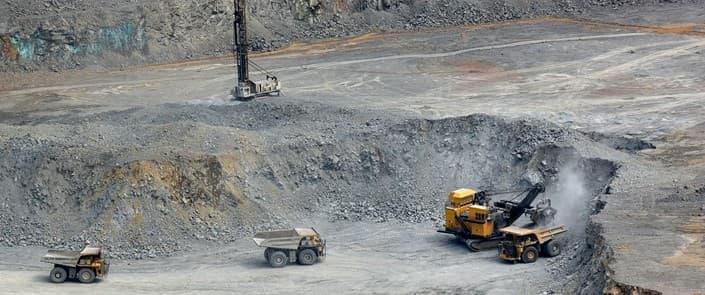
As such, China Molybdenum (CMOC) is planning to invest as U.S. $2.51 billion to further augment output from its Tenke Fungurume mine in the Democratic Republic of the Congo (DRC), Reuters reported, citing the company’s announcement.
China Molybdenum to make $2.5B investment in DRC
CMOC is the second-largest global cobalt feedstock producer after Switzerland’s Glencore. Its TFM mine producing 15,400 tons of cobalt & 182,600 tons of copper in 2020.
The new project will come up at its Tenke Fungurume copper-cobalt mine (TFM) in the Congo. China Molybdenum has an 80% stake in Tenke Fungurume, one of the world’s largest copper-cobalt deposits. The DRC’s Gecamines owns 20%.
News agency Reuters reported the Chinese firm had stated in a filing that the investment will go toward building three ore production lines. As a result, average annual copper output at the mine would rise by 200,000 tons. In addition, cobalt output would rise by 17,000 tons.
The company expects to complete the project and put into production in 2023.
TFM has copper resources of 24.9 million tons and cobalt resources of 2.5 million tons. In 2016, CMOC acquired the mine from U.S.-based base metals mining firm Freeport-McMoRan.
According to a statement put out earlier by the company, the TFM mine had started trial production on July 16 this year.
“In Q1 2021, the Company completed investment of RMB684 million in capital projects, up 37% year-on-year, including in the expansion projects both at TFM in the DRC and NPM in Australia that are planned to be put into production in Q2, upon completion of which further release of production capacity and continued efforts in cost optimization will render the Company a better position to capture the upsides in metal prices and achieve stronger profitability,” China Moly said in its Q1 2021 results report.
Cobalt demand
Currently trading at around U.S. $50,000 a ton, cobalt is a critical component in electric vehicle batteries. EV sales will likely continue to rise in the coming years as the world strives to reduce carbon emissions.
A world leader in cobalt production, the DRC has created an entity called EGC to buy artisanal cobalt from the country’s miners and sell it to unregulated middlemen.
Cobalt prices have been volatile and hit decade highs of nearly U.S. $100,000 a ton in 2018 (almost double the current price).
The battery materials market has been growing at a rapid pace over the last few years.
The increase in the usage of lead-acid and lithium-ion (Li-ion) batteries, plus a surge in demand from the consumer electronics and automotive industries, are some of the major driving factors of the global battery material market.
According to Allied Market Research, the global battery material market is expected to reach $80.5 billion by 2030, registering a CAGR of 5.9% from 2021 to 2030.