Cryptocurrencies: developing countries provide fertile ground
Sometimes dismissed as a fad in advanced economies, crypto holds more appeal in countries with a history of financial instability
Weekend Papers Summary
NEW YORK TIMES
-President Biden has insisted that the evacuation of Kabul was done as efficiently as possible. But documents obtained by The Times suggest otherwise. Refugees pushed their way onto planes. Children were separated from their parents. Tensions flared at shelters.
- Even before the Taliban takeover, Afghanistan placed near the bottom of every list when it came to protections for women, and at the top in terms of the need for safe houses, counseling and courts that could help keep women safe.
- At least a third of the fatalities in New Jersey were people who drowned after being trapped in vehicles in a densely packed state known for its car culture, its tangle of highways, suburban commuter towns and limited public transportation.
- Cleanup crews are working to contain what experts called a substantial oil spill in the Gulf of Mexico, according to an examination of satellite and aerial survey images, ship tracking data and interviews with local officials and others involved in the spill response.
- Federal health officials told the White House to scale back a plan to offer coronavirus booster shots to the general public this month, saying that regulators need more time to collect and review all the necessary data, according to people familiar with the discussion.
- South Africa was convulsed this summer by some of its worst civil unrest since the end of apartheid. The imprisonment of former President Jacob Zuma for refusing to appear before a corruption inquiry set off violent protests by his supporters. Soon, riots and looting erupted in parts of the country, fed by broad disgust at poverty, inequality and the government’s failure to provide even the most basic services, like water or electricity.
- The Democratic National Committee just concluded a multistate “Build Back Better” bus tour. Participants extolled the virtues of Democratic governance, trying to show voters in places like Arizona, the Carolinas, Michigan, Nevada, Texas and Wisconsin the real-life ramifications of the bills yet to pass and measures already approved, such as the $1.9 trillion pandemic relief legislation enacted this year over unanimous Republican opposition.
- Building dams that flood land, a surge in the beaver populations in Scotland have infuriated farmers. Some have obtained permits to kill the animals — setting off outrage among conservationists.
-Monica Lewinsky has slowly made her way into producing, including an upcoming documentary about public shame and a newly-formed production company, aptly titled “Alt Ending.”But “Impeachment,” which premieres on Sept. 7, is the most personal — and arguably the most prominent — chapter in her rehabilitation.
- A Texas judge granted a temporary restraining order against the state’s largest anti-abortion group on Friday, blocking it from suing Planned Parenthood under the terms of the restrictive abortion law that went into effect this week.
- New Zealand has low and declining crime rates, and is far from the flash points of global terrorism. But questions about how the country handles potential assailants have grown in volume since 2019, after an anti-Muslim terrorist murdered 51 people at two mosques in the city of Christchurch.
FINANCIAL TIMES
-Moderna’s Covid-19 vaccine may offer longer-lasting protection than Pfizer’s, new research suggests, as governments and scientists debate who needs booster shots and when.
-A sharp slowdown in US jobs growth precludes the possibility that the Federal Reserve will announce plans this month to begin scaling back its pandemic-era stimulus, economists say, as the spread of the Delta coronavirus variant muddies the economic outlook.
- Russia’s central bank says a new financial crisis on the scale of the 2008 collapse could happen in less than 18 months if global inflation is not kept in check.
-Both the chaotic nature of the pullout and Biden’s emphasis on its broader significance are reverberating across Washington and the world, crystallizing America’s shift of the past few years towards a more restrained and cautious exercise of its military power.
-Two years ago, Denis Bukalov mobilized support on social media to block construction of a Chinese-funded water-bottling plant on the shore of Lake Baikal. Now the environmental activist has set his sights on a political career as he steps up his attempts to protect the world’s oldest, largest and deepest body of fresh water from yet another threat
— millions of tonnes of toxic discharge flowing from an abandoned Soviet-era paper mill.
- A handful of ecommerce “aggregators”, led by Massachusetts-based Thrasio, had together raised $1bn by the end of the year to buy up the most successful independent merchants on Amazon’s marketplace.
-Fixing economic deprivation is a mammoth task, but assisting with basic financial education — to boost budgeting skills, debt knowhow and investment nous — need not be. And yet basic financial understanding can make a vast difference — not just to poorer communities such as North Ormesby, but to anyone in virtually any circumstance.
-Productivity gurus offer an array of techniques for becoming more efficient (or “optimized”) so as to process more emails and dispatch more tasks. The implied promise is that one day, finally, you’ll feel “on top of things” and “in control” of your life. Yet because the incoming supply of demands on your time is effectively infinite, that day never quite arrives, no matter how close it might sometimes seem. It’s like getting better at climbing up an infinitely tall ladder. No matter how fast you go, you’ll never reach the top.
-Responding to China’s new video gaming restrictions for children, Tencent and rival NetEase noted that only a tiny fraction of their gaming revenues come from minors, and their shares have bounced back in recent days. But analysts are fearful that the rules will squeeze the pipeline of future gamers, who often pick up the habit in childhood.
-Many of the large US companies that have spoken out on everything from voting rights and racial equality to transgender recognition in recent years are so far dodging the polarizing debate over abortion as some of the country’s tightest restrictions go into effect in Texas.
-The White House wants to spend $65B over the next 10 years to plan for future pandemics, including setting up a new office of pandemic preparedness at the heart of the US government.
- British PM Boris Johnson is preparing to break his election manifesto commitment not to raise tax rates in order to press ahead with a long-heralded overhaul of the UK’s creaking social care provision.
-Former regulators at the heart of mainstream US financial markets over the past decade are wrestling with new roles in the fast-changing cryptocurrency industry, with some key appointments lasting just months in the job.
NEW YORK POST
- Since the Biden administration eased restrictions at the border earlier this year, federal agents have seen a surge of illegal immigrants attempting to cross, with dramatic increases in single adults, unaccompanied children and members of “transnational criminal organizations.”
- Hurricane Larry strengthened to a Category 3 storm overnight and is likely to remain a “major hurricane” for several days, according to the National Hurricane Center.
- President Biden will tour storm-shattered neighborhoods in Queens Tuesday, with a second stop in a New Jersey town that was also inundated by the remnants of Hurricane Ida, the White House announced Saturday.
- A record number of container ships are stuck waiting to enter California’s two largest ports as labor shortages and COVID-19 disruptions continue to roil a supply chain that’s being pushed to its limits ahead of the busy holiday shopping season.
-‘Talibanned?’ Google has temporarily locked some Afghan government email accounts in an apparent attempt to head off the Taliban’s hunt for the identities of former officials who worked with the recently collapsed US-backed administration.
Barron’s Weekend Summary:The new SEC Chairman Gary Gensler, has made it clear that he is interested in the mechanics that burst into the open during the meme-stock turmoil.
* Cover Story :
-This week’s cover is an interview with the new Securities and Exchange Commission chairman, Gary Gensler, who has made it clear that he is interested in the mechanics that burst into the open during the meme-stock turmoil. He seems intent on overhauling market structure in ways that he thinks will make it fairer for the new retail traders and everyone else. The infrastructure that allows investors to tap on a phone and instantly buy stocks and options has been revolutionary for investors and the financial industry. Yet the trading system is extremely complex underneath, and it could be in for a remake. “We cannot take for granted that the U.S. equity markets will always be considered the most efficient, the most liquid in the world. ”
* Tech Trader:
Justin Kotzin, an operating partner and head of capital markets at growth equity firm General Atlantic, says he expects a “robust pipeline of companies” seeking to go public after Labor Day, similar to what the IPO market saw in June and July. “There continue to be a lot of really high-quality growth companies that have yet to go public,” he says. Jordan Stuart, a market strategist for the Federated Hermes Kaufmann funds that focus on small-, mid-, and large-cap companies and invests in IPOS, agrees. “With Zoom [meetings] and things normalizing a little bit, there will be a lot [of IPOs] in September and October,” he says.IPOs expected for September include restaurant software company Toast; On Holding, the sneaker company backed by Roger Federer; Dutch Bros Coffee; Authentic Brands, owner of Forever 21; and sports betting provider Sportradar Group.
* The Trader:
September’s arrival usually means fresh school supplies and investment ideas, but for now Wall Street is expecting more of the same—and that may not be a bad thing. The S&P 500 is up 21% this year and while few on the Street expect that it can continue climbing at such a rapid pace for the last four months of the year, there’s little reason to doubt that stocks will continue marching on despite what happens elsewhere in the world. Over the past week, much of the East Coast was pummeled by the remnants of Hurricane Ida. Many lost their homes and others remain without power and yet stock indexes notched new highs.
* Features:
-In the late 1990s, PayPal co-founder Peter Thiel invested less than $2,000 in founder shares in his Roth IRA. Those shares reportedly have climbed to roughly $5 billion, and Thiel won’t owe taxes on the gain if he waits until age 59½ to withdraw the money. A gain of that magnitude—featured in a recent ProPublica report based on Internal Revenue Service documents—isn’t likely to be replicated by ordinary investors. But they ought to follow Thiel’s lead in one respect: Roth accounts are a great place for high-risk, high-return investments. (Thiel hasn’t commented on the report.) Unlike a traditional individual retirement account or 401(k), Roths are funded with after-tax dollars. All money you take out of a Roth individual retirement account is tax-free, as long as you’re at least 59½ years old and you’ve had a Roth account open for five years or more.
-What a year this has been for the markets! Fueled by a torrent of monetary and fiscal stimulus, economic and earnings growth, and (until recently) a mostly receding pandemic, the S&P 500 stock index has rallied 20%, notching seven straight months of gains and more than 50 highs along the way. And that’s on top of last year’s 68% rebound from the market’s March 2020 lows. Tailwinds remain in place, but headwinds now loom that could slow stocks’ advance. Stimulus spending has peaked, and economic and corporate-earnings growth are likely to decelerate through the end of the year. What’s more, the Federal Reserve has all but promised to start tapering its bond buying in coming months, and the Biden administration has proposed hiking corporate and personal tax rates. None of this is apt to sit well with holders of increasingly pricey shares.
- Home-builder stocks are up 37% this year, reflecting dizzying demand, ultralow mortgage rates, and maddening construction delays. Just 34,000 completed new homes were on the market in July, well below the 87,300 average for the month since 1973. Bidding wars have broken out, including camp-outs where buyers set up umbrellas and barbecues on the sidewalk, waiting to be first in line for a new house, says BTIG analyst Carl Reichardt. If there’s still a value play, it may be Taylor Morrison’s own stock (ticker: TMHC). It’s up just 10% this year and has gained less than half the 97% industry average over the past three years. Taylor trades around book value, compared with 1.8 times book for the industry. At a recent price of $28, it goes for 4.3 times estimated 2022 earnings, a 30% discount to peers.
-Ride-hailing platforms Uber Technologies and Lyft are the latest companies to set aside funds for people affected by a Texas law that restricts abortions.The law bans abortion providers from carrying out terminations after fetal cardiac activity can be detected, which usually occurs around six weeks into a pregnancy. The law, which went into effect after the Supreme Court declined to intervene Wednesday, makes some exceptions for emergencies but none for cases involving rape or incest. Under the law, private citizens can sue anyone who aids or abets an abortion for alleged violations. That could include doctors, nurses, and also potentially drivers transporting a person to an abortion procedure. The plaintiff will receive $10,000 from the accused if their case is successful. On Friday, Lyft (LYFT) CEO Logan Green tweeted the ride-hailing company plans to create a fund to cover all legal fees for its drivers if they are sued. Rival Uber (UBER) followed suit. CEO Dara Khosrowshahi responded to Green’s post on Twitter, saying the firm would do the same for its drivers.
* Europe:
Beiersdorf, the German personal-care products maker that owns the Nivea and La Prairie brands, had a few tough years before the pandemic, and it went downhill from there. Advertising and promotion—key to sales of cosmetics and toiletries—were reduced between 2012 and 2018, a period in which the company struggled to adapt to a changing market in which smaller players won customers with premium niche products. Pandemic lockdowns meant that fewer people took vacations and more people stayed home. Sales of Beiersdorf’s beauty and sun-care products declined, and its $550 million purchase of Coppertone in 2019 was unfortunately timed. the past three years, Beiersdorf stock (BEI) has failed to glow, gaining just 1.84% to 102.65 euros, compared with a 90.25% jump in the shares of rival L’Oreal (OR) and a 144.69% increase for Estee Lauder (EL).
* Emerging Markets:
-The MSCI Emerging Markets Index is down almost 8% since its February peak. Much of that is due to trouble in China, given that many components of the index are reliant on strong demand there. China’s nonmanufacturing and manufacturing purchasing managers indexes, which measure levels of economic activity, have declined sharply from early in the year, according to Citigroup economists. A renewed surge in cases of Covid-19 has hit growth. And for much of the year, the People’s Bank of China’s monetary policy was less supportive of expansion than it had been. Citi’s global equity strategists advise holding off on buying emerging-market shares. Chinese stocks account for roughly 35% of the total market capitalization of the emerging market index, and they still look expensive, according to Citigroup.
-China’s entertainment industry is the latest sector put on edge by increased regulatory scrutiny, in an environment already stifled by the pandemic and the country’s overall slowing economy. Authorities have previously exerted control over its multibillion-dollar celebrity and entertainment sectors, from banning broadcasters from showing tattooed music artists to requiring programmers to air more patriotically-themed content. But the recent crackdown comes as a bigger swell. In early August, the official Xinhua News Agency—largely a press-release forum for the government—published a series of articles on the unhealthy phenomenon of fan groups that use their massive online presence to drive traffic to celebrities and products they hawk.
* Commodities:
Labor Day weekend traditionally signals the conclusion of the US summer driving season, but it may not mark the end of the peak period for gasoline prices, which stand near their highest since 2014. Atlantic storm Ida, which hit the U.S. Gulf Coast as a Category 4 hurricane on Aug. 29, led to the shutdown of some key Gulf Coast refinery operations, and it’s still not clear when those may fully resume. On Wednesday, Entergy (ETR), which provides power for states including Louisiana and Mississippi, said it would take time to fully restore power given significant damage across the region. The Wall Street Journal reported it could take weeks to resume refinery operations due to widespread power outages.
* Streetwise:
- School’s back, and the pandemic has set some students behind. That creates a hazard that your high-schooler will soon ask for help with the quadratic formula. Don’t panic. Respond in a way that shows that you know that’s algebra, not a car engine additive. Then, riff about the importance of learning to seek knowledge independently, while pulling out your credit card and subscribing to an online tutor. For about $20 a month, you can avoid having to admit you remember everything about high school and college except the course material. The 'Netflix of Homework Help' Chegg CEO Dan Rosensweig talks about online tutoring, fixing college, and what he learned from Guitar Hero. A more difficult call is whether to make a stock investment in education technology, or ed-tech. Industry spending has surged, as have stock listings and share prices. Soon, investors will learn whether that’s a pandemic pop or the start of a longer shift toward hybrid learning—part during class hours, and part available anytime online. Companies that stand to profit include ones that went public years ago, like Chegg (ticker: CHGG) and 2U (TWOU), and ones that have done so recently amid a surge in industry spending, like Duolingo (DUOL) and PowerSchool Holdings (PWSC). And there are private players like Udemy that investors are watching for news of a stock offering.
Match Group, Ceridian HCM and Brown & Brown Set to Join S&P 500; Others to Join S&P MidCap 400 and S&P SmallCap 600 :
S&P Dow Jones Indices will make the following index adjustments to the S&P 500, S&P MidCap 400, and S&P SmallCap 600 to ensure each index is more representative of its market capitalization range. The changes will be effective prior to the open of trading on Monday, September 20, 2021 to coincide with the quarterly rebalance:
Match Group Inc. (NASD:MTCH) will replace Perrigo Company plc (NYSE:PRGO) in the S&P 500, Perrigo Company will replace WW International Inc. (NASD:WW) in the S&P MidCap 400, and WW International will replace Team Inc (NYSE:TISI) in the S&P SmallCap 600. Team has a market capitalization that is no longer representative of the small-cap market space.
S&P MidCap 400 constituents Ceridian HCM Holding Inc. (NYSE:CDAY), and Brown & Brown Inc. (NYSE:BRO) will move to the S&P 500, replacing Unum Group (NYSE:UNM) and NOV Inc. (NYSE:NOV) both of which will move to the S&P MidCap 400.
Tandem Diabetes Care Inc. (NASD:TNDM) will replace Healthcare Services Group Inc. (NASD:HCSG) in the S&P MidCap 400, and Healthcare Services Group will replace MicroStrategy Inc. (NASD:MSTR) in the S&P SmallCap 600. UNIQURE N.V. (NASD:QURE) will replace United Insurance Holdings Corp. (NASD:UIHC) in the S&P SmallCap 600. MicroStrategy is no longer appropriate for the S&P SmallCap 600, and United Insurance Holdings has a market capitalization that is no longer representative of the small-cap market space
3 New Cases Of "Mu Variant" Found In Hong Kong, Authorities Fear It Is Vaccine Resistant
How much longer until Dr. Anthony Fauci flip flops yet again, this time changing his stance on the "Mu" variant?
A few days ago, Dr. Fauci told a crowd of assembled reporters at the White House that "Mu" didn't pose an "immediate threat" to America, though he added he and his team would be keeping a close eye on it.
"We’re paying attention to it, we take everything like that seriously, but we don’t consider it an immediate threat right now," Fauci said Thursday during a White House COVID response press briefing.[...]"This variant has a constellation of mutations that suggests that it would evade certain antibodies, not only monoclonal antibodies, but vaccine- and convalescent serum-induced antibodies," Fauci said. "But there isn’t a lot of clinical data to suggest that, it is mostly laboratory in-vitro data."
Now, in a sign that Mu" has continued to spread aggressively around the world, health authorities in Hong Kong warned Saturday morning that three people who recently traveled to Hong Kong from Colombia had been found to be carrying the variant with them.
Here's more from SCMP: which claims that the Hong Kong authorities were concerned because the variant has shown some signs of being vaccine resistant. It's unclear whether the three men who traveled from Colombia had already been vaccinated.
Three people who recently arrived in Hong Kong were found to be carrying a new coronavirus variant which health experts fear could be more vaccine resistant.Two of the patients – a 19-year-old man and a 22-year-old woman – had flown in from Colombia and were confirmed to have the Mu variant in early June, while the other, a 26-year-old woman, arrived from the United States, health authorities said on Friday. She was found to be infected on July 24.The development came as the city confirmed four new imported Covid-19 cases, all involving domestic workers who arrived from the Philippines.About 4,500 infections involving the Mu variant, known scientifically as B. 1.621, have been reported across the world, with more than half discovered in the US, according to the University of Hong Kong’s Dr Ho Pak-leung, who uncovered two of the three local cases while examining a government database open to the public.
Local health authorities had not reported any cases involving the Mu variant until Hong Kong’s Dr Ho Pak-leung, an infectious diseases specialist, made this latest discovery public. He says now Hong Kong is fortunate that the variant was stopped before it could "leak" into the "community."
"Although the Mu variant did not leak into the community, the government should still be transparent in keeping the public informed about these variant cases in the city,” Ho told a local radio programme.“The coronavirus keeps mutating as the globe is still battling a third wave … We cannot underestimate the possibility of having a more infectious variant emerge in the future.”
There is widespread concern over new mutations emerging as infection rates are rising around the world (though there are growing signs that the current delta wave may have peaked in much of the US). After delta, there's a growing fear about "Mu" and "Lambda" variants, among others.
Here's a complete rundown of the fewer than a dozen doughnuts we bought the other day.
Source: SCMP
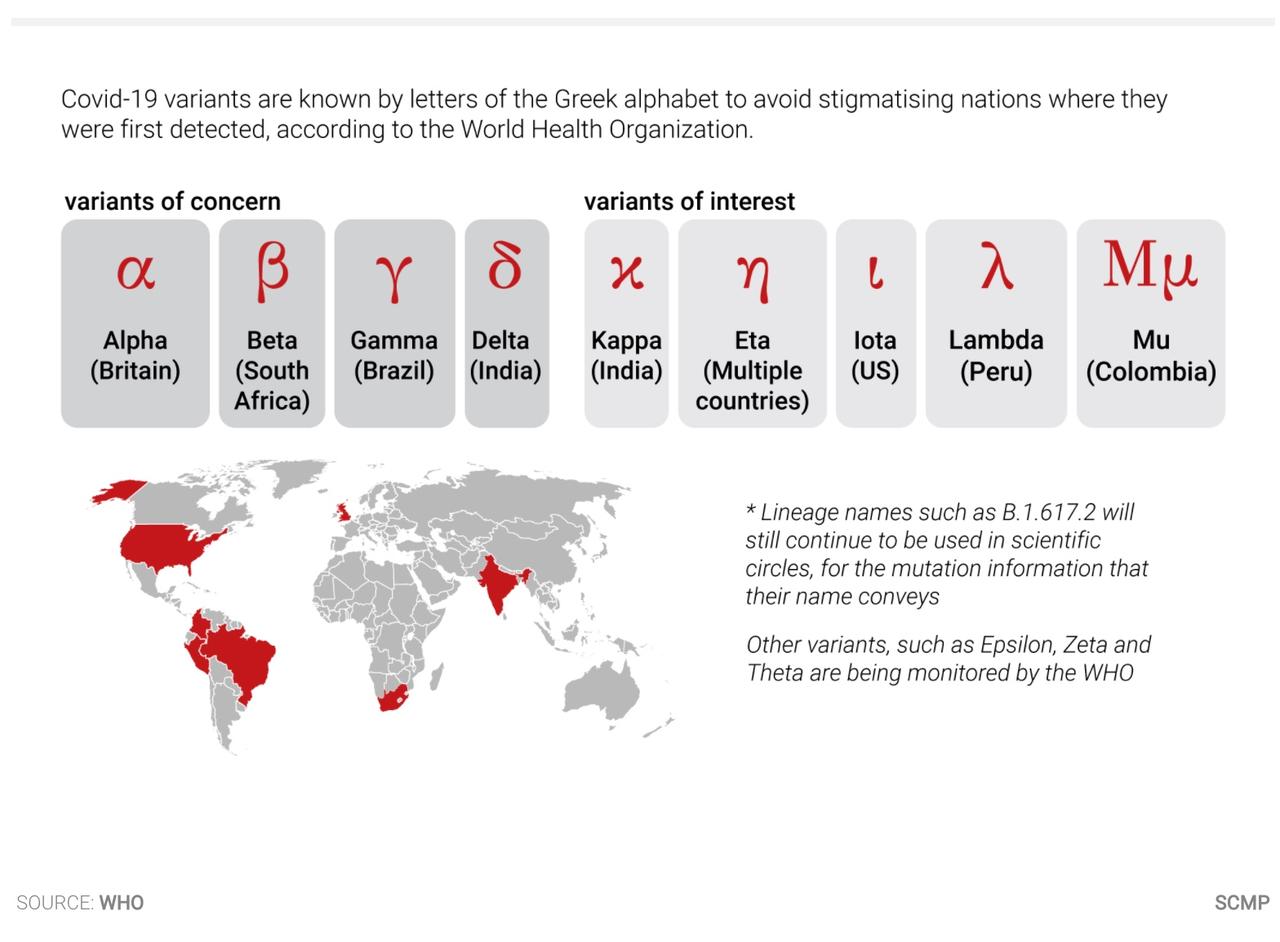
HK authorities are already on the move: they imposed a two week ban on the budget airline the Colombians had flown in on. One local expert in respiratory medicine said he wasn't too worried about Mu catching on and becoming a "variant of concern" (see above chart). Hong Kong believes that controlling the influx of travelers remains its best bet for preventing any future outbreaks.
Respiratory medicine expert Dr Leung Chi-chiu said the public did not need to be too worried about the Mu type as it was not listed as a variant of concern and had not spread in the community.“It is only one of the 1,000 variants found across the world,” he said. “Although the Mu variant is found in 39 countries, I cannot see that it has a higher transmission efficiency compared with the Delta variant. We still have to monitor the situation."He added that the most effective way to defend the city against the variant still lay in border control measures to prevent local transmission."As long as the Mu variant does not get into the community and remains as imported cases, we do not need to worry about it too much,” he said.Few travelers fly into Hong Kong from Colombia and Ecuador, with barely a handful of passengers making the journey each month, especially now during the pandemic.
Back in the US, the Mu variant has been found in almost every state, with its prevalence highest in the state of Alaska.
Reports Of Rare Body Inflammation After COVID-19 Vaccinations Being Investigated By EU Watchdog

Authored by Jack Phillips via The Epoch Times (emphasis ours),
The European Union’s drug regulator said it is reviewing the risk of a body inflammation condition in connection to the Pfizer-BioNTech COVID-19 vaccine.
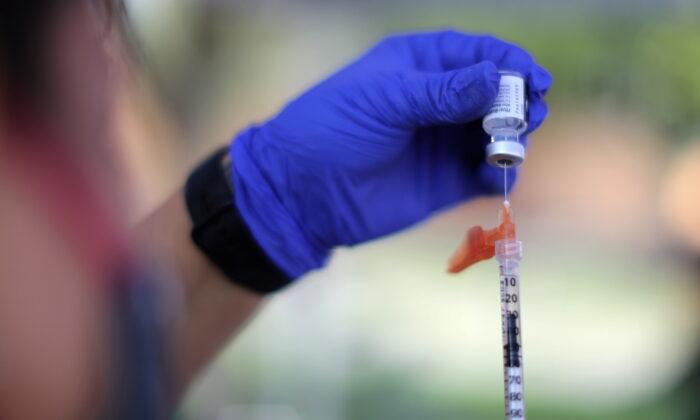
The European Medicines Agency’s safety panel is looking into a report of a 17-year-old male teen from Denmark having developed Multisystem Inflammatory Syndrome (MIS). The teen has fully recovered, the agency said, adding the condition was reported after other COVID-19 vaccines.
“MIS is rare and its incidence rate before the COVID-19 pandemic estimated from five European countries was around 2 to 6 cases per 100,000 per year in children and adolescents below 20 years of age and below 2 cases per 100,000 per year in adults aged 20 years or more,” said the regulator in a statement. “At this stage, there is no change to the current EU recommendations for the use of COVID-19 vaccines.”
The condition was previously reported in people following a COVID-19 infection unrelated to vaccines, according to the health agency. But the Danish 17 year old had no such medical history.
“It is important to understand that a careful assessment of MIS is ongoing, and it has not been concluded that mRNA COVID-19 vaccines cause MIS,” a Pfizer spokesperson told Reuters. The Epoch Times has contacted the company for comment.
Five cases of MIS were reported in the European Economic Area as of Aug. 19 after the Pfizer vaccine, while one case was reported with each Johnson & Johnson’s and Moderna’s vaccine, the European regulator said.
Safety data released by the CDC and Pfizer at a meeting on Monday did not include any incidences of MIS in those who took the vaccine, which was granted full approval in the United States last month.
The European safety panel said it is investigating cases of blood clots in the veins, known as venous thromboembolism, in connection to the Johnson & Johnson shot.
“Venous thromboembolism was included in the risk management plan for COVID-19 Vaccine Janssen as a safety issue to be investigated, based on a higher proportion of cases of venous thromboembolism observed within the vaccinated group versus the placebo group in the first clinical studies used to authorize this vaccine,” according to the European Medicines Agency.
COVID-19 is the illness caused by the CCP (Chinese Communist Party) virus.
MIS in children, meanwhile, is a recently coined medical condition associated with the virus, according to the U.S. Centers for Disease Control and Prevention. It was first called pediatric multisystem inflammatory syndrome and shared similar symptoms to Kawasaki disease and toxic shock syndrome.
100 Afghan Evacuees Flown To US Flagged For Terrorist Ties
At least 100 Afghan refugees who were set to enter the US have been flagged for terrorist ties, NBC News reports, and will now be sent to Kosovo where they will undergo additional screening and review.
Specifically the 100 were "flagged for possible ties to the Taliban or terror groups." NBC detailed that "of more than 30,000 evacuees from Afghanistan to the U.S., about 10,000 needed additional screening as of Friday, said the sources, and of those about 100 were flagged for possible ties to the Taliban or terror groups."

These were discovered coming into the D.C. area - among the major hubs that serve as a reception point for the tens of thousands evacuated from Kabul international airport over the past two weeks.
Alarmingly, some of the arrivals were also found to have been prior deportations based on criminal offenses: "Other evacuees who are currently being evaluated in the D.C. area were found to have been deported from the US previously for past criminal offenses, said two sources briefed on the data," the NBC report continues. "The Department of Homeland Security is now deciding what to do with the individuals."
A senior law enforcement official was cited as saying, "A lot of people were moved very quickly and the intelligence community has been working hard to evaluate whether any of them pose a threat."
During the initial days' frantic rush of Afghans piling on US military transport planes as the Americans had struggled to gain security control of the airport, it appeared there wasn't any proper vetting whatsoever. The NBC report suggests the vetting process is lagging behind even by the time evacuees arrive on US soil.
The law enforcement official cited in the report explained further that "Some of the vetting occurs while they are overseas, and some of it occurs here … We are not going to allow people to intentionally be released into the community if they have unresolved derogatory information."
SMARTWATCHES TRACK OUR HEALTH. SMART TOILETS AREN’T TOO FAR BEHIND.
Commodes that measure vital signs, screen for chronic illnesses and might even diagnose Covid-19 are in the works
SEPT. 4, 2021 12:00 PM ET
READING TIME
6 MINUTE READ
SAVE
SHARE
TEXT
The Future of Everything covers the innovation and technology transforming the way we live, work and play, with monthly issues on education, money, cities and more. This month is Health, online starting Sept. 3 and in the paper on Sept. 10.
The next frontier of at-home health tracking is flush with data: the toilet.
Researchers and companies are developing high-tech toilets that go beyond adding smart speakers or a heated seat. These smart facilities are designed to look out for signs of gastrointestinal disease, monitor blood pressure or tell you that you need to eat more fish, all from the comfort of your personal throne.
“All of the things that have come with smartwatches and phones, you can imagine that on another scale,” says Joshua Coon, a bioanalytical chemist at the University of Wisconsin-Madison and Morgridge Institute for Research, who published a 2019 study exploring the potential of continuously monitoring a person’s health by looking at molecules in their urine samples. “You could really start to understand disease risk.”
NEWSLETTER SIGN-UP
The Future of Everything
A look at how innovation and technology are transforming the way we live, work and play.
PREVIEW
SUBSCRIBE
Doctors have long used fecal and urine samples for clues to people’s health, but there has been a renewed interest in recent years as scientists have begun to better understand how the microbes in our gut influence our well-being. In the Covid-19 pandemic, more communities launched wastewater surveillance initiatives, enabling health officials to hunt for early signs of the virus in cities and neighborhoods and track its spread.
Some researchers want to harness that wealth of information on the individual level and have come up with models to peer into the toilet bowl remotely. Some smart toilets are geared toward helping doctors monitor patients with chronic conditions or heightened risk for certain diseases, whereas other companies aim to sell the toilets—with price tags in the hundreds or thousands of dollars—directly to consumers as a tool to track or improve their own health and wellness.
Researchers at Stanford School of Medicine have outfitted a toilet bowl with cameras and trained a machine-learning algorithm to analyze the waste against a diagnostic chart. The toilet can also track the flow, color and volume of urine. It is equipped with a urine test-strip similar to a pregnancy test that detects specific molecules that can provide insight into a person’s health. To tell users apart, the toilet has both a fingerprint scan when a person flushes and a scan of their anus’s characteristics, or an anal print.
The Stanford team has signed an agreement with Izen, a Korean toilet maker, to manufacture the toilet. They hope to have working prototypes that can be used in clinical trials by the end of this year, says Seung-min Park, who leads the project, which was started by Sanjiv Gambhir, the former chair of radiology at Stanford, who died in 2020.
Another prototype smart toilet developed at Duke University also deploys cameras and machine learning to analyze waste after it has been flushed. It uses other sensors to capture consistency, presence of blood and specific proteins, and extracts a small vial of stool that can be shipped off to a lab for further analysis. The smart toilet, along with others in development, is designed to connect with an app on a person’s phone.
“[You could] get personalized alerts for having more fiber or avoiding certain foods to avoid flare-ups,” says Sonia Grego, founder of the Duke Smart Toilet Lab and Coprata Inc., a startup that she and two other team members launched in 2021 to commercialize the technology.
A remote smart toilet could help doctors monitor patients with chronic conditions such as irritable bowel syndrome or spot early signs of disease, says Dr. Grego. Another plus is that it could allow for frequent measurements that can be tracked over time, which could be a more effective, noninvasive way to track certain metrics and quickly identify and flag changes than sporadic readings during doctor’s visits.
“What your blood pressure is at 2 p.m. on a Tuesday doesn’t matter. To get that information with real trends behind it is super valuable,” says Austin McChord, the chief executive of Casana, a home-health monitoring startup working on a toilet seat that can measure vital signs including blood pressure, blood-oxygen levels or heart rate.
The company said in February that it had raised $14 million in Series A funding and is working toward getting clearance from the Food and Drug Administration for the seat to measure a handful of vital signs, Mr. McChord says.
Some diagnostics experts argue that the value in a smart toilet would come from being able to analyze the molecular substances in patient samples and that other devices, including smartwatches, can easily monitor blood pressure and heart rate. Mr. McChord and others working on smart-toilet technology say that advantages to using a toilet seat over another wearable device are adherence and ease-of-use.
“If you want someone to use something, it has to be incredibly simple,” says Chad Adams, president and chief executive of the company Medic.Life, which is working to get FDA clearance for its Medic.Lav smart toilet. “Everybody has to go to the bathroom.”
Medic.Life first plans to sell its toilet to assisted living facilities, where it could help track residents’ vital signs, body weight or even the sugar or sodium levels in their urine, among other metrics, before expanding to general consumers. A future version for assisted living facilities, pharmacies and healthcare providers would diagnose certain infections, such as urinary-tract infections or Covid-19.
Google LLC also has a patent for a toilet seat that doubles as a cardiovascular monitor, filed in 2015, although it isn’t clear whether the company is pursuing the project. Google Health declined to comment. Toilet maker Toto is designing a toilet that could analyze people’s waste and provide recommendations to improve wellness, such as drinking more water or adding something to their diets. The company anticipates launching the toilet in the next several years.
Toilet makers say that their products can provide medical-grade results for some vital signs and urine tests, but a smart toilet that can analyze the broader chemical makeup of waste is likely further off. Developers will have to work out how to prepare samples for analysis and refill the chemicals needed to run the reaction, as well as make the toilet cost-effective, biochemists and diagnostic experts say.
Another key barrier is privacy. A 300-person survey conducted by the Stanford team found that one third of respondents were uncomfortable with the concept of a smart toilet that collects health data, with many citing privacy as a chief concern. Respondents were especially uncomfortable with the camera-based approach. More than half, however, were at least somewhat comfortable with a smart toilet.
“I have now heard every toilet pun or joke you can imagine,” Casana’s Mr. McChord says. “A toilet seat is something that everyone is going to giggle about, but you have that moment to explain what it really does, and people really do see the value there.”