FOR INSTITUTIONAL CLIENT USE ONLY
The first full week of October is now in the books but it has yet to truly feel like Fall just yet with temperatures hanging tight above 70 F degrees… The feel of markets this week was somewhat similar, neither too hot, nor too cold, as investors patiently await 3Q earnings. All global major indices finished within 100 bps of last week’s close and the VIX finished the week below 20 despite at one point touching above 24 on Wednesday morning. SPX fell on Monday in a continuation of last week’s risk-off market, bringing the drawdown from the early September all-time-high to more than 5%. Following Monday however, SPX recovered to finish the week in the green and now sits just ~3% off of all-time-highs. Rather than a single major risk event moving markets, investors digested a handful of smaller catalysts this week – US/China rhetoric, Evergrande potential contagion, lack of progress in DC, supply chain issues, the NFP miss, the extension of the debt ceiling, and the commodity rally, to name just a few. W/W, Crude Oil rose by 5%, lifting breakevens and subsequently nominal yields (US 10y +14 bps). As such, Energy was the top performing sector, followed by Financials, as the cyclical trade into year-end persists.
With earnings still a week away, the focus this week was on September’s payroll report. Although the report came as a disappointment, with payrolls rising 194k in September versus expectations for 500k, details within the report illustrated bright spots, and likely was positive enough to keep the FOMC on track to announce the beginning of tapering at the November meeting as MS Chief US Econonomist, Ellen Zentner has been highlighting. Some of the positive read-throughs from NFP included an increase in the average work week and average wages which should ultimately increase spending. At the sector level, a large portion of the miss was driven by the education sector which shed 180k jobs last month. This occurred amidst schools re-opening and was illustrative of the change in actual school hiring patterns versus what is typically seasonally normal. Leisure & hospitality jobs were flat, with growth skewed towards the arts, entertainment, and recreation industries. Despite the lackluster report, yields reacted in-line with the expectation for the Fed to proceed with tapering, as the 10y closed above 1.6 for the first time since June. More globally, Bund and Gilt yields also reacted firmly, rising 18% and 7.5%, respectively on the day… Price action was not broadly consistent with the rise in yields though, as Unprofitable Tech rallied (MSXXUPT +1.8%), and Nasdaq outperformed Russell 2000 by ~30bps.
Outside the lens of macro data, the bull vs. bear debate has remained broadly consistent, as corporate commentary and prints begin to trickle in for 3Q. Investors are sharpening their pencils ahead of the earnings slate, looking to better assess which companies are hurt the most by supply chain bottlenecks and margin pressures both in material goods as well as labor. Despite these headwinds being well broadcasted to date, earnings revisions have yet to meaningfully come down for 2H21. Skeptics would argue most of this was a pull forward from 2022 as we’ve seen more negative revisions in ’22. Going into this quarter’s prints, 3Q earnings are expected to increase 15.7% Y/Y while earnings for the full year are expected to rise +43.1% Y/Y.
Bulls continue to feel like consumer strength is robust enough to continue carrying the economy and index levels higher, as results for retailers continue to come in broadly positively despite margin pressures. In Beverages, PEP beat and slightly ‘raised’ on stronger organic sales driven by the international segment, which is a positive read for multi-nationals while gross margins missed due to higher costs/labor, albeit not a huge surprise in this extraordinary inflationary environment. STZ also raised guidance based on strong beer demand despite a headline margin miss, as they believe they have the pricing power in comparison to peers to overcome further erosion to their bottom line. LEVI also stood out, beating and raising as they were able to offset cotton headwinds by pricing.
The moral of the story continues to be that pricing power and a strong brand is what it takes to win in the current inflationary environment. Bulls and bears are spread rather widely in their current stance, but the final result may end up more mixed than both cohorts believe. Although margin pressures are real and valuations look lofty (especially amidst an aggressive rise in rates), there are clear winners and losers in this environment. It remains to be seen whether or not price performance will be rewarding this quarter, but companies have learned over the past 18 months how to operate and deliver in an abnormal operational environment. As we climb the constant wall of worry on DC brinkmanship, Sino-US relations, and margin risk, I continue to think it is worthwhile to lean into quality companies that have the ability to overcome margin pressures through pricing and the sheer dominance of their brands. We offer a variety of baskets to play this trade such as Inflation vs. Margin Squeeze (MSZZIFMS), which is a pair basket long names like CAT, FCX, and FANG* and short names like ANF, M, and BBBY. Another related basket idea is (Short) Wage Growth (MSXXWAGE), which includes UW-rated names such as ACI, KR, and XRH. Please ask to be connected with our baskets team.
I continue, like many of you, to have a couple observations that crossed my mind this week including…
-
Great trip to San Francisco seeing clients… Was fortunate enough to drive through Napa en route to the airport and return… Although I am a bit jet lagged I am longing to have spent more time in wine country, at least mentally…. The SAVONE Family Movie of the Week will be, “A Good Year”…. And if you put the kids to bed first, I recommend “Sideways”…
- MS Machinery Analyst, Courtney Yakavonis, highlights that dealer sentiment deteriorated for a 2nd straight quarter as >75% of dealers reported a 10+% sales impact due to supply chain challenges. She notes that a lack of inventory is a real concern in the short term, but also highlights the need for restocking and supports a multiyear upcycle. Courtney also points out that dealers are increasingly wary of price…
- Of the last 30 announced deSPAC mergers above $100MM EV, only 3 were trading above or par its per unit cash in trust amount, 10 PIPEs included structural sweeteners to all or some investors and the biggest 3 PIPEs accounted for 42% of the PIPE issuance volume – a very large skew to quality. Please ask to be connected to our SPACs team.
- Unfortunately, I have to wait another week for Roma's matchup with Juventus. However, I'm still in giddy disbelief watching my Cowboys this season and am looking forward to this NFC East matchup against the Giants.
- On PAGS, LatAm Payments Analyst Jorge Kuri is cutting 2021 and 2022 net income estimates as he thinks that the company will absorb higher financing costs rather than pass them on to the consumer in a push to enhance market share and competitive position longer term… Is this a sign of things to come for other global payments players like APT, AFRM, and SQ?
- I hear Adele is coming out with a new album...will you be listening? Media & Entertainment Analyst Ben Swinburne is out with a new music outlook so be sure to ask to be connected, especially on one of Ben’s favorites WMG...
- Given big rate moves around the world, what will have the most implications, moves in nominals, breakevens, or pace of travel? Should make for more volatility either way…
- While I hate for the Yankees' season to end at Fenway, I do take solace in our historical track record against the Red Sox. We'll be back next season...
- MS UK Economist Jacob Nell highlights that 3Q EA growth still looks consistent with his 2.3%Q forecast, but with downside risks, and the survey trend is pointing to further slowdown… Are you involved in the EU or UK? Europe remains MS Research’s top regional pick…
- UBER says the number of US airport trips on Uber grew +15% in the last two weeks of September, reaching a new high for 2021 as many riders *including* business travelers returned to UBER. That's an important datapoint as Brian Nowak has quantified ~30% of pre-COVID usage as Travel + Commuting…
- SEC Chair Gary Gensler said that he has no plans to ban crypto during a House Committee on Financial Services meeting. "He said ultimately, that decision “would be up to Congress.” He again urged crypto exchanges to register with the SEC and emphasized that decentralized finance platforms could still be subject to regulation… In other news, the WH is allegedly preparing an executive order on Crypto… How do you think regulation shakes out in the US on crypto?
- Financials kick off earnings season in earnest this week… MS Large Cap Banks & Cons. Finance Analyst, Betsy Graseck’s top picks are STT, JPM, and SYF… Please ask to be connected.
On positioning, US L/S gross exposure was unchanged WoW at 196%, and US L/S net exposure rose ~2% WoW to 60% as funds covered shorts, which still places the current level at the 32nd %-tile over the last 12M, but 92nd %-tile on a 10y view. EU L/S fund gross exposure fell ~4% WoW, while net exposure for the cohort was unchanged WoW. EU L/S gross and net exposure levels remain below the ~15th %-tile over the last 12M. On the other hand, Asia fund gross exposure fell ~2% WoW, and net exposure fell ~3% WoW.
A data point I continue to follow closely is the ratio of dispersion between sectors vs dispersion within sectors (over the last two weeks) which now sits at the 86th %tile since 2016. This implies dispersion is being driven more by movesbetween sectors than within sectors of late. Neither metric is above the 50th %tile on an absolute basis, indicating that dispersion at both levels is hard to come by. With Earnings Season starting next week, the ratio will likely come down (I hope), as typical during these periods over the course of the year. Please ask for our work here.
On payroll numbers, MS US Chief Economist Ellen Zentner reports nonfarm payrolls rose 194,000 in September, following an upwardly revised 366,000 increase in August (net two month back revisions were +169,000). That marked a disappointingly low nonfarm payrolls gain in September, but the report was not without some bright spots – strong wages, an increase in the average workweek, some solid sector level details, and a solid household survey employment gain. Average hourly earnings rose 0.6% (MSe 0.4%) on the month in September, pushing the year-over-year rate up to 4.6%, while 6-month annualized wage growth is now running at 6%. Those wage gains were broadly based across sectors and wage cohorts, and it was notable that with hours up, and strong earnings, despite the fact that payrolls missed, the aggregate income proxy in the report posted it’s strongest increase (+1.4%) since last August. So the robust earnings details did send a somewhat clear signal that the miss on payrolls was not a result of weakening demand. Thus, while this was a clear miss on the headline, it seems like it will still meet Chair Powell’s threshold for a rate hike announcement. Please ask to speak to Ellen and team.
Despite the tumultuous week, MS Chief US Equity Strategist Mike Wilson sees the final chapter of the mid cycle transition playing out as financial conditions tighten. His only question now is how deep the index level correction will be before it is finished. Mike believes 3Q earnings season will likely determine how icy the deceleration in growth gets before things stabilize. He also highlights that supply chain issues pose a material risk to 3Q earnings expectations. Mike finds that among companies reporting earnings since mid-September, surprise ratios for earnings and sales are dramatically lower for those discussing supply chain issues. Further, price reactions post reporting for such companies are notably negative (-2.7% T+1D on average; vs. +0.9%).
Bottom line: supply chain constraints are not in consensus earnings numbers and are not priced, in Mike’s view. On this front, he thinks companies will struggle to beat EPS estimates at the same rate that they have the past 5 quarters. Beyond 3Q, Mike thinks the earnings risk comes more from (1) the inability of companies to pass on pricing as laid out in recent weeks, (2) margin risk related more to higher wages, and (3) the reversion to trend in goods consumption.
In terms of tradeable expressions, the baskets team highlights that for semis, MSXXSEMI or SOX will get the job done. Clearly if you want to customize more around industrials and DRAM/memory, we can do that via a basket. Some single names include: Nvidia (NVDA), Applied Materials (AMAT), Lam Resaerch (LRCX), Broadcom (AVGO), Qualcomm (QCOM), and Micron (MU). For retail, the team likes MSJSRMGN as names that have been among the biggest beneficiaries of margin expansion and are building in more expansion again next year. These are names the desk is most comfortable being short. The kicker in the basket is that we emphasized the weights in some of the names were inventory is outpacing sales, and may be at risk of mark downs going fwd. Some single names include Lowe’s (LOW), VF (VFC), Ralph Lauren (RL), and Under Armor (UAA). Please ask to speak to the team.
Given that Hardware multiples peaked in April 2021, MS Equity Analyst Katy Huberty references the MS US Equity Strategy team in downgrading the IT Hardware sector view to cautious and pointing out that we may begin to enter the late cycle in December 2021. Keep in mind that (1) the hardware 2021 budget growth expectations down-ticked 14 bps to 2.8%, while all other sectors saw improvements to growth, and (2) a deceleration of spending toward PCs, tablets, and peripherals equipment personal spending is eminent to reverse overconsumption associated with the 12-18 months. Katy reduces PTs for much of the group and makes a few notable downgrades. As a reminder, her Top Pick in the space is NCR (NCR). Please ask for the full report.
The MS Tech team is also out with their signature 3Q CIO Survey. The team highlights that robust near-term IT spending growth will sustain in 2022 with leadership from Software and Services while more cyclical infrastructure categories begin to slow (as Katy points out). Long-term IT spend outlooks also strengthened further with a net 40% of CIOs expecting to grow IT investment as a percent of revenue. Please reach out for the full report.
Looking across the pond, while European gas prices have been spiking, the MS European energy team is convinced that Russian supply will begin to ease in the coming weeks. Hence, the pass-through to inflation is more limited than implied by consensus. The team’s 4Q21 and 2022 average European gas price expectations are56% and 40% below spot, respectively. The team advises to position against market pricing of 2022 inflation, which looks reliant on continued high gas prices. In equities, even the conservative gas price forecasts are favorable in EEMEA as the team’s preferred name is Gazprom (OGZD LI). The team’s preferred name in the US is LNG exporter Cheniere (LNG US). Please ask to be connected to the team.
Switching gears, an initiation that instantly becomes Media & Entertainment Analyst Omar Sheikh’s top pick is Universal Music Group (UMG NA). With the largest market position in Recorded Music and the second largest market position in Music Publishing, the team models 11% revenue growth and 16% EPS growth driven by (i) the ongoing structural shift in music consumption to streaming platforms, where UMG has variable revenue share agreements; and (ii) the opportunity to monetize music on new platforms, where the team see UMG's revenue growing from €400m to €3bn-€5bn by 2030. Please ask to be connected to the team.
Looking to Asia, MS China Equity Strategist Laura Wang argues that the Chinese equity market still awaits more clarity after the US Trade Representative's recent speech. For selective positioning ahead of new rounds of trade negotiation, the team provides 30 Chinese stocks that are highly sensitive to trade tension. Please ask for the full list of stocks.
The MS China CIO IT Survey also shows that Chinese firms are boosting IT spending on cybersecurity and localization amid data regulations, pushing up the IT spending growth to 19% next year, outpacing US/EU survey. This gives a boost to cybersecurity and tech localization, although public cloud adoption could slow in the near term amid rising concerns on data security regulations. The team is overweight on these themes and stocks: 1) Hardware: Xiaomi (1810 HK); 2) Cloud: Foxconn Industrial Internet (601138 CH), Delta Electronics (2308 TW), Wiwynn (6669 TW), and Accton (2345 TW); 3) Software: Yonyou (600588 CH), Qi An Xin (688561 CH), and Kingsoft Corp (3888 HJ); and 4) CPU/GPU localization: Alchip (3661 TW), ASMedia (5269 TW). The team’s least preferred stocks are Montage (688008 CH), Shanghai AtHub (603881 CH), and Shiyuan (002841 SZ) and the theme memory. Please ask to be connected with the team.
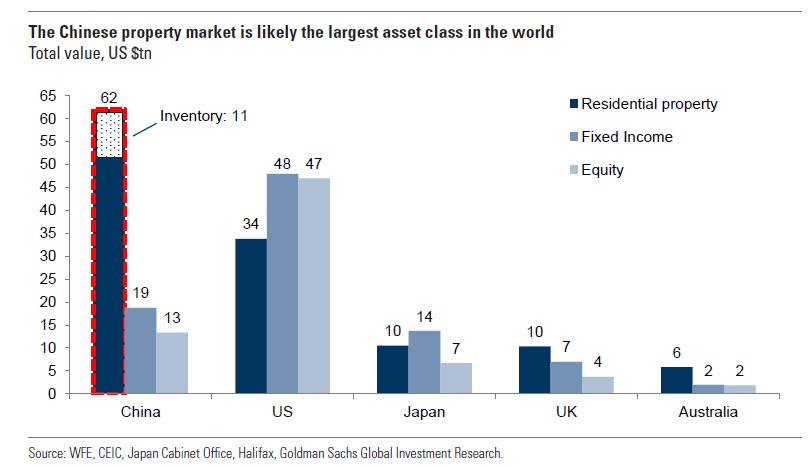
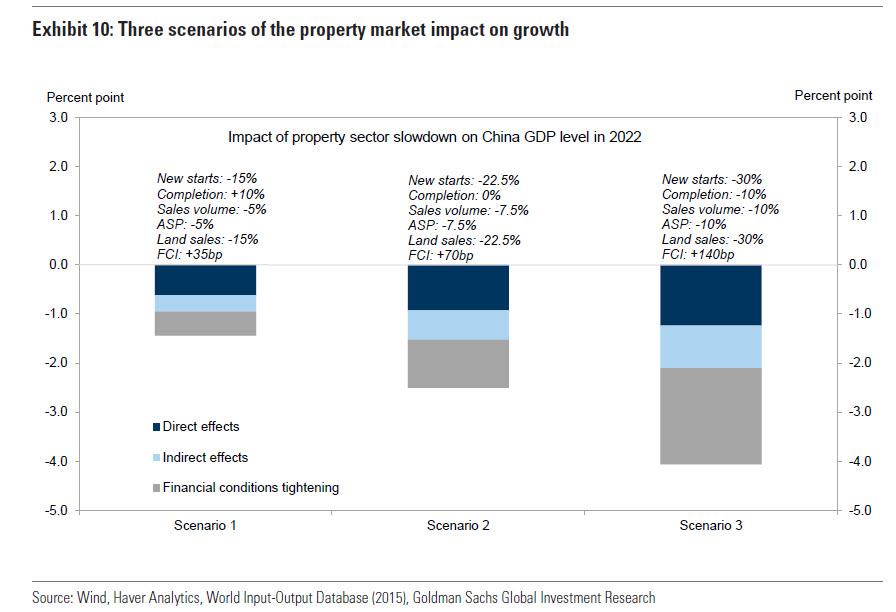
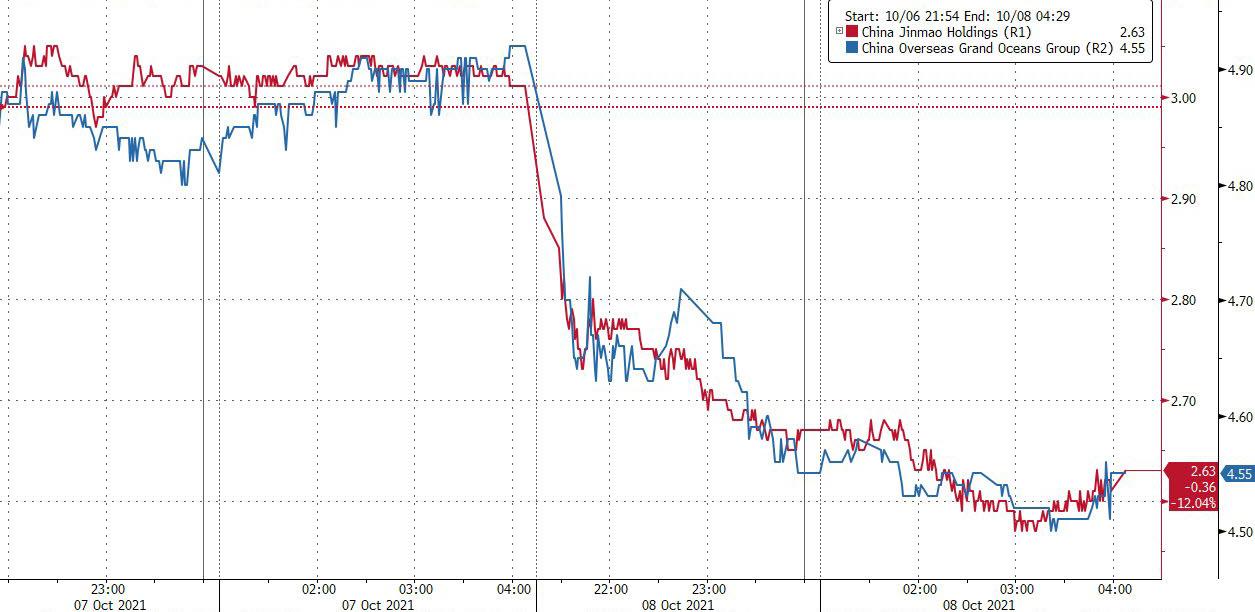
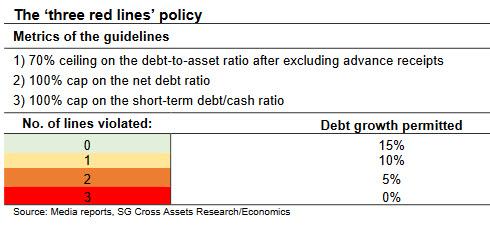
Also in China, there is some clarity around Meituan’s fine (which was smaller than anticipated), mortgage lending, and it is all coming at a time when positioning is at a low. We take stock at Sept end, where HSCEI posted its worst qtr (-18%) since Q3 2015, driven by 4 stocks, BABA (-35%), Kuaishou (-57%), Meituan (-23%), & Tencent (-21%) and A-shares posted a record 49-day streak of > 1trn RMB turnover ($155bn); HFs currently have the lightest net exp. in ADRs since 4Q 2018 (PB content). But now back from Golden Week, Robin thinks we are at an inflection point of more cyclical policy easing after China mfg. Over the past week, various government departments and SOE companies have shown their strong determination to resolve the current power shortage by calling for an increase in domestic coal production and coal imports and asking coal power plants to build up their coal inventory. Think we may see a better recovery play out of China than Japan! Most contrarian trade is still the Chinese internet ADRs.
Turning to Japan, markets got a big flush out, now back near August 20 low, on the back of surprisingly hawkish commentary on financial income taxation by new PM Kishida and his seemingly Old Guard, non-reformist Cabinet. Foreigners voted with their feet - over the week ended Friday, Oct 1, Foreigners sold a notable 3.9 z-score amount of TOPIX futures ($7 billion notional) – the largest weekly selling from Foreigners since November 2012. Almost on cue, the speech by PM Kishida on Friday took on a decidedly more pro-growth tone, focusing on digitalization with a Y10T fiscal package focused on technology, and steered his redistribution comments to tax incentives for companies to raise wages. Our read is he will have a moderate win at the Oct 31 general election, and perhaps peak negativism is priced in, which allows for another bite at the year-end apple for Japan. Please ask to speak to Erika Kingetsu on our Asia sales team.
With conference season in full swing, I wanted to highlight a few MS Conferences, such as the Morgan Stanley Sustainable Investing Summit (Oct 27), the Virtual Insurance Corporate Access Day (Nov 22), and the Virtual Global Consumer & Retail Conference (Nov 30 – Dec 2). As a reminder, our Global Chemicals, Agriculture & Packaging Conference will still take place during the 2nd week of November but will now be a hybrid event with an in-person portion on the 1st day, followed by 2 virtual days. These conferences are always in high demand, so be sure to reach out to your sales coverage for more information. Thank you again to the MS Global Corporate Access team for such great work around the world! Please see below for all upcoming MS Conferences & Events.
Nevertheless, please find below a selection of this week's data points, charts and research from each region (Europe, US, LatAm, Asia, Japan, EEMEA) that I believe points to an inflection or material change for individual sectors, companies and/or the macro environment this week. I have tried to avoid the obvious beats and misses and instead highlight what I thought to be the more significant trends and inflection points.
Have a great weekend. Drink lots of fluids, take Vitamin C, and make sure to wash your hands!
#FORZA
Nick
*Included in my 2021 Global Ideas Deck. Please ask for the presentation.
Please see below the list of client webcasts MS is hosting over the next few days. Please note, these are widely attended events open to Morgan Stanley’s Institutional and Corporate Client base, and appropriate Morgan Stanley personnel. Webcast link information should not be forwarded or shared beyond intended recipients.
Source: Morgan Stanley US Alpha Team & Global White Phone Teams
Time (EST) |
TOPIC & SPEAKERS |
WEBCAST LINK |
Monday, October 11, 2021 |
4th Annual Women in Quant Conference |
|
Tuesday, October 12, 2021 |
8th Annual Event Driven Symposium |
|
12:45 PM |
Life Science Tools & Diagnostics Conference Call: Berkeley Lights Customer Diligence Call |
Here |
|
Experts |
Brian Walters, CEO, Genovac
Dr. Robyn Emmins, Scientific Director, Cell Line Development, GSK Fellow |
|
|
MS |
Tejas Savant, Life Science Tools & Diagnostics Analyst |
|
Wednesday, October 13, 2021 |
11:45 AM |
Keynote Virtual Lunch Discussion l: Recover |
Here |
|
Experts |
Alfredo Ferre García, CEO
Ben Malka, Operating Partner |
|
|
MS |
Farid Foroughi, Head of Disruptive Commerce and Technology, Morgan Stanley Investment Banking |
|
9:00 AM |
Keynote In-Person Lunch Discussion lI: Arcadia |
Here |
|
Experts |
Kiran Bhatraju, CEO |
|
|
MS |
Rakesh Shankar, Global Power & Utilities Group, Morgan Stanley Investment Banking |
|
Thursday, October 14, 2021 |
3rd Annual MSQA Paris Quant Conference |
Friday, October 15, 2021 |
9:00 AM |
Americas & EU Actionable Sustainability Ideas |
Here |
|
MS |
Rob Pulleyn, Utilities & Clean Energy Research Analyst
Ioannis Masvoulas, Metals & Mining Research Analyst
Chris Laybutt, Utilities & Clean Energy Research Analyst
Annelies Vermeulen, Business & Support Services Research Analyst
William Macaulay, Capital Goods Research Associate
Stephen Byrd / Dave Arcaro, Power & Utilities & Clean Energy Industries Research Analyst
Brian Harbour, Leisure Research Analyst
Vincent Andrews / Angel Castillo, Chemical & Agricultural Product Research Analyst
Michael Cyprys, Brokers & Asset Managers Research Analyst
Kristine Liwag, Aerospace & Defense Research Analyst |
|
9:00 AM |
CAST (Cross-Asset Systematic Trading Strategy): Fears of Stagflation, Themes and Ideas |
Here |
|
MS |
Andrew Sheets, Chief Cross-Asset Strategist
Phani Naraparaju, Cross-Asset Strategist |
|
Tuesday, October 19, 2021 |
7:00 AM |
ESG Sector Insight - Global Transport Sector Webcast |
Here |
|
MS |
Praveen Choudhary, Asia Leisure, Gaming & Property Research Analyst
Jamie Rollo, Europe Leisure & Hotels Research Analyst
Thomas Allen, North America Leisure, Gaming & Lodging Research Analyst
Jessica Alsford, Global Head of Sustainability Research
Tim Chan, Asia Sustainability Research Analyst
Mark Carlucci, North America Sustainability Research Analyst |
|
8:00 AM |
MSQA: Inside the Mind of an Analyst - Healthcare |
Here |
|
MS |
Sean Wu, China Healthcare, Morgan Stanley Research
Mark Purcell, European Pharmaceuticals, Morgan Stanley Research
Mike Ulz, NA Biotech, Morgan Stanley Research
Ricky Goldwasser, NA Healthcare Services and Technology, Morgan Stanley Research
Reyna Venkat, Thematic Investment Strategist, Institutional Equity Division |
|
10:00 AM |
Business Jets in a Post COVID-19 World Webcast |
Here |
|
Expert |
Brian Foley, BRiFO, Founder |
|
|
MS |
Kristine Liwag, US Aerospace & Defense |
|
11:00 AM |
Bridge33 Capital Webcast |
Here |
|
Expert |
Jahan Moslehi, Managing Principal & Co-Founder
Julio Siberio, Head of Acquisitions |
|
|
MS |
Richard Hill, US REIT Equity & CRE Debt |
|
Thursday, October 21, 2021 |
11:00 AM |
A Conversation with James Anderson, Partner and Investment Manager, Baillie Gifford, hosted by Simon Bound, Global Director of Research |
Here |
|
Expert |
James Anderson, Partner and Investment Manager, Baillie Gifford |
|
|
MS |
Simon Bound, Global Director of Research |
|
Thursday, October 28, 2021 |
8:00 AM |
Morgan Stanley Research Global e-Learning: Emissions Trading |
Here |
|
MS |
Jessica Alsford, Global Head of Sustainability Research
Robert Pulleyn, Equity Analyst and Commodity Strategist
Tim Chan, Asia Sustainability Research Analyst
Simon Lee, Asia Pacific Utilities and Renewables Team |
|
Tuesday, November 2, 2021 |
9:00 AM |
MSQA: Inside the Mind of an Analyst - Consumer Retail |
Here |
|
MS |
Edouard Aubin, European Brands, Morgan Stanley Research
Maria-Laura Adurno, European Food Retail, Morgan Stanley Research
Kimberley Greenberger, NA Specialty Apparel & Department Stores, Morgan Stanley Research
Lillian Lou, China Consumer, Morgan Stanley Research
Brian Kelleher, Head of Asia AlphaWise Research, Morgan Stanley Research
Albert Lin, US Consumer Equity Specialist Sales, Institutional Equity Division
Reyna Venkat, Thematic Investment Strategist, Institutional Equity Division |
|
Wednesday, November 17, 2021 - Thursday, November 18, 2021 |
9th Annual MSQA Research and Investment Forum |
Tuesday, November 30, 2021 - Thursday, December 2, 2021 |
Morgan Stanley Virtual Global Consumer & Retail Conference |
Tuesday, November 30, 2021 |
8:00 AM |
MSQA: Inside the Mind of an Analyst - Autos |
Here |
|
MS |
Billy Kovanis, US Autos & Shares Mobility Research Analyst
Harald Hendrikse, EU Autos & Shared Mobility Research Analyst
Rikke Jacobson, EU Industrials Specialist Sales
Mark van der Pluym, US Industrials Specialist Sales
Reyna Venkat, Thematic Investment Strategist, Institutional Equity Division |
|
UPCOMING CONFERENCES –
Please reach out to your sales representative if you are interested in attending any of these conferences.
Oct 12-13 (Sydney) I ESG Emerging Energy & Clean Tech Seminar
Oct 13 (New York) I ESG Private Capital Markets Day
Oct 13-15 (Los Angeles) I Annual Spark Conference
Oct 19 (Singapore) I Virtual ASEAN Private Company Day
Oct 27 (New York) I Morgan Stanley Sustainable Investing Summit
Nov 3-4 (China) I Virtual China Materials Symposium
Nov 7-9 (Hollywood) I 2021 EEI Financial Conference Meetings Hosted By Morgan Stanley
Nov 9-11 (New York) I Global Chemicals, Agriculture, and Packaging Conference
Nov 17-19 (Barcelona) | European Technology, Media & Telecom Conference
Nov 17-19 (Singapore) | 20th Asia Pacific Summit
Nov 22 (New York) I Virtual Insurance Corporate Access Day: Life and P&C
Nov 30-Dec 2 (New York) I Virtual Global Consumer & Retail Conference
Nov 30-Dec 3 (London) I Virtual Nasdaq Conference
Dec 7 (London) | Business Services, Leisure & Transport Corporate Access Day
Jan 4-6 (China) I Virtual China New Economy Summit
Jan 12-14 (New York) I Virtual 14th Annual Latin America Executive Conference
Jan 18 (Asia) I Virtual Asia Symposium
Mar 7-10 (San Francisco) I TMT Conference
Mar 22-24 (Hong Kong) I Virtual Hong Kong Summit
The following comments are a summary of Morgan Stanley Research by Morgan Stanley Equity Sales & Trading:
SELECT COVID VIRUS AND TREND FOR RE-OPENING DATA POINTS
Global – Biotechnology – COVID-19 Outbreak Dynamics
US – Retail – Total Discretionary Retail Traffic
MS BROAD TRENDS & INFLECTION POINTS
Positive
ìîUS – Equities – Baskets and Indices Performance
ìîDispersion Between Sectors vs Dispersion Within Sectors |
|
|
Metric |
Between Sector Dispersion |
Within Sector Dispersion |
Ratio of Between Sector vs Within Sector Dispersion |
|
5Y %ile |
W/W Change in 5Y %ile |
35 |
14 |
25 |
9 |
86 |
7 |
|
Note: All metrics are on a 2w basis. Normalized by 2w SPX realized volatility.
Source: Morgan Stanley QDS
ìGlobal – Global Risk Indicators – % Change
ìUS – Tech – 3Q21 CIO Survey: Digital Transformation Momentum Looks to Sustain Into 2022
Source: AlphaWise, Morgan Stanley Research. n=100 (US and EU data).
Source: AlphaWise, Morgan Stanley Research. n=100 (US and EU data).
Source: AlphaWise, Morgan Stanley Research. n=100 (US and EU data).
Katy Huberty, Meta Marshall, James Faucette, Keith Weiss and the US tech team highlight that 2021 IT budget expectations were revised higher to +4.4% (vs +3.8% in 2Q21, +69 bps sequentially) and are now tracking ahead of the +4.1% 10-year average from '10-'19/slightly behind the +4.7% 3-year average from '17-'19.Encouragingly, the team notes that the initial reading for 2022 IT Spending shows that CIOs expect current levels to sustain, with overall IT budgets expected to grow +4.3%. Forward-looking metrics continue to suggest to the team that the spending environment remains robust: the 1-year up-to-down ratio was 1.6x, in-line with the 7-year historical average, and the 3-year up-to-down ratio accelerated again to 9.0x from 6.6x/3.2x in 2Q21/1Q21, with 45% of CIOs expecting IT spend to increase as a percent of total revenues within their organizations, vs 5% expecting the mix to decline. The survey also corroborates that the backdrop for recruiting talent continues to be challenging and the team points out that some projects are constrained by difficulties sourcing talent to implement certain initiatives. The team also highlights the 3Q21 priority list: 1) heightened focus on Security as more digital operations translate to a broader surface area which is vulnerable to cyber-attacks; 2) greater utilization of AI/ML solutions across enterprises as modernization across tech stacks enables more sophisticated deployments; and 3) upgrades to the data storage and analytics layers of the enterprise tech stack as organizations look to leverage the larger amounts of data produced by operating in a more digital environment. Download the Complete Report
ìUS – Media – Raise 2021/2022 US Ad Estimates Above Consensus; Overweight FB, GOOGL, SNAP, FOXA, LAMR
Source: RAB, OAAA, NAAA, PIB, CMAG, IAB, Magna, Group M, Company Data, Morgan Stanley Research. Note: National TV estimates include digital extensions
Ben Swinburne and Brian Nowak highlight that a unique cocktail of a well-funded consumer, inflation, and the power of digital advertising leads to an unprecedented growth outlook. Heading into 2021, the team expected 2021 US advertising growth of +12%. While the macro backdrop is modestly better than originally expected (higher inflation, PCE), Ben and Brian note that the corresponding surge in ad spending has been much more substantial. Overall, the team now expects US advertising growth of +23% and +14% respectively in 2021 and 2022. Longer-term, the team now has paid media spending growing consistently faster than GDP and well above historical levels. However, the team continues to sanity check its online ad forecast for 17% Y/Y growth in 2022 against its e-commerce forecast. Ben and Brian also think platform-level innovation will be even more important to growth next year. On this front, Brian remains most optimistic on GOOGL (and a still-growing retail suite of offerings, OW, $3000 PT), FB (Reels, Shopping, Messenger, Optionality around Ad Load, OW, $400 PT), and SNAP (OW, $85 PT). Ben also remains OW on FOXA ($45 PT) and LAMR ($135 PT). Download the Complete Report
ìAsia – Technology – Estimated capex for semi fabs (i.e., wafer customers) suggests that wafer shipments might start to accelerate
Source: SEMI, Morgan Stanley Research estimates.
Charlie Chan notes that the recovery in chip packaging operations in Malaysia may release significant pent-up demand for cars and servers, potentially leading to the end of the semi shortage. His trackers indicate the country’s semi fab utilization rate to around 89% exiting Sep vs 51% at end-Aug with potential to reach 100% in Nov/Dec. In particular, semi vendors that were identified as contributing to the auto/server supply chain bottleneck (ON Semi, NXP, Texas Instruments, and STMicro etc) appear to have seen a sharp production recovery. Charlie thus expects server semis (DRAM, CPU, board controller – Wiwynn, Aspeed, Accton) to see better demand in 1H22 but remains cautious on logic semis (smartphone, TV, PC) on oversupply concerns– key reason why Charlie maintains EW rating on TSMC and Daniel Yen stays cautious on Driver IC names. Going to upstream, team’s recent supply chain checks suggest that strong demand from fab customers, particularly in China, will continue to consume more raw wafers. As such, pricing in new long-term agreements for raw wafers should still go up in 2022 and 2023, and demand should continue to exceed supply: we expect supply CAGRs of 3% for both 12-inch and 8-inch raw wafers in 2020-23, vs. consumption CAGRs of 7% for 12-inch and 10% for 8-inch during the same period. Reiterate OW on GWC and Wafer Works. Download the Complete Report | Download the Complete Report
ìUS – Large Cap Banks & Consumer Finance – 3Q21 Preview: Rates Are Rising, Loan Growth Next
Source: Company Data, Morgan Stanley Research
Betsy Graseck highlights that US 10Yr 12M-forwards moved up roughly 40bps from August 3rd trough, important as CFOs typically bake the most recent forward curve into their NII guidance. She thinks that means NII guidance should come in stronger than even a few weeks ago at the most recent industry conference. Further, she notes that the current rate environment adds likelihood that banks decided to tactically add duration to their investment portfolio near quarter-end and plan to continue to look for yield as new loans come through the pipeline. Additionally, Betsy thinks that loan growth isn't this quarter's story, but the inflection likely comes by year end. In the third quarter, she looks for weighted average loan growth of -2% y/y across Large Cap Banks and Consumer Finance. She also expects the median reserve ratio to decline 4%, with median NCOs of only 36bps vs. 28bps in 2Q21. Betsy estimates reported buybacks to rise 55% in 3Q versus 2Q. Into the quarter, Betsy prefers JPM (UW, $166 PT), SYF (OW, $65 PT), and STT (OW, $122 PT). Download the Complete Report I Download the Complete Report
ìIndia – Technology – Incremental Revenue Addition: We Expect The Top 5 Indian IT Incremental Revenue As Percentage of ACN's Incremental Revenue To Revert Back To Long Term Average In FY23
Source: Company data, Morgan Stanley Research estimates; Note: Top 5 Indian IT firms: TCS, Infosys, Wipro, HCLT and TechM based on revenue. Fiscal years in the above chart end Mar as per Indian IT, and Accenture has been adjusted to Feb year end (based on its reporting period).
Gaurav highlights for the Indian IT services cos that Revenue growth optimism will keep valuation multiples afloat despite limited EPS upgrades. He now expects returns in the sector to moderate and prefers large caps (TechM, Infosys & TCS) over mid caps. Infact he has downgraded Mindtree to an EW and continue to like only Mphasis in the midcap space due to the valuation discount. Key highlights from the latest 3Q21 AlphaWise CIOs Survey 3Q21 in detail points to continued uptick in IT services spending expectations. Growth in 2022 of 4.6% is likely to be one of the strongest in the last several years. On the ground channel checks point to continued supply tightness, elevated attrition rates and peak utilization rates implying a good demand situation. Download the Complete Report
ìîUS – Airlines – 3Q Preview: Peak Fear Presents Peak Opportunity?
Source: Morgan Stanley Research, Refinitiv
Ravi Shanker believes the airline stocks are now poised at a point similar to Oct 2020 and Feb 2021 — just past peak sentiment fears when incremental positive headlines drove strong buying in the space. He believes peak COVID fears for investors were probably in late August and investors have already seen the stocks react positively to headlines on international reopening, the COVID “pill” and even negative pre-announcements - which indicates there is still strong demand for the reopening trade. But Ravi believes the group is still extremely underowned. He believes the time between 3Q earnings prints and year-end will be the best opportunity to get in for three reasons: (1) positive news flow in case counts/easing restrictions/corporate returns starting in October/medical progress, (2) getting past tough 3Q numbers which should be the peak gap between costs (airlines spending for reopening) and revenues (delayed recovery) implying incremental margins should be strong from here, and (3) multiple airlines hosting December analyst days where Ravi believes 2022/23 targets and commentary will be very bullish relative to expectations. Download the Complete Report
ìJapan – Industrials – 6 Rail Stock Risk-Rewards: We stay OW On JR Kyushu; Raise JR West From UW to EW
Source: Thomson Reuters, Morgan Stanley Research. Stock prices as of Oct 1, 2021
Despite conducive macro environment – lifting of SOE, improving vaccinations + 2022 public holiday schedule + resumption of Go-To-Travel campaign, Takuya Osaka-san maintains an “in-line” industry view on Japan Railway and remains selective as stocks are already pricing in a OP recovery to ~70% of pre-Covid OP levels. Osaka lowers F3/22 estimates across the board reflecting slower than expected domestic ridership recovery. He upgrades JR West to EW on valuation despite lacking catalysts, while keeping JR Kyushu (OW) as his top pick given its highest exposure to leisure travel, potential for F3/22 guidance beat, balance sheet strength and ~4% div yield. He would turn more bullish on the sector if there are signs of faster-than-expected recovery in domestic ridership (vs his base case if ~90% F3/19 levels in F3/23), deeper cost cuts and balance sheet improvement via asset disposal. For re-opening trades, Osaka-san prefers Airlines (Attractive) where he’s OW on JAL, HIS, JAT. His top pick remains JAL for balance sheet strength, less risk of equity financing having announced hybrid bonds + cost reduction. Download the Complete Report
ìîAsia – Macro – Asia's Suppliers Delivery Times Are Still Well Below Pre-Covid Levels
Source: Markit, Haver Analytics, IMF, national sources, Morgan Stanley Research
Although the situation is still tight right now, Chetan Ahya thinks Covid-related supply disruptions are transitory. The more important point to note is that the strength of demand has actually exceeded that of supply, meaningfully above its pre-Covid path: Asia has gained in market share in global exports, and real exports have risen 4% above their pre-Covid path. This has boosted capex demand. He thinks power shortages will accelerate investments in renewable and he is confident about a strong capex recovery and the prospects of a self-sustaining growth cycle in Asia. The risk here as Deyi Tan notes is that growth is likely to moderate from the peak, where inflation would push higher from transitory factors. Yet this is not the start of a down-cycle – and to call this stagflation would be a stretch. She still expect a continued cyclical growth recovery into 2022. Download the Complete Report | Download the Complete Report
ìEEMEA – Financials – The Big Insurers Have Both Lagged The Saudi Market This Year
Source: DataStream, Morgan Stanley Research
The government has significantly expanded mandatory use of insurance this year to deliver on Vision 2030 goals. Saul Rans see additional regulatory tailwinds ahead including better corporate compliance on health insurance, with potential to add 8% to health segment premiums, and mandatory health insurance for domestic workers, as well as mandatory buildings insurance. BUPA and Tawuniya both positively exposed, but Saul prefers Tawuniya and upgrades it to OW increasing 2023e EPS forecasts by 9% for Tawuniya and by 3% for BUPA. Tawuniya’s new PT of SAR90 (+23%) implies a modest 5% upside, but 54% implied upside to the bull case accounts for the range of potential regulatory catalysts across its multi-line business model. Download the Complete Report
ìAsia – Strategy – In addition to his “Value Screen” highlighted yesterday, Gilbert Wong highlighted his “Dividend Screens” where he stays defensive and sticks to Quality Dividend stocks. APxJ equities recorded -8.3% drawdown in 3Q, and dividend stocks have outperformed because of their defensive nature. His quant-driven "Enhanced Dividend Screen" has improved the performance of dividend strategy further by +0.3% over the quarter. To his surprise, Gilbert noted that picking low-quality dividend stocks with low growth visibility (bottom ranked in our quant model) boosted alpha in 3Q. Gilbert thinks it was driven by the crowded trades unwinding, and it is only tactical. As he expects APxJ market to remain volatile in 4Q with rising beta risk from US equities, suggest staying defensive and Quality Dividend stocks remains his top conviction to own. Risk/reward analysis of our top 10 ideas are provided below. Download the Complete Report
ìJapan – Financials – Lifers' F3/21EV Sensitivity To Interest Rates
Source: Company data, Morgan Stanley Research.
Mia Nagasaka upgrades her industry view to Attractive and raise rating of Dai-ichi Life and T&D to OW. For life stocks near term, in addition to the prospect of EV growth from rising interest rates, she envision share price upside from a recovery in multiples and shareholder return policy announcement to drive near term share price higher. Longer term, as lifers continue to reduce market risk will translate into lower cost of equity, which should also allow valuations to rebound and stabilize. Nagasaka upgrades Dai-ichi Life to OW despite YTD rally on rising interest rates & share buyback announced in March, she sees further upside given management focus on quality, progress in reworking risk profile and overseas expansion even on conservative assumptions expect a recovery to pre-negative interest rates P/EV level ~0.4x. Double upgrade T&D from UW to OW as Nagasaka expects prospective profit in F3/23 to rise thanks to the new closed book investment by Fortitude announced in September (potentially accretive, MSe base case 5-8%). T&D's long-term group vision (out to F3/26) calls for further advancement of capital management, so enhanced capital efficiency can boost the multiple. Nagasaka also published a tactical buy idea on T&D today IR day on Oct 7th expect additional share buyback of up to Y35bn. Download the Complete Report
ì LatAm – Andean Equity Strategy – Normalized Earnings, Valuations & Upside
Andean equities are heading back to pandemic lows on a price to forward earnings basis, despite a strong earnings recover
Source: Bloomberg and Morgan Stanley Research
MS LatAm Chief Strategist Gui Paiva is overweight Chile, neutral Colombia and underweight Peru in his Latam Model Portfolio. More importantly, year-to-date, his current Andean top pick list (BSAC, FALAB, CMPC, COPEC, PARAUCO, EC, CEMARGOS) is -6% in USD, vs MSCI Chile (-7%), Colombia (-15%) and Peru (-26%). Gui has 3 main objectives in this report: 1) to discuss the current profitability and valuation outlook of Andean equities, 2) to estimate the potential level for normalized earnings and 3) to update our equity strategy views. Download the Complete Report
ìîEurope – Economics – The NBP delivered a surprise 40bp hike by lifting its key policy rate to 0.50%. Additionally, the central bank increased the reserves requirement ratio to 2.0% from 0.5%, which was somewhat below the previously proposed motions for an increase to 3.5%. The NBP also removed its guidance that it will continue to purchase government and government-guaranteed debt securities on the secondary market. At the same time, the statement remained relatively neutral as forward guidance on future rate hikes was nowhere to be found. Georgi adjusts his forecasts based on the expectation for inflation to continue accelerating for the rest of the year while remaining above the upper limit of the NBP's tolerance band throughout 1H22 and expects another 25bp hike in this quarter plus four more hikes in 2022. Filip Denchev remains neutral on PLN and closes 2s5s PLN steepener after reaching the stop level. Download the Complete Report
ìChina – Strategy – Cumulative Active Return of Running QuantChina Long-Only Model in CSI 300 Index Universes
Source: Wind, CSI, FactSet, Rimes, Morgan Stanley Research; backtest period: Jan 2010 to Sep 2021. Notes: investors could have realized the above active return by taking long positions in our model portfolio and short the corresponding CSI index futures. Return data are in USD. Performance calculation does not consider transaction costs or other costs. Past performance is no guarantee of future results.
Gilbert Wong published a MS A-Shares Alpha Guide" provides quarterly updates of: 1) stock ideas in QuantChina Long-Only Model Portfolio; 2) quant signals and market dynamics that he is monitoring; and 3) his latest takeaways on them and feedback from A-Share investors. Looking into 4Q21, 2 key takeaways from him: 1) avoid crowded names and diversify to mid-cap names; 2) be cautious on Growth stocks in A-shares amid rising US Treasury 10Y yield. Value stocks are preferred. List of top 25 A-share holdings here. Also highlighting a good positioning chart from Gilbert. China active funds recorded strongest weekly outflows in 2021 last week. Gilbert aggregated positions among largest offshore China active mutual funds (AUM: US$48bn) to summarize the top fund holdings and their active weights vs. MSCI China to help monitor potential risk. Download the Complete Report | Download the Complete Report
ìîIndia – Technology – India – IT Services: Trends in US$ revenue growth during 2QF22 (% qoq)
Source: Morgan Stanley Research estimates.
Notes: For Mid caps, we have assumed incremental contribution from NxT Digital (MIndtree), Cuelogic (LTI), IG Partners (Cyient), and Blink Interactive (Mphasis). For Large caps, assumed incremental contribution in Tech Mahindra (Eventus Solutions, DigitalOnUs and Brainscale) and Wipro (Capco and Metro Systems).
Gaurav Rateria sees strong underlying revenue growth momentum (5.2% QoQ, 21% YoY) to continue driving upgrades to revenue outlook. However, cross currency and supply side challenges (impacting margins -40bp QoQ, -141bp YoY) will offset these tailwinds, limiting any material EPS upgrades. Stocks with good growth outlook should sustain premium multiples. Within large caps, we expect TCS to show improvement in margins QoQ (89bps), while for others he expects margins to decline by 20-139bps qoq due to wage hikes etc. OW TCS, Infosys, Tech Mahindra and UW Wipro. Download the Complete Report
ì LatAm – Latam Oil & Gas – Renewable And Green Powerhouse In Scarce Brazilian Market; Prefer RAIZ To CSAN
MS LatAm Research Analyst Bruno Montanari initiates Raízen at OW. The Cosan subsidiary offers a differentiated investment opportunity in LatAm energy, with a scalable portfolio of renewable projects. It has skillfully navigated a complex fuel distribution business in Brazil. ESG angle supports his OW, despite no clear ST catalysts. Bruno is also assuming coverage of Cosan (CSAN3.SA) at EW. Download the Complete Report
ìEurope – Banks & Fintech –OTP COR: Potential For Upside Surprise In 2022
Source: Company data, Morgan Stanley Research estimates (e)
Nida Iqbal sees further upside for OTP as it is up 38% YTD vs 54% for CEE peers on average. OTP's 1 year forward consensus EPS is up 46% YTD, driven by better cost of risk, but also stronger than expected loan growth. Given the solid macro outlook (+7.0% real GDP growth in FY21 and +3.6% in FY22 MSe for Hungary) and high provisioning by OTP in 2020 Nida sees potential for positive surprise on cost of risk in 2022. As a result of positive macro outlook Nida also expects strong loan growth trends to continue. The PT of HUF21,300 implies 16% upside from current levels and Nida reiterates the OW rating. Download the Complete Report
ìEurope – Strategy – Supply Trends: Gas Exports From Russia To Europe, Key Routes..
Source: Bloomberg, Morgan Stanley Research, Note: Chart based on 7-day moving average
Igor Kuzmin and the Economics team believe that while European gas prices have been spiking in a straight line, there are 5 reasons why they should begin to ease in the coming weeks: 1) Russia's excess gas production is currently being reinjected into domestic storages so excess supply into Europe should free up by November at the latest. 2) Gazprom's maintenance season typically meaningfully eases by November. 3) Gazprom began filling one string of its Nord Stream 2 pipeline. 4) The gas price spike has triggered some demand destruction with inventories currently building at a normal pace. 5) Storage levels are not as low as the market fears. Therefore, the Team believe that pass-through to inflation is more limited than implied by the market given contracts, market structure and government action. Their analysis show that a 500% rise in wholesale gas prices drive a transient 15% rise in retail prices – ca. 40-50 bps on HICP. The impact on growth is similarly modest – a 20-40 bps headwind to EA, CEE and UK growth, and a similar tailwind for Russia. Download the Complete Report
ì LatAm – Latam eCommerce | Cross-Sector – The Rise Of The Ecommerce Ecosystem – Fewer Words & More Charts
Source: Euromonitor, Morgan Stanley Research estimates
MS LatAm Research Analyst Andrew Ruben highlights that the LatAm eCommerce investable base is expanding: from merchants and marketplaces, to an "eCommerce Ecosystem" that includes technology, logistics, and fintech operators. With an integrated TAM approach he sees underappreciated upside for cross-sector OWs: MELI, MGLU3, LWSA3, VTEX, IFCM3, DLO, SEQL3. Download the Complete Report
Negative
î US – IT Hardware – Cracks in Fundamentals Emerging, Downgrade to Cautious & CDW/STX to Equal-weight
Source: AlphaWise (n = 60), Morgan Stanley Research
Katy Huberty downgrades her IT Hardware industry view to Cautious on mid-cycle multiple de-rating and deteriorating data points. Now, she believes emerging cautious data points – including a decelerating CIO Hardware spending growth outlook in 2022, rising channel inventory, and recent overconsumption of PC & peripheral products – signal an impending transition to late cycle, at which point underperformance should become more widespread as earnings revisions peak and multiples continue to compress. She notes that this is supported by the fact that mid-cycle periods typically last ~9 months for Hardware, which implies that the market should begin to enter late cycle around year-end 2021. Katy also downgrades CDW ($196 PT) from OW to EW on the back of near record-high valuation and 45% revenue exposure to PCs, and STX ($88 PT) from OW to EW on rising HDD channel inventory; however, she remains bullish on long-term fundamentals and exposure to growth trends at both companies. Download the Complete Report
îJapan – Healthcare – Astellas P/E (past 5 years): Reflecting flat profit, P/E has been discounted vs the pharma average by 30-50%
Source: Refinitiv Eikon Datastream, Morgan Stanley Research
Shinichiro Muraoka downgrades Takeda in light of the news of suspension of PH2 of TAK994, which he saw as the most promising new drug prospect. Removing narcolepsy sales from estimates MSe core OP to be flat the next 5 years ~Y900bn to Y1trn, with limited pipeline to offset the Entyvio patent expiration. He maintain EW rating however as steady 5.3% dvd yield and PB 1.1x provides downside support. Astellas, on the other hand see the stock at a turning point shifting from value to growth stock as pipeline visibility has started to improve esp around Fezolinetant (hot flashes). Core OP has been ~Y250-270bn in the past 6 years (F3/16-F3/21), but see Core OP to nearly double over the next 5 years (F3/26: Y502.1bn, 5-year CAGR of 15%). Astellas trades at only 12x our F3/23 EPS estimate (vs. a Japanese pharma average of 26-27x) and 5-year EPS CAGR at 14%, deeply undervalued in Muraoka’s view 65% upside to TP of Y3000. Download the Complete Report| Download the Complete Report
îChina – Financial – Major Factors Affecting Credit Growth, And When We Expect Them To Fade
Source: Morgan Stanley Research
PBOC/CBIRC meeting with banks focused on supporting downside while maintaining general direction on property financing with regard to preventing speculation, refraining from using properties as short-term stimulus, and maintaining a long-term perspective on property regulation. Richard Xu believes property financing may help with needed credits from some projects under construction, but several caps should still constrain mortgage loan growth at banks, despite the meeting. Key watchpoint for him is Jan 1, 2022, which is likely the inflection point for total credit growth, and combined with a seasonal pickup in credit extension, should support corporate cash flow and business activities. In exhibit 1, he has a bottom-up analysis on 7 tightening factors that constrain credit growth, with all the factors fading from 1Q22. Reminder Robin Xing’s update last week has noted that macro policy is at an inflection point in with govt. bond issuance accelerating, and broad credit growth is at a trough, ending a 10-month downturn. Download the Complete Report | Download the Complete Report
î US – Asset Managers – 3Q21 Preview: Cautious on Traditional Asset Managers; Prefer Overweights BLK, BSIG & VRTS
Source: Company Data, Morgan Stanley Research estimates
Mike Cyprys highlights that looking forward, he sees growing concerns as to the sustainability of a rising tide effect - cyclical uplift in markets and best flows in recent memory. With prospects for Fed tapering and higher yields/rates, Mike sees risk to flow sustainability, potentially negative mix shift, and reallocations into lower fee fixed income products. Mike also points out that traditional asset managers have outperformed the markets YTD with shares rising ~31% vs. ~15% for the S&P amid cyclical recovery, as market appreciation lifts AUM and flows have been supportive. However, he sees secular pressures that remain and an evolving industry backdrop that will intensify the need for scale, alpha generation, distribution access, and growth avenues. Into the print, Mike prefers BLK (OW, $1021 PT) for its diversified scaled business model, broad product set, wider distribution reach to drive organic growth, and expense levers to pull. He sees compelling value also in BSIG (OW, $30 PT) as catalysts approach for strategic alternatives to unlock value in shares and VRTS (OW, $390 PT) where the market is yet to fully appreciate earnings accretion and margin expansion from recent M&A plus financial flexibility afforded by strong balance sheet. Mike remains cautious on VCTR (UW, $29 PT) and BEN (UW, $26 PT) given elevated valuations relative to the flow outlook and awaits a more sustained improvement in flows to get more positive. Download the Complete Report
îìEEMEA – Strategy – At The Country Level, Poland, S. Africa And Turkey Have The Highest Beta To S&P 500...
Note: MSCI indices are used for calculating beta to S&P 500 except for S. Arabia, where TASI is used instead; Source: Datastream and Morgan Stanley Research
The US strategists see rising risk of a correction as the S&P500 is down 5% from its recent peaks. Regiane Yamanari highlights that the Team’s analysis indicates the EEMEA region is notably more resilient than in the past. Russia appears significantly more resilient given strong earnings dynamics, commodity price support, and supportive macro fundamentals. The Middle East now has a higher share of the EEMEA index and continues to be less correlated to US and global corrections. On the other hand, Poland, South Africa and Turkey have the highest beta to the US equity benchmark, which combined with softer (but still positive) earnings revisions trends makes them more exposed. At the sector level, materials and consumer discretionary are the most exposed to global market corrections given their high beta and softer earnings revisions in the past 3 months. Energy has the second highest beta to the S&P 500 but has the most positive earnings revisions, and is thus showing more resilience. The Team also generates 3 stock screens combining beta, earnings trends and liquidity and flags the list of stocks less exposed to a US market correction with an OW rating: Magnit, OTP, Evraz, Erste, Gazprom and Avast. Download the Complete Report
î US – Freight Transport – 3Q21 Preview: Expect Lackluster Results Across the Group
Source: Company Data, ARR
Ravi Shanker highlights that with a mixed set of early results and pre-announcements/guidance updates so far as well as management teams that sound good but not great, he expects results to be relatively balanced in 3Q. He is looking for 12 beats, 7 misses and 2 in-line results. Ravi also notes that three key themes emerged from the MS Laguna conference that he believes will dominate the results, guidance and narrative over the next few weeks: (1) Hurricane Ida/weather impact; (2) 2022 rate expectations; and (3) Peak season/labor issues. Ravi notes that investor sentiment appears neutral at this time (group avg. +22% YTD vs S&P +16%, -2.5% in 3Q vs S&P ~flat) with Rails/Parcels seeming relatively out of favor and TL/LTL in favor. But multiples remain high outside of TLs and he thinks any company that does not see 2022/23 numbers revised higher after 3Q results could see the stock under pressure from here. Into the print, Ravi is positive on TSP (OW, $75 PT), KNX (OW, $70 PT) and TFII (OW, $120 PT) and negative on UPS (UW, $130 PT). Download the Complete Report
MS SINGLE NAMES CONTENT
Positive
ìUS – Five Below Inc – Growth at a Discount; Upgrade to Overweight
Source: Eikon. Note: all estimates/multiples based on consensus.
Simeon Gutman is upgrading FIVE to Overweight with an unchanged $230 PT. At ~30x 2022e P/E (~18x EV/EBITDA), he sees a compelling opportunity to buy a top Retail growth story at a discounted valuation. His unchanged $230 PT is based on ~35x his 2023e EPS of $6.65 and presents >30% upside to the stock with a positive 2:1 risk/reward skew (~70%/~30% downside to his $300/$120 bull/bear cases). The combination of 1) attractive valuation and 2) more comfort around supply chain/freight (post Simeon’s virtual meeting with FIVE this week) underpins his upgrade. Bigger picture, he highlights that FIVE is a high quality, high growth compounder (high teens top/bottom line growth algorithm) with a differentiated, defensible value proposition. He has long been structurally bullish on the business and inclined to get more positive on pullbacks. The business appears well positioned to manage inflationary costs, inventory availability should be sufficient to meet Q4 demand, and Simeon expects FIVE to gain share behind several catalysts. Download the Complete Report
ìUS – Sunrun Inc – Stephen Byrd highlights that recent financing transactions prove that RUN’s ($91 PT) cost of capital is below 4%, versus the 5% that he uses in his base case and what most investors use in their own modeling. Said differently, he estimates that each 50 bps decline in the cost of capital adds another ~$8 to his price target, so if he were to use the WACC that he calculated from the company’s most recent ABS issuance and subordinated debt offering his price target would hypothetically increase by $23 to $114 (180% upside to current trading price). The discount rate applied to RUN's future cash flows from customers continues to be one of the biggest areas of concerns among bearish investors and in Stephen’s view, this recent data point should ease investor fears. He is keeping his discount rate at 5% to be conservative and watches for further data points in support of lower costs of capital, but this implies that base rates could rise 140 bps, before he would see a potential impact to his price target, assuming credit spreads remain unchanged. Additionally, Stephen views RUN stock as the most compelling OW among MS clean energy stock coverage. Download the Complete Report
ìUS – Zuora Inc – Stan Zlotsky upgrades ZUO ($18 PT) to EW. He recently hosted meetings with Zuora's management – Tien Tzuo (CEO), Todd McElhatton (CFO), Luana Wolk (IR) and came away incrementally more positive that the company is successfully navigating out of the nadir of their growth trajectory, driven by three pillars: 1) strong focus on product innovation and market fit; 2) the partnership ecosystem appears to be gaining momentum—Stan thinks the Microsoft (Covered by MS Research Analyst Keith Weiss, OW, $331 PT) relationship will be a technological integration between the solutions, as well as a joint go-to-market with Dynamics sales reps; and 3) improving sales organization and focus on hiring talent. As the selling environment stabilizes, Stan sees the combination of Zuora's improving go-to-market motion and strength of product creating a pathway toward ARR growth targets outlined at the Analyst Day. Although the growth/margin equation is still unbalanced with ~12% revenue growth for this year and (4%) operating margins, underscoring the long road ahead for the management team to execute to the "Rule of 40" (revenue growth plus operating margin equals 40), at current valuation levels this is already discounted, in his view. Download the Complete Report
ìIndia – Titan – Sheela Rathi Expects Jewellery Segment Revenue Growth To Pick Up
Source: Company data, Morgan Stanley Research estimates
Sheela Rathi upgrades the stock to OW, raising F22, F23, and F24 earnings estimates 15%, 6%, and 7%, resp; She highlights there is upside to consensus earnings estimates, especially for F22. Growth trends in 2Q surprised positively with all-around growth across business segments. The company reported 78% growth in the Jewellery business (39% two-year CAGR), resulting in record quarterly jewellery revenue levels. Sheela thinks this could be the onset of improving fundamentals for Titan. This, will be supported by a combination of pent-up demand, wedding demand, and new customer acquisition given the favorable consumer sentiment (aka favorable macro climate), stable gold price trends, hallmarking, and improving operating environment (through increase in mobility and increase in vaccinations). Also, addition of 14 new stores during the quarter was the highest since 3QF20. Overall, MS research forecasts 23% and 48% revenue and EBIT CAGRs over F21-24, respectively. F23e P/E of 74x is high, but the market appears willing to pay up for strong market share gain and revenue growth potential. OW with a revised PT of Rs 2501, implying 16% upside, MS research has also issued a Buy RTI. Download the Complete Report
ìRussia – Mail.ru Group Ltd –Core C&S EBITDA Margins Are High Compared To New Initiatives
Source: Company data, Morgan Stanley estimates
Luke Holbrook takes over the lead coverage and maintains the OW rating raising the PT to $32. Mail shares have been under pressure for some time and now trade near the 2010 IPO price, despite the company having expanded revenues 7-fold since. Investors have been mainly concerned with the operational leverage (adj. EBIT up only 1.7x), ongoing margin downgrades and the company's historical execution track record, however Luke argues the downside risks are largely priced in. Luke also highlights that nearly 90% of the share price can be justified by the core Communications & Social segment alone based on DCF, equating to a 10x EBITDA on the Team’s 2021 estimates ($18/share). As a result, other high quality segments (Games) and quickly growing new initiatives (EdTech, Cloud) are left as optionality in the share price. Download the Complete Report
ìIndia – TATA Motors – 2022 Volumes of JLR to be 6% below 2018. German Peers to be ~6/7% Higher vs. 2018
Source: Company data, e = Morgan Stanley Research estimates
MS research upgrades the stock to OW. JLR's business faces challenges from the semiconductor shortage near term and small scale in the long term, but these risks now look well understood. The refresh of iconic Range Rover (RR) and RR Sport in FY23 and an orderbook of 110k should drive JLR to FCF positive. Imp, TMT is seen more as a JLR/global luxury play, but MS research believes the incremental upside surprise will come from its Indian business. As India's auto cycle emerges from multi-year lows, Tata Motors (TTMT) will see the highest operating and financial leverage gains. Expect 2022/23 to be strong for Indian autos and Tata's Indian business, and with its lean cost structure, refreshed model portfolio and high leverage. In its bull case, TTMT reaches zero net debt by 2024, while India PV and CV multiples go close to peers, driving ~84% upside in the name. Base case assumes Rs158bn net debt by FY24. OW with a revised PT of 448, implying 33% upside. Download the Complete Report
ìIndia – Reliance Industries – New Energy To Emerge As The Next Decade's 'New Oil' With The Potential Of Creating US$60 BN In Value
Source: Morgan Stanley Research
Over the next few decades, the world will need to fundamentally retool the way it produces and consumes energy. Reliance is embracing the change and investing to provide green infrastructure solutions to power this change, via silicon & hydrogen – a US$60bn value creation opportunity. RIL plans to transform its energy business with an over-arching strategy to offer decarbonisation solutions globally at a competitive price (similar to its existing energy portfolio) in a market potentially worth US$5 trillion by 2030. The strategy is to provide supporting infrastructure in areas of hydrogen, integrated solar PV and grid batteries – all areas with high entry barriers, technological advances and good returns. Download the Complete Report
ì Netherlands – Prosus/Naspers –Prosus discount to Tencent stake
Source: Thomson Reuters (Refinitiv)
We resume coverage of Prosus and Naspers with an Overweight rating on both. Tencent remains key value driver of the shares. Download the Complete Report
ìIndia – ReNew Energy Global PLC – ReNew's EBITDA CAGR of 28% C20-23e Compares Favorably With Pure Play Global RE Peers
Source: Refinitv, Morgan Stanley Research. Please note: ReNew EBITDA growth is as per MSe and Refinitiv consensus estimates have been used for peer companies.
ReNew is strongly positioned to play energy transition, decarbonization and ESG themes in India. Girish forecasts an EBITDA CAGR of 28% F21-24e – higher than the average of global pure play RE developers. The stock trades at 12.1x F23e EV/EBITDA, a 13% discount to global peers. India's renewable energy (RE) developers will witness strong growth over the next decade as the Indian government targets steep RE growth (~5x over the next 9 years), RE is the cheapest form of electricity (no subsidy dependence), the regulatory environment is favourable, technological improvements will help drive further efficiencies, strong scope for consolidation exists, and interest rates are low (critical for capital-intensive sectors). Download The Complete Report
ìJapan – NSK – Lisa Jiang upgrades NSK to OW with new PT of Y1,050 implying 0.9x F3/23e P/B, the stock looks undervalued at current 0.7x P/B, near historical lows, against the improving fundamental backdrop. Recent news of output cuts by Japan's automakers due to chip shortages are largely priced in Lisa’s view. Lisa recommends to buy into 2Q results, which will likely mark the quarterly lows (MSe Y4.5bn OP) but expect sequential earnings improvement into 2H, followed by a full-fledged recovery in F3/23 (+23% growth in OP) driven by auto production recovery as well as robust momentum in industrial machinery. Download the Complete Report
Negative
îUS – Gogo Inc – Shares Not Pricing in Competition Risk; Downgrade to Underweight
Landon Park assumes coverage of GOGO ($14 PT) and downgrades the stock to UW.He notes that GOGO currently dominates its market with >80% market share as the only holder of licensed air-to-ground (ATG) spectrum for in-flight connectivity (IFC) on private jets. He expects this to change over the next 6 months as competitor SmartSky launches service using unlicensed spectrum. Additionally, he expects increased pressure from satellite companies over the next several years as new assets enter service, in particular the first ViaSat-3 in 2022. Landon also expects net add share to fall to ~50% from ~85%: Secular tailwinds are supporting the private jet industry in the post-COVID recovery with record activity, but he expects share loss to competition to more than offset these benefits. Given his outlook for weaker net adds beginning in 2023, Landon expects revenue growth to decelerate from ~20% in 2021-22 to ~10% by 2023 and ~5% in 2025. His 2020-25 revenue CAGR of ~12.5% is 250 bps below company guidance, driven by underperformance in 2023-25. Additionally, Landon highlights several catalysts: 1) SmartSky coverage/service launches in 4Q21/1H22, 2) SmartSky funding update, 3) ViaSat-3 service launch in 2H22, 4) Gogo 5G upgrade updates, and 5) Gogo commentary on capital return plans.Download the Complete Report
îUS – Lordstown Motors – Adam Jonas downgrades RIDE to UW. He updates his forecasts and DCF valuation following material new information disclosed to the market after hours last Thursday, September 30th: 1) Its plant will be sold for $230mm ($383 per unit of capacity). Adam had previously assumed an asset value of the plant of approximately $1.3bn (~$2,300 per unit of capacity); and 2) Lordstown is negotiating a contract manufacturing agreement with Foxconn to make the Endurance and potentially other models on a new platform. At $6/share, Adam believes the market is discounting a successful consummation of the Foxconn deal, a modestly successful Endurance program yielding positive FCF and at least 50k units of volume on a new platform with Foxconn at approximately $50k ATP by 2030. While the agreement with Foxconn helps secure the future of the Lordstown plant and buys time to explore other business opportunities for RIDE (new programs, new platforms, new segments that have yet to be developed), Adam believes there would likely be little left for shareholders. The downside to his $2 price target outweighs the upside to his $8 bull case valuation (70k units by 2030, 12% EBITDA margin) offering an unfavorable risk reward skew. Download the Complete Report
îLatAm – Global EM Fixed Income Strategist – EM weakness has accelerated thanks to the Fed, China and inflation risks. MS Global EM Strategist James Lord doesn’t think it's over just yet and stay short EM FX and favour IG over HY in credit. USD strength and UST losses create a challenging backdrop.In IG, LatAm has lagged materially while MENA has outperformed.James removes his likes on both Qatar and Abu Dhabi and instead move Mexico to a like. LatAm Macro Strategy: In FX, James stays long USD versus MXN/BRL/CLP and short ZAR/COP. His analysis suggests that adding LatAm front-end receivers is premature, despite elevated pricing, but he likes to play the latter via 1s5s COPxIBR flatteners and 2s10s CLPxCAM steepeners. Download the Complete Report
Nick Savone, Managing Director
Morgan Stanley | Institutional Equity Division
1585 Broadway, 5th Floor | New York, NY 10036
Phone: +1 212 761-0198
Nick.Savone@morganstanley.com
Be carbon conscious. Please consider our environment before printing this email
Important Information and Qualifications
The information provided herein was prepared by sales, trading, or other non-research personnel of one of the following: Morgan Stanley & Co. LLC, Morgan Stanley & Co. International PLC, Morgan Stanley Europe SE, Morgan Stanley MUFG Securities Co., Ltd, Morgan Stanley Capital Group Inc. and/or Morgan Stanley Asia Limited (together with their affiliates, hereinafter “Morgan Stanley”), but is not a product of the Morgan Stanley Research Department. This communication is a marketing communication and is not a research report, though it may refer to a Morgan Stanley Research report or the views of a Morgan Stanley research analyst. We are not commenting on the fundamentals of any companies mentioned. Unless indicated, all views expressed herein are the views of the author and may differ from or conflict with those of the Morgan Stanley Research or others in the Firm. For additional information and important disclosures, see http://www.morganstanley.com/disclaimers.
Morgan Stanley is not acting as a municipal advisor and the opinions or views contained herein are not intended to be, and do not constitute, advice, including within the meaning of Section 975 of the Dodd- Frank Wall Street Reform and Consumer Protection Act.
This material is not (and should not be construed to be) investment advice (as defined under ERISA or similar concepts under applicable law) from Morgan Stanley with respect to an employee benefit plan or to any person acting as a Fiduciary for an employee benefit plan. This material is not designed to be a recommendation for any specific investment product, strategy, plan feature or other purposes. Any examples used in this material are generic, hypothetical and for illustration purposes only. Communications such as this are not impartial and are provided in connection with the marketing of products and services.
The information provided herein has been prepared solely for informational purposes and is not an offer to buy or sell or a solicitation of an offer to buy or sell the securities or instruments mentioned or to participate in any particular trading strategy. These materials have been based upon information generally available to the public from sources believed to be reliable. No representation is given with respect to their accuracy or completeness, and they may change without notice. Morgan Stanley on its own behalf and on behalf of its affiliates disclaims any and all liability relating to these materials, including, without limitation, any express or implied representations or warranties for statements or errors contained in, or omissions from, these materials. Morgan Stanley and others associated with it may make markets or specialize in, have or may in the future enter into principal positions (long or short) in and effect transactions in securities of companies or trading strategies mentioned or described herein and may also perform or seek to perform investment banking, brokerage or other services for those companies and may enter into transactions with them. We may at any time modify or liquidate all or a portion of such positions and we are under no obligation to contact you to disclose any such intention to modify or liquidate or any such modification or liquidation. Morgan Stanley acts as “prime broker” and lender for a number of hedge funds. As a result, Morgan Stanley may indirectly benefit from increases in investments in hedge funds.
Unless stated otherwise, the material contained herein has not been based on a consideration of any individual client circumstances and as such should not be considered to be a personal recommendation. We remind investors that these investments are subject to market risk and will fluctuate in value. The investments discussed in this communication may be unsuitable for investors depending upon their specific investment objectives and financial position. Where an investment is denominated in a currency other than the investor’s currency, changes in rates of exchange may have an adverse effect on the value, price of, or income derived from the investment. The performance data quoted represents past performance. Past performance is not indicative of future returns. No representation or warranty is made that any returns indicated will be achieved. Certain assumptions may have been made in this analysis, which have resulted in any returns detailed herein. Transaction costs (such as commissions) are not included in the calculation of returns. Changes to the assumptions may have a material impact on any returns detailed. Potential investors should be aware that certain legal, accounting and tax restrictions, margin requirements, commissions and other transaction costs and changes to the assumptions set forth herein may significantly affect the economic consequences of the transactions discussed herein. The information and analyses contained herein are not intended as tax, legal or investment advice and may not be suitable for your specific circumstances. By submitting this communication to you, Morgan Stanley is not advising you to take any particular action based on the information, opinions or views contained herein, and acceptance of such document will be deemed by you acceptance of these conclusions. You should consult with your own municipal, financial, accounting and legal advisors regarding the information, opinions or views contained in this communication.
To receive further information in relation to the past performance of the financial instrument and or underlying (as applicable) and/or the functioning of the financial instrument in different market conditions referred to in any communications produced by employees of any Morgan Stanley entity based in Europe, the Middle East, and Africa (“EMEA”), please contact your EMEA Morgan Stanley Sales representative.
These materials may not be distributed in any jurisdiction where it is unlawful to do so. The products described in this communication may not be marketed or sold or be available for offer or sale in a number of jurisdictions where it is unlawful to do so. This publication is disseminated in Japan by Morgan Stanley MUFG Securities Co., Ltd only to those investors who are “Professional Investors” (tokutei toushika) as defined in the Financial Instrument Exchange Law of Japan and may not be redistributed to other types of investors without the prior written consent of Morgan Stanley (For guidance purposes only. Morgan Stanley MUFG Securities Co., Ltd is a joint venture in Japan between Morgan Stanley and Mitsubishi UFJ Financial Group. Morgan Stanley and Mitsubishi UFJ Financial Group have formed another joint venture in Japan called Mitsubishi UFJ Morgan Stanley Securities Co., Ltd); in Hong Kong by Morgan Stanley Asia Limited; in Singapore by Morgan Stanley Asia (Singapore) Pte. and/or Morgan Stanley Asia (Singapore) Securities Pte. Ltd., each of which is regulated by the Monetary Authority of Singapore and accepts responsibility for its contents of these materials, only to those investors who are institutional investors, accredited investors or expert investors, as defined in the Securities and Futures Act, Chapter 289 of Singapore; in Australia by Morgan Stanley Australia Limited A.B.N. 67 003 734 576, A.F.S.L. No. 233742 and/or Morgan Stanley Australia Securities Limited A.B.N. 55 078 652 276, A.F.S.L. No. 233741, which accept responsibility for its contents; in Canada by Morgan Stanley Canada Limited, which has approved of, and has agreed to take responsibility for, the contents of this publication in Canada; in Spain by Morgan Stanley, S.V., S.A., a Morgan Stanley group company, which is supervised by the Spanish Securities Markets Commission (CNMV) and states that this document has been written and distributed in accordance with the rules of conduct applicable to financial research as established under Spanish regulations; in the United States it is directed only to institutional clients and is distributed by Morgan Stanley & Co. LLC, which accepts responsibility for its contents; and in the United Kingdom it is directed only to those persons who are eligible counterparties or professional clients and must not be acted on or relied upon by retail clients (each as defined in the UK Financial Conduct Authority's rules) and is distributed in the European Union by Morgan Stanley Europe SE, except as provided above. Private U.K. investors should obtain the advice of their Morgan Stanley & Co. International plc representative about the investments concerned. In Australia, this publication, and any access to it, is intended only for “wholesale clients” within the meaning of the Australian Corporations Act. The trademarks and service marks contained herein are the property of their respective owners. Third-party data providers make no warranties or representations of any kind relating to the accuracy, completeness, or timeliness of the data they provide and shall not have liability for any damages of any kind relating to such data.
HYPOTHETICAL PERFORMANCE RESULTS HAVE MANY INHERENT LIMITATIONS, SOME OF WHICH ARE DESCRIBED BELOW. NO REPRESENTATION IS BEING MADE THAT ANY ACCOUNT WILL OR IS LIKELY TO ACHIEVE PROFITS OR LOSSES SIMILAR TO THOSE SHOWN. IN FACT, THERE ARE FREQUENTLY SHARP DIFFERENCES BETWEEN HYPOTHETICAL PERFORMANCE RESULTS AND THE ACTUAL RESULTS SUBSEQUENTLY ACHIEVED BY ANY PARTICULAR TRADING PROGRAM.
ONE OF THE LIMITATIONS OF HYPOTHETICAL PERFORMANCE RESULTS IS THAT THEY ARE GENERALLY PREPARED WITH THE BENEFIT OF HINDSIGHT. IN ADDITION,HYPOTHETICAL
TRADING DOES NOT INVOLVE FINANCIAL RISK, AND NO HYPOTHETICAL TRADING RECORD CAN COMPLETELY ACCOUNT FOR THE IMPACT OF FINANCIAL RISK IN ACTUAL TRADING. FOR EXAMPLE, THE ABILITY TO WITHSTAND LOSSES OR TO ADHERE TO A PARTICULAR TRADING STRATEGY IN SPITE OF TRADING LOSSES ARE MATERIAL POINTS WHICH CAN ALSO ADVERSELY AFFECT ACTUAL TRADING RESULTS. THERE ARE NUMEROUS OTHER FACTORS RELATED TO THE MARKETS IN GENERAL OR TO THE IMPLEMENTATION OF ANY SPECIFIC TRADING PROGRAM WHICH CANNOT BE FULLY ACCOUNTED FOR IN THE PREPARATION OF HYPOTHETICAL PERFORMANCE RESULTS AND ALL OF WHICH CAN ADVERSELY AFFECT ACTUAL TRADING RESULTS.
Any estimates, projections or predictions (including in tabular form) given in this communication are intended to be forward-looking statements. Although Morgan Stanley believes that the expectations in such forward-looking statement are reasonable, it can give no assurance that any forward-looking statements will prove to be correct. Such estimates are subject to actual known and unknown risks, uncertainties and other factors that could cause actual results to differ materially from those projected.
These forward-looking statements speak only as of the date of this communication. Morgan Stanley expressly disclaims any obligation or undertaking to update or revise any forward-looking statement contained herein to reflect any change in its expectations or any change in circumstances upon which such statement is based. Prices indicated are Morgan Stanley offer prices at the close of the date indicated. Actual transactions at these prices may not have been effected.
The trademarks and service marks contained herein are the property of their respective owners.
Additional information on securities discussed herein is available on request. This communication or any portion hereof, may not be reprinted, resold or redistributed without the prior written consent ofMorgan Stanley.
Options are not for everyone. Before engaging in the purchasing or writing of options, investors should understand the nature and extent of their rights and obligations and be aware of the risks involved, including the risks pertaining to the business and financial condition of the issuer and the underlying stock. A secondary market may not exist for these securities. For customers of Morgan Stanley & Co. LLC who are purchasing or writing exchange-traded options, your attention is called to the publication “Characteristics and Risks of Standardized Options”. That publication, which you should have read and understood prior to investing in options, can be viewed on the Web at the following address: http://www.optionsclearing.com/about/publications/character-risks.jsp.
Clients engaging in the execution structure known as Spreading should understand that Spreading may also entail substantial commissions, because it involves at least twice the number of contracts as a long or short position and because spreads are almost invariably closed out prior to expiration. Potential investors should be advised that the tax treatment applicable to spread transactions should be carefully reviewed prior to entering into any transaction. Also, it should be pointed out that while the investor who engages in spread transactions may be reducing risk, he is also reducing his profit potential. The risk/reward ratio, hence, is an important consideration.
The risk of exercise in a spread position is the same as that in a short position. Certain investors may be able to anticipate exercise and execute a "rollover" transaction. However, should exercise occur, it would clearly mark the end of the spread position and thereby change the risk/reward ratio. Due to early assignments of the short side of the spread, what appears to be a limited risk spread may have more risk than initially perceived. An investor with a spread position in index options that is assigned an exercise is at risk for any adverse movement in the current level between the time the settlement value is determined on the date when the exercise notice is filed with OCC and the time when such investor sells or exercises the long leg of the spread. Other multiple-option strategies involving cash settled options, including combinations and straddles, present similar risk.
Copyright © by Morgan Stanley 2019, all rights reserved.
For important information including analyst certification and disclosures regarding specific companies, derivatives, or other instruments discussed in this e-mail, please refer to the latest research report, if attached and/or hyperlinked to this email, or by logging on to Morgan Stanley's Matrix portal at http://www.morganstanley.com/matrix. You may also refer to the Morgan Stanley Research Disclosure Website at http://www.morganstanley.com/eqr/disclosures/webapp/generalresearch.
Morgan Stanley will make certain research products and announcements available only on Morgan Stanley's Matrix platform. For access to Matrix, please contact your sales representative or go to Matrix at http://www.morganstanley.com/matrix.
http://www.morganstanley.com/researchdisclosuresFor access to Research disclosures, please visit: 
NOTICE: Morgan Stanley is not acting as a municipal advisor and the opinions or views contained herein are not intended to be, and do not constitute, advice within the meaning of Section 975 of the Dodd-Frank Wall Street Reform and Consumer Protection Act. If you have received this communication in error, please destroy all electronic and paper copies and notify the sender immediately. Mistransmission is not intended to waive confidentiality or privilege. Morgan Stanley reserves the right, to the extent required and/or permitted under applicable law, to monitor electronic communications, including telephone calls with Morgan Stanley personnel. This message is subject to the Morgan Stanley General Disclaimers available at the following link: http://www.morganstanley.com/disclaimers. If you cannot access the links, please notify us by reply message and we will send the contents to you. By communicating with Morgan Stanley you acknowledge that you have read, understand and consent, (where applicable), to the foregoing and the Morgan Stanley General Disclaimers.
You may have certain rights regarding the information that Morgan Stanley collects about you. Please see our Privacy Pledge https://www.morganstanley.com/privacy-pledge for more information about your rights.