Early premarket gappers
- Gapping up:
- ALXO +11.4%, CLFD +10.4%, NATI +9.5%, FFBC +8.9%, TEAM +8.6%, PRVB +8.5%, MITK +8.3%, WTFC +7.4%, BZH +5.1%, OSCR +4.3%, V +4.2%, FIXX +3.3%, AAPL +3.2%, ETD +3.1%, MATX +2.7%, X +2.2%, CP +1.8%, OHI +1.4%, TOL +1.1%, TECK +1%, WY +0.8%, FIS +0.7%, PENN +0.6%, SRE +0.6%
- Gapping down:
- HOOD -15.2%, WDC -10%, WAL -5.2%, OLN -4.8%, SYK -3.8%, NRIX -3.1%, RHI -2.7%, CE -2.5%, STLA -2.4%, RMD -2.4%, MDLZ -2.2%, KLAC -2.2%, FIBK -1.6%, SYF -1.6%, FICO -1.4%

Apple vs Epic lawsuit twist as DoJ and 35 US states weigh in
Microsoft also submits filings as ‘Fortnite’ maker challenges App Store antitrust ruling
Apple’s claimed victory in its legal fight with Epic Games over the iPhone’s App Store is under threat after the US Department of Justice, Microsoft and 35 state attorneys all challenged last year’s court ruling.
The third-party legal filings, submitted on Thursday in California, will raise the stakes further in a case seen as central to antitrust complaints against Big Tech.
Hundreds of pages of documents were filed to a federal appeals court as the Fortnite developer challenges a ruling last year that fees on purchases within the iPhone maker’s App Store do not violate competition law.
The DoJ, however, said in its submission that the California district court behind that ruling had “committed several legal errors that could imperil effective antitrust enforcement, especially in the digital economy”.
It said the court had interpreted the Sherman Act — an 1890 law prohibiting anti-competitive behaviour — “narrowly and wrongly, in ways that would leave many anti-competitive agreements and practices outside their protections”.
Microsoft said: “If Apple is allowed to step between any company with online services and users of iPhones, few areas of the vast mobile economy will be safe from Apple’s interference and eventual dominance. Consumers and innovation will suffer — indeed, they already have.”
Attorneys-general in 35 US states called on the appeals court to reverse the decision of the lower court, which ruled that the App Store was not a monopolist “under either federal or state antitrust laws” and that Epic had “over-reached”.
They said the ruling amounted to “a paralysing paradox” by treating the “agreement” developers must sign with Apple as a non-negotiable contract that made it exempt from antitrust enforcement.
“The district court’s holding blows a hole through Section 1 [of the Sherman Act],” the states wrote. “Paradoxically, firms with enough market power to unilaterally impose contracts would be protected from antitrust scrutiny — precisely the firms whose activities give the most cause for antitrust concern.”
The documents were filed hours after Apple reported record quarterly revenues of almost $124bn and net profit of $34.6bn. Revenues at its lucrative Services business — which includes App Store revenues — rose 24 per cent, with margins of 72.4 per cent.
Microsoft, itself subject to one of the biggest antitrust lawsuits from the US government in recent decades, said the “stakes are high” for antitrust laws to project competition “throughout huge swaths of the economy far beyond gaming”.
Thirty-eight professors of business, law and economics also urged the appeals court to reverse the earlier ruling, citing perceived errors in judgment that would disrupt decades of precedent.
“The magnitude of Apple’s profit margin and its imperviousness to competition are compelling evidence that Apple is exercising monopoly power,” they wrote.
Apple did not immediately respond to a request for comment. The company is expected to respond to the court in March.
iOS 15.4 enables Face ID support while wearing a mask, no Apple Watch required
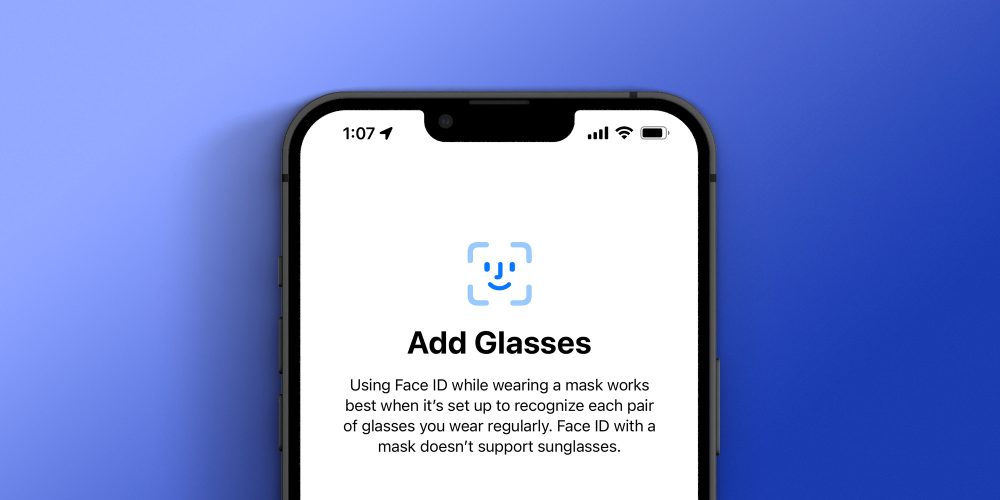
With iOS 15.4 beta 1 Apple is starting to test the ability to use Face ID while wearing a mask but without the need for an Apple Watch around. Not only that, but the company is also improving glasses support.
Mask support was first spotted by YouTuber Brandon Butch. On the screenshot, you can read Apple’s explanation about this feature:
“Face ID is most accurate when it’s set up for full-face recognition only. To use Face ID while wearing a mask, iPhone can recognize the unique features around the eye to authenticate.”
With that, you can set up the facial recognition feature with or without a mask. You won’t need to wear a mask during setup though, even if you choose facial recognition with a mask.
To set this new feature, just head to your iPhone settings, “Face ID & Passcode,” and choose “Use Face ID with a mask.”
Although Apple is at least two years behind, this feature is very handy as a lot of iPhone users don’t have an Apple Watch. Even though unlocking your phone with the Watch can be useful, anyone around you can also unlock your iPhone.
With this new iOS 15.4 feature, it will be possible to unlock your iPhone with the facial recognition feature focusing on your eye area to authenticate.
Face ID works better with glasses on iOS 15.4
Alongside the ability to unlock your face with a mask, Apple is improving Face ID recognition while wearing glasses. The company explains:
“Using Face ID while wearing a mask works best when it’s set up to recognize each pair of glasses you wear regularly. Face ID with a mask doesn’t support sunglasses.”
If you remember when Apple announced the iPhone X, it disclaimed that some sunglasses wouldn’t work with Face ID depending on the lenses. Since setting up facial recognition with a mask requires the TrueDepth system to analyze only your eye area, it wouldn’t make sense if this part is covered with sunglasses. It appears regular glasses are still fine, even with a mask.
As the company is still working on iOS 15.4, it will take some time until you can take advantage of these features. In the meantime, you can read our tutorial on how to improve the iPhone’s facial recognition with a mask here.
What do you think of these changes? Are you excited to try them out? Let us know in the comment section below.
Amazon’s Devoted Cloud Customers Face A Decision After Outages: Leave, Stay Or Diversify?
As companies increase their reliance on cloud providers to store vital data, a rash of AWS outages has riled clients, with some looking to hedge their bets with access to other platforms.
When Amazon Web Services suffered its third major outage in a matter of weeks last month – affecting millions of people, from Citi Bike riders to Disney+ viewers and Delta Airlines customers – almost none of its corporate clients expressed frustration publicly.
But within boardrooms and corner offices, the most recent outage on December 22 was the latest reminder of the risks of relying on a single cloud vendor. “The AWS outages were a black eye for the company as more enterprises race to the cloud,” says Dan Ives, an analyst at Wedbush Securities.
AWS has long been the cloud leader, holding 41% of the global cloud infrastructure market, and generated $16 billion revenue in the third quarter of 2021. Though as a first-mover cloud vendor since it launched in 2006 – becoming essential for small and medium businesses looking to outsource their networks – AWS has been fending off tough competition from Microsoft, which Gartner says grew twice as fast as AWS in 2020 as it moved to secure large corporations. Microsoft doesn’t break out its public cloud revenue, but the most recent comparable figures from Gartner show that in 2020, Azure generated $12 billion revenue from public cloud infrastructure services, compared to $26 billion by AWS. (Google Cloud trailed at $4 billion).
Now that outages have reinforced the risks of relying on one vendor, signs that corporations are increasingly turning to Microsoft are starting to emerge. Research published this month by Bank of America shows that 23% of chief information officers at 185 large companies around the world expect to spend most of their cloud budgets over the next 12 months on Microsoft Azure, compared with 11% for Amazon AWS.
A spokesperson for AWS contended that the company has a better track record of reliability than any other cloud provider. “Pioneering this level of reliability at the scale of AWS is an unprecedented engineering accomplishment,” the spokesperson said in an email. “However, we understand how critical our services are for customers and their end users, and we're not satisfied unless performance is indistinguishable from perfect.”
AWS also said it believed clients should stick to multiple cloud regions within AWS, rather than entering multi-cloud agreements with other vendors to manage exposure to outages. “A multi-cloud architecture is technically complex, creates increased latency, and results in lower actual availability and resiliency than architecting for high-availability on AWS,” the spokesperson said.
Microsoft declined to comment.
Companies are typically reluctant to talk publicly about their cloud strategies and how much they spend, especially if it relates to a single vendor. Forbes asked 45 companies affected by the AWS outages – including McDonald’s, Toyota and Coinbase – whether they use multiple cloud vendors or were considering doing so, and whether the recent AWS outages had prompted them to change their cloud strategy.
Ride-sharing service Lyft previously made perhaps the boldest statement against Amazon after the most recent AWS outage turned off the Citi Bike stations it operates in New York and New Jersey, saying “we're as frustrated as our riders.” Lyft, which had said it planned to “build redundancy” into its system, declined to comment further, or say whether it was considering moving to another cloud vendor. When asked about whether the AWS outages had prompted a rethink of its reliance on AWS, a spokesperson for Toyota underscored the need for companies to review their strategies when the system fails, and that for larger companies, it “may mean a more complex build-out utilizing more than one cloud vendor.”
American Express, another AWS customer, echoed the need for access to multiple clouds. Evan Kotsovinos, American Express’ global head of infrastructure, wouldn’t say whether Amex was affected by the AWS outages, but says the company has resiliency built in across its network because it has agreements with multiple vendors, in multiple regions. Amex has been building out its relationship with Oracle, for instance. “Different clouds have different strengths,” says Kotsovinos. “And so if you really want to get the maximum value out of the clouds, you've got to put the right applications in the right cloud.”
Others, meanwhile, affirmed their loyalty to AWS, despite the outages. Atlassian, which runs all of its products on top of AWS, told Forbes that it is not considering other cloud vendors. Atlassian CTO Sri Viswanath added that the company is unconcerned by the AWS hiccups. “Our engineering teams regularly war-games downtime scenarios,” Viswanath said in a statement. “So when the AWS outage happened, we had mitigation plans in place and were able to limit the overall impact to our customers.”
1Password, a password management company valued at $6.8 billion after a funding round this month, confirmed it uses a single AWS region, but said it offsets the risks of outages by encrypting its clients’ data locally. “At the end of the day, our decisions are made based on best-in-class infrastructure providers, and our choices aren’t triggered by any single event," 1Password’s CTO Pedro Canahuati said in a statement.
And a spokesperson for Slack said “our strategy for cloud platform partners has not changed and we look forward to continuing our work with AWS.”
To be clear, Microsoft Azure and Google Cloud also encounter outages. In October, Azure customers were unable to access a suite of services for eight hours. And in November, company websites of Snap, Home Depot and Spotify and others were down after Google Cloud experienced an outage caused by a network configuration glitch. Outages also occur as a result of issues with edge cloud services, which often provide “last-mile” connections from the vendors, such as Akamai and Fastly.
And a major migration to multi-cloud environments – where large companies use more than one vendor – has been underway since 2019, a movement accelerated by the pandemic, which forced companies to outsource their networks as their employees worked from home. A survey by cloud-research firm Futuriom published in October found that 55% of large companies were currently using two or more cloud vendors, while 83% were assessing multi-cloud networking.
Amazon’s efforts to keep cloud customers loyal has been increasingly suffering from the perception it may compete with them. Capital One, among AWS’ largest clients, announced at the annual AWS re:Invent conference in November 2020 that it was “going all in on the cloud” by closing all of its data centers and had migrated its networks to AWS. But Capital One told Forbes it has signed agreements with other cloud vendors, which it says it leverages “for niche use cases.” Given Amazon’s lofty ambitions in the financial services sector, Capital One’s niche agreements with other vendors are likely to grow, says Steve Mullaney, the CEO of Aviatrix, which helps companies including Capital One manage multiple cloud environments. “What's in your wallet?” Mullaney says, echoing the bank’s tagline. “Well, guess what: Maybe an Amazon card.”
In a statement, a Capital One spokesperson said: “Capital One was the first major US bank to fully exit data centers and go all in on the cloud. We chose AWS as our predominant cloud supplier for the breadth of services, and today are one of the largest AWS users, alongside tech leaders like Netflix.”
For now, the outages are the most recent reminder for large corporations of the risk of relying on one cloud, Mullaney says. The AWS outages were “gasoline on the fire,” Mullaney says. “The last remnants – the laggards – it probably accelerated those people” to go multi-cloud.
IMF Says China’s Economic Imbalances Have Worsened
Chinese growth in 2022 now forecast at 4.8%, down from prior outlook of 5.7%
Imbalances in the Chinese economy have worsened and delayed China’s transition to consumption-led growth, the International Monetary Fund said in an annual review on Friday, slashing its outlook for the country this year.
The IMF assessment, in its Article IV review, reflects growing concern among some economists and officials that greater state intervention in the economy could be hindering China’s long-held goal of “high-quality” growth—one driven by consumption rather than investment.
Beijing has pulled off an impressive economic recovery since early 2020, when authorities locked down much of the country to combat the Covid-19 pandemic. The economy grew 8.1% last year, a sharp improvement from 2.3% for all of 2020. But the rebound has relied heavily on state-sector investments and exports, while private spending has plunged. And in the final months of 2021, growth slowed markedly.
Authorities’ strict pandemic restrictions have made consumers hesitant to spend. A cascade of policy measures over the past year—centered on reining in what President Xi Jinping views as capitalist excesses, including property speculation—have also damped the sentiment among both private businesses and individuals.
Reflecting continued weakness in consumption, the IMF now expects China’s gross domestic product to expand 4.8% this year, down from its previous projection of 5.7%. “Growth momentum has slowed considerably, with consumption lagging every other part of the GDP,” said Helge Berger, the IMF’s mission chief for China.
What’s more, states the IMF review: “The investment-driven recovery has reversed earlier, hard-won progress in rebalancing, adding to the challenges of achieving sustainable high-quality growth over the medium term.”
China’s leadership is likely to set a growth target of about 5.5% for 2022, according to Chinese economists who consult with the government. While the figure might seem low for a country that has consistently boasted world-beating growth rates, it might still prove overly optimistic, given that economic expansion sharply decelerated to 4% in the final quarter of last year.
Some economists have questioned the rationale behind what they see as an ambitious growth target, as it inevitably would entail greater government spending on big-ticket projects, further pushing up China’s already-high debt levels.
But there is political pressure to ensure still-strong growth ahead of a major Communist Party conclave late in the year, when Mr. Xi is expected to claim a tradition-busting third term. Part of his belief that “the East is rising and the West is in decline,” said a government-affiliated Chinese economist, involves China’s economy continuing to outperform that of the developed world, especially the U.S.
The U.S. economy expanded 6.9% in the fourth quarter, capping the strongest year of growth in nearly four decades.
To bolster sagging economic activities, Beijing has stepped up monetary and fiscal easing, cutting interest rates, prodding banks to lend and getting local governments to increase infrastructure-related spending.
“We’d like China to do better than 4.8%,” Mr. Berger of the IMF said. “But what’s currently in the policy pipeline is not enough.”
IMF recommendations to Chinese authorities include allowing a higher fiscal deficit, which could let the government slash taxes on businesses, or a redirection of government resources toward households as opposed to more public investments.
“Channeling funds into the pockets of low-income families could help spur consumption,” Mr. Berger said.
But so far, China’s policy makers have focused on using supply-side measures to boost production as opposed to taking steps to lift consumer spending in any meaningful way.
The uneven recovery in China’s economy is also amplifying a trend of declining growth in productivity, or output per worker and unit of capital, according to the IMF report. China’s productivity growth has declined markedly in recent years, as the state sector gets bigger, crowding out private firms that tend to be nimbler and more profitable.
The report shows that state-owned enterprises are, on average, only 80% as productive as private firms in the same sector. Yet, state companies are playing an increasingly important role in China’s economy, with authorities turning to them to ensure supplies during the pandemic and implement Beijing’s technological self-sufficiency drive amid increased tensions with the West.
The IMF has called on China to carry out long-awaited state-sector reforms and to make it easier for private firms to compete with state companies.
Beijing partly blames delays of such reform on a tense climate with major trading partners, primarily the U.S.
According to the report, Chinese authorities have stressed to the IMF that “external decoupling pressures” are adding economic headwinds, which Beijing says necessitates giving state-owned firms a bigger role in strategic sectors.
>>> Up
* Abcam Raised to Hold at Stifel; PT 1,200 pence (+)
* Accor Raised to Buy at HSBC; PT 39 euros
* Interroll Raised to Neutral at Credit Suisse (+)
* ITV Raised to Overweight at Barclays; PT 160 pence
* Jungheinrich Raised to Buy at HSBC; PT 54 euros
* Kion Raised to Buy at Baader Helvea; PT 108 euros
* Kion Raised to Buy at HSBC; PT 100 euros
* Mediaset Espana Raised to Outperform at Renta 4; PT 7.16 euros
* Neste Raised to Hold at SocGen; PT 40 euros
* Premier Foods Raised to Hold at HSBC; PT 120 pence
* S4 Capital Raised to Overweight at Barclays; PT 730 pence
* Sartorius Raised to Buy at SocGen; PT 612 euros (+)
* Sartorius Stedim Biotech Raised to Buy at SocGen; PT 510 euros (+)
* SEB Raised to Hold at Handelsbanken; PT 128 kronor
* SEB Raised to Buy at Nordea; PT 131 kronor
* Siemens Healthineers Raised to Buy at Jyske Bank; PT 70 euros (+)
* Software AG Raised to Buy at Bankhaus Metzler; PT 38 euros (+)
* STMicroelectronics ADRs Raised to Outperform at Baird; PT $62
* Vinci Raised to Buy at Stifel; PT 109 euros
>>> Down
* ABB Cut to Hold at SEB Equities; PT 34.23 Swiss francs
* AB Foods Cut to Sell at Goldman; PT 2,060 pence
* Almirall Cut to Neutral at Exane; PT 11 euros
* Alstom Cut to Neutral at Exane; PT 33.50 euros
* Elisa Cut to Underweight at Barclays; PT 54 euros
* Granges Raised to Buy at Nordea; PT 139 kronor
* Lassila & Tikanoja Cut to Sell at Carnegie; PT 11 euros
* Orpea Cut to Hold from Buy by Jefferies, PT cut from EUR138 to EUR43
* PGS Cut to Sell at Pareto Securities; PT 1 krone
* PGS Cut to Sell at Fearnley; PT 1 krone
* PGS Cut to Equal-Weight at Barclays; PT 3 kroner
>>> Initiation
* CarMax Rated New Buy at Citic Securities; PT $130
* Daimler Truck Rated New Overweight at Morgan Stanley
* Schibsted Reinstated Hold at Berenberg; PT 270 kroner (+)
>>> Call
* Ferragamo 4Q Beat But ‘Significant’ Market-Share Loss: Jefferies (+)
* Givaudan Shares May Drop Post 4Q Miss on Margins: Jefferies (+)
* H&M 4Q Results Show Strong Earnings Beat, Bryan Garnier Says (+)
* JCDecaux Results Blow Through Expectations, Berenberg Says (+)
* Morgan Stanley Strategists Raise Europe Telecoms Amid Volatility
* U.S. Financials Cut on Slowing Growth: Goldman Strategists (+)
China Insight: The Certainty and Uncertainty of the Metaverse
The metaverse offers the Chinese fashion industry both immense opportunity and creates potential concerns of its impact on the economy and consumers.
In 2021 — a year filled with ups and downs, twists and turns — Facebook renamed itself Meta while Gucci, Burberry, Balenciaga and numerous other luxury brands rushed into the metaverse and the world of NFTs.

Gucci’s cooperation with virtual social space Zepeto.png.
But what is happening in China, the world’s most-developed digital market, as a result of this technological innovation?
There has never been a new industry in China that has attracted such feverish attention and enthusiasm as the metaverse, with a huge influx of capital from investors, a flurry of “bets” made by the business world and a steady stream of research from the scientific and economic communities. The Chinese fashion industry is rushing into this new world, too, vigorously exploring its deeper dimensions.
Against this backdrop, how can China’s fashion industry balance certainty and uncertainty as everyone seeks to determine what the metaverse will actually mean in the long term for brands — and consumers?
Last year was nicknamed the “First Year of the Metaverse.” At the beginning of 2022, “metaverse” was written into the government work reports of Hefei and Wuhan, meaning the concept would enter a phase of development where opportunities would be explored, as if grasping it would mean grasping the wealth code of the new era.
But even as the concept of the metaverse gained momentum, the fashion industry was increasingly adopting digitalization. Luxury brands such as Louis Vuitton, Balenciaga and Burberry launched their NFT games to lay out a metaverse; Gucci has released digital sneakers; Adidas created the ‘adiVerse’ in the Sandbox metaverse, and Nike has opened a virtual flagship “Nikeland” on Roblox.
In China, companies have taken a more multidimensional approach to the metaverse, applying it to design and development, marketing and creativity, and manufacturing, as well as permeating it throughout the infrastructure of their digitalization process.
Examples include the digital showroom created by Ellassay, a women’s apparel brand; the intelligent metaverse platform for the manufacturing industry created by business leaders such as Haier; the apparel 3D digital tool chain continuously refined by technology newcomer Style3D with the goal of getting the entire industry to digitally upgrade by linking upstream and downstream, and the early registration of the metaverse trademark by Chinese national brand Heilan Home.
The metaverse is stirring up competition in the already turbulent fashion industry. While leading companies are competing for creativity and disrupting models in the real world, a new battlefield in the virtual one is also being created.
To learn more about the concept, WWD China spoke with renowned Chinese economist professor Zhu Jiaming, who has been invited to serve as a special consultant by governments and enterprises to help solve their problems concerning the metaverse. Zhu believes that the biggest questions from Chinese enterprises about the metaverse are whether it is a golden business opportunity and whether it will bring about the next wave of the digital economy. At the same time, the government is more concerned about the risks involved in the metaverse and the need to match regulation with assistance to develop it; the impact of the metaverse on the real economy, and whether it can provide more jobs and become a new driver of economic development.
Zhu predicted that 2022 will be a critical year for the integration of the metaverse into the operations of all industries in China.
The Metaverse + Intelligent Manufacturing
According to Zhu’s analysis of the Chinese market developments in 2021 the country is likely to take a leading role in combining the metaverse with education, culture and the intelligent manufacturing industries. In particular, the intelligent manufacturing sector represented by the apparel industry but also in a wider sense the overall lifestyle industry is being fully integrated within the real economy, giving new models and values to traditional sectors. The essence of the metaverse is to combine the real world with the conceptual or virtual one mapped out through virtual reality technology. To sum up the development of the metaverse in the past 10 months or so, Zhu believes that there are two main avenues: first, it continues to develop in the virtual world, with NFTs being the most important product in the fields of gaming, art and finance; second, the metaverse increasingly is being combined with the real world. In terms of the latter, we are seeing strong local policies in China to support the development and integration of the metaverse with the real economy, with Shanghai’s Pudong district, and cities like Hefei and Wuhan in Central China being at the forefront.
Meng Yi, the director of the Haier Institute of Clothing Online, believes that as the foundation of the experience economy, the goal of the metaverse and Web 3.0 is inevitably to leapfrog the current technology and business model in order to put the user at the center to bring value growth by enhancing the user experience.
As one of the earliest home appliance and IoT companies with a global presence, Haier has continued to strengthen its efforts in the field of intelligent manufacturing. In August 2021, Haier took the lead in releasing the first smart metaverse platform for the manufacturing industry, covering industrial internet, AI, AR, VR and blockchain technology. It helps to realize the physical and virtual integration of smart manufacturing and improve the consumer experience through the integration of “factory, shop and home.”
On Dec. 29, the “Industrial Internet Platform for the China Garment Industry” was jointly launched with the China National Garment Association targeting the country’s apparel sector. The platform aims to help Chinese apparel companies with the research, development, convergence, exchange and application of the industrial internet. On the consumer end, hardware known as the “intelligent cloud mirror that knows what to wear” links consumers, shops and factories through cloud data in a “small metaverse embodiment way” and connects personalized and customized demand with the advanced industrial internet intelligent manufacturing system.
Metaverse + NFT + Luxury Products
The rising metaverse is enabling NFTs to gain global popularity, especially in luxury goods. In November 2021, Morgan Stanley published a report stating that the market for luxury NFTs could reach $56 billion by 2030 and that demand could increase “dramatically” due to the rise of the metaverse.
Zhu thinks Morgan Stanley’s statistics are quite conservative, believing the metaverse will grow at a much faster pace. The exclusivity and uniqueness of luxury goods means they inherently are the easiest to combine with NFTs, but NFTs alone aren’t enough — there must be a more profound experience and engagement, meaning the metaverse is needed. This makes the metaverse plus NFTs plus luxury goods a new trend in the fashion industry with explosive potential.
According to Zhu, things like luxury goods used to be subject to many limitations, from production to consumer engagement. Now the metaverse is breaking down these limitations offering new ways and possibilities to connect with and experience the value of luxury goods. Therefore, the luxury industry will be one of the fastest growing sectors in the metaverse.
In the future, consumers will be able to purchase luxury goods both offline and in the metaverse, with the only difference being that offline has a material form and is relatively slow to be updated and replaced, while consumption in the virtual world is free from many restrictions. All consumers of luxury goods will be able to participate in the creation and design of the luxury goods themselves in the metaverse, bringing about a disruptive change in the industry.
The explosion of the luxury sector in the metaverse might be a model for fashion overall. Through the metaverse, brands will gain better insights into consumers’ perceptions and experiences of clothing, and together with consumers create products in terms of styles, trends, colors and more. In the future, the metaverse will be an important tool for pushing a radical revolution.
How can such a disruptive revolution be achieved? Digital technology plays an infrastructure-like role in this.
Avatars for real people are the core carrier of the metaverse. Digital clothing, as a basic element of avatars, carries the cultural emotions and artistic aesthetics of the metaverse, and serves as the foundation of metaverse fashion.
Style3D, a leading Chinese digital apparel company, is becoming an important content provider in the metaverse. It has developed a digital apparel 3D tool to provide design creation and digital apparel materials for customers who need virtual fashion, helping them build the “digital fashion infrastructure” of the metaverse with both tools and content.

Digital clothing designed with Style 3D.
COURTESY
As Zhu said, 3D was considered a technological revolution in the past, which actually underestimated the significance of VR, AR and MR technologies. Nowadays, 3D is being fused with VR technologies and the metaverse. Style3D combines upstream and downstream information with highly realistic digital samples, creating a complete digital tool chain, linking garments from fabric research and development, style design, marketing and production and realizing the digitalization of the whole chain. This tool helps fashion enterprises to establish digital garment centers, digital fabric centers and digital showrooms. The digital tools can be used not only for exhibition and sales, but also to link to the production side, saving R&D costs and improving the efficiency of collaboration.
Such a model creates a new digital fashion ecosystem driven by design software plus digital content plus collaborative platforms.
While the metaverse will bring to reality many long-dreamed ideas, it also is facing uncertainties in China. This is mainly due to the speed of its development, people’s expectations and the government’s policy on the concept, which depends on its overall impact on the economy and society.
But beyond the concept itself, the main driver will be ongoing digitalization, which in future will see the consumers who grew up with the digital economy and mobile internet put the metaverse at the core. For the fashion industry, how to use digital technology as a tool to engage with the three generations who were born without psychological and technical barriers to the metaverse will be the key challenges to overcome before they can truly open up this new world.
Kim Kardashian’s Skims Raises $240 Million in Latest Funding Round
The added investments double the innerwear brand’s valuation.