Gapping down
In reaction to earnings/guidance:
- VRT -40.1%, RXT -23.2%, CSGP -23.1%, MNDY -16.3%, WK -12.4%, VIPS -10.1%, BCRX -8.8%, RSKD -7.4%, TJX -7.4%, SPNS -6.2%, PUMP -5.5%, MOS -4.9% (announces dividend target increase; also new $1 bln share repurchase program), SBGI -3.7%, BHC -3.4%, APG -3.2%, TUP -3%, JBT -2.5%, NI -2.1%, PRG -2%, API -1.7% (also approves $200 mln ADS repurchase program), TDOC -1.3%, NHI -1.3%, FYBR -1.3%, NDSN -1%, BTG -1%, PEN -0.9%, RIO -0.9%, BCO -0.8%, ROCK -0.8%
Other news:
- KOD -68.7% (announces top-line results from its initial Phase 2b/3 Study of KSI-301 in patients with neovascular (wet) age-related macular degeneration; did not meet the primary endpoint)
- OCGN -19.6% (prices offering of 15973420 mln shares of its common stock for gross proceeds of ~$53.5 mln)
- MRNS -10.6% (to delay RAISE Phase 3 trial in status epilepticus and associated IV ganaxolone clinical trials)
- CNHI -2.1% (announces updated 2024 strategic plan and presents 3-yr targets)
- NCNA -1% (completes enrollment for Phase III NuTide:121 study)
Analyst comments:
- MAX -2.8% (downgraded to Neutral from Buy at Citigroup)
- DV -2.5% (downgraded to Neutral from Overweight at JP Morgan)
- NOV -2.5% (downgraded to Sell from Neutral at Goldman)
Gapping up
In reaction to earnings/guidance:
- HIMS +15.5%, SKIN +13.9%, MELI +10.4%, CDNS +10.1%, NU +8.6%, OSTK +8.4%, PANW +7.7%, LL +7.3%, STLA +6.9%, HCC +6.8%, INDI +5.7%, RRC +5.3% (also reinstates dividend, authorizes $500 mln share repurchase program), BCS +5.2%, OMI +5%, CZR +4.8%, SPCE +4.3%, PCOR +4.2%, PLAB +4%, MAXR +3.6%, TXRH +3.2%, SPT +3.2%, LOW +3.1%, CWH +3%, BWXT +2.9%, GKOS +2.9%, EPR +2.8%, VNOM +2.7% (also increases dividend), RNG +2.5%, TBLA +1.9%, RDN +1.9%, KTOS +1.7%, CLH +1.7%, CUTR +1.6%, GIL +1.6%, LPI +1.5%, O +1.5%, VRSK +1.4%, ESI +1.3%, FANG +1.2% (also increases dividend; also announces a series of leadership appointments and promotions), HFC +1.2%, TOL +0.9%
Other news:
- TEN +93.1% (agrees to be acquired by Apollo (APO) funds for purchase price of $20.00/share in cash)
- MYNZ +13.3% (provides U.S. regulatory review update for ColoAlert)
- RLMD +12.8% (top-line results of study evaluating REL-1017 vs ketamine for abuse potential)
- EVR +2.7% (authorized a share repurchase program of up to the lesser of $1.4 bln or 10 mln shares of Evercore Inc. Class A common stock and/or Evercore LP Units)
- FUV +2.6% (begins operations in new RAMP manufacturing facility in Oregon)
- STRL +2% (awarded $160 mln in projects during Q4 in Specialty Services segment)
- SNY +1.9% (Sanofi and GSK to seek regulatory authorization for COVID-19 vaccine)
- GSK +1.8% (Sanofi and GSK to seek regulatory authorization for COVID-19 vaccine)
- MRNA +1.4% (announces distribution agreement covering Latin America)
- PANL +1.4% (names new COO)
Analyst comments:
- OLPX +6.3% (upgraded to Buy from Hold at Jefferies)
- ARCO +2.1% (upgraded to Outperform from Neutral at Credit Suisse)
- FLR +2% (upgraded to Outperform from Neutral at Robert W. Baird)
- NYMT +1.7% (upgraded to Outperform from Mkt Perform at Keefe Bruyette)
- INTC +1.4% (upgraded to Mkt Perform from Underperform at Raymond James)
Research Calls II
- Upgrades:
- Cadence Design (CDNS) upgraded to Buy from Hold at Berenberg; tgt $180
- Marathon Oil (MRO) upgraded to Overweight from Neutral at Piper Sandler; tgt raised to $27
- Downgrades:
- Altice USA (ATUS) downgraded to In-line from Outperform at Evercore ISI; tgt lowered to $15
- CEMEX S.A. (CX) downgraded to Neutral from Outperform at Credit Suisse; tgt $6.40
- Eversource Energy (ES) downgraded to Underperform from Neutral at BofA Securities; tgt $80
- Quest Diagnostics (DGX) downgraded to Neutral from Buy at UBS; tgt lowered to $139
- Star Bulk Carriers (SBLK) downgraded to Hold from Buy at Pareto; tgt $30
- UWM Holdings (UWMC) downgraded to Neutral from Buy at UBS; tgt $5
- Others:
- Affimed Therapeutics (AFMD) initiated with an Overweight at Cantor Fitzgerald; tgt $12
- Credo Technology Group (CRDO) initiated with a Buy at ROTH Capital; tgt $20
- Rocket Lab USA (RKLB) initiated with a Buy at ROTH Capital; tgt $20
- SentinelOne (S) assumed with a Mkt Outperform at JMP Securities; tgt $65
- Tailwind Two Acquisition Corp. (TWNT) initiated with a Buy at The Benchmark Company; tgt $16

Supply chain sources say that Apple AR headset testing has now reached the next phase of engineering validation after moving beyond the prototype stage.
This means there are now likely 100+ units that combine the functionality of the final device with something that looks less like a prototype and more like a real product …
Background
Apple’s long-term ambition is believed to be a product dubbed Apple Glasses – a device with a similar form factor to standard eye-glasses, but with built-in augmented reality display overlayed. This is still years away yet.
Before then, we’re expecting a mixed-reality headset, combining virtual reality and augmented reality. This is likely to be an expensive device pitched mostly at developers and other professionals, launching either this year or next. We’re already seeing references to realityOS – the operating system for the device – in Apple open-source code.
Development phases
Apple’s design and testing process is of course a closely guarded secret. However, we know from former design head Jony Ive that the company favors making non-functional physical mockups at a very early stage, to get a more concrete sense of how different form factors might look and feel.
In parallel to this, other teams will work on the functionality, starting with bare-board versions and moving on to more fully formed prototypes.
Once the team has a prototype everyone is happy with, the next stage is known as engineering validation testing, or EVT. This is the point at which the company produces a very small run of devices that have both the functionality and look and feel of the final product. There may be multiple iterations of this stage, known as EVT 1, EVT 2, and so on.
Apple AR headset testing reaches EVT 2
A paywalled Digitimes report states that the headset has reached the EVT 2 stage.
Apple has reportedly conducted its second-phase engineering validation and testing (EVT 2) for its first AR headset, which is expected to debut by the end of 2022, according to sources at component suppliers.
Typically, around 50 products would be made at each EVT stage, meaning there are now probably at least 100 devices within Apple’s walls.
Following this, the next stage will be Design Validation Test (DVT), which aims to perfect the production process to ensure both functional and aesthetic requirements are met. This is also the point at which the robustness of the design is tested, with drop-tests, water immersion, and so on. Finally, DVT units are also submitted for regulatory approval.
The final stage before mass production is production validation testing (PVT), which is low-volume production to ensure that the manufacturing process works as expected. It was yesterday reported that the iPhone 14 has reached this stage
UK should bring forward tax rises to fight inflation, IMF says
Fund calls for chancellor to impose higher taxes on rich while sparing poorer households
The IMF said on Tuesday that Rishi Sunak should bring forward planned tax increases to limit the risk of persistently high inflation, even though it would tighten the financial squeeze on Britain’s households.
In its annual assessment of the UK economy, the fund said the chancellor should spare poorer households and impose higher income and wealth taxes on richer people. The advice would help prevent the need for tougher action in the months ahead to bring down inflation, it said.
The fund’s gloomy assessment comes as the UK economy faces a rise in inflation to 7 per cent in the coming months, with households facing their biggest squeeze on living standards for 30 years.
The fund added that in the short term the Bank of England should not increase interest rates rapidly or it could risk tipping the economy into recession.
With inflation forecast by the fund and the BoE to hit 7 per cent in April, when the government’s energy price cap rises 54 per cent, the IMF said the central bank should be “steadily adjust[ing interest rates] towards a neutral setting”, which it said was between 1 per cent and 1.5 per cent.
But even with a tightening of monetary policy of this amount, the risk was that inflation would remain too high for too long and become ingrained into UK price setting and wage demands, the IMF said.
It said indicators of wage settlements, corporate pricing intentions, survey and market-implied inflation expectations all “flashed red at present” but added that the BoE had a difficult task in balancing the risk of snuffing out the recovery if it raised rates too quickly and letting high inflation become embedded in UK life. “At present, the data suggest that the latter risk is of greater concern,” the IMF staff concluded.
Giving evidence to the Treasury select committee of the House of Commons, Andrew Bailey, governor of the BoE, took a similar position on the threats of persistently high inflation. He said there was “very clearly” a risk that high price rises and high wage increases could continue.
After facing criticism for telling people not to ask for high wage increases, Bailey said: “It’s not just wage setting, it’s also price setting . . . it’s both. There is very clearly an upside risk there. The upside risk . . . comes through from the second-round effects.”
With this fear and the balancing act faced by the BoE, the fund staff said Sunak could help bring inflation under control with earlier than planned tax increases.
“The authorities could bring forward some fiscal tightening from 2023-24 to 2022-23 to help contain demand in the short run with the benefit of also reducing the drag on growth in outer years”, while using contingency funds to help the poorest, the IMF concluded.
But it added that this should be dropped if a new virulent coronavirus wave hit the economy, with the government again implementing the exceptional support offered during the pandemic.
The recommendation of what the IMF staff called a “rotation” from monetary to fiscal tightening to contain inflation was controversial when it was put to the IMF board earlier this month.
Shona Riach, the UK’s lead official on the IMF board, ignored the recommendation to bring forward tax increases in her formal response, while the account of the board meeting showed that “a few directors questioned the political feasibility of this suggestion”.
Russia's Ministry Of Finance Submits Bitcoin Bill Proposal
The draft bill comes after the government gave the green light to Bitcoin regulation, disregarding the Bank of Russia’s concerns.
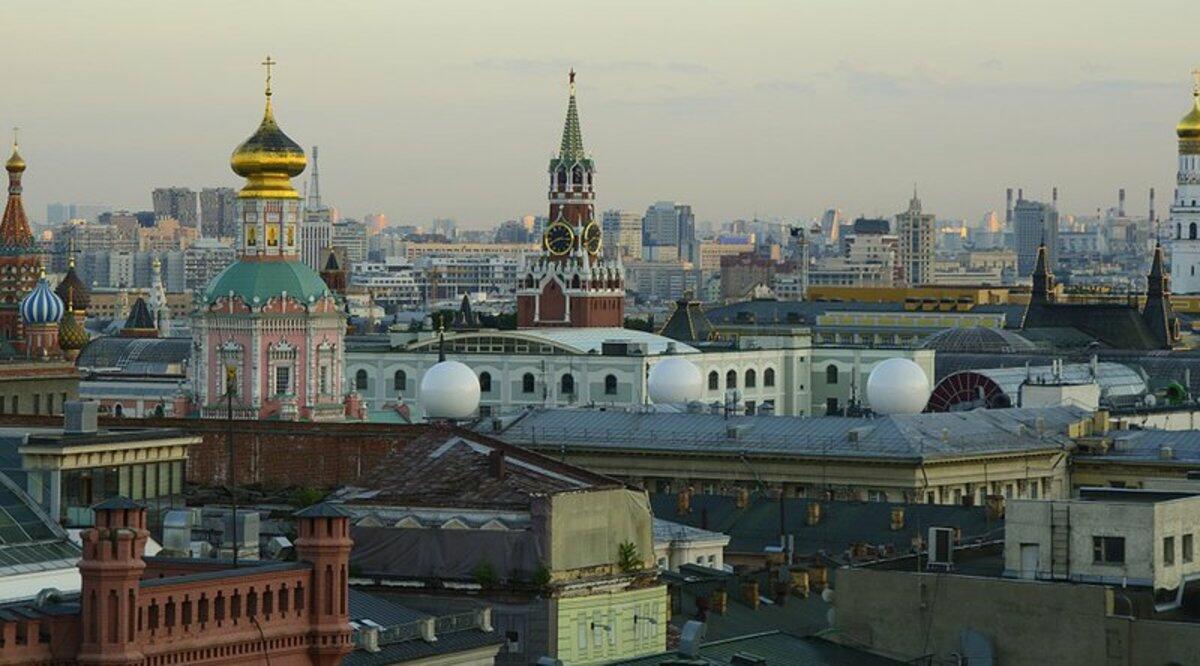
Russia’s Ministry of Finance has submitted a draft bill on Bitcoin regulation in the country, weeks after the government approved the concept of creating legislation specifically for cryptocurrencies.
“The use of digital currencies as a means of payment on the territory of the Russian Federation will continue to be prohibited,” the Ministry of Finance said in a statement Monday.“Under the proposed regulation, digital currencies are considered solely as an investment vehicle.”
The draft bill comes after an intense dispute between the Bank of Russia and the Ministry of Finance, which hold opposing views regarding the optimal future of bitcoin and cryptocurrency regulation in the country. While the ministry has strived to accommodate the burgeoning technology into a legal framework, the central bank has called once and again for a complete ban on the trading and mining of bitcoin.
Earlier this month, the Russian government gave the ministry the green light to propose a bill encompassing the regulation of cryptocurrency, effectively discarding the Bank of Russia’s suggestions that the proliferation of bitcoin should not be allowed in the country and outlining an initial plan for the legislation.
The decision to move forward with regulation instead of a ban came on the heels of signals sent by Russian President Vladimir Putin, who in late January highlighted the country’s competitive advantages in bitcoin mining – an industry he supports.
The bill submitted by the Ministry of Finance provisions several restrictions for Russians interested in investing in bitcoin, including identification requirements, yearly investment limits, and custody arrangements, according to the statement.
Russians will have to provide their personal information to buy or sell bitcoin on regulated exchanges, though it is still unclear how much information will be necessary. Users will also only be allowed to buy about $7,700 worth of bitcoin per year upon successful completion of a testing procedure to assess their knowledge level of cryptocurrency. If they fail the test, they will only be able to purchase up to roughly $650 worth of bitcoin per year.
Bitcoin deposits and withdrawals to and from an exchange will only be allowed through accounts in a bank, the statement said. It seems, therefore, that users’ won’t be able to withdraw bitcoin to a self-custody wallet.
“In addition, for the safety of clients’ funds for crypto-exchanges, a nominal account mode is introduced, on which the funds of bidders will be located,” per the statement.“Exchanges and exchangers will be required to maintain registers indicating the addresses – identifiers of each holder of digital currencies.”
The bill also distills requirements for these service providers to operate in the cryptocurrency market, including details on corporate governance, reporting, information storage, internal control and audit, risk management measures, and the number of reserves that need to be held.
* * *
[ZH: We note that this decision comes shortly after Ukraine legalizes bitcoin, and as Mike Hobart recently opined, the timing of this move by Russia is intriguing to say the least:
Now, for a really big question, “big” in the sense of implications on historical, geo-political and even individual levels of “big.” Where does Bitcoin fit in?
In incentivizing mining operations, Russia is signaling increasing support and appreciation for the nascent asset and technology stack that accompanies Bitcoin’s network operations and incentives. Additionally, because Bitcoin operates outside of the purview of any one nation or group’s borders, the risk of sanctions is all but eliminated if trade is done via a neutral asset such as bitcoin.
Furthermore, a nation that were to adopt such a neutral asset via trade (possibly even pricing energy in bitcoin) would open up its coffers to trade with quite literally anyone, inviting an influx of demand for goods and services rendered.
The U.S. and its allies are now effectively backed into a series of corners. Can the U.S. attempt to ban Bitcoin and its transactions? It can try, but will fail. China has already tried to do so, multiple times, and the same goes for India. Not to mention, the U.S. now has a multitude of politicians advocating for Bitcoin adoption, like U.S. Senator Cynthia Lummis and state governors showing political support for the asset and network.
On top of that, there’s the massive inflows of network hash rate that came to U.S. shores after China’s infamous mining ban. And, going even further, there’s the consideration that the FDIC has been looking into providing support for American banks to hold bitcoin on their balance sheets.
As the saying goes, “Bitcoin is for friends and enemies.”
Are Russia and China pushing their agendas to not only get what they want, but also force U.S. and other Western powers into inflationary environments to weaken the petrodollar (U.S. dollar) hegemony? And, in doing so, will bitcoin be capable of proving to the world that it truly is an asset of the future, where allies and foes transact equally?
Then, in this environment, could we also see both sides pushing for Bitcoin adoption and proliferation as each side aims to keep pace with their rival(s)?]
Research Calls
- Upgrades:
- American Water Works (AWK) upgraded to Buy from Hold at HSBC Securities; tgt $182
- Arcos Dorados (ARCO) upgraded to Outperform from Neutral at Credit Suisse; tgt $9.50
- Fluor (FLR) upgraded to Outperform from Neutral at Robert W. Baird; tgt lowered to $29
- Intel (INTC) upgraded to Mkt Perform from Underperform at Raymond James
- New York Mortgage Trust (NYMT) upgraded to Outperform from Mkt Perform at Keefe Bruyette; tgt $4.50
- Olaplex (OLPX) upgraded to Buy from Hold at Jefferies; tgt $25
- Palo Alto Networks (PANW) upgraded to Neutral from Underweight at JP Morgan; tgt raised to $620
- Similarweb (SMWB) upgraded to Overweight from Equal Weight at Barclays; tgt $22
- Sunoco LP (SUN) upgraded to Buy from Neutral at Citigroup; tgt $49
- Downgrades:
- Altice USA (ATUS) downgraded to Hold from Buy at Societe Generale; tgt $12
- DoubleVerify (DV) downgraded to Neutral from Overweight at JP Morgan; tgt lowered to $32
- MediaAlpha (MAX) downgraded to Neutral from Buy at Citigroup; tgt lowered to $14
- NOV Inc. (NOV) downgraded to Sell from Neutral at Goldman; tgt $16
- Rackspace Technology (RXT) downgraded to Hold from Buy at Deutsche Bank; tgt $9
- Rackspace Technology (RXT) downgraded to Market Perform from Outperform at BMO Capital Markets; tgt lowered to $10.50
- TransUnion (TRU) downgraded to Equal-Weight from Overweight at Morgan Stanley; tgt $102
- Others:
- DoubleVerify (DV) initiated with an Outperform at BMO Capital Markets; tgt $37
- First Horizon (FHN) initiated with an Outperform at Wedbush; tgt $22
- Ginkgo Bioworks (DNA) initiated with a Neutral at Goldman; tgt $7
- MKS Instruments (MKSI) initiated with a Buy at Loop Capital; tgt $200
- Obsidian Energy (OBE) initiated with a Buy at Stifel
Early premarket gappers
- Gapping up:
- HIMS +16.7%, SKIN +12.9%, MYNZ +12.3%, OSTK +11.6%, MELI +10.3%, NU +8.5%, PANW +7.6%, VRSK +7.3%, HCC +6.8%, STLA +6.7%, PLAB +6.1%, CDNS +5.9%, INDI +5.7%, CZR +5.4%, RRC +5.3%, MAXR +5%, KTOS +4.2%, SPCE +4.2%, PCOR +4.2%, LOW +3.4%, VNOM +3.3%, BCS +3.3%, TXRH +3.2%, LPI +3.1%, EPR +3%, BWXT +2.9%, GKOS +2.9%, TNDM +2.7%, FUV +2.6%, FANG +2.6%, PSA +2.2%, STRL +2%, GSK +2%, FLR +1.9%, TBLA +1.9%, RDN +1.9%, SNY +1.7%, CUTR +1.6%, MRNA +1.4%, PANL +1.4%, ESI +1.3%, CWH +1.3%, O +1.2%, MTB +0.9%, MSFT +0.9%, IBM +0.8%, TPB +0.8%
- Gapping down:
- KOD -60.6%, RXT -23.5%, CSGP -22.3%, OCGN -18.7%, PUMP -12.1%, WK -10.3%, VIPS -9.7%, MOS -5.4%, MRNS -5%, VRT -2.7%, TDOC -2.3%, CNHI -1.7%, SPT -1.7%, SSRM -1.5%, NHI -1.3%, NCNA -1%, NDSN -1%, RNG -0.8%, PEN -0.7%