>>> What to look at today 21st of March 2022²

U.S. equity futures and stocks slipped Monday as crude oil jumped and investors monitored diplomatic efforts to bring an end to Russia’s almost month-old war in Ukraine. Shares dropped in China, Hong Kong and South Korea, where data signaled a rising energy-import bill and easing export growth. S&P 500, Nasdaq 100 and European contracts retreated. Overall, the moves pointed to a pause in global equities after their best weekly performance since 2020.
West Texas Intermediate oil rose past $108 a barrel as investors assessed the war as well as Middle East tension. Australia’s ban on exports of alumina to Russia sparked an advance in aluminum. A gauge of the dollar climbed.
Russia is pressing on with its invasion of Ukraine, which has stoked inflation by pushing up the price of key commodities such as oil and wheat. Turkey said Moscow and Kyiv are moving closer in talks toward a cease-fire. The bond market continues to flash caution about risks from the war and rising U.S. interest rates. The Treasury yield curve is flattening, and portions are inverted, which for some is an indicator of a looming economic slowdown. Treasury futures fell. There’s no cash trading in Asia due to a Japan holiday. A key question is whether last week’s stock rebound and moderation in volatility are durable. China’s vow to support its markets and economy is helping, though the wait for more easing continues after Chinese banks left borrowing costs unchanged. In China, embattled real-estate developer China Evergrande Group suspendedtrading in Hong Kong. Meanwhile, reopening stocks in the city climbed as Hong Kong moved to ease Covid-related restrictions.

Nikkei Cash Closed Hang Seng -0.80% CSI -0.20% Shanghai -0.01% Shenzen +0.63%

Eur$ 1.1036 CNH 6.3776 CNY 6.3653 JPY 119.28 GBP 1.3153 CHF 0.9340 RUB 110.5417 TRY 14.8170 WTI$ 108.28 +3.42% Gold 1,923.51 +0.10% BTC 41,050 -0.60% ETH 2877 +0.08%

S&P -0.26% Nasdaq -0.45% EuroStoxx -0.13% FTSE -0.03% Dax -0.03% SMI +0.10%

Macro :
- German Companies Fear Insolvency Because of War in Ukraine: RND
- Italy Boosts Government Powers to Veto Foreign Takeovers
- More Than 100 U.K.-Listed Companies Warn on Ukraine War Impact
- Unlike Trump, Biden Has Stock Market Far Down His Priority List
- Italy Approves $4.9 Billion Package to Curb Energy Prices

Keep an eye on :
- ABI BB : Anheuser-Busch Ends Washington Commanders Partnership: Wapo
- AF FP : Air France, KLM to Raise Long-Haul Fares on Higher Fuel Prices
- AF FP : Air France in Talks to Buy EU2B-EU3B of Embraer Jets: Les Echos
- ASML NA : ASML Sees Chipmakers Facing Equipment Shortage Next 2 Years: FT
- COIN US : Coinbase Declines After Chanos Reveals He’s Short the Stock
- CVC IPO : CVC Capital Partners Plans Amsterdam Listing, FT Reports
- DIA SM : DIA Owner LetterOne Makes Changes, Avoids Sanctions
- ENGI FP : Belgium to Extend Life of Nuclear Reactors for Another Decade
- ENI IM : ENI Lifts Force Majeure on Nigeria’s Brass Crude Exports
- ENTRA NO : Entra Signs Demerger Plan, Merger Plan for Intra-Group Transfer
- EVT GY : Evotec Gets EU3m From Bayer on Phase II Milestone
- Ferretti IPO : Ferretti Seeks to Raise Up to $301m in Hong Kong IPO: Terms
- GM US : GM Buys Out SoftBank’s Stake in Cruise For $2.1 Billion
- ICEGR NO : Ice Board Decides Not to Follow Up Dialog With CC Capital (1)
- IPG US : IPG: Interpublic Group files automatic mixed securities shelf
- BAER SW : Julius Baer Collateral Value of Russian Assets at Zero in Feb.
- LOOMIS SS : Loomis Chairman Says New CEO to Focus on Digital Payments
- LONN SW : Oasmia, Lonza Sign Manufacturing Pact for Cancer Drug Cantrixil
- MOBN SW : Mobimo Plans Capital Raise of Up to 10% of Current Share Capital
- NLSN US : Nielsen Board Rejects Proposal From PE Group at $25.40/Share
- OCDO LN : Ocado Close to Deal to Buy the Assets of Today, Sky News Says
- OASM SS : Oasmia, Lonza Sign Manufacturing Pact for Cancer Drug Cantrixil
- POG LN : MSCI Seeks Feedback on Investability of Russia-Linked Companies
- PLAN US : Anaplan to Be Bought by Thoma Bravo for $10.7b
- PAH3 GY : Porsche SE Proposes Increased Div of EU2.56/Pfd Share for 2021
- SZG GY : Salzgitter Maintains 2022 Pretax Profit Forecast
- SANT GY : S&T Sees 2022 Revenue at Least EU1.50B, Saw EU1.5B
- UCG IM : UniCredit Disposal in Limbo Underscores Challenge of Russia Exit
- VOW3 GY : Audi Plans Fully Electric A3 Model by 2027: Automobilwoche
- VOW GY : Volkswagen China Plans JVs on Battery Raw Material Supply Chain
- WLN FP : Worldline Says Business to Russia is Limited,Enforcing Sanctions
- YNDX US : Yandex Weighs Options for News Aggregation Service, Zen Platform
>>> Europe : Brokers Upgrades & downgrades - 21st of March 2022

>>> Up
* Air Products Raised to Overweight at JPMorgan; PT $275
* BAE Raised to Neutral at Exane; PT 747 pence
* Banco Santander Raised to Buy at Jefferies; PT 3.80 euros
* Eni Raised to Buy at HSBC; PT 14.90 euros
* EssilorLuxottica Raised to Buy at HSBC; PT 210 euros
* Knorr-Bremse Raised to Overweight at JPMorgan; PT 90 euros
* Merlin Properties Raised to Outperform at Exane; PT 12 euros
* National Bank of Greece Raised to Buy at Citi; PT 4.20 euros
* Sabadell Raised to Buy at Jefferies; PT 90 euro cents
* Workspace Raised to Hold at Peel Hunt

>>> Down
* Aroundtown Cut to Neutral at Exane; PT 5 euros
* Balfour Beatty Cut to Underweight at Morgan Stanley
* CaixaBank Cut to Hold at Jefferies; PT 3.50 euros
* Carmila Cut to Neutral at Exane; PT 13.90 euros
* Covivio Cut to Neutral at Exane; PT 72 euros
* Derwent London Cut to Neutral at Exane; PT 3,250 pence
* Fortune Brands Cut to Hold at Jefferies; PT $95
* H&M Cut to Neutral at JPMorgan; PT 180 kronor
* Klepierre Cut to Underperform at Exane; PT 20 euros
* LEG Immobilien Cut to Neutral at Exane; PT 110 euros
* Segro Cut to Neutral at Exane; PT 1,140 pence
* Topdanmark Cut to Sell at SEB Equities; PT 386 kroner
* TotalEnergies Cut to Hold at HSBC; PT 51.40 euros

>>> Initiation
* Funding Circle Rated New Buy at Berenberg; PT 120 pence
* Holcim Resumed Buy at Citi; PT 64 Swiss francs
* Idorsia Rated New Sell at Kempen & Co; PT 13 Swiss francs
* Otovo Rated New Buy at SEB Equities; PT 37 kroner
* S&U Rated New Hold at Berenberg; PT 2,660 pence
* Secure Rated New Buy at Berenberg; PT 1,820 pence
* St James's Place Rated New Buy at Jefferies; PT 1,740 pence

>>> Call
* Casino PT Trimmed at JPMorgan on Higher Leverage, French Outlook
* Sabadell, Santander Raised at Jefferies, CaixaBank Downgraded

WSJ : Brazil Court Withdraws Order to Suspend Telegram

Brazil Court Withdraws Order to Suspend Telegram
Supreme Court probing use of chat platform by government supporters to spread false information ahead of election

SÃO PAULO—A Supreme Court justice Sunday withdrew an order to suspend Telegram in the country after the company complied with directives to block accounts used by President Jair Bolsonaro’s supporters to spread false information.

Brazil’s highest court had given Telegram until Sunday to comply with requests to block problematic accounts, appoint a representative in the country, and come up with a plan to combat the dissemination of what Justice Alexandre de Moraes called false information.

The decision by Mr. Moraes Friday to suspend the popular social media and chat app angered many of the president’s supporters, who accused the court of censorship. The president’s office didn’t immediately comment.

On Friday, after Mr. Moraes ordered Telegram to suspend operations, Mr. Bolsonaro called the justice’s decision “inadmissible.” Speaking at a religious event, he said, “What is at stake here, in all of this, is our freedom.”

Mr. Bolsonaro, a former army captain and self-styled fan of former President Donald Trump, has been locked in a battle with the court’s justices, many of whom were appointed during previous administrations.

Mr. Moraes, who has been leading a Supreme Court inquiry into disinformation campaigns in the country, has accused some of the president’s supporters of disseminating fake news ahead of October’s presidential elections. Mr. Bolsonaro is running for re-election, but polls show that his main challenger, former President Luiz Inácio Lula da Silva, is favored to win.

Mr. Moraes said Telegram had promised to monitor Brazil’s 100 most popular Telegram channels daily, where political news circulates, and monitor news that publishes what has been posted on Telegram. Telegram didn’t immediately reply Sunday to a request for comment.

In his statement Friday following the announcement of the suspension, Pavel Durov, Telegram’s chief executive, vowed to abide by the court’s order.

(ZH) From Record Selling To Panic Buying: A Week For The Hedge Fund History Book

From Record Selling To Panic Buying: A Week For The Hedge Fund History Books

If one had to describe last week's turmoil in the hedge fund world it would be just two words: "sheer chaos", because we have finally reached a point where smart investors have given up trying to predict what comes next and instead are merely trying to react (as fast as possible) to the newsflow.
As Goldman's Prime Brokerage explains, "the desk has witnessed the increasingly high level of difficulty in terms of navigating this market (10 out of 10 difficulty?). Indeed, the most recent GS PB flows data suggests that "investors are now chasing trends – buying on rallies, selling on selloffs - instead of anticipating what comes next, as that has become virtually impossible."
Witness the latest out of GS PB over recent sessions
  • Prime Flow for Mar 11-14thth (SPX -2.03%) -- Largest $ net selling since early January
  • Prime Flow for Mar 15th (SPX +2.14%) -- Largest $ net buying in 3 weeks
  • Prime Flow for Mar 16th (SPX +2.24%) -- Largest $ net buying since late January
  • Prime Flow for Mar 17th (SPX +1.23%) -- Overall book slightly net bought (1-Yr Zscore +0.2)
The numbers in terms of actual hedge fund activity are even more remarkable:
  • Net selling from Friday (3/11) and Monday (3/14) combined was the 3rd largest over any 2-day period in the past decade (behind late Dec ’18 and early Jan ’22).
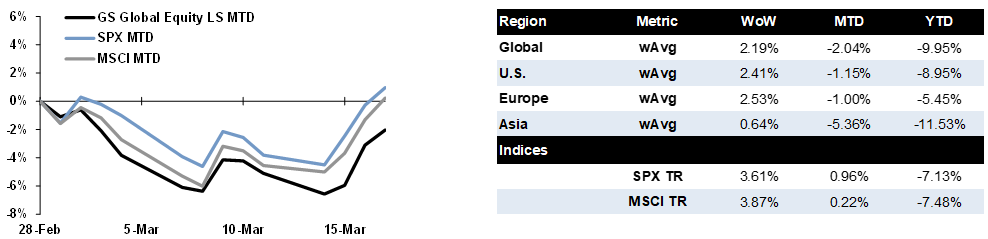
  • Fundamental LS -6.0% (alpha -2.0%) vs MSCI TR -3.7%. Fundamental LS managers experienced negative alpha performance in 9 of the 11 trading days MTD.
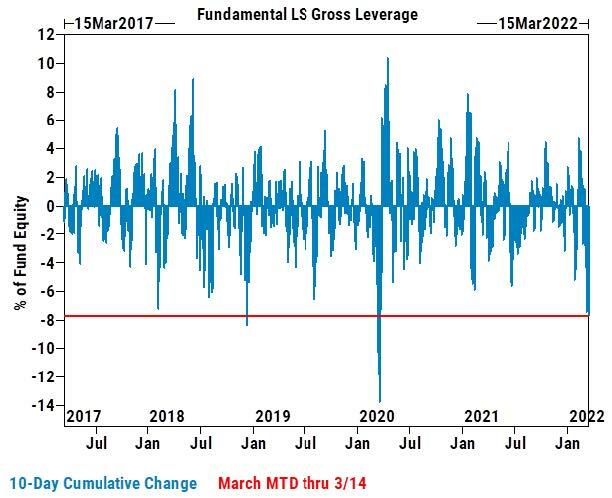
  • Fundamental LS Gross leverage has fallen -7.6 pts MTD – the 3rd largest decrease over any 10-day period behind Mar ’20 and Dec ‘18.
  • Fundamental LS Net leverage has fallen -7.5 pts MTD – the largest decrease over any 10-day period on record (since Jan ’16).
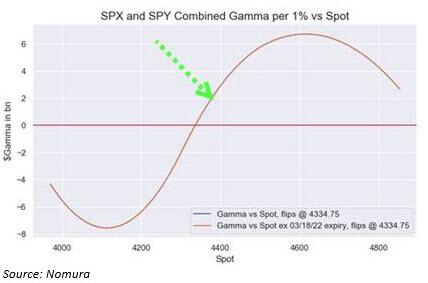
It is this phenomenon of extreme swings that has underscored a "short gamma" market (however, as we noted on Friday, dealers are now slightly long gamma so the volatility may finally quiet down)...
.... which results in one thing: buyers higher, and sellers lower.
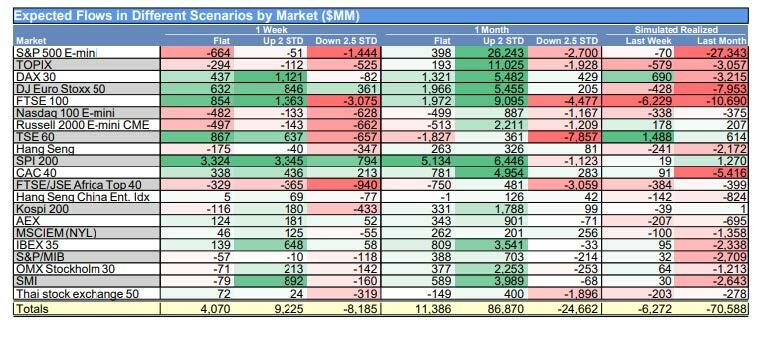
The same can now be said for the systematic crowd as well – with the moves over the past 48hrs, Goldman estimates that CTAs are decent buyers of global equities over the next week and next month...
... a shift we haven't seen in some time.
The relentless, trendless rollercoaster in stocks, explains why yet again, hedge funds are painfully underperforming their benchmarks, with Equity L/S managers down -10% YTD on an asset-weighted basis and down around -6% on a simple average basis.
The problem is that with hedge fund positioning the lowest in two years both gross and net...
... any continued ramp higher will lead to another panicked, frenzied chase higher. Of course, if instead we see a reversal of last week's furious stampede, brace for the selling as hedge funds - already shellshocked - resume their liquidating ways.

FT : A lonely oil bear

A lonely oil bear

Most people think, with reason, that oil is going to be expensive for a while. Russia is at war and faces tightening sanctions. Global demand is strong. And both the big US producers and the Opec countries are demonstrating some production discipline, despite prices rising from $75 to over $100 this year.

Ed Morse, head of the commodities team at Citi, stands well outside this consensus. How far outside? Here are his price projections compared to the prices implied by the futures market:

If Morse turns out to be right, it will matter far beyond oil markets. Oil near $60 later this year might be enough to slow the expected upward march of interest rates, with significant effects on prices all across markets. And Morse has made correct contrarian calls in the past, proving prescient about the 2008 and 2014 price collapses.

Morse’s laid out his bearish view for me on Friday. It rests on 4 main planks:

Current high demand is evidence of a recovery, not secular strength in the economy. “We think the demand surge is a return to normal after a deep recession rather than a precursor of sustained demand,” Morse says. “Gas and oil demand did not move very much between 2015 in 2019, despite some increases in emerging markets, because of developed markets and China.” Morse points out that the Chinese do not tend to use cars for long-haul travel, and like electric vehicles, explaining the low oil intensity of China’s growth. He expects this to continue. Overall, Morse thinks that the hydrocarbon-intensity of the global economy is declining in a straight line, in developed and emerging markets alike. Nothing can stop that trend for long. The only oil markets where he sees rising demand in the long term are jet fuel and petrochemical feedstock.

My brilliant colleague Derek Brower (nb: he made me write that) of FT’s Energy Source newsletter (it actually is pretty good, sign up here) thinks that Morse may be on to something here with his China point. “Barrel counters say Chinese demand is already looking a bit toppy, especially at $100-plus oil . . . that said, hunting for the peak in Chinese oil demand has been something of a Moby-Dick endeavour in recent years, and we’ve seen false signs of it before.”

The war in Russia is unlikely to disrupt supply as much as the markets expect. “What we are seeing is self-imposed restrictions [on buying Russian oil]. Some people, even in government, think that because of these restrictions exports are about to tumble. And it is true that auctions are shutting down. But if you look at ship loadings, there are buyers. We know there is enough lifting [tanker-filling] capacity there.” Morse believes, in short, that the market is not cynical enough about Russian oil, which is selling at a $30 discount, finding its way to market one way or another.

Russian production is indeed rising, for now. Much will depend on how hard the US and other western nations are willing to squeeze. If sanctions persist, the departure of global capital and expertise will start to degrade Russian capacity, too; but that is a long-term issue.

US shale fields are going to produce more than the market expects. “In US shale we have an accelerating rate of rig utilisation — we have private sector companies going all out for drill baby drill,” he says, waving away the common refrain that the big publicly traded US producers, such as Pioneer and Devon, prefer higher returns to higher production. Sixty per cent of new drilling is at private companies funded by private equity, he says. PE sponsors, having suffered through some hard times, are eager to get out of the business, and the best way to do that is to quickly push their projects to the high cash flow stage, and then sell them to larger producers.

Nor does Morse buy the argument the labour and equipment supplies limit production growth in the US. “There is a good 100 high-quality rigs available. There are good fracking crews available. If they need manpower, they’ve just got to pay more”. At the same time, the productivity of each well is increasing.


Producers around the world are responding to higher prices with production. Canada, Guyana, Brazil, Argentina and even Venezuela are signalling increased output. And then there is the possibility that Iran returns to the market later in the year.

Morse is a voice in the wilderness for now. But as we have learned repeatedly recently, at this weird moment, it is crucial to listen to dissenters.

FT : Germany says it has clinched long-term gas supply deal with Qatar

Germany says it has clinched long-term gas supply deal with Qatar
Berlin and other EU countries are seeking alternative suppliers to Russia and ways to shield consumers from rising prices

Germany said it had sealed a long-term agreement with Qatar for the supply of liquefied natural gas as Berlin seeks alternative energy suppliers to Russia.

In Doha as part of a Gulf tour, Germany’s economy minister Robert Habeck on Sunday said the deal would be a “door-opener” for the country’s economy because it would reduce its reliance on imported Russian gas, which currently accounts for more than half of annual supply.

He declined to provide details on the quantities and other terms discussed. The ministry said it would be up to individual German energy companies, the bosses of which have accompanied Habeck on the trip to Qatar, to sign deals with the Arab state’s enterprises.

“We might still need Russian gas this year, but not in the future,” Habeck was quoted as saying by DPA in Doha. “It starts like this — so he who has ears should start to listen,” he said, in a thinly veiled message to Russian president Vladimir Putin.

Qatar welcomed in a statement Germany’s decision to “fast-track” the development of two LNG terminals and said the countries’ “respective commercial entities would re-engage and progress discussions on long term LNG supplies from Qatar to Germany”.

Germany’s move comes as EU leaders prepare to meet in Brussels on Thursday to discuss how to respond to the shock of rising energy prices, which have been exacerbated by the Ukraine war and a desire to wean themselves off Russian gas following Moscow’s invasion of Ukraine.

Berlin’s coalition government has ruled out prolonging the life of Germany’s remaining nuclear plants, which are due to be switched off at the end of the year, and is pinning its hopes on LNG terminals to reduce the amount of gas it imports via pipelines from Russia.

Aside from efforts to find alternative suppliers of energy, EU governments are seeking to shield households and businesses from rising energy costs.

On Sunday, Austria announced that it was going to spend €2bn to subsidise energy costs for its citizens.

On Friday, Italy said it aimed to raise €4.4bn by levying a 10 per cent tax on increased profits reported by companies between October 2021 and March 2022 compared with the previous year, if that increase exceeds €5mn.

With the new tax, Italy intends to cut duties at the petrol pump by 25 cents a litre until the end of April, and shield the country’s 5.2m poorest families from further increases in their household energy bills. Energy companies that are likely to be hit by the tax include Eni and Enel.

“We will tax part of the extraordinary profits that companies are making thanks to the increase in the costs of raw materials, and redistribute this money to businesses and families in difficulty,” said Prime Minister Mario Draghi.

Italy has already spent €16bn since last summer to try to shield poor families and small businesses from surging energy costs.

However, the Italian business lobby, Confindustria, called Rome’s initiative “disappointing” and warned that the windfall profit tax was “potentially against the Constitution”. The CISL, or Italian Confederation of Workers’ Trade Unions, called the 10 per cent excess profit tax “too low” and urged an increase.

Italy is not alone in turning to energy companies’ windfall profits. The Labour party in the UK is pressing for a tax on North Sea oil and gas companies, which would otherwise reap massive financial rewards from the current price surges. In September, Spain introduced a windfall tax on energy companies but revised it after industry pressure, reducing the amount it was due to raise.

Electricity pricing is also set to be a contentious issue at the upcoming EU summit. Southern member states are pushing for changes to the way wholesale markets function, to alleviate pressure on households but are facing strong resistance from northern Europe.

Spain and Italy both want to see the EU change its electricity pricing rules, which have effectively linked the price of electricity to the soaring cost of gas, and allowed renewable energy groups to charge well above cost.

Rome and Madrid are also pushing for the EU to jointly negotiate on energy purchases to get better deals, particularly for piped gas coming from Russia, which would reduce payouts to Russian energy companies.

“I cannot say this would be the optimal moral solution, but it would have an impact,” said Roberto Cingolani, minister for ecological transition.

The like-minded leaders of Italy, Spain, Portugal and Greece have been engaged in intense diplomacy, meeting last Friday to try to build momentum for their proposed energy market reforms.

That night, Spanish prime minister Pedro Sánchez dined with German chancellor Olaf Scholz — one of the key figures Madrid needs to convince — and Sánchez is due to travel to Paris to meet French president Emmanuel Macron on Monday.

However, diplomats warn that there is no consensus on any of these market reforms, which some say could undermine incentives for fresh investment in renewable energy. Some countries such as the Netherlands argue that the near-term focus should remain on saving energy and filling up gas storage facilities.

FT : Ukraine war sparks food shortages in Arab nations as wheat prices soar

Ukraine war sparks food shortages in Arab nations as wheat prices soar
Grains and vegetable oil from Ukraine and Russia are crucial to national diets across the region

Russia’s invasion of Ukraine has made life even harder for Fadia Hamieh, a Lebanese university lecturer who was already struggling to make ends meet in a country with a failing economy.

Since the start of March, flour has disappeared from the shops and the price of bread has increased by 70 per cent. “Supermarkets are hoarding basic goods, then selling them at higher prices,” said Hamieh.

Even before the Ukraine crisis, Lebanon was in the grip of a financial meltdown; its currency has lost more than 90 per cent of its value since 2019. With more than 70 per cent of its wheat imports coming from Ukraine, consumers have been dealt a further blow.

Hamieh, whose monthly salary has plunged from the equivalent of $1,500 to a paltry $200, now faces the additional burden of high bread prices and shortages of basic foods. “Every time I go to buy things for the family, I get depressed. We have had to cut down on so many things,” she said.

The situation in Lebanon may be more precarious than elsewhere in the Arab world because of the country’s crippling economic crisis. But across the region, grains and vegetable oil from Ukraine and Russia are crucial to national diets, and the war has stoked anxieties about food security and political stability.


Although grain prices have come down from the record highs hit immediately after the Russian attack, uncertainty surrounding exports from both countries have kept wheat prices two-thirds higher than a year ago. Sharp spikes in food prices are closely linked to social instability. A food crisis in 2007-08 caused by droughts in key wheat and rice-producing countries and a surge in energy prices led to riots in more than 40 countries around the world.

The UN International Fund for Agricultural Development said the impact of rising food prices and crop shortages was already being felt in the Middle East and north Africa. “This could cause an escalation of hunger and poverty with dire implications for global stability,” said Gilbert Houngbo, IFAD president.

With the exception of the oil-exporting Gulf states, most Arab countries have weak economies, wide budget deficits and rely on subsidised food and energy. Apart from Lebanon, Ukraine is a leading supplier of wheat to Tunisia, Libya and Syria. Egypt, the world’s largest wheat importer, relies on Russia and Ukraine for more than 80 per cent of its wheat purchased on international markets, according to UN Comtrade data.


Governments across the region have sought to contain the knock-on effect by attempting to procure more food supplies from other producers in Europe, rationing and imposing export bans on staples including flour, pasta and lentils. Lebanon has allocated all its flour supplies to bread production, and the government has also increased the price.

Grain and energy importers such as Egypt, Tunisia and Morocco will find their budgets under bigger strain as they spend more on imports and subsidies, say economists.

Kristalina Georgieva, managing director of the IMF, warned earlier this month that countries in the Middle East and north Africa that relied on energy and food imports would feel the effects of the war “quite severely”. 

“I worry for Egypt,” she said about the impact of high food and energy prices on the country, when asked about the Ukraine war and the IMF’s response. “We are already engaged in discussion with Egypt on how to target vulnerable populations and vulnerable businesses,” she said.

Egypt has adopted drastic measures to ensure that its subsidised bread programme, which feeds 70mn people, will remain on course despite the war. Officials say they have four months’ worth of wheat in their granaries, and the local harvest will start in mid-April.


Egypt has tried to diversify the source of its supplies and this year plans to buy 6mn tonnes of local wheat from farmers — the equivalent of 60 per cent of the expected harvest and an increase of more than 50 per cent over 2021.

As an incentive, the government has increased the price it pays farmers and laid down a minimum level of grains that growers are required to sell to the state. They will also need permission to transport or sell any wheat above that quota. Failure to comply could result in a jail sentence. The government also plans to impose price caps on unsubsidised bread whose price has shot up this month.

Analysts at Goldman Sachs said the biggest near-term risk to Egypt’s outlook in the coming months would be from “adjustments to domestic commodity prices, especially any adjustment in bread subsidies”.

The subsidised bread programme is at the core of Egypt’s social protection system. Successive regimes have been wary of increasing the price of bread for fear of unleashing social unrest.

In Tunisia, the expectation of more shortages and the approaching holy month of Ramadan, when food consumption rises, have prompted panicked shoppers to empty supermarket shelves.

Having seized power eight months ago, suspending parliament and the constitution, Tunisian president Kais Saied has yet to come up with a plan to address the deteriorating economy. In recent months, the government has sometimes fallen behind in paying public sector wages and there were flour shortages even before the war.

“This is very dangerous to the president,” said Youssef Cherif, a political analyst who heads Columbia Global Centers in Tunis. “Many Tunisians feel their lives are getting worse and although we don’t see many people blaming the president directly, I think that is coming.”

FT : Ukraine rejects Russian demand to surrender Mariupol as fierce fighting eng

Ukraine rejects Russian demand to surrender Mariupol as fierce fighting engulfs city
Turkey says the two countries are converging on aspects of a peace deal despite standoff

Ukraine has rejected a Russian deadline to surrender control of the besieged port city of Mariupol, the scene of some of the heaviest fighting since Moscow launched its invasion more than three weeks ago.

The Russian defence ministry said on Sunday it would open humanitarian corridors out of Mariupol from 10am local time on Monday and told Ukrainian forces to lay down their arms and leave. It demanded Kyiv respond in writing to its ultimatum by 5am on Monday.

But Ukraine’s government said it would refuse to hand over the city. “There can be no question of surrendering the city and laying down weapons. We demand that the corridor be opened,” deputy prime minister Iryna Vereshchuk was quoted by the Ukrainska Pravda newsite as saying early on Monday.

Russia — which has framed its invasion as a “special operation” to “liberate” Ukraine — claimed Kyiv was using “Nazis”, “foreign mercenaries” and “bandits” to hold up to 130,000 civilians hostage. Despite overwhelming evidence to the contrary, it has denied any responsibility for the overwhelming civilian casualties in Mariupol and blamed them on “provocations” by Ukrainian nationalists.

The ultimatum came as fierce fighting engulfed Mariupol on Sunday, with Russian forces tightening their grip and bombing a school where about 400 residents were sheltering.

The eastern port city has been devastated by relentless shelling, with whole neighbourhoods reduced to piles of smouldering rubble. Electricity, gas and water have been cut off and trapped residents are without food.

Ukraine’s armed forces said the situation was “difficult: there is famine in the city, street fights, people are trying to leave”. Local authorities in Mariupol said “civilians are still under the rubble” after the school bombing.

Russia’s advance in Mariupol came after Kyiv said it had been cut off from the strategically important Sea of Azov, a conduit to the Black Sea. Capturing Mariupol would give the Russians control of a swath of Ukraine’s southern coast.

Kyiv also said Moscow had used its new hypersonic missiles against civilian areas elsewhere in Ukraine, in the first confirmation that the Kremlin had deployed the weapons in the conflict.

Moscow said it used the Kinzhal, which it claims can travel at 10 times the speed of sound, twice in the past three days: to destroy a fuel depot in southern Ukraine and to target a munitions storage facility in the country’s west.

Russia said Andrei Paliy, deputy commander of its Black Sea fleet, had died during the battle for Mariupol. Paliy’s death makes him the seventh high-ranking Russian officer Ukraine claims to have killed during the war.

Meanwhile Turkey, which is mediating alongside Israel between Russia and Ukraine, claimed the two countries were converging on key aspects.

Turkey’s foreign minister Mevlut Cavusoglu said “the parties are close to agreement on fundamental issues”.

“It’s not that easy to negotiate while the war is ongoing, or to agree when civilians are dying. But I want to say that there is momentum,” he said.

Kyiv and its western allies fear Russian president Vladimir Putin could be buying time in peace talks to replenish Moscow’s forces and launch a broader offensive.

Mariupol’s status is a sticking point in the talks because it is part of the Ukrainian-held territory claimed by Moscow-backed separatists, according to two people briefed on the peace efforts.

Turkey’s pro-government Hurriyet newspaper reported that the two countries were edging towards agreement on Kyiv declaring neutrality and abandoning its drive for Nato membership, “demilitarising” Ukraine in exchange for collective security guarantees, what Russia calls “denazification” and lifting restrictions on the use of Russian in Ukraine.

Two people familiar with the discussions said it was likely a compromise would involve token concessions from Kyiv on what Russia calls “denazification”.

But Linda Thomas-Greenfield, US ambassador to the UN, accused Moscow of failing to fully participate in the talks. “The negotiations seem to be one-sided,” she said. “The Russians have not leaned into any possibility for a negotiated and diplomatic solution.”

Ukrainian president Volodymyr Zelensky said the talks were worth pursuing even if they had a “1 per cent chance of success” and warned a failure of negotiations would risk “a third world war”.

“We have demonstrated the dignity of our people and our army . . . But unfortunately our dignity is not going to preserve lives. So I think we have to use any format, any chance, in order to have the possibility of negotiating,” he told CNN.

Zelensky said western leaders had told him Ukraine would not be allowed to join Nato or the EU although “publicly, the doors will remain open”.

US president Joe Biden will visit Europe this week to attend Thursday’s Nato summit in Brussels, but will not travel to Ukraine, the White House said on Sunday.

Russia is publicly sticking to the demands Putin made in the first days of the invasion, including vaguely defined calls to “demilitarise” and “denazify” Ukraine. Moscow also wants Kyiv to recognise its 2014 annexation of Crimea and the independence of two Russia-backed separatist territories in the eastern Donbas region.

As its invasion has stalled, however, Russia has quietly dropped its vow to remove Zelensky and dialled down suggestions of carving up the country into Moscow-backed fiefdoms and a rump state.

Ukraine has ruled out territorial concessions to Russia and has said negotiations on the areas seized by Moscow before this year would require separate talks between Zelensky and Putin.

A possible agreement would require Russia to announce a ceasefire and withdraw its troops from Ukrainian territory to their positions when Putin launched the invasion on February 24.

It is likely a compromise would involve Kyiv making token concessions by banning certain groups or changing the names of streets named after Ukrainian partisans who fought alongside Nazi Germany against the USSR in the second world war, said two people briefed on the talks.

Russia is also likely to soften a demand for Ukraine to make Russian the second official language in the country if Kyiv rolls back laws limiting its use, one of the people added.

Putin has justified the invasion by claiming Russia is liberating Ukraine from Nazis, even though Zelensky is Jewish, and far-right nationalist groups have little influence in the country.

Nato secretary-general Jens Stoltenberg told NBC News it was “far too early” to say whether peace talks could succeed, but emphasised the need to prevent the conflict from becoming “a full-fledged war between Nato and Russia in Europe”.

WSJ : U.S. Sends Patriot Missiles to Saudi Arabia, Fulfilling Urgent Request

U.S. Sends Patriot Missiles to Saudi Arabia, Fulfilling Urgent Request
The arms were transferred in past month after Saudi military sought new supply to repel drone, missile attacks by Iran-backed Houthi rebels

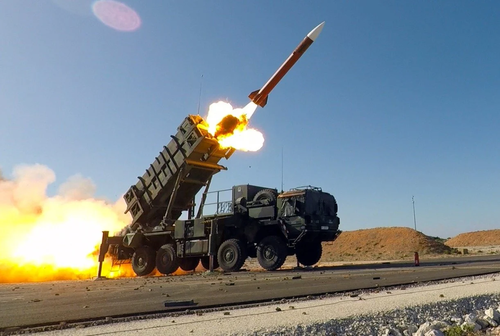
WASHINGTON—The Biden administration has transferred a significant number of Patriot antimissile interceptors to Saudi Arabia within the past month, fulfilling Riyadh’s urgent request for a resupply amid sharp tensions in the relationship, senior U.S. officials said.

The transfers sought to ensure that Saudi Arabia is adequately supplied with the defensive munitions it needs to fend off drone and missile attacks by the Iran-backed Houthi rebels in neighboring Yemen, one of the officials said.

The Saudi military had been appealing to the U.S. since late last year for more Patriot interceptors-—missiles used to shoot down airborne weapons—warning that their supply was running dangerously low.

U.S.-Saudi relations have deteriorated since Mr. Biden took office over issues such as a White House decision to remove the Houthis from a list of designated terrorist groups, as well as Mr. Biden’s dealings with Saudi Crown Prince Mohammed bin Salman, the country’s de facto leader.

The longstanding Saudi request for more interceptors had been a point of contention between Washington and Riyadh, feeding Saudi officials’ displeasure over what they contend was a lack of U.S. support for their intervention in the Yemen civil war.

U.S. officials said the decision to send the interceptors had taken months because of the high demand for the weapons by other U.S. allies and the need to go through normal vetting—not because the White House was deliberately delaying the resupply.

The interceptors and other munitions sent to Saudi Arabia were taken from U.S. stockpiles elsewhere in the Middle East, one of the officials said.

The decision to go ahead with the arms transfer was part of an effort by the Biden administration to rebuild its relationship with Riyadh. Among other things, the U.S. hopes Saudi Arabia will pump more oil to mitigate soaring crude prices, officials said. But providing Patriot interceptors hasn’t resolved all the strains in the relationship.

Mr. Biden also publicly criticized Saudi Arabia over its protracted war in Yemen and cut off the flow of some weapons Riyadh could use to target Houthis. The president also reversed a move by his predecessor that put the Houthis on the U.S.’s official list of global terrorist groups, a move that Saudi leaders said had emboldened the Yemeni force and thwarted efforts to broker a cease-fire.

The latest attacks on Saudi Arabia came late Saturday and early Sunday when Houthi forces in Yemen fired missiles and drones at energy and water-desalination facilities run by Aramco, the Saudi state oil company.

The Houthis claimed responsibility for the attacks, which a spokesman said were in response to “the continued aggression and unjust siege of our people.”

Jake Sullivan, Mr. Biden’s national security adviser, condemned the Houthi attacks in a statement Sunday.

“The Houthis launch these terrorist attacks with enabling by Iran, which supplies them with missile and UAV components, training, and expertise,” he said, referring to unmanned aerial vehicles, or drones.

The missiles and drone attacks were fired at a water-desalination plant in Al-Shaqeeq; a distribution station in Jizan; a liquefied-natural-gas plant in Yanbu; a power station in Dhahran al Janub; and a gas facility in Khamis Mushait. Aramco said there were no casualties or impact on its supplies, while the Saudi-led military coalition backing the Yemeni government said the strikes damaged civilian vehicles and homes in the area.

In 2019, the Houthis claimed credit for coordinated strikes on oil facilities in Saudi Arabia’s oil-rich Eastern Province. The U.S. later blamed the attacks on Iran. But missile barrages and drone strikes from Yemen have continued steadily since.

Patriot antimissile batteries are only one of the weapons used by the Saudis and the United Arab Emirates to counter the Houthi attacks. Many of the slow-flying drones are shot down by fighter aircraft.

The rift between Mr. Biden and Saudi Arabia’s crown prince stretches back to the 2020 presidential election, when the Democratic candidate vowed to treat the kingdom as a “pariah” state after the U.S. implicated Saudi Arabia in the killing of Saudi journalist Jamal Khashoggi in 2018 in Istanbul.

After taking office, Mr. Biden released a U.S. intelligence report that concluded that Prince Mohammed had approved the plan to capture or kill Mr. Khashoggi, who had been an outspoken critic of the young Saudi ruler.

Prince Mohammed has denied knowing anything about the plot. People close to the crown prince were convicted by a Saudi court of taking part in murdering the journalist.

In an effort to repair the breach, the White House unsuccessfully tried to arrange calls between President Biden and Prince Mohammed in early February, The Wall Street Journal has reported.

The White House has said the story about the unsuccessful telephone calls was inaccurate.

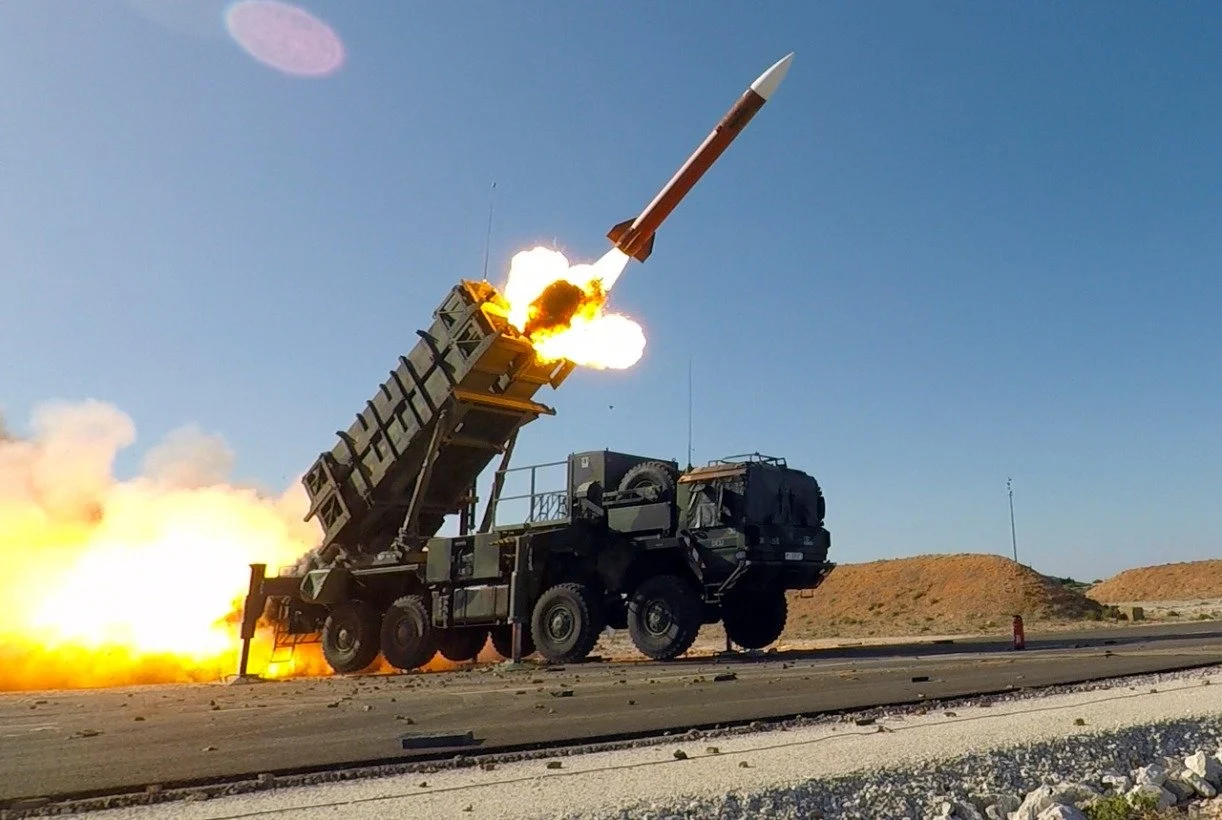
(ZH) Germany & Netherlands Sending Three Patriot Missile Systems To Slovakia

Germany & Netherlands Sending Three Patriot Missile Systems To Slovakia

Dutch Defense Minister Kajsa Ollongren said Friday that the Netherlands is sending a Patriot missile defense system to Slovakia and that Germany is also sending two Patriot systems as NATO looks to bolster its forces near Ukraine.
The Dutch will send a small contingent of 150-200 troops along with the Patriots. Ollongren’s announcement comes after Slovak Defense Minister Jaroslav Nad said on Thursday that Slovakia was ready to “immediately” send its Soviet-designed S-300 missile system to Ukraine if it receives a “proper replacement.”
Via The National Interest/US Army
Ukrainian President Volodymyr Zelensky asked for the S-300 air defense system in a plea to Congress on Wednesday. When it comes to advanced weaponry, Ukraine’s forces are only trained to operate Russian-made equipment, which many NATO countries that are former Soviet states possess.
Germany and the Netherlands decided to send Patriots earlier in the month before Slovakia floated the idea of sending its S-300s to Ukraine. But the deployments could fast-track the plan to get the missile systems in Ukraine’s hands.
Any delivery of S-300s to Ukraine would likely need the approval of the US. So far, the Pentagon has resisted a plan to send Russian-made MiG-29 fighter jets that are in Poland to Ukraine, but the US has been sending a whole slew of other weapons into the warzone, including shoulder-fired anti-tank and anti-aircraft missiles.
Sending more weapons into Ukraine risks provoking Russia as Moscow is warning that arms deliveries entering Ukrainian territory would be considered legitimate military targets.
"We clearly said that any cargo moving into the Ukrainian territory which we would believe is carrying weapons would be fair game,” FM Sergey Lavrov said to RT on Friday, as reported in ABC News.