FT : Blackstone weighs takeover bid for Italian infrastructure group Atlantia

Blackstone weighs takeover bid for Italian infrastructure group Atlantia
New York-based private equity group working on offer with Benetton family’s holding company

Blackstone Group is weighing a takeover bid for Italian infrastructure group Atlantia, the manager of motorways, toll roads and airports across Europe, in what would be one the largest buyouts in the booming industry, said people briefed about the matter.

The New York-based private equity group is working on the bid with Edizione, a holding company that manages the fortune of Italy’s Benetton family and owns a third of Atlantia, said a person with direct knowledge of the situation.

With its large shareholding, Edizione has the ability to influence any buyout proposal.

Blackstone declined to comment.

Atlantia owns majority stakes in airports in Nice, St Tropez, Cannes, and the Leonardo da Vinci international airport in Rome; motorways in 11 countries including Mexico, Brazil, Argentina, the US and India; and operates toll roads in 24 countries.

Blackstone’s potential to enter a bidding war for Atlantia was first reported by Bloomberg, sending the Italian group’s US-listed shares up 10 per cent to close with an equity value of more than $17bn, according to data compiled by Sentieo.

The potential bid comes on the heels of a separate report that Florentino Pérez, chair of Grupo ACS and the president of football club Real Madrid, is teaming up with infrastructure investors Brookfield Asset Management and Global Infrastructure Partners on a takeover offer.

Pérez has considered partnering with the Benettons but is also willing to make a hostile approach if he fails to win the backing of the northern Italian family.

The Benetton family has been under enormous pressure to seek a buyer for part or all of Atlantia since the deadly collapse four years ago of the Morandi bridge in Genoa, which was maintained by an Atlantia subsidiary.

Italy’s previous government, led by the populist leader Giuseppe Conte, had threatened multiple times to strip Atlantia’s right to operate Italy’s highway network as a result of the tragedy.

Atlantia’s shares have languished since the Morandi bridge collapse, falling in value by more than a third since August 2018 before takeover speculation pushed them higher in recent days.

>>> US After Hours Summary: SOFI -5.3% falls on weak guidance; VAPO -18.8% as it

After Hours Summary: SOFI -5.3% falls on weak guidance; VAPO -18.8% as it withdraws FY22 rev guidance; LEVI +1% ticks higher on earnings

After Hours Gainers:

Companies trading higher in after hours in reaction to earnings/guidance: CXM +9.9%, SKIL +6%, RGP +5.4%, LEVI +1%, SLP +0.4%

Companies trading higher in after hours in reaction to news: GENI +7.5% (Sportico details NFL as largest US shareholder in GENI), ADVM +3.1% (receives feedback from the FDA; to proceed with IND amendment process for ADVM-022 in wet AMD), SENS +2.2% (first US patient implanted with Eversense E3 CGM System), RLGT +1.7% (expects to report another record quarter in MarQ), SPRO +0.9% (announces publication in NEJM for its Phase 3 ADAPT-PO clinical trial), AXON +0.6% (acquires Foundry 45), LMT +0.5% (hypersonic-missile delay puts the US further behind Russia and China, according to Bloomberg), COF +0.4% (authorizes repurchase of up to an additional $5 bln of common shares), NETI +0.2% (exec recently purchased 40,000 shares), COST +0.1% (reports adjusted March comps of +12.2%), AHT +0.1% (reports preliminary 1Q22 RevPAR data), FB +0.1% (to launch virtual coins for the metaverse, according to FT)

After Hours Losers:

Companies trading lower in after hours in reaction to earnings/guidance: VAPO -18.8% (withdraws FY22 rev guidance due to slowdown in COVID hospitalizations; guides Q1 revs below consensus), IRNT -10.4%, SOFI -5.3% (lowers FY22 rev guidance below consensus)

Companies trading lower in after hours in reaction to news: CCCS -10.2% (commences 20 mln share public offering by selling shareholders), VAXX -3.4% (to receive CEPI funding for Phase 3 UB-612 heterologous booster trial), AVB -1.9% (commences 2 mln share public offering), BHR -0.2% (reports preliminary 1Q22 RevPAR data), ASR -0.2% (reports March traffic data), VAL -0.2% (awarded multiple contracts, with associated contract backlog of $181 mln), VLRS -0.1% (reports March traffic data), AMZN -0.1% (SEC is probing how AMZN disclosed its business practices, according to WSJ)

>>> US Close Dow -0.42% S&P -0.97% Nasdaq -2.22% Russell -1.42% VIX 22.03 +4.76%

Closing Stock Market Summary

The S&P 500 fell 1.0% on Wednesday, as concerns about the Fed's hawkish mindset, rising interest rates, and slower economic growth continued to pressure risk sentiment. Growth stocks paced the retreat and accounted for the underperformance of the Nasdaq Composite (-2.2%). 

The Russell 2000 struggled with a 1.4% decline while the Dow Jones Industrial Average declined just 0.4%. 

Fed Governor Brainard's (FOMC voter) hawkish expectations for monetary policy remained fresh on the market's mind, such that today's trading dynamics were awfully similar to yesterday. 

For example, interest rates hit fresh multi-year highs, which worked against the mega-caps within the S&P 500 information technology (-2.6%), consumer discretionary (-2.6%), and communication services (-2.1%) sectors for valuation reasons. The Vanguard Mega Cap Growth ETF (MGK 229.78, -5.89) fell 2.5%. 

In addition, investors continued to lean defensively into the utilities (+2.0%), health care (+1.6%), real estate (+1.6%), and consumer staples (+1.4%) sectors. The energy sector (+0.5%), to be fair, also landed in the green despite a 5% decline in oil prices ($96.59/bbl, -4.94, -4.9%). 

The S&P 500 fell back below its 200-day moving average (4490), but the benchmark index briefly peaked above the key technical level following the release of the FOMC Minutes for March. The minutes corroborated Ms. Brainard's concerns about inflation and the need to tighten policy more aggressively.

Participants generally agreed it would be appropriate to reduce the balance sheet by $95 billion per month (about $60 billion for Treasury securities and about $35 billion for agency MBS) and that one or more 50 basis point increases in the fed funds rate could be appropriate at future meetings. 

Treasury yields, which had backtracked from overnight highs, also saw some volatility following the FOMC Minutes. The 2-yr yield decreased two basis points to 2.49% (topped 2.60% overnight) while the 10-yr yield rose six basis points to 2.61% (topped 2.65% overnight). The U.S. Dollar Index rose 0.1% to 99.61.  

A separate story of note was in the airline industry. JetBlue Airways (JBLU 12.45, -1.19, -8.7%) proposed a $3.6 billion, or $33.00/share, cash offer for Spirit Airlines (SAVE 26.28, -0.64, -2.4%), which had previously agreed to merge with Frontier Group (ULCC 10.61, -1.31, -11.0%).

Reviewing Wednesday's economic data:

  • The weekly MBA Mortgage Applications Index fell 6.3% following a 6.8% decline in the prior week.
  • Crude oil inventories had a build of 2.42 mln barrels following a draw of 3.45 mln barrels in the prior week.

Looking ahead, investors will receive the weekly Initial and Continuing Claims report and Consumer Credit for February on Thursday.

  • Dow Jones Industrial Average -5.1% YTD
  • S&P 500 -6.0% YTD
  • Russell 2000 -10.2% YTD
  • Nasdaq Composite -11.2% YTD

FT : Facebook owner Meta targets finance with ‘Zuck Bucks’ and creator coins

Facebook owner Meta targets finance with ‘Zuck Bucks’ and creator coins

Meta has drawn up plans to introduce virtual coins, tokens and lending services to its apps, as Facebook’s parent company pursues its finance ambitions despite the collapse of a project to launch a cryptocurrency.

The company, led by chief executive Mark Zuckerberg, is seeking alternative revenue streams and new features that can attract and retain users, as popularity falls for its main social networking products such as Facebook and Instagram — a trend that threatens its $118bn-a-year ad-based business model.

Facebook’s financial arm, Meta Financial Technologies, has been exploring the creation of a virtual currency for the metaverse, which employees internally have dubbed “Zuck Bucks”, according to several people familiar with the efforts.

This is unlikely to be a cryptocurrency based on the blockchain, some of the people said. Instead, Meta is leaning towards introducing in-app tokens that would be centrally controlled by the company, similar to those used in gaming apps such as the Robux currency in popular children’s game Roblox.

According to company memos and people close to the plans, Meta is also looking into the creation of so-called “social tokens” or “reputation tokens”, which could be issued as rewards for meaningful contributions in Facebook groups, for example. Another effort is to make “creator coins” that might be associated with particular influencers on its photo-sharing app Instagram.

Meta has also been exploring more traditional financial services, with a focus on helping to provide small business loans at attractive rates, according to several people familiar with the initiative. While nothing is immediately planned, the company has previously held discussions with potential lending partners, one of the people said.

Most of the efforts are in the early stages of being discussed and could change or be dropped, although its plans to integrate non-fungible tokens, or NFTs, into its apps are more developed. Zuckerberg confirmed an earlier Financial Times report that Instagram would soon start to support NFTs.

According to one memo shared internally last week, Meta plans to launch a pilot for posting and sharing NFTs on Facebook in mid-May. This will be “quickly followed” by testing of a feature that will allow membership of Facebook groups based on NFT ownership and another for minting — a term for creating — NFTs.

NFTs may be monetised via “fees and/or ads” in the future, according to another internal document. Facebook declined to comment.

Meta lost more than $220bn from its market valuation in February on the day it revealed users were spending increasing time on newer rivals, such as short-form video app TikTok.

The company has recently sought to find other sources of revenue and support ecommerce on the platform, delving into cryptocurrencies and blockchain technology. Its Big Tech rivals, such as Google and Apple, have been more cautious about diving into the nascent space.

But the push has been plagued by setbacks and regulatory scrutiny. Earlier this year, the global cryptocurrency project that it spearheaded, Diem, was wound down and its assets sold to a Californian bank Silvergate, after US regulators refused to give the pilot the green light over monetary stability and competition concerns.

Amid internal frustrations, Meta’s financial division has suffered what one former employee described as a “mass exodus” of staff over the past six months. Its head David Marcus left at the end of last year, along with key engineers, compliance staff and nearly its entire legal team.

Those who remain are looking into how to create or support digital currencies in its metaverse — an avatar-filled virtual world that Zuckerberg hopes will eventually generate billions of dollars in commerce for digital goods and services.

Staffers are now trying to find the least regulated way to offer a digital currency, two people said, with a digital token that is not based on the blockchain emerging as the most attractive option.

It would not be the first time Facebook has introduced such a currency to its ecosystem. It launched Facebook Credits in 2009, a virtual currency that enabled users to make in-app purchases, typically in games such as FarmVille. This represented 16 per cent of revenues at the time of its initial public offering in 2012, according to Barclays, but was shut down in 2013 as it was too costly to maintain.

In a memo from late January, the new head of Meta’s finance division Stephane Kasriel wrote: “We’re making changes to our product strategy and road map . . . so we can prioritise on building for the metaverse and on what payments and financial services will look like in this digital world.” 

Kasriel, who replaced Marcus when he left the company at the end of 2021, said the company would “accelerate” investments in facilitating payments within WhatsApp and Messenger and in “helping creators monetise their activity”, for example through NFTs.

He also signalled plans to merge its wallet for Facebook Pay — its existing peer-to-peer payments system that does not use blockchain technology — with Novi, the digital currency wallet that was initially supposed to hold the Diem coin.

“The wallet will offer payments, identity and digital asset management within the [family of apps and Reality Labs, its virtual and augmented reality arm,] and over time, to other apps/sites,” he said.

Where some of Meta’s efforts are focused on digital payments, other efforts are part of broader plans to use blockchain technology to introduce more “decentralisation” across its platforms, amid a growing buzz in Silicon Valley around the so-called Web3 movement.

Web3 advocates typically seek to wield distributed ledger technology to allow users more control and ownership over their data and disintermediate Big Tech groups that typically monetise that data as part of their ad-based business models.

But Meta appears to be embracing some Web3 ideals. It is exploring whether to store data on a blockchain, how it might give users more control over their digital identity and whether their identity or accounts can be transferred to, or used across, other platforms beyond Meta’s apps, according to one planning document.

Meanwhile, its plans to reward users for credible content with “social tokens” might allow Meta to remove itself as a central content moderator and give Facebook communities more power in moderating themselves, according to the document.
Nature : What triggers severe COVID? Infected immune cells hold clues

What triggers severe COVID? Infected immune cells hold clues
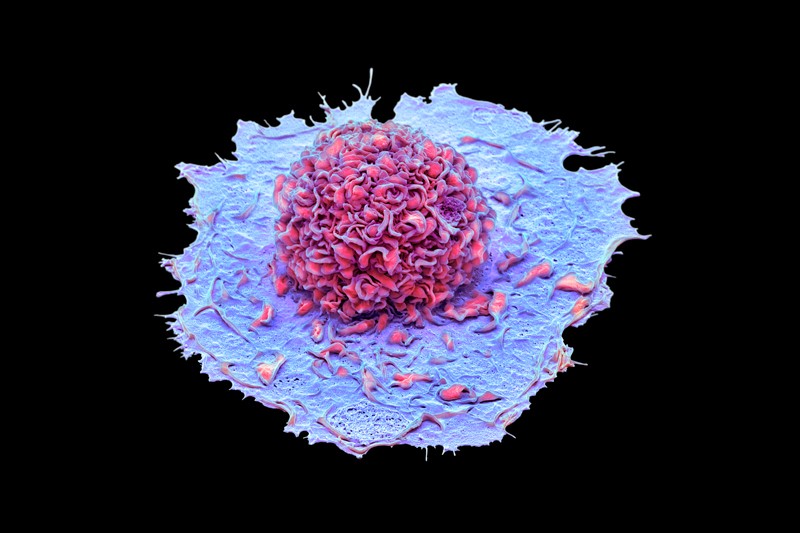
SARS-CoV-2 can enter immune cells, macrophages (pictured), in the lungs, triggering a massive inflammatory response.Credit: Steve Gschmeissner/Science Photo Library
Immune cells infected with SARS-CoV-2 can trigger a massive inflammatory response that contributes to severe COVID-19, suggest two papers — one published today in Nature, and a preprint posted online on 1 April.
Since the early days of the pandemic, research has suggested that inflammation leads to significant respiratory distress and other organ damage, hallmarks of severe COVID-19. But scientists have struggled to pinpoint what triggers the inflammation.
The latest studies implicate two types of white blood cells — macrophages in the lungs, and monocytes in the blood — which, once infected with the virus, trigger the inflammation. The studies also provide conclusive evidence that the virus can infect and replicate in immune cells — and reveal how it enters those cells. Evidence of such infections has been mixed until now.
The studies offer a plausible explanation for how severe COVID-19 progresses, says Malik Peiris, a virologist at the University of Hong Kong. “I don’t think it is the only or most important pathway, but it is certainly interesting.”
Still, infected immune cells could offer a potential target for drug development, says Jian Zheng, an immunologist at the University of Iowa in Iowa City.
Overactive response
In the Nature paper1, Judy Lieberman, an immunologist at the Boston Children’s Hospital in Massachusetts, and her colleagues looked at blood samples from people with COVID-19. They found that about 6% of monocytes — ‘early responder’ immune cells that patrol the body for foreign invaders — were undergoing a type of cell death associated with inflammation, known as pyroptosis. To see that many cells dying is unusual, she says, because the body typically gets rid of dead cells quickly.
When the researchers looked at the dying cells, they found they were infected with SARS-CoV-2. They suggest the virus was probably activating inflammasomes, large molecules that trigger a cascade of inflammatory responses that ended in cell death.
The researchers also looked at another type of immune cell, macrophages, in the lungs of people who had died of COVID-19. Because macrophages collect cellular garbage, including viral debris, it has been difficult to show whether macrophages were infected with SARS-CoV-2 or just sopping up this debris. The team found that about a quarter of macrophages had activated inflammasomes, and a fraction of those had indeed been infected with the virus. Other infected lung cells, epithelium, did not display the same response.
The results align with those of the second study, posted on bioRxiv2 and yet to be peer reviewed, by Esen Sefik, an immunologist at the Yale University School of Medicine, New Haven, and her colleagues. They also found that the virus could infect and replicate in macrophages in human lung cells and in a mouse model of the human immune system. The macrophages displayed the same inflammatory response described by Lieberman, and eventually died.
The team also found that giving the mice drugs that blocked inflammasomes prevented severe respiratory distress. The drugs “rescued the mice so they were not as sick”, says Sefik. This suggests that infected macrophages have a role in the pneumonia observed in people with severe COVID-19.
The macrophages’ inflammatory response could be their way of stopping SARS-CoV-2 from replicating, says study co-author Richard Flavell, an immunologist, also at Yale, and the Howard Hughes Medical Institute. When inflammasomes were activated, the virus stopped replicating in the cells. But when the researchers blocked inflammasomes, the macrophages started producing infectious virus particles.
That is a “startling” finding, says Peiris, because it shows that macrophages can assist infection.
But Stanley Perlman, a virologist also at the University of Iowa, says follow-up studies will be needed to work out how important infected immune cells are in inducing severe COVID-19 compared with other possible mechanisms.
Viral entry
Both teams were also able to show how SARS-CoV-2 can enter immune cells. Researchers have been puzzled over this because the cells don’t carry many ACE2 receptors, the virus’s main entry point.
In experiments with human and mouse cells, Sefik and Flavell found that SARS-CoV-2 could get into lung macrophages through the limited number of ACE2 receptors present. But the virus was also sneaking in through another surface protein, known as the Fcγ receptor, with the help of antibodies. When the virus encountered antibodies attached to the Fcy receptor, instead of the virus being disabled, it got scooped up into the cell.
Lieberman says this is also how the virus enters monocytes, which do not have ACE2 receptors. Only monocytes with the Fcγ receptor could be infected.
But Lieberman says that not all antibodies facilitate viral entry. The team found that antibodies produced by people who received the mRNA vaccine developed by Pfizer and BioNTech did not allow monocytes to take up the virus.
That finding is reassuring, given that many people have been vaccinated with mRNA vaccines, says Peiris. But more studies are needed to understand which types of antibodies are facilitating viral uptake by monocytes, and whether vaccines that use other technologies might induce a different response.