Ray Dalio on why history repeats itself in the markets
Gideon talks to the investor Ray Dalio about the connections he’s found between the rise and fall of markets and the rise and fall of nations
Gideon Rachman
It’s now almost 15 years since the global financial crisis, which shook the world economy.
News clip
Pillars of the Street tumbled over the weekend. Lehman Brothers, a 158-year-old firm, filed for bankruptcy.
Gideon Rachman
One of the investment firms that foresaw the crisis and profited from it was Ray Dalio’s Bridgewater Associates. Dalio’s a billionaire, one of the richest men in America. But he also argues that inequality is destabilising America, and has called for higher taxes on the rich. On the global stage Dalio’s an admirer of China. And as you’ll hear, he’s very concerned that the US and China may be heading towards conflict. Sympathy with Beijing is not a particularly popular stance in the US, where in their different ways, both Donald Trump and Joe Biden have struck a confrontational note.
Donald Trump
Here’s the thing. Somebody had to take on what China was doing to the United States economically. We’re winning big. I took it on and it should have been done by previous presidents, but I took it on.
Joe Biden
We support the one-China policy. We report all, all that we’ve done in the past. But that does not mean China has the jurisdiction to go in and use force to take over Taiwan.
Gideon Rachman
Dalio is unusual among major investors in the strong interest that he takes in world history. So when he spoke to me on the line from the US, I asked him why he takes such a keen interest in historical trends.
Ray Dalio
Well, I need to and have needed to bet on what happens tomorrow. That’s my job. So as a global macro investor, I have to deal with both the economics and the politics. And what I’ve learned over the years is that many times that I’ve been surprised, I’ve been surprised by things that never happened in my lifetime before but happened many times through history, such as studying the Great Depression allowed us to anticipate the global financial crisis of 2008.
Gideon Rachman
And I think you wrote that you can really only anticipate the future in the way that you’re trying to do in your day job, if I can put it that way, if you have a knowledge of events that happened before you were born.
Ray Dalio
Of course, ‘cause there were so many events that happened once in a lifetime, right? When was the last time we went into a war? When was the last time we had a pandemic? People are not acquainted with the patterns. Sanctions, economic sanctions have happened before wars, before military wars, repeatedly. Like, for example, understanding how Japan had its assets frozen and it was put into a position where it couldn’t get the oil in World War 2 and how that carried through to putting it in a position to bomb Pearl Harbor and to see those historic facts create a template that when I’m following what’s happening now, it seems very analogous. For example, populism. The January 6th incidents did not seem surprising to me because of what I studied in the 1930s of what happened in Europe.
Gideon Rachman
Indeed, and that you focus in particular on three main kind of drivers: debt, internal conflict in societies and populism and the third is external factors, particularly great power conflict. So let’s go through each of them. Why debt in particular? Obviously something again that you focus on a lot trying to understand markets.
Ray Dalio
The money part of all of this is a big thing. Money and power is what it’s largely about. And so I follow it because I have to watch it pass through the system. I have to anticipate the inflation. I have to anticipate the buying powers. I have to anticipate that. And of course, I have to study those powers and what you see is that when countries don’t have enough money historically, then they print money, and that goes back to the Roman empire. They put less gold in gold coins and so on as an attempt to spend money. And at the same time that depreciates the value of money and it takes buying power away from people. So we’re seeing buying power being lost to inflation. And then very classically, in order to fight inflation, they take money away from people again in the form of tightening credit and raising interest rates. For my whole life, it’s a classic dynamic that we see all the time, but it is also the basis behind the rises and declines of currencies.
Gideon Rachman
And I mean, I think you suggest that historically countries becoming heavily indebted is linked to, in terms of great powers, unsustainable efforts to support an overseas empire. You see that with the Dutch, you point out it happened to the British, and you strongly imply it’s now happening to the United States.
Ray Dalio
Yes, in all respects, not just the overseas empire, you see that when it comes domestically, there’s not enough money. And when there’s hard money, like tied to gold and they had linkages, spending would be limited by thinking about how much money do I have? But now when you have a fiat monetary systems which has existed throughout times . . .
Gideon Rachman
Fiat, you mean basically paper money not backed by anything?
Ray Dali
That’s right. That you can make up whatever amount of money you want. So it partially overextended internationally because it’s no longer economic to support the world out there, but also domestically, because when you have large wealth gaps and you have economic problems, you need money. Otherwise there’s going to be a revolution. And just like we went through in the Covid situation, we needed more money. But where do you get the money from?
Gideon Rachman
You print it, basically.
Ray Dalio
History has shown, and here’s the reality — you either take it away from somebody else or you print it, and taking it away from somebody else is what causes these revolutions. The people get angry and everybody fights over money. When you print it, it’s less obvious. Nobody asks, where did the money come from? They’re all happy. They all receive checks. The checks come in the mail and everybody’s happy and nobody figures, where does it come from? And that, what are the costs? The costs are, of course, the value of money goes down. And it’s a cost for those who hold money than for hold debt instruments. For example, if you’re holding cash or you’re holding a bond, you get a return that is much below the inflation rate and that’s what the tax is. So you have inflation higher than the interest rate, and that’s how you write down the debt. And that’s happened throughout history.
Gideon Rachman
And before we turn to the other two, the populism and the great power competition, on this debt question and printing money, are we now at a point where your theory is kind of coming to life because you’re seeing this resurgence of inflation after several kind of reflations of the economy, after the dotcom crisis, after the pandemic and so on. And now perhaps we’re having the reckoning.
Ray Dalio
Yes, and I’d like to explain a little bit why. Giving money and credit is a stimulant that produces a hangover if that has to be paid back in real dollars. So in other words, when you give credit, it gives buying power, but it also creates a debt, which means you have to spend less than you earn to pay back that debt. And that’s depressing. But because that’s depressing, it gives it another dose of stimulants when you get that depressing environment, and that’s why over a period of time, debts rise relative to incomes. And one man’s debts are another man’s assets. And so that balancing act becomes very difficult because as we’ve seen, when you have a low return, relative to inflation, you don’t want to hold those assets any more. So that’s what we’re seeing now, right? You’re seeing that there is a selling of bonds, that there is a selling of money market instruments and cash instruments because people begin to realise that what they’re getting paid is not enough relative to inflation. So what they thought was safe, such as investments in cash, is not safe because of inflation. That dynamic in and of itself causes the selling of the bonds. So you have to not only sell an amount of new bonds that equals the government’s deficits — that’s the amount of new bonds sold — but there is selling of bonds and other debt instruments by investors. And all the system which was based on really, free money, goes through an adjustment process, goes through the shock that we’re seeing reflected in the markets today. So that puts the central bank in the difficult position of either having to see interest rates rise as there was more selling of the debt than there is a desire to buy it or to put it in the position of then having to print and buy that debt more. So you see these successive waves of increased stimulation. So starting in 1980, every cyclical peak and every cyclical drop in interest rates, was lower than the one before it to produce the stimulation until you hit a zero interest rate. And then when you hit a zero interest rate, we got the printing of money because that was the way to stimulate, and every stimulation produces a greater amount of printing money and buying those financial assets. And that’s the cycle that we’re seeing, which is a late debt cycle.
Gideon Rachman
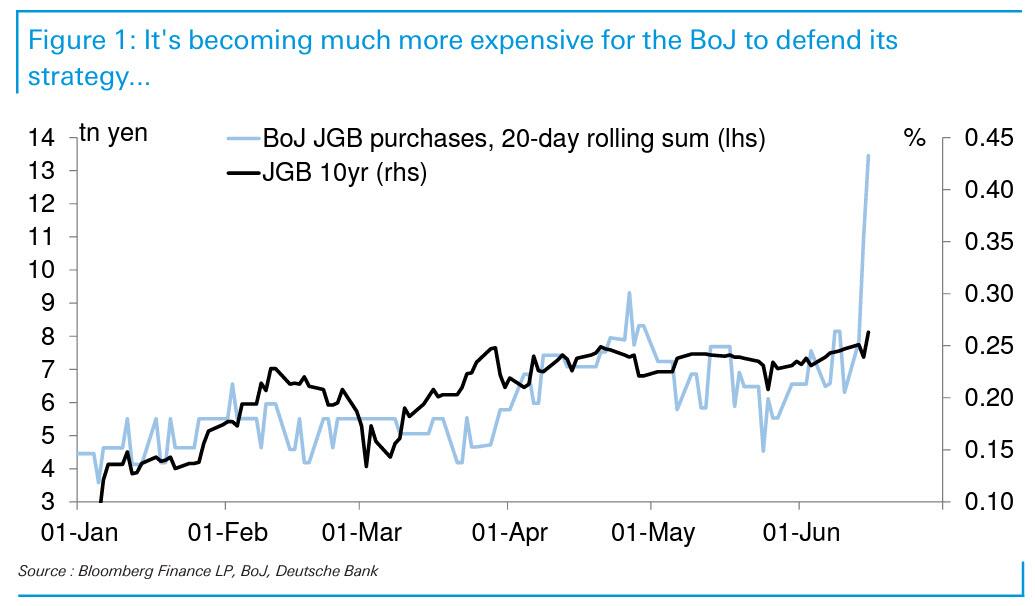
Last question on debt before we get on to the other two, is it necessarily spelling a crisis for a country? Because as these reflations have occurred, a lot of people have said, well, you know, we can live with this. They pointed, for example, to Japan, which has been very heavily indebted for a long time, but doesn’t seem to have hit some massive national crisis. How long can all of this go on, this cycle of indebtedness and growing indebtedness?
Ray Dalio
When the value of the financial assets, the returns of those financial assets, leads to the selling of those financial assets, that’s what causes inflationary depressions. How do you have such a low level of demand, at the same time you have such a high level of inflation? And so Japan has been trying very hard to bring back inflation and keep the interest rates below because that’s always the way a debt restructuring takes place. You must keep the level of nominal interest rates below the inflation rate and the level of nominal GDP growth in order to do that. And that’s the policy of Japan. And the policy of Japan is risking that the savers in Japan move to other assets, which is what you’re seeing around the world now. In other words, you’re seeing a movement to the holding of other investments, which is typically inflation hedge assets. So that’s part of it. And the other element which relates to the conflict issues that we’re talking about is the need for a lot of spending. And then also the economic wars that mess up supply line chains and make everything operate more inefficiently. So for example, we’re operating now in an environment in which ideology and politics is having more of an effect on resource allocations than traditional economics and profit. So for example, as we’re seeing around the world, the issue of where do I produce it? What is safe? Might I be sanctioned? Is it safe for American businesses to operate in China or other countries if they’re taking our jobs? Should we move capital back here? All of those considerations that are political, or maybe have an ideology about them, how should we in the United States or in other countries divide the pie, not necessarily to maximise profits and efficiency the old way, but in a way that supports certain outcomes that are ideological outcomes. Those types of shifts too raise the inflation rate.
Gideon Rachman
So let’s talk about those kinds of shifts. The populism in particular that has been very evident in the United States, what do you think fundamentally was driving that?
Ray Dalio
Just very classically, when you have very large wealth and values gaps and you have a disenfranchised population, they want to have people who will fight for them, represent them. And that’s what always caused populism of the right and populism of the left. And in the thirties we called that fascism and communism. And so there were two ideological differences that hire fighters, and those fighters are not going to let the system stand in the way of their winning. So we’ve seen historically that when the causes that people are behind are more important to them than the system, the system is in jeopardy. And so we have in the United States and in other countries the desire to have fighters. And those are much more populist, and they’re not prone to compromise — they’re considered weak if they compromise. So you lose the middle, you get greater and greater extremism. And then because it’s a win-at-all-cost approach, the laws and the constitution become secondary. So for example, if we’re dealing with some of the issues here in the United States today or in other countries too, we see that there may be a possibility that neither side accepts losing the election. That’s a logical step, or that maybe the decisions of the Supreme Court are not followed by states and local governments. So that’s very, very classic.
Gideon Rachma
And you see inequality in particular as driving that?
Ray Dalio
Of course, financial inequality, which in my opinion is in many cases obviously unfair and uneconomic, is a major cause. Because when people are hurting and they look at the system and they think that it’s an unfair system, it’s one of the major causes. It’s probably the most important cause.
Gideon Rachman
Aren’t you, in a way, a symptom of the problem that you’re describing? I mean, you’re a billionaire and there’s been a growth in the number of billionaires in the United States over a time period when there was also, you know, rising inequality and so on.
Ray Dalio
Yes, I’m a product of the system. Now that used to be perceived as living the American dream. But as always, when you have, let’s say, a capitalist system in which it distributes wealth unequally, that may not in and of itself be a problem, though it has problem elements to it, but it also creates an unfair system because those who are richer can better educate their children. My wife and I work philanthropically, and she particularly in the state of Connecticut. The state of Connecticut is one of the richest states in the country, but 22 per cent of the high school students are disengaged or disconnected. Disengaged means that their absentee rate is greater than 25 per cent and they’re failing classes, and disconnected means that they don’t know where they are because they’ve dropped out of school. More than one in five students, high school is not working for them. They live in poor areas that are just right up the road. They have gangs and guns and crimes and so on, and it’s systemic. So the extremes, there are these systemic reasons. The profit system does not accomplish all objectives because, for example, if you efficiently hire people in other countries who get the jobs, that’s maybe good for the overall level of efficiency of the world, but it creates these kinds of polarities. And as a result of that, it’s very important that that money gets recycled, that the tops of the system, in a sense, invest in the fundamentals.
Gideon Rachman
But is it possible to have a system that produces a Ray Dalio or a Bridgewater, the company that you founded, and not to have the negative side effects that you’re talking about? Are the two intimately connected or would better policy mean that you could have, you know, the very rich without these malign side effects?
Ray Dalio
Well, first of all, yes, it’s possible. It exists in many countries, but also even in history, that’s the case. The key is balance, right? The key is to have the inventiveness to draw from the largest percentage of the population, because you don’t know where the talent is gonna come from, and to enable them through a capital market system that people will bet on them and that they can then develop. But to also, as that is happening, recycle that in terms of taxes or investments in one way or another. The system must work well for the majority of the people. And when it does, it’s economic. But there are structural problems. Take the education system, for example. There’s hardly any better investment that you can make to have excellent education throughout the system. However, the constitution makes it a state issue primarily, and when you go to states, in most states it’s a tax district issue. So I, for example, live in Greenwich, Connecticut, and the average public school system here, the average per capita expense on that is $24,000 per student. So up the road in Bridgeport, Connecticut, 15 minutes where there is poverty, it’s $14,000 a student. And those areas need it more. So, yes, it is possible. Many societies through history have extended it and it’s essential.
Gideon Rachman
OK. Well, turning to the great power rivalries, that’s the third thing that you focused on and again, that seems to be something that like the other two that you talk about — debt and populism — something that’s actually intensifying at this moment.
Ray Dalio
Yes, it’s normal. You know, there’s a cycle. There’s a war when comparable powers go into war to find out who’s going to be in control and then they create a new order. Last time that happened was 1945, there are wars, America wins the war, the United States comes out of it as a dominant power. It had 80 per cent of the world’s money — gold was money then. It had 80 per cent of the world’s gold. It had 50 per cent of world GDP. It had a monopoly on military. So it was the dominant power. And so we created the new American world order, 1945, and it was the American world order, which is why the United Nations is in New York and the World Bank and IMF are in Washington, DC. And then you have a narrowing of the gap, the power gap, over time for various reasons, depending on how we do things. And so what’s happened? I started going to China out of interest because I found the place quite amazing. I started going there in 1984. Since then, China’s per capita income has increased by 26 times. And so if you look at the power gap in all forms of power, economic power, military power and so on, the gap narrows. And then when the gap narrows, there’s greater competition and they don’t settle these things in accord. We didn’t go to the World Trade Organization to have them adjudicate trade wars. And so there are five times the wars. There’s a trade war, a technology war, a geopolitical influence war, a capital and economic war, and then a military war. And so history shows that when that power narrows, there are more conflicts and more of those types of wars.
Gideon Rachman
And of those five types of war that you suggest, it seems to me that the US and China are certainly involved in maybe three or four of them already, yeah?
Ray Dalio
Four of them, yes. And classically, you see that they follow in that order. First, trade, technology, geopolitical influence, then you get to capital and economic wars. And then that’s what causes the movement to military wars. And let’s pray that we don’t go into military war, but we are certainly much closer to the brink of that with an opponent that is a stronger, comparable power. And China and Russia are working together quite closely. So we have that dynamic going on.
Gideon Rachman
The conclusion of that, as you say, is pretty gloomy. I mean, you say we pray we don’t go into conflict, but your book strongly suggests that that’s how it’s going to end.
Ray Dalio
Nothing is destined, okay? I have a principle which is if you worry, you don’t have to worry. And if you don’t worry, you need to worry. And what I mean by that is, my hope is that if we read and understand so that we can have the visceral experience of what others have gone through in wars, that we may work really hard to not have either an internal war of that type or an external war of that, because almost anybody who was adamantly in favour of going to war deeply regretted it because the wars were so terrible. And I think if we can restrain ourselves and understand this, we can have really a bright future, but that needs mutual consideration because we have more than we’ve ever had. There’s more wealth in the world, there’s better ways of doing things. And we’re in a period where there’s great inventiveness of development, of technology, artificial intelligence and the like, which is going to raise living standards. We have all of those good things going for us. It’s just how we behave with each other that is the issue.
Gideon Rachman
You know, that sounds to me like an appeal for kind of international co-operation and understanding that not many people could object to. But in fact, when that’s applied to China and the United States, that’s not actually a particularly fashionable thing to say. I think there is a rising sense that China is a rival that needs to be confronted. And you, yourself, have been accused of being too sympathetic to China. I mean, how do you respond to the argument that, well, actually, this is a kind of scary authoritarian power and we need to confront it?
Ray Dalio
How do I respond to the question that this is a scary authoritarian power? I just ask each person to consider the pros and cons. They have an approach and we have an approach that are very different types of approaches, and that creates a competition. I think at the end of the day, it’s a fact that whoever’s strongest will be in the best position. And so I would suggest that we focus on making ourselves strong and avoiding the crossing the line to irreparable damage in a fight. In other words, to make the priority with China and the United States, just like Republicans and Democrats here, to make the priority that you do not cross a line so that you get into irreparable damages and then you have a competition. And then we focus on bringing ourselves together and becoming as strong as we can because there’s no getting around it that this will turn out badly if we’re not strong and it’ll turn out well if we are strong.