(ZH) St. Petersburg Sets The Stage For The War Of Economic Corridors

St. Petersburg Sets The Stage For The War Of Economic Corridors

In St. Petersburg, the world's new powers gather to upend the US-concocted “rules-based order” and reconnect the globe their way...
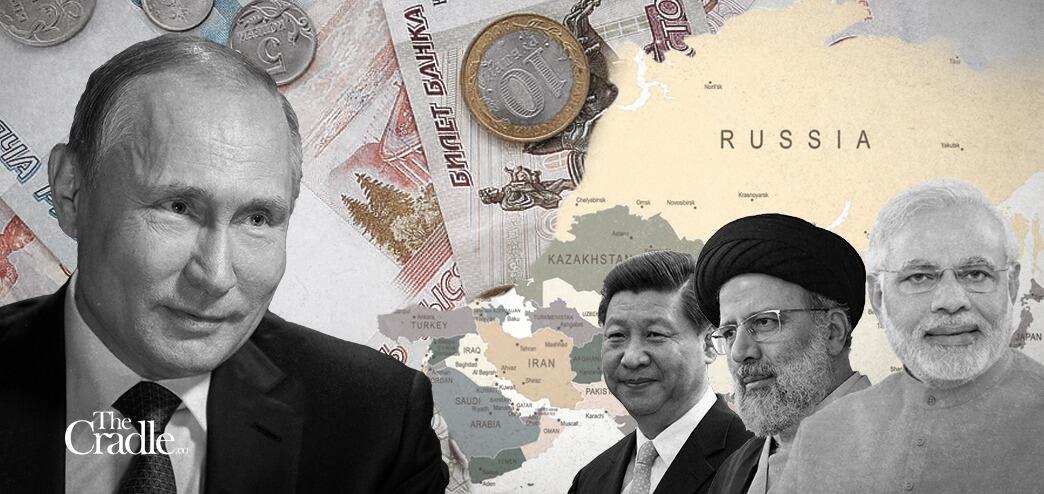
The St. Petersburg International Economic Forum has been configured for years now as absolutely essential to understand the evolving dynamics and the trials and tribulations of Eurasia integration.
St. Petersburg in 2022 is even more crucial as it directly connects to three simultaneous developments I had previously outlined, in no particular order:
  • First, the coming of the “new G8” – four BRICS nations (Brazil, Russia, India, China), plus Iran, Indonesia, Turkey and Mexico, whose GDP per purchasing parity power (PPP) already dwarfs the old, western-dominated G8.
  • Second, the Chinese “Three Rings” strategy of developing geoeconomic relations with its neighbors and partners.
  • Third, the development of BRICS+, or extended BRICS, including some members of the “new G8,” to be discussed at the upcoming summit in China.
There was hardly any doubt President Putin would be the star of St. Petersburg 2022, delivering a sharp, detailed speech to the plenary session.
Among the highlights, Putin smashed the illusions of the so-called ‘golden billion’ who live in the industrialized west (only 12 percent of the global population) and the “irresponsible macroeconomic policies of the G7 countries.”
The Russian president noted how “EU losses due to sanctions against Russia” could exceed $400 billion per year, and that Europe’s high energy prices – something that actually started “in the third quarter of last year” – are due to “blindly believing in renewable sources.”
He also duly dismissed the west’s ‘Putin price hike’ propaganda, saying the food and energy crisis is linked to misguided western economic policies, i.e., “Russian grain and fertilizers are being sanctioned” to the detriment of the west.
In a nutshell: the west misjudged Russia’s sovereignty when sanctioning it, and now is paying a very heavy price.
Chinese President Xi Jinping, addressing the forum by video, sent a message to the whole Global South. He evoked “true multilateralism,” insisting that emerging markets must have “a say in global economic management,” and called for “improved North-South and South-South dialogue.”
It was up to Kazakh President Tokayev, the ruler of a deeply strategic partner of both Russia and China, to deliver the punch line in person: Eurasia integration should progress hand in hand with China’s Belt and Road Initiative (BRI). Here it is, full circle.
Building a long-term strategy “in weeks”
St. Petersburg offered several engrossing discussions on key themes and sub-themes of Eurasia integration, such as business within the scope of the Shanghai Cooperation Organization (SCO); aspects of the Russia-China strategic partnership; what’s ahead for the BRICS; and prospects for the Russian financial sector.
One of the most important discussions was focused on the increasing interaction between the Eurasia Economic Union (EAEU) and ASEAN, a key example of what the Chinese would define as ‘South-South cooperation.’
And that connected to the still long and winding road leading to deeper integration of the EAEU itself.
This implies steps towards more self-sufficient economic development for members; establishing the priorities for import substitution; harnessing all the transport and logistical potential; developing trans-Eurasian corporations; and imprinting the EAEU ‘brand’ in a new system of global economic relations.
Russian Deputy Prime Minister Alexey Overchuk was particularly sharp on the pressing matters at hand: implementing a full free trade customs and economic union – plus a unified payment system – with simplified direct settlements using the Mir payment card to reach new markets in Southeast Asia, Africa and the Persian Gulf.
In a new era defined by Russian business circles as “the game with no rules” – debunking the US-coined “rules-based international order” – another relevant discussion, featuring key Putin adviser Maxim Oreshkin, focused on what should be the priorities for big business and the financial sector in connection to the state’s economic and foreign policy.
The consensus is that the current ‘rules’ have been written by the west. Russia could only connect to existing mechanisms, underpinned by international law and institutions. But then the west tried to “squeeze us out” and even “to cancel Russia.” So it’s time to “replace the no-rules rules.” That’s a key theme underlying the concept of ‘sovereignty’ developed by Putin in his plenary address.
In another important discussion chaired by the CEO of western-sanctioned Sberbank Herman Gref, there was much hand-wringing about the fact that the Russian “evolutionary leap forward towards 2030” should have happened sooner. Now a “long-term strategy has to be built in weeks,” with supply chains breaking down all across the spectrum.
A question was posed to the audience – the crème de la crème of Russia’s business community: what would you recommend, increased trade with the east, or redirecting the structure of the Russian economy? A whopping 72 percent voted for the latter.
So now we come to the crunch, as all these themes interact when we look at what happened only a few days before St. Petersburg.
The Russia-Iran-India corridor
A key node of the International North South Transportation Corridor (INTSC) is now in play, linking northwest Russia to the Persian Gulf via the Caspian Sea and Iran. The transportation time between St. Petersburg and Indian ports is 25 days.
This logistical corridor with multimodal transportation carries an enormous geopolitical significance for two BRICs members and a prospective member of the “new G8” because it opens a key alternative route to the usual cargo trail from Asia to Europe via the Suez canal.
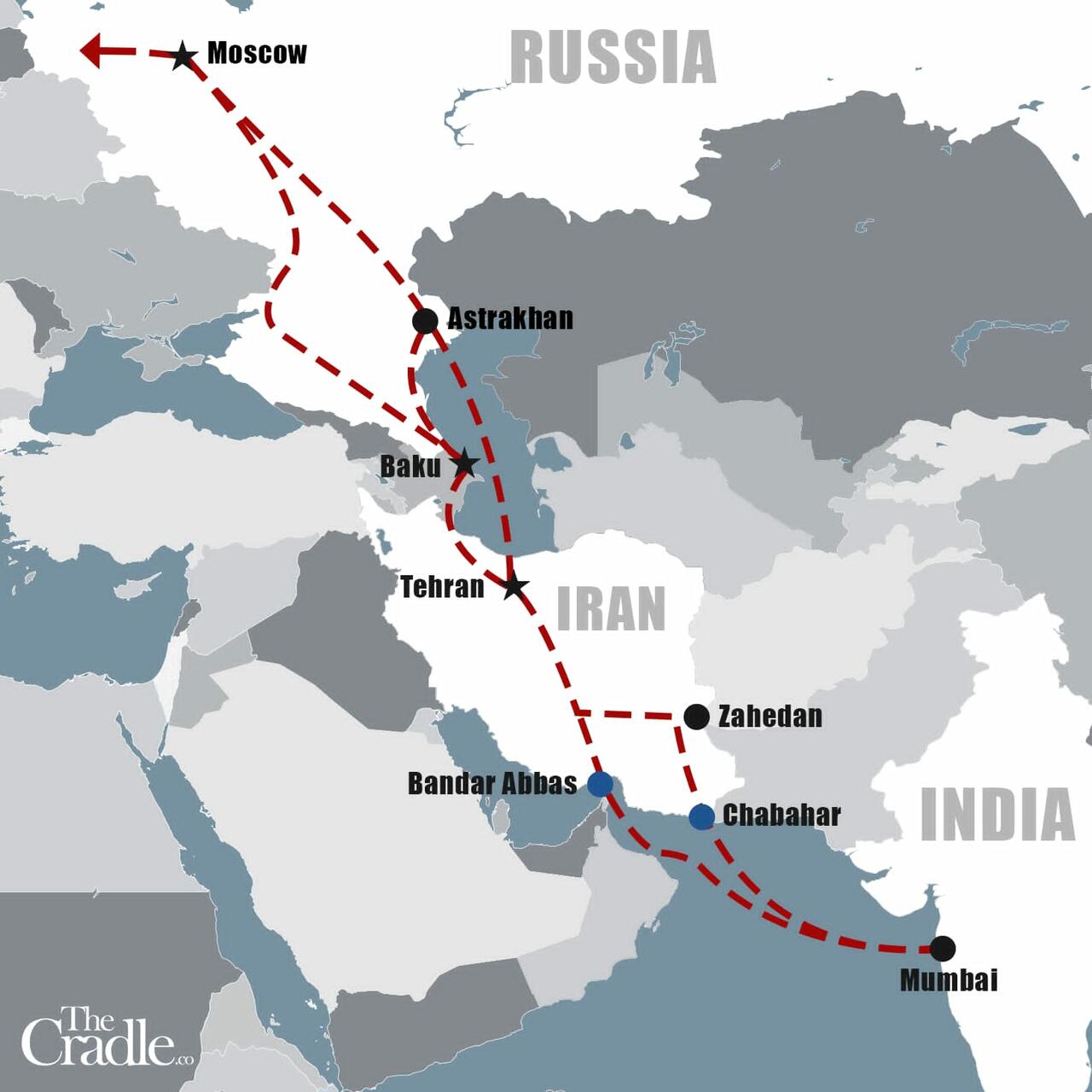
The International North South Transportation Corridor (INSTC)
The INSTC corridor is a classic South-South integration project: a 7,200-km-long multimodal network of ship, rail, and road routes interlinking India, Afghanistan, Central Asia, Iran, Azerbaijan and Russia all the way to Finland in the Baltic Sea.
Technically, picture a set of containers going overland from St. Petersburg to Astrakhan. Then the cargo sails via the Caspian to the Iranian port of Bandar Anzeli. Then it’s transported overland to the port of Bandar Abbas. And then overseas to Nava Sheva, the largest seaport in India. The key operator is Islamic Republic of Iran Shipping Lines (the IRISL group), which has branches in both Russia and India.
And that brings us to what wars from now will be fought about: transportation corridors – and not territorial conquest.
Beijing’s fast-paced BRI is seen as an existential threat to the ‘rules-based international order.’ It develops along six overland corridors across Eurasia, plus the Maritime Silk Road from the South China Sea, and the Indian Ocean, all the way to Europe.
One of the key targets of NATO’s proxy war in Ukraine is to interrupt BRI corridors across Russia. The Empire will go all out to interrupt not only BRI but also INSTC nodes. Afghanistan under US occupation was prevented from become a node for either BRI or INSTC.
With full access to the Sea of Azov – now a “Russian lake” – and arguably the whole Black Sea coastline further on down the road, Moscow will hugely increase its sea trading prospects (Putin: “The Black Sea was historically Russian territory”).
For the past two decades, energy corridors have been heavily politicized and are at the center of unforgiving global pipeline competitions – from BTC and South Stream to Nord Stream 1 and 2, and the never-ending soap operas, the Turkmenistan-Afghanistan-Pakistan-India (TAPI) and Iran-Pakistan-India (IPI) gas pipelines.
Then there’s the Northern Sea Route alongside the Russian coastline all the way to the Barents Sea. China and India are very much focused on the Northern Sea Route, not by accident also discussed in detail in St. Petersburg.
The contrast between the St. Petersburg debates on a possible re-wiring of our world – and the Three Stooges Taking a Train to Nowhere to tell a mediocre Ukrainian comedian to calm down and negotiate his surrender (as confirmed by German intelligence) – could not be starker.
Almost imperceptibly – just as it re-incorporated Crimea and entered the Syrian theater – Russia as a military-energy superpower now shows it is potentially capable of driving a great deal of the industrialized west back into the Stone Age. The western elites are just helpless. If only they could ride a corridor on the Eurasian high-speed train, they might learn something.

WSJ : U.S. Natural-Gas Exporter Completes First Deal With German Buyer

U.S. Natural-Gas Exporter Completes First Deal With German Buyer
Venture Global said it has struck binding agreements to sell LNG to German energy company EnBW Energie Baden-Württemberg AG

Venture Global LNG Inc. has struck the first binding deals by a U.S. natural-gas exporter to supply natural gas to a German company, as the European nation turns to America to help replace supplies from Russia.

On Tuesday, Venture Global said it agreed to sell 1.5 million metric tons of liquefied natural gas a year in two separate 20-year deals with German energy company EnBW Energie Baden-Württemberg AG EBK 1.58% , starting in 2026. Half of the amount will come from Venture’s Plaquemines LNG facility under construction in Louisiana, while the other half will come from another proposed facility in that state, it said.

Mike Sabel, Venture Global’s chief executive, said the agreements were “an important step that manifests Germany’s strategy to diversify its energy mix.”

Germany is fast-tracking the development of LNG import terminals on its northern coast as it seeks to reduce its dependence on Russian energy following Russia’s attack on Ukraine. Germany’s recent support for LNG comes after years in which U.S. companies vying to sell gas into Europe struggled to generate much interest.

Last week, Russia slashed supplies to Europe as it faces tough economic sanctions from Western nations in the wake of the war. On Sunday, Germany said it would restart coal-burning power plants and offer incentives for companies to reduce gas consumption as it seeks to build up gas inventories ahead of winter.

The Biden administration said the U.S. would send more gas to Europe this year and has worked to open doors between U.S. companies and their counterparts in Europe. Venture Global brought its first facility online at Calcasieu Pass in Louisiana earlier this year.

LNG “opens up the possibility of new sources to secure Germany’s gas supply in the current energy transition phase and builds a bridge to a green energy supply,” said Georg Stamatelopoulos, chief operating officer, generation & trading at EnBW.

Last month, Sempra Infrastructure entered a nonbinding agreement to sell LNG to German electricity generation company RWE AG from a proposed site in South Texas. Sempra Infrastructure is a subsidiary of Sempra. In May, Germany and Qatar also signed an agreement to expand LNG trade.

U.S. natural-gas prices have dropped while European prices have climbed following an explosion that forced Freeport LNG, another U.S. natural-gas shipper, to take its export facility in South Texas offline. The company said it doesn’t expect to fully resume operations until late 2022 as it repairs the facility.

Market participants have viewed the disruption as a cap on overseas exports of American shale gas, freeing up domestic supplies that have been squeezed by record-high exports as European countries scramble to secure LNG following Russia’s invasion of Ukraine.

The shale boom made U.S. natural gas cheap and abundant for more than a decade, but the past few months have marked the first time gas exports have significantly affected U.S. natural-gas prices, analysts and executives said.

Exports of natural gas—by LNG tanker and by pipeline to Mexico and Canada—vaulted to a record in March, to about 22% of U.S. gas production, according to the latest available data from the Energy Information Administration.

FT : Hong Kong exchange sets terms for Evergrande to avoid delisting

Hong Kong exchange sets terms for Evergrande to avoid delisting
Chinese property group under pressure as investors dump bonds from junk-rated developers

Chinese developer Evergrande said that Hong Kong’s stock exchange has set the terms for it to avoid delisting, as turmoil in the country’s property sector pushed a gauge of Asian high-yield dollar debt to near-record lows.

The slump for the ICE Bank of America Asian Dollar High Yield index was spurred largely by global investors dumping Chinese developers’ bonds in response to mounting repayment pressures. Last week, Moody’s put the credit rating of Chinese conglomerate Fosun International on review for downgrade.

Evergrande, the world’s most indebted developer, said in an exchange filing on Tuesday that it had until September 20, 2023 to resume trading in its shares. The developer will need to meet a series of conditions including publishing an independent investigation into its property services unit and demonstrating it has sufficient assets to operate.

Failure to meet the requirements would result in Evergrande, whose shares have already been suspended from trading for more than three months, being delisted from Hong Kong’s stock market.

Evergrande also said it was “actively pushing forward” with a plan to restructure its $300bn in liabilities, which it expects to release before the end of July.

Chinese authorities have prioritised completing the construction of Evergrande’s hundreds of projects, which are typically sold to ordinary buyers before completion, over repayment of its approximately $20bn of offshore dollar-denominated bonds.


Chinese developers’ dollar bonds had been squeezed by Moody’s decision last week to put Fosun on review for a potential downgrade, in large part because of the conglomerate’s exposure to China’s beleaguered real estate sector.

The credit rating agency said the review reflected concerns that growing risk aversion would throttle Fosun’s “already tight” liquidity while a downturn in the domestic property market will “also increase credit contagion risk”.

The warning has sent Fosun’s dollar debt tumbling, with its 5.95 per cent bond maturing in 2025 trading below 60 cents on the dollar on Tuesday, according to Bloomberg data.

Beijing has pushed domestic banks to step up lending in an effort to jump-start China’s real estate market. But property prices have languished despite a recent uptick in financing in part because of the impact of harsh Covid-19 lockdowns this year.

Steve Cochrane, chief Asia-Pacific economist at Moody’s, said that while the risk of widespread contagion from China’s property sector remained low, the financing drive could inject more risk into the country’s financial sector if it required banks to lower lending standards.

“That is one of the biggest risks in the economy, in particular in the debt market, today”, Cochrane said.

FT : Glencore and BHP say methane from ‘gassy’ open-cut coal mines cannot be cap

Glencore and BHP say methane from ‘gassy’ open-cut coal mines cannot be captured
Satellite imagery suggests emissions may exceed what companies are reporting

Coal producers Glencore and BHP have said there is no way to capture methane emissions from open-cut coal mines as pressure grows from shareholders and governments to reduce emissions.

Methane is a greenhouse gas that is responsible for about 30 per cent of global warming to date, according to the UN’s Intergovernmental Panel on Climate Change.

Last year, the US and EU called on countries to join a pledge to reduce methane emissions by at least 30 per cent by 2030. Australia, the world’s second-largest coal supplier behind Indonesia, declined to join the 113 countries that signed the pledge.

Glencore told the Financial Times that unlike underground mines, there were “no practicable technologies or methods to capture fugitive methane emissions from operating open-cut coal mines”.

“As such these emissions are emitted into the atmosphere,” the company said. Glencore operates 13 open-cut coal mines and four underground mines across Australia. It said it captured some, but not all, emissions from its underground mines.

Open-cut mines, which extract coal from the surface rather than underground, account for the vast majority of BHP and Glencore’s Australian coal mines and the majority of coal mines globally, according to UK-based think-tank Ember. Coal mine methane forms in coal seams and is released during the mining process.

Open-cut mines were previously thought to emit less methane than underground mines. But recent studies by Ember and Dutch space research institute SRON found that some open-cut mines were also big methane emitters and alleged that companies were routinely under-reporting methane emissions at some mines.

SRON’s satellite imagery suggested Glencore’s Hail Creek mine in north-eastern Australia emitted 13 times more methane than the company reported in 2019.

Glencore declined to provide its own estimates for methane emissions from its Australian coal mines.

Fiona Wild, vice-president of sustainability and climate change at BHP, said it was “extremely hard” to capture methane emissions from open cut coal mines.

“A technological solution does not currently exist,” she said, comparing an open-cut mine to a dish where the emissions are widely dispersed over a large surface area, in contrast to bottlelike underground mines in which gas is funnelled up to a single small exit point and easily captured.

BHP and Ember are working with the UN to address methane emissions from metallurgical coal mining.

Sabina Assan, a coal mine methane analyst at Ember, said satellite imagery had debunked the assumption that open-cut mines emitted less methane than underground mines.

“If emissions are that high, we are going to have to develop new technology, or stop mining open-cut so intensively,” she said, adding development may have to stop altogether on the particularly “gassy” mines such as Glencore’s Hail Creek.

Ember this month reported that Australian coal mines emitted more methane than the country’s large natural gas sector, and contributed almost twice as much to global warming as the country’s cars. The International Energy Agency found in February that global methane emissions from coal mining were greater than those from either oil or gas production.

Tim Buckley, an energy analyst and director of Climate Energy Finance, said investors were becoming increasingly concerned about methane emissions.

“This is a material issue, because companies are materially and consistently underestimating their methane emissions,” he said.

The Australasian Centre for Corporate Responsibility, an activist group, last week called on Glencore to provide more accurate estimates of its methane emissions using “best practice technologies, such as satellite, aerial and on ground methane surveys”.

FT : Has the credit sell-off overshot?

Has the credit sell-off overshot?
Investors just want out of corporate bonds

The freakout in corporate bonds
No one rings a bell when the market hits a low. This is an obvious point that is very hard to internalise. I traded the first half of the 2007-09 crisis brilliantly, going to cash early on. Then I missed almost half of the ensuing bull market, thinking for years that the recovery was a false dawn. I would have done better staying invested. Lesson learned.

This time around, intelligent individuals in the start or middle of their investing lives will do better than I did then, sticking to a sensible asset allocation, averaging in, rebalancing, and holding on. Professionals, tasked with outperforming the market, will try to adjust their allocations to the cycle, but know they can’t wait for that bell to ring.

A lot of pundits are arguing that the market is unlikely to rally until the Fed changes its posture. The central bank is in tighten till-the-data-gets-better mode, and no one knows where or when that is going to be. In the absence of a reliable estimate of where interest rates are headed, fear will keep the upper hand over greed.

In stocks, furthermore, we have not seen anything resembling the thorough renunciation of risk — capitulation, in market argot — that precedes a market bottom. But are things different in bonds? Consider this chart that Michael Hartnett’s strategy team at Bank of America published late last week:

Flows out of corporate bonds have been on the order of $200bn this year, as against net inflows for equities. That does look something like capitulation. Interestingly, this is not just a rote reaction to rising rates. Here are flows out of bank loan funds, which offer floating payouts, and have therefore been widely pitched as a good fit for the current environment. The air has gone out of that theory, fast, in recent weeks:


Is there a bond panic? Well, high-yield bonds’ spreads over Treasuries don’t say so, quite. Here are spreads for the highest and lowest rungs of junk credit, going back to the financial crisis:

Lots of people are increasingly convinced we are heading into a recession, but while spreads indicate that higher default rates are on the way, they remain well lower than in 2015-16 oil price crash, when heavy defaults were expected in the oil sector (which makes up 10-15 per cent of the high yield universe). In fact, spreads were higher at times in pre-pandemic late 2018.

One gets a slightly different picture, however, from the high-yield CDX index, which tracks (imperfectly) a basket of credit default swaps, that is, insurance-like derivative contracts that pay out when bonds default. This measure of default insurance costs has risen above those 15-16 highs:

The tricky issue here is that the CDX and the cash market often trade apart, because the CDX is easier to trade. It is more liquid than many bonds and requires a limited capital commitment. Higher CDX prices may reflect a strong interest in hedging or speculating — efforts to eliminate or bet on tail risks — rather than providing a clear barometer of default expectations.

Institutional bond desks can try to arbitrage the divergence between the CDX index and the cash bond market. For investors whose options are more plain vanilla, it is harder to express the view that the credit sell-off is overdone, and the risks to taking this view are higher than they have been in a long time, because inflation changes how bond markets act.

There are two basic kinds of bond risk: rising rates, and borrower default. The first risk is unusually opaque right now, because we don’t know how much the Fed will have to raise short-term rates to control inflation (at least I don’t). And at the current moment, miserably, if rates do rise more than expected, default rates will rise too, because the higher rates will mean the Fed is tightening us right into a recession.

If you accept that you don’t know the terminal rate of this Fed rate increase cycle, you have to accept that your default rate estimates aren’t going to be much good, either. This makes me think that the headlong rush out of corporate bond funds may indicate not capitulation, but rationality.

Consider a concrete example. The iShares high-yield bond ETF is yielding 5 per cent right now. The underlying bonds have an average maturity of about five years. Two-year Treasuries, with a bit less rate risk because of their shorter maturity and no credit risk at all, yield 3.2 per cent. Is the yield difference, in the shadow of recession, worth it? It could turn out that way. But given what we know now, the gap hardly seems to overstate the risks.

FT : Global steelmakers face $518bn in stranded asset risk

Global steelmakers face $518bn in stranded asset risk
Construction of blast furnaces despite carbon pledges jeopardises investments, report finds

The global steel industry may have to write down as much as $518bn in assets over the coming years because it is still building traditional blast furnaces despite countries seeking to reduce their carbon emissions, according to a report.

Countries have continued to announce new coal-based plants while at the same time setting tougher pledges to lower emissions, according to Global Energy Monitor, an independent non-governmental organisation that tracks fossil fuel and renewable energy projects.

As a result, coal-powered blast furnaces could become unnecessary or inoperable over time, leaving the sector with stranded assets worth between $345bn and $518bn, the report estimates.

The forecasts are significantly higher than previous estimates that put the stranded asset risk for the industry at up to $70bn.

Much of the stranded asset risk is concentrated in Asia, notably China and India, where 80 per cent of the world’s new coal-based steelmaking capacity is planned. The report says 345.3mn tonnes per year of such steel production is currently proposed or under construction.

Decarbonising the production of steel, important for engineering and construction, is seen as essential to meeting global climate targets. The industry is responsible for 7-9 per cent of all direct emissions from fossil fuels, according to the World Steel Association.

Traditional blast furnaces use coking coal to melt the metal in iron ore and remove oxygen. A byproduct of this chemical reaction is carbon dioxide, while large amounts of energy are also required to heat the furnaces above 1,000C. 

Some of the world’s biggest manufacturers have launched initiatives to reduce their carbon footprint by expanding the use of electric arc furnaces, which melt down scrap steel and emit a fraction of the carbon dioxide. Many companies are also developing hydrogen and carbon capture technologies but progress remains slow and will need billions of dollars of investment.

The report goes on to warn that the global shift from traditional blast furnaces to electric arc furnaces is “too slow” and “dangerously behind decarbonisation targets” laid out in the International Energy Agency’s net zero 2050 report.

Currently 31 per cent of operating steelmaking capacity uses electric arc furnaces but only 28 per cent of capacity currently under construction will use the technology. By 2030, at least 37 per cent of steelmaking capacity should use EAF technology, and 53 per cent by 2050, according to the IEA.

“We need to move away from coal-based steelmaking, which means we need to be shutting down coal-based plants, not building new ones,” said Caitlin Swalec, research analyst at Global Energy Monitor and author of the report.

“The path to decarbonising the steel sector may be complicated, but some pieces are very clear. We need to add electric arc furnace capacity and less coal-based steelmaking.”

>>> Europe : Brokers Upgrades & Downgrades - 21st of June 2022 V2(+)

>>> Up
* Flughafen Wien Raised to Accumulate at Erste Group
* Nibe Raised to Buy at ABG; PT 90 kronor
* Pearson Raised to Buy at Deutsche Bank; PT 900 pence

>>> Down
* AB Foods Cut to Neutral at JPMorgan; PT 1,900 pence
* About You Cut to Neutral at JPMorgan; PT 22 euros
* Adidas Cut to Neutral at Oddo BHF; PT 204 euros
* Adobe Cut to Equal-Weight at Morgan Stanley; PT $362
* Asos Cut to Neutral at JPMorgan; PT 1,500 pence
* Asos Cut to Underperform at Oddo BHF; PT 900 pence
* Boohoo Cut to Neutral at JPMorgan; PT 85 pence
* Hyliion Cut to Underweight at JPMorgan
* Neste Cut to Reduce at Inderes; PT 44 euros
* Sunnova Energy Cut to Neutral at Goldman; PT $24
* SunPower Cut to Sell at Goldman; PT $13
* Terna Cut to Sell at Citi; PT 6.50 euros

>>> Initiation
* Cherry Rated New Buy at Bankhaus Metzler; PT 16 euros
* Mediclinic Rated New Hold at Berenberg; PT 464 pence
* Soltec Power Rated New Buy at Mirabaud Securities; PT 6.54 euros
* Trident Royalties Rated New Buy at Liberum; PT 65 pence

>>> Call
* Beiersdorf’s Discount to Peers Unjustified, Jefferies Says
* Cherry Rated Buy at Metzler on Product Quality, Balance Sheet (+)
* Ferrovial Rating, Ebitda Estimates Raised at Citi Ahead of 1H
* No Place to Hide in Italian Utilities, Terna Cut to Sell: Citi
* ITM Power Cut at Morgan Stanley On Longer Wait For Major Orders
* Neste Cut at Inderes; Oil Margin Gains Seen as Temporary (+)
* Spire Healthcare a Buy on NHS Boost, Mediclinic Hold: Berenberg
* Goldman Warns US Recession Risk Now Higher and More Front-Loaded
* RBC Still ‘Nervous’ About Outlook for Consumer-Staples Companies

>>> Europe : Brokers Upgrades & Downgrades - 21st of June 2022

>>> Up
* Flughafen Wien Raised to Accumulate at Erste Group
* Nibe Raised to Buy at ABG; PT 90 kronor
* Pearson Raised to Buy at Deutsche Bank; PT 900 pence

>>> Down
* AB Foods Cut to Neutral at JPMorgan; PT 1,900 pence
* About You Cut to Neutral at JPMorgan; PT 22 euros
* Adidas Cut to Neutral at Oddo BHF; PT 204 euros
* Adobe Cut to Equal-Weight at Morgan Stanley; PT $362
* Asos Cut to Neutral at JPMorgan; PT 1,500 pence
* Asos Cut to Underperform at Oddo BHF; PT 900 pence
* Boohoo Cut to Neutral at JPMorgan; PT 85 pence
* Hyliion Cut to Underweight at JPMorgan
* Neste Cut to Reduce at Inderes; PT 44 euros
* Sunnova Energy Cut to Neutral at Goldman; PT $24
* SunPower Cut to Sell at Goldman; PT $13
* Terna Cut to Sell at Citi; PT 6.50 euros

>>> Initiation
* Cherry Rated New Buy at Bankhaus Metzler; PT 16 euros
* Mediclinic Rated New Hold at Berenberg; PT 464 pence
* Soltec Power Rated New Buy at Mirabaud Securities; PT 6.54 euros
* Trident Royalties Rated New Buy at Liberum; PT 65 pence

>>> Call
* Beiersdorf’s Discount to Peers Unjustified, Jefferies Says
* Ferrovial Rating, Ebitda Estimates Raised at Citi Ahead of 1H
* No Place to Hide in Italian Utilities, Terna Cut to Sell: Citi
* ITM Power Cut at Morgan Stanley On Longer Wait For Major Orders
* Spire Healthcare a Buy on NHS Boost, Mediclinic Hold: Berenberg
* Goldman Warns US Recession Risk Now Higher and More Front-Loaded
* RBC Still ‘Nervous’ About Outlook for Consumer-Staples Companies

>>> What to look at today - 21st of June 2022

Stocks climbed in Asia on Tuesday, US equity futures pointed higher and Treasuries retreated amid steadier investor sentiment compared with last week’s rout in global shares. MSCI Inc.’s Asia-Pacific index snapped an eight-day slide to add more than 1%, with Japanese equities leading gains. China was more subdued as traders assessed the possible impact of Covid outbreaks. The drop in Treasuries took the benchmark 10-year yield to about 3.28%. Further volatility in bonds, under a Federal Reserve intent on sharp interest-rate hikes to tame inflation, could shake global markets anew. Australian yields reversed increases -- central bank Governor Philip Lowe reiterated additional interest-rate hikes are likely but pushed back on expectations of a 75 basis points move in July.  The dollar dipped and the yen hovered near a 24-year low, sapped by the contrast between a super-dovish Bank of Japan and a hawkish Fed.  But investors continue to face a parlous longer-term outlook. St. Louis Fed President James Bullard warned that US inflation expectations could “become unmoored without credible Fed action,” while former Treasury Secretary Lawrence Summers argued that the nation’s jobless rate would need to rise above 5% for a sustained period in order to curb price pressures.  crude oil gained and gold slipped. Bitcoin scaled $21,000 as cryptocurrencies got a reprieve from recent turbulence.

Nikkei +1.84% Hang Seng +1.02% CSI -0.93% Shanghai -1.02% Shenzen -1.43%

Eur$ 1.0522 CNH 6.6949 CNY 6.6953 JPY 135.09 GBP 1.2266 CHF 0.9669 RUB 56.1450 TRY 17.3175 WTI$ 111.52 Gold 1835.30 BTC 21,030 +2.96% ETH +3.05%

S&P +1.31% NAsdaq +1.34% EuroStoxx +0.43% FTSE +0.26% Dax +0.43% SMI +0.48%

Macro :
- Corporate Distress in Europe Hits Highest Since August 2020
- Goldman Warns US Recession Risk Now Higher and More Front-Loaded
- Switzerland May Watch Exports Rose 13.6% Y/Y
- Macro Hedge Funds Are Enjoying a Slew of Catalysts in June

Keep an eye on :
- AED BB : Aedifica Buys Care Home in Scotland for £8.5M at About 6% Yield
- AIR FP : EasyJet to Buy 56 Airbus A320neo Family Aircraft
- AZN LN : Astra, Ionis to File Eplontersen in US in 2022 on Interim Data
- ATEA NO : Atea Buys IT Consulting Operations in Southern, Western Sweden
- INTRUM SS : European Firms Fear Wage Demands Over Supply Costs, Intrum Says
- LDO IM : Leonardo DRS and RADA Agree to All-Stock Merger: M&A Snapshot
- LHA GY : Lufthansa CEO Wrote to Draghi to Speed Up ITA Sale: Corriere
- OCDO LN : Ocado Places 72.3m Shares at £7.95 Each to Raise £575m
- RI FP : Pernod to Sell Tormore Brand to Elixir Distillers; No Terms
- RNO FP : Renault, Minth Group to Produce Battery Casings for EVs
- SCHP SW : Schindler Commits to Full-Scope Net-Zero Emissions by 2040
- TEP LN : Telecom Plus FY Adjusted Pretax Profit GBP61.9M Vs. GBP56.1M Y/y
- WG/ LN : Wood Group Says Ken Gilmartin Will Succeed Robin Watson as CEO