FT : Volkswagen targets €70bn-€75bn valuation for Porsche in IPO

Volkswagen targets €70bn-€75bn valuation for Porsche in IPO
Partial listing of sports carmaker is set to be one of the largest European offerings

Volkswagen will price shares in Porsche at between €76.50 and €82.50, the German group announced on Sunday, leading to a partial IPO that would put a value on the historic sportscar brand of €70bn-€75bn, in the middle of the range of analysts’ expectations.

The flotation of 12.5 per cent of Porsche, planned for September 29 in Frankfurt, will deliver €8.7bn-€9.4bn to the marque’s parent company. VW has said it will use almost half of the proceeds to pay a one-off special dividend, while the remaining funds will be deployed to help the carmaker pay for the transition to battery technology.

Roughly €3.8bn worth of shares have been earmarked for a combination of backers: the Qatar Investment Authority and a big VW shareholder that intends to acquire almost 2.5 per cent of Porsche, along with Norges Bank, T Rowe Price, the investment firm, and ADQ, the Abu Dhabi sovereign fund. The last three have committed to subscribe for non-voting shares worth €750mn, €750mn and €300mn, respectively.

“We are now in the home stretch with the IPO plans for Porsche and welcome the commitment of our cornerstone investors,” said VW chief financial officer Arno Antlitz.

As part of the partial IPO, which would become one of the largest European offerings, the Porsche-Piëch families, who are VW’s anchor shareholders, will buy a further 12.5 per cent of Porsche, at a premium of 7.5 per cent on the price of the shares offered to the general public. The families’ tranche will carry voting rights.

Depending on the final offer price for the IPO, the proceeds from the sale of shares to the Porsche-Piëch clan — who lost direct control of their patriarch’s company when VW bought Porsche in a reverse takeover in 2012 — will bring in a further €9.4bn-€10bn. Almost half of this will go towards a special dividend to Volkswagen shareholders, including the families.

Porsche SE, the Porsche-Piëch investment vehicle, said it would finance the acquisition of its Porsche shares with debt capital of up to €7.9bn.

Analysts had calculated that the long-awaited Porsche IPO could achieve a valuation for the profitable brand of €60bn-€90bn. However, bankers working on the flotation said the offering would be subject to a “corporate governance discount” of 30-40 per cent, with investors balking at the complexity of VW and Porsche’s ownership and management structures.

The recent replacement of Volkswagen chief executive Herbert Diess with Porsche boss Oliver Blume, who will maintain both roles, also raised concerns among shareholders. They questioned whether the arrangement would derail VW’s stated goal of giving the 911-maker more “entrepreneurial freedom” through the IPO.

A full prospectus is scheduled to be published on September 19.

FT : Italy under pressure to boost appeal of Milan stock exchange

Italy under pressure to boost appeal of Milan stock exchange
Borsa Italiana has lost several high-profile companies this year but says it is working on simplifying its rules

Italy must do more to attract companies to the Milan stock exchange after the bourse lost some of its biggest names this year, including the holding group for the billionaire Agnelli family and luxury shoemaker Tod’s, industry experts have warned.

Exor, the investment vehicle for the Agnelli’s, and luxury shoemaker Tod’s are among almost two dozen groups that have delisted from Borsa Italiana this year or have announced plans to do so, cutting the overall market capitalisation of companies on the exchange.

While Exor, Tod’s and Atlantia, Italy’s biggest infrastructure group and another high-profile departure, each had specific reasons for leaving, analysts say that a combination of complex listing rules and falling share prices have put Borsa Italiana at a disadvantage compared with larger exchanges.

“The broader issue is that many companies find the Milan stock exchange increasingly less attractive compared to other countries,” said Giancarlo Giudici, a corporate finance professor at the Politecnico di Milano School of Management.

“It’s a matter of having to deal with domestic regulators, the requirements are complex as are the procedures,” he added.

The FTSE MIB index, Italy’s flagship stock market index, has fallen roughly 20 per cent this year, underperforming other main European indices.

This year the Italian finance ministry sought to revise the rules governing initial public offerings in an attempt to boost listings. In August, for example, a stipulation requiring that all IPO prospectuses be translated into Italian was ditched, streamlining the process of going public.

Nor has Borsa Italiana, which the London Stock Exchange sold to Euronext for €4.3bn in 2020, been without its successes this year. It has attracted 20 companies, with Technoprobe, a maker of testing equipment for semiconductors, the biggest newcomer with a market value of €4.4bn.

While it lacks any significant tech companies, the exchange is home to several luxury groups, reflecting their standing in the domestic economy.

Moncler, Brunello Cucinelli and Salvatore Ferragamo are all listed on Borsa Italiana, while Prada is exploring a secondary listing in Milan. Renzo Rosso’s Only The Brave group, home to brands such as Marni, Diesel and Jil Sander, is also looking at going public in Milan by 2024.

Guglielmo Manetti, the chief executive of Milan-based investment bank Intermonte, said that, although Borsa Italiana has appeal for medium-sized companies, more radical changes are required to draw larger ones.

Italy does not, for example, allow shares with more voting rights, as several other markets do. “This is a feature that has attracted large Italian companies, such as Exor, to delist from Milan stock exchange and move to the Dutch stock exchange,” said Manetti.

Fabrizio Testa, Borsa Italiana chief executive, acknowledged that “we must continue to change processes, rules and laws to respond to the needs of entrepreneurs”.

“The task force co-ordinated by the Italian Treasury has reached unanimous consensus on the necessity of taking action for the simplification of rules,” he told the Financial Times.

Borsa Italiana is currently awaiting the domestic regulator’s green light to implement changes to its listing rules.

The bulk of the companies on Borsa Italiana are small and medium-sized ones. “Italy is a country of SMEs,” said Testa, adding that parts of the Milan stock market “represent the excellence of the Italian entrepreneurial system” and show “the value of the Italian market expressed at its best”.

But the exchange faces growing competition from the private equity industry and other investment firms for small and medium sized companies.

During the past couple of years, buyout firm Investindustrial has taken over packaging group Guala Closures and tomato sauce producer La Doria. Just last month, Prima Industrie, a laser manufacturer, was acquired by Alpha Partners and Peninsula Capital Partners. All three companies were previously listed on Borsa Italiana.

“The average multiple for private equity buyouts is 11 or 12 times the ebitda, which compares to an eight or nine times multiple on Borsa Italiana,” said Manetti.

Investment by both buyout and venture capital firms more than doubled in the first half of the year from the same period in 2021, according to a report published this month by Aifi, the Italian sector’s lobby group, and accountants PwC.

Acknowledging the threats, Testa said that “we have started a process of reform of the stock market rules that must continue”.

FT : Autonomy Capital offers investors chance to exit fund at May value

Autonomy Capital offers investors chance to exit fund at May value
Unusual move follows macro hedge fund falling nearly 30% this year after market rout

Autonomy Capital, the macro hedge fund hit by a sharp sell-off in emerging markets, has offered investors the opportunity to withdraw their money and be paid back some losses after falling nearly 30 per cent so far this year.

Founded in 2003 by former Lehman currency and interest rate trader Robert Gibbins, Autonomy is a prominent global macro hedge fund that bets on a wide range of developed and emerging markets. The company is known for its bets on Argentine government debt — which later soured — and long-term bullishness on the country’s prospects.

The fund has made large gains in previous years, but this year is down close to 30 per cent, according to people familiar with its performance, as emerging markets have sold off.

In a letter sent to investors in July, Gibbins said that after profiting for years from themes such as the convergence of global interest rates, the source of trading opportunities had changed. He said the firm would now focus on opportunities in changing energy and production systems, particularly in the areas of transport and molecular technology.

As a result, Autonomy has given investors who do not want to stay in the fund the chance to withdraw their cash at a net asset value in line with the end of May — higher than it is currently, with the company making up the difference.

Offering to make investors good on some losses is a highly unusual move in the hedge fund industry, although some funds do occasionally return cash to investors if trading opportunities change.

The firm managed about $6bn a couple of years ago, but assets have fallen sharply more recently following performance losses.

Autonomy declined to comment.

While Autonomy’s performance has not been good, the company is “looking very much to new growth frameworks that investors should understand” and has no plans to shut down, said a person familiar with its thinking.

The move, which has not previously been reported, comes as many hedge funds struggle this year during sharp sell-offs in bond and equity markets, driven by rapid tightening of monetary policy by major central banks in response to soaring inflation.

However, some macro hedge funds have been able to profit from the turmoil, notably by betting on bond prices falling. Macro funds on average are up 9.3 per cent in the first eight months of the year, according to data group HFR, with Caxton Associates, Brevan Howard, Rokos Capital and Odey Asset Management among those to make big gains.

Autonomy has previously profited from moves in markets such as Brazil in 2018, according to investor documentation. Prior to recent losses, the fund had made an annualised return of 16 per cent from launch until 2018, said a person familiar with the performance.

But the fund was wrongfooted the following year by the surprise ousting of Argentina’s market-friendly former president Mauricio Macri.

It also suffered big losses last year, driven by bad bets on bond markets in the US, Brazil and China at a time when a number of other macro funds were struggling to grapple with sharp moves in bond markets.

(ZH) Organized Retail Crime Reaching "Crisis Scale"

Organized Retail Crime Reaching "Crisis Scale"

The massive wave of retail thefts in the United States over the past two years have become a major challenge for both the retail industry and law enforcement.
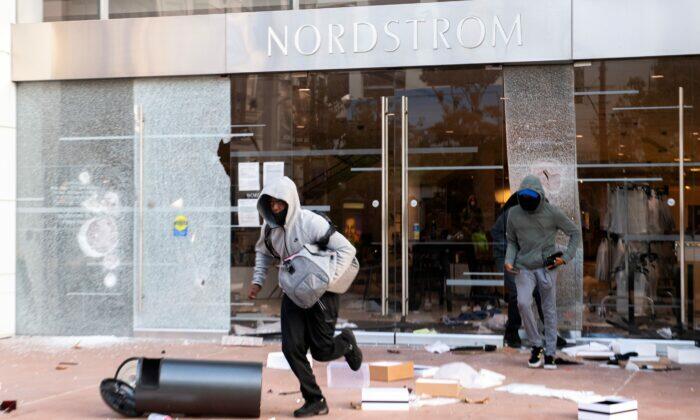
Thieves are seen looting stores at the Grove shopping center in the Fairfax District of Los Angeles, Calif., on May 30, 2020. (VALERIE MACON/AFP via Getty Images)
Weakened law enforcement policies and lesser penalties for these criminal bandit gangs have hit a critical juncture, as crime in the United States has hit proportions not seen in three decades.
The number of increasingly professional organized retail crime (ORC) rings and their frequent attacks have reached crisis scale, according to the National Retail Federation (NRF) in a Sept. 14 report.
These crimes have hurt thousands of businesses and have contributed to higher prices for consumers and loss of key retailers in many communities, as countless stores have closed to due to lack of security.
“The factors contributing to retail shrink have multiplied in recent years, and organized retail crime is a burgeoning threat within the retail industry,” said Mark Meadows, NRF vice president for research development and industry analysis.
“These highly sophisticated criminal rings jeopardize employee and customer safety and disrupt store operations. Retailers are bolstering security efforts to counteract these increasingly dangerous and aggressive criminal activities.
A Spike in Organized Thievery
According to the 2022 National Retail Security Survey, issued by NRF, the total loss of stolen goods hit $94.5 billion by the end of 2021, up from losses of $90.8 billion in 2020.
The NRF found that the average shrink rate in losses for 2021 was 1.44 percent, a slight decline from the previous two years, but comparable to the five-year average of 1.5 percent.
Acts of fraud are being reported across all venues, ranging from brick-and-mortar stores, e-commerce, and omni-channel platforms since 2020.
A sudden increase store violence is another growing area of concern, such as random attacks on store personnel, robberies, and ORC gangs.
The majority of surveyed retailers reported a 89.3 percent increase in violence and a 73.2 percent uptick in shoplifting.
The reported incidents of both ORC and employee theft rose 71.4 percent, much of it involving organized crime or for the gangs’ own benefit.
The NRF said that respondents reported that ORC robberies have risen 26.5 percent since the onset of the pandemic.
The most targeted store items fall under the acronym CRAVED: concealable, removable, available, valuable, enjoyable, and disposable.
Items under CRAVED include apparel, health and beauty, electronics/appliances, accessories, food and beverage, footwear, home furnishings and housewares, home improvement, eyewear, office supplies, infant care, and toys.
In search of solutions, retailers are boosting spending on theft-prevention measures.
The NRF survey showed that 60.3 percent of retailers are increasing their security budgets.
At least 52.4 percent are increasing their investments in technology, such as radio frequency identification tags and readers, computerized security scanners, and license plate-recognition devices.
We are seeing more and more, particularly, organized retail crime,” said Corrie Barry, Best Buy’s CEO, in late 2021 to the NY Post.
“You can see that pressure in our financials. And more importantly, frankly, you can see that pressure with our associates. It’s traumatizing,” she said.
Radical Crime Policies and Recidivism
Wealthy liberal enclaves throughout the country with district attorneys thought of as “soft on crime” appear to be the regions most affected by the crime wave and which has only grown worse since the pandemic.
The top five metropolitan areas affected by store bandit gangs in the past year were the Californian cities of Los Angeles, San Francisco, and Oakland; New York; Houston, Texas; and Miami, Florida.
Retailers across the country are calling for stronger legislation, especially at the federal and state level, along with better enforcement of existing laws to quell increasing acts of violence and theft, which are hurting their survival.
The U.S. Chamber of Commerce demanded earlier this year that Congress take action to address the rise of ORC crimes, calling them a “national emergency.”
Retail theft is becoming a national crisis, hurting businesses in every state and the communities they serve,” said Neil Bradley, the U.S. Chamber of Commerce’s chief policy officer, in a letter to Congress in March.
“We call on policymakers to tackle this problem head-on before it gets further out of control. No store should have to close because of theft.”
Los Angeles County Sheriff Alex Villanueva blamed radical Democrats and prosecutors, saying that they “live in this ‘woke palace’ where they’re not affected by the policies, but the average person IS impacted by them.”

(ZH) Surprise! Chinese Junk Bonds Yield Less Than US Treasuries

Surprise! Chinese Junk Bonds Yield Less Than US Treasuries

Three things we learned last week:
1. The policy divergence between the world’s two largest economies has been so extreme that it has yielded another market milestone.
As China keeps borrowing costs exceptionally low, yields on onshore junk bonds dropped below those of US Treasuries for the first time since 2007.
Five-year, AA-rated corporate bonds, the Chinese equivalent of non-investment grade debt, yielded 3.61% on Thursday, compared with 3.67% for five-year US Treasuries. In other words, Chinese investors can earn higher yields in the world’s financial safe-haven without taking credit risk or worrying about yuan depreciation. Granted, given the tight capital controls, this is easier said than done. Still, the policy divergence explains why the yuan would be under pressure.
2. Speaking of which, the yuan broke 7 per dollar for the first time in more than two years, but without much fanfare. It helps that the PBOC has been setting the fixing strong to slow the slide.
More importantly, the FX settlement data show there’s net foreign-currency inflows, reflecting a still-large trade surplus and the dearth of outbound tourism spending.
That’s quite different from the 2015 devaluation when capital left the country en mass. The yuan decline is likely to be more of a slow-burning move than a sudden collapse.
3. Friday’s economic data showed some signs of stabilization. But without improvements in the housing market and a change in the Covid policy, it’s difficult to see any meaningful rebound.
Economists at UBS are among the latest to cut their GDP forecasts below 3%, predicting a growth rate of 2.7%.
As the research firm China Bull puts it: “Unless the coming economic recovery can broaden out and restore household and business confidence, the rebound will soon run out of steam.”

FT : Zürich – Europe’s new capital of cool

Zürich – Europe’s new capital of cool
Think Switzerland’s biggest city is slick, staid, bourgeois and... a bit boring? Think again

A quiet weekend afternoon in Zürich. At the Galerie Gmurzynska on the city’s central Paradeplatz, an exhibition devoted to Picasso hangs along the gallery’s undulating Zaha Hadid-designed walls. Suddenly a smartly dressed woman dashes in. “Excuse me, is that for sale?” she asks the young man at reception, pointing to a Picasso drawing as though enquiring after a lamb chop. Sadly not, he replies – it’s already sold – and she’s out of the door with a shrug. I ask the receptionist if this happens very often. Well, you have to remember, he replies politely, we’re opposite places like that – gesturing to the vast headquarters of a major Swiss bank. I take it as a yes.

So far, so Zürich. Switzerland’s largest city, wealthy and venerable for centuries, arguably still labours under the impression that it is slick, staid, bourgeois and not a little entitled. But there is, in fact, another Zürich, far looser and more playful than the austere façade. It would make sense in a city that is rapidly expanding: Zürich recently reached its largest population size since 1962. If it is no longer a byword for banking, the industry having dispersed, it is still a hub for companies such as Google (it’s home to its largest continental European HQ) and always drawing in international talent; meanwhile, other Zürich natives, or “Zürchers”, have chosen to return. One symbol: in the ever-gentrifying west of the city, formerly an industrial zone where young Zürchers would go for underground raves, the sportswear company On has just opened its On Labs flagship store, where 651 staff from 54 nationalities congregate to work, exercise and enjoy its vegan restaurant. The average age, says On’s founder, David Allemann, a proud native Zürcher, is 31.

Unsurprisingly, this growth spurt is echoed by a strong proposition across the arts, food, even fashion (an outlier is Balenciaga’s Demna Gvasalia, who long lived here, though he has apparently now decamped even further out). Galerie Gmurzynska is just one of a hundred or so galleries and off-spaces in the city, a pretty dizzying number considering the city’s still relatively tiny size – 440,000 and counting. In 2021, its vast David Chipperfield-designed Kunsthaus finally opened; in January it will welcome a brand-new dynamic director who has already got everybody in a lather by announcing that art is “sex for the brain”. Across the square, at the city’s 19th century Schauspielhaus, the American artist Wu Tsang is reinventing classics such as Pinocchio with a sensibility finessed on the queer club scene of LA. In terms of style, the suave propositions of Mats Klingberg’s Trunk store are offset by Tasoni, run by sisters Taya and Tary Sawiris, a high-fashion boutique selling a cutting-edge mix of Molly Goddard, Martine Rose or Marine Serre. And in gastronomy, a new young generation has opened a range of pop-ups, restaurants and bars, moving the stolid Zürcher diet on from its classic staples of French, Italian and Swiss.

“What I love about Zürich is that under the glistening polish of the city, you have this frenetic pulse,” Matthieu da Rocha, art buyer at Bottega Veneta, tells me during Zürich’s Art Weekend. “It’s a city of unexpected contrasts. You can start the day walking along the lake, and go have lunch at Kronenhalle, this institution that has never changed” – he means the august restaurant whose walls are lined with Picassos, Chagalls and Mirós, with Giacometti-designed tables and lights in the bar. “And you can end up in a rave under the bridge. It’s a city that gives a lot – but you have to go find it.”

The Art Weekend, now in its fifth year, is a mini-festival of sorts, providing more than 100 events over three days, all free. It also provides a handy quick way of mapping out Zürich, since there are now galleries in nearly every corner of the city. Whereas some are in the historic central quarter, others have congregated around the Löwenbräu, which was renovated in the 2000s to provide a cultural hub. It’s been a classic case of turn-of-the-century industrial-chic gentrification, now spread to areas further south and west, well into its former red-light district (or not so former, as one kindly lady’s welcome on the street, at 3pm, attests). You can swiftly go from a rough-and-ready space like the brilliantly named Last Tango, in another converted industrial building, to the up-and-coming Weiss Falk Zürich in an airy old-school mansion in the northern suburbs. In short, you get both pedigree and edge. When Charlotte von Stotzingen set the Weekend up, she was “astonished – why doesn’t this thing exist already?”


Please use the sharing tools found via the share button at the top or side of articles. Copying articles to share with others is a breach of FT.com T&Cs and Copyright Policy. Email licensing@ft.com to buy additional rights. Subscribers may share up to 10 or 20 articles per month using the gift article service. More information can be found at https://www.ft.com/tour.

Von Stotzingen’s is a typical story in that she came to Zürich in 2017, from Kenya, and was somewhat sceptical about its charms: asked to sum up her initial prejudices, she snores. She quickly decided that it would be brilliant to provide an event the weekend before Art Basel next door: a smaller, more informal event which could highlight the city’s slightly underplayed scene. Because Zürich is, many tell me, notoriously discreet; it doesn’t sell itself much, either because it doesn’t want to or it doesn’t need to. Hence a reputation for loftiness or dullness or both. But, in fact, the city is a hub for all sorts of innovation: one of the world’s largest AI centres, for instance, opened here two years ago. The city’s deep pockets obviously help. Von Stotzingen recalls asking one researcher at a lab what the limit on his budget was. There is no limit, he replied – the only limit is my brain. 

Zürich has a deep cultural history, from being the founding place of Dada, to a refuge for artists at Kronenhalle, to being the home of eminent collectors who’ve stuffed their houses on the hills with the very best of 21st-century art. It has also had its moments of revolt, such as in the 1980s when its youth rioted because the local government wanted to spend their budget on the opera house (the youngsters wanted investment in their own cultural centre – and they got it). But there is a new dynamism now, says Marie Lusa, who runs the Galerie Gregor Staiger with her husband (that’s his name). Their own roster includes the Turner-nominated Monster Chetwynd, hotly tipped Somaya Critchlow and a local Zürich treasure, veteran gay photographer Walter Pfeiffer. She says that the fact that artists such as Chetwynd or Tsang are actually settling in the city is testament to its fresh appeal. “I would never have imagined that five years ago,” she says. “It’s kind of a return to 1916, when people came from all over to create Dada. I feel like Zürich could be a laboratory for new ideas.”

Lusa and Staiger are arguably a good encapsulation of Zürich itself: she an effervescent, chatty outsider from the Jura, he a quieter, more severe-looking tall Protestant natural-born Zürcher (although actually just as sweet). A quarter of the city’s residents aren’t Swiss, after all. When we meet in Schnupf, a hypey cocktail bar and steak restaurant, the city’s two faces are visible immediately: we can sit and drink cocktails with one of the owners, who still DJs at the venerable techno club Zukunft, another Zürich institution; but two minutes around the corner is Lusa’s bucolic studio, where there are nine chickens in the garden (she sometimes has the eggs for lunch). Lusa is another one who freely admits that she “hated Zürich, totally” when she turned up 20 years ago before uncovering its charms. Although “it took me 15 years to get into the lake”. 

The lake. That and Kronenhalle are the twin institutions that nearly everybody recommends in their first breath. You can swim in most places along the waters, from Limmat that winds through the city until it reaches the vast expanse itself. Some just fold their clothes on rocks and dive in, but most prefer the “Badis”, swimming clubs that often have bars attached, such as Panama Bar, Rimini or Bad Utoquai. The latter was the first place I went once I checked in at the nicely relaxed La Réserve Eden au Lac Zürich hotel, which opened a couple of years ago, filled with fresher, more 21st-century designs courtesy of Philippe Starck and his daughter Ara. I just crossed the street, and within three minutes I was in the water.

For Tsang, who moved here three years ago, the city’s appeal lies in this proximity to nature. She is even thrilled that the city essentially closes on a Sunday, which to many may sound like the kiss of death – but it’s actually the perfect excuse to go swimming or hiking. “It’s like nowhere else I’ve ever been,” says the artist, previously a beneficiary of a MacArthur Genius Grant. She signed to be director in residence at the Schauspielhaus for three years; it has been so successful, she and her collaborators have committed to another two. Here she enjoys twisting classics such as Carmen or Moby Dick for the audience – Pinocchio is next. You could still argue that it’s a far cry from her early 20s, spent hanging out in queer clubs, working on a film called Wildness – but oddly, she was warned. “I actually spoke to a psychic back then, and she said to me that she could see people, wearing bodysuits, dancing on a stage in some kind of public theatre. I was like: ‘OK, whatever.’ And it’s so weird, because I now make shows at one!”

I soon come to realise that it’s not that the clichés about Zürich aren’t true, it’s just that they can be seen a different way. Too small? Actually, it’s easy to navigate, and it means all scenes effortlessly overlap. You can shift from the more traditional centre to the edgier west in five minutes flat, with institutions such as the Hotel Helvetia – a particularly art-minded space, books about artists, their work and their hobbies placed in each bedroom – sitting nicely on the River Sihl, quite literally on the bridge. Too expensive? Yes, but also no, since most Zürchers politely point out that they tend to get the salaries to match: you have to remember, one curator tells me airily, the average supermarket cashier here earns £45,000. Too rule-based? Perhaps, but that can be a good thing, says chef Zineb Hattab, whose restaurants, Kle and Dar, are some of the freshest additions to the culinary scene. “It’s good when it’s rules for the benefit of everyone. There’s a strong sense of community here.”

At Kle, first, and then Dar, which she opened last October, the Spanish-Moroccan Hattab proposes an entirely plant-based menu. This is no small feat in “the land of milk and meat and chocolate and cheese”, she chuckles. The reaction has been broadly positive. “They’re fine with oat milk in their coffee – but cheese is the final frontier.” In a previous life Hattab used to live in Zürich as an engineer. After converting to gastronomy, and spells in New York, Spain, Italy and Sweden, she felt Zürich was the best place to set up her own venture – the place, she notes, has only become more diverse in the interim too.

Elsewhere, gastronomes rave about Gamper, run by Marius Frehner according to similarly sustainable values, or Bar Lupo, opened earlier this year, where patrons can drink Negronis and eat fresh pasta late into the night. But Zürich has also welcomed various exciting pop-ups such as those organised by the Swiss-Dominican chef Olivier Bur. His Zhorigo project, created with his partner and co-founder Nikita Glasnović, has hosted events in bars and markets across the city, celebrating Mexican, Peruvian or Caribbean cuisine; he’s now putting the finishing touches to his own space.

“There are a lot more people daring to do fun projects here, and they are not scared to collaborate,” says Bur when we brunch at Dar; as if to make his point, Hattab turns out to be a good friend. He also points to the 2018 reopening of the restaurant Bauernschänke, overseen by chef Nenad Mlinarevic, as another turning point. “Bauernschänke” actually means a place where farmers used to assemble after going to market; true to form, its simple, wood-panelled walls and benches once served solidly Swiss fare. Under Mlinarevic, though, the decor remains broadly the same but the gastronomy has gone particularly fine, with a strong line in natural wines. 

Like many young Zürchers I meet, Bur is keen not to be stuffy or old-school – though he does also have a pleasing Swiss severity when it comes to his principles. He got so tired of being asked to bring Swiss chocolate back when he went to visit family in the Dominican Republic that he decided to make his own pure variant from only two ingredients; he uses every little last part, refusing to leave any waste. Everyone who has eaten it at his events has loved it, but he rolls his eyes whenever he’s told he should sell it “properly”. Why, he and Glasnović tut patiently, does everything have to revolve around profit? Of course, saying this in Zürich, of all places, could seem naive. But as we sit in Dar’s leafy courtyard, surrounded by its varied clientele, it also feels delicious and radical. 


FOOD & DRINK

Bar Lupo lupo.bar

Bauernschänke bauernschaenke.ch

DAR restaurantdar.com

Gamper gamper-restaurant.ch

Kronenhalle kronenhalle.com

ART & THEATRE

Galerie Gregor Staiger galerie.gregorstaiger.com

Kunsthaus Zurich kunsthaus.ch

Schauspielhaus Zurich schauspielhaus.ch

Zurich Art Weekend zurichartweekend.com

SHOPPING

On Labs on-running.com

Tasoni tasoni.com

Trunk trunkclothiers.com
FT : Trial of Tom Barrack to open window on Trump’s freewheeling diplomacy

Trial of Tom Barrack to open window on Trump’s freewheeling diplomacy
Founder of Colony Capital denies charges he tried to influence foreign policy on behalf of UAE

Tom Barrack, the real estate investor and early financial backer of Donald Trump’s 2016 presidential run, has been criticised by prosecutors for making large consultancy payments to a former colleague who could be called to testify in his trial on charges of illegal lobbying.

Jury selection in the trial, one of the highest-profile criminal prosecutions yet to emerge from the Trump presidency, is set to begin on Monday. Prosecutors will argue that Barrack broke the law by seeking to influence Trump’s foreign policy on behalf of the United Arab Emirates government.

The case opens a window on a freewheeling period of US diplomacy under a president who disdained traditional alliances and sought to craft a more transactional foreign policy. Eschewing the advice of career state department officials, Trump often consulted instead with a trusted circle of executives from the worlds of finance and real estate.

Prosecutors have said they may seek testimony from people who have worked for Colony Capital, the investment firm founded by Barrack, who have knowledge of his interactions with the Trump White House, as well as Barrack’s dealings with foreign officials and federal law enforcement.

In court filings in September, prosecutors complained about Barrack’s decision to pay $15,000 a month to one of those potential witnesses, his former executive assistant Alison Marckstadt, while she was serving in a consultancy role on his legal defence team. Prosecutors have said that Marckstadt has no legal training or experience and that her hiring “creates an appearance of impropriety”.

Marckstadt’s lawyers did not respond to a request for comment.

Barrack’s lawyers have stated in a court filing that Marckstadt was chosen “because of her long history and experience...of working with Mr Barrack on administrative matters,” and that they did not know she might be a witness.

The government claims Barrack repeatedly sought to sway US policy at the behest of the United Arab Emirates without first registering as a foreign agent as federal law requires. He is also accused of lying about his activities to agents from the FBI. Barrack denies the charges.

In one 2017 episode that prosecutors have cited in their case against Barrack, the US investor allegedly tried to help the UAE win support for a regional embargo on its gas-rich neighbour Qatar. In another, prosecutors say he sought to persuade US officials to list the Muslim Brotherhood as a terrorist organisation.

“This will be a huge win [if] we can list them,” Rashid Al-Malik, an Emirati who has also been charged in the case, wrote in a message to one of Barrack’s colleagues that was cited by prosecutors. The authorities say Al-Malik served as Barrack’s handler while living in Los Angeles on a student visa. He left the country shortly after an interview with FBI agents in 2018 and has not returned.

Barrack was an influential figure in the Trump White House, even though discussions about serving in roles such as US ambassador to the UAE did not result in an official appointment.

He has known Trump since the 1980s, when he persuaded the future president to pay $400mn to buy New York’s Plaza hotel. Barrack spoke in support of his friend’s candidacy — then seen as a long shot — at the Republican National Convention in 2016. He also served as chair of Trump’s inauguration committee and provided informal advice to the Trump White House.

The dual roles as unofficial presidential counsellor and executive chair of Colony may have provided Barrack with opportunities to profit from investments in the Middle East at the same time as nudging the course of US policy towards the region, according to a report by congressional investigators and documents filed in the criminal case.

An investigation by the House of Representatives committee on oversight and reform in 2019 detailed how Barrack pushed a plan to sell nuclear power technology to Saudi Arabia, at the same time as pursuing a deal that would have allowed Colony to take stake in a US reactor maker that was among the proposal’s likely beneficiaries.

While the nuclear deal ultimately stalled and does not feature in the criminal case against Barrack, another effort to meld money and politics appeared to be more fruitful.

US authorities say that, at the same time as he was acting at the direction of the UAE, Barrack secured $374mn of capital commitments from the country’s sovereign wealth funds. An email sent by a Colony employee and later obtained by investigators stated that “[w]hile the primary purpose of the [investment fund] [will be] to achieve outsized financial returns”, it would also “garner political credibility for its contributions to [Trump’s] policies”.

Barrack left Colony last year, receiving termination benefits including vesting of equity awards and a cash payment of $21.4mn. Shares in the New York Stock Exchange-listed company have fallen nearly 70 per cent in the past five years. Barrack’s son and daughter also left the company last year, receiving severance payments that added up to more than $400,000.

Prosecutors have not accused Colony of any wrongdoing, and the company has sought to move on from Barrack’s tenure, renaming itself DigitalBridge as part of a shift towards investing in data centres and other digital assets. DigitalBridge is making payments to cover Barrack’s legal bills.

The case underscores how Trump’s approach to governing blurred the line between statecraft and financial empire building, not only for the president himself but also for some of his associates.

The former Colony chief is standing trial alongside Matthew Grimes, a 28-year-old former executive at the firm who worked for Barrack as an analyst and was quickly promoted to vice-president. Grimes denies acting as an unregistered agent of a foreign government.

Barrack is helping to pay Grimes’s legal fees. In a letter to the judge last year, prosecutors argued the fee arrangement “has the potential to affect defense counsel’s advice, including . . . whether to seek possible leniency by co-operating with the government against Barrack”.

FT : Typhoon Nanmadol hits Japan as millions told to evacuate homes

Typhoon Nanmadol hits Japan as millions told to evacuate homes
The storm made landfall near city of Kagoshima, cutting electricity for thousands and damaging buildings

Japan’s southern island of Kyushu has been hit by a typhoon that brought powerful winds and torrential rain, prompting authorities to recommend the evacuation of millions of people from their homes.

Typhoon Nanmadol made landfall near the city of Kagoshima on Sunday. Large parts of the island spent the day under the government’s highest level of warning. Gusts of 100mph damaged buildings and plunged more than 200,000 households into an electricity blackout on the island.

The typhoon’s arrival was preceded by huge waves and some of the strongest winds ever recorded in that region. Some parts of Miyazaki prefecture, on the eastern side of Kyushu, were slammed with 400mm of rain in the 24 hour period between Saturday and Sunday afternoons.

Ahead of making landfall earlier on Sunday, residents of Kagoshima and the surrounding prefecture were warned to seek shelter in the sturdiest buildings available, and if possible, take refuge on higher floors.

Prime Minister Fumio Kishida concluded a meeting with senior officials overseeing the typhoon response with a statement that the Japanese public should evacuate to safety “at the slightest feeling of danger”.

The Japanese state broadcaster, NHK, said local authorities are issuing evacuation orders for millions of people.

The evacuation warnings currently in place are non-mandatory — a status that, in the past, has meant that large numbers of people remain in their homes beyond the point where they can easily move to a shelter.

Japanese media reports said tens of thousands of people had already moved to evacuation centres as electricity was cut, while mobile phone networks battled to remain operational.

NHK reported around a dozen injuries related to the floods and winds.

By midnight on Sunday, the Japan Meteorological Agency had placed Miyazaki prefecture and most of Kyushu’s eastern coast under a special warning for extreme rainfall. It is rare for the agency to take such a step for one of the country’s four main landmasses.

The typhoon, which may rank as one of the strongest to make landfall on one of Japan’s main islands, is moving north along a path expected to encounter significant residential and industrial hubs. It is forecast to bring further rainfall, raising the threat of floods and landslides.

The expected trajectory mapped by the JMA shows the typhoon heading toward the southwestern region of Japan’s main Honshu island on Monday and continuing north-east on Tuesday. Japan’s capital, Tokyo, is not currently near the centre of the typhoon’s expected path.

The rains, winds and thunderstorms have already caused significant disruption to rail, ferry and air traffic services, and are expected to prompt widespread cancellations on Monday.