>>> Europe : Brokers Upgrades & Downgrades - 20th of September 2022 V2(+)

>>> Up
* ADP Raised to Equal-Weight at Barclays; PT 136 euros
* EDP Raised to Overweight at Barclays; PT 5.90 euros
* Endesa Raised to Overweight at Barclays; PT 22.10 euros
* Fraport Raised to Overweight at Barclays; PT 56 euros
* Jungheinrich Raised to Outperform at Oddo BHF; PT 35 euros
* SEB Raised to Buy at DNB Markets; PT 134 kronor
* Wizz Air Raised to Neutral at Oddo BHF; PT 2,500 pence (+)

>>> Down
* Adyen Cut to Hold at HSBC; PT 1,500 euros
* Aena Cut to Underweight at Barclays; PT 115 euros
* Coloplast Cut to Hold at Jefferies; PT 880 kroner
* Ocado Cut to Reduce at HSBC; PT 575 pence
* Pandora Cut to Sell at Nordea; PT 300 kroner
* Zurich Airport Cut to Equal-Weight at Barclays

>>> Initiation


>>> Call
* Coloplast Cut to Hold as Jefferies Sees Inflation, China Risks
* Europe Value Stocks’ Gap to Growth Excellent Once Again: Goldman
* Goldman Says Stay Defensive on Road Toward Peak Hawkishness

>>> Stoxx 600 Pre-Market Indications

  • Rio Tinto (RIO1 TH) +2.9%
    • Iron Ore Rises as China’s Construction Stimulus Reaps Rewards
    • Fortescue to Spend $6.2 Billion to Curb Iron Ore Emissions (2)
  • TUI (TUI1 TH) +2.6%
    • TUI Sees Further Growth in 4Q, Confirms FY Underlying Ebit View
  • Henkel (HEN3 TH) +2.2%
    • Henkel Boosts FY Organic Revenue Forecast
  • Porsche SE (PAH3 TH) +2.1%
    • Volkswagen Works Council Weighs More Porsche Share Sales: FT
  • Evotec SE (EVT TH) +1.9%
    • Evotec Biologics Awarded Contract From US Department of Defense
  • Zalando (ZAL TH) +1.5%
  • Mowi (PND TH) +1.2%
  • Nel (D7G TH) +1.1%
  • Maersk (DP4B TH) +1.1%
  • Novo Nordisk (NOVC TH) +1.1%
    • Novo, Lilly May Fuel US Obesity Sales Beyond $12 Billion in 2028
  • Aker BP (ARC TH) -0.4%
  • Telenor (TEQ TH) -0.5%
    • Telenor Sees Mid-Single Digit Nordic Ebitda Growth 2023-2025 (1)
  • BAE (BSP TH) -0.7%
  • HeidelbergCement (HEI TH) -1.6%

>>> TradeGate Pre-Market Indications

AX:
  • Henkel (HEN3 TH) +2.6%
    • Henkel Boosts FY Organic Revenue Forecast
  • Porsche SE (PAH3 TH) +2.5%
    • Volkswagen Works Council Weighs More Porsche Share Sales: FT
  • Zalando (ZAL TH) +2%
  • Siemens Energy (ENR TH) +1.3%
  • VW (VOW3 TH) +1.2%
  • HeidelbergCement (HEI TH) -1.2%
MDAX:
  • Jungheinrich (JUN3 TH) +3.3%
    • Jungheinrich Raised to Outperform at Oddo BHF; PT 35 euros
  • Evotec SE (EVT TH) +2.5%
    • Evotec Biologics Awarded Contract From US Department of Defense
  • Thyssenkrupp (TKA TH) +1.1%
  • Sixt (SIX2 TH) +1.1%
    • Sixt Aims to Make 70-90% of European Fleet Electric by 2030: HB
  • Delivery Hero (DHER TH) +1%
  • Kion (KGX TH) +0.5%
SDAX:
  • About You (YOU TH) +4.4%
  • Ceconomy (CEC TH) +2.2%
  • Nordex (NDX1 TH) +1.5%
    • UBS AG Raised Nordex Voting Rights to 4.08% on Sept. 14
  • VERBIO Vereinigte (VBK TH) +1.3%
  • Hamborner REIT (HABA TH) +1%
  • SGL (SGL TH) +0.8%
  • Dermapharm (DMP TH) +0.7%
  • Traton (8TRA TH) +0.1%
    • Europe’s Truckmakers Brace for Worsening Energy Crisis (1)

WSJ : Ford Warns Parts Shortages, Higher Supplier Costs Are Expected to Affect E

Ford Warns Parts Shortages, Higher Supplier Costs Are Expected to Affect Earnings
Auto maker predicts 40,000 to 45,000 unfinished vehicles in inventory at quarter’s end

Ford Motor Co. F 1.43% on Monday warned third-quarter earnings would be affected by about $1 billion in higher-than-anticipated supplier costs and parts shortages that have led to unfinished vehicles it couldn’t sell during the period.

The Dearborn, Mich., auto maker reaffirmed its year-end guidance for 2022, projecting adjusted operating results for the third quarter would fall between $1.4 billion and $1.7 billion.

Ford’s stock was down nearly 5% in after-hours trading.

Ford said it expects to have about 40,000 to 45,000 vehicles in inventory at the end of the quarter that are awaiting parts and can’t be delivered to dealerships—a figure that is higher than expected. Those vehicles, many of them higher-margin trucks and SUVs, are expected to be completed and sold in the fourth quarter, the company said.

Additionally, based on recent negotiations with suppliers, Ford said it is paying more for parts and materials to account for the effects of inflation. The higher payments added about $1 billion in unexpected costs in the third quarter, the company said. Ford said in July it was facing inflationary pressures that would affect a range of costs, totaling about $3 billion for the year.

Ford has previously guided to adjusted earnings before interest and taxes of between $11.5 billion and $12.5 billion for full year 2022.

The company’s notice is another indication that the supply-chain disruptions that have hindered the industry for more than a year now are continuing to weigh on auto-sector earnings.

Other car companies are also struggling to restock dealerships, citing shortages of semiconductors and other critical parts that are needed to assemble cars and trucks.

General Motors Co. said this summer it was unable to deliver nearly 100,000 vehicles to dealers due to parts shortages, including a lack of computer chips. GM posted a 40% decline in net income in the second quarter, hurt by a loss in China, as well as continued supply-chain snarls.

Ford’s sales growth has outpaced competitors in recent months, mostly because its dealership inventory had been depleted in the prior year due to a factory fire in Japan at a critical computer-chip maker. Ford’s U.S. sales rose 27% in August, in contrast to a 5% decline for the broader auto industry.

Inflationary pressures have pushed up raw-material costs, and Ford has raised sticker prices on some popular models, such as the electric Mustang Mach-E SUV and F-150 Lightning truck.

Ford’s earnings have been helped by buyers willing to pay record prices for new vehicles because of limited car and truck availability. In the second quarter, the auto maker’s net income rose nearly 19% over the same-year period.

>>> Europe : Brokers Upgrades & Downgrades - 20th of September 2022

>>> Up
* ADP Raised to Equal-Weight at Barclays; PT 136 euros
* EDP Raised to Overweight at Barclays; PT 5.90 euros
* Endesa Raised to Overweight at Barclays; PT 22.10 euros
* Fraport Raised to Overweight at Barclays; PT 56 euros
* Jungheinrich Raised to Outperform at Oddo BHF; PT 35 euros
* SEB Raised to Buy at DNB Markets; PT 134 kronor

>>> Down
* Adyen Cut to Hold at HSBC; PT 1,500 euros
* Aena Cut to Underweight at Barclays; PT 115 euros
* Coloplast Cut to Hold at Jefferies; PT 880 kroner
* Ocado Cut to Reduce at HSBC; PT 575 pence
* Pandora Cut to Sell at Nordea; PT 300 kroner
* Zurich Airport Cut to Equal-Weight at Barclays

>>> Initiation


>>> Call
* Coloplast Cut to Hold as Jefferies Sees Inflation, China Risks
* Goldman Says Stay Defensive on Road Toward Peak Hawkishness

>>> What to look at today - 20th of September 2022

Stocks climbed in Asia following a rebound in the final hour of New York trading as investors shifted positions ahead of a flurry of central bank decisions this week led by the Federal Reserve. MSCI Inc.’s Asia-Pacific equity index advanced for the first time in six days, paced by tech stocks in Hong Kong, where the benchmark Hang Seng Index rose more than 1%. Japan’s Nikkei 225 earlier jumped by around the same amount after traders returned from a holiday. S&P 500 and Nasdaq 100 futures edged higher. Treasury 10-year yields hovered near 3.5% while yields on the more policy-sensitive two-year rate hit the highest since 2007 and are poised to crack above 4%, amid fears that an overtightening of monetary settings raises the odds of a hard landing. Investors are on tenterhooks as they await policy decisions that are expected to bring hefty rate hikes from the US, UK and Sweden. Decisions are also due in Japan, Switzerland, Indonesia, Norway and the Philippines, among others. The dollar was little changed below recent highs, while the yen was held comfortably below the key 145 level. The yuan was on the weak side of 7 versus the dollar. Traders are betting the Fed will hike by 75 basis points Wednesday, signal rates are heading above 4% and will then pause. The long hold strategy is rooted in the idea the central bank would avoid the disastrous stop-go policy of the 1970s that allowed inflation to get out of hand.  In China, banks kept their main lending rates unchanged after the central bank paused its monetary easing and defended a weakening yuan. Bitcoin struggled to return to $20,000 level. Oil slipped below $86 per barrel and gold was steady. US After Hours Summary: F -4.8% on higher-than-expected supplier costs; CGNX +6.2% on raised guidance.

Nikkei +0,43% Hang Seng +1,05% CSI +0,14% Shanghai +0,20% Shenzen +0,92%

Eur$ 1,0020 CNH 7,0133 CNY 7,0095 JPY 143,32 GBP 1,1426 CHF 0,9653 RUB 63,1181 TRY 18,2975 WTI$ 85,76 Gold 1673,60 BTC 19,315 -1% ETH 13,55 -0,10%

S&P +0,27% Nasdaq +0,31% EuroStoxx +0,43% FTSE +0,66% Dax +0,59% SMI +0,10%

Macro :
- Ecuador Reaches Deal With China to Restructure Debt -- WSJ
- Salvini Wants $30 Billion for Italy Inc. to Survive Energy Woes
- Goldman Says Stay Defensive on Road Toward Peak Hawkishness

Keep an eye on :
- AF FP : China Airlines, Air France-KLM Extend Engine Support Contract
- BGN IM : Banca Generali Settles Pending Claims With Italy Revenue Agency
- EKTAB SS : Elekta, Karkinos Healthcare Expand Cancer Care in India
- EVT GY : Evotec Biologics Awarded Contract From US Department of Defense
- FDJ FP : FDJ in Exclusive Talks to Buy Zeturf Group
- HEN3 GY : Henkel Boosts FY Organic Revenue Forecast
- IIA AV : Immofinanz Sees EU25M/Yr Gross Rental Income from CPIPG Deal
- LNZ AV : Lenzing Suspends Guidance on ‘Drastic Deterioration’ of Market
- MAJ NA : Majorel Ceased Merger Talks With Sitel Due to Macro Environment
- NOVOB DC : Novo, Lilly May Fuel US Obesity Sales Beyond $12 Billion in 2028
- OMV AV : Austria Plans to Release More Diesel From National Reserves: APA
- ROG SW : Roche Granted FDA Clearance for Cobas Pure Integrated Solutions
- RWE GY : RWE, Uniper Near Long-Term Deals to Buy LNG From Qatar: Reuters
- SIX2 GY : Sixt Aims to Make 70-90% of European Fleet Electric by 2030: HB
- STLA IM : Some Stellantis Workers Strike in France Over Wages: Le Figaro
- SYDB DC : Sydbank Raises FY Profit Forecast on Higher Core Income
- TALK LN : TalkTalk pushes UK government to promote superfast broadband - FT
- TEL NO : Telenor Sees Mid-Single Digit Nordic Ebitda Growth 2023-2025
- UCB BB : EU Regulator Accepts New UCB Filings on Bimekizumab for Review
- UCG IM : UniCredit Wants to Expand in Germany, Orcel Tells Handelsblatt
- VASTN NA : Vastned Extends EU200M Credit Lines to Sept. 2025
- VOW GY : Ford Drops as Inflation Warning Adds to Gloomy Commentary
- VOW GY : Volkswagen Works Council Weighs More Porsche Share Sales: FT

FT : France sets course for a nuclear renaissance

France sets course for a nuclear renaissance
About-turn raises many challenges after technology’s long wilderness period

As Europe’s energy crisis and climate concerns swing momentum back behind nuclear power, the plans to build new reactor plants in France should have been a boost for an industry emerging from two decades of political reproval and dried up order books.

Instead, France’s nuclear renaissance, one of the most ambitious of the revivals contemplated by a growing number of governments, has been fraught with concerns. Critics question whether constructors still have the knowhow to build reactors and deliver them on time, and whether they can find enough people to get the work done.

“We’d been told for years: please, prepare yourselves to shut reactors,” Jean-Bernard Lévy, the outgoing chief executive of state-controlled French nuclear site operator EDF, told a conference in Paris in August. He was flanked by a government minister as he delivered his rebuke and warned of a lack of qualified construction staff.

“Clearly, we didn’t hire people to build 12 reactors, we hired people to dismantle them,” he noted.


Please use the sharing tools found via the share button at the top or side of articles. Copying articles to share with others is a breach of FT.com T&Cs and Copyright Policy. Email licensing@ft.com to buy additional rights. Subscribers may share up to 10 or 20 articles per month using the gift article service. More information can be found at https://www.ft.com/tour.

France had been Europe’s nuclear energy champion for some time. A wave of plant construction between the 1970s and 90s gave the country its 56 reactors still standing today, before political and public sentiment began to waver.

Opposition to atomic power, including from some environmentalists because of the difficulty in disposal of the most toxic nuclear waste, has since weighed heavily on the sector. It only began to be cast in a favourable light again in recent years thanks to one of its key attributes: low carbon emissions.

Nuclear energy made a comeback at the COP26 environment summit in Glasgow last year, in discussions between world leaders over how to switch from fossil fuels. Russia’s invasion in Ukraine in February, which exacerbated spikes in power prices as Europe scrambled to wean itself off Russian gas, then brought energy security back on the table in dramatic fashion.

At COP26, “we stopped talking about objectives and started talking about implementation”, says OECD nuclear energy analyst Michel Berthélemy. “People realised nuclear had to be there alongside renewable energy. What happened with Russia’s war in Ukraine also really changed things.”

Now, the challenges raised by France’s about-turn are being replicated the world over, following a long period in the wilderness for nuclear technology, exacerbated by the 2011 Fukushima accident in Japan.

In Europe, Belgium wants to delay its phase out of atomic energy. In Germany, the energy crisis has revived a thorny debate over whether to take another look at a technology it had long turned its back on. In Britain, plans have been confirmed for a new £20bn atomic plant to add to one under construction. Even in Japan, new reactors are being contemplated.

France’s plan, outlined by president Emmanuel Macron in February, is to spend €52bn on at least six next generation European pressurised reactors. They are meant to replace ageing sites from 2035 and mark the first order for new plants in almost 20 years.

Macron (having in 2020 backed the now much-criticised shutdown of the Fessenheim plant in north-eastern France) called for all reactors that could be viably extended beyond their 40-year lifespan to be kept open for at least 50 years, potentially up to 60.

“That was a complete revolution for us,” says Valérie Faudon, executive director of Sfen, a science-based group in France that promotes the nuclear industry. “Since 2011, the only discourse had been that this would not be allowed.”

“That narrative had really affected recruitment,” Faudon adds, underscoring one of the main obstacles to getting the industry back into shape, as highlighted by EDF and its suppliers.

Confirmation of the new plants is good news for EDF, though, after years of clamouring for clarity from the government so that it may invest. The former electricity monopoly has embarked on a hiring drive and plans training schools in specialist skills, such as welding. Building a pair of new reactors as planned at Penly, in northern France, will require about 8,000 staff to move there, Faudon says.


Please use the sharing tools found via the share button at the top or side of articles. Copying articles to share with others is a breach of FT.com T&Cs and Copyright Policy. Email licensing@ft.com to buy additional rights. Subscribers may share up to 10 or 20 articles per month using the gift article service. More information can be found at https://www.ft.com/tour.

However, some of the sector’s problems derive from EDF fiascos. Corrosion in some existing reactors has forced it into an unprecedented number of plant shutdowns, straining electricity supply in Europe at a critical time and adding fuel to the fire for nuclear power critics.

And the only French reactor commissioned as a prototype in the last quarter century, Flamanville 3 on the Normandy coast, is more than a decade over deadline and four times over budget.

“We saw an industry that had forgotten how to build,” Berthélemy says. “It didn’t have the staff and the capacity, and we also saw a regulatory framework that was not sufficiently stabilised, with constructors not understanding what the regulator wanted. You have to find the modus operandi not to repeat that.”

By 2040, many of France’s other reactors will be well over 50 years old. Training construction staff can take four years. Permissions for potential sites require public debates, discussions in parliament and regulatory approvals.

EDF has said that lessons from Flamanville will be helpful for new sites, including the company’s overhaul of its IT to better organise projects and communicate with suppliers.

One encouraging lesson is that France’s ambitious nuclear construction plan of decades ago — accelerated by the 1973 oil crisis — was started from scratch, notes Dominique Vignon, former boss of equipment maker Framatome. He simply says of today’s plan, “it’s a shame it’s all come so late.”

FT : Hedge funds take aim at UK fund management groups

Hedge funds take aim at UK fund management groups
Citadel and Point72 among firms betting against companies including Abrdn and Ashmore

Hedge funds are betting that a tumble in shares of UK asset management companies including Abrdn and Ashmore will accelerate as a brutal bear market dents their investment performance and ability to attract new business.

Ken Griffin’s Citadel, Steve Cohen’s Point72 and Marshall Wace are among those running bets on lower share prices for listed so-called long-only firms, whose bias towards rising asset prices puts them at more acute risk from the tumult so far in 2022 in equities and bond markets.

Investment house Abrdn, emerging markets fund group Ashmore and investment platform Hargreaves Lansdown are among listed firms where hedge funds have increased their negative bets this year.

“The bearish environment [has] . . . pushed hedge funds to ramp up big shorts against listed long-only asset managers that are likely to struggle,” said Ivan Ćosović, founder of data group Breakout Point, which analyses short sales.

The bets come during a tough year for global markets as central banks tighten the ultra-loose monetary policy of recent years in an effort to tackle soaring inflation. US equities entered bear market territory this summer, driven by falls in growth stocks, while developed market bonds have weakened sharply.

Fund firms whose products are largely geared to rising rather than falling asset prices are already feeling the pain. Last month Abrdn, whose shares are down 40 per cent this year, posted a first-half loss of £320mn, while in July Ashmore, down 23 per cent this year, reported a $14.3bn fall in assets. Hargreaves Lansdown, which last year enjoyed record trading, has reported a fall in profits and new business flows, while its chief executive has warned of “a tough time over the next few months”.


Shorting fund firms “is essentially a play on US bond yields. If they continue to rise, that lowers [the] valuation of all other assets including equities,” said Florian Kronawitter, a former hedge fund manager who now writes analysis. “Lower equity prices [means] less fee income for asset managers.”

Odey Asset Management, founded by high-profile trader Crispin Odey, is shorting 1.4 per cent of Ashmore. Fund manager James Hanbury wrote in investor documentation seen by the Financial Times that the firm was among several fund firms that were “mispriced cyclical risk”.

Citadel, Wellington Management Company, Eleva Capital and JPMorgan Asset Management are also running bets against Ashmore, according to Breakout Point and regulatory filings. Short interest has risen to 9.1 per cent as of early September from 2.9 per cent this year, according to S&P Global Market Intelligence.

Short interest in Abrdn, meanwhile, has risen from 1.7 per cent at the start of the year to 7.1 per cent, close to its highest level this year, according to S&P Global Market Intelligence. BlackRock, GLG, Point72 and Citadel are among hedge funds running bets against the firm, according to Breakout Point and regulatory filings.

“The earnings power of the business remains highly vulnerable to macro/markets given weak profitability,” wrote Morgan Stanley analyst Bruce Hamilton in a recent note. Analyst expectations for Abrdn are running at close to their lowest on record, according to data group Dystematic and FactSet.

BlackRock and Marshall Wace are among funds targeting Hargreaves Lansdown. That pits them against Nick Train, one of the UK’s best-known stock pickers, whose firm Lindsell Train is the largest outside shareholder in the funds supermarket.

Hargreaves Lansdown shares have plunged 37 per cent so far this year. Some investors attribute part of the fall to the broader market turning against growth stocks. But other analysts see specific issues ahead for the company, which will limit its growth.

“There’s a fairly broad church of people who think that such high growth will be difficult for Hargreaves Lansdown to sustain in future,” said Julian Roberts, analyst at Jefferies.

Short interest, which has been high for some time, has climbed from 8.5 per cent at the start of the year to 10 per cent in early September.

The share price took a turn for the worse after chief executive Chris Hill laid out a new strategy, which will boost investment in the business and cut the amount of capital returned to shareholders.

“Some people thought that was a recognition of past under-investment and that there was a real headwind for the business. That I think has given people confidence to short this thing,” Roberts said.

Longstanding shareholders are unfazed by bets against the company. “We don’t take into account short sellers or not. You’ve got to form your own view and back it,” said Julian Fosh, co-manager of the UK Growth Fund at Liontrust, a top 10 shareholder.

“We see a very strong platform. We see very loyal customers. There’s lots of chit-chat about short-term issues, having to invest a bit more, but nothing to damage their competitive advantage,” he said.

FT : Volkswagen’s works council raises prospect of more Porsche share sales

Volkswagen’s works council raises prospect of more Porsche share sales
Head of influential body says a Porsche IPO will help VW finance transition to the age of electric vehicles

Volkswagen’s powerful works council has raised the prospect of the carmaker eventually selling more shares in its Porsche marque, which is set to go public later this month in one of Germany’s largest flotations.

The German carmaker has faced criticism from some investors for its plan to sell only 12.5 per cent of Porsche, its most profitable brand, in a long-awaited IPO that is likely to value the luxury carmaker at €70bn-€75bn.

Daniela Cavallo, who as head of VW’s works council wields significant influence at the company, said: “I do believe that Volkswagen will benefit from [the IPO] in the end.”

The proceeds would give the company “additional flexibility in terms of how [the company] can finance the transformation” from the era of the combustion engine to that of the electric vehicle, she told the Financial Times.

“That includes the hypothetical possibility of issuing further [non-voting] shares in the long term, if needed,” she said, but stressed that such a sale “is not planned” at present.

As well as controlling half of the 20 seats on VW’s supervisory board, the works council, which represents the interests of the company’s 300,000-strong German workforce, also benefits from a loose alliance with board members representing the state of Lower Saxony, a major VW shareholder.

Cavallo’s comments are the most open any senior figure at VW has been to the option of one day selling more of Porsche to investors. VW executives and bankers working on the IPO have rejected the prospect of additional share sales. “We rule out further placement at this time,” chief financial officer Arno Antlitz told reporters earlier this month.

The Porsche IPO comes as VW shoulders the financial burden of reinventing the company for the age of electric vehicles. The company has already committed more than €52bn to the development of battery-powered vehicles and will spend more to manufacture battery cells.

No discussions are now happening on further share sales, which were not “currently an option”, said Cavallo, but added: “Nobody knows whether we might be thinking about that option someday — but we could do, if needed. And that is positive.”

The Porsche IPO “brings flexibility for the future and that’s, after all, why we’re going along with this from the employee side”, Cavallo said, pointing out that the rationale for the works council supporting the float was why it also backed the partial flotation of VW’s truck unit Traton in 2019.

As part of the IPO, roughly 130,000 VW workers in Germany, mostly represented by the works council, will receive a one-off payment of €2,000.

The Porsche-Piëch families, VW’s largest shareholders, will also buy 12.5 per cent of the Stuttgart-based company that carries their patriarch’s name — and their stake will carry voting rights.

Qatar’s investment vehicle, already a major VW shareholder, is expected to buy about 2.5 per cent of the non-voting shares being offered in the IPO, while Norges Bank, T Rowe Price and the Abu Dhabi sovereign fund have also committed to buy stakes.

Porsche chief financial officer Lutz Meschke told reporters earlier this month that only “severe problems” in geopolitics would stop the IPO from going ahead, despite the deteriorating global economic outlook.

Cavallo struck a more cautious note, saying that VW would “have to see how this phase really plays out, whether we actually implement the IPO in the end”.

“I’m hoping for the best because the feedback [from investors] is positive at the moment, even if there is volatility on the markets,” she said.

“I believe that, in the end, the [Porsche] workforce will benefit from this because Porsche has an impressive record.”

(ZH) German Nuclear Power Plant To Shut Down After Reported Leak

German Nuclear Power Plant To Shut Down After Reported Leak
BY TYLER DURDEN
MONDAY, SEP 19, 2022 - 06:45 PM
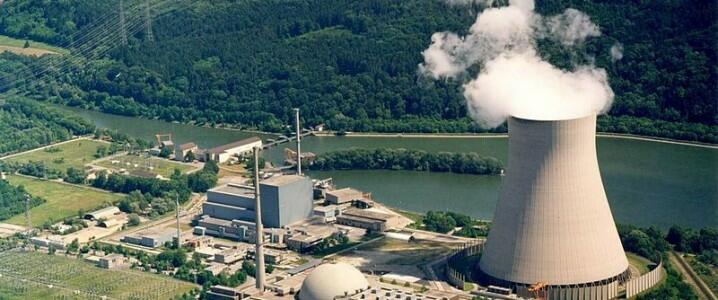
As Germany desperately attempts to stave off a winter energy crisis, most recently seizing Rosneft refinery assets, a leak at a nuclear plant reported by the country’s Environment Ministry adds to the pressure, with operations now set to be shut in for a week as repairs get underway.
Germany’s Isar 2 nuclear power plant in Bavaria on Monday reported a leak that will require it to go offline in October for repairs.
The nuclear plant is already slated for a permanent shutdown at the beginning of next year as part of Germany’s plan to phase out nuclear power. However, given the looming energy crisis in Germany as winter approaches, there has been some discussion of delaying a phase-out of nuclear power.
The leak at Isar 2 means that a week of repairs in October will be necessary if the power plant is to remain operational beyond December 31st, Reuters reported, citing the plant’s operator.
Two weeks ago, German Chancellor Olaf Scholz rejected the idea of extending the country’s use of nuclear power and delaying the phase out of nuclear power plants. Germany’s opposition conservatives have called on the chancellor to keep the country’s two remaining nuclear reactors online. Scholz has resisted this temptation, insisting that the country will have enough energy resources to make it through the winter.
Under Scholz’s plan the remaining two nuclear reactors will be kept in emergency reserve but will not be producing any power, the Guardian reports.
Germany solidified its plans to quit nuclear power in 2011.
Under those plans, three reactors were shut down in 2021 and three more this year, with two remaining in the phase-out, including Isar 2.
The move is increasingly unpopular amid an energy crisis.
While Germany’s gas storage is now around 87% full, critics argue that Germany’s gas buying spree to fill storage has led to further soaring prices, which also affects neighboring countries.