FT : Germany’s biggest department store files for bankruptcy protection again

Germany’s biggest department store files for bankruptcy protection again
Galeria Karstadt Kaufhof owner René Benko, who also co-owns UK retailer Selfridges, under pressure to save mid-market chain

Germany’s largest department store chain has filed for bankruptcy protection for the second time in two years, heaping pressure on its billionaire owner, René Benko, to stump up hundreds of millions to save it.

Galeria Karstadt Kaufhof, which operates 131 stores across Germany, employing 17,400 staff, has already taken two bailouts from the German government, worth €680mn.

Politicians in Berlin are reluctant to provide a third without greater participation from the Austrian property mogul Benko and his Signa Group — a collection of companies that control a sprawling European property empire worth more than €24bn.

It comes after the chain first filed for creditor protection in April 2020 when it was forced to close stores owing to the pandemic lockdowns.

Around a third of jobs at Galeria will be slashed as part of a planned restructuring, the company’s chief executive, Miguel Müllenbach, told the Frankfurter Allgemeine Zeitung newspaper on Monday as it applied for bankruptcy protection.

A spokesperson for Galeria said that the company had held “constructive and goal-orientated” discussions with the German government but that the financial terms offered for a further bailout were too onerous, and a radical restructuring was therefore the only option.

“The exogenous factors of the pandemic, inflation at record levels as a result of the Ukraine war and energy prices that have increased many times over, have led to [decreased footfall] in city centres and a historically negative consumer mood,” they said.

The politically sensitive restructuring of Galeria is not the only problem Benko is currently dealing with.

Last month Austrian police raided Signa’s headquarters as part of a sprawling anti-corruption investigation that is looking into Benko’s political connections in Vienna and the financial operations of his highly complex business empire.

Benko has not been charged with any wrongdoing.

The property mogul has come under particular criticism in Germany since Signa, as well as owning the operating company of Galeria, is also — via a separate corporate structure — the landlord of a clutch of its most important sites and has not reduced the rent it collects from them.

“Our colleagues in the 131 department stores wonder where the owner is in this extremely existentially threatening situation for 17,400 people and their families,” said Stefanie Nutzenberger, a board member of Ver.di, Germany’s second largest trade union. “There are clear expectations of the owner,” she added.

Critics have in the past accused Benko of having acquired Galeria only because of the high value of its underlying real estate.

The mid-market chain, regarded by many Germans as somewhat staid, is an unusual part of Benko’s property conglomerate: almost all of Signa’s other holdings are in highly exclusive, luxury developments. Signa is the co-owner of London’s Selfridges, and the Chrysler building in New York. The company also owns the iconic German department store KaDeWe.

German politicians have also called on Benko to stump up more cash to protect jobs at Galeria.

“It is not an ordinary company, but an elementary part of many inner cities,” said Reinhard Houben, a spokesman for the liberal FDP, one of the three parties in Germany’s governing coalition government. More transparency was needed, Houben said, indicating that Benko would have to put money into Galeria first, before the state again stepped in.

A spokesperson for Signa declined to comment. The company has in the past said that it has injected nearly €1bn into Galeria to try to turn around the business.

“Without Signa, [Galeria] would have long since ceased operating department stores in Germany,” Müllenbach said. “My assumption is that Signa will continue to support us with investments.”


FT : DSM: ingredients group captures bitter flavour of the times

DSM: ingredients group captures bitter flavour of the times
Dutch-Swiss company is exposed to international commodity prices it has little ability to restrict

A company acronym invites hostile interpretation. DSM supposedly stands for Doing Something Meaningful. It could equally mean Down Some More. The Dutch-Swiss ingredients and bioscience group just lowered its profit projection for the year. It is struggling to pass on energy and raw material price rises, a common predicament for wholesale suppliers.

The share price tells the story. The stock has been moving in parallel with the Dutch stock market, but with much greater amplitude. That is typical of a mature business with unspectacular margins and a fair degree of operational gearing.

The market appears to be one jump ahead of the company. DSM now expects adjusted ebitda to increase by a low single-digit rate, rather than the high single-digit rate previously forecast. The figure rose 6 per cent in the first nine months compared with a year before. It edged up just 3 per cent in the three months to September.

DSM hopes to raise returns by taking over Swiss flavouring and fragrance specialist Firmenich in a €19bn deal announced in May. The transaction should bring cost savings and strengthen DSM’s operations.

The takeover is fairly priced and has a good strategic rationale. DSM may not be able to complete and integrate the purchase before the European economy is deep into its downturn, however.

DSM in theory has defensive qualities because it contributes to products that are essential rather than discretionary. Food and healthcare will remain in demand. The difficulty is that many of DSM’s business customers have the buying power to hold down prices.

The company is meanwhile exposed to international commodity prices it has little ability to restrict. That means something has to give, presumably DSM’s overheads or margins.

The group’s shares trade on a ratio of enterprise value to ebitda of about 11 times. This is in line with its peers. DSM says it has plenty of experience of dealing with rapidly changing economics. So does everybody else in the wake of the pandemic. That leaves the shares as a geared play on the economy of Europe with a dash of Asia and North America thrown in.

>>> US Gapping down

Gapping down
In reaction to earnings/guidance
:

  • LL -35.6%, TUP -33.6%, CDLX -30.8%, ZI -21.8%, ENTG -16%, ENVX -13.1% (also signs MoU with one of the largest consumer electronics companies; also announces advancements to its laser technology program and bolsters team), EL -11.4%, DT -9.3%, PARA -8.6%, BGFV -8.1%, ABNB -6.3%, CNDT -6.3%, CAKE -6.2% (also authorizes additional 5 mln shares to repurchase program), FRPT -6.1% (also names new CFO), EHAB -5.9%, CACC -5.6%, PRO -5%, OMI -4.8%, IRTC -4.7%, CWH -4.3%, LTHM -4.2%, SIMO -3.8%, VRSK -3.6%, CHRW -3.5%, DVN -3.3% (also lowers dividend), SHC -3.2%, LFUS -3%, AUDC -3%, DENN -2.7%, SITE -2.7%, NMIH -2.4%, GOOS -2.4%, GTE -2.1%, FUN -1.9%, FDP -1.9%, VSH -1.9%, MLM -1.7%, BR -1.7%, BTG -1.6%, ROK -1.6%, PUMP -1.5%, REZI -1.4%, SKY -1.3%, ATI -1.3%, EDIT -1.2%, ETR -1.2%, APO -1.2%, ANDE -1%, EA -1%, CWEN -1%

Other news:

  • ROG -40.8% (DD terminates deal to acquire ROG)
  • OMGA -5% (FDA grants Orphan Drug Designation for OTX-2002)

Analyst comments:

  • BTI -4% (downgraded to Neutral from Buy at Goldman)
  • BALY -1.9% (downgraded to Hold from Buy at Stifel)
  • ULH -1.8% (downgraded to Hold from Buy at Stifel)
  • CLF -1.7% (downgraded to Underperform from Peer Perform at Wolfe Research)

FT : Energy cost curbs are impeding Europe’s renewables rollout, Vestas warns

Energy cost curbs are impeding Europe’s renewables rollout, Vestas warns
Wind turbine maker bemoans pricing uncertainty as it cuts full-year earnings guidance

Attempts by the EU to curb high energy prices are leading to a slowdown in the adoption of renewable energy just as the region tries to ramp it up, the chief executive of one of the world’s largest wind turbine manufacturers warned.

“Every indication is that the EU and governments have spent more time in finding taxation methods or trying to limit energy prices, which has actually slowed the process and project accruals,” Henrik Andersen, chief executive of Danish wind turbine manufacturer Vestas, told the Financial Times.

“Now there is an uncertainty of what you can expect to achieve on your electricity pricing. That is actually damaging the speed of renewables being brought on.

“It is not enough to talk about ambitions for increasing renewables,” he added. “The energy crisis is only solved by having real tangible actions, which means you need to speed up your permitting and get more prime energy sources in your grid and in your supply to the consumer.”

European energy ministers in September agreed to limit revenues from wind, solar and nuclear power generation to $180 per megawatt hour as part of their plans to curb the rise in energy prices across Europe, caused by high gas prices.

Andersen’s comments come as Vestas, which had the most installed wind turbines in 2021, trimmed its full-year earnings guidance in the face of supply chain woes and cost inflation.

Earnings in the three months to the end of September were down 29 per cent on a year earlier to €3.9bn and the company now expects full-year revenue of €14.5bn to €15.5bn, down from its previous outlook of as much as €16bn.

Inflation and the rising cost of materials such as steel and copper have made turbine-making more expensive, while the industry is facing supply chain delays related to the pandemic and the Ukraine conflict.

“The dilemma is the output from the wind turbines has never been higher. The value of [wind turbines] has never been higher,” Andersen said. “From an operational point of view it is a slightly toxic operating environment, because if the customer has delays or slowdown, then we have tense discussions, because you can have a very attractive return on getting the turbine commissioned earlier or on time.”

>>> US Gapping up

Gapping up
In reaction to earnings/guidance
:

  • OSPN +25%, QUAD +20.4%, CHGG +17.5%, MTCH +15%, BAND +15%, YUMC +13.6%, HZNP +8%, SCI +7.9%, SMCI +6.9%, CZR +6.7%, CRUS +6.1%, BRX +5%, AMD +4.9%, AEIS +4.7%, XHR +4.7%, NVO +4.6%, ZETA +3.9%, FCPT +3.6%, INSP +3.5%, VRAY +3.4%, OI +3.3%, TRMB +3.3%, ALKS +3.2%, UTHR +3.1%, RITM +2.9%, INTU +2.8%, MDLZ +2.8%, ZBH +2.6%, CRK +2.5% (also reinstates dividend), MGY +2.5%, DIN +2.3%, WU +2.1%, CVS +2%, AYX +1.9%, GSK +1.9%, NMR +1.5%, PEAK +1.3%, SMG +1.3%, MIR +1%

Other news:

  • BNFT +47.4% (VOYA to acquire BNFT)
  • ARCT +31.9% (collaboration and license agreement with CSL Seqirus)
  • EDAP +9.2% (Focal One HIFU reimbursement raised under CMS)
  • TRQ +5.9% (RIO reaches agreement with certain shareholders of TRQ)
  • DD +5.1% (DD terminates deal to acquire ROG)
  • SPXC +5% (divests 3 subsidiaries that hold asbestos liabilities)
  • LIAN +4.2% (first patient dosed in the Phase 3 LIBRA trial of TP-03)
  • BMBL +3.9% (in sympathy with strong MTCH earnings)
  • AROC +3.8% (announces successful completion of a field pilot of its methane capture technology)
  • ABUS +3.3% (clinical data from two trials)
  • EBS +3% (announced results from Phase 2 study evaluating its single dose chikungunya)
  • PRGO +2.5% (announces $170 mln investment to expand US infant formula manufacturing)

Analyst comments:

  • CRWD +0.5% (initiated with an Outperform at Macquarie)

WWD : SMCP Taps Olivier Germain as New Claudie Pierlot CEO

SMCP Taps Olivier Germain as New Claudie Pierlot CEO
He will join the French contemporary label from New Guards Group.

PARIS – French contemporary brand Claudie Pierlot has tapped Olivier Germain as its new chief executive officer, parent company SMCP announced. Germain will also join SMCP’s executive committee.

“I am delighted to join the SMCP group and Claudie Pierlot at a pivotal moment in its history. The 40th anniversary of the brand in 2024 will be an opportunity to accelerate its development by bringing together key elements and the values bequeathed by its founder,” Germain commented. “I would like to thank Isabelle Guichot and the board of directors of SMCP Group for their trust in me to write this new chapter for the Claudie Pierlot brand together.”

The new role will see Germain return to Paris after a two-year tenure at Milan-based New Guards Group, where he served as chief merchandising officer. At New Guards Group, Germain oversaw Marcelo Burlon County of Milan, Palm Angels, Unravel Project, Heron Preston, Alanui, Kirin Peggy Gou, Opening Ceremony, Ambush, as well as the license of Off-White.

“Over the course of his career in fashion, Olivier has acquired a unique expertise in this industry, a strategic vision and leadership which are major assets for Claudie Pierlot’s expansion at a key moment in its history, as the brand will celebrate its 40th anniversary in 2024,” said SMCP chief executive officer Isabelle Guichot.

Germain joins SMCP, parent company of Sandro, Maje, Claudie Pierlot and Fursac, after a long career in luxury. Prior to his position at New Guards Group, Germain held the same role at Balmain for three years, and served as chief product officer at Alexander McQueen and worldwide director of merchandising at Tom Ford. He also held roles at Dior and Yves Saint Laurent earlier in his career.

SMCP is looking to Germain’s experience in product as it seeks to strengthen the brand’s positioning and identity. It recently debuted a new logo and is expanding its accessories lines.

Germain’s appointment follows the appointment of former Nina Ricci head Charlotte Tasset Ferrec as chief executive officer of sister brand Maje in January, and Guichot’s own ascension to SMCP group chief in August, 2021.

In results released last week, SMCP’s group-wide organic sales were up 9.4 percent year-over-year to a record 308 million euros, despite slow sales in China due to the country’s zero-COVID policy.

Sales at Claudie Pierlot and Fursac combined gained 13.9 percent to 38.3 million euros for the two brands. Across its four brands, SMCP operates 1,600 stores globally in 45 countries.

>>> US Research Calls

Research Calls

  • Upgrades:
    • BioCryst Pharma (BCRX) upgraded to Outperform from In-line at Evercore ISI; tgt raised to $16
    • Danske Bank A/S (DNKEY) upgraded to Buy from Hold at Deutsche Bank
    • Denali Therapeutics (DNLI) upgraded to Buy from Neutral at BTIG Research; tgt $38
    • KKR (KKR) upgraded to Buy from Neutral at BofA Securities; tgt raised to $60
    • Premier (PINC) upgraded to Outperform from Neutral at Robert W. Baird; tgt $41
    • Red Electrica (RDEIY) upgraded to Hold from Sell at Berenberg
  • Downgrades:
    • Abiomed (ABMD) downgraded to Hold from Buy at Deutsche Bank; tgt raised to $388
    • Avista (AVA) downgraded to Neutral from Buy at Mizuho; tgt lowered to $40
    • Bally's Corporation (BALY) downgraded to Hold from Buy at Stifel; tgt lowered to $25
    • Blueprint Medicines (BPMC) downgraded to Perform from Outperform at Oppenheimer
    • British American Tobacco (BTI) downgraded to Neutral from Buy at Goldman
    • Catalent (CTLT) downgraded to Neutral from Buy at BofA Securities; tgt lowered to $60
    • Cleveland-Cliffs (CLF) downgraded to Underperform from Peer Perform at Wolfe Research; tgt $12
    • Ecolab (ECL) downgraded to Hold from Buy at Deutsche Bank; tgt lowered to $135
    • NASDAQ (NDAQ) downgraded to Neutral from Outperform at Credit Suisse; tgt lowered to $57
    • Iberdrola SA (IBDRY) downgraded to Equal-Weight from Overweight at Morgan Stanley
    • Ocado (OCDGF) downgraded to Underweight from Neutral at JP Morgan
    • SeaSpine (SPNE) downgraded to Hold from Buy at Truist; tgt lowered to $6.75
    • Semler Scientific (SMLR) downgraded to Neutral from Buy at B. Riley Securities; tgt lowered to $45
    • Twilio (TWLO) downgraded to Underperform from Buy at BofA Securities; tgt lowered to $85
    • Universal Logistics (ULH) downgraded to Hold from Buy at Stifel; tgt $36
  • Others:
    • Aeva (AEVA) initiated with a Hold at WestPark Capital; tgt $3
    • AEye (LIDR) initiated with a Hold at WestPark Capital; tgt $1
    • Canopy Growth (CGC) initiated with an Underperform at Bernstein; tgt $1.50
    • Check Point Software (CHKP) initiated with a Neutral at Macquarie; tgt $129
    • Cloudflare (NET) initiated with a Neutral at Macquarie; tgt $60
    • Cronos Group (CRON) initiated with a Mkt Perform at Bernstein; tgt $3
    • CrowdStrike (CRWD) initiated with an Outperform at Macquarie; tgt $220
    • Datadog (DDOG) initiated with a Neutral at Macquarie; tgt $85
    • Denali Therapeutics (DNLI) initiated with a Buy at BofA Securities; tgt $40
    • Dynatrace (DT) initiated with a Neutral at Macquarie; tgt $38
    • HubSpot (HUBS) initiated with an Outperform at Macquarie; tgt $355
    • Innoviz Technologies (INVZ) initiated with a Buy at WestPark Capital; tgt $12
    • Legend Biotech (LEGN) initiated with an Outperform at Evercore ISI
    • Lineage Cell Therapeutics (LCTX) initiated with an Outperform at Robert W. Baird; tgt $5
    • Luminar Technologies (LAZR) initiated with a Buy at WestPark Capital; tgt $14
    • Microsoft (MSFT) initiated with a Neutral at Macquarie; tgt $234
    • nCino (NCNO) assumed with an Outperform at Macquarie; tgt $42
    • Okta (OKTA) initiated with a Neutral at Macquarie; tgt $60
    • OneSpaWorld (OSW) initiated with a Buy at Truist; tgt $12
    • Ouster (OUST) initiated with a Buy at WestPark Capital; tgt $4
    • Palo Alto Networks (PANW) initiated with a Neutral at Macquarie; tgt $185
    • Salesforce (CRM) assumed with an Outperform at Macquarie; tgt $210
    • ServiceNow (NOW) assumed with an Outperform at Macquarie; tgt $500
    • Snowflake (SNOW) initiated with a Neutral at Macquarie; tgt $173
    • Sorrento Therapeutics (SRNE) initiated with an Overweight at Cantor Fitzgerald; tgt $5
    • Tilray (TLRY) initiated with a Mkt Perform at Bernstein; tgt $3.90
    • Velodyne Lidar (VLDR) initiated with an Underperform at WestPark Capital
    • Workday (WDAY) initiated with a Neutral at Macquarie; tgt $170
    • Zscaler (ZS) initiated with a Neutral at Macquarie; tgt $155

9to5 : iPhone 15 and iPhone 15 Pro: What the early rumors say about new features


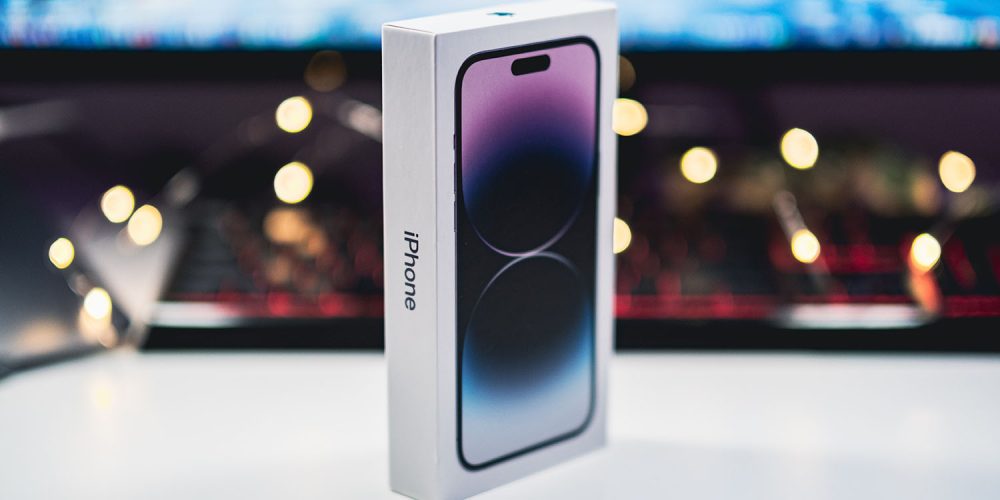
The iPhone 14 and iPhone 14 Pro lineups are barely a month old, but the rumor mill is already abuzz with what to expect from the iPhone 15 and iPhone 15 Pro next year. As of right now, next year’s iPhone 15 and iPhone 15 Pro are shaping up to be significant upgrades: USB-C, the Dynamic Island for everyone, and much more…

iPhone 15 and iPhone 15 Plus
Screen sizes
The iPhone 14 lineup made a big change to the available screen sizes, dropping the 5.4-inch iPhone “mini” option in favor of a new iPhone 14 Plus with a 6.7-inch display. While the iPhone 14 Plus is apparently selling worse than Apple had anticipated, rumors are that the company plans to continue this strategy next year.
This means that we can expect the iPhone 15 with a 6.1-inch display alongside the iPhone 15 Plus with a 6.7-inch display.
Display features
The most significant change to the displays will be the addition of the Dynamic Island for the iPhone 15 and iPhone 15 Plus. Currently, the Dynamic Island is limited to the iPhone 14 Pro and iPhone 14 Pro Max. The Dynamic Island replaces the notch and, instead, opts for two separate display cutouts that are made to look like one by using impressive software integration.
But while the iPhone 15 and iPhone 15 Plus will feature the Dynamic Island, they won’t get two other display features that are exclusive to the “Pro” and “Pro Max” models. First, rumors are that the iPhone 15 and iPhone 15 Plus won’t get Apple’s ProMotion display technology that offers refresh rates of 1Hz all the way up to 120Hz.
As such, the iPhone 15 and iPhone 15 Plus also won’t add support for an always-on display, since this feature relies on the ProMotion and LTPO display technology.
USB-C
Apple is almost certainly going to switch the iPhone 15 and iPhone 15 Plus to USB-C for connectivity, replacing the decade-old Lightning connector. The switchover comes as the European Union implements a new requirement that all smartphones and other devices use a common charging port, which would be USB-C for the time being.
Camera
As of right now, the rumors are a bit unclear as to what sort of camera updates to expect from the iPhone 15 and iPhone 15 Plus. The iPhone 14 added a handful of camera upgrades, including the Photonic Engine for improved processing and a dramatically better front-facing camera.
We expect Apple to build upon the existing camera hardware next year, either with upgraded camera hardware or new software features. More rumors will emerge over the coming months.
Performance
Finally, the iPhone 15 and iPhone 15 Plus are expected to be powered by the A16 Bionic chip that’s currently used in the iPhone 14 Pro and iPhone 14 Pro Max. This continues Apple’s strategy of bifurcating iPhone performance between the Pro and non-Pro models, a strategy that first began this year.
The iPhone 14 Pro and Pro Max got the latest A16 chip, while the iPhone 14 and iPhone 14 Plus are powered by the A15 – though they do get the 6-core variant from the iPhone 13 Pro.
iPhone 15 Pro and iPhone 15 Pro Max
Screen sizes and display features
What about iPhone 15 Pro and iPhone 15 Pro Max? We’re expecting fewer changes here in terms of screen sizes and display technology. In fact, as of right now, it seems like things will stay the same.
This makes sense seeing that the iPhone 14 Pro and iPhone 14 Pro Max featured dramatic display upgrades with the addition of the Dynamic Island and always-on display. Instead, it seems like Apple’s focus will be on perfecting these features while also bringing the Dynamic Island down-market to the iPhone 15 and iPhone 15 Plus, as mentioned earlier.
One small design tweak that we could see is Apple replacing the clicky volume and power buttons with solid-state buttons, similar to when it replaced the physical Home button on the iPhone 7 with a solid-state button instead.
USB-C
Just as with the iPhone 15 and iPhone 15 Plus, the iPhone 15 Pro and iPhone 15 Pro Max are also expected to make the switch to USB-C. We’re still waiting on some more details here, such as data transfer speeds and charging speeds.
One more thing to consider is the possibility that the iPhone 15 Pro and iPhone 15 Pro Max adopt Thunderbolt connectivity alongside USB-C. This would match the strategy Apple has taken with the iPad lineup, where all latest-generation models have USB-C but the highest-end iPad Pro models also support Thunderbolt.
Camera
Initially, it was rumored that the iPhone 15 Pro models would feature a new “8P,” or eight plastic lenses, rear-facing camera. More recent reporting says this might not be the case after all. “8P” here is a reference to the number of elements in the lens. When a manufacturer takes an existing lens design and adds elements, this is generally done to reduce distortion.
While it doesn’t sound like the iPhone 15 Pro will receive any major camera upgrades, the iPhone 15 Pro Max is a different story. The expectation is that the iPhone 15 Pro Max will feature a new periscope lens for the first time.
Periscope lenses rely on a prism that reflects light to multiple internal lenses at 90 degrees to the camera sensor. This allows the length of the lens to be much longer than a telephoto lens, which results in a much better optical zoom. The telephoto lens on the iPhone 14 Pro models only offers 3x optical zoom and 15x digital zoom.
For comparison’s sake, the Galaxy S22 Ultra from Samsung already has a periscope lens that enables 10x optical zoom and up to 100x digital zoom. One rumor has said Apple may opt for a 5x optical zoom. More specific details for Apple’s implementation of a periscope lens on the iPhone 15 Pro Max are unclear, but ideally, it will bring the iPhone much closer to what’s already offered by Samsung’s flagships.
Performance
The iPhone 15 Pro and iPhone 15 Pro Max will continue Apple’s march toward even more powerful Apple Silicon chips. It was first reported last year that Apple would be one of the first companies in the world to adopt a new 3nm process and that we’d see the first of these chips in 2023.
The latest iPhone 14 Pro models use an A16 chip, which some have referred to as 4nm, but it would be more accurate to say that it’s a die-shrunk 5nm chip.
Next year’s iPhone 15 Pro and iPhone 15 Pro Max are expected to use the A17 Bionic processor, which will likely be based on the 3nm process. Shrinking the process size leads to a major change in terms of performance as well as efficiency, which could make for significant battery life improvements next year.
Naming and strategy
In terms of naming and strategy, Apple reportedly has some changes in store for next year’s iPhone lineup. The company is said to be planning to further differentiate the iPhone 15 Pro from the iPhone 15 Pro Max. This is most evident in the camera upgrades that are rumored, but there are certainly other ways the company could do this too.
Additionally, there’s been speculation that Apple might rebrand the highest-end iPhone to be the “iPhone 15 Ultra.” This would match what we saw with the Apple Watch this year, with an Apple Watch SE, Apple Watch Series 8, and Apple Watch Ultra.
Ultimately, we’re still in the early days of iPhone 15 and iPhone 15 Pro rumors. We’ll have plenty more over the next year that will help further paint the picture of Apple’s plans.

>>> US Early premarket gappers

Early premarket gappers

  • Gapping up:
    • BNFT +47.1%, ARCT +29.3%, OSPN +25%, QUAD +20.4%, CHGG +18.9%, BAND +16.9%, MTCH +15.1%, YUMC +12.3%, EDAP +11.3%, SCI +7.8%, SMCI +7.2%, CRK +7%, CZR +6.9%, CRUS +6.1%, TRQ +5.9%, NVO +5.6%, DD +5.1%, SPXC +5%, BRX +5%, BMBL +4.8%, UNVR +4.8%, AEIS +4.7%, FRSH +4.7%, AMD +4.4%, LIAN +4.2%, ATEN +4.1%, ZETA +3.9%, AROC +3.8%, CRSP +3.6%, FCPT +3.6%, INSP +3.5%, VRAY +3.4%, ABUS +3.3%, OI +3.3%, MDLZ +3.3%, UNM +3%, INTU +2.7%, PRGO +2.5%, MGY +2.5%, GSK +2.3%, NNBR +2.2%, AYX +1.9%, NMR +1.5%, PEAK +1.3%, GNRC +1.3%, EBS +1.1%, EXPI +1%, RIO +0.9%, CLX +0.9%
  • Gapping down:
    • ROG -40.8%, ZI -20.5%, ENVX -10.2%, CAKE -7.4%, IRTC -7.3%, CDLX -7.1%, CNDT -6.3%, FRPT -6.1%, ABNB -5.9%, EHAB -5.9%, PRO -5%, MIR -5%, PUMP -4.7%, CACC -4.6%, CWH -4.2%, LTHM -4.2%, BGFV -3.9%, SIMO -3.7%, VRSK -3.6%, LFUS -3%, DVN -2.9%, DENN -2.7%, SITE -2.7%, AIG -2.6%, NMIH -2.4%, PRU -2.4%, ATCO -2.4%, GTE -2.1%, AUDC -1.9%, FUN -1.9%, FDP -1.9%, MCK -1.7%, TSLX -1.6%, REZI -1.2%, ANDE -1%, EA -1%, UTHR -1%, HRB -0.9%