Gapping up
In reaction to earnings/guidance:
- DCFC +30.2% (guidance), ADMA +4.7% (guidance), SBNY +4.2%, SI +3%, BOOM +1.8% (CEO steps down; sees Q4 revs above expectations), PAC +0.7%, EDU +0.7%
Other news:
- NATI +15% (Emerson (EMR) submitted a proposal to acquire NI for $53 per share in cash at an implied enterprise value of $7.6 bln)
- IPHA +10.4% (Announces Publication of Preclinical Data with a Trifunctional NK Cell Engager in Acute Myeloid Leukemia in Nature Biotechnology)
- CLLS +7% (Calyxt and Cibus announce the signing of a definitive merger agreement)
- ARBE +5.9% (files for $100 mln mixed securities shelf offering)
- ALKS +5% (Alkermes' nemvaleukin alfa (nemvaleukin) granted an Innovation Passport for the treatment of mucosal melanoma under the Innovative Licensing and Access Pathway by the UK Medicines and Healthcare products Regulatory Agency)
- ARQT +3% (Presents New Phase 2 Long-Term Data Showing Sustained Efficacy and Clearance for a Median of 10 Months with Roflumilast Cream)
- VTNR +2.6% (provides operational update for Q4 2022; Throughput volumes exceeded prior forecast)
- LILM +1.4% (appoints Oliver Vogelgesang as CFO)
- ERJ +1.3% (wins order for 15 new E195-E2 aircraft valued at $1.17 bln)
- CGAU +1.1% (reports Q4 gold production)
- DEO +1% (to acquire Don Papa Rum)
- CLF +1% (increasing current spot market base prices for all carbon hot rolled cold rolled and coated steel products by a minimum of $50 per net ton effective immediately with all new order)
Analyst comments:
- DNB +3% (upgraded to Buy from Neutral at BofA Securities)
- CHD +1.4% (upgraded to Outperform from Neutral at Credit Suisse)
- CDNS +1% (upgraded to Overweight from Neutral at Atlantic Equities)

Early premarket gappers
- Gapping up:
- IPHA +10.1%, ARBE +5.9%, ARQT +4.8%, SBNY +3.9%, DUOL +3%, STR +2.4%, LILM +1.4%, DEO +1.4%, CGAU +1.1%, ERJ +0.9%, PAC +0.7%
- Gapping down:
- IQ -8.1%, FSM -4.3%, PTNR -3.4%, WHR -3.1%, RIO -2.2%, HDSN -1.1%, LUV -0.8%, EGO -0.7%, SI -0.5%
>>> Up
* Leonardo Raised to Buy at Goldman; PT 11.70 euros
* Leonardo Raised to Buy at Goldman; PT 11.70 euros
* Nice Ltd ADRs Raised to Overweight at Piper Sandler; PT $227
* Piraeus Bank Raised to Buy at Goldman; PT 2.20 euros
* Swatch Raised to Buy at Jefferies; PT 370 Swiss francs
>>> Down
>>> Down
* Alfa Laval Cut to Hold at SEB Equities; PT 330 kronor
* CA Immo Cut to Hold at Raiffeisen Bank; PT 32.50 euros
* CA Immo Cut to Hold at Raiffeisen Bank; PT 32.50 euros
* DuPont de Nemours Cut to Hold at Deutsche Bank; PT $80
* Konecranes Cut to Neutral at Goldman; PT 29 euros
* NCC Cut to Hold at Berenberg
* Pfizer Cut to Equal-Weight at Wells Fargo; PT $50
* Quilter Cut to Underweight at JPMorgan; PT 74 pence
* Snap Cut to Market Perform at JMP
* Tesla PT Cut to $180 from $350 at Jefferies
* Unilever Cut to Underperform at Bernstein
>>> Initiation
>>> Initiation
* ASMI Rated New Underweight at Barclays; PT 230 euros
* Coca-Cola HBC Reinstated Add at Numis; PT 2,200 pence
* Fastenal Rated New Hold at Baptista Research; PT $52.30
* Fastenal Rated New Hold at Baptista Research; PT $52.30
* Fiinu Rated New Buy at Panmure Gordon
* Infineon Rated New Overweight at Barclays; PT 47 euros
* Softcat Rated New Buy at Stifel; PT 1,500 pence
* STMicroelectronics Rated New Overweight at Barclays; PT 60 euros
>>> Call
>>> Call
* Barclays Prefers Infineon, STMicro Among European Chip Stocks
* Swatch Raised to Buy at Jefferies on China Consumer Recovery
* Swatch Raised to Buy at Jefferies on China Consumer Recovery
Asian stocks and US equity futures slid as traders digested data that showed China’s economy growing at the second slowest pace since the 1970s. An Asian equity benchmark dipped for the second day, with the Hang Seng Index down more than 1%. Contracts for the S&P 500 also fell, with US markets shut Monday. A gauge of global equities traded flat in a sign the rally that’s pushed it to the best start to a year since 1988 has stalled.
Stocks trading in Hong Kong and mainland China were mostly in the red after China said its economic growth last year slowed as Covid restrictions hammered activity. But better-than-forecast fourth quarter and December data add to optimism it may be primed for a recovery. Among those bullish on the recovery are Goldman Sachs Group Inc. and UBS Group AG as the resumption of activity in China promises to unleash over $836 billion of excess savings, and may help ease fears of a global downturn as other central banks continue to tighten policy. A plan by Chinese financial regulators and the nation’s biggest bad-debt management companies to offer support to high-quality developers may shore up positive sentiment as well. Shares rose in Japan, while the yen fell 0.2% against the dollar as traders weighed the prospects of a possible change in policy by the Bank of Japan on Wednesday. The nation’s 10-year yield climbed above the central bank’s ceiling for a third day as traders added to wagers that it will adjust its yield-curve control policy. Activist investor Ryan Cohen took a stake in Alibaba Group Holding Ltd. and is advocating that the Chinese e-commerce company increase repurchases of its own shares. Some analysts say the move may lift foreign interest in the stock. Earnings reports from Goldman Sachs and Morgan Stanley due Tuesday will provide guidance about the health of the global economy. Bitcoin dipped, but held above $21,000 in a sign of healthy risk appetite. Elsewhere, oil declined as investors waited for a market outlook from the Organization of Petroleum Exporting Countries that may yield clues about supply and demand in 2023. Gold slid.
Nikkei +1,26% Hang seng -1,01% CSI -0,16% Shanghai -0,25% Shenzen -0,08%
Eur$ 1,0824 CNH 6,7668 CNY 6,7623 JPY 128,71 GBP 1,2193 CHF 0,9256 RUB 68,7089 TRY 18,7906 WTI$ 79,26 -0,75% Gold 1,910,50 BTC 21,172 +0,65% ETH 1,569 -0,06%
S&P -0,325 Nasdaq -0,54% EuroStoxx -0,32% FTSE -0,02% Dax -0,32% SMI
Macro :
- China’s Better-Than-Expected GDP Fuels Hopes for Rebound
- China’s Population Starts Shrinking, First Drop Since 1960s
- Goldman, UBS Join Bullish Bets on Global Assets as China Reopens
- Wider Deficit on Higher Imports Could Hit Rupee
- European Car Sales Face 4% Drop in 2022; 2023 Outlook Brighter
- Deliveries of Russian Oil by sea increase 30% over the past week
Keep an eye on :
Keep an eye on :
- ADP FP : ADP: Paris Airports 2022 Traffic at 80.2% of 2019 Levels
- AERO SW : Montana Aerospace Prelim FY Adjusted Ebitda EU115M to EU125M
- AIR FP : Arianespace Names Steven Rutgers Chief Commercial Officer
- AIR FP : Arianespace Names Steven Rutgers Chief Commercial Officer
- AKSO NO : Aker Solutions Wins NOK0.5b-NOK1.5b Subsea Contract in Brazil
- BABA US : Meme Stock Icon Cohen Targets Alibaba in Rare China Activism
- AR4 GY : Aurelius to Apply to End Munich Stock Exchange Inclusion
- BANK LN : Fiinu Rated New Buy at Panmure Gordon
- EN FP : Xavier Niel Applies for French TV Frequency, Le Figaro Reports
- BRBY LN : Burberry Names Giorgio Belloli Chief Digital Customer
- DNO NO : DNO 4Q Kurdistan Gross Operated Production 107,822 Boepd
- ENX FP : Euronext Plans to Extend Clearing to Derivatives in 2024
- 3333 HK : Evergrande Is Said to Propose Two Offshore Restructuring Options
- LSEG LN : Euronext Plans to Extend Clearing to Derivatives in 2024
- FORN SW : Forbo Prelim FY Profit Misses Estimates
- BOSS GY : Hugo Boss Boosts FY Ebit Forecast, Beats Estimates
- IBE SM :
- Ionos IPO : IONOS Is Planning IPO in First Quarter of 2023 in Frankfurt
- KESKOB FH : Kesko Dec. Sales From Continuing Operations EU968.2M
- LISN SW : Lindt & Spruengli FY Operating Margin Forecast Beats Estimates
- MC FP : MS, RBC Positive on Luxury Goods Recovery in China for 2023
- MSFT US : Microsoft to Add ChatGPT to Azure Cloud Services ‘Soon’
- MNG LN : Pressure to Cut DB Pension-Fund Leverage Affects More Than Gilts
- MJH LN : Inflexion Private Equity Among Suitors for MJ Hudson Assets: Sky
- 002714 CH : Muyuan Is Said to Pick CICC, JPMorgan for $1.5 Billion GDR Sale
- NCC LN : NCC Loses Clean Sweep of Buys as Berenberg Sees Earnings Risks
- NDX1 GY : Nordex Prelim 4Q Orders 1.9 GW
- RNO FP : Renault CEO to Visit Japan This Weekend for Nissan Talks: Jiji
- RNO FP : Nissan, Renault on Track to Complete Deal to Revamp Alliance --> Nissan +2,80%
- RNO FP : Renault, Geely Seek to Bring Aramco Into Engine Venture: RTRS
- SAN SM : Santander Bets on Institutional Clients to Grow its Funds Unit
- SOL SM : Soltec Signs €100m Financing Deal for Asset Management Unit
- VOW GY : VW Sees China Market Accelerating After First Quarter
- WEW GY : Westwing Group Prelim FY 2022 GMV EU481 Million, -18% Y/Y
SSE warns Britain ‘not moving fast enough’ on green economy
Chief executive calls for action to improve planning and consent times for renewables development
Britain is not “moving fast enough” to build sufficient low-carbon energy infrastructure to reduce the country’s dependence on volatile gas imports, the chief executive of SSE has warned.
Alistair Phillips-Davies said solutions already existed that would allow Britain to end its “over-reliance” on expensive imported gas “and the regimes that control it”.
But he argued that there were too many blockages holding up the country’s progress, such as the time it takes to secure planning permission and other necessary consents for offshore wind farms.
“There is broad political and public support for clean, homegrown energy,” Philips-Davies told the Financial Times. “We have the strategies and policy papers we need. We just need to see more urgency behind efforts to clear the barriers, greenlight projects and get clean infrastructure built.”
Although most of SSE’s activities are in the UK, Philips-Davies warned that international competition was heating up as the US and Europe also pursue ambitious clean energy programmes, with generous support schemes such as the $369bn US Inflation Reduction Act wooing investors and developers.
“If the UK doesn’t act quickly, others will,” Philips-Davies said. “The US and Europe are racing to catch up.”
In the months after Russia marched into Ukraine last year, the UK government set bold new targets for technologies such as offshore wind, solar and nuclear power to increase the country’s energy security and reduce its exposure to volatile international energy markets.
The UK imports more than 60 per cent of its gas, which is used to heat homes and also fuel gas-fired power stations.
However, energy companies are becoming increasingly frustrated at the obstacles preventing them from delivering targets such as a fivefold increase in offshore wind capacity to 50 gigawatts by 2030.
“It can take more than a decade to deliver a wind farm currently — that’s far too long,” said Phillips-Davies.
Ministers last year promised to speed up planning processes but energy companies report very little progress.
Once projects have received relevant planning permissions and other consents, another problem is grid connection, according to Chris Hewett, chief executive of trade body Solar Energy UK.
He said that while 10GW of large solar projects currently had planning permission in Britain, a “significant proportion” had been told by electricity grid operators that they were unlikely to get connection dates until the second half of the decade or even the early 2030s, which is delaying construction.
“The restrictions on the grid are a drag on economic growth across the whole country,” Hewett said, blaming a combination of grid operators’ own processes and the regulatory regime whereby grid owners have to seek permission from Ofgem for their investment programmes.
Energy groups are hoping the government will take heed of recommendations made last week by Chris Skidmore, Conservative MP and former science and universities minister, who was commissioned to review the UK’s 2050 net zero emissions target. Skidmore urged reforms to local and national planning rules to “unleash” cheaper forms of electricity generation.
SSE is a big developer of offshore wind in Britain but is also vying to build one of the the UK’s first gas-fired power stations fitted with carbon capture and storage technology. It is also working on power stations that could run on low-carbon hydrogen, which does not produce carbon dioxide when burnt.
The UK business department did not immediately respond to a request for comment.
Adidas Hit by Widespread Hoax
The company refuted a fake press release that said it had named a co-CEO to ensure ethical manufacturing.
Adidas was hit by a hoax on Monday when an unknown party — believed to be an activist group called The Yes Men — sent out a long press release saying the company had named a co-chief executive officer to ensure more ethical manufacturing processes.
But it wasn’t true.
Several hours later, a second release was sent, saying the first one was a hoax.
The initial release, on what appeared to be Adidas letterhead and allegedly sent from its headquarters in Herzogenaurach, Germany, said the company had named Vay Ya Nak Phoan, a former Cambodian garment worker and trade union leader, as co-CEO to serve alongside Bjørn Gulden, who took over the top slot on Jan. 1.
It also said Gulden and Phoan on Monday had signed the Pay Your Workers agreement, which was described as a “binding commitment to fair labor practices, wages and compensation in the supply chain.” The agreement, which was allegedly made with Adidas’ trade unions and labor rights organizations, was said to immediately pay 11.2 million euros in wages to Cambodian workers whose salaries were withheld by suppliers during the pandemic, rehire all workers, union members and union leaders who were fired from both Trax Apparel in Cambodia and the Pou Chen factory in Myanmar and provide them with full back pay.
The fake release was reportedly written by The Yes Men, a culture activist site, and sent from a bogus Adidas account. The activists also showed a collection of “Realitywear” from Adidas, allegedly created by Cambodian workers who wore the same clothes for six months, at Berlin Fashion Week, causing further confusion.
A spokesperson for Adidas in the U.S. said the company had no further comment on who had perpetrated the fraud, only stressing that both releases were fake. He also said to refer to the company’s stance on working conditions in its supply chain.
Should Gucci Depend Less On Its Designers?
A low-key, transitional menswear show suggested the brand is saving its marketing and financial firepower for its next creative leader.
MILAN — Friday, Gucci opened Milan Fashion Week with its first standalone menswear show in 3 years, announced as part of a plan to reignite rapid growth at the brand. The show was also Gucci’s first outing since the departure of designer Alessandro Michele in November, however, and ended up being a low-key, transitional affair.
Signed by Gucci’s studio team, the collection still bore traces of Michele: his quirky, gender-fluid touch lived on in androgynous ensembles, like dance-rehearsal leggings paired with ankle booties. But most of the clothes were stripped of the maximalist embellishments that defined the designer’s tenure, replaced by languid, oversized tailoring which—while elegant—could have been shown by any number of Italian brands, as well as a smattering of hip-slung lacquered pants that harkened back to Tom Ford.
“The timing of the collection represents a moment of reflection, reaction and reorganisation,” which prompted the house to “investigate the idea of improvisation as an aesthetic,” Gucci said in a statement.
“The crowd-designed collection… lacked overall coherence,” with some parts of the show seeming “possibly purposefully banal,” Vogue Runway critic Luke Leitch wrote after leaving the showspace, which was adorned only with a mauve carpet, risers and a round platform for the indie rock band Marc Ribot’s Ceramic Dog.
Of course, fashion groups have a long history of trimming runway budgets between designer tenures, saving their financial firepower for the brand’s next chapter. “We can’t blame them for being in transition,” Citi analyst Thomas Chauvet said. “It makes sense that they wouldn’t want to push on a collection by the studio of a designer who’s no longer there, but rather push on the next people.”
Still, there’s more than one way to manage a transition, and Gucci’s strategy stands in stark contrast to the approach taken by rival Louis Vuitton. Since the death of menswear designer Virgil Abloh in November 2021, the LVMH flagship has invested in bigger and more memorable menswear outings than ever, paying tribute to its late designer with sprawling collections full of couture-level craftsmanship, elaborate sets and performances by music stars like conductor Gustavo Dudamel and rapper Kendrick Lamar. For its next studio-signed menswear outing, set to be shown in Paris next week, it has tapped guest designer KidSuper, as well as retaining its top stylist and set designer.
Vuitton has also kept up buzz with large-scale marketing activations that don’t depend on any designer, such as the latest chapter of its collaboration with artist Yayoi Kusama. Keeping up marketing spend has helped Vuitton reach record sales of over €20 billion last year, according to analyst estimates.
Of course, Gucci is a different brand, with a different history and set of circumstances. Last year, Gucci’s growth lagged key rivals for the third year in a row despite the brand spending around €700 million on marketing. Whereas Abloh’s products were hotter than ever following his death, consumer excitement for Michele’s aesthetic had cooled in recent seasons. But there are deeper differences, as well.
A Designer-Driven Approach
In contrast to rivals like Vuitton and Hermès, whose businesses are highly driven by accessories that carry over from season to season, Gucci retains a high exposure to ready-to-wear and footwear, and generates roughly half its revenues from seasonal products. Gucci’s creative directors historically exert high levels of control over not just products, but also the brand’s marketing message and retail concepts.
“Gucci’s DNA is established in consumers’ minds as a brand that makes strong fashion statements,” Chauvet said. When it works, the fashion-driven approach can drive explosive growth. But relying too heavily on any one designer’s vision risks instability, particularly for a company of Gucci’s scale.
Gucci owner Kering has told investors it plans to further develop a more timeless, iconic dimension to the label to sit alongside its seasonal fashion output. At its current size, Gucci’s reach extends far beyond hardcore fashion fans. And surging demand for classic items like Chanel flap bags and Hermès Birkins since the pandemic suggests there are plenty of clients who value consistency as much as novelty. A more stable, less designer-dependent strategy could insulate Gucci from another boom-and-bust cycle.
Realising this ambition won’t happen overnight, however, and at present the brand is urgently seeking a new designer. Impatient investors are hoping that Gucci will announce its new creative director before Kering presents its annual results in February. But the enduring popularity of Michele’s aesthetic among many Gucci devotees makes him a tough act to follow, and even if the group does manage to identify its new creative leadership quickly, it will likely be months before its new products arrive in stores.
In the meantime, Gucci appears to be dimming the lights ahead of what it hopes will be its next creative “big bang.” But management should be careful not to turn them down too much.
MSM Outlets Demand To Know Who Guaranteed Bankman-Fried's $250 Million Bond
Eight MSM outlets have asked the US judge overseeing the case of Sam Bankman-Fried to make public the names of two people who helped front the FTX founder's $250 million bond.
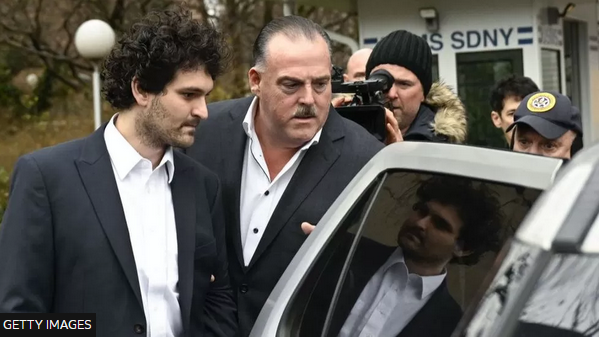
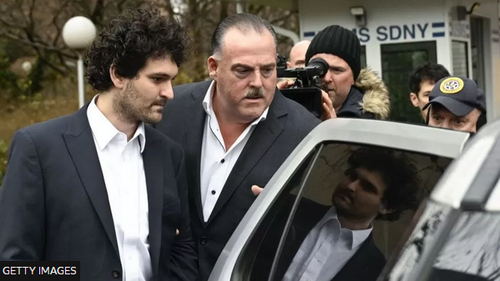
Sam Bankman-Fried being escorted by PI Jimmy Harkins from court after he was released on $250 million bond.
The outlets - AP, Bloomberg, CNBC, WSJ publisher Dow Jones, the Financial Times, Insider and WaPo - along with a separate request by the NY Times - argue that the public interest "cannot be overstated," saying that the public's right to know outweighs the guarantors' rights to privacy.
In a letter to U.S. District Judge Lewis Kaplan in Manhattan, the lawyers distinguished the case from another judge’s December 2020 decision not to reveal who guaranteed a bond for British socialite Ghislaine Maxwell, then accused and later convicted of aiding in financier Jeffrey Epstein’s sex crimes. -Reuters
"While Mr. Bankman-Fried is accused of serious financial crimes, a public association with him does not carry nearly the same stigma as with the Jeffrey Epstein child sex trafficking scandal," wrote lawyers for the outlets.
Notably, the judge in the SBF case is the same one who presided over Ghislaine Maxwell's case, while SBF's lawyers, Mark Cohen and Christian Everdell, also represented Maxwell in her criminal case. SBF also hired James P. Harkins, a private investigator known as the "real hound dog," who also worked for Ghislaine.
SBF's lawyers have argued that his parents - who co-signed the $250 million bond using their house as (very fractional) collateral, have been harassed and received physical threats since the early November collapse of FTX. One of the conditions of his bail would be house arrest at his parents' home in Palo Alto, California.


Source: Daily Mail
According to the NY Post, the family had contracted a private security firm in the Bay Area to patrol the grounds for $10,000 per week to protect SBF from mounting death threats.
One source told the Post, "They're [family] nervous ... there have been numerous death threats. They're not taking any chances.
Bankman-Fried's parents hired workers to construct a network of security cameras around the home on the edge of Stanford University's campus.
SBF's lawyers say there is a "serious cause for concern" over the two other guarantors if their names went public.