How China’s property crisis has unfolded, from Evergrande to Country Garden
Thousands of unfinished homes and a swath of debt restructurings show the turmoil among developers
China’s biggest private sector developer, Country Garden, appears to be heading for default after failing to make a payment on an offshore bond — another critical moment in the slow reckoning taking place in the country’s vast property sector.
Two years ago it was the default of another developer, Evergrande, that encapsulated concern over the scale of problems in Chinese property. Evergrande had racked up $340bn of liabilities and become the world’s most indebted property developer.
Country Garden was long thought more stable but its problems now show both the deterioration in the sector — with sales drying up and thousands of stalled developments across China — and the difficulties for Beijing in getting to grips with a long crisis that has shaken the world’s second-largest economy.
“China is struggling to strike a balance on its property policy over the past two years — they have been caught between providing too much stimulus or not enough,” said Larry Hu, chief China economist at Macquarie. “They have been muddling through — but the measures they have taken so far have been not enough to ease the developer-related credit risk perceived by homebuyers.”
The turmoil among property developers is hugely significant for China because construction and real estate has been the motor of much of its growth. Property and related industries have often contributed roughly a quarter of gross domestic product.
Country Garden reiterated last week that it “will not be able to meet all of its overseas debt repayment obligations”. It has not made payment on a bond that was due in mid-September. A final, 30-day grace period for payment expired this week. The group has international debts worth of around $11bn and total liabilities of around $200bn as of the end of June.
Country Garden’s sales fell 44 per cent year-on-year in the first six months of 2022. The company’s shares have fallen around 70 per cent this year, while its bonds are trading at about 5 cents on the dollar.
The group is expected to join dozens of other developers in pursuing an offshore debt restructuring. But the status of their much larger mainland obligations, which include loans from banks and investment firms, remains shrouded in uncertainty.
Evergrande itself is still struggling to finalise its own long-planned restructuring, which was derailed last month when it failed to proceed with an offshore debt refinancing due to an unspecified regulatory investigation. Evergrande faces a liquidation hearing in a Hong Kong court on October 30.
The uncertainty over whether regulations have been changed risks “dragging other developers into the quagmire”, said Gary Ng, senior economist with Natixis in Hong Kong.
China’s real estate developers for years drew on offshore and onshore bond issuance to support their mainland development activity. Developers often sell apartments before they are completed, using the funds to invest in new developments elsewhere.
But when policymakers sought to restrict new borrowing with a strict “three red lines” policy in 2020, developers’ old fundraising model collapsed.
Most of the top 10 developers in 2020 have also faced plummeting sales amid waning consumer confidence, compounding developers’ liquidity concerns. There are signs that homebuyers have preferred instead to buy from state-backed developers, seen as less likely to go bust.
Trying to correct course, policymakers last November unveiled support measures for the property sector. Banks opened new credit lines to developers deemed of higher quality, including Country Garden. But they have so far failed to stop the liquidity crunch.
More than half of the biggest 50 developers in 2020 have now gone into default. Bloomberg figures show Chinese developers have defaulted on around $115bn of $175bn in outstanding offshore dollar bonds since 2021. A bigger pile of onshore bank loans also faces restructuring or rollovers.
As developers reel, Beijing and local governments have so far emphasised the need to complete unfinished housing projects. While there are no comprehensive figures on the number of unfinished developments, available data suggests the total has fallen since 2021 but remains higher than in most of the past two decades.
But the developers’ defaults raise questions over their ability to complete many of those projects.
The crisis for the real estate sector has yet to feed through into any sharp move for house prices. New home prices, the main gauge of the real estate market in China, have fallen in some major cities but remain buoyant in others.
This year the government has sought to offer more support for buyers. Lenders reduced interest rates that cover half of the country’s mortgage loans in September. Some major second and third-tier city authorities lifted all restrictions on housing purchases from July.
Analysts argue that many of Beijing’s policy measures towards property have been well-intentioned but ineffective — trying to strike too delicate a balance between offering enough liquidity support and not spurring further speculation in the sector.
“Many policies aim to stabilise the home market and provide just about the right amount of liquidity for developers to finish existing units and deleverage,” said Ng. “[But] when there are too many targets, it is a difficult task to ensure everything falls into place.”
“It’s part of a bigger problem that we see as well outside the property sector,” said Sandra Chow, co-head of Asia-Pacific Research at credit research firm CreditSights, referring to targeted funding to funnel credits to small and midsized companies. “The transmission of these policies was always the difficult part.”
Rory Green, chief China economist at TS Lombard, said China’s policymakers had appeared to have a good grasp of the need to cut leverage in property two years ago. “But what has gone wrong is not having a plan of how they are going to change it and what they are hoping to go towards a new model for the sector,” he said.
“It’s simply very difficult to suddenly shift growth model and try to reallocate resources away from property . . . particularly when it has massive asset linkages to household and to local governments, and to the entire financial system.”
Right-wing populists perform strongly in Swiss parliamentary elections
Voters turn away from green politics amid fears over immigration and rising energy costs
Switzerland’s rightwing populists were set to achieve one of their strongest performances in parliamentary elections on Sunday as voters abandoned green politics amid fears over immigration and rising energy costs.
The hardline conservative Swiss Peoples’ party (SVP) was projected to secure 29.1 per cent of the vote in elections to the National Council, the lower house of parliament, after 95 per cent of district results were declared. This was on track to be the second-best result in the party’s recent history, after winning 29.4 per cent of the vote in 2015.
The result was a “clear slide to the right”, said Thierry Burkart, leader of the pro-business liberal FDP party. The liberals suffered their worst result, winning just 14.5 per cent. Voters had delivered a “signal and a mandate”, Burkart told Swiss TV.
The biggest losers of the evening were Switzerland’s two green parties, whose combined share of the vote dropped from 21 per cent to 16 per cent.
Several weeks of political jockeying will now follow over how parliamentary results will translate into any shift in government.
By tradition, a seven-person executive, the Federal Council, is composed of members from the four largest parties in a set ratio of seats: 2-2-2-1. Questions have been raised in recent years, amid political turbulence, over the apportioning of seats, and Sunday’s results are likely to trigger another bout of hand-wringing over the model’s legitimacy.
The new parliament will vote on the Federal Council seats in mid-December.
Although the SVP has long been a mainstream force in Swiss politics — and does not have ambitions to disrupt the existing political order — its strong showing is a signal of disaffection among the electorate after a turbulent four years.
The SVP opposed Covid-19 restrictions and more recently has heavily criticised participation in sanctions against Russia, which it says have fuelled energy price rises and compromised a sacrosanct tradition of geopolitical neutrality.
Domestic concerns dominated the campaign, with the SVP making the most visible impact. Posters across the country promised to cap the population and stop it reaching 10mn people. Switzerland is currently home to 8.7mn.
The party also campaigned hard against what it described as “gender terrorism” — referring to the debate over transgender rights — and “radical” green climate politics.
Recommended
The Big Read
A very Swiss identity crisis
SVP’s victory will reverse a dramatic leftward shift in Swiss politics that occurred at the last federal elections in 2019. It may also affect sensitive upcoming international issues for the country, including its already fraught relations with the EU and its position on economic sanctions against Russia.
Switzerland’s social democratic party (SP), the second-largest group, is set to marginally increase its share to 17.8 per cent — its second-worst result.
Switzerland’s broad political spectrum and peculiar constitutional set-up means that parliament plays a secondary role, deferring most legislative decisions to national referendums. Still, significant changes in the electoral map are unusual.
The elections confirm a resurgence of populists at the ballot box across Europe: in Germany earlier this month, the anti-immigrant AfD scored big gains in elections in Bavaria and Hesse, far from the party’s strongholds in the east. In Austria, the far-right Freedom Party has been leading the polls for months, racking up regional victories ahead of next autumn’s national elections.
Miss Tweed : Can online fashion and luxury retail ever be profitable?
On Monday, the European Commission is expected to give its official approval for Cartier owner and Swiss luxury conglomerate Richemont to sell a 47.5 percent stake in Yoox-Net-A-Porter to Farfetch and a 3.2 percent holding in the online fashion retailer to Dubai real estate entrepreneur Mohamed Ali Alabbar. The regulatory clearance will throw the spotlight yet again on Farfetch’s perceived frail financial position and put pressure on Richemont to clarify its position vis-à-vis the British company, as Miss Tweed reported last week.
As part of the complex deal, Farfetch is to become the main provider of e-commerce technology for all of Richemont’s brands including Cartier jewelry, Chloé fashion and IWC watches and sell their products on its online marketplace.
Brussel’s green light comes as alarm bells are ringing about Farfetch. The company’s shares lost another 5 percent this week. There has also been a sell-off in luxury stocks since the summer, accentuated by industry leader LVMH earlier this month calling the end of a three-year post-pandemic boom. Concern is also growing about other multi-brand fashion retailers. What will happen to London’s MatchesFashion and Net-A-Porter? To Milan’s LuisaViaRoma? And to Montreal’s Ssense? These companies have been lossmaking for years and are nowhere near profitability.
Even New York-listed Mytheresa which has the best business model with its curated offering and affluent customer base is now down to being close to break even. It is also stuck with nearly one year’s worth of unsold stock on its balance sheet worth €360.2 million, its last set of results showed.
Can you really make money selling pricey clothes, bags and shoes on the Internet in a multi-brand environment? Mytheresa will firmly answer yes. The Munich-based company argues that it’s going through a rough patch as aspirational customers have tightened their purse strings, but profits will be back again. For the year ending June 2024, it expects its underlying profitability margin (adjusted Ebitda margin) to be 3-5 percent (against 5.3 percent in the year to June 2023 and 9.6 percent in the year to June 2022) even if in the quarter to September, it will report a margin that is only “marginally positive.”
“This level of profitability makes us unique,” Mytheresa CEO Michael Kliger told Miss Tweed. And the fact that it has so much stock is not that of much of a concern, he added. “We are managing our inventory levels for profit maximization,” Kliger explained. “We are not forced into short-term cash generation as we have no debt on the balance sheet. The big majority of our inventory sits with the current and upcoming seasons. We are selling all our inventories through our own website including older seasons. With this approach and actions, we expect to return to normal levels of days inventory outstanding of around 260 days from the current 302 days end in June in the medium term,” the German executive said.
That said, Mytheresa’s share price has plunged. The shares, which reached a high of $35.85 in January 2021 after its initial public offering, are now at $2.88. The company’s market capitalization is $233.4 million, compared with $2.3 billion shortly after it floated. With a valuation so low, Mytheresa looks like another strong candidate for a de-listing, industry insiders say. It may be a private equity firm or family office that makes the bet that the company’s profitability will return to its historical high levels.
Mytheresa, which started with a multi-brand boutique in Munich in 1987, launched online in 2006. It has been profitable since 2010. Industry experts hope that it will not be merged with another player as it’s the only company that has figured out how to make money in the sector. It’s become clear selling luxury online is a totally different story to selling mass-market products. Online retailers Zalando and Asos, which are more into accessible and fast fashion, make money partly because but they handle much bigger volumes and cover fewer geographies. It’s also worth noting Bernard Arnault, Europe’s richest man and CEO of LVMH, has never believed online is a fit for luxury.
SECRET RECIPES
One of Mytheresa’s secrets is that it carefully selects what it sells. As opposed to Farfetch and other online retailers that carry hundreds of different brands and try to widen their offering as much as possible, Mytheresa stocks only a little over 200 luxury brands. It also offers a selection that is appealing for the current season and for certain occasions. And it focuses on hot brands. The brand’s CEO Michael Kliger goes to as many shows as possible during fashion weeks. It’s an exacting marathon, but it gives him a good sense of which brands will be strong next season and which ones will be weaker. He’s probably the only CEO of an online multiband retailer of this size who attends so many fashion shows in Paris, Milan and elsewhere.
Mytheresa is also very good at marketing luxury brands and producing high-quality editorial content. It’s currently promoting Brunello Cucinelli with a video of actress and model Greta Bellamacina and her artist husband Robert Montgomery in their Georgian house in the UK talking about their life and what they like to wear and why.
Natalie Massenet, who founded Net-A-Porter (NAP) in 2000, created the concept of retail entertainment. Her website was the first to propose cool looks and give suggestions of what to wear and how to mix and match styles and brands. She made online shopping fun. When she launched Porter magazine in 2014, it became the first shoppable printed fashion publication. The former fashion journalist, who worked for WWD and Tatler, understood that women wanted not only advice on how to look good but also inspiration. Porter’s editorial line was clear: celebrate exceptional women. After Richemont sold NAP in her back to Italian discounter Yoox in 2015, Massenet left the company, and the printed version of Porter magazine was later shut down. Today, only its digital version still exists. NAP’s editorial content is a shadow of what it once was under Massenet. Like many other websites, including Farfetch, it gives you long lists of products you can choose from. NAP has also lost key brands such as Prada in Europe.
Part of the reason why NAP did not make money is that it failed to build an e-commerce platform that was sustainable from a technological point of view, as Miss Tweed was the first to report in 2020. Also, it did not keep certain costs under control such as the “costs of serve,” as they are called in the trade. These are related to the cost of uploading items on the website, taking photos, storing in warehouses, shipping and returns. Brexit also complicated things since most stock came from continental Europe. That triggered a major reorganization and the opening of a €47 million distribution center near Milan in 2021.
EXODUS
Richemont was hoping that NAP would be better managed once it would be run by Farfetch. The only problem is that there has been an exodus of talent from Farfetch, just like there was from NAP after Massenet left eight years ago. Cipriano Sousa, the engineer who built Farfetch from scratch with CEO and founder José Neves, has just left the company and is now an advisor. Many key staff, including members of the executive committee, have departed in recent months. And now there is a crisis of confidence in Neves’ ability to steer the company through the current storm, shareholders say. Investors’ worst nightmare is that Richemont, which has shown with NAP that it cannot run an e-commerce business, will now run Farfetch. You can expect more news on that front in the coming weeks.
So, what about other Internet players such as LuisaViaRoma, Ssense and MatchesFashion? They are all backed by private equity firms who invested in the companies at high multiples, making the bet that they would be highly profitable one day. They thought they could either float the company or sell their controlling stake to another investment firm. Ssense and MatchesFashion have progressively moved out of the luxury space to focus on premium labels and avant-garde brands for consumers aged 15-35.They have also branched out into homeware - a booming sector since the pandemic.
There is talk that Ssense may have to shed more staff after having laid off seven percent of its workforce earlier this year. Ssense and its private equity backer Sequoia Capital China have not replied to several requests for comment. Ssense has lost most LVMH and Kering brands. Several small labels have complained that they were struggling to get paid by the online retailer. Similar grievances have been heard about Farfetch’s Browns multi-brand store in London which also does business online.
LuisaViaRoma and its private equity investor Style Capital have also not replied to questions on how the company was faring.
For over a year now, MatchesFashion has been under the leadership of Nick Beighton who joined from UK retailer Asos where he stayed 12 years and ran the company for six. Since he arrived, he’s been trying to fix MatchesFashion’s business model. Beighton drastically cut down the number of brands sold on the website from more than 800 to 400 with 100 of them in homeware.
It also now offers more accessible brands such as Polo Ralph Lauren and sportswear labels such as Sweaty Betty and Asics. Beighton has also increased the number of items it buys of a given model. He understood that if, for example, you bought only four items of a bag or a dress, the costs associated with uploading them on the site, handling and shipping them, make it very difficult to make money. Returns can be very costly. Germans, for example, on average return 70 per cent of what they buy compared with 40 percent in Great Britain and France.
“The key to succeeding in fashion e-commerce is having the right talent in your organisation and unit economics and contribution per order and keeping under control your cost of serve, or how much it costs for a product to go through the business,” Beighton told Miss Tweed.Beighton is also focusing on profitable geographies such as the UK, the United States and continental Europe. He has scaled back the company’s shipping to Asia.
Like NAP, Brexit and rampant inflation have taken their toll. Around 70 percent of the clothes and accessories Matches sells in the UK come from the EU. It has opened a logistics centre in the Netherlands to facilitate shipping outside the UK. However, import duties Britain slapped on EU fashion products mean MatchesFashion has been forced to lower its margin on every product sold to remain competitive. Also, customs checks and clearances have slowed the process of shipping products in and out of Britain.
Like Ssense and other online retailers, MatchesFashion has lost some luxury brands. Recently, Richemont’s Chloé and LVMH’s Fendi decided to stop working with the British retailer. The world’s top 15 luxury brands have been cutting back on wholesale accounts and on the amount of stock they give multi-brand shops whether online or in bricks-and-mortar boutiques. They prefer to keep the business in-house to control price, image and stock. Also, many don’t see much added value in selling items in a multi-brand environment. Yet, that’s often how customers discover new products. For many years, big fashion and luxury brands represented the bulk of wholesalers’ online business. Today, they have make do with smaller, less-known brands which customers are not so keen on buying and which are more expensive to stock and promote due to lower volumes.
HEALTHY ATTITUDE
Big brands tend to work with multi-brand retailers mainly for marketing purposes. They keep their best products for their own website and boutiques. LVMH’s Loewe for example, one of the hottest brands sold by MatchesFashion, will not allow it to sell its popular chocolate brown Squeeze bag. That’s reserved for the brand’s own website and boutiques.
Kering’s Gucci for example will not allow any discounting by multi-brand online wholesalers but they will do private sales at their boutiques, senior industry sources say. “That is not a very healthy attitude,” an executive at a multi-brand retailer told Miss Tweed on condition of anonymity. “And surely one day, it will backfire.”
Industry insiders say that most big brands owned by Kering, Richemont and LVMH have adopted such policy of keeping the best models for their own network. Richemont has been doing the same with watch retailers. Many of its top brands refuse to give them their most popular and attractive new models, preferring to keep them for their own boutiques. In fashion, independent labels such as Valentino, Balmain, Moncler, Dolce & Gabbana and Tom Ford are amongst the easiest to work with, online wholesalers say.
MATCHESFASHION
It's not clear what will happen to MatchesFashion. Private equity firm Apax Partners, its controlling shareholder, injected yet another £60 million into the loss-making online British fashion retailer earlier this year. Its losses totaled £35 million last year and it still expects to lose money in 2023, albeit a smaller amount. The business last year generated around £400 million in sales. In terms of cash, Matches has now a little over a year in funding. It’s likely Apax will have to inject further cash into the business unless it can find a buyer, which looks unlikely in the current environment.
Market conditions are tough. Retailers are overstocked and many of them started slashing prices for the current fall/winter season already in September. That has put even more pressure on margins and made it more difficult to sell at full price.
The U.S. department store chain Saks Fifth Avenue has continued to postpone payments to brands in August and September, industry sources have said. The company declined to comment. Miss Tweed was the first to report in July that the American retailer was delaying payments to supplying brands to preserve cash. The company stressed at the time that this did not concern Saks.com. Its controlling shareholder Hudson’s Bay Company is expected to announce soon a capital injection that should ease pressure on its cash and facilitate payments to brand, the sources said. Stay tuned for more.
‘From This Abyss, Something Better Will Grow’: Israel’s Tech Leaders Brace for an Uncertain Future
In their own words, investors and founders try to make sense of the war with Hamas, and what could come after.
Since the Hamas terror attacks of Saturday, October 7, Israel’s tight-knit tech community has rallied to the country’s defense. Some executives have children in the Israeli military or serve themselves; others immediately launched civil aid programs to support the Israel Defense Forces, war refugees or the families of hostages.
While universally agreeing on the need to disarm Hamas in Gaza, tech investors and founders we spoke to are conflicted about the violence sweeping the region. Some voice concern about the rising death toll of Gaza civilians, with nearly 4,000 killed according to reports.
The past two weeks have thrown into question everything these leaders thought they knew about their state, their political beliefs and even their own personal values. As for the leaders of Palestine's small but growing startup scene (companies in Gaza and the West Bank raised $9.5 million from investors in 2021, according to Fast Company Middle East), they must now reckon with potentially ruinous conditions for their businesses and decimated hopes for their futures.
Note: The Information interviewed several Arab tech leaders for this story, some of whom support the Palestinian cause. Fearing reprisals from the Israeli government, none wished to speak on the record. The interviews below have been edited and condensed for clarity and conciseness.
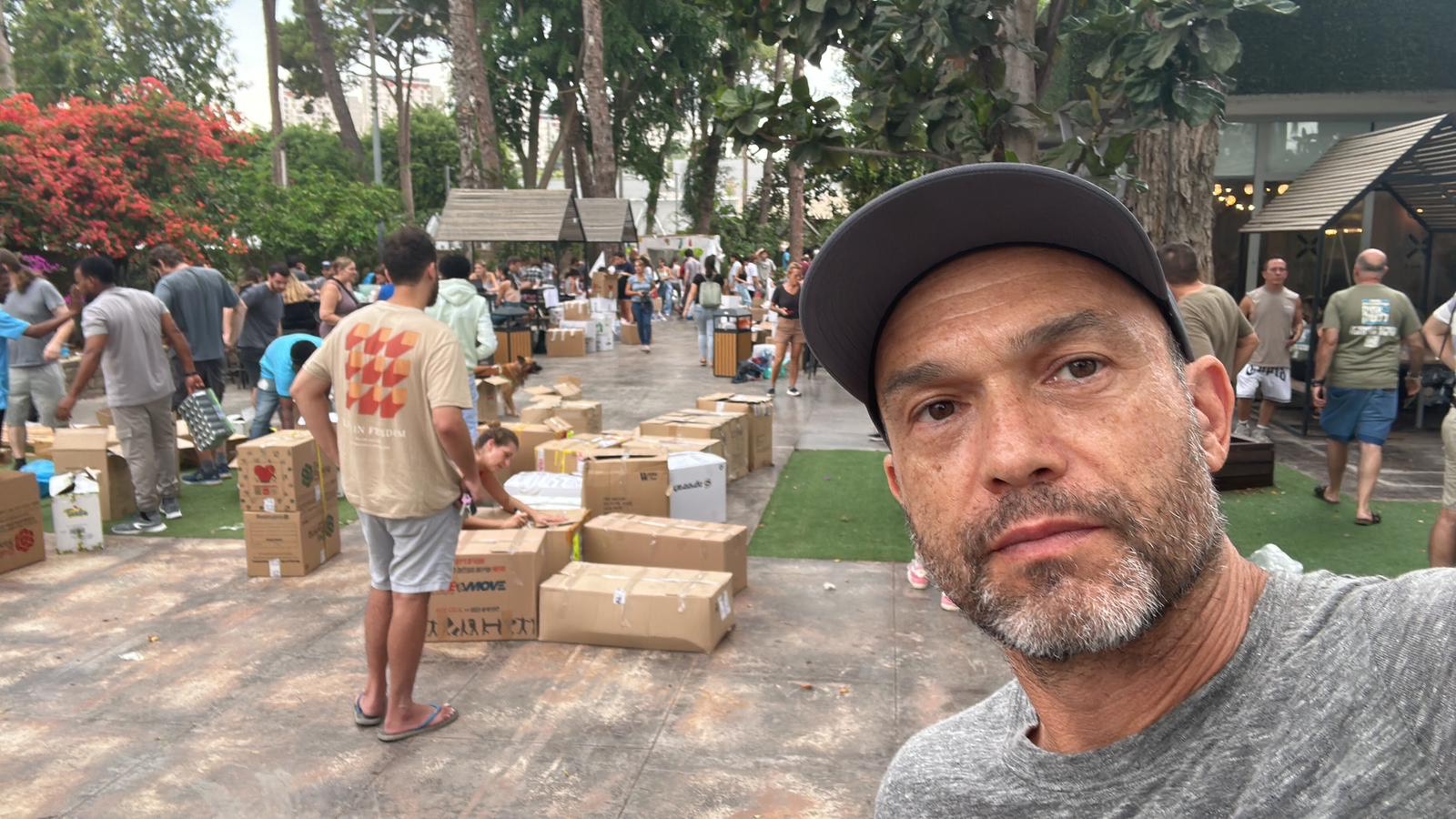
Gigi Levy-Weiss volunteers at a donation collection site for Emergency Civil HQ.
“Despite all our abilities, it happened again. This realization physically hurts.”
Gigi Levy-Weiss
Founding partner, NFX
Levy-Weiss, who lives in the central municipality of Rishpon, has been a prominent voice in Israel’s protest movement against the judicial overhaul led by Prime Minister Benjamin Netanyahu. He’s a board member of Meet, a non-profit that offers an entrepreneurship and computer science program for Israeli and Palestinian children, in partnership with MIT.
This is the most funerals I've been to in a single week—four to be exact. These were children of my friends. The first one I found out about, Iftah Yavetz, I've known since he was a baby. He was a young leader, so bright, that when he was 16 I told him, once you’re ready, you’re hired. [Yavetz was one of 307 soldiers, officers and reservists who have been killed in the war, according to the IDF.]
At his funeral, there was a moment I fell apart. I grew up going to nature parties and still frequent electronic music festivals, and the idea that someone can show up to an event like that, where people celebrate love, and reap them while laughing—it’s just, like 9/11, a battle on liberal values, equality, and the Western way of life.
On Saturday, when everything started unfolding, I spoke to fellow protest organizers and we agreed that for now, the judicial reform movement called “the protest” was on hold. That same day we started the Emergency Civil HQ; we took all the logistical infrastructure we’ve built for the protest, with its fundraising arm and volunteers, and turned it around to help the country win the war. We connect donations and those who need them in the most efficient way possible. I’ve founded seven companies in my lifetime, but this is my fastest growing startup to date.
I’m still mad at the government, at Netanyahu for fostering Hamas, at spending the past 10 months dealing with so much chaff instead of the seed, which caused so much burnout to the Israeli spirit. There’s a bitter sense of failure, too, around the intelligence oversight. In our perception, the Holocaust was the last instance Jews could be murdered in their homes. And yet, despite all our abilities, it happened again. This realization physically hurts.
I have Palestinian friends and I know Meet alumni, and it’s very difficult for me to think that people are being killed on the other side. But on the other hand, when 9/11 happened, no one asked, for at least a year, how does the other side feel? And 9/11 happened at the hands of a handful of terrorists. Here, we’re talking about more than 1,000 terrorists who entered Israel with the intention to murder. It’s unacceptable to think that everything will be the same after that.

Michael Eisenberg
“I believe Gaza can become Singapore if we fully eradicate evil.”
Michael Eisenberg
Partner, Aleph
Eisenberg, a former general partner at Benchmark, now invests in Israeli entrepreneurs at Aleph. Originally from Manhattan, he moved to Israel in 1993 and currently lives in Jerusalem.
I have two kids full-time in the military right now. Two Sabbaths ago, my son said goodbye to his pregnant wife; he loaded up his weapon, put on his army uniform, gave her a hug and walked out the door.
My grandfather, who I was very close with, was called up in World War II to serve in the Navy. He spent three years on a boat in the Pacific Ocean defending America and the world after Pearl Harbor. He didn't see my grandmother for three years.
Today, an incredibly evil death cult called Hamas has just murdered, raped, pillaged and tortured residents in Israel. And I'm so proud of our kids for not just defending Israel, but defending the free world from these evil people.
Since the war started, I've gotten the most incredible outreach of support from the tech community, from our investors. There's a covenant between the people in the United States and the people of Israel, around our values of freedom, of democracy, of standing up to evil, and of how we value human life and human creativity. I know it's not a small number of people. More than 1,000 had reached out.
I feel bad for any innocent [Palestinian] civilian who will be killed. But I also expect that they'll stand up to Hamas so that they can have a better life. If you want to help the Palestinian people, you need to get rid of Hamas. It's that simple.
There's definitely going to be some rebuilding of Gaza. I have a hope and prayer that the multinational tech companies—Google, Facebook, Amazon, Microsoft—the tech people in Israel, and the governments in the Gulf, Israel, the United States and Europe will come together and see if we can build something different there. But first, we need to eradicate the evil people. I believe Gaza can become Singapore if we fully eradicate evil.

Eynat Guez
“It’s not a rational decision to live in Israel. It’s an emotional decision.”
Eynat Guez
CEO and co-founder, Papaya Global
Guez lives in the seaside town of Mikhmoret in the center of Israel.fintech unicorn’s funds from Israel, following the government’s overhaul of the judicial system.rIn January 2023, she made global headlines when she announced she’d be pulling he
I’ve been a co-founder and a CEO of a startup for seven years, and during those years I've had three kids. I’ve never been away from my email for more than two hours. In the past two weeks, I maybe managed two hours of work emails. This event caused a crazy shift, which led to an understanding that I need to take all my abilities and put them towards Israel.
I spend all my days and nights at the Emergency Civil HQ, mainly dealing with air supply of medical equipment and winter gear for soldiers.
It’s been a sobering experience. It’s not a rational decision to live in Israel—it’s not the cheapest country, nor is it the safest. It’s an emotional decision. If I want to keep living here, I can no longer look at things purely from a capitalist standpoint. This is a point of no return.
We must continue to create tech, but also to take responsibility for leaving a real societal mark. You can see the tech abilities have dramatically affected the state of the country right now. Identifying bodies and mapping missing persons happened largely thanks to tech teams. I think that from this crisis, the next best tech startups will grow. We’ll learn how to excel at getting over huge complexities.
I do my best not to watch the news. If I open Facebook or Twitter these days, my feed looks like a list of obituaries rather than a social network. Disconnecting from the news is paramount, because we’re all dealing with trauma. Social activism helps. I’m better in action than in silence and passivity.
While optimism is too big of a word right now, I do feel hope. I hope this event will shake up the political system. Israel should, at the end of the day, run like a tech company. And on a bigger level I hope that, with the support of the U.S., we will be able to create a new reality that’s beyond putting a band aid on a problem, a profound change.
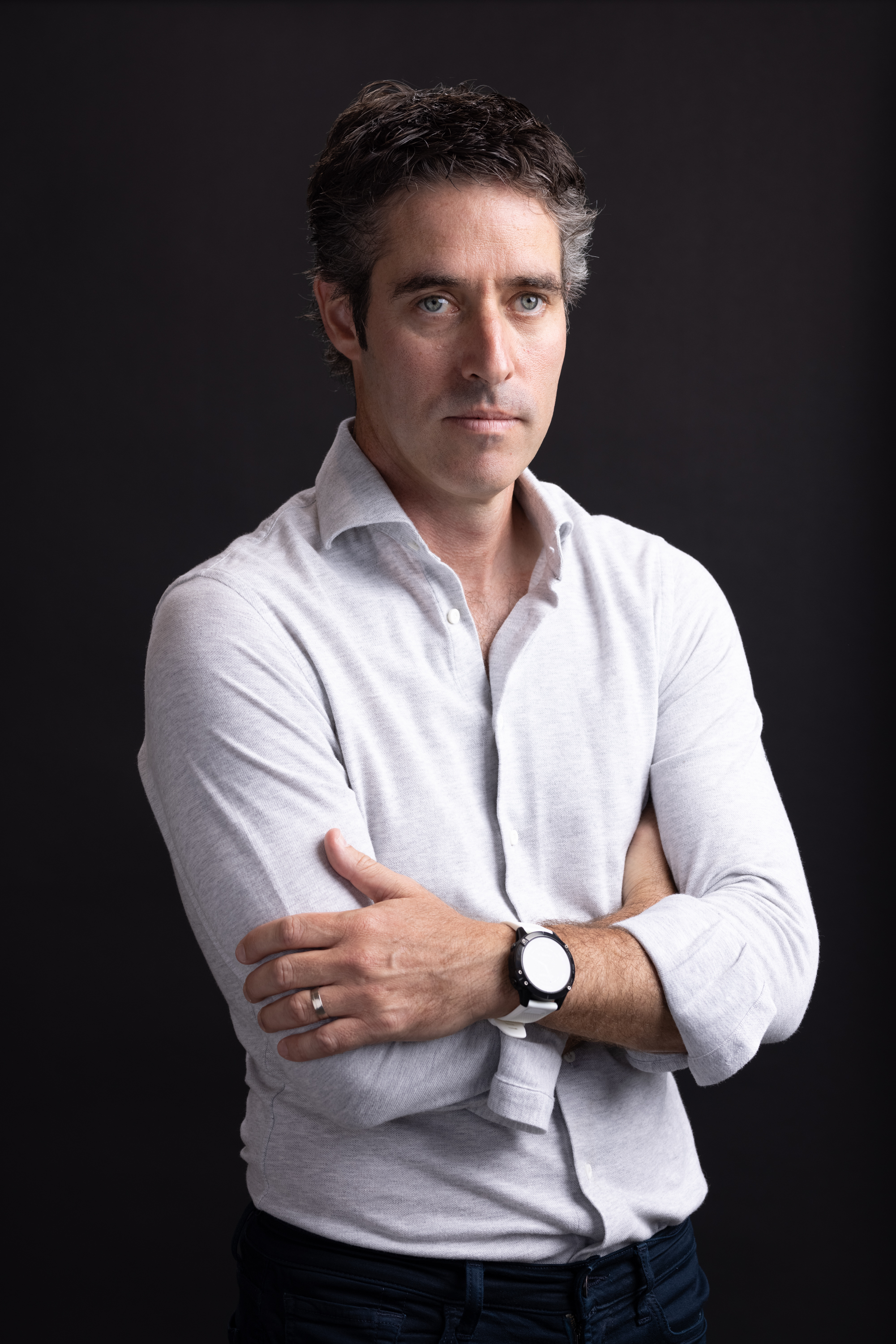
Nir Zohar
“Everyone has experienced great emotional and national trauma.”
Nir Zohar
President and chief operating officer, Wix
Zohar, a reserve officer for the Israeli navy, lives in Tel Aviv. He is one of the co-founders of the new Arava Tech Center,an initiative that connects the Israeli tech community with the emerging needs of the public during wartime.
There are times that I don’t even know what day it is anymore. My feelings move in the registers of anger and sadness. I’m angry at my country, at the fact that we couldn’t provide our citizens with the protection a country should give them.
We’re very lucky that none of our employees were killed or kidnapped, but in their circles, there are so many sad stories. Everyone has experienced great emotional and national trauma, and on top of that, you have the practical issues; some people’s homes were damaged, some are afraid to stay at home, some got stuck abroad. All the while, it’s extremely important to keep the business up and running. We must channel our strengths to where we can be of use.
Sadly, Wix has had a “drill” with Ukraine, where many of our employees are still refugees or live from power outages to bombings. [Wix employs more than 1,000 workers in Ukraine.] I see them, and I see that work fills them with a sense of stability and safety. Israelis can be just as strong. My points of light are my family and the insane mobilization of Wix employees. They’re awe-inspiring.
I have four children, the oldest is 13, and the youngest is 4. I feel relieved that they’re too small to be in the army. I know it’s an egotistical thought, but it’s your kids and you can’t be but a little selfish. There’s also guilt and anger that there are kids of people who look just like me that are going through something a thousand times worse. It makes me frustrated, sad and ashamed.
I’ve always been on the left side of the political map. I was graduating high school when the Oslo Accords were signed, and I remember myself being emotional and rejoicing that peace is coming. But the reality is, we don’t share the same values. These are two different cultures. These acts of torture, rape and murder—no democratic liberal Western country does this.
There’s something psychotic about arguing about whether babies have been beheaded or “just” murdered. But when Hamas announces Israel has hit a hospital, all the media outlets are echoing it without proper fact-checking, calling Israel barbaric. If we did hit a hospital, I’d join that statement, but it’s just not the case. There’s something deeply embedded, at least in some people, that has nothing to do with legitimate political criticism. I’ve seen statements that Israel has lost its right to exist. What are you actually saying?
Regretfully, I can’t say this will be the last war. A major shift needs to happen in order to promote a change, and I don’t know what it would be. I think nobody knows.
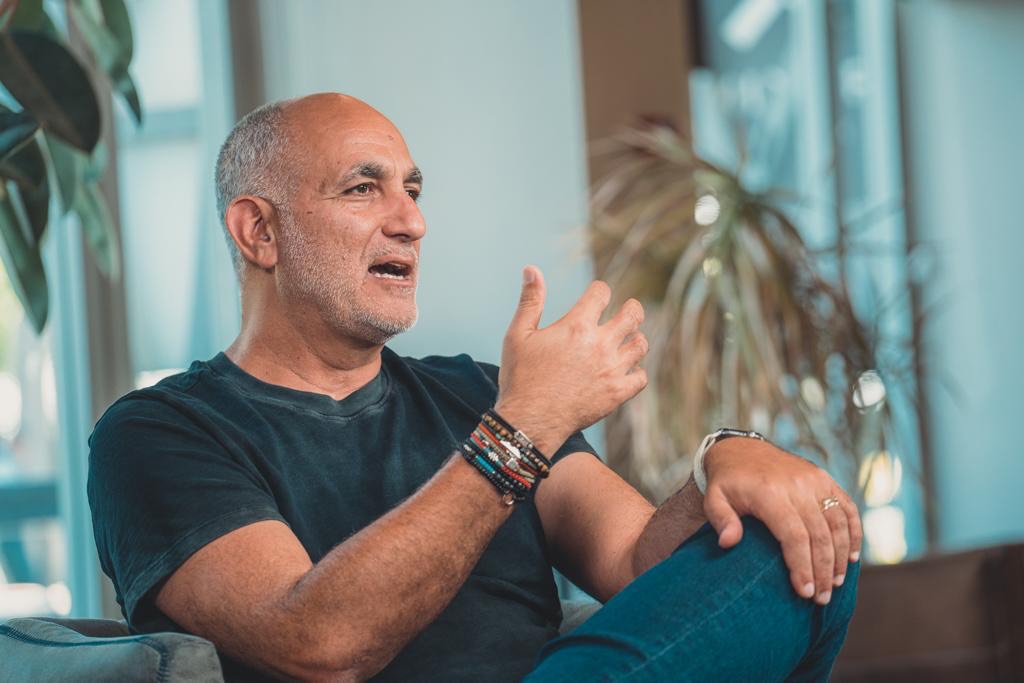
Ronni Zehavi
“I hope that the tragedy on both sides will lead to a two-state solution.”
Ronni Zehavi
Co-founder and CEO, HiBob
Zehavi’s Tel Aviv-based HR platform recently closed a funding round of $150 million led by Farallon Capital Management. He is a board member of Friends of the IDF Disabled Veterans Organization.
I have a daughter and a son in the army. On Saturday, my son was called to Sderot and Be’eri, and my daughter is in a war room in the south.
The first 24 hours were chaotic. Once I drove my children to the pickup spots for their army bases, I gathered all our managers, including the American ones. We talked to each and every one of our 800 employees, making sure they feel safe, physically and mentally. We found out who got drafted, and counted 25 people in our company. Then, we wanted to make sure that our clients and partners don’t feel the effect of what’s happening in our quality of service. And, lastly, we made sure that our company is safe, on a cyber level and also in terms of safety shelters by the office.
We did an hour-long company Zoom in the beginning of the war, and people didn’t want to leave. Everyone was shocked, and wanted to share about people they know who have lost someone. We later did an all-hands with employees from all over the world, and the tears and sentiments of our colleagues overseas really touched me.
It’s easier to volunteer or work rather than be glued to the news all day. HiBob, with other companies, established a support platform within two days, which allows people from our client companies to fulfill volunteering tasks. People are gathering themselves, realizing that they must support others.
I believe that from this abyss, something better will grow, within Israel and also with our Palestinian neighbors. I hope that the tragedy on both sides will lead to a two-state solution so we can live here together. Germany and France had years of bitter hatred and wars, and they had reached peace. We can do it too, but it requires strong, responsible leadership that isn’t led by extremism—on both sides.
My 12-year-old daughter, who’s watching the war on TikTok, asked why don’t we just board a plane and get out of here? And the answer was, if everyone thinks that, who will remain? Israel is a miracle and to be Israeli is incredible. One can enjoy the innovation and the beauty of the country, but to also understand that life here is complex. I hope we raise her just like her brother and sister—to be sturdy and strong, and to understand there’s no other place for us.
Qatar’s Hamas Ties Could Thwart $475 Billion Investing Ambition
Qatar last year signaled it wanted to be a much bigger investor in tech when its $475 billion sovereign wealth fund backed Elon Musk’s takeover of Twitter. Now, the war between Israel and Hamas—a Palestinian terrorist group with ties to Qatar—may hamper those ambitions.
The petroleum-rich Persian Gulf nation has been trying to follow in the footsteps of neighboring Saudi Arabia and the United Arab Emirates, which have long invested in marquee companies such as Uber and Cruise. It’s been preparing a glitzy conference for tech founders and venture capitalists in the capital of Doha this coming February, where partners at venture capital firms including Coatue Management and 500 Startups were scheduled to speak. Coatue and others abruptly canceled those plans this week.
THE TAKEAWAY
• Qatar officials have sought meetings with U.S. VC funds, AI startups
• Sovereign wealth fund met with OpenAI’s Altman
• Some U.S. investors have flagged nation’s ties to Hamas
In the last two months, officials from Qatar have tried to meet with early-stage VC funds, according to a partner with First Round Capital and a second investor. The nation’s largest government-backed fund, Qatar Investment Authority, has also held meetings with some AI startup founders, including OpenAI’s Sam Altman, who has begun to strike deals for his company in the Middle East.
A spokesperson for OpenAI said Altman met with QIA during his world tour this year that included stops in Qatar and other Middle Eastern countries such as Israel and Jordan. His engagement with the fund was limited to that meeting and one follow-up conversation since then, the spokesperson said.
Representatives for QIA did not respond to multiple requests for comment.
Qatar’s startup interests reflect the growing relationship between Silicon Valley startups and Middle Eastern sovereign wealth funds—as well as the periodic fraying of that relationship when the region’s politics intervene. Some details of Qatar’s efforts emerged after U.S. venture capitalists flagged its ties to Hamas, the group behind the Oct. 7 attacks on Israel.
While Qatar maintains its aid in Gaza has only been for humanitarian purposes, some counterterrorism experts say Qatar has financed Hamas and some of the group’s leaders reside in the country. At the same time, Qatar is also a major U.S. ally and its role helping negotiate the release of hostages taken by Hamas could help its image.
Attracting sovereign wealth funds to tech investing is windfall from rising oil prices that’s enriched the region. These oil-rich nations are intent on transforming their economies into ones based on tech and other knowledge sectors. Funds including the QIA, Saudi Arabia’s Public Investment Fund and the United Arab Emirates’ Mubadala Investment Company are sitting on a combined $4.3 trillion, according to tracker GlobalSWF.
At the same time, U.S. venture funds and startups are in need of cash. Fundraising by U.S. VC funds has sunk more than 70% this year as institutions and wealthy individuals limit their investments into private tech. The environment has encouraged fund managers to court Middle Eastern backers, including at high-profile conferences in Saudi Arabia. They’re returning after many managers and financial institutions had cooled to one of the region’s biggest, Saudi Arabia’s $777 billion Public Investment Fund, after Saudi agents murdered Washington Post columnist Jamal Khashoggi in 2018.
Twitter, Snyk
At the start of this year, Qatar, a nation of 2.9 million people, outlined its plans to become a bigger presence in the tech sector. In January, the CEO of the Qatar Investment Authority, Mansoor Al Mahmoud, told Bloomberg Television the fund planned to use challenges in the global economy to rebalance its portfolio and focus more on tech, financial institutions and soccer.
By then, the fund had already become invested in Musk’s $44 billion buyout of Twitter, putting $375 million into the app now known as X. (Since then, Fidelity, another X investor, has marked down the value of its stake in the company by two-thirds.)
QIA has picked up a few more tech investments. In May, the QIA’s Ahmed Ali Al-Hammadi led a $250 million deal for Builder AI, a startup whose software makes it easier to build apps, investing alongside Iconiq Capital and Insight Partners. Five months before that, QIA led a $197 million deal for Snyk, a cybersecurity startup, valuing the company at $7.4 billion. Co-investors in the Snyk round included Evolution Equity Partners, G Squared and Irving Investors.
In recent months, funds from Qatar, as well as Saudi Arabia and UAE, have told investors that they have a new strategic mandate to make more investments directly into startups as opposed to backing VC funds, which they have increasingly done, according to two investors who spoke to these Middle Eastern sovereign wealth funds. The largest AI startups like OpenAI, Anthropic and Cohere are expected to need huge amounts of cash and computing power to train their large language models, and these funds are obvious sources they could turn to.
OpenAI’s Altman, who has privately said his company may need $100 billion in funding, on Wednesday disclosed a deal with Abu Dhabi-based technology conglomerate G42, which implied it would help OpenAI sell its AI to companies in the UAE. G42 oversees a $10 billion technology expansion fund, raising the prospect of a future financing deal between the companies.
Doha Departures
Qatar’s tech investing ambitions may get caught up in the escalating Israel-Hamas conflict, however. Earlier this week, some U.S. venture capitalists pointed to that relationship as a reason funds and founders should distance themselves from the country after the Oct. 7 attack.
“I don’t want to take money from a [narcotics] drug dealer in Mexico just because he has billions of dollars,” said Ben Pouladian, an early-stage startup investor. “The startup and venture community is realizing not all LPs are created equally.”
On Monday, First Round co-founder Josh Kopelman published an email from Sept. 5 in which Paddy Cosgrave, the co-founder of Web Summit, offered to facilitate a meeting between First Round and Qatar, and Kopelman implied that Cosgrave was working on behalf of Qatar. Web Summit has organized the February conference with Qatar, which they say will host 300 investors and 600 startups in Doha’s convention center. (Update: On Saturday, Cosgrave resigned from the CEO position.)
Kopelman’s post on X, the site formerly known as Twitter, followed Cosgrave’s comments that called Israel’s retaliatory strikes in Gaza “war crimes.” (Cosgrave also had “liked” posts on X that said Hamas’ killing of civilians was self-defense and that Israel was committing genocide, but has since unliked them. Cosgrave later apologized for his remarks.)
Founders Fund partner Keith Rabois threatened to avoid working with anyone who attends the Doha summit. Rabois has also called it “immoral” to raise money Saudi Arabia, though the venture arm of the Saudi Public Investment Fund has said it has a partnership with Founders Fund. The VC firm declined to comment on the relationship between Founders Fund and these firms’ investments.
Writer AI CEO May Habib and Flexport CEO Ryan Petersen were among the speakers who canceled plans to participate in the conference, according to people familiar with the matter. The site also removed mention of two other VC firms, Bessemer Venture Partners and Accel. The two VC firms had been included on the conference’s sites without their knowledge, according to spokespeople for Bessemer and Accel. It’s not clear whether 500 Startups CEO Christine Tsai is still planning to speak.
Web Summit, for its part, redoubled its support for Qatar. In a statement, a spokesperson for Web Summit said “Qatar has been a very close partner to the United States on a broad range of issues that are crucial to both of our countries and to this region ... The United States and Qatar share the goal of preventing this conflict from spreading.”
Subprime Auto Loan Delinquency Erupts, Reaching Highest Rate On Record
We have been dutifully tracking the auto sector, considered a leading economic indicator, to pinpoint the arrival of the crushing auto loan crisis and even the possibility of the onset of the next recession. In late January, we cited data from Fitch that revealed consumers are falling behind on auto payments - the most since the peak of the Great Financial Crisis. Fast forward nine months later, to September, that rate just hit the highest level in nearly three decades.
In what could be the beginning innings of the auto loan crisis, something we called a "perfect storm" earlier this year, Bloomberg cites new Fitch data:
The percent of subprime auto borrowers at least 60 days past due on their loans rose to 6.11% in September, the highest in data going back to 1994, according to Fitch Ratings.
"The subprime borrower is getting squeezed," said Margaret Rowe, senior director with Fitch.
Rowe said, "They can often be a first line of where we start to see the negative effects of macroeconomic headwinds."
What has been widely known is the consumer has been funding car purchases with even more debt to afford record-high prices, with many monthly payments exceeding $1,000. Factor in the Federal Reserve's most aggressive interest rate hiking cycle in a generation, elevated inflation, and the restarting of the federal student loan payments, tens of millions of consumers are under immense pressure this fall.
An endless stream of retailers, such as Walmart, Nordstrom, Macy's, and Kohl's - all of whom have recently warned about a consumer slowdown. Banks have also raised concerns, such as Morgan Stanley's Mike Wilson, who believes the consumer is 'falling off a cliff.' And the latest high-frequency data from Barclays shows card spending has taken another leg down.
As delinquencies rise, Cox Automotive forecasts that 1.5 million vehicles will be seized this year, up from 1.2 million in 2022. That's still below pre-pandemic levels, but the numbers could soar if a recession materializes in 2024.
Bloomberg cited Bankrate data that shows consumers with excellent credit can lock in an average interest rate of around 5.07% for a new car and 7.09% for a used vehicle. Those with bad credit should expect a new car rate of 14.18% and 21.38% for a used car.
The perfect storm we described earlier this year is unfolding.
Private equity firms face worst year for exiting investments in a decade
Amount buyout groups have made selling portfolio companies is running at lowest level since 2013
Private equity firms are facing the worst year in a decade for selling portfolio companies after higher interest rates and geopolitical tensions ended the buyout industry’s boom.
In the first nine months of the year, buyout firms generated $584bn from either selling companies outright or through taking them public, according to data from PitchBook.
The amount is more than $100bn shy of what the industry raised during the same period last year and almost two-thirds below the record $1.4tn generated in 2021, when borrowing costs were low and US equities still in a bull market.
Higher interest rates have hammered the market for initial public offerings and made companies wary of making acquisitions. The last time buyout firms made less cashing in on their portfolio companies was in 2013, the data shows.
The figures underline the challenge confronting private equity firms as they try to monetise their investments and return money to investors, who include the world’s biggest pension and sovereign wealth funds. Singapore’s GIC, one of the most influential investors, warned in July that a golden age for the buyout industry had ended.
One industry executive said that buyout firms were still seeking “2021 prices” for portfolio companies, while potential acquirers and public investors wanted valuations that reflected higher interest rates, the weaker economic outlook and a largely moribund IPO market.
Faced with much tougher hurdles in selling portfolio companies at prices they want, private equity firms are resorting to unconventional tactics to realise proceeds for their own investors.
They have been increasingly using margin loans and net asset value financing — secured against shares in their listed companies or their asset portfolios — to fund distributions to investors.
Private equity groups were getting “more creative” in finding ways to generate cash for their investors given the tougher backdrop, said David Martin, a partner at law firm Linklaters.
The willingness to take on more debt has drawn scrutiny from the Institutional Limited Partners Association, an industry body representing private equity investors. The group is drafting recommendations that will call for buyout groups to justify the use of these loans and disclose how much they will cost, the Financial Times reported earlier this month.
In another sign of the strains facing the industry, EQT Group, one of Europe’s largest buyout firms, this week said it was making plans to hold private stock sales for its portfolio companies given the struggles of the IPO market.
Firms are also increasingly using continuation funds, which involves a firm selling an asset from an older fund to one of its newer ones. Investors in the funds are typically offered the chance to cash out during these asset transfers.
A recent survey of 200 UK-based private equity executives found that continuation funds were viewed as a better option for private equity firms looking to monetise their deals than an IPO or running an auction of an asset.