FT : How long can Japan remain a haven from China?

How long can Japan remain a haven from China?
People, money and trade are turning to Japan but a short-term opportunity may become a long-term problem

Please use the sharing tools found via the share button at the top or side of articles. Copying articles to share with others is a breach of FT.com T&Cs and Copyright Policy. Email licensing@ft.com to buy additional rights. Subscribers may share up to 10 or 20 articles per month using the gift article service. More information can be found at The Middle East is in flames. There is a war in Europe. America is in turmoil. Fortunately, I am in Japan. Here, the cherry blossom season is coming to a gentle end.

The idea that Japan is a haven in troubled times has obviously occurred to a few other people. Jack Ma, the billionaire founder of Alibaba, moved to the country after falling out of favour in his native China. Shortly after arriving in Tokyo, I passed Roman Abramovich — the much-sanctioned Russian oligarch — on a side-street in Omotesando, a fashionable shopping district. (It was just a brief glimpse, but those listless, unshaven features are hard to mistake.)

It is not just billionaires who have decided that, all things considered, Japan looks like a good bet at the moment. The country is currently undergoing a tourist boom — as travellers flock in, attracted by the cheap yen (which recently hit a 34-year low), as well as the food, culture and shopping.

Investors are also taking a fresh look. A visit to Japan by the legendary investor Warren Buffett last year was seen as an endorsement. The Nikkei share index has risen by about 30 per cent over the past 12 months — finally surpassing the level it last reached in 1989, at the height of the bubble years. That symbolic moment has prompted hope that, after 30 years of torpor, the Japanese economy is finally on the move.

The deflation of the Japanese bubble happened around the same time as China was throwing open its doors to foreign investment. Japan’s subsequent 30-year stagnation can be mapped on to the contemporaneous decades-long boom in China — as the irrational exuberance of Tokyo in the 1980s migrated to Hong Kong and Shanghai.

But now, as concerns about the future of China and Hong Kong rise, so the attractions of Japan are coming back into focus. American firms such as Microsoft, Oracle, Micron and Blackstone have all recently increased their investments in Japan. Western executives who currently feel nervous about moving their families to China — or even travelling there — have no such reservations about Japan.

Finding the right workforce remains a problem because Japan’s population is shrinking and ageing — and immigration is low and discouraged. But the country’s technological prowess, industrial base, infrastructure and huge pool of savings remain formidable assets.

This year TSMC, a Taiwanese firm that is the world’s leading semiconductor manufacturer, opened its first plant in Japan and also announced plans to open a second. The Japanese hope to see a resurgence of their semiconductor industry — as they become a key part of a global supply chain that skirts mainland China.

Anxiety about the future of China is also helping Japanese service industries. Two prominent British private schools — Malvern and Rugby — have both recently opened campuses in Japan. Many of their newly enrolled students are likely to come from mainland China. Chinese investors are also increasingly keen on buying property in Tokyo.

But concern about the future of the Chinese economy — and rising geopolitical tensions between Beijing and the west — are not a straightforward plus for Japan. China is also a huge market for Japanese companies. A slowing Chinese economy will mean lower sales. Many Japanese companies regard talk of “decoupling” from China as commercial folly and a threat to their futures.

The Chinese mainland is also a major production base for Japanese firms. If the US and Europe decide to put protectionist barriers in the way of electric vehicles made in China, that would hit Japan’s Nissan, as well as Chinese champions such as BYD.

There are clearly opportunities for Japan in the American-promoted idea of “friendshoring” production among like-minded democracies. But the Japanese also know that the Americans can be capricious — particularly when an election looms. Nippon Steel’s effort to take over US Steel is currently being blocked by the Biden administration.

If Donald Trump returns to the White House next year, the US would probably become even more protectionist and unpredictable. That prospect is now something of an obsession in Tokyo. There is even a single Japanese word, moshitora, that translates as “what if Trump?” — tora also translates as tiger.

If America looks unpredictable and unsettling, China looks downright scary when viewed from Japan. A relentless military build-up over the last 20 years means that Beijing now has the largest navy in the world. Japan and China also have an unsettled territorial dispute — and Chinese ships continue to harass the Japanese around the disputed islands, known as the Senkakus in Japan.

Tokyo’s response has been to increase its defence spending and to draw closer to the US. But among national security specialists, there is a sense of a gathering threat. One official argues that Japan faces a more dangerous environment than any other G7 nation — because it has China, Russia and North Korea as close neighbours.

The Japanese like to say that the cherry blossom is all the more beautiful because it is fleeting. I feel the same way about the current moment in Japan. We should enjoy the country’s status as a haven from the troubles of the world because — sadly — it is unlikely to last for ever.

(ZH) Joe Biden's Brother Embroiled In High-Ranking Qatari Scheme To "Provide Wea

Joe Biden's Brother Embroiled In High-Ranking Qatari Scheme To "Provide Wealth Of Introductions" Through "My Family": Politico

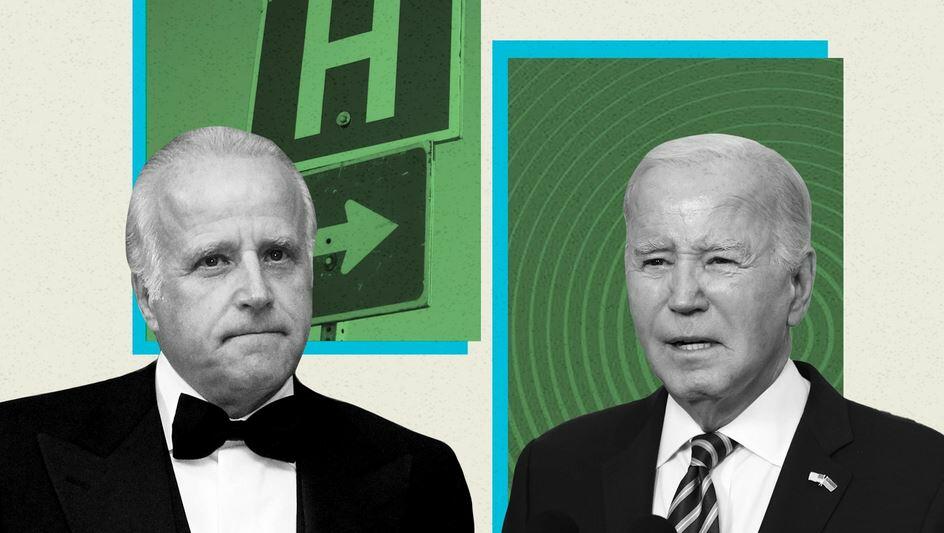
Qatar has had a lot of fingers in a lot of pies. While we knew about the EU's 'Qatargate,' investments with the Kushner family, and of course Sen. Bob Menendez advancing Qatar's interests, Politico reports that the Biden family's ties to Qatar "would constitute some of the closest known financial links between a relative of President Joe Biden and a foreign government," if courtroom testimony about Jim Biden's foreign fundraising efforts is substantiated.
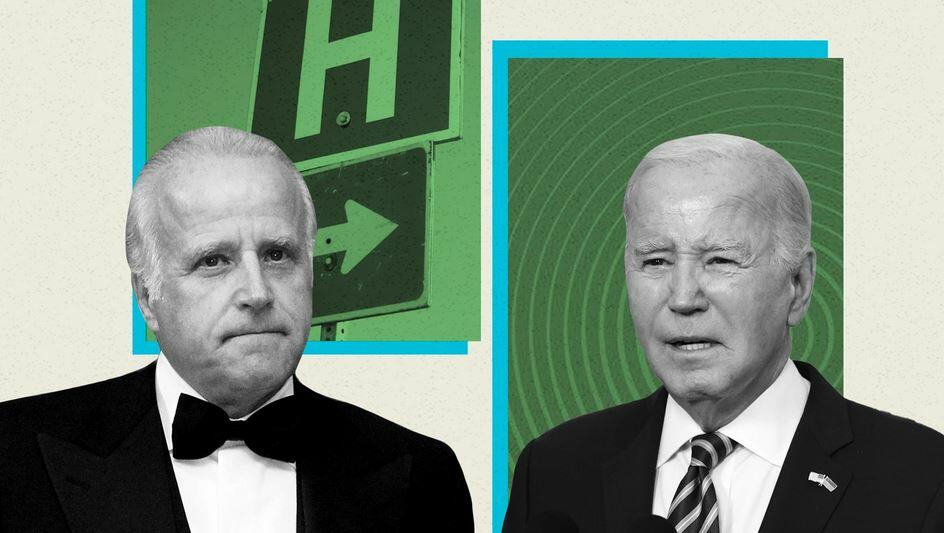
POLITICO illustration/Photos by AP, Getty Images, iStock

In June 2017, Qatar's neighbors - led by Saudi Arabia, banded together and cut diplomatic ties with the country, citing its alleged support for terrorism. As a result, the country was thrown into a sustained crisis.

To dig themselves out, Qatari rulers began showering well-connected Westerners with gifts and financial benefits, according to Politico, "sometimes in the form of investment funding."

Around this time, Jim Biden was trying to raise $30 million for embattled hospital chain Americore - teaming up with Florida businessman Amer Rustom, CEO of the Platinum Group, who boasted of his ties to officials in the Middle East, as well as fund manager Michael Lewitt. Together, the three sought investment funding from various Middle Eastern sources for Americore and other ventures - "which came to focus largely on Qatar," according to a former Americore executive who spoke on condition of anonymity.

According to public records obtained by the outlet, Jim Biden leveraged ties to his older brother and "sought workarounds to restrictions on international money movements," including one discussion about trying to move money across a Middle Eastern border in the form of gold bars that may or may not have happened.

"My family could provide a wealth of introductions and business opportunities at the highest levels that I believe would be worthy of the interest of His Excellency," Jim Biden and Rustom wrote in a draft letter to an official at the Qatari sovereign wealth fund, the Qatar Investment Authority. "On behalf of the Biden family, I welcome your interest here," the draft continues.
Transactions related to the efforts are central to a recently-settled fraud case brought by the SEC, and are under fresh scrutiny as part of a federal criminal investigation in South Florida.

Jim Biden suggested to congressional investigators in February that his fundraising efforts stalled for lack of viable projects to back. But the previously unreported testimony by fund manager Michael Lewitt about the ownership of the two companies — the Platinum Group USA and Obermeyer Engineering Consulting — indicates that Jim Biden forged closer ties to Qatar’s government than previously understood. -Politico

In February of this year, Jim Biden told impeachment inquiry investigators that roughly $600,000 in payments from Americore were for his role in arranging a series of bridge loans - of which $200,000 was transferred to Joe Biden in March 2018 for what the White House claims is a repayment of an unrelated loan between brothers.

In a March 10, 2018 draft presentation emailed from Jim Biden’s wife, Sara Biden, to a Platinum Group executive, Julie Lander, Americore touted Jim as "Brother and Campaign Finance Chair of former Vice President Joe Biden."

One month later, Lander emailed Jim Biden about the fundraising efforts - referencing an apparent meeting with a high-ranking Qatari official.
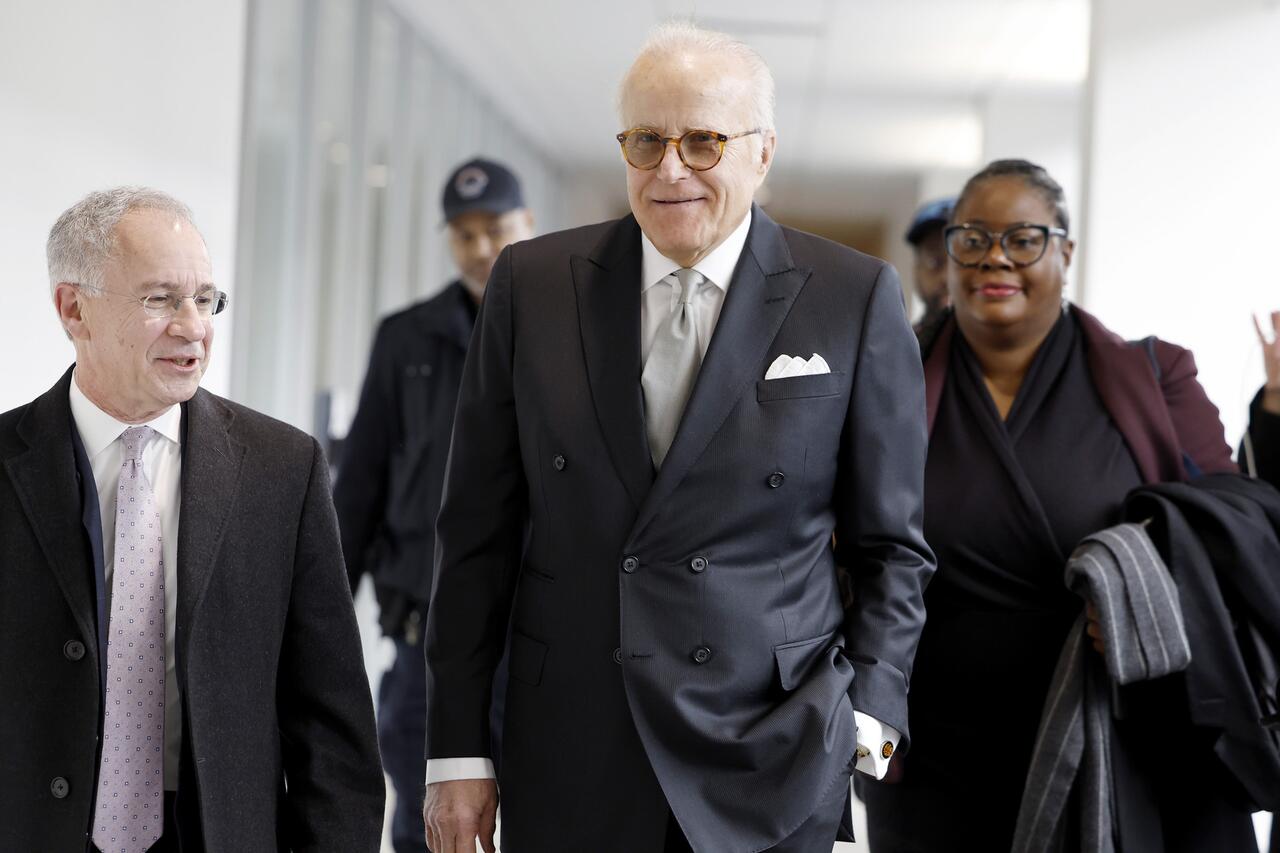
Through a spokesperson, Jim Biden’s lawyer, Paul Fishman (left), said “Jim Biden is not being investigated by federal law enforcement in Florida or Pennsylvania.” | Anna Moneymaker/Getty Images

"I am following up from the meeting we had with the Minister," wrote Lander. "Your approach with him was flawless. He requested more information on Americore."

In the previously unreported email, Lander suggested a potential request of $200 million and asked Jim Biden to provide more information on the potential benefits to Qatar of an investment deal.
Lander’s email came five days after a large delegation of Qatari officials and business leaders visited Miami. It is not clear which minister Lander, who did not respond to requests for comments, was referring to. -Politico
"Snags"
Despite Lander's upbeat email to Jim Biden, fundraising efforts hit a 'series of snags,' according to Politico's anonymous former Americore source, who said that they were facing restrictions on moving investment funds across borders, and that the former executive "recalled discussion at one point of trying to move money across a Middle Eastern border in the form of gold bars, but said they were not aware of any action taken on the idea."

In order to solve their problem, Jim Biden explored working with payment processing company "Billerfy," described as an "open network for global payments," for which Jim Biden could be their "chief global banking emissary" - until Americore's outside counsel, Christopher Anderson, shot it down.

With progress in Qatar slowing in mid-May of 2018 during the Islamic holy month of Ramadan, tensions grew between Jim Biden and his comrades - with Jim Biden venting to Americore CEO Grant White in a May 17 email that he had "agreed to go to Qatar, Saudi Arabia and China (at my own expense)."

A week later, Jim Biden complained to Rustom over the unsecured funds - writing that "The $30 million was committed to over two months ago and we made moves predicated on that available line of credit," adding "Things have happened in the interim that are completely understandable, but the fact remains that the $5 million at this point in time is critical in order to get by for the big picture."

Then in late June, Lewitt emailed Jim Biden and White about trying to move money from Dubai to Qatar, referencing an unspecified "blockage" that was hindering the process.

"Amer would like me to join Jim for the presentation to the Finance Minister in Doha so as soon as we have the date I will plan my travel," the email concluded.

The former Americore executive said that Jim Biden and Lewitt traveled to Qatar in mid-2018 as part of the fundraising efforts, but it is not clear whether any meeting between Jim Biden and Qatar’s then-finance minister, Ali Sharif Al Emadi, took place.
Al Emadi left his post in 2021 after Qatar’s attorney general ordered him arrested on suspicion of corruption. In January, Reuters reported that he was convicted on charges that included laundering more than $5 billion and sentenced to 20 years in prison. -Politico

Efforts to secure funding continued into August of 2018, as Jim Biden continued to work with Lewitt and Rustom to secure financing from the Qatar Investment Authority for other health care ventures, according to filings in a since-settled federal court case in Tennessee in which the three were named as co-defendants.

As they continued to work together, Jim Biden's financial ties to Lewitt deepened - with Lewitt's investment fund, Third Friday, paying Jim Biden's company, Lion Hall Groujp, $225,000 over the course of 2019. While Biden testified that this was a forgiven loan, Lewitt disputed it - telling Politico that Jim Biden's debt was assumed by an unnamed third party.
At the end of the day, Qatar and everyone else balked at the deal.
"We weren’t able to show the financial bona fides of any one particular project," said Jim Biden during his impeachment inquiry interview. "We got pretty far down the road on several hotel complexes, but they never came to fruition."
Meanwhile, in 2022, investors in Third Friday sued Lewitt, accusing him of embezzlement through Americore to Jim Biden and others. Lewitt has denied wrongdoing in the ongoing case, while Jim Biden has not been named a defendant.

Lastly, the partners are now locked in a bitter legal dispute. During the course of Americore's bankruptcy litigation, documents produced by Lewitt included an agreement between his fund and a Delaware company, Obermeyer Engineering Consulting - which calls for Obermeyer to purchase Third Friday's loans to Americore, along with a 35% stake in the hospital chain, for $30 million.

The agreement includes a signature from Azzam Rustom as Obermeyer’s "authorized signatory," which Amer Rustom - Obermayer's 'manager,' contested - saying it the signature was faked.

Lewitt said during testimony that Amer Rustom 'verbally authorized' him to fake his signature on the disputed documents.
Towards the end of the hearing Lewitt was asked why, if the agreements he produced were valid, the Rustoms were contesting them.
Lewitt testified that the Rustoms owned both Obermeyer and the Platinum Group with “members of the Qatari government.” He speculated that the brothers had not cleared the agreements with the Qatari officials, whom he did not name. “I don’t think they expected these to become public,” he testified, “and I think they were trying to cover themselves.” -Politico
According to the judge in the case, "Where there’s smoke, there’s fire," adding "and this is a black haze right now."

>>> US Research Calls

Research Calls
  • Upgrades:
    • America Movil SA (AMX) upgraded to Buy from Neutral at Goldman; tgt raised to $22
    • Apple (AAPL) upgraded to Outperform from Mkt Perform at Bernstein; tgt $195
    • Axsome Therapeutics (AXSM) upgraded to Overweight from Equal-Weight at Morgan Stanley; tgt raised to $115
    • Eastman Chemical (EMN) upgraded to Buy from Hold at Jefferies; tgt raised to $125
    • FirstCash (FCFS) upgraded to Buy from Hold at Loop Capital; tgt raised to $140
    • General Dynamics (GD) upgraded to Buy from Hold at Jefferies; tgt raised to $335
    • Grainger (GWW) upgraded to Overweight from Equal-Weight at Stephens; tgt raised to $1250
  • Downgrades:
    • Acrivon Therapeutics (ACRV) downgraded to Neutral from Buy at Ladenburg Thalmann
    • Altimmune (ALT) downgraded to Neutral from Buy at Guggenheim
    • Enerplus (ERF) downgraded to Sector Perform from Outperform at RBC Capital Mkts; tgt raised to $22
  • Others:
    • AAON (AAON) initiated with an Outperform at William Blair
    • Abivax SA (ABVX) initiated with a Buy at Guggenheim; tgt $50
    • Abivax SA (ABVX) initiated with an Overweight at Piper Sandler; tgt $42
    • Dave, Inc. (DAVE) initiated with a Mkt Outperform at JMP Securities; tgt $70
    • Geron (GERN) initiated with a Buy at TD Cowen; tgt $10
    • Immunocore (IMCR) initiated with an Outperform at Leerink Partners; tgt $74

>>> US Early premarket gappers

Early premarket gappers
  • Gapping up:
    • PHG +40.8%, XFOR +13.3%, TSLA +9.1%, MNKD +8.5%, KIND +7.9%, DPZ +6%, ARLP +3.8%, ACHV +3.5%, LSXMA +2.3%, ATHE +2%, AZN +1.9%, VFC +1.6%, VOD +1.3%, EH +0.6%, HMC +0.5%
  • Gapping down:
    • ADXN -53.7%, DB -6.7%, TGAN -4.1%, OTLK -3.4%, TREE -2.6%, MORF -2%, FULT -1.9%, SBOW -1.7%, AMC -1.5%

FT : Puig aims for top-of-the-range €14bn valuation at IPO

Puig aims for top-of-the-range €14bn valuation at IPO
Spanish beauty group will list at the end of this week

Spanish beauty group Puig is aiming for a top-of-the-range valuation of nearly €14bn in its initial public offering due on Friday, signalling strong demand in a deal set to be Europe’s largest market debut this year.

Any bids from investors coming in at below €24.50 per share — equating to a market capitalisation of €13.9bn — “risk missing” out on the offer, according to terms distributed by Puig’s bankers. Puig said this month that its expected valuation range was €12.7bn to €13.9bn.

Demand from investors is exceeding the size of the deal, according to those working on it, with the company aiming to sell up to €3bn of shares.

A strong listing for Puig would build momentum in Europe’s IPO market, after European private equity group CVC Capital Partners saw its shares jump on its first day of trading last week following a long-awaited IPO.

Puig’s bankers said the company would sell 21.5 to 23.7 per cent of its shares, with the rest remaining in the hands of the Puig family, which founded the company 110 years ago.

Puig is expected to finalise its offer price on Tuesday, before its shares begin trading on Friday. JPMorgan and Goldman Sachs are leading the IPO.

Puig’s launch on public markets comes at a complex time for the global luxury industry, where growth is slowing from a multiyear boom period during the pandemic. Chinese consumers, especially the middle class who helped fuel the industry’s recent expansion but are also more exposed to economic pressures, are buying less as the outlook in the country deteriorates.

Sales figures from the first quarter of the year showed a wide divergence in performance between top luxury groups, with those more orientated towards wealthy shoppers faring better. Puig, which owns luxury labels Rabanne and Carolina Herrera as well as a clutch of make-up and skincare brands, increased revenues 19 per cent on a like-for-like basis last year to a total of €4.3bn.

However beauty and fragrance, which makes up the majority of Puig’s business, has proved resilient with even squeezed shoppers still willing to splash out on more moderately priced lipsticks and perfumes. Companies such as LVMH’s beauty retailer Sephora and sector leader L’Oréal beat expectations at the start of the year, easing investor concerns about a slowdown in the US, beauty’s biggest market.

However, recent beauty IPOs have not been easy, with the market debut of German perfume retailer Douglas flopping in March, with shares still trading below their initial listing price.

FT : Carmakers need to be tech-savvy to get an edge in China’s EV market

Carmakers need to be tech-savvy to get an edge in China’s EV market
In-car software is becoming a key differentiator

Cutting prices no longer gets you very far in China’s electric car market. BYD’s sticker price of $11,000 for its lower-end electric vehicle models is hard to beat. But there are other ways for international carmakers to get a foot in the door of this hypercompetitive market.

In China, especially among younger consumers, in-car software is becoming the key differentiator of next-generation vehicles — sometimes even beating out more traditional factors such as build quality. Seamless connections between cars and smartphones, artificial intelligence-enabled online connectivity, assisted driving systems and in-car entertainment functions are important factors when choosing which EV to buy. Local EV maker Nio, for example, has even made its own smartphone to offer better mobile connectivity with its models.

These smart features have been one of the few ways to avoid getting caught up in the brutal price war in the Chinese market. These smarter EVs find buyers at the $30,000 to $60,000 price range.

Foreign carmakers that cannot compete on price now need to get up to speed on these highly localised functions for their EVs to stay competitive. But teaming up with local smartphone manufacturers such as Huawei and Xiaomi is a less attractive option as those companies start rolling out their own EV models.

Toyota has found a decent workaround. The Japanese automaker has eschewed its usual conservative management style to partner with Chinese gaming and social media giant Tencent — whose social networking service is used by more than 1bn people — to offer technology-enhanced cars. The two companies are setting up a strategic alliance to work together on AI, cloud computing and big data for EVs. China-made passenger vehicles that will go on sale this year will include Tencent’s technology

The trend for intelligent vehicles is relatively new. So even foreign automakers belatedly entering the Chinese market have a good chance at finding an edge in this market. China remains a key market for sales growth, with EV sales expected to hit about 10mn this year, higher than last year’s 9.5mn, and accounting for about half of all car sales in the country.

With the country expected to remain the world’s largest EV market next year, catching up has become more urgent for Toyota: its China market share shrunk last year as buyers shifted to local EVs. The Japanese carmaker, for now, has an edge over lossmaking Chinese EV start-ups with an operating profit margin of more than 11 per cent. It needs to move fast to take advantage of shifting trends.

FT : Why CVC’s IPO was such a hit

Why CVC’s IPO was such a hit
Top-tier asset, cheap pricing, savvy tactics. And balloons

Parents know the golden rule for throwing a great birthday party: every child must leave with a balloon. That way, as one party organiser explains, “everyone leaves not only happy but impressed, so that your child is the talk of the playground for the right reasons on Monday morning”.

Last week European private equity group CVC Capital celebrated a fun fiesta in the capital markets, with balloons and everything.

CVC’s up-to-€2.3bn Amsterdam IPO drew huge investor interest, enabling several shareholders — including Singapore’s GIC, the Kuwait Investment Authority, and the Hong Kong Market Authority — to reap big gains. And despite overwhelming demand, CVC opted to price its offering conservatively — at the €14 midpoint of the indicated range — to ensure a positive after-market. In short, CVC is the talk and toast of trading floors and conference rooms for all the right reasons this Monday morning.

It’s fashionable (arguably too fashionable) to disparage flotations of private equity-controlled companies, but the flotations of the firms themselves have often proved lucrative. In Europe, EQT’s shares trade around 340 per cent above the Stockholm IPO price from 2019, while Bridgepoint stock rocketed on its London debut in the sizzling summer of 2021 and stayed above its offer price for eight months.

Whenever a deal goes wrong, it’s important to critically dissect the execution and identify the mis-steps. But here’s a deal that has so far been a clamorous success for the selling shareholders, for new investors and for CVC itself. It’s therefore only appropriate to review why this listing developed into a “win-win-win situation.”

Instant histories have a way of embarrassing chroniclers, but here are three tentative explanations for the deal’s success: quality and size of the company; alignment of interests; and the tactical decision to prioritise offer size over price. And if these explanations hold any water, it means that this success might unfortunately be hard to replicate consistently.

First, investors want to buy the best stuff at times of uncertainty, not rummage through marked-down aisles of second-hand merchandise for a cheap bargain. And they crave the liquidity that a larger company and larger float provide, because it means they can manage the risk of their position much more nimbly.

CVC fits the bill: it is regarded as a thoroughbred asset manager with a strong record, and a €2bn-plus free float on a circa €15bn market cap affords investors the liquidity to enter and exit in size.

Second, the interests of the different parties were aligned. CVC had aborted two previous listing attempts, meaning the stakes were higher for a successful launch this time around. Also, current employees, who own around three-quarters of the firm, weren’t selling shares in the IPO; investor goodwill could help them monetise their stakes later, as lockups on share sales expire.

A strong after-market might also enable CVC to use listed shares as acquisition currency, just as EQT had done in buying Barings Private Equity Asia in 2022. Meanwhile, the selling shareholders were already sitting on large profits, while Blue Owl, which had bought 8 per cent of CVC in 2021, committed to buy another 10 per cent in the IPO.

In other words, nobody had an interest in pushing too hard on price. As a result, the offering was priced at a fat discount to its peers, estimated to be at around 13 times estimated 2025 price-to-earnings versus EQT’s nearly 18 times.

The IPO wasn’t underpriced because of bamboozling by the underwriting banks either. CVC and the sovereign wealth fund sellers are smart, sophisticated and savvy about financial markets. Rather, they made a conscious decision to price it attractively because it suited their interests. They knew exactly what they were doing.

This attitude shows how a successful business creates a virtuous cycle that eases IPO execution enormously. Not only is the company a more attractive investment proposition to market to investors, but there’s already enough profit to keep everyone happy and align otherwise disparate interests. It’s a far cry from trying to jam out shares in a so-so portfolio company at an elevated price to reach some minimum return threshold.

And this leads to the final point about tactics. It was apparent from the so-called “early look” and “pilot-fishing” meetings that the CVC IPO was going to be a blowout. Investors were already indicating demand well before the offer had officially started. Indeed, the underwriters announced within minutes of launch that the book was covered at the top of the €13-15 range. CVC could have easily priced the IPO at €15 (or higher) without sacrificing investor quality.

But the decision was made on the last day of bookbuilding to increase the deal size by €500mn and tell investors the offer would price only at €14 per share. The guidance to the market was a tactical masterstroke: it caught fund managers by surprise — in a good way, because it signalled both strength and restraint.

One can only imagine how many calls, emails, and texts CVC partners must have received from long-forgotten acquaintances begging for an allocation. CVC shares became the capital markets equivalent of Taylor Swift concert tickets. According to media reports, CVC gave zero allocation to 20 per cent of investors in the order book due to overwhelming levels of oversubscription.

Maybe the best parties are the ones that don’t have enough room for everyone. Just please don’t try that for a child’s birthday party.

>>> Europe : Brokers Upgrades & Downgrades - 29th of April 2024 V2(+)

>>> Up
* Alfen Raised to Buy at KBC Securities (+)
* Apetit Raised to Accumulate at Inderes; PT 15.50 euros
* Befesa Raised to Equal-Weight at Morgan Stanley; PT 29 euros
* Betsson Raised to Buy at ABG; PT 145 kronor
* Boozt Raised to Buy at Kepler Cheuvreux; PT 145 kronor (+)
* Eastman Chemical Raised to Buy at Jefferies; PT $125
* Electrolux Raised to Buy at Handelsbanken (+)
* Enea Raised to Buy at ABG; PT 70 kronor
* Freeport Raised to Outperform at CICC; PT $54.50
* Holmen Raised to Hold at DNB Markets; PT 450 kronor
* J. Martins Raised to Overweight at JPMorgan; PT 25.10 euros
* Kitron Raised to Buy at Arctic Securities; PT 35 kroner
* Laurent-Perrier Raised to Neutral at Oddo BHF; PT 130 euros (+)
* Maersk Raised to Buy at ABG; PT 13,260 kroner
* Nordic Semiconductor Raised to Buy at Jefferies; PT 160 kroner
* Saab Raised to Buy at Carnegie; PT 1,030 kronor (+)
* Sabre Insurance Raised to Buy at Peel Hunt; PT 210 pence
* UBS Raised to Neutral at Grupo Santander; PT 25.53 Swiss francs

>>> Down
* Bittium Cut to Reduce at Inderes; PT 6.50 euros
* Dios Cut to Hold at Pareto Securities; PT 86 kronor
* F-Secure Cut to Hold at SEB Equities; PT 2.20 euros
* F-Secure Cut to Accumulate at Inderes; PT 2.30 euros
* Grieg Seafood Cut to Hold at Fearnley; PT 76 kroner (+)
* Kesla Cut to Sell at Inderes; PT 3.80 euros
* Kjell Group Cut to Hold at Nordea
* Lululemon Cut to Equal-Weight at Barclays; PT $395
* Purmo Group Cut to Reduce at Inderes; PT 9.91 euros
* Rovi Cut to Neutral at JB Capital Markets; PT 92.20 euros
* Schibsted Cut to Hold at Deutsche Bank (+)
* Siltronic Cut to Hold at Hauck & Aufhaeuser; PT 74 euros (+)
* Terveystalo Cut to Accumulate at Inderes; PT 9.20 euros
* Tesla Cut to Reduce at Phillip Secs; PT $145
* Ulta Beauty Cut to Equal-Weight at Barclays; PT $434
* Umicore Cut to Underperform at Oddo BHF; PT 19 euros
* Wartsila Cut to Reduce at Inderes; PT 16.50 euros
* Yara Cut to Hold at ABG; PT 325 kroner

>>> Initiation
* AO World Rated New Buy at Deutsche Bank; PT 120 pence (+)
* Boohoo Rated New Sell at Deutsche Bank; PT 27 pence (+)
* Cherry Reinstated Buy at Hauck & Aufhaeuser; PT 4 euros (+)
* Currys Rated New Hold at Deutsche Bank; PT 58 pence (+)
* Dr Martens Rated New Hold at Deutsche Bank; PT 65 pence (+)
* Douglas Rated New Buy at Citi; PT 31 euros
* Douglas Rated New Buy at Goldman; PT 38 euros
* Douglas Rated New Buy at Jefferies; PT 28 euros
* Douglas Rated New Buy at Deutsche Bank; PT 32 euros (+)
* Frasers Group Rated New Buy at Deutsche Bank; PT 1,000 pence (+)
* JD Sports Rated New Hold at Deutsche Bank; PT 115 pence (+)
* Moonpig Rated New Hold at Deutsche Bank (+)
* Mothercare Rated New Buy at Deutsche Bank; PT 12 pence (+)
* Motorpoint Rated New Buy at Deutsche Bank; PT 170 pence (+)
* Serco Reinstated Buy at HSBC; PT 210 pence
* Watches of Switzerland Rated New Hold at Deutsche Bank (+)

>>> Call
* Befesa Loses Only Sell as Morgan Stanley Upgrades After Pullback
* Betsson’s Resilience Not Fully Appreciated, Raised to Buy at ABG
* Goldman Strategists See ‘Good’ European Earnings Season So Far
* JD Sports Cut at Barclays, Sees Execution Risk From Hibbett Deal
* JPMorgan Stock Strategists See Improving Risk-Reward in Europe (+)
* Maersk Raised to Buy at ABG Sundal Collier, Stock Too Cheap (+)
* Morgan Stanley Strategists See Valuation Pressure from Rates
* Nordic Semi Raised at Jefferies, Key Beneficiary of IoT Trend
* Philips Settlement Should Be Well Received, Morgan Stanley Says (+)
* Unicaja Has Bottom-Line Beat in First Quarter: Morgan Stanley (+)

WSJ : A Media Heiress’s Bid to Sell Sets Off Mayhem Inside Paramount

A Media Heiress’s Bid to Sell Sets Off Mayhem Inside Paramount
The storied Hollywood company behind ‘The Godfather’ faces its biggest battle yet as Shari Redstone’s merger plans collide with shareholder fury and a CEO on the outs

Shari Redstone was finally ready to cash out.

The media heiress who controls Paramount Global PARA -2.22%decrease; red down pointing triangle, owner of CBS, MTV, Nickelodeon and the Paramount film studio, last year started seriously contemplating selling the business.

She began to feel the pinch of the entertainment giant’s decline when management cut the dividend that has supplied income to the Redstone family for years. She showed friends photos of the house she was building in Turks and Caicos. The Oct. 7 attacks on Israel left her motivated to spend more time on fighting antisemitism, people close to her said.

So when David Ellison, the CEO of production company Skydance Media and son of billionaire Larry Ellison, raised the idea of a merger, Redstone was ready to hand over a media empire her family has controlled for nearly four decades.

If only it were that easy.

In the past few weeks, Redstone’s journey toward a deal has turned into one of the messiest merger dramas in memory, with the fate of an iconic American company—home of “Titanic,” “The Godfather,” and the “Indiana Jones” franchise—hanging in the balance.

Shareholders are rebelling over a proposed Skydance merger, bringing to the fore a central tension that has always been present in Paramount: what’s good for the Redstone family might not be as good for every other investor.

Meanwhile, tensions between Redstone and Paramount CEO Bob Bakish have reached a breaking point, and the company could announce as soon as Monday that it is parting ways with him, further clouding deal prospects. Paramount is expected to put in place an “Office of the CEO” made up of divisional heads for now.

Selling Paramount would be difficult enough even without all that turmoil, given how it has faded over the past several years. The collapse of the cable TV industry has hammered Paramount, and its struggle to find a profitable path in the new streaming world has only compounded its troubles. The company’s market value has plummeted by 80% on Redstone’s watch over the past eight years—dealing a multibillion-dollar blow to her family’s fortune.

Paramount has had chances to break up and divest its most attractive pieces over the years. Netflix and Apple, for example, showed interest in the Hollywood studio business, while former Showtime executives each offered hefty sums for the channel and Comcast was intrigued by a potential partnership in streaming, people familiar with those discussions said.

Though Redstone was open to some deals, like a Showtime sale, she held out hope that a big buyer—maybe a technology giant—would emerge to take the whole company off her hands, including fast-deteriorating cable channels. That didn’t happen.

“The hope for any company in this space is that Apple will come out and buy them, but that’s not a strategy,” said Robert Fishman, an analyst with MoffettNathanson.

Now Redstone is playing a weaker hand as the company explores its options. Paramount has been in exclusive talks with Skydance toward a deal that would net Redstone more than $2 billion in cash for National Amusements, the holding company that owns the family’s 77% voting stake in Paramount and a chain of movie theaters. Nonvoting Paramount investors would get stock in a newly merged company.

The current value of Redstone’s Paramount holding is about $750 million, meaning she would be getting a substantial premium in a Skydance deal. A battery of shareholders have gone public with concerns that it would be a sweetheart deal for Redstone. Skydance on Sunday proposed a revised offer, the details of which couldn’t be learned.


An independent board committee has been tasked with reviewing the Skydance deal. In a statement, National Amusements said it would respect the committee’s decision on “whether the Skydance deal presents an attractive transaction for Paramount and whether they want to continue to move forward.” National Amusements has signaled that it is open to making a transaction contingent on approval by a majority of non-Redstone shareholders, people close to the talks said.

Paramount has another potential option on the table. Private-equity giant Apollo Global Management submitted a $26 billion offer, including about $12 billion in equity plus assumption of debt. The board had concerns about Apollo’s bid, including whether it could arrange financing for a deal. Since then, Apollo has discussed teaming up with Sony Pictures on a potential bid.

An Apollo deal could be much more appealing to Paramount shareholders—giving them a cash payout—but wouldn’t give Redstone the hefty premium Skydance is offering.

Bakish has told people close to him he has concerns about the Skydance transaction. He and his management team worked to find an alternative with advisers including Aryeh Bourkoff, a power player in media who runs boutique investment bank LionTree.

Earlier this year, Bakish floated a plan to raise equity capital to buy out all voting shareholders in Paramount, including Redstone, according to people familiar with those discussions. This move would have allowed Redstone to cash out and would have collapsed the company’s dual-class share structure, creating equal footing for all shareholders. Redstone wasn’t interested in the idea, the people said.

In mid-April, Redstone and Bakish both attended the retirement party for Sean McManus, the chair of CBS Sports, at The Grill in New York City, mingling with the likes of NFL commissioner Roger Goodell and former CNN chief Jeff Zucker. Bakish and Redstone barely spoke, one attendee said.

As the merger saga plays out, the business is in a pickle: the streaming operation, anchored by Paramount+, is growing swiftly, but posted $1.7 billion in losses last year. The TV business is shrinking, but continues to supply the lion’s share of the company’s profits. Paramount reports quarterly earnings Monday.

Paramount is in high-stakes negotiations to ensure carriage of its cable channels—among them Comedy Central, BET, MTV, VH1 and others—by cable giant Spectrum, with the current contract expiring at the end of April.

Paramount has begun planning for what would happen if no deal materializes. In recent days, top Paramount divisional heads presented a plan to cut more than $2 billion in costs while investing more in content, through selling cable network BET and Paramount-owned TV stations not affiliated with the CBS network, and establishing a streaming joint-venture. The goal through those and other restructuring moves would be to slash Paramount’s roughly $14 billion in debt, people familiar with the presentations said.

A Reluctant Seller
Redstone, who turned 70 this month, fought a nasty battle to succeed her father, the irascible media mogul Sumner Redstone—vanquishing rival executives, nurses and his girlfriends along the way. She has a strong attachment to Paramount.

“Shari Redstone worked really hard to get the family business in her hands, so there must be a lot of personal tie-in to this whole endeavor,” said Tim Nollen, an analyst at Macquarie who has been bearish on Paramount for some time. “It’s easy to say you should have broken it up or sold, but maybe it wasn’t that easy with that in mind.”

As her father’s health deteriorated significantly by 2016, Redstone assumed the role of de facto boss of CBS and Viacom, the two separate companies in the family portfolio, which then had a combined worth of roughly $40 billion. Had Redstone sold her family stake in each company at that time, securing a premium similar to what Skydance is offering now, she would have walked away with more than $10 billion.

Viacom, once the darling of the Redstone holdings, was coming under major pressure as cord-cutting accelerated and its vast exposure to cable TV became a liability. In the five years through 2018, the company shed more than $25 billion in market value. CBS was comparatively stronger, bolstered by its high-rated broadcast network and rights to air NFL games.

When Shari Redstone pushed to reunite Viacom and CBS, she encountered resistance, with some warning her that the healthier CBS side could wind up damaged. “If one of your kids is sick, do you make them sleep in the same room or do you separate them,” one person involved in the deal recently recalled telling her at the time.

Redstone, who thought scale would help the company thrive in a Netflix-dominated media world, was undeterred and merged the two companies, forming what is now Paramount Global.

Redstone would have been better off if she had sold the entire company or pieces of it back when she took control, said Chris Marangi, co-chief investment officer at Gabelli Funds, which is Paramount’s second-biggest voting shareholder.

The CEOs of AT&T and Verizon each approached Redstone about buying CBS in the years before she pursued its merger with Viacom, but she declined.

“If she hadn’t merged the companies, it clearly would have been different,” Marangi said. “We would have all preferred 2019 prices for these assets.”

Even after Redstone reunited the media empire, offers for certain assets persisted.

Apple has expressed interest in the Paramount studio and toyed with the idea of buying the whole company to get it, according to people close to the situation. Similarly Netflix Co-CEO Ted Sarandos has expressed interest in buying the studio, but Redstone said it wasn’t for sale.

Showtime’s Billions
Redstone has complained about Bakish’s decision not to sell premium cable channel Showtime, say people close to her camp. The channel, an HBO rival, was known for high-quality fare such as “Dexter” and “Billions,” but it had an uncertain future in streaming, and rising production costs.

On Labor Day weekend 2020, former Showtime executive Mark Greenberg called Bakish, who was driving home to Connecticut and offered a deal that would leave Paramount with $3 billion in cash and a 25% remaining stake in the channel. Bakish declined, saying he had received larger offers in the past.

A few months later, in March 2021, Greenberg and investment giant Blackstone offered $5.5 billion to $6 billion in cash for Showtime, according to people familiar with the terms. Under the proposed deal, former Disney executives Kevin Mayer and Tom Staggs—who now run the entertainment company Candle Media—would have joined Showtime’s board.

Paramount’s top brass didn’t pursue the offer. A few years later, another offer for Showtime came in, a more than $3 billion bid from David Nevins, the former head of the channel. Bakish turned down the deal.

Rather than selling Showtime, Bakish convinced the board that the best course was to shut down Showtime’s streaming service and fold it into Paramount+, a move he said could save billions and improve the service’s outlook.

“There have been a couple of different times when you can look back and say, ‘coulda woulda shoulda,’” Fishman said. He said Paramount’s decision to put all its content into Paramount+ made selling off company parts more challenging, as entities such as Showtime were now tightly integrated into the service.

That wasn’t the only potential deal that got away. Cable and entertainment giant Comcast, led by longtime chief Brian Roberts, in 2021 inquired about joining forces with Paramount in streaming in the U.S., as the two companies were pursuing such a partnership in Europe. Bakish resisted, taking a view that putting Paramount’s new service, Paramount+, in a joint venture could further complicate selling the whole company, people familiar with the situation said.

Lately, Bakish has taken a different approach: Bakish and Comcast hashed out a potential partnership between Paramount+ and Comcast’s Peacock service, without keeping Redstone or the board updated, people familiar with the matter said. The deal could be structured in different ways—Comcast could license all of Paramount’s content, including its CBS Sports rights, and put it onto Peacock, or the companies could form a joint venture, with Comcast in control, said one of the people.

Redstone told people close to her the terms Bakish negotiation with Comcast were bad for Paramount and that such a partnership would complicate a larger deal with a suitor like Skydance.

Dividend Drama
Facing mounting pressures in its business, Paramount in May 2023 announced it was slashing its dividend by 79%, denting a key source of revenue for National Amusements.

Redstone expressed frustration to associates, saying she had let Bakish convince her that cutting the dividend would be good for the company and would help boost the stock, according to people familiar with the situation.

Redstone told associates she should have heeded a mantra favored by her late father, who died in 2020: hire great people, but don’t let them talk you into anything you don’t want to do.

Redstone’s company, National Amusements, which owns 124 theaters in the U.S. and abroad, was already struggling to recover from the pandemic when theaters around the country were temporarily closed, and it had amassed more than $300 million in debt. For financial help the company raised $125 million from a merchant bank. The company still has about $185 million in debt, a person familiar with the situation said.

Skydance’s Ellison came into the picture in summer 2023. Redstone and Ellison have known each other for years. They once had a dinner in Los Angeles that was arranged by her son-in-law Jason Ostheimer, who is also her partner at the venture-capital firm Advancit. Redstone and the younger Ellison would see each other at industry events over the years, and more recently, bonded over the importance of family legacy—both being the children of moguls.

In December, Ellison met with Redstone and her son, Tyler Korff, at her Connecticut home. Over lunch, Ellison described Skydance’s business, whose credits includes TV shows such as Amazon’s “Tom Clancy’s Jack Ryan” and Apple TV+’s “Foundation,” and movies like “Top Gun: Maverick.” Skydance also has a sports joint venture with the NFL, an animation studio and a gaming division.

He laid out his vision: invest more in Paramount, restructure costs and improve Paramount’s data and analytics to better compete with Netflix. Redstone sent Ellison’s proposal to the board a couple of weeks later.

Tiny Skydancer
The deal itself would be structured in two steps. First, Skydance, which is backed by the Ellison family, and private-equity firms KKR and RedBird Capital Partners, would buy out National Amusements. Then, Paramount would acquire Skydance with stock at a valuation of $5 billion.

The valuation has turned heads since the Journal first reported on Skydance’s financials. The company’s expected revenue this year of just over $1 billion is one-thirtieth of Paramount’s and it is expected to generate earnings before interest, taxes, depreciation and amortization of $90 million. The Hollywood labor strike last year has weighed on many studios, including Skydance, but the company expects a surge in 2025 to $2.29 billion in revenue and $322 million in Ebitda.

Under the proposed deal, Skydance would put more than $1.5 billion in cash onto Paramount’s balance sheet, say people familiar with the terms. Former NBCUniversal CEO Jeff Shell, now a RedBird executive, would be president under Ellison.

Amid the deal talks with Skydance, a board shake-up occurred, with four directors—three of whom were on the independent committee, stepping down. Redstone had wanted a smaller, more nimble board for some time, people familiar with the situation said. The directors were told they would not be up for renomination. At least one, Nicole Seligman, an attorney and former Sony Entertainment executive, questioned the Skydance deal, the people said.

If the deal collapses, Redstone will likely pursue a sale of just National Amusements, without trying to merge Paramount into another entity, said people close to her.

Paramount is trying to carry on business as usual: as the TV world’s annual advertising sales bonanza gets under way in New York, its top executives are hosting a series of dinners this week with Madison Avenue titans at the Chelsea Factory.