>>> US Early premarket gappers

Early premarket gappers

Gapping up: VTNR +10%, OFIX +8.9%, SONC +7.1%, NPSP +5.3%, RLD +4.5%, SOL +4.4%, TSL +2.7%, RIO +2.3%, ABX +1.5%, BHP +1.4%, AU +1.4%, UN +1.4%, AWAY +1.2%, GDX +1.2%, GSK +1.2%, GOLD +1.1%, TWTR +1.1%, SHPG +1.1%, BUD +1%, WEN +0.9%, ING +0.8%, RDS.A +0.6%

Gapping down: AI -3.5%, PFSI -2%, COMM -1.8%, SQI -1.4%, VEEV -1.4%, SWHC -1.2%, SGY -1.1%

FT : Zombie hordes thrive, await further hedge fund corpses

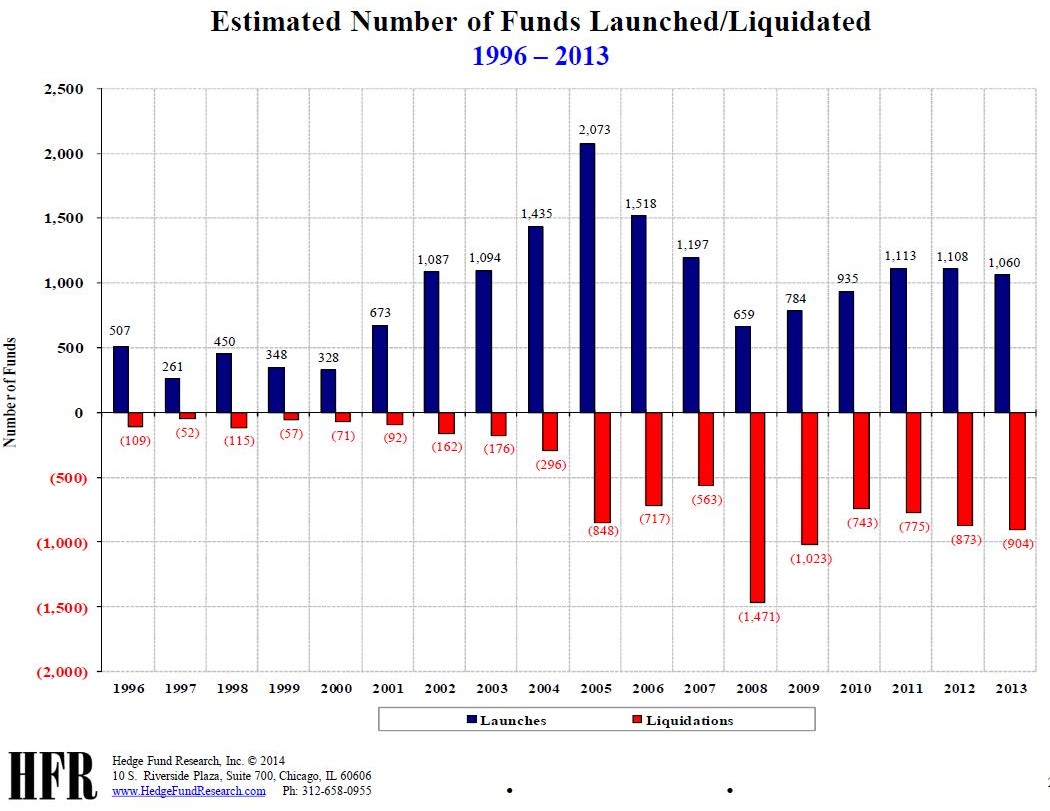
Close to a tenth of all hedge funds tracked by HFR succumbed to the inevitable last year as 904 hedge funds liquidated.
Their historic performance will live on in the databases of hedge fund returns, but like more than two-thirds of all hedge funds that have ever existed, they are dead, defunct and arguing with their investors over valuations for those lingering illiquid assets.
To put that in perspective, half of all individual hedge funds have closed in the last five years. It is exactly what should be expected, given that the average life of a hedge fund which makes it past the 12 month mark is just over five years, but it is a salient fact that seems to escape the promotion of hedge funds as an asset class, a diversifier or a handy set of uncorrelated investment returns.
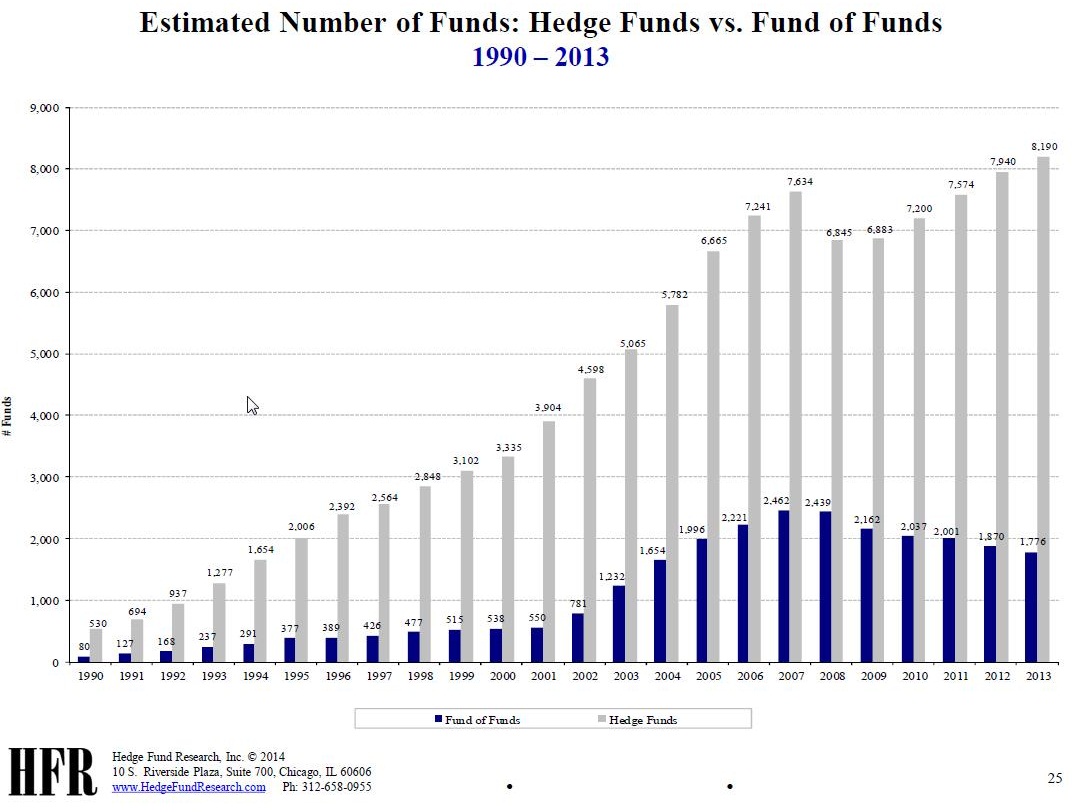
The overall number of hedge funds reporting to HFR has grown, to 8,190 last year from 6,895 at the end of 2008, but only because new funds constantly spring into life.
In the last five years 4,318 hedge funds have closed. If we add on the 1,471 zombies added to the hoard in 2008, that is 5,789 dead funds, set against the 7,634 live hedge funds and 2,462 fund of funds that existed at the end of 2007.
That total of closures includes fund of fund numbers that have shrunk by 686 over the same period, very slim times for fund of fund launches, so the number for individual fund closures looks to be in the 4,000 to 5,000 range.
All of which surely makes the selection problem insurmountable for any pension fund of size. To invest in hedge funds given such turnover means selecting a fresh portfolio of funds every single year. There is a small window after a fund has proven itself (say two or three years) and grown to sufficient size, but before the five year mark at which the average fund becomes a zombie.
Remember also that there is no persistence in returns – good investment performance in one year really has no bearing on investment performance in following years. Oh, and the hedge fund industry as a whole hasn’t produced alpha/added value to simple portfolios for years, since its assets under management ballooned.
But lets say you are an investment consultant paid to advise pension funds on manager selection. One solution would be to focus on the quality of a hedge funds infrastructure as big solid asset gathering funds funds are less likely to become zombies.
Hence, perhaps, what the Financial Conduct Authority reports in its latest survey of the UK hedge fund industry, capturing 49 firms offering 106 individual funds:
Over time, the industry has become more concentrated. The survey shows that the 20 largest firms control 82% of the sample’s NAV(net AUM). The concentration ratio rises significantly when considering gross notional exposure (GNE) at the fund level. The 20 largest funds account for 94% of the sample GNE. These 20 funds are managed by 12 different firms.
We would be very interested to hear how a portfolio made up of large, broadly based asset gathering hedge funds has fulfilled the promise of diversification, alpha and low correlation (at a portfolio level) on which hedge funds are sold. Given the size of institutional allocations to hedge funds there should be plenty of evidence for this, right?
But on that question of survivability, the FCA paper is also interesting for highlighting the very high levels of gross leverage related to interest rate derivatives held by a small number of very large hedge funds.
As shown in the chart above, previous editions of the survey had highlighted a notable deleveraging since 2010-2011 by a small number of large users of leverage – mostly macro funds.
While the median leverage has remained relatively stable on six months ago, the largest funds have increased leverage thus pulling the mean higher. The high speed with which funds can alter their market exposure is an important part of our assessment of the systemic risk posed by this sector.
The increase in leverage at the largest funds over the course of 2013 is mostly due to an increase in Interest Rate Derivative (IRD) positions.
As with derivative books at banks, the gross exposure number is too high, due to contract netting, while the net number is probably too low as an indication of risk. But two-thirds of those contracts are still over the counter, rather than centrally cleared through an exchange.
What will be very interesting is if there are any shocks to interest rate markets – either one-offs or a faster than expected tightening cycle as in 1994, which will require very large amounts of money to change hands all at once as collateral shifts through the system. Zombie-proofness might be tested.

(WPT) Notorious Leader of Ukraine’s Protests Dragged Out of Car, Shot Dead


Notorious Leader of Ukraine’s Protests Dragged Out of Car, Shot Dead
2014-03-25 10:31:17.759 GMT

 
By Terrence McCoy
     March 25 (Washington Post) -- Oleksandr Muzychko, an
ultra-nationalist member of Ukraine's recent protests who was
wanted in Russia for alleged war crimes, was dragged from a car
and shot dead just before midnight in the western Ukrainian city
of Rivne, local media reports.
     There were conflicting accounts of what happened to the man
also known as Sashko Biliy.
     According to Ukrainian lawmaker Oleksandr Doniy, writing in
a Facebook update, unknown assailants cut off Muzychko's car on
Monday night, bringing it to a halt. Muzychko, a bald bear of a
man who led the ultra-nationalist group Right Sector, was dragged
out of the car, cuffed, and shot twice in the chest.
     "Those who killed him made sure that he was not wearing a
bulletproof vest and then shot him in the heart," said Right
Sector activist Yaroslav Hranitskiy, reports the Moscow Times.
     Interfax, the Russian news agency, said Muzychko opened fire
on law enforcement officers.
     Russia had accused Muzychko of perpetrating terrible acts of
brutality during the Chechen war. Earlier this month, nearly two
decades after the Chechen conflict subsided, the Russian
Investigative Committee opened a criminal inquiry against
Muzychko.
     Spokesperson Vladimir Markin accused Muzychko of "killing at
least 20 [Russian] soldiers held in captivity," and put him on
the "international most wanted list."
     A photograph on Twitter shows a man identified as Muzychko
dead on the ground. His shirt is open revealing what appear to be
several gunshot wounds.
     Muzychko was a man of combustible temperament. Late last
month, a video of him grabbing a man by the necktie and shouting
obscenities circulated widely in pro-Kremlin media. Around that
same time, he also expressed suspicion the Ukranian Prosecutor
General's Office had plans to kill him, according to the Moscow
Times.
     "I am not afraid of death," he reportedly said in a YouTube
video. My "friends, brothers, patriots" will "continue the
battle."
     Washington Post correspondent Will Englund contributed to
this story from Moscow.

-0- Mar/25/2014 10:31 GMT

>>> ECB's Weidmann: Bond buys according to ECB capital key problematic, reiterat

ECB's Weidmann: Bond buys according to ECB capital key problematic, reiterates interest rates still appropriate
- Firm Euro no reason to cut medium term inflation forecast yet; further euro rise may significantly impact inflation.
- Negative rates could counter impact of strong euro, but sees no imminent decision on negative deposit rates.
- Still scope on conventional measures, but limited.
- Must weigh impact and costs of unconventional tools.
- ECB purchases of private top-rated assets an option.

(BFW) *TFL SAYS LONDON’S VICTORIA STATION CLOSED FOR SECURITY ALERT

+------------------------------------------------------------------------------+

BN 03/25 09:19 *TFL SAYS LONDON'S VICTORIA STATION CLOSED FOR SECURITY ALERT

+------------------------------------------------------------------------------+

*TFL SAYS LONDON’S VICTORIA STATION CLOSED FOR SECURITY ALERT 2014-03-25 09:21:02.662 GMT

--CORMAC MULLEN

-0- Mar/25/2014 09:21 GMT

(KEP-CHEU) Orange Upgraded from Reduce to Hold PT €11 (+9.5% upside)

In its prime or over the hill?

We adjust our numbers and views after the Q4 2013 results and recent M&A activity in France. Consolidation in France implies long-term churn reduction and some market repair. But Orange also seems more acquisitive, guidance is challenging and the stock is trading at a premium to our top picks. We see better opportunities elsewhere in the sector. Rating upgraded from Reduce to Hold, TP raised from EUR10 to EUR11.

* Domestic consolidation provides upside
Irrespective of the final outcome of the two bids for SFR we think the
market will eventually consolidate, probably with two deals rather than just
one. In the long term, we expect Orange to benefit from lower churn and
some market repair, while not facing management distraction, execution
risk or overpayment.

* But expensive foreign acquisitions looming
Nevertheless, we do see a growing risk of Orange playing an active role in
M&A in other European countries, some of which may be quite expensive
(particularly Spain). The company may have created a war chest with the
DPS cut and the EUR2.8bn hybrid.

* Guidance challenging, estimates below consensus in 2015
We see 2014 EBITDA guidance as challenging, as revenues continue to slide
(price pressure in France, enterprise, Belgium, lower roaming fees) and costcutting
potential is lower. Our estimate for 2014 restated EBITDA is
EUR11.94bn (excluding Dominican Republic) with a 0.4pp margin loss versus
guidance of EUR12.1-12.6bn and stable margin, only 1% below consensus
and 0.5% below the low end of guidance. On 2015E EBITDA, we are 2%
below consensus. Orange gave an informal indication of flat to slightly
increasing capex in 2014. Assuming flat capex, we estimate EUR6.32bn of
op/FCF in 2014E, -10%. We also see another 6.5% op/FCF decline in 2015E
but we raise our 2014-15 DPS estimate from EUR0.5 to EUR0.6.

* TP raised from EUR10 to EUR11, rating up from Reduce to Hold
Adjusted for roaming revenues and tax credits, Orange would trade at a
2014E EV/EBITDA of 5.3x, a P/E of 12.5x and a FCF yield of 8.2%. These
multiples still reflect a modest discount to peers (somewhat deserved by its
lower growth profile; in fact, on 2015E multiples the discount narrows), but
a modest premium to our top picks Telefónica and Telecom Italia. Orange
has enjoyed an M&A-driven rerating. We believe investors may now focus
on the next stocks to benefit from the upcoming round of consolidation
(mainly in Spain and Italy). We see 7.5% upside, limited downside and a good
dividend yield, but we also see better opportunities elsewhere.
Fwd:>>> Orange prepares bid for Jazztel with adviser Bank of America

JAZ SM +3.39%, already decent volume today - we have been buyer since this morning.

----- Original Message -----
From: LAURENT CHEKROUN ()
At: Mar 25 2014 08:14:02

Orange prepares bid for Jazztel with adviser Bank of America Merrill Lynch; deal could be worth EUR 2.7bn
French teleco Orange has appointed Bank of America Merrill Lynch to prepare an offer for the Spanish cable company Jazztel (JAZ:SM), El Confidencial reported citing financial sources. Orange has been working with the bank for several weeks to analyse an offer worth almost EUR 2.7bn, according to the report.

Other sources said that talks have been on and off for some time without the parties having reached any agreements, the Spanish-language report said.

Jazztel reported EUR 1.044bn revenue in 2013 up 15% on the previous year, EBITDA of EUR 184m (up 7%) and net profit of EUR 67.6m (up 9%), the report noted.


Source El Confidencial

(NY Post) IPO could value GrubHub at $1.7B

GrubHub said it expects to price its initial public offering of 7.03 million shares at $20 to $22 per share, valuing the largest US online food-delivery services provider at up to $1.72 billion.
The Chicago-based company said the IPO is expected to raise about $155 million, based on the top end of the price range.
GrubHub, which handles pickup and delivery orders for restaurants online and via the phone, said it would sell 4 million shares in the offering. The rest are being offered by stockholders.
The company is seeking capital to extend its network to more cities across the United States to sustain growth.
GrubHub had about 28,800 restaurants and 3.4 million active users in its network as of Dec. 31, and processed an average of 135,000 orders daily in 2013.
The company’s revenue jumped 67 percent to $137.1 million in 2013, while net profit slid to $6.8 million from $7.9 in 2012.
GrubHub is the latest consumer dotcom name to tap public markets in 2014. China’s Twitter-like messaging service Weibo Corp. and Chinese e-commerce company JD.com have filed for IPOs in the US.
Others expected to try to go public this year include cloud storage provider DropBox and its more enterprise-focused rival Box.
GrubHub, backed by Spectrum Equity, Benchmark Capital and Warburg Pincus, among others, said it expects to list its common stock on the New York Stock Exchange under the symbol “GRUB.”
The company, created through a merger of GrubHub and Seamless last August, named Citigroup and Morgan Stanley as lead underwriters to the offering.